Steve Jobs
746 results back to index

Revolution in the Valley: The Insanely Great Story of How the Mac Was Made by Andy Hertzfeld
Apple II, Apple's 1984 Super Bowl advert, Bill Atkinson, Do you want to sell sugared water for the rest of your life?, General Magic , HyperCard, Ivan Sutherland, John Markoff, Mitch Kapor, Paul Graham, reality distortion field, side project, Silicon Valley, skunkworks, Steve Jobs, Steve Wozniak, The Soul of a New Machine
He was instrumental in convincing Burrell to switch from the 6809 to the 68000 microprocessor, which turned Jef’s research project into the future of Apple. A year and a half later, in December 1981, he had to leave the project to return to finish his M.D./Ph.D. degree, but he eventually returned to Apple in the summer of 1984. He left Apple to co-found NeXT with Steve Jobs in September 1985, and after a seven-year stint at Sun and year and a half at Eazel, he returned to Apple as a vice president of software technology in January 2002. Steve Wozniak Steve Wozniak co-founded Apple Computer with Steve Jobs in 1976. His brilliant design for the hardware and software of the Apple II created the foundation for Apple’s initial success.
…
He’s worked at Apple continuously since 1978, co-designing many of the best Macintoshes over the years, such as the Macintosh IIci. Steve Jobs Steve Jobs co-founded Apple Computer with Steve Wozniak in 1976, when he was twenty-one years old. After being rebuffed by the Lisa team in the fall of 1980, he took over the Mac project from Jef Raskin in January 1981, and led the Macintosh team until John Sculley ousted him in May 1985. He left Apple in September 1985 to co-found NeXT, Inc, and returned to Apple in 1997 after Apple bought NeXT in December 1996. He is currently the CEO of Apple, as well as Pixar, a leading computer animation studio.
…
Photo courtesy of Apple Computer, Inc. 54: Bill Gates. © Doug Wilson/CORBIS 60: Apple Lisa Computer. Photo courtesy of Apple Computer, Inc. 68–69: Design team signatures. Photo courtesy of Apple Computer, Inc. 72: Members of the Lisa team. © Roger Ressmeyer/CORBIS 79: Andy Hertzfeld sitting on his car. © D.W. Mellor 83: Crowd at US Festival. © Bettmann/CORBIS 85: Steve Wozniak playing air computer. © Roger Ressmeyer/CORBIS 99: Steve Jobs and Bill Atkinson. © Norman Seeff 104, 107: Alice packaging. Photos courtesy of Apple Computer, Inc. 128: Mike Moritz. © Matthew Naythons 150: Steve Jobs, John Sculley, and Steve Wozniak. © Bettmann/CORBIS 169: Defender® screenshot.

pages: 915 words: 232,883
Steve Jobs by Walter Isaacson
"World Economic Forum" Davos, air freight, Albert Einstein, Andy Rubin, AOL-Time Warner, Apollo 13, Apple II, Apple's 1984 Super Bowl advert, big-box store, Bill Atkinson, Bob Noyce, Buckminster Fuller, Byte Shop, centre right, Clayton Christensen, cloud computing, commoditize, computer age, computer vision, corporate governance, death of newspapers, Do you want to sell sugared water for the rest of your life?, don't be evil, Douglas Engelbart, Dynabook, El Camino Real, Electric Kool-Aid Acid Test, Fairchild Semiconductor, Fillmore Auditorium, San Francisco, fixed income, game design, General Magic , Golden Gate Park, Hacker Ethic, hiring and firing, It's morning again in America, Jeff Bezos, Johannes Kepler, John Markoff, Jony Ive, Kanban, Larry Ellison, lateral thinking, Lewis Mumford, Mark Zuckerberg, Menlo Park, Mitch Kapor, Mother of all demos, Paul Terrell, Pepsi Challenge, profit maximization, publish or perish, reality distortion field, Recombinant DNA, Richard Feynman, Robert Metcalfe, Robert X Cringely, Ronald Reagan, Silicon Valley, skunkworks, Steve Ballmer, Steve Jobs, Steve Wozniak, Steven Levy, Stewart Brand, supply-chain management, The Home Computer Revolution, thinkpad, Tim Cook: Apple, Tony Fadell, vertical integration, Wall-E, Whole Earth Catalog
The Prototype: Interviews with Art Levinson, Ed Woolard, Millard “Mickey” Drexler, Larry Ellison, Ron Johnson, Steve Jobs, Art Levinson. Cliff Edwards, “Sorry, Steve . . . ,” Business Week, May 21, 2001. Wood, Stone, Steel, Glass: Interviews with Ron Johnson, Steve Jobs. U.S. Patent Office, D478999, Aug. 26, 2003, US2004/0006939, Jan. 15, 2004; Gary Allen, “About Me,” ifoapplestore.com. CHAPTER 30: THE DIGITAL HUB Connecting the Dots: Interviews with Lee Clow, Jony Ive, Steve Jobs. Sheff; Steve Jobs, Macworld keynote address, Jan. 9, 2001. FireWire: Interviews with Steve Jobs, Phil Schiller, Jon Rubinstein. Steve Jobs, Macworld keynote address, Jan. 9, 2001; Joshua Quittner, “Apple’s New Core,” Time, Jan. 14, 2002; Mike Evangelist, “Steve Jobs, the Genuine Article,” Writer’s Block Live, Oct. 7, 2005; Farhad Manjoo, “Invincible Apple,” Fast Company, July 1, 2010; email from Phil Schiller.
…
Lev Grossman, “Apple’s New Calling,” Time, Jan. 22, 2007; Steve Jobs, speech, Macworld, Jan. 9, 2007; John Markoff, “Apple Introduces Innovative Cellphone,” New York Times, Jan. 10, 2007; John Heilemann, “Steve Jobs in a Box,” New York, June 17, 2007; Janko Roettgers, “Alan Kay: With the Tablet, Apple Will Rule the World,” GigaOM, Jan. 26, 2010. CHAPTER 37: ROUND TWO The Battles of 2008: Interviews with Steve Jobs, Kathryn Smith, Bill Campbell, Art Levinson, Al Gore, John Huey, Andy Serwer, Laurene Powell, Doug Morris, Jimmy Iovine. Peter Elkind, “The Trouble with Steve Jobs,” Fortune, Mar. 5, 2008; Joe Nocera, “Apple’s Culture of Secrecy,” New York Times, July 26, 2008; Steve Jobs, letter to the Apple community, Jan. 5 and Jan. 14, 2009; Doron Levin, “Steve Jobs Went to Switzerland in Search of Cancer Treatment,” Fortune.com, Jan. 18, 2011; Yukari Kanea and Joann Lublin, “On Apple’s Board, Fewer Independent Voices,” Wall Street Journal, Mar. 24, 2010; Micki Maynard (Micheline Maynard), Twitter post, 2:45 p.m., Jan. 18, 2011; Ryan Chittum, “The Dead Source Who Keeps on Giving,” Columbia Journalism Review, Jan. 18, 2011.
…
John Abell, “Google’s ‘Don’t Be Evil’ Mantra Is ‘Bullshit,’” Wired, Jan. 30, 2010; Brad Stone and Miguel Helft, “A Battle for the Future Is Getting Personal,” New York Times, March 14, 2010. Flash, the App Store, and Control: Interviews with Steve Jobs, Bill Campbell, Tom Friedman, Art Levinson, Al Gore. Leander Kahney, “What Made Apple Freeze Out Adobe?” Wired, July 2010; Jean-Louis Gassée, “The Adobe-Apple Flame War,” Monday Note, Apr. 11, 2010; Steve Jobs, “Thoughts on Flash,” Apple.com, Apr. 29, 2010; Walt Mossberg and Kara Swisher, Steve Jobs interview, All Things Digital conference, June 1, 2010; Robert X. Cringely (pseudonym), “Steve Jobs: Savior or Tyrant?” InfoWorld, Apr. 21, 2010; Ryan Tate, “Steve Jobs Offers World ‘Freedom from Porn,’” Valleywag, May 15, 2010; JR Raphael, “I Want Porn,” esarcasm.com, Apr. 20, 2010; Jon Stewart, The Daily Show, Apr. 28, 2010.

pages: 363 words: 94,139
Jony Ive: The Genius Behind Apple's Greatest Products by Leander Kahney
Apple II, banking crisis, British Empire, Chuck Templeton: OpenTable:, company town, Computer Numeric Control, Do you want to sell sugared water for the rest of your life?, Dynabook, Ford Model T, General Magic , global supply chain, interchangeable parts, John Markoff, Jony Ive, Kickstarter, Larry Ellison, PalmPilot, race to the bottom, RFID, Savings and loan crisis, side project, Silicon Valley, skeuomorphism, Steve Ballmer, Steve Jobs, Steve Wozniak, Steven Levy, the built environment, thinkpad, Tim Cook: Apple, Tony Fadell, work culture
Rachel Metz, “Behind Apple’s Products is Longtime Designer Ive,” Associated Press, http://usatoday30.usatoday.com/tech/news/story/2011-08-26/Behind-Apples-products-is-longtime-designer-Ive/50150410/1, updated 8/26/2011. 39. Isaacon, Steve Jobs, Kindle edition. 40. Interview with Jon Rubinstein, October 2012. CHAPTER 5 Jobs Returns to Apple 1. Walter Isaacson, Steve Jobs (Simon & Schuster, 2011), Kindle edition. 2. Steve Jobs at Apple’s Worldwide Developers Conference 1998, video, http://www.youtube.com/watch?v=YJGcJgpOU9w. 3. Apple 10K Annual Report 1998: http://investor.apple.com/secfiling.cfm?
…
Interview with Paul Dunn, July 2013. 29. Isaacson, Steve Jobs, Kindle edition. 30. Dike Blair, “Bondi Blue,” Interview with Jonathan Ive for Purple #2, Winter 98/99, 268–75. 31. Isaacson, Steve Jobs, Kindle edition. 32. Benj Edwards, “The Forgotten eMate 300—15 Years Later,” originally in Macweek, December 21, 2012. 33. Interview with Doug Satzger, January 2013. 34. Isaacson, Steve Jobs, Kindle edition. 35. Apple brochure from 1977, noted in Walter Isaacson, Steve Jobs. 36. David Kirkpatrick, reporter associate Tyler Maroney, “The Second Coming of Apple Through a Magical Fusion of Man—Steve Jobs—and Company, Apple Is Becoming Itself Again: The Little Anticompany That Could,” Fortune, http://money.cnn.com/magazines/fortune/fortune_archive/1998/11/09/250834/, November 9, 1988. 37.
…
Walter Isaacson, Steve Jobs (Simon & Schuster) Kindle Edition. 2. Ibid. 3. Ibid. 4. John Paczkowski, “Apple CEO Steve Jobs Live at D8,” http://allthingsd.com/20100601/steve-jobs-session/, June 1, 2010. 5. Scott Forstall, Apple v. Samsung trial testimony. 6. Ibid. 7. Kevin Rose, “Matt Rogers: Founder of Nest Labs interview,” Foundation 21, 2012, video, http://www.youtube.com/watch?v=HegU77X6I2A 8. “On the verge,” The Verge, April 29, 2012, video http://www.theverge.com/2012/4/30/2987892/on-the-verge-episode-005-tony-fadell-and-chris-grant. 9. Isaacson, Steve Jobs, Kindle Edition. 10.
pages: 244 words: 66,599
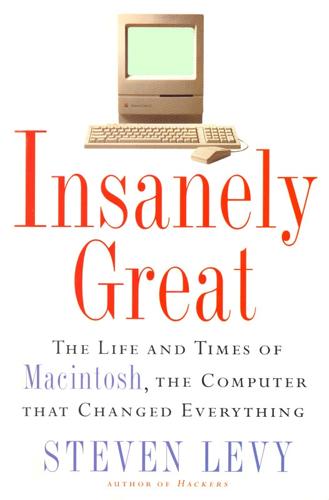
Insanely Great: The Life and Times of Macintosh, the Computer That Changed Everything by Steven Levy
Apple II, Apple's 1984 Super Bowl advert, Bill Atkinson, computer age, Computer Lib, conceptual framework, Do you want to sell sugared water for the rest of your life?, Douglas Engelbart, Douglas Engelbart, Dynabook, General Magic , Howard Rheingold, HyperCard, information retrieval, information trail, Ivan Sutherland, John Markoff, John Perry Barlow, Kickstarter, knowledge worker, Marshall McLuhan, Mitch Kapor, Mother of all demos, Pepsi Challenge, Productivity paradox, QWERTY keyboard, reality distortion field, rolodex, Silicon Valley, skunkworks, speech recognition, Steve Jobs, Steve Wozniak, Steven Levy, Ted Nelson, The Home Computer Revolution, the medium is the message, Vannevar Bush
But Steve Jobs had an idea for something even more special-Lisa, a computer that would leapfrog Apple's technology, surpassing not only the Apple II, but Apple III as well. This jump would also vault Apple a generation or so past anything that its competitors were preparing. Begun when Steve Wozniak, at Steve Jobs's request, sketched its architecture on a napkin, Lisa had, in less than a year, evolved to a computer based on the powerful Motorola 68000 microprocessor chip, and was engineered to handle more complicated applications, even running several at the same time, a trick called "multitasking." Named after an Apple engineer's daughter (and allegedly an additional tribute to Jobs's own daughter), Lisa was also the first Apple computer specifically directed at office professionals-from white-collar workers to captains of industry.
…
The most startling of these was an agreement forged in 1991 to join with another large company to produce the next generation of computers. Apple's new partner was its former blood nemesis-IBM. IBM! To those of us who recalled the rhetoric surrounding Macintosh's introduction-Steve Jobs claiming outright that "IBM is out to crush Apple" -this shift was straight out of Orwell's 1984, when the three global superpowers would shift alliances on a dime. Apple joining with IBM was like Luke Skywalker strolling off into the sunset with Darth Vader. When Apple's profits dipped in 1993, Sculley wound up leaving his post as Apple's leader. The company's board of directors now considered him too much a visionary, an excessively starry-eyed technophile, to make the hard decisions necessary to shepherd Apple through the 1990s.
…
The company's board of directors now considered him too much a visionary, an excessively starry-eyed technophile, to make the hard decisions necessary to shepherd Apple through the 1990s. Sculley was permitted to retain the title of chairman, but no longer had a direct role in the company's operations-exactly the fate of Steve Jobs in 1985. The irony was inescapable: originally hired to anchor Jobs's dreamy fantasies, John Sculley apparently departed because his technological seduction had become too complete-he was running Apple too much like Steve Jobs had and, like Jobs, he was gone within months-still attempting to make a dent in the universe but no longer at Apple. (In Sculley's case this new launching pad was a relatively obscute company involved in wireless communications.)

pages: 464 words: 155,696
Becoming Steve Jobs: The Evolution of a Reckless Upstart Into a Visionary Leader by Brent Schlender, Rick Tetzeli
Albert Einstein, An Inconvenient Truth, Apple II, Apple Newton, Apple's 1984 Super Bowl advert, Beos Apple "Steve Jobs" next macos , Bill Atkinson, Bill Gates: Altair 8800, Bob Noyce, Byte Shop, Charles Lindbergh, computer age, corporate governance, Do you want to sell sugared water for the rest of your life?, El Camino Real, Fairchild Semiconductor, General Magic , Isaac Newton, John Markoff, Jony Ive, Kickstarter, Larry Ellison, Marc Andreessen, market design, McMansion, Menlo Park, Paul Terrell, Pepsi Challenge, planned obsolescence, popular electronics, QWERTY keyboard, reality distortion field, Ronald Reagan, Sand Hill Road, side project, Silicon Valley, Silicon Valley startup, skunkworks, Stephen Fry, Steve Ballmer, Steve Jobs, Steve Wozniak, Steven Levy, Stewart Brand, stock buybacks, Tim Cook: Apple, Tony Fadell, Wall-E, Watson beat the top human players on Jeopardy!, Whole Earth Catalog
Wall Street Journal, October 13, 1988. ———. “How Steve Jobs Linked Up with IBM.” Fortune, October 9, 1989. ———. “The Future of the PC: Steve Jobs and Bill Gates Talk About Tomorrow.” Fortune, August 26, 1991. ———. “What Bill Gates Really Wants.” Fortune, January 16, 1995. ———. “Steve Jobs’ Amazing Movie Adventure.” Fortune, September 18, 1995. ———. “Something’s Rotten in Cupertino.” Fortune, March 3, 1997. ———. “The Three Faces of Steve.” Fortune, November 9, 1998. ———. “Apple’s One-Dollar-a-Year Man.” Fortune, January 24, 2000. ———. “Steve Jobs’ Apple Gets Way Cooler.” Fortune, January 24, 2000. ———. “Steve Jobs: Graying Prince of a Shrinking Kingdom.”
…
Dogfight: How Apple and Google Went to War and Started a Revolution. New York: Sarah Crichton Books, 2013. Wozniak, Stephen, and Gina Smith. iWoz: Computer Geek to Cult Icon: How I Invented the Personal Computer, Co-founded Apple, and Had Fun Doing It. New York: W. W. Norton & Company, 2007. Young, Jeffrey S. Steve Jobs: The Journey Is the Reward. New York: Scott Foresman Trade, 1987. Articles by the Author Schlender, Brenton R. “Jobs, Perot Become Unlikely Partners in Apple Founder’s New Concern.” Wall Street Journal, February 2, 1987. ———. “Next Project: Apple Era Behind Him, Steve Jobs Tries Again, Using a New System.”
…
The success of Toy Story had given the myth of Steve Jobs a rather nice touch-up. The question now was whether Steve’s Pixar triumph was a one-shot anomaly. For a man whose name eventually would become synonymous with great American second acts, the Steve Jobs of 1996 had had remarkably little success with his own sequels. The Apple II had been followed by the Apple III and the Lisa, both of which had been failures. The Mac became a success only in the more robust versions introduced by John Sculley. His most grandiose sequel of all, NeXT, the company he’d created to be an idealized version of Apple, had proved utterly anticlimactic.

pages: 535 words: 149,752
After Steve: How Apple Became a Trillion-Dollar Company and Lost Its Soul by Tripp Mickle
"World Economic Forum" Davos, Airbnb, airport security, Apple II, Apple's 1984 Super Bowl advert, augmented reality, autonomous vehicles, banking crisis, Boeing 747, British Empire, business intelligence, Carl Icahn, Clayton Christensen, commoditize, coronavirus, corporate raider, COVID-19, desegregation, digital map, disruptive innovation, Donald Trump, Downton Abbey, driverless car, Edward Snowden, Elon Musk, Frank Gehry, General Magic , global pandemic, global supply chain, haute couture, imposter syndrome, index fund, Internet Archive, inventory management, invisible hand, John Markoff, Jony Ive, Kickstarter, Larry Ellison, lateral thinking, Mark Zuckerberg, market design, megacity, Murano, Venice glass, Ralph Waldo Emerson, self-driving car, Sheryl Sandberg, Silicon Valley, skeuomorphism, Stephen Fry, Steve Jobs, Steve Wozniak, Steven Levy, stock buybacks, Superbowl ad, supply-chain management, thinkpad, Tim Cook: Apple, Tony Fadell, Travis Kalanick, turn-by-turn navigation, Wayback Machine, WikiLeaks, Y2K
v=_p8AsQhaVKI. A decade earlier: “Steve Jobs to Kick Off Apple’s Worldwide Developers Conference 2003,” Apple, May 8, 2003, https://www.apple.com/newsroom/2003/05/08Steve-Jobs-to-Kick-Off-Apples-Worldwide-Developers-Conference-2003/; “Apple Launches the iTunes Music Store,” Apple, April 28, 2003, https://www.apple.com/newsroom/2003/04/28Apple-Launches-the-iTunes-Music-Store/; Apple Novinky, “Steve Jobs Introduces iTunes Music Store—Apple Special Event 2003,” YouTube, April 3, 2018, https://www.youtube.com/watch?v=NF9o46zK5Jo. The pop star Taylor Swift: Duboff, “Taylor Swift: Apple Crusader, #GirlSquad Captain, and the Most Influential 25-Year-Old in America”; interview with Scott Borchetta.
…
New York: Random House, 2019. Isaacson, Walter. Steve Jobs. New York: Simon & Schuster, 2011. Ive, Jony, Andrew Zuckerman, and Apple Inc. Designed by Apple in California. Cupertino, CA: Apple, 2016. Kahney, Leander. Jony Ive: The Genius Behind Apple’s Greatest Products. New York: Portfolio/Penguin, 2013. ———. Tim Cook: The Genius Who Took Apple to the Next Level. New York: Portfolio/Penguin, 2019. Kane, Yukari Iwatani. Haunted Empire: Apple After Steve Jobs. New York: Harper Business, 2014. Kocienda, Ken. Creative Selection: Inside Apple’s Design Process During the Golden Age of Steve Jobs. New York: St. Martin’s Press, 2018.
…
The company had sold: Daisuke Wakabayashi, “Apple’s Watch Outpaced the iPhone in First Year,” Wall Street Journal, April 24, 2016, https://www.wsj.com/articles/apple-watch-with-sizable-sales-cant-shake-its-critics-1461524901; Apple Press Release, “Apple Reports Fourth Quarter Results,” Apple (with consolidated financial statements), October 25, 2016, https://www.apple.com/newsroom/2016/10/apple-reports-fourth-quarter-results/. The second camera: Apple Press Release, “Portrait Mode Now Available on iPhone 7 Plus with iOS 10.1,” Apple, October 24, 2016, https://www.apple.com/newsroom/2016/10/portrait-mode-now-available-on-iphone-7-plus-with-ios-101/. A year before his death: “Steve Jobs in 2010, at D8,” Apple Podcasts, https://podcasts.apple.com/us/podcast/steve-jobs-in-2010-at-d8/id529997900?i=1000116189688. The comedy site CollegeHumor: CollegeHumor, “The New iPhone Is Just Worse,” YouTube, September 8, 2016, https://www.youtube.com/watch?
pages: 611 words: 188,732
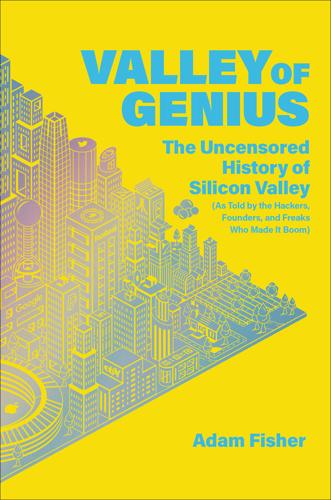
Valley of Genius: The Uncensored History of Silicon Valley (As Told by the Hackers, Founders, and Freaks Who Made It Boom) by Adam Fisher
adjacent possible, Airbnb, Albert Einstein, AltaVista, An Inconvenient Truth, Andy Rubin, AOL-Time Warner, Apple II, Apple Newton, Apple's 1984 Super Bowl advert, augmented reality, autonomous vehicles, Bill Atkinson, Bob Noyce, Brownian motion, Buckminster Fuller, Burning Man, Byte Shop, circular economy, cognitive dissonance, Colossal Cave Adventure, Computer Lib, disintermediation, Do you want to sell sugared water for the rest of your life?, don't be evil, Donald Trump, Douglas Engelbart, driverless car, dual-use technology, Dynabook, Elon Musk, Fairchild Semiconductor, fake it until you make it, fake news, frictionless, General Magic , glass ceiling, Hacker Conference 1984, Hacker Ethic, Henry Singleton, Howard Rheingold, HyperCard, hypertext link, index card, informal economy, information retrieval, Ivan Sutherland, Jaron Lanier, Jeff Bezos, Jeff Rulifson, John Markoff, John Perry Barlow, Jony Ive, Kevin Kelly, Kickstarter, knowledge worker, Larry Ellison, life extension, Marc Andreessen, Marc Benioff, Mark Zuckerberg, Marshall McLuhan, Maui Hawaii, Menlo Park, Metcalfe’s law, Mondo 2000, Mother of all demos, move fast and break things, Neal Stephenson, Network effects, new economy, nuclear winter, off-the-grid, PageRank, Paul Buchheit, paypal mafia, peer-to-peer, Peter Thiel, pets.com, pez dispenser, popular electronics, quantum entanglement, random walk, reality distortion field, risk tolerance, Robert Metcalfe, rolodex, Salesforce, self-driving car, side project, Silicon Valley, Silicon Valley startup, skeuomorphism, skunkworks, Skype, Snow Crash, social graph, social web, South of Market, San Francisco, Startup school, Steve Jobs, Steve Jurvetson, Steve Wozniak, Steven Levy, Stewart Brand, Susan Wojcicki, synthetic biology, Ted Nelson, telerobotics, The future is already here, The Hackers Conference, the long tail, the new new thing, Tim Cook: Apple, Tony Fadell, tulip mania, V2 rocket, We are as Gods, Whole Earth Catalog, Whole Earth Review, Y Combinator
The crucial thing about Facebook is that it’s not a service or an app—it’s a fundamental platform, on the same scale as the internet itself. Steve Jobs: I admire Mark Zuckerberg. I only know him a little bit, but I admire him for not selling out—for wanting to make a company. I admire that a lot. Purple People Eater Apple, the company that cannibalizes itself Only three years after reviving Apple on the back of the iPod, Steve Jobs decides to make it obsolete. As an Atari alumnus, Jobs knows firsthand the danger of trying to milk a hot product for all it is worth. He knows that somebody at some point will unseat Apple’s iPod monopoly with an MP3 player that can also place a phone call. Thus, Jobs concludes, Apple has to act first.
…
He was the principal programmer behind Smalltalk, Kay’s pioneering object-oriented computer language, which ran on the Alto computer. When Steve Jobs visited PARC to see the Alto, Ingalls famously gave the demonstration. Later, Ingalls worked for Jobs at Apple. Steve Jarrett was a project manager for General Magic, the smartphone company that spun out of Apple in the midnineties. Later he joined Apple to help launch the original iPod. Today he’s an executive at Facebook, living in London. Steve Jobs and his friend Steve Wozniak cofounded Apple, the company most responsible for bringing the personal computer to the masses. Jobs didn’t manage to gain full control of his company until twenty years later, but after he did Apple released a string of hit products—the iMac, the iPod, the iPhone, the iPad—and it became the most valuable company in the world.
…
Dan Kottke: The IPO was November of ’80, and Steve is raring to go. Because he had money to spend, right? The Apple III was launching, but Steve Jobs had already moved on. The Apple III didn’t interest him, because there were too many other people involved and he wanted to be in charge. John Couch: Steve says, “I want to run Lisa,” because it was the newest, newest product. Randy Wigginton: But they weren’t listening to him. Steve Jobs: I thought Lisa was in serious trouble. I thought Lisa was going off in this very bad direction. David Kelley: Lisa—the Apple IV—was really mixed up. Dan Kottke: Steve was trying to bully the Lisa group.

pages: 297 words: 89,820
The Perfect Thing: How the iPod Shuffles Commerce, Culture, and Coolness by Steven Levy
Apple II, Bill Atkinson, British Empire, Claude Shannon: information theory, en.wikipedia.org, General Magic , Herbert Marcuse, indoor plumbing, Internet Archive, Jeff Bezos, John Markoff, Joi Ito, Jony Ive, Kevin Kelly, reality distortion field, Sand Hill Road, Saturday Night Live, Silicon Valley, social web, Steve Ballmer, Steve Jobs, Steve Wozniak, Steven Levy, technology bubble, the long tail, Thomas L Friedman, Tony Fadell
This situation was particularly complicated, since the Beatles' record company has the same name as Steve Jobs's computer company. Years ago, when Apple Computer created software to let its users play CDs, the Beatles sued, claiming that the Cupertino company had violated an earlier agreement not to venture into the music business. Apple paid $26 Download million to settle the case in 1991. But the appearance of an Apple iTunes store led the Beatles to claim that Jobs was going beyond the terms of the settlement, which didn't specify that Apple could start its own music store. "It'll get resolved, it's not a big deal," Jobs told me after the other Apple filed suit in London.
…
It would take Phil Schiller five days to get back to California. Other people at Apple were stuck in Europe. But with the exception of some managers checking out suppliers in Asia, almost all the people working on the iPod were at home in the Bay Area. At Apple's headquarters in Cupertino, Steve Jobs was sending an e-mail to Apple employees: I'm sure you've heard about today's extraordinary and tragic events. If you want to stay home with your families today, please do so. For those of you who want to come to work, we will be open. Steve By the time of Apple's iPod press conference in October, the plane crashes had been followed by a wave of anthrax attacks.
…
I don't recall being so negative myself: I made plans to write about this new toy, discussing with Apple when we might be able to photograph it. In no case, my PR contact said, would Apple send us one to arrive until after the Tuesday launch. They weren't even about to put one into a Federal Express box on Monday, afraid that some-Perfect 13 one might rip open the box and discover Steve Jobs's big secret. Instead, Apple would dispatch a pair of couriers from Cupertino to hand-deliver the new product to a few select tech writers. Apples spokesperson made it clear that they would deliver to no designee, only me. Maybe, I thought, I should have flown out to see this.

pages: 416 words: 129,308
The One Device: The Secret History of the iPhone by Brian Merchant
Airbnb, animal electricity, Apollo Guidance Computer, Apple II, Apple's 1984 Super Bowl advert, Black Lives Matter, Charles Babbage, citizen journalism, Citizen Lab, Claude Shannon: information theory, computer vision, Computing Machinery and Intelligence, conceptual framework, cotton gin, deep learning, DeepMind, Douglas Engelbart, Dynabook, Edward Snowden, Elon Musk, Ford paid five dollars a day, Frank Gehry, gigafactory, global supply chain, Google Earth, Google Hangouts, Higgs boson, Huaqiangbei: the electronics market of Shenzhen, China, information security, Internet of things, Jacquard loom, John Gruber, John Markoff, Jony Ive, Large Hadron Collider, Lyft, M-Pesa, MITM: man-in-the-middle, more computing power than Apollo, Mother of all demos, natural language processing, new economy, New Journalism, Norbert Wiener, offshore financial centre, oil shock, pattern recognition, peak oil, pirate software, profit motive, QWERTY keyboard, reality distortion field, ride hailing / ride sharing, rolodex, Shenzhen special economic zone , Silicon Valley, Silicon Valley startup, skeuomorphism, skunkworks, Skype, Snapchat, special economic zone, speech recognition, stealth mode startup, Stephen Hawking, Steve Ballmer, Steve Jobs, Steve Wozniak, Steven Levy, TED Talk, Tim Cook: Apple, Tony Fadell, TSMC, Turing test, uber lyft, Upton Sinclair, Vannevar Bush, zero day
i–iV The first two Apple sections, i and ii, are based primarily on interviews with the team responsible for carving out the interaction paradigms that formed the foundation of the iPhone—the user interface, the multitouch software, the early hardware. I conducted interviews with Bas Ording, Imran Chaudhri, Brian Huppi, Joshua Strickon, and Greg Christie, in addition to other members of the original iPhone team on background. Further details and quotes from Jony Ive were taken from Walter Isaacson’s Steve Jobs, Leander Kahney’s Jony Ive, and Brett Schlender’s Becoming Steve Jobs. Steve Jobs “misremembered” the iPhone’s touchscreen genesis in a Q-and-A hosted by Walt Mossberg and Kara Swisher at their annual D: All Things Digital conference.
…
i: Exploring New Rich Interactions iPhone in embryo Apple’s user-testing lab at 2 Infinite Loop had been abandoned for years. Down the hall from the famed Industrial Design studio, the space was divided by a one-way mirror so hidden observers could see how ordinary people navigate new technologies. But Apple didn’t do user testing, not since Steve Jobs returned as CEO in 1997. Under Jobs, Apple would show consumers what they wanted, not solicit their feedback. But that deserted lab would make an ideal hideaway for a small group of Apple’s more restless minds, who had quietly embarked on an experimental new project.
…
Passionate users felt that FingerWorks’ pads were the only serious ergonomic alternative to keyboards, and now that they’d been taken away, more than a few Finger Fans blamed Apple. “People with chronic RSI injuries were suddenly left out in the cold, in 2005, by an uncaring Steve Jobs,” Dstamatis wrote. “Apple took an important medical product off the market.” No major product has emerged to serve RSI-plagued computer users, and the iPhone and iPad offer only a fraction of the novel interactivity of the original pads. Apple took FingerWorks’ gesture library and simplified it into a language that a child could understand—recall that Apple’s Brian Huppi had called FingerWorks’ gesture database an “exotic language”—which made it immensely popular.

The Code: Silicon Valley and the Remaking of America by Margaret O'Mara
A Declaration of the Independence of Cyberspace, accounting loophole / creative accounting, affirmative action, Airbnb, Alan Greenspan, AltaVista, Alvin Toffler, Amazon Web Services, An Inconvenient Truth, AOL-Time Warner, Apple II, Apple's 1984 Super Bowl advert, autonomous vehicles, back-to-the-land, barriers to entry, Ben Horowitz, Berlin Wall, Big Tech, Black Lives Matter, Bob Noyce, Buckminster Fuller, Burning Man, business climate, Byte Shop, California gold rush, Californian Ideology, carried interest, clean tech, clean water, cloud computing, cognitive dissonance, commoditize, company town, Compatible Time-Sharing System, computer age, Computer Lib, continuous integration, cuban missile crisis, Danny Hillis, DARPA: Urban Challenge, deindustrialization, different worldview, digital divide, Do you want to sell sugared water for the rest of your life?, don't be evil, Donald Trump, Doomsday Clock, Douglas Engelbart, driverless car, Dynabook, Edward Snowden, El Camino Real, Elon Musk, en.wikipedia.org, Erik Brynjolfsson, Fairchild Semiconductor, Frank Gehry, Future Shock, Gary Kildall, General Magic , George Gilder, gig economy, Googley, Hacker Ethic, Hacker News, high net worth, hockey-stick growth, Hush-A-Phone, immigration reform, income inequality, industrial research laboratory, informal economy, information retrieval, invention of movable type, invisible hand, Isaac Newton, It's morning again in America, Jeff Bezos, Joan Didion, job automation, job-hopping, John Gilmore, John Markoff, John Perry Barlow, Julian Assange, Kitchen Debate, knowledge economy, knowledge worker, Larry Ellison, Laura Poitras, Lyft, Marc Andreessen, Mark Zuckerberg, market bubble, Mary Meeker, mass immigration, means of production, mega-rich, Menlo Park, Mikhail Gorbachev, military-industrial complex, millennium bug, Mitch Kapor, Mother of all demos, move fast and break things, mutually assured destruction, Neil Armstrong, new economy, Norbert Wiener, old-boy network, Palm Treo, pattern recognition, Paul Graham, Paul Terrell, paypal mafia, Peter Thiel, pets.com, pirate software, popular electronics, pre–internet, prudent man rule, Ralph Nader, RAND corporation, Richard Florida, ride hailing / ride sharing, risk tolerance, Robert Metcalfe, ROLM, Ronald Reagan, Salesforce, Sand Hill Road, Second Machine Age, self-driving car, shareholder value, Sheryl Sandberg, side hustle, side project, Silicon Valley, Silicon Valley ideology, Silicon Valley startup, skunkworks, Snapchat, social graph, software is eating the world, Solyndra, speech recognition, Steve Ballmer, Steve Jobs, Steve Wozniak, Steven Levy, Stewart Brand, Strategic Defense Initiative, supercomputer in your pocket, Susan Wojcicki, tacit knowledge, tech billionaire, tech worker, technoutopianism, Ted Nelson, TED Talk, the Cathedral and the Bazaar, the market place, the new new thing, The Soul of a New Machine, There's no reason for any individual to have a computer in his home - Ken Olsen, Thomas L Friedman, Tim Cook: Apple, Timothy McVeigh, transcontinental railway, Twitter Arab Spring, Uber and Lyft, uber lyft, Unsafe at Any Speed, upwardly mobile, Vannevar Bush, War on Poverty, Wargames Reagan, WarGames: Global Thermonuclear War, We wanted flying cars, instead we got 140 characters, Whole Earth Catalog, WikiLeaks, William Shockley: the traitorous eight, work culture , Y Combinator, Y2K
Alan Maltun, “Students Beg to Stay After School to Use Computers”; David Einstein, “Bellflower Paces Area Schools in Computer Field”; Bob Williams, “Computer Parade Uneven,” The Los Angeles Times, December 11, 1983, SB1. 30. Andrew Emil Gansky, “Myths and Legends of the Anti-Corporation: A History of Apple, Inc., 1976–1997,” PhD dissertation, The University of Texas at Austin, 2017; Watters, “How Steve Jobs Brought the Apple II to the Classroom”; Harry McCracken, “The Apple Story is an Education Story: A Steve Jobs Triumph Missing from the Movie,” The 74, October 15, 2015, https://www.the74million.org/article/the-apple-story-is-an-education-story-a-steve-jobs-triumph-missing-from-the-movie/, archived at https://perma.cc/EZV6-UGLT. 31. Natasha Singer, “How Google Took Over the Classroom,” The New York Times, May 14, 2017, 1. 32. “’82 House Freshmen Eschew Partisanship and Posturing,” The Washington Post, December 26, 1982, A1; Zschau, “Tax Policy Initiatives to Promote High Technology,” May 13, 1983, Box 51, FF Capital Gains 1, Ed Zschau Papers, HH. 33.
…
Horace Dediu, “The iOS Economy, Updated,” Asymco blog, January 8, 2018, http://www.asymco.com/2018/01/08/the-ios-economy-updated/, archived at https://perma.cc/W2Z5-MT6G. 11. Bruce Newman, “Steve Jobs, Apple Co-Founder,” San Jose Mercury News, October 5, 2011. 12. “Remembering Steve,” Apple.com, https://www.apple.com/stevejobs/, archived at https://perma.cc/7SES-3F5F; Maria L. LaGanga, “Steve Jobs’ death saddens Apple workers and fans,” The Los Angeles Times, October 6, 2011. 13. “Steve Jobs’ Memorial Service: 6 Highlights,” The Week, October 25, 2011. 14. “What Happened to the Future?” Founders Fund, http://foundersfund.com/the-future/, archived at https://perma.cc/82XW-VA2A. 15.
…
House Democratic Caucus, Rebuilding the Road to Opportunity: Turning Point for America’s Economy (Washington: USGPO, 1982). 23. “Steve Jobs and David Burnham,” Nightline, ABC News, April 10, 1981, archived at https://perma.cc/4UER-Y3YV. 24. David Morrow, oral History interview with Steve Jobs, Palo Alto, Calif., April 20, 1995, Smithsonian Institution. 25. Quoted in Audrey Watters, “How Steve Jobs Brought the Apple II to the Classroom,” Hack Education.com, February 25, 2015, http://hackeducation.com/2015/02/25/kids-cant-wait-apple, archived at https://perma.cc/3K62-ACW5. 26. Milton B. Stewart, “Polishing the Apple,” Inc., Feb. 1, 1983, https://www.inc.com/magazine/19830201/6207.html, archived at https://perma.cc/K7UQ-4ACC. 27.

pages: 459 words: 140,010
Fire in the Valley: The Birth and Death of the Personal Computer by Michael Swaine, Paul Freiberger
1960s counterculture, Amazon Web Services, Andy Rubin, Apple II, barriers to entry, Bill Atkinson, Bill Gates: Altair 8800, Byte Shop, Charles Babbage, cloud computing, commoditize, Computer Lib, computer vision, Dennis Ritchie, Do you want to sell sugared water for the rest of your life?, Douglas Engelbart, Douglas Engelbart, Dynabook, Fairchild Semiconductor, Gary Kildall, gentleman farmer, Google Chrome, I think there is a world market for maybe five computers, Internet of things, Isaac Newton, Jaron Lanier, Jeff Hawkins, job automation, John Gilmore, John Markoff, John Perry Barlow, John von Neumann, Jony Ive, Ken Thompson, Larry Ellison, Loma Prieta earthquake, Marc Andreessen, Menlo Park, Mitch Kapor, Mother of all demos, Paul Terrell, popular electronics, Richard Stallman, Robert Metcalfe, Silicon Valley, Silicon Valley billionaire, Silicon Valley startup, stealth mode startup, Steve Ballmer, Steve Jobs, Steve Wozniak, Stewart Brand, Ted Nelson, Tim Cook: Apple, urban sprawl, Watson beat the top human players on Jeopardy!, Whole Earth Catalog, world market for maybe five computers
In addition to unveiling its new computer, Apple announced the new software it intended to have ready by the time the machine shipped a few months later—a word processor, a spreadsheet program, an enhanced BASIC, and a sophisticated operating system. The marketing plan called for the Apple III to be portrayed as a serious computer that could be used in professional offices. The machine seemed likely to succeed. A few months later, continuing to ride the tide of acclaim, Apple announced its first public stock offering. The Wall Street Journal wrote, “Not since Eve has an apple posed such temptation.” * * * Figure 69. Apple goes public Mike Markkula presents Steve Jobs with a check for $92 million from his stock offering in Apple. (Courtesy of Apple Computer Inc.) When Apple was first formed, Mike Markkula dreamed of building the largest privately held company in the nation, a company fully owned by its employees.
…
The number of Apple dealers had risen to 3,000. Mike Markkula took over for Scotty as president of Apple, a position he believed to be a temporary one, and at age 26 Steve Jobs became chairman of the board. Apple was now investing millions of dollars in research and development to create a product that would stun the world. It wanted to prove that it had learned the lessons of the Apple III, that Apple could indeed introduce a new product successfully. By the fall of 1981, rumors abounded in the trade journals about new products Apple was developing. The rumors were wrong, though not even Apple realized it at the time.
…
Some questioned his choice of processor, but no one argued with the processor’s $20 price tag. He called his machine an Apple. * * * Figure 57. The Apple I Steve Wozniak’s original Apple I was a circuit board. (Courtesy of Apple Computer Inc.) The Apple I had only the bare essentials. It lacked a case, a keyboard, and a power supply. The hobbyist owner had to connect a transformer to it in order to get it to work. The Apple I also required laborious assembly by hand. Woz spent a lot of time helping friends implement his design. Steve Jobs saw a great financial opportunity in this skeletal machine, and urged Woz to start a company with him.

pages: 275 words: 84,418
Dogfight: How Apple and Google Went to War and Started a Revolution by Fred Vogelstein
"World Economic Forum" Davos, Andy Rubin, AOL-Time Warner, Apple II, Ben Horowitz, Benchmark Capital, Big Tech, Bill Atkinson, cloud computing, commoditize, disintermediation, don't be evil, driverless car, Dynabook, Firefox, General Magic , Google Chrome, Google Glasses, Googley, Jeff Hawkins, John Markoff, Jony Ive, Larry Ellison, Marc Andreessen, Mark Zuckerberg, Mary Meeker, Neil Armstrong, Palm Treo, PalmPilot, Peter Thiel, pre–internet, Sheryl Sandberg, Silicon Valley, Silicon Valley startup, Skype, software patent, SpaceShipOne, spectrum auction, Steve Ballmer, Steve Jobs, Steve Wozniak, Steven Levy, stock buybacks, tech worker, Tim Cook: Apple, Tony Fadell, web application, zero-sum game
Because of the iPod: Apple press release, 4/9/2007. Jobs said he never saw: Kara Swisher, “Full D8 Interview Video: Apple CEO Steve Jobs,” Steve Jobs interviewed by Kara Swisher and Walt Mossberg (video), AllThingsD.com, 6/7/2010, available at www.allthingsd.com/20100607/full-d8-video-apple-ceo-steve-jobs. Apple’s three-year head start: “Apple Says App Store Has Made Developers over $1 Billion,” AppleInsider.com, 6/10/2010. 7. The iPad Changes Everything—Again Starting in 2010 Jobs had: “Apple’s Diabolical Plan to Screw Your iPhone,” iFixIt.com, 1/20/2011. “It turns out”: Beth Callaghan, “Steve Jobs’s Appearances at D, the Full Video Sessions,” AllThingsD.com, 10/5/2011.
…
Jobs was personally offended: Kara Swisher, “Blast from D Past Video: Apple’s Steve Jobs at D1 in 2003,” AllThingsD.com, 5/3/2010. It’s hard to imagine: “iPhone,” Wikipedia; cross-checked with Apple financial statements. Publicly, Jobs continued his: Kara Swisher, “Blast from D Past: Apple’s Steve Jobs at D2 in 2004,” AllThingsD.com, 5/10/2010. The tension between the partners: Frank Rose, “Battle for the Soul of the MP3 Phone,” Wired, 11/2005. Jobs successfully pinned the Rokr screwup: “iPod Sales per Quarter,” Wikipedia; cross-checked with Apple financial statements; Peter Burrows, “Working with Steve Jobs,” Bloomberg Businessweek, 10/12/2011.
…
But perhaps the most notable example: Jessica Lessin, “An Apple Exit over Maps,” Wall Street Journal, 10/29/2012; Liz Gannes, “Google Maps for iPhone Had 10 Million Downloads in 48 Hours,” AllThingsD.com, 12/17/2012. Apple’s Tim Cook knows all the challenges: Ina Fried, “Apple’s Tim Cook: The Full D11 Interview,” Tim Cook interviewed by Walt Mossberg and Kara Swisher (video), AllThingsD.com, 5/29/2013, available at www.allthingsd.com/20130529/apples-tim-cook-the-full-d11-interview-video. Jobs was a master: Peter Kafka, “Apple CEO Steve Jobs at D8: The Full, Uncut Interview,” Steve Jobs interviewed by Walt Mossberg and Kara Swisher (video), AllThingsD.com, 6/7/2010, available at www.allthingsd.com/20100607/steve-jobs-at-d8-the-full-uncut-interview. Acknowledgments Writing is usually a solitary act.

pages: 255 words: 76,834
Creative Selection: Inside Apple's Design Process During the Golden Age of Steve Jobs by Ken Kocienda
1960s counterculture, anti-pattern, Apple Newton, Apple's 1984 Super Bowl advert, bash_history, Bill Atkinson, Charles Lindbergh, conceptual framework, Donald Knuth, en.wikipedia.org, Free Software Foundation, HyperCard, Kickstarter, Lao Tzu, lock screen, premature optimization, profit motive, proprietary trading, QWERTY keyboard, reality distortion field, Richard Feynman, Richard Stallman, Robert X Cringely, Silicon Valley, Steve Ballmer, Steve Jobs, Steven Levy, The Soul of a New Machine, Tony Fadell, work culture , zero-sum game
johnaugust.com. https://johnaugust.com/2009/what-does-execution-dependent-mean. Accessed November 16, 2017. 10. At This Point 1. Apple Newsroom, “Steve Jobs Resigns as CEO of Apple,” August 24, 2011. https://www.apple.com/newsroom/2011/08/24Steve-Jobs-Resigns-as-CEO-of-Apple/. Accessed November 16, 2017. Apple Newsroom, “Letter from Steve Jobs,” August 24, 2011. https://www.apple.com/newsroom/2011/08/24Letter-from-Steve-Jobs/. Accessed November 16, 2017. Apple Newsroom, “Apple Media Advisory,” October 5, 2011. Accessed November 16, 2017. Index The index that appeared in the print version of this title does not match the pages in your e-book.
…
Patent 7,469,381, filed December 14, 2007, and issued December 23, 2008. This is the patent describing inertial scrolling. http://patft1.uspto.gov/netacgi/nph-Parser?patentnumber=7469381; Matt Brian, “The Apple Patent Steve Jobs Fought Hard to Protect, and His Connection to Its Inventor,” The Next Web, August 7, 2012. Accessed November 19, 2017. https://thenextweb.com/apple/2012/08/07/the-apple-patent-steve-jobs-fought-hard-to-protect-and-his-connection-with-its-inventor/ 3. “Crackberry,” Urban Dictionary. Accessed November 14, 2017. https://www.urbandictionary.com/define.php?term=Crackberry 4.
…
While other companies design beautiful hardware, excel at marketing, hire good lawyers, and manufacture gadgets at scale, no other company makes software as intuitive, carefully crafted, or just plain fun. If there’s a unique magic in Apple’s products, it’s in the software, and I’ll tell you how we created some of the most important software in the company’s history. When I joined Apple in 2001, desktop and laptop computers were still the company’s main products, and while the colorful iMac had been a notable success in reestablishing Apple as a design leader in high technology—Steve Jobs had been back for four years following his eleven-year exile—the company still sat below 5 percent share in a market dominated by Microsoft Windows. Apple certainly had its core enthusiasts at that time, and they were passionate about its products, but to everyone else, the Mac was a computer they might have used in college but forgot about when they became adults and got jobs.

pages: 390 words: 114,538
Digital Wars: Apple, Google, Microsoft and the Battle for the Internet by Charles Arthur
activist fund / activist shareholder / activist investor, AltaVista, Andy Rubin, Build a better mousetrap, Burning Man, cloud computing, commoditize, credit crunch, crowdsourcing, disintermediation, don't be evil, en.wikipedia.org, Firefox, gravity well, Jeff Bezos, John Gruber, Mark Zuckerberg, Menlo Park, Network effects, PageRank, PalmPilot, pre–internet, Robert X Cringely, Silicon Valley, Silicon Valley startup, skunkworks, Skype, slashdot, Snapchat, software patent, speech recognition, stealth mode startup, Steve Ballmer, Steve Jobs, Susan Wojcicki, the long tail, the new new thing, the scientific method, Tim Cook: Apple, Tony Fadell, turn-by-turn navigation, upwardly mobile, vertical integration
Notes Chapter One 1998 1 Ken Auletta (2009) Googled: The end of the world as we know it, Virgin Books, London. 2 http://gladwell.com/outliers 3 http://www.wired.com/wired/archive/4.02/jobs_pr.html 4 http://www.cultofmac.com/john-sculley-on-steve-jobs-the-full-interview-transcript/63295 5 Alan Deutschman (2000) The Second Coming of Steve Jobs, Broadway Books, New York. 6 http://onstartups.com/tabid/3339/bid/58082/16-Brilliant-Insights-From-Steve-Jobs-Keynote-Circa-1997.aspx 7 http://www.zdnet.com/news/jobs-apple-still-on-right-track/99946 8 http://news.cnet.com/Dell-Apple-should-close-shop/2100-1001_3-203937.html 9 http://money.cnn.com/2008/11/09/technology/cook_apple.fortune/index.htm 10 http://www.industryweek.com/articles/whats_really_driving_apples_recovery_325.aspx 11 http://www.cringely.com/2010/04/masters-tournament 12 http://www.wired.com/wired/archive/4.02/jobs_pr.html 13 http://blog.tomevslin.com/2005/02/att_lessons_fro.html 14 http://frozennorth.org/C509291565/E668712860/index.html 15 http://ilpubs.stanford.edu:8090/422/ Chapter Two Microsoft antitrust 1 Private e-mail. 2 Private e-mail.
…
In 1998 Microsoft was crushing yet another upstart – Netscape, which had had the temerity to suggest that the browser could become the basis for doing work anywhere, so that Windows itself would become irrelevant; all you’d need would be a computer that could run a browser, and you’d be able to do everything for which you presently needed a PC. Steve Jobs and Apple Microsoft had reached the pinnacle by besting Apple – the company co-founded by Steve Jobs, a charming, brilliant, tempestuous, iconoclastic, unique businessman who had been thrown out of it in 1985 but returned, triumphantly, at the end of 1996 when another company he had set up, NeXT Computer, was bought by the then ailing Apple, which was bleeding cash. He forced out the incumbent chief executive in July 1997 and became ‘interim’ chief executive that September – at which point the company had made a loss of a billion dollars for the financial year.
…
Among those also targeted for Microsoft’s arm-twisting via Windows to try to crush other products in different fields, the trial heard, were Intel, Sun Microsystems, Real Networks, IBM – which was denied an OEM licence for Windows 95 until a quarter of an hour before its official launch, and so missed out on huge swathes of PC sales – and Apple. In particular, Apple was offered a deal: stop developing its own systems for playing music and films on Windows, and let Microsoft handle them using its DirectX system. If it did, Microsoft would stop putting obstacles in the way of Apple’s QuickTime on Windows. Steve Jobs, who was at the meeting in June 1998, rejected the idea because it would limit the ability for third parties to develop content that would run on Windows PCs and Apple machines. (In retrospect, that decision may be one of the most significant to Apple’s later success that Jobs ever made, since it meant that Microsoft could not control how Apple-encoded music was played on Windows.)

pages: 615 words: 168,775
Troublemakers: Silicon Valley's Coming of Age by Leslie Berlin
AltaVista, Apple II, Arthur D. Levinson, Asilomar, Asilomar Conference on Recombinant DNA, Bear Stearns, beat the dealer, Bill Atkinson, Bill Gates: Altair 8800, Bob Noyce, book value, Byte Shop, Charles Babbage, Clayton Christensen, cloud computing, computer age, Computer Lib, discovery of DNA, Do you want to sell sugared water for the rest of your life?, don't be evil, Donald Knuth, double helix, Douglas Engelbart, Douglas Engelbart, Dynabook, Edward Thorp, El Camino Real, Fairchild Semiconductor, fear of failure, Fellow of the Royal Society, financial independence, game design, Haight Ashbury, hiring and firing, independent contractor, industrial robot, informal economy, Internet of things, inventory management, Ivan Sutherland, John Markoff, Kickstarter, Kitchen Debate, Larry Ellison, Leonard Kleinrock, manufacturing employment, Mark Zuckerberg, Menlo Park, Minecraft, Mother of all demos, Oklahoma City bombing, packet switching, Project Xanadu, prudent man rule, Ralph Nader, Recombinant DNA, Robert Metcalfe, ROLM, rolodex, Ronald Reagan, Salesforce, Sand Hill Road, Silicon Valley, Silicon Valley startup, Snapchat, software as a service, Steve Jobs, Steve Wozniak, Steven Levy, Stewart Brand, Ted Nelson, Teledyne, union organizing, upwardly mobile, William Shockley: the traitorous eight, women in the workforce, work culture
Tesler could not help but contrast the situation at PARC with what he had seen of Apple. By 1980, he had an inside view. His first extended encounter with Apple came in December 1979, when he, along with Adele Goldberg (also from Alan Kay’s group in PARC’s systems science lab), gave two demonstrations of the Alto to a group from Apple that included Steve Jobs.9 Six months before the demos, in June 1979, Xerox had purchased 100,000 shares of Apple for $1.05 million in Apple’s second round of private investment.IV An investment in Apple made sense for Xerox because if the smaller company did well, Xerox could make a good deal of money, and if Apple failed, Xerox would be well positioned to acquire it.III Apple, by this time, was seen as such a potentially lucrative investment that Markkula could hand-select investors.
…
Comment from stevewoz at http://www.cultofmac.com/96939/apples-first-ceo-says-young-steve-jobs-could-be-trusted-with-detail-but-not-with-a-staff/. 34. Ann Bowers, interview by author, Nov. 7, 2015. 35. “The overriding consideration was pride—Mike just wasn’t going to let anything stand in the way of making Apple a huge success and fulfilling the implied commitment to the Apple employees.” Introductory remarks given by Arthur Rock at the Harvard Business School Entrepreneurial Award Dinner Honoring Steve Jobs and Mike Markkula, San Francisco Olympic Club, Feb. 3, 1983, AR. 36. Mike Markkula, interview by author, Feb. 24, 2016. 37. Steve Jobs, quoted in “Apple Shuffling Reflects Growth,” Computer Systems News, April 13, 1981. 38.
…
He calls the ethics center “the most bang for my philanthropic buck that I’ve ever gotten.”9 Markkula remained on Apple’s board until 1997, when Steve Jobs, who had left the company a dozen years earlier to launch NeXT, returned and asked him, along with every other Apple director save two, to resign. Markkula and Jobs had been somewhat estranged for years. Jobs felt betrayed by Markkula’s backing John Sculley over him in the power struggle that had pushed him out of Apple in 1985. Markkula thought that Jobs had left Apple in a way that was “unethical,” recruiting employees for NeXT while still chairing the Apple board.10 But the conversation upon Jobs’s return after Apple purchased NeXT for $429 million was long and cordial.

pages: 411 words: 119,022
Build: An Unorthodox Guide to Making Things Worth Making by Tony Fadell
air gap, Amazon Web Services, Andy Rubin, augmented reality, Ben Horowitz, Big Tech, bike sharing, Bill Atkinson, carbon footprint, Cass Sunstein, cloud computing, do what you love, Elon Musk, fail fast, follow your passion, General Magic , Google Glasses, Google X / Alphabet X, Googley, hiring and firing, HyperCard, imposter syndrome, Jeff Bezos, John Markoff, Jony Ive, Kanban, Kickstarter, Mary Meeker, microplastics / micro fibres, new economy, pets.com, QR code, QWERTY keyboard, rolodex, side project, Silicon Valley, Silicon Valley startup, stem cell, Steve Jobs, Steven Levy, synthetic biology, TED Talk, TikTok, Tim Cook: Apple, Tony Fadell, Y Combinator
The following afternoon he had lunch with a colleague who worked at Apple. They mentioned they were kicking off a new project. Did he happen to know anyone with experience building handheld devices? I got a call from Apple the next day. Because you’ve picked up this book, the rest of the story is probably pretty familiar. I took a consulting gig with Apple at first, just hoping to make enough money to pay my employees or maybe leverage my job into a buyout for Fuse. Putting my hopes on Apple was a serious long shot. Steve Jobs was back at the helm then, but during the previous decade Apple had been in a death spiral, launching a slew of mediocre products that edged the company close to collapse.
…
But that’s not to say that sticking to your vision will always lead to success. Not even for Steve Jobs. Most people don’t realize what the iPod was originally built for. Its purpose wasn’t just to play music—it was made to sell Macintosh computers. That’s what was in Steve Jobs’s head: We’re going to make something amazing that will only work with our Macs. People will love it so much that they’ll start buying Macs again. At the time Apple was near death. It had almost no market share—even in the United States. But the iPod would solve that problem. It would save the company. So as far as Steve Jobs was concerned, the iPod would never work with a PC.
…
I should have remembered what it was like at Apple during the very first months when we started building the iPod. It just didn’t occur to me—Nest was so much bigger and more established than my tiny iPod team, I thought this was a completely different situation. But it was exactly the same. Back then Apple’s executive antibodies saw us coming to take their time and draw away their resources, so they tried to block our way and ignore our requests. That’s when Steve Jobs gave us air cover, dropped bombs on the teams who were slowing us down, forced the issue, yelled sometimes to make sure we got what we needed. Steve Jobs fighting for us was ultimately what allowed us to succeed.

pages: 305 words: 79,303
The Four: How Amazon, Apple, Facebook, and Google Divided and Conquered the World by Scott Galloway
"Susan Fowler" uber, activist fund / activist shareholder / activist investor, additive manufacturing, Affordable Care Act / Obamacare, Airbnb, Amazon Robotics, Amazon Web Services, Apple II, autonomous vehicles, barriers to entry, Ben Horowitz, Bernie Sanders, Big Tech, big-box store, Bob Noyce, Brewster Kahle, business intelligence, California gold rush, Cambridge Analytica, cloud computing, Comet Ping Pong, commoditize, cuban missile crisis, David Brooks, Didi Chuxing, digital divide, disintermediation, don't be evil, Donald Trump, Elon Musk, fake news, follow your passion, fulfillment center, future of journalism, future of work, global supply chain, Google Earth, Google Glasses, Google X / Alphabet X, Hacker Conference 1984, Internet Archive, invisible hand, Jeff Bezos, Jony Ive, Khan Academy, Kiva Systems, longitudinal study, Lyft, Mark Zuckerberg, meta-analysis, Network effects, new economy, obamacare, Oculus Rift, offshore financial centre, passive income, Peter Thiel, profit motive, race to the bottom, RAND corporation, ride hailing / ride sharing, risk tolerance, Robert Mercer, Robert Shiller, Search for Extraterrestrial Intelligence, self-driving car, sentiment analysis, shareholder value, Sheryl Sandberg, Silicon Valley, Snapchat, software is eating the world, speech recognition, Stephen Hawking, Steve Ballmer, Steve Bannon, Steve Jobs, Steve Wozniak, Stewart Brand, supercomputer in your pocket, Tesla Model S, the long tail, Tim Cook: Apple, Travis Kalanick, Uber and Lyft, Uber for X, uber lyft, undersea cable, vertical integration, warehouse automation, warehouse robotics, Wayback Machine, Whole Earth Catalog, winner-take-all economy, working poor, you are the product, young professional
I believe the world would be a better place had LS&Co. registered Apple-like success, as the Haas family (who own LS&Co.) is what you hope all business owners would be: modest, committed to the community, and generous. Steve Jobs brought Drexler onto Apple’s board of directors in 1999, soon after his return to Apple—and two years later Apple launched its first brick-and-mortar store in Tyson’s Corner, Virginia.30 Apple’s stores were glitzier than Gap stores. Most experts yawned. Brick and mortar, they said, was the past. The internet was the future. As if Steve Jobs, of all people, didn’t understand that. It’s difficult to remember now, but when Apple made that move back then, most people figured the company was wrong; that Apple was a company lurching toward irrelevance; and that by opening fancy stores it was positioning itself for luxury with the equivalent of a walker.
…
They are growing their income, spending it irrationally, as young people do, and have a facility with technology that makes them influential and important to business.4 They sided with Apple, as the firm embodies their own maverick, antiestablishment, progressive ideals—and conveniently ignored the fact that Steve Jobs gave nothing to charity, almost exclusively hired middle-aged white guys, and was an awful person. It didn’t matter, because Apple is cool. Even more, Apple is an innovator. And so, when the federal government decides to force Apple to change its behavior, the Apple Macolytes leap to its defense. I’m not one of them. Double Standard I’ve always tried to give the impression that I just don’t care what others think.
…
That set the stage for the masterpiece—the iPhone—that had Apple fanatics all over the world camping out in front of electronics stores. And finally, the sublime iPad. The unsung hero of Apple’s success is Napster founder Shawn Fanning, who scared the music industry into the arms of Apple, and who set about partnering with them similar to the way a vampire partners with a blood bag. Could Apple have maintained this pace into the current decade had Steve Jobs survived his illness? Probably. Because for all of his less than savory traits, he accomplished one important thing: he turned Apple, after the risk-averse years under John Sculley, into a company—arguably the biggest company ever—that made taking risks its first option.

pages: 540 words: 119,731
Samsung Rising: The Inside Story of the South Korean Giant That Set Out to Beat Apple and Conquer Tech by Geoffrey Cain
Andy Rubin, Apple's 1984 Super Bowl advert, Asian financial crisis, autonomous vehicles, Berlin Wall, business intelligence, cloud computing, corporate governance, creative destruction, don't be evil, Donald Trump, double helix, Dynabook, Elon Musk, Fairchild Semiconductor, fake news, fear of failure, Hacker News, independent contractor, Internet of things, John Markoff, Jony Ive, Kickstarter, Mahatma Gandhi, Mark Zuckerberg, megacity, Mikhail Gorbachev, Nelson Mandela, patent troll, Pepsi Challenge, rolodex, Russell Brand, shareholder value, Sheryl Sandberg, Silicon Valley, Silicon Valley startup, Skype, Steve Jobs, Superbowl ad, Tim Cook: Apple, Tony Fadell, too big to fail, WikiLeaks, wikimedia commons
Samsung, however, won legal victories: Charles Arthur, “Samsung Galaxy Tab ‘Does Not Copy Apple’s Designs,’ ” The Guardian, October 18, 2012, https://www.theguardian.com/technology/2012/oct/18/samsung-galaxy-tab-apple-ipad; Associated Press, “Samsung Wins Korean Battle in Apple Patent War,” August 24, 2012, https://www.cbc.ca/news/business/samsung-wins-korean-battle-in-apple-patent-war-1.1153862; Mari Saito and Maki Shiraki, “Samsung Triumphs Over Apple in Japan Patent Case,” Reuters, August 31, 2012, https://in.reuters.com/article/us-apple-samsung-japan/samsung-wins-over-apple-in-japan-patent-case-idINBRE87U05R20120831. Steve Jobs was an admirer of Sony: Leander Kahney, “Steve Jobs’ Sony Envy [Sculley Interview],” Cult of Mac, October 14, 2010, https://www.cultofmac.com/63316/steve-jobs-sony-envy-sculley-interview/.
…
Steve Jobs was an admirer of Sony: Leander Kahney, “Steve Jobs’ Sony Envy [Sculley Interview],” Cult of Mac, October 14, 2010, https://www.cultofmac.com/63316/steve-jobs-sony-envy-sculley-interview/. Apple designers borrowed: Christina Bonnington, “Apple v. Samsung: 5 Surprising Reveals in Latest Court Documents,” Wired, July 27, 2012, https://www.wired.com/2012/07/apple-reveals-for-monday-trial/. “We are going to patent it all”: Fred Vogelstein, Dogfight: How Apple and Google Went to War and Started a Revolution (New York: Sarah Crichton Books, 2013), p. 172. calling their larger phones “Hummers”: Chris Ziegler, “Apple’s Steve Jobs: ‘No One’s Going to Buy’ a Big Phone,” Engadget, July 16, 2010, https://www.engadget.com/2010/07/16/jobs-no-ones-going-to-buy-a-big-phone/.
…
But that didn’t deter Jobs: Alan Kay, “American Computer Pioneer Alan Kay’s Concept, the Dynabook, Was Published in 1972. How Come Steve Jobs and Apple iPad Get the Credit for Tablet Invention?” Quora, April 21, 2019, https://www.quora.com/American-computer-pioneer-Alan-Kay-s-concept-the-Dynabook-was-published-in-1972-How-come-Steve-Jobs-and-Apple-iPad-get-the-credit-for-tablet-invention/answer/Alan-Kay-11. would need to be portable: Jay Elliot, interview by the author, January 9, 2014. Jobs disembarked at the grimy: Jay Elliot, interview by the author, January 9, 2014. Samsung began supplying Apple: Frank Rose, West of Eden: The End of Innocence at Apple Computer (New York: Stuyvesant Street Press, 1989), p. 163.

pages: 385 words: 101,761
Creative Intelligence: Harnessing the Power to Create, Connect, and Inspire by Bruce Nussbaum
"World Economic Forum" Davos, 3D printing, Airbnb, Albert Einstein, Berlin Wall, Black Swan, Chuck Templeton: OpenTable:, clean water, collapse of Lehman Brothers, creative destruction, Credit Default Swap, crony capitalism, crowdsourcing, Danny Hillis, declining real wages, demographic dividend, disruptive innovation, Elon Musk, en.wikipedia.org, Eugene Fama: efficient market hypothesis, fail fast, Fall of the Berlin Wall, follow your passion, game design, gamification, gentrification, housing crisis, Hyman Minsky, industrial robot, invisible hand, James Dyson, Jane Jacobs, Jeff Bezos, jimmy wales, John Gruber, John Markoff, Joseph Schumpeter, Kevin Roose, Kickstarter, Larry Ellison, lone genius, longitudinal study, manufacturing employment, Marc Andreessen, Mark Zuckerberg, Martin Wolf, Max Levchin, Minsky moment, new economy, Paul Graham, Peter Thiel, QR code, race to the bottom, reality distortion field, reshoring, Richard Florida, Ronald Reagan, shareholder value, Sheryl Sandberg, Silicon Valley, Silicon Valley ideology, Silicon Valley startup, SimCity, six sigma, Skype, SoftBank, Steve Ballmer, Steve Jobs, Steve Wozniak, supply-chain management, Tesla Model S, The Chicago School, The Design of Experiments, the High Line, The Myth of the Rational Market, thinkpad, TikTok, Tim Cook: Apple, too big to fail, tulip mania, Tyler Cowen, We are the 99%, Y Combinator, young professional, Zipcar
; http://designmuseum.org/exhibitions/ online/jonathan-ive-on-apple/ imac-1998, accessed September 5, 2012. 187 Next the team traveled: Burrows, “Who Is Jonathan Ive?”; http://designmuseum.org/exhibitions/ online/jonathan-ive-on-apple/imac-1998, accessed September 5, 2012; Janet Abrams, “Radical Craft/The Second Art Center Design Conference,” http://www.core77.com/reactor/ 04.06_artcenter.asp, accessed September 5, 2012. 187 Ive then spent yet more: Burrows, “Who Is Jonathan Ive?” 188 They also designed a beautiful: Neil Hughes, “Book Details Apple’s ‘Packaging Room,’ Steve Jobs’ Interest in Advanced Cameras,” Apple Insider, January 24, 2012, accessed September 5, 2012, http://www.appleinsider.com/ articles/12/01/24/book_details_apples_packaging_ room_interests_in_advanced_cameras_.html; Yonu Heisler, “Inside Apple’s Secret Packaging Room,” Network World, January 24, 2012, accessed September 5, 2012, http://www.networkworld.com/community/ blog/inside-apples-secret-packaging-room. 188 The iMac’s launch in 1998: http://www.youtube.com/watch?
…
Instead of being a technological marvel, the Sony VCR would be a great consumer experience. It’s no accident that when he launched his company, Steve Jobs followed the Sony model of a consumer-friendly technology company. He knew that it was always tempting for technology companies to frame themselves from the engineer’s point of view, not the consumer’s. Over time, Jobs would fight his engineers constantly to keep Apple products easy to use. No one has reframed the story of personal technology quite like Steve Jobs. With every new product, he further moved the focus away from engineered functionality and toward user experience.
…
Seidensticker (Stony Creek, CT: Leete’s Island Books, 1977), 16. 186 Walter Benjamin argued: Walter Benjamin, “The Work of Art in the Age of Mechanical Reproduction,” in Illuminations, Hannah Arendt, ed. (New York: Schocken, 1968). 187 When Steve Jobs returned: Walter Isaacson, Steve Jobs (New York: Simon & Schuster, 2011), 348–57. 187 Designers Jonathan Ive and Danny Coster: Peter Burrows, “Who Is Jonathan Ive? The Man Behind Apple’s Design Magic,” IN: Inside Innovation, September 2006. The “jelly bean story” was told to Peter Burrows at the Radical Craft Conference at the Art Center College of Design, Pasadena, in 2006, and reported on in IN magazine, a quarterly magazine inside BusinessWeek, which I founded that year and edited.

To Pixar and Beyond by Lawrence Levy
Apollo 13, computerized trading, index card, Larry Ellison, Loma Prieta earthquake, reality distortion field, risk tolerance, Sand Hill Road, Silicon Valley, Silicon Valley startup, spice trade, Steve Jobs, Wall-E
The last thing I expected was to speak to a celebrity. “Hi, is this Lawrence?” “Yes, it’s me.” “This is Steve Jobs,” the voice on the other end of the line said. “I saw your picture in a magazine a few years ago and thought we’d work together someday.” Even in those days, when the downfall of Steve Jobs was a favorite topic around Silicon Valley eateries, a call from him was enough to stop me in my tracks. Maybe he wasn’t as hot as he had been before his unceremonious departure from Apple ten years earlier, but our industry had never had a more charismatic figure. I couldn’t help but feel a spurt of excitement at realizing not only that he knew who I was, but that he had actually called me.
…
Classification: LCC PN1998.3.L4673 A32016 (print) | LCC PN1998.3.L4673 (ebook) | DDC 791.4302/3092—dc23 LC record available at https://lccn.loc.gov/2016020541 COVER DESIGN BY BRIAN MOORE eISBN 978-0-544-73419-7 v1.1016 For Hillary, Jason, Sarah, and Jenna Prologue “Hey, Steve, you up for a walk?” I asked over the phone. It was the fall of 2005. Steve Jobs and I had asked each other that question countless times over the past ten years. But this time was different. Steve had turned fifty earlier that year and the burden of cancer and surgery was taking its toll. For a while now we had kept our talks and walks light. Steve had enough on his hands at Apple. In the past year he had introduced a new line of iPods, including the brand-new iPod shuffle and iPod nano that continued to usher in a new era of music listening.
…
His last two products before being stripped of all responsibilities at Apple in 1985—the Lisa and the original Macintosh computers—had both been commercial disasters, and the NeXT Computer was regarded by many observers as the triumph of hubris over practicality. It had been heralded as a technological marvel, but it had been unable to compete with the likes of Sun Microsystems and Silicon Graphics that sold less expensive, more compatible machines. More and more, Jobs was looking like yesterday’s news. When I told friends and colleagues that I was meeting Steve Jobs about Pixar, the most common response was “Why would you want to do that?”

pages: 207 words: 57,959
Little Bets: How Breakthrough Ideas Emerge From Small Discoveries by Peter Sims
Alan Greenspan, Amazon Web Services, Black Swan, Clayton Christensen, complexity theory, David Heinemeier Hansson, deliberate practice, discovery of penicillin, endowment effect, fail fast, fear of failure, Frank Gehry, Guggenheim Bilbao, Jeff Bezos, knowledge economy, lateral thinking, Lean Startup, longitudinal study, loss aversion, meta-analysis, PageRank, Richard Florida, Richard Thaler, Ruby on Rails, Salesforce, scientific management, Silicon Valley, statistical model, Steve Ballmer, Steve Jobs, Steve Wozniak, systems thinking, TED Talk, theory of mind, Toyota Production System, urban planning, Wall-E
Pixar was a computer hardware company when Steve Jobs bought it in 1986. Before purchasing Pixar, Jobs had been forced out of Apple in 1985 by his hand-picked CEO successor, John Scully, following frequent clashes. Scully wanted Jobs to focus exclusively on products, while Jobs wanted to take Apple back over from Scully. After Scully caught wind of an attempted coup by Jobs when Scully was on a trip to Asia, he stripped Jobs of his responsibilities. Jobs then left Apple, bought Pixar, and started another computer company, called Next Computer. Both Pixar and Next struggled, and the open question was whether Steve Jobs was just another one-hit wonder.
…
by Bronwyn Fryer, Harvard Business Review blog, September 28, 2009, which can be found at: http://blogs.hbr.org/hbr/hbreditors/2009/09/how_do_innovators_think.html. Jeff Bezos quote from: “Institutional Yes: The HBR Interview with Jeff Bezos,” by Julia Kirby and Thomas Stewart, Harvard Business Review, October 2007. Apple and Steve Jobs: Inside Steve’s Brain, by Leander Kahney, Portfolio (2008), 190–197. “Steve Jobs: The Next Insanely Great Thing,” by Gary Wolf, Wired, March 2002. Steve Jobs calligraphy example taken from his 2005 Stanford Commencement speech. James Chanos reference: Interview with Chanos. Jerry Seinfeld: Drawn from The Comedian (DVD), Directed by Christian Charles, with Jerry Seinfeld (2002).
…
CHAPTER 3 Failing Quickly to Learn Fast Being rigorous about spotting flaws and continuing to push toward excellence is essential to creative achievement. After all, Chris Rock, the Pixar filmmakers, Frank Gehry, Steve Jobs, and Colonel Casey Haskins are all perfectionists and yet they accept, even welcome, failure as they develop new ideas and strategies. Rock won’t appear on national television without perfecting his act, while Gehry was for years frustrated by the imperfections he noticed while watching performances at Disney Hall (he’s past that now). Steve Jobs will famously refuse to release a new Apple product, or product enclosure even, until it’s as close to perfect as possible. Yet none of them allow perfectionism to paralyze their creative processes, at least not for long.

pages: 199 words: 56,243
Trillion Dollar Coach: The Leadership Playbook of Silicon Valley's Bill Campbell by Eric Schmidt, Jonathan Rosenberg, Alan Eagle
Apple's 1984 Super Bowl advert, augmented reality, Ben Horowitz, cloud computing, El Camino Real, Erik Brynjolfsson, fear of failure, Jeff Bezos, longitudinal study, Marc Andreessen, Marc Benioff, Mark Zuckerberg, Mary Meeker, Menlo Park, meta-analysis, PalmPilot, Sand Hill Road, shareholder value, Sheryl Sandberg, Silicon Valley, speech recognition, Steve Ballmer, Steve Jobs, Susan Wojcicki, Tim Cook: Apple
Going out to the wild, woolly west, where it was more a meritocracy, I would have a chance to move quickly and sit on the management team.”8 Move quickly, indeed. Within nine months of joining Apple, Bill was promoted to VP of sales and marketing and given the task of overseeing the launch of the highly anticipated Macintosh, Apple’s new computer that would replace the Apple II as the company’s flagship product. To kick off the launch, the company made a big move: it bought a slot to run a commercial during the Super Bowl, which would be played in Tampa, Florida, on January 22, 1984. Once the ad was produced, Bill and the team showed it to Apple cofounder Steve Jobs. An allusion to George Orwell’s novel 1984, it showed a young woman running through a dark hallway, fleeing guards, and emerging into a chamber where hundreds of gray-clad, head-shaven men are listening, zombie-like, to a droning “big brother” figure on a large screen before them.
…
.* Although he did not know it at the time, he was about to enter the third chapter of his career, a return to coaching full-time, but not on a football field. When Steve Jobs was forced out of Apple in 1985, Bill Campbell was one of the few leaders at the company who fought against the move. Dave Kinser, an Apple colleague of Bill’s at the time, recalls Bill saying that “we’ve got to keep Steve in the company. He’s way too talented to just let him leave!” Steve remembered that loyalty. When he returned to Apple and became its CEO in 1997, and most of the board members stepped down, Steve named Bill as one of the new directors.* (Bill served on the Apple board until 2014.) Steve and Bill became close friends, speaking frequently and spending many Sunday afternoons walking around their Palo Alto neighborhood discussing all sorts of topics.
…
He was a football coach turned sales guy. Yet somehow, Bill had become so influential that he went on a weekly Sunday walk with Steve Jobs, and the Google founders said they wouldn’t have made it without him. Bill’s name sounded familiar, but I couldn’t place it. Eventually it hit me: I recognized him from a case I had taught a few times on a management dilemma at Apple in the mid-1980s, when a brave, bright young manager named Donna Dubinsky challenged a distribution plan from Steve Jobs himself. Bill Campbell was Donna’s boss’s boss, and he dished out exactly the kind of tough love you’d expect from a football coach: he tore her proposal apart, pushed her to come up with something stronger, and then stood up for her.

pages: 255 words: 68,829
How PowerPoint Makes You Stupid by Franck Frommer
Abraham Maslow, Albert Einstein, An Inconvenient Truth, business continuity plan, cuban missile crisis, dematerialisation, disinformation, hypertext link, invention of writing, inventory management, invisible hand, Just-in-time delivery, knowledge worker, Larry Ellison, Marshall McLuhan, means of production, new economy, oil shock, Ronald Reagan, Silicon Valley, Steve Jobs, Steve Wozniak, union organizing
Aside from the usual tricks of a good PowerPoint presentation—simple slides, well organized argument, speaker involvement, moments of feeling, and so on—he points to some unusual innovations that make Steve Jobs a great stage director: constant invention of an enemy against which Apple must always fight,24 an extraordinary feeling for slogans, the ability to make sense out of numbers by magnifying them, and a constant search for analogies or comparisons to make them as eloquent as possible. And finally, Steve Jobs has the ability to create memorable moments, discreetly accentuated by technological wizardry, that the audience will long remember. With Steve Jobs, we touch on the quintessence of oral presentation. The performance becomes its own subject, the medium mediates itself and is no longer there simply to communicate messages and persuade an audience.
…
The “Mac family” waits like impatient fans for Steve Notes, the boss’s presentation.16 Over the years, these annual meetings have become highly codified ceremonies, the staging of which Steve Jobs has brought to a high polish. Helped by increasingly inventive technology, the entertainer of the early days turned into a guru able to convert millions of the faithful into purchasers of his latest technological gadgets. Boston, January 1997, Macworld Conference Expo: it is a historic moment. As the mythical brand is running out of steam—not only are the numbers down, but the notoriety and the originality of Apple are under severe strain—Steve Jobs, then president of Pixar,17 returns after ten years away. He is greeted like a messiah by the Apple community, which sees his return as a sign of renewal.
…
The presentation follows a well-tried plan: brief slide on earnings—better to be quick; they’re bad—then Steve Jobs, armed with his remote, the essential tool of Steve Notes, briefly recounts his time at Pixar, then follows with three quotations that appear on the screen. “Apple has become irrelevant.” “Apple can’t execute anything.”18 “Apple’s culture is anarchy; you can’t manage it.” Jobs’s entire presentation is based on these three negative judgments. The procedure is clever; it enables him to build, practically in real time, Apple’s new strategy on the basis of criticisms made of it and to bring out the value of the innovative products and services intended to contradict these received ideas.

pages: 720 words: 197,129
The Innovators: How a Group of Inventors, Hackers, Geniuses and Geeks Created the Digital Revolution by Walter Isaacson
1960s counterculture, Ada Lovelace, AI winter, Alan Turing: On Computable Numbers, with an Application to the Entscheidungsproblem, Albert Einstein, AltaVista, Alvin Toffler, Apollo Guidance Computer, Apple II, augmented reality, back-to-the-land, beat the dealer, Bill Atkinson, Bill Gates: Altair 8800, bitcoin, Bletchley Park, Bob Noyce, Buckminster Fuller, Byte Shop, c2.com, call centre, Charles Babbage, citizen journalism, Claude Shannon: information theory, Clayton Christensen, commoditize, commons-based peer production, computer age, Computing Machinery and Intelligence, content marketing, crowdsourcing, cryptocurrency, Debian, desegregation, Donald Davies, Douglas Engelbart, Douglas Engelbart, Douglas Hofstadter, driverless car, Dynabook, El Camino Real, Electric Kool-Aid Acid Test, en.wikipedia.org, eternal september, Evgeny Morozov, Fairchild Semiconductor, financial engineering, Firefox, Free Software Foundation, Gary Kildall, Google Glasses, Grace Hopper, Gödel, Escher, Bach, Hacker Ethic, Haight Ashbury, Hans Moravec, Howard Rheingold, Hush-A-Phone, HyperCard, hypertext link, index card, Internet Archive, Ivan Sutherland, Jacquard loom, Jaron Lanier, Jeff Bezos, jimmy wales, John Markoff, John von Neumann, Joseph-Marie Jacquard, Leonard Kleinrock, Lewis Mumford, linear model of innovation, Marc Andreessen, Mark Zuckerberg, Marshall McLuhan, Menlo Park, Mitch Kapor, Mother of all demos, Neil Armstrong, new economy, New Journalism, Norbert Wiener, Norman Macrae, packet switching, PageRank, Paul Terrell, pirate software, popular electronics, pre–internet, Project Xanadu, punch-card reader, RAND corporation, Ray Kurzweil, reality distortion field, RFC: Request For Comment, Richard Feynman, Richard Stallman, Robert Metcalfe, Rubik’s Cube, Sand Hill Road, Saturday Night Live, self-driving car, Silicon Valley, Silicon Valley startup, Skype, slashdot, speech recognition, Steve Ballmer, Steve Crocker, Steve Jobs, Steve Wozniak, Steven Levy, Steven Pinker, Stewart Brand, Susan Wojcicki, technological singularity, technoutopianism, Ted Nelson, Teledyne, the Cathedral and the Bazaar, The Coming Technological Singularity, The Nature of the Firm, The Wisdom of Crowds, Turing complete, Turing machine, Turing test, value engineering, Vannevar Bush, Vernor Vinge, Von Neumann architecture, Watson beat the top human players on Jeopardy!, Whole Earth Catalog, Whole Earth Review, wikimedia commons, William Shockley: the traitorous eight, Yochai Benkler
Hardware hackers such as Wozniak ceded primacy to software coders such as Gates. With the Apple II and then, more notably, the Macintosh in 1984, Apple pioneered the practice of creating machines that users were not supposed to open and fiddle with their innards. The Apple II also established a doctrine that would become a religious creed for Steve Jobs: his company’s hardware was tightly integrated with its operating system software. He was a perfectionist who liked to control the user experience end to end. He didn’t want to let you buy an Apple machine and run someone else’s clunky operating system on it, nor buy Apple’s operating system and put it on someone else’s junky hardware.
…
But growth began to taper off, largely because Commodore’s computer sales were slumping in the face of new competition from Apple and others. “We have to take control of our destiny,” Kimsey told Case.29 It was clear that for Quantum to succeed, it had to create its Link online services for other computer makers, most notably Apple. With the tenacity that came with his patient personality, Case targeted the executives at Apple. Even after its brilliantly controlling cofounder Steve Jobs had been forced out of the company, at least for the time being, Apple was difficult to partner with. So Case moved across the country to Cupertino and took an apartment near Apple’s headquarters. From there he waged his siege.
…
Isaacson, Steve Jobs, 135. 108. Isaacson, Steve Jobs, 94. 109. Author’s interview with Steve Jobs. 110. Steve Jobs presentation, Jan. 1984, https://www.youtube.com/watch?v=2B-XwPjn9YY. 111. Isaacson, Steve Jobs, 173. 112. Author’s interview with Andy Hertzfeld. 113. Author’s interviews with Steve Jobs and Bill Gates. 114. Andy Hertzfeld, Revolution in the Valley (O’Reilly Media, 2005), 191. See also Andy Hertzfeld, http://www.folklore.org/StoryView.py?story=A_Rich_Neighbor_Named_Xerox.txt. 115. Author’s interviews with Steve Jobs and Bill Gates. 116. Author’s interview with Steve Jobs. 117.

pages: 359 words: 96,019
How to Turn Down a Billion Dollars: The Snapchat Story by Billy Gallagher
Airbnb, Albert Einstein, Amazon Web Services, AOL-Time Warner, Apple's 1984 Super Bowl advert, augmented reality, Bernie Sanders, Big Tech, Black Swan, citizen journalism, Clayton Christensen, computer vision, data science, disruptive innovation, Donald Trump, El Camino Real, Elon Musk, fail fast, Fairchild Semiconductor, Frank Gehry, gamification, gentrification, Google Glasses, Hyperloop, information asymmetry, Jeff Bezos, Justin.tv, Kevin Roose, Lean Startup, Long Term Capital Management, Mark Zuckerberg, Menlo Park, minimum viable product, Nelson Mandela, Oculus Rift, paypal mafia, Peter Thiel, power law, QR code, Robinhood: mobile stock trading app, Salesforce, Sand Hill Road, Saturday Night Live, Sheryl Sandberg, side project, Silicon Valley, Silicon Valley startup, skeuomorphism, Snapchat, social graph, SoftBank, sorting algorithm, speech recognition, stealth mode startup, Steve Jobs, TechCrunch disrupt, too big to fail, value engineering, Y Combinator, young professional
Snapchat investors and advisors, afraid of irritating Evan, have often been unwilling to speak publicly about even basic things like how the company differentiates itself and what its mission is. Evan is hardly the first tech founder to be secretive. Some of the industry’s most revered leaders like Steve Jobs and Jeff Bezos are known for their intense corporate secrecy. As much as Evan has had a rivalry with Mark Zuckerberg, he has also been empowered by Zuckerberg, who blazed the trail for him. Steve Jobs was not the CEO of Apple until his second stint with the company; Google’s investors demanded they bring in Eric Schmidt as a more professional CEO than cofounders Larry Page and Sergey Brin. But Zuckerberg’s overwhelming success and maturation from immature genius into visionary CEO caused a shift in Silicon Valley to strongly favor founders as CEOs.
…
Michael. Return to the Little Kingdom: How Apple and Steve Jobs Changed the World. New York: Overlook Press, 2009. Reis, Eric. The Lean Startup: How Today’s Entrepreneurs Use Continuous Innovation to Create Radically Successful Businesses. New York: Crown Business, 2011. Roose, Kevin. Young Money: Inside the Hidden World of Wall Street’s Post-Crash Recruits. New York: Grand Central Publishing, 2014. Rose, Todd. The End of Average: How We Succeed in a World That Values Sameness. New York: HarperOne, 2016. Schlender, Brent, and Rick Tetzeli. Becoming Steve Jobs. New York: Crown Business, 2015. Sorkin, Andrew Ross.
…
By the time Reggie had his epiphany, the tech world was embracing front-facing cameras. On October 14, 2011, Apple released the iPhone 4S, its second phone with a front-facing camera (making the iPhone 4, also with a front-facing camera, more affordable). Apple’s front-facing cameras were mostly for its video chat feature, FaceTime, but were starting to be used for photographs as well. Technology and art were converging as the iPhone created amateur photographers of everyone. Evan wanted to build Snapchat as an art and technology company, modeled after two of his heroes, Edwin Land and Steve Jobs. Jobs had also considered Land a personal hero and someone he modeled his career after.

pages: 382 words: 92,138
The Entrepreneurial State: Debunking Public vs. Private Sector Myths by Mariana Mazzucato
Apple II, banking crisis, barriers to entry, Bretton Woods, business cycle, California gold rush, call centre, carbon footprint, carbon tax, Carmen Reinhart, circular economy, clean tech, computer age, creative destruction, credit crunch, David Ricardo: comparative advantage, demand response, deskilling, dual-use technology, endogenous growth, energy security, energy transition, eurozone crisis, everywhere but in the productivity statistics, Fairchild Semiconductor, Financial Instability Hypothesis, full employment, G4S, general purpose technology, green transition, Growth in a Time of Debt, Hyman Minsky, incomplete markets, information retrieval, intangible asset, invisible hand, Joseph Schumpeter, Kenneth Rogoff, Kickstarter, knowledge economy, knowledge worker, linear model of innovation, natural language processing, new economy, offshore financial centre, Philip Mirowski, popular electronics, Post-Keynesian economics, profit maximization, Ralph Nader, renewable energy credits, rent-seeking, ride hailing / ride sharing, risk tolerance, Robert Solow, shareholder value, Silicon Valley, Silicon Valley ideology, smart grid, Solyndra, Steve Jobs, Steve Wozniak, The Wealth of Nations by Adam Smith, Tim Cook: Apple, Tony Fadell, too big to fail, total factor productivity, trickle-down economics, vertical integration, Washington Consensus, William Shockley: the traitorous eight
Only about a decade ago Apple was best known for its innovative personal computer design and production. Established on 1 April 1976 in Cupertino, California by Steve Jobs, Steve Wozniak and Ronald Wayne, Apple was incorporated in 1977 by Jobs and Wozniak to sell the Apple I personal computer.1 The company was originally named Apple Computer, Inc. and for 30 years focused on the production of personal computers. On 9 January 2007, the company announced it was removing the ‘Computer’ from its name, reflecting its shift in focus from personal computers to consumer electronics. This same year, Apple launched the iPhone and iPod Touch featuring its new mobile operating system, iOS, which is now used in other Apple products such as the iPad and Apple TV.
…
From capacitive sensing to click-wheels As the pioneer of personal computers, Steve Jobs was on his second mission for re-revolutionizing them. His vision for Apple was to prepare the company for the post-computer era, in what he envisioned and often acknowledged in his interviews and media appearances as the new era of the consumer–computer relationship. During an interview at the 2010 D8 conference, Steve Jobs explained his vision of the future for computing by using the analogy of rapid urbanization and its effects on changing consumer views and the need for transportation (Jobs 2010). During his talk, Jobs redefined Apple’s overall strategy as building a family of products around the concept of fragmented computing needs by different uses.
…
Besides the communication technologies (discussed in Chapter 4), the iPhone is smart because of features such as the Internet, GPS, a touch-screen display, and the latest new voice activated personal assistant (SIRI). While Steve Jobs was no doubt an inspiring genius worthy of praise, the fact that the iPhone/iPad empire was built on these State-funded technologies provides a far more accurate tale of technological and economic change than what is offered by mainstream discussions. Given the critical role of the State in enabling companies like Apple, it is especially curious that the debate surrounding Apple’s tax avoidance has failed to make this fact more broadly known. Apple must pay tax not only because it is the right thing to do, but because it is the epitome of a company that requires the public purse to be large and risk-loving enough to continue making the investments that entrepreneurs like Jobs will later capitalize on (Mazzucato 2013b).

pages: 559 words: 157,112
Dealers of Lightning by Michael A. Hiltzik
Apple II, Apple's 1984 Super Bowl advert, beat the dealer, Bill Atkinson, Bill Duvall, Bill Gates: Altair 8800, Boeing 747, business cycle, Charles Babbage, computer age, creative destruction, Douglas Engelbart, Dynabook, Edward Thorp, El Camino Real, Fairchild Semiconductor, financial engineering, index card, Ivan Sutherland, Jeff Rulifson, John Markoff, Joseph Schumpeter, L Peter Deutsch, luminiferous ether, Marshall McLuhan, Menlo Park, military-industrial complex, Multics, oil shock, popular electronics, reality distortion field, Robert Metcalfe, Ronald Reagan, Silicon Valley, speech recognition, Steve Ballmer, Steve Crocker, Steve Jobs, Steve Wozniak, Steven Levy, Stewart Brand, the medium is the message, The Soul of a New Machine, Vannevar Bush, Whole Earth Catalog, zero-sum game
The computer was almost surely an Alto and the principal demonstrators were Goldberg, Tesler, Dan Ingalls, and Diana Merry. Steve Jobs was initially skeptical of what PARC might have to offer but allowed his engineers to convince him otherwise. As for Jobs’s acuity, he later admitted that he was shown three mind-bending innovations at PARC, but the first one was so dazzling it blinded him to the significance of the second and third. Perhaps most important, the Steve Jobs demo was not a random event or a stroke of luck for Apple, as it has sometimes been portrayed. Apple’s engineers knew what they were after. They had taken great pains to plan for the moment, and they arrived at PARC fully prepared to ask the right questions and interpret the answers.
…
That sign appeared one day in 1979, when a Silicon Valley legend in the making walked through PARC’s front door. CHAPTER 23 Steve Jobs Gets His Show and Tell Thus we come to Steven P. Jobs. The Apple Computer cofounder’s visit to PARC, from which he reputedly spirited off the ideas that later made the Apple Macintosh famous, is one of the foundation legends of personal computing, as replete with drama and consequence as the story of David and Goliath or the fable of the mouse and the lion with an injured paw. It holds enough material to serve the mythmaking of not one corporation but two, Xerox and Apple. If one seeks proof of its importance, one need look no further than the fact that to this date no two people involved in the episode recollect it quite the same way.
…
Because I was the only one there all the time!” Some inconsistencies are the product of Apple’s mythmaking rather than PARC’s. The idea that Steve Jobs and his troops saw in PARC a priceless, squandered gem aims to say as much about Jobs’s peerless perspicacity as Xerox’s obtuseness. The author who wrote, “You can have your Lufthansa Heist, your Great Train Robbery…the slickest trick of all was Apple’s daylight raid on the Xerox Palo Alto Research Center” perhaps desired more to promote a heroic vision of Apple than to get at what really happened. Yet it is possible to resolve all these accounts and reconstruct a story that has never before been told in its entirety.
pages: 252 words: 70,424
The Self-Made Billionaire Effect: How Extreme Producers Create Massive Value by John Sviokla, Mitch Cohen
Bear Stearns, Blue Ocean Strategy, business cycle, Cass Sunstein, Colonization of Mars, corporate raider, Daniel Kahneman / Amos Tversky, driverless car, eat what you kill, Elon Musk, Frederick Winslow Taylor, game design, global supply chain, James Dyson, Jeff Bezos, John Harrison: Longitude, Jony Ive, loss aversion, Mark Zuckerberg, market design, megaproject, old-boy network, paper trading, RAND corporation, randomized controlled trial, Richard Thaler, risk tolerance, scientific management, self-driving car, Sheryl Sandberg, Silicon Valley, smart meter, Steve Ballmer, Steve Jobs, Steve Wozniak, tech billionaire, Tony Hsieh, Toyota Production System, Virgin Galactic, young professional
He has since founded Vatera Healthcare Partners, a health venture capital firm, and Arisaph Pharmaceuticals, a biotech discovery firm. Steve Jobs 1955–2011, United States Apple Computer, Pixar Jobs was a game designer at Atari when he, Steve Wozniak, and Ronald Wayne launched Apple Computer in 1976 to market a personal computer Wozniak had invented. The first Apple PCs proved a huge success, but later products floundered. Infighting led to Jobs’s 1985 ouster. He founded NeXT Computer and bought the Pixar animation studio from George Lucas. Pixar’s 1995 IPO made Jobs a billionaire. Two years later, Apple bought NeXT and reinstated Jobs as CEO, ushering in an era of tremendous innovation and growth driven by the iPod, iPhone, and iPad.
…
Compare Boone Pickens’s resiliency to the hesitancy that affected Ron Wayne, an original partner in Apple Computer. Wayne had started a slot machine business that failed, swallowing $50,000 of savings. After that failure he went to work at Atari, where he met Steve Jobs. When Jobs later asked Wayne to join Apple Computer as a third partner to balance and adjudicate between Jobs and the engineering wunderkind Steve Wozniak, Wayne was initially enthusiastic. But then it became clear that they were going to structure the nascent Apple Computer as a partnership. Wayne, who was significantly older than his partners, was worried about the personal liability he would incur if all the borrowing and spending Jobs was doing to manufacture the Apple I at volume did not pan out.
…
Such acumen explains how Dietrich Mateschitz was able, as an unknown businessman, to persuade the young Formula 1 driver Gerhard Berger to walk around with a bottle of Red Bull in his hand without having an official endorsement contract. It explains how Steve Jobs—the same man who had been ousted ten years earlier—was able to persuade the leaders of Apple not only to buy NeXT, a company with little in the way of unique technology, but also to reinstate him as Apple’s CEO. And it offers some insight into the history of the Time Warner Center, the jewel in the crown of Stephen Ross’s Related Companies portfolio.14 Redevelopment projects require a strong, name-brand tenant to anchor the deal.

pages: 393 words: 115,217
Loonshots: How to Nurture the Crazy Ideas That Win Wars, Cure Diseases, and Transform Industries by Safi Bahcall
accounting loophole / creative accounting, Alan Greenspan, Albert Einstein, AOL-Time Warner, Apollo 11, Apollo 13, Apple II, Apple's 1984 Super Bowl advert, Astronomia nova, behavioural economics, Boeing 747, British Empire, Cass Sunstein, Charles Lindbergh, Clayton Christensen, cognitive bias, creative destruction, disruptive innovation, diversified portfolio, double helix, Douglas Engelbart, Douglas Engelbart, Dunbar number, Edmond Halley, Gary Taubes, Higgs boson, hypertext link, industrial research laboratory, invisible hand, Isaac Newton, Ivan Sutherland, Johannes Kepler, Jony Ive, knowledge economy, lone genius, Louis Pasteur, Mark Zuckerberg, Menlo Park, Mother of all demos, Murray Gell-Mann, PageRank, Peter Thiel, Philip Mirowski, Pierre-Simon Laplace, power law, prediction markets, pre–internet, Ralph Waldo Emerson, RAND corporation, random walk, reality distortion field, Richard Feynman, Richard Thaler, Sheryl Sandberg, side project, Silicon Valley, six sigma, stem cell, Steve Jobs, Steve Wozniak, synthetic biology, the scientific method, The Wealth of Nations by Adam Smith, The Wisdom of Crowds, Tim Cook: Apple, tulip mania, Wall-E, wikimedia commons, yield management
The less-famous history of an ultra-famous icon captures one person’s evolution toward this balance. During Steve Jobs’s first stint at Apple, he called his loonshot group working on the Mac “pirates” or “artists” (he saw himself, of course, as the ultimate pirate-artist). Jobs dismissed the group working on the Apple II franchise as “regular Navy.” The hostility he created between the two groups, by lionizing the artists and belittling the soldiers, was so great that the street between their two buildings was known as the DMZ—the demilitarized zone. The hostility undermined both products. Steve Wozniak, Apple’s cofounder along with Jobs, who was working on the Apple II franchise, left, along with other critical employees; the Mac launch failed commercially; Apple faced severe financial pressure; Jobs was exiled; and John Sculley took over (eventually rescuing the Mac and restoring financial stability).
…
A Forbes article stated, “There are very few miracle workers in the business world, and it is now clear that Steve Jobs is not one of them.” WHEN MOSES DOUBLES DOWN The facts of Jobs’s forced exit from Apple in 1985, and his path to the mess at NeXT, have been well laid out. In 1975, Steve Wozniak combined a microprocessor, keyboard, and screen into one of the earliest personal computers. Jobs convinced Wozniak to quit his job and start a company. After some initial success with their Apple I and II, however, competitors quickly passed Apple by. In 1980, Atari and Radio Shack (TRS-80) sold roughly seven times as many computers as Apple. By 1983, Commodore dominated the market, with the IBM PC, launched only two years earlier, a close second.
…
The company translated that scientific and manufacturing expertise into products generating over $10 billion in annual sales. It did so, in large part, by balancing loonshots and franchises extraordinarily well. In April 2000, three years after Steve Jobs returned to Apple, he invited Art Levinson to join his new board of directors. After Jobs passed away in 2011, Levinson replaced him as chairman of Apple. RESCUE OPERATIONS The well-told story of Jobs’s return to Apple and its subsequent rise to the most valuable company in the world is a remarkable example of nurturing loonshots, in a race against time, to rescue a franchise in crisis. But it should be, by now, a familiar example.

pages: 325 words: 110,330
Creativity, Inc.: Overcoming the Unseen Forces That Stand in the Way of True Inspiration by Ed Catmull, Amy Wallace
Albert Einstein, business climate, buy low sell high, complexity theory, fail fast, fear of failure, Golden Gate Park, iterative process, Ivan Sutherland, Johannes Kepler, Menlo Park, reality distortion field, rolodex, Rubik’s Cube, Sand Hill Road, Silicon Valley, Silicon Valley startup, Steve Jobs, Wall-E
We’d known from the outset that entering into a relationship with GM and Philips would likely put an end to our dream of making the first animated feature film, but that was a risk no matter who we joined up with: Each investor was going to have its own agenda, and that was the price of our survival. To this day, I am thankful that the deal went south. Because it paved the way for Steve Jobs. I first met Steve in February of 1985, when he was the director of Apple Computer, Inc. Our meeting had been arranged by Apple’s chief scientist, Alan Kay, who knew that Alvy and I were looking for investors to take our graphics division off George’s hands. Alan had been at the U of U with me and at Xerox PARC with Alvy, and he told Steve that he should visit us if he wanted to see the cutting edge in computer graphics.
…
A few years ago, when Toyota stumbled—initially failing to acknowledge serious problems with their braking systems, which led to a rare public embarrassment—I remember being struck that a company as smart as Toyota could act in a way that ran so counter to one of its deepest cultural values. Whatever these forces are that make people do dumb things, they are powerful, they are often invisible, and they lurk even in the best of environments. In the late 1980s, while we were building Pixar, Steve Jobs was spending most of his time trying to establish NeXT, the personal computer company he’d started after being forced out at Apple. He came to the Pixar offices only once a year—so rarely, in fact, that we had to give him directions each time so that he wouldn’t get lost. But I was a regular visitor to NeXT. Every few weeks, I’d head down to Steve’s office in Redwood City to brief him on our progress.
…
Perhaps they thought that if they asked that question they would come up with something original, that they would remain true to Walt’s pioneering spirit. In fact, this kind of thinking only accomplished the opposite. Because it looked backward, not forward, it tethered the place to the status quo. A pervasive fear of change took root. Steve Jobs was quite aware of this story and used to repeat it to people at Apple, adding that he never wanted people to ask, “What would Steve do?” No one—not Walt, not Steve, not the people of Pixar—ever achieved creative success by simply clinging to what used to work. When I look back on Pixar’s history, I have to recognize that so many of the good things that happened could easily have gone a different way.

pages: 261 words: 79,883
Start With Why: How Great Leaders Inspire Everyone to Take Action by Simon Sinek
Apple II, Apple's 1984 Super Bowl advert, Black Swan, business cycle, commoditize, Do you want to sell sugared water for the rest of your life?, hiring and firing, John Markoff, low cost airline, Neil Armstrong, Nick Leeson, Pepsi Challenge, RAND corporation, risk tolerance, Ronald Reagan, shareholder value, Steve Ballmer, Steve Jobs, Steve Wozniak, The Wisdom of Crowds, trade route
“I want to put a ding in the universe,” as Steve Jobs put it. And that’s exactly what Apple does in the industries in which it competes. Apple is born out of its founders’ WHY. There is no difference between one or the other. Apple is just one of the WHATs to Jobs’s and Woz’s WHY. The personalities of Jobs and Apple are exactly the same. In fact, the personalities of all those who are viscerally drawn to Apple are similar. There is no difference between an Apple customer and an Apple employee. One believes in Apple’s WHY and chooses to work for the company, and the other believes in Apple’s WHY and chooses to buy its products.
…
In 2003 and 2004, Apple ran a promotion for iTunes with Pepsi—the cola branded as “the choice of the next generation.” It made sense that Apple would do a deal with Pepsi, the primary challenger to Coca-Cola, the status quo. Everything Apple does, everything they say and do, serves as tangible proof of what they believe. The reason I use Apple so extensively throughout this book is that Apple is so disciplined in HOW they do things and so consistent in WHAT they do that, love them or hate them, we all have a sense of their WHY. We know what they believe. Most of us didn’t read books about them. We don’t personally know Steve Jobs. We haven’t spent time roaming the halls of Apple’s headquarters to get to know their culture.
…
This is an issue that will have an exponential impact as time passes. Such a departure as Gates’s is not without precedent among companies with equally visionary leaders. Steve Jobs, the physical embodiment of the rabble-rousing revolutionary, a man who also personifies his company’s WHY, left Apple in 1985 after a legendary power struggle with Apple’s president, John Sculley, and the Apple board of directors. The impact on Apple was profound. Originally hired by Jobs in 1983, Sculley was a perfectly capable executive with a proven track record. He know WHAT to do and HOW to do things. He was considered one of the most talented marketing executives around, having risen quickly through the ranks of PepsiCo.

pages: 345 words: 92,849
Equal Is Unfair: America's Misguided Fight Against Income Inequality by Don Watkins, Yaron Brook
3D printing, Affordable Care Act / Obamacare, Apple II, barriers to entry, Berlin Wall, Bernie Madoff, blue-collar work, business process, Capital in the Twenty-First Century by Thomas Piketty, Cass Sunstein, collective bargaining, colonial exploitation, Cornelius Vanderbilt, corporate governance, correlation does not imply causation, creative destruction, Credit Default Swap, crony capitalism, David Brooks, deskilling, Edward Glaeser, Elon Musk, en.wikipedia.org, financial deregulation, immigration reform, income inequality, indoor plumbing, inventory management, invisible hand, Isaac Newton, Jeff Bezos, Jony Ive, laissez-faire capitalism, Louis Pasteur, low skilled workers, means of production, minimum wage unemployment, Naomi Klein, new economy, obamacare, Peter Singer: altruism, Peter Thiel, profit motive, rent control, Ronald Reagan, Silicon Valley, Skype, Solyndra, statistical model, Steve Jobs, Steve Wozniak, The Spirit Level, too big to fail, trickle-down economics, Uber for X, urban renewal, War on Poverty, wealth creators, women in the workforce, working poor, zero-sum game
The top manager—the CEO—takes the widest perspective and the most long-range time frame. In Apple’s case, Steve Jobs would eventually come to play this role as well. Jobs had been forced to resign from the company he helped to create in 1985, but after a string of bad managers put Apple on the brink of bankruptcy, he returned to the company in 1997 and assumed the position, first, of interim CEO, and then of CEO. Many people at the time thought Apple was done for, its market share torn to shreds by Microsoft. Jobs disagreed. In Jobs’s view, Apple had been destroyed by its previous leaders’ “bringing in corrupt people and corrupt values” and abandoning its commitment to “making great products.”12 To save Apple, Jobs would enact vast changes on both fronts.
…
Quoted in Sean Rossman, “Apple’s ‘The Woz’ Talks Jobs, Entrepreneurship,” Tallahassee Democrat, November 6, 2014, http://www.tallahassee.com/story/news/local/2014/11/05/apples-woz-talks-jobs-entrepreneurship/18561425/ (accessed April 13, 2015). 11. Quoted in Alec Hogg, “Apple’s ‘Other’ Steve—Wozniak on Jobs, Starting a Business, Changing the World, and Staying Hungry, Staying Foolish,” BizNews.com, February 17, 2014, http://www.biznews.com/video/2014/02/17/apples-other-steve-wozniak-on-jobs-starting-a-business-changing-the-world/ (accessed April 13, 2015). 12. Walter Isaacson, Steve Jobs (New York: Simon & Schuster, 2011), p. 295. 13.
…
See Don Watkins, RooseveltCare: How Social Security Is Sabotaging the Land of Self-Reliance (Irvine, CA: Ayn Rand Institute Press, 2014), and Marvin Olasky, The Tragedy of American Compassion (Washington, DC: Regnery, 1992). Chapter 6 1. Jay Yarow and Kamelia Angelova, “CHART OF THE DAY: Apple’s Incredible Run under Steve Jobs,” Business Insider, August 25, 2011, http://www.businessinsider.com/chart-of-the-day-apples-market-cap-during-steve-jobs-tenure-2011-8 (accessed May 28, 2015). 2. JPL, “A Look at Berkshire Hathaway’s Annual Market Returns from 1968–2007,” AllFinancialMatters.com, April 2, 2008, https://web.archive.org/web/20080412003318/http://allfinancialmatters.com/2008/04/02/a-look-at-berkshire-hathaways-annual-market-returns-from-1968-2007/ (accessed May 28, 2015); “Berkshire Hathaway Inc.

pages: 532 words: 139,706
Googled: The End of the World as We Know It by Ken Auletta
"World Economic Forum" Davos, 23andMe, AltaVista, An Inconvenient Truth, Andy Rubin, Anne Wojcicki, AOL-Time Warner, Apple's 1984 Super Bowl advert, Ben Horowitz, bioinformatics, Burning Man, carbon footprint, citizen journalism, Clayton Christensen, cloud computing, Colonization of Mars, commoditize, company town, corporate social responsibility, creative destruction, death of newspapers, digital rights, disintermediation, don't be evil, facts on the ground, Firefox, Frank Gehry, Google Earth, hypertext link, Innovator's Dilemma, Internet Archive, invention of the telephone, Jeff Bezos, jimmy wales, John Markoff, Kevin Kelly, knowledge worker, Larry Ellison, Long Term Capital Management, Marc Andreessen, Mark Zuckerberg, Marshall McLuhan, Mary Meeker, Menlo Park, Network effects, new economy, Nicholas Carr, PageRank, Paul Buchheit, Peter Thiel, Ralph Waldo Emerson, Richard Feynman, Sand Hill Road, Saturday Night Live, semantic web, sharing economy, Sheryl Sandberg, Silicon Valley, Skype, slashdot, social graph, spectrum auction, stealth mode startup, Stephen Hawking, Steve Ballmer, Steve Jobs, strikebreaker, Susan Wojcicki, systems thinking, telemarketer, the Cathedral and the Bazaar, the long tail, the scientific method, The Wisdom of Crowds, Tipper Gore, Upton Sinclair, vertical integration, X Prize, yield management, zero-sum game
He next became CEO of Intuit when Doerr suggested to founder Scott Cook that Campbell would be a great partner. Four years later, he moved up to chairman of the board. On the eve of Steve Jobs’s return to Apple in 1997, he asked Campbell to join his board. Today Campbell serves as a mentor to some of the Valley’s most successful entrepreneurs, from Marc Andreessen to Steve Jobs, whom he walks and talks with most weekends in Palo Alto, where they are neighbors. He estimates that he spends about 10 percent of his time on Apple business, about 35 percent on Intuit business, an equal amount at Google, about 10 percent as chairman of the board of Columbia University, and the remainder on assorted activities.
…
Campbell’s boldness appealed to the ever-rebellious Steve Jobs. The two men bonded. By 1984, said Campbell, “Sculley and Jobs were going at each other already.” Although Jobs had recruited Sculley to bring professional management to Apple, he came to think he was more interested in marketing, including marketing himself, than in Apple products; Sculley believed Jobs wanted an acolyte, not a CEO. Nevertheless, Campbell earned the rare distinction of being able to both befriend Jobs and command Sculley’s respect. Before Sculley succeeded in pushing Jobs out of Apple in 1985, Campbell warned him it would be a huge mistake.
…
Neither Seidenberg nor representatives from AT&T or Nokia joined in Google’s November announcement of the first truly open mobile operating system. A traditional Google corporate ally, Steve Jobs, also did not join because Apple’s iPhone provides a mobile operating system, one less open than Google’s. This was a little clumsy, because half of Apple’s eight directors serve as Google directors or advisers, among them Eric Schmidt, Bill Campbell, and Al Gore. At Apple board meetings, Schmidt told me he now recused himself from mobile phone discussions. In the auction, that commenced in January, all bidders were instructed not to reveal their bids.

pages: 327 words: 102,322
Losing the Signal: The Spectacular Rise and Fall of BlackBerry by Jacquie McNish, Sean Silcoff
"World Economic Forum" Davos, Albert Einstein, Andy Rubin, Carl Icahn, Clayton Christensen, corporate governance, diversified portfolio, indoor plumbing, Iridium satellite, Jeff Hawkins, junk bonds, Marc Benioff, Mary Meeker, Michael Milken, PalmPilot, patent troll, QWERTY keyboard, rolodex, Salesforce, Silicon Valley, Silicon Valley startup, skunkworks, Skype, Stephen Fry, Stephen Hawking, Steve Ballmer, Steve Jobs, the new new thing
By that day, it had already inspired more than 11,000 print articles and generated 69 million Google hits.7 No one understood consumers’ digital desires better than Steve Jobs. A generation earlier Apple’s elegant Macintosh took desktop computers mainstream. Six years before the iPhone launch, Apple reinvented the music business in the face of industry skepticism by making portable music easy and fun with the iPod digital music player and its iTunes online music service. Computer and music industry executives dismissed iTunes as a pipe dream. Record labels would not initially yield to Apple the right to control the online distribution of music purchases, but eventually relented.8 They were wrong. Apple offered a lifeline to a drowning business, and Jobs appealed personally to artists hurt by Internet music pirates, including Bob Dylan, who agreed to let iTunes prerelease his new album Modern Times.9 For the first time in thirty years, a Dylan album ranked number one on the Billboard chart.
…
Rubin’s Dream touch-screen phone was moved into the fast lane.5 Fred Vogelstein summed up iPhone’s impact that day in his book Dogfight with a quote by Google engineer Chris DeSalvo: “We’re going to have to start over.” 6 Mike Lazaridis was home on his treadmill when he saw a TV report about Apple’s news. He soon forgot about exercise. There was Steve Jobs waving a small glass object, downloading music, videos, and maps from the Internet onto a phone. “How did they do that?” Lazaridis wondered. His curiosity turned to disbelief when Sigman took the stage to announce Cingular’s deal to sell Apple’s phone. What was its parent, AT&T, thinking? “It’s going to collapse the network,” he thought. The next day Lazaridis grabbed Balsillie at the office and pulled him in front of a computer.
…
By early 2010, RIM had a plan to produce a tablet with a seven-inch-long screen—small enough to fit in a coat pocket or purse—with a high-quality, high-definition screen, a fast browser, a sharp camera, and great sound. The device would be called PlayBook. But Apple once again set the agenda when Steve Jobs unveiled its tablet in late January 2010. With its ten-inch multitouch screen, familiar features including iTunes, a full browser, and lots of apps, plus an electronic reader, all wrapped in an elegant and accessible design, the Apple iPad would become one of the fastest-selling electronic devices ever when it hit the market that April. One of the iPad’s strengths was that it looked like a larger iPod or iPhone, complete with the all-glass screen and a single home button, but it was better suited to applications that called for a larger screen, including games, watching movies, and reading.

Visual Thinking: The Hidden Gifts of People Who Think in Pictures, Patterns, and Abstractions by Temple Grandin, Ph.D.
2013 Report for America's Infrastructure - American Society of Civil Engineers - 19 March 2013, 3D printing, a long time ago in a galaxy far, far away, air gap, Albert Einstein, American Society of Civil Engineers: Report Card, Apollo 11, Apple II, ASML, Asperger Syndrome, autism spectrum disorder, autonomous vehicles, Black Lives Matter, Boeing 737 MAX, Captain Sullenberger Hudson, clean water, cloud computing, computer vision, Computing Machinery and Intelligence, coronavirus, cotton gin, COVID-19, defense in depth, Drosophila, Elon Musk, en.wikipedia.org, GPT-3, Gregor Mendel, Greta Thunberg, hallucination problem, helicopter parent, income inequality, industrial robot, invention of movable type, Isaac Newton, James Webb Space Telescope, John Nash: game theory, John von Neumann, Jony Ive, language acquisition, longitudinal study, Mark Zuckerberg, Mars Rover, meta-analysis, Neil Armstrong, neurotypical, pattern recognition, Peter Thiel, phenotype, ransomware, replication crisis, Report Card for America’s Infrastructure, Robert X Cringely, Saturday Night Live, self-driving car, seminal paper, Silicon Valley, Skinner box, space junk, stem cell, Stephen Hawking, Steve Jobs, Steve Wozniak, Tacoma Narrows Bridge, TaskRabbit, theory of mind, TikTok, twin studies, unpaid internship, upwardly mobile, US Airways Flight 1549, warehouse automation, warehouse robotics, web application, William Langewiesche, Y Combinator
Journal of Child Psychology and Psychiatry 37, no. 7 (1996). doi.org/10.1111/j.1469-7610.1996.tb01475.x. Lehman, C. “Interview with a Software Engineer.” Quillette.com. January 5, 2018. Leibowitz, G. “Steve Jobs Might Have Never Started Apple If He Didn’t Do This 1 Thing.” Inc., 2018. https://www.inc.com/glenn-leibowitz/in-a-rare-23-year-old-interview-steve-jobs-said-this-1-pivotal-experience-inspired-him-to-start-apple-computer.html/. Lesinski, J. M. Bill Gates: Entrepreneur and Philanthropist. Springfield, MO: Twenty-First Century Books, 2009. Lienhard, D. A. “Roger Sperry’s Split Brain Experiments (1959–1968).”
…
Cognition and Instruction 20, no. 1 (2002): 47–77. Kozhevnikov, M., et al. “Spatial versus Object Visualizers: A New Characterization of Visual Cognitive Style.” Memory and Cognition 33, no. 4 (2005): 710–26. Premier Composite Technologies, Dubai, Arab Emirates. Steve Jobs Theater Pavilion. http://www.pct.ae/steve-jobs-theater (accessed August 7, 2021). Sedak, Gersthofen, Germany. Apple Park, Cupertino, California, 2,500 glass units in facade. https://www.sedak.com/en/references/facades/ (accessed August 7, 2021). 1. WHAT IS VISUAL THINKING? Adolphs, R. The Neuroscience of Emotion. Princeton, NJ: Princeton University Press, 2018.
…
“Academic Acceleration in Gifted Youth and Fruitless Concerns Regarding Psychological Well-Being: A 35-Year Longitudinal Study.” Journal of Educational Psychology (2020). https://my.vanderbilt.edu/smpy/files/2013/02/Article-JEP-Bernstein-2020-F.pdf. Bianchini, R. “Apple iPhone Design—from the 1st Generation to the iPhone 12.” January 18, 2021. https://www.inexhibit.com/case-studies/apple-iphone-history-of-a-design-revolution/. Blume, H. “Neurodiversity: On the Neurobiological Underpinning of Geekdom.” Atlantic, September 1998. Blumenthal, K. Steve Jobs: The Man Who Thought Different. New York: Feiwel and Friends, 2012. Bouchard, T. J., Jr., et al. “Sources of Human Psychological Differences: The Minnesota Study of Twins Reared Apart.”

pages: 410 words: 101,260
Originals: How Non-Conformists Move the World by Adam Grant
"World Economic Forum" Davos, Abraham Maslow, Albert Einstein, Apple's 1984 Super Bowl advert, availability heuristic, barriers to entry, behavioural economics, Bluma Zeigarnik, business process, business process outsourcing, Cass Sunstein, classic study, clean water, cognitive dissonance, creative destruction, cuban missile crisis, Daniel Kahneman / Amos Tversky, Dean Kamen, double helix, Elon Musk, emotional labour, fear of failure, Firefox, George Santayana, Ignaz Semmelweis: hand washing, information security, Jeff Bezos, Jeff Hawkins, job satisfaction, job-hopping, Joseph Schumpeter, Kevin Roose, Kickstarter, Lean Startup, Louis Pasteur, Mahatma Gandhi, Mark Zuckerberg, meta-analysis, minimum viable product, Neil Armstrong, Nelson Mandela, Network effects, off-the-grid, PalmPilot, pattern recognition, Paul Graham, Peter Thiel, Ralph Waldo Emerson, random walk, risk tolerance, Rosa Parks, Saturday Night Live, Sheryl Sandberg, Silicon Valley, Skype, Steve Jobs, Steve Wozniak, Steven Pinker, TED Talk, The Wisdom of Crowds, women in the workforce
The Road Not Taken Donna Dubinsky was just shy of thirty, and it was the most hectic time of her life. As Apple’s distribution and sales manager in 1985, she was working virtually nonstop from morning until bedtime, maniacally focused on shipping computers to keep up with explosive demand. Suddenly, Steve Jobs proposed eliminating all six U.S. warehouses, dropping their inventory, and moving to a just-in-time production system in which computers would be assembled upon order and overnighted by FedEx. Dubinsky thought this was a colossal mistake, one that could put the company’s entire future in jeopardy. “In my mind, Apple being successful depended on distribution being successful,” she says.
…
Washington, “Can an Agentic Black Woman Get Ahead? The Impact of Race and Interpersonal Dominance on Perceptions of Female Leaders,” Psychological Science 23 (2012): 354–58. “Apple being successful depended on”: Personal interview with Donna Dubinsky, June 20, 2014; Todd D. Jick and Mary Gentile, “Donna Dubinsky and Apple Computer, Inc. (A),” Harvard Business School, Case 9-486-083, December 11, 1995. Jobs promoted every one of them: Walter Isaacson, Steve Jobs (New York: Simon & Schuster, 2013). “Voice feeds” : Albert O. Hirschman, Exit, Voice, and Loyalty: Responses to Decline in Firms, Organizations, and States (Cambridge, MA: Harvard University Press, 1970).
…
Eventually, a major cardinal learned of his work and wrote a letter encouraging Copernicus to publish it. Even then, Copernicus stalled for four more years. His magnum opus only saw the light of day after a young mathematics professor took matters into his own hands and submitted it for publication. Almost half a millennium later, when an angel investor offered $250,000 to Steve Jobs and Steve Wozniak to bankroll Apple in 1977, it came with an ultimatum: Wozniak would have to leave Hewlett-Packard. He refused. “I still intended to be at that company forever,” Wozniak reflects. “My psychological block was really that I didn’t want to start a company. Because I was just afraid,” he admits. Wozniak changed his mind only after being encouraged by Jobs, multiple friends, and his own parents.

pages: 413 words: 119,587
Machines of Loving Grace: The Quest for Common Ground Between Humans and Robots by John Markoff
A Declaration of the Independence of Cyberspace, AI winter, airport security, Andy Rubin, Apollo 11, Apple II, artificial general intelligence, Asilomar, augmented reality, autonomous vehicles, backpropagation, basic income, Baxter: Rethink Robotics, Bill Atkinson, Bill Duvall, bioinformatics, Boston Dynamics, Brewster Kahle, Burning Man, call centre, cellular automata, Charles Babbage, Chris Urmson, Claude Shannon: information theory, Clayton Christensen, clean water, cloud computing, cognitive load, collective bargaining, computer age, Computer Lib, computer vision, crowdsourcing, Danny Hillis, DARPA: Urban Challenge, data acquisition, Dean Kamen, deep learning, DeepMind, deskilling, Do you want to sell sugared water for the rest of your life?, don't be evil, Douglas Engelbart, Douglas Engelbart, Douglas Hofstadter, Dr. Strangelove, driverless car, dual-use technology, Dynabook, Edward Snowden, Elon Musk, Erik Brynjolfsson, Evgeny Morozov, factory automation, Fairchild Semiconductor, Fillmore Auditorium, San Francisco, From Mathematics to the Technologies of Life and Death, future of work, Galaxy Zoo, General Magic , Geoffrey Hinton, Google Glasses, Google X / Alphabet X, Grace Hopper, Gunnar Myrdal, Gödel, Escher, Bach, Hacker Ethic, Hans Moravec, haute couture, Herbert Marcuse, hive mind, hype cycle, hypertext link, indoor plumbing, industrial robot, information retrieval, Internet Archive, Internet of things, invention of the wheel, Ivan Sutherland, Jacques de Vaucanson, Jaron Lanier, Jeff Bezos, Jeff Hawkins, job automation, John Conway, John Markoff, John Maynard Keynes: Economic Possibilities for our Grandchildren, John Maynard Keynes: technological unemployment, John Perry Barlow, John von Neumann, Kaizen: continuous improvement, Kevin Kelly, Kiva Systems, knowledge worker, Kodak vs Instagram, labor-force participation, loose coupling, Marc Andreessen, Mark Zuckerberg, Marshall McLuhan, medical residency, Menlo Park, military-industrial complex, Mitch Kapor, Mother of all demos, natural language processing, Neil Armstrong, new economy, Norbert Wiener, PageRank, PalmPilot, pattern recognition, Philippa Foot, pre–internet, RAND corporation, Ray Kurzweil, reality distortion field, Recombinant DNA, Richard Stallman, Robert Gordon, Robert Solow, Rodney Brooks, Sand Hill Road, Second Machine Age, self-driving car, semantic web, Seymour Hersh, shareholder value, side project, Silicon Valley, Silicon Valley startup, Singularitarianism, skunkworks, Skype, social software, speech recognition, stealth mode startup, Stephen Hawking, Steve Ballmer, Steve Jobs, Steve Wozniak, Steven Levy, Stewart Brand, Strategic Defense Initiative, strong AI, superintelligent machines, tech worker, technological singularity, Ted Nelson, TED Talk, telemarketer, telepresence, telepresence robot, Tenerife airport disaster, The Coming Technological Singularity, the medium is the message, Thorstein Veblen, Tony Fadell, trolley problem, Turing test, Vannevar Bush, Vernor Vinge, warehouse automation, warehouse robotics, Watson beat the top human players on Jeopardy!, We are as Gods, Whole Earth Catalog, William Shockley: the traitorous eight, zero-sum game
When originally completed, it served as a research and development center, but as Apple scaled down after Sculley left in 1993, it became a fortress for an increasingly besieged company. When Steve Jobs returned, first as “iCEO” in 1997, there were many noticeable changes including a dramatic improvement in the cafeteria food. The fine silver that had marked the executive suite during the brief era when semiconductor chief Gilbert Amelio ran the company also disappeared. As his health declined during a battle with pancreatic cancer in 2011, Steve Jobs came back for one last chapter at Apple. He had taken his third medical leave, but he was still the guiding force at the company.
…
Instead, the Knowledge Navigator envisioned a natural conversation with an intelligent machine that both recognized and synthesized human speech. Brought to Apple as chief executive during the personal computing boom, Sculley started his tenure in 1983 with a well-chronicled romance with Apple’s cofounder Steve Jobs. Later, when the company’s growth stalled in the face of competition from IBM and others, Sculley fought Jobs for control of the company, and won. However, in 1986, Jobs launched a new computer company, NeXT. Jobs wanted to make beautiful workstations for college students and faculty researchers. That placed pressure on Sculley to demonstrate that Apple could still innovate without its original visionary.
…
When word circulated that the firm had been acquired, possibly for more than $200 million, it sent shock waves up and down Sand Hill Road and within the burgeoning “app economy” that the iPhone had spawned. After Apple acquired Siri, the program was immediately pulled from the App Store, the iPhone service through which programs were screened and sold, and the small team of programmers who had designed Siri vanished back into “stealth mode” inside the Cupertino campus. The larger implications of the acquisition weren’t immediately obvious to many in the Valley, but as one of his last acts as the leader of Apple, Steve Jobs had paved the way for yet another dramatic shift in the way humans would interact with computers.

pages: 286 words: 87,401
Blitzscaling: The Lightning-Fast Path to Building Massively Valuable Companies by Reid Hoffman, Chris Yeh
"Susan Fowler" uber, activist fund / activist shareholder / activist investor, adjacent possible, Airbnb, Amazon Web Services, Andy Rubin, autonomous vehicles, Benchmark Capital, bitcoin, Blitzscaling, blockchain, Bob Noyce, business intelligence, Cambridge Analytica, Chuck Templeton: OpenTable:, cloud computing, CRISPR, crowdsourcing, cryptocurrency, Daniel Kahneman / Amos Tversky, data science, database schema, DeepMind, Didi Chuxing, discounted cash flows, Elon Musk, fake news, Firefox, Ford Model T, forensic accounting, fulfillment center, Future Shock, George Gilder, global pandemic, Google Hangouts, Google X / Alphabet X, Greyball, growth hacking, high-speed rail, hockey-stick growth, hydraulic fracturing, Hyperloop, initial coin offering, inventory management, Isaac Newton, Jeff Bezos, Joi Ito, Khan Academy, late fees, Lean Startup, Lyft, M-Pesa, Marc Andreessen, Marc Benioff, margin call, Mark Zuckerberg, Max Levchin, minimum viable product, move fast and break things, Network effects, Oculus Rift, oil shale / tar sands, PalmPilot, Paul Buchheit, Paul Graham, Peter Thiel, pre–internet, Quicken Loans, recommendation engine, ride hailing / ride sharing, Salesforce, Sam Altman, Sand Hill Road, Saturday Night Live, self-driving car, shareholder value, sharing economy, Sheryl Sandberg, Silicon Valley, Silicon Valley startup, Skype, smart grid, social graph, SoftBank, software as a service, software is eating the world, speech recognition, stem cell, Steve Jobs, subscription business, synthetic biology, Tesla Model S, thinkpad, three-martini lunch, transaction costs, transport as a service, Travis Kalanick, Uber for X, uber lyft, web application, winner-take-all economy, work culture , Y Combinator, yellow journalism
We’ll examine both of these key moves in greater detail later in the book, with Facebook’s shift to mobile featured in our analysis of Facebook’s business model, and Facebook’s hiring of Sheryl Sandberg in the section on the key transition from contributors to managers to executives. Apple illustrates how this overlap looks over multiple decades. In its storied history, Apple went through complete scaling cycles for the Apple II, the Macintosh, the iMac, and the iPod (with the cycle for the iPhone still under way). It’s worth noting that Apple failed to launch any blitzscalable products after the Apple II and the Mac until Steve Jobs returned and launched the iMac, iPod, and iPhone. It was part of Steve’s rare genius that time and time again he was able to pick the right product for Apple to blitzscale, even without slowing down for a period of classic start-up growth to gather feedback from the market.
…
If the company doesn’t realize the root cause, the most common (and unhelpful) response is to call for changing the CEO or the executive team—the VP of sales is particularly vulnerable because he or she often takes the blame for the slowdown—or both. How many times does replacing the CEO actually reignite massive growth? The only good example we can think of is what Steve Jobs did at Apple. So if you have a Steve Jobs waiting in the wings, go ahead and switch CEOs. Otherwise, it probably won’t help. Consider what happened to two blitzscalers who ran out of headroom—Groupon and Twitter. Groupon was one of the fastest-growing companies of all time, thanks to its leadership position in the rapidly-emerging daily deals market.
…
Many of Google’s services are strong enough to succeed on their own, but this means that they are succeeding in spite of, rather than because of, multithreading. In contrast, Apple’s highly centralized approach allows it to produce highly integrated and polished products, but, as a result, it restricts itself to a much smaller product line. Of course, this is intentional; Steve Jobs always wanted to run as close to single-threaded as possible to maintain Apple’s unity of purpose. One of the first things Steve did when he returned to Apple as CEO in 1997 was to reduce the company’s product line from dozens to a simple two-by-two matrix: consumer desktop, pro desktop, consumer laptop, and pro laptop.

The Big Score by Michael S. Malone
Apple II, Bob Noyce, bread and circuses, Buckminster Fuller, Byte Shop, Charles Babbage, Claude Shannon: information theory, computer age, creative destruction, Donner party, Douglas Engelbart, Douglas Engelbart, El Camino Real, Fairchild Semiconductor, fear of failure, financial independence, game design, Isaac Newton, job-hopping, lone genius, market bubble, Menlo Park, military-industrial complex, packet switching, plutocrats, RAND corporation, ROLM, Ronald Reagan, Salesforce, Sand Hill Road, Silicon Valley, Silicon Valley startup, speech recognition, Steve Jobs, Steve Wozniak, tech worker, Teledyne, The Home Computer Revolution, transcontinental railway, Turing machine, union organizing, Upton Sinclair, upwardly mobile, William Shockley: the traitorous eight, Yom Kippur War
For Jobs, any son of a bitch who charged him too much for a part or didn’t like him personally or who competed with Apple—that is, with Steve Jobs—deserved whatever evil befell him. This was a dumb strategy when Apple was small, and even dumber when it grew large. Luckily, Jobs’s subordinates knew better, and it became standard operating procedure to simply sneak in the back door contracts with his latest set of enemies in order to keep the assembly lines running. Meanwhile, as Jobs was undergoing the transition to adulthood, Apple continued to grow at a frantic pace. The finished Apple II was a magnificent machine. Inside was Wozniak’s masterful design, which required only 62 chips (compared with hundreds in other personal computers).
…
Late one evening, after 20 hours of work, one executive turned to a poster on the wall showing a still from the now-famous Macintosh 1984 commercial and punched it down, yelling, “You want to know where Big Brother really is? It’s not at IBM. It’s right here.” Meanwhile, Steve Jobs smirked and relaxed by sticking his bare feet in a flushing company toilet. Yet Apple had become too big even for Steve Jobs to ruin. With Markkula, then Sculley, at the controls, presiding over a growing professional middle management, Apple grew up. Jobs aside, it became a good, solid place to work, with extended career paths and professionalism that instilled employee loyalty. There were no more Nights of the Long Knives and fewer mercurial, unpredictable bosses—except Jobs. Much of the funkiness and flash were gone, but so was the amateurishness and the risky company swings.
…
At meetings they would begin talking to one another, ignoring everyone else, riffing off each other’s thoughts, anticipating the other’s ideas before they were said, speaking almost in a private language. Yet there were those Apple managers who looked in Sculley’s eyes and saw the shrewdest of businessmen, a chameleon with a color so pure that even Steve Jobs couldn’t see past it to the real John Sculley inside. Apple had at last become a serious company. But it was almost too late. 1983 was a watershed year in the personal computer market. Most of the computer companies on the market recognized the inevitable and offered IBM software-compatible equipment—except Apple. IBM further consolidated its control of the market with the PC and a more powerful version called the PCxt, which as good as obliterated the poor Apple III and stole the lower end of Lisa’s market.

pages: 781 words: 226,928
Commodore: A Company on the Edge by Brian Bagnall
Apple II, belly landing, Bill Gates: Altair 8800, Byte Shop, Claude Shannon: information theory, computer age, Computer Lib, Dennis Ritchie, Douglas Engelbart, Douglas Engelbart, Firefox, Ford Model T, game design, Gary Kildall, Great Leap Forward, index card, inventory management, Isaac Newton, Ken Thompson, low skilled workers, Menlo Park, packet switching, pink-collar, popular electronics, prediction markets, pre–internet, QWERTY keyboard, Robert Metcalfe, Robert X Cringely, Silicon Valley, special economic zone, Steve Jobs, Steve Wozniak, systems thinking, Ted Nelson, vertical integration
According to Wozniak, “We went to Commodore and talked primarily with Andre Sousan. Steve Jobs was trying to talk Commodore into buying the Apple II for a large amount, like hundreds of thousands of dollars. … Steve Jobs also wanted Commodore to hire us along with the proposed deal. The deal was never on paper and never concrete, as to how much.” “The discussions never got beyond a meeting with Jack and Steve,” says Peddle. “Jack’s view was that Steve wanted much too much for the company and in the fall of 1976 he was right. I remember him laughing about Steve Jobs and his view of his company’s position.” Tramiel was willing to purchase Apple, but he wanted the lowest price possible.
…
Wozniak also created six expansion slots for his improved Apple. This brought it up to date with the functionality available to other computers, including the Altair and the KIM-4 expansion module. In October, Peddle approached Apple in the hopes of acquiring Wozniak’s technology. “We tried to get them to sell us the Apple … as the basis for our PET,” says Peddle. The person negotiating on behalf of Apple was Steve Jobs. The two partners came to Commodore headquarters with the intention of selling their fledgling company. “Andre sets up a meeting with Apple to have a discussion about how we could get to the CES show together,” recalls Peddle.
…
In August 1978, Apple came to Peddle in search of a head engineer. “Jack * me up and Steve [Jobs] came to me with a great offer,” recalls Peddle. And what was the job offer? “To replace Woz and be the technical guru for the company.” Apple used everything in their power to lure Peddle. “I met with [Mike] Scott and Steve [Jobs],” says Peddle. “Basically the guys at Apple offered me a deal that would have made me one of the top five stockholders at Apple.” The offer was too attractive to decline. “I guess he’d just had it,” says Seiler. “He was always fighting with Jack Tramiel. There were always differences about how the business should be run. Jack was cheap.

pages: 315 words: 99,065
The Virgin Way: Everything I Know About Leadership by Richard Branson
barriers to entry, Boeing 747, call centre, carbon footprint, Celtic Tiger, clean water, collective bargaining, Costa Concordia, do what you love, Donald Trump, Elon Musk, flag carrier, friendly fire, glass ceiling, illegal immigration, index card, inflight wifi, Lao Tzu, legacy carrier, low cost airline, M-Pesa, Mahatma Gandhi, Mark Zuckerberg, Nelson Mandela, Northern Rock, profit motive, Ralph Waldo Emerson, Ronald Reagan, shareholder value, Sheryl Sandberg, Silicon Valley, stem cell, Steve Jobs, Tesla Model S, Tony Fadell, trade route, vertical integration, Virgin Galactic, work culture , zero-sum game
It did stick with me, however, that to take their show on the road, even a megabrand like McDonald’s can, on occasion, be forced to ‘think outside the bun’. APPLE SEEDS SALES Another brand that is anything but typical in its approach to every element of doing business is Apple. Steve Jobs’ fanaticism for product design and detail was (and still is) seamlessly visible all the way from technical form and function to packaging to the Apple Stores. And boy, has it ever paid off – there is nothing remotely ‘average’ about an Apple Store. I find the shopping experience there to be a disarming cross between visiting an art gallery and some form of an electronics exhibition that has been stripped of everything but the coolest and best the business has to offer.
…
This means as few walls as possible – real and imaginary. It also calls for leaders that are out there getting their hands dirty every day. Steve Jobs put it perfectly when he said to his biographer Walter Isaacson, ‘Creativity comes from spontaneous meetings, from random discussions. You run into someone, you ask what they’re doing, you say “Wow” and soon you’re cooking up all sorts of ideas.’ MEET ME IN THE PIAZZA Collaboration should have been Steve Jobs’ middle name as he was forever going to amazing ends to foster it – and not just at Apple. When he created Pixar, home to Toy Story, Monsters Inc. and many other animated classics, he went to great lengths to make unplanned collaboration part of the company’s foundations – literally!
…
A counterpoint to my friend Antonio’s story is that of Ronald Wayne. Wayne had worked alongside Steve Jobs at Atari and became one of the co-founders of Apple with Jobs and Wozniak. At forty years of age, Wayne was almost twice as old as his young co-founders and so he agreed to essentially act as the venture’s ‘adult supervisor’ in return for which he was given a ten per cent stake in the nascent company. Among other things Wayne drew up the partnership agreement between the three, drafted the first company logo and wrote the Apple 1 manual. For a variety of reasons, however, Wayne just didn’t feel comfortable that things were going to work out – he also didn’t particularly enjoy working with Jobs – and so after only a couple of months Wayne called it quits and relinquished his stock in the company for a one-time pay-out of $800.

pages: 167 words: 49,719
Goodbye, Things: The New Japanese Minimalism by Fumio Sasaki
Airbnb, Albert Einstein, death from overwork, fixed-gear, Lao Tzu, Mahatma Gandhi, Mark Zuckerberg, mirror neurons, Skype, Steve Jobs
Minimalism imported back to Japan The American company Apple has an intriguing connection to the minimalist culture of Japan. Many minimalists are fond of Apple products and of Apple’s founder, Steve Jobs. The products that Jobs created always avoided excess. The iPhone only has one button, and you don’t have to worry about being stuck with a lot of extra wires and ports when you buy a Mac. Apple products generally don’t include operating manuals. I think this is all due to the fact that Jobs had been a minimalist, and he was known to be a believer in Japanese Zen, which teaches minimalism. It’s quite well-known that Steve Jobs considered Master Kobun Otogawa of the Soto school his master and had at one point seriously considered studying Zen at the temple Eiheiji, located deep in the mountains on the coast of the Sea of Japan.
…
To him, scoring is his top priority. He’s reduced everything else to save his energy and focus on what’s truly important: those crucial opportunities to score. Steve Jobs, the perfect minimalist Steve Jobs was not a minimalist simply because he always wore the same thing and removed excess from his products. Minimalism really did guide almost everything he did. The first thing that Jobs is said to have done after making his comeback to Apple was to donate old documents and machines that were almost covered by cobwebs to a museum. He started out by parting with material objects. He wanted to focus on producing products that would change the world, so he got rid of everything else that wasn’t important.
…
Those at Toppan Printing who printed this book, everyone at National Bookbinding who put this work together, those of you at ALEX Corporation who handled the desktop publishing, the people at Tokyo Shuppan Service Center who were responsible for the proofreading, and the people at Taiyo Shoji for always transporting our heavy loads of books—thank you all very much. And last but not least, many thanks to the people who serve as our agents and those of you at the wonderful bookstores. I hope you’ll continue to offer this book to our readers. I’d also like to thank Steve Jobs and Apple. It’s because of the iPhone and MacBook Air, two truly minimalist products that Mr. Jobs introduced to the world, that I’ve been able to say goodbye to so many of my material possessions, while also being able to write at any location. It’s thanks to Microsoft Word that I was able to write this.

pages: 56 words: 16,788
The New Kingmakers by Stephen O'Grady
AltaVista, Amazon Web Services, barriers to entry, cloud computing, correlation does not imply causation, crowdsourcing, David Heinemeier Hansson, DevOps, Hacker News, Jeff Bezos, Khan Academy, Kickstarter, Marc Andreessen, Mark Zuckerberg, Netflix Prize, Paul Graham, Ruby on Rails, Silicon Valley, Skype, software as a service, software is eating the world, Steve Ballmer, Steve Jobs, The future is already here, Tim Cook: Apple, Y Combinator
Here are five businesses that, in at least one area, understood the importance of developers and engaged appropriately. Apple In August 2011, a month after reporting record earnings, Apple surpassed Exxon as the world’s biggest company by market capitalization. This benchmark was reached in part because of fluctuations in oil price that affected Exxon’s valuation, but there’s little debate that Apple is ascendant. By virtually any metric, Steve Jobs’s second tenure at Apple has turned into one of the most successful in history, in any industry. Seamlessly moving from hit product to hit product, the Apple of 2012 looks nothing like the Apple of the late nineties, when Dell CEO Michael Dell famously suggested that Apple should be shut down, to “give the money back to the shareholders.”
…
Even its forgotten desktop business is showing steady if unspectacular growth. There are many factors contributing to Apple’s remarkable success, from the brilliance of the late Steve Jobs to the supply chain sophistication of current CEO Tim Cook. And of course, Apple’s success is itself fueling more success. In the tablet market, for example, would-be competitors face not only the daunting task of countering Apple’s unparalleled hardware and software design abilities, but the economies of scale that allow Apple to buy components more cheaply than anyone else. The perfect storm of Apple’s success is such that some analysts are forecasting that it could become the world’s first trillion-dollar company.
…
What led 42Floors to this decision? In their own words, “The very best can’t be hired. They must be courted.” For perhaps the first time in the history of the industry, people are worth more than the code they produce, a valuation supported by logic. Steve Jobs believed that an elite talent was 25 times more valuable to Apple than an average alternative. For Jobs, this was critical to Apple’s resurgence: That’s probably…certainly the secret to my success. It’s that we’ve gone to exceptional lengths to hire the best people. Facebook CEO Mark Zuckerberg agrees, saying in a 2010 interview: Someone who is exceptional in their role is not just a little better than someone who is pretty good.

pages: 380 words: 118,675
The Everything Store: Jeff Bezos and the Age of Amazon by Brad Stone
airport security, Amazon Mechanical Turk, Amazon Web Services, AOL-Time Warner, Apollo 11, bank run, Bear Stearns, Bernie Madoff, big-box store, Black Swan, book scanning, Brewster Kahle, buy and hold, call centre, centre right, Chuck Templeton: OpenTable:, Clayton Christensen, cloud computing, collapse of Lehman Brothers, crowdsourcing, cuban missile crisis, Danny Hillis, deal flow, Douglas Hofstadter, drop ship, Elon Musk, facts on the ground, fulfillment center, game design, housing crisis, invention of movable type, inventory management, James Dyson, Jeff Bezos, John Markoff, junk bonds, Kevin Kelly, Kiva Systems, Kodak vs Instagram, Larry Ellison, late fees, loose coupling, low skilled workers, Maui Hawaii, Menlo Park, Neal Stephenson, Network effects, new economy, off-the-grid, optical character recognition, PalmPilot, pets.com, Ponzi scheme, proprietary trading, quantitative hedge fund, reality distortion field, recommendation engine, Renaissance Technologies, RFID, Rodney Brooks, search inside the book, shareholder value, Silicon Valley, Silicon Valley startup, six sigma, skunkworks, Skype, SoftBank, statistical arbitrage, Steve Ballmer, Steve Jobs, Steven Levy, Stewart Brand, the long tail, Thomas L Friedman, Tony Hsieh, two-pizza team, Virgin Galactic, Whole Earth Catalog, why are manhole covers round?, zero-sum game
He sagely recommended to the board members that they stick with their founder. Galli says that the final decision to leave Amazon was his own. Before he joined the company, he had read the book Odyssey: Pepsi to Apple, by John Sculley, who had joined Apple as CEO in the mid-1980s and then ousted Steve Jobs in a boardroom coup. “Before I went out there, I promised myself and my family that I would never do to Jeff what Sculley did to Steve Jobs,” Galli says. “I just felt like Jeff was falling in love more and more with his vision and what the company could be. I could anticipate it was not going to work. He wanted to have a more hands-on role.
…
Over his years at the helm of Apple, Steve Jobs usually reviled those former colleagues who had defected from his company and abandoned its righteous mission. Though Diego Piacentini left Apple for a startup that Jobs had incredulously dismissed as just a retailer, the two remained unusually cordial, perhaps because Piacentini had given Apple six months to find his replacement as head of European operations. Jobs would occasionally contact Piacentini when he needed something from Amazon, and in early 2003, Piacentini e-mailed his former boss with a request of his own. Amazon wanted to make Apple a proposal. Piacentini brought Neil Roseman and H.
…
I had to roll up my sleeves and start all over again.” He’s now a life coach living in Barcelona, Spain. Diego Piacentini, a new executive from Apple, was thrust directly into the mess. Bezos hired the suave, Italian-born Piacentini in early 2000 to take the top spot running Amazon’s international operations. Piacentini’s old boss Steve Jobs had expressed incredulity at the move in his typically strident way. Over lunch in the Apple cafeteria in Cupertino, Jobs asked Piacentini why he would possibly want to go to a boring retailer when Apple was in the process of reinventing computing. Then in the same breath, Jobs suggested that maybe the career move revealed that Piacentini was so dumb that it was a good thing he was leaving Apple.

pages: 935 words: 197,338
The Power Law: Venture Capital and the Making of the New Future by Sebastian Mallaby
"Susan Fowler" uber, 23andMe, 90 percent rule, Adam Neumann (WeWork), adjacent possible, Airbnb, Apple II, barriers to entry, Ben Horowitz, Benchmark Capital, Big Tech, bike sharing, Black Lives Matter, Blitzscaling, Bob Noyce, book value, business process, charter city, Chuck Templeton: OpenTable:, Clayton Christensen, clean tech, cloud computing, cognitive bias, collapse of Lehman Brothers, Colonization of Mars, computer vision, coronavirus, corporate governance, COVID-19, cryptocurrency, deal flow, Didi Chuxing, digital map, discounted cash flows, disruptive innovation, Donald Trump, Douglas Engelbart, driverless car, Dutch auction, Dynabook, Elon Musk, Fairchild Semiconductor, fake news, family office, financial engineering, future of work, game design, George Gilder, Greyball, guns versus butter model, Hacker Ethic, Henry Singleton, hiring and firing, Hyperloop, income inequality, industrial cluster, intangible asset, iterative process, Jeff Bezos, John Markoff, junk bonds, Kickstarter, knowledge economy, lateral thinking, liberal capitalism, Louis Pasteur, low interest rates, Lyft, Marc Andreessen, Mark Zuckerberg, market bubble, Marshall McLuhan, Mary Meeker, Masayoshi Son, Max Levchin, Metcalfe’s law, Michael Milken, microdosing, military-industrial complex, Mitch Kapor, mortgage debt, move fast and break things, Network effects, oil shock, PalmPilot, pattern recognition, Paul Graham, paypal mafia, Peter Thiel, plant based meat, plutocrats, power law, pre–internet, price mechanism, price stability, proprietary trading, prudent man rule, quantitative easing, radical decentralization, Recombinant DNA, remote working, ride hailing / ride sharing, risk tolerance, risk/return, Robert Metcalfe, ROLM, rolodex, Ronald Coase, Salesforce, Sam Altman, Sand Hill Road, self-driving car, shareholder value, side project, Silicon Valley, Silicon Valley startup, Skype, smart grid, SoftBank, software is eating the world, sovereign wealth fund, Startup school, Steve Jobs, Steve Wozniak, Steven Levy, super pumped, superconnector, survivorship bias, tech worker, Teledyne, the long tail, the new new thing, the strength of weak ties, TikTok, Travis Kalanick, two and twenty, Uber and Lyft, Uber for X, uber lyft, urban decay, UUNET, vertical integration, Vilfredo Pareto, Vision Fund, wealth creators, WeWork, William Shockley: the traitorous eight, Y Combinator, Zenefits
The fertility of the network was illustrated by the story of Apple, founded in 1976 by Steve Jobs and Steve Wozniak. On the face of it, Apple was an obvious candidate for venture investment, because scores of insiders already understood that the personal computer would be the next big thing in technology. Xerox’s Palo Alto Research Center, or PARC, had recognized the PC as “an idea whose time has arrived” and had produced a prototype complete with mouse and graphical interface. Intel and National Semiconductor had considered making a PC, and Steve Wozniak had twice offered the Apple I design to his employer, Hewlett-Packard.[1] But all four companies had decided not to build a PC, inhibited by what the business thinker Clayton Christensen termed the “innovator’s dilemma.”
…
All four companies had too much of a stake in the status quo to risk disrupting it. A startup that filled the resulting vacuum looked like an obvious bet for venture capitalists. And yet when Apple set out to raise money, the stars in the venture-capital firmament failed to recognize the opportunity, proving that even the most brilliant VCs are capable of costly errors. Tom Perkins and Eugene Kleiner refused even to meet with Steve Jobs. Bill Draper of Sutter Hill sent an associate to visit Apple, and when the associate reported that Jobs and Wozniak had kept him waiting, Draper wrote them off as arrogant.[2] Meanwhile, Draper’s old SBIC partner, Pitch Johnson, wondered, “How can you use a computer at home?
…
At a telling point in their courtship, Yang asked Moritz if the company should change its name, maybe to something more serious. Moritz retorted that if Yang did that, Sequoia would not back him.[10] Moreover, Moritz had a rationale for his retort—one that Yang himself had never thought of. In his years as a journalist, Moritz had written a perceptive book about Steve Jobs. Now he insisted that Yahoo was that precious thing, an inspired and memorable company name. Like Apple.[11] Whether by instinct or cunning, Moritz had given the perfect clincher of an answer. Because he understood Jobs as well as anybody in the Valley, he had the credibility to imply a connection between two unknown grad students and a storied Silicon Valley legend.

pages: 276 words: 78,094
Design for Hackers: Reverse Engineering Beauty by David Kadavy
Airbnb, complexity theory, en.wikipedia.org, Firefox, Hacker News, Isaac Newton, John Gruber, Paul Graham, Ruby on Rails, semantic web, Silicon Valley, Silicon Valley startup, Steve Jobs, TaskRabbit, web application, wikimedia commons, Y Combinator
There is no better example of a company that enjoys a heavier advantage thanks to its design than Apple. In 1997, Steve Jobs – upon returning to the company after a 12-year absence – discovered the under-appreciated design laboratory of Jonathan Ives. Since then, Apple has released innovative products with great design time and time again, enjoying tremendous success. It’s grown to be the largest tech company in the world, at as much as 100 times its own size in 1997. Apple has accomplished this success by releasing one great product after another, but it owes its growth to one product above all others: the iPod. Before the iPod, contact with the elegance of Apple’s design was reserved for its relatively small group of extremely dedicated followers.
…
Since Microsoft Office was such a dominant software program, so important to doing business, getting people to switch to a Mac was nearly impossible. So, Apple went for a more emotional point by attacking music. “Music is a part of everyone’s life. Everyone. Music has been around forever. It will always be around,” Steve Jobs said as he introduced the iPod in 2001. People had been listening to music on their computers for a few years at that time, but the portable digital player market was just emerging. Many of the players that were on the market at the time of the iPod’s introduction were bulky, difficult to transfer music to, and had interfaces that were “unbelievably awful,” as Steve Jobs put it. Apple had an opportunity to get one of its products into the hands of consumers more easily than it could a personal computer, and it seized that opportunity with the iPod.
…
Gastev (http://www.flickr.com/photos/gastev/) The height of Roman typography The influence of the brush even found its way into lettering carved in marble, such as in the base of Trajan’s Column, which is considered the height of Roman typography. Though there is subtlety in the lettering that, as Apple CEO Steve Jobs has said of calligraphy, is “beautiful in a way that science can’t capture,” the general “skeleton” of the letters is based upon the square, the triangle, and the circle (see Figure 3-14). Figure 3-14 The theoretical underpinnings of Roman capitals: the square, the circle, and the triangle.
pages: 304 words: 93,494
Hatching Twitter by Nick Bilton
4chan, Airbus A320, Benchmark Capital, Big Tech, Blue Bottle Coffee, Burning Man, friendly fire, index card, Jeff Bezos, John Markoff, Kevin Kelly, Kickstarter, Mahatma Gandhi, Mark Zuckerberg, messenger bag, PalmPilot, pets.com, rolling blackouts, rolodex, Ruby on Rails, Saturday Night Live, side project, Silicon Valley, Skype, social web, Steve Ballmer, Steve Jobs, Steven Levy, technology bubble, traveling salesman, US Airways Flight 1549, WikiLeaks
The tech blogs, now believing that Jack had founded and built Twitter on his own, that he had come up with the idea when he was just a child—which Jack insinuated to dozens of media outlets—and that he possessed the same principles as Jobs in both design and management, started asking: “Is Jack Dorsey the next Steve Jobs?” (They inevitably answered: “Yes.”) It wasn’t a grand master plan by Jack to copy Jobs. Rather it was dozens of little plans that added up to a re-creation. In many respects it was Steve Jobs who helped create Jack Dorsey. Jobs was notorious for denying access to reporters. He had trained the media to behave exactly how he wanted them to—when he spoke, they listened, which was his best magic trick of all. So when he took a leave from Apple after falling ill in 2009, the media went in search of the next Steve Jobs. Jack walked like that duck, used the same quotes as that duck, wore the same glasses, had the same principles, and the same astounding theories on design as that duck.
…
Everyone else, now seated, started giggling at them. But worse than the anarchy inside was the fact that Apple Computer had recently torn a hole in the hull of the company. On a Tuesday morning several months earlier, Odeo employees had gathered around their computers to watch Steve Jobs, the venerable CEO of Apple, announce the latest iPod. But stunned silence had enveloped them when Jobs declared that Apple was adding podcasts to iTunes. At the end of the announcements, the tech giant sent a brief press release across the news wires with the ominous headline, APPLE TAKES PODCASTING MAINSTREAM. In that brief moment podcasting, which had been the entire company thesis for Odeo, had become a simple add-on for Apple.
…
He referred to “rounding the edges” in design meetings, a term Jobs began using in 1981 when he designed the Macintosh operation system. He set up the same weekly schedule for product meetings at Square that Jobs had commanded at Apple. And he started using Jobs quotes in his own speeches. Then Jack started hiring former Apple employees at Square. But their interviews were different from those of other candidates. “Did you have the opportunity to work with Steve Jobs?” Jack would ask. “Can you tell me a little about his management style?” During discussions with former Apple employees who had been hired at Square, Jack heard that Jobs didn’t consider himself a CEO but rather an “editor.” At some point Jack started referring to himself as “the editor, not just the CEO” of Square.

pages: 359 words: 110,488
Bad Blood: Secrets and Lies in a Silicon Valley Startup by John Carreyrou
Affordable Care Act / Obamacare, bioinformatics, corporate governance, Donald Trump, El Camino Real, Elon Musk, fake it until you make it, Google Chrome, John Markoff, Jony Ive, Kickstarter, Larry Ellison, Marc Andreessen, Mark Zuckerberg, Mars Rover, medical malpractice, Menlo Park, obamacare, Ponzi scheme, reality distortion field, ride hailing / ride sharing, Right to Buy, Sand Hill Road, Seymour Hersh, Sheryl Sandberg, side project, Silicon Valley, Silicon Valley startup, stealth mode startup, Steve Jobs, stock buybacks, supply-chain management, Travis Kalanick, ubercab, Wayback Machine
Campbell, “Rainbow Makers,” Chemistry World, June 1, 2003. 3. APPLE ENVY In January of that year: John Markoff, “Apple Introduces Innovative Cellphone,” New York Times, January 9, 2007. One of them was Ana Arriola: Ana used to be a man named George. She transitioned from male to female after she worked at Theranos. “We have lost sight of our business objective”: Email with the subject line “IT” sent by Justin Maxwell to Ana Arriola in the early morning hours of September 20, 2007. Avie was one of Steve Jobs’s oldest: Walter Isaacson, Steve Jobs (New York: Simon & Schuster, 2011), 259, 300, 308.
…
Christian and his friends were always ready and willing to do Elizabeth and Sunny’s bidding. Their eagerness to please was on display when news broke that Steve Jobs had died on the evening of October 5, 2011. Elizabeth and Sunny wanted to pay Jobs a tribute by flying an Apple flag at half-mast on the grounds of the Hillview Avenue building. The next morning, Jeff Blickman, a tall redhead who’d played varsity baseball at Duke, volunteered for the mission. He couldn’t locate any suitable Apple flag for sale, so Blickman had one custom made out of vinyl. It featured the famous Apple logo in white against a black background. The store he went to took a while to make it.
…
The lawyers weren’t of much help when he asked them, so he looked up Food and Drug Administration regulations on his own and decided that a “for research use only” sticker was probably the most appropriate. This was not a finished product and no one should be under the impression that it was, Tony thought. | THREE | Apple Envy For a young entrepreneur building a business in the heart of Silicon Valley, it was hard to escape the shadow of Steve Jobs. By 2007, Apple’s founder had cemented his legend in the technology world and in American society at large by bringing the computer maker back from the ashes with the iMac, the iPod, and the iTunes music store. In January of that year, he unveiled his latest and biggest stroke of genius, the iPhone, before a rapturous audience at the Macworld conference in San Francisco.

pages: 265 words: 70,788
The Wide Lens: What Successful Innovators See That Others Miss by Ron Adner
ASML, barriers to entry, Bear Stearns, Blue Ocean Strategy, book value, call centre, Clayton Christensen, Ford Model T, inventory management, iterative process, Jeff Bezos, Lean Startup, M-Pesa, minimum viable product, mobile money, new economy, RAND corporation, RFID, smart grid, smart meter, SoftBank, spectrum auction, Steve Ballmer, Steve Jobs, Steven Levy, supply-chain management, Tim Cook: Apple, transaction costs, vertical integration
CNET.com, July 12, 2002, http://news.cnet.com/2100-1040-943519.xhtml. 210 iPod, boasting 100 million customers: Steven Levy, “Why We Went Nuts About the iPhone,” Newsweek, July 16, 2007. 210 Apple’s stock shot up 44 percent: Matt Krantz, “iPhone Powers up Apple’s Shares,” USA Today, June 28, 2007. 211 “four times the number of PCs that ship every year”: Morris, “Steve Jobs Speaks Out.” 211 Ericsson released the R380: Dave Conabree, “Ericsson Introduces the New R380e,” Mobile Magazine, September 25, 2001. 211 Palm followed up with its version: Sascha Segan, “Kyocera Launches First Smartphone in Years,” PC Magazine, March 23, 2010, http://www.pcmag.com/article2/0,2817,2361664,00.asp#fbid=C81SVwKJIvh. 211 “one more entrant into an already very busy space”: “RIM Co-CEO Doesn’t See Threat from Apple’s iPhone,” InformationWeek, February 12, 2007. 212 the phone was exclusively available from only one carrier: In a handful of markets regulators ruled the exclusivity arrangement illegal. 212 “The bigger problem is the AT&T network”: David Pogue, “The iPhone Matches Most of Its Hype,” New York Times, June 27, 2007. 212 priced at a mere $99 in 2007: Kim Hart, “Rivals Ready for iPhone’s Entrance; Pricey Gadget May Alter Wireless Field,” Washington Post, June 24, 2007. 212 “cause irreparable damage to the iPhone’s software”: Apple, press release, September 24, 2007. 213 “I say I like our strategy”: Steve Ballmer interviewed on CNBC, January 17, 2007. 213 They ran out of the older model six weeks before the July 2008 launch: Tom Krazit, “The iPhone, One Year Later,” CNET.com, June 26, 2008, http://news.cnet.com/8301-13579_3-9977572-37.xhtml. 213 60 percent went to buyers who already owned at least one iPod: Apple COO Tim Cook’s comments at Goldman Sachs Technology and Internet Conference, cited in JPMorgan analyst report, “Strolling Through the Apple Orchard: The Good, the Bad and the Ugly Scenarios,” March 4, 2008. 215 the average iPhone user paid AT&T $2,000: Jenna Wortham, “Customers Angered as iPhones Overload AT&T,” New York Times, September 2, 2009. 215 as high as $18 per user per month: Tom Krazit, “Piper Jaffray: AT&T Paying Apple $18 per iPhone, Per Month,” CNET.com, October 24, 2007, http://news.cnet.com/8301-13579_3-9803657-37.xhtml. 216 Apple announced its 10 billionth app download: Apple.com, “iTunes Store Tops 10 Billion Songs Sold,” February 25, 2010, http://www.apple.com/pr/library/2010/02/25iTunes-Store-Tops-10-Billion-Songs-Sold.xhtml. Accessed October 20, 2011. 219 financial analysts, technology blogs, and the mainstream media were already obsessed: James Quinn, “Apple’s ‘Tablet’ to rival Amazon’s Kindle,” Daily Telegraph (London), May 22, 2009. 219 “Apple’s latest billion-dollar jackpot”: David Smith, “Steve Jobs’ New Trick: The Apple Tablet,” Observer, August 23, 2009. 219 “2010 Could be the Year of the Tablet”: Nick Bilton, “2010 Could be the Year of the Tablet,” New York Times, December 28, 2009. 219 “already 75 million people who know how to use this”: Joshua Topolosky, “Live from the Apple ‘Latest Creation’ Event,” Engadget.com, January 27, 2010. 219 all committed to providing books for the device: Ibid. 219 daily version of the paper specially tailored for iPad users: Andy Brett, “The New York Times Introduces an iPad App,” TechCrunch, April 1, 2010, http://techcrunch.com/2010/04/01/new-york-times-ipad/.
…
The iPod Wins, Three Years Late The MP3 player market did eventually consolidate around a dominant product, Apple’s iPod. But the iPod, launched in late 2001—three years after the MPMan—was anything but a first mover. How can we understand the iPod’s success despite its delayed entry? In 1997, the late Steve Jobs returned to Apple, the company he had co-founded as a college dropout, as interim CEO. As the Internet bubble grew, Apple was hungry for growth. Only a sliver of computer users had embraced its Mac offering. In 2001, Jobs noted: “Apple has about 5 percent market share today. Most of the other 95 percent of computer buyers don’t even consider us.”
…
But its approach is timeless. iPod: Staged Expansion While the 1990s were rocky for former Apple CEO Steve Jobs, in the new century it seemed he could do no wrong. In chapter 6 we saw how Jobs constructed the iPod ecosystem. For his minimum viable ecosystem he carried over two elements from the Macintosh world—the Apple Store and the iTunes music management software—and waited for the other key elements—broadband and content—to arrive before he introduced his MP3 player into the marketplace. In 2001, the iPod player was rolled out. The MVE was in place. Apple’s first expansion of the iPod ecosystem came with the rollout of the iTunes music store in 2003, which offered consumers an easy way to purchase legal digital music.

pages: 414 words: 117,581
Binge Times: Inside Hollywood's Furious Billion-Dollar Battle to Take Down Netflix by Dade Hayes, Dawn Chmielewski
activist fund / activist shareholder / activist investor, Airbnb, Albert Einstein, Amazon Web Services, AOL-Time Warner, Apollo 13, augmented reality, barriers to entry, Big Tech, borderless world, cloud computing, cognitive dissonance, content marketing, coronavirus, corporate raider, COVID-19, data science, digital rights, Donald Trump, Downton Abbey, Elon Musk, George Floyd, global pandemic, Golden age of television, haute cuisine, hockey-stick growth, invention of the telephone, Jeff Bezos, John Markoff, Jony Ive, late fees, lockdown, loose coupling, Marc Andreessen, Mark Zuckerberg, Mitch Kapor, Netflix Prize, Osborne effect, performance metric, period drama, Phoebe Waller-Bridge, QR code, reality distortion field, recommendation engine, remote working, Ronald Reagan, Salesforce, Saturday Night Live, Silicon Valley, skunkworks, Skype, Snapchat, social distancing, Steve Jobs, subscription business, tech bro, the long tail, the medium is the message, TikTok, Tim Cook: Apple, vertical integration, WeWork
It had been eight years since Walter Isaacson’s biography of Steve Jobs had tantalizingly hinted that Apple would do for television what it had done for computers, music players, and phones—make them simple and elegant. Jobs said his television would render complex remote controls obsolete. The yearned-for Apple TV set never materialized, although a prototype existed in Apple’s labs. The ailing Jobs would meet with executives in his Palo Alto home and discuss his vision for a television that could be controlled through voice and touch, said one former Apple executive. Internal design teams worked through various prototypes that would deliver on Jobs’s ambition to create a simplified TV interface.
…
Building the audience into a state of frenzied anticipation, the Apple cofounder would culminate with the day’s big product news, casually underselling it as just “one more thing.” The days of Steve Jobs’s euphoric introductions of Apple’s “insanely great” creations were gone. Instead of chasing “the new hotness,” Cook favored iterating on the Apple TV set-top box the company had unveiled in 2006, betting that the comparatively inexpensive product could find its way into consumers’ living rooms. Launching a physical product is one thing. Bringing to life a rumored subscription video streaming service is another matter. It would fit neatly with Apple’s burgeoning, multibillion-dollar services business, which by March 2019 had brought in more revenue than sales of Mac computers and iPads combined.
…
Chapter 15: “If You Want to Grab People’s Attention, You Have to Tease” Chapter 16: The IQ Test Part IV: The Incumbent Responds Chapter 17: Netflix Bets on Itself Part V: Meeting the Public Chapter 18: Liftoff Chapter 19: In Space, No One Can Hear You Stream Part VI: Navigating the Recovery Chapter 20: To Everything (Churn, Churn, Churn) Chapter 21: Amazon on the March Chapter 22: Paciencia y Fe Epilogue Acknowledgments Notes Index About the Authors Copyright About the Publisher Streamatis Personae Amazon Jeff Bezos, founder and executive chairman, former CEO Andy Jassy, CEO Mike Hopkins, senior vice president, Prime Video and Amazon Studios Jennifer Salke, head of Amazon Studios Albert Cheng, chief operating officer, co-head of television Roy Price, former head of global video content and Amazon Studios Bob Berney, former head of marketing and distribution, Amazon Studios Apple Steve Jobs, late cofounder and CEO Tim Cook, CEO Zack Van Amburg, co-head of Apple TV+ Jamie Erlicht, co-head of Apple TV+ Eddy Cue, senior vice president, internet software and services AT&T/WarnerMedia Randall Stephenson, former CEO, AT&T John Stankey, CEO, AT&T; former CEO, WarnerMedia Jason Kilar, CEO, WarnerMedia Andy Forssell, executive vice president and general manager, WarnerMedia direct-to-consumer Bob Greenblatt, former chairman, WarnerMedia Kevin Reilly, former chief content officer, HBO Max Jeremy Legg, former chief technology officer, WarnerMedia Richard Plepler, former chairman and CEO, HBO Comcast/NBCUniversal Brian Roberts, CEO, Comcast Steve Burke, former CEO, NBCUniversal Bonnie Hammer, vice chairman, NBCUniversal Matt Strauss, chairman, direct-to-consumer and international Jeff Shell, CEO, NBCUniversal Netflix Reed Hastings, cofounder, co-CEO Marc Randolph, cofounder, former CEO Ted Sarandos, co-CEO Cindy Holland, former vice president, content acquisition and original series Bela Bajaria, vice president, content Scott Stuber, vice president, original films Neil Hunt, former chief product officer Patty McCord, former head of HR Quibi Jeffrey Katzenberg, founder Meg Whitman, CEO Roku Anthony Wood, founder, CEO Scott Rosenberg, senior vice president, platform business The Walt Disney Co.

pages: 59 words: 15,958
Anything You Want: 40 Lessons for a New Kind of Entrepreneur by Derek Sivers
business process, Silicon Valley, Steve Jobs
We all went into a little presentation room, not knowing what to expect. Then out came Steve Jobs. Whoa! Wow. He was in full persuasive presentation mode—trying to convince all of us to give Apple our entire catalog of music, talking about iTunes’ success so far, and all the reasons we should work with Apple. He made a point of saying, “We want the iTunes Music Store to have every piece of music ever recorded. Even if it’s discontinued or not selling much, we want it all.” This was huge to me, because until 2003, independent musicians were always denied access to the big outlets. For Apple to sell all music, not just music from artists who had signed their rights away to a corporation—this was amazing!
…
But there was one problem. iTunes wasn’t getting back to us. Yahoo!, Rhapsody, Napster, and the rest were all up and running. But iTunes wasn’t returning our signed contract. Was it because I had posted my meeting notes? Had I pissed off Steve Jobs? Nobody at Apple would say anything. It had been months. My musicians were getting impatient and angry. I gave optimistic apologies, but I was starting to get worried, too. A month later, Steve Jobs did a special worldwide simulcast keynote speech about iTunes. People had been criticizing iTunes for having less music than the competition. They had 400,000 songs, while Rhapsody and Napster had more than 2 million songs.
…
When you sign up to run a marathon, you don’t want a taxi to take you to the finish line. The day Steve Jobs dissed me in a keynote In May 2003, Apple invited me to their headquarters to discuss getting CD Baby’s catalog into the iTunes Music Store. iTunes had just launched two weeks before, with only some music from the major labels. Many of us in the music biz—especially those who had seen companies like eMusic use this exact same model for years without much success—were not sure this idea was going to work. I flew to Cupertino, California, thinking I’d be meeting with one of Apple’s marketing or tech people. When I arrived, I found out that about a hundred people from small record labels and distributors had also been invited.

pages: 383 words: 81,118
Matchmakers: The New Economics of Multisided Platforms by David S. Evans, Richard Schmalensee
Airbnb, Alvin Roth, Andy Rubin, big-box store, business process, cashless society, Chuck Templeton: OpenTable:, creative destruction, Deng Xiaoping, digital divide, disruptive innovation, if you build it, they will come, information asymmetry, Internet Archive, invention of movable type, invention of the printing press, invention of the telegraph, invention of the telephone, Jean Tirole, John Markoff, Lyft, M-Pesa, market friction, market microstructure, Max Levchin, mobile money, multi-sided market, Network effects, PalmPilot, Productivity paradox, profit maximization, purchasing power parity, QR code, ride hailing / ride sharing, sharing economy, Silicon Valley, Snapchat, Steve Jobs, the long tail, Tim Cook: Apple, transaction costs, two-sided market, Uber for X, uber lyft, ubercab, vertical integration, Victor Gruen, Wayback Machine, winner-take-all economy
See Jay Yarow, “Google Is Reportedly Trying to Get a Bigger Slice of Android App Revenue,” Business Insider, June 28, 2013, http://www.businessinsider.com/google-play-store-revenue-2013-6; Vogelstein, Dogfight, 121. 42. Isaacson, Steve Jobs, 500–502. 43. Arnold Kim, “Steve Jobs Announces Third Party SDK for iPhone for February 2008,” MacRumors, October 17, 2007, http://www.macrumors.com/2007/10/17/steve-jobs-announces-3rd-party-sdk-for-iphone-for-february-2008/; Apple Hot News (archived October 18, 2007), “Third Party Applications on the iPhone,” Internet Archive Wayback Machine, https://web.archive.org/web/20071018221832/ http://www.apple.com/hotnews/. 44. Nielsen Informate, “International Smartphone Mobility Report,” March 2015, http://informatemi.com/final_download_report.php?
…
He couldn’t get the company to approve a mobile phone app because it would cannibalize its thirty-year-old legacy technology.25 The Symbian experience showed Apple and Google that just starting a two-sided platform and securing customers on both sides wouldn’t be enough. The platform would also have to nurture a healthy ecosystem around it. Symbian couldn’t do that. If anything, Symbian contributed to making its ecosystem more dysfunctional. In 2005, when Apple and Google started looking into how to reduce the frictions in the mobile phone business, it wasn’t obvious what sort of platform they should build or how they should go about nurturing a healthy ecosystem around it. Maybe One Side Is Enough Steve Jobs, having created a highly successful music business around the iPod, was worried: “The device that can eat our lunch is the cell phone.”26 People wouldn’t need iPods if handset makers built music players into them.
…
Since AT&T’s share of US mobile connections in the second quarter of 2007 was only 26.2 percent, the iPhone wasn’t available to 73.8 percent of subscribers unless they switched carriers.32 The iPhone was thus a single-sided business when Apple made the first iPhone available on June 29, 2007. Apple made the handset, the operating system, and most of the apps. It just needed to get the subscribers of the mobile carriers, the ones it did exclusive deals with, to buy its new phone. Herding Cats Larry Page was as worried about the mobile phone as Steve Jobs, but for a different reason.33 Google made its money serving ads on the web that people accessed from desktop computers. With the explosion in mobile devices, Page thought it was clear that most people were eventually going to move from fixed to mobile devices.

pages: 260 words: 76,223
Ctrl Alt Delete: Reboot Your Business. Reboot Your Life. Your Future Depends on It. by Mitch Joel
3D printing, Amazon Web Services, augmented reality, behavioural economics, call centre, clockwatching, cloud computing, content marketing, digital nomad, do what you love, Firefox, future of work, gamification, ghettoisation, Google Chrome, Google Glasses, Google Hangouts, Khan Academy, Kickstarter, Kodak vs Instagram, Lean Startup, Marc Andreessen, Marc Benioff, Mark Zuckerberg, Network effects, new economy, Occupy movement, place-making, prediction markets, pre–internet, QR code, recommendation engine, Richard Florida, risk tolerance, Salesforce, self-driving car, Silicon Valley, Silicon Valley startup, Skype, social graph, social web, Steve Jobs, Steve Wozniak, TechCrunch disrupt, TED Talk, the long tail, Thomas L Friedman, Tim Cook: Apple, Tony Hsieh, vertical integration, white picket fence, WikiLeaks, zero-sum game
Even in open environments, remember that headphones are the new DO NOT DISTURB sign. Lesson #3—Create more collisions. Apple’s new campus (which is due to be completed in 2016) will cover close to three million square feet and hold up to thirteen thousand Apple employees. The headquarters (based in Cupertino, California) will also house its own power plant and over six thousand trees. The design has been called a “spaceship,” and reading the Steve Jobs biography by Walter Isaacson tells us there’s a powerful reason for its circular shape: Steve Jobs loved moments of collision. The biography tells the tale of Pixar’s headquarters where the bathrooms were something of a hike for the majority of employees.
…
And what this data indicates is that the one-screen world is not a possible trend but an inevitability that has already taken place, and that the growth continues at an exponential pace. When Apple CEO Tim Cook took to the stage at the Yerba Buena Center for the Arts on March 7, 2012, many people were waiting to see both how Cook would handle the first major release from Apple in a post–Steve Jobs world and what the rumored iPad would be capable of, as the iPad 2 was still selling well. Beyond a smooth performance and a new iPad that featured Retina Display with a faster computer processor (dual-core A5X processor with quad-core graphics, thank you very much), few picked up on the staggering data point that Cook enlightened us all with. Apple sold over fifteen million iPads in the first quarter of 2012.
…
In it, author Henry Bloget reported that two-thirds of Apple’s revenue came from products that were invented from 2007 onward. One of the most memorable lines out of Walter Isaacson’s biography of Steve Jobs was this quote: “If you don’t cannibalize yourself, someone else will.” The question becomes this: Is there a critical path or road map for the rest of us? Is it really possible for the rest of us to be as innovative and risk-taking as Apple? If it were possible, then Apple would not seem to be so different, brave, and bold. That being said, there are some common threads that weave through the most entrepreneurial individuals and organizations. For some this involves their ability to embrace new business models; for others it’s the ability to respect the business owners that they have become, while still embracing their internal entrepreneurs (and letting that mindset roam free).

pages: 185 words: 43,609
Zero to One: Notes on Startups, or How to Build the Future by Peter Thiel, Blake Masters
Airbnb, Alan Greenspan, Albert Einstein, Andrew Wiles, Andy Kessler, Berlin Wall, clean tech, cloud computing, crony capitalism, discounted cash flows, diversified portfolio, do well by doing good, don't be evil, Elon Musk, eurozone crisis, Fairchild Semiconductor, heat death of the universe, income inequality, Jeff Bezos, Larry Ellison, Lean Startup, life extension, lone genius, Long Term Capital Management, Lyft, Marc Andreessen, Mark Zuckerberg, Max Levchin, minimum viable product, Nate Silver, Network effects, new economy, Nick Bostrom, PalmPilot, paypal mafia, Peter Thiel, pets.com, power law, profit motive, Ralph Waldo Emerson, Ray Kurzweil, self-driving car, shareholder value, Sheryl Sandberg, Silicon Valley, Silicon Valley startup, Singularitarianism, software is eating the world, Solyndra, Steve Jobs, strong AI, Suez canal 1869, tech worker, Ted Kaczynski, Tesla Model S, uber lyft, Vilfredo Pareto, working poor
Branding A company has a monopoly on its own brand by definition, so creating a strong brand is a powerful way to claim a monopoly. Today’s strongest tech brand is Apple: the attractive looks and carefully chosen materials of products like the iPhone and MacBook, the Apple Stores’ sleek minimalist design and close control over the consumer experience, the omnipresent advertising campaigns, the price positioning as a maker of premium goods, and the lingering nimbus of Steve Jobs’s personal charisma all contribute to a perception that Apple offers products so good as to constitute a category of their own. Many have tried to learn from Apple’s success: paid advertising, branded stores, luxurious materials, playful keynote speeches, high prices, and even minimalist design are all susceptible to imitation.
…
But by then Gates’s enemies had already deprived his company of the full engagement of its founder, and Microsoft entered an era of relative stagnation. Today Gates is better known as a philanthropist than a technologist. THE RETURN OF THE KING Just as the legal attack on Microsoft was ending Bill Gates’s dominance, Steve Jobs’s return to Apple demonstrated the irreplaceable value of a company’s founder. In some ways, Steve Jobs and Bill Gates were opposites. Jobs was an artist, preferred closed systems, and spent his time thinking about great products above all else; Gates was a businessman, kept his products open, and wanted to run the world. But both were insider/outsiders, and both pushed the companies they started to achievements that nobody else would have been able to match.
…
Grossman and David Gahr/Getty Images 14.5: Jim Morrison, Elektra Records and CBS via Getty Images 14.5: Kurt Cobain, Frank Micelotta/Stringer/Getty Images 14.5: Amy Winehouse, flickr user teakwood, used under CC BY-SA 14.6: Howard Hughes, Bettmann/CORBIS 14.6: magazine cover, TIME, a division of Time Inc. 14.7: Bill Gates, Doug Wilson/CORBIS 14.7: magazine cover, Newsweek 14.8: Steve Jobs, 1984, Norman Seeff 14.8: Steve Jobs, 2004, Contour by Getty Images Index Page numbers in italics refer to illustrations. Abound Solar Accenture advertising, 3.1, 11.1, 11.2, 11.3 Afghanistan Airbnb airline industry Allen, Paul Amazon, 2.1, 5.1, 5.2, 6.1, 12.1 Amundsen, Roald Andreessen, Horowitz Andreessen, Marc Anna Karenina (Tolstoy) antitrust Apollo Program Apple, 4.1, 5.1, 5.2, 6.1, 14.1 branding of monopoly profits of Aristotle Army Corps of Engineers AT&T Aztecs Baby Boomers Bacon, Francis Bangladesh Barnes & Noble Beijing Bell Labs Berlin Wall Better Place Bezos, Jeff, 5.1, 6.1 big data Bill of Rights, U.S.

pages: 197 words: 60,477
So Good They Can't Ignore You: Why Skills Trump Passion in the Quest for Work You Love by Cal Newport
adjacent possible, Apple II, bounce rate, business cycle, Byte Shop, Cal Newport, capital controls, clean tech, Community Supported Agriculture, deal flow, deliberate practice, do what you love, financial independence, follow your passion, Frank Gehry, information asymmetry, job satisfaction, job-hopping, knowledge worker, Mason jar, medical residency, new economy, passive income, Paul Terrell, popular electronics, renewable energy credits, Results Only Work Environment, Richard Bolles, Richard Feynman, rolodex, Sand Hill Road, side project, Silicon Valley, Skype, Steve Jobs, Steve Wozniak, Stuart Kauffman, TED Talk, web application, winner-take-all economy
Rule #1 is dedicated to laying out my argument against passion, as this insight—that “follow your passion” is bad advice—provides the foundation for everything that follows. Perhaps the best place to start is where we began, with the real story of Steve Jobs and the founding of Apple Computer. Do What Steve Jobs Did, Not What He Said If you had met a young Steve Jobs in the years leading up to his founding of Apple Computer, you wouldn’t have pegged him as someone who was passionate about starting a technology company. Jobs had attended Reed College, a prestigious liberal arts enclave in Oregon, where he grew his hair long and took to walking barefoot.
…
Jobs jumped at the opportunity to make an even larger amount of money and began scrounging together start-up capital. It was in this unexpected windfall that Apple Computer was born. As Young emphasizes, “Their plans were circumspect and small-time. They weren’t dreaming of taking over the world.” The Messy Lessons of Jobs I shared the details of Steve Jobs’s story, because when it comes to finding fulfilling work, the details matter. If a young Steve Jobs had taken his own advice and decided to only pursue work he loved, we would probably find him today as one of the Los Altos Zen Center’s most popular teachers. But he didn’t follow this simple advice. Apple Computer was decidedly not born out of passion, but instead was the result of a lucky break—a “small-time” scheme that unexpectedly took off.
…
In Rule #1, I provided several examples of people who had great jobs and love (or loved) what they do—so we can draw from there. Among others, I introduced Apple founder Steve Jobs, radio host Ira Glass, and master surfboard shaper Al Merrick. Using this trio as our running example, I can now ask what it is specifically about these three careers that makes them so compelling? Here are the answers that I came up with: TRAITS THAT DEFINE GREAT WORK Creativity: Ira Glass, for example, is pushing the boundaries of radio, and winning armfuls of awards in the process. Impact: From the Apple II to the iPhone, Steve Jobs has changed the way we live our lives in the digital age. Control: No one tells Al Merrick when to wake up or what to wear.

pages: 363 words: 109,834
The Crux by Richard Rumelt
activist fund / activist shareholder / activist investor, air gap, Airbnb, AltaVista, AOL-Time Warner, Bayesian statistics, behavioural economics, biodiversity loss, Blue Ocean Strategy, Boeing 737 MAX, Boeing 747, Charles Lindbergh, Clayton Christensen, cloud computing, cognitive bias, commoditize, coronavirus, corporate raider, COVID-19, creative destruction, crossover SUV, Crossrail, deep learning, Deng Xiaoping, diversified portfolio, double entry bookkeeping, drop ship, Elon Musk, en.wikipedia.org, financial engineering, Ford Model T, Herman Kahn, income inequality, index card, Internet of things, Jeff Bezos, Just-in-time delivery, Larry Ellison, linear programming, lockdown, low cost airline, low earth orbit, Lyft, Marc Benioff, Mark Zuckerberg, Masayoshi Son, meta-analysis, Myron Scholes, natural language processing, Neil Armstrong, Network effects, packet switching, PageRank, performance metric, precision agriculture, RAND corporation, ride hailing / ride sharing, Salesforce, San Francisco homelessness, search costs, selection bias, self-driving car, shareholder value, sharing economy, Silicon Valley, Skype, Snapchat, social distancing, SoftBank, software as a service, statistical model, Steve Ballmer, Steve Jobs, stochastic process, Teledyne, telemarketer, TSMC, uber lyft, undersea cable, union organizing, vertical integration, WeWork
And to have strategic insights. Steve Jobs was famous for not worrying much about Apple’s stock price. How did Steve Jobs manage Apple? He was not an engineer himself, yet he guided Apple into being one of the great engineering companies, in the true sense of what it means to “engineer.” Competitors raced to be first to market or to include the most features in their products, but they tended to create products that were clunky and awkward in comparison to Apple’s. Many people and companies want to emulate Apple and study what the company has done. In trying to learn from Steve Jobs’s Apple, it is useful to pay attention to what he did not do.
…
Luckily, I was able to watch and learn something from leaders who were skilled strategists: • like Pierre Wack, the legendary head of strategy at Shell, who taught me to see the correlations among the elements of a situation and to be alert for whipsaws as trends overshoot and rebound • like Steve Jobs of Apple, whose brutal honesty let him cut through layers of baloney and grab the crux of a situation (and annoy many people around him) • like Andy Marshall (Office of Net Assessment/Department of Defense) who had a fine instinct for defining the competition at just the right level to change the conversation for the better (his paper on redefining the Cold War situation as a long-term competition between the United States and the Soviet Union was pivotal in moving US policy makers away from an armaments view to one that encompassed economic and social dimensions) • like Andy Bryant, the board chair of Intel who understood how size and complexity can compete with having the technological edge • like Simon Galbraith of Redgate Software, whose natural talent for diagnosis led him to a canvas larger than a single business These general managers, and others, did things differently, and, over time, I began to get a feel for the broad outlines of that difference.
…
Amazon began to greatly improve its logistics system and offered the Marketplace sellers use of its warehouse and shipping services. It was an offer of marriage most could not refuse. And its continued expansion into more and more products countered threats from almost all suppliers. Another case of seeing the crux was Apple management realizing that Steve Jobs’s devotion to doing everything in-house was in stark conflict with the concept of an app store. They began to realize that opening up the iPhone’s app store to outside programmers would produce enormous competition among app makers, driving down their prices, increasing their quality through comparison, and thereby increasing the value of each iPhone.

pages: 864 words: 272,918
Palo Alto: A History of California, Capitalism, and the World by Malcolm Harris
2021 United States Capitol attack, Aaron Swartz, affirmative action, air traffic controllers' union, Airbnb, Alan Greenspan, Alvin Toffler, Amazon Mechanical Turk, Amazon Web Services, Apple II, Apple's 1984 Super Bowl advert, back-to-the-land, bank run, Bear Stearns, Big Tech, Bill Gates: Altair 8800, Black Lives Matter, Bob Noyce, book scanning, British Empire, business climate, California gold rush, Cambridge Analytica, capital controls, Charles Lindbergh, classic study, cloud computing, collective bargaining, colonial exploitation, colonial rule, Colonization of Mars, commoditize, company town, computer age, conceptual framework, coronavirus, corporate personhood, COVID-19, cuban missile crisis, deindustrialization, Deng Xiaoping, desegregation, deskilling, digital map, double helix, Douglas Engelbart, Edward Snowden, Elon Musk, Erlich Bachman, estate planning, European colonialism, Fairchild Semiconductor, financial engineering, financial innovation, fixed income, Frederick Winslow Taylor, fulfillment center, future of work, Garrett Hardin, gentrification, George Floyd, ghettoisation, global value chain, Golden Gate Park, Google bus, Google Glasses, greed is good, hiring and firing, housing crisis, hydraulic fracturing, if you build it, they will come, illegal immigration, immigration reform, invisible hand, It's morning again in America, iterative process, Jeff Bezos, Joan Didion, John Markoff, joint-stock company, Jony Ive, Kevin Kelly, Kickstarter, knowledge worker, land reform, Larry Ellison, Lean Startup, legacy carrier, life extension, longitudinal study, low-wage service sector, Lyft, manufacturing employment, Marc Andreessen, Marc Benioff, Mark Zuckerberg, Marshall McLuhan, Max Levchin, means of production, Menlo Park, Metcalfe’s law, microdosing, Mikhail Gorbachev, military-industrial complex, Monroe Doctrine, Mont Pelerin Society, moral panic, mortgage tax deduction, Mother of all demos, move fast and break things, mutually assured destruction, new economy, Oculus Rift, off grid, oil shale / tar sands, PageRank, PalmPilot, passive income, Paul Graham, paypal mafia, Peter Thiel, pets.com, phenotype, pill mill, platform as a service, Ponzi scheme, popular electronics, power law, profit motive, race to the bottom, radical life extension, RAND corporation, Recombinant DNA, refrigerator car, Richard Florida, ride hailing / ride sharing, rising living standards, risk tolerance, Robert Bork, Robert Mercer, Robert Metcalfe, Ronald Reagan, Salesforce, San Francisco homelessness, Sand Hill Road, scientific management, semantic web, sexual politics, Sheryl Sandberg, Silicon Valley, Silicon Valley ideology, Silicon Valley startup, social web, SoftBank, software as a service, sovereign wealth fund, special economic zone, Stanford marshmallow experiment, Stanford prison experiment, stem cell, Steve Bannon, Steve Jobs, Steve Wozniak, Steven Levy, Stewart Brand, stock buybacks, strikebreaker, Suez canal 1869, super pumped, TaskRabbit, tech worker, Teledyne, telemarketer, the long tail, the new new thing, thinkpad, Thorstein Veblen, Tim Cook: Apple, Tony Fadell, too big to fail, Toyota Production System, Tragedy of the Commons, transcontinental railway, traumatic brain injury, Travis Kalanick, TSMC, Uber and Lyft, Uber for X, uber lyft, ubercab, union organizing, Upton Sinclair, upwardly mobile, urban decay, urban renewal, value engineering, Vannevar Bush, vertical integration, Vision Fund, W. E. B. Du Bois, War on Poverty, warehouse robotics, Wargames Reagan, Washington Consensus, white picket fence, William Shockley: the traitorous eight, women in the workforce, Y Combinator, Y2K, Yogi Berra, éminence grise
No to P2P; yes to i. Along with John Ashcroft, Steve Jobs helped lead America’s B2K transition, and the internet has not changed back. The connection between Steve Jobs and Apple’s customer base is intense and bizarre, but it’s at most half the story: DESIGNED BY APPLE IN CALIFORNIA reads the most common label on the company’s products, followed by ASSEMBLED IN CHINA. Behind Apple’s success was another world-historical phenomenon: the rise of Chinese high-tech manufacturing. In 1998, Jobs hired a VP from leading compatibles producer Compaq named Tim Cook to build Apple’s offshore manufacturing relationships.
…
Walter Isaacson, Steve Jobs (New York: Simon & Schuster, 2011), 90. 47. Walter Frick and Scott Berinato, “Apple: Luxury Brand or Mass Marketer?” Harvard Business Review, October 2, 2014, https://hbr.org/2014/10/apple-luxury-brand-or-mass-marketer. 48. Dawn Kawamoto, “Apple Acquires Next, Jobs,” CNET, December 20, 1996, https://www.cnet.com/tech/tech-industry/apple-acquires-next-jobs. 49. Alvy Ray Smith, A Biography of the Pixel (Cambridge, MA: MIT Press, 2021), 429. PARC star and Pixar leader Smith left a few years before the IPO. As to why, he recalls, “I had to get Steve Jobs out of my life.”
…
This was the context for the 1979 show-and-tell between PARC and Apple that led to the Mac. The meetings were a condition Steve Jobs placed on a million-dollar investment from Xerox. A chance to buy 100,000 big shares of Apple at $10.50 was, in retrospect, quite the opportunity, but that wasn’t what the copier company was really after.10 The investment was a way for the bigger firm to secure a stake in what it hoped would be a contract manufacturer for the retail Alto. It wasn’t a crazy idea; Warner-owned Atari was making an unsuccessful pitch to IBM for the privilege of building a Blue microcomputer at the same time. Apple, however, had other plans, and Jobs was up front (if bratty), telling the PARC team that he had no intention of building the Xerox machine.

The Naked Presenter: Delivering Powerful Presentations With or Without Slides by Garr Reynolds
death from overwork, deliberate practice, fear of failure, Hans Rosling, index card, Kaizen: continuous improvement, karōshi / gwarosa / guolaosi, Mahatma Gandhi, Maui Hawaii, mirror neurons, Richard Feynman, Silicon Valley, Steve Jobs, TED Talk
Conversations, after all, are not one way. Admitting that it is a bit of a generalization, Sierra says, “If you’re using formal language in a lecture, learning book (or marketing message, for that Chapter 5 Sustain with Pace and Participation 147 Wow! eBook <WoweBook.Com> Presentation Tips from a Steve Jobs Keynote Apple’s Steve Jobs is a good example of someone who presents with the help of multimedia in an engaging style. It’s true that he has great products to talk about, but he is also incredibly skilled at presenting those products. Great content is a necessary condition, but it is not sufficient. Jobs has both solid content and excellent delivery skills.
…
If we are not vehemently devoted to avoiding cognitive overload, we may end up preventing learning. Chapter 2 First Things First: Preparation 37 Wow! eBook <WoweBook.Com> Know your audience When I was working at Apple in Cupertino, California, I received an email forwarded from Steve Jobs’s office. The email was from the leader of a user group whose organization had received a presentation from one of Apple’s field engineers the day before. The user group leader was not happy with the presentation and decided to let the CEO of the firm know of his displeasure. My job was to investigate the problem and smooth things over with the user group.
…
Nonetheless, I set up the equipment as planned. I mingled around and talked to many members before the presentation. They were gracious hosts, a common characteristic of Apple user groups. During this time I realized that my prepared talk—as good as I thought it was—was not going to be a good fit for this particular group. I was disappointed, but was determined to push ahead with my presentation. After all, I was from Apple and people expect a kind of “mini-me” version of a Steve Jobs presentation, don’t they? Still, somehow the projector-and-computer accompaniment did not feel right for the context. Chapter 5 Sustain with Pace and Participation 141 Wow!

pages: 252 words: 74,167
Thinking Machines: The Inside Story of Artificial Intelligence and Our Race to Build the Future by Luke Dormehl
"World Economic Forum" Davos, Ada Lovelace, agricultural Revolution, AI winter, Albert Einstein, Alexey Pajitnov wrote Tetris, algorithmic management, algorithmic trading, AlphaGo, Amazon Mechanical Turk, Apple II, artificial general intelligence, Automated Insights, autonomous vehicles, backpropagation, Bletchley Park, book scanning, borderless world, call centre, cellular automata, Charles Babbage, Claude Shannon: information theory, cloud computing, computer vision, Computing Machinery and Intelligence, correlation does not imply causation, crowdsourcing, deep learning, DeepMind, driverless car, drone strike, Elon Musk, Flash crash, Ford Model T, friendly AI, game design, Geoffrey Hinton, global village, Google X / Alphabet X, Hans Moravec, hive mind, industrial robot, information retrieval, Internet of things, iterative process, Jaron Lanier, John Markoff, John Maynard Keynes: Economic Possibilities for our Grandchildren, John Maynard Keynes: technological unemployment, John von Neumann, Kickstarter, Kodak vs Instagram, Law of Accelerating Returns, life extension, Loebner Prize, machine translation, Marc Andreessen, Mark Zuckerberg, Menlo Park, Mustafa Suleyman, natural language processing, Nick Bostrom, Norbert Wiener, out of africa, PageRank, paperclip maximiser, pattern recognition, radical life extension, Ray Kurzweil, recommendation engine, remote working, RFID, scientific management, self-driving car, Silicon Valley, Skype, smart cities, Smart Cities: Big Data, Civic Hackers, and the Quest for a New Utopia, social intelligence, speech recognition, Stephen Hawking, Steve Jobs, Steve Wozniak, Steven Pinker, strong AI, superintelligent machines, tech billionaire, technological singularity, The Coming Technological Singularity, The Future of Employment, Tim Cook: Apple, Tony Fadell, too big to fail, traumatic brain injury, Turing machine, Turing test, Vernor Vinge, warehouse robotics, Watson beat the top human players on Jeopardy!
It’s still a data problem, just an inverse one. What makes someone creative is the ability to recognise that they are on the right lines with a certain idea. Shortly after he returned to Apple in 1997, Steve Jobs described innovation as the ability to say no to 1,000 possible ideas. ‘You have to pick carefully,’ he said. ‘I’m actually as proud of the things we haven’t done as the things I have done.’ Steve Jobs eventually led Apple to create iTunes, the iPod, the iPhone and the iPad, but before he did this he said no to dozens of other products the company had been working on in his absence. Fortunately, machines are getting better at this task, too.
…
It could, for instance, pull concert data from StubHub, movie reviews from Rotten Tomatoes, restaurant data from Yelp, and order taxis through TaxiMagic. In April 2010, Apple acquired the company for an amount reported to be around $200 million. Under the guidance of Steve Jobs (one of the last projects he was heavily involved with before stepping down as Apple’s CEO as his health worsened), several modifications were made to Siri. Much as Apple had done thirty years earlier with its graphical user interface, Jobs played up the friendliness and accessibility of the AI assistant. He insisted on giving it spoken responses – which the original Siri app had not had – and got rid of the ability to type requests as well as just ask them, so as not to complicate the experience of using it.
…
In all their ‘bigger, taller, heavier’ grandeur, they speak to the final days of an age that was, unbeknownst to attendees of the fair, coming to a close. The Age of Industry was on its way out, to be superseded by the personal computer-driven Age of Information. For those children born in 1964 and after, digits would replace rivets in their engineering dreams. Apple’s Steve Jobs was only nine years old at the time of the New York World’s Fair. Google’s co-founders, Larry Page and Sergey Brin, would not be born for close to another decade; Facebook’s Mark Zuckerberg for another ten years after that. As it turned out, the most forward-looking section of Flushing Meadows Corona Park turned out to be the exhibit belonging to International Business Machines Corporation, better known as IBM.

pages: 562 words: 201,502
Elon Musk by Walter Isaacson
4chan, activist fund / activist shareholder / activist investor, Airbnb, Albert Einstein, AltaVista, Apollo 11, Apple II, Apple's 1984 Super Bowl advert, artificial general intelligence, autism spectrum disorder, autonomous vehicles, basic income, Big Tech, blockchain, Boston Dynamics, Burning Man, carbon footprint, ChatGPT, Chuck Templeton: OpenTable:, Clayton Christensen, clean tech, Colonization of Mars, computer vision, Computing Machinery and Intelligence, coronavirus, COVID-19, crowdsourcing, cryptocurrency, deep learning, DeepMind, Demis Hassabis, disinformation, Dogecoin, Donald Trump, Douglas Engelbart, drone strike, effective altruism, Elon Musk, estate planning, fail fast, fake news, game design, gigafactory, GPT-4, high-speed rail, hiring and firing, hive mind, Hyperloop, impulse control, industrial robot, information security, Jeff Bezos, Jeffrey Epstein, John Markoff, John von Neumann, Jony Ive, Kwajalein Atoll, lab leak, large language model, Larry Ellison, lockdown, low earth orbit, Marc Andreessen, Marc Benioff, Mars Society, Max Levchin, Michael Shellenberger, multiplanetary species, Neil Armstrong, Network effects, OpenAI, packet switching, Parler "social media", paypal mafia, peer-to-peer, Peter Thiel, QAnon, Ray Kurzweil, reality distortion field, remote working, rent control, risk tolerance, Rubik’s Cube, Salesforce, Sam Altman, Sam Bankman-Fried, San Francisco homelessness, Sand Hill Road, Saturday Night Live, self-driving car, seminal paper, short selling, Silicon Valley, Skype, SpaceX Starlink, Stephen Hawking, Steve Jobs, Steve Jurvetson, Steve Wozniak, Steven Levy, Streisand effect, supply-chain management, tech bro, TED Talk, Tesla Model S, the payments system, Tim Cook: Apple, universal basic income, Vernor Vinge, vertical integration, Virgin Galactic, wikimedia commons, William MacAskill, work culture , Y Combinator
“We were changing the engines while the plane was spiraling out of control,” he says of Twitter. “It’s a miracle we survived.” Apple visit “Apple has mostly stopped advertising on Twitter,” Musk tweeted at the end of November. “Do they hate free speech in America?” That evening, Musk had one of his regular long phone conversations with his mentor and investor Larry Ellison, who was then living mainly on Lanai, the island he owned in Hawaii. Ellison, who had been a mentor of Steve Jobs, gave Musk a piece of advice: he should not get into a fight with Apple. It was the one company that Twitter could not afford to alienate. Apple was a major advertiser. More importantly, Twitter could not survive unless it continued to be available in the iPhone’s App Store.
…
“He is a drama magnet,” says Kimbal. “That’s his compulsion, the theme of his life.” * * * When I was reporting on Steve Jobs, his partner Steve Wozniak said that the big question to ask was Did he have to be so mean? So rough and cruel? So drama-addicted? When I turned the question back to Woz at the end of my reporting, he said that if he had run Apple, he would have been kinder. He would have treated everyone there like family and not summarily fired people. Then he paused and added, “But if I had run Apple, we may never have made the Macintosh.” And thus the question about Elon Musk: Could he have been more chill and still be the one launching us toward Mars and an electric-vehicle future?
…
“The vision was that we would create designers who thought like engineers and engineers who thought like designers,” von Holzhausen says. This followed the principle that Steve Jobs and Jony Ive had instilled at Apple: design is not just about aesthetics; true industrial design must connect the looks of a product to its engineering. “In most people’s vocabularies, design means veneer,” Jobs once explained. “Nothing could be further from the meaning of design. Design is the fundamental soul of a man-made creation that ends up expressing itself in successive outer layers.” Friendly design There was another principle that came out of Apple’s design studio. When Jony Ive conceived the candy-colored, friendly iMac in 1998, he included a recessed handle.

User Friendly by Cliff Kuang, Robert Fabricant
A Pattern Language, Abraham Maslow, Airbnb, anti-communist, Any sufficiently advanced technology is indistinguishable from magic, Apple II, augmented reality, autonomous vehicles, behavioural economics, Bill Atkinson, Brexit referendum, Buckminster Fuller, Burning Man, business logic, call centre, Cambridge Analytica, Chuck Templeton: OpenTable:, cognitive load, computer age, Daniel Kahneman / Amos Tversky, dark pattern, data science, Donald Trump, Douglas Engelbart, Douglas Engelbart, driverless car, Elaine Herzberg, en.wikipedia.org, fake it until you make it, fake news, Ford Model T, Frederick Winslow Taylor, frictionless, Google Glasses, Internet of things, invisible hand, James Dyson, John Markoff, Jony Ive, knowledge economy, Kodak vs Instagram, Lyft, M-Pesa, Mark Zuckerberg, mobile money, Mother of all demos, move fast and break things, Norbert Wiener, Paradox of Choice, planned obsolescence, QWERTY keyboard, randomized controlled trial, replication crisis, RFID, scientific management, self-driving car, seminal paper, Silicon Valley, skeuomorphism, Skinner box, Skype, smart cities, Snapchat, speech recognition, Steve Jobs, Steve Wozniak, tacit knowledge, Tesla Model S, three-martini lunch, Tony Fadell, Uber and Lyft, Uber for X, uber lyft, Vannevar Bush, women in the workforce
The interface, which depicted green leaves sprouting when drivers went easy on the gas and brakes, provided positive, emotional reinforcement of environmentally friendly driving practices—an early attempt to fuse user-friendly design and sustainability. 2007: IPHONE MULTI-TOUCH SCREEN, Apple Before the iPhone was announced, Apple was worth $74 billion; by 2018, it was worth over $1 trillion. Steve Jobs had always dreamed of increasingly natural ways of interfacing with computers. In the iPhone, which served the functions of at least half a dozen different devices, his company finally hit on one that made computers not only personal but ever present. But in doing so, Apple brought forth a world of constant access and distraction whose consequences are still unfolding. 2008: APP STORE, Apple The iPhone may have been the first, most important step, but it was the App Store that unleashed the mobile revolution.
…
It’s what transformed the minicomputer into the personal computer: from command lines glowing coldly on black screens to operating systems that sit on almost every office desk in the world. It’s what made computing the glue of the modern knowledge economy. The story goes that Steve Jobs went for a demo at Xerox PARC, saw the future there, and more or less stole it. But it’s a story riddled with holes, starting with the obvious: How would Steve Jobs have even thought there was anything to steal in the first place? Bill Atkinson came to Apple in 1978, after Jobs had convinced him to quit his Ph.D. program in neuroscience at UC San Diego. He had become known for designing computer programs that made 3-D maps of mouse brains.
…
In the middle lies a grove meant to recall the time, just fifty years ago, when Silicon Valley wasn’t Silicon Valley, but rather the Valley of Heart’s Delight, covered in 10 million fruit trees—apricot, cherry, peach, pear, and apple. It took Apple, the computing giant, years to buy up all that land in secret, assembling some sixteen different plots across fifty acres in a $5 billion jigsaw. If the building looks like a spaceship, then it’s one that lifted off directly from Steve Jobs’s imagination to land in the heart of an otherwise sleepy suburb. It was one of the last undertakings that the great man signed off on before he died. Every morning during the construction of Jobs’s last dream, Harlan Crowder woke up to the dull roar of heavy trucks on their way to the site, their alarms bleating as they nudged their loads into place.
pages: 165 words: 47,193
The End of Work: Why Your Passion Can Become Your Job by John Tamny
Albert Einstein, Andy Kessler, Apollo 13, asset allocation, barriers to entry, basic income, Bernie Sanders, cloud computing, commoditize, David Ricardo: comparative advantage, do what you love, Downton Abbey, future of work, George Gilder, haute cuisine, income inequality, Jeff Bezos, knowledge economy, Larry Ellison, Mark Zuckerberg, Palm Treo, Peter Thiel, profit motive, Saturday Night Live, Silicon Valley, Stephen Hawking, Steve Ballmer, Steve Jobs, There's no reason for any individual to have a computer in his home - Ken Olsen, trickle-down economics, universal basic income, upwardly mobile, Yogi Berra
But when its CEO, Ken Olson, was asked about the personal desktop computer that rival IBM was readying for the market, he responded that “there is no reason for any individual to have a computer in their home.”40 At the time, Harvard dropout Bill Gates’s obscure startup, Microsoft, had thirty-eight employees.41 Gates plainly didn’t agree with Olson about the future of the personal computer, and neither did his eventual rival Steve Jobs, the Reed College dropout who founded Apple Computer in 1977.42 Four years later, Apple went public in the most oversubscribed initial public offering since 1956,43 turning three hundred Apple employees into millionaires. Not long after Apple went public, a pre-med student at the University of Texas named Michael Dell started PCs Limited out of his dorm room. Lacking funds to take on a lot of inventory, Dell hit on the idea of selling computers over the phone so he wouldn’t have to commit capital to equipment until he had actual orders.44 It’s a safe bet that most of those new Apple millionaires, like the tycoons at Apple’s competitors, had gone to college.
…
Chapter Nine: Why We Need People with Money to Burn 1.Warren Brookes, The Economy in Mind (New York: Universe Books, 1982), p. 77. 2.Walter Isaacson, Steve Jobs (New York: Simon & Schuster, 2011), 407. 3.Ibid., 157. 4.David McCullough, The Wright Brothers (New York: Simon & Schuster, 2015), 34. 5.Ibid., 108. 6.Konstantin Kakaes, “New Directions,” Wall Street Journal, June 25–26, 2016. 7.Isaacson, Steve Jobs, 339. 8.Dawn Kawamoto, Ben Heskett, and Mike Ricciuti, “Microsoft to invest $150 million in Apple,” CNET, August 6, 1997. 9.Alexis Tsotsis, “Uber Gets $32 Million From Menlo Ventures, Jeff Bezos, and Goldman Sachs,” Tech Crunch, December 7, 2011. 10.Source: Forbes, http://www.forbes.com/profile/jeff-bezos/. 11.Peter Thiel with Blake Masters, Zero to One (New York: Crown Business, 2014), 84. 12.Noam Cohen, “Technology’s Trumpian Visions,” New York Times, July 27, 2016. 13.Enrico Moretti, The New Geography of Jobs (New York: Houghton Mifflin, 2012), 37. 14.Ibid., 13. 15.Ibid., 168. 16.Ibid., 52. 17.Ibid., 60. 18.Ibid., 62. 19.Michael Freeman, ESPN: The Uncensored History (Lanham, Md.: Taylor Trade Publishing, 2000), 58. 20.Ibid., 59. 21.Ibid. 22.Ibid., 7. 23.Ibid., 77. 24.Thomas Kessner, Capital City: New York City and the Men Behind Its Rise to Economic Dominance, 1860–1900 (New York: Simon & Schuster, 2003). 25.T.
…
The Washington Post once confidently asserted, “It is a fact that man can’t fly.”4 Thank goodness the Wright Brothers not only ignored the naysayers but also had enough revenue from their bicycle shop to invest the considerable sum of one thousand dollars in their seemingly impossible aviation project.5 When the venture capitalist Ed Tuck set his mind to making GPS technology available to the general public, his search for investors led to eighty-six rejections before he found someone to help him bring Magellan GPS systems to market.6 But consider the unseen. How many advances have never seen the light of day because the wealth to back them wasn’t available? It’s hard to believe, now that Apple is the most valuable company on Earth, but when Steve Jobs returned from exile in 1997 to run the company he had co-founded, it was “less than ninety days from being insolvent.”7 Bill Gates, one of the world’s richest men, invested $150 million in Jobs’s return to Apple.8 How many more investments might Gates have made, how many more world-changing companies might he have saved, how many more global problems might his foundation have solved with the billions that he and Microsoft have handed over in taxes over the years?

The Man Behind the Microchip: Robert Noyce and the Invention of Silicon Valley by Leslie Berlin
Apple II, Bob Noyce, book value, business cycle, California energy crisis, Charles Babbage, collective bargaining, computer age, data science, Fairchild Semiconductor, George Gilder, Henry Singleton, informal economy, John Markoff, Kickstarter, laissez-faire capitalism, low skilled workers, means of production, Menlo Park, military-industrial complex, Murray Gell-Mann, open economy, prudent man rule, Richard Feynman, rolling blackouts, ROLM, Ronald Reagan, Sand Hill Road, seminal paper, Silicon Valley, Silicon Valley startup, Steve Jobs, Steve Wozniak, tech worker, Teledyne, Tragedy of the Commons, union organizing, vertical integration, War on Poverty, women in the workforce, Yom Kippur War
., 1989. Apple founding: Mike Markkula, interview by author; Steve Jobs, interview by author; Michael Moritz, The Little Kingdom: The Private Story of Apple Computer (New York: William Morrow and Co., 1984). Nothing else was in Intel’s interest: Mike Markkula, interview by author. Even a supplier-customer relationship between Intel and Apple failed to materialize. Wozniak had originally chosen a Motorola processor for Apple machines, and even though Markkula says he and Grove met several times to discuss whether a switch to an Intel chip was warranted, “the timing was never right,” and so Apple stayed with Motorola.
…
Jobs at McKenna dinner: Ann Bowers, interview by author. Not very appealing: Arthur Rock quoted in “HBS [Harvard Business School] Working Knowledge,” http://hbswk.hbs.edu/pubitem.jhtml?id=1821&t= special_reports_donedeals Noyce and Jobs Seabee accident: Steve Jobs, interview by author. Remember personal things: Steve Jobs, interview by author. Apple Computer IPO: Apple Computer prospectus, 12 Dec. 1980. On Tandem: Smith, “Silicon Valley Spirit”; “The fall of an American Icon,” Business Week, 5 Feb. 1996. Compaq acquisition of Tandem: David Lazarus, “Compaq Boosts High End with Tandem Deal,” Inc., 23 June 1997.
…
But he was equally 252 THE MAN BEHIND THE MICROCHIP convinced that Jobs and Wozniak were not the men to lead that market. This was especially true after Bowers brought home her first Apple in 1978, and she and Noyce spent much of the weekend on the phone to Mike Markkula trying to set it up properly. The Apple machine did not strike Noyce as the groundbreaking technical breakthrough necessary to bring computing power to the common man. But over time, Noyce’s feelings about Apple began to change. This was due, in no small measure, to Steve Jobs, who deliberately sought out Noyce as a mentor. ( Jobs also asked Jerry Sanders and Andy Grove if he could take them to lunch every quarter and “pick your brain.”)

pages: 217 words: 63,287
The Participation Revolution: How to Ride the Waves of Change in a Terrifyingly Turbulent World by Neil Gibb
Abraham Maslow, Adam Neumann (WeWork), Airbnb, Albert Einstein, blockchain, Buckminster Fuller, call centre, carbon footprint, Clayton Christensen, collapse of Lehman Brothers, corporate social responsibility, creative destruction, crowdsourcing, data science, Didi Chuxing, disruptive innovation, Donald Trump, gentrification, gig economy, iterative process, Jeremy Corbyn, job automation, Joseph Schumpeter, Khan Academy, Kibera, Kodak vs Instagram, Mark Zuckerberg, Menlo Park, Minecraft, mirror neurons, Network effects, new economy, performance metric, ride hailing / ride sharing, shareholder value, side project, Silicon Valley, Silicon Valley startup, Skype, Snapchat, Steve Jobs, Susan Wojcicki, the scientific method, Thomas Kuhn: the structure of scientific revolutions, trade route, urban renewal, WeWork
So, in what many analysts at the time thought was an act of desperation, Apple’s board made a decision to buy NeXT, the company that Steve Jobs had set up after he was ousted from Apple back in 1985. Acquiring NeXT gave Apple a much-needed new operating system to work with – and a really good one at that. But far more crucially…it also gave it Steve Jobs. While Apple’s engineers were tasked with the job of modifying NeXT’s OS to work with its drab grey boxes, Jobs was given the job of turning the company around. And this is when he did something that would set Apple on course to become the most innovative, influential, and valuable company of the 21st century – and in so doing, pave the way for a generation of new companies that would soon start to transform the way the world worked.
…
Bright, savvy customers like Jay know how to get a good deal. If she were thinking and acting like a normal customer, Apple would be toast. But she isn’t. Jay’s behaviour mirrors that of the Manchester United supporters on the terraces at Old Trafford. Jay isn’t an Apple customer, she is an Apple fan – which means she has a totally different relationship with the brand. This is what Apple – and particularly Steve Jobs, when he was at the helm – has known for years, and what Nokia totally missed when they opened their concept store. Apple doesn’t have customers, it has fans. And you don’t get fans simply by opening a flashy store.
…
It also has the same root as the word “spiritual”. Steve Jobs engaged at a very deep and personal level. He called Apple “the largest start-up in the world” for a good reason. Under his leadership, its primary purpose was the fulfilment of its social mission. It was all about the why, not the what. In 1997, Apple was a failing computer company with a rapidly diminishing value of $3 billion. Nokia dominated the high-end mobile phone market. Kodak dominated the photography market. Palm and Handspring vied with each other in the hand-held market. Twenty years later, Apple’s iPhone dominated all three categories.

pages: 293 words: 78,439
Dual Transformation: How to Reposition Today's Business While Creating the Future by Scott D. Anthony, Mark W. Johnson
activist fund / activist shareholder / activist investor, additive manufacturing, Affordable Care Act / Obamacare, Airbnb, Amazon Web Services, Andy Rubin, Apollo 13, asset light, autonomous vehicles, barriers to entry, behavioural economics, Ben Horowitz, Big Tech, blockchain, business process, business process outsourcing, call centre, Carl Icahn, Clayton Christensen, cloud computing, commoditize, corporate governance, creative destruction, crowdsourcing, death of newspapers, disintermediation, disruptive innovation, distributed ledger, diversified portfolio, driverless car, Internet of things, invention of hypertext, inventory management, Jeff Bezos, job automation, job satisfaction, Joseph Schumpeter, Kickstarter, late fees, Lean Startup, long term incentive plan, Lyft, M-Pesa, Marc Andreessen, Marc Benioff, Mark Zuckerberg, Minecraft, obamacare, Parag Khanna, Paul Graham, peer-to-peer lending, pez dispenser, recommendation engine, Salesforce, self-driving car, shareholder value, side project, Silicon Valley, SimCity, Skype, software as a service, software is eating the world, Steve Jobs, subscription business, the long tail, the market place, the scientific method, Thomas Kuhn: the structure of scientific revolutions, transfer pricing, uber lyft, Watson beat the top human players on Jeopardy!, Y Combinator, Zipcar
Be Willing to Wave Good-Bye to the Past We haven’t spent much time in this book detailing perhaps the most iconic transformations of the 1990s (IBM) and early 2000s (Apple). Both examples are well documented and indeed are powerful examples of dual transformation. And in both cases transformation A involved jettisoning key parts of the historic core business. In IBM’s case, over the past two decades, beyond substantial investments to create a services arm, the company exited the hard disk drive, printer, and personal computer markets. Apple cofounder Steve Jobs was known as a creation maestro, but his first set of actions when he returned to Apple in the late 1990s wasn’t to create; it was to destroy. He consolidated Apple’s complicated product portfolio to four products.
…
Commercials, hilarious in retrospect, touted the fact that Rokr was the first handset that integrated Apple’s iTunes music software. Popular artists like Madonna and the Red Hot Chili Peppers poured into a phone booth and the voice-over intoned, “One hundred tunes in your pocket, baby.” One hundred tunes. Wow. It was clear from the beginning that then-Apple CEO Steve Jobs was ambivalent about the partnership. Just two weeks after the commercial launch, Jobs noted publicly, “We see it as something we can learn from. It was a way to put our toe in the water.” Apple had also filed a number of patents that would enable it to create a simple, elegant phone, such as its 2004 filing (granted in 2010) for a “capacitive touchscreen.”
…
The great fun is doing what you do every day. I’m sort of a poster child for not sort of doing anything but what we do every day . . . We’re a very poorly diversified portfolio. It either goes to the moon or crashes to the Earth.” And crash both Nokia and RIM did. In January 2007 Steve Jobs announced, and in June Apple launched, the iPhone. Dubbed the “Jesus phone” by worshippers, the phone created a media firestorm and immediately started showing up in the hands of celebrities. In November, Google, along with a range of handset manufacturers, formed the Open Handset Alliance, powered by Google’s Android operating system.

pages: 386 words: 91,913
The Elements of Power: Gadgets, Guns, and the Struggle for a Sustainable Future in the Rare Metal Age by David S. Abraham
"World Economic Forum" Davos, 3D printing, Airbus A320, Boeing 747, carbon footprint, circular economy, Citizen Lab, clean tech, clean water, commoditize, Deng Xiaoping, Elon Musk, en.wikipedia.org, Fairphone, geopolitical risk, gigafactory, glass ceiling, global supply chain, information retrieval, Intergovernmental Panel on Climate Change (IPCC), Internet of things, Large Hadron Collider, new economy, oil shale / tar sands, oil shock, planned obsolescence, reshoring, Robert Metcalfe, Ronald Reagan, Silicon Valley, Solyndra, South China Sea, Steve Ballmer, Steve Jobs, systems thinking, telemarketer, Tesla Model S, thinkpad, upwardly mobile, uranium enrichment, WikiLeaks, Y2K
Fred Vogelstein, “And Then Steve Said, ‘Let There Be an iPhone,’ ” New York Times, October 6, 2013, http://www.nytimes.com/2013/10/06/magazine/and-then-steve-said-let-there-be-an-iphone.html?pagewanted=all; Steve Jobs, “Steve Jobs: Complete Transcript of Steve Jobs, Macworld Conference and Expo, January 9, 2007,” Genius, January 9, 2007, http://genius.com/Steve-jobs-complete-transcript-of-steve-jobs-macworld-conference-and-expo-january-9-2007-annotated/. 4. Helen Walters, “A Sputnik Moment for STEM Education: Ainissa Ramirez at TED2012,” TED Blog, March 2, 2012, accessed November 2, 2014, http://blog.ted.com/2012/03/02/a-sputnik-moment-for-stem-education-ainissa-ramirez-at-ted2012/. 5.
…
“There’s no chance that the iPhone is going to get any significant market share. No chance,” Ballmer prophesied during a CEO Forum before Steve Jobs released the iPhone in June 2007. But, by the end of the first week of sales, most storeroom shelves were bare; Apple and its AT&T partner sold hundreds of thousands of phones. The company was fast on its way to taking more than 20 percent of the smartphone market within just a few months.1 To those who waited in line outside Apple stores for a day or two to snap up the first phones—or paid others hundreds of dollars to wait for them—the iPhone was a revolution, the stuff of dreams.
…
Geological Survey Scientific Investigations Report 2012–5215” (Reston, VA, 2012), available at http://pubs.usgs.gov/sir/2012/5215/. 10. Walter Isaacson, Steve Jobs (New York: Simon and Schuster, 2011). 11. C. Hagelüken, R. Drielsmann, and K. Ven den Broeck, “Availability of Metals and Materials,” in Precious Materials Handbook, Ulla Sehrt and Matthias Grehl, 10–35 (Hanau-Wolfgang, Germany: Umicore AG, 2012). 12. Michael Wolff, “Michael Wolff: Uber Invades the World,” USA-Today, June 14, 2014, http://www.usatoday.com/story/money/columnist/wolff/2014/06/14/the-rise-of-uber/10417655/; Brian Lam, “The Life of Steve Jobs,” Gizmodo, August 24, 2011, http://gizmodo.com/5301470/the-life-of-steve-jobs---so-far. 13. Michael Feroli, “Economics Web Note,” Morgan Markets, J.P.

pages: 222 words: 54,506
One Click: Jeff Bezos and the Rise of Amazon.com by Richard L. Brandt
Amazon Web Services, automated trading system, big-box store, call centre, cloud computing, deal flow, drop ship, Dynabook, Elon Musk, Free Software Foundation, inventory management, Jeff Bezos, Kevin Kelly, Kickstarter, Larry Ellison, Marc Andreessen, new economy, Pershing Square Capital Management, science of happiness, search inside the book, Silicon Valley, Silicon Valley startup, skunkworks, software patent, Steve Jobs, Stewart Brand, Tony Hsieh, two-pizza team, Whole Earth Catalog, Y2K
Frox was developing “revolutionary” home entertainment systems, including the much-publicized Frox wand, a one-button universal remote. Frox had attracted engineers from Lucasfilm, Droidworks, Xerox PARC, Sun Microsystems, and Apple Computer. But Frox didn’t have the design flair of Steve Jobs. Kaphan lasted about three years, the company lasted twenty. In 1992 Kaphan joined Kaleida Labs, a joint venture between Apple and IBM, which created a digital multimedia player for computers, and wanted to create a similar program for television set-top boxes. Founded in 1991, it was folded into Apple in 1995. In the spring of 1994, just about the time Bezos was looking for an idea that he could turn into a good Web-based business, Herb and Shel were doing the same thing.
…
Except for Web services, Bezos sold only physical goods in Amazon’s first decade. Then, on March 4, 2003, Apple’s Steve Jobs demonstrated that some physical products were unnecessary. The music CD was simply a way of delivering the real product, the music itself. But music can be digitized and shipped over the Internet without the cost of the physical CD or the expense of mailing. The iTunes music store was born. Sometime in 2004 Bezos had an Amazon executive approach Gregg Zehr, a hardware developer who had worked at Apple and at palmOne, which created the Palm personal digital assistant. The executive asked Zehr to start a new company in order to create a new electronic book reader for Amazon.
…
This was, no doubt, due partly to the fact that Steve Jobs had already agreed to the agency model, which could have given Apple better access to e-books from placated publishers. On the other hand, in October 2010 Amazon offered to pay royalties of 70 percent to authors who self-publish through the Kindle store, compared to 25 percent from most publishers. For now, the Kindle still leads the market for e-book readers at its current price. Research company ChangeWave estimated that the Kindle had the largest share of the market in early 2011, at 47 percent. Apple’s iPad (which does much more than just read books and is more expensive) had a 32 percent share.

A People’s History of Computing in the United States by Joy Lisi Rankin
activist fund / activist shareholder / activist investor, Albert Einstein, Apple II, Bill Gates: Altair 8800, Charles Babbage, Compatible Time-Sharing System, computer age, Computer Lib, corporate social responsibility, digital divide, Douglas Engelbart, Douglas Engelbart, Grace Hopper, Hacker Ethic, Howard Rheingold, Howard Zinn, it's over 9,000, Jeff Bezos, John Markoff, John von Neumann, language acquisition, Mark Zuckerberg, Menlo Park, military-industrial complex, Mother of all demos, Multics, Network effects, Norbert Wiener, pink-collar, profit motive, public intellectual, punch-card reader, RAND corporation, Silicon Valley, Steve Jobs, Steve Wozniak, Steven Levy, Stewart Brand, Ted Nelson, the market place, urban planning, Whole Earth Catalog, wikimedia commons
MECC people reflected on their “awareness and appreciation” of computing, just as they praised the social aspects of their network, the rich “people- to- people contact.”34 Networked computing via time-sharing thrived in Minnesota, having been motivated by a desire to equally serve citizens across the state, to provide the “same opportunities in computing . . . to a rural resident as to anyone in the suburbs or Twin Cities.”35 Just as DEC had spurred sales of its time-sharing minicomputer systems by making them attractive to students and educators, Apple also targeted schools in the late 1970s. Steve Jobs later explained that “schools buying Apple IIs” was “one of the t hings that built Apple IIs.”36 Indeed, a MECC staff member who had attended a conference in California reported to his colleagues in Minnesota about the amazing Apple II computer he had seen, and MECC soon arranged to buy over five hundred of them from Jobs and Wozniak.37 MECC led the nation in placing microcomputers in its classrooms, and Apple gained an early and large share of the educational computing market; moreover, the long- ago decision to implement Dartmouth Time-Sharing with BASIC at UHigh in Minneapolis had important ramifications all these years later.38 MECC and its constituent members (such as TIES and MERITSS [Minnesota Educational 240 A People’s History of Computing in the United States Regional Interactive Time-Sharing System]) had been building a library of applications and games—w ritten in BASIC —since the 1960s.
…
Increasingly, people would have to purchase computers and software (now, devices and apps) for their personal and social computing. BASIC also figures prominently in the history of Apple. Steve Wozniak produced his own “Integer BASIC” for his homemade computer, built around MOS Technology’s 6502 microprocessor chip; he shared Integer BASIC , and he even published programs in Dr. Dobb’s Journal.29 When Wozniak’s high school chum Steve Jobs saw the computer, he proposed they team up to assemble and sell them. They named the computer Apple, and soon began working on a new version, the Apple II. Although Apple declared its philosophy 238 A People’s History of Computing in the United States was “to provide software for our machines f ree or at minimal cost,” Apple sought (aggressively) to sell its hardware.30 W hether they w ere called home computers, hobby computers, microcomputers, or personal computers, they were consumer products, purveyed by Steve Jobs.
…
Gates first learned to program in BASIC , the language on which he built his Microsoft empire. Wozniak adapted Tiny BASIC into Integer BASIC to program his homemade computer, the computer that attracted the partnership of Steve Jobs and launched Apple. And the Minnesota software library, mostly BASIC programs including The Oregon Trail, proved to be the ideal complement for the hardware of Apple Computers. During the 1980s, the combination of Apple hardware and MECC software 10 A People’s History of Computing in the United States cemented the transformation from computing citizens to computing consumers. The title of this work nods to Howard Zinn’s groundbreaking A People’s History of the United States.
pages: 328 words: 84,682
The Business of Platforms: Strategy in the Age of Digital Competition, Innovation, and Power by Michael A. Cusumano, Annabelle Gawer, David B. Yoffie
activist fund / activist shareholder / activist investor, Airbnb, AltaVista, Amazon Web Services, AOL-Time Warner, asset light, augmented reality, autonomous vehicles, barriers to entry, bitcoin, blockchain, business logic, Cambridge Analytica, Chuck Templeton: OpenTable:, cloud computing, collective bargaining, commoditize, CRISPR, crowdsourcing, cryptocurrency, deep learning, Didi Chuxing, distributed ledger, Donald Trump, driverless car, en.wikipedia.org, fake news, Firefox, general purpose technology, gig economy, Google Chrome, GPS: selective availability, Greyball, independent contractor, Internet of things, Jeff Bezos, Jeff Hawkins, John Zimmer (Lyft cofounder), Kevin Roose, Lean Startup, Lyft, machine translation, Mark Zuckerberg, market fundamentalism, Metcalfe’s law, move fast and break things, multi-sided market, Network effects, pattern recognition, platform as a service, Ponzi scheme, recommendation engine, Richard Feynman, ride hailing / ride sharing, Robert Metcalfe, Salesforce, self-driving car, sharing economy, Silicon Valley, Skype, Snapchat, SoftBank, software as a service, sovereign wealth fund, speech recognition, stealth mode startup, Steve Ballmer, Steve Jobs, Steven Levy, subscription business, Susan Wojcicki, TaskRabbit, too big to fail, transaction costs, transport as a service, Travis Kalanick, two-sided market, Uber and Lyft, Uber for X, uber lyft, vertical integration, Vision Fund, web application, zero-sum game
Gates would soon enter the software applications business himself to grow the IBM-compatible PC market and take more of the profit, with Word, Excel, and PowerPoint. He did this first for Apple’s Macintosh computer, introduced in 1984, and then for DOS and Windows PCs, bundled in the Office suite from 1990. To encourage other companies to help expand demand for PCs, Gates also decided to give away for free the software development kit (SDK) needed to build applications for DOS and then Windows. By contrast, Apple cofounder and CEO Steve Jobs did not give away software development kits for free or try to build a broad applications market. Instead, he hired Microsoft in 1982 and paid Gates a $50,000 advance to write applications for the Macintosh personal computer, which was incompatible with DOS.5 Jobs also charged hundreds of dollars to developers who wanted to build Macintosh applications on their own.
…
Selby, Microsoft Secrets (New York: Free Press/Simon & Schuster, 1995), 137, 158–59. 3.This information comes from a 1994 magazine interview with Bill Gates cited in Cusumano and Selby, Microsoft Secrets, 159. 4.David B. Yoffie and Michael A. Cusumano, Strategy Rules: Five Timeless Lessons from Bill Gates, Andy Grove, and Steve Jobs (New York: HarperBusiness, 2015), 98–100. 5.Manes and Andrews, Gates, 245–46. 6.For details, see “Did Apple not originally allow anyone to develop software for the Macintosh?” Stack Exchange Retrocomputing, https://retrocomputing.stackexchange.com/questions/2513/did-apple-not-originally-allow-anyone-to-develop-software-for-the-macintosh/2520?utm_medium=organic&utm_source=google_rich_qa&utm_campaign=google_rich_qa (accessed May 21, 2018). 7.Yoffie and Cusumano, Strategy Rules, 114. 8.Mathew Rosenberg and Sheera Frenkel, “Facebook’s Role in Data Misuse Sets Off a Storm on Two Continents,” New York Times, March 18, 2018; and Katrin Benhold, “Germany Acts to Tame Facebook, Learning from Its Own History of Hate,” New York Times, May 19, 2018. 9.Politico Staff, “Full Text: Mark Zuckerberg’s Wednesday Testimony to Congress on Cambridge Analytica,” Politico, April 11, 2018, https://www.politico.com/story/2018/04/09/transcript-mark-zuckerberg-testimony-to-congress-on-cambridge-analytica-509978 (accessed May 15, 2018). 10.See “List of Unicorn Start-Up Companies,” Wikipedia, https://en.wikipedia.org/wiki/List_of_unicorn_start-up_companies (accessed May 21, 2018). 11.Brian X.
…
We also wrote up our initial thoughts on market dynamics and how business models and strategy differed for innovation platforms as compared to transaction platforms. David Yoffie joined the project after the publication of Strategy Rules: Five Timeless Lessons from Bill Gates, Andy Grove, and Steve Jobs (Yoffie and Cusumano, 2015), which included a detailed analysis of how platform thinking evolved at Microsoft, Intel, and Apple.4 We then expanded the scope of this new book to examine common mistakes among platform companies, challenges for conventional firms trying to compete with digital platforms, platform governance and antitrust issues, and some emerging platform technologies that could greatly impact the future.

pages: 278 words: 70,416
Smartcuts: How Hackers, Innovators, and Icons Accelerate Success by Shane Snow
3D printing, Airbnb, Albert Einstein, Apollo 11, attribution theory, augmented reality, barriers to entry, conceptual framework, correlation does not imply causation, David Heinemeier Hansson, deliberate practice, disruptive innovation, Elon Musk, fail fast, Fellow of the Royal Society, Filter Bubble, Ford Model T, Google X / Alphabet X, hive mind, index card, index fund, Isaac Newton, job satisfaction, Khan Academy, Kickstarter, lateral thinking, Law of Accelerating Returns, Lean Startup, Mahatma Gandhi, meta-analysis, Neil Armstrong, pattern recognition, Peter Thiel, popular electronics, Ray Kurzweil, Richard Florida, Ronald Reagan, Ruby on Rails, Saturday Night Live, self-driving car, seminal paper, Sheryl Sandberg, side project, Silicon Valley, social bookmarking, Steve Jobs, superconnector, vertical integration
That’s why so many busy and powerful people practice mind-clearing meditation and stick to rigid daily routines: to minimize distractions and maximize good decision making. Simplification is why Steve Jobs’s Magic Mouse doubled Apple’s mouse market share overnight. With zero buttons (the whole thing is a button, actually) and a touchscreen glass top, the mouse is both pretty and intuitive—a huge departure from the conventional “innovative” mouse arms race, which amounted to adding more bulk and more buttons. Similarly, Apple’s iPod won the MP3 player war with breakthrough simplicity, both in physical design and how the company explained it. While other companies touted “4 Gigabytes and a 0.5 Gigahertz processor!” Apple simply said, “1,000 songs in your pocket.”
…
Analysis shows that entrepreneurs who have mentors end up raising seven times as much capital for their businesses, and experience 3.5 times faster growth than those without mentors. And in fact, of the companies surveyed, few managed to scale a profitable business model without a mentor’s aid. Even Steve Jobs, the famously visionary and dictatorial founder of Apple, relied on mentors, such as former football coach and Intuit CEO Bill Campbell, to keep himself sharp. SO, DATA INDICATES THAT those who train with successful people who’ve “been there” tend to achieve success faster. The winning formula, it seems, is to seek out the world’s best and convince them to coach us.
…
He got to be the best by focusing on what he needed to know, knowing how to figure out what he didn’t know, and forgetting about everything else. Like Holmes, hackers strip the unnecessary from their lives. They zero in on what matters. Like great writers, innovators have the fortitude to cut the adverbs. This is why Apple founder Steve Jobs’s closet was filled with dozens of identical black turtlenecks and Levi’s 501 jeans—to simplify his choices. US presidents do the same thing. “You’ll see I wear only gray or blue suits,” President Barack Obama told Michael Lewis for his October 2012 Vanity Fair cover story. “I don’t want to make decisions about what I’m eating or wearing.

pages: 418 words: 128,965
The Master Switch: The Rise and Fall of Information Empires by Tim Wu
accounting loophole / creative accounting, Alfred Russel Wallace, Andy Rubin, AOL-Time Warner, Apple II, barriers to entry, British Empire, Burning Man, business cycle, Cass Sunstein, Clayton Christensen, commoditize, corporate raider, creative destruction, disinformation, disruptive innovation, don't be evil, Douglas Engelbart, Douglas Engelbart, Eben Moglen, Ford Model T, Howard Rheingold, Hush-A-Phone, informal economy, intermodal, Internet Archive, invention of movable type, invention of the telephone, invisible hand, Jane Jacobs, John Markoff, Joseph Schumpeter, Menlo Park, open economy, packet switching, PageRank, profit motive, radical decentralization, road to serfdom, Robert Bork, Robert Metcalfe, Ronald Coase, scientific management, search costs, seminal paper, sexual politics, shareholder value, Silicon Valley, Skype, Steve Jobs, Steve Wozniak, Telecommunications Act of 1996, The Chicago School, The Death and Life of Great American Cities, the long tail, the market place, The Wisdom of Crowds, too big to fail, Upton Sinclair, urban planning, vertical integration, Yochai Benkler, zero-sum game
You could open up the Apple II, and there were slots and so on, and anyone could write for it. The Mac was way more closed. What happened?” “Oh,” said Wozniak. “That was Steve. He wanted it that way. The Apple II was my machine, and the Mac was his.” Apple’s origins were pure Steve Wozniak, but as everyone knows, it was the other founder, Steve Jobs, whose ideas made Apple what it is today. Jobs maintained the early image that he and Wozniak created, but beginning with the Macintosh in the 1980s, and accelerating through the age of the iPod, iPhone, and iPad, he led Apple computers on a fundamentally different track.
…
The spirit of Theodore Vail was alive and well in the resurrected dominion of the firm with which Apple was now allied. Within two years of the iPhone launch, relations between Apple and Google would sour as the two pursued equally grand, though inimical, visions of the future. In 2009 hearings before the FCC, they now sat on opposite sides. Steve Jobs accused Google of wasting its time in the mobile phone market; a new Google employee named Tim Bray in 2010 described Apple’s iPhone as “a sterile Disney-fied walled garden surrounded by sharp-toothed lawyers.… I hate it.”3 As this makes clear, where once there had been only subtle differences there now lay a chasm. Apple, while it had always wavered on “openness,” had committed to a program that fairly suited not just the AT&T mind-set, but also the ideals of Hollywood and the entertainment conglomerates as well.
…
Even if Windows was never as advanced or well designed as Apple’s operating system, it enjoyed one insuperable advantage: it worked on any computer, supported just about every type of software, and could interface with any printer, modem, or whatever other hardware one could design. After it was launched in the late eighties, early-nineties Windows ran off with the market Apple had pioneered, based mostly on ideas that had been Apple’s to begin with. The victory of PCs and Windows over Apple was viewed by many as the defining parable of the decade; its moral was “open beats closed.” It suggested that Wozniak had been right from the beginning. But by then Steve Jobs had been gone for years, having been forced out of Apple in 1985 in a boardroom coup. Yet even in his absence Jobs would never agree about the superiority of openness, maintaining all the while that closed had simply not yet been perfected.

pages: 222 words: 70,132
Move Fast and Break Things: How Facebook, Google, and Amazon Cornered Culture and Undermined Democracy by Jonathan Taplin
"Friedman doctrine" OR "shareholder theory", "there is no alternative" (TINA), 1960s counterculture, affirmative action, Affordable Care Act / Obamacare, Airbnb, AlphaGo, Amazon Mechanical Turk, American Legislative Exchange Council, AOL-Time Warner, Apple's 1984 Super Bowl advert, back-to-the-land, barriers to entry, basic income, battle of ideas, big data - Walmart - Pop Tarts, Big Tech, bitcoin, Brewster Kahle, Buckminster Fuller, Burning Man, Clayton Christensen, Cody Wilson, commoditize, content marketing, creative destruction, crony capitalism, crowdsourcing, data is the new oil, data science, David Brooks, David Graeber, decentralized internet, don't be evil, Donald Trump, Douglas Engelbart, Douglas Engelbart, Dynabook, Edward Snowden, Elon Musk, equal pay for equal work, Erik Brynjolfsson, Fairchild Semiconductor, fake news, future of journalism, future of work, George Akerlof, George Gilder, Golden age of television, Google bus, Hacker Ethic, Herbert Marcuse, Howard Rheingold, income inequality, informal economy, information asymmetry, information retrieval, Internet Archive, Internet of things, invisible hand, Jacob Silverman, Jaron Lanier, Jeff Bezos, job automation, John Markoff, John Maynard Keynes: technological unemployment, John Perry Barlow, John von Neumann, Joseph Schumpeter, Kevin Kelly, Kickstarter, labor-force participation, Larry Ellison, life extension, Marc Andreessen, Mark Zuckerberg, Max Levchin, Menlo Park, Metcalfe’s law, military-industrial complex, Mother of all demos, move fast and break things, natural language processing, Network effects, new economy, Norbert Wiener, offshore financial centre, packet switching, PalmPilot, Paul Graham, paypal mafia, Peter Thiel, plutocrats, pre–internet, Ray Kurzweil, reality distortion field, recommendation engine, rent-seeking, revision control, Robert Bork, Robert Gordon, Robert Metcalfe, Ronald Reagan, Ross Ulbricht, Sam Altman, Sand Hill Road, secular stagnation, self-driving car, sharing economy, Silicon Valley, Silicon Valley ideology, Skinner box, smart grid, Snapchat, Social Justice Warrior, software is eating the world, Steve Bannon, Steve Jobs, Stewart Brand, tech billionaire, techno-determinism, technoutopianism, TED Talk, The Chicago School, the long tail, The Market for Lemons, The Rise and Fall of American Growth, Tim Cook: Apple, trade route, Tragedy of the Commons, transfer pricing, Travis Kalanick, trickle-down economics, Tyler Cowen, Tyler Cowen: Great Stagnation, universal basic income, unpaid internship, vertical integration, We are as Gods, We wanted flying cars, instead we got 140 characters, web application, Whole Earth Catalog, winner-take-all economy, women in the workforce, Y Combinator, you are the product
Brown explains: “Xerox built big complicated stuff that sold for $250,000 a unit and came with three-year guarantees. What was the chance that any of the PARC stuff could ever be sold through the Xerox channels? Zero.” So the decision was made to try to partner with Apple. Almost every version of the story of Steve Jobs visiting PARC for a demonstration in December of 1979 is wrong. It is usually said to epitomize the complete failure on Xerox’s part to understand what they had invented. A bit of background: Apple had successfully launched the Apple II computer in April of 1977. It was an instant hit, and between September of 1977 and September of 1980, yearly sales grew from $775,000 to $118 million, an average annual growth rate of 533 percent.
…
The tragedy for Xerox was that two years later, the Xerox CFO sold all its Apple stock. Imagine what it would have meant to the company if it had held on to 5 percent of Apple, which would now be worth about $32 billion. In 1985, after the debut of the Macintosh, Microsoft quickly introduced Windows, an operating system that totally mimicked the Macintosh. Whatever advantage Apple had was quickly extinguished, and Steve Jobs was forced out of the company. Jobs immediately set out for revenge on his old company by building a new computer called NeXT. Not long after that, a twenty-nine-year-old English engineer, Tim Berners-Lee, took up a position at the Conseil Européen pour la Recherche Nucléaire (CERN).
…
The earliest networks—like the Whole Earth ’Lectronic Link (WELL), organized by Stewart Brand, the founder of The Whole Earth Catalog—grew directly out of 1960s counterculture. Brand had helped novelist Ken Kesey organize the Acid Tests—epic be-ins where thousands of hippies ingested LSD and danced to the music of a new band, the Grateful Dead. Steve Jobs, founder of Apple Computer, Inc., dropped acid as well. “Jobs explained,” wrote John Markoff in his book What the Dormouse Said, “that he still believed that taking LSD was one of the two or three most important things he had done in his life, and he said he felt that because people he knew well had not tried psychedelics, there were things about him they couldn’t understand.”

pages: 392 words: 108,745
Talk to Me: How Voice Computing Will Transform the Way We Live, Work, and Think by James Vlahos
Albert Einstein, AltaVista, Amazon Mechanical Turk, Amazon Web Services, augmented reality, Automated Insights, autonomous vehicles, backpropagation, Big Tech, Cambridge Analytica, Chuck Templeton: OpenTable:, cloud computing, Colossal Cave Adventure, computer age, deep learning, DeepMind, Donald Trump, Elon Musk, fake news, Geoffrey Hinton, information retrieval, Internet of things, Jacques de Vaucanson, Jeff Bezos, lateral thinking, Loebner Prize, machine readable, machine translation, Machine translation of "The spirit is willing, but the flesh is weak." to Russian and back, Mark Zuckerberg, Menlo Park, natural language processing, Neal Stephenson, Neil Armstrong, OpenAI, PageRank, pattern recognition, Ponzi scheme, randomized controlled trial, Ray Kurzweil, Ronald Reagan, Rubik’s Cube, self-driving car, sentiment analysis, Silicon Valley, Skype, Snapchat, speech recognition, statistical model, Steve Jobs, Steve Wozniak, Steven Levy, TechCrunch disrupt, Turing test, Watson beat the top human players on Jeopardy!
Titans 39 Decades before he founded Amazon: Amazon CEO Jeff Bezos on how he got a role in Star Trek Beyond, posted to YouTube on October 23, 2016, https://goo.gl/RJKBL1. 39 “build space hotels”: Luisa Yanez, “Jeff Bezos: A rocket launched from Miami’s Palmetto High,” Miami Herald, August 5, 2013, https://goo.gl/GxFrx8. 40 After the discussion with Hart: Greg Hart, interview with author, April 27, 2018. 41 “If we could build it”: this and subsequent quotes from Greg Hart come from interview with author, April 27, 2018. 41 “We think it [the project] is critical to Amazon’s success”: this and subsequent quotes from Al Lindsay, unless otherwise identified, come from interview with author, April 4, 2018. 42 Rohit Prasad, a scientist whom Amazon hired: Rohit Prasad, interview with author, April 2, 2018. 44 Bezos was reportedly aiming for the stars: Joshua Brustein, “The Real Story of How Amazon Built the Echo,” Bloomberg Businessweek, April 19, 2016, https://goo.gl/4SIi8F. 44 “hero feature”: Prasad, interview with author. 44 An article in Bloomberg Businessweek : Brustein, “The Real Story of How Amazon Built the Echo.” 45 “Amazon just surprised everyone”: Chris Welch, “Amazon just surprised everyone with a crazy speaker that talks to you,” The Verge, November 6, 2014, https://goo.gl/sVgsPi. 45 “Don’t laugh at or ignore”: Mike Elgan, “Why Amazon Echo is the future of every home,” Computerworld, November 8, 2014, https://goo.gl/wriJXE. 45 “the happiest person in the world”: this and other quotes from Adam Cheyer, unless otherwise indicated, come from interviews with author, April 19 and 23, 2018. 45 “Apple’s digital assistant was delivered”: Farhad Manjoo, “Siri Is a Gimmick and a Tease,” Slate, November 15, 2012, https://goo.gl/2cSoK. 46 Steve Wozniak, one of the original cofounders of Apple: Bryan Fitzgerald, “‘Woz’ gallops in to a horse’s rescue,” Albany Times Union, June 13, 2012, https://goo.gl/dPdHso. 46 Even Jack in the Box ran an ad: Yukari Iwatani Kane, Haunted Empire: Apple After Steve Jobs (New York: HarperCollins, 2014), 154. 46 Years later, some people who had worked: Aaron Tilley and Kevin McLaughlin, “The Seven-Year Itch: How Apple’s Marriage to Siri Turned Sour,” The Information, March 14, 2018, https://goo.gl/6e7BxM. 48 “artificially-intelligent orphan”: Bosker, “Siri Rising.” 48 “Siri’s various teams morphed”: Tilley and McLaughlin, “The Seven-Year Itch.” 48 John Burkey, who was part: John Burkey, interview with author, June 19, 2018. 49 “it’s really the first time in history”: Megan Garber, “Sorry, Siri: How Google Is Planning to Be Your New Personal Assistant,” The Atlantic, April 29, 2013, https://goo.gl/XFLPDP. 49 “We are not shipping”: Dan Farber, “Microsoft’s Bing seeks enlightenment with Satori,” CNET, July 30, 2013, https://goo.gl/fnLVmb. 50 CNN Tech ran an emblematic headline: Adrian Covert, “Meet Cortana, Microsoft’s Siri,” CNN Tech, April 2, 2014, https://goo.gl/pyoW4v. 50 “feels like a potent mashup of Google Now’s worldliness”: Chris Velazco, “Living with Cortana, Windows 10’s thoughtful, flaky assistant,” Engadget, July 30, 2015, https://goo.gl/mbZpon. 50 “arrogant disdain followed by panic”: Burkey, interview with author. 51 “I’ll start teaching it”: Mark Zuckerberg, “Building Jarvis,” Facebook blog, December 19, 2016, https://goo.gl/DyQSBN. 51 Zuckerberg might have to say a command: Daniel Terdiman, “At Home With Mark Zuckerberg And Jarvis, The AI Assistant He Built For His Family,” Fast Company, December 19, 2016, https://goo.gl/qJNIxW. 51 One lucky user who tested M: Alex Kantrowitz, “Facebook Reveals The Secrets Behind ‘M,’ Its Artificial Intelligence Bot,” BuzzFeed, November 19, 2015, https://goo.gl/bwmFyN. 52 “an experiment to see what people would ask”: Kemal El Moujahid, interview with author, September 29, 2017. 54 “just the tip of the iceberg”: Mark Bergen, “Jeff Bezos says more than 1,000 people are working on Amazon Echo and Alexa,” Recode, May 31, 2016, https://goo.gl/hhSQXc. 59 “When you speak”: Robert Hoffer, interview with author, April 30, 2018. 4.
…
He swiped at the little slider on the screen to answer the call, but for some reason it took seven tries before it worked. This little fail was ironic given who was phoning. “Hi,” the caller said. “Is this Dag?” “Yeah,” Kittlaus replied. “This is Steve Jobs.” “Really?” said Kittlaus, who had received no forewarning that the Apple CEO was going to call. He turned toward a colleague standing nearby and mouthed, It’s Steve Jobs! No way! his colleague mouthed back. Jobs came straight to the point, according to Kittlaus’s account. “We love what you are doing,” Jobs said. “Can you come over to my house tomorrow?” Kittlaus got directions and asked if he could bring along his cofounders.
…
Game Changers 4 To be sure, they have an unsurpassed ability: “The size of the World Wide Web (The Internet),” accessed on July 25, 2018, https://goo.gl/ihb0. 5 “The next big step”: Sundar Pichai, “This year’s Founders’ Letter,” Google blog, April 28, 2016, https://goo.gl/hMKbBS. 5 On computers, we squeeze our fingers: “Typewriter History,” Mytypewriter.com, https://goo.gl/cNSxXM. 7 There are around 2 billion: “Number of mobile phone users worldwide from 2015 to 2020 (in billions),” Statista, accessed on July 25, 2018, https://goo.gl/tv793j. 7 The number of deployed smart speakers: Bret Kinsella, “Smart Speakers to Reach 100 Million Installed Base Worldwide in 2018, Google to Catch Amazon by 2022,” Voicebot.ai, July 10, 2018, https://goo.gl/VKLB3F. 11 “When you hear a voice”: Ryan Germick, interview with author, April 26, 2018. 12 “Conversation is probably the hardest AI problem”: Ashwin Ram, interview with author, May 26, 2017. 14 “speech is so essential to our concept of intelligence”: Philip Lieberman, Eve Spoke: Human Language and Human Evolution (New York: W. W. Norton & Company, 1998), accessed July 25, 2018, https://goo.gl/VUpsxh. 2. Assistants 17 This slice of campus life: Knowledge Navigator (1987) Apple Computer, Apple concept video posted to YouTube on December 16, 2009, https://goo.gl/MyHN8l. 17 “mini-Steve Jobs”: Jay Yarow, “Why Apple’s Mobile Leader Scott Forstall Is Out,” Business Insider, October 29, 2012, https://goo.gl/p8rCss. 17 “I am really excited to show you Siri”: Let’s Talk iPhone—iPhone 4S Keynote 2011, posted to YouTube on October 5, 2011, https://goo.gl/32qJ5o. 18 “Telling me I can’t do something really sets me up”: this and subsequent quotes from Adam Cheyer, unless otherwise noted, come from interviews with author, April 19 and 23, 2018. 19 Cheyer had started a school club: Jon C.

pages: 465 words: 109,653
Free Ride by Robert Levine
A Declaration of the Independence of Cyberspace, Anne Wojcicki, book scanning, borderless world, Buckminster Fuller, citizen journalism, commoditize, company town, correlation does not imply causation, creative destruction, crowdsourcing, death of newspapers, Edward Lloyd's coffeehouse, Electric Kool-Aid Acid Test, Firefox, future of journalism, Googley, Hacker Ethic, informal economy, Jaron Lanier, John Gilmore, John Perry Barlow, Joi Ito, Julian Assange, Justin.tv, Kevin Kelly, linear programming, Marc Andreessen, Mitch Kapor, moral panic, offshore financial centre, pets.com, publish or perish, race to the bottom, Saturday Night Live, Silicon Valley, Silicon Valley startup, Skype, spectrum auction, Steve Jobs, Steven Levy, Stewart Brand, subscription business, Telecommunications Act of 1996, the long tail, Whole Earth Catalog, WikiLeaks
HOW TECHNOLOGY COULD TURN THE PAGE ON PUBLISHING On January 28, 2010, John Sargent Jr. and Brian Napack, the chief executive and the president of Macmillan Publishers, flew to Seattle to give Amazon.com some news they knew the online retailer wouldn’t like. A couple of days before, Macmillan had made a deal to sell its titles in Apple’s iBookstore, just as Steve Jobs was set to introduce the company’s new iPad. Rather than sell titles to Apple on a wholesale basis and let the company set a retail price, as it did with Amazon and other bookstores, Macmillan would set the price for its digital books itself and give Apple a 30 percent commission for selling them to consumers. Apple had also made similar deals with four of the other five major U.S. publishers. But Amazon wanted to set book prices as well.
…
In the grand narrative of the music business collapse, the labels were rescued from their own incompetence by Steve Jobs’s iTunes music store, which made piracy a marginal problem. Apple certainly pushed the labels into doing something they were unable to do themselves, and its iTunes Store has become the biggest music retailer in the United States. But legitimate online music stores like Apple’s have hardly stopped piracy: more music is downloaded illegally than legally, according to the NPD Group.82 (Not all of those songs represent lost sales, of course, but surely some must.) And, like the industry’s attempts to turn file sharing into a legitimate business, the real story of Apple’s effect on the music business is more complicated than most people realize.
…
To understand how technology executives see issues involving open platforms, remember that their perspective is informed by Apple’s 1980s struggle with Microsoft for the personal computer business. Then, as now, Steve Jobs wanted to control his products, so he declined to license the Macintosh operating system software to other computer makers. Since Microsoft didn’t make machines, it made deals to supply its operating system software to every PC clone company it could. As more companies began making computers that used Intel chips and Microsoft’s Windows operating system, competition drove down prices, “Wintel” machines dominated the industry, and Apple became an also-ran in the business it invented.

pages: 302 words: 95,965
How to Be the Startup Hero: A Guide and Textbook for Entrepreneurs and Aspiring Entrepreneurs by Tim Draper
3D printing, Airbnb, Apple's 1984 Super Bowl advert, augmented reality, autonomous vehicles, basic income, Berlin Wall, bitcoin, blockchain, Buckminster Fuller, business climate, carried interest, connected car, CRISPR, crowdsourcing, cryptocurrency, deal flow, Deng Xiaoping, discounted cash flows, disintermediation, Donald Trump, Elon Musk, Ethereum, ethereum blockchain, fake news, family office, fiat currency, frictionless, frictionless market, growth hacking, high net worth, hiring and firing, initial coin offering, Jeff Bezos, Kickstarter, Larry Ellison, low earth orbit, Lyft, Mahatma Gandhi, Marc Benioff, Mark Zuckerberg, Menlo Park, Metcalfe's law, Metcalfe’s law, Michael Milken, Mikhail Gorbachev, Minecraft, Moneyball by Michael Lewis explains big data, Nelson Mandela, Network effects, peer-to-peer, Peter Thiel, pez dispenser, Ralph Waldo Emerson, risk tolerance, Robert Metcalfe, Ronald Reagan, Rosa Parks, Salesforce, Sand Hill Road, school choice, school vouchers, self-driving car, sharing economy, Sheryl Sandberg, short selling, Silicon Valley, Skype, smart contracts, Snapchat, sovereign wealth fund, stealth mode startup, stem cell, Steve Jobs, Steve Jurvetson, Tesla Model S, Twitter Arab Spring, Uber for X, uber lyft, universal basic income, women in the workforce, Y Combinator, zero-sum game
People don’t say, “Hotmail me” or “Bing it,” but they could have if the marketing departments at those companies had done some thinking about making their companies’ services into a verb. As you go through your daily routine, try to think about all the companies that touch you and whether they are verbs. Marketing is 20% hard facts and 80% human brain. When Steve Jobs introduced the iPod, there were 40 other music storage devices on the market and some with four times as much memory. But Apple dominated the market. Why? Because Steve Jobs understood the human side of commerce. He understood that by creating a story behind the product, by making it “cool” or “hip” to have an iPod and making it fun and easy to use, it didn’t matter if the product was not quite as powerful or as fast or as cheap as the competition, because he knew that he could capture the customer’s emotion, mind, spirit and ego.
…
Don't do things because I do them or Steve Jobs or Mark Cuban tried it. You need to know your personal brand and stay true to it. Gary Vaynerchuk A brand for a company is like a reputation for a person. You earn reputation by trying to do hard things well. Jeff Bezos My Brand Logo. Your logo should mean something. The initial logo for Draper Associates, designed by my cousin, Phyllis Merikallio, was a blue globe in front of a black triangle. I liked this for a lot of reasons. The triangle represented “change” and the globe represented “the world,” so together these images said, “Change the world.” Apple’s logo was a rainbow-colored apple, which was both eye catching and meant that the products were for everyone.
…
His employees started chanting the same mantras and they even took on his fashion sense, wearing the same t-shirts and jeans that he did. He encouraged a very casual tone among his employees so that they knew that he just wanted them to get the job done (not to wait on protocol) and they responded accordingly. Steve Jobs created the meme of calling his employees “evangelists” so Apple employees would take on his religious fervor for the company. Many even wore jeans and black turtlenecks to emulate the great man. Bill Gates prided himself on his high IQ, so everyone at Microsoft was focused on being smart. Some employees even wore glasses that looked like the ones Bill wore whether they had a vision problem or not.
pages: 307 words: 90,634
Insane Mode: How Elon Musk's Tesla Sparked an Electric Revolution to End the Age of Oil by Hamish McKenzie
Airbnb, Albert Einstein, augmented reality, autonomous vehicles, barriers to entry, basic income, Bay Area Rapid Transit, Ben Horowitz, business climate, car-free, carbon footprint, carbon tax, Chris Urmson, Clayton Christensen, clean tech, Colonization of Mars, connected car, crony capitalism, Deng Xiaoping, Didi Chuxing, disinformation, disruptive innovation, Donald Trump, driverless car, Elon Musk, Fairchild Semiconductor, Ford Model T, gigafactory, Google Glasses, Hyperloop, information security, Internet of things, Jeff Bezos, John Markoff, low earth orbit, Lyft, Marc Andreessen, margin call, Mark Zuckerberg, Max Levchin, megacity, Menlo Park, Nikolai Kondratiev, oil shale / tar sands, paypal mafia, Peter Thiel, ride hailing / ride sharing, Ronald Reagan, self-driving car, Shenzhen was a fishing village, short selling, side project, Silicon Valley, Silicon Valley startup, Snapchat, Solyndra, South China Sea, special economic zone, stealth mode startup, Steve Jobs, tech worker, TechCrunch disrupt, TED Talk, Tesla Model S, Tim Cook: Apple, Tony Fadell, Uber and Lyft, uber lyft, universal basic income, urban planning, urban sprawl, Zenefits, Zipcar
On September 23, 1997, Steve Jobs walked onstage to applause at a meeting of Apple executives and managers. He had returned to the company two months earlier as interim CEO and was determined to make changes. Dressed in sandals, shorts, and a black mock turtleneck with which the world would later become familiar, he looked relaxed, even though he had been up until 3:00 A.M. working on an ad campaign that he hoped would revive Apple’s brand. The brand had suffered from neglect since he left the company in 1985. Jobs didn’t mention it in the meeting, but the brand wasn’t all that was suffering at Apple. By 1997, the company had just 4 percent of the personal computer market and that year stood to lose more than a billion dollars.
…
We’d already carved up mountains, paved over swamplands, and invented garages to cater to our four-wheeled wonder wagons, so giving up on them now hardly seemed realistic. After a multitude of commenters disabused me of my car-free fantasy, I breathed a sigh of concession and moved on. It was about then that I discovered Tesla. I had joined Pando in April 2012, a few months after Steve Jobs, the cofounder and CEO of Apple, died, and I found a tech world still grieving the loss of its superstar. The industry was bereft of a figure who could command the world’s attention with the twitch of a stage-managed eyebrow, a man who could send the media into conniptions with an addendum to a slide show. Silicon Valley was frantically searching for one more thing, but results had been mixed.
…
That was a huge bet he made, and it worked,” Musk said in 2013. Management books tend to be written by management consultants who study companies during their times of peace, Horowitz cautioned. Other than Grove’s writing, he didn’t know of any books that taught people how to manage in wartime like Steve Jobs. When Jobs returned to Apple as interim CEO in 1997, the company was months away from bankruptcy. Four years later, it released the iPod. On May 8, 2013, Tesla reported its first quarterly profit. There had been many start-ups over the decades, but, at last, an electric car company was selling enough cars to stay in business.

pages: 270 words: 79,992
The End of Big: How the Internet Makes David the New Goliath by Nicco Mele
4chan, A Declaration of the Independence of Cyberspace, Airbnb, Amazon Web Services, Andy Carvin, Any sufficiently advanced technology is indistinguishable from magic, Apple's 1984 Super Bowl advert, barriers to entry, Berlin Wall, big-box store, bitcoin, bread and circuses, business climate, call centre, Cass Sunstein, centralized clearinghouse, Chelsea Manning, citizen journalism, cloud computing, collaborative consumption, collaborative editing, commoditize, Computer Lib, creative destruction, crony capitalism, cross-subsidies, crowdsourcing, David Brooks, death of newspapers, disruptive innovation, Donald Trump, Douglas Engelbart, Douglas Engelbart, en.wikipedia.org, Evgeny Morozov, Exxon Valdez, Fall of the Berlin Wall, Filter Bubble, Firefox, global supply chain, Google Chrome, Gordon Gekko, Hacker Ethic, Ian Bogost, Jaron Lanier, Jeff Bezos, jimmy wales, John Markoff, John Perry Barlow, Julian Assange, Kevin Kelly, Khan Academy, Kickstarter, Lean Startup, lolcat, machine readable, Mark Zuckerberg, military-industrial complex, minimum viable product, Mitch Kapor, Mohammed Bouazizi, Mother of all demos, Narrative Science, new economy, Occupy movement, off-the-grid, old-boy network, One Laptop per Child (OLPC), peer-to-peer, period drama, Peter Thiel, pirate software, public intellectual, publication bias, Robert Metcalfe, Ronald Reagan, Ronald Reagan: Tear down this wall, satellite internet, Seymour Hersh, sharing economy, Silicon Valley, Skype, social web, Steve Jobs, Steve Wozniak, Stewart Brand, Stuxnet, Ted Nelson, Ted Sorensen, Telecommunications Act of 1996, telemarketer, the Cathedral and the Bazaar, the long tail, The Wisdom of Crowds, transaction costs, uranium enrichment, Whole Earth Catalog, WikiLeaks, Zipcar
The quotation is taken from his essay “We Owe It All to the Hippies,” Time, 1 Mar. 1995. 13. http://www.digibarn.com/collections/newsletters/peoples-computer/peoples-1972-oct/index.html 14. http://www.atariarchives.org/deli/homebrew_and_how_the_apple.php 15. http://www.digibarn.com/collections/newsletters/homebrew/V2_01/index.html 16. http://www.gadgetspage.com/comps-peripheral/apple-i-computer-ad.html 17. John Markoff, What the Dormouse Said: How the Sixties Counterculture Shaped the Personal Computer Industry (New York: Penguin, 1996). 18. http://pdgmag.com/2012/02/02/steve-jobs-lee-clow-and-ridley-scott-the-three-geniuses-who-made-1984-less-like-1984/ 19. http://www.youtube.com/watch?v=OYecfV3ubP8 20. Adelia Cellini, “The Story Behind Apple’s ‘1984’ TV Commercial: Big Brother at 20.”
…
We’ve simply subjected the world to our designs, leaving everyone else to live with the consequences, whether or not we like them. Technology seems value-neutral, yet it isn’t. It has its own worldview, one the rest of us adopt without consideration because of the convenience and fun of our communications devices. People worship Steve Jobs and his legendary leadership of Apple, and they consume Apple products such as the iPhone and iPad with delight and intensity—yet these products and indeed the vision of Jobs are reorganizing our world from top to bottom. The nerds who brought you today’s three most dominant communications technologies—the personal computer, the Internet, and mobile phones—were in different ways self-consciously hostile to established authority and self-consciously alert to the vast promise and potential of individual human beings.
…
Years later, after the PC was an established reality, Ken Olson, the founder of minicomputer maker Digital Equipment Corporation, still … publicly asserted that there was no need for a home computer.”17 On the other hand, antiestablishment ideology became entrenched in manifold specifics of the PC’s design; Markoff relates, for instance, that the visualization that comes with iTunes—the pretty colors that move and change in sequence with the music—was inspired in part by Jobs’s use of LSD, which Jobs called “one of the two or three most important things he had done in his life.” A liberationist ethic also became entrenched in the overt marketing of personal computing devices, most famously in a classic television commercial, Apple’s 1984 spot. Following the rousing success of Apple’s first two home computer models, Steve Jobs wanted to do something big to roll out its third model, the Macintosh personal computer. He hired Ridley Scott, who two years earlier had directed the sci-fi classic Bladerunner, to make the commercial.18 The result was a powerful and intense ad that referenced the dystopian future of George Orwell’s classic novel 1984.

pages: 807 words: 154,435
Radical Uncertainty: Decision-Making for an Unknowable Future by Mervyn King, John Kay
Airbus A320, Alan Greenspan, Albert Einstein, Albert Michelson, algorithmic trading, anti-fragile, Antoine Gombaud: Chevalier de Méré, Arthur Eddington, autonomous vehicles, availability heuristic, banking crisis, Barry Marshall: ulcers, battle of ideas, Bear Stearns, behavioural economics, Benoit Mandelbrot, bitcoin, Black Swan, Boeing 737 MAX, Bonfire of the Vanities, Brexit referendum, Brownian motion, business cycle, business process, capital asset pricing model, central bank independence, collapse of Lehman Brothers, correlation does not imply causation, credit crunch, cryptocurrency, cuban missile crisis, Daniel Kahneman / Amos Tversky, David Ricardo: comparative advantage, DeepMind, demographic transition, discounted cash flows, disruptive innovation, diversification, diversified portfolio, Donald Trump, Dutch auction, easy for humans, difficult for computers, eat what you kill, Eddington experiment, Edmond Halley, Edward Lloyd's coffeehouse, Edward Thorp, Elon Musk, Ethereum, Eugene Fama: efficient market hypothesis, experimental economics, experimental subject, fear of failure, feminist movement, financial deregulation, George Akerlof, germ theory of disease, Goodhart's law, Hans Rosling, Helicobacter pylori, high-speed rail, Ignaz Semmelweis: hand washing, income per capita, incomplete markets, inflation targeting, information asymmetry, invention of the wheel, invisible hand, Jeff Bezos, Jim Simons, Johannes Kepler, John Maynard Keynes: Economic Possibilities for our Grandchildren, John Snow's cholera map, John von Neumann, Kenneth Arrow, Kōnosuke Matsushita, Linda problem, Long Term Capital Management, loss aversion, Louis Pasteur, mandelbrot fractal, market bubble, market fundamentalism, military-industrial complex, Money creation, Moneyball by Michael Lewis explains big data, Monty Hall problem, Nash equilibrium, Nate Silver, new economy, Nick Leeson, Northern Rock, nudge theory, oil shock, PalmPilot, Paul Samuelson, peak oil, Peter Thiel, Philip Mirowski, Phillips curve, Pierre-Simon Laplace, popular electronics, power law, price mechanism, probability theory / Blaise Pascal / Pierre de Fermat, quantitative trading / quantitative finance, railway mania, RAND corporation, reality distortion field, rent-seeking, Richard Feynman, Richard Thaler, risk tolerance, risk-adjusted returns, Robert Shiller, Robert Solow, Ronald Coase, sealed-bid auction, shareholder value, Silicon Valley, Simon Kuznets, Socratic dialogue, South Sea Bubble, spectrum auction, Steve Ballmer, Steve Jobs, Steve Wozniak, Suez crisis 1956, Tacoma Narrows Bridge, Thales and the olive presses, Thales of Miletus, The Chicago School, the map is not the territory, The Market for Lemons, The Nature of the Firm, The Signal and the Noise by Nate Silver, The Wealth of Nations by Adam Smith, The Wisdom of Crowds, Thomas Bayes, Thomas Davenport, Thomas Malthus, Toyota Production System, transaction costs, ultimatum game, urban planning, value at risk, world market for maybe five computers, World Values Survey, Yom Kippur War, zero-sum game
Apple machines had screens with icons which created the appearance of a desktop, and friendly aids such as a mouse and trash bin – innovations that seemed like gimmicks to the nerds who then predominated among computer users, but which opened computing to a much wider audience. Apple machines were more fun. But you could access these capabilities only by buying Apple’s integrated software and hardware. Apple’s determination to maintain its proprietary system failed in the face of widespread adoption of the more open standard of the IBM PC: Windows, a combination of Apple’s graphical user interface with Microsoft’s ubiquitous MS-DOS, swept the world, and almost swept Apple from that world. By the mid-1990s, Apple was on the edge of bankruptcy, its market share falling, its innovations failing. But 1997 was the year of the Second Coming of Steve Jobs (he had been forced out of the company a decade earlier by the board).
…
When IBM attempted to regain control with a new and more sophisticated operating system, OS/2, it was too late. MS-DOS (powering Windows 3.1) was everywhere. Meanwhile, Steve Jobs and Steve Wozniak began assembling Apple machines in 1976 in Jobs’s garage, now designated a historic site. 18 Although Gates and Microsoft had understood that ease of use was as important as technical sophistication to commercial success, Jobs extended this vision further and conceived a computer that you could use without understanding anything about computers. To achieve this goal, Jobs drew on another invention from Xerox Parc – the graphical user interface. Apple machines had screens with icons which created the appearance of a desktop, and friendly aids such as a mouse and trash bin – innovations that seemed like gimmicks to the nerds who then predominated among computer users, but which opened computing to a much wider audience.
…
But in the right circumstances – those of 1940 – Churchill’s optimism and confidence were vital. Steve Jobs similarly failed to conform to the conventional depiction of ‘rational’ behaviour under uncertainty. Just as Churchill became premier with no specific plan for how the war would develop, Jobs returned to Apple content to wait for ‘the next big thing’. Jobs’s biographer, Walter Isaacson, writes of his subject’s ‘reality distortion field’. The phrase was adopted from Star Trek by one of Apple’s first software designers, who identified his CEO’s approach as ‘a confounding melange of a charismatic rhetorical style, indomitable will, and eagerness to bend any fact to fit the purpose at hand’ – characteristics similar to those identified by Churchill’s biographers. 33 Strikingly, however, the first half of Isaacson’s book, which deals with the period prior to Jobs’s 1997 return to Apple, contains sixteen references to the ‘reality distortion field’, the remainder contains only three.

pages: 266 words: 87,411
The Slow Fix: Solve Problems, Work Smarter, and Live Better in a World Addicted to Speed by Carl Honore
Albert Einstein, An Inconvenient Truth, Apollo 13, Atul Gawande, Broken windows theory, call centre, carbon credits, Checklist Manifesto, clean water, clockwatching, cloud computing, crowdsourcing, Dava Sobel, delayed gratification, drone strike, Enrique Peñalosa, Erik Brynjolfsson, Ernest Rutherford, Exxon Valdez, fail fast, fundamental attribution error, game design, Great Leap Forward, income inequality, index card, invention of the printing press, invisible hand, Isaac Newton, Jeff Bezos, John Harrison: Longitude, lateral thinking, lone genius, medical malpractice, microcredit, Netflix Prize, no-fly zone, planetary scale, Ralph Waldo Emerson, RAND corporation, reality distortion field, retail therapy, shareholder value, Silicon Valley, Skype, stem cell, Steve Jobs, Steve Wozniak, TED Talk, the scientific method, The Wisdom of Crowds, ultimatum game, urban renewal, War on Poverty
Like McNutt, his motto was: “The good God is in the detail.” Steve Jobs, founder and former CEO of Apple, took that creed to the level of obsessive compulsion. Towards the end of his life, as he lay dying in hospital, he burned through 67 nurses before settling on three that met his exacting standards. Even when heavily sedated, he tore an oxygen mask off his face to object to the way it looked. The pulmonologist was startled when Jobs demanded to see five other mask designs so he could pick the one he liked best. Yet what sounds like a rampant case of OCD helped turn Apple into one of the most successful companies in history.
…
You have to find and marshal the right people, and then manage the creative collisions that ensue. But it works even in the fastest-moving sectors of the economy. Steve Jobs once observed that Apple’s revolutionary Macintosh computer “turned out so well because the people working on it were musicians, artists, poets and historians who also happened to be excellent computer scientists.” Nearly three decades later the company is still thrashing the competition with the same recipe. “It’s in Apple’s DNA that technology alone is not enough,” Jobs declared after the launch of the world-conquering iPad. “It’s technology married with liberal arts, married with the humanities, that yields us the results that make our heart sing.”
…
“He knows how to walk that tightrope of giving us the freedom to contribute our own ideas while also bringing us all along together down a single path.” Not all successful leaders have a mother’s heart. Steve Jobs is the classic counter-example. Apple insiders described him as a tyrannical control freak who could be obnoxiously rude to his staff, shouting them down, passing off their ideas as his own, displaying zero interest in their private lives. Would Apple have thrived even more had his EI matched his IQ? We will never know. But perhaps Jobs was that very rare thing: a genius you walked away from at your peril. To what extent lesser mortals can work the Mr Nasty leadership style is up for debate, but there is no doubt that fixing a complex problem often depends on a driving, central figure.

pages: 232 words: 72,483
Immortality, Inc. by Chip Walter
23andMe, Airbnb, Albert Einstein, Arthur D. Levinson, bioinformatics, Buckminster Fuller, cloud computing, CRISPR, data science, disintermediation, double helix, Elon Musk, Isaac Newton, Jeff Bezos, Larry Ellison, Law of Accelerating Returns, life extension, Menlo Park, microbiome, mouse model, pattern recognition, Peter Thiel, phenotype, radical life extension, Ray Kurzweil, Recombinant DNA, Rodney Brooks, self-driving car, Silicon Valley, Silicon Valley startup, Snapchat, South China Sea, SpaceShipOne, speech recognition, statistical model, stem cell, Stephen Hawking, Steve Jobs, TED Talk, Thomas Bayes, zero day
Never follow the masses, at least not until you had gone back to first principles and thought the thing through. Much later, when he was moving up the corporate ladder at Genentech, Levinson met Steve Jobs and eventually joined the Apple board. Then, in 2004, he was asked to join Google’s board, where he remained for five years until the corporate orbits of Apple and Google began to collide. Nevertheless, even after Steve Jobs’s death in 2011, when Apple’s board made Levinson chair, he remained on good terms with Page and Brin and Schmidt at Google. That was the way Levinson was: He seemed to get along with everyone. 6 | THE DINNER Just as Art Levinson wasn’t your average dyed-in-the-wool scientist, Bill Maris wasn’t your average number-crunching venture capitalist.
…
—WALT WHITMAN, Leaves of Grass 5 | CALICO The evening of October 18, 2012, was warm and cloudless the way Silicon Valley evenings often are. Art Levinson had just departed Laurene Jobs’s home and was motoring along in his aging Lexus to see Larry Page, and a few others, for dinner at his house in Palo Alto. Laurene was Steve Jobs’s widow, and as Apple’s chairman Levinson had driven down earlier from San Francisco to review a few matters with her. On and off, Levinson had been thinking about the get-together with Page. He was skeptical, but that wasn’t unusual for him. He was always skeptical. But this particular idea…well, it was intriguing.
…
Before joining Calico, Koller knew she could write her own ticket at any of Silicon Valley’s great Cloud makers: Google, Facebook, Apple. But did she really want to create software that made better Twitter feeds, or cool faces on Snapchat, or yet another product that piled up more of the planet’s digital ad revenues? In the sprawling world of Google, she would be a blip: one more very smart human in a sea of geeks. But Calico was different. She had never forgotten Steve Jobs’s grand goal: “Make a dent in the universe.” At Calico, maybe she could make a dent—save lives, perhaps millions—even her own.

pages: 374 words: 89,725
A More Beautiful Question: The Power of Inquiry to Spark Breakthrough Ideas by Warren Berger
Airbnb, carbon footprint, Clayton Christensen, clean water, disruptive innovation, fail fast, fake it until you make it, fear of failure, food desert, Google X / Alphabet X, Isaac Newton, Jeff Bezos, jimmy wales, Joi Ito, Kickstarter, late fees, Lean Startup, Marc Benioff, Mark Zuckerberg, minimum viable product, new economy, Paul Graham, Peter Thiel, Ray Kurzweil, Salesforce, self-driving car, sharing economy, Sheryl Sandberg, side project, Silicon Valley, Silicon Valley startup, Stanford marshmallow experiment, Stephen Hawking, Steve Jobs, Steven Levy, TED Talk, Thomas L Friedman, Toyota Production System, Watson beat the top human players on Jeopardy!, Y Combinator, Zipcar
Maura O’Neill, “Disruptive Innovation Often Comes from Unexpected Places,” Huffington Post, January 25, 2013. 7 the late cofounder of Apple, Steve Jobs . . . Jobs’s interest in shoshin and other Zen principles has been chronicled in a number of places, including Walter Isaacson’s biography Steve Jobs (New York: Simon and Schuster, 2011); as well as Daniel Burke, “Steve Jobs’ Private Spirituality Now an Open Book,” USA Today, November 2, 2011; and my own article for Fast Company, “What Zen Taught Steve Jobs (and Silicon Valley) about Innovation,” April 9, 2012, http://www.fastcodesign.com/1669387/what-zen-taught-silicon-valley-and-steve-jobs-about-innovation. 8 a bit of ancient wisdom, brought to . . .
…
The company figured that the only way to pull off something as audacious as this was through a partnership with a tech company. Striking a collaborative deal with Steve Jobs and Apple wasn’t easy. (According to a press report, Jobs initially berated Nike chief executive9 Mark Parker for trying to expand into digital; stick to the sneakers was Jobs’s message, with a profanity or two thrown in.) But eventually, Nike won over Jobs and produced a hybrid product, Nike+, which wirelessly connected a Nike running shoe to an Apple iPod device, which was in turn connected to a website. A classic “smart recombination,” it enabled the runner to program music, track running and health data, communicate with other runners, find running partners, share tips, and so forth.
…
Many businesspeople seemed to be aware, on some level, of a link between questioning and innovation. They understood that great products, companies, even industries, often begin with a question. It’s well-known that Google, as described by its chairman, is a company that “runs on questions,”2 and that business stars such as the late Steve Jobs of Apple and Amazon’s Jeff Bezos made their mark by questioning everything. Yet, as I began to explore this subject within the business sector, I found few companies that actually encouraged questioning in any substantive way. There were no departments or training programs focused on questioning; no policies, guidelines, best practices.

pages: 744 words: 142,748
Exploding the Phone: The Untold Story of the Teenagers and Outlaws Who Hacked Ma Bell by Phil Lapsley
air freight, Apple II, Bill Gates: Altair 8800, Bob Noyce, card file, classic study, cuban missile crisis, dumpster diving, Garrett Hardin, Hush-A-Phone, index card, Jason Scott: textfiles.com, John Markoff, Menlo Park, military-industrial complex, Neal Stephenson, popular electronics, Richard Feynman, Saturday Night Live, Silicon Valley, Steve Jobs, Steve Wozniak, Steven Levy, The Home Computer Revolution, the new new thing, the scientific method, Tragedy of the Commons, undersea cable, urban renewal, wikimedia commons
Thanks to Charley and some software Draper had written, some of phone phreaking’s drudgery was eliminated; what Charlie Pyne and Jake Locke had to do with their index fingers at Harvard in the 1960s—dialing thousands of numbers and listening for dial tones—an Apple II could now do automatically. According to Wozniak, Draper cracked some twenty WATS extenders by Charley’s brute-force dialing of codes while Draper was working at Apple. All this did not sit well with Steve Jobs and the other managers at Apple, who thought the Charley Board product was a bit too risky and, besides, they disliked Draper to begin with. Charley was shelved. Draper left Apple and moved from California to rural Pennsylvania to work at a friend’s company designing a product for the emerging cable television industry.
…
Riches, or promises of riches, or maybe just a fun job that might pay the bills beckoned. In 1976 former phone phreaks Steve Jobs and Steve Wozniak were selling Apple I computers to their fellow hobbyists. “Jobs placed ads in hobbyist publications and they began selling Apples for the price of $666.66,” journalist Steven Levy wrote. “Anyone in Homebrew could take a look at the schematics for the design, Woz’s BASIC was given away free with the purchase of a piece of equipment that connected the computer to a cassette recorder.” The fully assembled and tested Apple II followed later that year. By 1977 microcomputers had begun to enter the mainstream.
…
And it made me want to have more of those adventures by designing more things like my blue box, weird things that worked in ways that people didn’t expect. For the rest of my life, that was the reason I kept doing project after project after project, usually with Steve Jobs. You could trace it right up to the Apple II computer. It was the start of wanting to constantly design things very, very well and get noticed for it. Steve and I were a team from that day on. He once said that Apple wouldn’t have existed without the blue box, and I agree. Today a lot of people are computer hackers and a lot of them just want to cause problems for others—they’re like vandals. I was not a vandal, I was just curious.

pages: 390 words: 109,519
Custodians of the Internet: Platforms, Content Moderation, and the Hidden Decisions That Shape Social Media by Tarleton Gillespie
4chan, A Declaration of the Independence of Cyberspace, affirmative action, Airbnb, algorithmic bias, algorithmic management, AltaVista, Amazon Mechanical Turk, borderless world, Burning Man, complexity theory, conceptual framework, crowdsourcing, deep learning, do what you love, Donald Trump, drone strike, easy for humans, difficult for computers, Edward Snowden, eternal september, fake news, Filter Bubble, Gabriella Coleman, game design, gig economy, Google Glasses, Google Hangouts, hiring and firing, Ian Bogost, independent contractor, Internet Archive, Jean Tirole, John Gruber, Kickstarter, Mark Zuckerberg, mass immigration, Menlo Park, Minecraft, moral panic, multi-sided market, Netflix Prize, Network effects, pattern recognition, peer-to-peer, power law, real-name policy, recommendation engine, Rubik’s Cube, Salesforce, sharing economy, Silicon Valley, Skype, slashdot, Snapchat, social graph, social web, Steve Jobs, Stewart Brand, TED Talk, Telecommunications Act of 1996, two-sided market, WikiLeaks, Yochai Benkler
See also “Average App Store Review Times,” http://appreviewtimes.com/. 25Laura McGann, “Mark Fiore Can Win a Pulitzer Prize, but He Can’t Get his iPhone Cartoon App Past Apple’s Satire Police,” Nieman Lab, April 15, 2010. http://www.niemanlab.org/2010/04/mark-fiore-can-win-a-pulitzer-prize-but-he-cant-get-his-iphone-cartoon-app-past-apples-satire-police/. 26Gabe Jacobs, “Bushisms iPhone App Rejected,” Gabe Jacobs Blog, September 13, 2008, http://www.gabejacobsblog.com/2008/09/13/bushisms-iphone-app-rejected/ (no longer available online); Alec, “Freedom Time Rejected by Apple for App Store,” Juggleware Dev Blog, September 21, 2008, https://www.juggleware.com/blog/2008/09/freedomtime-rejected-by-apple-for-app-store/. 27Robin Wauters, “Apple Rejects Obama Trampoline iPhone App, Leaves Us Puzzled,” TechCrunch, February 7, 2009, http://techcrunch.com/2009/02/07/apple-rejects-obama-trampoline-iphone-app-leaves-us-puzzled/; Don Bora, “Rejected App (Biden’s Teeth),” Eight Bit Blog, June 6, 2009, http://blog.eightbitstudios.com/rejected-app. 28“iSinglePayer iPhone App Censored by Apple,” Lambda Jive, September 26, 2009, http://lambdajive.wordpress.com/2009/09/. 29Alec, “Steve Jobs Responds,” Juggleware Dev Blog, September 23, 2008, http://www.juggleware.com/blog/2008/09/steve-jobs-writes-back/. 30Ryan Singel, “Jobs Rewrites History about Apple Ban on Satire,” Wired, June 3, 2010, https://www.wired.com/2010/06/jobs-apple-satire-ban/. 31Alexia Tsotsis, “WikiLeaks iPhone App Made $5,840 before Pulled by Apple, $1 From Each Sale Will Be Donated to WikiLeaks,” TechCrunch, December 22, 2010, https://techcrunch.com/2010/12/22/wikileaks-2/. 32Rebecca Greenfield, “Apple Rejected the Drone Tracker App Because It Could,” Atlantic, August 30, 2012, https://www.theatlantic.com/technology/archive/2012/08/apple-rejected-drone-tracker-app-because-it-could/324120/. 33Ryan Chittum, “Apple’s Speech Policies Should Still Worry the Press,” Columbia Journalism Review, April 20, 2010, http://www.cjr.org/the_audit/apples_speech_policies_should.php. 34Charles Christensen, “iPad Publishing No Savior for Small Press, LGBT Comics Creators,” Prism Comics, June 2010, http://prismcomics.org/display.php?
…
So only certain providers have voluntarily taken on this burden. Among the largest social media platforms, Apple’s App Store is the only one that has instituted a review mechanism for user-provided content that precedes the content’s being made available. For Apple, this was extremely important. Ensuring the user “freedom from porn,” as Steve Jobs notoriously promised, was just part of the broader promise of the iPhone and iPad.14 Apple wanted the feel and experience of each device to seamlessly extend to the apps designed for it. Imposing a review process for third-party apps, to ensure that they meet Apple’s standards of technical quality and design but also of propriety, was a way to protect the Apple brand—by extending the boundaries of the commodity itself to include not just the iPhone or iPad but a carefully moderated set of apps for them.
…
The Birth of the Bleep and Modern American Censorship,” Verge, August 27, 2013, https://www.theverge.com/2013/8/27/4545388/curses-the-birth-of-the-bleep-and-modern-american-censorship. 13Horwitz, “The First Amendment Meets Some New Technologies”; Lane, The Decency Wars. 14Ryan Tate, “Steve Jobs Offers World ‘Freedom from Porn,’” Gawker, May 15, 2010, http://gawker.com/5539717/steve-jobs-offers-world-freedom-from-porn. 15Zittrain, The Future of the Internet and How to Stop It; Grimmelman and Ohm, “Dr. Generative”; Steven Johnson, “Everybody’s Business—How Apple Has Rethought a Gospel of the Web,” New York Times, April 10, 2010, http://www.nytimes.com/2010/04/11/technology/internet/11every.html. 16Hestres, “App Neutrality.” 17Weber, The Success of Open Source; Fred von Lohmann, “All Your Apps Are Belong to Apple: The iPhone Developer Program License Agreement,” Electronic Frontier Foundation, March 9, 2010, https://www.eff.org/deeplinks/2010/03/iphone-developer-program-license-agreement-all. 18Rogers, “Jailbroken.” 19Nick Statt, “US Government Says It’s Now Okay to Jailbreak Your Tablet and Smart TV,” Verge, October 27, 2015, http://www.theverge.com/2015/10/27/9622066/jailbreak-unlocked-tablet-smart-tvs-dmca-exemption-library-of-congress. 20Boudreau and Hagiu, “Platform Rules.” 21Morris and Elkins, “There’s a History for That”; Nieborg, “Crushing Candy.” 22Elaluf-Calderwood et al., “Control as a Strategy”; Tiwana, Konsynski, and Bush, “Platform Evolution.” 23Barzilai-Nahon, “Toward a Theory of Network Gatekeeping.” 24Graham Spencer, “Developers: Apple’s App Review Needs Big Improvements,” MacStories, March 1, 2016, https://www.macstories.net/stories/developers-apples-app-review-needs-big-improvements/.

pages: 304 words: 82,395
Big Data: A Revolution That Will Transform How We Live, Work, and Think by Viktor Mayer-Schonberger, Kenneth Cukier
23andMe, Affordable Care Act / Obamacare, airport security, Apollo 11, barriers to entry, Berlin Wall, big data - Walmart - Pop Tarts, Black Swan, book scanning, book value, business intelligence, business process, call centre, cloud computing, computer age, correlation does not imply causation, dark matter, data science, double entry bookkeeping, Eratosthenes, Erik Brynjolfsson, game design, hype cycle, IBM and the Holocaust, index card, informal economy, intangible asset, Internet of things, invention of the printing press, Jeff Bezos, Joi Ito, lifelogging, Louis Pasteur, machine readable, machine translation, Marc Benioff, Mark Zuckerberg, Max Levchin, Menlo Park, Moneyball by Michael Lewis explains big data, Nate Silver, natural language processing, Netflix Prize, Network effects, obamacare, optical character recognition, PageRank, paypal mafia, performance metric, Peter Thiel, Plato's cave, post-materialism, random walk, recommendation engine, Salesforce, self-driving car, sentiment analysis, Silicon Valley, Silicon Valley startup, smart grid, smart meter, social graph, sparse data, speech recognition, Steve Jobs, Steven Levy, systematic bias, the scientific method, The Signal and the Noise by Nate Silver, The Wealth of Nations by Adam Smith, Thomas Davenport, Turing test, vertical integration, Watson beat the top human players on Jeopardy!
Whenever a new marker is discovered, a person’s DNA (or more precisely, the relevant part of it) has to be sequenced again. Working with a subset, rather than the whole, entails a tradeoff: the company can find what it is looking for faster and more cheaply, but it can’t answer questions that it didn’t consider in advance. Apple’s legendary chief executive Steve Jobs took a totally different approach in his fight against cancer. He became one of the first people in the world to have his entire DNA sequenced as well as that of his tumor. To do this, he paid a six-figure sum—many hundreds of times more than the price 23andMe charges. In return, he received not a sample, a mere set of markers, but a data file containing the entire genetic codes.
…
Reduce each decision to a simple logic problem. That data eventually becomes a crutch for every decision, paralyzing the company.” Brilliance doesn’t depend on data. Steve Jobs may have continually improved the Mac laptop over years on the basis of field reports, but he used his intuition, not data, to launch the iPod, iPhone, and iPad. He relied on his sixth sense. “It isn’t the consumers’ job to know what they want,” he famously said, when telling a reporter that Apple did no market research before releasing the iPad. In the book Seeing Like a State, the anthropologist James Scott of Yale University documents the ways in which governments, in their fetish for quantification and data, end up making people’s lives miserable rather than better.
…
Ironically, Google’s co-founders wanted to hire Steve Jobs as CEO (despite his lack of a college degree); Levy, p. 80. Testing 41 gradations of blue—Laura M. Holson, “Putting a Bolder Face on Google,” New York Times, March 1, 2009 (http://www.nytimes.com/2009/03/01/business/01marissa.html). Google’s chief designer’s resignation—Quotation is excerpted (without ellipses for readability) from Doug Bowman, “Goodbye, Google,” blog post, March 20, 2009 (http://stopdesign.com/archive/2009/03/20/goodbye-google.html). [>] Jobs quotation—Steve Lohr, “Can Apple Find More Hits Without Its Tastemaker?” New York Times, January 18, 2011, p.

pages: 242 words: 68,019
Why Information Grows: The Evolution of Order, From Atoms to Economies by Cesar Hidalgo
Ada Lovelace, Albert Einstein, Arthur Eddington, assortative mating, business cycle, Claude Shannon: information theory, David Ricardo: comparative advantage, Douglas Hofstadter, Everything should be made as simple as possible, Ford Model T, frictionless, frictionless market, George Akerlof, Gödel, Escher, Bach, income inequality, income per capita, industrial cluster, information asymmetry, invention of the telegraph, invisible hand, Isaac Newton, James Watt: steam engine, Jane Jacobs, job satisfaction, John von Neumann, Joi Ito, New Economic Geography, Norbert Wiener, p-value, Paul Samuelson, phenotype, price mechanism, Richard Florida, Robert Solow, Ronald Coase, Rubik’s Cube, seminal paper, Silicon Valley, Simon Kuznets, Skype, statistical model, Steve Jobs, Steve Wozniak, Steven Pinker, Stuart Kauffman, tacit knowledge, The Market for Lemons, The Nature of the Firm, The Wealth of Nations by Adam Smith, total factor productivity, transaction costs, working-age population
While personal computers tend to have an identifiable brand, different firms design and manufacture different parts of a finished computer. Even Apple’s devices, which are proudly designed in California, contain parts—such as their displays—that are designed and manufactured by others, including Apple’s nemesis, Samsung.8 In fact, soon after Steve Jobs returned to Apple he begun to outsource the manufacturing of devices, relying heavily on technologies from other firms.9 The iPod was made possible by a small hard drive that was invented by Toshiba. The Gorilla Glass screen of the iPhone was the brainchild of Corning, a glass manufacturer in upstate New York. What is true for Apple products is also true for many other modern devices.
…
Silicon Valley’s knowledge and knowhow are not contained in a collection of perennially unemployed experts but rather in the experts working in firms that participate in the design and development of software and hardware. In fact, the histories of most firms in Silicon Valley are highly interwoven. Steve Jobs worked at Atari and Steve Wozniak worked at HP before starting Apple. As mentioned previously, Steve Jobs is also famously known for “borrowing” the ideas of a graphical user interface and object-oriented programming from Xerox PARC. If HP, Atari, and Xerox PARC had not been located in the valley, it is likely that the knowledge and knowhow needed to get Apple started would not have been there, either. Hence, industries that require subsets of the knowledge and knowhow needed in other industries represent essential stepping-stones in the process of industrial diversification.
…
So social institutions affect not only the size of the networks that people form but also their adaptability, and this helped Silicon Valley leave Route 128 in the dust.15 Silicon Valley’s porous boundaries and adaptability are exemplified in Steve Jobs’ famous visit to Xerox’s Palo Alto Research Center (Xerox PARC) in late 1979. It was there that Jobs learned about graphical user interfaces (GUIs) and object-oriented programming. Ultimately Apple, not Xerox, was the company that succeeded in commercializing these technologies. Intellectual property purists might complain about Apple and not Xerox profiting from these ideas, but a more pragmatic view holds that it was better for the long-term sustainability of Silicon Valley to have Apple (or anyone, for that matter) develop and commercialize ideas that otherwise could have died in the inboxes of Xerox’s managers or, worse, might have been commercialized by a company in a competing cluster.

pages: 370 words: 129,096
Elon Musk: Tesla, SpaceX, and the Quest for a Fantastic Future by Ashlee Vance
addicted to oil, Burning Man, clean tech, digital map, El Camino Real, Elon Musk, fail fast, Ford Model T, gigafactory, global supply chain, Great Leap Forward, high-speed rail, Hyperloop, industrial robot, Jeff Bezos, Kickstarter, Kwajalein Atoll, Larry Ellison, low earth orbit, Mark Zuckerberg, Mars Society, Maui Hawaii, Max Levchin, Menlo Park, Mercator projection, military-industrial complex, money market fund, multiplanetary species, off-the-grid, optical character recognition, orbital mechanics / astrodynamics, PalmPilot, paypal mafia, performance metric, Peter Thiel, pneumatic tube, pre–internet, risk tolerance, Ronald Reagan, Sand Hill Road, Scaled Composites, self-driving car, side project, Silicon Valley, Silicon Valley startup, Solyndra, Steve Jobs, Steve Jurvetson, technoutopianism, Tesla Model S, Tony Fadell, transaction costs, Tyler Cowen, Tyler Cowen: Great Stagnation, vertical integration, Virgin Galactic, We wanted flying cars, instead we got 140 characters, X Prize
The cosmetic issues, though, were minor compared to a tumultuous set of internal circumstances, revealed in detail here for the first time, that threatened to bankrupt the company once again. Musk had hired George Blankenship, a former Apple executive, to run its stores and service-center operations. At Apple, Blankenship worked just a couple of doors down from Steve Jobs and received credit for building much of the Apple Store strategy. When Tesla first hired Blankenship, the press and public were atwitter, anticipating that’d he do something spectacular and at odds with the traditions of the automotive industry. Blankenship did some of that. He expanded Tesla’s number of stores throughout the world and imbued them with that Apple Store vibe. Along with showcasing the Model S, the Tesla stores sold hoodies and hats and had areas in the back where kids would find crayons and Tesla coloring books.
…
*At some point from late 2007 to 2008, Musk also tried to hire Tony Fadell, an executive at Apple who is credited with bringing the iPod and iPhone to life. Fadell remembered being recruited for the CEO job at Tesla, while Musk remembered it more as a chief operating officer type of position. “Elon and I had multiple discussions about me joining as Tesla’s CEO, and he even went to the lengths of staging a surprise party for me when I was going to visit their offices,” Fadell said. Steve Jobs caught wind of these meetings and turned on the charm to keep Fadell. “He was sure nice to me for a while,” Fadell said. A couple of years later, Fadell left Apple to found Nest, a maker of smart-home devices, which Google then acquired in 2014.
…
SpaceX flew a supply capsule to the International Space Station and brought it safely back to Earth. Tesla Motors delivered the Model S, a beautiful, all-electric sedan that took the automotive industry’s breath away and slapped Detroit sober. These two feats elevated Musk to the rarest heights among business titans. Only Steve Jobs could claim similar achievements in two such different industries, sometimes putting out a new Apple product and a blockbuster Pixar movie in the same year. And yet, Musk was not done. He was also the chairman and largest shareholder of SolarCity, a booming solar energy company poised to file for an initial public offering. Musk had somehow delivered the biggest advances the space, automotive, and energy industries had seen in decades in what felt like one fell swoop.

pages: 468 words: 233,091
Founders at Work: Stories of Startups' Early Days by Jessica Livingston
"World Economic Forum" Davos, 8-hour work day, Aaron Swartz, affirmative action, AltaVista, Apple II, Apple Newton, Bear Stearns, Boeing 747, Brewster Kahle, business cycle, business process, Byte Shop, Compatible Time-Sharing System, Danny Hillis, David Heinemeier Hansson, digital rights, don't be evil, eat what you kill, fake news, fear of failure, financial independence, Firefox, full text search, game design, General Magic , Googley, Hacker News, HyperCard, illegal immigration, Internet Archive, Jeff Bezos, Joi Ito, Justin.tv, Larry Wall, Maui Hawaii, Max Levchin, Menlo Park, Mitch Kapor, Multics, nuclear winter, PalmPilot, Paul Buchheit, Paul Graham, Peter Thiel, proprietary trading, Richard Feynman, Robert Metcalfe, Ruby on Rails, Sam Altman, Sand Hill Road, side project, Silicon Valley, slashdot, social software, software patent, South of Market, San Francisco, Startup school, stealth mode startup, Steve Ballmer, Steve Jobs, Steve Jurvetson, Steve Wozniak, The Soul of a New Machine, web application, Y Combinator
C H A P T 3 E R Steve Wozniak Cofounder, Apple Computer If any one person can be said to have set off the personal computer revolution, it might be Steve Wozniak. He designed the machine that crystallized what a desktop computer was: the Apple II. Wozniak and Steve Jobs founded Apple Computer in 1976. Between Wozniak’s technical ability and Jobs’s mesmerizing energy, they were a powerful team. Woz first showed off his home-built computer, the Apple I, at Silicon Valley’s Homebrew Computer Club in 1976. After Jobs landed a contract with the Byte Shop, a local computer store, for 100 preassembled machines, Apple was launched on a rapid ascent.
…
We wanted to be able to demonstrate that you could use the same technology on the screen that you used on the printed page. Apple had actually been working on that for a while. Their technology was called TrueType. We were trying to market our solution to Apple, not with a lot of success. By then Steve Jobs had left. He’d been the primary Adobe champion inside Apple. Now Jean-Louis Gassée had taken over the product side of the business, and for whatever reason, Jean-Louis and Adobe never got along. So we were beginning to really have a problem with Apple. They were getting tired of paying us royalties for the LaserWriter; they thought that they shouldn’t have to pay anymore.
…
It was sad to see him go because he supported good people so well in the company. Steve Wozniak 47 Livingston: What about Ron Wayne? Wasn’t he one of the founders? Wozniak: Yes, but not when we incorporated as a real company. We had two phases. One was as a partnership with Steve Jobs for the Apple I, and then for the Apple II, we became a corporation, Apple Computer, Incorporated. Steve knew Ron at Atari and liked him. Ron was a super-conservative guy. I didn’t know anything about politics of any sort; I avoided it. But he had read all these right-wing books like None Dare Call it Treason, and he could rattle the stuff off.
pages: 554 words: 149,489
The Content Trap: A Strategist's Guide to Digital Change by Bharat Anand
Airbnb, Alan Greenspan, An Inconvenient Truth, AOL-Time Warner, Benjamin Mako Hill, Bernie Sanders, Clayton Christensen, cloud computing, commoditize, correlation does not imply causation, creative destruction, crowdsourcing, death of newspapers, disruptive innovation, Donald Trump, driverless car, electricity market, Eyjafjallajökull, fulfillment center, gamification, Google Glasses, Google X / Alphabet X, information asymmetry, Internet of things, inventory management, Jean Tirole, Jeff Bezos, John Markoff, Just-in-time delivery, Kaizen: continuous improvement, Khan Academy, Kickstarter, late fees, managed futures, Mark Zuckerberg, market design, Minecraft, multi-sided market, Network effects, post-work, price discrimination, publish or perish, QR code, recommendation engine, ride hailing / ride sharing, Salesforce, selection bias, self-driving car, shareholder value, Shenzhen special economic zone , Shenzhen was a fishing village, Silicon Valley, Silicon Valley startup, Skype, social graph, social web, special economic zone, Stephen Hawking, Steve Jobs, Steven Levy, Stuart Kauffman, the long tail, Thomas L Friedman, transaction costs, two-sided market, ubercab, vertical integration, WikiLeaks, winner-take-all economy, zero-sum game
“insanely great” This is how Steve Jobs famously referred to the Macintosh at its launch event in 1984, and subsequently to many new products; see also Jessie Hartland, Steve Jobs: Insanely Great (New York: Schwartz & Wade, 2015); Billboard Staff, “Steve Jobs: A Collection of His Classic Quotes,” Billboard , last modified October 5, 2011. the iPod wasn’t the first Daryl Deino, “Five Portable Mp3 Players That Arrived Before the iPod,” Examiner.com , May 25, 2013, accessed June 7, 2016, http://www.examiner.com/list/five-portable-mp3-players-that-arrived-before-the-ipod . Between 2002 and 2013 more than ten billion songs “iTunes Store Tops 10 Billion Songs Sold,” Apple press information, Apple.com, February 25, 2010, accessed June 7, 2016, https://www.apple.com/pr/library/2010/02/25iTunes-Store-Tops-10-Billion-Songs-Sold.html.
…
,” AppleInsider, October 11, 2007, accessed June 7, 2016, http://appleinsider.com/articles/07/10/11/ipod_classic_the_last_hurrah_for_hdd_based_ipods ; MacNN staff, “iPod Classic May Be a ‘Stopgap’ Device,” MacNN, October 11, 2007, accessed June 7, 2016, http://www.macnn.com/articles/07/10/11/ipod.classic.teardown/ . “Thoughts on Music”…“DRM Free”…“create a truly interoperable music marketplace” Memorandum by Steve Jobs, “Thoughts on Music,” originally published on Apple’s website, February 6, 2007, accessed March 30, 2016, http://web.archive.org/web/20080517114107/; http://www.apple.com/hotnews/thoughtsonmusic. the numbers hadn’t increased much “Apple’s iTunes Store Passes 35 Billion Songs Sold Milestone,” MacDailyNews, May 29, 2014, accessed March 30, 2016; http://mac -dailynews.com/2014/05/29/apples-itunes-store-passes-35-billion-songs-sold-milestone-itunes-radio-now-has-40-million-listeners/ .
…
To understand how profound the consequences of these differences are, look no further than Apple—and its checkered history. Figure 5: Traditional Versus Networked Products DIRECT VERSUS INDIRECT NETWORKS: AND, WHEN STEVE JOBS FAILED Ask anyone about Apple’s unprecedented successes—its “i-triumphs”—of the past decade and you’ll hear about superb products, beautiful designs, and cool marketing. The same formula is generally considered key in media markets and many other businesses, from cars to clothes and hotels. But Apple had followed this formula for the better part of two decades in its battle with Microsoft for global leadership in personal computers—and lost.

pages: 284 words: 92,688
Disrupted: My Misadventure in the Start-Up Bubble by Dan Lyons
activist fund / activist shareholder / activist investor, Airbnb, Ben Horowitz, Bernie Madoff, Big Tech, bitcoin, Blue Bottle Coffee, call centre, Carl Icahn, clean tech, cloud computing, content marketing, corporate governance, disruptive innovation, dumpster diving, Dunning–Kruger effect, fear of failure, Filter Bubble, Golden Gate Park, Google Glasses, Googley, Gordon Gekko, growth hacking, hiring and firing, independent contractor, Jeff Bezos, Larry Ellison, Lean Startup, Lyft, Marc Andreessen, Marc Benioff, Mark Zuckerberg, Mary Meeker, Menlo Park, minimum viable product, new economy, Paul Graham, pre–internet, quantitative easing, ride hailing / ride sharing, Rosa Parks, Salesforce, Sand Hill Road, sharing economy, Sheryl Sandberg, Silicon Valley, Silicon Valley ideology, Silicon Valley startup, Skype, Snapchat, software as a service, South of Market, San Francisco, Stanford prison experiment, Steve Ballmer, Steve Jobs, Steve Wozniak, tech billionaire, tech bro, tech worker, TED Talk, telemarketer, tulip mania, uber lyft, Y Combinator, éminence grise
Many of these people have never worked anywhere else. A lot of them aren’t very good. But here, they’re in charge. And I’m stuck working under them. Eight The Bozo Explosion Apple CEO Steve Jobs used to talk about a phenomenon called a “bozo explosion,” by which a company’s mediocre early hires rise up through the ranks and end up running departments. The bozos now must hire other people, and of course they prefer to hire bozos. As Guy Kawasaki, who worked with Jobs at Apple, puts it: “B players hire C players, so they can feel superior to them, and C players hire D players.” That’s the bozo explosion, and that’s what I believe has happened at HubSpot in the course of the last seven years.
…
We were getting in on the ground floor of what would become a huge new market. In the 1980s Silicon Valley technology companies were boring places where engineers worked in drab office parks writing software or designing semiconductors and circuit boards and network routers. There weren’t any celebrities, other than Steve Jobs at Apple, and even he wasn’t such a big deal back then. In the early 1990s the Internet era began, and Silicon Valley changed. The new companies were flimsy, based on hype and grandiose rhetoric and the promise of making a fortune overnight. The dotcom boom of the late 1990s was followed by the dotcom bust, and then came a period when Silicon Valley felt like a ghost town.
…
Then he will pause, as if he has just said something incredibly profound and wants to give you a moment to let it sink in. Then he repeats the line, and a ballroom full of marketing people cheer. But when I meet them together it occurs to me that their different personalities are probably why their partnership works. There’s a yin-and-yang quality, like the one between Steve Jobs and Steve Wozniak, the co-founders of Apple. Halligan is the Jobs figure, the corporate visionary, the guy who thinks about sales and marketing. Shah is like Woz, the nerdy software programmer. Shah is wearing scruffy jeans and a rumpled T-shirt, his usual attire. He has dark hair and a dark beard, flecked with gray.

The Buddha and the Badass: The Secret Spiritual Art of Succeeding at Work by Vishen Lakhiani
Abraham Maslow, Buckminster Fuller, Burning Man, call centre, Colonization of Mars, crowdsourcing, data science, deliberate practice, do what you love, Elon Musk, fail fast, fundamental attribution error, future of work, gamification, Google Glasses, Google X / Alphabet X, iterative process, Jeff Bezos, meta-analysis, microbiome, performance metric, Peter Thiel, profit motive, Ralph Waldo Emerson, Silicon Valley, Silicon Valley startup, skunkworks, Skype, social bookmarking, social contagion, solopreneur, Steve Jobs, Steven Levy, TED Talk, web application, white picket fence, work culture
The destruction of the environment, the rise of nationalism, the health and obesity crisis, the fact that millions of people lack basic necessities like water or a decent education. Or even just making people’s lives better through good design, great products, and useful services. There is a famous story that shows how Steve Jobs used this tactic to motivate Apple engineers to speed up the start time of an early Mac. In his article “Saving Lives,” published in 1983, Andy Hertzfeld, one of the computer scientists on the original development team during the 1980s, writes: One of the things that bothered Steve Jobs the most was the time that it took to boot when the Mac was first powered on. It could take a couple of minutes, or even more, to test memory, initialize the operating system, and load the Finder.
…
If these types of workers are in an organization, they move with fluidity and ease, nailing projects with a smile on their face. Getting the coveted raises and promotions. Many of them are able to handle multiple projects at once. Juggling dual roles and responsibilities while making each project thrive, much like Steve Jobs juggled the roles of being a leader at both Pixar and Apple. Yet the forces of overwhelm dare not touch them. These superstar workers are often able to get in the zone at ease, displaying remarkable focus and creativity. And producing great work at dizzying speeds, like how Elton John released four albums in a single year and became responsible for 5 percent of all the music sold globally that year.
…
They bury them out of modesty or a desire to appeal to the status quo. But remember this: In most cases anyone can imitate your business. But nobody can imitate your business if it’s built based on YOUR STORY. When your values infuse your business, you’ve given a special life to your creation. Steve Jobs infused Apple with values of aesthetics in an era when personal computers were ugly. Oprah infused her talk shows with the values of love and healing in an era when talk shows were using scandal and family gossip to gain viewers. If you’re a founder or leader, you of all people can’t ignore that you have deeply held personal foundational values that are driving you.

pages: 801 words: 209,348
Americana: A 400-Year History of American Capitalism by Bhu Srinivasan
activist fund / activist shareholder / activist investor, American ideology, AOL-Time Warner, Apple II, Apple's 1984 Super Bowl advert, bank run, barriers to entry, Bear Stearns, Benchmark Capital, Berlin Wall, blue-collar work, Bob Noyce, Bonfire of the Vanities, British Empire, business cycle, buy and hold, California gold rush, Carl Icahn, Charles Lindbergh, collective bargaining, commoditize, Cornelius Vanderbilt, corporate raider, cotton gin, cuban missile crisis, Deng Xiaoping, diversification, diversified portfolio, Douglas Engelbart, Fairchild Semiconductor, financial innovation, fixed income, Ford Model T, Ford paid five dollars a day, global supply chain, Gordon Gekko, guns versus butter model, Haight Ashbury, hypertext link, Ida Tarbell, income inequality, information security, invisible hand, James Watt: steam engine, Jane Jacobs, Jeff Bezos, John Markoff, joint-stock company, joint-stock limited liability company, junk bonds, Kickstarter, laissez-faire capitalism, Louis Pasteur, Marc Andreessen, Menlo Park, Michael Milken, military-industrial complex, mortgage debt, mutually assured destruction, Norman Mailer, oil rush, peer-to-peer, pets.com, popular electronics, profit motive, punch-card reader, race to the bottom, refrigerator car, risk/return, Ronald Reagan, Sand Hill Road, self-driving car, shareholder value, side project, Silicon Valley, Silicon Valley startup, Steve Ballmer, Steve Jobs, Steve Wozniak, strikebreaker, Ted Nelson, The Death and Life of Great American Cities, the new new thing, The Predators' Ball, The Theory of the Leisure Class by Thorstein Veblen, The Wealth of Nations by Adam Smith, trade route, transcontinental railway, traveling salesman, Upton Sinclair, Vannevar Bush, Works Progress Administration, zero-sum game
“Just One More Bubble”: “If You Can Make It in Silicon Valley, You Can Make It . . . in Silicon Valley Again,” New York Times, June 5, 2005. Chapter 35: Mobile from George Lucas: Walter Isaacson, Steve Jobs (New York: Simon & Schuster, 2011), 240. Tim Berners-Lee attributed: Tim Berners-Lee, Weaving the Web: The Original Design and Ultimate Destiny of the World Wide Web (San Francisco, Harper, 1999), 22–23. making Jobs a billionaire: John Markoff, “Apple Computer Co-Founder Strikes Gold with New Stock,” New York Times, November 30, 1995. Apple agreed to buy: Isaacson, Steve Jobs, 301. lose over $1 billion: Apple Computer Inc., Annual Report (Washington DC: Securities and Exchange Commission, 1997)
…
individual songs via Apple: Isaacson, Steve Jobs, 402–3. $7.7 billion versus $7.4 billion and eighty million hands: Apple Computer Inc., 2007 Annual Report (Washington DC: Securities and Exchange Commission, 2007). Jobs took the stage and “Every once in a while”: Steve Jobs, Keynote presentation of the iPhone at Macworld, San Francisco, January 9, 2007. “the most expensive phone”: Steve Ballmer, interview at Nortel, Innovative Communications Alliance, Power Lunch, January 17, 2007. 600 million units: Apple Computer Inc., 2015 Annual Report (Washington DC: Securities and Exchange Commission, 2015). Silicon Valley’s Tesla: Claire Cain Miller, “An All-Electric Sedan, Awaiting Federal Aid,” New York Times, March 26, 2009.
…
Thirty-five MOBILE It was clear to almost all that Apple Computer’s time had passed. Microsoft dominated the personal computer. Upstarts dominated Internet services. Computer manufacturers like Dell made fortunes from machines that ran Windows, Microsoft’s ubiquitous operating system. In comparison, Apple’s world in 1997 was not just niche but a dying niche. Steve Jobs’s company had lost the war. Jobs himself had been a founder in absentia for twelve years, having been fired in 1985. His failure with the launch of the Macintosh, underwhelming in its initial sales, had been the final death knell. Apple’s story then became a classic tale of an enigmatic, iconoclastic founder making way for seasoned business leadership.

Americana by Bhu Srinivasan
activist fund / activist shareholder / activist investor, American ideology, AOL-Time Warner, Apple II, Apple's 1984 Super Bowl advert, bank run, barriers to entry, Bear Stearns, Benchmark Capital, Berlin Wall, blue-collar work, Bob Noyce, Bonfire of the Vanities, British Empire, business cycle, buy and hold, California gold rush, Carl Icahn, Charles Lindbergh, collective bargaining, commoditize, Cornelius Vanderbilt, corporate raider, cotton gin, cuban missile crisis, Deng Xiaoping, diversification, diversified portfolio, Douglas Engelbart, Fairchild Semiconductor, financial innovation, fixed income, Ford Model T, Ford paid five dollars a day, global supply chain, Gordon Gekko, guns versus butter model, Haight Ashbury, hypertext link, Ida Tarbell, income inequality, information security, invisible hand, James Watt: steam engine, Jane Jacobs, Jeff Bezos, John Markoff, joint-stock company, joint-stock limited liability company, junk bonds, Kickstarter, laissez-faire capitalism, Louis Pasteur, Marc Andreessen, Menlo Park, Michael Milken, military-industrial complex, mortgage debt, mutually assured destruction, Norman Mailer, oil rush, peer-to-peer, pets.com, popular electronics, profit motive, punch-card reader, race to the bottom, refrigerator car, risk/return, Ronald Reagan, Sand Hill Road, self-driving car, shareholder value, side project, Silicon Valley, Silicon Valley startup, Steve Ballmer, Steve Jobs, Steve Wozniak, strikebreaker, Ted Nelson, The Death and Life of Great American Cities, the new new thing, The Predators' Ball, The Theory of the Leisure Class by Thorstein Veblen, The Wealth of Nations by Adam Smith, trade route, transcontinental railway, traveling salesman, Upton Sinclair, Vannevar Bush, Works Progress Administration, zero-sum game
“Just One More Bubble”: “If You Can Make It in Silicon Valley, You Can Make It . . . in Silicon Valley Again,” New York Times, June 5, 2005. Chapter 35: Mobile from George Lucas: Walter Isaacson, Steve Jobs (New York: Simon & Schuster, 2011), 240. Tim Berners-Lee attributed: Tim Berners-Lee, Weaving the Web: The Original Design and Ultimate Destiny of the World Wide Web (San Francisco, Harper, 1999), 22–23. making Jobs a billionaire: John Markoff, “Apple Computer Co-Founder Strikes Gold with New Stock,” New York Times, November 30, 1995. Apple agreed to buy: Isaacson, Steve Jobs, 301. lose over $1 billion: Apple Computer Inc., Annual Report (Washington DC: Securities and Exchange Commission, 1997)
…
individual songs via Apple: Isaacson, Steve Jobs, 402–3. $7.7 billion versus $7.4 billion and eighty million hands: Apple Computer Inc., 2007 Annual Report (Washington DC: Securities and Exchange Commission, 2007). Jobs took the stage and “Every once in a while”: Steve Jobs, Keynote presentation of the iPhone at Macworld, San Francisco, January 9, 2007. “the most expensive phone”: Steve Ballmer, interview at Nortel, Innovative Communications Alliance, Power Lunch, January 17, 2007. 600 million units: Apple Computer Inc., 2015 Annual Report (Washington DC: Securities and Exchange Commission, 2015). Silicon Valley’s Tesla: Claire Cain Miller, “An All-Electric Sedan, Awaiting Federal Aid,” New York Times, March 26, 2009.
…
Thirty-five MOBILE It was clear to almost all that Apple Computer’s time had passed. Microsoft dominated the personal computer. Upstarts dominated Internet services. Computer manufacturers like Dell made fortunes from machines that ran Windows, Microsoft’s ubiquitous operating system. In comparison, Apple’s world in 1997 was not just niche but a dying niche. Steve Jobs’s company had lost the war. Jobs himself had been a founder in absentia for twelve years, having been fired in 1985. His failure with the launch of the Macintosh, underwhelming in its initial sales, had been the final death knell. Apple’s story then became a classic tale of an enigmatic, iconoclastic founder making way for seasoned business leadership.
pages: 528 words: 146,459
Computer: A History of the Information Machine by Martin Campbell-Kelly, William Aspray, Nathan L. Ensmenger, Jeffrey R. Yost
Ada Lovelace, air freight, Alan Turing: On Computable Numbers, with an Application to the Entscheidungsproblem, Apple's 1984 Super Bowl advert, barriers to entry, Bill Gates: Altair 8800, Bletchley Park, borderless world, Buckminster Fuller, Build a better mousetrap, Byte Shop, card file, cashless society, Charles Babbage, cloud computing, combinatorial explosion, Compatible Time-Sharing System, computer age, Computer Lib, deskilling, don't be evil, Donald Davies, Douglas Engelbart, Douglas Engelbart, Dynabook, Edward Jenner, Evgeny Morozov, Fairchild Semiconductor, fault tolerance, Fellow of the Royal Society, financial independence, Frederick Winslow Taylor, game design, garden city movement, Gary Kildall, Grace Hopper, Herman Kahn, hockey-stick growth, Ian Bogost, industrial research laboratory, informal economy, interchangeable parts, invention of the wheel, Ivan Sutherland, Jacquard loom, Jeff Bezos, jimmy wales, John Markoff, John Perry Barlow, John von Neumann, Ken Thompson, Kickstarter, light touch regulation, linked data, machine readable, Marc Andreessen, Mark Zuckerberg, Marshall McLuhan, Menlo Park, Mitch Kapor, Multics, natural language processing, Network effects, New Journalism, Norbert Wiener, Occupy movement, optical character recognition, packet switching, PageRank, PalmPilot, pattern recognition, Pierre-Simon Laplace, pirate software, popular electronics, prediction markets, pre–internet, QWERTY keyboard, RAND corporation, Robert X Cringely, Salesforce, scientific management, Silicon Valley, Silicon Valley startup, Steve Jobs, Steven Levy, Stewart Brand, Ted Nelson, the market place, Turing machine, Twitter Arab Spring, Vannevar Bush, vertical integration, Von Neumann architecture, Whole Earth Catalog, William Shockley: the traitorous eight, women in the workforce, young professional
Microsoft, which came late to the PDA/smartphone platform business by licensing Windows-based mobile operating systems, had some success in the enterprise market before smartphones became consumer oriented and the touchscreen-based Apple iOS and Android systems rose to dominance. While Apple’s Macintosh was a technical success at its launch in 1984, it helped Microsoft far more than Apple itself (by showing the dominant operating-system company the way to a user-friendly graphics-based operating system). Apple Computer was struggling as a company in the mid-1980s, and co-founder and Macintosh team leader Steve Jobs lost a boardroom battle, was isolated from Apple’s management, and elected to resign from the firm. In 1985 Jobs formed NeXT, a computer platform development company focused on the educational and business markets.
…
Within months of its initial launch at the beginning of 1975, the Altair 8800 had itself been eclipsed by dozens of new models produced by firms such as Applied Computer Technology, IMSAI, North Star, Cromemco, and Vector. THE RISE OF APPLE COMPUTER Most of the new computer firms fell almost as quickly as they rose, and only a few survived beyond the mid-1980s. Apple Computer was the rare exception in that it made it into the Fortune 500 and achieved long-term global success. Its initial trajectory, however, was quite typical of the early hobbyist start-ups. Apple was founded by two young computer hobbyists, Stephen Wozniak and Steve Jobs. Wozniak grew up in Cupertino, California, in the heart of the booming West Coast electronics industry.
…
Despite being a failure in commercial terms, the Xerox Star presented a vision that would transform the way people worked on computers in the 1980s. STEVE JOBS AND THE MACINTOSH In December 1979 Steve Jobs was invited to visit Xerox PARC. When he made his visit, the network of prototype Alto computers had just begun to demonstrate Xerox’s office-of-the-future concept, and he was in awe of what he saw. Larry Tesler, who demonstrated the machines, recalled Jobs demanding, “Why isn’t Xerox marketing this? . . . You could blow everybody away!” This was of course just what Xerox intended to do with the Xerox Star, which was then under development. Returning to Apple’s headquarters at Cupertino, Jobs convinced his colleagues that the company’s next computer would have to look like the machine he had seen at Xerox PARC.

pages: 94 words: 26,453
The End of Nice: How to Be Human in a World Run by Robots (Kindle Single) by Richard Newton
3D printing, Abraham Maslow, adjacent possible, Black Swan, British Empire, Buckminster Fuller, Clayton Christensen, crowdsourcing, deliberate practice, digital divide, disruptive innovation, fail fast, fear of failure, Filter Bubble, future of work, Google Glasses, growth hacking, Isaac Newton, James Dyson, Jaron Lanier, Jeff Bezos, job automation, lateral thinking, Lean Startup, lolcat, low skilled workers, Mark Zuckerberg, move fast and break things, Paul Erdős, Paul Graham, reality distortion field, recommendation engine, rising living standards, Robert Shiller, Silicon Valley, Silicon Valley startup, skunkworks, social intelligence, Steve Ballmer, Steve Jobs, Tyler Cowen, Y Combinator
He told Forbes magazine: “If there were moments I was stubborn in my life it was because I was really… REALLY believing in something that I wanted to see become a reality and every now and then people around me didn’t totally get it.” Selling and persuasion. That’s what it takes to put your vision into someone else’s head. At Apple they had a name for it. The Reality Distortion Field was the label they gave Steve Jobs’ pressure-selling charisma and its effect on those around him. You’ll have noticed something else about the list of successes a few paragraphs earlier. It’s how often they failed. And that’s the corollary of trying to innovate (or deviate) from the norm.
…
It’s about crafting a life in the woods with Robin Hood rather than inside the castle with the Sheriff of Nottingham’s henchmen, joining Princess Leia’s rebels not Vader’s idiot stormtroopers. It’s about having a gleeful laugh and a gleam in your eye and learning the life-grabbing, Anti-Nice behaviour of Steve Jobs, Picasso, Peter Pan, Muhammad Ali and Houdini. In The Pirates of the Caribbean, James Norrington is the essentially decent, noble, honourable, and duty-driven Royal Navy captain whose decisions (and therefore whose life) is led according to rules made by the Admiralty in London. He sacrifices his personal happiness to do the “right” thing.
…
To move against the forceful tide of our conditioning. It’s to be liberated from an attitude designed for different days. The choice in the end is a stark one: to be a servant to the Machine or a servant to your own creative potential. It’s what you call a “no-brainer”. …And one more thing, as Steve Jobs would say. At the same time as the Machine forces us into the corner where we can only work in ways it cannot, we are increasingly aware of the need to find satisfaction from our labour. Our ancestors worked to live: to provide a roof to live under and to put bread and water on the table. But now we, for all our financial hardships in recent years, are living an abundant life.
pages: 706 words: 202,591
Facebook: The Inside Story by Steven Levy
active measures, Airbnb, Airbus A320, Amazon Mechanical Turk, AOL-Time Warner, Apple's 1984 Super Bowl advert, augmented reality, Ben Horowitz, Benchmark Capital, Big Tech, Black Lives Matter, Blitzscaling, blockchain, Burning Man, business intelligence, Cambridge Analytica, cloud computing, company town, computer vision, crowdsourcing, cryptocurrency, data science, deep learning, disinformation, don't be evil, Donald Trump, Dunbar number, East Village, Edward Snowden, El Camino Real, Elon Musk, end-to-end encryption, fake news, Firefox, Frank Gehry, Geoffrey Hinton, glass ceiling, GPS: selective availability, growth hacking, imposter syndrome, indoor plumbing, information security, Jeff Bezos, John Markoff, Jony Ive, Kevin Kelly, Kickstarter, lock screen, Lyft, machine translation, Mahatma Gandhi, Marc Andreessen, Marc Benioff, Mark Zuckerberg, Max Levchin, Menlo Park, Metcalfe’s law, MITM: man-in-the-middle, move fast and break things, natural language processing, Network effects, Oculus Rift, operational security, PageRank, Paul Buchheit, paypal mafia, Peter Thiel, pets.com, post-work, Ray Kurzweil, recommendation engine, Robert Mercer, Robert Metcalfe, rolodex, Russian election interference, Salesforce, Sam Altman, Sand Hill Road, self-driving car, sexual politics, Sheryl Sandberg, Shoshana Zuboff, side project, Silicon Valley, Silicon Valley startup, skeuomorphism, slashdot, Snapchat, social contagion, social graph, social software, South of Market, San Francisco, Startup school, Steve Ballmer, Steve Bannon, Steve Jobs, Steven Levy, Steven Pinker, surveillance capitalism, tech billionaire, techlash, Tim Cook: Apple, Tragedy of the Commons, web application, WeWork, WikiLeaks, women in the workforce, Y Combinator, Y2K, you are the product
Zuckerberg and Moskovitz urged Morin to join Facebook, but it was hard to leave Apple’s beautiful headquarters for a start-up crazytown in downtown Palo Alto. Once Moskovitz and Ezra Callahan visited Morin at Apple’s sprawling Infinite Loop campus. “This place is pretty nice,” they told him. “But one day we’ll be bigger.” Really? Morin thought. Come on! Morin tried to get his bosses at Apple excited about Facebook. His dream was for Apple to make a social operating system. Instead of organizing your system around files, why not around people? Maybe Apple could buy Facebook, as the basis of this new system. The matter came before CEO Steve Jobs. No go. Jobs was open to buying companies, but why join forces with a college-only site of a few million people when MySpace had fifty million?
…
* * * • • • THERE WAS MORE than the usual move-fast imperative for Facebook to introduce its platform in a hurry. That January, Apple CEO Steve Jobs, to astonishment and acclaim, had introduced the iPhone. The announcement had created a frenzy, and people marked their calendars for the time in June when they would actually be able to buy one. In theory, the iPhone would not provide competition for Facebook’s platform. Steve Jobs had brushed off criticism that Apple was not allowing software developers to write applications directly to its operating system. In any case, Apple wanted nothing to do with social networks. But Facebook was wary of Jobs’s intent to close the iPhone to software developers.
…
In brainstorming the event, Morin had a single template in mind: Steve Jobs’s celebrated Apple keynotes. To produce the graphics for Mark’s speech, Facebook used Ryan Spratt, who had worked so much on Jobs’s slides that Apple eventually gave him an office. To help conceptualize the message, Morin tapped Stone Yamashita Partners, a consultancy with extensive Apple experience. All of this would require something that Mark Zuckerberg had never done: keynoting a glitzy public event. Zuckerberg, of course, couldn’t be expected to match the glib elegance of Steve Jobs. “He’s an amazing communicator now, but in that time period he was still learning,” says Morin, perhaps overly kind in his current assessment.

pages: 368 words: 96,825
Bold: How to Go Big, Create Wealth and Impact the World by Peter H. Diamandis, Steven Kotler
3D printing, additive manufacturing, adjacent possible, Airbnb, Amazon Mechanical Turk, Amazon Web Services, Apollo 11, augmented reality, autonomous vehicles, Boston Dynamics, Charles Lindbergh, cloud computing, company town, creative destruction, crowdsourcing, Daniel Kahneman / Amos Tversky, data science, deal flow, deep learning, dematerialisation, deskilling, disruptive innovation, driverless car, Elon Musk, en.wikipedia.org, Exxon Valdez, fail fast, Fairchild Semiconductor, fear of failure, Firefox, Galaxy Zoo, Geoffrey Hinton, Google Glasses, Google Hangouts, gravity well, hype cycle, ImageNet competition, industrial robot, information security, Internet of things, Jeff Bezos, John Harrison: Longitude, John Markoff, Jono Bacon, Just-in-time delivery, Kickstarter, Kodak vs Instagram, Law of Accelerating Returns, Lean Startup, life extension, loss aversion, Louis Pasteur, low earth orbit, Mahatma Gandhi, Marc Andreessen, Mark Zuckerberg, Mars Rover, meta-analysis, microbiome, minimum viable product, move fast and break things, Narrative Science, Netflix Prize, Network effects, Oculus Rift, OpenAI, optical character recognition, packet switching, PageRank, pattern recognition, performance metric, Peter H. Diamandis: Planetary Resources, Peter Thiel, pre–internet, Ray Kurzweil, recommendation engine, Richard Feynman, ride hailing / ride sharing, risk tolerance, rolodex, Scaled Composites, self-driving car, sentiment analysis, shareholder value, Sheryl Sandberg, Silicon Valley, Silicon Valley startup, skunkworks, Skype, smart grid, SpaceShipOne, stem cell, Stephen Hawking, Steve Jobs, Steven Levy, Stewart Brand, Stuart Kauffman, superconnector, Susan Wojcicki, synthetic biology, technoutopianism, TED Talk, telepresence, telepresence robot, Turing test, urban renewal, Virgin Galactic, Wayback Machine, web application, X Prize, Y Combinator, zero-sum game
These planes helped the United States win the cold war, of course, but their bigger impact was organizational: for the next half a century, whenever a company wanted to go bold, skunk was often the way innovation got done. Everyone from Raytheon and DuPont to Walmart and Nordstrom has gotten in on the skunk game. In the early 1980s, to offer another example, Apple cofounder Steve Jobs leased a building behind the Good Earth restaurant in Silicon Valley, stocked it with twenty brilliant designers, and created his own skunk works to build the first Macintosh computer.3 The division was set apart from Apple’s normal R&D department and led by Jobs himself. When people asked him why they needed this new facility, Jobs liked to say: “It is better to be a pirate than join the Navy.” The question is why.
…
We’re taught that when you are given a choice you have to choose only one option. But why choose? All through graduate school I was told to either go to school or start a company. It was binary or bust. But not for me. In my case, the answer was both and then some. I started three companies while in graduate school. I started eight more before I was forty. Steve Jobs juggled both Apple and Pixar. Elon Musk runs three multibillion-dollar successes: Tesla Motors, SpaceX, and SolarCity. Branson, well, alongside his Virgin Management group, has started over five hundred companies, including eight billion-dollar companies in eight different industries. This multiple-choice approach—if properly managed—can create tremendous momentum.
…
v=G-0KJF3uLP8. 31 “About Blue Origin,” Blue Origin, July 2014, http://www.blueorigin.com/about/. 32 Alistair Barr, “Amazon testing delivery by drone, CEO Bezos Says,” USA Today, December 2, 2013, referencing a 60 Minutes interview with Jeff Bezos, http://www.usatoday.com/story/tech/2013/12/01/amazon-bezos-drone-delivery/3799021/. 33 Jay Yarow, “Jeff Bezos’ Shareholder Letter Is Out,” Business Insider, April 10, 2014, http://www.businessinsider.com/jeff-bezos-shareholder-letter-2014-4. 34 “Larry Page Biography,” Academy of Achievement, January 21, 2011, http://www.achievement.org/autodoc/page/pag0bio-1. 35 Marcus Wohlsen, “Google Without Larry Page Would Not Be Like Apple Without Steve Jobs,” Wired, October 18, 2013, http://www.wired.com/2013/10/google-without-page/. 36 Google Inc., 2012, Form 10-K 2012, retrieved from SEC Edgar website: http://www.sec.gov/Archives/edgar/data/1288776/000119312513028362/d452134d10k.htm. 37 Larry Page, “Beyond Today—Larry Page—Zeitgeist 2012,” Google Zeitgeist, Zeitgeist Minds, May 22, 2012, https://www.youtube.com/watch?

pages: 303 words: 100,516
Billion Dollar Loser: The Epic Rise and Spectacular Fall of Adam Neumann and WeWork by Reeves Wiedeman
Adam Neumann (WeWork), Airbnb, asset light, barriers to entry, Black Lives Matter, Blitzscaling, Burning Man, call centre, carbon footprint, company town, coronavirus, corporate governance, COVID-19, cryptocurrency, digital nomad, do what you love, Donald Trump, driverless car, dumpster diving, East Village, eat what you kill, Elon Musk, Erlich Bachman, fake news, fear of failure, Gavin Belson, Gordon Gekko, housing crisis, index fund, Jeff Bezos, low interest rates, Lyft, Marc Benioff, margin call, Mark Zuckerberg, Masayoshi Son, Maui Hawaii, medical residency, Menlo Park, microapartment, mortgage debt, Network effects, new economy, prosperity theology / prosperity gospel / gospel of success, reality distortion field, ride hailing / ride sharing, Salesforce, Sand Hill Road, sharing economy, Sheryl Sandberg, Silicon Valley, Silicon Valley startup, Skype, Snapchat, SoftBank, software as a service, sovereign wealth fund, starchitect, stealth mode startup, Steve Jobs, Steve Wozniak, subscription business, TechCrunch disrupt, the High Line, Tim Cook: Apple, too big to fail, Travis Kalanick, Uber for X, uber lyft, Vision Fund, WeWork, zero-sum game
Like many entrepreneurs, Adam admired Steve Jobs and all that he stood for—wild ambition, ruthless drive. But he warned that some aspects of Jobs’s revolution had come with a price. “Look where that got us: in a terrible recession,” Adam said. “The future is community.” America was preparing to reelect a former community organizer as president. Occupy Wall Street took over a park in lower Manhattan, and a sense persisted that the old world order no longer served humanity’s needs. WeWork was premised on the idea that even the most iconoclastic entrepreneurs couldn’t build a business without help. With Jobs having left Apple to deal with pancreatic cancer, Adam seemed eager to position his company as a rising star of the new economy and himself as a candidate for America’s next entrepreneur in chief.
…
But the company was beginning to form itself in Adam’s image. For all his bluster, he could be an inspiring leader, pushing WeWork employees beyond their limits for the good of the cause and the promise of riches down the line. They compared his aura to the “reality distortion field” that an Apple employee once described as emanating from Steve Jobs, convincing anyone within its radius that the impossible was not only plausible, but exactly what they were going to do. After several workers installed a large stone table in a Manhattan WeWork, one employee noticed smears of blood left behind by one of the workers, which felt poetic.
…
“Children are ready to start creating their life’s work when they’re five.” It was only a matter of time before the first WeGrow-educated entrepreneurs would need their own WeWork office. WeGrow made more sense to the company’s employees than a wave pool, but only slightly. What did they know about educating children? Steve Jobs had once asked his most senior employees to come up with a list of Apple’s top ten priorities, then said the company could manage only three. The Neumanns didn’t seem to share that sense of focus—apartments, wave pools, schools—and it was becoming difficult to see how the company could possibly develop an expertise in the range of businesses it was entering while still maintaining the growth of its core office-leasing operation.
pages: 292 words: 85,151
Exponential Organizations: Why New Organizations Are Ten Times Better, Faster, and Cheaper Than Yours (And What to Do About It) by Salim Ismail, Yuri van Geest
23andMe, 3D printing, Airbnb, Amazon Mechanical Turk, Amazon Web Services, anti-fragile, augmented reality, autonomous vehicles, Baxter: Rethink Robotics, behavioural economics, Ben Horowitz, bike sharing, bioinformatics, bitcoin, Black Swan, blockchain, Blue Ocean Strategy, book value, Burning Man, business intelligence, business process, call centre, chief data officer, Chris Wanstrath, circular economy, Clayton Christensen, clean water, cloud computing, cognitive bias, collaborative consumption, collaborative economy, commoditize, corporate social responsibility, cross-subsidies, crowdsourcing, cryptocurrency, dark matter, data science, Dean Kamen, deep learning, DeepMind, dematerialisation, discounted cash flows, disruptive innovation, distributed ledger, driverless car, Edward Snowden, Elon Musk, en.wikipedia.org, Ethereum, ethereum blockchain, fail fast, game design, gamification, Google Glasses, Google Hangouts, Google X / Alphabet X, gravity well, hiring and firing, holacracy, Hyperloop, industrial robot, Innovator's Dilemma, intangible asset, Internet of things, Iridium satellite, Isaac Newton, Jeff Bezos, Joi Ito, Kevin Kelly, Kickstarter, knowledge worker, Kodak vs Instagram, Law of Accelerating Returns, Lean Startup, life extension, lifelogging, loose coupling, loss aversion, low earth orbit, Lyft, Marc Andreessen, Mark Zuckerberg, market design, Max Levchin, means of production, Michael Milken, minimum viable product, natural language processing, Netflix Prize, NetJets, Network effects, new economy, Oculus Rift, offshore financial centre, PageRank, pattern recognition, Paul Graham, paypal mafia, peer-to-peer, peer-to-peer model, Peter H. Diamandis: Planetary Resources, Peter Thiel, Planet Labs, prediction markets, profit motive, publish or perish, radical decentralization, Ray Kurzweil, recommendation engine, RFID, ride hailing / ride sharing, risk tolerance, Ronald Coase, Rutger Bregman, Salesforce, Second Machine Age, self-driving car, sharing economy, Silicon Valley, skunkworks, Skype, smart contracts, Snapchat, social software, software is eating the world, SpaceShipOne, speech recognition, stealth mode startup, Stephen Hawking, Steve Jobs, Steve Jurvetson, subscription business, supply-chain management, synthetic biology, TaskRabbit, TED Talk, telepresence, telepresence robot, the long tail, Tony Hsieh, transaction costs, Travis Kalanick, Tyler Cowen, Tyler Cowen: Great Stagnation, uber lyft, urban planning, Virgin Galactic, WikiLeaks, winner-take-all economy, X Prize, Y Combinator, zero-sum game
Founded in June 2010 and focused on low-end Android smartphones, the company sold twenty million handsets in 2013, recording annual revenues of more than $5 billion. Lei Jun, one of the founders, is seen as a Chinese Steve Jobs. That’s not just because he’s been heavily inspired by Apple’s design, marketing and supply chain management, but also because of Xiaomi’s intense focus on performance, quality and customer experience—characteristics that Lei Jun wants to make available to everyone at affordable prices. Xiaomi offers a curated Apple smartphone experience with the software development, speed and processes of Google Android, all at a low price. The company currently outsells Apple in China and is closing in on Samsung. Its products are available in four Asian countries and the company plans to expand to ten more emerging markets, including India and Brazil.
…
We are information-enabling everything. An information-enabled environment delivers fundamentally disruptive opportunities. Even traditional industries are ripe for disruption. CHAPTER TWO A Tale of Two Companies In one of the most iconic moments in modern business history, Steve Jobs rocked the world in January 2007 with his announcement of the Apple iPhone, which debuted six months later. Literally everything in high tech changed that day—indeed, you might even call it a Singularity—as all existing strategies in consumer electronics were instantly rendered obsolete. At that moment, the entire future of the digital world had to be reconsidered.
…
Unfortunately for Nokia, a small Israeli company called Waze was founded around the same time. Instead of making a massive capital investment in in-road sensor hardware, the founders of Waze chose instead to crowdsource location information by leveraging the GPS sensors on its users’ phones—the new world of smartphones just announced at Apple by Steve Jobs—to capture traffic information. Within two years, Waze was gathering traffic data from as many sources as Navteq had road sensors, and within four years it had ten times as many sources. What’s more, the cost of adding each new source was essentially zero, not to mention that Waze’s users regularly upgraded their phones—and thus Waze’s information base.

pages: 295 words: 89,441
Aiming High: Masayoshi Son, SoftBank, and Disrupting Silicon Valley by Atsuo Inoue
Adam Neumann (WeWork), air freight, Apple II, bitcoin, Black Lives Matter, business climate, cloud computing, coronavirus, COVID-19, fixed income, game design, George Floyd, hive mind, information security, interest rate swap, Internet of things, Jeff Bezos, Kickstarter, Kōnosuke Matsushita, Larry Ellison, lateral thinking, Masayoshi Son, off grid, popular electronics, self-driving car, shareholder value, sharing economy, Silicon Valley, social distancing, SoftBank, Steve Ballmer, Steve Jobs, Steve Wozniak, TikTok, Vision Fund, WeWork
Son would turn 50 in August 2007 and – according to his life plan – he was determined to spend his fifties bringing his business aspirations to completion, with preparations in this respect having steadily been made, dating back to two years prior to the Vodafone acquisition and the unveiling of Apple’s iPhone. At the time Son had placed a lot of time and thought into what he would do if he entered the mobile phone market, and the conclusion he reached was he would require a secret weapon. And who did Son think of asking to forge such a technological weapon? None other than Steve Jobs, and he wasted no time in getting the ball rolling, ringing the Apple founder up for a teleconference. Steve Jobs may have possessed the charisma required to make Apple an international concern, but despite being the company’s founder he had occasionally been estranged due to his rather intense personality and verbal clashes.
…
Each company has played a major role in the Internet in its unique way.’ It follows on that the third chapter would be mobile internet. ‘What was amazing about Steve Jobs was that he had invented the Apple II and opened up the first chapter of the information revolution along with Bill Gates but eventually he got fired by Apple and had a hard time. But – true genius that he was – he picked himself up, dusted himself off and once again completely redefined the future of humankind.’ Like Son says, there is no doubt that Steve Jobs was a bona fide genius, creating the platform during his second coming for each mobile service provider to accelerate and expand their own products’ growth.
…
It was the start of an arms race within the nascent computer industry and the two had just developed a way for BASIC to run on an Altair. Gates was only 19 at the time whilst Allen was 22. Allen quit his job at Honeywell and Gates dropped out of Harvard to move to Albuquerque and start Microsoft. Steve Jobs and Steve Wozniak were also at the forefront of the emerging computer industry (they would go on to found Apple Computer Company in 1976), while Scott McNealy (Sun Microsystems) and Larry Ellison (Oracle) could also be said to be Son’s contemporaries. The digital information revolution was calling and all of these individual Damascus moments would lay the groundwork for it to become a reality.

pages: 308 words: 85,880
How to Fix the Future: Staying Human in the Digital Age by Andrew Keen
"World Economic Forum" Davos, 23andMe, Ada Lovelace, Affordable Care Act / Obamacare, Airbnb, Albert Einstein, AlphaGo, Andrew Keen, Apple's 1984 Super Bowl advert, augmented reality, autonomous vehicles, basic income, Bernie Sanders, Big Tech, bitcoin, Black Swan, blockchain, Brewster Kahle, British Empire, carbon tax, Charles Babbage, computer age, Cornelius Vanderbilt, creative destruction, crowdsourcing, data is the new oil, death from overwork, DeepMind, Demis Hassabis, Didi Chuxing, digital capitalism, digital map, digital rights, disinformation, don't be evil, Donald Trump, driverless car, Edward Snowden, Elon Musk, Erik Brynjolfsson, European colonialism, fake news, Filter Bubble, Firefox, fulfillment center, full employment, future of work, gig economy, global village, income inequality, independent contractor, informal economy, Internet Archive, Internet of things, invisible hand, Isaac Newton, James Watt: steam engine, Jane Jacobs, Jaron Lanier, Jeff Bezos, jimmy wales, job automation, Joi Ito, Kevin Kelly, knowledge economy, Lyft, Marc Andreessen, Marc Benioff, Mark Zuckerberg, Marshall McLuhan, Menlo Park, Mitch Kapor, move fast and break things, Network effects, new economy, Nicholas Carr, Norbert Wiener, OpenAI, Parag Khanna, peer-to-peer, Peter Thiel, plutocrats, post-truth, postindustrial economy, precariat, Ralph Nader, Ray Kurzweil, Recombinant DNA, rent-seeking, ride hailing / ride sharing, Rutger Bregman, Salesforce, Sam Altman, Sand Hill Road, Second Machine Age, self-driving car, sharing economy, Silicon Valley, Silicon Valley billionaire, Silicon Valley ideology, Silicon Valley startup, Skype, smart cities, Snapchat, social graph, software is eating the world, Stephen Hawking, Steve Jobs, Steve Wozniak, subscription business, surveillance capitalism, Susan Wojcicki, tech baron, tech billionaire, tech worker, technological determinism, technoutopianism, The Future of Employment, the High Line, the new new thing, Thomas L Friedman, Tim Cook: Apple, Travis Kalanick, Triangle Shirtwaist Factory, Uber and Lyft, Uber for X, uber lyft, universal basic income, Unsafe at Any Speed, Upton Sinclair, urban planning, WikiLeaks, winner-take-all economy, Y Combinator, Yogi Berra, Zipcar
This crisis of our elites explains not only the scarcity of trust bedeviling most advanced democracies but also the populist ressentiment on both left and right, against the traditional ruling class. Yet it also feels as if we are all losing touch with something more essential than just the twentieth-century establishment. Losing touch with ourselves, perhaps. And with what it means to be human in an age of bewilderingly fast change. As Steve Jobs used to say, teasing his audience before unveiling one of Apple’s magical new products, there’s “one more thing” to talk about here. And it’s the biggest thing of all in our contemporary world. It is the digital revolution, the global hyperconnectivity powered by the internet, that lies behind much of the disruption. In 2016, I participated in a two-day World Economic Forum (WEF) workshop in New York City about the “digital transformation” of the world.
…
Lick-lider,1 is considered a father of the internet—chose to name his new science after kybernetes. Networked technology, Wiener initially believed, could steer or pilot us to a better world. This assumption, which Wiener shared not only with Bush and Licklider, but with many other twentieth-century visionaries—including Steve Jobs and Steve Wozniak, the cofounders of Apple—was based on the conviction that this new technology would empower us with agency to change our societies. “You’ll see why 1984 won’t be like ‘1984,’” promised the iconic Super Bowl XVIII advertisement about the transformative power of Jobs’s and Wozniak’s new desktop computer.
…
This will be the greatest question of the twenty-first century and Bezos has both the financial resources and the intellectual discipline to confront this astonishingly complex issue. I sense that Bezos is only now really breaking into his stride as a public figure. Like Steve Jobs, he is a man of superhuman ambitions and abilities. With Apple, Amazon—which Jeff Bezos founded in 1994—remains the most remarkable American company of the last half century. But if Bezos wants to be remembered by future generations, he should worry about jobs rather than e-commerce. Building the “Everything Store” is one thing; fixing the future is quite another.

pages: 190 words: 62,941
Wild Ride: Inside Uber's Quest for World Domination by Adam Lashinsky
"Susan Fowler" uber, "World Economic Forum" Davos, Airbnb, always be closing, Amazon Web Services, asset light, autonomous vehicles, Ayatollah Khomeini, Benchmark Capital, business process, Chuck Templeton: OpenTable:, cognitive dissonance, corporate governance, DARPA: Urban Challenge, Didi Chuxing, Donald Trump, driverless car, Elon Musk, Erlich Bachman, gig economy, Golden Gate Park, Google X / Alphabet X, hustle culture, independent contractor, information retrieval, Jeff Bezos, John Zimmer (Lyft cofounder), Lyft, Marc Andreessen, Mark Zuckerberg, megacity, Menlo Park, multilevel marketing, new economy, pattern recognition, price mechanism, public intellectual, reality distortion field, ride hailing / ride sharing, Salesforce, San Francisco homelessness, Sand Hill Road, self-driving car, side hustle, Silicon Valley, Silicon Valley billionaire, Silicon Valley startup, Skype, Snapchat, South of Market, San Francisco, sovereign wealth fund, statistical model, Steve Jobs, super pumped, TaskRabbit, tech worker, Tony Hsieh, transportation-network company, Travis Kalanick, turn-by-turn navigation, Uber and Lyft, Uber for X, uber lyft, ubercab, young professional
Like other hands-on CEOs before him, Kalanick views his company’s offices not only as a reflection of the company’s values and aspirations, but as an extension of his own personality. Steve Jobs was the same way. Six months before his death he sat down on a couch next to me in his Palo Alto living room and proudly showed me a bound book of architectural drawings for the new Apple corporate campus he wouldn’t live to see. Months later he personally worked with an arborist to pick the apricot trees for the project. Kalanick, a few years younger than Jobs was when he returned to Apple for his second and final run, was communicating that to understand Uber’s work space was to understand Uber itself.
…
But the place he sought entry into is an unreal world, as removed as one can be from the pedestrian life of Uzbek hacks in Queens. Indeed, though Kalanick blanches at acknowledging any influences, obsessing over the “kerning” of a logo is exactly what Steve Jobs did at Apple. And he was revered for it. Kalanick never met Jobs, but everyone in Silicon Valley can recite the lines from the hymnal of how Jobs wouldn’t rest until every font, typeface, and finely beveled edge had reached perfection. The Apple CEO was a master at instilling cognitive dissonance, persuading customers to overlook (usually fixable) defects in his products as well as the troubling working conditions of the contractors who made them.
…
All the same, Kalanick was present nearly at the creation of Uber, and he supplied the critical insight that transformed someone else’s idea from merely interesting to undeniably groundbreaking. He has been Uber’s iron-fisted, omnipresent CEO from the time it first gained traction and began expanding beyond San Francisco. As a result, Uber has become as identified with Kalanick as Microsoft, Apple, and Facebook are with Bill Gates, Steve Jobs, and Mark Zuckerberg, respectively. Whether or not Uber becomes as powerful and highly valued as these enduring technology-industry titans, its CEO already has become an object of fascination and, for many, repulsion. In the short period that Uber went from an idea to the biggest of the so-called unicorns—privately held start-ups valued at more than $1 billion, once a rarity—Kalanick became world famous for his ruthlessness, lack of empathy, and willingness to flout anybody else’s rules.

pages: 344 words: 104,077
Superminds: The Surprising Power of People and Computers Thinking Together by Thomas W. Malone
Abraham Maslow, agricultural Revolution, Airbnb, Albert Einstein, Alvin Toffler, Amazon Mechanical Turk, Apple's 1984 Super Bowl advert, Asperger Syndrome, Baxter: Rethink Robotics, bitcoin, blockchain, Boeing 747, business process, call centre, carbon tax, clean water, Computing Machinery and Intelligence, creative destruction, crowdsourcing, data science, deep learning, Donald Trump, Douglas Engelbart, Douglas Engelbart, driverless car, drone strike, Elon Musk, en.wikipedia.org, Erik Brynjolfsson, experimental economics, Exxon Valdez, Ford Model T, future of work, Future Shock, Galaxy Zoo, Garrett Hardin, gig economy, happiness index / gross national happiness, independent contractor, industrial robot, Internet of things, invention of the telegraph, inventory management, invisible hand, Jeff Rulifson, jimmy wales, job automation, John Markoff, Joi Ito, Joseph Schumpeter, Kenneth Arrow, knowledge worker, longitudinal study, Lyft, machine translation, Marshall McLuhan, Nick Bostrom, Occupy movement, Pareto efficiency, pattern recognition, prediction markets, price mechanism, radical decentralization, Ray Kurzweil, Rodney Brooks, Ronald Coase, search costs, Second Machine Age, self-driving car, Silicon Valley, slashdot, social intelligence, Stephen Hawking, Steve Jobs, Steven Pinker, Stewart Brand, technological singularity, The Nature of the Firm, The Wealth of Nations by Adam Smith, The Wisdom of Crowds, theory of mind, Tim Cook: Apple, Tragedy of the Commons, transaction costs, Travis Kalanick, Uber for X, uber lyft, Vernor Vinge, Vilfredo Pareto, Watson beat the top human players on Jeopardy!
So at least in the sense of being aware of and responsive to its environment, I think we would have to conclude that Apple is indeed conscious. Self-Awareness Apple is certainly aware of many aspects of itself and its corporate identity. From financial statements to market-share data, it constantly monitors many measures of its own performance. Apple executives (especially the late Steve Jobs) have not been shy about sharing Apple’s self-image as a company that makes “insanely great” products, and Apple’s advertising and public relations efforts are remarkably sophisticated and effective in reporting to the world at least some aspects of how Apple sees itself. I will probably never forget, for instance, Apple’s iconic “1984” Super Bowl commercial, which I showed to the first class I ever taught at MIT, in February 1984.
…
The goal of this secretive internal training facility is to teach Apple managers the company’s proprietary way of managing, which Steve Jobs felt was quite different from what is taught in traditional MBA programs. For instance, course work at Apple University includes lessons in how Apple formulated its own retail strategy from scratch and how it took an unusual approach to commissioning factories in China.6 Given all these factors, it’s clear that in a variety of sophisticated ways, Apple is conscious in the sense of being self-aware. Goal-Directed Behavior Like any for-profit corporation, Apple needs to make a profit to survive.
…
But just as you can speculate what it would be like to be other people and animals, you can at least speculate about what it might be like to be Apple. For instance, people can’t live without eating food, and if they don’t get enough, they feel hungry. Apple can’t live without making money, and if it doesn’t get enough, perhaps it feels something like hunger, too. In 1997, when Steve Jobs returned to Apple as CEO, for example, Apple had only about 90 days of cash left, and perhaps the company felt something like deep hunger pangs, perhaps even panic, at that point. But if Apple sometimes feels hunger for profits, I think it probably feels something closer to lust for creating innovative products.

pages: 629 words: 142,393
The Future of the Internet: And How to Stop It by Jonathan Zittrain
A Declaration of the Independence of Cyberspace, algorithmic bias, Amazon Mechanical Turk, Andy Kessler, barriers to entry, behavioural economics, book scanning, Brewster Kahle, Burning Man, c2.com, call centre, Cass Sunstein, citizen journalism, Citizen Lab, Clayton Christensen, clean water, commoditize, commons-based peer production, corporate governance, Daniel Kahneman / Amos Tversky, digital divide, disruptive innovation, distributed generation, en.wikipedia.org, end-to-end encryption, Firefox, folksonomy, Free Software Foundation, game design, Hacker Ethic, Howard Rheingold, Hush-A-Phone, illegal immigration, index card, informal economy, information security, Internet Archive, jimmy wales, John Markoff, John Perry Barlow, license plate recognition, loose coupling, mail merge, Morris worm, national security letter, old-boy network, One Laptop per Child (OLPC), OSI model, packet switching, peer-to-peer, post-materialism, pre–internet, price discrimination, profit maximization, radical decentralization, Ralph Nader, RFC: Request For Comment, RFID, Richard Stallman, Richard Thaler, risk tolerance, Robert Bork, Robert X Cringely, SETI@home, Silicon Valley, Skype, slashdot, software patent, Steve Ballmer, Steve Jobs, Ted Nelson, Telecommunications Act of 1996, the Cathedral and the Bazaar, the long tail, The Nature of the Firm, The Wisdom of Crowds, Tragedy of the Commons, web application, wikimedia commons, Yochai Benkler, zero-sum game
You are not allowed to add programs to the all-in-one device that Steve Jobs sells you. Its functionality is locked in, though Apple can change it through remote updates. Indeed, to those who managed to tinker with the code to enable the iPhone to support more or different applications,4 Apple threatened (and then delivered on the threat) to transform the iPhone into an iBrick.5 The machine was not to be generative beyond the innovations that Apple (and its exclusive carrier, AT&T) wanted. Whereas the world would innovate for the Apple II, only Apple would innovate for the iPhone. (A promised software development kit may allow others to program the iPhone with Apple’s permission.)
…
., ModMyiFone, Main Page, http://www.modmyifone.com/wiki/index.php/ (as of Sept. 30, 2007, 16:17 GMT) (containing code and instructions for modifications). 5. See Posting of Saul Hansell to N.Y. Times Bits Blog, Saul Hansell, Steve Jobs Girds for the Long iPhone War, http://bits.blogs.nytimes.com/2007/09/27/steve-jobs-girds-for-the-long-iphone-war/ (Sept. 27, 2007, 19:01); Jane Wake-field, Apple iPhone Warning Proves True, BBC NEWS, Sept. 28, 2007, http://news.bbc.co.uk/2/hi/technology/7017660.stm. 6. See John Markoff, Steve Jobs Walks the Tightrope Again, N.Y. TIMES, Jan. 12, 2007, available at http://www.nytimes.com/2007/01/12/technology/12apple.html. 7. Posting of Ryan Block to Engadget, A Lunchtime Chat with Bill Gates, http://www.engadget.com/2007/01/08/a-lunchtime-chat-with-bill-gates-at-ces/ (Jan. 8, 2007, 14:01).
…
It was a technical and design triumph for Jobs, bringing the company into a market with an extraordinary potential for growth, and pushing the industry to a new level of competition in ways to connect us to each other and to the Web. This was not the first time Steve Jobs had launched a revolution. Thirty years earlier, at the First West Coast Computer Faire in nearly the same spot, the twenty-one-year-old Jobs, wearing his first suit, exhibited the Apple II personal computer to great buzz amidst “10,000 walking, talking computer freaks.”2 The Apple II was a machine for hobbyists who did not want to fuss with soldering irons: all the ingredients for a functioning PC were provided in a convenient molded plastic case.

pages: 280 words: 82,355
Extreme Teams: Why Pixar, Netflix, AirBnB, and Other Cutting-Edge Companies Succeed Where Most Fail by Robert Bruce Shaw, James Foster, Brilliance Audio
Airbnb, augmented reality, benefit corporation, Blitzscaling, call centre, cloud computing, data science, deliberate practice, Elon Musk, emotional labour, financial engineering, future of work, holacracy, inventory management, Jeff Bezos, job satisfaction, Jony Ive, karōshi / gwarosa / guolaosi, loose coupling, meta-analysis, nuclear winter, Paul Graham, peer-to-peer, peer-to-peer model, performance metric, Peter Thiel, sharing economy, Sheryl Sandberg, Silicon Valley, social intelligence, SoftBank, Steve Jobs, TED Talk, Tony Fadell, Tony Hsieh, work culture
In particular, the relationships among team members either enable results when a team “gels” or, on the other extreme, hinder results when factions within the group undermine its ability to operate at a high level. Relationships, from this point of view, are a means to an end—and are not on par with the need to deliver results. The chief designer at Apple, Jony Ives, tells a story about Steve Jobs that illustrates this point.36 Jobs believed that a key to his success was staffing his teams with highly talented people. His role as a leader was then to push them to achieve more than they thought possible. At one point, Jobs was unhappy with the product that Ives and his team were developing.
…
They need their companies, as companies, to be equally innovative—workplaces that are challenging commonly accepted ways of operating. They understand that their legacies will be based not on the products they create but on their ability to build creative and agile organizations that endure over time. Steve Jobs will always be recognized for his innovative products but the true test of his leadership will be if Apple can continue to innovate and grow for the next 50 years. Does the company he created have the people, cultures, and processes needed to do so? At this point, the jury is still out. There is another motive that drives many of these leaders to create new types of organizations—a motive more personal and self-centered.
…
See Hackman, Leading Teams: Setting the Stage for Great Performances (Boston: Harvard Business Press, 2002), 30. 34Amanda Little, “An Interview with Patagonia Founder Yvon Chouinard,” Grist, October 23, 2004. 35Megan Hustad, “Whole Foods’ John Mackey: Self-Awareness on Aisle 5?” Fortune, March 8, 2013. 36Ian Parker, “How an Industrial Designer Became Apple’s Greatest Product,” February 23, 2015. 37Jay Yarow, “Jony Ive: This Is the Most Important Thing I Learned from Steve Jobs,” Business Insider, October 10, 2014. 38Robert Putnam, Bowling Alone: The Collapse and Revival of American Community (New York: Simon & Schuster, 2001). 39There is a great deal of research on the impact of social cohesion on performance.

pages: 412 words: 116,685
The Metaverse: And How It Will Revolutionize Everything by Matthew Ball
"hyperreality Baudrillard"~20 OR "Baudrillard hyperreality", 3D printing, Airbnb, Albert Einstein, Amazon Web Services, Apple Newton, augmented reality, Big Tech, bitcoin, blockchain, business process, call centre, cloud computing, commoditize, computer vision, COVID-19, cryptocurrency, deepfake, digital divide, digital twin, disintermediation, don't be evil, Elon Musk, en.wikipedia.org, Ethereum, ethereum blockchain, game design, gig economy, Google Chrome, Google Earth, Google Glasses, hype cycle, intermodal, Internet Archive, Internet of things, iterative process, Jeff Bezos, John Gruber, Kevin Roose, Kickstarter, lockdown, Mark Zuckerberg, Metcalfe’s law, Minecraft, minimum viable product, Neal Stephenson, Network effects, new economy, non-fungible token, open economy, openstreetmap, pattern recognition, peer-to-peer, peer-to-peer model, Planet Labs, pre–internet, QR code, recommendation engine, rent control, rent-seeking, ride hailing / ride sharing, Robinhood: mobile stock trading app, satellite internet, self-driving car, SETI@home, Silicon Valley, skeuomorphism, Skype, smart contracts, Snapchat, Snow Crash, social graph, social web, SpaceX Starlink, Steve Ballmer, Steve Jobs, thinkpad, TikTok, Tim Cook: Apple, TSMC, undersea cable, Vannevar Bush, vertical integration, Vitalik Buterin, Wayback Machine, Y2K
They also shaped its improvement path. We can see this in the iPhone 12, which was released in 2020 and was the company’s first 5G device. Irrespective of Steve Jobs’s brilliance, there was no amount of money that Apple could have spent to release the iPhone 12 in 2008. Even if Apple could have devised a 5G network chip back then, there were no 5G networks for it to use, nor 5G wireless standards through which to communicate to these networks, and no apps that took advantage of its low latency or bandwidth. Were Apple able to make its own ARM-like GPU back in 2008 (more than a decade before ARM itself), game developers (who generate 70% of App Store revenues) would have lacked the game-engine technologies required to take advantage of its superpowered capabilities.
…
The move was widely ridiculed at the time, especially by market leaders Microsoft and BlackBerry. Apple also chose to focus on consumers, rather than appealing to large enterprises and small-to-medium businesses, which represented the majority of smartphone sales from the mid-1990s through the late 2000s. Even more radical was the iPhone’s price: $500–$600, compared to $250–$350 for competing smartphones, such as the BlackBerry (which were often free to the end user, too, as they were provided by an employer). Apple co-founder and CEO Steve Jobs believed that its $500 device offered superior value—more than a $200 or $300 device ever could—even if the latter was available for free.
…
A similar value proposition will exist for Facebook’s avatar suite (or perhaps, those of Google or Twitter or Apple). If customized avatars are essential to user expression in 3D space, then few users will want to create a new, detailed avatar for every virtual world they use. The services that accept the avatars a user has already invested in will be able to offer a better experience for said user. Some people even argue that the inability to use a consistent avatar means that no avatar can truly represent the user—just as we wouldn’t say that Steve Jobs had a uniform if he could only sometimes wear jeans and a black mock turtleneck, and occasionally needed to wear chambray pants and a gray turtleneck depending on the venue.

Design of Business: Why Design Thinking Is the Next Competitive Advantage by Roger L. Martin
algorithmic management, Apple Newton, asset allocation, autism spectrum disorder, Buckminster Fuller, business process, Frank Gehry, global supply chain, high net worth, Innovator's Dilemma, Isaac Newton, mobile money, planned obsolescence, QWERTY keyboard, Ralph Waldo Emerson, risk tolerance, Salesforce, scientific management, six sigma, Steve Ballmer, Steve Jobs, stock buybacks, supply-chain management, Wall-E, winner-take-all economy
A fine example of successful CEO behavior between the two extremes is Steve Jobs, cofounder and returned CEO of Apple. Jobs has a long-standing reputation as a visionary designer. He was the cocreator of the Apple II, the forerunner of the Apple Macintosh, and after he left Apple in 1985, the company fell into a succession of disastrous strategies and fratricidal politics. Since his triumphant return as CEO in 1997, Apple has produced a string of design hits including the iMac series, the iPod, and the iPhone. Given his reputation and track record, most people would assume that Jobs functions as Apple’s analogue to Laliberté and Lazaridis, chief designer as well as the company’s leading advocate of validity.
…
The master of configuration is Steve Jobs, who created an activity system for the iPod, including iTunes and Apple stores. The system made iPod a compelling product, exceedingly hard to replicate and highly profitable. (See figure 7-2.) For a manager, the configuration step is to ask how your insight and new solution fit into the larger scheme of the business in which you operate. The activity system you create may relate only to your department or project. But even within that limited sphere, you can build a model to test and verify. FIGURE 7-2 Apple’s iPod activity system Source: Apple Activity System developed and copyright by Heather Fraser and Mark Leung, 2008.
…
James Hackett of Steelcase acquired the design firm IDEO to infuse design thinking across the entire Steelcase organization. 5 Between the extremes represented by Laliberté and Lazaridis at one end and Hackett and Lafley at the other, there are numerous intermediate alternatives. Steve Jobs, for instance, cofounder and returned CEO of Apple Inc., is probably the CEO most widely viewed as a design thinker, thanks to elegant, customer-pleasing products like the Macintosh, iMac, iPod, and iPhone, among many others. But he is not the solitary design genius of popular imagination. It was Apple’s designers, led by Jonathan Ive, who realized those innovative products. Jobs played a different, equally crucial role: he created an organization that placed “insanely great” design at the top of its hierarchy of values, and he gave the green light to spend the resources necessary to make lasting successes of his designers’ innovations.
pages: 472 words: 117,093
Machine, Platform, Crowd: Harnessing Our Digital Future by Andrew McAfee, Erik Brynjolfsson
"World Economic Forum" Davos, 3D printing, additive manufacturing, AI winter, Airbnb, airline deregulation, airport security, Albert Einstein, algorithmic bias, AlphaGo, Amazon Mechanical Turk, Amazon Web Services, Andy Rubin, AOL-Time Warner, artificial general intelligence, asset light, augmented reality, autism spectrum disorder, autonomous vehicles, backpropagation, backtesting, barriers to entry, behavioural economics, bitcoin, blockchain, blood diamond, British Empire, business cycle, business process, carbon footprint, Cass Sunstein, centralized clearinghouse, Chris Urmson, cloud computing, cognitive bias, commoditize, complexity theory, computer age, creative destruction, CRISPR, crony capitalism, crowdsourcing, cryptocurrency, Daniel Kahneman / Amos Tversky, data science, Dean Kamen, deep learning, DeepMind, Demis Hassabis, discovery of DNA, disintermediation, disruptive innovation, distributed ledger, double helix, driverless car, Elon Musk, en.wikipedia.org, Erik Brynjolfsson, Ethereum, ethereum blockchain, everywhere but in the productivity statistics, Evgeny Morozov, fake news, family office, fiat currency, financial innovation, general purpose technology, Geoffrey Hinton, George Akerlof, global supply chain, Great Leap Forward, Gregor Mendel, Hernando de Soto, hive mind, independent contractor, information asymmetry, Internet of things, inventory management, iterative process, Jean Tirole, Jeff Bezos, Jim Simons, jimmy wales, John Markoff, joint-stock company, Joseph Schumpeter, Kickstarter, Kiva Systems, law of one price, longitudinal study, low interest rates, Lyft, Machine translation of "The spirit is willing, but the flesh is weak." to Russian and back, Marc Andreessen, Marc Benioff, Mark Zuckerberg, meta-analysis, Mitch Kapor, moral hazard, multi-sided market, Mustafa Suleyman, Myron Scholes, natural language processing, Network effects, new economy, Norbert Wiener, Oculus Rift, PageRank, pattern recognition, peer-to-peer lending, performance metric, plutocrats, precision agriculture, prediction markets, pre–internet, price stability, principal–agent problem, Project Xanadu, radical decentralization, Ray Kurzweil, Renaissance Technologies, Richard Stallman, ride hailing / ride sharing, risk tolerance, Robert Solow, Ronald Coase, Salesforce, Satoshi Nakamoto, Second Machine Age, self-driving car, sharing economy, Silicon Valley, Skype, slashdot, smart contracts, Snapchat, speech recognition, statistical model, Steve Ballmer, Steve Jobs, Steven Pinker, supply-chain management, synthetic biology, tacit knowledge, TaskRabbit, Ted Nelson, TED Talk, the Cathedral and the Bazaar, The Market for Lemons, The Nature of the Firm, the strength of weak ties, Thomas Davenport, Thomas L Friedman, too big to fail, transaction costs, transportation-network company, traveling salesman, Travis Kalanick, Two Sigma, two-sided market, Tyler Cowen, Uber and Lyft, Uber for X, uber lyft, ubercab, Vitalik Buterin, warehouse robotics, Watson beat the top human players on Jeopardy!, winner-take-all economy, yield management, zero day
: “Ballmer Laughs at iPhone,” YouTube, September 18, 2007, 2:22, https://www.youtube.com/watch?v=eywi0h_Y5_U. 152 “When [the iPhone] first came out in early 2007”: Walter Isaacson, Steve Jobs (New York: Simon & Schuster, 2011), 501. 152 “You don’t want your phone to be like a PC”: John Markoff, “Phone Shows Apple’s Impact on Consumer Products,” New York Times, January 11, 2007, http://www.nytimes.com/2007/01/11/technology/11cnd-apple.html. 162 Steve Jobs made a “nine-digit” acquisition offer: Victoria Barret, “Dropbox: The Inside Story of Tech’s Hottest Startup,” Forbes, October 18, 2011, http://www.forbes.com/sites/victoriabarret/2011/10/18/dropbox-the-inside-story-of-techs-hottest-startup/#3b780ed92863. 162 84% of total revenue for Facebook: Facebook, “Facebook Reports Third Quarter 2016 Results,” November 2, 2016, https://investor.fb.com/investor-news/press-release-details/2016/Facebook-Reports-Third-Quarter-2016-Results/default.aspx. 163 “grand slam”: Apple, “iPhone App Store Downloads Top 10 Million in First Weekend,” July 14, 2008, http://www.apple.com/pr/library/2008/07/14iPhone-App-Store-Downloads-Top-10-Million-in-First-Weekend.html. 164 $6 billion: Daisuke Wakabayashi, “Apple’s App Store Sales Hit $20 Billion, Signs of Slower Growth Emerge,” Wall Street Journal, January 6, 2016, https://www.wsj.com/articles/apples-app-store-sales-hit-20-billion-signs-of-slower-growth-emerge-1452087004. 165 “Jobs soon figured out”: Isaacson, Steve Jobs, 501. 165 Facebook’s offer to publish: Henry Mance, “UK Newspapers: Rewriting the Story,” Financial Times, February 9, 2016, http://www.ft.com/intl/cms/s/0/0aa8beac-c44f-11e5-808f-8231cd71622e.html#axzz3znzgrkTq. 166 “we only have the faintest idea”: Peter Rojas, “Google Buys Cellphone Software Company,” Engadget, August 17, 2005, https://www.engadget.com/2005/08/17/google-buys-cellphone-software-company. 166 “best deal ever”: Owen Thomas, “Google Exec: Android Was ‘Best Deal Ever,’ ” VentureBeat, October 27, 2010, http://venturebeat.com/2010/10/27/google-exec-android-was-best-deal-ever. 166 Android founder Andy Rubin: Victor H., “Did You Know Samsung Could Buy Android First, but Laughed It Out of Court?”
…
v=eywi0h_Y5_U. 152 “When [the iPhone] first came out in early 2007”: Walter Isaacson, Steve Jobs (New York: Simon & Schuster, 2011), 501. 152 “You don’t want your phone to be like a PC”: John Markoff, “Phone Shows Apple’s Impact on Consumer Products,” New York Times, January 11, 2007, http://www.nytimes.com/2007/01/11/technology/11cnd-apple.html. 162 Steve Jobs made a “nine-digit” acquisition offer: Victoria Barret, “Dropbox: The Inside Story of Tech’s Hottest Startup,” Forbes, October 18, 2011, http://www.forbes.com/sites/victoriabarret/2011/10/18/dropbox-the-inside-story-of-techs-hottest-startup/#3b780ed92863. 162 84% of total revenue for Facebook: Facebook, “Facebook Reports Third Quarter 2016 Results,” November 2, 2016, https://investor.fb.com/investor-news/press-release-details/2016/Facebook-Reports-Third-Quarter-2016-Results/default.aspx. 163 “grand slam”: Apple, “iPhone App Store Downloads Top 10 Million in First Weekend,” July 14, 2008, http://www.apple.com/pr/library/2008/07/14iPhone-App-Store-Downloads-Top-10-Million-in-First-Weekend.html. 164 $6 billion: Daisuke Wakabayashi, “Apple’s App Store Sales Hit $20 Billion, Signs of Slower Growth Emerge,” Wall Street Journal, January 6, 2016, https://www.wsj.com/articles/apples-app-store-sales-hit-20-billion-signs-of-slower-growth-emerge-1452087004. 165 “Jobs soon figured out”: Isaacson, Steve Jobs, 501. 165 Facebook’s offer to publish: Henry Mance, “UK Newspapers: Rewriting the Story,” Financial Times, February 9, 2016, http://www.ft.com/intl/cms/s/0/0aa8beac-c44f-11e5-808f-8231cd71622e.html#axzz3znzgrkTq. 166 “we only have the faintest idea”: Peter Rojas, “Google Buys Cellphone Software Company,” Engadget, August 17, 2005, https://www.engadget.com/2005/08/17/google-buys-cellphone-software-company. 166 “best deal ever”: Owen Thomas, “Google Exec: Android Was ‘Best Deal Ever,’ ” VentureBeat, October 27, 2010, http://venturebeat.com/2010/10/27/google-exec-android-was-best-deal-ever. 166 Android founder Andy Rubin: Victor H., “Did You Know Samsung Could Buy Android First, but Laughed It Out of Court?”
…
CHAPTER 7 PAYING COMPLEMENTS, AND OTHER SMART STRATEGIES The curious task of economics is to demonstrate to men how little they really know about what they imagine they can design. — Friedrich von Hayek, 1988 IN 2007, STEVE JOBS WAS IN THE MIDDLE OF WHAT WAS PERHAPS the greatest tenure as a CEO in US corporate history. But throughout that year, his failure to fully appreciate a basic insight from economics threatened to stall his company’s momentum. How Steve Jobs Nearly Blew It Early in 2007, Apple introduced the iPhone, a product that deserves the label “iconic.” Its groundbreaking design and novel features, including multitouch screen, powerful mobile Internet browser, accelerometer, and GPS made it an instant hit, with rapturous reviews and sales of over 6 million handsets in its first year.
pages: 280 words: 71,268
Measure What Matters: How Google, Bono, and the Gates Foundation Rock the World With OKRs by John Doerr
Abraham Maslow, Albert Einstein, Big Tech, Bob Noyce, cloud computing, collaborative editing, commoditize, crowdsourcing, data science, fail fast, Fairchild Semiconductor, Firefox, Frederick Winslow Taylor, Google Chrome, Google Earth, Google X / Alphabet X, Haight Ashbury, hockey-stick growth, intentional community, Jeff Bezos, job satisfaction, Khan Academy, knowledge worker, Mary Meeker, Menlo Park, meta-analysis, PageRank, Paul Buchheit, Ray Kurzweil, risk tolerance, Salesforce, scientific management, self-driving car, Sheryl Sandberg, side project, Silicon Valley, Silicon Valley startup, Skype, Steve Jobs, Steven Levy, subscription business, Susan Wojcicki, web application, Yogi Berra, éminence grise
At the same time, he served as lead outside director on Apple’s board, which for anyone else might have presented a conflict. It drove Steve Jobs crazy, especially after Android emerged to challenge the iPhone. Steve harangued Bill forever to choose Apple and leave Google, but the Coach refused: “Steve, I’m not helping Google with their technology. I can’t even spell HTML. I’m just helping them be a better business every day.” When Steve persisted, the Coach said, “Don’t make me choose. You are not going to like the choice I’m going to make.” And Steve backed down because the Coach was his one true confidant. ( He “kept Steve Jobs going,” as Eric Schmidt told Forbes .
…
Soon he was my first call whenever I backed a new entrepreneur. It became our MO: Kleiner invests, Doerr sponsors, Doerr calls Campbell, Campbell coaches the team. We ran that game plan again and again. In 1997, Steve Jobs returned to Apple in the most amazing nonhostile takeover of a public company ever, without putting up a penny. Steve asked for the resignations of all but one of Apple’s directors, and then he called Bill Campbell to join his new board. The Coach refused to be paid for this work; he was giving back to the Valley that had done so much for him. When a few companies prevailed upon him to accept stock, he funneled the proceeds into his philanthropic organization.
…
Objective: Win the Indy 500. Key result: Increase average lap speed by 2 percent. Key result: Test at wind tunnel ten times. Key result: Reduce average pit stop time by one second. Key result: Reduce pit stop errors by 50 percent. Key result: Practice pit stops one hour per day. Less Is More As Steve Jobs understood, “Innovation means saying no to one thousand things.” In most cases, the ideal number of quarterly OKRs will range between three and five. It may be tempting to usher more objectives inside the velvet rope, but it’s generally a mistake. Too many objectives can blur our focus on what counts, or distract us into chasing the next shiny thing.
pages: 362 words: 83,464
The New Class Conflict by Joel Kotkin
2013 Report for America's Infrastructure - American Society of Civil Engineers - 19 March 2013, affirmative action, Affordable Care Act / Obamacare, Alvin Toffler, American Society of Civil Engineers: Report Card, back-to-the-city movement, Bob Noyce, Boston Dynamics, California gold rush, Californian Ideology, Capital in the Twenty-First Century by Thomas Piketty, carbon footprint, classic study, Cornelius Vanderbilt, creative destruction, crony capitalism, David Graeber, degrowth, deindustrialization, do what you love, don't be evil, Downton Abbey, driverless car, Edward Glaeser, Elon Musk, energy security, falling living standards, future of work, Future Shock, Gini coefficient, Google bus, Herman Kahn, housing crisis, income inequality, independent contractor, informal economy, Internet of things, Jane Jacobs, Jaron Lanier, Jeff Bezos, job automation, John Markoff, John von Neumann, Joseph Schumpeter, Kevin Kelly, Kevin Roose, labor-force participation, Larry Ellison, Lewis Mumford, low interest rates, low-wage service sector, Marc Andreessen, Mark Zuckerberg, Mary Meeker, mass affluent, McJob, McMansion, medical bankruptcy, microapartment, Nate Silver, National Debt Clock, New Economic Geography, new economy, New Urbanism, obamacare, offshore financial centre, Paul Buchheit, payday loans, Peter Calthorpe, plutocrats, post-industrial society, public intellectual, RAND corporation, Ray Kurzweil, rent control, rent-seeking, Report Card for America’s Infrastructure, Richard Florida, Sheryl Sandberg, Silicon Valley, Silicon Valley billionaire, Silicon Valley ideology, Solyndra, Steve Jobs, stock buybacks, tech worker, techlash, technoutopianism, The Death and Life of Great American Cities, Thomas L Friedman, Tony Fadell, too big to fail, transcontinental railway, trickle-down economics, Tyler Cowen, Tyler Cowen: Great Stagnation, upwardly mobile, urban planning, urban sprawl, Virgin Galactic, War on Poverty, women in the workforce, working poor, young professional
.,” Bloomberg Businessweek, December 17, 2013, http://www.businessweek.com/articles/2013-12-17/amazon-may-get-its-first-labor-union-in-the-u-dot-s. 126. Tian Luo and Amar Mann, “Survival and Growth of Silicon Valley High-tech Businesses Born in 2000,” Monthly Labor Review, September 2011, pp. 16–31. 127. Timothy Noah, “Steve Jobs, Jobs-Creator,” New Republic (blog), October 6, 2011, http://www.newrepublic.com/blog/timothy-noah/95877/steve-jobs-job-creator. 128. John Markoff, “Silicon Valley Reacts to Economy With a New Approach,” New York Times, April 21, 2001; Robert D. Hof, “Venture Capital’s Liquidators,” Bloomberg Businessweek, December 03, 2008, http://www.businessweek.com/stories/2008-12-03/venture-capitals-liquidators. 129.
…
Such thinking, notes the leftist economist Thomas Piketty, has been used in the contemporary setting to “justify the extreme inequalities and to defend the privileges of the winners.”27 This self-regard has been reinforced by public perception.28 In 2011, over 72 percent of Americans had positive feelings about the computer industry, as opposed to a mere 30 percent for banking and 20 percent for oil and gas.29 Even during the Occupy protests in 2012, few criticisms were hurled by the “screwed generation” at tech titans. Indeed, when Steve Jobs, a .000001 percenter worth $7 billion and a rugged capitalist of the classic type, passed away, protestors openly mourned his demise.30 Unlike the grandees of Wall Street or the energy industry, the tech Oligarchs have so far experienced relatively little of the criticism commonly directed at Wall Street or energy executives for their huge compensation levels.
…
Even more pronounced were their differences with their rivals in Europe and Asia, who were trapped by rigid corporate structures.43 What they relied on were not long established ties, notes analyst Anna Lee Saxenian, but “the social and technical networks” that provided funding and the critical pool of expertise.44 This networked system, which included a large number of specialized firms, was also markedly more supportive of younger entrepreneurs, among them the then twenty-something Steve Jobs. This helped consolidate the Valley’s supremacy over its traditional rival, the greater Boston area. By 1990, the Valley accounted for 39 of the nation’s fastest growing electronics companies, compared to just four along Boston’s Route 128. Over the ensuing decade, Valley firms, largely through the application of software, also overcame what had once been considered insurmountable competition from Japan.45 The great hope promised by this emerging, post-industrial information economy was perhaps best stated by futurist Alvin Toffler.

pages: 334 words: 104,382
Brotopia: Breaking Up the Boys' Club of Silicon Valley by Emily Chang
"Margaret Hamilton" Apollo, "Susan Fowler" uber, "World Economic Forum" Davos, 23andMe, 4chan, Ada Lovelace, affirmative action, Airbnb, Alan Greenspan, Andy Rubin, Apollo 11, Apple II, augmented reality, autism spectrum disorder, autonomous vehicles, barriers to entry, Benchmark Capital, Bernie Sanders, Big Tech, Burning Man, California gold rush, Chuck Templeton: OpenTable:, clean tech, company town, data science, David Brooks, deal flow, Donald Trump, Dr. Strangelove, driverless car, Elon Musk, emotional labour, equal pay for equal work, fail fast, Fairchild Semiconductor, fake news, Ferguson, Missouri, game design, gender pay gap, Google Glasses, Google X / Alphabet X, Grace Hopper, Hacker News, high net worth, Hyperloop, imposter syndrome, Jeff Bezos, job satisfaction, Khan Academy, Lyft, Marc Andreessen, Mark Zuckerberg, Mary Meeker, Maui Hawaii, Max Levchin, Menlo Park, meritocracy, meta-analysis, microservices, Parker Conrad, paypal mafia, Peter Thiel, post-work, pull request, reality distortion field, Richard Hendricks, ride hailing / ride sharing, rolodex, Salesforce, Saturday Night Live, shareholder value, Sheryl Sandberg, side project, Silicon Valley, Silicon Valley startup, Skype, Snapchat, Steve Jobs, Steve Jurvetson, Steve Wozniak, Steven Levy, subscription business, Susan Wojcicki, tech billionaire, tech bro, tech worker, TED Talk, Tim Cook: Apple, Travis Kalanick, uber lyft, women in the workforce, Zenefits
As the number of overall computer science degrees picked back up leading into the dot-com boom, more men than women were filling those coveted seats. In fact, the percentage of women in the field would dramatically decline for the next two and a half decades. APPLE UPSETS THE NERD CART As women were leaving the tech world, a new type of tech hero was taking center stage. In 1976, Apple was co-founded by Steve Wozniak, your typical nerd, and Steve Jobs, who was not your typical nerd at all. Jobs exuded a style and confidence heretofore unseen in the computer industry. He had few technical skills—Wozniak handled all that—yet Jobs was a never-before-seen kind of tech rock star.
…
Page’s reasons were never clearly spelled out, but insiders report that over the years Mayer had become a sharply polarizing figure whose colleagues either loved her or couldn’t stand her. Mayer often had a strict vision she would try to implement, and it often rubbed people the wrong way. Of course, being prickly and uncompromising has been a lauded attribute for male leaders in tech. “Steve Jobs had a very top-down thing going on for him, and that worked for Apple,” Laura Holmes said. “Did it work better for Apple because he was a man? I don’t know, so it’s kind of hard to say.” In June 2012, about a year after she was moved out of the inner circle, Mayer arranged a meeting with Sergey Brin. The quirky Google co-founder wheeled into her office on Rollerblades (twenty minutes late, in typical Brin fashion), and Mayer told him the news: she was leaving Google to become CEO of Yahoo.
…
The first computer in my childhood home was an Apple II, and my mom, a schoolteacher with no technical background, used it with pride. Inside the industry, Jobs could have become an example of all that the tech industry could gain by bringing in a more diverse workforce. His vision and understanding of the consumer marketplace demonstrated what could be changed when different voices were added to the product development cycle. Unfortunately, the industry took the wrong lesson from Jobs’s achievement and only succeeded in creating a new stereotype, one that—once again—favored men over women. Looking at the hypercool Steve Jobs, investors noted his supreme self-confidence and fearlessness of risk and decided that those were keys to entrepreneurial achievement.

pages: 486 words: 132,784
Inventors at Work: The Minds and Motivation Behind Modern Inventions by Brett Stern
Apple II, augmented reality, autonomous vehicles, bioinformatics, Build a better mousetrap, business process, cloud computing, computer vision, cyber-physical system, distributed generation, driverless car, game design, Grace Hopper, human-factors engineering, Richard Feynman, Silicon Valley, skunkworks, Skype, smart transportation, speech recognition, statistical model, stealth mode startup, Steve Jobs, Steve Wozniak, the market place, value engineering, Yogi Berra
Calvert: These are the things that an inventor really needs to learn and work out before taking that big step of sending a patent application to the USPTO—hopefully as the prelude to starting up their own business. 1 www.uspto.gov/inventors/independent/eye/201206/index.jsp 2 www.uiausa.org CHAPTER 23 Steve Wozniak Co-Founder Apple Computer A Silicon Valley icon and philanthropist for more than thirty years, Steve Wozniak helped shape the computing industry with his design of Apple’s first line of products, the Apple I and II, and influenced the popular Macintosh. In 1976, Wozniak and Steve Jobs founded Apple Computer Inc. with Wozniak’s Apple I personal computer. The following year he introduced his Apple II personal computer, featuring a central processing unit, a keyboard, color graphics, and a floppy disk drive. The Apple II was integral to launching the personal computer industry.
…
He spent a lot of his own time to make his class great. He contacted companies and found engineers who would let students like myself go in and work on projects such as programming a computer to control streetlights. When Steve Jobs and I were first starting Apple, we went to the world’s first computer trade show out in Atlantic City, called PC ’76. We were just introducing the Apple I, even though we had the Apple II designed and working. There were a bunch of little companies with two young kids like us—with no money and ideas that maybe these microprocessors could make the start of a business. It was the garage-style entrepreneurship that you see nowadays with kids going into writing apps for iPhones and the like.
…
Another mentor whom I didn’t meet until I was just about to launch Keen in 2002 was Steve Jobs. When I was flying through San Francisco airport, I was sitting there working on my Mac and a guy comes up to me and he’s like, “Hey, what do you use your Mac for?” And I say that I am putting together a footwear company and I’m laying out the catalog, and he’s like, “Oh, here’s the latest operating system.” You know, it wasn’t even out yet. And I’m like, “Oh, you must work for Apple.” And he said, “Yeah, yeah.” Stern: He handed you a CD with the OS. Keen: Yeah. And he said, “I’m the head of marketing at Apple.” I said, “Oh, do you know Steve? I’d been a Mac user since 1986.”

pages: 245 words: 83,272
Artificial Unintelligence: How Computers Misunderstand the World by Meredith Broussard
"Susan Fowler" uber, 1960s counterculture, A Declaration of the Independence of Cyberspace, Ada Lovelace, AI winter, Airbnb, algorithmic bias, AlphaGo, Amazon Web Services, autonomous vehicles, availability heuristic, barriers to entry, Bernie Sanders, Big Tech, bitcoin, Buckminster Fuller, Charles Babbage, Chris Urmson, Clayton Christensen, cloud computing, cognitive bias, complexity theory, computer vision, Computing Machinery and Intelligence, crowdsourcing, Danny Hillis, DARPA: Urban Challenge, data science, deep learning, Dennis Ritchie, digital map, disruptive innovation, Donald Trump, Douglas Engelbart, driverless car, easy for humans, difficult for computers, Electric Kool-Aid Acid Test, Elon Musk, fake news, Firefox, gamification, gig economy, global supply chain, Google Glasses, Google X / Alphabet X, Greyball, Hacker Ethic, independent contractor, Jaron Lanier, Jeff Bezos, Jeremy Corbyn, John Perry Barlow, John von Neumann, Joi Ito, Joseph-Marie Jacquard, life extension, Lyft, machine translation, Mark Zuckerberg, mass incarceration, Minecraft, minimum viable product, Mother of all demos, move fast and break things, Nate Silver, natural language processing, Northpointe / Correctional Offender Management Profiling for Alternative Sanctions, One Laptop per Child (OLPC), opioid epidemic / opioid crisis, PageRank, Paradox of Choice, payday loans, paypal mafia, performance metric, Peter Thiel, price discrimination, Ray Kurzweil, ride hailing / ride sharing, Ross Ulbricht, Saturday Night Live, school choice, self-driving car, Silicon Valley, Silicon Valley billionaire, speech recognition, statistical model, Steve Jobs, Steven Levy, Stewart Brand, TechCrunch disrupt, Tesla Model S, the High Line, The Signal and the Noise by Nate Silver, theory of mind, traumatic brain injury, Travis Kalanick, trolley problem, Turing test, Uber for X, uber lyft, Watson beat the top human players on Jeopardy!, We are as Gods, Whole Earth Catalog, women in the workforce, work culture , yottabyte
Digital Journalism 3, no. 3 (November 7, 2014) 398–415. https://doi.org/10.1080/21670811.2014.976411. Donn, Jeff. “Eric Trump Foundation Flouts Charity Standards.” AP News, December 23, 2016. https://apnews.com/760b4159000b4a1cb1901cb038021cea. Dormehl, Luke. “Why John Sculley Doesn’t Wear an Apple Watch (and Regrets Booting Steve Jobs).” Cult of Mac, February 19, 2016. https://www.cultofmac.com/413044/john-sculley-apple-watch-steve-jobs/. Dougherty, Conor. “Google Photos Mistakenly Labels Black People ‘Gorillas.’” New York Times, July 1, 2015. https://bits.blogs.nytimes.com/2015/07/01/google-photos-mistakenly-labels-black-people-gorillas/. Dreyfus, Hubert L.
…
And these eminent scientists worked on the dumbwaiter to outer space for an entire six months. Everybody in tech knew Minsky, and everyone relied on him. Steve Jobs famously got the idea for a computer with a mouse and a GUI from Alan Kay and his team at Xerox PARC. When Jobs left Apple in 1985 and John Sculley took over, Kay told Sculley they needed to go out and find sources of new technology. They weren’t going to be able to turn to PARC for Apple’s next big move, Kay said. “That led to us spending a lot of time on the East Coast, at the Media Lab in MIT, where we worked with people like Marvin Minsky and Seymour Papert,” Sculley said in a 2016 interview.7 “A lot of that technology we ended up putting into a concept video Alan and I produced, called ‘Knowledge Navigator.’
…
Vincent, “Twitter Taught Microsoft’s AI Chatbot to Be a Racist Asshole in Less than a Day.” 4. Plautz, “Hitchhiking Robot Decapitated in Philadelphia.” 5. Unless otherwise indicated, quotes from Minsky in this section are taken from Minsky, “Web of Stories Interview.” 6. Brand, The Media Lab; Levy, Hackers. 7. Dormehl, “Why John Sculley Doesn’t Wear an Apple Watch (and Regrets Booting Steve Jobs).” 8. Lewis, “Rise of the Fembots”; LaFrance, “Why Do So Many Digital Assistants Have Feminine Names?” 9. Hillis, “Radioactive Skeleton in Marvin Minsky’s Closet.” 10. Alba, “Chicago Uber Driver Charged with Sexual Abuse of Passenger”; Fowler, “Reflecting on One Very, Very Strange Year at Uber”; Isaac, “How Uber Deceives the Authorities Worldwide.” 11.
pages: 382 words: 105,819
Zucked: Waking Up to the Facebook Catastrophe by Roger McNamee
"Susan Fowler" uber, "World Economic Forum" Davos, 4chan, Albert Einstein, algorithmic trading, AltaVista, Amazon Web Services, Andy Rubin, barriers to entry, Bernie Sanders, Big Tech, Bill Atkinson, Black Lives Matter, Boycotts of Israel, Brexit referendum, Cambridge Analytica, carbon credits, Cass Sunstein, cloud computing, computer age, cross-subsidies, dark pattern, data is the new oil, data science, disinformation, Donald Trump, Douglas Engelbart, Douglas Engelbart, driverless car, Electric Kool-Aid Acid Test, Elon Musk, fake news, false flag, Filter Bubble, game design, growth hacking, Ian Bogost, income inequality, information security, Internet of things, It's morning again in America, Jaron Lanier, Jeff Bezos, John Markoff, laissez-faire capitalism, Lean Startup, light touch regulation, Lyft, machine readable, Marc Andreessen, Marc Benioff, Mark Zuckerberg, market bubble, Max Levchin, Menlo Park, messenger bag, Metcalfe’s law, minimum viable product, Mother of all demos, move fast and break things, Network effects, One Laptop per Child (OLPC), PalmPilot, paypal mafia, Peter Thiel, pets.com, post-work, profit maximization, profit motive, race to the bottom, recommendation engine, Robert Mercer, Ronald Reagan, Russian election interference, Sand Hill Road, self-driving car, Sheryl Sandberg, Silicon Valley, Silicon Valley startup, Skype, Snapchat, social graph, software is eating the world, Stephen Hawking, Steve Bannon, Steve Jobs, Steven Levy, Stewart Brand, subscription business, TED Talk, The Chicago School, The future is already here, Tim Cook: Apple, two-sided market, Uber and Lyft, Uber for X, uber lyft, Upton Sinclair, vertical integration, WikiLeaks, Yom Kippur War
I had successful surgery in early July 2001, but my recovery was very slow. It took me nearly a year to recover fully. During that time, Apple shipped the first iPod. I thought it was a sign of good things to come and reached out to Steve Jobs to see if he would be interested in recapitalizing Apple. At the time, Apple’s share price was about twelve dollars per share, which, thanks to stock splits, is equivalent to a bit more than one dollar per share today. The company had more than twelve dollars in cash per share, which meant investors were attributing zero value to Apple’s business. Most of the management options had been issued at forty dollars per share, so they were effectively worthless.
…
Hatching Twitter: A True Story of Money, Power, Friendship, and Betrayal, by Nick Bilton (New York, Portfolio, 2013), is worth reading because of Twitter’s outsized influence on journalists, an influence out of proportion with the skills of Twitter’s leadership. No study of Silicon Valley would be complete without a focus on Steve Jobs. Walter Isaacson’s biography Steve Jobs (New York: Simon & Schuster, 2011) was a bestseller. I was lucky enough to know Steve Jobs. We were not close, but I knew Steve for a long time and had several opportunities to work with him. I experienced the best and the worst. Above all, I respect beyond measure all the amazing products created on Steve’s watch. This bibliographic essay includes only the books that helped me prepare to write Zucked.
…
It is part of a larger philosophical approach, human-driven technology, which advocates returning technology to the role of being a tool to serve user needs rather than one that exploits users and makes them less capable. With its focus on user interface issues, humane design is a subset of human-driven technology, which also incorporates things like privacy, data security, and applications functionality. We used to take human-driven technology for granted. It was the philosophical foundation for Steve Jobs’s description of computers as a “bicycle for the mind,” a tool that creates value through exercise as well as fun. Jobs thought computers should make humans more capable, not displace or exploit them. Every successful tech product used to fit the Jobs model, and many still do. Personal computers still empower the workers who use them.

pages: 519 words: 142,646
Track Changes by Matthew G. Kirschenbaum
active measures, Alvin Toffler, Apollo 11, Apple II, Apple's 1984 Super Bowl advert, Bill Gates: Altair 8800, Buckminster Fuller, Charles Babbage, commoditize, computer age, Computer Lib, corporate governance, David Brooks, dematerialisation, Donald Knuth, Douglas Hofstadter, Dynabook, East Village, en.wikipedia.org, feminist movement, forensic accounting, future of work, Future Shock, Google Earth, Gödel, Escher, Bach, Haight Ashbury, HyperCard, Jason Scott: textfiles.com, Joan Didion, John Markoff, John von Neumann, Kickstarter, low earth orbit, machine readable, machine translation, mail merge, Marshall McLuhan, Mother of all demos, Neal Stephenson, New Journalism, Norman Mailer, off-the-grid, pattern recognition, pink-collar, planned obsolescence, popular electronics, Project Xanadu, RAND corporation, rolodex, Ronald Reagan, scientific management, self-driving car, Shoshana Zuboff, Silicon Valley, social web, Stephen Fry, Stephen Hawking, Steve Jobs, Steve Wozniak, Steven Levy, Stewart Brand, systems thinking, tacit knowledge, technoutopianism, Ted Nelson, TED Talk, text mining, thinkpad, Turing complete, Vannevar Bush, Whole Earth Catalog, Y2K, Year of Magical Thinking
However that plainly joyous note, composed after an apparently sleepless night spent exploring the system, testifies to just how powerful such a prospect must have seemed. The Altos remained in use at Xerox PARC throughout the 1970s. Steve Jobs’s famous pilgrimage to PARC wasn’t to come until December 1979. It would be another half decade before the Alto’s most important design features, including the bitmapped display, windows, and the mouse, were brought to market as Apple’s first Macintosh computer in early 1984. (Xerox did attempt to introduce a graphical computer system incorporating some of Alto’s capabilities in 1981; called the Xerox Star, it was marketed to businesses rather than to personal users, was expensive, and had to compete with dedicated word processing systems; thus it was never a commercial success.)
…
Hiltzik, Dealers of Lightning: Xerox PARC and the Dawn of the Computer Age (New York: Harper, 1999). 16. This episode (and Apple’s subsequent development of the technologies) is recounted in detail in Steven Levy, Insanely Great: The Life and Times of Macintosh, the Computer That Changed Everything (New York: Penguin, 1994), 77–103. For video of Tesler describing the demo in 2011, see Philip Elmer-DeWitt, Fortune, August 24, 2014, embedded YouTube video, http://fortune.com/2014/08/24/raw-footage-larry-tesler-on-steve-jobs-visit-to-xerox-parc/. 17. Michael Shrayer was an Altair owner for whom the blinking LEDs were simply not satisfactory—he quickly managed to make the computer the centerpiece of his own TV Typewriter unit, and a year later released what is generally regarded as the first word processing program for a microcomputer, Electric Pencil.
…
One project of exceptional promise in this regard (researched and written contemporaneously with Track Changes) is Tom Mullaney’s forthcoming The Chinese Typewriter: A Global History; see also Nanette Gottlieb, Word-Processing Technology in Japan: Kanji and the Keyboard (London: Routledge, 2000). 10. Please see the Author’s Note regarding trackchangesbook.info, a website I have set up in anticipation of such instances. 11. As recounted in Mona Simpson, “A Sister’s Eulogy for Steve Jobs,” New York Times, October 30, 2011, http://www.nytimes.com/2011/10/30/opinion/mona-simpsons-eulogy-for-steve-jobs.html. She writes: “I didn’t know much about computers. I still worked on a manual Olivetti typewriter. I told Steve I’d recently considered my first purchase of a computer: something called the Cromemco. Steve told me it was a good thing I’d waited.
pages: 83 words: 7,274
Buyology by Martin Lindstrom
anti-work, antiwork, Apollo 11, Berlin Wall, Daniel Kahneman / Amos Tversky, driverless car, Kickstarter, Mikhail Gorbachev, mirror neurons, Neil Armstrong, Pepsi Challenge, Pepto Bismol, retail therapy, Saturday Night Live, Steve Jobs, Steven Pinker, Virgin Galactic
In fact, as the results of our brain-scan study would show, the most successful products are the ones that have the most in common with religion. Take Apple, for example, one of the most popular—and profitable—brands around. I’ll never forget the Apple Macromedia conference I attended in the mid-nineties. Sitting in a packed convention center in San Francisco among ten thousand cheering fans, I was surprised when Steve Jobs, the founder and CEO, ambled out onstage, wearing his usual monkish turtleneck, and announced that Apple was going to discontinue its Newton brand of handheld computers. Jobs then dramatically hurled a Newton into a garbage can a few feet away to punctuate his decision.
…
Well, we’re about to take a look at one of the most fascinating brain discoveries of recent times, one that plays an enormous role in why we’re attracted to the things we are. The place: Parma, Italy. The unwitting codiscoverers of this phenomenon? A species of monkey known as the macaque. 3 I’LL HAVE WHAT SHE’S HAVING Mirror Neurons at Work IN 2004, STEVE JOBS, CEO, chairman, and co-founder of Apple, was strolling along Madison Avenue in New York City when he noticed something strange, and gratifying. Hip white earphones (remember, back then most earphones came in basic boring black). Looping and snaking out of people’s ears, dangling down across their chests, peeking out of pockets and purses and backpacks.
…
“It involves interior exploration, quests for a transcendent goal, overcoming barriers and 08/08/2009 10:45 43 of 83 file:///D:/000004/Buy__ology.html physical or spiritual healing.”3 Go Steelers. Most religions also have a clear vision. By that I mean that they are unambiguous in their mission, whether it’s to reach a certain state of grace or achieve a spiritual goal. And of course, most companies have unambiguous missions as well. Steve Jobs’s vision for Apple dates back to the mid-1980s when he said, “Man is the creator of change in this world. As such he should be above systems and structures, and not subordinate to them.” Twenty years and a few million iPods later, the company still pursues this vision, and will doubtlessly continue to do so twenty years from now.

pages: 538 words: 147,612
All the Money in the World by Peter W. Bernstein
Albert Einstein, anti-communist, AOL-Time Warner, Bear Stearns, Berlin Wall, Bill Gates: Altair 8800, book value, call centre, Carl Icahn, Charles Lindbergh, clean tech, Cornelius Vanderbilt, corporate governance, corporate raider, creative destruction, currency peg, David Brooks, Donald Trump, estate planning, Fairchild Semiconductor, family office, financial engineering, financial innovation, George Gilder, high net worth, invisible hand, Irwin Jacobs: Qualcomm, Jeff Bezos, job automation, job-hopping, John Markoff, junk bonds, Larry Ellison, Long Term Capital Management, Marc Andreessen, Martin Wolf, Maui Hawaii, means of production, mega-rich, Menlo Park, Michael Milken, Mikhail Gorbachev, new economy, Norman Mailer, PageRank, Peter Singer: altruism, pez dispenser, popular electronics, Quicken Loans, Renaissance Technologies, Rod Stewart played at Stephen Schwarzman birthday party, Ronald Reagan, Sand Hill Road, school vouchers, Search for Extraterrestrial Intelligence, shareholder value, short squeeze, Silicon Valley, Silicon Valley billionaire, Silicon Valley startup, SoftBank, stem cell, Stephen Hawking, Steve Ballmer, Steve Jobs, Steve Wozniak, tech baron, tech billionaire, Teledyne, the new new thing, Thorstein Veblen, too big to fail, traveling salesman, urban planning, wealth creators, William Shockley: the traitorous eight, women in the workforce
In his 1989 book The Alexander Complex: The Dreams That Drive the Great Businessmen, Michael Meyer examined the lives of six empire builders, including five Forbes 400 members—Steve Jobs, Ross Perot, biotech billionaire Robert Swanson, Ted Turner, and the late shipping magnate Daniel Ludwig—to try to divine what drove them to spectacular success. They “live in the grip of a vision38,” concludes Meyer. “Work and career take on the quality of a mission, a pursuit of some Holy Grail. And because they are talented and convinced they can change the world, they often do.” Meyer refers to Apple founder39 Steve Jobs, for one, as a “visionary monster,” and other accounts seem to bear that out. In The Silicon Boys, for example, David Kaplan recounts a telling anecdote about Jobs.
…
Certainly no one that morning, not even Gates, realized the full implications of what was at stake: that his deal with IBM would not only reshape the computer industry and have an impact on billions of consumers around the world, but would help bring about a seismic shift in the accumulation of wealth in America. The high-tech landscape was changing fast in 1980. Apple Computer, a three-year-old start-up2 founded by a couple of hippies from northern California, Steve Jobs and Stephen Wozniak, was in the process of racking up $139 million in sales. Later that year, Apple would go public with the most successful stock offering since that of the Ford Motor Company in 1956. An impatient IBM3 wanted to break into the burgeoning personal-computer market, and it was going into overdrive to take advantage of a new sixteen-bit microprocessor chip developed by Intel, a company founded by Gordon E.
…
., a Web holding company $1.60 (’03) One of the highest compensated CEOs in the U.S. with a $457 million pay package in 2005 and $232 million in 2006 Charles Dolan39 Cablevision Systems $3.20 (’00) Declared a special dividend in 2006, netting $580 million. In 2007, took his company private Stanley Hubbard Satellite TV $1.80 (’96) Pioneered first satellite TV in 1993 Steve Jobs Apple Computer; animated movies $4.90 (’06) The man behind Apple, the Mac, iPod, iPhone, Pixar. Highest paid CEO in U.S. in 2006 with $647 million pay package John Malone40 Cable TV $3.40 (’99) Monster cable TV deal maker now pushing satellite TV Craig McCaw41 McCaw Cellular $7.70(’00) Cellular pioneer trying for a comeback with wireless access after 2000 telecom wipeout Rupert Murdoch42 Media/Internet $11.00 (’00) “I just want to live forever—I enjoy myself too much.”

pages: 254 words: 76,064
Whiplash: How to Survive Our Faster Future by Joi Ito, Jeff Howe
3D printing, air gap, Albert Michelson, AlphaGo, Amazon Web Services, artificial general intelligence, basic income, Bernie Sanders, Big Tech, bitcoin, Black Lives Matter, Black Swan, Bletchley Park, blockchain, Burning Man, business logic, buy low sell high, Claude Shannon: information theory, cloud computing, commons-based peer production, Computer Numeric Control, conceptual framework, CRISPR, crowdsourcing, cryptocurrency, data acquisition, deep learning, DeepMind, Demis Hassabis, digital rights, disruptive innovation, Donald Trump, double helix, Edward Snowden, Elon Musk, Ferguson, Missouri, fiat currency, financial innovation, Flash crash, Ford Model T, frictionless, game design, Gerolamo Cardano, informal economy, information security, interchangeable parts, Internet Archive, Internet of things, Isaac Newton, Jeff Bezos, John Harrison: Longitude, Joi Ito, Khan Academy, Kickstarter, Mark Zuckerberg, microbiome, move 37, Nate Silver, Network effects, neurotypical, Oculus Rift, off-the-grid, One Laptop per Child (OLPC), PalmPilot, pattern recognition, peer-to-peer, pirate software, power law, pre–internet, prisoner's dilemma, Productivity paradox, quantum cryptography, race to the bottom, RAND corporation, random walk, Ray Kurzweil, Ronald Coase, Ross Ulbricht, Satoshi Nakamoto, self-driving car, SETI@home, side project, Silicon Valley, Silicon Valley startup, Simon Singh, Singularitarianism, Skype, slashdot, smart contracts, Steve Ballmer, Steve Jobs, Steven Levy, Stewart Brand, Stuxnet, supply-chain management, synthetic biology, technological singularity, technoutopianism, TED Talk, The Nature of the Firm, the scientific method, The Signal and the Noise by Nate Silver, the strength of weak ties, There's no reason for any individual to have a computer in his home - Ken Olsen, Thomas Kuhn: the structure of scientific revolutions, Two Sigma, universal basic income, unpaid internship, uranium enrichment, urban planning, warehouse automation, warehouse robotics, Wayback Machine, WikiLeaks, Yochai Benkler
.: Island Press, 2012), 3. 38 Oxford Advanced Learner’s Dictionary, http://www.oxforddictionaries.com/us/definition/learner/medium. 39 The Media Lab’s website includes a comprehensive overview of the Lab’s funding model, current research, and history. http://media.mit.edu/about/about-the-lab. 40 Olivia Vanni. “An Ex-Apple CEO on MIT, Marketing & Why We Can’t Stop Talking About Steve Jobs,” BostInno.com. April 8, 2016. http://bostinno.streetwise.co/2016/04/08/apples-steve-jobs-and-john-sculley-fight-over-ceo/. 41 To select just a few biologically inspired projects at the Media Lab as of May 2016, Kevin Esvelt’s Sculpting Evolution group is studying gene drives and ecological engineering; Neri Oxman’s Mediated Matter group is experimenting with microfluidics and 3D-printing living materials; and Hiroshi Ishii’s Tangible Media group has created a fabric with “living nanoactuators” that use bacteria to open or close vents in the material in response to the wearer’s body temperature. 42 Malcolm Gladwell.
…
.: Krause Publications, 2007), 155. 22 Henry Ford, My Life and Work (New York: Doubleday, 1922), 73. 23 David Gartman, “Tough Guys and Pretty Boys: The Cultural Antagonisms of Engineering and Aesthetics in Automotive History,” Automobile in American Life and Society, accessed June 7, 2016, http://www.autolife.umd.umich.edu/Design/Gartman/D_Casestudy/D_Casestudy3.htm. 24 Elizabeth B-N Sanders, “From User-Centered to Participatory Design Approaches,” Design and the Social Sciences: Making Connections, 2002, 1–8. 25 Quoted in Drew Hansen, “Myth Busted: Steve Jobs Did Listen to Customers,” Forbes, December 19, 2013, http://www.forbes.com/sites/drewhansen/2013/12/19/myth-busted-steve-jobs-did-listen-to-customers/. 26 Sanders, “From User-Centered to Participatory Design Approaches.” Conclusion 1 And the less said about the “blood-vomiting game” of 1835 the better. 2 Sensei’s Library, “Excellent Move,” last edited May 31, 2016, http://senseis.xmp.net/?
…
The culture isn’t so much interdisciplinary as it is proudly “antidisciplinary”; the faculty and students more often than not aren’t just collaborating between disciplines, but are exploring the spaces between and beyond them as well. It is an approach that began with Lab cofounder Nicholas Negroponte. The Media Lab emerged from the Architecture Machine Group that Negroponte cofounded, in which architects at MIT used advanced graphical computers to experiment with computer-aided design and Negroponte (along with Steve Jobs, out in Silicon Valley) envisioned an age when computers would become personal devices. Negroponte also predicted a massive convergence that would jumble all of the disciplines together and connect arts and sciences together as well—the Media Lab’s academic program is called “Media Arts and Sciences.”

pages: 270 words: 79,068
The Hard Thing About Hard Things: Building a Business When There Are No Easy Answers by Ben Horowitz
Airbnb, Ben Horowitz, Benchmark Capital, business intelligence, cloud computing, financial independence, Google Glasses, hiring and firing, Isaac Newton, Jeff Bezos, Kiva Systems, Larry Ellison, Marc Andreessen, Mark Zuckerberg, move fast and break things, new economy, nuclear winter, Peter Thiel, Productivity paradox, random walk, Ronald Reagan, Silicon Valley, six sigma, SoftBank, Steve Ballmer, Steve Jobs, stock buybacks, Strategic Defense Initiative
He began his career as a college football coach and did not enter the business world until he was forty. Despite the late start, Bill eventually became the chairman and CEO of Intuit. Following that, he became a legend in high tech, mentoring great CEOs such as Steve Jobs of Apple, Jeff Bezos of Amazon, and Eric Schmidt of Google. Bill is extremely smart, super-charismatic, and elite operationally, but the key to his success goes beyond those attributes. In any situation—whether it’s the board of Apple, where he’s served for over a decade; the Columbia University Board of Trustees, where he is chairman; or the girls’ football team that he coaches—Bill is inevitably everybody’s favorite person.
…
One could easily argue that I failed as a peacetime CEO but succeeded as a wartime one. John Chambers had a great run as peacetime CEO of Cisco but has struggled as Cisco has moved into war with Juniper, HP, and a range of new competitors. Steve Jobs, who employed a classical wartime management style, removed himself as CEO of Apple in the 1980s during their longest period of peace before coming back to Apple for a spectacular run more than a decade later, during their most intense war period. I believe that the answer is yes, but it’s hard. Mastering both wartime and peacetime skill sets means understanding the many rules of management and knowing when to follow them and when to violate them.
…
I believe Jobs’s greatest achievement as a visionary leader was in getting so many super-talented people to continue following him at NeXT, long after the company lost its patina, and in getting the employees of Apple to buy into his vision when the company was weeks away from bankruptcy. It’s difficult to imagine any other leader being so compelling that he could accomplish these goals back-to-back, and this is why we call this one the Steve Jobs attribute. THE RIGHT KIND OF AMBITION: THE BILL CAMPBELL ATTRIBUTE One of the biggest misperceptions in our society is that a prerequisite for becoming a CEO is to be selfish, ruthless, and callous.

pages: 282 words: 81,873
Live Work Work Work Die: A Journey Into the Savage Heart of Silicon Valley by Corey Pein
"World Economic Forum" Davos, 23andMe, 4chan, affirmative action, Affordable Care Act / Obamacare, Airbnb, Amazon Mechanical Turk, Anne Wojcicki, artificial general intelligence, bank run, barriers to entry, Benevolent Dictator For Life (BDFL), Bernie Sanders, Big Tech, bitcoin, Bitcoin Ponzi scheme, Build a better mousetrap, California gold rush, cashless society, colonial rule, computer age, cryptocurrency, data is the new oil, deep learning, digital nomad, disruptive innovation, Donald Trump, Douglas Hofstadter, driverless car, Elon Musk, Evgeny Morozov, Extropian, fail fast, fake it until you make it, fake news, gamification, gentrification, gig economy, Google bus, Google Glasses, Google X / Alphabet X, Greyball, growth hacking, hacker house, Hacker News, hive mind, illegal immigration, immigration reform, independent contractor, intentional community, Internet of things, invisible hand, Isaac Newton, Jeff Bezos, job automation, Kevin Kelly, Khan Academy, Larry Ellison, Law of Accelerating Returns, Lean Startup, life extension, Lyft, Mahatma Gandhi, Marc Andreessen, Mark Zuckerberg, Menlo Park, minimum viable product, move fast and break things, mutually assured destruction, Neal Stephenson, obamacare, Parker Conrad, passive income, patent troll, Patri Friedman, Paul Graham, peer-to-peer lending, Peter H. Diamandis: Planetary Resources, Peter Thiel, platform as a service, plutocrats, Ponzi scheme, post-work, public intellectual, Ray Kurzweil, regulatory arbitrage, rent control, RFID, Robert Mercer, rolodex, Ronald Reagan, Ross Ulbricht, Ruby on Rails, Sam Altman, Sand Hill Road, Scientific racism, self-driving car, selling pickaxes during a gold rush, sharing economy, side project, Silicon Valley, Silicon Valley billionaire, Silicon Valley startup, Singularitarianism, Skype, Snapchat, Social Justice Warrior, social software, software as a service, source of truth, South of Market, San Francisco, Startup school, stealth mode startup, Steve Bannon, Steve Jobs, Steve Wozniak, TaskRabbit, tech billionaire, tech bro, tech worker, TechCrunch disrupt, technological singularity, technoutopianism, telepresence, too big to fail, Travis Kalanick, tulip mania, Tyler Cowen, Uber for X, uber lyft, ubercab, unit 8200, upwardly mobile, Vernor Vinge, vertical integration, Virgin Galactic, X Prize, Y Combinator, Zenefits
He was about to move to London to take a job with a startup that projected Web streams on walls at tech conferences. It sounded stupid, but I congratulated him all the same. This was his dream vacation in America—his “techie pilgrimage” around Silicon Valley. So far Francis had visited Steve Jobs’s old house; the garage where Apple cofounder Steve Wozniak built the first Apple computer; the Xerox PARC laboratory, where many modern features of consumer computers, such as the graphical user interface, had been invented with government support; the Hewlett-Packard campus; and the Googleplex, which was a stone’s throw from Jeannie’s place.
…
“Part of the seduction is, if you just keep your head down and don’t cause any trouble, there’s some half-million-a-year, giant-paying job waiting for you,” Gregg says. “Look at Michael Moritz. He was a Silicon Valley reporter. Now he’s one of the richest people in the world.” Moritz came up at the same time as Gregg and wrote an important early eighties profile of Steve Jobs for Time magazine—and subsequently the first book about Apple’s history, titled The Little Kingdom. Moritz parlayed the connections he made as a journalist to a partnership at Sequoia Capital, which in turn landed him a seat on the board of Google and eventually a personal net worth of more than $3 billion. Since Gregg left the business in 2002, a new problem had emerged.
…
It cost $70 to be listed alongside these fine companies, inclusive of a custom-made pitch video. I passed. The Lifograph website also featured a number of blog posts, almost half of which were about Steve Jobs. One post was authored by Manny Fernandez, a small-time investor whom I would be pitching at the San Jose event. Manny did not waste his readers’ time by padding his Jobsian advice with an introductory paragraph. Instead, he plunged straight into a numbered list of tautologies. 1. BE A LEADER Steve Jobs was a college dropout, but he was a leader. He was able to rally up investors and employees to create an amazing product. Leadership is something you develop over time.

Pure Invention: How Japan's Pop Culture Conquered the World by Matt Alt
4chan, Apollo 11, augmented reality, Black Lives Matter, blue-collar work, coronavirus, COVID-19, Donald Trump, fake news, financial engineering, game design, glass ceiling, global pandemic, haute cuisine, hive mind, late capitalism, lateral thinking, lolcat, Mark Zuckerberg, mass immigration, megacity, military-industrial complex, New Urbanism, period drama, Ponzi scheme, Saturday Night Live, Silicon Valley, Silicon Valley startup, Skype, social distancing, Social Justice Warrior, Steve Bannon, Steve Jobs, Steve Wozniak, strikebreaker, three-martini lunch, union organizing, work culture , zero-sum game
Tsuji’s Tokyo home in the late seventies: Ibid., 87. 5: PLUGGING IN AND DROPPING OUT “The Sony Walkman has done more”: William Gibson, Time Out, October 6, 1993, 49. Steve Jobs was on his worst behavior: Walter Isaacson, Steve Jobs (New York: Simon & Schuster, 2011), 146. Jobs was, to put it mildly, a Sony fanboy: Alan Deutschman, The Second Coming of Steve Jobs (New York: Broadway Books, 2000), 29. He took it apart piece by piece: George Beahm, Steve Jobs’s Life by Design: Lessons to Be Learned from His Last Lecture (New York: St. Martin’s Press, 2014), 29. “He didn’t want to be IBM”: Ibid., 29
…
The portable transistor radio transformed music culture by freeing young listeners from the shackles of parental approval, letting them mainline rock and roll in the privacy of their own rooms. “It opened my world up,” says the engineer Steve Wozniak, who went on to play the role of Ibuka to Steve Jobs’s Morita at Apple Computer. “I could sleep with it and hear music all night long.” They listened to newfangled forms of music with titles that mystified the grown-ups, like 1954’s “Rock Around the Clock”—the first song with “rock” in its title. Through their musical choices over the years to come, young Americans would construct the soundtrack for an ideological rebellion, most obviously in the form of the protest rock that sustained student activists of the sixties.
…
His personal tastes might have been a little peculiar, but in wanting to escape into his own private world, he was far from alone. 5 PLUGGING IN AND DROPPING OUT The Walkman 1979 The Sony Walkman has done more to change human perception than any virtual reality gadget. —WILLIAM GIBSON STEVE JOBS WAS on his worst behavior as he toured the factories of Japan in 1983. He desperately needed a supplier of 3.5-inch floppy-disk drives for his newest creation, a revolutionary personal computer system he called the Macintosh. Yet he wore jeans and sneakers to meetings with formally dressed CEOs and their salaryman underlings.

pages: 302 words: 74,350
I Hate the Internet: A Novel by Jarett Kobek
Alan Greenspan, Anne Wojcicki, Blue Ocean Strategy, Burning Man, disruptive innovation, do what you love, driverless car, East Village, Edward Snowden, gentrification, Golden Gate Park, Google bus, Google Glasses, Google X / Alphabet X, immigration reform, indoor plumbing, informal economy, Jeff Bezos, Larry Ellison, liberation theology, low interest rates, Mark Zuckerberg, microaggression, MITM: man-in-the-middle, Norman Mailer, nuclear winter, packet switching, PageRank, Peter Thiel, public intellectual, quantitative easing, Ray Kurzweil, rent control, Ronald Reagan, Sheryl Sandberg, Silicon Valley, Snow Crash, Steve Jobs, Susan Wojcicki, tech worker, TechCrunch disrupt, technological singularity, Triangle Shirtwaist Factory, union organizing, V2 rocket, Vernor Vinge, vertical integration, wage slave, Whole Earth Catalog
The reason why people harass teenagers into suicide is because a bunch of White dudes with no sense of the human experience decided that they would build anonymity into the Internet as a feature rather than a bug! You nerds have blood on your hands! “Fuck Steve Jobs and fuck your worship of Steve Jobs. Steve Jobs was no more than nothing! His only distinction was that, unlike every other awful CEO in tech, he had a mild sense of design. His jeans were rubbish! His turtle necks were awful! He owed seven percent of Disney! Apple was a company run by a bully surrounded by cultists so indoctrinated that they didn’t realize they were being bullied. In the end, all the sycophancy killed their god!
…
No one knew much about her, which reminded Christine of the Eleusinian Mysteries, shrouded in darkness. And there was good ol’ Steve Jobs, better known as Hades. And not just because he was dead and rotting in the dank recesses of the netherworld, doomed for an uncertain term to watch projected images of impoverished factories workers on the rocky walls of oblivion. Basically, Steve Jobs was Hades because Hades was a total unyielding dick. The defining aspect of Steve Jobs was the marriage of his innate dickishness with gauzy Bay Area entitlement. This blessed union birthed a blanket of darkness which settled over the Western world. Steve Jobs grew up reading The Whole Earth Catalog, a publication dedicated to the proposition that by spending your money in the right way, you could become the right kind of person.
…
But because The Whole Earth Catalog emerged from the Bay Area after the death of several utopian ideals, the stench of its message was masked by patchouli, incense and paperback editions of gruel-thin Eastern spirituality. It was a new kind of marketing, geared towards the insecure bourgeois aspirant. Steve Jobs sucked it in and shit it out and transformed himself into Hades. The one god that can’t be escaped. His promise was simple: you have a choice. You can die ugly and unloved, or you can buy an overpriced computer or iPod and listen to early Bob Dylan and spin yourself off the wheel of Samsara. Your fundamental uncreativity will be masked by group membership.

pages: 260 words: 67,823
Always Day One: How the Tech Titans Plan to Stay on Top Forever by Alex Kantrowitz
accounting loophole / creative accounting, Albert Einstein, AltaVista, Amazon Robotics, Amazon Web Services, Andy Rubin, anti-bias training, augmented reality, Automated Insights, autonomous vehicles, Bernie Sanders, Big Tech, Cambridge Analytica, Clayton Christensen, cloud computing, collective bargaining, computer vision, Donald Trump, drone strike, Elon Musk, fake news, Firefox, fulfillment center, gigafactory, Google Chrome, growth hacking, hive mind, income inequality, Infrastructure as a Service, inventory management, iterative process, Jeff Bezos, job automation, Jony Ive, Kiva Systems, knowledge economy, Lyft, Mark Zuckerberg, Menlo Park, new economy, Nick Bostrom, off-the-grid, Peter Thiel, QR code, ride hailing / ride sharing, robotic process automation, Salesforce, self-driving car, Sheryl Sandberg, Silicon Valley, Skype, Snapchat, SoftBank, Steve Ballmer, Steve Jobs, Steve Wozniak, super pumped, tech worker, Tim Cook: Apple, uber lyft, warehouse robotics, wealth creators, work culture , zero-sum game
an iPhone 5c: Ng, Alfred. “FBI Asked Apple to Unlock iPhone Before Trying All Its Options.” CNET, March 27, 2018. https://www.cnet.com/news/fbi-asked-apple-to-unlock-iphone-before-trying-all-its-options. not just one iPhone: Grossman, Lev. “Apple CEO Tim Cook: Inside His Fight with the FBI.” Time. Time Magazine, March 17, 2016. https://time.com/4262480/tim-cook-apple-fbi-2. the side of privacy: Cook, Tim. “Customer Letter.” Apple. Accessed February 16, 2016. https://www.apple.com/customer-letter. “To me, marketing is about values”: “Best Marketing Strategy Ever! Steve Jobs Think Different / Crazy Ones Speech (with Real Subtitles).”
…
These improvements have helped the iPhone maintain its position at the top of the phone market. And even if people buy the iPhone less frequently, we both agreed, Apple will be fine. “As a user, I’m kind of happy with where things are with Apple right now,” Wozniak said. “What if their sales and market share dropped in half? So what. They’re still a huge company; it’s not going to go away.” But Apple isn’t interested in coasting on the iPhone’s success. It wants to build a car. It wants HomePod and Siri to succeed. It has bigger plans for the Steve Jobs Theater than showing trailers for shows on Apple TV+, a service meant to make more money from iPhone users (“Because they’re in a billion pockets, y’all,” as Oprah put it).
…
Hands on the Wheel Imagine, if you will, a beaming Tim Cook taking the stage at Apple’s Steve Jobs Theater for the company’s biggest announcement since the iPhone. The theater, a subterranean auditorium on the outskirts of Apple’s Cupertino campus, was built for big announcements. And Cook, looking out at the one thousand assembled press, partners, and employees, has brought the goods. Turning toward the audience, Cook starts off with a nod to the past. “Any company would be fortunate to have one revolutionary product. But here at Apple, we’ve been lucky enough to build three,” he might say. “The Macintosh, the iPod, and the iPhone have all changed lives in profound ways.

pages: 468 words: 124,573
How to Build a Billion Dollar App: Discover the Secrets of the Most Successful Entrepreneurs of Our Time by George Berkowski
Airbnb, Amazon Web Services, Andy Rubin, barriers to entry, Black Swan, business intelligence, call centre, crowdsourcing, deal flow, Dennis Tito, disruptive innovation, Dunbar number, en.wikipedia.org, game design, Google Glasses, Google Hangouts, Google X / Alphabet X, growth hacking, iterative process, Jeff Bezos, Jony Ive, Kickstarter, knowledge worker, Lean Startup, loose coupling, Marc Andreessen, Mark Zuckerberg, Mary Meeker, minimum viable product, MITM: man-in-the-middle, move fast and break things, Network effects, Oculus Rift, Paul Graham, QR code, Ruby on Rails, Salesforce, self-driving car, Sheryl Sandberg, Silicon Valley, Silicon Valley startup, Skype, Snapchat, social graph, SoftBank, software as a service, software is eating the world, Steve Jobs, Steven Levy, subscription business, TechCrunch disrupt, Travis Kalanick, two-pizza team, ubercab, Y Combinator
I’ll go through a brief history of how apps came about, and then explore three core reasons that allow apps to deliver a great mobile experience – things you’ll need to keep in mind when developing your own billion-dollar app. A brief history of the app The term ‘app’ has been around for a long time. An app (or application) and a software program are the same thing. Thanks to Apple, though, the word has been adopted by the mobile world, and means either a smartphone app or a tablet app. This wonderful app ecosystem almost didn’t happen at all, according to Walter Isaacson, the biographer of the famed Steve Jobs. When Apple was developing the iPhone, Jobs was initially not too enamoured with the idea that third-party developers should be able to create software to run directly on his beautiful, sleek device – and potentially mess it up.
…
Chapter 36 Unicorns do Exist Everything around you that you call life was made up by people that were no smarter than you, and you can change it, you can influence it, you can build your own things that other people can use. Steve Jobs uttered these poignant words in 1995 during an interview with the Santa Clara Valley Historical Association. Jobs’s personal journey was particularly trying. At the time, Apple was in turmoil, and Jobs would only return to Apple a year later in 1996. What Jobs says next in the interview is particularly powerful: … shake off this erroneous notion that life is there and you’re just going to live in it versus make your mark upon it.
…
Whether you’re a newcomer to mobile technology, a gifted developer, seasoned entrepreneur or just intrigued by what it takes to build a billion-dollar company in this day and age, this book is for you. It’s not just a theory My bookshelves are piled high with books brimming with great advice about how to build a great business, about how to cross chasms and be an effective executive. Biographies of Apple cofounder Steve Jobs, investor Warren Buffett, Google cofounder Larry Page, Microsoft cofounder Bill Gates and businesswoman and Facebook chief operating officer Sheryl Sandberg peer down over my desk. But, as I reread these books, I keep finding business strategies that no longer work, or principles that, although only a few years old, seem to be already outdated in the fast-moving world of mobile technology.

pages: 480 words: 123,979
Dawn of the New Everything: Encounters With Reality and Virtual Reality by Jaron Lanier
4chan, air gap, augmented reality, back-to-the-land, Big Tech, Bill Atkinson, Buckminster Fuller, Burning Man, carbon footprint, cloud computing, collaborative editing, commoditize, Computer Lib, cosmological constant, creative destruction, crowdsourcing, deep learning, Donald Trump, Douglas Engelbart, Douglas Hofstadter, El Camino Real, Elon Musk, fake news, Firefox, game design, general-purpose programming language, gig economy, Google Glasses, Grace Hopper, Gödel, Escher, Bach, Hacker Ethic, Hans Moravec, Howard Rheingold, hype cycle, impulse control, information asymmetry, intentional community, invisible hand, Ivan Sutherland, Jaron Lanier, John Gilmore, John Perry Barlow, John von Neumann, Kevin Kelly, Kickstarter, Kuiper Belt, lifelogging, mandelbrot fractal, Mark Zuckerberg, Marshall McLuhan, Menlo Park, military-industrial complex, Minecraft, Mitch Kapor, Mondo 2000, Mother of all demos, Murray Gell-Mann, Neal Stephenson, Netflix Prize, Network effects, new economy, Nick Bostrom, Norbert Wiener, Oculus Rift, pattern recognition, Paul Erdős, peak TV, Plato's cave, profit motive, Project Xanadu, quantum cryptography, Ray Kurzweil, reality distortion field, recommendation engine, Richard Feynman, Richard Stallman, Ronald Reagan, self-driving car, Silicon Valley, Silicon Valley startup, Skinner box, Skype, Snapchat, stem cell, Stephen Hawking, Steve Bannon, Steve Jobs, Steven Levy, Stewart Brand, systems thinking, technoutopianism, Ted Nelson, telemarketer, telepresence, telepresence robot, Thorstein Veblen, Turing test, Vernor Vinge, Whole Earth Catalog, Whole Earth Review, WikiLeaks, wikimedia commons
The way the Valley really worked was that a tiny number of unofficial, supersocial, superpowered women connected everyone, creating companies, even whole technological movements. Histories of Silicon Valley always mention captains of industry like Steve Jobs, as they should, but you never see the names of the women who probably did as much to design the place. Linda Stone, aka GNF of the North in the Little Hunan, later became a well-known executive at both Apple and Microsoft at different times, but she also had an outsized and intangible early influence on the evolution of Silicon Valley. A list of accomplishments doesn’t really capture her role. Linda got Apple into making “content,” in those days still distributed on compact disks (remember CD-ROMs?)
…
VR starts to feel good when certain perceived latencies get down to around 7 or 8 milliseconds. 7. http://www.scientificamerican.com/article/virtually-there/ 8. A second generation came out that produced much smoother and finer data. 9. https://www.youtube.com/watch?v=ho8KVOe_y08 Chapter 14 1. Apple famously fired Steve Jobs, and the whole Mac team quit. Then Apple almost died until he came back, and then it became the world’s most valuable company. This is why people like Mark Zuckerberg are shown such deference today. 2. Patricof was one of the people who didn’t do well, ultimately, from VPL. I feel bad about it. What I hear is that he never invested in VR again. 3.
…
What if Silicon Valley, the place I might have the best shot at earning a living, turned out to be a place that pulled me away from the female world, from any hope of catching hold of a trace of who my mother had been? Flustered, I managed to say, “Are all the suits so bad? I have a friend who works for Steve Jobs at Apple and seems to think he has good ideas.” “Oh yeah, I worked with Steve at Atari, where he tried to be an engineer. The guy used to brag about how he’d optimize this chip, but I never saw him get anywhere. At least he learned his place.” What a curious society. Status was attached to technical attainment more than to money.

pages: 460 words: 130,820
The Cult of We: WeWork, Adam Neumann, and the Great Startup Delusion by Eliot Brown, Maureen Farrell
"World Economic Forum" Davos, activist fund / activist shareholder / activist investor, Adam Neumann (WeWork), Airbnb, AOL-Time Warner, asset light, Bear Stearns, Bernie Madoff, Burning Man, business logic, cloud computing, coronavirus, corporate governance, COVID-19, Didi Chuxing, do what you love, don't be evil, Donald Trump, driverless car, East Village, Elon Musk, financial engineering, Ford Model T, future of work, gender pay gap, global pandemic, global supply chain, Google Earth, Gordon Gekko, greed is good, Greensill Capital, hockey-stick growth, housing crisis, index fund, Internet Archive, Internet of things, Jeff Bezos, John Zimmer (Lyft cofounder), Larry Ellison, low interest rates, Lyft, Marc Benioff, Mark Zuckerberg, Masayoshi Son, Maui Hawaii, Network effects, new economy, PalmPilot, Peter Thiel, pets.com, plant based meat, post-oil, railway mania, ride hailing / ride sharing, Robinhood: mobile stock trading app, rolodex, Salesforce, San Francisco homelessness, Sand Hill Road, self-driving car, sharing economy, Sheryl Sandberg, side hustle, side project, Silicon Valley, Silicon Valley startup, smart cities, Snapchat, SoftBank, software as a service, sovereign wealth fund, starchitect, Steve Jobs, subprime mortgage crisis, super pumped, supply chain finance, Tim Cook: Apple, Travis Kalanick, Uber and Lyft, Uber for X, uber lyft, vertical integration, Vision Fund, WeWork, women in the workforce, work culture , Y Combinator, Zenefits, Zipcar
Amazon was booming, having been led since its inception by Jeff Bezos, who had transformed the company from the plucky bookselling firm started in his garage to the world’s dominant e-commerce company. Mark Zuckerberg stayed firmly in control of Facebook, by far the most successful new tech company started in the twenty-first century. Then there was Apple’s co-founder Steve Jobs, who had a cultlike following in the Valley and was in the midst of making Apple the country’s most valuable corporation. What these startups-turned-juggernauts had in common was not lost on venture capitalists: driven founders with a gift for salesmanship. It didn’t take long for a handful of influential new venture capital firms—Peter Thiel’s Founders Fund and Andreessen Horowitz—to begin openly marketing themselves as “founder-friendly.”
…
Financial startups vying to be the next generation of Wall Street giants were determined to democratize investing and expand opportunity to the underserved. The bombast was in part an outgrowth of Silicon Valley’s hippie roots, after the utopian ideals of the 1960s influenced some early leaders like Steve Jobs. But in a highly competitive market, that jargon was also necessary to lure talent. Skilled software engineers and managers had an abundance of tech companies to choose from; some could expect offers of $300,000 a year from the Googles and Apples of the world. To land top recruits, companies needed to offer more than just a salary. It was a shift from many other corners of the business world. Wall Street traders tend not to preach how they chose Goldman Sachs over UBS because one bank is better at expanding access to credit for the disadvantaged; they often do, however, say one offered better compensation.
…
In 2006, Son’s rehabilitated SoftBank expanded into the mobile industry, spending roughly $15 billion to buy Vodafone’s business in Japan—a distant third-place carrier. By negotiating directly with Steve Jobs, he landed exclusive distribution rights for the iPhone, quickly vaulting his mobile phone company into the top tier. By 2012, the itch had returned. Son yearned to become a force in the United States again. He turned back to his mobile phone playbook and started trying to buy both Sprint and T-Mobile—a move to compete against AT&T and Verizon. He announced a $21.6 billion deal in late 2012 for 70 percent of Sprint. Apple’s Tim Cook and others assured him that a deal to buy T-Mobile as well would pass muster with U.S. regulators, he told others.

pages: 239 words: 56,531
The Secret War Between Downloading and Uploading: Tales of the Computer as Culture Machine by Peter Lunenfeld
Albert Einstein, Andrew Keen, anti-globalists, Apple II, Berlin Wall, British Empire, Brownian motion, Buckminster Fuller, Burning Man, business cycle, business logic, butterfly effect, Charles Babbage, computer age, Computing Machinery and Intelligence, creative destruction, crowdsourcing, cuban missile crisis, Dissolution of the Soviet Union, don't be evil, Douglas Engelbart, Douglas Engelbart, Dynabook, East Village, Edward Lorenz: Chaos theory, Fairchild Semiconductor, Fall of the Berlin Wall, folksonomy, Francis Fukuyama: the end of history, Frank Gehry, Free Software Foundation, Grace Hopper, gravity well, Guggenheim Bilbao, Herman Kahn, Honoré de Balzac, Howard Rheingold, Ian Bogost, invention of movable type, Isaac Newton, Ivan Sutherland, Jacquard loom, Jane Jacobs, Jeff Bezos, John Markoff, John von Neumann, Jon Ronson, Kickstarter, Mark Zuckerberg, Marshall McLuhan, Mercator projection, Metcalfe’s law, Mother of all demos, mutually assured destruction, Neal Stephenson, Nelson Mandela, Network effects, new economy, Norbert Wiener, PageRank, pattern recognition, peer-to-peer, planetary scale, plutocrats, post-materialism, Potemkin village, RFID, Richard Feynman, Richard Stallman, Robert Metcalfe, Robert X Cringely, Schrödinger's Cat, Search for Extraterrestrial Intelligence, seminal paper, SETI@home, Silicon Valley, Skype, social bookmarking, social software, spaced repetition, Steve Ballmer, Steve Jobs, Steve Wozniak, technological determinism, Ted Nelson, the built environment, the Cathedral and the Bazaar, The Death and Life of Great American Cities, the medium is the message, Thomas L Friedman, Turing machine, Turing test, urban planning, urban renewal, Vannevar Bush, walkable city, Watson beat the top human players on Jeopardy!, William Shockley: the traitorous eight
Selling to the masses is what Hustlers were born to do. The Hustlers: Steve Jobs and Bill Gates Who can afford to do professional work for nothing? —Bill Gates, 1976 Real artists ship. —Steve Jobs, 1983 162 HOW THE COMPUTER BECAME OUR CULTURE MACHINE If J.C.R. Licklider and Douglas Engelbart are obscure talismans even among the best-informed computer users, Steve Jobs and Bill Gates are iconic, triumphal nerds.20 Jobs at his height was perhaps the most intriguing businessperson in the world, and one of the few people to have built multibillion-dollar companies in two different industries, with Apple computers and Pixar animated films.
…
Gates has been admired for his strategy and condemned for his ruthlessness, but much like the Plutocrats before him, he was never defined by vision. Steve Jobs, the cofounder and CEO of Apple, on the other hand, has been known to create a “reality distortion effect” around himself because of the intensity of his vision for computing. He worked for early electronic games pioneer Atari in the late 1970s and visited Xerox PARC, where he saw the work infused with Engelbart and Kay’s Aquarian vision. This spirit resonated with Jobs, who at one point had taken a personal pilgrimage to India and lived in an ashram. But even more so, the meme of participation entered his head on those visits to PARC. The Apple II, released in 1977, was unique in having a graphics capability and a soundboard built in.
…
In reaction to the buttoned-down, all-business attitudes of the Plutocrats, the Aquarians of the 1960s and 1970s—people like Douglas Englebart and Alan Kay—expand on the more openended ideas of the Patriarchs, and develop the paradigm of visual, personalized, networked computing. In the 1980s and 1990s, the Hustlers—Microsoft’s Bill Gates and Apple’s Steve Jobs—commodify this personalized vision, putting a distinctive, “new economy” stamp on computing. Building on the installed base of all these users as the new millennium looms, the Hosts— World Wide Web inventor Tim Berners-Lee and open-source guru Linus Torvalds—link these disparate personal machines into a huge web, concentrating on communication as much as technology, pushing participation to the next level.

pages: 602 words: 177,874
Thank You for Being Late: An Optimist's Guide to Thriving in the Age of Accelerations by Thomas L. Friedman
3D printing, additive manufacturing, affirmative action, Airbnb, AltaVista, Amazon Web Services, Anthropocene, Apple Newton, autonomous vehicles, Ayatollah Khomeini, barriers to entry, Berlin Wall, Bernie Sanders, Big Tech, biodiversity loss, bitcoin, blockchain, Bob Noyce, business cycle, business process, call centre, carbon tax, centre right, Chris Wanstrath, Clayton Christensen, clean tech, clean water, cloud computing, cognitive load, corporate social responsibility, creative destruction, CRISPR, crowdsourcing, data science, David Brooks, deep learning, demand response, demographic dividend, demographic transition, Deng Xiaoping, digital divide, disinformation, Donald Trump, dual-use technology, end-to-end encryption, Erik Brynjolfsson, fail fast, failed state, Fairchild Semiconductor, Fall of the Berlin Wall, Ferguson, Missouri, first square of the chessboard / second half of the chessboard, Flash crash, fulfillment center, game design, gig economy, global pandemic, global supply chain, Great Leap Forward, illegal immigration, immigration reform, income inequality, indoor plumbing, intangible asset, Intergovernmental Panel on Climate Change (IPCC), Internet of things, invention of the steam engine, inventory management, Irwin Jacobs: Qualcomm, Jeff Bezos, job automation, John Markoff, John von Neumann, Khan Academy, Kickstarter, knowledge economy, knowledge worker, land tenure, linear programming, Live Aid, low interest rates, low skilled workers, Lyft, Marc Andreessen, Mark Zuckerberg, mass immigration, Maui Hawaii, Menlo Park, Mikhail Gorbachev, mutually assured destruction, Neil Armstrong, Nelson Mandela, ocean acidification, PalmPilot, pattern recognition, planetary scale, power law, pull request, Ralph Waldo Emerson, ransomware, Ray Kurzweil, Richard Florida, ride hailing / ride sharing, Robert Gordon, Ronald Reagan, Salesforce, Second Machine Age, self-driving car, shareholder value, sharing economy, Silicon Valley, Skype, smart cities, Solyndra, South China Sea, Steve Jobs, subscription business, supercomputer in your pocket, synthetic biology, systems thinking, TaskRabbit, tech worker, TED Talk, The Rise and Fall of American Growth, Thomas L Friedman, Tony Fadell, transaction costs, Transnistria, uber lyft, undersea cable, urban decay, urban planning, Watson beat the top human players on Jeopardy!, WikiLeaks, women in the workforce, Y2K, Yogi Berra, zero-sum game
The idea was to try to create a device that combined the Palm Pilot—at that time basically a combination calendar, Filofax, address book, and day planner, with note-taking capabilities and a wireless Web-based text browser—with a 3G cell phone. That way when you called up a phone number in the Palm Pilot address book, you could just click on it and the cell phone would dial it. And with the same device you could surf the Internet. Jacobs approached Apple to see if they were interested in partnering with Qualcomm on this, using the Apple Newton, their Palm competitor. But Apple—this was just before Steve Jobs came back—turned them down and eventually killed the Newton. So Jacobs went to Palm and together they ended up making the first “smartphone”—the Qualcomm pdQ 1900—in 1998. It was the first phone designed not just to relay text messages, but to combine digital wireless mobile broadband connectivity to the Internet with a touchscreen and an open operating system that eventually ran downloadable apps.
…
The early device they created was rather clunky: it had none of the easy user interfaces and beautiful design that Steve Jobs’s Apple iPhone would eventually offer in 2007, and it came out before there was the Internet bandwidth to do many things. So Qualcomm went back to concentrating on making everything inside the smartphone. Qualcomm gets its improvements by using software and hardware techniques to more densely pack and compress bits, and Jacobs believes it can improve further—maybe another thousandfold—before it reaches its limit. Most people think that they can watch Game of Thrones on their cell phone because Apple came out with a better phone. No, Apple gave you a larger screen and better display, but the reason it is not buffering is because Qualcomm and AT&T and others invested billions of dollars in making the wireless network and phones more efficient.
…
AT&T’s reputation was on the line—and Jobs would not have been a happy camper if his beautiful phone kept dropping calls. To handle the problem, Stephenson turned to his chief of strategy, John Donovan, and Donovan enlisted Krish Prabhu, now president of AT&T Labs. Donovan picks up the story: “It’s 2006, and Apple is negotiating the service contracts for the iPhone. No one had even seen one. We decided to bet on Steve Jobs. When the phone first came out [in 2007] it had only Apple apps, and it was on a 2G network. So it had a very small straw, but it worked because people only wanted to do a few apps that came with the phone.” But then Jobs decided to open up the iPhone, as the venture capitalist John Doerr had suggested, to app developers everywhere.

pages: 573 words: 142,376
Whole Earth: The Many Lives of Stewart Brand by John Markoff
A Pattern Language, air freight, Anthropocene, Apple II, back-to-the-land, Benoit Mandelbrot, Bernie Madoff, Beryl Markham, Big Tech, Bill Atkinson, Biosphere 2, Brewster Kahle, Buckminster Fuller, Burning Man, butterfly effect, Claude Shannon: information theory, cloud computing, complexity theory, computer age, Computer Lib, computer vision, Danny Hillis, decarbonisation, demographic transition, disinformation, Douglas Engelbart, Douglas Engelbart, Dynabook, El Camino Real, Electric Kool-Aid Acid Test, en.wikipedia.org, experimental subject, feminist movement, Fillmore Auditorium, San Francisco, Filter Bubble, game design, gentrification, global village, Golden Gate Park, Hacker Conference 1984, Hacker Ethic, Haight Ashbury, Herman Kahn, housing crisis, Howard Rheingold, HyperCard, intentional community, Internet Archive, Internet of things, Jane Jacobs, Jaron Lanier, Jeff Bezos, John Gilmore, John Markoff, John Perry Barlow, Kevin Kelly, Kickstarter, knowledge worker, Lao Tzu, Lewis Mumford, Loma Prieta earthquake, Marshall McLuhan, megacity, Menlo Park, Michael Shellenberger, microdosing, Mitch Kapor, Morris worm, Mother of all demos, move fast and break things, New Urbanism, Norbert Wiener, Norman Mailer, North Sea oil, off grid, off-the-grid, paypal mafia, Peter Calthorpe, Ponzi scheme, profit motive, public intellectual, Ralph Nader, RAND corporation, Ray Kurzweil, Richard Stallman, Sand Hill Road, self-driving car, shareholder value, Silicon Valley, South of Market, San Francisco, speech recognition, Steve Jobs, Steve Wozniak, Steven Levy, Stewart Brand, systems thinking, technoutopianism, Ted Nelson, Ted Nordhaus, TED Talk, The Death and Life of Great American Cities, The Hackers Conference, Thorstein Veblen, traveling salesman, Turing test, upwardly mobile, Vernor Vinge, We are as Gods, Whole Earth Catalog, Whole Earth Review, young professional
The deal proved to be a disappointment when the market for how-to computing manuals was quickly oversubscribed, but its magnitude alerted an industry that remained notoriously conservative about using new technologies that there might be a market for books about personal computing. Brockman had come to San Francisco in the spring of 1983 to attend the West Coast Computer Faire, an annual computer hobbyist exhibition. (It had been at the first Faire, held in 1977, that a twenty-two-year-old Steve Jobs and his twenty-six-year-old partner, Steve Wozniak, had introduced the Apple II.) Brockman’s literary agency was focused on scientists and technology writers. Now he embarked on a strategy of trying to find and represent star programmers, selling their work to the new software publishing industry. He had recently added an image of a floppy disk to the logo on his company stationery.
…
* * * * * * Brand kept his hand in a growing array of outside activities, including several nonprofit board seats and his lecturing position at the Western Behavioral Sciences Institute, where he went at the end of 1984 for his twice-annual face-to-face stint with his students. It was there that Steve Jobs played an indirect role in plunging Brand even more deeply into the emerging digital universe. Phelan had accompanied Brand to the La Jolla campus, and one day they were about to sneak off during lunch to a secluded skinny-dipping spot known as Black’s Beach when they were cornered by a roly-poly man on a mission. In 1969, Brand had met Larry Brilliant while Brilliant was training to be a doctor in San Francisco and Brand was organizing the Hunger Show. Brilliant had later befriended Steve Jobs when the young computer entrepreneur was on a spiritual pilgrimage in India while Brilliant was there working on the international effort to eradicate smallpox.
…
Many of the things that Brand has attempted in the past six decades would fail, but some have succeeded spectacularly. He has retained an uncanny ability to stumble into trends early, and sometimes to create them. One of the most important roles he has played, first for the counterculture generation and more recently for millennials, is as a model for how to live one’s life. Steve Jobs fastened onto the Brand approach in recounting his own life in his influential 2005 Stanford commencement address. He found inspiration in the closing page of Brand’s Whole Earth Epilog. It captured the sensibility that emerged on the western edge of the continent during the sixties. The back cover of the 1974 edition of the publication was a photograph of the kind of open road a hitchhiker might find while waiting in the morning sun on a California highway.

pages: 515 words: 132,295
Makers and Takers: The Rise of Finance and the Fall of American Business by Rana Foroohar
"Friedman doctrine" OR "shareholder theory", "World Economic Forum" Davos, accounting loophole / creative accounting, activist fund / activist shareholder / activist investor, additive manufacturing, Airbnb, Alan Greenspan, algorithmic trading, Alvin Roth, Asian financial crisis, asset allocation, bank run, Basel III, Bear Stearns, behavioural economics, Big Tech, bonus culture, Bretton Woods, British Empire, business cycle, buy and hold, call centre, Capital in the Twenty-First Century by Thomas Piketty, Carl Icahn, Carmen Reinhart, carried interest, centralized clearinghouse, clean water, collateralized debt obligation, commoditize, computerized trading, corporate governance, corporate raider, corporate social responsibility, credit crunch, Credit Default Swap, credit default swaps / collateralized debt obligations, crony capitalism, crowdsourcing, data science, David Graeber, deskilling, Detroit bankruptcy, diversification, Double Irish / Dutch Sandwich, electricity market, Emanuel Derman, Eugene Fama: efficient market hypothesis, financial deregulation, financial engineering, financial intermediation, Ford Model T, Frederick Winslow Taylor, George Akerlof, gig economy, Glass-Steagall Act, Goldman Sachs: Vampire Squid, Gordon Gekko, greed is good, Greenspan put, guns versus butter model, High speed trading, Home mortgage interest deduction, housing crisis, Howard Rheingold, Hyman Minsky, income inequality, index fund, information asymmetry, interest rate derivative, interest rate swap, Internet of things, invisible hand, James Carville said: "I would like to be reincarnated as the bond market. You can intimidate everybody.", John Bogle, John Markoff, joint-stock company, joint-stock limited liability company, Kenneth Rogoff, Kickstarter, knowledge economy, labor-force participation, London Whale, Long Term Capital Management, low interest rates, manufacturing employment, market design, Martin Wolf, money market fund, moral hazard, mortgage debt, mortgage tax deduction, new economy, non-tariff barriers, offshore financial centre, oil shock, passive investing, Paul Samuelson, pensions crisis, Ponzi scheme, principal–agent problem, proprietary trading, quantitative easing, quantitative trading / quantitative finance, race to the bottom, Ralph Nader, Rana Plaza, RAND corporation, random walk, rent control, Robert Shiller, Ronald Reagan, Satyajit Das, Savings and loan crisis, scientific management, Second Machine Age, shareholder value, sharing economy, Silicon Valley, Silicon Valley startup, Snapchat, Social Responsibility of Business Is to Increase Its Profits, sovereign wealth fund, Steve Jobs, stock buybacks, subprime mortgage crisis, technology bubble, TED Talk, The Chicago School, the new new thing, The Spirit Level, The Wealth of Nations by Adam Smith, Tim Cook: Apple, Tobin tax, too big to fail, Tragedy of the Commons, trickle-down economics, Tyler Cowen: Great Stagnation, Vanguard fund, vertical integration, zero-sum game
It wasn’t the way Steve Jobs would have done it. In the spring of 2013, Jobs’s successor as CEO of Apple Inc., Tim Cook, decided the company needed to borrow $17 billion. Yes, borrow. Never mind that Apple was the world’s most valuable corporation, that it had sold more than a billion devices so far, and that it already had $145 billion sitting in the bank, with another $3 billion in profits flowing in every month. So, why borrow? It was not because the company was a little short, obviously, or because it couldn’t put its hands on any of its cash. The reason, rather, was that Apple’s financial masters had determined borrowing was the better, more cost-effective way to obtain the funds.
…
Icahn says he doesn’t consider his buyback push and the subsequent payouts an indictment of Cook, who has been at Apple’s helm since Steve Jobs died in 2011. “Tim Cook is doing a good job with the business,” Icahn told me back in 2013. “I think he’s good at running the business whether he does what I want or not. I’m not against the management of this company….They’ve just got too much money on their balance sheet,” he said. “But Apple is not a bank.” It’s a statement that has more truth and resonance than even Icahn, the original wolf of Wall Street, might imagine. True, Apple isn’t a bank—at least not in name. But in many ways, it acts just like one.
…
There are thousands of examples that one could cite, but here’s a particularly telling one: Less than a year after Apple introduced the iPod, the company’s stock began to fall steadily.33 That was because the product that would kick-start the greatest corporate turnaround in history initially disappointed, selling under 400,000 units in its debut year. Thankfully, Steve Jobs didn’t give a fig. He stuck with the idea, and today more than 1.9 billion Apple devices have been sold. Whether Tim Cook’s Apple will be remembered in the same way is still an open question, since despite the enormous dividends, Cook’s strategy has been very much of the downsize-and-distribute kind, in which profits are handed out to investors to allay concerns over the company’s lagging stock price.

pages: 291 words: 80,068
Framers: Human Advantage in an Age of Technology and Turmoil by Kenneth Cukier, Viktor Mayer-Schönberger, Francis de Véricourt
Albert Einstein, Andrew Wiles, Apollo 11, autonomous vehicles, Ben Bernanke: helicopter money, Berlin Wall, bitcoin, Black Lives Matter, blockchain, Blue Ocean Strategy, circular economy, Claude Shannon: information theory, cognitive dissonance, cognitive load, contact tracing, coronavirus, correlation does not imply causation, COVID-19, credit crunch, CRISPR, crowdsourcing, cuban missile crisis, Daniel Kahneman / Amos Tversky, deep learning, DeepMind, defund the police, Demis Hassabis, discovery of DNA, Donald Trump, double helix, Douglas Hofstadter, Elon Musk, en.wikipedia.org, fake news, fiat currency, framing effect, Francis Fukuyama: the end of history, Frank Gehry, game design, George Floyd, George Gilder, global pandemic, global village, Gödel, Escher, Bach, Higgs boson, Ignaz Semmelweis: hand washing, informal economy, Isaac Newton, Jaron Lanier, Jeff Bezos, job-hopping, knowledge economy, Large Hadron Collider, lockdown, Louis Pasteur, Mark Zuckerberg, Mercator projection, meta-analysis, microaggression, Mustafa Suleyman, Neil Armstrong, nudge unit, OpenAI, packet switching, pattern recognition, Peter Thiel, public intellectual, quantitative easing, Ray Kurzweil, Richard Florida, Schrödinger's Cat, scientific management, self-driving car, Silicon Valley, Steve Jobs, Steven Pinker, TED Talk, The Structural Transformation of the Public Sphere, Thomas Kuhn: the structure of scientific revolutions, TikTok, Tim Cook: Apple, too big to fail, transaction costs, Tyler Cowen
The information was also compiled from conversations with Podolny when he was at Yale, interviews, firsthand experience, and written accounts, including: Jessica Guynn, “Steve Jobs’ Virtual DNA to Be Fostered in Apple University,” Los Angeles Times, October 6, 2011, https://www.latimes.com/archives/la-xpm-2011-oct-06-la-fi-apple-university-20111006-story.html; Brian X. Chen, “Simplifying the Bull: How Picasso Helps to Teach Apple’s Style,” New York Times, August 10, 2014, https://www.nytimes.com/2014/08/11/technology/-inside-apples-internal-training-program-.html; Adam Lashinsky, Inside Apple: How America’s Most Admired—and Secretive—Company Really Works (New York: Business Plus, 2012).
…
As a scholar of status in organizations, now Podolny was tipped as a future university president himself. But in 2008, after just three years at Yale, Podolny abruptly resigned to reframe his own career. Steve Jobs had quietly courted Joel Podolny. Faced with the return of his cancer and the need to set Apple up to prosper without him, he convinced Podolny to join the company. Jobs wanted his legacy to be a team of executives who could “think different,” in the words of the company’s iconic advertising campaign. He hired Podolny to be the head of Apple University, where he needed to instill the importance of mental flexibility and of holding convictions but being ready to relinquish them for new perspectives.
…
There is a risk, however, that just because someone has reframed successfully, they believe they can do it again and again. There can be a vainglory attached to reframers, who wear their achievement like a golden crown and reapply the new frame where it does not fit. The best innovators are aware of this and work to minimize it. Steve Jobs of Apple, Jeff Bezos of Amazon, and Larry Page of Google all enjoyed reputations for stubbornness but at the same time actively sought out alternative views that contradicted their own. They understood the shortcoming of relying on a single frame and the value of being exposed to alternative ones. One of the most notorious examples of a successful reframer becoming too attached to a frame is Albert Einstein.

pages: 403 words: 87,035
The New Geography of Jobs by Enrico Moretti
assortative mating, Bill Gates: Altair 8800, business climate, call centre, classic study, clean tech, cloud computing, corporate raider, creative destruction, desegregation, Edward Glaeser, Fairchild Semiconductor, financial innovation, gentrification, global village, hiring and firing, income inequality, industrial cluster, Jane Jacobs, Jeff Bezos, Joseph Schumpeter, knowledge economy, labor-force participation, low skilled workers, manufacturing employment, Mark Zuckerberg, mass immigration, medical residency, Menlo Park, new economy, peer-to-peer lending, Peter Thiel, Productivity paradox, Recombinant DNA, Richard Florida, Sand Hill Road, Shenzhen special economic zone , Silicon Valley, Skype, Solyndra, special economic zone, Startup school, Steve Jobs, Steve Wozniak, tech worker, thinkpad, Tyler Cowen, Tyler Cowen: Great Stagnation, Wall-E, Y Combinator, zero-sum game
The first batch of two hundred Apple I computers was assembled by Steve Jobs and Steve Wozniak in Jobs’s famous garage in Los Altos in 1976. Production didn’t stray far for a few years. During the 1980s, Apple was manufacturing most of its Macs in a factory in Fremont, California. But in 1992 Apple shut down the factory and shifted production first to cheaper parts of California and Colorado, then to Ireland and Singapore. All other American companies followed the model. As James Fallows once put it, “Everyone in America has heard of Dell, Sony, Compaq, HP, Lenovo-IBM ThinkPad, Apple, NEC, Gateway, Toshiba.
…
Two of the jobs created by the multiplier effect are professional jobs—doctors and lawyers—while the other three benefit workers in nonprofessional occupations—waiters and store clerks. Take Apple, for example. It employs 12,000 workers in Cupertino. Through the multiplier effect, however, the company generates more than 60,000 additional service jobs in the entire metropolitan area, of which 36,000 are unskilled and 24,000 are skilled. Incredibly, this means that the main effect of Apple on the region’s employment is on jobs outside of high tech. (Incidentally, Apple is among Tim James’s clients: when Steve Jobs died, James was commissioned to make the family’s condolence book.) In essence, in Silicon Valley, high-tech jobs are the cause of local prosperity, and the doctors, lawyers, roofers, and yoga teachers are the effect.
…
It is a mix of color science, computer science, and mathematics. He starts with equations and ends up with the amazingly colorful stories that have made Pixar the industry leader. Pixar’s creative genes run deep. The studio was founded by the iconic Star Wars director George Lucas and then acquired by Apple’s Steve Jobs and later by Disney. Since the beginning, the company’s identity has been an intense dialogue between art and technology. At first the technological side was dominant. In its early years, Pixar was mostly a computer hardware company. Its Pixar Image Computer was designed to perform graphic design for hospitals and medical research facilities, but at $135,000 it was too expensive to become successful.

pages: 372 words: 89,876
The Connected Company by Dave Gray, Thomas Vander Wal
A Pattern Language, Alan Greenspan, Albert Einstein, Amazon Mechanical Turk, Amazon Web Services, Atul Gawande, Berlin Wall, business cycle, business process, call centre, Clayton Christensen, commoditize, complexity theory, creative destruction, David Heinemeier Hansson, digital rights, disruptive innovation, en.wikipedia.org, factory automation, folksonomy, Googley, index card, industrial cluster, interchangeable parts, inventory management, Jeff Bezos, John Markoff, Kevin Kelly, loose coupling, low cost airline, market design, minimum viable product, more computing power than Apollo, power law, profit maximization, Richard Florida, Ruby on Rails, Salesforce, scientific management, self-driving car, shareholder value, side project, Silicon Valley, skunkworks, software as a service, South of Market, San Francisco, Steve Jobs, Steven Levy, Stewart Brand, subscription business, systems thinking, tacit knowledge, The Wealth of Nations by Adam Smith, Tony Hsieh, Toyota Production System, two-pizza team, Vanguard fund, web application, WikiLeaks, work culture , Zipcar
In 2001, Napster had already disrupted the music business, and there was no safe, easy, legitimate way to buy music online. While Apple’s Steve Jobs set out to recruit music companies and artists to offer their songs for sale on iTunes, Sony announced it would go forward with a proprietary format called Pressplay. Apple announced a rival technology called FairPlay. Both Pressplay and FairPlay protected the digital rights of any song bought online. But there was a critical difference. Sony’s Pressplay would only play authorized, protected files, but Apple’s FairPlay would protect files bought in their store, and also play any file in a user’s existing library. This made Apple’s platform more valuable, because users did not have to start from scratch to build a music library.
…
In a recent interview, Gary Starkweather, inventor of the laser printer and former Xerox PARC researcher, told Malcolm Gladwell: “They just could not seem to see that they were in the information business… Xerox had been infested by a bunch of spreadsheet experts who thought you could decide every product based on metrics. Unfortunately, creativity wasn’t on a metric.” Apple founder Steve Jobs paid a visit to Xerox PARC in 1979. He was inspired. Xerox PARC engineer Larry Tesler reported to Gladwell: “Jobs was pacing around the room, acting up the whole time. He was very excited. Then, when he began seeing the things I could do onscreen, he watched for about a minute and started jumping around the room, shouting, ‘Why aren’t you doing anything with this? This is the greatest thing. This is revolutionary!’” Jobs went back to Apple, and the rest is history. Xerox may have learned its lesson. Today, the company is focused on moving from being a copier company to a services company.
…
As resources accumulate, this constellation of capabilities and goals begins to coalesce into a working model, and possibly a new and innovative offering. The bottom line is that entrepreneurs focus on things that are within their direct control and try to make things happen. If life gives you lemons, you make lemonade. We have a tradition of making heroes out of entrepreneurs: people like Richard Branson of Virgin Media, Steve Jobs of Apple, and Jeff Bezos of Amazon. And indeed, they are amazing people. But they can also be intimidating. The deification of entrepreneurs can lead to a feeling of helplessness, the idea that we as individuals aren’t smart enough or visionary enough to pull it off. But the powerful message here is that anyone can be an entrepreneur.

pages: 428 words: 138,235
The Billionaire and the Mechanic: How Larry Ellison and a Car Mechanic Teamed Up to Win Sailing's Greatest Race, the Americas Cup, Twice by Julian Guthrie
AOL-Time Warner, Apple's 1984 Super Bowl advert, Benchmark Capital, Boeing 747, cloud computing, Cornelius Vanderbilt, fear of failure, Ford paid five dollars a day, independent contractor, Kaizen: continuous improvement, Larry Ellison, Loma Prieta earthquake, Marc Benioff, market bubble, Maui Hawaii, new economy, pets.com, Ronald Reagan, Salesforce, side project, Silicon Valley, Silicon Valley billionaire, software as a service, South of Market, San Francisco, Steve Jobs, warehouse automation, white picket fence, Yogi Berra
“Stick to radiators.” 5 Woodside, California Early Spring 2000 “I’M TALKING ABOUT GREATNESS, about taking a lever to the world and moving it,” Larry said, walking the grounds of his new Woodside property with his best friend Steve Jobs. “I’m not talking about moral perfection. I’m talking about people who changed the world the most during their lifetime.” Jobs, who had returned to Apple three years earlier, enjoyed the conversational volleying and placed Leonardo da Vinci and Gandhi as his top choices, with Gandhi in the lead. Leonardo, a great artist and inventor, lived in violent times and was a designer of tanks, battlements, ramparts, and an assortment of other military tools and castle fortifications.
…
Chris is coming back to lead this team. He’s an exceptionally good tactician, and we need a good tactician. I know he’s intense. He’s also disciplined and decisive. He is the best sailor on this team. You can’t vote our best sailor off the team.” Sidelining Dickson, Larry said, was like the time in the 1980s when the Apple board replaced Steve Jobs with John Sculley. “How dumb was that?” Erkelens could see the level of dissension and unhappiness. It certainly wasn’t the Braveheart freedom speech Larry probably wanted, inspring his troops to pick up their swords and prepare for battle. Then another sailor raised his hand and said, “I thought we were here to have fun.”
…
—Kirkus Reviews “From the opening scene in this book—and scene is the appropriate word for its cinematic beginning—the reader is swept along on heart-thumping rides on swift, dueling sailboats, past an assemblage of characters worthy of Dreiser, past the shoals of deceit worthy of Dickens, and coming to rest on the formidable character of billionaire Larry Ellison, who has the will-to-win of his best friend, Steve Jobs, and of a mechanic, who made winning possible. Julian Guthrie writes as if with a magic wand, holding the reader spellbound.” —Ken Auletta “Surely the most comprehensive book ever written about an America’s Cup challenge, The Billionaire and the Mechanic will surely be must reading for any yacht-racing aficionado.”

pages: 417 words: 97,577
The Myth of Capitalism: Monopolies and the Death of Competition by Jonathan Tepper
"Friedman doctrine" OR "shareholder theory", Affordable Care Act / Obamacare, air freight, Airbnb, airline deregulation, Alan Greenspan, bank run, barriers to entry, Berlin Wall, Bernie Sanders, Big Tech, big-box store, Bob Noyce, Boston Dynamics, business cycle, Capital in the Twenty-First Century by Thomas Piketty, citizen journalism, Clayton Christensen, collapse of Lehman Brothers, collective bargaining, compensation consultant, computer age, Cornelius Vanderbilt, corporate raider, creative destruction, Credit Default Swap, crony capitalism, diversification, don't be evil, Donald Trump, Double Irish / Dutch Sandwich, Dunbar number, Edward Snowden, Elon Musk, en.wikipedia.org, eurozone crisis, Fairchild Semiconductor, Fall of the Berlin Wall, family office, financial innovation, full employment, gentrification, German hyperinflation, gig economy, Gini coefficient, Goldman Sachs: Vampire Squid, Google bus, Google Chrome, Gordon Gekko, Herbert Marcuse, income inequality, independent contractor, index fund, Innovator's Dilemma, intangible asset, invisible hand, Jeff Bezos, Jeremy Corbyn, Jevons paradox, John Nash: game theory, John von Neumann, Joseph Schumpeter, junk bonds, Kenneth Rogoff, late capitalism, London Interbank Offered Rate, low skilled workers, Mark Zuckerberg, Martin Wolf, Maslow's hierarchy, means of production, merger arbitrage, Metcalfe's law, multi-sided market, mutually assured destruction, Nash equilibrium, Network effects, new economy, Northern Rock, offshore financial centre, opioid epidemic / opioid crisis, passive investing, patent troll, Peter Thiel, plutocrats, prediction markets, prisoner's dilemma, proprietary trading, race to the bottom, rent-seeking, road to serfdom, Robert Bork, Ronald Reagan, Sam Peltzman, secular stagnation, shareholder value, Sheryl Sandberg, Silicon Valley, Silicon Valley billionaire, Skype, Snapchat, Social Responsibility of Business Is to Increase Its Profits, SoftBank, Steve Jobs, stock buybacks, tech billionaire, The Chicago School, The Wealth of Nations by Adam Smith, Thomas Kuhn: the structure of scientific revolutions, too big to fail, undersea cable, Vanguard fund, vertical integration, very high income, wikimedia commons, William Shockley: the traitorous eight, you are the product, zero-sum game
The list of Xerox's inventions is extraordinary: the graphical user interface, computer-generated bitmap images, WYSIWYG (What You See Is What You Get) text editors, object-oriented programming, Ethernet cables, and workstations for DARPAnet.54 Yet the company did little with these innovations. It took Steve Jobs and Apple to license them and bring products to the public. Likewise, AT&T and RCA were extremely innovative companies, but other companies ultimately developed their key technologies, such as the transistor. AT&T and RCA stuck to phones and radio, and became the antithesis of originality.55 There is a reason why big companies are so bad at implementing new ideas. Steve Jobs rarely recommended books, but he liked The Innovator's Dilemma by Clayton Christensen. His 1997 book was embraced by Silicon Valley and called one of the six best business books ever by The Economist.56 Christensen's theory was that because successful companies cannot disrupt themselves; they leave themselves vulnerable to competition from upstarts because they abandon the lower end of the market.
…
We often think in the U.S. that people or companies create success, but what Silicon Valley shows us is that often it's communities of people across a region.”3 If Noyce thought Shockley was God in the early 1950s, Steve Jobs idolized Noyce in the 1970s. When Apple was starting, Noyce was already a legend with Intel. “Bob Noyce took me under his wing,” Jobs said. “He tried to give me the lay of the land, give me a perspective that I could only partially understand.” Jobs continued, “You can't really understand what is going on now unless you understand what came before.”4 Although Jobs worshipped Noyce, he failed to give his own Apple employees the same freedoms that allowed Noyce's best innovations to flourish. In 2014 it came to light that Jobs had been preventing employees from moving to other companies.
…
Mike McPhate, “California Today: Silicon Valley's Secret Sauce,” May 19, 2017, https://www.nytimes.com/2017/05/19/us/california-today-silicon-valley.html. 4. https://www.csmonitor.com/Technology/2011/1212/Robert-Noyce-Why-Steve-Jobs-idolized-Noyce. 5. Jim Edwards, “Emails from Google's Eric Schmidt and Sergey Brin Show a Shady Agreement Not to Hire Apple Workers,” March 23, 2014, http://www.businessinsider.com/emails-eric-schmidt-sergey-brin-hiring-apple-2014-3. 6. Barry Levine, “4 Tech Companies Are Paying a $325M Fine for Their Illegal Non-compete Pact,” May 23, 2014, https://venturebeat.com/2014/05/23/4-tech-companies-are-paying-a-325m-fine-for-their-illegal-non-compete-pact/. 7.

pages: 394 words: 118,929
Dreaming in Code: Two Dozen Programmers, Three Years, 4,732 Bugs, and One Quest for Transcendent Software by Scott Rosenberg
A Pattern Language, AOL-Time Warner, Benevolent Dictator For Life (BDFL), Berlin Wall, Bill Atkinson, c2.com, call centre, collaborative editing, Computer Lib, conceptual framework, continuous integration, Do you want to sell sugared water for the rest of your life?, Donald Knuth, Douglas Engelbart, Douglas Engelbart, Douglas Hofstadter, Dynabook, en.wikipedia.org, Firefox, Ford Model T, Ford paid five dollars a day, Francis Fukuyama: the end of history, Free Software Foundation, functional programming, General Magic , George Santayana, Grace Hopper, Guido van Rossum, Gödel, Escher, Bach, Howard Rheingold, HyperCard, index card, intentional community, Internet Archive, inventory management, Ivan Sutherland, Jaron Lanier, John Markoff, John Perry Barlow, John von Neumann, knowledge worker, L Peter Deutsch, Larry Wall, life extension, Loma Prieta earthquake, machine readable, Menlo Park, Merlin Mann, Mitch Kapor, Neal Stephenson, new economy, Nicholas Carr, no silver bullet, Norbert Wiener, pattern recognition, Paul Graham, Potemkin village, RAND corporation, Ray Kurzweil, Richard Stallman, Ronald Reagan, Ruby on Rails, scientific management, semantic web, side project, Silicon Valley, Singularitarianism, slashdot, software studies, source of truth, South of Market, San Francisco, speech recognition, stealth mode startup, stem cell, Stephen Hawking, Steve Jobs, Stewart Brand, Strategic Defense Initiative, Ted Nelson, the Cathedral and the Bazaar, Therac-25, thinkpad, Turing test, VA Linux, Vannevar Bush, Vernor Vinge, Wayback Machine, web application, Whole Earth Catalog, Y2K
Totic and Montulli joined OSAF as volunteers around the same time that Kapor began to hire for other jobs, filling out the organization’s roster as it moved into the spotlight. The team was heavy with Apple alumni, who perhaps found in Kapor’s vision an echo of Steve Jobs’s change-the-world fervor. Taking on the job of Chandler’s product manager was Chi-Chao Lam, a veteran but still boyish Silicon Valley entrepreneur who had worked at Kaleida Labs, the ill-fated mid-1990s joint venture between IBM and Apple, then founded a pioneering Web-based advertising network. Pieter Hartsook, a longtime Macintosh trade journalist and industry analyst, signed on to handle OSAF’s marketing and PR.
…
Mitch Kapor had always figured that the organization would depend on both paid employees and altruistic volunteers, and in Andy Hertzfeld it already had one high-profile example of the latter. The flurry of OSAF news coverage that followed Gillmor’s column filled Kapor’s inbox with encouragement and offers of help. Steve Jobs called Kapor—it was the two men’s first conversation in a decade—inviting the OSAF team down to Apple to talk about how they might collaborate. Kapor took special note when Lou Montulli’s name turned up in the signature of an email to OSAF’s just-opened “dev” mailing list—a message suggesting that OSAF look again at Mozilla’s toolkit for building its user interface.
…
With Denman preparing for a paternity leave, OSAF brought in Bryan Stearns, an experienced programmer who had worked with Denman two decades before on the original Macintosh team, and Stearns took over the detail view. Alec Flett, a longtime Netscape developer who had taken some time off programming to work as a school-teacher, and Grant Baillie, a veteran of Steve Jobs’s Next who most recently had worked at Apple on its email program, joined in January. The new faces represented reinforcements for the long haul, but in the short term they each had to take some time to figure Chandler out. Brooks’s Law had not been repealed. Chandler was now 1.5 million lines of code, most of which had been incorporated from other projects like wxWidgets and Twisted.

pages: 421 words: 110,406
Platform Revolution: How Networked Markets Are Transforming the Economy--And How to Make Them Work for You by Sangeet Paul Choudary, Marshall W. van Alstyne, Geoffrey G. Parker
3D printing, Affordable Care Act / Obamacare, Airbnb, Alvin Roth, Amazon Mechanical Turk, Amazon Web Services, Andrei Shleifer, Apple's 1984 Super Bowl advert, autonomous vehicles, barriers to entry, Benchmark Capital, big data - Walmart - Pop Tarts, bitcoin, blockchain, business cycle, business logic, business process, buy low sell high, chief data officer, Chuck Templeton: OpenTable:, clean water, cloud computing, connected car, corporate governance, crowdsourcing, data acquisition, data is the new oil, data science, digital map, discounted cash flows, disintermediation, driverless car, Edward Glaeser, Elon Musk, en.wikipedia.org, Erik Brynjolfsson, financial innovation, Free Software Foundation, gigafactory, growth hacking, Haber-Bosch Process, High speed trading, independent contractor, information asymmetry, Internet of things, inventory management, invisible hand, Jean Tirole, Jeff Bezos, jimmy wales, John Markoff, Kevin Roose, Khan Academy, Kickstarter, Lean Startup, Lyft, Marc Andreessen, market design, Max Levchin, Metcalfe’s law, multi-sided market, Network effects, new economy, PalmPilot, payday loans, peer-to-peer lending, Peter Thiel, pets.com, pre–internet, price mechanism, recommendation engine, RFID, Richard Stallman, ride hailing / ride sharing, Robert Metcalfe, Ronald Coase, Salesforce, Satoshi Nakamoto, search costs, self-driving car, shareholder value, sharing economy, side project, Silicon Valley, Skype, smart contracts, smart grid, Snapchat, social bookmarking, social contagion, software is eating the world, Steve Jobs, TaskRabbit, The Chicago School, the long tail, the payments system, Tim Cook: Apple, transaction costs, Travis Kalanick, two-sided market, Uber and Lyft, Uber for X, uber lyft, vertical integration, winner-take-all economy, zero-sum game, Zipcar
Adobe Flash Player is a browser app that delivers Internet content to users, including audio/video playback and real-time game play. Flash could have been used by app developers on Apple’s iPhone operating system—but Apple prevented this by making its iOS incompatible with Flash and insisting that developers use similar tools created by Apple itself. Developers and users responded with dismay, and some observers called the policy an anti-competitive gambit that might be subject to governmental sanction under antitrust regulations. The furor grew so heated that, in 2010, Apple’s Steve Jobs felt compelled to defend the policy in an open letter—a highly unusual step for a CEO to take.
…
Ironically, while Microsoft stopped retail sales of XP in 2008 and of Vista in 2010, XP’s market share in 2015 was above 12 percent, while that of Vista was below 2 percent.10 By contrast, when Steve Jobs returned to the leadership of Apple in 1997 after his years developing the ambitious but unsuccessful NeXT computer, he made a crucial decision that honored the end-to-end principle and helped lead to Apple’s subsequent success. At NeXT, Jobs and his team had developed an elegant new operating system with a clean, layered architecture and a beautiful graphical interface. Now, planning a successor to Apple’s Mac OS 9 operating system, Jobs faced a hard choice: he could merge the NeXT and Mac OS 9 software code, thereby producing an operating system that would be compatible with both systems, or he could jettison Mac OS 9 in favor of NeXT’s clean architecture.
…
Inevitably, the market came crashing down. Beginning in March 2000, trillions of dollars’ worth of paper valuations vanished in a matter of months. Yet amid the rubble, certain companies survived. While Webvan and Pets.com disappeared, Amazon and eBay survived and thrived. Steve Jobs, who had lost Apple to mistakes he made earlier, recovered, returned to Apple, and built it into a juggernaut. Eventually, the online world emerged from the depths of the 2000 downturn to become stronger than ever. Why were some Internet-based businesses successful while others were not? Were the differences a matter of random luck, or were deeper design principles at work?
pages: 279 words: 71,542
Digital Minimalism: Choosing a Focused Life in a Noisy World by Cal Newport
Black Lives Matter, Burning Man, Cal Newport, data science, Donald Trump, Dunbar number, financial independence, game design, Hacker News, index fund, Jaron Lanier, Kevin Kelly, Kickstarter, lifelogging, longitudinal study, Mark Zuckerberg, Mr. Money Mustache, Pepto Bismol, pre–internet, price discrimination, race to the bottom, ride hailing / ride sharing, Silicon Valley, Skype, Snapchat, Steve Jobs, TED Talk
“It was interesting,” Julie summarized, “but it certainly didn’t seem like this was something on which we would spend any real amount of time.” Three years later, Apple released the iPhone, sparking the mobile revolution. What many forget, however, was that the original “revolution” promised by this device was also much more modest than the impact it eventually created. In our current moment, smartphones have reshaped people’s experience of the world by providing an always-present connection to a humming matrix of chatter and distraction. In January 2007, when Steve Jobs revealed the iPhone during his famous Macworld keynote, the vision was much less grandiose. One of the major selling points of the original iPhone was that it integrated your iPod with your cell phone, preventing you from having to carry around two separate devices in your pockets.
…
As Grignon then explained to me, Steve Jobs was initially dismissive of the idea that the iPhone would become more of a general-purpose mobile computer running a variety of different third-party applications. “The second we allow some knucklehead programmer to write some code that crashes it,” Jobs once told Grignon, “that will be when they want to call 911.” When the iPhone first shipped in 2007, there was no App Store, no social media notifications, no quick snapping of photos to Instagram, no reason to surreptitiously glance down a dozen times during a dinner—and this was absolutely fine with Steve Jobs, and the millions who bought their first smartphone during this period.
…
Gregory Hays (New York: Modern Library, 2003), 18. “The mass of men lead lives”: Thoreau, Walden, 4. They honestly think: Thoreau, Walden, 5. CHAPTER 1: A LOPSIDED ARMS RACE “It’s the best iPod we’ve ever made!”: “Steve Jobs iPhone 2007 Presentation (HD),” YouTube video, 51:18, recorded January 9, 2007, posted by Jonathan Turetta, May 13, 2013, https://www.youtube.com/watch?v=vN4U5FqrOdQ. “The killer app is making calls”: “Steve Jobs iPhone 2007.” “This was supposed to be an iPod”: Andy Grignon, phone interview by the author, September 7, 2017. “a moment can feel”: Laurence Scott, The Four-Dimensional Human: Ways of Being in the Digital World (New York: W.

pages: 165 words: 46,133
The Obstacle Is the Way: The Timeless Art of Turning Trials Into Triumph by Ryan Holiday
British Empire, collective bargaining, Deng Xiaoping, fear of failure, Lean Startup, minimum viable product, Nelson Mandela, reality distortion field, Silicon Valley, Silicon Valley startup, Steve Jobs
To him, when you factored in vision and work ethic, much of life was malleable. For instance, in the design stages for a new mouse for an early Apple product, Jobs had high expectations. He wanted it to move fluidly in any direction—a new development for any mouse at that time—but a lead engineer was told by one of his designers that this would be commercially impossible. What Jobs wanted wasn’t realistic and wouldn’t work. The next day, the lead engineer arrived at work to find that Steve Jobs had fired the employee who’d said that. When the replacement came in, his first words were: “I can build the mouse.” This was Jobs’s view of reality at work.
…
Because you’re never going to find that kind of perfection. Instead, do the best with what you’ve got. Not that pragmatism is inherently at odds with idealism or pushing the ball forward. The first iPhone was revolutionary, but it still shipped without a copy-and-paste feature or a handful of other features Apple would have liked to have included. Steve Jobs, the supposed perfectionist, knew that at some point, you have to compromise. What mattered was that you got it done and it worked. Start thinking like a radical pragmatist: still ambitious, aggressive, and rooted in ideals, but also imminently practical and guided by the possible.
…
—JAMES ALTUCHER, investor and author of Choose Yourself “If there’s such a thing as a cargo-pocket handbook for Jedi knights, this is it. Ryan Holiday’s The Obstacle is the Way decants in concentrated form the timeless techniques for self-mastery as employed to world-conquering effect by philosophers and men of action from Alexander the Great to Marcus Aurelius to Steve Jobs. Follow these precepts and you will revolutionize your life. As Mr. Holiday writes, ‘It’s simple, it’s just not easy.’ Read this book!” —STEVEN PRESSFIELD, author of The War of Art and Gates of Fire “Beautifully crafted. Anyone who wants to be better should read this.” —KAMAL RAVIKANT author of Love Yourself Like Your Life Depends On It and Live Your Truth “Inspired by Marcus Aurelius and concepts of Stoicism, Ryan Holiday has written a brilliant and engaging book, well beyond his years, teaching us how to deal with life’s adversities and to turn negatives into positives.

pages: 252 words: 78,780
Lab Rats: How Silicon Valley Made Work Miserable for the Rest of Us by Dan Lyons
"Friedman doctrine" OR "shareholder theory", "Susan Fowler" uber, "World Economic Forum" Davos, Airbnb, Amazon Robotics, Amazon Web Services, antiwork, Apple II, augmented reality, autonomous vehicles, basic income, Big Tech, bitcoin, blockchain, Blue Ocean Strategy, business process, call centre, Cambridge Analytica, Clayton Christensen, clean water, collective bargaining, corporate governance, corporate social responsibility, creative destruction, cryptocurrency, data science, David Heinemeier Hansson, digital rights, Donald Trump, Elon Musk, Ethereum, ethereum blockchain, fake news, full employment, future of work, gig economy, Gordon Gekko, greed is good, Hacker News, hiring and firing, holacracy, housing crisis, impact investing, income inequality, informal economy, initial coin offering, Jeff Bezos, job automation, job satisfaction, job-hopping, John Gruber, John Perry Barlow, Joseph Schumpeter, junk bonds, Kanban, Kevin Kelly, knowledge worker, Larry Ellison, Lean Startup, loose coupling, Lyft, Marc Andreessen, Mark Zuckerberg, McMansion, Menlo Park, Milgram experiment, minimum viable product, Mitch Kapor, move fast and break things, new economy, Panopticon Jeremy Bentham, Parker Conrad, Paul Graham, paypal mafia, Peter Thiel, plutocrats, precariat, prosperity theology / prosperity gospel / gospel of success, public intellectual, RAND corporation, remote working, RFID, ride hailing / ride sharing, Ronald Reagan, Rubik’s Cube, Ruby on Rails, Sam Altman, San Francisco homelessness, Sand Hill Road, scientific management, self-driving car, shareholder value, Sheryl Sandberg, Silicon Valley, Silicon Valley startup, six sigma, Skinner box, Skype, Social Responsibility of Business Is to Increase Its Profits, SoftBank, software is eating the world, Stanford prison experiment, stem cell, Steve Jobs, Steve Wozniak, Stewart Brand, stock buybacks, super pumped, TaskRabbit, tech bro, tech worker, TechCrunch disrupt, TED Talk, telemarketer, Tesla Model S, Thomas Davenport, Tony Hsieh, Toyota Production System, traveling salesman, Travis Kalanick, tulip mania, Uber and Lyft, Uber for X, uber lyft, universal basic income, web application, WeWork, Whole Earth Catalog, work culture , workplace surveillance , Y Combinator, young professional, Zenefits
“They tell us we’re cute, we have a cute little lifestyle business,” Fried says. “Our employees have longer tenure with the company. Our people are happier. They spend time with their families. They get to enjoy the summer months. People tell me, ‘Steve Jobs could not have made Apple if he took Fridays off.’ Well, I’m not trying to make Apple. And I don’t care what Steve Jobs did.” In 2017, Fried and Hansson got into a prolonged Twitter debate with Keith Rabois, a well-known venture capitalist and minor Silicon Valley oligarch who insists workaholism is the only way to be successful. (To refresh your memory, Rabois is the guy who got in trouble at Stanford for shouting homophobic slurs.
…
“Power to the people” was the slogan of 1960s, and it was also the motto of the people who led the personal computer revolution in the 1970s. Instead of sharing a mainframe, which was controlled by Big Brother, everyone could have their own computer. This was an incredibly radical idea, with huge implications for society. Wozniak and his Apple co-founder Steve Jobs were long-haired hippie-hackers who built their first personal computers as members of the Homebrew Computer Club, a pack of amateur kit-computer hobbyists. Wozniak was steeped in the people-first “HP Way.” Jobs was an LSD-taking, commune-dwelling hippie who often went barefoot and who was influenced by Stewart Brand, a proponent of psychedelic drugs who hung out with Ken Kesey and the Merry Pranksters.
…
Previously, the kings of tech were the wizards who invented new products and built companies, like Hewlett and Packard, or Bill Gates at Microsoft, and Jobs and Wozniak at Apple. But now the power brokers include venture capitalists—like Marc Andreessen of Andreessen Horowitz, Peter Thiel of Clarium Capital and Founders Fund, and Reid Hoffman of Greylock Ventures. They don’t actually run tech companies. They’re just investors. Nevertheless, their profession is depicted as glamorous, and they rank among the biggest celebrities in Silicon Valley. Wired once lionized Andreessen on its cover, calling him “The Man Who Makes the Future.” Young guys moving west after college no longer hope to become the next Steve Jobs; they want to be the next Marc Andreessen.

pages: 331 words: 96,989
Irresistible: The Rise of Addictive Technology and the Business of Keeping Us Hooked by Adam L. Alter
"World Economic Forum" Davos, Alexey Pajitnov wrote Tetris, augmented reality, barriers to entry, Bluma Zeigarnik, call centre, Cass Sunstein, cognitive dissonance, Daniel Kahneman / Amos Tversky, David Sedaris, death from overwork, drug harm reduction, easy for humans, difficult for computers, en.wikipedia.org, experimental subject, game design, gamification, Google Glasses, Great Leap Forward, Ian Bogost, IKEA effect, Inbox Zero, karōshi / gwarosa / guolaosi, Kickstarter, language acquisition, loss aversion, Mark Zuckerberg, Menlo Park, mental accounting, meta-analysis, Oculus Rift, Richard Thaler, Robert Durst, side project, Skype, Snapchat, Steve Jobs, telemarketer, three-martini lunch
NOTES PROLOGUE: NEVER GET HIGH OR YOUR OWN SUPPLY At an Apple event: John D. Sutter and Doug Gross, “Apple Unveils the ‘Magical’ iPad,” CNN, January 28, 2010, www.cnn.com/2010/TECH/01/27/apple.tablet/. Video of the event: EverySteveJobsVideo, “Steve Jobs Introduces Original iPad—Apple Special Event,” December 30, 2013, www.youtube.com/watch?v=_KN-5zmvjAo. In late 2010, Jobs: This section of views from tech experts comes from: Nick Bilton, “Steve Jobs Was a Low-Tech Parent,” New York Times, September 11, 2014, www.nytimes.com/2014/09/11/fashion/steve-jobs-apple-was-a-low-tech-parent.html. Many experts both: These snippets come from interviews with, among others, game designers Bennett Foddy and Frank Lantz, exercise addiction experts Leslie Sim and Katherine Schreiber, and reSTART Internet addiction clinic founder Cosette Rae.
…
Social Interaction PART 3 THE FUTURE OF BEHAVIORAL ADDICTION (AND SOME SOLUTIONS) 10. Nipping Addictions at Birth 11. Habits and Architecture 12. Gamification Epilogue Acknowledgments Notes Index Prologue: Never Get High on Your Own Supply At an Apple event in January 2010, Steve Jobs unveiled the iPad: What this device does is extraordinary . . . It offers the best way to browse the web; way better than a laptop and way better than a smartphone . . . It’s an incredible experience . . . It’s phenomenal for mail; it’s a dream to type on. For ninety minutes, Jobs explained why the iPad was the best way to look at photos, listen to music, take classes on iTunes U, browse Facebook, play games, and navigate thousands of apps.
…
Evan Williams, a founder of Blogger, Twitter, and Medium, bought hundreds of books for his two young sons, but refused to give them an iPad. And Lesley Gold, the founder of an analytics company, imposed a strict no-screen-time-during-the-week rule on her kids. She softened her stance only when they needed computers for schoolwork. Walter Isaacson, who ate dinner with the Jobs family while researching his biography of Steve Jobs, told Bilton that, “No one ever pulled out an iPad or computer. The kids did not seem addicted at all to devices.” It seemed as if the people producing tech products were following the cardinal rule of drug dealing: never get high on your own supply. This is unsettling. Why are the world’s greatest public technocrats also its greatest private technophobes?

pages: 405 words: 105,395
Empire of the Sum: The Rise and Reign of the Pocket Calculator by Keith Houston
Ada Lovelace, Alan Turing: On Computable Numbers, with an Application to the Entscheidungsproblem, Andy Kessler, Apollo 11, Apollo 13, Apple II, Bletchley Park, Boris Johnson, Charles Babbage, classic study, clockwork universe, computer age, Computing Machinery and Intelligence, double entry bookkeeping, Edmond Halley, Fairchild Semiconductor, Fellow of the Royal Society, Grace Hopper, human-factors engineering, invention of movable type, invention of the telephone, Isaac Newton, Johann Wolfgang von Goethe, Johannes Kepler, John Markoff, John von Neumann, Jony Ive, Kickstarter, machine readable, Masayoshi Son, Menlo Park, meta-analysis, military-industrial complex, Mitch Kapor, Neil Armstrong, off-by-one error, On the Revolutions of the Heavenly Spheres, orbital mechanics / astrodynamics, pattern recognition, popular electronics, QWERTY keyboard, Ralph Waldo Emerson, Robert X Cringely, side project, Silicon Valley, skunkworks, SoftBank, Steve Jobs, Steve Wozniak, The Home Computer Revolution, the payments system, Turing machine, Turing test, V2 rocket, William Shockley: the traitorous eight, Works Progress Administration, Yom Kippur War
He showed Bricklin and Frankston what he considered to be the front runners: a Commodore PET, a Radio Shack TRS-80, and an Apple II. The last of these Fylstra had bought directly from Steve Jobs, one of Apple’s founding partners, and quite aside from the machine’s technical merits, he was convinced that Apple was destined for greater things. Accordingly, Bricklin borrowed Fylstra’s square, beige Apple II and set to work on a new prototype.22 It was on that Apple II that Bricklin’s electronic spreadsheet came to life—and where his wildest ideas went to die. Out went the heads-up display and in came the Apple’s monochrome monitor. Out went the mouse and in came the Apple’s “game paddle,” a kind of primitive joystick for playing games like Pong.
…
Its disappearance as an artifact worthy of note has been so complete that it is difficult to say with any certainty, but the sheer pace of technological change may well have had something to do with it. During the 1970s, electronics, computing, and software were evolving so rapidly that the calculator was caught up in a jumble of cause and effect. For a flavor of that foment, consider that Apple’s co-founders, Steve Wozniak and Steve Jobs, met at HP during that company’s push into calculators. The Steves’ early microcomputers, the Apple and Apple II, helped spark the home-computer revolution, which in turn gave Dan Bricklin the opportunity to perfect the first computerized spreadsheet. Mitch Kapor, who had worked for Bricklin’s publisher, stole the spreadsheet crown with his own program, Lotus 1-2-3, and with it gave the IBM PC one of its first killer apps.
…
Then, in 1959, Fairchild’s Robert Noyce combined two breakthroughs—an improvement in chip fabrication pioneered by his colleague Jean Hoerni, and his own novel process* for depositing electrical circuits directly onto silicon chips—to transform the integrated chip from a hand-soldered curiosity to a mass-produced commodity.6 The Japanese semiconductor industry leaned heavily on Noyce’s “planar” technique, and Sasaki’s own rise at Sharp owed much to his licensing of it.7 “Rocket” Sasaki was a formidable figure in his own right.8 He had persuaded Rockwell, an American semiconductor firm, to gamble on a new type of low-power, high-density microchip and had negotiated an exclusive contract to buy Rockwell’s production of such chips.9 These metal-oxide semiconductor large-scale integrated chips—MOS LSI, for short—powered Sharp’s handheld QT-8D and QT-8B calculators and helped make them persuasive alternatives to Canon’s Pocketronic.10 Sasaki would go on to become a doyen of Japan’s electronics industry, with both Apple’s Steve Jobs and Masayoshi Son of Japan’s giant SoftBank conglomerate happy to call him a mentor.11 For now, though, Sasaki had bad news for his guests. Sharp’s deal with Rockwell forbade the Japanese company from buying chips from anyone else, even the one and only Robert Noyce.12 But perhaps Sasaki could help in another way.

pages: 237 words: 50,758
Obliquity: Why Our Goals Are Best Achieved Indirectly by John Kay
Andrew Wiles, Asian financial crisis, Bear Stearns, behavioural economics, Berlin Wall, Boeing 747, bonus culture, British Empire, business process, Cass Sunstein, computer age, corporate raider, credit crunch, Daniel Kahneman / Amos Tversky, discounted cash flows, discovery of penicillin, diversification, Donald Trump, Fall of the Berlin Wall, financial innovation, Goodhart's law, Gordon Gekko, greed is good, invention of the telephone, invisible hand, Jane Jacobs, junk bonds, lateral thinking, Long Term Capital Management, long term incentive plan, Louis Pasteur, market fundamentalism, Myron Scholes, Nash equilibrium, pattern recognition, Paul Samuelson, purchasing power parity, RAND corporation, regulatory arbitrage, shareholder value, Simon Singh, Steve Jobs, Suez canal 1869, tacit knowledge, Thales of Miletus, The Death and Life of Great American Cities, The Predators' Ball, The Wealth of Nations by Adam Smith, ultimatum game, urban planning, value at risk
But they were wrong. The Soviet Union collapsed, the Pruitt-Igoe project was demolished and the people who transformed the business world were not the men who employed armies of reengineering consultants. The people who did transform the business world were those, like Google’s Sergey Brin and Apple’s Steve Jobs, who adopted a more oblique approach to business transformation. They chose to invent new businesses rather than reengineer old ones, they adapted and improvised endlessly and they carried employees and customers along with them on a wave of enthusiasm. Direct approaches make a distinction between means and ends that often does not exist in reality.
…
The attempt to define the quality of artistic endeavor by predetermined rules had the effect—and the intention—of freezing creative innovation. In consequence, little work of enduring merit emerged.14 What is true of art is also true of other areas of human endeavor. What made Henry Ford or Walt Disney or Steve Jobs great businessmen was that they modified the rules by which their success, and the success of others in their industry, were measured. They changed our appreciation of what is good and bad in personal transport, in children’s entertainment, and in computing. They sold us products we had not imagined.
…
No one will be buried with the epitaph “He maximized shareholder value,” not just because the objective is an unworthy intermediate goal rather than a high-level objective but because, even with hindsight, no one can tell whether the goal of maximum shareholder value was achieved. If shareholder value was indeed maximized at ICI or Boeing, it was maximized obliquely. The epitaph on men such as Henry Ford, or Bill Allen, or Walt Disney, or Steve Jobs reads instead: “He built a great business, which made money for shareholders, gave rewarding employment and stimulated the development of suppliers and distributors by meeting customers’ needs that they had not known they had before these men developed products to satisfy them.” Approaching high-level objectives in an oblique manner, they achieved many supporting goals.

pages: 232 words: 71,024
The Decline and Fall of IBM: End of an American Icon? by Robert X. Cringely
AltaVista, Bernie Madoff, business cycle, business process, Carl Icahn, cloud computing, commoditize, compound rate of return, corporate raider, financial engineering, full employment, Great Leap Forward, if you build it, they will come, immigration reform, interchangeable parts, invention of the telephone, Khan Academy, knowledge worker, low skilled workers, managed futures, Paul Graham, platform as a service, race to the bottom, remote working, Robert Metcalfe, Robert X Cringely, shareholder value, Silicon Valley, six sigma, software as a service, Steve Jobs, stock buybacks, tech worker, TED Talk, Toyota Production System, Watson beat the top human players on Jeopardy!, web application, work culture
They just forgot about the content.” Steve Jobs had this exactly right when he said this in 1995, just two years after Gerstner came aboard to save IBM. The IPod and ITunes marked a Apple’s business started by people throughout Apple asking questions like “Why?” Apple was selling lots of iMac’s with CD burners. Why? People were ripping a lot of music. They were creating mixes of music, burning them on CDs for their personal CD players. Back in the 1990s portable music players were modestly popular items (especially the SONY Walkman) but they didn’t work very well. By asking a lot of questions Apple came up with the idea of the IPod and ITunes, a success that altered forever three industries—music, consumer electronics, and computers.
…
Why IBM Can’t Change: What is IBM’s current answer to the question “Why?”? They don’t have an answer. They haven’t had one for decades. What would Steve Jobs say about IBM? Steve was hardly an ideal boss himself, but there’s no denying he knew how to effect corporate change in a way that kept Apple ahead of market trends and grew the company’s market cap by more than 500 times (50,000 percent!) during his tenure as CEO. I spoke with Steve about IBM in my film Steve Jobs: The Lost Interview and he put it in a very useful context for this chapter: “If you were a product person at IBM or Xerox—so you make a better copier or a better computer, so what?
…
It gets people to talk. It gets them to share ideas. It leads to brainstorming. When the collective intelligence of the employees of a company is focused on a problem or an idea, powerful things can happen. This has not happened in IBM for years. In the years that followed my video interview with Steve Jobs in 1995, IBM’s Global Services division became the cash engine of the corporation. But when other companies got into the IT outsourcing business IBM began to face serious competition. For a few years IBM resisted change, and tried to sell the IBM name and reputation. In a competitive market PRICE SELLS.

pages: 327 words: 88,121
The Vanishing Neighbor: The Transformation of American Community by Marc J. Dunkelman
Abraham Maslow, adjacent possible, Affordable Care Act / Obamacare, Albert Einstein, assortative mating, Berlin Wall, big-box store, blue-collar work, Bretton Woods, Broken windows theory, business cycle, call centre, clean water, company town, cuban missile crisis, dark matter, David Brooks, delayed gratification, different worldview, double helix, Downton Abbey, Dunbar number, Edward Jenner, Fall of the Berlin Wall, Filter Bubble, Francis Fukuyama: the end of history, gentrification, George Santayana, Gini coefficient, glass ceiling, global supply chain, global village, helicopter parent, if you build it, they will come, impulse control, income inequality, invention of movable type, Jane Jacobs, Khyber Pass, Lewis Mumford, Louis Pasteur, Marshall McLuhan, McMansion, Nate Silver, obamacare, Occupy movement, off-the-grid, Peter Thiel, post-industrial society, Richard Florida, rolodex, Saturday Night Live, Silicon Valley, Skype, social intelligence, Stanford marshmallow experiment, Steve Jobs, TED Talk, telemarketer, The Chicago School, The Death and Life of Great American Cities, the medium is the message, the strength of weak ties, Tyler Cowen, Tyler Cowen: Great Stagnation, urban decay, urban planning, Walter Mischel, War on Poverty, women in the workforce, World Values Survey, zero-sum game
When we think about the economy, for example, we’re conventionally plied with statistics—potential demographic shifts or changing interest rates—that invariably affect the business cycle. Alternatively, we seek out individual stories—how Steve Jobs managed to lead Apple to the top of the tech heap, for example—and ask how they apply to the broader economy. From these two strategies, we try to develop a more comprehensive understanding of how the economy works. And in some cases that strategy works. But without a sense of what’s happening in the middle, we’re often left without the whole picture. Was Apple’s success the result of Jobs’s legendary understanding of consumer desires or of the fact that Apple’s engineers and marketing departments were so thoroughly integrated into the design process?
…
Man’s knowledge of the changes of the tides and the phases of the moon is as old as his observation that apples fall to earth in the ripeness of time. Yet the combination of these and other equally familiar data in Newton’s theory of gravity changed mankind’s outlook on the world.6 The same process applies to the great inventions of the last few years—even though we may be inclined to give credit to the apparent genius of one person. The iPhone didn’t emerge sui generis out of Steve Jobs’s head. No team at Apple could have invented such a device in 1975, if only because the constituent ideas that merged to place a graphically integrated handheld device into the adjacent possible hadn’t yet been invented.
…
Americans now celebrate, more than nearly anything else, an individual’s capacity to resist the pressure to put on airs. You might be poor or lonely; you may have lost your job or your marriage. But what’s important is that you not lose yourself. That’s reflected in the personalities who have become our role models: Steve Jobs for steering Apple in its own direction; Paul Farmer for taking the road less traveled in Haiti; Aung San Suu Kyi for standing up to dictators in Burma. Our heroes remain steadfast in what they believe despite overwhelming pressure to change or back down. That’s why the struggle to “be yourself” resonates with television audiences.

pages: 501 words: 114,888
The Future Is Faster Than You Think: How Converging Technologies Are Transforming Business, Industries, and Our Lives by Peter H. Diamandis, Steven Kotler
Ada Lovelace, additive manufacturing, Airbnb, Albert Einstein, AlphaGo, Amazon Mechanical Turk, Amazon Robotics, augmented reality, autonomous vehicles, barriers to entry, Big Tech, biodiversity loss, bitcoin, blockchain, blood diamond, Boston Dynamics, Burning Man, call centre, cashless society, Charles Babbage, Charles Lindbergh, Clayton Christensen, clean water, cloud computing, Colonization of Mars, computer vision, creative destruction, CRISPR, crowdsourcing, cryptocurrency, data science, Dean Kamen, deep learning, deepfake, DeepMind, delayed gratification, dematerialisation, digital twin, disruptive innovation, Donald Shoup, driverless car, Easter island, Edward Glaeser, Edward Lloyd's coffeehouse, Elon Musk, en.wikipedia.org, epigenetics, Erik Brynjolfsson, Ethereum, ethereum blockchain, experimental economics, fake news, food miles, Ford Model T, fulfillment center, game design, Geoffrey West, Santa Fe Institute, gig economy, gigafactory, Google X / Alphabet X, gravity well, hive mind, housing crisis, Hyperloop, impact investing, indoor plumbing, industrial robot, informal economy, initial coin offering, intentional community, Intergovernmental Panel on Climate Change (IPCC), Internet of things, invention of the telegraph, Isaac Newton, Jaron Lanier, Jeff Bezos, job automation, Joseph Schumpeter, Kevin Kelly, Kickstarter, Kiva Systems, late fees, Law of Accelerating Returns, life extension, lifelogging, loss aversion, Lyft, M-Pesa, Mary Lou Jepsen, Masayoshi Son, mass immigration, megacity, meta-analysis, microbiome, microdosing, mobile money, multiplanetary species, Narrative Science, natural language processing, Neal Stephenson, Neil Armstrong, Network effects, new economy, New Urbanism, Nick Bostrom, Oculus Rift, One Laptop per Child (OLPC), out of africa, packet switching, peer-to-peer lending, Peter H. Diamandis: Planetary Resources, Peter Thiel, planned obsolescence, QR code, RAND corporation, Ray Kurzweil, RFID, Richard Feynman, Richard Florida, ride hailing / ride sharing, risk tolerance, robo advisor, Satoshi Nakamoto, Second Machine Age, self-driving car, Sidewalk Labs, Silicon Valley, Skype, smart cities, smart contracts, smart grid, Snapchat, SoftBank, sovereign wealth fund, special economic zone, stealth mode startup, stem cell, Stephen Hawking, Steve Jobs, Steve Jurvetson, Steven Pinker, Stewart Brand, supercomputer in your pocket, supply-chain management, tech billionaire, technoutopianism, TED Talk, Tesla Model S, Tim Cook: Apple, transaction costs, Uber and Lyft, uber lyft, unbanked and underbanked, underbanked, urban planning, Vision Fund, VTOL, warehouse robotics, Watson beat the top human players on Jeopardy!, We wanted flying cars, instead we got 140 characters, X Prize
Force #1: Saved Time In “The Original Macintosh,” a collection of online anecdotes about the creation of that fabled machine, Apple computer scientist Andy Hertzfeld recounted a typical Steve Jobs story. It’s typical, because, in this story, like in so many others, Jobs was frustrated. The issue was speed. The first Mac was supposed to be a very fast computer. And it was, at least on paper. Built around Motorola’s 68000 microprocessor, the system was actually ten times faster than the Apple II. But it had limited RAM, making it necessary to upload extra info via floppy discs. And this was especially true during startup—which would occasionally drag on for minutes.
…
Because of the convergence of high bandwidth 5G connections, augmented reality eyewear, our emerging trillion-sensors economy, and, to stitch it all together, powerful AI, we have gained the ability to superimpose digital information atop physical environments—freeing advertising from the tyranny of the screen. Imagine stepping into a future Apple Store. When you approach the iPhone display, a full-sized AR avatar of Steve Jobs materializes. He wants to give you a tour of the product’s latest features. Avatar Jobs is a little too much, so with nothing more than a voice command, he’s replaced with floating text—and a list of phone features hovers in the air in front of you. After you’ve made your selection, eschewing the iPhone for a new pair of AR iGlasses, another voice command is all it takes to execute a smart contract.
…
Musk delivered this promise at the end of an hour-long keynote to five thousand aerospace executives and government officials. The presentation was primarily an update about SpaceX’s megarocket, Starship, which was designed to take humans to Mars. The fact that Musk now wanted to use his interplanetary starship for terrestrial passenger delivery was the transportation industry equivalent of Steve Jobs’s famous line that (almost) ended his demos: “Wait, wait… There’s one more thing.” The Starship travels at 17,500 mph. It’s an order of magnitude faster than the Concorde. Think about what this actually means: New York to Shanghai in thirty-nine minutes. London to Dubai in twenty-nine minutes.

pages: 269 words: 70,543
Tech Titans of China: How China's Tech Sector Is Challenging the World by Innovating Faster, Working Harder, and Going Global by Rebecca Fannin
"World Economic Forum" Davos, Adam Neumann (WeWork), Airbnb, augmented reality, autonomous vehicles, Benchmark Capital, Big Tech, bike sharing, blockchain, call centre, cashless society, Chuck Templeton: OpenTable:, clean tech, cloud computing, computer vision, connected car, corporate governance, cryptocurrency, data is the new oil, data science, deep learning, Deng Xiaoping, Didi Chuxing, digital map, disruptive innovation, Donald Trump, El Camino Real, electricity market, Elon Musk, fake news, family office, fear of failure, fulfillment center, glass ceiling, global supply chain, Great Leap Forward, income inequality, industrial robot, information security, Internet of things, invention of movable type, Jeff Bezos, Kickstarter, knowledge worker, Lyft, Mark Zuckerberg, Mary Meeker, megacity, Menlo Park, money market fund, Network effects, new economy, peer-to-peer lending, personalized medicine, Peter Thiel, QR code, RFID, ride hailing / ride sharing, Sand Hill Road, self-driving car, sharing economy, Shenzhen was a fishing village, Silicon Valley, Silicon Valley startup, Skype, smart cities, smart transportation, Snapchat, social graph, SoftBank, software as a service, South China Sea, sovereign wealth fund, speech recognition, stealth mode startup, Steve Jobs, stock buybacks, supply-chain management, tech billionaire, TechCrunch disrupt, TikTok, Tim Cook: Apple, Travis Kalanick, Uber and Lyft, Uber for X, uber lyft, urban planning, Vision Fund, warehouse automation, WeWork, winner-take-all economy, Y Combinator, young professional
Soon, DJI will be moving to a new headquarters that reflects the ambitions of its founder, Frank Wang, a press-shy product genius who was inspired by Steve Jobs’ dictum: design the product first and see how the market responds. DJI’s new flashy home in Shenzhen is a futuristic twin skyscraper designed by Foster & Partners, the same architect as for Apple’s orbit-like base in Cupertino. The plush building features cantilevered floors, a sky bridge where drones will be tested, and even a robot-fighting ring. The Apple of Drones DJI has positioned itself as the Apple of drones. Rumors have popped up that Apple would buy DJI as the iPhone maker mulls an entry into the drone market.
…
CHAPTER 3 ________________ GAINING FAST: CHINA’S NEXT TECH TITANS The next group of up-and-comers is right behind China’s BAT and leading the future for smartphones that rival Apple, internet-connected smart homes, superapps for speedy on-demand takeout lunches, plus 15-second video thrills and AI-fed news. XIAOMI: The Apple of the East Chinese tech entrepreneur Lei Jun is sometimes called the Steve Jobs of Apple. An entrepreneur celebrity in China much as Jobs was in Silicon Valley, he launched China’s smartphone maker Xiaomi in the spirit of Jobs and copied his products and style down to blue jeans and black T-shirt attire and stage presentations for new iPhones and iPads, even once teasing an introduction with the adopted line “Just one more thing.”
…
But in the span of little more than a decade since I wrote Silicon Dragon,1 which was the first chronicle of China’s emerging Silicon Valley, the world’s second-largest economy and its expanding tech empire can no longer be underestimated. Today, young people in China looking for role models think of Robin Li, Jack Ma, and Pony Ma (founders of Baidu, Alibaba, and Tencent, respectively) more than they do Amazon’s Jeff Bezos, Facebook’s Mark Zuckerberg, or Steve Jobs of Apple. High-tech China is inventing the next new thing at a rapid clip in frontier technologies: artificial intelligence, biotech, green energy, robotics, and superfast mobile communications. China also is angling to get ahead in fifth-generation wireless standards, which is being compared in impact to the invention of the Gutenberg printing press.2 Large sweeps of the Chinese economy—transportation, commerce, finance, health care, entertainment, and communications—are being reimagined and reshaped by China’s assertive effort to forge ahead by leveraging technology.

pages: 315 words: 93,522
How Music Got Free: The End of an Industry, the Turn of the Century, and the Patient Zero of Piracy by Stephen Witt
4chan, Alan Greenspan, AOL-Time Warner, autism spectrum disorder, barriers to entry, Berlin Wall, big-box store, cloud computing, collaborative economy, company town, crowdsourcing, Eben Moglen, game design, hype cycle, Internet Archive, invention of movable type, inventory management, iterative process, Jason Scott: textfiles.com, job automation, late fees, mental accounting, moral panic, operational security, packet switching, pattern recognition, peer-to-peer, pirate software, reality distortion field, Ronald Reagan, security theater, sharing economy, side project, Silicon Valley, software patent, Stephen Fry, Steve Jobs, Tipper Gore, zero day
Although the group behind Ogg denied infringing on Brandenburg’s patents, with a few careful words Fraunhofer made their feelings known to the device manufacturers, and the format sunk into obscurity. The second was Apple. Like Brandenburg, Steve Jobs disapproved of file-sharing, and was seeking to create a legal paid alternative. He was building a music application called iTunes, whose calm, white interface and slick, expensive iconography promised to cleanse the world of sin. The design flaws of Winamp would be swept away, the file-sharers of Napster would be given moral instruction in the virtues of paid distribution, and—Apple’s representatives were insistent on this point—the mp3 format would be abandoned. Jobs wanted everyone to use AAC.
…
The brain trust was replaced by Jean-Bernard Lévy, a respected, sober-minded businessman tasked with stopping the bleeding. Needing an immediate influx of cash, Lévy organized the sale of Vivendi’s water utility and environmental engineering assets, and began looking for other things of value to sell. Word got around. In 2003, Apple CEO Steve Jobs made an unsolicited bid to take Universal off of Vivendi’s hands. He wanted their back catalog. He wanted his own music label. Most of all he wanted Morris. Morris was interested, but the decision wasn’t his to make. Vivendi rebuffed the offer. Even with their creditors demanding liquidity, and even with music industry revenues beginning to decline sharply, they saw UMG and Morris as key, irreplaceable assets.
…
In fact, Morris’ aggregate return on invested capital during the first decade of the 2000s was splendid, and when you added it all up, B still looked a lot better than A. No one at the other major labels could say the same. Perhaps it was for this reason that, as word began to spread of his upcoming force-out, Steve Jobs began to call more frequently. Soon there was an offer on the table. Leave Vivendi, said Jobs. Come to Apple. We’ll start our own iTunes imprint. We’ll go after artists aggressively, and you’ll run the greatest music label the world has ever seen. Jobs was looking to rewrite the economics of the business from a blank slate. Historically, recording industry deals were determined by major labels bidding against one another for the right to represent the artists.

pages: 580 words: 125,129
Androids: The Team That Built the Android Operating System by Chet Haase
Andy Rubin, Apple II, Apple's 1984 Super Bowl advert, augmented reality, barriers to entry, Beos Apple "Steve Jobs" next macos , Big Tech, Bill Atkinson, commoditize, continuous integration, crowdsourcing, en.wikipedia.org, fault tolerance, Firefox, General Magic , Google Chrome, Ken Thompson, lock screen, machine readable, Menlo Park, PalmPilot, Parkinson's law, pull request, QWERTY keyboard, side project, Silicon Valley, skunkworks, speech recognition, stealth mode startup, Steve Ballmer, Steve Jobs, Steve Wozniak, Tony Fadell, turn-by-turn navigation, web application
Bob Borchers was the Senior Director of iPhone Product Marketing370 at Apple during the iPhone’s development and when it launched. Bob was in the original iPhone tutorial video on the Apple website when the iPhone was launched. What was remarkable about that video was not so much that it was an iPhone tutorial, or that it featured Bob, but that it was not starring Steve Jobs. Apple is famous in the industry for hiding most of the personalities in the company behind very closed doors. Only select people are anointed to be the face that represents the company. At that time, it was (of course) mostly Steve Jobs. A friend who worked there explained it to me.
…
But Be’s impact on computing platforms is huge, if for no other reason than that it collected, either as employees or as avid users and developers, so many of the people who later went on to form Android.21 Be was a late entrant to the desktop computing wars, coming along in the early 1990s with a new OS that attempted to compete with the entrenched Microsoft and Apple desktop systems. It didn’t fare well. Be tried various things along the way. They sold their own computer hardware (the BeBox). They ported BeOS to PC and Mac hardware and attempted selling the OS. They were almost acquired by Apple (in fact, they got an offer, but while Be’s CEO was stalling as a negotiating ploy, Steve Jobs swooped in and convinced Apple to buy his company, NeXT Computer, instead). In 1999, they went through an underwhelming initial public offering (IPO).22 Then in 2000, when nobody was buying Be’s hardware or OS, the company tried what the team called a “Focus Shift,” building an OS for an Internet appliance device, which people also didn’t buy.
…
A very simple example is that the sum of all integers up to some given integer x can be solved by adding x to the sum of all integers up to (x –1). Recursion is a powerful technique, but can be tricky to think through, and to ensure that it will actually terminate. 130 Taligent was a company formed by Apple and IBM with the goal of providing a new operating system, at a time when Apple was trying to come up with a successor to the aging MacOS. Taligent eventually failed and Apple continued its attempts internally before eventually acquiring Steve Jobs’s NeXT Computer and adopting NeXTSTEP OS instead. 131 Continuous Integration, or CI, is the practice in software development of integrating all of a team’s changes as often as possible for building and testing.

pages: 226 words: 65,516
Kings of Crypto: One Startup's Quest to Take Cryptocurrency Out of Silicon Valley and Onto Wall Street by Jeff John Roberts
4chan, Airbnb, Alan Greenspan, altcoin, Apple II, Bernie Sanders, Bertram Gilfoyle, Big Tech, bitcoin, blockchain, Blythe Masters, Bonfire of the Vanities, Burning Man, buttonwood tree, cloud computing, coronavirus, COVID-19, creative destruction, Credit Default Swap, cryptocurrency, democratizing finance, Dogecoin, Donald Trump, double helix, driverless car, Elliott wave, Elon Musk, Ethereum, ethereum blockchain, family office, financial engineering, Flash crash, forensic accounting, hacker house, Hacker News, hockey-stick growth, index fund, information security, initial coin offering, Jeff Bezos, John Gilmore, Joseph Schumpeter, litecoin, Marc Andreessen, Mark Zuckerberg, Masayoshi Son, Menlo Park, move fast and break things, Multics, Network effects, offshore financial centre, open borders, Paul Graham, Peter Thiel, Ponzi scheme, prediction markets, proprietary trading, radical decentralization, ransomware, regulatory arbitrage, reserve currency, ride hailing / ride sharing, Robert Shiller, rolodex, Ross Ulbricht, Sam Altman, Sand Hill Road, Satoshi Nakamoto, sharing economy, side hustle, Silicon Valley, Silicon Valley ideology, Silicon Valley startup, smart contracts, SoftBank, software is eating the world, Startup school, Steve Ballmer, Steve Jobs, Steve Wozniak, transaction costs, Vitalik Buterin, WeWork, work culture , Y Combinator, zero-sum game
In works like Collaborative Circles and Powers of Two, researchers have shown how genius is rarely solitary: John Lennon and Paul McCartney relied on each other to compose timeless Beatles hits; Pablo Picasso and Georges Braque used their brushes side by side to create Cubism; biologists James Watson and Francis Crick worked intensely together to discover the double helix and DNA. Tech is no different. Apple is famously associated with Steve Jobs, but, in its early days, the computer company wouldn’t have gotten off the ground without the other Steve—Jobs’s partner and programming virtuoso Steve Wozniak. The same is true with Google. The Stanford graduate supervisor of Larry Page and Sergey Brin has remarked on the near total mind-meld of the search engine founders. And a garage in Palo Alto, known as the birthplace of Silicon Valley and now an official California state landmark, did not belong to a lone inventor but to two men: Bill Hewlett and Dave Packard, who founded HP.
…
Since the 1930s, this special strip of California has produced entrepreneurs whose work has in turn inspired other entrepreneurs to push technology forward. These include a young Steve Jobs who, when asked why he spent so much time hangingaround the semiconductor pioneers of the 1960s, spoke reverently of their magic. “[I] wanted to smell that second wonderful era of the valley, the semiconductor companies leading into the computer. You can’t really understand what is going on now unless you understand what came before,” the Apple founder told the historian Leslie Berlin. Bitcoin must also be understood by what came before and, in particular, a group of technologists known as cypherpunks.
…
But in true Silicon Valley fashion, Brian thought it best to think big, and he had Coinbase’s board behind him. However, first he would have to inspire Coinbase’s own employees. Giant and far-flung business visions are usually associated with Valley and tech CEOs who have outsize personalities. Steve Jobs is the archetype. Even as the late Apple CEO introduced some of the most profoundly disruptive technology the world has ever seen, he nourished a cult of personality with his distinct appearance and a stage presence worthy of P. T. Barnum. Elon Musk, who runs both the electric car company Tesla and the rocket maker SpaceX, likes to share extravagant plans for living on Mars and building high-speed tunnels between US cities.

pages: 349 words: 95,972
Messy: The Power of Disorder to Transform Our Lives by Tim Harford
affirmative action, Air France Flight 447, Airbnb, airport security, Albert Einstein, Amazon Mechanical Turk, Amazon Web Services, assortative mating, Atul Gawande, autonomous vehicles, banking crisis, Barry Marshall: ulcers, Basel III, Berlin Wall, Bletchley Park, British Empire, Broken windows theory, call centre, Cass Sunstein, Chris Urmson, cloud computing, collateralized debt obligation, Computing Machinery and Intelligence, crowdsourcing, deindustrialization, Donald Trump, Erdős number, experimental subject, Ferguson, Missouri, Filter Bubble, financial engineering, Frank Gehry, game design, global supply chain, Googley, Guggenheim Bilbao, Helicobacter pylori, high net worth, Inbox Zero, income inequality, industrial cluster, Internet of things, Jane Jacobs, Jeff Bezos, Loebner Prize, Louis Pasteur, machine readable, Marc Andreessen, Mark Zuckerberg, Menlo Park, Merlin Mann, microbiome, out of africa, Paul Erdős, Richard Thaler, Rosa Parks, self-driving car, side project, Silicon Valley, Silicon Valley startup, Skype, Steve Jobs, Steven Levy, Stewart Brand, Susan Wojcicki, tacit knowledge, TED Talk, telemarketer, the built environment, The Death and Life of Great American Cities, the strength of weak ties, Turing test, Tyler Cowen, urban decay, warehouse robotics, William Langewiesche
There was no need to save money using thin concrete walls. The Steve Jobs Building, named after Jobs’s death, is crafted of steel and glass, wood and brick, and Jobs obsessed over every detail. (It is easy to forget that the building also had an architect: Peter Bohlin, who designed the Apple stores.) Huge, beautiful steels were chosen after Jobs had pored over samples from across the country and selected a particular steel mill in Arkansas. He insisted that the girders were bolted rather than welded.4 And like all good designers, Steve Jobs cared about function as well as form. “Steve had this firm belief that the right kind of building can do great things for a culture,” says Ed Catmull, Pixar’s president.
…
Ed Catmull with Amy Wallace, Creativity, Inc.: Overcoming the Unseen Forces That Stand in the Way of True Inspiration (London: Bantam, 2014), chap. 2. 3. Walter Isaacson, Steve Jobs (London: Little, Brown, 2011), p. 486. 4. Ibid., pp. 430–432. 5. The first Ed Catmull quotation is from Isaacson, Steve Jobs, p. 430. The second is from Catmull with Wallace, Creativity, Inc., p. ix. 6. Isaacson, Steve Jobs, pp. 430–432. 7. Julie Jargon, “Neatness Counts at Kyocera and at Others in the 5S Club: Sort, Straighten, Shine, Standardize, Sustain; Getting Mr. Scovie to Go Through His Boxes,” The Wall Street Journal, October 27, 2008, http://www.wsj.com/articles/SB122505999892670159. 8.
…
They added old-fashioned shutters and windows; they erected pitched roofs over the flat ones; they put up flowery wallpaper over the uninterrupted monochrome walls, and marked out little blocks of garden with wooden picket fences. Their gardens were decorated with gnomes. • • • Steve Jobs, one suspects, would not have approved of the gnomes. Jobs, like Le Corbusier, loved simplicity and clean modern lines—although unlike Le Corbusier, Steve Jobs had a gift for making things that people loved. Jobs is most famous for his work on computers, phones, and tablets, galvanizing outstanding designers for three decades to produce some of the most beautifully crafted technology in the world.

pages: 359 words: 105,248
Power Button: A History of Pleasure, Panic, and the Politics of Pushing by Rachel Plotnick
augmented reality, cognitive load, crowdsourcing, Donald Trump, Douglas Engelbart, Douglas Engelbart, Dr. Strangelove, Frederick Winslow Taylor, future of work, Google Glasses, Internet Archive, invisible hand, means of production, Milgram experiment, Oculus Rift, scientific management, Shoshana Zuboff, software studies, Steve Jobs
Parker, “Buttons, Simplicity, and Natural Interfaces,” Loading ...2, no. 2 (2008). http://journals.sfu.ca/loading/index.php/loading/article/view/33/. 52. Russell Brandom, “Death of the Button,” Kempt, September 30, 2009, http://www.getkempt.com/gadgetry/the-death-of-the-button.php. 53. Jennifer Hoar, “Apple’s Steve Jobs Hates Buttons,” CBS News, July 25, 2007. http://www.cbsnews.com/news/apples-steve-jobs-hates-buttons/. 54. Adam Clark Estes, “Steve Jobs Didn’t Want Apple Devices to Have an Off Switch,” Wire, October 24, 2011, http://www.thewire.com/technology/2011/10/isaacson-jobs-60-minutes-interview/44028/. 55. P. Jackson and J. Lethem, eds., The Exegesis of Philip K. Dick (Boston: Houghton Mifflin Harcourt, 2011), 499. 56.
…
The World of Child Labor: An Historical and Regional Survey. Armonk, NY: M. E. Sharpe, 2009. Hine, Thomas. Populuxe. New York: Knopf, 1986. Hoadley, G. L. “Home Electrics.” New Science and Invention in Pictures 9, no. 1 (1921): 67. Hoar, Jennifer. “Apple’s Steve Jobs Hates Buttons.” CBS News, July 25, 2007. http://www.cbsnews.com/news/apples-steve-jobs-hates-buttons/. Holden, Edward S. Real Things in Nature: A Reading Book of Science for American Boys and Girls. New York: Macmillan, 1903. Holden, Edward S. The Sciences: A Reading Book for Children. Boston: Ginn & Company, 1903. Hool, George A.
…
However, designers and usability experts have begun to slowly acknowledge users’ difficulties with these buttons, with some vocal observers contesting the definition of a “push button” in the digital age. They suggest moving away from button designs altogether, which they view as “sadly inflexible” and “not natural” because they restrict users’ interactions to two conditions or spur more confusion than desired.51 Some have even proclaimed a “death” of push buttons on the near horizon.52 Apple’s Steve Jobs famously derided physical buttons, with the popular press once declaring that Jobs’ trademark button-less turtlenecks and iPhones and mice free of hardware buttons stemmed from an alleged “pathological fear and loathing of buttons.”53 Jobs once described his distaste for mechanical buttons as having to do with a psychological discomfort about the on-off binary that buttons present.

pages: 281 words: 71,242
World Without Mind: The Existential Threat of Big Tech by Franklin Foer
artificial general intelligence, back-to-the-land, Berlin Wall, big data - Walmart - Pop Tarts, Big Tech, big-box store, Buckminster Fuller, citizen journalism, Colonization of Mars, computer age, creative destruction, crowdsourcing, data is the new oil, data science, deep learning, DeepMind, don't be evil, Donald Trump, Double Irish / Dutch Sandwich, Douglas Engelbart, driverless car, Edward Snowden, Electric Kool-Aid Acid Test, Elon Musk, Evgeny Morozov, Fall of the Berlin Wall, Filter Bubble, Geoffrey Hinton, global village, Google Glasses, Haight Ashbury, hive mind, income inequality, intangible asset, Jeff Bezos, job automation, John Markoff, Kevin Kelly, knowledge economy, Law of Accelerating Returns, Marc Andreessen, Mark Zuckerberg, Marshall McLuhan, means of production, move fast and break things, new economy, New Journalism, Norbert Wiener, off-the-grid, offshore financial centre, PageRank, Peace of Westphalia, Peter Thiel, planetary scale, Ray Kurzweil, scientific management, self-driving car, Silicon Valley, Singularitarianism, software is eating the world, Steve Jobs, Steven Levy, Stewart Brand, strong AI, supply-chain management, TED Talk, the medium is the message, the scientific method, The Wealth of Nations by Adam Smith, The Wisdom of Crowds, Thomas L Friedman, Thorstein Veblen, Upton Sinclair, Vernor Vinge, vertical integration, We are as Gods, Whole Earth Catalog, yellow journalism
• • • THE BIG TECH COMPANIES didn’t just benefit from the economic collapse of knowledge. They maneuvered to shred the value of knowledge, so that old media would come to helplessly depend on their platforms. There was a precedent for this strategy. When Apple created the iPod, it created a device with the capacity to hold thousands of digitized songs—ideal for amassing pirated music, which was flowing freely at that moment. Steve Jobs could have easily designed the iPod to make it inhospitable to stolen music. But he initially refused to build the iPod so that it would block unlicensed content. At the same time Jobs’s device enabled piracy, Jobs himself decried digital thievery.
…
“This was a way to be of use to communes without actually having to live on one,” he would later joke. His truck never quite took off, but the core concept morphed into something much bigger and more resonant. He created the Whole Earth Catalog, which was really more like an entirely new literary genre—or what Steve Jobs called “one of the bibles of my generation.” During its four years of existence, the Whole Earth Catalog sold 2.5 million copies and won a National Book Award. The subtitle of the catalog was “access to tools.” There were plenty described in its pages, though it didn’t actually sell any, except from a storefront that Brand operated in the heart of what would become Silicon Valley.
…
The engineers had indeed begun to develop machines that were a decade ahead of their time, and too radical for the corporate suits at Xerox to fully comprehend. Their most legendary prototype was a computer with many of the elements that would later appear in the Macintosh—no coincidence, because Steve Jobs was enraptured by the innovations he witnessed in a highly mythologized visit to PARC in the winter of 1979. But what made Brand’s article so influential is that he took the impulses of the engineers and translated them into pithy phrases—and these pithy phrases, in turn, gave direction to the work of the engineers.

pages: 598 words: 183,531
Hackers: Heroes of the Computer Revolution - 25th Anniversary Edition by Steven Levy
"Margaret Hamilton" Apollo, air freight, Apple II, Bill Gates: Altair 8800, Buckminster Fuller, Byte Shop, Compatible Time-Sharing System, computer age, Computer Lib, computer vision, corporate governance, Donald Knuth, El Camino Real, Fairchild Semiconductor, Free Software Foundation, game design, Gary Kildall, Hacker Ethic, hacker house, Haight Ashbury, John Conway, John Markoff, Mark Zuckerberg, Menlo Park, Mondo 2000, Multics, non-fiction novel, Norman Mailer, Paul Graham, popular electronics, RAND corporation, reversible computing, Richard Stallman, Silicon Valley, software patent, speech recognition, Steve Jobs, Steve Wozniak, Steven Levy, Stewart Brand, Ted Nelson, The Hackers Conference, value engineering, Whole Earth Catalog, Y Combinator
—and get excited and show other people and say, ‘Look, this is easy, you just put this command in and you do this.’” Here was this high school kid, running programs on this little computer Wozniak had built. Steve Jobs’ reaction was more pragmatic—he hired Chris Espinosa as one of the company’s first employees. Like the other teen-age software specialist, Randy Wigginton, he would earn three dollars an hour. Steve Jobs was concentrating full-time on building up the Apple company to get ready to deliver the Apple II the following year and make a big splash in the marketplace. Jobs was a brilliant talker who, according to Alan Baum, “worked his tail off . . . he told me about the prices he was getting for parts, and they were favorable to the prices HP was paying.”
…
Woz and his friends were preparing a different kind of computer than the previous bestsellers, the Altair, Sol, and IMSAI. Steve Jobs and Mike Markkula felt that the Apple’s market went well beyond hobbyists, and to make the machine look friendlier. Jobs hired an industrial designer to construct a sleek, low-profile plastic case in a warm beige earth color. He made sure that Woz’s layout would be appealing once the lid of the case was lifted. The Apple bus, like the S-100 bus, was capable of accepting extra circuit boards to make it do interesting things, but Woz had taken some advice from his friend Alan Baum and made it so that the eight “expansion slots” inside the Apple were especially easy for manufacturers to make compatible circuit boards for.
…
Anyone in Homebrew could take a look at the schematics for the design, Woz’s BASIC was given away free with purchase of a piece of equipment that connected the computer to a cassette recorder, and Woz published the routines for his 6502 “monitor,” which enabled you to look into memory and see what instructions were stored, in magazines like Dr. Dobbs. The Apple ad even said, “our philosophy is to provide software for our machines free or at minimal cost.” While the selling was going on, Steve Wozniak began working on an expanded design of the board, something that would impress his Homebrew peers even more. Steve Jobs had plans to sell many computers based on this new design, and he started getting financing, support, and professional help for the day the product would be ready. The new version of Steve Wozniak’s computer would be called the Apple II, and at the time no one suspected that it would become the most important computer in history

pages: 238 words: 73,824
Makers by Chris Anderson
3D printing, Airbnb, Any sufficiently advanced technology is indistinguishable from magic, Apple II, autonomous vehicles, barriers to entry, Buckminster Fuller, Build a better mousetrap, business process, carbon tax, commoditize, company town, Computer Numeric Control, crowdsourcing, dark matter, David Ricardo: comparative advantage, deal flow, death of newspapers, dematerialisation, digital capitalism, DIY culture, drop ship, Elon Musk, factory automation, Firefox, Ford Model T, future of work, global supply chain, global village, hockey-stick growth, hype cycle, IKEA effect, industrial robot, interchangeable parts, Internet of things, inventory management, James Hargreaves, James Watt: steam engine, Jeff Bezos, job automation, Joseph Schumpeter, Kickstarter, Lean Startup, manufacturing employment, Mark Zuckerberg, means of production, Menlo Park, Neal Stephenson, Network effects, planned obsolescence, private spaceflight, profit maximization, QR code, race to the bottom, Richard Feynman, Ronald Coase, Rubik’s Cube, Scaled Composites, self-driving car, Sheryl Sandberg, side project, Silicon Valley, Silicon Valley startup, Skype, slashdot, South of Market, San Francisco, SpaceShipOne, spinning jenny, Startup school, stem cell, Steve Jobs, Steve Wozniak, Steven Levy, Stewart Brand, supply-chain management, the long tail, The Nature of the Firm, The Wealth of Nations by Adam Smith, TikTok, Tragedy of the Commons, transaction costs, trickle-down economics, vertical integration, Virgin Galactic, Whole Earth Catalog, X Prize, Y Combinator
As then, the sudden liberation of industrial technology inspires exuberant imagination and some sweeping predictions (including here). The leaders of the Maker Movement echo the fervor of Steve Jobs, who saw in the personal computer not just the opportunity to start a company but also a force that would change the world. But don’t forget: he was right. Indeed, Jobs himself was inspired by his Maker upbringing. Writing in Wired,12 Steven Levy explained the connection, which led to the original Apple II in 1977: His dad, Paul—a machinist who had never completed high school—had set aside a section of his workbench for Steve, and taught him how to build things, disassemble them, and put them together.
…
“It gave a tremendous sense of self-confidence, that through exploration and learning one could understand seemingly very complex things in one’s environment,” he told [an] interviewer. Later, when Jobs and his Apple cofounder, Steve Wozniak, were members of the Homebrew Computer Club, they saw the potential of desktop tools—in this case the personal computer—to change not just people’s lives, but also the world. In this, they were inspired by Stewart Brand, who had emerged from the psychedelic culture of the 1960s to work with the early Silicon Valley visionaries to promote technology as a form of “computer liberation,” which would free both the minds and the talents of people in a way that drugs had not. In his biography of Steve Jobs, Walter Isaacson describes Brand’s role in the origins of what is today the Maker Movement: Brand ran the Whole Earth Truck Store, which began as a roving truck that sold useful tools and educational materials, and in 1968 he decided to extend its reach with The Whole Earth Catalog.
…
Then, in 1985, Apple released the LaserWriter, the first real desktop laser printer, which, along with the Mac, started the desktop publishing phenomenon. It was a jaw-dropping moment, combining in the public imagination words that had never gone together before: “desktop” and “publishing”! Famously, Apple’s printer had more processing power than the Mac itself, which was necessary to interpret the Postscript page description language that was originally designed for commercial printers costing ten times as much. But Steve Jobs wanted the Mac desktop publishing suite not just to match the quality of commercial printers, but to exceed them. Desktop tools could be better than traditional industrial tools, he believed, and he started by cutting no corners.

pages: 521 words: 118,183
The Wires of War: Technology and the Global Struggle for Power by Jacob Helberg
"World Economic Forum" Davos, 2021 United States Capitol attack, A Declaration of the Independence of Cyberspace, active measures, Affordable Care Act / Obamacare, air gap, Airbnb, algorithmic management, augmented reality, autonomous vehicles, Berlin Wall, Bernie Sanders, Big Tech, bike sharing, Black Lives Matter, blockchain, Boris Johnson, Brexit referendum, cable laying ship, call centre, Cambridge Analytica, Cass Sunstein, cloud computing, coronavirus, COVID-19, creative destruction, crisis actor, data is the new oil, data science, decentralized internet, deep learning, deepfake, deglobalization, deindustrialization, Deng Xiaoping, deplatforming, digital nomad, disinformation, don't be evil, Donald Trump, dual-use technology, Edward Snowden, Elon Musk, en.wikipedia.org, end-to-end encryption, fail fast, fake news, Filter Bubble, Francis Fukuyama: the end of history, geopolitical risk, glass ceiling, global pandemic, global supply chain, Google bus, Google Chrome, GPT-3, green new deal, information security, Internet of things, Jeff Bezos, Jeffrey Epstein, John Markoff, John Perry Barlow, knowledge economy, Larry Ellison, lockdown, Loma Prieta earthquake, low earth orbit, low skilled workers, Lyft, manufacturing employment, Marc Andreessen, Mark Zuckerberg, Mary Meeker, Mikhail Gorbachev, military-industrial complex, Mohammed Bouazizi, move fast and break things, Nate Silver, natural language processing, Network effects, new economy, one-China policy, open economy, OpenAI, Parler "social media", Peter Thiel, QAnon, QR code, race to the bottom, Ralph Nader, RAND corporation, reshoring, ride hailing / ride sharing, Ronald Reagan, Russian election interference, Salesforce, Sam Altman, satellite internet, self-driving car, Sheryl Sandberg, side project, Silicon Valley, Silicon Valley ideology, Silicon Valley startup, Skype, smart grid, SoftBank, Solyndra, South China Sea, SpaceX Starlink, Steve Jobs, Steven Levy, Stuxnet, supply-chain attack, Susan Wojcicki, tech worker, techlash, technoutopianism, TikTok, Tim Cook: Apple, trade route, TSMC, Twitter Arab Spring, uber lyft, undersea cable, Unsafe at Any Speed, Valery Gerasimov, vertical integration, Wargames Reagan, Westphalian system, white picket fence, WikiLeaks, Y Combinator, zero-sum game
In fact, we’re so used to this competitive edge that we think it will always be this way. But what if it isn’t? In 2007, when Steve Jobs upended the mobile phone market by introducing the iPhone, Nokia’s market valuation was $110 billion, $6 billion more than Apple. A dozen years later, Apple’s valuation had grown nearly 80 percent, and Nokia’s was down more than two-thirds. With China charging ahead and other autocracies close behind, what if the United States is on the verge of becoming the Nokia to China’s Apple? From Beijing to Moscow to Tehran, our adversaries are now developing—or in some cases have already developed—new digital weapons of war that will revolutionize their ability to do us harm.
…
Still fewer likely dwell on where so many of these supply chains lead. More often than not, the answer is the warehouses and factory floors of China. A few decades ago, many tech companies did manufacture their devices in the United States. Apple’s Steve Jobs boasted that the early Macintosh was “a machine that is made in America.”33 At the turn of the twenty-first century, iMacs were still being produced in Elk Grove, California, only a couple hours’ drive from Apple’s Cupertino headquarters.34 Times have changed. Manufacturing as a share of American gross domestic product has dropped to its lowest level in more than seventy years.35 Over the past four decades, more than seven million American manufacturing jobs were lost36—over a third of the entire manufacturing workforce—including five million just since 2000.37 Onetime American hardware giants like Lucent, Motorola, and General Electric have disappeared or seen their global dominance eroded.
…
Workers aged twenty-two to forty-four make up 61 percent of the American information technology workforce, compared to less than 49 percent of the overall workforce.43 At Apple, the median employee is—by tech standards—a comparatively mature thirty-one. At Google, the age is thirty. Facebook’s average employee is twenty-eight years old.44 “Is 27 the Tech World’s New Middle Age?” read one Fast Company headline.45 This cult of youth is reflected in the legends built around Silicon Valley’s iconic founders. Mark Zuckerberg, a decade and a half after he dropped out of Harvard to found Facebook, is still just thirty-six years old—and looks even younger. Bill Gates wasn’t even old enough to drink legally when he founded Microsoft at age nineteen. Steve Jobs launched Apple at twenty-one.
pages: 388 words: 106,138
The Song Machine: Inside the Hit Factory by John Seabrook
AOL-Time Warner, barriers to entry, financial independence, game design, peer-to-peer, Ponzi scheme, Russell Brand, Saturday Night Live, Steve Jobs, technoutopianism, the long tail, trade route
Who would have imagined, as one label head put it, that “your enemy could become your friend”? One factor in the evolution of the labels’ thinking was Apple, which had proved to be an unsatisfactory business partner. The iTunes store, the industry’s attempt, in partnership with Apple, to build a digital record shop, opened in 2003 to sell downloads, but that didn’t alter the downward trajectory of sales revenues; indeed, by unbundling tracks from the album so that buyers could cherry-pick their favorite songs, Apple arguably hastened the decline. Music had been an important part of Apple’s business when Steve Jobs first negotiated the iTunes licenses, back in 2002—the music helped sell the iPod.
…
Neither service would license to the other one, which crippled them both. With the sense of urgency mounting, Steve Jobs, Apple’s founder, stepped into the breach with a cool proposal—the iTunes music store. Roger Ames, head of Warner Music Group, saw Jobs’s presentation as the future. “Yes, yes, that’s exactly what we’ve been waiting for,” he said. One by one, his fellow leaders signed on to Jobs’s plan. Finally, Jobs went to see Doug Morris himself, and won the record man over with his charm. “When I met Steve, I thought he was our savior,” Morris told writer Walter Isaacson in Steve Jobs. Morris called Jimmy Iovine at Interscope to get his impression.
…
As Denniz once said, in response to a question about how hard could it possibly be to write such simple songs, “it’s much more difficult to make it simple, especially achieving a simplicity without having it sound incredibly trivial.” Lundin says, “Denniz was an arrangement genius.” He adds, “like Steve Jobs, he knew what to take out. ‘You can get rid of that, that. Keep it simple.’ ” As Denniz put it, “A great pop song should be interesting, in some way. That means that certain people will hate it immediately and certain people will love it, but only as long as it isn’t boring and meaningless. Then it’s not a pop song any longer; then it’s something else.

pages: 380 words: 109,724
Don't Be Evil: How Big Tech Betrayed Its Founding Principles--And All of US by Rana Foroohar
"Susan Fowler" uber, "World Economic Forum" Davos, accounting loophole / creative accounting, Airbnb, Alan Greenspan, algorithmic bias, algorithmic management, AltaVista, Andy Rubin, autonomous vehicles, banking crisis, barriers to entry, behavioural economics, Bernie Madoff, Bernie Sanders, Big Tech, bitcoin, Black Lives Matter, book scanning, Brewster Kahle, Burning Man, call centre, Cambridge Analytica, cashless society, clean tech, cloud computing, cognitive dissonance, Colonization of Mars, computer age, corporate governance, creative destruction, Credit Default Swap, cryptocurrency, data is the new oil, data science, deal flow, death of newspapers, decentralized internet, Deng Xiaoping, digital divide, digital rights, disinformation, disintermediation, don't be evil, Donald Trump, drone strike, Edward Snowden, Elon Musk, en.wikipedia.org, Erik Brynjolfsson, Etonian, Evgeny Morozov, fake news, Filter Bubble, financial engineering, future of work, Future Shock, game design, gig economy, global supply chain, Gordon Gekko, Great Leap Forward, greed is good, income inequality, independent contractor, informal economy, information asymmetry, intangible asset, Internet Archive, Internet of things, invisible hand, Jaron Lanier, Jeff Bezos, job automation, job satisfaction, junk bonds, Kenneth Rogoff, life extension, light touch regulation, low interest rates, Lyft, Mark Zuckerberg, Marshall McLuhan, Martin Wolf, Menlo Park, military-industrial complex, move fast and break things, Network effects, new economy, offshore financial centre, PageRank, patent troll, Paul Volcker talking about ATMs, paypal mafia, Peter Thiel, pets.com, price discrimination, profit maximization, race to the bottom, recommendation engine, ride hailing / ride sharing, Robert Bork, Sand Hill Road, search engine result page, self-driving car, shareholder value, sharing economy, Sheryl Sandberg, Shoshana Zuboff, side hustle, Sidewalk Labs, Silicon Valley, Silicon Valley startup, smart cities, Snapchat, SoftBank, South China Sea, sovereign wealth fund, Steve Bannon, Steve Jobs, Steven Levy, stock buybacks, subscription business, supply-chain management, surveillance capitalism, TaskRabbit, tech billionaire, tech worker, TED Talk, Telecommunications Act of 1996, The Chicago School, the long tail, the new new thing, Tim Cook: Apple, too big to fail, Travis Kalanick, trickle-down economics, Uber and Lyft, Uber for X, uber lyft, Upton Sinclair, warehouse robotics, WeWork, WikiLeaks, zero-sum game
Some of the new crop of hyped-up companies may eventually turn into Cheshire cats, disappearing and leaving behind only the grins of those who got out before the bubble burst.24 CHAPTER 5 Darkness Rises Before he died, Steve Jobs told his biographer, Walter Isaacson, that he intended to devote his remaining time on earth to annihilating Google’s Android phone system, which he believed that Eric Schmidt—a man he’d invited to sit on his board, and whom he considered to be a close friend—had wantonly copied from Apple’s iPhone. “I will spend my last dying breath if I need to, and I will spend every penny of Apple’s $40 billion in the bank, to right this wrong,” Jobs said. “I’m going to destroy Android, because it’s a stolen product.”1 He didn’t get the chance, obviously, though he certainly tried, filing one patent infringement lawsuit after another, to no avail.
…
When it happens in Silicon Valley, however, it typically also means that one or both companies are trying to prevent their top talent from absconding to a competitor—and taking their proprietary information, ideas, and secrets along with them. In 2011, court documents revealed that in 2007, after Steve Jobs called Google to complain that a recruiter was trying to hire one of his people, Schmidt wrote an email to HR saying, “I believe we have a policy of no recruiting from Apple….Can you get this stopped and let me know why this is happening? I will need to send a response back to Apple quickly.”37 While at Google, Schmidt instituted a “Do Not Call” list of companies that could not be tapped for talent, something that was legally dicey, since it basically undermined the ability of individuals to look for work.
…
Rob Copeland and Eliot Brown, “Palantir Has a $20 Billion Valuation and a Bigger Problem: It Keeps Losing Money,” The Wall Street Journal, November 12, 2018. 23. Foroohar, “Money, Money, Money.” 24. Rana Foroohar, “Another Tech Bubble Could Be About to Burst,” Financial Times, January 27, 2019. Chapter 5: Darkness Rises 1. Walter Isaacson, Steve Jobs (New York: Simon & Schuster, 2011). 2. Dan Levine, “Apple, Google Settle Smartphone Patent Litigation,” Reuters, May 16, 2014. 3. Shanthi Rexaline, “10 Years of Android: How the Operating System Reached 86% Market Share,” MSN News, September 25, 2018. 4. Betsy Morris and Deepa Seetharaman, “The New Copycats: How Facebook Squashes Competition from Startups,” The Wall Street Journal, August 9, 2017. 5.

pages: 391 words: 105,382
Utopia Is Creepy: And Other Provocations by Nicholas Carr
Abraham Maslow, Air France Flight 447, Airbnb, Airbus A320, AltaVista, Amazon Mechanical Turk, augmented reality, autonomous vehicles, Bernie Sanders, book scanning, Brewster Kahle, Buckminster Fuller, Burning Man, Captain Sullenberger Hudson, centralized clearinghouse, Charles Lindbergh, cloud computing, cognitive bias, collaborative consumption, computer age, corporate governance, CRISPR, crowdsourcing, Danny Hillis, data science, deskilling, digital capitalism, digital map, disruptive innovation, Donald Trump, driverless car, Electric Kool-Aid Acid Test, Elon Musk, Evgeny Morozov, factory automation, failed state, feminist movement, Frederick Winslow Taylor, friendly fire, game design, global village, Google bus, Google Glasses, Google X / Alphabet X, Googley, hive mind, impulse control, indoor plumbing, interchangeable parts, Internet Archive, invention of movable type, invention of the steam engine, invisible hand, Isaac Newton, Jeff Bezos, jimmy wales, Joan Didion, job automation, John Perry Barlow, Kevin Kelly, Larry Ellison, Lewis Mumford, lifelogging, lolcat, low skilled workers, machine readable, Marc Andreessen, Mark Zuckerberg, Marshall McLuhan, Max Levchin, means of production, Menlo Park, mental accounting, natural language processing, Neal Stephenson, Network effects, new economy, Nicholas Carr, Nick Bostrom, Norman Mailer, off grid, oil shale / tar sands, Peter Thiel, plutocrats, profit motive, Ralph Waldo Emerson, Ray Kurzweil, recommendation engine, Republic of Letters, robot derives from the Czech word robota Czech, meaning slave, Ronald Reagan, scientific management, self-driving car, SETI@home, side project, Silicon Valley, Silicon Valley ideology, Singularitarianism, Snapchat, social graph, social web, speech recognition, Startup school, stem cell, Stephen Hawking, Steve Jobs, Steven Levy, technoutopianism, TED Talk, the long tail, the medium is the message, theory of mind, Turing test, Tyler Cowen, Whole Earth Catalog, Y Combinator, Yochai Benkler
That was the question that popped into my head as I read Cory Doctorow’s impassioned anti-iPad diatribe at Boing Boing. The device that Apple calls “magical” and “revolutionary” is, to Doctorow, a counterrevolutionary contraption conjured up through the black magic of the evil wizards at One Infinite Loop. The locked-down, self-contained design of the iPad—nary a USB port in sight, and don’t even think about loading an app that hasn’t been blessed by Steve Jobs—manifests “a palpable contempt for the owner,” writes Doctorow. You can’t fiddle with the damn thing. The original Apple II came with schematics for the circuit boards, and birthed a generation of hardware and software hackers who upended the world for the better. . . .
…
In this view, the attention economy of the digital realm does not operate separately from the cash economy of the real world. The attention economy is just a means of creating cheap inputs for the cash economy. Many share in the work, few in the profit. STEVE’S DEVICES January 10, 2007 IT’S HARD TO IMAGINE the pleasure Steve Jobs must get from singlehandedly upstaging the entire Consumer Electronics Show. When he introduced Apple’s “revolutionary mobile phone” at Macworld in San Francisco yesterday—the gadget is called (surprise!) iPhone—the euphoric press coverage drowned out everything happening in Vegas. There was just one moment during Jobs’s slick two-hour presentation when he went off script, but it was a telling one.
…
The rest of us are free to gain admission by purchasing a ticket for $500, but we’re required to remain in our seats at all times while the show is in progress. User-generated content? Hah! We’re not even allowed to change the freaking battery. In Jobs’s world, users are users, creators are creators, and never the twain shall meet. Which is, of course, why the iPhone, like the iPod, is an exquisite device. Steve Jobs is not interested in amateur productions. TWITTER DOT DASH March 18, 2007 AND SO AT LAST, after passing through Email and Instant Messaging and Texting, we arrive in the land of Twitter. The birds are singing in the trees—they look like that robin at the end of Blue Velvet—and the air is so clean you can see yourself in it.
pages: 444 words: 127,259
Super Pumped: The Battle for Uber by Mike Isaac
"Susan Fowler" uber, "World Economic Forum" Davos, activist fund / activist shareholder / activist investor, Airbnb, Albert Einstein, always be closing, Amazon Web Services, Andy Kessler, autonomous vehicles, Ayatollah Khomeini, barriers to entry, Bay Area Rapid Transit, Benchmark Capital, Big Tech, Burning Man, call centre, Cambridge Analytica, Chris Urmson, Chuck Templeton: OpenTable:, citizen journalism, Clayton Christensen, cloud computing, corporate governance, creative destruction, data science, Didi Chuxing, don't be evil, Donald Trump, driverless car, Elon Musk, end-to-end encryption, fake news, family office, gig economy, Google Glasses, Google X / Alphabet X, Greyball, Hacker News, high net worth, hockey-stick growth, hustle culture, impact investing, information security, Jeff Bezos, John Markoff, John Zimmer (Lyft cofounder), Kevin Roose, Kickstarter, Larry Ellison, lolcat, Lyft, Marc Andreessen, Marc Benioff, Mark Zuckerberg, Masayoshi Son, mass immigration, Menlo Park, Mitch Kapor, money market fund, moral hazard, move fast and break things, Network effects, new economy, off grid, peer-to-peer, pets.com, Richard Florida, ride hailing / ride sharing, Salesforce, Sand Hill Road, self-driving car, selling pickaxes during a gold rush, shareholder value, Shenzhen special economic zone , Sheryl Sandberg, side hustle, side project, Silicon Valley, Silicon Valley startup, skunkworks, Snapchat, SoftBank, software as a service, software is eating the world, South China Sea, South of Market, San Francisco, sovereign wealth fund, special economic zone, Steve Bannon, Steve Jobs, stock buybacks, super pumped, TaskRabbit, tech bro, tech worker, the payments system, Tim Cook: Apple, Travis Kalanick, Uber and Lyft, Uber for X, uber lyft, ubercab, union organizing, upwardly mobile, Vision Fund, WeWork, Y Combinator
Uber’s method of identifying fraudsters made use of digital surveillance techniques common to Silicon Valley’s largest companies. That practice ran against some of Apple’s long-espoused principles, specifically an individual’s right to privacy. Steve Jobs had valued consumer privacy, but his successor, Tim Cook, was a fanatic. He believed Apple’s users should have complete control of their private digital lives. And if an Apple customer decided to wipe their iPhone clean of data, no one else—individuals, family members, companies, law enforcement—should be able to find a trace of that data on the device afterwards.
…
Cue strode into the room, followed by a few of his lieutenants from the App Store. Flanking Cue was Phil Schiller, Apple’s senior vice president of marketing. Since 1997, Schiller had worked for Apple reporting directly to Steve Jobs. Under Jobs, Schiller promoted the revamped iMac in 1998, an egg-shaped blast of color that came in bright orange, lime green, deep turquoise, and other colors. He promoted the iPod in all of its various iterations, helping to create a record-breaking hit. The two Apple execs, both in their early fifties, had a combined net worth in the hundreds of millions. Cue hammered Kalanick from the start.
…
The “gig economy” unleashed by companies like Uber, Instacart, TaskRabbit, and DoorDash spurred an entirely new class of workers—the blue-collar techno-laborer. With the rise of Facebook, Google, Instagram, and Snapchat, venture capitalists looked everywhere to fund the next Mark Zuckerberg, Larry Page, or Evan Spiegel—the newest brilliant mind who sought, in the words of Steve Jobs, to “make a dent in the universe.” And as more money flowed into the Valley from outside investors—from hedge funds and private equity firms, sovereign wealth funds and Hollywood celebrities—the balance of power shifted from those who held the purse strings to the founders who brought the bright ideas and willingness to execute them.

pages: 177 words: 54,421
Ego Is the Enemy by Ryan Holiday
activist fund / activist shareholder / activist investor, Airbnb, Ben Horowitz, Berlin Wall, Bernie Madoff, Burning Man, delayed gratification, Google Glasses, growth hacking, Jeff Bezos, Joan Didion, Lao Tzu, Paul Graham, Ponzi scheme, Ralph Waldo Emerson, Richard Feynman, side project, South Sea Bubble, Stanford marshmallow experiment, Steve Jobs, stock buybacks, Streisand effect, sunk-cost fallacy, TED Talk, Upton Sinclair
It is not a path to great things. Take Steve Jobs. He was 100 percent responsible for his firing from Apple. Due to his later success, Apple’s decision to fire him seems like an example of poor leadership, but he was, at the time, unmanageable. His ego was unequivocally out of control. If you were John Sculley and CEO of Apple, you’d have fired that version of Steve Jobs too—and been right to do so. Now Steve Jobs’s response to his firing was understandable. He cried. He fought. When he lost, he sold all but a single share of his stock in Apple and swore never to think of the place again.
…
A few days after being fired by the American Apparel board of directors, Dov Charney called me at 3 A.M. He was alternately despondent and angry—genuinely believing himself to be totally blameless for his situation. I asked him, “Dov, what are you going to do? Are you going to pull a Steve Jobs and start a new company? Are you going to make a comeback?” He got quiet and said to me with an earnestness I could feel through the phone and in my bones, “Ryan, Steve Jobs died.” To him, in this addled state, this failure, this blow was somehow the same as death. That was one of the last times we ever spoke. I watched with horror in the months that followed as he wreaked havoc on the company he had put everything into building.
…
What we find when we study these individuals is that they were grounded, circumspect, and unflinchingly real. Not that any of them were wholly without ego. But they knew how to suppress it, channel it, subsume it when it counted. They were great yet humble. Wait, but so-and-so had a huge ego and was successful. But what about Steve Jobs? What about Kanye West? We can seek to rationalize the worst behavior by pointing to outliers. But no one is truly successful because they are delusional, self-absorbed, or disconnected. Even if these traits are correlated or associated with certain well-known individuals, so are a few others: addiction, abuse (of themselves and others), depression, mania.
pages: 642 words: 141,888
Like, Comment, Subscribe: Inside YouTube's Chaotic Rise to World Domination by Mark Bergen
23andMe, 4chan, An Inconvenient Truth, Andy Rubin, Anne Wojcicki, Big Tech, Black Lives Matter, book scanning, Burning Man, business logic, call centre, Cambridge Analytica, citizen journalism, cloud computing, Columbine, company town, computer vision, coronavirus, COVID-19, crisis actor, crowdsourcing, cryptocurrency, data science, David Graeber, DeepMind, digital map, disinformation, don't be evil, Donald Trump, Edward Snowden, Elon Musk, fake news, false flag, game design, gender pay gap, George Floyd, gig economy, global pandemic, Golden age of television, Google Glasses, Google X / Alphabet X, Googley, growth hacking, Haight Ashbury, immigration reform, James Bridle, John Perry Barlow, Justin.tv, Kevin Roose, Khan Academy, Kinder Surprise, Marc Andreessen, Marc Benioff, Mark Zuckerberg, mass immigration, Max Levchin, Menlo Park, Minecraft, mirror neurons, moral panic, move fast and break things, non-fungible token, PalmPilot, paypal mafia, Peter Thiel, Ponzi scheme, QAnon, race to the bottom, recommendation engine, Rubik’s Cube, Salesforce, Saturday Night Live, self-driving car, Sheryl Sandberg, side hustle, side project, Silicon Valley, slashdot, Snapchat, social distancing, Social Justice Warrior, speech recognition, Stanford marshmallow experiment, Steve Bannon, Steve Jobs, Steven Levy, surveillance capitalism, Susan Wojcicki, systems thinking, tech bro, the long tail, The Wisdom of Crowds, TikTok, Walter Mischel, WikiLeaks, work culture
Years earlier, it had struck a deal with Apple to preload YouTube’s app on every iPhone (outside of China), which practically guaranteed YouTube millions of eyeballs. In exchange, Apple took a small cut of YouTube sales and, since the deal occurred under Steve Jobs, a design obsessive, Apple dictated the design of YouTube’s iPhone app. (Jobs died in 2011.) YouTube staff felt that Apple didn’t add new app features YouTube wanted fast enough, or sometimes ignored them entirely, and with internet usage quickly shifting to phones, YouTube worried about being at the mercy of Apple’s whims. Kamangar’s troops lobbied him to ask Apple to relinquish the out-of-the-box iPhone slot for control of the app, betting that consumers would download YouTube all on their own.
…
With Facebook and iPhones ascending, Page worried that Google might be headed down the same path. He read books on successful, innovative CEOs. He visited Steve Jobs, Apple’s ailing founder, who told him Google’s strategy was “all over the map.” Google had to “put more wood behind fewer arrows,” is how Page put it to underlings. He nixed dozens of projects and invested in priorities, like his prized mobile unit, Android. Once ruled by committee, Google would now be ruled more like Apple. Page’s aphorisms, Larry-isms, were enshrined. Everyone should be “uncomfortably excited,” should possess “a healthy disregard for the impossible.”
…
Harper was one of YouTube’s “coolhunters”—a team tasked with curating videos that appeared on YouTube.com and keeping their fingers on the site’s pulse. Right before joining Google, YouTube had cut a deal with Verizon Wireless to put its video player on select mobile phones; app stores weren’t yet a thing. The carrier wanted a handpicked selection, not the site’s normal free-for-all. Apple wanted the same thing for its new device, the iPhone; during a meeting, Steve Jobs had scolded the YouTube crew, “Your videos are shit.” So YouTube hired another alum from the music service Rhapsody, Mia Quagliarello, as an editorial director. She recruited Joseph Smith, or Big Joe, as everyone called him, a graveyard-shift video screener who posted his own YouTube clips and was remarkably adept at spotting budding viral hits before they exploded in popularity.

Simple and Usable Web, Mobile, and Interaction Design by Giles Colborne
call centre, Firefox, Ford Model T, HyperCard, Menlo Park, slashdot, Steve Jobs, Steven Levy, sunk-cost fallacy
If I can summarize the main points without leaving out important details, then I know I’ve made it complete. For the Flip camera, the description is ”take and share video.” For a newspaper home page, it’s ”a summary of the most important events right now.” Even a complicated device like the iPhone can be described by its core components: Steve Jobs introduced it as ”a widescreen iPod…, a revolutionary mobile phone, and a breakthrough Internet communications device.” When I’ve done that, I make sure I set some constraints on the actions to focus me on making them as simple as possible. So for the Flip, that would be ”take video instantly and share it effortlessly.”
…
Then you get into the problem, and you see that it’s really complicated, and you come up with all these convoluted solutions. That’s sort of the middle, and that’s where most people stop…. But the really great person will keep on going and find the key, the underlying principle of the problem—and come up with an elegant, really beautiful solution that works.” —Steve Jobs (quoted in Insanely Great: The Life and Times of Macintosh, the Computer that Changed Everything by Steven Levy) As Luke Wroblewski, former Chief Design Architect at Yahoo!, says, ”Your first design may seem like a solution, but it is usually just an early definition of the problem you are trying to solve.”
…
In my experience, roughly the first third of any project is spent trying to figure out what’s really important. It’s a nerve-wracking time, as complexity seems to spiral and there’s no solution in sight. Sticking with it is the first and most important step in achieving simplicity. Don’t rush into design. Understanding what’s core takes time. vision Download from WoweBook.com . —Steve Jobs Download from WoweBook.com Share it In 2002, Alan Colville was a product manager at Telewest, a British cable TV company. He’d been charged with upgrading the set top box software, a job that touched on every part of the company’s workforce, from software developers to call centers. As he described it: People at the company were pretty cynical about new projects and change was seen as a bad thing.

pages: 391 words: 97,018
Better, Stronger, Faster: The Myth of American Decline . . . And the Rise of a New Economy by Daniel Gross
"World Economic Forum" Davos, 2013 Report for America's Infrastructure - American Society of Civil Engineers - 19 March 2013, Affordable Care Act / Obamacare, Airbnb, Alan Greenspan, American Society of Civil Engineers: Report Card, asset-backed security, Bakken shale, banking crisis, Bear Stearns, BRICs, British Empire, business cycle, business process, business process outsourcing, call centre, carbon tax, Carmen Reinhart, clean water, collapse of Lehman Brothers, collateralized debt obligation, commoditize, congestion pricing, creative destruction, credit crunch, currency manipulation / currency intervention, demand response, Donald Trump, financial engineering, Frederick Winslow Taylor, high net worth, high-speed rail, housing crisis, hydraulic fracturing, If something cannot go on forever, it will stop - Herbert Stein's Law, illegal immigration, index fund, intangible asset, intermodal, inventory management, Kenneth Rogoff, labor-force participation, LNG terminal, low interest rates, low skilled workers, man camp, Mark Zuckerberg, Martin Wolf, Mary Meeker, Maui Hawaii, McMansion, money market fund, mortgage debt, Network effects, new economy, obamacare, oil shale / tar sands, oil shock, peak oil, plutocrats, price stability, quantitative easing, race to the bottom, reserve currency, reshoring, Richard Florida, rising living standards, risk tolerance, risk/return, scientific management, Silicon Valley, Silicon Valley startup, six sigma, Skype, sovereign wealth fund, Steve Jobs, superstar cities, the High Line, transit-oriented development, Wall-E, Yogi Berra, zero-sum game, Zipcar
In late 2011 Apple had 60,400 direct employees, Google had 31,353 employees around the world, and Facebook had a mere 3,000. Even Apple, a manufacturing company, hasn’t done all that much to promote employment growth. As Timothy Noah wrote in the New Republic after the death of Steve Jobs, “His surname to the contrary, he did not create a lot of American jobs.” Noah cited data from the University of California Irvine Personal Computing Industry Center, which showed “the number of people worldwide involved in making and selling Apple’s iPod (which includes Apple employees and non-Apple employees) totaled a mere 41,170.
…
The beauty of the Internet, from an economic perspective, is not that it created jobs for those who built it, but that it functions as a powerful platform on which all sorts of new businesses, and ways of doing business, can be rolled out. A lot of the value of these companies derives from what they allow other consumers and businesses to do. Apple’s well-told story—the comeback of Steve Jobs, the iMac, and then the iterations of the iPod, the iPhone, and the iPad—is perhaps the best ever case study in corporate turnaround and reinvention. The ability to create new economic ecosystems lies at the root of the tale. Apple launched the iTunes Store in April 2003 with a single product: songs selling for 99 cents. In seven years the iTunes ecosystem has evolved into a business far larger than the 10 billion songs that have been downloaded and has extended to audiobooks, movies, ringtones, apps, and e-books.
…
Data on Airbnb’s growth, size, and fundraising was taken from press release at the company’s media site: http://www.airbnb.com/home/press. Chapter 13. Supersize Nation: Scale, Scope, and Systems 1. Data on the number of Apple, Google, and Facebook employees come from the companies’ SEC filings. See also Greg Linden, Jason Dedrick, and Kenneth L. Kraemer, “Innovation and Job Creation in a Global Economy: The Case of Apple’s iPod,” http://pcic.merage.uci.edu/papers/2011/Innovation JobCreationiPod.pdf. Timothy Noah’s comments can be seen at http://www.tnr.com/blog/timothy-noah/95877/steve-jobs-job-creator. 2. Data on Amazon.com’s revenues can be seen at http://money.usnews.com/money/blogs/flowchart/2011/06/30/why-us-companies-arent-so-american-anymore; information on LivingSocial and HomeAway’s expansion can be found at the companies’ websites; Lynn Cowan, “HomeAway IPO Opens at 34% after Pricing Well,” Wall Street Journal, June 29, 2011, http://www.marketwatch.com/story/homeaway-ipo-opens-up-34-after-pricing-well-2011-06-29. 3.

pages: 411 words: 98,128
Bezonomics: How Amazon Is Changing Our Lives and What the World's Best Companies Are Learning From It by Brian Dumaine
activist fund / activist shareholder / activist investor, AI winter, Airbnb, Amazon Robotics, Amazon Web Services, Atul Gawande, autonomous vehicles, basic income, Bernie Sanders, Big Tech, Black Swan, call centre, Cambridge Analytica, carbon tax, Carl Icahn, Chris Urmson, cloud computing, corporate raider, creative destruction, Danny Hillis, data science, deep learning, Donald Trump, Elon Musk, Erik Brynjolfsson, Fairchild Semiconductor, fake news, fulfillment center, future of work, gig economy, Glass-Steagall Act, Google Glasses, Google X / Alphabet X, income inequality, independent contractor, industrial robot, Internet of things, Jeff Bezos, job automation, Joseph Schumpeter, Kevin Kelly, Kevin Roose, Lyft, Marc Andreessen, Mark Zuckerberg, military-industrial complex, money market fund, natural language processing, no-fly zone, Ocado, pets.com, plutocrats, race to the bottom, ride hailing / ride sharing, Salesforce, Sand Hill Road, self-driving car, shareholder value, Sheryl Sandberg, Silicon Valley, Silicon Valley startup, Snapchat, speech recognition, Steve Jobs, Stewart Brand, supply-chain management, TED Talk, Tim Cook: Apple, too big to fail, Travis Kalanick, two-pizza team, Uber and Lyft, uber lyft, universal basic income, warehouse automation, warehouse robotics, wealth creators, web application, Whole Earth Catalog, work culture
Jassy, who shadowed Bezos: Max Nisen, “Jeff Bezos Runs the Most Intense Mentorship Program in Tech,” Business Insider, October 17, 2013. If someone isn’t prepared: Stone, The Everything Store, 177. A few years later he left Amazon: Sarah Nassauer, “Wal-Mart to Acquire Jet.com for $3.3 Billion in Cash, Stock,” Wall Street Journal, August 8, 2016. Apple’s Steve Jobs was famous: Ira Flatow interview with Walter Isaacson, “ ‘Steve Jobs’: Profiling an Ingenious Perfectionist,” Talk of the Nation, NPR, November 11, 2011. In 2015, the New York Times ran a long piece: Jodi Kantor and David Streitfeld, “Inside Amazon: Wrestling Big Ideas in a Bruising Workplace,” New York Times, August 15, 2015.
…
It’s now a direct competitor with Spotify, Pandora, and Apple Music. As Steve Boom, the vice president of Amazon Music, told The Verge: “I see us as one of the top global streaming services. I expect us to grow faster than everybody else.” And wouldn’t it be nice, thought Bezos, if his company could make ordering products, listening to Amazon Music, and watching Amazon Video easier for its customers. That led to the introduction in 2014 of the Amazon Echo with its AI voice assistant, Alexa. The Echo has sparked nothing less than the biggest shift in personal computing and communications since Steve Jobs unveiled the iPhone. The Echo uses artificial intelligence to listen to human queries, scan millions of words in an Internet-connected database, and provide answers from the profound to the mundane.
…
With his S-team, the signal that Bezos seems to be sending to the world is that if something were to happen to him or if he retired (although no one believes that will happen anytime soon), Amazon has a deep bench of all-pro players who could step in and drive the company. Of course, it is unclear whether any of these talented executives have the vision, intuition, and genius of a Jeff Bezos. His leaving would doubtless be a negative for the company in the same way that Apple is still struggling to find its creative way after the death of Steve Jobs. That said, the message being sent to Wall Street—and bought into by some stock analysts—is that Amazon and its AI flywheel will keep rolling ahead even without Bezos. The amount of trust Bezos has in his S-team allows him to delegate tremendous amounts of autonomy to these executives and helps explain why Bezos has been able to manage a multi-industry business as large and complex as Amazon.

pages: 202 words: 59,883
Age of Context: Mobile, Sensors, Data and the Future of Privacy by Robert Scoble, Shel Israel
Albert Einstein, Apple II, augmented reality, call centre, Chelsea Manning, cloud computing, connected car, driverless car, Edward Snowden, Edward Thorp, Elon Musk, factory automation, Filter Bubble, G4S, gamification, Google Earth, Google Glasses, Internet of things, job automation, John Markoff, Kickstarter, lifelogging, Marc Andreessen, Marc Benioff, Mars Rover, Menlo Park, Metcalfe’s law, New Urbanism, PageRank, pattern recognition, RFID, ride hailing / ride sharing, Robert Metcalfe, Salesforce, Saturday Night Live, self-driving car, sensor fusion, Silicon Valley, Skype, smart grid, social graph, speech recognition, Steve Jobs, Steve Wozniak, Steven Levy, Tesla Model S, Tim Cook: Apple, TSMC, ubercab, urban planning, Zipcar
How could a company, universally acclaimed for unmatched product elegance, make such an unmitigated gaffe? Some pointed to a bitter and public divorce between Apple and Google. Steve Jobs had considered Google Android to be a direct rip-off of Apple’s iOS operating system. Could Apple Maps have simply been a crudely devised and poorly executed act of revenge against a powerful former ally? We think not. In our view, Apple made a huge mistake, but it was strategically motivated and not part of a petty Silicon Valley vendetta. Although Google and Apple historically had lots of good reasons to be allies, they were destined to become the rivals they now are.
…
Some years will pass before people look back and try to understand how they ever could have lived without such a device. Scoble tells audiences it’s like seeing the first Apple IIs as they rolled off the assembly line in 1977: They were like nothing people had seen before, but you couldn’t do much with them. Decision makers at HP and Atari weren’t interested in cutting a deal with Steve Wozniak and Steve Jobs for rights to market their new computer—the new, highly personalized devices were obviously too radically different to sell in significant quantity. Yet, it turned out a lot of people wanted them and the Apple II kicked off a 20-year explosion of invention and productivity that we now remember as the PC revolution.
…
Newton today is remembered as Apple’s most titanic flop. It makes the more recent Maps gaffe seem like a mere speed bump. The device, named for the man who discovered gravity, almost took Apple down. Steve Jobs, of course, returned to Apple, and in less than a decade took it from near-death to become the world’s most valuable company. Arguably, his defining moment was the introduction of the iPhone in 2007. What people barely noticed was that Newton’s core technologies were used in the iPhone, and the device was in fact a greatly refined PDA. A lot happened between the death of the Newton and the rise of the iPhone: ten more years of Moore’s Law making technology more powerful, smaller and less expensive; ten more years of Metcalfe’s networks growing exponentially.

pages: 321 words: 92,828
Late Bloomers: The Power of Patience in a World Obsessed With Early Achievement by Rich Karlgaard
Airbnb, Albert Einstein, Amazon Web Services, Apple's 1984 Super Bowl advert, behavioural economics, Bernie Madoff, Bob Noyce, book value, Brownian motion, Captain Sullenberger Hudson, cloud computing, cognitive dissonance, Daniel Kahneman / Amos Tversky, David Sedaris, deliberate practice, Electric Kool-Aid Acid Test, Elon Musk, en.wikipedia.org, experimental economics, Fairchild Semiconductor, fear of failure, financial independence, follow your passion, Ford Model T, Frederick Winslow Taylor, Goodhart's law, hiring and firing, if you see hoof prints, think horses—not zebras, Internet of things, Isaac Newton, Jeff Bezos, job satisfaction, knowledge economy, labor-force participation, Larry Ellison, longitudinal study, low skilled workers, Mark Zuckerberg, meta-analysis, Moneyball by Michael Lewis explains big data, move fast and break things, pattern recognition, Peter Thiel, power law, reality distortion field, Sand Hill Road, science of happiness, scientific management, shareholder value, Silicon Valley, Silicon Valley startup, Snapchat, Steve Jobs, Steve Wozniak, sunk-cost fallacy, tech worker, TED Talk, theory of mind, Tim Cook: Apple, Toyota Production System, unpaid internship, upwardly mobile, women in the workforce, working poor
John Torode started an airplane company, Vashon Aircraft, at seventy. Billionaire Dietrich Mateschitz, who spent ten years in college and worked as a ski instructor, founded energy drink maker Redbull at forty. And let’s not forget the greatest innovator of recent times: Steve Jobs. While not technically a late bloomer, his unparalleled second act, in which he launched the iPod, iTunes, iPhone, and iPad at Apple, came after he was forty-five. Can you imagine getting your big break in Hollywood at fifty-two? That’s what happened to Morgan Freeman. After years of toiling in community theater and small stage productions, he broke through in Driving Miss Daisy, with eighty-one-year-old Jessica Tandy—who, by the way, received her first Academy Award nomination for the film.
…
Her acceptance into prestigious Stanford University was accompanied by a President’s Scholar award and a stipend for a research project of her choosing. Her summer job upon completing her freshman year at Stanford was at the Singapore Genome Institute. At eighteen, she applied for her first patent, a wearable drug-delivery patch. Exceptionally gifted, Holmes was also exceptionally driven. Her business hero was Steve Jobs, the prodigy who cofounded Apple and later led it to glory. She quickly adopted Jobs’s tropes and mannerisms. She wore black turtlenecks. She steepled her hands. Her slow-blinking stare, it was said, could bore holes through your eye sockets. She also took on Jobs’s less admirable traits. She ran Theranos like a police state, obsessed with preventing employees from talking about their work with each other.
…
I swung my flashlight around for the source and soon found it—a Rottweiler in the lumberyard next door. Then it hit me. The security guard in the lumberyard next door was not another person, but a dog. The implication was sobering. I was twenty-five years old, a Stanford graduate. In a few months, Steve Jobs, also twenty-five, would take Apple public, change the computer industry, and become fabulously rich. I, on the other hand, was poor and stuck, and my professional colleague was a dog. That was me at twenty-five. Then everything changed for me. At twenty-six, my brain woke up—yes, it felt like that—and I managed to win a job as a technical writer at a research institute.
pages: 270 words: 75,803
Wall Street Meat by Andy Kessler
accounting loophole / creative accounting, Alan Greenspan, Andy Kessler, automated trading system, banking crisis, Bob Noyce, George Gilder, index fund, Jeff Bezos, John Bogle, junk bonds, market bubble, Mary Meeker, Menlo Park, Michael Milken, Pepto Bismol, pets.com, Robert Metcalfe, rolodex, Salesforce, Sand Hill Road, Silicon Valley, Small Order Execution System, Steve Jobs, technology bubble, undersea cable, Y2K
First thing the next morning, we were up and at ’em, and off to an analyst meeting for Apple Computer. Arriving a few minutes early, we put our stuff down on seats in the back row of what was a rather small room. Within a few minutes, an entourage from Apple walked in and began mingling in the room. John Sculley, the ex-CEO of Pepsi whom Apple founder Steve Jobs had hired to turn around Apple, came over and talked to Bob and me. “Hi, I’m Bob Cornell and this is Andy Kessler.” I think we chatted about the stock market and Apple’s stock being down as well as IBM’s new PC AT machines. When the meeting started, John Sculley went over Apple’s outlook, their new products and financials.
…
Bob shot me a smirk before asking in that deep booming voice out of his small body, “John, can you tell me about the management line-up at Apple?” Sculley looked a little agitated, then launched into a speech 16 Right 51% of the Time about some recent problems and turf wars in the company between various groups, and how he was brought in to run the company. He ended with the bombshell “I’ve got to run this company as I see fit and I need to lead this company and therefore, there is no place in Apple Computer for Steve Jobs.” That brought a hush to the crowd. There were a few more questions about future product direction and licensing the Mac operating system, which John Sculley deflected to Jean-Louis Gassee, who was the head of such things at Apple.
…
There were a few more questions about future product direction and licensing the Mac operating system, which John Sculley deflected to Jean-Louis Gassee, who was the head of such things at Apple. Feigning ignorance of their strategy and even the English language, the Frenchman didn’t answer any questions. The meeting broke up, but management stuck around. Although I wanted to ask Monsieur Gassee about product issues, such as what chips they used, he stood in a corner, shrugging his shoulders, doing his best Inspector Clouseau imitation, repeating “I dieu nut kneeaauuww.” Sculley’s “no place for Steve Jobs” line was on the front page of every paper the next morning. Bob and I went to see several other companies, as well as to an Intel analyst meeting.

pages: 500 words: 156,079
Game Over Press Start to Continue by David Sheff, Andy Eddy
"RICO laws" OR "Racketeer Influenced and Corrupt Organizations", affirmative action, air freight, Alexey Pajitnov wrote Tetris, Apple II, Apple's 1984 Super Bowl advert, Buckminster Fuller, game design, HyperCard, inventory management, James Watt: steam engine, Jaron Lanier, Marshall McLuhan, Mikhail Gorbachev, pattern recognition, profit motive, revision control, Ronald Reagan, Silicon Valley, Steve Jobs, Steve Wozniak, The Soul of a New Machine
When Bushnell did, he clashed with the Warner management on most issues. He says he wanted Atari’s new computer, the 800, to blow the inferior Apple II out of the water (partly as revenge, after he passed up on the opportunity to be a founding partner in Apple). However, while Steve Jobs was encouraging developers to write programs for the Apple II, Atari threatened to sue anyone who tried to make software for the 800. If customers wanted a spreadsheet or word processor for the 800, they had to buy Atari’s. Meanwhile, outside developers came out with software for the Apple II—VisiCalc spreadsheet, for one—that sold millions of the machines. Bushnell also disagreed with Warner’s handling of the videogame business.
…
He named it “Pong,” after the sonar-like “pongs” that sounded each time the ball made contact with the paddle. In the fall of 1972, Bushnell placed “Pong,” the first commercial video-arcade game, with a coin box bolted to the outside, in Andy Capp’s tavern, a popular Sunnyvale pool bar that holds a place in Silicon Valley lore rivaled only by the garage in which Steve Jobs and Steve Wozniak invented the Apple computer. Set beside a pinball machine, “Pong” was an oddity, a dark wood cabinet that held a black-and-white TV screen on which cavorted a white blip like a shooting star in a black sky. One of the bar’s patrons stood over the machine, examining it. “Avoid missing ball for high score,” read the only line of instructions.
…
Uemura modestly says that the plan worked so well because “we were lucky.” But Genyo Takeda, a friend of Uemura, says, “He was so much an amateur that when Yamauchi told him to make this thing, he didn’t know that it could not be done.” There were more practical and aesthetic decisions along the way. Steve Jobs’s obsession to design the perfect mouse for the original Macintosh was no greater than Yamauchi’s attention to the details of the controllers. Should there be one or two or more buttons? Should the system’s casing have round or square edges? What color should the system be—a computer-like gray or beige, or a more playful color?

pages: 335 words: 111,405
B Is for Bauhaus, Y Is for YouTube: Designing the Modern World From a to Z by Deyan Sudjic
3D printing, additive manufacturing, Albert Einstein, Berlin Wall, Boeing 747, Boris Johnson, Buckminster Fuller, call centre, carbon footprint, clean water, company town, dematerialisation, deskilling, Easter island, edge city, Elon Musk, Frank Gehry, General Motors Futurama, Guggenheim Bilbao, illegal immigration, James Dyson, Jane Jacobs, Kitchen Debate, light touch regulation, market design, megastructure, moral panic, New Urbanism, place-making, QWERTY keyboard, Silicon Valley, Steve Jobs, Steve Wozniak, the scientific method, University of East Anglia, urban renewal, urban sprawl, young professional
There are plenty of stalls in Shanghai or Shenzhen where you can find alleged Rolex wristwatches complete with impressive-looking authenticating holograms that crumble the first time you try the winding mechanism. There are what look something like Apple iPods but which are not produced in the Shenzhen factory that assembles those sold by the company Steve Jobs and Steve Wozniak started in 1976. More worrying for Apple was the way in which Samsung was able to replicate not just the iPhone but also the iPad. Apple claimed that they are copyright infringements, rather than fakes. For a designer, authenticity has taken on a paradoxical aspect. An authentic design might be understood as a design which is more than merely not a fake.
…
The ubiquity of the car has tended to innoculate us to its significance, but we do not have to consider a car as a piece of art to understand the huge impact it has had on the world. It is, for better or worse, the peak of the industrial culture that gave birth to the practice of modern design. Yet its power is waning. The Ford Motor Company, founded by Henry Ford, who was no more comfortable a personality than Steve Jobs, used to be the model of the modern corporation, with its company towns, its own orchestra, its own company uniform. Apple and Google have supplanted Ford and IBM as the model corporations that others seek to emulate. And while there are now companies around the globe who have managed to make cars more profitably, and more effectively, than Ford, they are essentially in the business of refining a mature product that may have a limited future.
…
But we still simply don’t really know enough to understand the balance between the resources consumed by disposability and the resources saved by the versatility of appliances rendered immaterial by digitalization. In the 1960s, the critic Reyner Banham, the pop artists and the architect Peter Cook dreamed of an utterly guilt-free, liberated disposable future, unmonumental and unmaterialistic. It is just possible that Apple and Steve Jobs have given it to us. A new generation of what we still call video games allows enthusiasts to wallow in blood-splattered gore, but they are also a way for those with gentler interests to listen to music, to communicate, to explore the texture of the city. And in their complex modelling of space, architecture and urban form, they require of their creators both the literary and dramatic imagination of a scriptwriter and also the spatial perspective of an architect.

pages: 282 words: 88,320
Brick by Brick: How LEGO Rewrote the Rules of Innovation and Conquered the Global Toy Industry by David Robertson, Bill Breen
barriers to entry, Blue Ocean Strategy, business logic, business process, Clayton Christensen, creative destruction, crowdsourcing, Day of the Dead, Dean Kamen, digital divide, disruptive innovation, financial independence, game design, global supply chain, Jeff Bezos, Kickstarter, Mark Zuckerberg, Minecraft, Rubik’s Cube, Silicon Valley, Steve Jobs, subscription business, systems thinking, The Wisdom of Crowds, Wall-E, work culture
Having seen how some of the business world’s most popular strategies for unleashing innovation almost destroyed their company, the LEGO Group’s leaders instead built a clear framework for guiding every kind of innovation effort, from improving today’s offerings to inventing tomorrow’s markets. The LEGO system for managing innovation also stands in stark contrast to Apple’s (or at least to the way that Apple’s is portrayed in the business press). Where Apple’s innovation management system was built around the brilliant but often difficult Steve Jobs, with Jobs the final arbiter of when a product was good enough to take to market, the LEGO system is far more decentralized. The Apple model, while inspiring, is hard to follow: find a peerless innovator, promote him to the top of the company, and give him the power to make the big decisions.
…
As for the designers, they gradually discovered they were more creative with a smaller inventory. Though the idea runs counter to the notion that great design requires maximum freedom, LEGO designers found that the tighter range of components gave them even more definition and sufficient direction to come up with successful ideas. Apple’s designers made a similar discovery when Steve Jobs insisted that the iPhone needed only a single, minimalist control button. Jobs’ obsession with simplicity forced his designers to overcome complexity and innovate with less, which resulted in one of the past decade’s most iconic designs. Concluded Knudstorp: “Innovation flourishes when the space available for it is limited.
…
.§ Rejecting many more ideas than he accepted, Godtfred kept the number of different LEGO shapes and colors in check during the first twenty years of the brick’s existence. His laserlike focus on doing just a few things extraordinarily well—such as designing solely for the brick—foreshadowed a key leadership lesson from another serial innovator, Steve Jobs, who famously quipped, “Innovation is saying no to a thousand things.”5 Knowing what to leave out—even when it’s really good—can sometimes deliver far better results. Take, for example, the LEGO Universal Building Set of 1977. The set consisted of just a few dozen shapes in only seven colors. Even so, its simplicity and utility made it a bestseller.

Big Blues: The Unmaking of IBM by Paul Carroll
accounting loophole / creative accounting, Fairchild Semiconductor, full employment, Gary Kildall, John Markoff, Mitch Kapor, popular electronics, Robert Metcalfe, ROLM, Ronald Reagan, Silicon Valley, six sigma, software patent, Steve Ballmer, Steve Jobs, Steven Levy, thinkpad, traveling salesman
By 1985, W ren had left the PC applications business in frustration. H er replacem ent decided it was unprofitable and killed it. W ith problem s mounting, Estridge was losing his sense of humor. Among other times, he blew when he saw an Apple C om puter poster that showed Kapor, Bill Gates, and F red Gibbons of Software Publish ing saying innocuously nice things about Apple’s new Macintosh in early 1984. Apple cofounder Steve Jobs had come up with a cute idea, putting the three up on the stage at a gathering in Hawaii to introduce the Mac to his employees. (As it happened, Estridge was staying at the hotel on vacation and bum ped into Jobs in the lobby.
…
The value of an outside perspective can’t be overestimated, espe cially in the com puter business, where the technology changes so fast that letting a m anagem ent problem fester for even six months can leave a company with a line of products a whole generation behind competitors. W hen Apple ran into trouble in the mid-1980s, cofounder Steve Jobs might have run it into the ground if not for venture capitalist Mike Markkula. Markkula, a com puter industry veteran, knew enough to figure out quickly what the problems were and still owned enough of the company that he had the incentive to move fast, even if it meant hurting his friend Jobs. Markkula leaned on Apple’s new president, John Sculley, to do something about Jobs in 1985, and Apple recovered quickly. W hen H ewlett-Packard ran into milder problems in the early 1990s, cofounder David Packard suddenly reappeared on the scene, w andering the halls to figure out what the problems were and helping right the company.
…
Overseas, the main Japanese companies prospered, but IBM em bar rassed most of its European com petitors— ICL in England, Bull in France, Olivetti in Italy. In the PC business, IBM blew by pioneer Tandy, which eventually quit the market, and almost put wordprocessing giant W ang out of business. Upstarts like Kaypro shot into view but faded nearly as fast. Even Apple, so totally identified with the personal com puter, ran into trouble so fast that cofounder Steve Jobs was shown the door. By the late 1980s, IBM executives would talk and talk and talk about how m uch they’d changed. But the will to change was long gone. The problem s showed up most startlingly in software, where IBM made a big share of its profits and considered itself to be the world leader in technology but w here Microsoft, a company that consisted of only a handful of kids in 1980, snatched the PC market from IBM.

pages: 295 words: 89,280
The Narcissist Next Door by Jeffrey Kluger
Albert Einstein, always be closing, Anthropocene, Apollo 11, Apollo 13, Apple's 1984 Super Bowl advert, Bear Stearns, Bernie Madoff, Columbine, dark triade / dark tetrad, delayed gratification, Donald Trump, Elon Musk, impulse control, Jony Ive, longitudinal study, meta-analysis, mirror neurons, plutocrats, Ponzi scheme, QWERTY keyboard, Ralph Nader, Ronald Reagan, Schrödinger's Cat, Stanford marshmallow experiment, Stephen Hawking, Steve Jobs, the scientific method, theory of mind, Triangle Shirtwaist Factory, twin studies, Walter Mischel, zero-sum game
Still, there’s a subtler, more pervasive kind of institutional narcissism that creeps into the members of the company itself, and that can, over time, lead not just to arrogance but to the collapse or at least corrosion of the very qualities the group celebrates in itself. Steve Jobs was famous for his lack of concern for what consumers were thinking at the same time he was making them products they couldn’t resist. “A lot of times, people don’t know what they want until you show it to them,” the late Apple chief said. Some of that was true: A decade ago you probably couldn’t have envisioned the iPad, but once you saw one you’d practically kill to own it. But that same institutional arrogance led Jobs and Apple to make we-know-better choices that hurt them in the long run: sealing the iPhone and iPod case so that batteries couldn’t be replaced, requiring customers to use AT&T exclusively in the first few years of the iPhone’s release, force-feeding users the much-reviled first version of the Apple Maps app and deleting Google’s far better one when they upgraded.
…
But that same institutional arrogance led Jobs and Apple to make we-know-better choices that hurt them in the long run: sealing the iPhone and iPod case so that batteries couldn’t be replaced, requiring customers to use AT&T exclusively in the first few years of the iPhone’s release, force-feeding users the much-reviled first version of the Apple Maps app and deleting Google’s far better one when they upgraded. A federal court’s 2013 ruling that Apple was guilty of fixing prices on e-books only weakened Apple’s hand and strengthened Amazon’s in a ferociously competitive market—a blunder that a humbler company might not have committed. Said Lawrence Buterman, a Department of Justice lawyer, after the ruling, “Apple told publishers that Apple—and only Apple—could get prices up in their industry.” Later Apple—and pretty much only Apple, among the makers of e-readers—paid the penalty for that.
…
Dwight Eisenhower led the Allies to victory during World War II, and for that he was rightly celebrated. But if you don’t think he quietly enjoyed wearing an explosively beribboned uniform and a title like Supreme Allied Commander, you don’t know much about human nature. It is the same confidence—sometimes arrogance—that has allowed inventors and industrialists like Steve Jobs, Bill Gates and Elon Musk to press on in improbable ventures against extraordinary odds and create things that improve the world in big and meaningful ways, even if they make few friends doing it. Still, the heroic narcissist, the ingenious narcissist, the courageous narcissist are not the most common breeds.

pages: 361 words: 81,068
The Internet Is Not the Answer by Andrew Keen
"World Economic Forum" Davos, 3D printing, A Declaration of the Independence of Cyberspace, Airbnb, AltaVista, Andrew Keen, AOL-Time Warner, augmented reality, Bay Area Rapid Transit, Berlin Wall, Big Tech, bitcoin, Black Swan, Bob Geldof, Boston Dynamics, Burning Man, Cass Sunstein, Charles Babbage, citizen journalism, Clayton Christensen, clean water, cloud computing, collective bargaining, Colonization of Mars, computer age, connected car, creative destruction, cuban missile crisis, data science, David Brooks, decentralized internet, DeepMind, digital capitalism, disintermediation, disruptive innovation, Donald Davies, Downton Abbey, Dr. Strangelove, driverless car, Edward Snowden, Elon Musk, Erik Brynjolfsson, fail fast, Fall of the Berlin Wall, Filter Bubble, Francis Fukuyama: the end of history, Frank Gehry, Frederick Winslow Taylor, frictionless, fulfillment center, full employment, future of work, gentrification, gig economy, global village, Google bus, Google Glasses, Hacker Ethic, happiness index / gross national happiness, holacracy, income inequality, index card, informal economy, information trail, Innovator's Dilemma, Internet of things, Isaac Newton, Jaron Lanier, Jeff Bezos, job automation, John Perry Barlow, Joi Ito, Joseph Schumpeter, Julian Assange, Kevin Kelly, Kevin Roose, Kickstarter, Kiva Systems, Kodak vs Instagram, Lean Startup, libertarian paternalism, lifelogging, Lyft, Marc Andreessen, Mark Zuckerberg, Marshall McLuhan, Martin Wolf, Mary Meeker, Metcalfe’s law, military-industrial complex, move fast and break things, Nate Silver, Neil Armstrong, Nelson Mandela, Network effects, new economy, Nicholas Carr, nonsequential writing, Norbert Wiener, Norman Mailer, Occupy movement, packet switching, PageRank, Panopticon Jeremy Bentham, Patri Friedman, Paul Graham, peer-to-peer, peer-to-peer rental, Peter Thiel, plutocrats, Potemkin village, power law, precariat, pre–internet, printed gun, Project Xanadu, RAND corporation, Ray Kurzweil, reality distortion field, ride hailing / ride sharing, Robert Metcalfe, Robert Solow, San Francisco homelessness, scientific management, Second Machine Age, self-driving car, sharing economy, Sheryl Sandberg, Silicon Valley, Silicon Valley billionaire, Silicon Valley ideology, Skype, smart cities, Snapchat, social web, South of Market, San Francisco, Steve Jobs, Steve Wozniak, Steven Levy, Stewart Brand, subscription business, TaskRabbit, tech bro, tech worker, TechCrunch disrupt, Ted Nelson, telemarketer, The future is already here, The Future of Employment, the long tail, the medium is the message, the new new thing, Thomas L Friedman, Travis Kalanick, Twitter Arab Spring, Tyler Cowen, Tyler Cowen: Great Stagnation, Uber for X, uber lyft, urban planning, Vannevar Bush, warehouse robotics, Whole Earth Catalog, WikiLeaks, winner-take-all economy, work culture , working poor, Y Combinator
See also “The Square People, Part Two,” New York Times, May 17, 2014. 2 Edward Luce, “America Must Dump Its Disrupters in 2014,” Financial Times, December 22, 2014. 3 Nick Cohen, “Beware the Lure of Mark Zuckerberg’s Cool Capitalism,” Observer, March 30, 2013. 4 Fred Turner, From Counterculture to Cyberculture (University of Chicago Press, 2008). 5 For more on Apple, Steve Jobs, and Foxconn, see my TechCrunchTV interview with Mike Daisey, who starred in the Broadway hit The Agony and Ecstasy of Steve Jobs: “Apple and Foxconn, TechCrunchTV, February 1, 2011. 6 Lyn Stuart Parramore, “What Does Apple Really Owe Taxpayers? A Lot, Actually,” Reuters, June 18, 2013. 7 Jo Confino, “How Technology Has Stopped Evolution and Is Destroying the World,” Guardian, July 11, 2013. 8 Alexis C.
…
Silicon Valley is transforming itself into a medieval tableau—a jarring landscape of dreadfully impoverished and high-crime communities like East Palo Alto, littered with unemployed people on food stamps, interspersed with fantastically wealthy and entirely self-reliant tech-cities designed by world-famous architects such as Norman Foster and Frank Gehry. Apple, a company that has been accused of cheating the US government out of $44 billion in tax revenue between 2009 and 2012,82 is building a Norman Foster–designed $5 billion Silicon Valley headquarters that will feature a 2.8-million-square-foot circular, four-story building containing a 1,000-seat auditorium, a 3,000-seat café, and office space for 13,000 employees.83 Before he died, Steve Jobs described Foster’s design for the new building as looking a “little like a spaceship.” Elon Musk should take note.
…
It’s a sixties nostalgia fantasy hosted by space cadets like Birch who appear to have seceded from both time and space. To borrow some of Apple’s most familiar marketing language, everybody now is supposed to “think different.” Unorthodoxy is the new orthodoxy in a world where the supposedly most different kind of thinkers—those who have escaped their traditional silo—are branded as the new rock stars. The only convention is to be unconventional and work for uncompanies, join unclubs, or attend unconferences. But today’s technology hipsters aren’t quite as cool as they imagine. Steve Jobs, the founding father of Silicon Valley’s “reality distortion field” and the original tech hipster, who idolized Bob Dylan and spent a summer in an ashram, also outsourced the manufacturing of Apple products in Foxconn’s notorious 430,000-person Shenzhen factory.5 And Jobs ran an astonishingly profitable company that, according to the US senator Carl Levin, has been cleverly avoiding paying the American government a million dollars of tax revenue per hour.6 Rather than “Think Different,” “Think Irresponsibly” might have been the mantra of the Apple accountants who organized this unethical and possibly even illegal scheme to avoid paying American tax.

pages: 420 words: 130,503
Actionable Gamification: Beyond Points, Badges and Leaderboards by Yu-Kai Chou
Apple's 1984 Super Bowl advert, barriers to entry, behavioural economics, bitcoin, Burning Man, Cass Sunstein, crowdsourcing, Daniel Kahneman / Amos Tversky, delayed gratification, Do you want to sell sugared water for the rest of your life?, don't be evil, en.wikipedia.org, endowment effect, Firefox, functional fixedness, game design, gamification, growth hacking, IKEA effect, Internet of things, Kickstarter, late fees, lifelogging, loss aversion, Maui Hawaii, Minecraft, pattern recognition, peer-to-peer, performance metric, QR code, recommendation engine, Richard Thaler, Silicon Valley, Skinner box, Skype, software as a service, Stanford prison experiment, Steve Jobs, TED Talk, The Wealth of Nations by Adam Smith, transaction costs
Advertising Age named it the 1980s Commercial of the Decade, and it continues to rank high on lists of the most influential commercials of all time. 7 Afterwards, Apple’s internal team calculated the amount of free airtime that the commercial garnered. They estimated that the total value was about $150 million worth of derived airtime. Within three months of the commercial’s appearance, Apple would sell $155 million worth of Macintoshes, establishing itself as the revolutionary computer company on the block. The second extraordinarily successful Apple marketing campaign to resonate with people was the “Think Different” campaign. This commercial ran in 1998, not long after Apple’s Founder, Steve Jobs returned to the board at the end of 1996. 8 At the time, Apple was a struggling company, and a dying brand.
…
In fall 2011, he was a moderate Foursquare user. On the day of Steve Jobs passing, many people flooded the Apple Store in Palo Alto to lay down flowers and leave commemorative messages on the walls. Mario was at the Apple store and decided to check-in on Foursquare. Unexpectedly, he unlocked a new badge that was titled “Jobs” with the subtext, “Here’s to the crazy ones. #ThankYouSteve“ As far as we know, this is a badge that can only be earned in a few places, in a very narrow window of time. As you may expect, this was a huge surprise for Mario (not detracting from the somber event of Steve Job’s passing) that motivated him to check-in on Foursquare at more places and further compelled him to often talk about this experience to the point where I am now sharing it in this book.
…
When Steve Jobs wanted to recruit Pepsi executive John Sculley into Apple as the new CEO, he famously said, “Do you want to spend the rest of your life selling sugar water, or do you want a chance to change the world?” Boom! That was a powerful FOMO Punch that prompted Sculley to think he would miss out on the opportunity of a lifetime if he “wasted” the rest of his career at Pepsi. He later remembers, “I just gulped because I knew I would wonder for the rest of my life what I would have missed.”13 (Ironically, Sculley’s lasting legacy would likely be known as the guy who fired Steve Jobs and ran Apple into the ground - just for Steve Jobs to return and resurrect).

pages: 361 words: 107,461
How I Built This: The Unexpected Paths to Success From the World's Most Inspiring Entrepreneurs by Guy Raz
Airbnb, AOL-Time Warner, Apple II, barriers to entry, Bear Stearns, Ben Horowitz, Big Tech, big-box store, Black Monday: stock market crash in 1987, Blitzscaling, business logic, call centre, Clayton Christensen, commoditize, Cornelius Vanderbilt, Credit Default Swap, crowdsourcing, data science, East Village, El Camino Real, Elon Musk, fear of failure, glass ceiling, growth hacking, housing crisis, imposter syndrome, inventory management, It's morning again in America, iterative process, James Dyson, Jeff Bezos, Justin.tv, Kickstarter, low cost airline, Lyft, Marc Andreessen, Mark Zuckerberg, move fast and break things, Nate Silver, Paul Graham, Peter Thiel, pets.com, power law, rolodex, Ronald Reagan, Ruby on Rails, Salesforce, Sam Altman, Sand Hill Road, side hustle, Silicon Valley, software as a service, South of Market, San Francisco, Steve Jobs, Steve Wozniak, subprime mortgage crisis, TED Talk, The Signal and the Noise by Nate Silver, Tony Hsieh, Uber for X, uber lyft, Y Combinator, Zipcar
Having somebody who you totally trust, who’s totally committed, who shares your vision and yet has a little bit different set of skills, and also acts as a check on you—and just the benefit of sparking off of somebody who’s got that kind of brilliance—it’s not only made it fun, but it’s really led to a lot of success.” In a 1985 Playboy interview, Apple co-founder Steve Jobs talked about the importance of both his partner Steve Wozniak’s differing interests and their shared lack of a vision. “Neither of us had any idea that this would go anywhere,” Jobs said. “Woz was motivated by figuring things out. He concentrated more on the engineering and proceeded to do one of his most brilliant pieces of work, which was the disk drive that made the Apple II a possibility. I was trying to build the company . . . I don’t think it would have happened without Woz and I don’t think it would have happened without me.”
…
The great irony, of course, is that the history of modern entrepreneurship is littered with the stories of founders whose success we roundly celebrate today but whose loved ones worried in the beginning about the same thing that Jim did—that they’d waste their lives—but only if they did take that leap in pursuit of their ideas. When Steve Jobs and Bill Gates dropped out of college in 1972 and 1975, respectively, to go on to found Apple and Microsoft, you can be sure their parents weren’t high-fiving and sleeping soundly those first years, just as Mark Zuckerberg’s parents weren’t a generation later when he left school to start Facebook. Or Evan Williams’s parents, when he left the University of Nebraska after a year and a half to work in the nascent tech startup sector before eventually founding Blogger and Twitter and then Medium.
…
Find Your Co-founder “It seems unlikely”: Paul Graham, “The 18 Mistakes That Kill Startups,” Paulgraham.com, October 2006, http://paulgraham.com/startupmistakes.html. “My best business decisions”: “Buffett & Gates on Success,” University of Washington, 1997, YouTube, https://www.youtube.com/watch?v=ldPh0_zEykU&feature=youtu.be&t=2583. “Neither of us had any idea”: David Sheff, “Playboy Interview: Steve Jobs,” Playboy, February 1985, available at Atavist, http://reprints.longform.org/playboy-interview-steve-jobs. “Starting a startup”: Graham, “The 18 Mistakes That Kill Startups.” 6. Fund the Business, Part 1: Bootstrapping “i thought of a way”: Rebecca Aydin, “How 3 Guys Turned Renting Air Mattresses in Their Apartment Into a $31 Billion Company, Airbnb,” Business Insider, September 20, 2019, https://www.businessinsider.com/how-airbnb-was-founded-a-visual-history-2016-2.

Alpha Girls: The Women Upstarts Who Took on Silicon Valley's Male Culture and Made the Deals of a Lifetime by Julian Guthrie
"Susan Fowler" uber, "World Economic Forum" Davos, Airbnb, Alan Greenspan, Andy Rubin, Apollo 11, Apple II, barriers to entry, Bear Stearns, Benchmark Capital, blockchain, Bob Noyce, call centre, cloud computing, credit crunch, deal flow, disruptive innovation, Elon Musk, equal pay for equal work, Fairchild Semiconductor, fear of failure, game design, Gary Kildall, glass ceiling, hiring and firing, information security, Jeff Bezos, Larry Ellison, Louis Pasteur, Lyft, Marc Benioff, Mark Zuckerberg, Menlo Park, Mitch Kapor, new economy, PageRank, peer-to-peer, pets.com, phenotype, place-making, private spaceflight, retail therapy, ROLM, Ronald Reagan, Rosa Parks, Salesforce, Sand Hill Road, Sheryl Sandberg, Silicon Valley, Silicon Valley startup, Skype, Snapchat, software as a service, South of Market, San Francisco, stealth mode startup, Steve Jobs, Steve Jurvetson, Steve Wozniak, Susan Wojcicki, TaskRabbit, Teledyne, Tim Cook: Apple, Timothy McVeigh, Travis Kalanick, uber lyft, unpaid internship, upwardly mobile, urban decay, UUNET, web application, William Shockley: the traitorous eight, women in the workforce
Even before she finished her master’s degree, Magdalena had gone to seven job interviews and received seven offers. Her first interview had been with Steve Jobs and Steve Wozniak of Apple. The founders invited double-e students to the LOTS computer center to hear a pitch about their three-year-old company. If the students liked what they heard, they could stay and be interviewed. Jobs, wearing wire-rimmed glasses and jeans, told Magdalena and the other double-e students that working for Apple would be like “an extension of college.” Magdalena was one of sixteen students who showed up for the interview. She loved the idea of working for Apple. Jobs had dropped out of college and spent time studying Hinduism and Buddhism in India.
…
The top floor was old, and the floor was slanted—a marble would roll from one end of the kitchen to the other—but it had a treasured view of the landmark CITGO sign near Fenway Park. They each paid $500 a month, and often did the dishes while singing along to their favorite song, “Push It,” by Salt-N-Pepa. Sonja had taped a picture of Apple Computer founder Steve Jobs up on the fridge. She thought he was “the cat’s meow.” Her father had been right—there was life after high school. During her teenage years in Charlottesville, Virginia, some of the girls had her disinvited to prom because she was “too straight.” She didn’t drink or do drugs and didn’t believe in casual sex.
…
It was here that the “traitorous eight” had left the manic but brilliant William Shockley to start Fairchild Semiconductor and later Intel. Here a marijuana- and hot-tub-loving Nolan Bushnell had met Sequoia Capital founder Don Valentine to fund Atari. Here Arthur Rock, at first reluctantly, had provided funds and advice to a scruffy and “very unappealing” Steve Jobs to build Apple. Here venture capitalist Tom Perkins and scientist Bob Swanson had started Genentech. It was on Sand Hill Road that Dave Marquardt’s early investment in Microsoft had yielded a bonus of a new red Ferrari, and where Larry Ellison incubated a start-up called Oracle, getting a loan from VC Don Lucas to keep the relational database company going.
pages: 274 words: 75,846
The Filter Bubble: What the Internet Is Hiding From You by Eli Pariser
A Declaration of the Independence of Cyberspace, A Pattern Language, adjacent possible, Amazon Web Services, An Inconvenient Truth, Apple Newton, augmented reality, back-to-the-land, Black Swan, borderless world, Build a better mousetrap, Cass Sunstein, citizen journalism, cloud computing, cognitive dissonance, crowdsourcing, Danny Hillis, data acquisition, disintermediation, don't be evil, Filter Bubble, Flash crash, fundamental attribution error, Gabriella Coleman, global village, Haight Ashbury, Internet of things, Isaac Newton, Jaron Lanier, Jeff Bezos, jimmy wales, John Perry Barlow, Kevin Kelly, knowledge worker, Mark Zuckerberg, Marshall McLuhan, megacity, Metcalfe’s law, Netflix Prize, new economy, PageRank, Paradox of Choice, Patri Friedman, paypal mafia, Peter Thiel, power law, recommendation engine, RFID, Robert Metcalfe, sentiment analysis, shareholder value, Sheryl Sandberg, Silicon Valley, Silicon Valley startup, social graph, social software, social web, speech recognition, Startup school, statistical model, stem cell, Steve Jobs, Steven Levy, Stewart Brand, technoutopianism, Ted Nordhaus, The future is already here, the scientific method, urban planning, We are as Gods, Whole Earth Catalog, WikiLeaks, Y Combinator, Yochai Benkler
Each person who visited saw a different set of links in the box—the Washington Post links their friends had shared on Facebook. The Post was letting Facebook edit its most valuable online asset: its front page. The New York Times soon followed suit. The new feature was one piece of a much bigger rollout, which Facebook called “Facebook Everywhere” and announced at its annual conference, f8 (“fate”). Ever since Steve Jobs sold the Apple by calling it “insanely great,” a measure of grandiosity has been part of the Silicon Valley tradition. But when Zuckerberg walked onto the stage on April 21, 2010, his words seemed plausible. “This is the most transformative thing we’ve ever done for the web,” he announced. The aim of Facebook Everywhere was simple: make the whole Web “social” and bring Facebook-style personalization to millions of sites that currently lack it.
…
This leads to the final way in which the future of media is likely to be different than we expected. Since its early days, Internet evangelists have argued that it was an inherently active medium. “We think basically you watch television to turn your brain off, and you work on your computer when you want to turn your brain on,” Apple founder Steve Jobs told Macworld in 2004. Among techies, these two paradigms came to be known as push technology and pull technology. A Web browser is an example of pull technology: You put in an address, and your computer pulls information from that server. Television and the mail, on the other hand, are push technologies: The information shows up on the tube or at your doorstop without any action on your end.
…
Like the music service Pandora, LeanBack viewers can easily skip videos and give the viewer feedback for picking the next videos—thumbs up for this one, thumbs down for these three. LeanBack would learn. Over time, the vision is for LeanBack to be like your own personal TV channel, stringing together content you’re interested in while requiring less and less engagement from you. Steve Jobs’s proclamation that computers are for turning your brain on may have been a bit too optimistic. In reality, as personalized filtering gets better and better, the amount of energy we’ll have to devote to choosing what we’d like to see will continue to decrease. And while personalization is changing our experience of news, it’s also changing the economics that determine what stories get produced.

pages: 482 words: 125,973
Competition Demystified by Bruce C. Greenwald
additive manufacturing, airline deregulation, AltaVista, AOL-Time Warner, asset allocation, barriers to entry, book value, business cycle, creative destruction, cross-subsidies, deindustrialization, discounted cash flows, diversified portfolio, Do you want to sell sugared water for the rest of your life?, Everything should be made as simple as possible, fault tolerance, intangible asset, John Nash: game theory, Nash equilibrium, Network effects, new economy, oil shock, packet switching, PalmPilot, Pepsi Challenge, pets.com, price discrimination, price stability, revenue passenger mile, search costs, selective serotonin reuptake inhibitor (SSRI), shareholder value, Silicon Valley, six sigma, Steve Jobs, transaction costs, vertical integration, warehouse automation, yield management, zero-sum game
The diagram in figure 4.5 was produced by and for John Sculley and the rest of Apple management in the early 1990s. It was intended to describe the structure of the information industry, but the result was too complicated to be useful. Apple went everywhere and nowhere. For the year ending September 2003, its sales were still down more than 40 percent from 1995 and it earned no operating income. For all of Steve Jobs’s brilliance and the elegance of Apple’s product design, it seems consigned to always push uphill against the advantages of Microsoft and Intel. In the PC industry, Apple is going nowhere. FIGURE 4.5 The Apple vision In the approach we recommend here, the central question is whether, in the market in which the firm operates or is considering entering, competitive advantages exist.
…
By concentrating on operating efficiency in an environment without competitive advantages, Compaq grew larger than Apple and enjoyed some profitable years. Apple floundered (table6.3). Even with a marketing genius of Steve Jobs’s caliber, Apple’s unfocused pursuit of broad but illusory competitive advantages denied it the benefits of specialization and clarity of managerial focus. As we have seen, Compaq’s revival was short-lived. It could not sustain the cost discipline that returned it to profitability, and ultimately it was absorbed by Hewlett-Packard. TABLE 6.3 Compaq and Apple, 1991 and 1997 Compaq Apple Sales in $ billions, 1991 $ 3.6 $6.3 Sales in $ billions, 1997 $24.6 $7.1 Average operating margin 10.2% 1.7% CHAPTER 7 Production Advantages Lost Compact Discs, Data Switches, and Toasters PHILIPS DEVELOPS THE COMPACT DISC Philips N.V., a multinational conglomerate based in the Netherlands, has a long history in the consumer electronics business.
…
Identifying the sources of competitive advantages should help predict their likely sustainability, a necessary step for both incumbents and potential entrants when formulating their strategies. The three-step procedure for assessing competitive advantage is depicted in figure 4.1. THE STEPS IN PRACTICE: A LOOK AT THE FUTURE OF APPLE COMPUTER Now let’s use this procedure to look at Apple Computer. We will review its past and forecast its likely future. In its history, Apple has chosen strategies that have involved it in almost every important segment of the personal computer (PC) industry. The visionaries at Apple, first Steve Jobs, then John Sculley, then Jobs in his second tenure, have at times sought to revolutionize not simply the PC industry itself, including most of the hardware and software segments, but also the related areas of personal communications and consumer electronics.

pages: 347 words: 97,721
Only Humans Need Apply: Winners and Losers in the Age of Smart Machines by Thomas H. Davenport, Julia Kirby
"World Economic Forum" Davos, AI winter, Amazon Robotics, Andy Kessler, Apollo Guidance Computer, artificial general intelligence, asset allocation, Automated Insights, autonomous vehicles, basic income, Baxter: Rethink Robotics, behavioural economics, business intelligence, business process, call centre, carbon-based life, Clayton Christensen, clockwork universe, commoditize, conceptual framework, content marketing, dark matter, data science, David Brooks, deep learning, deliberate practice, deskilling, digital map, disruptive innovation, Douglas Engelbart, driverless car, Edward Lloyd's coffeehouse, Elon Musk, Erik Brynjolfsson, estate planning, financial engineering, fixed income, flying shuttle, follow your passion, Frank Levy and Richard Murnane: The New Division of Labor, Freestyle chess, game design, general-purpose programming language, global pandemic, Google Glasses, Hans Lippershey, haute cuisine, income inequality, independent contractor, index fund, industrial robot, information retrieval, intermodal, Internet of things, inventory management, Isaac Newton, job automation, John Markoff, John Maynard Keynes: Economic Possibilities for our Grandchildren, John Maynard Keynes: technological unemployment, Joi Ito, Khan Academy, Kiva Systems, knowledge worker, labor-force participation, lifelogging, longitudinal study, loss aversion, machine translation, Mark Zuckerberg, Narrative Science, natural language processing, Nick Bostrom, Norbert Wiener, nuclear winter, off-the-grid, pattern recognition, performance metric, Peter Thiel, precariat, quantitative trading / quantitative finance, Ray Kurzweil, Richard Feynman, risk tolerance, Robert Shiller, robo advisor, robotic process automation, Rodney Brooks, Second Machine Age, self-driving car, Silicon Valley, six sigma, Skype, social intelligence, speech recognition, spinning jenny, statistical model, Stephen Hawking, Steve Jobs, Steve Wozniak, strong AI, superintelligent machines, supply-chain management, tacit knowledge, tech worker, TED Talk, the long tail, transaction costs, Tyler Cowen, Tyler Cowen: Great Stagnation, Watson beat the top human players on Jeopardy!, Works Progress Administration, Zipcar
He notes, “The doctor must be particularly alert for the famous ‘last minute’ of an appointment when the patient, on his way out the door, looks over his shoulder and says ‘By the way, my wife says I should tell you about this pain I have in my stomach.’”6 Levy’s MIT colleagues Erik Brynjolfsson and Andy McAfee agree with pattern recognition and complex communication as uniquely human traits, and they add a third: ideation. “Scientists come up with new hypotheses,” they write. “Chefs add a new dish to the menu. Engineers on a factory floor figure out why a machine is no longer working properly. Steve Jobs and his colleagues at Apple figure out what kind of tablet computer we actually want. Many of these activities are supported and accelerated by computers, but none are driven by them.” There is a common thread in all these thinkers’ categories, and it has everything to do with the codification mentioned earlier.
…
The intent is never to have less work for those expensive, high-maintenance humans. It is always to allow them to do more valuable work. Wheels for the Mind We are not the first to think that machines should be designed and built to make people more capable, not to make them redundant. For example, when he was a young man, Steve Jobs shared some of the philosophy behind his work at Apple, starting with the observation that what “really separates us from the high primates is that we’re tool builders.” Jobs had seen a study that compared various species in terms of their efficiency of locomotion; it showed, for example, that the condor used the least energy to move a kilometer.
…
Meanwhile, employment of interior designers is projected (by the U.S. Bureau of Labor Statistics) to expand by 19 percent from 2008 to 2018, faster than most other jobs. Before we leave the subject of taste, we shouldn’t neglect to mention Steve Jobs again. It might strike you as odd that, in a book about the encroachment of computers into knowledge work, the name of Apple’s iconic founder would come up in the chapter devoted to stepping aside. But note that whenever Jobs’s genius is mentioned, the emphasis is on his sensibilities—his taste. No one denies he had strong technical knowledge, but according to his cofounder, Steve Wozniak, “Steve didn’t ever code.

The Pirate's Dilemma by Matt Mason
Albert Einstein, augmented reality, barriers to entry, blood diamond, citizen journalism, creative destruction, digital divide, don't be evil, Donald Trump, Douglas Engelbart, East Village, Firefox, Free Software Foundation, future of work, glass ceiling, global village, Hacker Ethic, haute couture, Howard Rheingold, Internet of things, invisible hand, Isaac Newton, jimmy wales, job satisfaction, John Markoff, John Perry Barlow, Joseph Schumpeter, Kickstarter, Lao Tzu, Marshall McLuhan, means of production, Naomi Klein, new economy, New Urbanism, patent troll, peer-to-peer, prisoner's dilemma, public intellectual, RAND corporation, RFID, Richard Florida, Richard Stallman, SETI@home, side hustle, Silicon Valley, South China Sea, Stephen Hawking, Steve Jobs, Steve Wozniak, Steven Levy, Stewart Brand, the long tail, Tim Cook: Apple, urban sprawl, Whole Earth Catalog
If we also consider that over 800 million mobile phones are sold every year, which will all be able to receive music, and study the growth of new technologies and their application in the last century, the industry should be confident.” The jury is still out on Jenner’s solution, but EMI and Universal became the first major labels to begin selling MP3s without DRM encryption in 2007. That February, Apple’s Steve Jobs made a plea to all the record companies to abolish DRM completely, saying it was “clearly the best alternative for consumers, and Apple would embrace it in a heartbeat.” John Kennedy, Boundaries | 161 the CEO of the IFPI (the International Federation of Phonograph Industries), summed up the music industry’s new position on the Pirate’s Dilemma it faced: “At long last the threat has become the opportunity.”
…
Andrew Orlowski, “Big labels are f*cked, and DRM is dead—Peter Jenner,” The Register, November 3, 2006. http://www.theregister.co.uk/2006/11/03/peter _jenner/. 262 | Notes Peter Jenner, As quoted in Beyond the Soundbytes, The MusicTank Report (Executive Summary) (London: MusicTank, August 2006). Steve Jobs, “Thoughts on Music,” Apple.com, February 6, 2007. http://www .apple.com/hotnews/thoughtsonmusic/. Richard Hillesley, “Internet Killed the Video Star?” Tuxdeluxe.org, April 27, 2007. http://www.tuxdeluxe.org/node/170. Pages 161–162 Adrian Bowyer, interview by author, June 10, 2006. Page 163 Stephanie Dunnewind, “Teachers are reaching out to students with a new class of blogs,” Seattle Times, October 14, 2006. http://seattletimes.nwsource.com/ html/living/2003303937_teachblog14.html.
…
This power shift changes the way we think about our business, industry, and our viewers. We have to build our businesses around their behavior and their interests,” she said. “All of us have to continually renew our business in order to renew our brands because audiences have the upper hand and show no sign of giving it back.” Steve Jobs of Apple backed up Disney’s sentiment, telling Newsweek, “If you want to stop piracy, the way to stop it is by competing with it.” Trolling Deep If suing customers for consuming pirate copies becomes central to a company or industry’s business model, then the truth is that that company or industry no longer has a competitive business model.

pages: 611 words: 130,419
Narrative Economics: How Stories Go Viral and Drive Major Economic Events by Robert J. Shiller
agricultural Revolution, Alan Greenspan, Albert Einstein, algorithmic trading, Andrei Shleifer, autism spectrum disorder, autonomous vehicles, bank run, banking crisis, basic income, behavioural economics, bitcoin, blockchain, business cycle, butterfly effect, buy and hold, Capital in the Twenty-First Century by Thomas Piketty, Cass Sunstein, central bank independence, collective bargaining, computerized trading, corporate raider, correlation does not imply causation, cryptocurrency, Daniel Kahneman / Amos Tversky, debt deflation, digital divide, disintermediation, Donald Trump, driverless car, Edmond Halley, Elon Musk, en.wikipedia.org, Ethereum, ethereum blockchain, fake news, financial engineering, Ford Model T, full employment, George Akerlof, germ theory of disease, German hyperinflation, Great Leap Forward, Gunnar Myrdal, Gödel, Escher, Bach, Hacker Ethic, implied volatility, income inequality, inflation targeting, initial coin offering, invention of radio, invention of the telegraph, Jean Tirole, job automation, John Maynard Keynes: Economic Possibilities for our Grandchildren, John Maynard Keynes: technological unemployment, litecoin, low interest rates, machine translation, market bubble, Modern Monetary Theory, money market fund, moral hazard, Northern Rock, nudge unit, Own Your Own Home, Paul Samuelson, Philip Mirowski, plutocrats, Ponzi scheme, public intellectual, publish or perish, random walk, Richard Thaler, Robert Shiller, Ronald Reagan, Rubik’s Cube, Satoshi Nakamoto, secular stagnation, shareholder value, Silicon Valley, speech recognition, Steve Jobs, Steven Pinker, stochastic process, stocks for the long run, superstar cities, The Rise and Fall of American Growth, The Theory of the Leisure Class by Thorstein Veblen, The Wealth of Nations by Adam Smith, theory of mind, Thorstein Veblen, traveling salesman, trickle-down economics, tulip mania, universal basic income, Watson beat the top human players on Jeopardy!, We are the 99%, yellow journalism, yield curve, Yom Kippur War
Part of the answer was the timing: the publisher wisely dropped it into the market just weeks after Jobs’s death, allowing the news media narrative of his death to interact with the talk about the book. Interestingly, the Steve Jobs narrative makes it appear that Jobs, a real human being with quirks that no one would program into a robot, was totally indispensable for Apple Computer. Jobs’s own story therefore became appealing to people who worry about their own possible obsolescence. He founded the company but was forced out, the story goes, because drab managerial types could not tolerate his eccentricities. When Apple began to fail, he was called back and breathed new life into the company, which is today one of the most successful in the world. The Steve Jobs narrative is a fantasy for people who don’t quite fit into conventional society, as many people with inflated egos but modest success in life may see themselves.
…
See also boycott narrative anger at oil crisis of 1970s, 256 animal spirits: business confidence and, xvi; Keynes’s idea of, 138 Animal Spirits (Akerlof and Shiller), 64 Anthropology: creation myths in, 15; economists learning from, 78 Apple Computer: Siri and, 8, 206–7, 287; Steve Jobs and, 208–9 Arab oil embargo of 1973, 256 archetypes, Jungian, 15 ARIMA (autoregressive integrated moving average) models, 295, 322n9 Aristotle, 174–75 Arkright, Frank, 193 Arkwright, Richard, 193 artificial intelligence, in narrative economics research, 276, 287 artificial intelligence narrative, 196, 197f, 199, 211. See also robots Atari, 203 Atlas Shrugged (Rand), 50 autism spectrum disorder, narrative disruption in, 66 Automata (Hero of Alexandria), 175 automated assistants, 8. See also Siri (Apple) automation narrative: difference from labor-saving machinery narrative, 199; as epidemic around 1955–66, 199–202; mutated in recessions of early 1980s, 204; with new catchphrases in 2000s, 205; offices and, 204; percentage of articles containing automation, 197f; post–World War II, 196; robots and, 191; second scare during 1980s, 202–4; surge in fears beginning around 2016, 206–8; third spike in concern around 1995, 204–5; unemployment and, 199–200, 204.
…
Historian Yuval Noah Harari describes this narrative as leading toward a “growing fear of irrelevance” of ourselves and worries about falling into a “new useless class.”23 If they grow into a sizable epidemic, such existential fears certainly have the potential to affect economic confidence and thus the economy. Of Jobs and Steve Jobs The story of Steve Jobs is a remarkable narrative that ties into the fear of job loss to mechanization. His story was told in many books that appeared around the time of the 2007–9 world financial crisis. Particularly notable was the 2011 book Steve Jobs by Walter Isaacson, which sold 379,000 copies in its first week on sale,24 became a number-one New York Times best seller, and has over 6,500 reviews on Amazon with an average ranking of 4.5 stars out of 5.
pages: 561 words: 157,589
WTF?: What's the Future and Why It's Up to Us by Tim O'Reilly
"Friedman doctrine" OR "shareholder theory", 4chan, Affordable Care Act / Obamacare, Airbnb, AlphaGo, Alvin Roth, Amazon Mechanical Turk, Amazon Robotics, Amazon Web Services, AOL-Time Warner, artificial general intelligence, augmented reality, autonomous vehicles, barriers to entry, basic income, behavioural economics, benefit corporation, Bernie Madoff, Bernie Sanders, Bill Joy: nanobots, bitcoin, Blitzscaling, blockchain, book value, Bretton Woods, Brewster Kahle, British Empire, business process, call centre, Capital in the Twenty-First Century by Thomas Piketty, Captain Sullenberger Hudson, carbon tax, Carl Icahn, Chuck Templeton: OpenTable:, Clayton Christensen, clean water, cloud computing, cognitive dissonance, collateralized debt obligation, commoditize, computer vision, congestion pricing, corporate governance, corporate raider, creative destruction, CRISPR, crowdsourcing, Danny Hillis, data acquisition, data science, deep learning, DeepMind, Demis Hassabis, Dennis Ritchie, deskilling, DevOps, Didi Chuxing, digital capitalism, disinformation, do well by doing good, Donald Davies, Donald Trump, Elon Musk, en.wikipedia.org, Erik Brynjolfsson, fake news, Filter Bubble, Firefox, Flash crash, Free Software Foundation, fulfillment center, full employment, future of work, George Akerlof, gig economy, glass ceiling, Glass-Steagall Act, Goodhart's law, Google Glasses, Gordon Gekko, gravity well, greed is good, Greyball, Guido van Rossum, High speed trading, hiring and firing, Home mortgage interest deduction, Hyperloop, income inequality, independent contractor, index fund, informal economy, information asymmetry, Internet Archive, Internet of things, invention of movable type, invisible hand, iterative process, Jaron Lanier, Jeff Bezos, jitney, job automation, job satisfaction, John Bogle, John Maynard Keynes: Economic Possibilities for our Grandchildren, John Maynard Keynes: technological unemployment, John Zimmer (Lyft cofounder), Kaizen: continuous improvement, Ken Thompson, Kevin Kelly, Khan Academy, Kickstarter, Kim Stanley Robinson, knowledge worker, Kodak vs Instagram, Lao Tzu, Larry Ellison, Larry Wall, Lean Startup, Leonard Kleinrock, Lyft, machine readable, machine translation, Marc Andreessen, Mark Zuckerberg, market fundamentalism, Marshall McLuhan, McMansion, microbiome, microservices, minimum viable product, mortgage tax deduction, move fast and break things, Network effects, new economy, Nicholas Carr, Nick Bostrom, obamacare, Oculus Rift, OpenAI, OSI model, Overton Window, packet switching, PageRank, pattern recognition, Paul Buchheit, peer-to-peer, peer-to-peer model, Ponzi scheme, post-truth, race to the bottom, Ralph Nader, randomized controlled trial, RFC: Request For Comment, Richard Feynman, Richard Stallman, ride hailing / ride sharing, Robert Gordon, Robert Metcalfe, Ronald Coase, Rutger Bregman, Salesforce, Sam Altman, school choice, Second Machine Age, secular stagnation, self-driving car, SETI@home, shareholder value, Silicon Valley, Silicon Valley startup, skunkworks, Skype, smart contracts, Snapchat, Social Responsibility of Business Is to Increase Its Profits, social web, software as a service, software patent, spectrum auction, speech recognition, Stephen Hawking, Steve Ballmer, Steve Jobs, Steven Levy, Stewart Brand, stock buybacks, strong AI, synthetic biology, TaskRabbit, telepresence, the built environment, the Cathedral and the Bazaar, The future is already here, The Future of Employment, the map is not the territory, The Nature of the Firm, The Rise and Fall of American Growth, The Wealth of Nations by Adam Smith, Thomas Davenport, Tony Fadell, Tragedy of the Commons, transaction costs, transcontinental railway, transportation-network company, Travis Kalanick, trickle-down economics, two-pizza team, Uber and Lyft, Uber for X, uber lyft, ubercab, universal basic income, US Airways Flight 1549, VA Linux, warehouse automation, warehouse robotics, Watson beat the top human players on Jeopardy!, We are the 99%, web application, Whole Earth Catalog, winner-take-all economy, women in the workforce, Y Combinator, yellow journalism, zero-sum game, Zipcar
But arguably the most important thing that Amazon did was to turn its e-commerce application into a cloud computing platform on which the bulk of Silicon Valley startups operate; as the cloud model has matured, large, established enterprises have migrated to it as well. The lessons of this business transformation alone could fill a book (and will be the subject of a later chapter in this one). Apple led the generational shift from the personal computer to the smartphone, and from the web to mobile apps. The iPhone is the platform where most cutting-edge applications are first launched. While Apple’s flood of innovations seems to have slowed since the death of Steve Jobs, it remains a dominant player in the mobile market, and its design leadership continues to challenge us to “think different” about the possibilities of the future.
…
Hickey defines that as a market in which products are sold on the basis of what they mean, not just what they do. The annual turnover of new models was one way that Detroit soaked up the enormous postwar productive capacity of America’s factories. Turning the computer into an “art market” is also a perfect explanation of what Steve Jobs accomplished when he returned to Apple in 1997. “Think Different” was a powerful statement that buying from Apple was a statement about who you are. Yes, the products were beautiful and useful, but just like the automobile when it was the ultimate object of consumer desire, the Mac, and later the iPhone, became a statement of identity. Design was not just a functional improvement, but a way of making a statement.
…
ie=UTF8&node=1600 8589011. 81 income and demographics: Sizing the Internet Opportunity (Sebastopol, CA: O’Reilly, 2004). 82 till the end of 1993: “Robert McCool,” Wikipedia, retrieved March 30, 2017, https://en.wikipedia.org/wiki/Robert_McCool. 82 opposed to the idea of third-party apps on the iPhone: Killian Bell, “Steve Jobs Was Originally Dead Set Against Third-Party Apps for the iPhone,” Cult of Mac, October 21, 2011, http://www.cultofmac.com/125180/steve-jobs-was-originally-dead-set-against-third-party-apps-for-the-iphone/. 81 skeptical of the peer-to-peer model: Stone, The Upstarts, 199–200. 86 “how the world *does* work”: Aaron Levie, Twitter update, August 22, 2013, https://twitter.com/levie/status/370776444013510656.

pages: 244 words: 66,977
Subscribed: Why the Subscription Model Will Be Your Company's Future - and What to Do About It by Tien Tzuo, Gabe Weisert
3D printing, Airbnb, airport security, Amazon Web Services, augmented reality, autonomous vehicles, Big Tech, bike sharing, blockchain, Brexit referendum, Build a better mousetrap, business cycle, business intelligence, business process, call centre, cloud computing, cognitive dissonance, connected car, data science, death of newspapers, digital nomad, digital rights, digital twin, double entry bookkeeping, Elon Musk, factory automation, fake news, fiat currency, Ford Model T, fulfillment center, growth hacking, hockey-stick growth, Internet of things, inventory management, iterative process, Jeff Bezos, John Zimmer (Lyft cofounder), Kevin Kelly, Lean Startup, Lyft, manufacturing employment, Marc Benioff, Mary Meeker, megaproject, minimum viable product, natural language processing, Network effects, Nicholas Carr, nuclear winter, pets.com, planned obsolescence, pneumatic tube, profit maximization, race to the bottom, ride hailing / ride sharing, Salesforce, Sand Hill Road, shareholder value, Silicon Valley, skunkworks, smart meter, social graph, software as a service, spice trade, Steve Ballmer, Steve Jobs, subscription business, systems thinking, tech worker, TED Talk, Tim Cook: Apple, transport as a service, Uber and Lyft, uber lyft, WeWork, Y2K, Zipcar
GM’s OnStar, for example, which started in 1996 as a concierge service, is now in more than 12 million vehicles and hosted more than 1.5 billion customer interactions last year. A lot of Silicon Valley executives think that the legacy car companies today look a lot like IBM did in 1985. That year, Big Blue employed more than 400,000 people (more than three times the size of Apple today). Digital Equipment Corporation, its nearest rival, had a quarter of its employee base. Apple itself was in a tailspin, having just fired Steve Jobs in one of the most infamous board decisions in history. Personal computers were an admittedly low-volume market at the time, but the IBM PC dominated it. Compatibility with its PCs was an industry mandate. It had clear market superiority.
…
THE IMPLOSION AND THE REBOUND Then along came the internet and file-sharing sites, and the entertainment industry responded calmly and methodically, in a studied effort to create its own legal online alternatives. Just kidding, they freaked out—there were lawsuits, congressional inquiries, kids getting hauled into court, and Metallica’s Lars Ulrich delivering the names of 335,000 nefarious copyright infringers (who I assume were also Metallica fans?) to Napster’s office. Then Steve Jobs came to the rescue of the music industry, sort of. You didn’t even have to buy a whole album in order to listen to one or two hits—you could just buy the songs, for a dollar a pop! The labels signed up in droves, because they recognized a very familiar business model—keep pushing the hits. Ultimately, of course, the dollar-a-song model wouldn’t last.
…
More former “movie stars” like Will Smith are going to start debuting new projects on SVOD libraries. And more former “movie producers” like Jeffrey Katzenberg are going to start launching subscription-based short-form video series with top-shelf production values, instead of lashing themselves to the masts of splashy sink-or-swim blockbusters. STEVE JOBS VERSUS PRINCE Today more than 30 million people in the United States pay for a music streaming service, and those services now represent more than half of the US music business. All that listening and discovery is having all sorts of positive ancillary effects—retail sales are up this year after fifteen years of decline.

pages: 276 words: 64,903
Built for Growth: How Builder Personality Shapes Your Business, Your Team, and Your Ability to Win by Chris Kuenne, John Danner
Airbnb, Amazon Web Services, asset light, Benchmark Capital, Berlin Wall, Bob Noyce, business climate, business logic, call centre, cloud computing, disruptive innovation, don't be evil, Fairchild Semiconductor, Fall of the Berlin Wall, Gordon Gekko, Jeff Bezos, Kickstarter, Larry Ellison, Lean Startup, Mark Zuckerberg, pattern recognition, risk tolerance, Sand Hill Road, self-driving car, Silicon Valley, solopreneur, Steve Jobs, Steve Wozniak, sugar pill, super pumped, supply-chain management, systems thinking, TED Talk, work culture , zero-sum game
A Builder Personality Tour through Silicon Valley Let’s see these personalities in action by taking a quick spin through the heart of Silicon Valley. Take a look at how each Builder Personality has shaped the structure, growth trajectory, and culture of four iconic companies.7 Apple’s Driver Our first stop is on everybody’s short list of startup-to-standout success stories. Leaving aside how revolutionary Apple 1.0 was in transforming the computer industry when Steve Wozniak and Steve Jobs got started, consider the stamp the prodigal Jobs himself left on this company after his return in 1997 to spearhead the stunning revival of the company. His personality—born to build, an intuitive decision maker, with a controlling and often abrasive management style—shaped that company’s entire destiny.
…
Starting a business, much less building it into a large and durable enterprise, is never easy, and it’s often a lonely endeavor. It’s no surprise many builders—perhaps you included—choose to embark on that adventure with cofounders. That’s a decision that immediately puts the issue of Builder Personality front and center—for both of you. Just take a look at this partial list of cobuilders: Apple: Steve Jobs and Steve Wozniak Microsoft: Bill Gates and Paul Allen Ben & Jerry’s: Ben Cohen and Jerry Greenfield Intel: Gordon Moore and Bob Noyce P & G: William Procter and James Gamble Airbnb: Nathan Blecharczyk, Brian Chesky, and Joe Gebbia Google: Sergey Brin and Larry Page Rent the Runway: Jenn Hyman and Jenny Fleiss Warby Parker: Neil Blumenthal, Dave Gilboa, Andrew Hunt, and Jeffrey Raider Pinterest: Ben Silbermann, Evan Sharp, and Paul Sciarra Eventbrite: Julia Hartz and Kevin Hartz HP: Bill Hewlett and Dave Packard These builder partnerships cut across industry, geographic, gender, and cultural lines.
…
See, for example, Kim Masters, “Jessica Alba’s Tears on Her Way to Building a $1 Billion Business,” Hollywood Reporter, October 3, 2014, www.hollywoodreporter.com/features/jessica-albas-tears-her-way-736714; Celia Fernandez, “Jessica Alba Talks $1 Billion Empire,” Latina, May 22, 2015, www.latina.com/entertainment/celebrity/jessica-alba-talks-honest-company-empire; and Clare O’Connor, “How Jessica Alba Built a $1 Billion Company, and $200 Million Fortune, Selling Parents Peace of Mind,” Forbes, June 15, 2015, www.forbes.com/sites/clareoconnor/2015/05/27/how-jessica-alba-built-a-1-billion-company-and-200-million-fortune-selling-parents-peace-of-mind/#154765441f0c. 2. For more about Jack Dorsey and his trajectory, see, for example, Biography.com, s.v. “Jack Dorsey,” last updated October 14, 2015, www.biography.com/people/jack-dorsey-578280#creation-of-twitter; and Nicholas Carlson, “Jack Dorsey Is Not Steve Jobs,” Business Insider, November 29, 2014, www.businessinsider.com/jack-dorsey-is-not-steve-jobs-2014-11. 3. Unless otherwise noted, material in this chapter relies on interviews we conducted with Derek Newell, Nate Morris, Katherine Hays, Jim Hornthal, James Currier, Angelo Pizzagalli, Ben Cohen, Jerry Greenfield, Jenny Fleiss, Christina Seelye, Greg Titus, Umair Khan, Doris Yeh, Aaron Levie, and Marsha Firestone between the spring and fall of 2015.

pages: 481 words: 120,693
Plutocrats: The Rise of the New Global Super-Rich and the Fall of Everyone Else by Chrystia Freeland
"World Economic Forum" Davos, activist fund / activist shareholder / activist investor, Alan Greenspan, Albert Einstein, algorithmic trading, assortative mating, banking crisis, barriers to entry, Basel III, battle of ideas, Bear Stearns, behavioural economics, Bernie Madoff, Big bang: deregulation of the City of London, Black Monday: stock market crash in 1987, Black Swan, Boris Johnson, Branko Milanovic, Bretton Woods, BRICs, Bullingdon Club, business climate, call centre, carried interest, Cass Sunstein, Clayton Christensen, collapse of Lehman Brothers, commoditize, conceptual framework, corporate governance, creative destruction, credit crunch, Credit Default Swap, crony capitalism, Deng Xiaoping, disruptive innovation, don't be evil, double helix, energy security, estate planning, experimental subject, financial deregulation, financial engineering, financial innovation, Flash crash, Ford Model T, Frank Gehry, Gini coefficient, Glass-Steagall Act, global village, Goldman Sachs: Vampire Squid, Gordon Gekko, Guggenheim Bilbao, haute couture, high net worth, income inequality, invention of the steam engine, job automation, John Markoff, joint-stock company, Joseph Schumpeter, knowledge economy, knowledge worker, liberation theology, light touch regulation, linear programming, London Whale, low skilled workers, manufacturing employment, Mark Zuckerberg, Martin Wolf, Max Levchin, Mikhail Gorbachev, Moneyball by Michael Lewis explains big data, NetJets, new economy, Occupy movement, open economy, Peter Thiel, place-making, plutocrats, Plutonomy: Buying Luxury, Explaining Global Imbalances, postindustrial economy, Potemkin village, profit motive, public intellectual, purchasing power parity, race to the bottom, rent-seeking, Rod Stewart played at Stephen Schwarzman birthday party, Ronald Reagan, self-driving car, seminal paper, Sheryl Sandberg, short selling, Silicon Valley, Silicon Valley billionaire, Silicon Valley startup, Simon Kuznets, sovereign wealth fund, starchitect, stem cell, Steve Jobs, TED Talk, the long tail, the new new thing, The Spirit Level, The Wealth of Nations by Adam Smith, Tony Hsieh, too big to fail, trade route, trickle-down economics, Tyler Cowen: Great Stagnation, wage slave, Washington Consensus, winner-take-all economy, zero-sum game
Another 4,750 are in the Philippines, which, with a population of just 92 million compared to China’s 1.3 billion, has in relative terms been a much bigger beneficiary of Steve Jobs’s genius. This is a point worth underscoring, because some American pundits and politicians like to blame their country’s economic woes on China’s undervalued currency and its strategy of export-led growth. In the case of the Apple economy, that is less than half the story. Now come what might be the surprises. The first is that even though most of the iPod jobs are outside the United States, the lion’s share of the iPod salaries are in the United States. Those 13,920 American workers earned nearly $750 million. By contrast, the 27,250 non-American Apple employees took home less than $320 million.
…
But the super-elite also bask in a culture that, at least until the 2008 financial crisis, was happy to regard them as the heroes of our age. Their virtue need not manifest itself in any of the traditional Judeo-Christian values—Steve Jobs, who currently dominates the iconostasis, was an egotistical jerk who often treated employees, family (including his daughter), and ordinary mortals who dared to e-mail him with cruelty or disdain. But we do need them to succeed in business because of their sheer superiority to everyone else—part of the appeal of the Jobs story is his second coming at Apple, when he showed up the mediocrities who had ousted him. Most important of all, the plutocrats, and their chorus in the popular culture, are keen to believe they are not engaged on an entirely selfish mission.
…
On the other hand, what fraction of families in the United States or Canada would have the wherewithal to get for their child a Mandarin tutor three days a week for four years? How do you think about that? And were we perpetuating privilege? Or were we recognizing merit?” Getting into the “right” college is just a start. As the baby boomers aged into the commencement address generation, their standard advice to graduates was, as Steve Jobs memorably enjoined, to “have the courage to follow your heart and intuition,” to “love what you do,” and never to “settle.” Drew Faust, in her third commencement address as president of Harvard University, urged the graduating students to adopt her “parking space theory of life”: “Don’t park ten blocks away from your destination because you think you’ll never find a closer space.

pages: 598 words: 172,137
Who Stole the American Dream? by Hedrick Smith
Affordable Care Act / Obamacare, Airbus A320, airline deregulation, Alan Greenspan, anti-communist, asset allocation, banking crisis, Bear Stearns, Boeing 747, Bonfire of the Vanities, British Empire, business cycle, business process, clean water, cloud computing, collateralized debt obligation, collective bargaining, commoditize, corporate governance, Credit Default Swap, credit default swaps / collateralized debt obligations, currency manipulation / currency intervention, David Brooks, Deng Xiaoping, desegregation, Double Irish / Dutch Sandwich, family office, financial engineering, Ford Model T, full employment, Glass-Steagall Act, global supply chain, Gordon Gekko, guest worker program, guns versus butter model, high-speed rail, hiring and firing, housing crisis, Howard Zinn, income inequality, independent contractor, index fund, industrial cluster, informal economy, invisible hand, John Bogle, Joseph Schumpeter, junk bonds, Kenneth Rogoff, Kitchen Debate, knowledge economy, knowledge worker, laissez-faire capitalism, Larry Ellison, late fees, Long Term Capital Management, low cost airline, low interest rates, manufacturing employment, market fundamentalism, Maui Hawaii, mega-rich, Michael Shellenberger, military-industrial complex, MITM: man-in-the-middle, mortgage debt, negative equity, new economy, Occupy movement, Own Your Own Home, Paul Samuelson, Peter Thiel, Plutonomy: Buying Luxury, Explaining Global Imbalances, Ponzi scheme, Powell Memorandum, proprietary trading, Ralph Nader, RAND corporation, Renaissance Technologies, reshoring, rising living standards, Robert Bork, Robert Shiller, rolodex, Ronald Reagan, Savings and loan crisis, shareholder value, Shenzhen was a fishing village, Silicon Valley, Silicon Valley startup, Solyndra, Steve Jobs, stock buybacks, tech worker, Ted Nordhaus, The Chicago School, The Spirit Level, too big to fail, transaction costs, transcontinental railway, union organizing, Unsafe at Any Speed, Vanguard fund, We are the 99%, women in the workforce, working poor, Y2K
The highest-profile case of stock option payola involved the late Apple CEO Steve Jobs. After ducking media inquiries about whether Apple’s board had improperly changed the dates of its stock option grants, Apple finally admitted to the SEC that between 1997 and 2002, there were 6,428 separate instances where the dates of Apple stock options had been altered. Steve Jobs had been personally involved in picking “favorable” dates for backdating options, Apple confessed. Nonetheless, Apple’s internal report cleared Jobs of wrongdoing. Initially, Apple said Jobs had not profited personally, but it later turned out that Jobs had made a whopping profit, getting $295.7 million from selling half the shares that he’d been allowed to buy for $75 million.
…
-China Trade Deficit: $2 Trillion Wal-Mart may have been the prime mover in pushing the China trade and driving American jobs to China, but almost everyone was in the game: Target, Costco, Best Buy, an army of mass retail chains, plus big manufacturers such as Boeing, which has contracted with the Chinese and Japanese to make parts for the new 787 Dreamliner jet, as well as other U.S. multinationals such as Apple with its iPhones and iPads made in China or Hewlett-Packard and Cisco importing components for laptops, printers, cellphones, and Internet switching gear. Apple’s longtime CEO, Steve Jobs, won praise for creating jobs in America from Republican leaders like Indiana governor Mitch Daniels, but in fact, Apple under Steve Jobs had only forty-three thousand employees in the United States, while it indirectly employed seven hundred thousand at its overseas suppliers, mainly in China. As The New York Times reported, Apple overlooked sweatshop conditions and fatal explosions at supplier plants in China, not just because Chinese labor was cheap, but because state-subsidized Chinese suppliers jumped to meet Apple’s tight deadlines by rousting workers out of bed at midnight and reportedly working them fifteen hours a day.
…
Initially, Apple said Jobs had not profited personally, but it later turned out that Jobs had made a whopping profit, getting $295.7 million from selling half the shares that he’d been allowed to buy for $75 million. Worse, Apple disclosed to the SEC that it had fabricated—that is, totally made up—a fictional meeting of the board of directors in October 2003 that supposedly approved 7.5 million options for Jobs. That meeting never took place, Apple admitted; in fact, the options had been approved on December 18, 2001, when they would have cost Jobs more. Apple’s whitewash of Steve Jobs met with catcalls of corporate hypocrisy. “They pretty much admitted he was directly involved in the fraud,” asserted New York University finance professor David Yermack.

pages: 326 words: 103,170
The Seventh Sense: Power, Fortune, and Survival in the Age of Networks by Joshua Cooper Ramo
air gap, Airbnb, Alan Greenspan, Albert Einstein, algorithmic trading, barriers to entry, Berlin Wall, bitcoin, Bletchley Park, British Empire, cloud computing, Computing Machinery and Intelligence, crowdsourcing, Danny Hillis, data science, deep learning, defense in depth, Deng Xiaoping, drone strike, Edward Snowden, Fairchild Semiconductor, Fall of the Berlin Wall, financial engineering, Firefox, Google Chrome, growth hacking, Herman Kahn, income inequality, information security, Isaac Newton, Jeff Bezos, job automation, Joi Ito, Laura Poitras, machine translation, market bubble, Menlo Park, Metcalfe’s law, Mitch Kapor, Morris worm, natural language processing, Neal Stephenson, Network effects, Nick Bostrom, Norbert Wiener, Oculus Rift, off-the-grid, packet switching, paperclip maximiser, Paul Graham, power law, price stability, quantitative easing, RAND corporation, reality distortion field, Recombinant DNA, recommendation engine, Republic of Letters, Richard Feynman, road to serfdom, Robert Metcalfe, Sand Hill Road, secular stagnation, self-driving car, Silicon Valley, Skype, Snapchat, Snow Crash, social web, sovereign wealth fund, Steve Jobs, Steve Wozniak, Stewart Brand, Stuxnet, superintelligent machines, systems thinking, technological singularity, The Coming Technological Singularity, The Wealth of Nations by Adam Smith, too big to fail, Vernor Vinge, zero day
“You’re also making a social decision, and this may be the more important of the two.” You might ask: What drew tens of millions of people to watch as Steve Jobs, live, unveiled some new Apple device? Of course, partly it was the cool technology, the warm charisma of the man. But something else was at work, I think. What Jobs was unveiling atop those black stages over the years as we waited for him was nothing less than whole new worlds, connected landscapes that emerged entirely from ideas Apple was secretly developing. He wasn’t merely introducing a phone; he was changing how we were going to experience life. “Every once in a while, a revolutionary product comes along that changes everything,” Jobs began in his famous speech introducing the first iPhone, in 2007.
…
Hillis has a magnetic intellectual charisma, as you may have guessed by now. An afternoon with him resembles nothing so much as lingering in a mental theme park: roller coasters of big ideas (a ten-thousand-year clock!) mixed with smaller, sugary treats (how to design a better fence post). No wonder he fit in at Disney. Critics accused Steve Jobs of having a “reality distortion field” in which the Apple founder’s charisma bludgeoned the boundaries of the practical. Hillis, by contrast, has a sort of “reality enhancement field” in which much of the world as seen through his eyes is filled with possibility. From an early age, Hillis had been interested in the dream of a thinking robot.
…
At one point, a phreaker named John Draper figured out that the little plastic whistles stuffed as children’s toys inside boxes of sugary Cap’n Crunch cereal produced the 2,600-hertz tone nearly perfectly. The hack made him a legend, and he became known, inevitably, as Cap’n Crunch. An article about Draper in Esquire in 1971 had inspired two teenagers named Steve Jobs and Steve Wozniak to start their first company in order to build and sell little blue phreaking boxes. Woz later recalled nervously meeting the Cap’n one day in California. He was a strange, slightly smelly, and extremely intense nomadic engineer. “I do it for one reason and one reason only,” the Cap’n huffed to the writer of that Esquire article, who was a bit baffled as to why a grown man would find whistling into phones so appealing.

The Autistic Brain: Thinking Across the Spectrum by Temple Grandin, Richard Panek
Apollo 11, Asperger Syndrome, autism spectrum disorder, correlation does not imply causation, dark matter, David Brooks, deliberate practice, double helix, ghettoisation, Gregor Mendel, if you see hoof prints, think horses—not zebras, impulse control, Khan Academy, Mark Zuckerberg, meta-analysis, mouse model, neurotypical, pattern recognition, phenotype, Richard Feynman, selective serotonin reuptake inhibitor (SSRI), Silicon Valley, Steve Jobs, The future is already here, theory of mind, traumatic brain injury, twin studies
The same is true of examples of the way the three kinds of thinking work together. Now I can see them not only in my own experience but everywhere I look. Reading an interview with Steve Jobs, I came across this quote: “The thing I love about Pixar is that it’s exactly like the LaserWriter.” What? The most successful animation studio in recent memory is “exactly like” a piece of technology from 1985? He explained that when he saw the first page come out of Apple’s LaserWriter—the first laser printer ever—he thought, There’s awesome amounts of technology in this box. He knew what all the technology was, and he knew all the work that went into creating it, and he knew how innovative it was.
…
From a neuroscience point of view, managing emotions depends on top-down control from the frontal cortex. If you can’t control your emotion, you have to change your emotion. If you want to keep a job, you have to learn how to turn anger into frustration. I saw in a magazine article that Steve Jobs would cry in frustration. That’s why Steve Jobs still had a job. He could be verbally abusive to his employees, but as far as I know, he didn’t go around throwing things at them or slugging them. I learned my lesson in high school. I got in a fight with someone who was teasing me, and I had horseback riding taken away for two weeks.
…
. [>] About fifty thousand people: Gareth Cook, “The Autism Advantage,” New York Times, December 2, 2012. [>] see sidebar: Temple Grandin and Kate Duffy, Developing Talents: Careers for Individuals with Asperger’s Syndrome and High-Functioning Autism, updated and expanded edition (Overland Park, KS: Autism Asperger Publishing Company, 2008). [>] an interview with Steve Jobs: Brent Schlender, “Exclusive: New Wisdom from Steve Jobs on Technology, Hollywood, and How ‘Good Management Is Like the Beatles,’” Fast Company, May 2012. [>] Aspiritech: Carla K. Johnson, “Startup Company Succeeds at Hiring Autistic Adults,” Associated Press, September 21, 2011, http://news.yahoo.com/startup-company-succeeds-hiring-autistic-adults-162558148.html. [>] it expanded: http://www.walgreens.com/topic/sr/distribution_centers.jsp. [>] “keep on knockin’”: Savino Nuccio D’Argento interview. [>] John Fienberg: John Fienberg interview.

pages: 666 words: 181,495
In the Plex: How Google Thinks, Works, and Shapes Our Lives by Steven Levy
"World Economic Forum" Davos, 23andMe, AltaVista, Andy Rubin, Anne Wojcicki, Apple's 1984 Super Bowl advert, autonomous vehicles, Bill Atkinson, book scanning, Brewster Kahle, Burning Man, business process, clean water, cloud computing, crowdsourcing, Dean Kamen, discounted cash flows, don't be evil, Donald Knuth, Douglas Engelbart, Douglas Engelbart, Dutch auction, El Camino Real, Evgeny Morozov, fault tolerance, Firefox, General Magic , Gerard Salton, Gerard Salton, Google bus, Google Chrome, Google Earth, Googley, high-speed rail, HyperCard, hypertext link, IBM and the Holocaust, informal economy, information retrieval, Internet Archive, Jeff Bezos, John Markoff, Ken Thompson, Kevin Kelly, Kickstarter, large language model, machine translation, Mark Zuckerberg, Menlo Park, one-China policy, optical character recognition, PageRank, PalmPilot, Paul Buchheit, Potemkin village, prediction markets, Project Xanadu, recommendation engine, risk tolerance, Rubik’s Cube, Sand Hill Road, Saturday Night Live, search inside the book, second-price auction, selection bias, Sheryl Sandberg, Silicon Valley, SimCity, skunkworks, Skype, slashdot, social graph, social software, social web, spectrum auction, speech recognition, statistical model, Steve Ballmer, Steve Jobs, Steven Levy, subscription business, Susan Wojcicki, Ted Nelson, telemarketer, The future is already here, the long tail, trade route, traveling salesman, turn-by-turn navigation, undersea cable, Vannevar Bush, web application, WikiLeaks, Y Combinator
And if you don’t want to, then I’ll make a decision about that.” Page and Brin agreed to Doerr’s Magical Mystery Tour of high-tech royalty: Apple’s Steve Jobs, Intel’s Andy Grove, Intuit’s Scott Cook, Amazon’s Jeff Bezos, and others. Then they came back to Doerr. “This may surprise you,” they told him, “but we agree with you.” They were ready to hire a CEO. One person, and one only, had met their standards: Steve Jobs. This was ludicrous for a googolplex of reasons. Jobs was already the CEO of two public companies. In addition, he was Steve Jobs. You would sooner get the Dalai Lama to join an Internet start-up. Doerr and Mortiz kept pressing, and the founders reluctantly agreed to keep considering.
…
But as one person in particular began to understand what Google was up to, a bitter rivalry was born. That person was Steve Jobs, the Apple CEO. Since Jobs’s original meeting with Page and Brin—the one where the Google kids had decided that he would meet their CEO requirements—the relationship between the two companies had blossomed. The Google founders were entranced by Jobs’s vision and decisiveness, and Jobs was excited by the opportunity to hook up with a business whose activities were entirely complementary to Apple’s—there seemed to be no competitive overlap. The two firms embarked on a potentially glorious, industry-changing alliance in which the veteran Jobs would lend his expertise and wisdom to the smarty-pants Internet kids and the two firms together would take down Microsoft.
…
From Kleiner Perkins came a recommendation for a thirty-five-year-old Iran-born executive named Omid Kordestani. He was working for Netscape, which had recently been purchased by AOL, and was looking for a new job. As the engine rooms of the tech boom hadn’t yet begun taking water, Kordestani had plenty of choices. One of the most enticing was Apple, newly revitalized with the return of Steve Jobs. Kordestani took a breakfast meeting with Jobs, who gave him a dizzying, messianic pitch. But Kordestani preferred a start-up. He was sufficiently experienced in Silicon Valley ways to know that scruffy former grad students recommended by top VCs were more likely to deliver treasures than even the wizard of Cupertino.

pages: 700 words: 160,604
The Code Breaker: Jennifer Doudna, Gene Editing, and the Future of the Human Race by Walter Isaacson
"World Economic Forum" Davos, 23andMe, Albert Einstein, Alfred Russel Wallace, Anne Wojcicki, Apollo 13, Apple II, Asilomar, Asilomar Conference on Recombinant DNA, Bernie Sanders, Colonization of Mars, contact tracing, coronavirus, COVID-19, CRISPR, crowdsourcing, Dean Kamen, discovery of DNA, discovery of penicillin, double helix, Edward Jenner, Gregor Mendel, Hacker News, Henri Poincaré, iterative process, Joan Didion, linear model of innovation, Louis Pasteur, Mark Zuckerberg, microbiome, mouse model, Nick Bostrom, public intellectual, Recombinant DNA, seminal paper, Silicon Valley, Skype, stealth mode startup, stem cell, Steve Jobs, Steve Wozniak, Steven Levy, Steven Pinker, synthetic biology, the scientific method, Thomas Malthus, wikimedia commons
Because the people who are crazy enough to think they can change the world are the ones who do. —Steve Jobs, Apple’s “Think Different” ad, 1997 Samuel Sternberg CHAPTER 44 Quebec Jumping genes While attending the 2019 CRISPR Conference in Quebec, I am struck by the realization that biology has become the new tech. The meeting has the same vibe as those of the Homebrew Computer Club and the West Coast Computer Faire in the late 1970s, except that the young innovators are buzzing about genetic code rather than computer code. The atmosphere is charged with the catalytic combination of competition and cooperation reminiscent of when Bill Gates and Steve Jobs frequented the early personal computer shows, except this time the rock stars are Jennifer Doudna and Feng Zhang.
…
“For days I was so excited I couldn’t sleep, because it affirmed to me why I do what I do, which is to try to make sure that people can push humanity forward.” Push humanity forward? Yes, sometimes it’s the rebels who do so. As Zayner speaks, his flat tones and crazy excitement remind me of a day when Steve Jobs sat in his backyard and recited from memory the lines he had helped craft for Apple’s “Think Different” commercial about the misfits and rebels and troublemakers who are not fond of rules and have no respect for the status quo. “They push the human race forward,” Jobs said. “Because the people who are crazy enough to think they can change the world, are the ones who do.”
…
Individual freedom and independent thinking are crushed by electronic surveillance and total information control. Orwell was warning about the danger that a Franco or Stalin would someday control information technology and destroy individual freedom. It didn’t happen. When the real 1984 actually rolled around, Apple introduced an easy-to-use personal computer, the Macintosh, and in the words that Steve Jobs wrote for its ad, “you’ll see why 1984 won’t be like 1984.” That phrase contained a deep truth. Instead of computers becoming an instrument for centralized repression, the combination of the personal computer and the decentralized nature of the internet became a way to devolve more power down to each individual, thus unleashing a gusher of free expression and radically democratized media.

pages: 389 words: 112,319
Think Like a Rocket Scientist: Simple Strategies You Can Use to Make Giant Leaps in Work and Life by Ozan Varol
Abraham Maslow, Affordable Care Act / Obamacare, Airbnb, airport security, Albert Einstein, Amazon Web Services, Andrew Wiles, Apollo 11, Apollo 13, Apple's 1984 Super Bowl advert, Arthur Eddington, autonomous vehicles, Ben Horowitz, Boeing 747, Cal Newport, Clayton Christensen, cloud computing, Colonization of Mars, dark matter, delayed gratification, different worldview, discovery of DNA, double helix, Elon Musk, fail fast, fake news, fear of failure, functional fixedness, Gary Taubes, Gene Kranz, George Santayana, Google Glasses, Google X / Alphabet X, Inbox Zero, index fund, Isaac Newton, it is difficult to get a man to understand something, when his salary depends on his not understanding it, James Dyson, Jeff Bezos, job satisfaction, Johannes Kepler, Kickstarter, knowledge worker, Large Hadron Collider, late fees, lateral thinking, lone genius, longitudinal study, Louis Pasteur, low earth orbit, Marc Andreessen, Mars Rover, meta-analysis, move fast and break things, multiplanetary species, Neal Stephenson, Neil Armstrong, Nick Bostrom, obamacare, Occam's razor, out of africa, Peter Pan Syndrome, Peter Thiel, Pluto: dwarf planet, private spaceflight, Ralph Waldo Emerson, reality distortion field, Richard Feynman, Richard Feynman: Challenger O-ring, Ronald Reagan, Sam Altman, Schrödinger's Cat, Search for Extraterrestrial Intelligence, self-driving car, Silicon Valley, Simon Singh, Skinner box, SpaceShipOne, Steve Ballmer, Steve Jobs, Steven Levy, Stewart Brand, subprime mortgage crisis, sunk-cost fallacy, TED Talk, Thomas Kuhn: the structure of scientific revolutions, Thomas Malthus, Tyler Cowen, Upton Sinclair, Vilfredo Pareto, We wanted flying cars, instead we got 140 characters, Whole Earth Catalog, women in the workforce, Yogi Berra
A narrative. A tale. If you don’t like the story, you can change the story. Even better, you can drop it altogether and write a new one. “In order to change skins, evolve into new cycles,” author Anaïs Nin writes, “one has to learn to discard.”25 Discarding happened involuntarily for Steve Jobs, who in 1985 was forced out of Apple, the company he had cofounded. Although his dismissal stung at the time, looking back on it, Jobs says it was the “best thing that could have ever happened to me.” Getting fired unshackled Jobs from his own history and forced him to return to first principles. “The heaviness of being successful was replaced by the lightness of being a beginner again.
…
Dawna Markova, I Will Not Die an Unlived Life: Reclaiming Purpose and Passion (Berkeley, CA: Conari Press, 2000). 25. Anaïs Nin, The Diary of Anaïs Nin, ed. Gunther Stuhlmann, vol. 4, 1944–1947 (New York: Swallow Press, 1971). 26. Shellie Karabell, “Steve Jobs: The Incredible Lightness of Beginning Again,” Forbes, December 10, 2014, www.forbes.com/sites/shelliekarabell/2014/12/10/steve-jobs-the-incredible-lightness-of-beginning-again/#35ddf596294a. 27. Henry Miller, Henry Miller on Writing (New York: New Directions, 1964), 20. 28. The discussion on Alinea draws on the following sources: Sarah Freeman, “Alinea 2.0: Reinventing One of the World’s Best Restaurants: Why Grant Achatz and Nick Kokonas Hit the Reset Button,” Eater.com, May 19, 2016, https://chicago.eater.com/2016/5/19/11695724/alinea-chicago-grant-achatz-nick-kokonas; Noah Kagan, “Lessons From the World’s Best Restaurant,” OkDork (blog), March 15, 2019, https://okdork.com/lessons-worlds-best-restaurant; “No. 1: Alinea,” Best Restaurants in Chicago, Chicago Magazine, July 2018, www.chicagomag.com/dining-drinking/July-2018/The-50-Best-Restaurants-in-Chicago/Alinea. 29.
…
“Art training alone,” the study suggests, “can help to teach medical students to become better clinical observers.”58 Life, it turns out, doesn’t happen in compartmentalized silos. There’s little to be learned from comparing similar things. “To create,” biologist François Jacob said, “is to recombine.”59 Decades later, Steve Jobs echoed the same sentiment: “Creativity is just connecting things. When you ask creative people how they did something, they feel a little guilty because they didn’t really do it, they just saw something.… [T]hey’ve had more experiences or they have thought more about their experiences than other people.”60 Put differently, it’s easier to “think outside the box” when you’re playing with multiple boxes.

pages: 524 words: 130,909
The Contrarian: Peter Thiel and Silicon Valley's Pursuit of Power by Max Chafkin
3D printing, affirmative action, Airbnb, anti-communist, bank run, Bernie Sanders, Big Tech, bitcoin, Black Lives Matter, Black Monday: stock market crash in 1987, Blitzscaling, Boeing 747, borderless world, Cambridge Analytica, charter city, cloud computing, cognitive dissonance, Cornelius Vanderbilt, coronavirus, COVID-19, Credit Default Swap, cryptocurrency, David Brooks, David Graeber, DeepMind, digital capitalism, disinformation, don't be evil, Donald Trump, driverless car, Electric Kool-Aid Acid Test, Elon Musk, Ethereum, Extropian, facts on the ground, Fairchild Semiconductor, fake news, Ferguson, Missouri, Frank Gehry, Gavin Belson, global macro, Gordon Gekko, Greyball, growth hacking, guest worker program, Hacker News, Haight Ashbury, helicopter parent, hockey-stick growth, illegal immigration, immigration reform, Internet Archive, Jeff Bezos, John Markoff, Kevin Roose, Kickstarter, Larry Ellison, life extension, lockdown, low interest rates, Lyft, Marc Andreessen, Mark Zuckerberg, Maui Hawaii, Max Levchin, Menlo Park, military-industrial complex, moral panic, move fast and break things, Neal Stephenson, Nelson Mandela, Network effects, off grid, offshore financial centre, oil shale / tar sands, open borders, operational security, PalmPilot, Paris climate accords, Patri Friedman, paypal mafia, Peter Gregory, Peter Thiel, pets.com, plutocrats, Ponzi scheme, prosperity theology / prosperity gospel / gospel of success, public intellectual, QAnon, quantitative hedge fund, quantitative trading / quantitative finance, randomized controlled trial, regulatory arbitrage, Renaissance Technologies, reserve currency, ride hailing / ride sharing, risk tolerance, Robinhood: mobile stock trading app, Ronald Reagan, Sam Altman, Sand Hill Road, self-driving car, sharing economy, Sheryl Sandberg, Silicon Valley, Silicon Valley billionaire, Silicon Valley ideology, Silicon Valley startup, skunkworks, social distancing, software is eating the world, sovereign wealth fund, Steve Bannon, Steve Jobs, Steven Levy, Stewart Brand, surveillance capitalism, TaskRabbit, tech billionaire, tech worker, TechCrunch disrupt, techlash, technology bubble, technoutopianism, Ted Kaczynski, TED Talk, the new new thing, the scientific method, Tim Cook: Apple, transaction costs, Travis Kalanick, Tyler Cowen, Uber and Lyft, uber lyft, Upton Sinclair, Vitalik Buterin, We wanted flying cars, instead we got 140 characters, Whole Earth Catalog, WikiLeaks, William Shockley: the traitorous eight, Y Combinator, Y2K, yellow journalism, Zenefits
* * * — back in 2005, when Thiel was still trying on a new identity as a master of the universe, Steve Jobs gave a commencement speech at his alma mater. To this day, Jobs’s Stanford University address is revered, both as a window into the Apple founder’s psyche and a distillation of the rebelliousness of Silicon Valley in the 1990s and 2000s. Everyone in tech has watched it at least once; many know it nearly by heart. “Truth be told, I never graduated from college,” Jobs began. “This is the closest I’ve ever gotten to a college graduation.” After explaining his decision to drop out from Reed College in the early 1970s before starting Apple, Jobs revealed that he’d been diagnosed with pancreatic cancer and had been contemplating his death.
…
Tolkien, whom he read and reread obsessively—so much that he’d later brag he’d memorized the entire Lord of the Rings trilogy. He also played video games, including Zork, a crude, choose-your-own-adventure game that he played on a Tandy TRS 80 that Klaus brought home. The computer revolution was happening just miles to the south, where Apple Computer, a company founded by another American prodigy, Steve Jobs, now had more than $100 million in sales. Klaus had been an early adopter, urging his coworkers at the California gold mine to use computers, and his son picked up his interest in technology. Peter programmed a little, but what really grabbed him were visions of the future.
…
From that point on, Thiel was going to do what he wanted, and no VC—no matter how respected or experienced—was ever going to be able to control him. 6 GRAY AREAS Around the time of Thiel’s coup at PayPal, Silicon Valley’s mythology was defined, more or less, by a single person: Steve Jobs, who’d created the personal computer in the early 1980s, built Pixar in exile, and came back to introduce the iMac and iPod, transforming Apple into the greatest consumer products company of all time. Jobs, the story went, had succeeded thanks to his countercultural bona fides—he was a proud hippie, a Zen Buddhist, a phone phreaker—and his willingness to train all of that weirdness on a profit-making enterprise.

pages: 460 words: 131,579
Masters of Management: How the Business Gurus and Their Ideas Have Changed the World—for Better and for Worse by Adrian Wooldridge
"Friedman doctrine" OR "shareholder theory", "World Economic Forum" Davos, affirmative action, Alan Greenspan, barriers to entry, behavioural economics, Black Swan, blood diamond, borderless world, business climate, business cycle, business intelligence, business process, carbon footprint, Cass Sunstein, Clayton Christensen, clean tech, cloud computing, collaborative consumption, collapse of Lehman Brothers, collateralized debt obligation, commoditize, company town, corporate governance, corporate social responsibility, creative destruction, credit crunch, crowdsourcing, David Brooks, David Ricardo: comparative advantage, disintermediation, disruptive innovation, do well by doing good, don't be evil, Donald Trump, Edward Glaeser, Exxon Valdez, financial deregulation, Ford Model T, Frederick Winslow Taylor, future of work, George Gilder, global supply chain, Golden arches theory, hobby farmer, industrial cluster, intangible asset, It's morning again in America, job satisfaction, job-hopping, joint-stock company, Joseph Schumpeter, junk bonds, Just-in-time delivery, Kickstarter, knowledge economy, knowledge worker, lake wobegon effect, Long Term Capital Management, low skilled workers, Mark Zuckerberg, McMansion, means of production, Menlo Park, meritocracy, Michael Milken, military-industrial complex, mobile money, Naomi Klein, Netflix Prize, Network effects, new economy, Nick Leeson, Norman Macrae, open immigration, patent troll, Ponzi scheme, popular capitalism, post-industrial society, profit motive, purchasing power parity, radical decentralization, Ralph Nader, recommendation engine, Richard Florida, Richard Thaler, risk tolerance, Ronald Reagan, science of happiness, scientific management, shareholder value, Silicon Valley, Silicon Valley startup, Skype, Social Responsibility of Business Is to Increase Its Profits, Steve Jobs, Steven Levy, supply-chain management, tacit knowledge, technoutopianism, the long tail, The Soul of a New Machine, The Wealth of Nations by Adam Smith, Thomas Davenport, Tony Hsieh, too big to fail, vertical integration, wealth creators, women in the workforce, young professional, Zipcar
Henry Ford would have spent his life producing ever more comfortable horse buggies if he had listened to the good burghers of Dearborn. It is notable that Apple, perhaps the world’s most successful high-tech company at the moment, and one that has kept ahead of every wave of innovation, has had no truck with open innovation. Steve Jobs is the closest thing Silicon Valley has to an imperial CEO: egocentric, control-obsessed, and supremely self-confident. “A lot of times people don’t know what they want until you show it to them,” he says.11 As well as solving problems that people don’t know they have, Apple believes in doing as much as possible inhouse. It is true that they have decided to allow outsiders to design apps for their iPhones and iPods, but they subject them to the strictest possible rules.
…
In fact, entrepreneurship, like all business, is a social activity. Entrepreneurs may be more inner-directed and self-obsessed than the usual corporate types, but they almost always require business partners and social networks in order to succeed. The history of high-tech startups is largely a history of business partnerships: Steve Jobs and Stephen Wozniak (Apple), Bill Gates and Steven Balmer (Microsoft), Sergey Brin and Larry Page (Google). Ben & Jerry’s was formed when two childhood friends, Ben Cohen and Jerry Greenfield, got together to start a business (they wanted to go into the bagel business but could not raise the cash). Richard Branson relied heavily on his cousin, Simon Draper, as well as several other partners.
…
The Japanese opened the first front by inundating Western markets with better, cheaper, more reliable goods through “lean” production based on teamwork, which avoided both the alienation and the waste of Sloan’s system. Michael Milken, the junk bond king, and Michael Jensen, the leading theoretician of shareholder value, opened the second front, demonstrating that Sloanism had allowed many American firms to be hijacked by managers more interested in their pay and perks than in shareholder value. Steve Jobs and other Silicon Valley entrepreneurs opened the third front, demonstrating that you can succeed in business without growing a giant bureaucracy. The reengineers opened the final front, ripping apart all the old Sloanist functional departments such as “marketing,” “production,” and “research” and pushing workers into cross-functional teams, forcing them to use computers to bridge the gaps.

pages: 307 words: 88,180
AI Superpowers: China, Silicon Valley, and the New World Order by Kai-Fu Lee
"World Economic Forum" Davos, AI winter, Airbnb, Albert Einstein, algorithmic bias, algorithmic trading, Alignment Problem, AlphaGo, artificial general intelligence, autonomous vehicles, barriers to entry, basic income, bike sharing, business cycle, Cambridge Analytica, cloud computing, commoditize, computer vision, corporate social responsibility, cotton gin, creative destruction, crony capitalism, data science, deep learning, DeepMind, Demis Hassabis, Deng Xiaoping, deskilling, Didi Chuxing, Donald Trump, driverless car, Elon Musk, en.wikipedia.org, Erik Brynjolfsson, fake news, full employment, future of work, general purpose technology, Geoffrey Hinton, gig economy, Google Chrome, Hans Moravec, happiness index / gross national happiness, high-speed rail, if you build it, they will come, ImageNet competition, impact investing, income inequality, informal economy, Internet of things, invention of the telegraph, Jeff Bezos, job automation, John Markoff, Kickstarter, knowledge worker, Lean Startup, low skilled workers, Lyft, machine translation, mandatory minimum, Mark Zuckerberg, Menlo Park, minimum viable product, natural language processing, Neil Armstrong, new economy, Nick Bostrom, OpenAI, pattern recognition, pirate software, profit maximization, QR code, Ray Kurzweil, recommendation engine, ride hailing / ride sharing, risk tolerance, Robert Mercer, Rodney Brooks, Rubik’s Cube, Sam Altman, Second Machine Age, self-driving car, sentiment analysis, sharing economy, Silicon Valley, Silicon Valley ideology, Silicon Valley startup, Skype, SoftBank, Solyndra, special economic zone, speech recognition, Stephen Hawking, Steve Jobs, strong AI, TED Talk, The Future of Employment, Travis Kalanick, Uber and Lyft, uber lyft, universal basic income, urban planning, vertical integration, Vision Fund, warehouse robotics, Y Combinator
As we look forward into the future, we must also take the time to look around. 9 ★ OUR GLOBAL AI STORY On June 12, 2005, Steve Jobs stepped up to a microphone in Stanford Stadium and delivered one of the most memorable commencement speeches ever given. In the talk, he retraced his zig-zagging career, from college dropout to cofounder of Apple, from his unceremonious ouster at that company to his founding of Pixar, and finally his triumphant return to Apple a decade later. Speaking to a crowd of ambitious Stanford students, many of whom were eagerly plotting their own ascent to the peaks of Silicon Valley, Jobs cautioned against trying to chart one’s life and career in advance.
…
The prevailing American attitude was that people like Wang Xing could copy the look and feel of Facebook, but that the Chinese would never access the mysterious magic of innovation that drove a place like Silicon Valley. BUILDING BLOCKS AND STUMBLING BLOCKS Silicon Valley investors take as an article of faith that a pure innovation mentality is the foundation on which companies like Google, Facebook, Amazon, and Apple are built. It was an irrepressible impulse to “think different” that drove people like Steve Jobs, Mark Zuckerberg, and Jeff Bezos to create these companies that would change the world. In that school of thought, China’s knockoff clockmakers were headed down a dead-end road. A copycat mentality is a core stumbling block on the path to true innovation.
…
Central to that ideology is a wide-eyed techno-optimism, a belief that every person and company can truly change the world through innovative thinking. Copying ideas or product features is frowned upon as a betrayal of the zeitgeist and an act that is beneath the moral code of a true entrepreneur. It’s all about “pure” innovation, creating a totally original product that generates what Steve Jobs called a “dent in the universe.” Startups that grow up in this kind of environment tend to be mission-driven. They start with a novel idea or idealistic goal, and they build a company around that. Company mission statements are clean and lofty, detached from earthly concerns or financial motivations.

pages: 184 words: 53,625
Future Perfect: The Case for Progress in a Networked Age by Steven Johnson
Airbus A320, airport security, algorithmic trading, banking crisis, barriers to entry, Bernie Sanders, call centre, Captain Sullenberger Hudson, Cass Sunstein, Charles Lindbergh, classic study, cognitive dissonance, credit crunch, crowdsourcing, dark matter, Dava Sobel, David Brooks, Donald Davies, Evgeny Morozov, Fairchild Semiconductor, future of journalism, Great Leap Forward, high-speed rail, hive mind, Howard Rheingold, HyperCard, Jane Jacobs, John Gruber, John Harrison: Longitude, Joi Ito, Kevin Kelly, Kickstarter, lone genius, Mark Zuckerberg, mega-rich, meta-analysis, Naomi Klein, Nate Silver, Occupy movement, packet switching, peer-to-peer, Peter Thiel, planetary scale, pre–internet, private spaceflight, radical decentralization, RAND corporation, risk tolerance, seminal paper, shareholder value, Silicon Valley, Silicon Valley startup, social graph, SpaceShipOne, Steve Jobs, Steven Pinker, Stewart Brand, systems thinking, techno-determinism, The Death and Life of Great American Cities, the long tail, Tim Cook: Apple, urban planning, US Airways Flight 1549, WikiLeaks, William Langewiesche, working poor, X Prize, Yochai Benkler, your tax dollars at work
But if you wanted to find out news about the Mac—new machines from Apple, the latest word on the upcoming System 7 or HyperCard, or any new releases from the thousands of software developers or peripheral manufacturers—if you wanted to keep up with any of this, there was just about one channel available to you, as a college student in Providence, Rhode Island. You read Macworld. Even then, even if you staked out the College Hill Bookstore, waiting for issues hot off the press, you were still getting the news a month or two late, given the long lead times of a print magazine back then. Yes, if Apple had a major product announcement, or fired Steve Jobs, it would make it into The New York Times or The Wall Street Journal the next day. And you could occasionally steal a few nuggets of news by hanging around the university computer store. But that was basically the extent of the channels available to you. When I left college and came to New York in the early nineties, the technology channels began to widen ever so slightly.
…
And as far as corporations go, Facebook is astonishingly top-heavy: the S-1 revealed that Zuckerberg personally controls 57 percent of Facebook’s voting stock, giving him control over the company’s destiny that far exceeds anything Bill Gates or Steve Jobs ever had. The cognitive dissonance could drown out a Sonic Youth concert: Facebook believes in peer-to-peer networks for the world, but within its own walls, the company prefers top-down control centralized in a charismatic leader. If Facebook is any indication, it would seem that top-down control is a habit that will be hard to shake. From Henry Ford to Jack Welch to Steve Jobs to Zuckerberg himself, we have long associated corporate success with visionary and inspiring executives.
…
In the old days, it might have taken months for details from a John Sculley keynote to make it to the College Hill Bookstore; now the lag is seconds, with dozens of people live-blogging every passing phrase from a Steve Jobs or Tim Cook speech. There are 8,000-word dissections of each new release of OS X at the technological site Ars Technica, written with attention to detail and technical sophistication that far exceed anything a traditional newspaper would ever attempt. Writers such as John Gruber and Donald Norman regularly post intricate critiques of user-interface issues. The traditional newspapers have improved their coverage as well: think of David Pogue’s reviews in The New York Times, or Dow-Jones’s extended technology site, AllThingsD.

pages: 351 words: 93,982
Leading From the Emerging Future: From Ego-System to Eco-System Economies by Otto Scharmer, Katrin Kaufer
Affordable Care Act / Obamacare, agricultural Revolution, Albert Einstein, Asian financial crisis, Basel III, behavioural economics, Berlin Wall, Branko Milanovic, cloud computing, collaborative consumption, collapse of Lehman Brothers, colonial rule, Community Supported Agriculture, creative destruction, crowdsourcing, deep learning, dematerialisation, Deng Xiaoping, do what you love, en.wikipedia.org, European colonialism, Fractional reserve banking, Garrett Hardin, Glass-Steagall Act, global supply chain, happiness index / gross national happiness, high net worth, housing crisis, income inequality, income per capita, intentional community, Intergovernmental Panel on Climate Change (IPCC), invisible hand, Johann Wolfgang von Goethe, Joseph Schumpeter, Kickstarter, market bubble, mass immigration, Mikhail Gorbachev, Mohammed Bouazizi, mutually assured destruction, Naomi Klein, new economy, offshore financial centre, Paradox of Choice, peak oil, ride hailing / ride sharing, Ronald Reagan, Silicon Valley, smart grid, Steve Jobs, systems thinking, technology bubble, The Spirit Level, The Wealth of Nations by Adam Smith, Thomas L Friedman, too big to fail, Tragedy of the Commons, vertical integration, Washington Consensus, working poor, Zipcar
The 3.0 and 4.0 corporations are a new breed of hybrid companies that have two main characteristics: They function as a business, and they are inspired and energized by a social mission (in 4.0 companies, the mission is more strongly embodied). This is not just a marginal feature of the business community. Think about what inspired visionary founders like Steve Jobs at Apple; Eileen at Eileen Fisher Inc.; Luiz, Guilherme, and Pedro at Natura; Judy and Michelle at BALLE; and Hal at the Sustainable Food Lab. These ventures are exemplars of an emerging “new essence” of what it means to run a successful enterprise. In this emerging business paradigm, success is defined not only by profit, but also by its relevance to the larger eco-system and its practical contributions toward bridging the ecological, social, and spiritual divides.
…
See also World Bank, “Jobs Are a Cornerstone of Development, Says World Development Report 2013,” press release, October 1, 2012, www.worldbank.org/en/news/2012/10/01/jobs-cornerstone-develop ment-says-world-development-report (accessed December 9, 2012). 19. Daniel H. Pink, Drive: The Surprising Truth about What Motivates Us (New York: Riverhead Books, 2009). 20. Steve Jobs, Apple founder and late CEO, commencement speech, Stanford University, 2005, www.youtube.com/watch?v=D1R-jKKp3NA (accessed December 9, 2012). 21. Communities in Vermont operated with such a shared bond after the storm-caused flooding in 2011. See Nina Keck, “Neighbors Help Each Other Deal with Vermont’s Flood,” NPR, September 14, 2011, www.npr.org/2011/09/14/140458332/neighbors-help-each-other-get-past-vermont-flood-waters (accessed December 9, 2012). 22.
…
The third attack happens in the workplace in the form of management incentives, tying bonus payments to targets, and other best practices that are taught in business schools and that, as research tell us, kill creativity in the organization.19 These practices poison all real creativity because they disconnect what we do for a living (our work) from what we really care about (our Work or passion). All great inventors, creators, and entrepreneurs, all great social activists, share the same inner journey and source of satisfaction: loving what you do and doing what you love. That, according to the late Steve Jobs, arguably a good example of a Working entrepreneur, “is the only way to do great work.”20 It is recognizing the connection to this deep source of knowing that can help us in moments when all other navigation instruments fail. 4. Relinking work and entrepreneurship. The essence of 4.0 is to provide an institutional context that allows us to relink work (jobs) with Work (purpose).

pages: 271 words: 77,448
Humans Are Underrated: What High Achievers Know That Brilliant Machines Never Will by Geoff Colvin
Ada Lovelace, autonomous vehicles, Baxter: Rethink Robotics, behavioural economics, Black Swan, call centre, capital asset pricing model, commoditize, computer age, corporate governance, creative destruction, deskilling, driverless car, en.wikipedia.org, flying shuttle, Freestyle chess, future of work, Google Glasses, Grace Hopper, Hans Moravec, industrial cluster, industrial robot, interchangeable parts, job automation, knowledge worker, low skilled workers, Marc Andreessen, meta-analysis, Narrative Science, new economy, rising living standards, self-driving car, sentiment analysis, Silicon Valley, Skype, social intelligence, Steve Jobs, Steve Wozniak, Steven Levy, Steven Pinker, theory of mind, Tim Cook: Apple, transaction costs, Tyler Cowen
We do not all bring the same social skills, and group effectiveness depends on building up social capital between group members through earning trust and helping one another. It all takes time. An important implication of these findings is that since highly effective teams are rare and valuable, not easily or quickly replicated, keeping them together, once formed, is worth a lot. Exhibit A was Apple’s top team under Steve Jobs. The conventional view of Apple’s success is that it derived from Jobs’s genius and dictatorial management, but Jobs knew that wasn’t nearly enough. He worked extraordinarily hard to assemble and keep a highly effective top team, which is an extremely difficult feat in a successful company. As the company prospers, other firms try to lure away its executives, usually with higher-level, higher-paying, more highly visible roles, and the temptation can be overwhelming.
…
Yet in the emerging world of work, the abilities that the humanities nurture are precisely those that the economy will increasingly value. It isn’t just because an appreciation of the humanities will help technologists create better, friendlier, more appealing technology, though that is emphatically true. It was one of Steve Jobs’s favorite themes—that his education at Reed College, a rigorous liberal arts school in Portland, Oregon, led directly to the superior look, feel, and experience of Apple products. He named his son Reed. But now we see also how the humanities bestow another advantage. Far more than engineering or computer science, the humanities strengthen the deep human abilities that will be critical to the success of most people, regardless of whether they work directly in technology.
…
Digital media can help sustain strong relationships that were established face-to-face in the real world, but cannot create such strong relationships. It’s the way we’re wired. It may seem ironic that few people have ever understood that fact better than one of the greatest digital geniuses, Steve Jobs. “Despite being a denizen of the digital world, or maybe because he knew all too well its isolating potential, Jobs was a strong believer in face-to-face meetings,” reports Walter Isaacson in his Jobs biography. He quotes Jobs: “‘There’s a temptation in our networked age to think that ideas can be developed by e-mail and iChat.

pages: 345 words: 75,660
Prediction Machines: The Simple Economics of Artificial Intelligence by Ajay Agrawal, Joshua Gans, Avi Goldfarb
Abraham Wald, Ada Lovelace, AI winter, Air France Flight 447, Airbus A320, algorithmic bias, AlphaGo, Amazon Picking Challenge, artificial general intelligence, autonomous vehicles, backpropagation, basic income, Bayesian statistics, Black Swan, blockchain, call centre, Capital in the Twenty-First Century by Thomas Piketty, Captain Sullenberger Hudson, carbon tax, Charles Babbage, classic study, collateralized debt obligation, computer age, creative destruction, Daniel Kahneman / Amos Tversky, data acquisition, data is the new oil, data science, deep learning, DeepMind, deskilling, disruptive innovation, driverless car, Elon Musk, en.wikipedia.org, Erik Brynjolfsson, everywhere but in the productivity statistics, financial engineering, fulfillment center, general purpose technology, Geoffrey Hinton, Google Glasses, high net worth, ImageNet competition, income inequality, information retrieval, inventory management, invisible hand, Jeff Hawkins, job automation, John Markoff, Joseph Schumpeter, Kevin Kelly, Lyft, Minecraft, Mitch Kapor, Moneyball by Michael Lewis explains big data, Nate Silver, new economy, Nick Bostrom, On the Economy of Machinery and Manufactures, OpenAI, paperclip maximiser, pattern recognition, performance metric, profit maximization, QWERTY keyboard, race to the bottom, randomized controlled trial, Ray Kurzweil, ride hailing / ride sharing, Robert Solow, Salesforce, Second Machine Age, self-driving car, shareholder value, Silicon Valley, statistical model, Stephen Hawking, Steve Jobs, Steve Jurvetson, Steven Levy, strong AI, The Future of Employment, the long tail, The Signal and the Noise by Nate Silver, Tim Cook: Apple, trolley problem, Turing test, Uber and Lyft, uber lyft, US Airways Flight 1549, Vernor Vinge, vertical integration, warehouse automation, warehouse robotics, Watson beat the top human players on Jeopardy!, William Langewiesche, Y Combinator, zero-sum game
This view of AI does not diminish it. As Steve Jobs once remarked, “One of the things that really separates us from the high primates is that we’re tool builders.” He used the example of the bicycle as a tool that had given people superpowers in locomotion above every other animal. And he felt the same about computers: “What a computer is to me is it’s the most remarkable tool that we’ve ever come up with, and it’s the equivalent of a bicycle for our minds.”1 Today, AI tools predict the intention of speech (Amazon’s Echo), predict command context (Apple’s Siri), predict what you want to buy (Amazon’s recommendations), predict which links will connect you to the information you want to find (Google search), predict when to apply the brakes to avoid danger (Tesla’s Autopilot), and predict the news you will want to read (Facebook’s newsfeed).
…
Arithmetic was such an important input into so many things that, when it became cheap, just as light had before, it changed the world. Reducing something to pure cost terms has a way of cutting through hype, although it does not help make the latest and greatest technology seem exciting. You’d never have seen Steve Jobs announce “a new adding machine,” even though that is all he ever did. By reducing the cost of something important, Jobs’s new adding machines were transformative. That brings us to AI. AI will be economically significant precisely because it will make something important much cheaper. Right now, you may be thinking about intellect, reasoning, or thought itself.
…
In the case of bookkeepers, the arrival of the spreadsheet diminished the returns to being able to perform many calculations quickly on a calculator. At the same time, it increased the returns to being good at asking the right questions in order to fully take advantage of the technology’s ability to efficiently run scenario analyses. PART FOUR Strategy 15 AI in the C-Suite In January 2007, when Steve Jobs paced the stage and introduced the iPhone to the world, not a single observer reacted by saying, “Well, it’s curtains for the taxi industry.” Yet fast forward to 2018 and that appears to be precisely the case. Over the last decade, smartphones evolved from being simply a smarter phone to an indispensable platform for tools that are disrupting or fundamentally altering all manner of industries.

pages: 478 words: 126,416
Other People's Money: Masters of the Universe or Servants of the People? by John Kay
Affordable Care Act / Obamacare, Alan Greenspan, asset-backed security, bank run, banking crisis, Basel III, Bear Stearns, behavioural economics, Bernie Madoff, Big bang: deregulation of the City of London, bitcoin, Black Monday: stock market crash in 1987, Black Swan, Bonfire of the Vanities, bonus culture, book value, Bretton Woods, buy and hold, call centre, capital asset pricing model, Capital in the Twenty-First Century by Thomas Piketty, cognitive dissonance, Cornelius Vanderbilt, corporate governance, Credit Default Swap, cross-subsidies, currency risk, dematerialisation, disinformation, disruptive innovation, diversification, diversified portfolio, Edward Lloyd's coffeehouse, Elon Musk, Eugene Fama: efficient market hypothesis, eurozone crisis, financial engineering, financial innovation, financial intermediation, financial thriller, fixed income, Flash crash, forward guidance, Fractional reserve banking, full employment, George Akerlof, German hyperinflation, Glass-Steagall Act, Goldman Sachs: Vampire Squid, Greenspan put, Growth in a Time of Debt, Ida Tarbell, income inequality, index fund, inflation targeting, information asymmetry, intangible asset, interest rate derivative, interest rate swap, invention of the wheel, Irish property bubble, Isaac Newton, it is difficult to get a man to understand something, when his salary depends on his not understanding it, James Carville said: "I would like to be reincarnated as the bond market. You can intimidate everybody.", Jim Simons, John Meriwether, junk bonds, light touch regulation, London Whale, Long Term Capital Management, loose coupling, low cost airline, M-Pesa, market design, Mary Meeker, megaproject, Michael Milken, millennium bug, mittelstand, Money creation, money market fund, moral hazard, mortgage debt, Myron Scholes, NetJets, new economy, Nick Leeson, Northern Rock, obamacare, Occupy movement, offshore financial centre, oil shock, passive investing, Paul Samuelson, Paul Volcker talking about ATMs, peer-to-peer lending, performance metric, Peter Thiel, Piper Alpha, Ponzi scheme, price mechanism, proprietary trading, purchasing power parity, quantitative easing, quantitative trading / quantitative finance, railway mania, Ralph Waldo Emerson, random walk, reality distortion field, regulatory arbitrage, Renaissance Technologies, rent control, risk free rate, risk tolerance, road to serfdom, Robert Shiller, Ronald Reagan, Schrödinger's Cat, seminal paper, shareholder value, Silicon Valley, Simon Kuznets, South Sea Bubble, sovereign wealth fund, Spread Networks laid a new fibre optics cable between New York and Chicago, Steve Jobs, Steve Wozniak, The Great Moderation, The Market for Lemons, the market place, The Myth of the Rational Market, the payments system, The Wealth of Nations by Adam Smith, The Wisdom of Crowds, Tobin tax, too big to fail, transaction costs, tulip mania, Upton Sinclair, Vanguard fund, vertical integration, Washington Consensus, We are the 99%, Yom Kippur War
Operating assets therefore represent only around 3 per cent of the estimated value of Apple’s business. Apple shares have been listed on NASDAQ since 1980, when the corporation raised $100 million from investors. Even then, the purpose of the issue was not to obtain money to grow the business. As with most flotations of technology companies, the reason for bringing the company to market was to give early investors and employees of the business an opportunity to realise value. Forty members of Apple staff became (paper) millionaires that day, and Steve Jobs’s wealth was estimated at over $200 million. Mike Mark-kula, who had invested $80,000 to enable Jobs and his partner Steve Wozniak to start making computers, was similarly enriched.
…
We need mechanisms for transferring wealth over time, and trade in securities is one such mechanism: I will describe the full variety in Chapter 9. We can buy a share in Exxon Mobil’s business and oil reserves now, and sell it when we age, and we can do this without disturbing Exxon Mobil’s investment plans. We can create financial assets such as Apple shares, based on future earnings, and trade them in a similar way, with similar effect. By this means we can thank Steve Jobs for his efforts by giving him a share of Apple’s future profits as well as its current ones. The institutions that traditionally dominated the investment channel were: the investment bank, which searched for those in need of capital; the financial adviser – stockbroker, bank manager, insurance agent – who provided both search (fresh opportunities) and stewardship (continuing guidance) on behalf of individual savers; and investment institutions – principally insurance companies and pension funds and some other pooled investment funds – which engaged in stewardship as they gathered and placed substantial sums through the investment channel.
…
But trading in financial markets, and innovation in business, are directed to the search for profit opportunities that have not been taken. The efficient market hypothesis at once captures an important aspect of reality – the absence of easy profits – and neglects an equally fundamental one: that the search for profits that are not easy is the dynamic of a capitalist system. Henry Ford, Walt Disney and Steve Jobs were not attempting to exploit arbitrage opportunities but trying to change the world (as were many less successful entrepreneurs). The wise investor will think twice before rejecting the efficient market hypothesis. Yet the volume of trading we observe in securities markets today would be wholly inexplicable if the hypothesis that all information relevant to security valuation is already in the price were true.
pages: 290 words: 90,057
Billion Dollar Brand Club: How Dollar Shave Club, Warby Parker, and Other Disruptors Are Remaking What We Buy by Lawrence Ingrassia
air freight, Airbnb, airport security, Amazon Robotics, augmented reality, barriers to entry, call centre, commoditize, computer vision, data science, fake news, fulfillment center, global supply chain, Hacker News, industrial robot, Jeff Bezos, Kickstarter, Kiva Systems, Lyft, Mark Zuckerberg, minimum viable product, natural language processing, Netflix Prize, rolodex, San Francisco homelessness, side project, Silicon Valley, Silicon Valley startup, Snapchat, Steve Jobs, supply-chain management, Uber and Lyft, uber lyft, warehouse automation, warehouse robotics, WeWork
the person on the other end of the line asked. “I’m calling for Steve Jobs.” Masinter, a Dallas real estate developer then in his mid-thirties, replied with a swear word and hung up. Later that day, he got a call from Stephen Gordon, the founder of Restoration Hardware, a fast-growing retailer Masinter had invested in and advised on its retail strategy. “Hey, by chance did Steve Jobs call you, or someone from Steve’s office?” Gordon asked. Masinter responded with the same swear word and added, “Come on, man, that’s not even funny.” Told that indeed it was Jobs trying to reach him, and that the Apple CEO wanted to set up a meeting, Masinter wondered aloud, “Why would he want to meet with me?
…
At the end of the discussion, he basically told me it was the worst presentation he’d ever seen,” Masinter recalls. But Jobs added, “I’ll give you a second chance. I’m not encouraging you to do it, but if you want, we’re going to give you another shot.” In retrospect, Masinter suspects, it was classic Steve Jobs: “I think he was truly measuring us. And we stood our ground.” Masinter returned for a follow-up meeting with a slightly tweaked proposal that still included malls as the best location for many of Apple’s new stores. Jobs didn’t bother attending the meeting himself and instead dispatched underlings, but afterward he made the mission clear, Masinter recalls: “Go find amazing real estate in the right places, but it must without compromise be able to afford us the opportunity to build something on brand and very special, and don’t dare bring back anything that wouldn’t pass that test.”
…
Masinter’s idea was that new brands could rent and share space with other new brands for two to twelve months, in an uncluttered, minimalist store with a stylish design sensibility, staffed by trained sales associates carrying iPads to help customers out—much like, well, Apple Stores. “I learned so much about design and design execution from Steve Jobs,” Masinter explains. “I adapted it in everything I do today. Don’t think that I didn’t hearken back to all the lessons I learned from him when I was thinking about Neighborhood Goods.” After getting home from his bike ride and jumping into his pool to cool off, he called Andy Dunn, the cofounder of Bonobos, who responded, “Wow, that’s a pretty good idea!

pages: 651 words: 180,162
Antifragile: Things That Gain From Disorder by Nassim Nicholas Taleb
"World Economic Forum" Davos, Air France Flight 447, Alan Greenspan, Andrei Shleifer, anti-fragile, banking crisis, Benoit Mandelbrot, Berlin Wall, biodiversity loss, Black Swan, business cycle, caloric restriction, caloric restriction, Chuck Templeton: OpenTable:, commoditize, creative destruction, credit crunch, Daniel Kahneman / Amos Tversky, David Ricardo: comparative advantage, discrete time, double entry bookkeeping, Emanuel Derman, epigenetics, fail fast, financial engineering, financial independence, Flash crash, flying shuttle, Gary Taubes, George Santayana, Gini coefficient, Helicobacter pylori, Henri Poincaré, Higgs boson, high net worth, hygiene hypothesis, Ignaz Semmelweis: hand washing, informal economy, invention of the wheel, invisible hand, Isaac Newton, James Hargreaves, Jane Jacobs, Jim Simons, joint-stock company, joint-stock limited liability company, Joseph Schumpeter, Kenneth Arrow, knowledge economy, language acquisition, Lao Tzu, Long Term Capital Management, loss aversion, Louis Pasteur, mandelbrot fractal, Marc Andreessen, Mark Spitznagel, meta-analysis, microbiome, money market fund, moral hazard, mouse model, Myron Scholes, Norbert Wiener, pattern recognition, Paul Samuelson, placebo effect, Ponzi scheme, Post-Keynesian economics, power law, principal–agent problem, purchasing power parity, quantitative trading / quantitative finance, Ralph Nader, random walk, Ray Kurzweil, rent control, Republic of Letters, Ronald Reagan, Rory Sutherland, Rupert Read, selection bias, Silicon Valley, six sigma, spinning jenny, statistical model, Steve Jobs, Steven Pinker, Stewart Brand, stochastic process, stochastic volatility, synthetic biology, tacit knowledge, tail risk, Thales and the olive presses, Thales of Miletus, The Great Moderation, the new new thing, The Wealth of Nations by Adam Smith, Thomas Bayes, Thomas Malthus, too big to fail, transaction costs, urban planning, Vilfredo Pareto, Yogi Berra, Zipf's Law
There are, of course, exceptions: corporations with the soul of artisans, some with even the soul of artists. Rohan Silva once remarked that Steve Jobs wanted the inside of the Apple products to look aesthetically appealing, although they are designed to remain unseen by the customer. This is something only a true artisan would do—carpenters with personal pride feel fake when treating the inside of cabinets differently from the outside. Again, this is a form of redundancy, one with an aesthetic and ethical payoff. But Steve Jobs was one of the rare exceptions in the Highly Talked About Completely Misunderstood Said to Be Efficient Corporate Global Economy.
…
The northern Levant was since ancient times dominated by traders, largely owing to its position as a central spot on the Silk Road, and by agricultural lords, as the province supplied wheat to much of the Mediterranean world, particularly Rome. The area supplied a few Roman emperors, a few Catholic popes before the schisms, and more than thirty Greek language writers and philosophers (which includes many of the heads of Plato’s academy), in addition to the ancestors of the American visionary and computer entrepreneur Steve Jobs, who brought us the Apple computer, on one of which I am recopying these lines (and the iPad tablet, on which you may be reading them). We know of the autonomy of the province from the records during Roman days, as it was then managed by the local elites, a decentralized method of ruling through locals that the Ottoman retained.
…
Or, even better, how to dare to look our ignorance in the face and not be ashamed of being human—be aggressively and proudly human. But that may require some structural changes. What I propose is a road map to modify our man-made systems to let the simple—and natural—take their course. But simplicity is not so simple to attain. Steve Jobs figured out that “you have to work hard to get your thinking clean to make it simple.” The Arabs have an expression for trenchant prose: no skill to understand it, mastery to write it. Heuristics are simplified rules of thumb that make things simple and easy to implement. But their main advantage is that the user knows that they are not perfect, just expedient, and is therefore less fooled by their powers.

pages: 287 words: 69,655
Don't Trust Your Gut: Using Data to Get What You Really Want in LIfe by Seth Stephens-Davidowitz
affirmative action, Airbnb, cognitive bias, commoditize, correlation does not imply causation, COVID-19, Daniel Kahneman / Amos Tversky, data science, deep learning, digital map, Donald Trump, en.wikipedia.org, Erik Brynjolfsson, General Magic , global pandemic, Mark Zuckerberg, meta-analysis, Moneyball by Michael Lewis explains big data, Paul Graham, peak-end rule, randomized controlled trial, Renaissance Technologies, Sam Altman, science of happiness, selection bias, side hustle, Silicon Valley, Steve Jobs, Steve Wozniak, systematic bias, Tony Fadell, twin studies, Tyler Cowen, urban planning, Y Combinator
Myth: The Advantage of Youth Think of a successful founder of a business. Who is the first person who comes to mind? Unless you have spent the past few minutes Googling around for how to create a Tony Fadell poster, it is probably someone like Steve Jobs. Or Bill Gates. Or Mark Zuckerberg. One feature these world-famous founders all have in common is the stage of life at which they founded their business empires. They were all young. Jobs started Apple when he was twenty-one years old. Gates began Microsoft at nineteen. Zuckerberg created Facebook at the age of nineteen. It is not a coincidence that so many young people come to mind when we think of successful entrepreneurs.
…
Paul Graham, the brilliant essayist and founder of Y Combinator, a start-up accelerator, wrote a fascinating and provocative essay arguing that people who have failed a lot can actually have an edge in entrepreneurship. In the essay, called “The Power of the Marginal,” Graham notes that “great new things often come from the margins.” Graham points to the examples of the founders of Apple, Steve Jobs and Steve Wozniak. Jobs and Wozniak, Graham writes, “can’t have looked good on paper” when they started their now-iconic company. At the time, they were “a pair of college dropouts” and “hippies” whose only business experience consisted of creating blue boxes to hack into phone systems. Graham suspects that stories such as that of Jobs and Wozniak—successful founders who didn’t look good on paper—may not be mere anomalies.
…
Jim Lewis named his firstborn James Alan, while Jim Springer named his James Allan. Had Mr. Lewis and Mr. Springer never met each other, they might have assumed their parents played big roles in creating some of their tastes. But it appears those interests were, to a large degree, coded in their DNA. Steve Jobs, who was adopted, had his own epiphany in the importance of genetics when he met, for the first time, his biological sister, Mona Simpson, at the age of twenty-seven. He was struck by how similar they were, including having both risen to the top of a creative field. (Simpson is an award-winning novelist.)
pages: 292 words: 87,720
Volt Rush: The Winners and Losers in the Race to Go Green by Henry Sanderson
"World Economic Forum" Davos, activist fund / activist shareholder / activist investor, animal electricity, autonomous vehicles, Boris Johnson, carbon footprint, Carl Icahn, circular economy, commodity super cycle, corporate governance, corporate social responsibility, COVID-19, David Attenborough, decarbonisation, Deng Xiaoping, Dissolution of the Soviet Union, Donald Trump, Elon Musk, energy transition, Extinction Rebellion, Exxon Valdez, Fairphone, Ford Model T, gigafactory, global supply chain, Global Witness, income per capita, Internet of things, invention of the steam engine, Kickstarter, lockdown, megacity, Menlo Park, oil shale / tar sands, planned obsolescence, popular capitalism, purchasing power parity, QR code, reality distortion field, Ronald Reagan, Scramble for Africa, short squeeze, Silicon Valley, Silicon Valley startup, smart grid, sovereign wealth fund, Steve Jobs, supply-chain management, tech billionaire, Tesla Model S, The Chicago School, the new new thing, three-masted sailing ship, Tony Fadell, UNCLOS, WikiLeaks, work culture
., ‘Transparency on greenhouse gas emissions from mining to enable climate change mitigation’, Nature Geoscience, 13 (2020), 100–4. 6 ‘CRU/CESCO-WRAPUP 1 – As copper projects rev up, deficit still seen’, Reuters, 8 April 2010. 7 Lipton, E., Searcey, D., ‘How the US lost ground to China in the contest for clean energy’, New York Times, 21 November 2021. 8 Isaacson, W., Steve Jobs: The Exclusive Biography (New York, Simon & Schuster, 2015), p. 37. 9 Brennan, The Bite in the Apple, p. 85. 10 Ibid. 11 Isaacson, Steve Jobs, p. 39. 12 McNish, The Big Score, p. 26. 13 ‘Controversial investor makes Burma centrepiece of Asian plan’, Inter Press Service News Agency, 10 December 1996. 14 Larmer, M., ‘At the crossroads: mining and political change on the Katangese-Zambian copperbelt’, Oxford Handbooks Online, July 2016, www.oxfordhandbooks.com/view/10.1093/oxfordhb/9780199935369.001.0001/oxfordhb-9780199935369-e-20?
…
.* Despite the criticisms, however, Yuma was close to Kabila and momentum had been building in Kinshasa for a change in the country’s 2002 mining code, which had been formed in the middle of a civil war – in order to secure more of the cobalt revenues for the Congo. In early March of 2018 a number of small private planes landed in Kinshasa N’djili International Airport. They carried the chief executives of some of the largest miners in the country: Robert Friedland of Ivanhoe Mines, a legendary stock promoter who had been university friends with Steve Jobs from Apple; Glasenberg of Glencore; Mark Bristow, the tough-talking South African head of gold producer Randgold; and Steele Li, the head of China Molybdenum, which had just bought up one of the DRC’s largest copper and cobalt mines. It was not easy to summon this group of leaders to one place, and only a few countries could manage it: China being one, and the DRC the other.
…
To go from drilling holes to building an economic mine is a process requiring relentless optimism, hard work and hope. The man behind this discovery had those qualities in spades: Robert Friedland, a billionaire Canadian-American miner and film producer, whose credits included Crazy Rich Asians. A university friend of Apple’s Steve Jobs, Friedland had made his career discovering, developing and then selling mines in far-flung corners of the world. He had helped discover one of the largest nickel deposits in Canada in the early 1990s, and then the giant Oyu Tolgoi copper mine in Mongolia a decade later. And here off a dusty road in the Congo he had found a third.

pages: 268 words: 74,724
Who Needs the Fed?: What Taylor Swift, Uber, and Robots Tell Us About Money, Credit, and Why We Should Abolish America's Central Bank by John Tamny
Airbnb, Alan Greenspan, Apollo 13, bank run, Bear Stearns, Bernie Madoff, bitcoin, Bretton Woods, business logic, buy and hold, Carl Icahn, Carmen Reinhart, corporate raider, correlation does not imply causation, cotton gin, creative destruction, Credit Default Swap, crony capitalism, crowdsourcing, Donald Trump, Downton Abbey, Fairchild Semiconductor, fiat currency, financial innovation, Fractional reserve banking, full employment, George Gilder, Glass-Steagall Act, Home mortgage interest deduction, Jeff Bezos, job automation, Joseph Schumpeter, junk bonds, Kenneth Rogoff, Kickstarter, Larry Ellison, liquidity trap, low interest rates, Mark Zuckerberg, market bubble, Michael Milken, Money creation, money market fund, moral hazard, mortgage tax deduction, NetJets, offshore financial centre, oil shock, peak oil, Peter Thiel, Phillips curve, price stability, profit motive, quantitative easing, race to the bottom, Ronald Reagan, self-driving car, sharing economy, Silicon Valley, Silicon Valley startup, Solyndra, Steve Jobs, The Wealth of Nations by Adam Smith, too big to fail, Travis Kalanick, Uber for X, War on Poverty, yield curve
In modern times, Edison is most often compared to the late Steve Jobs. Most readers know Jobs as the person who not only founded Apple Computer but who, upon his return to Apple in 1997, oversaw the creation of jaw-dropping innovations such as the iMac, iPod, iPhone, and iPad. What often goes unappreciated is that Jobs, like Edison, experienced plenty of failure on the way to success. When Jobs stepped down in 2011 as CEO of Apple in order to fight an unsuccessful battle against cancer, Nick Schulz penned a brilliant article, “Steve Jobs: America’s Greatest Failure.” Schulz wrote: Jobs was the architect of Lisa, introduced in the early 1980s.
…
George Gilder, Knowledge and Power (Washington, D.C.: Regnery, 2013), 5. 9. Thomas Kessner, Capital City: New York City and the Men behind America’s Rise to Economic Dominance, 1860–1900 (New York: Simon & Schuster, 2004), 216. 10. Nick Schulz, “Steve Jobs: America’s Greatest Failure,” National Review online, August 25, 2011. 11. Dawn Kawamoto, Ben Heskett, and Mike Ricciuti, “Microsoft to invest $150 million in Apple,” CNET, August 6, 1997. 12. Walter Isaacson, The Innovators (New York: Simon & Schuster, 2014), 184. 13. Robert L. Bartley, The Seven Fat Years (New York: Free Press, 1992), 142. 14. Isaacson, The Innovators, 185. 15.
…
The Clintons are maybe who President Obama was talking about when he famously uttered, “You didn’t build that.”6 The Clintons are extraordinarily rich not because Bill discovered a cure for cancer, or because Hillary has a knack for resuscitating companies that are on the proverbial deathbed, or because both excel as Ford, Rockefeller, and Steve Jobs did at mass-producing former baubles of the rich. No, the Clintons are rich for having been lucky enough to make a profession of politics in the richest, most innovative country on earth. Without a hint of hyperbole, the wealth they enjoy is the result of the federal government confiscating it from its actual creators.

pages: 677 words: 206,548
Future Crimes: Everything Is Connected, Everyone Is Vulnerable and What We Can Do About It by Marc Goodman
23andMe, 3D printing, active measures, additive manufacturing, Affordable Care Act / Obamacare, Airbnb, airport security, Albert Einstein, algorithmic trading, Alvin Toffler, Apollo 11, Apollo 13, artificial general intelligence, Asilomar, Asilomar Conference on Recombinant DNA, augmented reality, autonomous vehicles, Baxter: Rethink Robotics, Bill Joy: nanobots, bitcoin, Black Swan, blockchain, borderless world, Boston Dynamics, Brian Krebs, business process, butterfly effect, call centre, Charles Lindbergh, Chelsea Manning, Citizen Lab, cloud computing, Cody Wilson, cognitive dissonance, computer vision, connected car, corporate governance, crowdsourcing, cryptocurrency, data acquisition, data is the new oil, data science, Dean Kamen, deep learning, DeepMind, digital rights, disinformation, disintermediation, Dogecoin, don't be evil, double helix, Downton Abbey, driverless car, drone strike, Edward Snowden, Elon Musk, Erik Brynjolfsson, Evgeny Morozov, Filter Bubble, Firefox, Flash crash, Free Software Foundation, future of work, game design, gamification, global pandemic, Google Chrome, Google Earth, Google Glasses, Gordon Gekko, Hacker News, high net worth, High speed trading, hive mind, Howard Rheingold, hypertext link, illegal immigration, impulse control, industrial robot, information security, Intergovernmental Panel on Climate Change (IPCC), Internet of things, Jaron Lanier, Jeff Bezos, job automation, John Harrison: Longitude, John Markoff, Joi Ito, Jony Ive, Julian Assange, Kevin Kelly, Khan Academy, Kickstarter, Kiva Systems, knowledge worker, Kuwabatake Sanjuro: assassination market, Large Hadron Collider, Larry Ellison, Laura Poitras, Law of Accelerating Returns, Lean Startup, license plate recognition, lifelogging, litecoin, low earth orbit, M-Pesa, machine translation, Mark Zuckerberg, Marshall McLuhan, Menlo Park, Metcalfe’s law, MITM: man-in-the-middle, mobile money, more computing power than Apollo, move fast and break things, Nate Silver, national security letter, natural language processing, Nick Bostrom, obamacare, Occupy movement, Oculus Rift, off grid, off-the-grid, offshore financial centre, operational security, optical character recognition, Parag Khanna, pattern recognition, peer-to-peer, personalized medicine, Peter H. Diamandis: Planetary Resources, Peter Thiel, pre–internet, printed gun, RAND corporation, ransomware, Ray Kurzweil, Recombinant DNA, refrigerator car, RFID, ride hailing / ride sharing, Rodney Brooks, Ross Ulbricht, Russell Brand, Salesforce, Satoshi Nakamoto, Second Machine Age, security theater, self-driving car, shareholder value, Sheryl Sandberg, Silicon Valley, Silicon Valley startup, SimCity, Skype, smart cities, smart grid, smart meter, Snapchat, social graph, SoftBank, software as a service, speech recognition, stealth mode startup, Stephen Hawking, Steve Jobs, Steve Wozniak, strong AI, Stuxnet, subscription business, supply-chain management, synthetic biology, tech worker, technological singularity, TED Talk, telepresence, telepresence robot, Tesla Model S, The future is already here, The Future of Employment, the long tail, The Wisdom of Crowds, Tim Cook: Apple, trade route, uranium enrichment, Virgin Galactic, Wall-E, warehouse robotics, Watson beat the top human players on Jeopardy!, Wave and Pay, We are Anonymous. We are Legion, web application, Westphalian system, WikiLeaks, Y Combinator, you are the product, zero day
By finally creating its own mobile app for users, Facebook devised not only a better user experience but also a new tool for grabbing voluminous amounts of data from a user’s mobile device. Pilfering Your Data? There’s an App for That An Apple iPhone commercial in 2009 famously introduced us to the phrase “there’s an app for that” as a means of demonstrating there is an iPhone application for every possible human need. A bold statement at the time, but perhaps Steve Jobs was right. Since its launch in 2008, there have been more than sixty-five billion downloads from Apple’s App Store, generating revenues of over $10 billion in 2013 alone. To compete with Apple, Google launched its own app store known as Google Play, and each company hosts more than a million separate applications available for download.
…
Think of the design of an iPhone 6, an Eames lounge chair, a Ferrari 458 Italia, or a Leica T camera—products that are meant to delight. Not only are these tools functional, but they are beautiful, created by people who had a close and deep understanding of their customers and their needs. When one watched Steve Jobs onstage describe his latest products, there was no doubt that each and every one was imbued with the love of its creators. So where’s the Steve Jobs of security? What might Apple’s chief designer, Jony Ive, bring to the problem of our growing cyber insecurity? What would his firewall or antivirus program look like? Thus far, we have no idea, and that is a huge problem. It is a problem because when security features are not designed well, people simply don’t use them.
…
In the early days of hacking, it was the telephone system that was the target of hackers’ attention as so-called phone phreaks manipulated the network to avoid the sky-high costs of long-distance calls. Let’s not forget two hackers who spent part of their youth back in 1971 building “blue boxes,” devices capable of hacking the phone network and making free calls: Steve Wozniak and Steve Jobs. The pair sold blue boxes to students at UC Berkeley as a means of making money that would effectively help fund their other small start-up, the Apple computer company. As time passed, other notable hackers emerged, such as Kevin Mitnick and Kevin Poulsen. Mitnick famously broke into the Digital Equipment Corporation’s computers at the age of sixteen and went on to a string of such cyber intrusions, earning him the FBI’s ire and the distinction of being “America’s most wanted hacker.”

pages: 238 words: 68,914
Where Does It Hurt?: An Entrepreneur's Guide to Fixing Health Care by Jonathan Bush, Stephen Baker
Affordable Care Act / Obamacare, Alan Greenspan, Atul Gawande, barriers to entry, Clayton Christensen, commoditize, data science, informal economy, inventory management, job automation, knowledge economy, lifelogging, obamacare, personalized medicine, ride hailing / ride sharing, Ronald Reagan, Salesforce, Silicon Valley, Steve Jobs, web application, women in the workforce, working poor
Even more important, the people at the hospital would be carrying out great and heroic work, rescuing lives. That’s what attracted them to medicine in the first place. It has to be a lot more fulfilling than shuttling through patients for overpriced MRIs and colonoscopies. This specialization is already happening. Consider the case of Steve Jobs, the iconic co-founder of Apple Inc. In 2009, he was fighting pancreatic cancer and desperately needed a liver transplant. A billionaire, Jobs had the wherewithal to shop. Traveling on a private jet, he visited hospitals around the country and got himself on various liver transplant waiting lists. Then one day in June of that year, he got the call that Methodist University Hospital in Memphis had access to the liver of a young car-crash victim.
…
And they’re engaged in radical and unusual behavior. They’re busy making money in health care by building something new and appealing to shoppers. For me, they’re much like the wildcatters who stormed to fortunes in oil, and the hackers, like the Steve Jobs, who outraced the staid leaders of technology and helped to build a new information economy. These people, to quote Apple’s iconic 1984 commercial, are the “crazy ones.” These crazy ones are committed to health and their patients, of course, but I’ve noticed that most of them don’t mind talking about money. It’s a subject that is broached only in hushed tones and inscrutable bills in the great research hospitals.
…
I reached the conclusion not long ago that anger, either white hot or smoldering, is a fundamental fuel for entrepreneurs. They don’t have to be angry all of the time, of course; that would be no fun for anyone. But it helps if deep down they nurse some wound, grievance, or perhaps a sense of injustice. The anger gets them stoked. I think Steve Jobs was often angry. I often see myself as friendly and humorous. Sometimes I am, but in thinking through phases of my life for this book, I realized that during many of my most productive stretches, I was seething, and also terrified of impending failure. This combination of fear and anger, along with a good bit of luck, served me well during those difficult months.

pages: 400 words: 124,678
The Investment Checklist: The Art of In-Depth Research by Michael Shearn
accelerated depreciation, AOL-Time Warner, Asian financial crisis, barriers to entry, Bear Stearns, book value, business cycle, call centre, Carl Icahn, Clayton Christensen, collective bargaining, commoditize, compensation consultant, compound rate of return, Credit Default Swap, currency risk, do what you love, electricity market, estate planning, financial engineering, Henry Singleton, intangible asset, Jeff Bezos, Larry Ellison, London Interbank Offered Rate, margin call, Mark Zuckerberg, money market fund, Network effects, PalmPilot, pink-collar, risk tolerance, shareholder value, six sigma, Skype, Steve Jobs, stock buybacks, subscription business, supply-chain management, technology bubble, Teledyne, time value of money, transaction costs, urban planning, women in the workforce, young professional
When these managers then enter a new business, they often run into problems because they don’t have that support network, and many fail to perform. In addition, most of these managers are great cost cutters but fail when it comes to growing the business. There are very few cases where a manager is good at both cutting costs and building the business such as Steve Jobs, founder of Apple. When he returned to Apple in 1997, Apple was on the brink of bankruptcy. Jobs was able to cut costs to keep Apple out of bankruptcy and then rebuilt its entire product line and organization. When you learn that an outsider has joined to lead the business, respond with extreme caution. RHR International, a Chicago-headquartered management consultant, states that 40 percent to 60 percent of high-level corporate executives brought in from outside the company will leave within two years.
…
Although, the skyscraper will generate huge returns for its investors over long periods of time, the flipped five-story building, although profitable to the lone hyena, will generate more limited returns for outside investors. Tan explains further: “How did Apple catapult from $5 billion in market capitalization in early 2003 to a market cap of $220 billion?” Tan contrasts Apple with Palm, which brought out the pioneering Palm Pilot product. Why was Palm, with a $90 billion market cap at its peak, bought out in 2010 by Hewlett-Packard, as Seng Hock asks, “for a mere $1.2 billion?” The difference was that Apple was run by a Lion manager: Steve Jobs. Most competent early-stage companies do not cross the chasm to an established business because they lack the lion manager’s infrastructure—the teamwork, the know-how, the necessary institutional structures, and the culture.
…
Country Risks You need to understand the risks of doing business in each of the countries where a business earns more than 10 percent of its revenue. For example, Brazil has a complicated tax code and archaic employment laws. (The cost of hiring someone is usually about 100 percent of that person’s base salary, per month, in addition to the base salary.) Apple does not have any stores in Brazil, even though Brazil is one of the fastest-growing consumer markets in the world: When CEO Steve Jobs was asked why he did not operate in Brazil, he said the “crazy, super-high tax policies” were too much for his company.9 Be careful extrapolating the past success of a business in a foreign market into the future. You need to consider that the government policies for foreign investment can easily change.

pages: 243 words: 74,452
Do Over: Rescue Monday, Reinvent Your Work, and Never Get Stuck by Jon Acuff
Albert Einstein, fear of failure, Johann Wolfgang von Goethe, Kickstarter, Mark Zuckerberg, Ruby on Rails, Skype, Steve Jobs, TED Talk, Tony Hsieh
It springs them up from the depths, back into the light, fueled by a decision never to experience that low again. Or to help make sure other people don’t end up there either. Is there anyone who doubts that being fired from his own company didn’t fuel Steve Jobs? Having lost his baby, having been pushed out by his own board in 1985, is there anyone who doesn’t think he licked his wounds and started planning a triumphant return? Would Apple have been Apple without Steve’s underdog moment that came full circle when he came back to Apple in 1996?1 Hard to say, but his Career Bump did impact him and the company. What’s fascinating is that even the bumps that aren’t work related can lead to new career adventures.
…
Jamie Chavez Blog, “Be Regular and Orderly in Your Life so That You May Be Violent and Original in Your Work” (September 15, 2011), http://www.jamiechavez.com/blog/2011/09/be-regular-and-orderly-in-your-life-so-that-you-may-be-violent-and-original-in-your-work/. 4. Jacquelyn Smith, “Steve Jobs Always Dressed Exactly the Same. Here’s Who Else Does,” Forbes (October 4, 2012), http://www.forbes.com/sites/jacquelynsmith/2012/10/05/steve-jobs-always-dressed-exactly-the-same-heres-who-else-does/. 5. Michael Lewis, “Obama’s Way,” Vanity Fair (October 2012), http://www.vanityfair.com/politics/2012/10/michael-lewis-profile-barack-obama. Chapter 15 1. The Shawshank Redemption, Directed by Frank Darabont (USA Castle Rock Entertainment, 1994), DVD. 2.
…
We compare the manicured Instagram feeds of our friends to the messy reality of our own lives and come up lacking. We think everyone else has it all figured out so we pretend to as well. If we ever investigated the lives of anyone successful we’d realize they never accomplished what they have all alone. Star quarterbacks have linemen. Steve Jobs didn’t design the iPhone by himself. Oprah doesn’t run the cameras. We all need people to help us and the only way they can, especially casual relationships, is if we give them information. Not all of the information. The best way to end a casual relationship is to turn a fire hose on it. But just tell them the truth.

pages: 366 words: 76,476
Dataclysm: Who We Are (When We Think No One's Looking) by Christian Rudder
4chan, Affordable Care Act / Obamacare, bitcoin, cloud computing, correlation does not imply causation, crowdsourcing, cuban missile crisis, data science, Donald Trump, Edward Snowden, en.wikipedia.org, fake it until you make it, Frank Gehry, Howard Zinn, Jaron Lanier, John Markoff, John Snow's cholera map, lifelogging, Mahatma Gandhi, Mikhail Gorbachev, Nate Silver, Nelson Mandela, new economy, obamacare, Occupy movement, p-value, power law, pre–internet, prosperity theology / prosperity gospel / gospel of success, race to the bottom, retail therapy, Salesforce, selection bias, Snapchat, social graph, Steve Jobs, the scientific method, the strength of weak ties, Twitter Arab Spring, two and twenty
Facebook allowed us to see See “The Anatomy of the Facebook Social Graph,” by Johan Ugander et al. (arXiv preprint, 2011, arXiv: 1111.4503). Pixar famously put The idea was Steve Jobs’s. I first heard of this anecdote in Jonah Lehrer’s Imagine (Edinburgh, UK: Canongate, 2012). See BuzzFeed’s “Inside Steve Jobs’ Mind-Blowing Pixar Campus,” by Adam B. Vary, for more details. Vary mind-blowingly interviews Craig Payne, a senior Pixar manager: buzzfeed.com/adambvary/inside-steve-jobs-mindblowing-pixar-campus. “the strength of weak ties” See “The Strength of Weak Ties” by Mark S. Granovetter, American Journal of Sociology 78, no. 6 (1973): 1360–80.
…
Conquerors, tycoons, martyrs, saviors, even scoundrels (especially scoundrels!)—their lives are how we’ve told our larger story, how we’ve marked our progression from the banks of a couple of silty rivers to wherever we are now. From Pharaoh Narmer in BCE 3100, the first living man whose name we still know, to Steve Jobs and Nelson Mandela—the heroic framework is how people order the world. Narmer was first on an ancient list of kings. The scribes have changed, but that list has continued on. I mean, the 1960s, power to the people and so on, is the perfect example: that’s the era of Lennon and McCartney, Dylan, Hendrix, not “Guy at Party.”
…
Anyone who tells you otherwise, from the cupcake-shop owner down the street to the CEO in the boardroom, is lying. Part of it is the “… is always right” thing—nobody likes a person with that much power. But by far the biggest cause of frustration is that people don’t understand and can’t articulate what they actually need. As Steve Jobs said, “People don’t know what they want until you show it to them.” What he didn’t say is that showing them, especially in tech, means playing a game of Pin the Tail on the Donkey with several million people shouting advice. If you are, say, a car company and people don’t like some part of your product, they mostly tell you indirectly, by not buying it.

Bootstrapping: Douglas Engelbart, Coevolution, and the Origins of Personal Computing (Writing Science) by Thierry Bardini
Apple II, augmented reality, Bill Duvall, Charles Babbage, classic study, Compatible Time-Sharing System, Computing Machinery and Intelligence, conceptual framework, Donald Davies, Douglas Engelbart, Douglas Engelbart, Dynabook, experimental subject, Grace Hopper, hiring and firing, hypertext link, index card, information retrieval, invention of hypertext, Ivan Sutherland, Jaron Lanier, Jeff Rulifson, John von Neumann, knowledge worker, Leonard Kleinrock, Menlo Park, military-industrial complex, Mother of all demos, Multics, new economy, Norbert Wiener, Norman Mailer, packet switching, Project Xanadu, QWERTY keyboard, Ralph Waldo Emerson, RAND corporation, RFC: Request For Comment, Sapir-Whorf hypothesis, Silicon Valley, Steve Crocker, Steve Jobs, Steve Wozniak, Steven Levy, Stewart Brand, stochastic process, Ted Nelson, the medium is the message, theory of mind, Turing test, unbiased observer, Vannevar Bush, Whole Earth Catalog, work culture
They absolutely refused, they wouldn't do 174 The ArrIval of the Real User it, we could not sell them on the concept of the mouse, we showed them the re- port, we showed them the mouse, and what they did instead was to put a little finger-sensitive tablet on the keyboard. . . which was useless, it was so bad that finally they gave it up, but they wouldn't use the mouse. . . they said people don't want that extra thing on their desk. . . that was just really difficult to understand, in the same company. . . it was just crazy. . . . It wasn't until Apple picked it up. . . . I mean, it was the real change from there, Steve Jobs saw the technology at PARC and pIcked it up right away. The mouse attracted Steve Jobs's attention during Larry Tesler's demon- stration of the Alto at PARC, and when Tesler moved to Apple a few months later, the mouse moved with him. This last move, at the end of the bootstrap- ping process, was the one that made a star out of the mouse, to the extent that many still believe that Apple invented the mouse. Although Apple never claimed such an invention, some of its employees still occasionally say that "we're the ones who perfected the mouse by getting rid of these extra buttons" (Bruce Tagliazini, quoted in Card and Moran 1988, 524).
…
(Johnson et al. 1989, 25-26) The "other" personal computer revolution that redefined the idea of the per- sonal computer was indeed partly the result of the computing philosophy that had led to the Star and that had invented a personal user for the computer. The final stages of product development and marketing of the interface for the per- sonal computer, however, occurred at Apple, not at Xerox. Apple and The End of the Bootstrapping Process The fairy-tale story of the founding of Apple Computer by Steve Jobs and Steve Wozniak, beginning with the Apple I and the meetings of computer hobbyists at the Home Brew Computer Club in a Palo Alto burger joint, is often told and need not be repeated here. It is necessary, however, to trace the path followed by Douglas Engelbart's innovations as they reached their terminus in the form in which they now are employed, a form very different from the one Engelbart had envisioned for them.
…
It is necessary, however, to trace the path followed by Douglas Engelbart's innovations as they reached their terminus in the form in which they now are employed, a form very different from the one Engelbart had envisioned for them. And the incorporation of those innovations into the Apple computer via their further development at Xerox PARC forms the con- clusion of that story. It also registers the ultimate translation of the conception of the user. At Apple, the user finally became "everybody," conceived this time as indeed everybody-as consumers of a commercial product, not candidates for coevolutionary change or as "Sally." In November 1979, Steve Jobs visited Xerox PARC, and Larry Tesler dem- onstrated the latest implementation of Smalltalk on the Alto. In Tesler's words: I70 The Arrival of the Real User "I was about the only person there interested in personal computers, so they said, 'you can talk to these people from Apple'" (Rogers 1983, 89).

pages: 474 words: 130,575
Surveillance Valley: The Rise of the Military-Digital Complex by Yasha Levine
23andMe, activist fund / activist shareholder / activist investor, Adam Curtis, Airbnb, AltaVista, Amazon Web Services, Anne Wojcicki, anti-communist, AOL-Time Warner, Apple's 1984 Super Bowl advert, bitcoin, Black Lives Matter, borderless world, Boston Dynamics, British Empire, Californian Ideology, call centre, Charles Babbage, Chelsea Manning, cloud computing, collaborative editing, colonial rule, company town, computer age, computerized markets, corporate governance, crowdsourcing, cryptocurrency, data science, digital map, disinformation, don't be evil, Donald Trump, Douglas Engelbart, Douglas Engelbart, Dr. Strangelove, drone strike, dual-use technology, Edward Snowden, El Camino Real, Electric Kool-Aid Acid Test, Elon Musk, end-to-end encryption, fake news, fault tolerance, gentrification, George Gilder, ghettoisation, global village, Google Chrome, Google Earth, Google Hangouts, Greyball, Hacker Conference 1984, Howard Zinn, hypertext link, IBM and the Holocaust, index card, Jacob Appelbaum, Jeff Bezos, jimmy wales, John Gilmore, John Markoff, John Perry Barlow, John von Neumann, Julian Assange, Kevin Kelly, Kickstarter, Laura Poitras, life extension, Lyft, machine readable, Mark Zuckerberg, market bubble, Menlo Park, military-industrial complex, Mitch Kapor, natural language processing, Neal Stephenson, Network effects, new economy, Norbert Wiener, off-the-grid, One Laptop per Child (OLPC), packet switching, PageRank, Paul Buchheit, peer-to-peer, Peter Thiel, Philip Mirowski, plutocrats, private military company, RAND corporation, Ronald Reagan, Ross Ulbricht, Satoshi Nakamoto, self-driving car, sentiment analysis, shareholder value, Sheryl Sandberg, side project, Silicon Valley, Silicon Valley startup, Skype, slashdot, Snapchat, Snow Crash, SoftBank, speech recognition, Steve Jobs, Steve Wozniak, Steven Levy, Stewart Brand, Susan Wojcicki, Telecommunications Act of 1996, telepresence, telepresence robot, The Bell Curve by Richard Herrnstein and Charles Murray, The Hackers Conference, Tony Fadell, uber lyft, vertical integration, Whole Earth Catalog, Whole Earth Review, WikiLeaks
A draft of that campaign read: “True enough, there are monster computers lurking in big business and big government that know everything from what motels you’ve stayed at to how much money you have in the bank. But at Apple we’re trying to balance the scales by giving individuals the kind of computer power once reserved for corporations.” Apple cofounder and CEO Steve Jobs was a huge Stewart Brand fan.37 He was just a kid in the late 1960s when the magazine and commune culture were at their peak of popularity and power, but he read the Whole Earth Catalog and absorbed its culture into his own worldview. So it wasn’t surprising that the original Apple ad campaign that hinted at computers as corporate and government monsters was left in the Dumpster while Brand’s view of personal computers as a technology of freedom prevailed.
…
It started out with a vague mission: to defend people’s civil liberties on the Internet and to “find a way of preserving the ideology of the 1960s” in the digital era. From its first days, EFF had deep pockets and featured an impressive roster: Stewart Brand and Apple’s Steve Wozniak were board members, while press outreach was conducted by Cathy Cook, who had done public relations for Steve Jobs. It did not take long for EFF to find its calling: lobbying Congress on behalf of the budding Internet service providers that came out of the NSFNET network and pushing for a privatized Internet system, where the government stayed pretty much out of the way—“Designing the Future Net” is how EFF’s Barlow described it. 103.
…
On the back cover of their final issue was a photograph of an early morning country road. The kind you might find yourself hitchhiking on if you were so adventurous. Beneath it were the words: stay hungry, stay foolish. It was their farewell message as they signed off. Stay hungry, stay foolish. And I have always wished that for myself,” said Steve Jobs at a commencement speech he gave at Stanford University in 2005. “Steve Jobs’ Commencement address,” YouTube video, 15:04, June 12, 2005, posted March 7, 2008, https://www.youtube.com/watch?v=UF8uR6Z6KLc. 38. By some accounts, BZ was deployed in Vietnam to psychologically paralyze North Vietnamese fighters. It was also tested on American soldiers, whose harrowing experiences later inspired the cult classic horror film Jacob’s Ladder.

pages: 708 words: 223,211
The Friendly Orange Glow: The Untold Story of the PLATO System and the Dawn of Cyberculture by Brian Dear
air traffic controllers' union, AltaVista, Alvin Toffler, Apple II, Apple Newton, Buckminster Fuller, Charles Babbage, cloud computing, complexity theory, computer age, Computer Lib, conceptual framework, corporate social responsibility, disruptive innovation, Douglas Engelbart, Douglas Engelbart, Dynabook, Elon Musk, en.wikipedia.org, Fairchild Semiconductor, finite state, Future Shock, game design, Hacker News, Howard Rheingold, Ivan Sutherland, John Markoff, lateral thinking, linear programming, machine readable, Marc Andreessen, Marshall McLuhan, Menlo Park, Metcalfe’s law, Mitch Kapor, Mother of all demos, natural language processing, Neal Stephenson, Palm Treo, Plato's cave, pre–internet, publish or perish, Ralph Nader, Robert Metcalfe, Ronald Reagan, Silicon Valley, Silicon Valley startup, Skinner box, Skype, software is eating the world, Steve Jobs, Steve Wozniak, Steven Levy, Stewart Brand, Ted Nelson, the medium is the message, The Soul of a New Machine, three-martini lunch, Watson beat the top human players on Jeopardy!, Whole Earth Catalog
He knew TUTOR, he had discovered the online community, the notesfiles, the TERM-talks, the games, and the sheer presence of people online. “I thought PLATO was one of the coolest things I had ever seen,” Brodie says. Back at Stanford, September 1979, and Apple Computer’s Apple II personal computer sales were booming. The next big wave of microcomputers, from the Commodore 64, Radio Shack TRS-80, and IBM PC, was still months or years away. Steve Jobs had not yet made his visit to Xerox PARC—that would happen in December. Silicon Valley was ignorant of PLATO, focused instead on things PLATO users would have considered trifling. Silicon Valley start-up visionaries would not wake up to the online world for years to come.
…
When asked about this what-if scenario, George Pake remarked, “I think that the whole push toward distributed computing would not have been as strong as it was.” The “Personal Dynamic Media” article might not have appeared in publication in 1977. Perhaps most crucially, there probably would have been no reason for Steve Jobs to visit Xerox PARC in 1979, only to be blown away by what he saw, taking ideas back to Apple, then subsequently coming out with the Lisa desktop computer, followed, famously, by the Macintosh, which changed the world. What would Silicon Valley look like today had Alpert and Bitzer and PLATO moved there in 1970? It is easy to speculate. What is certain is that much of the fabled history of the Valley might not have transpired, or might have transpired in quite different ways.
…
A good tech visionary knows that half his job is selling, and Bitzer was a master salesman: cool, confident, and knowing just what rabbit to pull out of his bag of tricks depending on the situation. Thus on occasion he had begun demoing games, notesfiles, pnotes, TERM-talk, and Talkomatic. Like Steve Jobs and Apple would do years later with the iPhone, the sheer volume and variety of applications created on PLATO were dazzling in demo settings. But still, not everyone was happy with the games or the gamers. “I would get a lot of reports,” Bitzer says. “You know, ‘We ought to do something about this.’
pages: 256 words: 73,068
12 Bytes: How We Got Here. Where We Might Go Next by Jeanette Winterson
"Margaret Hamilton" Apollo, "World Economic Forum" Davos, 3D printing, Ada Lovelace, Airbnb, Albert Einstein, Alignment Problem, Amazon Mechanical Turk, Anthropocene, Apollo 11, Apple's 1984 Super Bowl advert, artificial general intelligence, Asilomar, augmented reality, autonomous vehicles, basic income, Big Tech, bitcoin, Bletchley Park, blockchain, Boston Dynamics, call centre, Cambridge Analytica, Capital in the Twenty-First Century by Thomas Piketty, cashless society, Charles Babbage, computer age, Computing Machinery and Intelligence, coronavirus, COVID-19, CRISPR, cryptocurrency, dark matter, Dava Sobel, David Graeber, deep learning, deskilling, digital rights, discovery of DNA, Dominic Cummings, Donald Trump, double helix, driverless car, Elon Musk, fake news, flying shuttle, friendly AI, gender pay gap, global village, Grace Hopper, Gregor Mendel, hive mind, housing crisis, Internet of things, Isaac Newton, Jacquard loom, James Hargreaves, Jeff Bezos, Johannes Kepler, John von Neumann, Joseph-Marie Jacquard, Kickstarter, Large Hadron Collider, life extension, lockdown, lone genius, Mark Zuckerberg, means of production, microdosing, more computing power than Apollo, move fast and break things, natural language processing, Nick Bostrom, Norbert Wiener, off grid, OpenAI, operation paperclip, packet switching, Peter Thiel, pink-collar, Plato's cave, public intellectual, QAnon, QWERTY keyboard, Ray Kurzweil, rewilding, ride hailing / ride sharing, Rutger Bregman, Sam Altman, self-driving car, sharing economy, Sheryl Sandberg, Shoshana Zuboff, Silicon Valley, Skype, Snapchat, SoftBank, SpaceX Starlink, speech recognition, spinning jenny, stem cell, Stephen Hawking, Steve Bannon, Steve Jobs, Steven Levy, Steven Pinker, superintelligent machines, surveillance capitalism, synthetic biology, systems thinking, tech billionaire, tech worker, TED Talk, telepresence, telepresence robot, TikTok, trade route, Turing test, universal basic income, Virgin Galactic, Watson beat the top human players on Jeopardy!, women in the workforce, Y Combinator
Like an ansible, with its keyboard and screen, the Blackberry could do calls, but its main function was email. We had to get into the 21st century for the Apple iPhone. * * * In 2007, when Apple was already making mega-money with its iPod, Steve Jobs was persuaded to ‘do’ a phone that would handle everything the iPod did, plus make calls, send emails and texts, and access the internet. To do that Apple turned the humble phone into what Apple did best – computers. Safari-enabled, the iPhone wasn’t really a phone at all – it was a pocket computer. A year later, in 2008 – the year of the global economic crash – Apple added the App Store – which is the beginning of what we think of as a truly smart phone: a phone that is globally connected, and that can be customised (personalised) by the user.
…
Rather than accept that it needed its skilled workforce of computer-literate women, it decided to merge Britain’s existing computer companies into one giant company, International Computers Ltd, to provide massive mainframe computers that just a few highly trained men could operate. By the mid-1970s, when the long-awaited man-friendly product was finally ready, the computing world had moved on – and specifically moved on to the USA: Steve Jobs showcased his Apple 1 in 1976. Massive mainframe was out. Desktop was in. In a panic, the British Government stopped funding ICL, effectively murdering the UK’s homegrown computing industry. Britain after the war had a giant lead in computing technology, and could have held that lead, and developed it into software programming.
…
Le Guin, 1966 The Midwich Cuckoos, John Wyndham, 1957 Brave New World, Aldous Huxley, 1932 Weaving the Web: The Original Design and Ultimate Destiny of the World Wide Web, Tim Berners-Lee, 1999 ‘We Can Remember It for You Wholesale’ (short story), Philip K. Dick, 1966 The Age of Surveillance Capitalism: The Fight for a Human Future at the New Frontier of Power, Shoshana Zuboff, 2018. The Four: The Hidden DNA of Amazon, Apple, Facebook, and Google, Scott Galloway, 2017 Becoming Steve Jobs: The Evolution of a Reckless Upstart, Brent Schlender and Rick Tetzeli, 2015 How Google Works, Eric Schmidt and Jonathan Rosenberg, 2014 The Art of Electronics, Paul Horowitz and Winfield Hill, 1980 (NOTE: I only bought this because I thought it said Winifred Hill – and girls don’t do circuits, do they?

pages: 232 words: 71,965
Dead Companies Walking by Scott Fearon
Alan Greenspan, bank run, Bear Stearns, Bernie Madoff, Black Monday: stock market crash in 1987, book value, business cycle, Carl Icahn, corporate raider, cost per available seat-mile, creative destruction, crony capitalism, Donald Trump, Eugene Fama: efficient market hypothesis, fear of failure, Golden Gate Park, hiring and firing, housing crisis, index fund, it's over 9,000, Jeff Bezos, John Bogle, Joseph Schumpeter, Larry Ellison, late fees, legacy carrier, McMansion, moral hazard, multilevel marketing, new economy, pets.com, Ponzi scheme, Ronald Reagan, short selling, short squeeze, Silicon Valley, Snapchat, South of Market, San Francisco, Steve Jobs, survivorship bias, Upton Sinclair, Vanguard fund, young professional
There’s a fixed number between a stock price and zero, and that’s as much as you’re going to get out of those positions. For long investments, however, there is no such limit. The people who bought in early on one of the most stunning and successful corporate turnarounds in recent history, Apple, know how profitable long investments can be. Actually, Apple has come back from the dead several times in its history. But its most impressive revival came after Steve Jobs took the company away from what had been its core business for decades, the personal computer. First, he reinvented how consumers bought, listened to, and shared music with the iPod. Then, a few years later, he turned cellular phones into Star Trek–level computing devices with the iPhone.
…
With more and more Americans being diagnosed with diabetes every year, it had a chance to be a blockbuster, Prozac-level product. Cygnus’s offices were in a business park east of the 101 freeway between a granite quarry and a go-kart track. Interestingly, it shared a parking lot with NeXT Computer, the company Steve Jobs started after he was booted from Apple. I was at Cygnus a total of five times between 1994 and 2002. It’s rare that I visit a company that often if I don’t own its stock. But I was excited by Cygnus’s idea and I wanted to keep up with how it was faring. Every time I went down there, I got the same story from the various executives I met with: the watch was almost ready.
…
The business media loves to laud idiosyncratic visionaries who disrupt their industries by introducing unconventional new products or services. Steve Jobs famously eschewed market research and claimed that he and his team built the first Mac computers for themselves, not their customers. Jobs was also famous for bragging that consumers didn’t know what they wanted until he showed it to them. This self-centered approach worked out for him and a few other uniquely gifted innovators. But for every Steve Jobs, there are countless corporate leaders who have lost everything trying to remake their customers’ habits. In 2012, JCPenney’s (stock symbol: JCP) management team famously “fired its customers” by eliminating coupons and stocking more expensive brand-name merchandise.

pages: 287 words: 81,014
The Charisma Myth: How Anyone Can Master the Art and Science of Personal Magnetism by Olivia Fox Cabane
airport security, Boeing 747, cognitive dissonance, Elon Musk, en.wikipedia.org, hedonic treadmill, Jeff Hawkins, Lao Tzu, mirror neurons, Nelson Mandela, nocebo, Parkinson's law, Peter Thiel, placebo effect, Ralph Waldo Emerson, randomized controlled trial, reality distortion field, risk tolerance, social intelligence, Steve Jobs
Visionary Charisma: Belief and Confidence Visionary charisma makes others feel inspired; it makes us believe. It can be remarkably effective even though it won’t necessarily make people like you. Steve Jobs was notoriously feared inside Apple and had many detractors both within and without, but even these detractors readily admitted to his being both visionary and charismatic. One recent attendee to a Steve Jobs presentation told me: “He spoke with such conviction, such passion, he had all of our neurons screaming, Yes! I get it! I’m with you!!!” Why is visionary charisma so effective and powerful? Because of our natural discomfort with uncertainty.
…
Eventually, the behaviors become instinctive. Countless well-known charismatic figures worked hard to gain their charisma, increasing it step by step. But because we come to know them at the peak of their charisma, it can be hard to believe these superstars weren’t always so impressive. Former Apple CEO Steve Jobs, considered one of the most charismatic CEOs of the decade, did not start out that way. In fact, if you watch his earliest presentations, you’ll see that he came across as bashful and awkward, veering from overly dramatic to downright nerdy. Jobs progressively increased his level of charisma over the years, and you can see the gradual improvement in his public appearances.
…
If you’re mentioning the fact that there is untapped potential in your customer base, liken yourselves to “bounty hunters” or “treasure hunters” searching for “hidden gold.” Make even numbers and statistics personal, meaningful, and relatable for your audience. Steve Jobs did this masterfully when he gave his audience two ways of measuring iPhone sales: “Apple sold four million iPhones so far,” he said. “That amounts to selling twenty thousand iPhones every single day.” He did even better with memory cards: “This memory card has twelve gigabytes of memory. That means it holds enough music for you to travel to the moon and back.”

pages: 431 words: 129,071
Selfie: How We Became So Self-Obsessed and What It's Doing to Us by Will Storr
Abraham Maslow, Adam Curtis, Alan Greenspan, Albert Einstein, autonomous vehicles, banking crisis, bitcoin, classic study, computer age, correlation does not imply causation, Donald Trump, Douglas Engelbart, Douglas Engelbart, Elon Musk, en.wikipedia.org, gamification, gig economy, greed is good, intentional community, invisible hand, job automation, John Markoff, Kevin Roose, Kickstarter, Lewis Mumford, longitudinal study, low interest rates, Lyft, Menlo Park, meta-analysis, military-industrial complex, Mont Pelerin Society, mortgage debt, Mother of all demos, Nixon shock, Peter Thiel, prosperity theology / prosperity gospel / gospel of success, QWERTY keyboard, Rainbow Mansion, rising living standards, road to serfdom, Robert Gordon, Ronald Reagan, selective serotonin reuptake inhibitor (SSRI), Sheryl Sandberg, Silicon Valley, Silicon Valley startup, Steve Bannon, Steve Jobs, Steven Levy, Stewart Brand, synthetic biology, tech bro, tech worker, The Future of Employment, The Rise and Fall of American Growth, Tim Cook: Apple, Travis Kalanick, twin studies, Uber and Lyft, uber lyft, War on Poverty, We are as Gods, Whole Earth Catalog
It would be Xerox, with the help of various Engelbart alumni, that would turn his ideas into reality by improving it, over time, with the benefit of newer technology and an emphasis on simplicity. In 1979, they’d demonstrate their work in a now notorious private demo for an ambitious tech entrepreneur called Steve Jobs – who raced back to his company, Apple Computer, and ordered his people to begin copying it. But it would be a while until the rest of the planet, including Jobs, caught up with Engelbart’s genius completely. The mouse wouldn’t become available to the wider public until 1983 and his astonishing vision of the internet would take even longer to actualize.
…
Engelbart was treating his people like ‘laboratory animals’: ‘Chronicle of the Death of a Laboratory: Douglas Engelbart and the Failure of the Knowledge Workshop’, Thierry Bardini and Michael Friedewald, History of Technology (2003), 23, pp. 191–212, at p. 206. who raced back to his company, Apple Computer: Steve Jobs, Walter Isaacson (Abacus, 2015), pp. 96–7. Engelbart recalled meeting Jobs in the 1980s: ‘Douglas Engelbart’s lasting legacy’, Tia O’Brien, Mercury News, 3 March 2013. Fred Turner, would archly note that: ‘Stewart Brand’s Whole Earth Catalog, the book that changed the world’, Carole Cadwalladr, Guardian, 5 May 2013.
…
., PLOS ONE (July 2012), 7(7); ‘Fitting In or Standing Out: Trends in American Parents’ Choices for Children’s Names, 1880–2007’, Jean M. Twenge et al., Social Psychological and Personality Science (2010), 1(1), pp. 19–25. They write of the largest place of worship in America, Lakewood Church in Houston: The Narcissism Epidemic, Jean M. Twenge and W. Keith Campbell (Free Press, 2010), pp. 248, 249. Steve Jobs . . . Travis Kalanick: Wozniak on Steve Job’s Resignation, Bloomberg, 24 August 2011, video, from 08:46 [Wozniak: ‘He must have read some books that really were his guide in life and I think Atlas Shrugged might have been one that he mentioned back then.’] www.bloomberg.com/news/videos/b/d93c1b72-31e2-41de-ba4a-65a6cb4f4929.

pages: 324 words: 89,875
Modern Monopolies: What It Takes to Dominate the 21st Century Economy by Alex Moazed, Nicholas L. Johnson
3D printing, Affordable Care Act / Obamacare, Airbnb, altcoin, Amazon Web Services, Andy Rubin, barriers to entry, basic income, bitcoin, blockchain, book value, Chuck Templeton: OpenTable:, cloud computing, commoditize, connected car, disintermediation, driverless car, fake it until you make it, future of work, gig economy, hockey-stick growth, if you build it, they will come, information asymmetry, Infrastructure as a Service, intangible asset, Internet of things, invisible hand, jimmy wales, John Gruber, Kickstarter, Lean Startup, Lyft, Marc Andreessen, Marc Benioff, Mark Zuckerberg, Marshall McLuhan, means of production, Metcalfe’s law, money market fund, multi-sided market, Network effects, PalmPilot, patent troll, peer-to-peer lending, Peter Thiel, pets.com, platform as a service, power law, QWERTY keyboard, Ray Kurzweil, ride hailing / ride sharing, road to serfdom, Robert Metcalfe, Ronald Coase, Salesforce, self-driving car, sharing economy, Sheryl Sandberg, Silicon Valley, Skype, Snapchat, social graph, software as a service, software is eating the world, source of truth, Startup school, Steve Jobs, TaskRabbit, technological determinism, the medium is the message, transaction costs, transportation-network company, traveling salesman, Travis Kalanick, two-sided market, Uber and Lyft, Uber for X, uber lyft, vertical integration, white flight, winner-take-all economy, Y Combinator
October 2008 was the first month where the iPhone outsold the BlackBerry, selling 6.9 million units to BlackBerry’s 6.1 million.11 And there was no looking back. Business at Apple was booming. “Apple just reported one of the best quarters in its history, with a spectacular performance by the iPhone,” CEO Steve Jobs said at the time. Jobs, who rarely skipped a chance to take a shot at the competition, proudly announced, “We sold more phones than RIM.”12 Still, at the time RIM continued to hold a big lead in the overall smartphone market. In the two years since the iPhone was released, RIM had sold 23 million smartphones compared to Apple’s 13 million.13 So Lazaridis and Balsillie had reason to stay the course.
…
You can use your web tools . . . and you can publish your apps to the BlackBerry without writing any native code.”17 The problem was that Balsillie’s pitch wasn’t new. In fact, it was eerily similar to the one Steve Jobs had given to developers three years earlier. At Apple’s Worldwide Developers Conference (WWDC) 2007, just before the launch of the original iPhone, Jobs announced support for Web apps as Apple’s solution to the growing developer demand for a way to create applications for the iPhone. Developers were not enthused, with one popular tech blogger calling Jobs’s presentation a “shit sandwich.”18 Jobs changed his tune a year later with the announcement of an iPhone SDK and the App Store, but needless to say, when Balsillie made the same Web-app pitch, developers were not impressed.
…
“iPhone App Store Downloads Top 10 Million in First Weekend,” press release, July 14, 2008, http://www.apple.com/pr/library/2008/07/14iPhone-App-Store-Downloads-Top-10-Million-in-First-Weekend.html. 15. Zach Spear, “App Store Daily Download Rates Now Double December Volumes,” Apple Insider, January 16, 2009, http://appleinsider.com/articles/09/01/16/app_store_daily_download_rates_now_double_december_volumes.html. 16. App Store and Google Play statistics can be found at http://www.statista.com. 17. Quoted in Erick Shonfeld, “RIM CEO Jim Balsillie To Steve Jobs: ‘You Don’t Need An App For The Web,’” Techcrunch, November 16, 2010, http://techcrunch.com/2010/11/16/rim-ceo-balsillie-jobsapp-web/. 18.

pages: 345 words: 84,847
The Runaway Species: How Human Creativity Remakes the World by David Eagleman, Anthony Brandt
active measures, Ada Lovelace, agricultural Revolution, Albert Einstein, Andrew Wiles, Apollo 13, Burning Man, cloud computing, computer age, creative destruction, crowdsourcing, Dava Sobel, deep learning, delayed gratification, Donald Trump, Douglas Hofstadter, en.wikipedia.org, Frank Gehry, Gene Kranz, Google Glasses, Great Leap Forward, haute couture, informal economy, interchangeable parts, Isaac Newton, James Dyson, John Harrison: Longitude, John Markoff, Large Hadron Collider, lone genius, longitudinal study, Menlo Park, microbiome, Netflix Prize, new economy, New Journalism, pets.com, pneumatic tube, QWERTY keyboard, Ray Kurzweil, reversible computing, Richard Feynman, risk tolerance, Scaled Composites, self-driving car, Simon Singh, skeuomorphism, Solyndra, SpaceShipOne, stem cell, Stephen Hawking, Steve Jobs, Stewart Brand, synthetic biology, TED Talk, the scientific method, Watson beat the top human players on Jeopardy!, wikimedia commons, X Prize
Seizing on Kramer’s promising idea, Apple Computer’s engineers incorporated a scroll wheel, sleeker materials and, of course, more advanced memory and software. In 2001 – twenty-two years after Kramer’s idea – they debuted the iPod. Steve Jobs would later say: Creativity is just connecting things. When you ask creative people how they did something, they feel a little guilty because they didn’t really do it. They just saw something. It seemed obvious to them after a while; that’s because they were able to connect experiences they’ve had and synthesize new things. Kramer’s original invention Apple’s subsequent iPod Kramer’s idea did not come out of nowhere, either.
…
We surround ourselves with things that have never existed before, while pigs and llamas and goldfish do not. But where do our new ideas come from? CHAPTER 2 THE BRAIN ALTERS WHAT IT ALREADY KNOWS On January 9, 2007, Steve Jobs stood on the MacWorld stage in his jeans and a black turtleneck. “Every once in a while, a revolutionary product comes along that changes everything,” he declared. “Today, Apple is going to reinvent the phone.” Even after years of speculation, the iPhone was a revelation. No one had seen anything like it: here was a communication device, music player and personal computer that you could hold in the palm of your hand.
…
Looking through his collection, Buxton points to the many devices that paved the way for the electronics industry. The 1999 Palm Vx introduced the thinness we’ve come to expect in our devices today. “It produced the vocabulary that led to the super thin stuff like today’s laptops,” Buxton says. “Where are the roots? There they are, right there.”2 Step by step, the groundwork was being laid for Steve Jobs’ “revolutionary” product. The Jesus phone didn’t come from a virgin birth after all. A few years after Jobs’ announcement, the writer Steve Cichon bought a stack of timeworn Buffalo News newspapers from 1991. He wanted to satisfy his curiosity about what had changed. In the front section, he found this Radio Shack advertisement.

pages: 343 words: 102,846
Trees on Mars: Our Obsession With the Future by Hal Niedzviecki
"World Economic Forum" Davos, Ada Lovelace, agricultural Revolution, Airbnb, Albert Einstein, Alvin Toffler, Amazon Robotics, anti-communist, big data - Walmart - Pop Tarts, big-box store, business intelligence, Charles Babbage, Colonization of Mars, computer age, crowdsourcing, data science, David Brooks, driverless car, Elon Musk, en.wikipedia.org, Erik Brynjolfsson, Evgeny Morozov, Flynn Effect, Ford Model T, Future Shock, Google Glasses, hive mind, Howard Zinn, if you build it, they will come, income inequality, independent contractor, Internet of things, invention of movable type, Jaron Lanier, Jeff Bezos, job automation, John von Neumann, knowledge economy, Kodak vs Instagram, life extension, Lyft, Marc Andreessen, Marc Benioff, Mark Zuckerberg, Marshall McLuhan, Neil Armstrong, One Laptop per Child (OLPC), Peter H. Diamandis: Planetary Resources, Peter Thiel, Pierre-Simon Laplace, Ponzi scheme, precariat, prediction markets, Ralph Nader, randomized controlled trial, Ray Kurzweil, ride hailing / ride sharing, rising living standards, Robert Solow, Ronald Reagan, Salesforce, self-driving car, shareholder value, sharing economy, Silicon Valley, Silicon Valley startup, Skype, Steve Jobs, TaskRabbit, tech worker, technological singularity, technological solutionism, technoutopianism, Ted Kaczynski, TED Talk, Thomas L Friedman, Tyler Cowen, Uber and Lyft, uber lyft, Virgin Galactic, warehouse robotics, working poor
A mere handful of years after the death of Apple co-founder and CEO Steve Jobs, grumbling about even that company started to surface. “Apple is sacrificing innovation on the altar of shareholder value,” warns the headline of a piece written by a prominent business columnist. The article chastises Apple for “fiddling with updates of existing products” instead of focusing on coming up with the next game-changing revolution in personal technology.9 A search of annual and quarterly reports filed with the United States Securities and Exchange Commission shows corporations mentioned some form of the word “innovation” (defined by Webster’s as “the introduction [presumably in the near future] of something new,”) 33,528 times in 2012, a 64 percent increase from five years before.
…
Attributed to a 2011 speech by United States president Barack Obama and garlanded with the requisite multimedia slide show/report, they are part of an overall package designed to convey the sense of concerted purpose the White House brings to “winning the future.” The White House isn’t alone in naming future as a priority. In 2005, six years before the Obama speech and two years before Steve Jobs was to unleash the awesome power of the iPhone on an eager world, British Prime Minister Tony Blair opined in a speech that the world was “fast forwarding to the future at unprecedented speed.” He then asked the all-important question: “How do we secure the future for our party and for our country?”
…
“Contemporary life is overloaded with visions of the future,” note two professors of philosophy in a column. “Whereas Friedrich Nietzsche bemoaned the surplus of historical sense, crushing old Europe under the weight of its past, we are now suffering from an obsession with what lies ahead.”31 “The word ‘innovation’ has become a buzzword and it’s been drained of much of its meaning,” notes bestselling Steve Jobs biographer Walter Isaacson.32 All around us, writes critic Thomas Frank, there are “TED talks on how to be a creative person.” There are “‘Innovation Jams’ at which IBM employees brainstorm collectively over a global hookup,” and “‘Thinking Out of the Box’ desktop sculptures for sale at Sam’s Club.”33 Language matters.

pages: 401 words: 93,256
Alchemy: The Dark Art and Curious Science of Creating Magic in Brands, Business, and Life by Rory Sutherland
"World Economic Forum" Davos, 3D printing, Alfred Russel Wallace, barriers to entry, basic income, behavioural economics, Black Swan, Brexit referendum, butterfly effect, California gold rush, call centre, Captain Sullenberger Hudson, Cass Sunstein, cognitive dissonance, confounding variable, Daniel Kahneman / Amos Tversky, Dava Sobel, delayed gratification, Donald Trump, double helix, Downton Abbey, driverless car, Easter island, Edward Jenner, Elon Musk, Firefox, Ford Model T, General Magic , George Akerlof, gig economy, Google Chrome, Google X / Alphabet X, Grace Hopper, Hyperloop, Ignaz Semmelweis: hand washing, IKEA effect, information asymmetry, it is difficult to get a man to understand something, when his salary depends on his not understanding it, James Dyson, John Harrison: Longitude, loss aversion, low cost airline, Mason jar, Murray Gell-Mann, nudge theory, Peter Thiel, placebo effect, race to the bottom, Richard Feynman, Richard Thaler, Rory Sutherland, shareholder value, Silicon Valley, social intelligence, Steve Jobs, supply-chain management, systems thinking, TED Talk, the map is not the territory, The Market for Lemons, The Wealth of Nations by Adam Smith, ultimatum game, universal basic income, Upton Sinclair, US Airways Flight 1549, Veblen good, work culture
It’s true that logic is usually the best way to succeed in an argument, but if you want to succeed in life it is not necessarily all that useful; entrepreneurs are disproportionately valuable precisely because they are not confined to doing only those things that make sense to a committee. Interestingly, the likes of Steve Jobs, James Dyson, Elon Musk and Peter Thiel often seem certifiably bonkers; Henry Ford famously despised accountants – the Ford Motor Company was never audited while he had control of it. When you demand logic, you pay a hidden price: you destroy magic. And the modern world, oversupplied as it is with economists, technocrats, managers, analysts, spreadsheet-tweakers and algorithm designers, is becoming a more and more difficult place to practise magic – or even to experiment with it.
…
Copyright © Benoit Grogan-Avignon, with permission of Shutter Media Contrast this effect with the impression given by plain steel shutters. In a sensible world, the only thing that would matter would be solving a problem by whatever means work best, but problem-solving is a strangely status-conscious job: there are high-status approaches and low-status approaches. Even Steve Jobs encountered the disdain of the nerdier elements of the software industry – ‘What does Steve do exactly? He can’t even code,’ an employee once snootily observed. But compared to an eighteenth-century counterpart, Jobs had it easy. In the mid-eighteenth century, a largely self-taught clockmaker called John Harrison heard that the UK Government had pledged £20,000 – several million pounds in today’s currency – as a prize for anyone who could establish longitude to within half a degree* after a journey from England to the West Indies, and was determined to find a solution.
…
A nervous and bureaucratic culture is closed-mindedly attaching more importance to the purity of the methodology than to the possible value of the solution, which leads us to ignore possible solutions not because they have been proven to be wrong, but because they have not been reached through an approved process of reasoning. A result of this is that business and politics have become far more boring and sensible than they need to be. Steve Jobs’s valedictory injunction to students to ‘stay hungry, stay foolish’ probably contained more valuable advice than may be apparent at first glance. It is, after all, a distinguishing feature of entrepreneurs that, since they don’t have to defend their reasoning every time they make a decision, they are free to experiment with solutions that are off-limits to others within a corporate or institutional setting.* We approve reasonable things too quickly, while counterintuitive ideas are frequently treated with suspicion.

pages: 204 words: 66,619
Think Like an Engineer: Use Systematic Thinking to Solve Everyday Challenges & Unlock the Inherent Values in Them by Mushtak Al-Atabi
3D printing, agricultural Revolution, Albert Einstein, Barry Marshall: ulcers, Black Swan, Blue Ocean Strategy, business climate, call centre, Clayton Christensen, clean water, cognitive bias, corporate social responsibility, dematerialisation, disruptive innovation, Elon Musk, follow your passion, global supply chain, Great Leap Forward, happiness index / gross national happiness, invention of the wheel, iterative process, James Dyson, Kickstarter, knowledge economy, Lao Tzu, Lean Startup, mirror neurons, On the Revolutions of the Heavenly Spheres, remote working, shareholder value, six sigma, Steve Jobs, Steven Pinker, systems thinking
The first and fourth questions, specifically, requires groundbreaking and original thinking to remove an offering that is seen essential or adding an offering that has never been considered before. When Steve Jobs became CEO of Apple in 1997, he applied a similar process to reinvigorate Apple and bring it back to the main stream of the industry. First he entirely eliminated the printers and servers divisions of Apple. Second, to rationalise the wide range of products the company made, he drew a two by two matrix with the columns marked Personal and Professional, and the rows marked desktop and mobile. He challenged Apple engineers to decide the four products that will fit in the four quadrants of this matrix for the company to focus on.
…
This led to the dramatic reduction of what is being offered and allowed the company to perform the third step of the Blue Ocean Strategy, to increase what really matters, which is the humancentric design and user friendliness of its products. The final step was to offer new products and services that were not traditionally seen as part of the industry’s offering. In this, Steve Jobs was particularly successful as he introduced the company into the music business (iPod and iTunes), phone business (iPhone) and tablet business (iPad). The technique can be extended to product design by rewording the four questions to be: 1. What features/parts of the studied product/process can be entirely eliminated?
…
Chapter 5 Design Design / d z n/ Decide upon the look and functioning of (a building, garment, or other object), by making a detailed drawing of it; Do or plan (something) with a specific purpose in mind. Oxford Dictionary “Design is not just what it looks like and feels like. Design is how it works.” Steve Jobs Design can mean different things in different contexts, from art to engineering to product design. In general, design refers to the clever arrangement of different components to work harmoniously to deliver a value or perform a task. The Design stage of the CDIO process refers to the cumulative and iterative process of bringing imagination a step closer to manifestation through the use of science, mathematics and common sense to convert resources and achieve prescribed objectives.

pages: 225 words: 70,241
Silicon City: San Francisco in the Long Shadow of the Valley by Cary McClelland
affirmative action, Airbnb, algorithmic bias, Apple II, autonomous vehicles, barriers to entry, Black Lives Matter, Burning Man, clean water, cloud computing, cognitive dissonance, Columbine, computer vision, creative destruction, driverless car, El Camino Real, Elon Musk, Fairchild Semiconductor, full employment, gamification, gentrification, gig economy, Golden Gate Park, Google bus, Google Glasses, high net worth, housing crisis, housing justice, income inequality, John Gilmore, John Perry Barlow, Joseph Schumpeter, Loma Prieta earthquake, Lyft, mass immigration, means of production, Menlo Park, Mitch Kapor, open immigration, PalmPilot, rent control, Salesforce, San Francisco homelessness, self-driving car, sharing economy, Silicon Valley, Skype, Social Justice Warrior, Steve Jobs, Steve Wozniak, TaskRabbit, tech bro, tech worker, transcontinental railway, Travis Kalanick, Uber and Lyft, uber lyft, urban planning, vertical integration, William Shockley: the traitorous eight, young professional
My philosophy was—I’ve said this my whole career—you have to keep moving backwards, backwards into the organization. You can’t stay outside. You can’t be on the periphery. You have to move inside and drive it from where the original decisions are being made. With management. That’s what we did with Intel, with Apple, with all our clients. When Steve Jobs and Steve Wozniak came into my office, they had Birkenstocks and cutoffs. Steve had a Ho Chi Minh beard and hair down his back. That actually never, ever bothered me, because I had worked with a lot of crazy people in the semiconductor industry. They were making “hobby” computers.
…
California, thanks to several significant people, has changed the course of history, touched every part of this globe. I’ve been around this ball of dirt two and a half times, once as a military person, once as a civilian. I’ve seen the influences of California with my own eyes. It is the melting pot of innovation. What happens in San Francisco, ergo the world. But I think Steve Jobs’s message was completely lost. This era gives us such an opportunity to learn. But instead, the dumbing down of America started many years ago. And our cities, of course, feel it the worst because that’s where the population is at its densest. In its heyday, any Southern black family coming to live in Detroit could live from a single breadwinner—guys that stood on the front lines of the United Automobile Workers and made it possible for the first black kids to go to college.
…
Psychedelics, dreams of free love and world peace, and science fiction gave the industry something it had been missing: spiritual ambition. Suddenly, through technology, engineers saw the future, new ways of connecting the world, sharing information, flattening hierarchy, shrinking not just microchips but the world. It was no longer enough to make calculators or the computers that ran the space program. People like Steve Jobs saw a world with a “hobby” computer in every home. The inventors of the internet imagined virtual libraries holding infinite information immediately accessible to all. So the action moved online. “Businesses” became “start-ups;” hardware was replaced by software; storefronts became websites. Yes, tech had its stumbles—the dot-com crash in the early 2000s was a shot to the industry’s solar plexus—but it never fell.

pages: 299 words: 91,839
What Would Google Do? by Jeff Jarvis
"World Economic Forum" Davos, 23andMe, Amazon Mechanical Turk, Amazon Web Services, Anne Wojcicki, AOL-Time Warner, barriers to entry, Berlin Wall, bike sharing, business process, call centre, carbon tax, cashless society, citizen journalism, clean water, commoditize, connected car, content marketing, credit crunch, crowdsourcing, death of newspapers, different worldview, disintermediation, diversified portfolio, don't be evil, Dunbar number, fake news, fear of failure, Firefox, future of journalism, G4S, Golden age of television, Google Earth, Googley, Howard Rheingold, informal economy, inventory management, Jeff Bezos, jimmy wales, John Perry Barlow, Kevin Kelly, Marc Benioff, Mark Zuckerberg, moral hazard, Network effects, new economy, Nicholas Carr, old-boy network, PageRank, peer-to-peer lending, post scarcity, prediction markets, pre–internet, Ronald Coase, Salesforce, search inside the book, Sheryl Sandberg, Silicon Valley, Skype, social graph, social software, social web, spectrum auction, speech recognition, Steve Jobs, the long tail, the medium is the message, The Nature of the Firm, the payments system, The Wisdom of Crowds, transaction costs, web of trust, WikiLeaks, Y Combinator, Zipcar
Apple has no problem with them. iTunes drives customers to buy more Apple hardware. Free as a business model? The gift economy? Apple is not generous. It charges a premium for its quality. Apple follows just a few Google rules. Lord knows, it innovates. And nobody’s better at simplifying tasks and design. How does Apple do it? How does it get away with operating this way even as every other company and industry is forced to redefine itself? It’s just that good. Its vision is that strong and its products even better. I left Apple once, in the 1990s, before Steve Jobs returned to the company, when I suffered through a string of bad laptops.
…
Is there an anti-Google, one institution that has become successful by violating the rules in this book? I could think of one: Apple. Consider: Apple flouts Jarvis’ First Law. Hand over control to the customer? You must be joking. Steve Jobs controls all—and we want him to. It is thanks to his brilliant and single-minded vision and grumpy passion for perfection that his products work so well. Microsoft’s products, by contrast, operate as if they were designed by warring committees. Google’s products, though far more functional than Microsoft’s and built with considerable input from users, appear to have been designed by a computer (I await the aesthetic algorithm). Apple is the opposite of collaborative.
…
The truth is a click away. Institutions are learning to acknowledge their mistakes and apologize. When he took office following predecessor Eliot Spitzer’s sex scandal, New York Governor David Paterson preemptively admitted having an affair, among other peccadilloes. Apple had a near-disaster in the launch of its Mobile.me service and Steve Jobs admitted it publicly. This is honest talk, which comes in a human voice. Even in the machine age—the Google age—that voice will emerge and succeed over a filtered, packaged, institutional tone. The Cluetrain Manifesto (which you can read for free at Cluetrain.org) teaches this lesson in its 95 theses, which begin: Markets are conversations.
pages: 254 words: 61,387
This Could Be Our Future: A Manifesto for a More Generous World by Yancey Strickler
"Friedman doctrine" OR "shareholder theory", "World Economic Forum" Davos, Abraham Maslow, accelerated depreciation, Adam Curtis, basic income, benefit corporation, Big Tech, big-box store, business logic, Capital in the Twenty-First Century by Thomas Piketty, Cass Sunstein, cognitive dissonance, corporate governance, Daniel Kahneman / Amos Tversky, data science, David Graeber, Donald Trump, Doomsday Clock, Dutch auction, effective altruism, Elon Musk, financial independence, gender pay gap, gentrification, global supply chain, Hacker News, housing crisis, Ignaz Semmelweis: hand washing, invention of the printing press, invisible hand, Jeff Bezos, job automation, John Maynard Keynes: Economic Possibilities for our Grandchildren, John Nash: game theory, Joi Ito, Joseph Schumpeter, Kickstarter, Kōnosuke Matsushita, Larry Ellison, Louis Pasteur, Mark Zuckerberg, medical bankruptcy, Mr. Money Mustache, new economy, Oculus Rift, off grid, offshore financial centre, Parker Conrad, Ralph Nader, RAND corporation, Richard Thaler, Ronald Reagan, Rutger Bregman, self-driving car, shareholder value, Silicon Valley, Simon Kuznets, Snapchat, Social Responsibility of Business Is to Increase Its Profits, Solyndra, stem cell, Steve Jobs, stock buybacks, TechCrunch disrupt, TED Talk, The Wealth of Nations by Adam Smith, Thomas Kuhn: the structure of scientific revolutions, Travis Kalanick, Tyler Cowen, universal basic income, white flight, Zenefits
And now we can all tweet about how wasteful government spending is. Even some of the leading technology companies—including Intel and Apple—received assistance from extraordinarily successful government grants and loans created to spark the field of computer technology. This sounds impossible to today’s mind-set. Apple, the same company that parks money offshore to avoid billions in taxes, took start-up money from the US government? That wasn’t in the movie. We think government blocks progress and innovation comes from people like Steve Jobs fighting it. That’s the story now, but in the recent past private and public interests were aligned behind an ambitious vision of the future.
…
blog post went up on April 29, 2009. he wanted to buy the first copy: The man from Myanmar who gave me the first $20 was Ken Tun. Thanks, Ken! 10 billion people by 2050: Population projections come from the UN’s World Population Prospects report. his final user experience: Steve Jobs’s last words were reported by his sister, Mona Simpson (“A Sister’s Eulogy for Steve Jobs,” New York Times, October 30, 2011). ten years old in our species’ life span: Will MacAskill’s perspective on the age of humanity comes from a 2018 TED Talk called “What Are the Most Important Moral Problems of Our Time?” MacAskill is also cofounder of a movement called effective altruism, which seeks to maximize the altruistic impact people create in their lives.
…
Other People are the cause of it and Other People will fix it and Other People will suffer the consequences if they don’t. Every single one of us has it in our minds that we’re separate from it all. Instead we blame others and pray for a Superman-like solution. That some genius figures out how to purify the air and the oceans and Warren Buffett and Oprah agree to pay for it. Or, even better, we learn that Steve Jobs’s previously unknown last product was a device that solves everything by giving every user total cosmic clarity. His last words, “Oh wow. Oh wow. Oh wow,” were also the first words of iUs, his final user experience. But hope isn’t a plan. When a Hail Mary is the strategy, you’ve already lost.
pages: 505 words: 161,581
The Founders: The Story of Paypal and the Entrepreneurs Who Shaped Silicon Valley by Jimmy Soni
activist fund / activist shareholder / activist investor, Ada Lovelace, AltaVista, Apple Newton, barriers to entry, Big Tech, bitcoin, Blitzscaling, book value, business logic, butterfly effect, call centre, Carl Icahn, Claude Shannon: information theory, cloud computing, Colonization of Mars, Computing Machinery and Intelligence, corporate governance, COVID-19, crack epidemic, cryptocurrency, currency manipulation / currency intervention, digital map, disinformation, disintermediation, drop ship, dumpster diving, Elon Musk, Fairchild Semiconductor, fear of failure, fixed income, General Magic , general-purpose programming language, Glass-Steagall Act, global macro, global pandemic, income inequality, index card, index fund, information security, intangible asset, Internet Archive, iterative process, Jeff Bezos, Jeff Hawkins, John Markoff, Kwajalein Atoll, Lyft, Marc Andreessen, Mark Zuckerberg, Mary Meeker, Max Levchin, Menlo Park, Metcalfe’s law, mobile money, money market fund, multilevel marketing, mutually assured destruction, natural language processing, Network effects, off-the-grid, optical character recognition, PalmPilot, pattern recognition, paypal mafia, Peter Thiel, pets.com, Potemkin village, public intellectual, publish or perish, Richard Feynman, road to serfdom, Robert Metcalfe, Robert X Cringely, rolodex, Sand Hill Road, Satoshi Nakamoto, seigniorage, shareholder value, side hustle, Silicon Valley, Silicon Valley startup, slashdot, SoftBank, software as a service, Startup school, Steve Ballmer, Steve Jobs, Steve Jurvetson, Steve Wozniak, technoutopianism, the payments system, transaction costs, Turing test, uber lyft, Vanguard fund, winner-take-all economy, Y Combinator, Y2K
X.com’s leaders took Bill Harris’s rocky tenure as evidence that such “supervision” was not only unnecessary, but counterproductive. For every Schmidt-like success, there seemed to be a John Sculley waiting in the wings. Sculley, the former CEO of PepsiCo, had been installed to lead Apple following the ouster of Steve Jobs—with mixed results. “We saw what had happened at Apple when they brought in the Pepsi executive,” David Sacks recalled. “We saw what had happened at Netscape when they brought in Jim Barksdale. And we saw that we were on a similar trajectory.” Musk, too, was skeptical that a wizened adult figure was needed to whip young companies into shape: The founder may be bizarre and erratic but this is a creative force, and they should run the company.… If someone’s the creative force, or one of the creative forces, behind a company, at least they understand which direction to go.
…
Those guys are fucking bozos…” Jordan saw the questions for what they were: a Steve Jobs stress test. “I’ll cop to the first one,” Jordan said. “It took me ten years to find my way back here, but I’m back and I’m here to stay.” On the question of Disney, he pushed back, hard. “You’re wrong on Disney,” he said. Then he explained that Disney stores had higher consumer ratings than the Disney theme parks. “And we sell stuff!” Jordan said. Jobs seemed satisfied and pitched Jordan on Pixar. Jordan demurred; he had just been a CFO, and he was looking for something different. Jobs proposed he join Apple instead to head a new division. “I have this vision for Apple stores,” Jobs said, and proceeded to outline a reimagined shopping experience from the roots up.
…
And some parts of the ship aren’t working that well. But it’s going in the actual right direction. Or you can have a ship that has everything buttoned down. The sails are full. Morale is great. Everyone’s cheering. And it’s heading straight for the reef. Musk admired Steve Jobs and studied the period of his departure from Apple. “That ship was sailing really well,” Musk observed of the interregnum between Jobs’s departure and return, “… towards the reef.” David Sacks remembered this as “a period of time when Silicon Valley didn’t have self-confidence in its own executives,” he said, arguing this approach resulted in disaster.
pages: 307 words: 17,123
Behind the cloud: the untold story of how Salesforce.com went from idea to billion-dollar company--and revolutionized an industry by Marc Benioff, Carlye Adler
"World Economic Forum" Davos, Albert Einstein, An Inconvenient Truth, Apple's 1984 Super Bowl advert, barriers to entry, Bay Area Rapid Transit, business continuity plan, call centre, carbon footprint, Clayton Christensen, cloud computing, corporate social responsibility, crowdsourcing, digital divide, iterative process, Larry Ellison, Marc Benioff, Maui Hawaii, Nicholas Carr, platform as a service, Salesforce, San Francisco homelessness, Silicon Valley, SoftBank, software as a service, Steve Ballmer, Steve Jobs, subscription business
That summer, I discovered that it was possible for an entrepreneur to encourage revolutionary ideas and foster a distinctive culture. xix INTRODUCTION That lesson became even more obvious when I returned to Apple for a second summer internship as a technical sales support person with an Apple partner. Although only one year had passed, Apple was an extraordinarily different place. Steve Jobs had been fired, and everything I enjoyed about Apple’s visionary culture had evaporated. While the environment was not as invigorating, I learned another critical lesson that would guide the rest of my career: the power of each customer exchange. If the exchange was executed as well as possible—if we made the customer truly successful—we had the opportunity to transform him or her into an Apple loyalist and evangelist.
…
The lessons I learned as an entrepreneur were pivotal, as were those I learned working for somebody else. In 1984, I had a summer job at Apple writing some of the first native assembly language for the Macintosh. I had the opportunity to work on the most exciting and important project at Apple, and it was like getting paid to go to Disneyland. There were fruit smoothies in the refrigerators, a motorcycle in the lobby, and shiatsu massages. The very best part was being able to witness Steve Jobs walking around, motivating the developers. Steve’s leadership created the energy and spirit in the office. Apple encouraged the ‘‘think different’’ mind-set throughout its entire organization.
…
Don’t be afraid to ignore rules of your industry that have become obsolete or that defy common sense. Creating an attractive user interface that people enjoy using is the key to building a truly great product. This seems so obvious, but it wasn’t the way in which software design was customarily approached. Steve Jobs is the master of building computer products that create customer excitement and loyalty. It’s also no coincidence that his products look like nothing else out there. Think differently in everything you do. Play #11: Have—and Listen to—a Trusted Mentor When we first started building salesforce.com, I was still working at Oracle, where I was creating a new software product called Internet File System and developing the company’s philanthropy program.

pages: 231 words: 71,248
Shipping Greatness by Chris Vander Mey
business logic, corporate raider, don't be evil, en.wikipedia.org, fudge factor, Google Chrome, Google Hangouts, Gordon Gekko, Jeff Bezos, Kickstarter, Lean Startup, minimum viable product, performance metric, recommendation engine, Skype, slashdot, sorting algorithm, source of truth, SQL injection, Steve Jobs, Superbowl ad, two-pizza team, web application
If some small thing goes wrong, skip over it and use the distraction as an opportunity to reiterate your core message. While you can certainly skip over small defects in your presentation, the best cure for problems is to not have them. The best demos take weeks of preparation. Steve Jobs was notorious for demanding in-depth rehearsals, and it shows in the output of Apple’s keynotes. In addition, Apple always thinks about how it can reduce the points of failure in a demo. Microsoft product managers think the same way and routinely have three laptops: their personal laptop, their demo laptop, and their backup demo laptop. This approach gives them multiple backup strategies and ensures a stable demo environment.
…
For example, you may deliver a presentation to get funding. You may build decks to provide product updates. You might even pitch to convince people to work with your team. Clearly, building great decks and delivering a great presentation is a critical skill, but it is one that can take years to master. Steve Jobs–level presentations are the gold standard, but they are incredibly time-consuming to build, probably have more compelling content than you do, and are generally beyond the reach of most of us. The good news is, if you spend a lot of time going to presentation classes, studying speaking, getting coaching, and so on, you’ll find that there are some basic things you can do to help ensure that your presentation is great, and then you can continue the business of shipping.
…
We can do that—and with that one button click, we’ll attach the name of the restaurant, your name, your wife’s name, and a picture. I bet you can see the slide right now. You would show a picture of your happy wife eating lobster and tell the story over it. You might even be able to expense your lobster dinner. You’ve created a story worthy of Steve Jobs, and you told it in less time than your audience would take processing the first sentence of the original pitch. In addition to eliminating buzzwords and acronyms, you accomplished five other things with this story: You made it personal and engaged with your audience. Dining at a restaurant is something most of us can understand.

pages: 268 words: 75,850
The Formula: How Algorithms Solve All Our Problems-And Create More by Luke Dormehl
3D printing, algorithmic bias, algorithmic trading, Alvin Toffler, Any sufficiently advanced technology is indistinguishable from magic, augmented reality, big data - Walmart - Pop Tarts, call centre, Cass Sunstein, classic study, Clayton Christensen, commoditize, computer age, death of newspapers, deferred acceptance, disruptive innovation, Edward Lorenz: Chaos theory, Erik Brynjolfsson, Evgeny Morozov, Filter Bubble, Flash crash, Florence Nightingale: pie chart, Ford Model T, Frank Levy and Richard Murnane: The New Division of Labor, fulfillment center, Google Earth, Google Glasses, High speed trading, Internet Archive, Isaac Newton, Jaron Lanier, Jeff Bezos, job automation, John Markoff, Kevin Kelly, Kodak vs Instagram, Lewis Mumford, lifelogging, machine readable, machine translation, Marshall McLuhan, means of production, Nate Silver, natural language processing, Netflix Prize, Panopticon Jeremy Bentham, Paradox of Choice, pattern recognition, price discrimination, recommendation engine, Richard Thaler, Rosa Parks, scientific management, self-driving car, sentiment analysis, Silicon Valley, Silicon Valley startup, Slavoj Žižek, social graph, speech recognition, stable marriage problem, Steve Jobs, Steven Levy, Steven Pinker, Stewart Brand, technological determinism, technological solutionism, TED Talk, the long tail, the scientific method, The Signal and the Noise by Nate Silver, upwardly mobile, Wall-E, Watson beat the top human players on Jeopardy!, Y Combinator
Unsurprisingly, it was this last “private-specific” event that was of most interest when it came to generating a mini-biography. As anyone who has ever read a popular biography will know, more space is typically given to the unique events in a person’s life that are specific to them rather than a broader contextual look at where they fit within the wider society. Walter Isaacson’s Steve Jobs, for example, focuses far more on Jobs’s work creating the iPhone than it does on what he saw on his drive to and from his Palo Alto home each day.21 But assuming that “public” or “general” observations are simply noise to be filtered out risks grossly simplifying a person’s life by viewing them as existing in a context-free void.
…
If the chances behind an event are enormously remote, yet the event occurs nevertheless, may one not be forgiven for invoking a fatalistic explanation? . . . [A] probability of one in 5840.82 [makes it seem] impossible, from within love at least, that [our meeting] could have been anything but fate.26 Of course, as the late Steve Jobs might have said about fate: “There’s an app for that.” Serendipity’s creators proudly state, “Technology is changing the way we date. For the shy and single, it has been the biggest aid to romance since the creation of the red rose.” Wear Your Heart on Your Sleeve MIT’s Serendipity project is not the first investigation of its kind.
…
Thomas, Printer, between 1872 and 1880). 19 Gould, Stephen Jay. The Mismeasure of Man (New York: Norton, 1981). 20 Dormehl, Luke. “This Algorithm Can Tell Your Life Story Through Twitter.” Fast Company, November 4, 2013. fastcolabs.com/3021091/this-algorithm-can-tell-your-life-story-through-twitter. 21 Isaacson, Walter. Steve Jobs (New York: Simon & Schuster, 2011). 22 Kosinskia, Michal, David Stillwella, and Thore Graepelb. “Private Traits and Attributes Are Predictable from Digital Records of Human Behavior.” PNAS, vol. 110, no. 15, April 9, 2013. pnas.org/content/110/15/5802.full. 23 Larsen, Noah. “Bloggers Reveal Personalities with Word, Phrase Choice.”

pages: 253 words: 65,834
Mastering the VC Game: A Venture Capital Insider Reveals How to Get From Start-Up to IPO on Your Terms by Jeffrey Bussgang
business cycle, business process, carried interest, deal flow, digital map, discounted cash flows, do well by doing good, hiring and firing, It's morning again in America, Jeff Bezos, Kickstarter, Marc Andreessen, Mark Zuckerberg, Menlo Park, moveable type in China, pattern recognition, Paul Graham, performance metric, Peter Thiel, pets.com, public intellectual, risk tolerance, rolodex, Ronald Reagan, Sand Hill Road, selection bias, shareholder value, Silicon Valley, Skype, software as a service, sovereign wealth fund, Steve Jobs, Steve Jurvetson, technology bubble, The Wisdom of Crowds
When you have it, you just have to scratch it. You really can’t help yourself. Being an entrepreneur may be something deep in the genes. John Doerr, the venture capitalist, described some of the greatest entrepreneurs he had invested in—including Sergey Brin and Larry Page (Google), Jeff Bezos (Amazon.com), and Steve Jobs (Apple)—as “geeks who couldn’t get dates.” Although I don’t know if that is actually true about those four guys, the spirit of the comment resonates. The world of the entrepreneur, even when they are teenagers, is typically not defined by being cool and fitting in but rather by their passion for technology, innovation, change, and a particular idea.
…
Tim Bucher has learned the importance of chemistry in spades over the years. Tim is one of Silicon Valley’s most accomplished serial entrepreneurs. A former Sun engineer, co-founder of WebTV (sold to Microsoft), a former Apple executive (ran all of Macintosh engineering), and founder of Zing Systems (sold to Dell), Tim may be the only entrepreneur on the planet who has worked closely with Scott McNealy, Michael Dell, Bill Gates, and Steve Jobs. My partner Jon Karlen led an investment in Tim’s Zing Systems, which developed a mobile music software platform to compete with the iPhone, and we had the pleasure of working closely with him and learning some of the secrets to his repeated entrepreneurial success.
…
When they are asked what they want to be when they graduate from college, a large percentage of students reply, “Entrepreneur.” To have a dream and build it into a success is indeed fundamental to the American system of capitalist free enterprise. Some of our greatest cultural icons—from Thomas Edison to Steve Jobs—have been entrepreneurs. Few, if any, students mention the goal of becoming a venture capitalist. Although the VC industry has gained prominence since my college days, most students I’ve talked to still don’t know what a venture capitalist is or how a VC firm operates. There are no Thomas Edisons among the VC ranks.

pages: 332 words: 93,672
Life After Google: The Fall of Big Data and the Rise of the Blockchain Economy by George Gilder
23andMe, Airbnb, Alan Turing: On Computable Numbers, with an Application to the Entscheidungsproblem, Albert Einstein, AlphaGo, AltaVista, Amazon Web Services, AOL-Time Warner, Asilomar, augmented reality, Ben Horowitz, bitcoin, Bitcoin Ponzi scheme, Bletchley Park, blockchain, Bob Noyce, British Empire, Brownian motion, Burning Man, business process, butterfly effect, carbon footprint, cellular automata, Claude Shannon: information theory, Clayton Christensen, cloud computing, computer age, computer vision, crony capitalism, cross-subsidies, cryptocurrency, Danny Hillis, decentralized internet, deep learning, DeepMind, Demis Hassabis, disintermediation, distributed ledger, don't be evil, Donald Knuth, Donald Trump, double entry bookkeeping, driverless car, Elon Musk, Erik Brynjolfsson, Ethereum, ethereum blockchain, fake news, fault tolerance, fiat currency, Firefox, first square of the chessboard, first square of the chessboard / second half of the chessboard, floating exchange rates, Fractional reserve banking, game design, Geoffrey Hinton, George Gilder, Google Earth, Google Glasses, Google Hangouts, index fund, inflation targeting, informal economy, initial coin offering, Internet of things, Isaac Newton, iterative process, Jaron Lanier, Jeff Bezos, Jim Simons, Joan Didion, John Markoff, John von Neumann, Julian Assange, Kevin Kelly, Law of Accelerating Returns, machine translation, Marc Andreessen, Mark Zuckerberg, Mary Meeker, means of production, Menlo Park, Metcalfe’s law, Money creation, money: store of value / unit of account / medium of exchange, move fast and break things, Neal Stephenson, Network effects, new economy, Nick Bostrom, Norbert Wiener, Oculus Rift, OSI model, PageRank, pattern recognition, Paul Graham, peer-to-peer, Peter Thiel, Ponzi scheme, prediction markets, quantitative easing, random walk, ransomware, Ray Kurzweil, reality distortion field, Recombinant DNA, Renaissance Technologies, Robert Mercer, Robert Metcalfe, Ronald Coase, Ross Ulbricht, Ruby on Rails, Sand Hill Road, Satoshi Nakamoto, Search for Extraterrestrial Intelligence, self-driving car, sharing economy, Silicon Valley, Silicon Valley ideology, Silicon Valley startup, Singularitarianism, Skype, smart contracts, Snapchat, Snow Crash, software is eating the world, sorting algorithm, South Sea Bubble, speech recognition, Stephen Hawking, Steve Jobs, Steven Levy, Stewart Brand, stochastic process, Susan Wojcicki, TED Talk, telepresence, Tesla Model S, The Soul of a New Machine, theory of mind, Tim Cook: Apple, transaction costs, tulip mania, Turing complete, Turing machine, Vernor Vinge, Vitalik Buterin, Von Neumann architecture, Watson beat the top human players on Jeopardy!, WikiLeaks, Y Combinator, zero-sum game
With the ascendancy of Amazon, Apple, and other online emporia early in the twenty-first century, much of the Internet was occupied with transactions, and the industry retreated to the “cloud.” Abandoning the distributed Internet architecture, the leading Silicon Valley entrepreneurs replaced it with centralized and segmented subscription systems, such as Paypal, Amazon, Apple’s iTunes, Facebook, and Google cloud. Uber, Airbnb, and other sequestered “unicorns” followed. These so-called “walled gardens” might have sufficed if they could have actually been walled off from the rest of the Internet. At Apple, Steve Jobs originally attempted to accomplish such a separation by barring third-party software applications (or “apps”).
…
But it will do doors—your front door and your car door and doors of perception.”6 Rupert Murdoch was one of the first people who appreciated this message, flying me to Hayman Island, Australia, to regale his executives in Newscorp and Twentieth Century Fox with visions of a transformation of media for the twenty-first century. At the same time, the Hollywood super-agent Ari Emanuel proclaimed Life after Television his guide to the digital future. I later learned that long before the iPhone, Steve Jobs read the book and passed it out to colleagues. Much of Life after Television has come true, but there’s still room to go back to the future. The Internet has not delivered on some of its most important promises. In 1990 I was predicting that in the world of networked computers, no one would have to see an advertisement he didn’t want to see.
…
Silicon, then as now, was the foundation, the physical layer, underlying the entire edifice of information technology. I am reassured that Hot Chips lives on even though Google and others assert that “software eats everything.” Nick Tredennick, the designer of a favorite “hot chip” of yore, the Motorola 68,000 microprocessor behind Steve Jobs’s Macintosh computer, used to say that the industry seeks to exploit the “leading edge wedge.” Three overlapping design targets converged in this fertile crescent of chip design: zero delay (fast hot chips), zero power (cool low-energy devices), and zero cost (transistors going for billionths of a penny).2 Between the 1980s and 2017, chips have been migrating from the hot fast end toward the cool cheap end, a trend Dally has led.

pages: 285 words: 58,517
The Network Imperative: How to Survive and Grow in the Age of Digital Business Models by Barry Libert, Megan Beck
active measures, Airbnb, Amazon Web Services, asset allocation, asset light, autonomous vehicles, big data - Walmart - Pop Tarts, business intelligence, call centre, Clayton Christensen, cloud computing, commoditize, crowdsourcing, data science, disintermediation, diversification, Douglas Engelbart, Douglas Engelbart, future of work, Google Glasses, Google X / Alphabet X, independent contractor, Infrastructure as a Service, intangible asset, Internet of things, invention of writing, inventory management, iterative process, Jeff Bezos, job satisfaction, John Zimmer (Lyft cofounder), Kevin Kelly, Kickstarter, Larry Ellison, late fees, Lyft, Mark Zuckerberg, Mary Meeker, Oculus Rift, pirate software, ride hailing / ride sharing, Salesforce, self-driving car, sharing economy, Silicon Valley, Silicon Valley startup, six sigma, software as a service, software patent, Steve Jobs, subscription business, systems thinking, TaskRabbit, Travis Kalanick, uber lyft, Wall-E, women in the workforce, Zipcar
American Management Association website, http://www.amanet.org/news/10606.aspx. 5. Issie Lapowsky, “Ev Williams on Twitter’s Early Years,” Inc., October 4, 2013, http://www.inc.com/issie-lapowsky/ev-williams-twitter-early-years.html. 6. “Walter Isaacson: Steve Jobs’ Favorite Product Was the Team He Built at Apple,” Big Think, 2015, http://bigthink.com/think-tank/steve-jobs-as-prickly-team-builder-with-walter-isaacson. Principle 5, Customers 1. Lego Group website, “Mission and Vision,” http://www.lego.com/en-us/aboutus/lego-group/mission-and-vision. 2. Andrew O’Connell, “Lego CEO Jørgen Vig Knudstorp on Leading through Survival and Growth,” Harvard Business Review, January 2009, https://hbr.org/2009/01/lego-ceo-jorgen-vig-knudstorp-on-leading-through-survival-and-growth. 3.
…
Just as companies are portfolios of assets, leaders need to have access to and employ a portfolio of styles. Let’s take a look at how this played out for one great leader. Steve Jobs isn’t often remembered for his co-creative leadership style. He is more often remembered for his difficult personality, emotional outbursts, and perfectionism. When Jobs had a clear vision for a product, he was notoriously dogmatic about enforcing it. However, he also created open Apple platforms and drew in a developer network that earned $10 billion in 2014. Jobs had more than 450 patents and helped design multiple market-creating products, but when asked by his biographer, Walter Isaacson, about his greatest accomplishment, he said, “You know, making a product is hard, but making a team that can continually make products is even harder.
…
In 2015, Fortune’s most admired companies were Apple, Google, Berkshire Hathaway, Amazon.com, and Starbucks, and a growing percentage of the Forbes wealthiest individuals are technologists or network leaders. Apple, Google, Amazon.com, and Starbucks have made significant investments in digital technologies (if you’re unsure about Starbucks, consider its popular app and payment system). What’s more, they have responded with agility to market changes by changing their core beliefs about value and firm design. Apple, despite its reputation for maintaining tight control of its product line, opened its platform and created the Apple Developer Program, allowing anyone to develop apps for its products.

pages: 510 words: 120,048
Who Owns the Future? by Jaron Lanier
3D printing, 4chan, Abraham Maslow, Affordable Care Act / Obamacare, Airbnb, augmented reality, automated trading system, barriers to entry, bitcoin, Black Monday: stock market crash in 1987, book scanning, book value, Burning Man, call centre, carbon credits, carbon footprint, cloud computing, commoditize, company town, computer age, Computer Lib, crowdsourcing, data science, David Brooks, David Graeber, delayed gratification, digital capitalism, digital Maoism, digital rights, Douglas Engelbart, en.wikipedia.org, Everything should be made as simple as possible, facts on the ground, Filter Bubble, financial deregulation, Fractional reserve banking, Francis Fukuyama: the end of history, Garrett Hardin, George Akerlof, global supply chain, global village, Haight Ashbury, hive mind, if you build it, they will come, income inequality, informal economy, information asymmetry, invisible hand, Ivan Sutherland, Jaron Lanier, Jeff Bezos, job automation, John Markoff, John Perry Barlow, Kevin Kelly, Khan Academy, Kickstarter, Kodak vs Instagram, life extension, Long Term Capital Management, machine translation, Marc Andreessen, Mark Zuckerberg, meta-analysis, Metcalfe’s law, moral hazard, mutually assured destruction, Neal Stephenson, Network effects, new economy, Norbert Wiener, obamacare, off-the-grid, packet switching, Panopticon Jeremy Bentham, Peter Thiel, place-making, plutocrats, Ponzi scheme, post-oil, pre–internet, Project Xanadu, race to the bottom, Ray Kurzweil, rent-seeking, reversible computing, Richard Feynman, Ronald Reagan, scientific worldview, self-driving car, side project, Silicon Valley, Silicon Valley ideology, Silicon Valley startup, Skype, smart meter, stem cell, Steve Jobs, Steve Wozniak, Stewart Brand, synthetic biology, tech billionaire, technological determinism, Ted Nelson, The Market for Lemons, Thomas Malthus, too big to fail, Tragedy of the Commons, trickle-down economics, Turing test, Vannevar Bush, WikiLeaks, zero-sum game
What makes this doubly confounding is that while Silicon Valley might sell artificial intelligence to consumers, our industry certainly wouldn’t apply the same automated techniques to some of its own work. Choosing design features in a new smartphone, say, is considered too consequential a game. Engineers don’t seem quite ready to believe in their smart algorithms enough to put them up against Apple’s late chief executive, Steve Jobs, or some other person with a real design sensibility. But the rest of us, lulled by the concept of ever-more intelligent AIs, are expected to trust algorithms to assess our aesthetic choices, the progress of a student, the credit risk of a homeowner or an institution. In doing so, we only end up misreading the capability of our machines and distorting our own capabilities as human beings.
…
Or is the pattern mostly a function of distinctly human qualities? This is unknown, of course, but I suspect human nature plays a huge role. One piece of evidence is that those who are the most successful at the Siren Server game are also playing much older games at the same time. Before Apple, for instance, Steve Jobs famously went to India with his college friend Dan Kottke. While I never had occasion to talk to Jobs about it, I did hear many a tale from Kottke, and I have a theory I wish I’d had a chance to try out on Jobs. Jobs used to love the Beatles and bring them up fairly often, so I’ll use some Beatles references.
…
There are legendary professors and we scramble to recruit their graduating students. But it’s also considered the height of hipness to eschew a traditional degree and unequivocally prove yourself through other means. The list of top company runners who dropped out of college is commanding: Bill Gates, Steve Jobs, Steve Wozniak, and Mark Zuckerberg, for a start. Peter Thiel, of Facebook and PayPal fame, started a fund to pay top students to drop out of school, since the task of building high-tech startups should not be delayed. Mea culpa. I never earned a real degree (though I have received honorary ones).
pages: 506 words: 133,134
The Lonely Century: How Isolation Imperils Our Future by Noreena Hertz
"Friedman doctrine" OR "shareholder theory", Airbnb, airport security, algorithmic bias, Asian financial crisis, autism spectrum disorder, Bernie Sanders, Big Tech, big-box store, Broken windows theory, call centre, Capital in the Twenty-First Century by Thomas Piketty, car-free, Cass Sunstein, centre right, conceptual framework, Copley Medal, coronavirus, correlation does not imply causation, COVID-19, dark matter, deindustrialization, Diane Coyle, digital divide, disinformation, Donald Trump, driverless car, emotional labour, en.wikipedia.org, Erik Brynjolfsson, Evgeny Morozov, fake news, Fellow of the Royal Society, future of work, gender pay gap, gentrification, gig economy, Gordon Gekko, greed is good, Greta Thunberg, happiness index / gross national happiness, housing crisis, illegal immigration, independent contractor, industrial robot, Jane Jacobs, Jeff Bezos, Jeremy Corbyn, Jessica Bruder, job automation, job satisfaction, karōshi / gwarosa / guolaosi, Kevin Roose, knowledge economy, labor-force participation, lockdown, longitudinal study, low interest rates, low skilled workers, Lyft, Mark Zuckerberg, mass immigration, means of production, megacity, meta-analysis, move fast and break things, Network effects, new economy, Pepto Bismol, QWERTY keyboard, Ray Oldenburg, remote working, rent control, RFID, robo advisor, Ronald Reagan, Salesforce, San Francisco homelessness, Second Machine Age, Shoshana Zuboff, side hustle, Silicon Valley, Skype, Snapchat, social distancing, Social Responsibility of Business Is to Increase Its Profits, SoftBank, Steve Jobs, surveillance capitalism, TaskRabbit, tech worker, The Death and Life of Great American Cities, The Future of Employment, The Great Good Place, the long tail, The Wealth of Nations by Adam Smith, TikTok, Tim Cook: Apple, Uber and Lyft, uber lyft, urban planning, Wall-E, warehouse automation, warehouse robotics, WeWork, work culture , working poor, workplace surveillance
Children Now Have One’, NPR Education, 31 October 2019, https://www.npr.org/2019/10/31/774838891/its-a-smartphone-life-more-than-half-of-u-s-children-now-have-one; Zoe Kleinman, ‘Half of UK 10-year-olds own a smartphone’, BBC News, 4 February 2020, https://www.bbc.co.uk/news/technology-51358192. 56 ‘Most children own mobile phone by age of seven, study finds’, Guardian, 30 January 2020, https://www.theguardian.com/society/2020/jan/30/most-children-own-mobile-phone-by-age-of-seven-study-finds. 57 Nick Bilton, ‘Steve Jobs Was a Low-Tech Parent’, New York Times, 10 September 2014, https://www.nytimes.com/2014/09/11/fashion/steve-jobs-apple-was-a-low-tech-parent.html; Chris Weller, ‘Bill Gates and Steve Jobs Raised Their Kids Tech-Free and It Should Have Been a Red Flag’, Independent, 24 October 2017, https://www.independent.co.uk/life-style/gadgets-and-tech/bill-gates-and-steve-jobs-raised-their-kids-techfree-and-it-shouldve-been-a-red-flag-a8017136.html. 58 Matt Richtel, ‘A Silicon Valley School That Doesn’t Compute’, New York Times, 22 October 2011, https://www.nytimes.com/2011/10/23/technology/at-waldorf-school-in-silicon-valley-technology-can-wait.html. 59 Nellie Bowles, ‘Silicon Valley Nannies Are Phone Police for Kids’, New York Times, 26 October 2018, https://www.nytimes.com/2018/10/26/style/silicon-valley-nannies.html. 60 Nellie Bowles, ‘The Digital Gap Between Rich and Poor Kids Is Not What We Expected’, New York Times, 26 October 2018, https://www.nytimes.com/2018/10/26/style/digital-divide-screens-schools.html. 61 This is amongst those who have devices.
…
As Percy Bysshe Shelley put it in 1818 when his friend and biographer, Thomas Jefferson Hogg, sent him instructions on how to make a kaleidoscope: ‘Your kaleidoscope spread like the pestilence at Livorno. I heard that the whole population were given up to Kaleidoscopism.’9 Fast-forward two centuries and I’m sure you know where I’m going. The revolution that Steve Jobs triggered in 2007 with the launch of the iPhone means that most of us now have a modern day kaleidoscope in our pockets. One that is far more powerful and used far more obsessively than David Brewster’s popular toy. Kaleidoscomania on steroids Two hundred and twenty-one. That’s the number of times we check our phones on average each day.10 This adds up to three hours and fifteen minutes of average daily use, almost 1,200 hours a year.11 Around half of teens are now online ‘almost constantly’.12 A third of adults across the globe check their phones within five minutes of waking up; many of us (we know who we are) do so if we wake up in the middle of the night too.13 Digital distraction has become so bad that in Sydney, Tel Aviv and Seoul, cities with particularly high smartphone usage, urban planners have taken drastic steps to manage public safety.14 ‘Stop/Go’ lights have been installed into the pavements so that pedestrians can see whether it is safe to cross without having to look up from their screens.
…
Screen-free lives It’s with such insights in mind that some parents are actively promoting screen-free lives for their kids. Ironically it is Silicon Valley parents leading the way. They are one of the groups most likely to prohibit smartphone usage amongst their children and send them to screen-free schools. Steve Jobs notoriously limited how much technology his kids used at home, whilst Bill Gates didn’t allow his kids to get mobile phones until they were 14 and even then set strict screen-time limits.57 As early as 2011, the New York Times reported on the growing popularity of screen-free, experiential learning education systems such as Waldorf schools in Silicon Valley and other areas densely populated with tech executives and their families.58 Many self-respecting Silicon Valley parents nowadays go as far as to include in their nannies’ contracts a clause in which they promise not to use their phones for personal use in front of their charges.

pages: 269 words: 77,876
Brilliant, Crazy, Cocky: How the Top 1% of Entrepreneurs Profit From Global Chaos by Sarah Lacy
Asian financial crisis, barriers to entry, Benchmark Capital, BRICs, clean tech, clean water, cloud computing, Deng Xiaoping, digital divide, Donald Trump, Elon Musk, fear of failure, Firefox, Great Leap Forward, Huaqiangbei: the electronics market of Shenzhen, China, income per capita, intangible asset, Jeff Bezos, knowledge economy, knowledge worker, M-Pesa, Mahatma Gandhi, Marc Andreessen, Mark Zuckerberg, Max Levchin, McMansion, megacity, Network effects, off-the-grid, One Laptop per Child (OLPC), paypal mafia, QWERTY keyboard, risk tolerance, Salesforce, Skype, social web, Steve Jobs, Tony Hsieh, urban planning, web application, women in the workforce, working-age population, zero-sum game
BYD and CK Telecom also want to climb the pyramid—and that’s what gives some Western businesspeople doing deals in the Sheraton Four Points a reason to drink. Think of the life cycle of a product like a pyramid. The top is brand: the worst Apple product stil enters the world blessed. Underneath that is design: users are picky in a maturing market, and they want a device to look cool from the hardware to the user experience to even what those in device circles cal the OBE or out-of-box experience. Apple excels at al three, which is a big reason no other gadget companies are mentioned in the same breath in the modern Steve Jobs era. Go down the pyramid another notch, and it gets considerably less sexy— engineering. This is the underlying technology that drives better, faster, smal er, cheaper gadgets.
…
If the Advanced Research Projects Agency (ARPA) network and government research was as robust now as it was in earlier decades, the United States would be a leader in cleantech, and private and public market returns would have fol owed.2 This is a direct trickle down from Wal Street and the result of large pension funds, fund-of-funds, and endowments becoming the backers of VCs, not wealthy individuals and believers in the long-term benefits of true innovation. Wal Street lives its life quarter to quarter, and the ability to closely track stocks and funds online, on CNBC, and even on your smart phone encourages this. There are a few public-company CEOs who have the credibility and confidence to stand up to this pressure, among them Steve Jobs of Apple, Jeff Bezos of Amazon, and Larry El ison of Oracle, but the list is short. If startups continue to act like public companies, Silicon Val ey is in big trouble. Publicly held tech companies talk a good game about their investments in R&D, or research and development, and indeed the investment in company-based R&D has soared.
…
This new entrepreneur is a mishmash between the mom-and-pop traders and retailers associated with the old world, contented to make enough to feed his or her family and little else, and the modern venture-funded, al -about-growth entrepreneurs of Silicon Val ey. These entrepreneurs live in a shrunken, globalized world. They may be grappling with emerging market problems, but their role models aren’t someone in a nearby vil age. They are frequently names like Bil Gates, Steve Jobs, or even Donald Trump and Walt Disney. These entrepreneurs have an inkling of how modern venture capital works. They know tiny companies can become huge powerhouses quickly. They know high risk can be highly rewarded. They know David can beat Goliath. And this new global entrepreneur has three big advantages.

pages: 209 words: 54,638
Team Geek by Brian W. Fitzpatrick, Ben Collins-Sussman
anti-pattern, barriers to entry, cognitive dissonance, Dean Kamen, do what you love, en.wikipedia.org, fail fast, fear of failure, Free Software Foundation, Guido van Rossum, Ken Thompson, Paradox of Choice, Paul Graham, publish or perish, Richard Stallman, Silicon Valley, Steve Jobs, TED Talk, value engineering, web application
In this situation, almost everyone makes the same rookie mistake: they ramble, rant, and rave. Fitz (while working at Apple) bought his mom a lemon of an iMac more than 10 years ago, and on the advice of a coworker sent a “short” email to Steve Jobs.[54] This email served as a rough prototype of how to effectively ask an executive for help: Date: Thu, 1 Feb 2001 To: sjobs@apple.com Subject: Terrible customer experience with our hardware—what can I do? I would deeply appreciate if you could advise me on what I can do to address this problem. This is embarrassing—both for Apple and for myself. I purchased an iMac for my mother last Mother’s Day—she is the Vice-Principal of a Montessori school in New Orleans and uses an old Macintosh at school.
…
(And Unix itself was written by a small group of smart people at Bell Labs, not entirely by Ken Thompson and Dennis Richie.) On that same note, did Stallman personally write all of the Free Software Foundation’s software? He wrote the first generation of Emacs. But hundreds of others were responsible for bash, the GCC tool chain, and all the rest of the software that runs on Linux. Steve Jobs led an entire team that built the Macintosh, and while Bill Gates is known for writing a BASIC interpreter for early home computers, his bigger achievement was building a successful company around MS-DOS. Yet they all became leaders and symbols of their collective achievements. And how about Michael Jordan?
…
Sometimes it can be tricky to move into a management role over someone who has been a good friend and a peer. If the friend who is being managed is not self-managing and is not a hard worker, it can be stressful for everyone. We recommend that you avoid getting into this situation whenever possible. Antipattern: Compromise the Hiring Bar Steve Jobs once said: “A people hire other A people; B people hire C people.” It’s incredibly easy to fall victim to this adage, and even more so when trying to hire quickly. A common approach we’ve seen is that a team needs to hire five engineers, so they sift through their pile of applications, interview 40 or 50 people, and pick the best five regardless of whether they meet the hiring bar.

pages: 324 words: 92,805
The Impulse Society: America in the Age of Instant Gratification by Paul Roberts
"Friedman doctrine" OR "shareholder theory", 2013 Report for America's Infrastructure - American Society of Civil Engineers - 19 March 2013, 3D printing, Abraham Maslow, accounting loophole / creative accounting, activist fund / activist shareholder / activist investor, Affordable Care Act / Obamacare, Alan Greenspan, American Society of Civil Engineers: Report Card, AOL-Time Warner, asset allocation, business cycle, business process, carbon tax, Carl Icahn, Cass Sunstein, centre right, choice architecture, classic study, collateralized debt obligation, collective bargaining, computerized trading, corporate governance, corporate raider, corporate social responsibility, creative destruction, crony capitalism, David Brooks, delayed gratification, disruptive innovation, double helix, Evgeny Morozov, factory automation, financial deregulation, financial engineering, financial innovation, fixed income, Ford Model T, full employment, game design, Glass-Steagall Act, greed is good, If something cannot go on forever, it will stop - Herbert Stein's Law, impulse control, income inequality, inflation targeting, insecure affluence, invisible hand, It's morning again in America, job automation, John Markoff, Joseph Schumpeter, junk bonds, knowledge worker, late fees, Long Term Capital Management, loss aversion, low interest rates, low skilled workers, mass immigration, Michael Shellenberger, new economy, Nicholas Carr, obamacare, Occupy movement, oil shale / tar sands, performance metric, postindustrial economy, profit maximization, Report Card for America’s Infrastructure, reshoring, Richard Thaler, rising living standards, Robert Shiller, Rodney Brooks, Ronald Reagan, shareholder value, Silicon Valley, speech recognition, Steve Jobs, stock buybacks, technological determinism, technological solutionism, technoutopianism, Ted Nordhaus, the built environment, the long tail, The Predators' Ball, the scientific method, The Wealth of Nations by Adam Smith, Thorstein Veblen, too big to fail, total factor productivity, Tyler Cowen, Tyler Cowen: Great Stagnation, value engineering, Walter Mischel, winner-take-all economy
Yet even before we could seriously question the durability of our new strategies and the sustainability of our new consumer culture, our attention was diverted by yet another surge of personal power that would push the self-centered economy to an even more commanding height. The iconic image of this next wave is that of a baby-faced Steve Jobs, dapper in his Beatles haircut and black tux, unveiling his Apple Macintosh before a hushed crowd of Apple shareholders in January 1984. Personal computers had been around since the late 1970s, but the Macintosh was the first machine that actually catered to the dimensions and desires of the average person, and its success would change everything.
…
Bright young women and men who traditionally took positions in essential fields such as engineering or medicine or research are increasingly likely to opt for the faster returns of the financial sector.26 “Finance literally bids rocket scientists away from the satellite industry,” write Stephen Cecchetti and Enisse Kharroubi, economists at the Bank of International Settlements and experts in the effects of financial sector expansion.27 “People who might have become scientists, who in another age dreamt of curing cancer or flying to Mars, today dream of becoming hedge fund managers.” Even many conservative economists who are generally content to let markets allocate talent worry about the financial sector’s warping effects on the job market. “The last thing we need is for the next Steve Jobs to forgo Silicon Valley in order to join the high-frequency traders on Wall Street,” writes Harvard economist Greg Mankiw. “That is, we shouldn’t be concerned about the next Steve Jobs striking it rich, but we want to make sure he strikes it rich in a socially productive way.”28 Mankiw’s point about striking it rich in “a socially productive way” is central here. In a truly efficient market, people and companies earn only as much as is necessary to induce them to deliver a particular service or product.
…
Our entire sense of what was possible was being transformed by the rapid pace of technological change: if we were dissatisfied with the present, we could rest assured that some new product or experience or interaction—some new opportunity to narrow the gap between wanting and having, between desire and being—was only seconds away. The cheering for Steve Jobs and his toylike creation was utterly genuine and entirely understandable. We’d all been given a glimpse of the sort of power and freedom that would soon be available to the individual, and we could hardly wait to get started. Chapter 3 Power Corrupts In the early 1990s, just as the second wave of digital technologies was shoving the market into high gear, an aspiring behavioral scientist at the University of Chicago named Dilip Soman set out to study the effects of one of those technologies, consumer credit, on the human brain.

Fortunes of Change: The Rise of the Liberal Rich and the Remaking of America by David Callahan
"Friedman doctrine" OR "shareholder theory", "World Economic Forum" Davos, affirmative action, Albert Einstein, American Legislative Exchange Council, An Inconvenient Truth, automated trading system, benefit corporation, Bernie Sanders, Big Tech, Bonfire of the Vanities, book value, carbon credits, carbon footprint, carbon tax, Carl Icahn, carried interest, clean water, corporate social responsibility, David Brooks, demographic transition, desegregation, don't be evil, Donald Trump, Douglas Engelbart, Douglas Engelbart, Edward Thorp, financial deregulation, financial engineering, financial independence, global village, Gordon Gekko, greed is good, Herbert Marcuse, high net worth, income inequality, Irwin Jacobs: Qualcomm, Jeff Bezos, John Bogle, John Markoff, Kickstarter, knowledge economy, knowledge worker, Larry Ellison, Marc Andreessen, Mark Zuckerberg, market fundamentalism, medical malpractice, mega-rich, Mitch Kapor, Naomi Klein, NetJets, new economy, offshore financial centre, Peter Thiel, plutocrats, power law, profit maximization, quantitative trading / quantitative finance, Ralph Nader, Renaissance Technologies, Richard Florida, Robert Bork, rolodex, Ronald Reagan, school vouchers, short selling, Silicon Valley, Social Responsibility of Business Is to Increase Its Profits, stem cell, Steve Ballmer, Steve Jobs, systematic bias, systems thinking, unpaid internship, Upton Sinclair, Vanguard fund, War on Poverty, working poor, World Values Survey
They are known for their odd hours, casual style, and offbeat behavior—like when Larry Page and Sergey Brin rolled onstage on inline skates at the G1 mobile phone launch. Apple Computer captured this spirit in its famous 1997 ad as part of its “Think Different” campaign. The ad, narrated by the liberal actor Richard Dreyfuss, said, “Here’s to the crazy ones, the misfits, the rebels, the troublemakers, the round pegs in a square hole, the ones who see things different. They’re not fond of rules and they have no respect for the status quo.” The ad went on, flashing footage of Albert Einstein, Martin Luther King Jr., John Lennon and Oko Yono, Gandhi, and others. It was the first ad campaign approved by Steve Jobs after his return to Apple. Beyond their noncomformity, techies tend to be highly educated, a trait that correlates closely with liberal politics.
…
Certainly he’s not known for his philanthropy, which has been virtually nonexistent—to the point that there is a spoof floating around on the Internet, The Complete Book of Steve Jobs’ Philanthropy, which is c08.indd 192 5/11/10 6:24:56 AM left-coast money 193 a PDF document consisting of fifty blank pages. But the man does have $5 billion, and one day—when he’s no longer obsessed with “i” this or “i” that—Jobs will turn inevitably to philanthropy. Chances are, that philanthropy will reflect his countercultural roots and Democratic sympathies. The great technology fortunes of the United States remain very new, and many are in the hands of relatively young people. Steve Jobs was born in 1955. Bill Gates is the same age, as is Eric Schmidt, the “grown-up” in Google’s high command.
…
(In turn, conservative tax policy victories starting in the early 1980s have allowed them to keep more of this money.) In 1982, roughly 50 members of the Forbes 400 had college degrees. By 2006, 244 of those on the list had finished college and at least 132 had graduate degrees—or nearly a third of U.S. billionaires. That some of America’s richest people dropped out of college, such as Bill Gates, Steve Jobs, Michael Dell, and Larry Ellison, stands at odds with the broader trend. According to an analysis by Forbes, billionaires in the finance sector were the most educated group among the super-rich in 2006: 55 percent had graduate degrees. Attending an elite university seems to have much to do with getting rich, too.

pages: 295 words: 89,430
Small Data: The Tiny Clues That Uncover Huge Trends by Martin Lindstrom
autonomous vehicles, Berlin Wall, big-box store, correlation does not imply causation, driverless car, Edward Snowden, Fall of the Berlin Wall, land reform, Mikhail Gorbachev, Murano, Venice glass, Richard Florida, rolodex, self-driving car, Skype, Snapchat, Steve Jobs, Steven Pinker, too big to fail, urban sprawl
Some of the most powerful brands in the world make unconscious use of a Blue Script and Green Script. Disney Chairman and CEO Bob Iger and Apple CEO Steve Jobs once had a conversation about retail, during which Jobs told Iger that retailers should always ask themselves one question: If a store could talk, what would it say to the people entering it? Disney Stores may have a functional layout, but from an emotional perspective, Disney’s Green Script intent is to create the 30 happiest minutes in a child’s life. Enter an Apple Store and its architecture, simple wood and sparse, jewel-like product selection intentionally evoke the layout of a contemporary art museum.
…
How do you reinvent yourself when the original version lives online forever? From my perspective, smartphones are squeezing creativity out of society, especially among younger generations. The Internet is analogous to junk food. It satisfies your appetite for 30 minutes, but an hour later you are hungry again. Even Apple CEO Steve Jobs once told a New York Times reporter that, “We limit how much technology our kids use at home,”8 an opinion seconded by Chris Anderson, the former editor of Wired magazine: “We have seen the dangers of technology firsthand. I’ve seen it in myself, I don’t want to see that happen to my kids.”9 Consider Russia, or China, where online media is controlled and monitored.
…
If a young, observant gay male likes something, it’s probably all right, which is why the crowd flocking at Tally’s on opening night had a big percentage of young gay men in attendance, whom we hoped might serve as fashion arbiters for younger female consumers. Earlier, I brought up the question Steve Jobs asked Disney CEO Robert Iger: “If a store could talk, what would it say to the people entering it?” Tally Weijl 2.0—which was chic, trendy, colorful, and simultaneously child-like and sophisticated—had a lot to say. Instead of talking down to them, I wanted Tally to communicate directly to the girl who loved her teddy bear while also keeping her gaze trained on a future international catwalk.

pages: 210 words: 62,278
No One Succeeds Alone by Robert Reffkin
Albert Einstein, coronavirus, COVID-19, financial independence, George Floyd, global pandemic, hiring and firing, Isaac Newton, Jeff Bezos, Marc Benioff, market design, pattern recognition, Salesforce, Steve Jobs, young professional
Leonard’s underlying motivation, we discovered, was to find a leadership position that would allow him to help transform our industry and create a better future for real estate agents. Ori was the one who thought of using an analogy to Apple, which had always had great tech talent but had only become wildly successful because they were guided by a well-respected visionary with strong opinions and the ability to advocate for their customers. With this in mind, Ori told Leonard, “We have some of the best software engineers from places like Google and incredible business minds from places like McKinsey and Goldman, but we need our Steve Jobs. We need someone like you to build trust with the real estate world and make sure we’re building technology that agents love.”
…
In that moment, I saw in Leonard’s eyes that he’d committed to joining Compass. The week before Leonard started, Ori and I visited his beautiful home and he gave us the full tour. Above his desk—as hard as this is to believe—was a rare signed photograph of Steve Jobs. I remember looking at Ori after we both saw the photograph and smiling. Ori hadn’t just been perceptive—he’d also been lucky. Even though Leonard would never compare himself to Steve Jobs, he was deeply inspired by the type of difference Jobs had made. Still, Leonard’s deciding to come to Compass was a big risk for him. (I cannot overstate how unlikely it was that a one-year-old start-up was hiring the number one agent in the biggest city in America.)
…
How the difficulties of my childhood helped me open the door to my future Turn your story into a beautiful narrative that inspires others We all have a story to tell about ourselves and our lives—and there is a story that the world is likely to tell about us if we don’t step up and tell it first. Think about Steve Jobs. You could think of his story as “unpleasant college dropout forces his opinions on the world” or as the story that most of us are familiar with: “passionate visionary uses his obsessions with design and technology to transform billions of lives.” When I was a senior in high school, you could have told quite different stories about me depending on your vantage point.

pages: 159 words: 46,518
The Compound Effect by Darren Hardy
clean water, Saturday Night Live, Steve Jobs, Tony Hsieh
I was always blown away when I received a check on the twenty-seventh of the month from him for next month’s payment. When I asked him about it, he said the obvious, “It’s the same money, but the surprise and good will it buys is immeasurable—why wouldn’t you?” This is one of the reasons why I admire Steve Jobs so much. Of all the sensational people we’ve featured on the cover of SUCCESS, Jobs is one of my favorites. Whatever your expectations are about the next Apple product launch, Jobs always has a little (or a lot of) something extra to WOW you. In the grand scheme of things, it might be only a minor addition, but even so, it’s better than expected and multiplies the impression and response from his customers and deepens their loyalty.
…
Download the goal sheet at www.TheCompoundEffect.com/free Order your copy of Living Your Best Year Ever–A Proven System for Achieving BIG GOALS from www.SUCCESS.com/BestYearEver to guide you through the designing process as well as the achieving process all year long. CHAPTER 4 MOMENTUM I’d like to introduce you to a very good friend of mine. This friend, also close to Bill Gates, Steve Jobs, Richard Branson, Michael Jordan, Lance Armstrong, Michael Phelps, and every other superachiever, will impact your life like no other. I’d like to introduce you to Mo, or “Big Mo,” as I like to call it. Big Mo is, without doubt, one of the most powerful and enigmatic forces of success. You can’t see or feel Mo, but you know when you’ve got it.
…
Rise & Shine My morning routine is my Jack Nicklaus pre-shot preparation; it sets me up for the entire day. Because it happens every morning, it’s locked in and I don’t have to think about it. My iPhone alarm goes off at 5 a.m. (confession: sometimes, 5:30 a.m.) and I hit the Snooze button. Then I know I have eight minutes. Why eight? I have no idea, ask Steve Jobs; he programmed it. During those eight minutes I do three things: First, I think of all the things I’m grateful for. I know I need to attune my mind to abundance. The world looks, acts, and responds to you very differently when you start your day with a feeling and orientation of gratitude for that which you already have.
pages: 309 words: 96,168
Masters of Scale: Surprising Truths From the World's Most Successful Entrepreneurs by Reid Hoffman, June Cohen, Deron Triff
"Susan Fowler" uber, 23andMe, 3D printing, Airbnb, Anne Wojcicki, Ben Horowitz, bitcoin, Blitzscaling, Broken windows theory, Burning Man, call centre, chief data officer, clean water, collaborative consumption, COVID-19, crowdsourcing, data science, desegregation, do well by doing good, Elon Musk, financial independence, fulfillment center, gender pay gap, global macro, growth hacking, hockey-stick growth, Internet of things, knowledge economy, late fees, Lean Startup, lone genius, Marc Benioff, Mark Zuckerberg, minimum viable product, move fast and break things, Network effects, Paul Graham, Peter Thiel, polynesian navigation, race to the bottom, remote working, RFID, Ronald Reagan, Rubik’s Cube, Ruby on Rails, Salesforce, Sam Altman, Sheryl Sandberg, Silicon Valley, Silicon Valley startup, social distancing, Steve Jobs, Susan Wojcicki, TaskRabbit, TechCrunch disrupt, TED Talk, the long tail, the scientific method, Tim Cook: Apple, Travis Kalanick, two and twenty, work culture , Y Combinator, zero day, Zipcar
This gave her a clear view of every product and every team throughout the organized chaos of the entire company. She was also one of the few people who knew how Google’s systems worked. For decades now, startups have had an affinity for pirates. And it began—like so many things in tech—with Steve Jobs. When Steve was building the first Macintosh, he coined the phrase “It’s better to be a pirate than to join the navy.” The Mac team got on board, creating a homemade pirate flag with a rainbow Apple logo as an eye patch. In Silicon Valley, the pirate image stuck. It’s easy to be seduced by this image of the entrepreneur as pirate. Who doesn’t want to imagine themselves leaping across the rigging, cutlass in hand?
…
And what if I did this?’ ” These conversations went long and deep, with questions like How would you like to see peer reviews work? And What do you need most from customer support, and when? “We didn’t just meet our users, we lived with them,” Brian says. “I used to joke that when you bought an iPhone, Steve Jobs didn’t come sleep on your couch, but I did.” As he was doing his home visits, Brian developed a clever method for extracting valuable feedback. Instead of just asking what people thought about the product as it existed now, he’d ask what they thought about the product he might build. “If I ask, ‘What can I do to make this better?’
…
Nonetheless, the vast majority of tech CEOs have degrees in business or computer science. Brian, however, has a BFA in Industrial Design (from the Rhode Island School of Design). And design thinking is one of his superpowers. But just in case you think “design” means “making things pretty,” Brian would like to shift your thinking. “We have a different definition of ‘design.’ Steve Jobs had a famous quote: ‘A lot of people have the fallacy of believing design is how it looks. Design is how it works.’ Another way of saying that is: ‘Design is what it is.’ ” And Brian knows how to use design thinking to reimagine what something is—or could be. He can turn a commonplace conference-room brainstorm into an elevated exercise in inventing the future.
pages: 559 words: 155,372
Chaos Monkeys: Obscene Fortune and Random Failure in Silicon Valley by Antonio Garcia Martinez
Airbnb, airport security, always be closing, Amazon Web Services, Big Tech, Burning Man, business logic, Celtic Tiger, centralized clearinghouse, cognitive dissonance, collective bargaining, content marketing, corporate governance, Credit Default Swap, crowdsourcing, data science, deal flow, death of newspapers, disruptive innovation, Dr. Strangelove, drone strike, drop ship, El Camino Real, Elon Musk, Emanuel Derman, Fairchild Semiconductor, fake it until you make it, financial engineering, financial independence, Gary Kildall, global supply chain, Goldman Sachs: Vampire Squid, Hacker News, hive mind, How many piano tuners are there in Chicago?, income inequality, industrial research laboratory, information asymmetry, information security, interest rate swap, intermodal, Jeff Bezos, Kickstarter, Malcom McLean invented shipping containers, Marc Andreessen, Mark Zuckerberg, Maui Hawaii, means of production, Menlo Park, messenger bag, minimum viable product, MITM: man-in-the-middle, move fast and break things, Neal Stephenson, Network effects, orbital mechanics / astrodynamics, Paul Graham, performance metric, Peter Thiel, Ponzi scheme, pre–internet, public intellectual, Ralph Waldo Emerson, random walk, Reminiscences of a Stock Operator, Ruby on Rails, Salesforce, Sam Altman, Sand Hill Road, Scientific racism, second-price auction, self-driving car, Sheryl Sandberg, Silicon Valley, Silicon Valley startup, Skype, Snapchat, social graph, Social Justice Warrior, social web, Socratic dialogue, source of truth, Steve Jobs, tech worker, telemarketer, the long tail, undersea cable, urban renewal, Y Combinator, zero-sum game, éminence grise
.* In theory, marketers could sell all that data, associating it with your device ID, and then use it to target you on Facebook or on mobile ad exchanges. That doesn’t happen, for two reasons: First, companies like Apple have monopolistic control of their platforms, and as part of the app-approval process that allows a new app into Apple’s App Store, Apple can limit the use of this magical device ID.† In general, Apple has shown itself very protective of users (Steve Jobs was famously indifferent, to not say antagonistic, to advertising), and very keen on foiling any secondary market in targeting data. Second, app developers themselves jealously guard their data as their own, are reluctant to share it, and would rather monetize its power themselves rather than pursue the short-term upside of selling it, potentially to competitors.
…
Bushnell announced a $700 prize for anyone who could design a hardware-software combo that would power the game, with a $1,000 bonus for every chip that was saved in manufacturing the circuit (chips used to be expensive). Jobs convinced his eventual Apple cofounder, Steve “Woz” Wozniak, to take on the project, stipulating it had to be done in four days to fit his social schedule (he had to go pick apples at a utopian commune). Woz worked like hell, with Jobs doing the manual labor of testing the designed circuits, and they made the deadline. Jobs, however, never told Woz about the bonuses, having mentioned only the base prize. He gave Woz $350, shortchanging his collaborator, who had made the entire thing possible, and used the stolen cash to finance his lifestyle. Steve Jobs was all smoldering ambition, ruthless will to power, and narcissistic amour propre; by all accounts of people who actually worked with him, he was a mediocre engineer who had good taste and knew how to recognize in others talents he didn’t posses, and got them to work like hell for him, while fending off competitors in the meantime.
…
Amazon clearly fell into the former category. Jeff Bezos was a maniacal leader who would stop at nothing until his vision of the world was realized, and who had inspired, cajoled, or intimidated an army to implement that vision. Zuck looked over at Bezos in Seattle, or Larry Page from Google in Mountain View, or (in the past) Steve Jobs from Apple in Cupertino, and he saw more than just a tech company and a chief executive. He saw a reflection of himself among those men, and that was terrifying. Other players in the tech or media worlds could be outwitted, out-engineered, or otherwise co-opted or bought off, but not these alpha companies.

pages: 376 words: 91,192
Hemingway Didn't Say That: The Truth Behind Familiar Quotations by Garson O'Toole
Abraham Maslow, Albert Einstein, Anton Chekhov, Apple's 1984 Super Bowl advert, Bertrand Russell: In Praise of Idleness, en.wikipedia.org, Honoré de Balzac, Internet Archive, Lao Tzu, Mahatma Gandhi, New Journalism, ought to be enough for anybody, Ralph Waldo Emerson, Ronald Reagan, Russell Brand, Steve Jobs, Wayback Machine, Yogi Berra
The article contained a controversial remark by Steve Jobs, the iconic entrepreneur and cofounder of Apple.1 Steve Jobs said that while it was being developed he kept in mind a quote from Pablo Picasso, “Good artists copy. Great artists steal.” Jobs repeated the quip in front of the camera for a multipart PBS television program called Triumph of the Nerds: The Rise of Accidental Empires. (The interview was later released in its entirety as a full-length film called The Lost Interview.)2 Credit: Magnolia Pictures/PBS. “Good artists copy; great artists steal”: Steve Jobs misattributing a phrase to Pablo Picasso in The Last Interview.
…
QI does not know whether the prominent literary critic Lionel Trilling made the statement above, but its appearance in Esquire catalyzed its wide dissemination with the attached ascription. By the 1960s and 1970s, the quote attributed to Eliot could be heard in the same circles as the quote by Trilling and several new iconic voices (which may explain what could have led to Steve Jobs’s confusion). In 1967 the Los Angeles–based music critic and lecturer Peter Yates published the book Twentieth Century Music: Its Evolution from the End of the Harmonic Era into the Present Era of Sound. In the work Yates claimed that he heard the prominent composer Igor Stravinsky employ an instance of the saying.
…
Peter, which happens to be the source of a great many misattributed quotations, it turns out, included the saying and attributed the words to T. S. Eliot. However, like Gill, Peter wrongly used the version printed in the Atlantic Monthly.12 The last instance of the saying known to QI before PBS taped the Steve Jobs interview in 1995 is found in a 1986 instructional text about preparing computerized documents called LaTeX: A Document Preparation System. The work credits Stravinsky with a further evolved version of the quotation. By the second edition the footnote was deleted:13 “Lesser artists borrow; great artists steal.”

pages: 516 words: 157,437
Principles: Life and Work by Ray Dalio
Alan Greenspan, Albert Einstein, asset allocation, autonomous vehicles, backtesting, Bear Stearns, Black Monday: stock market crash in 1987, cognitive bias, currency risk, Deng Xiaoping, diversification, Dunning–Kruger effect, Elon Musk, financial engineering, follow your passion, global macro, Greenspan put, hiring and firing, iterative process, Jeff Bezos, Long Term Capital Management, margin call, Market Wizards by Jack D. Schwager, microcredit, oil shock, performance metric, planetary scale, quantitative easing, risk tolerance, Ronald Reagan, Silicon Valley, Steve Jobs, transaction costs, yield curve
My college years coincided with the era of free love, mind-expanding drug experimentation, and rejection of traditional authority. Living through it had a lasting effect on me and many other members of my generation. For example, it deeply impacted Steve Jobs, whom I came to empathize with and admire. Like me, he took up meditation and wasn’t interested in being taught as much as he loved visualizing and building out amazing new things. The times we lived in taught us both to question established ways of doing things—an attitude he demonstrated superbly in Apple’s iconic “1984” and “Here’s to the Crazy Ones,” which were ad campaigns that spoke to me. For the country as a whole, those were difficult years.
…
Later in the book I will describe specific strategies for change, but the important thing to note here is that beneficial change begins when you can acknowledge and even embrace your weaknesses. Over the years that followed, I found that most of the extraordinarily successful people I’ve met had similar big painful failures that taught them the lessons that ultimately helped them succeed. Looking back on getting fired from Apple in 1985, Steve Jobs said, “It was awful-tasting medicine, but I guess the patient needed it. Sometimes life hits you in the head with a brick. Don’t lose faith. I’m convinced that the only thing that kept me going was that I loved what I did.” I saw that to do exceptionally well you have to push your limits and that, if you push your limits, you will crash and it will hurt a lot.
…
A culture and its people are symbiotic—the culture attracts certain kinds of people and the people in turn either reinforce or evolve the culture based on their values and what they’re like. If you choose the right people with the right values and remain in sync with them, you will play beautiful jazz together. If you choose the wrong people, you will all go over the waterfall together. Steve Jobs, who everyone thought was the secret to Apple’s success, said, “The secret to my success is that we’ve gone to exceptional lengths to hire the best people in the world.” I explain this concept in the next chapter, Remember That the WHO Is More Important than the WHAT. Anyone who runs a successful organization will tell you the same.

pages: 176 words: 55,819
The Start-Up of You: Adapt to the Future, Invest in Yourself, and Transform Your Career by Reid Hoffman, Ben Casnocha
Airbnb, Andy Kessler, Apollo 13, Benchmark Capital, Black Swan, business intelligence, Cal Newport, Clayton Christensen, commoditize, David Brooks, Donald Trump, Dunbar number, en.wikipedia.org, fear of failure, follow your passion, future of work, game design, independent contractor, information security, Jeff Bezos, job automation, Joi Ito, late fees, lateral thinking, Marc Andreessen, Mark Zuckerberg, Max Levchin, Menlo Park, out of africa, PalmPilot, Paul Graham, paypal mafia, Peter Thiel, public intellectual, recommendation engine, Richard Bolles, risk tolerance, rolodex, Salesforce, shareholder value, Sheryl Sandberg, side project, Silicon Valley, Silicon Valley startup, social web, Steve Jobs, Steve Wozniak, the strength of weak ties, Tony Hsieh, transaction costs, Tyler Cowen
They are valuable no matter your career stage. They are urgent whether you’re just out of college, a decade into the workforce and angling for that next big move, or launching a brand-new career later in life. Companies act small to retain an innovative edge no matter how large they grow. Steve Jobs called Apple the “biggest start-up on the planet.” In the same way, you need to stay young and agile; you need to forever be a start-up. WHY US? I (Reid) cofounded LinkedIn in 2003 with the mission of connecting the world’s professionals to make them more productive and successful. More than 100 million members (at the time of the LinkedIn IPO in May 2011) and nine years later, I’ve learned a tremendous amount about how professionals in every industry manage their careers: how they connect with trusted business contacts, find jobs, share information, and present their online identities.
…
But you should at least orient yourself in the direction of a pole star, even if it changes. Jack Dorsey is cofounder and executive chairman of Twitter and cofounder and CEO of Square, a mobile credit card payments start-up. He’s known in Silicon Valley as a product visionary who prizes design and who takes inspiration from sources as varied as Steve Jobs and the Golden Gate Bridge. Both his companies have grown to towering heights (and multibillion-dollar valuations) while keeping Jack’s values and priorities intact. Twitter is still minimalistic and clean; the Square device is still elegant. His aspiration to make complex things simple and his value of design are part of the reason his companies have been so successful: they clarify product priorities, ensure a consistent customer experience, and make it easier to recruit employees who are attracted to similar ideas.
…
No matter how brilliant your mind or strategy, if you’re playing a solo game, you’ll always lose out to a team. Athletes need coaches and trainers, child prodigies need parents and teachers, directors need producers and actors, politicians need donors and strategists, scientists need lab partners and mentors. Penn needed Teller. Ben needed Jerry. Steve Jobs needed Steve Wozniak. Indeed, teamwork is eminently on display in the start-up world. Very few start-ups are started by only one person. Everyone in the entrepreneurial community agrees that assembling a talented team is as important as it gets. Venture capitalists invest in people as much as in ideas.

pages: 864 words: 222,565
Inventor of the Future: The Visionary Life of Buckminster Fuller by Alec Nevala-Lee
Adam Neumann (WeWork), Airbnb, Albert Einstein, Alvin Toffler, American energy revolution, Apple II, basic income, Biosphere 2, blockchain, British Empire, Buckminster Fuller, Burning Man, Charles Lindbergh, cloud computing, Columbine, complexity theory, Computer Lib, coronavirus, cotton gin, COVID-19, cryptocurrency, declining real wages, digital nomad, double helix, Douglas Engelbart, Douglas Engelbart, East Village, Electric Kool-Aid Acid Test, Elon Musk, Evgeny Morozov, Frank Gehry, gentrification, gig economy, global village, Golden Gate Park, Henry Ford's grandson gave labor union leader Walter Reuther a tour of the company’s new, automated factory…, hydraulic fracturing, index card, information retrieval, James Dyson, Jane Jacobs, Jaron Lanier, Jeff Bezos, John Markoff, Kitchen Debate, Lao Tzu, lateral thinking, Lean Startup, Lewis Mumford, Mark Zuckerberg, Marshall McLuhan, megastructure, Menlo Park, minimum viable product, Mother of all demos, Neil Armstrong, New Journalism, Norbert Wiener, Norman Mailer, Own Your Own Home, Paul Graham, public intellectual, Ralph Waldo Emerson, reality distortion field, remote working, Ronald Reagan, side project, Silicon Valley, Steve Jobs, Steve Wozniak, Steven Levy, Stewart Brand, Ted Nelson, the built environment, The Death and Life of Great American Cities, the medium is the message, Thomas Malthus, universal basic income, urban planning, urban renewal, We are as Gods, WeWork, Whole Earth Catalog, WikiLeaks
Foster thought that RBF was only “lurking in the background” of Apple Park (Norman Foster, interviewed by author, October 30, 2020), but he credited him afterward for inspiring the glass dome of the Apple Marina Bay Sands store in Singapore (Norman Foster, “Buckminster Fuller—File for Future,” provided to the author by Foster). “Here’s to the crazy ones”: “Apple—Think Different—Full Version,” YouTube, 1:09, Harry Piotr, September 30, 2013, https://www.youtube.com/watch?v=5sMBhDv4sik. request of Jobs himself: Luke Dormehl, The Apple Revolution: The Real Story of How Steve Jobs and the Crazy Ones Took Over the World (London: Virgin, 2012), 395, and Leander Kahney, Inside Steve’s Brain (New York: Portfolio, 2008), 130.
…
Courtesy of the estate of R. Buckminster Fuller Fuller died a month later, a half year before the release of the Macintosh, but his legacy at Apple endured. On September 28, 1997, a television commercial debuted during the network premiere of the animated film Toy Story. Steve Jobs had recently returned in triumph to Apple, and over a montage of luminaries—from Martin Luther King Jr. to Pablo Picasso—the actor Richard Dreyfuss offered a declaration of principles: “Here’s to the crazy ones. The misfits. The rebels. The troublemakers. The round pegs in the square holes. The ones who see things differently.” One of the seventeen icons was Buckminster Fuller, who had been featured at the request of Jobs himself.
…
Barcroft had arrived without an appointment, and his entire plan depended on how confidently he handled himself now. Leaving Fuller in the car, he went inside and approached the receptionist. “I’ve got Bucky Fuller here for Steve Jobs.” The visit was a gamble, but he had reason to believe that it would pay off. Barcroft, a University of Denver graduate in his early thirties, hoped to produce a series of cable television programs featuring commentary from Fuller. A segment with one of the founders of Apple Computer would be a compelling proof of concept, but instead of calling ahead, Barcroft thought that he would have better luck by showing up unexpectedly with his famous guest.

pages: 561 words: 163,916
The History of the Future: Oculus, Facebook, and the Revolution That Swept Virtual Reality by Blake J. Harris
"World Economic Forum" Davos, 4chan, airport security, Anne Wojcicki, Apollo 11, Asian financial crisis, augmented reality, barriers to entry, Benchmark Capital, Bernie Sanders, bitcoin, call centre, Carl Icahn, company town, computer vision, cryptocurrency, data science, disruptive innovation, Donald Trump, drone strike, Elon Musk, fake news, financial independence, game design, Grace Hopper, hype cycle, illegal immigration, invisible hand, it's over 9,000, Ivan Sutherland, Jaron Lanier, Jony Ive, Kickstarter, Marc Andreessen, Mark Zuckerberg, Menlo Park, Minecraft, move fast and break things, Neal Stephenson, Network effects, Oculus Rift, off-the-grid, Peter Thiel, QR code, sensor fusion, Sheryl Sandberg, side project, Silicon Valley, SimCity, skunkworks, Skype, slashdot, Snapchat, Snow Crash, software patent, stealth mode startup, Steve Jobs, unpaid internship, white picket fence
As such, Iribe and Mitchell made every effort possible to convince Bolas that Oculus was not another goose chase. At USC, which could afford a six-figure setup like the one Luckey wrote about on MTBS3D, Bolas was focused on pushing the limits of possibility; whereas, at Oculus, the focus would be on the possibilities of creating a consumer product. Or, to steal an analogy that Steve Jobs must have used at the dawn of Apple, the goal here wasn’t to build the most powerful mainframe possible; it was about empowering the masses with an affordable personal computer. “I genuinely believe that we can accomplish that,” Mitchell explained to Bolas and his Fakespace cofounder, Ian McDowall, during a last-minute, marathon dinner the three had in mid-July 2012.
…
Largely because that same grandpa who had taught him that “Money is freedom and freedom is happiness” had also instilled the importance of responsibility and financial accountability. But managing one’s own finances was very different from managing an entire company. And while he was tempted to find out how different—by following in the footsteps of famous hackers-turned-tech-moguls like Steve Jobs, Larry Page, and Mark Zuckerberg—he didn’t want to let ego guide his decision making. “I realize that the thing to do is to try and be the God, emperor, and CEO of everything,” Luckey told Edelmann. “But running a company is not my aspiration. There’s a lot of operational aspects to running a company that I don’t want to be in charge of—like I do not want to be in charge of making sure everyone gets paid on time.
…
To a different audience, those words may have sounded overly ambitious. But to the three men in that room, it was familiar, transporting each of them back in time. Back to a dark, cluttered ground-floor apartment that they all remembered so well (albeit not always so fondly), where ten years earlier, younger versions of themselves—a trio of Danish Steve Jobs Fanatics—had just started a game company, Over the Edge Entertainment, that most agreed would fail. On top of all the risks typically associated with such an endeavor (cost, development cycle, etc.), these guys had made the bold decision to focus exclusively on Mac-based games, a segment that, at the time, made up less than 1 percent of the video game market.10 Or to put it even more starkly: of the one hundred best-selling games in 2002, none were made for the Mac.

Possiplex by Ted Nelson
Any sufficiently advanced technology is indistinguishable from magic, Bill Duvall, Brewster Kahle, Buckminster Fuller, Computer Lib, cuban missile crisis, Donald Knuth, Douglas Engelbart, Douglas Engelbart, Dr. Strangelove, Herman Kahn, HyperCard, Ivan Sutherland, Jaron Lanier, John Markoff, Kevin Kelly, Marc Andreessen, Marshall McLuhan, Murray Gell-Mann, nonsequential writing, pattern recognition, post-work, Project Xanadu, RAND corporation, reality distortion field, semantic web, Silicon Valley, Steve Jobs, Stewart Brand, Ted Nelson, Thomas Kuhn: the structure of scientific revolutions, Vannevar Bush, Zimmermann PGP
Jobs did, as I would have.) The marvelous buildout by Woz to the Apple II was based to a large extent on Jobs’ perception of the home and personal market, which few others saw. (For my own experiences with this obtuseness, see Itty Bitty story in this book, 1975-7.) My influence on Steve Jobs? I do believe Steve Jobs based the entire style and persona of the Apple corporation on the attitude of my book Computer Lib—the attitude of creative defiance that I offered the reader, and that Jobs invited the Apple customers to share.* * Creative defiance has always been my attitude, and is the essence of Bohemianism.)
…
The fact that he became the Bad Boy of Norwegian literature, and (some say) I became the Bad Boy of computerdom, is a strange coincidence that would not seem to follow from our friendship or what I responded to in him. But who can know. STEVE JOBS I feel I have a special relationship to Steve Jobs, though I have met him only once. I think of him as my dark younger twin. We are similar in several key aspects: • He understands users, as do I. • He is absolutely sure of his views, as am I. • He is absolutely sure of his abilities, as am I. • He is intolerant of stupidity, as am I. • He is basically a movie director. However, Jobs got leverage and I didn’t. (His friend Woz dropped the Apple I in his lap, but not everyone would have known what to do with it. Jobs did, as I would have.)
…
(At this time lower case had just gotten to the Apple II—you had to buy a little circuit called a Paymar Adapter—but it meant that the Apple could now be used for text.) I worked with a wonderful woman, Laura McLaughlin, who started implementing JOT for the Apple in Applesoft Basic. Unfortunately there were undocumented problems in Applesoft Basic, making JOT impossible, so if it was going onto the Apple II it would have to be by other means. Chapter 13. TEXILE, 1981-88 My friend Steve Witham, who was working with me on a new version of JOT for the Apple II, agreed to come down to Texas with me. I would pay his expenses and he’d finish the software.

pages: 240 words: 109,474
Masters of Doom: How Two Guys Created an Empire and Transformed Pop Culture by David Kushner
AOL-Time Warner, Apple's 1984 Super Bowl advert, book scanning, Colossal Cave Adventure, Columbine, corporate governance, Free Software Foundation, game design, glass ceiling, Hacker Ethic, informal economy, Marc Andreessen, market design, Marshall McLuhan, Neal Stephenson, Saturday Night Live, side project, Silicon Valley, SimCity, slashdot, Snow Crash, software patent, Steve Jobs, Steven Levy, X Prize
Two hundred cards went flying into the air and scattered across the wet ground. Romero decided it was time to move on. He soon found his next love: the Apple II computer. Apple had become the darling of the indie hacker set ever since the machine was introduced at a 1976 meeting of the Homebrew Computer Club, a ragtag group of California techies. As the first accessible home computers, Apples were ideally suited tor making and playing games. This was thanks in no small part to the roots of the company’s cofounders, Steve Jobs and Stephen Wozniak–or, as they became known, the Two Steves. Jobs, a college dropout with a passion for Buddhism and philosophy, took his first job at a start-up video game company called Atari in the mid11 seventies.
…
They came from and evolved into all walks of life: Bill Gates, a Harvard dropout who would write the first BASIC programming code for the pioneering Altair personal computer and form the most powerful software company in the world; game makers like Slug Russell, Ken and Roberta Williams, Richard “Ultima” Garriott; the Two Steves–Jobs and Wozniak–who turned their passion for gaming into the Apple II. They were all hackers. “Though some in the field used the term hacker as a form of a derision,” Lew wrote in the preface, “implying that hackers were either nerdy social outcasts or ‘unprofessional’ programmers who wrote dirty, ‘nonstandard’ computer code, I found them quite different.
…
It was easy enough for him to shut out the weather, just like he could, when necessary, shut Tom and Romero’s antics out of his mind. He was on a mission. Carmack stepped into the local bank and requested a cashier’s check for $11,000. The money was for a NeXT computer, the latest machine from Steve Jobs, cocreator ol Apple. The NeXT, a stealth black cube, surpassed the promise of Jobs’s earlier machines by incorporating NeXTSTEP, a powerful system tailor-made for custom software development. The market for PCs and games was exploding, and this was the perfect tool to create more dynamic titles for the increasingly viable gaming platform.

pages: 132 words: 31,976
Getting Real by Jason Fried, David Heinemeier Hansson, Matthew Linderman, 37 Signals
call centre, David Heinemeier Hansson, iterative process, John Gruber, knowledge worker, Merlin Mann, Metcalfe's law, performance metric, post-work, premature optimization, Ruby on Rails, slashdot, social bookmarking, Steve Jobs, web application
Innovation Comes From Saying No [Innovation] comes from saying no to 1,000 things to make sure we don't get on the wrong track or try to do too much. We're always thinking about new markets we could enter, but it's only by saying no that you can concentrate on the things that are really important. —Steve Jobs, CEO, Apple (from The Seed of Apple's Innovation) Table of contents | Essay list for this chapter | Next essay Race to Running Software Get something real up and running quickly Running software is the best way to build momentum, rally your team, and flush out ideas that don't work. It should be your number one priority from day one.
…
And what do you say to people who complain when you won't adopt their feature idea? Remind them why they like the app in the first place. "You like it because we say no. You like it because it doesn't do 100 other things. You like it because it doesn't try to please everyone all the time." "We Don't Want a Thousand Features" Steve Jobs gave a small private presentation about the iTunes Music Store to some independent record label people. My favorite line of the day was when people kept raising their hand saying, "Does it do [x]?", "Do you plan to add [y]?". Finally Jobs said, "Wait wait — put your hands down. Listen: I know you have a thousand ideas for all the cool features iTunes could have.
…
Set expectations and help reduce frustration, intimidation, and overall confusion. First impressions are crucial. If you fail to design a thoughtful blank slate, you'll create a negative (and false) impression of your application or service. You Never Get A Second Chance... Another aspect of the Mac OS x ui that I think has been tremendously influenced by [Steve] Jobs is the setup and first-run experience. I think Jobs is keenly aware of the importance of first impressions...I think Jobs looks at the first-run experience and thinks, it may only be one-thousandth of a user's overall experience with the machine, but it's the most important onethousandth, because it's the first one-thousandth, and it sets their expectations and initial impression.

pages: 168 words: 50,647
The End of Jobs: Money, Meaning and Freedom Without the 9-To-5 by Taylor Pearson
Airbnb, barriers to entry, Ben Horowitz, Black Swan, call centre, cloud computing, commoditize, content marketing, creative destruction, David Heinemeier Hansson, drop ship, Elon Musk, en.wikipedia.org, Frederick Winslow Taylor, future of work, Google Hangouts, Hacker Conference 1984, Kaizen: continuous improvement, Kevin Kelly, Kickstarter, knowledge economy, knowledge worker, loss aversion, low skilled workers, Lyft, Marc Andreessen, Mark Zuckerberg, market fragmentation, means of production, Oculus Rift, passive income, passive investing, Peter Thiel, power law, remote working, Ronald Reagan: Tear down this wall, scientific management, sharing economy, side hustle, side project, Silicon Valley, Skype, software as a service, software is eating the world, Startup school, Steve Jobs, Steve Wozniak, Stewart Brand, systems thinking, TED Talk, telemarketer, the long tail, Thomas Malthus, Uber and Lyft, uber lyft, unpaid internship, Watson beat the top human players on Jeopardy!, web application, Whole Earth Catalog
He is engaged in a dialogue with his reality asking “why” and “why not” instead of “how” or “what.”52 The degree to which we’re able to design our reality is directly related to our quality of life, freedom, and wealth. Those that design reality have a higher quality of all factors in their life, and through designing their reality they enable others to do the same by creating more wealth. In designing my reality in the form of an iPhone, Steve Jobs and Apple created more power, freedom, and wealth for me than Rockefeller had. This leads to an upward spiral. As wealth is increasing, so is our ability to design our realities. PhD or Podcast? While it’s always been true that great work comes from those who freely choose it and that the ability to design our realities creates more freedom, it’s the changes we’ve seen over the past decade that made both of those radically more accessible and safer.
…
Depending on who you listen to, between 5.1 and 7 trillion dollars in wealth evaporated by the end of 2008—the most ever in a single quarter.1 Protesters camped out in lower Manhattan asking why the federal government wasn’t imprisoning Wall Street bankers. While many viewed this as an isolated event, it is in fact one notable in a much longer trend. Yet, as Steve Jobs notes: “Everything around you that you call life was made up by people that were no smarter than you and you can change it, you can influence it, you can build your own things that other people can use. Once you learn that, you’ll never be the same again.” 2 The ability individuals have right now to deliberately design their lives and realities is greater than at any time in history.
…
If there was a better chance to be successful (on better terms) out there waiting for me, why wasn’t someone investigating my school for cruelly allowing me to graduate into this job market? What Are Jobs and Entrepreneurship? We hear the word “job” and imagine that someone is squirreled away in a cubicle, mindlessly filling out TPS reports for Proctor and Gamble. We hear the word “entrepreneur” and imagine Mark Zuckerberg or Steve Jobs or Bill Gates. Those are all true characterizations, but these two concepts leave a wide berth in between. How do we clearly distinguish between “jobs” and “entrepreneurship?” In his book Linchpin: Are You Indispensable?, Seth Godin defines a linchpin as: “[A]n individual who can walk into chaos and create order, someone who can invent, connect, create and make things happen.”

pages: 360 words: 101,038
The Revenge of Analog: Real Things and Why They Matter by David Sax
Airbnb, barriers to entry, big-box store, call centre, cloud computing, creative destruction, death of newspapers, declining real wages, delayed gratification, dematerialisation, deskilling, Detroit bankruptcy, digital capitalism, digital divide, Elon Musk, Erik Brynjolfsson, game design, gentrification, hype cycle, hypertext link, informal economy, Jaron Lanier, Jeff Bezos, job automation, John Markoff, John Maynard Keynes: technological unemployment, Joseph Schumpeter, Kevin Kelly, Khan Academy, Kickstarter, knowledge economy, low cost airline, low skilled workers, mandatory minimum, Marc Andreessen, Mark Zuckerberg, Marshall McLuhan, military-industrial complex, Minecraft, new economy, Nicholas Carr, off-the-grid, One Laptop per Child (OLPC), PalmPilot, Paradox of Choice, Peter Thiel, Ponzi scheme, quantitative hedge fund, race to the bottom, Rosa Parks, Salesforce, Second Machine Age, self-driving car, Sheryl Sandberg, short selling, Silicon Valley, Silicon Valley startup, Skype, Snapchat, Steve Jobs, technoutopianism, TED Talk, the long tail, Travis Kalanick, Tyler Cowen, upwardly mobile, warehouse robotics, Whole Earth Catalog, work culture
Young, helpful sales clerks wear matching blue coats; there are shelves of books for sale, free pencils and erasers, reading maps of nearby neighborhoods, and towering walls of glasses with mirrors. Warby Parker stores now sit behind only Apple and Tiffany in retail sales per square foot, according to various sources, which is astounding, considering Warby Parker exclusively sells $100 glasses, compared with $1,300 laptops and $25,000 engagement rings. For all the growth of online commerce, the retail store remains more powerful than ever. The technology industry should know this, because its leading company, Apple, is the poster child for brick-and-mortar retail. Steve Jobs launched the Apple Store in 2001. Analysts called it a desperate move for the company, and one predicted the stores would be out of business in two years.
…
Zen masters, monks, and mindfulness gurus are as in demand in Silicon Valley as personal trainers and java script coders, and Unterberg himself has consulted with Yahoo!, Microsoft, Salesforce, SAP, and others (all entirely unpaid, as part of his Buddhist teaching). None of this is terribly new. After all, Steve Jobs, the great tech guru of our times, regularly practiced meditation, and much of Silicon Valley’s roots are tied into Northern California’s counterculture, when yogis, ashrams, and organic food went hand in hand with software design. It is easy to dismiss all of this mindfulness talk as a PR stunt by giant, publicly traded corporations looking to appear more human; a lifestyle trend that will probably pass like cold-pressed juicing, or worse, as pointless hippie bullshit driven by Bay Area baby boomers assuaging their guilt for selling out.
…
Nearly every single startup founder, investor, and programmer I met with carried a well-worn paper journal that they used to take notes and make designs, despite having access to every available digital alternative. “This is my company!” one startup founder told me, cradling the black Moleskine notebook in his arms. The more I looked into this, the deeper it went. I read articles about the lives of technology industry leaders who spoke about their personal aversion to digital gadgets with their families. Steve Jobs didn’t let his kids play with the very iPads he created, Chris Anderson from Wired and The Long Tail set time limits on technology for his children, and Evan Williams, who cocreated the digital publishing platforms Twitter, Blogger, and Medium, lived in a technology-free house, with a huge library of books.
pages: 379 words: 109,223
Frenemies: The Epic Disruption of the Ad Business by Ken Auletta
"World Economic Forum" Davos, Airbnb, Alvin Toffler, AOL-Time Warner, barriers to entry, Bernie Sanders, bike sharing, Boris Johnson, Build a better mousetrap, Burning Man, call centre, Cambridge Analytica, capitalist realism, carbon footprint, cloud computing, commoditize, connected car, content marketing, corporate raider, crossover SUV, data science, digital rights, disintermediation, Donald Trump, driverless car, Elon Musk, fake news, financial engineering, forensic accounting, Future Shock, Google Glasses, Internet of things, Jeff Bezos, Kevin Roose, Khan Academy, Lyft, Mark Zuckerberg, market design, Mary Meeker, Max Levchin, Menlo Park, move fast and break things, Naomi Klein, NetJets, Network effects, pattern recognition, pets.com, race to the bottom, Richard Feynman, ride hailing / ride sharing, Salesforce, Saturday Night Live, self-driving car, sharing economy, Sheryl Sandberg, Shoshana Zuboff, Silicon Valley, Snapchat, Steve Ballmer, Steve Jobs, surveillance capitalism, Susan Wojcicki, The Theory of the Leisure Class by Thorstein Veblen, three-martini lunch, Tim Cook: Apple, transaction costs, Uber and Lyft, uber lyft, Upton Sinclair, éminence grise
By 2015, new revenue spigots enabled CBS to derive half its revenue from nonadvertising sources, including: the nearly $1 billion CBS got from retransmission consent fees paid by the cable companies and reverse compensation paid by local stations to carry network programs; the $1.5 billion CBS received from being able to syndicate and sell its programs internationally; the approximately $1 billion CBS received in 2015 from the sale of its archived programs to digital platforms like Netflix, Amazon, and Apple. Lucrative new revenue streams explain why network television, unlike financially ailing traditional media like newspapers, magazines, and radio, is not on life support. By contrast, the newspaper industry lost more than half its jobs between January 2001 and September 2016. Les Moonves has been hailed as the Steve Jobs of television. “For me, Les Moonves represents the North Star,” Michael Kassan says, calling him “a brilliant operator. You can never lose sight of the fact that he began his career as an actor.
…
Greenberg calls to mind a famous description of Samuel Johnson: “temperamentally . . . always in revolt.” He looks it, driving to work attired completely in black, including a black leather jacket and black scarf in colder months, zooming between lanes on his powerful Ducati 1199 Panigale S motorcycle. His business hero was the late Steve Jobs, whom he describes as a fellow “rebel,” a “person I look to. He had no patience—neither do I—with people who get in the way of progress.” Like Jobs did, Greenberg has a passion for simple, beautiful artistic design; he is said to be the world’s largest individual collector of Chinese Buddhist art from the Wi and Wei dynasties.
…
Either on Facebook, its Web site, e-mail, or IM, innovations like Nike’s FuelBand and its membership clubs create a one-to-one relationship between customer and brand, giving Nike a loyal customer base to share new products with and a vehicle to provide two-way communication between customer and brand. “When I come to New York, I ask to see him,” says marketing consultant and former Procter & Gamble CMO Jim Stengel. “I think he has the most forward-looking operation of anyone. I wanted to hire his agency when I was at P&G, but my clients would not agree.” Like his business heroes, Steve Jobs and Jeff Bezos, Bob Greenberg does not lack for confidence. Unlike Jobs, he does not glare at or scream at underlings. Unlike Bezos, he does not have a high-pitched laugh. Unlike both, he does not treat his work as if it were a national security secret. However, like them, his self-confidence borders on messianic.

pages: 394 words: 57,287
Unleashed by Anne Morriss, Frances Frei
"Susan Fowler" uber, Airbnb, An Inconvenient Truth, Black Lives Matter, book value, Donald Trump, future of work, gamification, gig economy, glass ceiling, Grace Hopper, Greyball, Jeff Bezos, Netflix Prize, Network effects, performance metric, race to the bottom, ride hailing / ride sharing, Salesforce, Sheryl Sandberg, side hustle, Silicon Valley, SoftBank, Steve Jobs, super pumped, TaskRabbit, TED Talk, Tony Hsieh, Toyota Production System, Travis Kalanick, Uber for X, WeWork, women in the workforce, work culture
Carol Dweck, Mindset: The New Psychology of Success (New York: Random House, 2006), 71–72. 12. Marcus Buckingham and Ashley Goodall, “The Feedback Fallacy,” Harvard Business Review, March–April 2019. 13. Walter Isaacson, “The Real Leadership Lessons of Steve Jobs,” Harvard Business Review, April 2012, https://hbr.org/2012/04/the-real-leadership-lessons-of-steve-jobs. 14. Ibid. 15. Jolie Kerr, “How to Talk to People, According to Terry Gross,” New York Times, November 17, 2018, https://www.nytimes.com/2018/11/17/style/self-care/terry-gross-conversation-advice.html. Chapter 4 1. There is too much good work in this area to properly honor, but thinkers and scholars who have inspired us recently include Modupe Akinola, Melinda Gates (yes, that Melinda Gates), Boris Groysberg, Denise Lewin Lloyd, Anthony Mayo, Lauren Rivera, and Laura Morgan Roberts.
…
Other people tend to give you what you ask for, but rarely much more than that. They exert just enough energy to avoid feelings of failure or shame or whatever your management weapon of choice may be, but it’s often too risky around leaders in severity to innovate or deviate from expectations (even if it’s to exceed them). The counterexample, some would argue, is Steve Jobs. At times notoriously severe as a leader—arrogant, bullying, impatient—Jobs built the most sustainably innovative company of the last century. But we don’t see Jobs as a severity success story. From our perspective, Jobs was at his most effective when he paired high (if blunt) standards with unflinching devotion to the potential of his team.
…
The argument for maximizing profits is perhaps obvious, but it can also be good business to leave enough room on the value range to delight loyal, buzz-generating customers. Apple’s pricing strategy is a good example of this approach. Apple deliberately prices its products below its customers’ sky-high WTP (but still well above cost), generating a form of customer devotion that approaches frenzy.9 Despite paying a handsome price premium by industry standards, almost everyone leaves an Apple store feeling like a winner. Meanwhile, Apple’s profits continue skyward. Our practical advice is to be like Apple and aim for the middle of the value range, even if you’re competing for a segment of the market that’s not particularly price sensitive.

pages: 113 words: 37,885
Why Wall Street Matters by William D. Cohan
Alan Greenspan, Apple II, asset-backed security, bank run, Bear Stearns, Bernie Sanders, Blythe Masters, bonus culture, break the buck, buttonwood tree, Carl Icahn, corporate governance, corporate raider, creative destruction, Credit Default Swap, Donald Trump, Exxon Valdez, financial innovation, financial repression, Fractional reserve banking, Glass-Steagall Act, Gordon Gekko, greed is good, income inequality, Joseph Schumpeter, junk bonds, London Interbank Offered Rate, margin call, Michael Milken, money market fund, moral hazard, Potemkin village, quantitative easing, secular stagnation, Snapchat, South Sea Bubble, Steve Jobs, Steve Wozniak, tontine, too big to fail, WikiLeaks
One of the main reasons the Securities and Exchange Commission was created in the wake of the stock market crash of 1929 was to provide investors, or potential investors, with more information about the companies that wanted their money and to try to thwart charlatans. The Apple prospectus resulted from regulators at the SEC making sure that Apple complied with disclosure rules in ways that were not required before the creation of the SEC. This is a good thing. Objectively speaking, we learn from the Apple prospectus that there would be no Apple, at least in its present form, without Wall Street. The prospectus explains that Apple had a relatively large group of early investors who supported the company from its inception in 1976, when Steve Jobs and Steve Wozniak, the two founders, “designed, developed and assembled the Apple I, a microprocessor-based computer consisting of a single printed circuit board.”
…
Indeed, Laurene Powell Jobs, the widow of Steve Jobs, is said to be worth around $19 billion.) Of course, it doesn’t always work out the way the Apple IPO did. The landscape is strewn with corporate carcasses and with investors who bet wrong and lost. But betting wrong and losing is as important to the success of capitalism as is making a smart investment and making a fortune. The Apple IPO prospectus also revealed other ways, along with providing venture capital, that Wall Street helped the company achieve its early goals. As many companies do, Apple had arranged for a $20 million line of credit with a bank. Apple paid interest on its bank borrowings, based on the prime rate, which in September 1980 was 12 percent.
…
Rock had a 1.3 percent stake in Apple. There were other venture capitalists, too, and together they owned another 8.7 percent of Apple before its IPO. As for Jobs, then twenty-five years old, and Wozniak, then thirty years old, they had stakes in Apple of 15 percent and 7.9 percent, respectively. A. C. Markkula Jr., Apple’s chief marketing executive since May 1977 and also the chairman of the board of directors, had a 14 percent stake. Michael Scott, Apple’s short-lived first CEO, bought his stake of nearly 1.3 million shares for a penny a share when he joined Apple in May 1977. The venture capitalists backing Apple did so for one reason: They were hoping to make money.

pages: 606 words: 157,120
To Save Everything, Click Here: The Folly of Technological Solutionism by Evgeny Morozov
"World Economic Forum" Davos, 3D printing, algorithmic bias, algorithmic trading, Amazon Mechanical Turk, An Inconvenient Truth, Andrew Keen, augmented reality, Automated Insights, behavioural economics, Berlin Wall, big data - Walmart - Pop Tarts, Buckminster Fuller, call centre, carbon footprint, Cass Sunstein, choice architecture, citizen journalism, classic study, cloud computing, cognitive bias, creative destruction, crowdsourcing, data acquisition, Dava Sobel, digital divide, disintermediation, Donald Shoup, driverless car, East Village, en.wikipedia.org, Evgeny Morozov, Fall of the Berlin Wall, Filter Bubble, Firefox, Francis Fukuyama: the end of history, frictionless, future of journalism, game design, gamification, Gary Taubes, Google Glasses, Ian Bogost, illegal immigration, income inequality, invention of the printing press, Jane Jacobs, Jean Tirole, Jeff Bezos, jimmy wales, Julian Assange, Kevin Kelly, Kickstarter, license plate recognition, lifelogging, lolcat, lone genius, Louis Pasteur, machine readable, Mark Zuckerberg, market fundamentalism, Marshall McLuhan, moral panic, Narrative Science, Nelson Mandela, Nicholas Carr, packet switching, PageRank, Parag Khanna, Paul Graham, peer-to-peer, Peter Singer: altruism, Peter Thiel, pets.com, placebo effect, pre–internet, public intellectual, Ray Kurzweil, recommendation engine, Richard Thaler, Ronald Coase, Rosa Parks, self-driving car, Sheryl Sandberg, Silicon Valley, Silicon Valley ideology, Silicon Valley startup, Skype, Slavoj Žižek, smart meter, social graph, social web, stakhanovite, Steve Jobs, Steven Levy, Stuxnet, surveillance capitalism, systems thinking, technoutopianism, TED Talk, the built environment, The Chicago School, The Death and Life of Great American Cities, the medium is the message, The Nature of the Firm, the scientific method, The Wisdom of Crowds, Thomas Kuhn: the structure of scientific revolutions, Thomas L Friedman, transaction costs, Twitter Arab Spring, urban decay, urban planning, urban sprawl, Vannevar Bush, warehouse robotics, WikiLeaks, work culture , Yochai Benkler
In fact, the attempts to reign in digital technologies are the consequence of a much longer trend—perhaps they fall under the very culture of control theorized by David Garland—but that trend did not start in Silicon Valley. So the worry that Apple and its tethered devices—Zittrain’s bugbear-in-chief—might be giving us a world in which we have no choice but to do the right thing is both too late and too misguided. We already inhabit that world, and challenging its logic would require challenging it everywhere, not just in the iTunes store. We find Apple’s model so appealing not because Steve Jobs hypnotized us—although that’s part of it—but because Apple has embraced a model that we already encounter almost everywhere in our daily lives. We are gaining very little by continuing to imagine “the Internet”—or “cyberspace”—as some unique conceptual territory that develops and operates in accordance with its own trends and inclinations.
…
., its ability to preserve texts that might otherwise get lost or badly damaged), ease of dissemination, and the tendency toward standardization. According to Eisenstein, the very technology of print endows texts with these new qualities—and the rupture is so significant that she elevates those qualities to the status of “print culture.” The latter gives us the Reformation, the scientific revolution, the Big Mac, Steve Jobs, and LOLCats. Many scholars have noted the limitations of Eisenstein’s approach, which are extremely pertinent to the contemporary Internet debate. The first to ring alarm bells—in 1980, just a year after the book was published—was intellectual historian Anthony Grafton, who berated Eisenstein for pulling “from her sources those facts and statements that seemed to meet her immediate polemical needs.”
…
At worst, an attempt to illuminate the present by studying the past can turn into a fishing expedition, where the past becomes just a giant toxic aquarium, storing enough factoids and exotic characters to buttress any interpretation of virtually any contemporary trend or phenomenon. Wu’s argument in The Master Switch goes like this: There’s something peculiar about information industries, for they tend to be dominated (and intellectually ravaged) by “information emperors”—Steve Jobs–like personalities who strive for absolute control. The dictatorial rule of such emperors and several structural qualities of their information empires usually lead to what Wu calls “the Cycle,” which is the inevitable closing of the once open and innovative industries. It happens either because the information emperors are clever but ruthless businessmen or because they co-opt the government into giving them protection from competition.
pages: 302 words: 74,878
A Curious Mind: The Secret to a Bigger Life by Brian Grazer, Charles Fishman
4chan, Airbnb, Albert Einstein, Apollo 13, Apple II, Asperger Syndrome, Bonfire of the Vanities, Dr. Strangelove, en.wikipedia.org, game design, Google Chrome, Howard Zinn, Isaac Newton, Jeff Bezos, Kickstarter, Norman Mailer, orbital mechanics / astrodynamics, out of africa, RAND corporation, Ronald Reagan, Seymour Hersh, Silicon Valley, stem cell, Steve Jobs, Steve Wozniak, Strategic Defense Initiative, TED Talk, the scientific method, Tim Cook: Apple
News & World Report, winner of the Pulitzer Prize for investigative reporting Jack Healey: human rights activist, former executive director of Amnesty International USA Thomas Heaton: seismologist, professor at California Institute of Technology, contributed to the development of earthquake early warning systems Peter Herbst: journalist, former editor of Premiere and New York magazines Danette Herman: talent executive for Academy Awards Seymour Hersh: investigative reporter, author, winner of the Pulitzer Prize for uncovering the My Lai massacre and its cover-up during the Vietnam War Dave Hickey: art and cultural critic who has written for Harper’s, Rolling Stone, and Vanity Fair Jim Hightower: progressive political activist, radio talk-show host Tommy Hilfiger: fashion designer, founder of lifestyle brand Christopher Hitchens: journalist and author who was a critic of politics and religion David Hockney: artist and major contributor to the Pop art movement in the 1960s Nancy Irwin: hypnotherapist Chris Isaak: musician, actor Michael Jackson: singer, songwriter, his 1982 album Thriller is the bestselling album of all time LeBron James: NBA basketball player Mort Janklow: literary agent, founder and chairman of the literary agency Janklow & Nesbit Associates Jay Z: musician, music producer, fashion designer, entrepreneur Wyclef Jean: musician, actor James Jebbia: CEO of the Supreme clothing brand Harry J. Jerison: paleoneurologist, professor emeritus at UCLA Steve Jobs: cofounder and former CEO of Apple Inc., cofounder and former CEO of Pixar Betsey Johnson: fashion designer Jamie Johnson: documentary filmmaker who directed Born Rich, heir to Johnson & Johnson fortune Larry C. Johnson: former analyst for the CIA, security and terrorism consultant Robert L. Johnson: businessman, media magnate, cofounder and former chairman of BET Sheila Johnson: cofounder of BET, first African American woman to be an owner/partner in three professional sports teams Steve Johnson: media theorist, popular science author, cocreated online magazine FEED Jackie Joyner-Kersee: Olympic gold medalist, track star Paul Kagame: president of Rwanda Michiko Kakutani: book critic for the New York Times, winner of the Pulitzer Prize for criticism Sam Hall Kaplan: former architecture critic for the Los Angeles Times Masoud Karkehabadi: wunderkind who graduated from college at age thirteen Patrick Keefe: author, staff writer for the New Yorker Gershon Kekst: founder of the corporate communications company Kekst and Co.
…
My talent is to know enough to ask the questions, and to know when something interesting happens. What I think is so exciting about curiosity is that it doesn’t matter who you are, it doesn’t matter what your job is, or what your passion is. Curiosity works the same way for all of us—if we use it well. You don’t have to be Thomas Edison. You don’t have to be Steve Jobs. You don’t have to be Steven Spielberg. But you can be “creative” and “innovative” and “compelling” and “original”—because you can be curious. Curiosity doesn’t only help you solve problems—no matter what those problems are. There’s a bonus: curiosity is free. You don’t need a training course.
…
You can’t simply design your own strategy, then execute it and wait to see what happens so you can respond. You have to anticipate what’s going to happen—by first disrupting your own point of view. The same skill, in a completely different context, is what creates products that delight us. The specific genius of Steve Jobs lay in designing a computer operating system, and a music player, and a phone that anticipate how we’ll want to compute, and listen to music, and communicate—and providing what we want before we know it. The same is true of an easy-to-use dishwasher or TV remote control. You can always tell when you settle into the driver’s seat of a car you haven’t driven before whether the people who designed the dashboard and controls were the least bit curious about how their customers use their cars.

pages: 296 words: 76,284
The End of the Suburbs: Where the American Dream Is Moving by Leigh Gallagher
Airbnb, big-box store, bike sharing, Burning Man, call centre, car-free, Celebration, Florida, clean water, collaborative consumption, Columbine, commoditize, crack epidemic, demographic winter, East Village, edge city, Edward Glaeser, extreme commuting, Ford Model T, General Motors Futurama, gentrification, helicopter parent, Home mortgage interest deduction, housing crisis, Jane Jacobs, Kickstarter, Lewis Mumford, low skilled workers, Mark Zuckerberg, McMansion, Menlo Park, microapartment, mortgage tax deduction, negative equity, New Urbanism, peak oil, Peter Calthorpe, Ponzi scheme, Quicken Loans, Richard Florida, Robert Shiller, Sand Hill Road, Seaside, Florida, Silicon Valley, Steve Jobs, Stewart Brand, streetcar suburb, TED Talk, the built environment, The Death and Life of Great American Cities, Tony Hsieh, Tragedy of the Commons, transit-oriented development, upwardly mobile, urban planning, urban sprawl, Victor Gruen, walkable city, white flight, white picket fence, young professional, Zipcar
Seaside brought DPZ worldwide renown—it made the cover of The Atlantic; Time magazine selected it as one of the ten “Best of the Decade” achievements in design—and established Duany and Plater-Zyberk as leaders of the burgeoning New Urbanism movement. Even now, from its headquarters in Miami, DPZ is like the Apple or Harvard or Goldman Sachs of New Urbanism; it is the sterling name, the firm that draws the best and the brightest. If DPZ is akin to Apple, Duany is the movement’s Steve Jobs—a big-picture visionary whose bold ideas upended the status quo and whose conviction, not to mention oratory skills, have given him guru-like status within the architecture and New Urbanist worlds. Outspoken, passionate, and highly opinionated, Duany is prone to bold statements and ideas that hit him at any moment on matters both large and small.
…
In New York City, UBS: Charles V. Bagli, “Regretting Move, Bank May Return to Manhattan,” New York Times, June 8, 2011. Twitter, Zynga, Airbnb, Dropbox: A notable exception to the tech moguls’ fascination with cities is Steve Jobs, who lived and worked his whole life in the suburbs (he lived in a Tudor house in Palo Alto, and Apple’s headquarters were in nearby Cupertino). But when Apple-owned Pixar moved to a new headquarters in Emeryville, California, Jobs pushed the designers to emphasize central locations where employees could mingle with one another with the hope of fostering creativity. Another exception is Mark Zuckerberg, who has built Facebook’s headquarters into a massive campus in Menlo Park, but one that attempts to approximate urbanism, with a walkable commercial strip that includes a dry cleaner, gym, doctor’s office, and various eateries.
…
In 2010, the figure was 47 percent, a sharp and perplexing decline that has been discussed and dissected by millennial watchers and carmakers alike. The notion of a teenager opting to not get his driver’s license, to those of us who grew up in a different time, may seem sacrilege. But watch them fawn over their Apple products and you will see that this generation, as Steve Jobs encouraged them to do, “thinks different.” They don’t want cars, and they don’t want cul-de-sacs—two of the pillars on which suburban life depends. The price of oil is still rising. As energy prices have climbed, so has the cost of the suburban commute. In 2008, the average suburban household spent double on gas what it did in 2003.

pages: 239 words: 73,178
The Narcissist You Know by Joseph Burgo
Albert Einstein, Donald Trump, Downton Abbey, en.wikipedia.org, financial independence, Jeff Bezos, Julian Assange, megaproject, Paul Graham, Peoples Temple, reality distortion field, Ronald Reagan, Silicon Valley, Steve Jobs, traveling salesman, WikiLeaks
Utterly lacking in humility, they announce again and again that they are the smartest, most insightful, most creative person in the room. And sometimes they actually are. THINK DIFFERENT People who worked closely with Steve Jobs had a special name for his uncanny ability to impose his vision upon others. With reference to an early Star Trek episode, his colleagues at Apple called it the reality distortion field. Andy Hertzfeld, a member of the Macintosh team, describes it as “a confounding mélange of a charismatic rhetorical style, indomitable will, and an eagerness to bend any fact to fit the purpose at hand.”6 According to biographer Walter Isaacson, Jobs “would assert something—be it a fact about world history or a recounting of who suggested an idea at a meeting—without even considering the truth.
…
Martha Stout, The Sociopath Next Door: The Ruthless versus the Rest of Us (New York: Broadway Books, 2005), 60. 2. Ibid., 92. 3. http://www.vanityfair.com/style/scandal/2014/01/bikram-choudhury-yoga-sexual-harassment. 4. Ibid. 5. Ibid. 6. Walter Isaacson, Steve Jobs (New York: Simon & Schuster, 2011), 118. 7. Ibid. 8. Ibid., 120. 9. Ibid., 119. 10. Ibid. 11. http://www.esquire.com/features/second-coming-of-steve-jobs-1286. 12. Isaacson, Steve Jobs, 121. 13. Ibid., 12. 14. Ibid., 246. 15. Ibid., 264–265. 16. Ibid., 266. 17. Ibid., 5. 18. Ibid., 257. 19. Ibid. 20. Nancy Newton Verrier, The Primal Wound: Understanding the Adopted Child (Baltimore: Gateway Press, 2003), 1. 21.
…
Early trauma leaves the growing child with a sense that something has gone terribly wrong with his or her development, often leading to the kind of defensive character structure epitomized by Steve Jobs. It comes as no surprise that psychoanalyst Otto Kernberg identifies adopted children as one of five groups at especially high risk of developing Narcissistic Personality Disorder.21 Despite his well-known obnoxious personality and problematic relationship with the truth, Steve Jobs has remained a hero to millions following his death. Bikram Choudhury continues to attract a following of devoted students who revere him while the lawsuits work their way through the courts.

The Smartphone Society by Nicole Aschoff
"Susan Fowler" uber, 4chan, A Declaration of the Independence of Cyberspace, Airbnb, algorithmic bias, algorithmic management, Amazon Web Services, artificial general intelligence, autonomous vehicles, barriers to entry, Bay Area Rapid Transit, Bernie Sanders, Big Tech, Black Lives Matter, blockchain, carbon footprint, Carl Icahn, Cass Sunstein, citizen journalism, cloud computing, correlation does not imply causation, crony capitalism, crowdsourcing, cryptocurrency, data science, deep learning, DeepMind, degrowth, Demis Hassabis, deplatforming, deskilling, digital capitalism, digital divide, do what you love, don't be evil, Donald Trump, Downton Abbey, Edward Snowden, Elon Musk, Evgeny Morozov, fake news, feminist movement, Ferguson, Missouri, Filter Bubble, financial independence, future of work, gamification, gig economy, global value chain, Google Chrome, Google Earth, Googley, green new deal, housing crisis, income inequality, independent contractor, Jaron Lanier, Jeff Bezos, Jessica Bruder, job automation, John Perry Barlow, knowledge economy, late capitalism, low interest rates, Lyft, M-Pesa, Mark Zuckerberg, minimum wage unemployment, mobile money, moral panic, move fast and break things, Naomi Klein, Network effects, new economy, Nicholas Carr, Nomadland, occupational segregation, Occupy movement, off-the-grid, offshore financial centre, opioid epidemic / opioid crisis, PageRank, Patri Friedman, peer-to-peer, Peter Thiel, pets.com, planned obsolescence, quantitative easing, Ralph Waldo Emerson, RAND corporation, Ray Kurzweil, RFID, Richard Stallman, ride hailing / ride sharing, Rodney Brooks, Ronald Reagan, Salesforce, Second Machine Age, self-driving car, shareholder value, sharing economy, Sheryl Sandberg, Shoshana Zuboff, Sidewalk Labs, Silicon Valley, single-payer health, Skype, Snapchat, SoftBank, statistical model, Steve Bannon, Steve Jobs, surveillance capitalism, TaskRabbit, tech worker, technological determinism, TED Talk, the scientific method, The Structural Transformation of the Public Sphere, TikTok, transcontinental railway, transportation-network company, Travis Kalanick, Uber and Lyft, Uber for X, uber lyft, upwardly mobile, Vision Fund, W. E. B. Du Bois, wages for housework, warehouse robotics, WikiLeaks, women in the workforce, yottabyte
For example, in Myanmar, Facebook’s user base increased from 2 million in 2014 to 30 million in 2017.10 To build its user base even further, Facebook has been secretly working on a satellite called Athena, which it plans to launch into space to beam down internet to rural regions with no or limited internet connectivity using high-frequency millimeter-wave radio signals.11 Of course these aren’t the only tech titans. Apple, under the leadership of the late Steve Jobs, created the smartphone, setting in motion many of the dynamics we associate with our smartphone society. Apple vies for the title of world’s most valuable company and in September 2019 was worth more than $1 trillion. Its iPhone captures roughly 11 percent of the world smartphone market and is a key trendsetter in global phone and computer technology, particularly on the hardware side.
…
The powerful unions and social safety net that once protected workers and their families are a distant memory. As the gap between rich and poor yawns ever wider, anxiety about a “robot future” in which technology replaces the livelihoods of ordinary people abounds. The changes we’ve witnessed since Steve Jobs ever so casually pulled an iPhone out of his pocket at Apple’s 2007 Macworld meeting in San Francisco feel monumental and unprecedented— and they are.2 Yet a glance to the past shows that we’ve been here before. In their landmark study Middletown: A Study in Contemporary American Culture, the sociologists Robert and Helen Lynd described a similar moment of flux: 1920s America and its emergent love affair with the automobile.3 By the end of the roaring twenties, the automobile had become central to the lives of “Middletown” (actually, Muncie, Indiana) residents, an “accepted essential of normal living” and an “important criterion of social fitness.”4 Homes built during the period no longer contained formal parlors because unmarried daughters now socialized with their beaus on unchaperoned “dates” out in the car—a source of both fierce disagreement between parents and children and growing moral panic over “sex crimes” committed in automobiles.5 Young men whose families didn’t own a car were excluded from social clubs, and families were rumored to purchase cars to help their children fit in.
…
Nonetheless, it is worth remembering that our smartphones are in many respects a mash-up of existing technologies and behaviors packed together in a novel configuration. Time magazine named the PC “person of the year” in 1982. Hardware, touch screens, radios, processors, antennas—much of the technology essential to our smartphones predates the advent of the actual smartphone. Steve Jobs’s team at Apple figured out how to refine and combine these technologies into one device, creating the iPhone.21 Many software concepts also predate the smartphone. For example, mobile payment systems spread widely in poor countries through cell phones. Kenyans developed the popular M-pesa mobile money transfer system, which lets users lacking bank accounts send cash to friends and family; in early versions senders deposited cash at an agent’s shop, then used a text message to send the funds.

pages: 436 words: 98,538
The Upside of Inequality by Edward Conard
affirmative action, Affordable Care Act / Obamacare, agricultural Revolution, Alan Greenspan, Albert Einstein, assortative mating, bank run, Berlin Wall, book value, business cycle, Capital in the Twenty-First Century by Thomas Piketty, Carmen Reinhart, Climatic Research Unit, cloud computing, corporate governance, creative destruction, Credit Default Swap, crony capitalism, disruptive innovation, diversified portfolio, Donald Trump, en.wikipedia.org, Erik Brynjolfsson, Fall of the Berlin Wall, full employment, future of work, Gini coefficient, illegal immigration, immigration reform, income inequality, informal economy, information asymmetry, intangible asset, Intergovernmental Panel on Climate Change (IPCC), invention of the telephone, invisible hand, Isaac Newton, Jeff Bezos, Joseph Schumpeter, Kenneth Rogoff, Kodak vs Instagram, labor-force participation, Larry Ellison, liquidity trap, longitudinal study, low interest rates, low skilled workers, manufacturing employment, Mark Zuckerberg, Martin Wolf, mass immigration, means of production, meta-analysis, new economy, offshore financial centre, paradox of thrift, Paul Samuelson, pushing on a string, quantitative easing, randomized controlled trial, risk-adjusted returns, Robert Gordon, Ronald Reagan, Second Machine Age, secular stagnation, selection bias, Silicon Valley, Simon Kuznets, Snapchat, Steve Jobs, survivorship bias, The Rise and Fall of American Growth, total factor productivity, twin studies, Tyler Cowen, Tyler Cowen: Great Stagnation, University of East Anglia, upwardly mobile, War on Poverty, winner-take-all economy, women in the workforce, working poor, working-age population, zero-sum game
While innovators chase after the profits of success, almost all the value they create is captured by their customers. The late Steve Jobs may have made huge profits from his innovations, but his wealth was small in comparison with the value of the iPhone and its imitators to their users. In the long run, consumers benefited far more than he did. Motivating increased risk-taking that produces innovation is the key to growing middle- and working-class prosperity. Producers, like Apple and Microsoft, are always in danger of falling behind their competitors and earning less profit as a result. They must continually innovate and invest largely to stay even with competitors and earn the same profits rather than investing to earn additional profits.
…
The notion that the growing success of America’s 0.1 percent is the cause of slower middle- and working-class wage growth is mistaken. Entirely independent forces drive the two phenomena. As the economy grows, it values innovation more. As such, successful innovators who achieve economy-wide success, like Steve Jobs or Bill Gates, grow richer than innovators have in the past. It’s simple multiplication. And they grow richer relative to doctors, schoolteachers, bus drivers, and other median-income employees whose pay is limited by the number of people, or customers, they can serve. At the same time, information technology has opened a window of new investment opportunities and increased the productivity of the most productive workers.
…
Success in the modern information-intensive economy often requires substantially less capital than the manufacturing-based economy. Information technology scales to economy-wide success without much need for capital. Successful innovators often have less need to share the value they have created with investors. With less need to share their success with investors, successful innovators, such as Bill Gates, Steve Jobs, and Sergey Brin, have grown richer than they would have had they needed to rely on investors. As a result, successful founders often look like large corporations of old. Their outsized success contributes to rising income inequality. Successful IT start-ups no longer need large networks of buildings filled with expensive, long-lasting equipment and inventory to serve customers.

pages: 293 words: 81,183
Doing Good Better: How Effective Altruism Can Help You Make a Difference by William MacAskill
barriers to entry, basic income, behavioural economics, Black Swan, Branko Milanovic, Cal Newport, Capital in the Twenty-First Century by Thomas Piketty, carbon footprint, clean water, corporate social responsibility, correlation does not imply causation, Daniel Kahneman / Amos Tversky, David Brooks, Edward Jenner, effective altruism, en.wikipedia.org, end world poverty, experimental subject, follow your passion, food miles, immigration reform, income inequality, index fund, Intergovernmental Panel on Climate Change (IPCC), Isaac Newton, job automation, job satisfaction, Lean Startup, M-Pesa, mass immigration, meta-analysis, microcredit, Nate Silver, Peter Singer: altruism, power law, public intellectual, purchasing power parity, quantitative trading / quantitative finance, randomized controlled trial, self-driving car, Skype, Stanislav Petrov, Steve Jobs, Steve Wozniak, Steven Pinker, The Future of Employment, The Wealth of Nations by Adam Smith, Tyler Cowen, universal basic income, William MacAskill, women in the workforce
The evidence therefore suggests that following your passion is a poor way to determine whether a given career path will make you happy. Rather, passion grows out of work that has the right features. This was even true of Steve Jobs. When he was young, he was passionate about Zen Buddhism. He traveled in India, took plenty of LSD, shaved his head, wore robes, and seriously considered moving to Japan to become a monk. He first got into electronics only reluctantly, as a way to earn cash on the side, helping his tech-savvy friend Steve Wozniak handle business deals while also spending time at the All-One Farm. Even Apple Computer’s very existence was fortuitous: while Jobs and Wozniak were trying to sell circuit boards to hobbyists, the owner of one local computer store said he would buy fully assembled computers, and they jumped at the chance to make more money.
…
There are other factors that also matter to your job satisfaction: See the information and references cited in “Predictors of Job Satisfaction,” 80,000 Hours, August 28, 2014, https://80000hours.org/career-guide/framework/job-satisfaction/job-satisfaction-research/#predictors-of-job-satisfaction. He traveled in India: See Walter Isaacson, Steve Jobs (New York: Simon & Schuster, 2011), 39–50. while Jobs and Wozniak were trying to sell circuit boards to hobbyists: Jeffrey S. Young and William L. Simon, iCon Steve Jobs: The Greatest Second Act in the History of Business (Hoboken, New Jersey: John Wiley & Sons, 2005), 35–36. it’s been found that professors: Daniel T. Gilbert et al., “Immune Neglect: A Source of Durability Bias in Affective Forecasting,” Journal of Personality and Social Psychology 75, no. 3 (September 1998), 617–38.
…
People often want job satisfaction as an end in itself, but it’s also a crucial factor when thinking about impact: if you’re not happy at work, you’ll be less productive and more likely to burn out, resulting in less impact in the long-term. However, we need to be careful when thinking about how to find a job you’ll love. There’s a lot of feel-good misinformation out there, and the real route to job satisfaction is somewhat counterintuitive. On June 12, 2005, Steve Jobs stood in front of the graduating class at Stanford and gave them his advice on what they should do with their lives: You have to trust in something—your gut, destiny, life, karma, whatever—because believing that the dots will connect down the road will give you the confidence to follow your heart, even when it leads you off the well-worn path, and that will make all the difference.

pages: 223 words: 52,808
Intertwingled: The Work and Influence of Ted Nelson (History of Computing) by Douglas R. Dechow
3D printing, Apple II, Bill Duvall, Brewster Kahle, Buckminster Fuller, Claude Shannon: information theory, cognitive dissonance, computer age, Computer Lib, conceptual framework, Douglas Engelbart, Douglas Engelbart, Dynabook, Edward Snowden, game design, HyperCard, hypertext link, Ian Bogost, information retrieval, Internet Archive, Ivan Sutherland, Jaron Lanier, knowledge worker, linked data, Marc Andreessen, Marshall McLuhan, Menlo Park, Mother of all demos, pre–internet, Project Xanadu, RAND corporation, semantic web, Silicon Valley, software studies, Steve Jobs, Steve Wozniak, Stewart Brand, Ted Nelson, TED Talk, The Home Computer Revolution, the medium is the message, Vannevar Bush, Wall-E, Whole Earth Catalog
Yes, I’ve mixed a metaphor or two. Another key is to make a working system of the future. This was ARPA’s and especially PARC’s main mission. Make something that works, not just for a demo, but for a group of people. Some of what I showed during my talk is what Steve Jobs saw, and the Macintosh was a result of his glimpse and also interpretations of that glimpse by him and others at Apple. But it missed a number of really important ideas. Many of Ted’s and Doug’s ideas have been missed. So, with all this working against someone like Ted, why bother having visions? Standard schooling is already trying to convert two-eyed children into standard children, that is, into blind children.
…
Fig. 3.2A hard drive (location shown in circle) containing a Smalltalk image from the 1970s was retrieved from the digital trash heap The software computers are, in terms of virtual hardware, independent of the physical computers they run on. To bring this back to life, we emulated the virtual hardware in Javascript. It is faster than the actual PARC computers of 40 years ago! With this approach, we have a time machine that allows us to go back, back, back into the past and run the same software that both Bonnie and Steve Jobs saw. In Fig. 3.3, we see familiar forms: overlapping windows, iconic representations, and so forth. Windows are objects that are views of objects: tools and the kinds of resources that media authors use to create the writings of the future. They’re not stovepiped “apps.” You can bring any and all objects in the Smalltalk system to any of these projects.
…
But in graduate school I had a considerable epiphany (below), and I made a new and much bigger plan. I would found the personal computing industry and world-wide hypertext. I figured this might take until 1967, when I would be thirty; at which point I would get back to my original plan. (Note that Steve Jobs and Tim Berners-Lee were both 5 years old at this time, and they would have been eleven when I was thirty.) I expected to make a lot of money in the computer field by that time. Meanwhile I would simply accumulate notes for my other projects, which I could then pay to have typed into the software I was designing.

pages: 236 words: 77,098
I Live in the Future & Here's How It Works: Why Your World, Work, and Brain Are Being Creatively Disrupted by Nick Bilton
3D printing, 4chan, Albert Einstein, augmented reality, barriers to entry, Cass Sunstein, death of newspapers, en.wikipedia.org, Internet of things, Joan Didion, John Gruber, John Markoff, Marshall McLuhan, Nicholas Carr, QR code, recommendation engine, RFID, Saturday Night Live, Steve Jobs, Steven Pinker, Stewart Brand, TED Talk, The future is already here
Now Amazon, Sony, and other players may fall behind Apple’s iPad and a wave of e-readers built using Google’s mobile Android operating system, which both offer book reading as one of dozens of applications. Apple, mimicking its iPod experience, has aimed for the high end, assuming that a color screen, a very fast response time, and the “cool” factor will help it grab market share in books the way it has in music. The iPad, at least initially, sold for twice the price of a Kindle, and electronic books in Apple’s iBookstore sell mostly for $14.99, a price that pleases many publishers but sets up a duel with Amazon. When Steve Jobs, Apple’s chief executive officer, presented the iPad to an audience of six hundred geeks in January 2010, he talked about consistency, simplicity, and a uniform interface.
…
But with tastes and technology evolving rapidly, the ones that hesitate may truly be lost and the ones that move aggressively may win the game. Look at Apple, the early computer company that has moved into music, music players, cell phones, and new electronic readers. In 2007 Steve Jobs, Apple’s chief executive officer, had to decide whether the company should introduce a new product that could drastically hurt the sales of a successful current product. For almost thirty years, Apple’s bread and butter was selling personal computers, related software, and peripherals. But in 2001 Apple introduced the iPod, a small music player that eventually would change the entire shape of the music industry.
…
., Morgan, Leanne Citrone, Michael Citrone, Wuca & Pillow, Terry Bilton, Sandra and David Reston, Eboo Bilton and Weter, Betty and Len Bilton, Stephen, Amanda, Ben and Posh Jacobs, Daniel Jacobs, Ivan & Elsa Marin, Nathalie Marin, Chris Marin, Andy, Carm, George Jr., George Sr., Sonia, Joe, Chela, Tony, Jim, Andrea, Stephanie, Jessica, Lindsay, Diego and Yvonne, Cesar and Beatriz Southside, Sam H., Ariel Kaminer, Vint Cerf, Larry and Sergey, Tim Berners-Lee, Steve Jobs, and Bill Gates. Smallest, But Not Least Pixel, Hip Hop, & Magnolia. Kthxbye! notes and sources The following sources represent a portion of the research and interviews used for this book. Additional links, reference papers, and interview quotes can be found online at nickbilton.com.

pages: 373 words: 112,822
The Upstarts: How Uber, Airbnb, and the Killer Companies of the New Silicon Valley Are Changing the World by Brad Stone
Affordable Care Act / Obamacare, Airbnb, Amazon Web Services, Andy Kessler, autonomous vehicles, Ben Horowitz, Benchmark Capital, Boris Johnson, Burning Man, call centre, Chuck Templeton: OpenTable:, collaborative consumption, data science, Didi Chuxing, Dr. Strangelove, driverless car, East Village, fake it until you make it, fixed income, gentrification, Google X / Alphabet X, growth hacking, Hacker News, hockey-stick growth, housing crisis, inflight wifi, Jeff Bezos, John Zimmer (Lyft cofounder), Justin.tv, Kickstarter, Lyft, Marc Andreessen, Marc Benioff, Mark Zuckerberg, Menlo Park, Mitch Kapor, Necker cube, obamacare, PalmPilot, Paul Graham, peer-to-peer, Peter Thiel, power law, race to the bottom, rent control, ride hailing / ride sharing, Ruby on Rails, San Francisco homelessness, Sand Hill Road, self-driving car, semantic web, sharing economy, side project, Silicon Valley, Silicon Valley startup, Skype, SoftBank, South of Market, San Francisco, Startup school, Steve Jobs, TaskRabbit, tech bro, TechCrunch disrupt, Tony Hsieh, transportation-network company, Travis Kalanick, Uber and Lyft, Uber for X, uber lyft, ubercab, Y Combinator, Y2K, Zipcar
Even back then, Camp was calling this proposed service by a name the world would soon know well: Uber. That was eight years ago. Much has changed since then—the president, for starters. But few changes have been as profound as those that were ushered in by those two groups of entrepreneurs sitting anonymously in the crowd that day. They had plenty of help. The late Apple co-founder Steve Jobs introduced the first iPhone seven months before Obama’s inauguration. Two months after it, Jobs announced that the iPhone would run software programs, called mobile applications, or apps, from other companies. Other significant technology trends were converging at the same time. The social network Facebook, founded in a Harvard dorm room in 2004, was skyrocketing in popularity and persuading internet users to establish their identities online.
…
“It was very strange,” Surve says years later. Surve was happy just to have a comfortable place to sleep, but he ended up getting an education in the Silicon Valley startup scene as well. He spent lots of time that week on the couch with Gebbia and Chesky, talking about design and examining Apple’s new device, the very first iPhone. Surve hadn’t even heard of Steve Jobs, let alone the iPhone, and he was totally unfamiliar with the litany of motivational Jobs sayings that Gebbia and Chesky frequently quoted, such as “We’re here to put a dent in the universe.” With another guest staying at Rausch Street, Kat Jurick, Surve attended the pecha-kucha, and later in the week, Gebbia took him on a tour of the city, showing him sights like the famous winding block of Lombard Street and the farmers’ market outside the Ferry Building.
…
The tale starts with Logan Green, a young, introverted software engineer who grew up amid the transportation chaos that was Los Angeles in the 1990s. In high school, Green got a part-time job working for the celebrated video game entrepreneur Nolan Bushnell, the founder of Atari and one of the first bosses of Apple co-founder Steve Jobs. Green went to the hippie-ish New Roads High School in Santa Monica and for years navigated the gridlocked city streets in his beat-up 1989 Volvo 740, commuting to Bushnell’s gaming company, uWink, in Playa del Rey. The drive was only six miles but could take more than half an hour. “I just recall having this feeling of seeing everyone stuck in traffic,” he told me years later.

pages: 569 words: 156,139
Amazon Unbound: Jeff Bezos and the Invention of a Global Empire by Brad Stone
activist fund / activist shareholder / activist investor, air freight, Airbnb, Amazon Picking Challenge, Amazon Robotics, Amazon Web Services, autonomous vehicles, Bernie Sanders, big data - Walmart - Pop Tarts, Big Tech, Black Lives Matter, business climate, call centre, carbon footprint, Clayton Christensen, cloud computing, Colonization of Mars, commoditize, company town, computer vision, contact tracing, coronavirus, corporate governance, COVID-19, crowdsourcing, data science, deep learning, disinformation, disintermediation, Donald Trump, Downton Abbey, Elon Musk, fake news, fulfillment center, future of work, gentrification, George Floyd, gigafactory, global pandemic, Greta Thunberg, income inequality, independent contractor, invisible hand, Jeff Bezos, John Markoff, Kiva Systems, Larry Ellison, lockdown, Mahatma Gandhi, Mark Zuckerberg, Masayoshi Son, mass immigration, minimum viable product, move fast and break things, Neal Stephenson, NSO Group, Paris climate accords, Peter Thiel, Ponzi scheme, Potemkin village, private spaceflight, quantitative hedge fund, remote working, rent stabilization, RFID, Robert Bork, Ronald Reagan, search inside the book, Sheryl Sandberg, Silicon Valley, Silicon Valley startup, Snapchat, social distancing, SoftBank, SpaceX Starlink, speech recognition, Steve Ballmer, Steve Jobs, Steven Levy, tech billionaire, tech bro, techlash, TED Talk, Tim Cook: Apple, Tony Hsieh, too big to fail, Tragedy of the Commons, two-pizza team, Uber for X, union organizing, warehouse robotics, WeWork
The initial Alexa crew worked with a feverish sense of urgency due to their impatient boss. Unrealistically, Bezos wanted to release the device in six to twelve months. He would have a good reason to hurry. On October 4, 2011, just as the Doppler team was coming together, Apple introduced the Siri virtual assistant in the iPhone 4S, the last passion project of cofounder Steve Jobs, who died of cancer the next day. That the resurgent Apple had the same idea of a voice-activated personal assistant was both validating for Hart and his employees and discouraging, since Siri was first to market and with initial mixed reviews. The Amazon team tried to reassure themselves that their product was unique, since it would be independent from smartphones.
…
At the same time, he had seen plenty of examples of bad management and could admit that there was something familiar in the Times account. Bezos himself was the architect of Amazon’s culture and skeptical of the unoriginal way that human resources was run at many companies. Other Silicon Valley CEOs had varying levels of disinterest in getting involved in the muck of HR and culture building. Steve Jobs, for example, upon returning full-time to Apple in 1997, had addressed an audience of the company’s human resources employees in Cupertino and bluntly told them, “It seems to me you are all just a bunch of barnacles.” Bezos, on the other hand, dove into the tedious details of HR and tried to formulate mechanisms that would substitute for good intentions.
…
“Then a customer would pay for that coat and they’d leave a review about the sleeves falling off in the first minute.” Gunningham, a member of the S-team, was in charge of global selling as well as FBA and the marketplace. He’d grown up on a ranch in Argentina, earned a mathematical sciences degree at Stanford University, and worked with Larry Ellison at Oracle and Steve Jobs at Apple before scoring a kind of high-tech hat trick by joining Jeff Bezos at Amazon. Colleagues said he was creative and empathetic—and a big thinker, in Amazon’s lexicon. Gunningham quickly recognized that the flood of Chinese merchandise would stir controversy among sellers in the West who would not be able to match the low prices.

pages: 290 words: 87,549
The Airbnb Story: How Three Ordinary Guys Disrupted an Industry, Made Billions...and Created Plenty of Controversy by Leigh Gallagher
Abraham Maslow, Airbnb, Amazon Web Services, barriers to entry, Ben Horowitz, Bernie Sanders, Blitzscaling, cloud computing, crowdsourcing, data science, don't be evil, Donald Trump, East Village, Elon Musk, fixed-gear, gentrification, geopolitical risk, growth hacking, Hacker News, hockey-stick growth, housing crisis, iterative process, Jeff Bezos, John Zimmer (Lyft cofounder), Jony Ive, Justin.tv, Lyft, Marc Andreessen, Marc Benioff, Mark Zuckerberg, medical residency, Menlo Park, Network effects, Paul Buchheit, Paul Graham, performance metric, Peter Thiel, RFID, Salesforce, Sam Altman, Sand Hill Road, Saturday Night Live, sharing economy, Sheryl Sandberg, side project, Silicon Valley, Silicon Valley startup, South of Market, San Francisco, Startup school, Steve Jobs, TaskRabbit, TED Talk, the payments system, Tony Hsieh, traumatic brain injury, Travis Kalanick, uber lyft, Y Combinator, yield management
And, eight years in, Airbnb is still growing like a weed. As of this writing, the company was said to be adding 1.4 million users a week, and those 140 million “guest arrivals” were projected to grow to 160 million by early 2017. Investors were expecting the company to see $1.6 billion in revenue and to become cash-flow positive in 2016. The Steve Jobs Three-Click Rule One question frequently posed about Airbnb is why it took off when so many other similar sites already existed—Couchsurfing.com, HomeAway.com, VRBO.com, even Craigslist itself. Why did Airbnb succeed in popularizing short-term rentals while others did not? Much of the explanation lies in the product itself.
…
The very first Airbnb product was simply the oddball idea and a WordPress website, but when it came time to get ready for the third launch, at the DNC in Denver, the founders had expanded their vision, going from a simple platform for housing supply for sold-out conferences to a website where you could book a room in someone’s home as easily as you could book a hotel room. But from the start, Chesky and Gebbia were emphatic about certain things regarding the website and the experience: specifically, it had to be frictionless, it had to be easy. The listings had to look beautiful. And, based on the famous three-click rule from Steve Jobs, a design hero of Chesky and Gebbia’s—when Jobs conceived the iPod, he wanted it to never be more than just three clicks away from a song—the founders wanted their users to never be more than three clicks away from a booking. In fact, what so many investors had seen as a red flag during those early pitch meetings—that Chesky and Gebbia were designers from RISD who lacked technical background—turned out to be one of their biggest assets.
…
Sequoia’s Alfred Lin says that plenty of CEOs have similar connections to Chesky’s but aren’t as successful. “I think the network is very helpful, but the potential has to be there,” he says. “Sources” need not be living: Chesky took some of his most valuable lessons from biographies of two of his biggest heroes, Walt Disney and Steve Jobs, as well as historical figures like General George S. Patton, former secretary of defense Robert McNamara, and scores of others; management tomes by the dozens (his favorite is Andy Grove’s High Output Management); and niche-industry sources like the Cornell Hospitality Quarterly. To say Chesky is a voracious reader doesn’t quite capture it.

pages: 342 words: 94,762
Wait: The Art and Science of Delay by Frank Partnoy
algorithmic trading, Atul Gawande, behavioural economics, Bernie Madoff, Black Swan, blood diamond, Cass Sunstein, Checklist Manifesto, cognitive bias, collapse of Lehman Brothers, collateralized debt obligation, computerized trading, corporate governance, cotton gin, Daniel Kahneman / Amos Tversky, delayed gratification, Flash crash, Frederick Winslow Taylor, George Akerlof, Google Earth, Hernando de Soto, High speed trading, impulse control, income inequality, information asymmetry, Isaac Newton, Long Term Capital Management, Menlo Park, mental accounting, meta-analysis, MITM: man-in-the-middle, Nick Leeson, paper trading, Paul Graham, payday loans, Pershing Square Capital Management, Ralph Nader, Richard Thaler, risk tolerance, Robert Shiller, Ronald Reagan, Saturday Night Live, scientific management, six sigma, social discount rate, Spread Networks laid a new fibre optics cable between New York and Chicago, Stanford marshmallow experiment, statistical model, Steve Jobs, systems thinking, The Market for Lemons, the scientific method, The Wealth of Nations by Adam Smith, upwardly mobile, Walter Mischel, work culture
The Einstellung effect refers to our tendency to become stuck in our ways, to act or think in the same manner we’ve always acted or thought, even when we are presented with alternatives that are obviously better. The best innovators—people like Art Fry and Spence Silver, or Newton and Edison, or Steve Jobs—are skilled at overcoming the Einstellung effect. They follow the old Apple Computer slogan and “think different.” They do not develop an attitude. To see how the Einstellung effect matters to innovation, and to help finish the story of the sticky bookmark, we are going to revisit Peter McLeod, the neuroscientist from Oxford who showed us how the best cricket batsmen delay hitting the ball until the last split-second.
…
Thinking like a kid is a big part of innovation. Behind every innovator is a playful, experimental childhood. When Steve Jobs was five or six years old, his adoptive father gave him a piece of his workbench and some tools and, according to Jobs, “spent a lot of time with me … teaching me how to build things, how to take things apart, put things back together.”32 Larry Page, cofounder of Google, has a similar story of growing up in a house full of computers and gadgets and having an older brother who showed him how stuff worked.33 Apple was established in 1976, and Google in 1996, but really they began long before. One of the most debated topics in the history of innovation is Joseph Priestley’s “discovery” of oxygen.
…
Johnson, Where Good Ideas Come From, p. 82. 31. “Sticking Around—The Post-it Note Is 20,” BBC News, April 6, 2000, http://news.bbc.co.uk/2/hi/uk_news/701661.stm. 32. Daniel Morrow, “Learning to Use Tools,” interview with Steve Jobs, Smithsonian Oral and Video Histories, April 20, 1995, http://americanhistory.si.edu/collections/comphist/sj1.html#tools; see also Walter Isaacson, Steve Jobs (Simon & Schuster, 2011). 33. Sergey Brin, Google’s other cofounder, had a childhood similarly devoted to exploring whatever he was curious about, as well as family members who were supportive and equally curious. See Virginia Scott, Google (Greenwood Publishing Group, 2008), pp. 1–4. 34.

pages: 223 words: 63,484
Making Ideas Happen: Overcoming the Obstacles Between Vision and Reality by Scott Belsky
centralized clearinghouse, index card, lone genius, market bubble, Merlin Mann, New Journalism, Results Only Work Environment, rolodex, side project, Silicon Valley, Steve Jobs, Steve Wozniak, supply-chain management, the long tail, Tim Cook: Apple, Tony Hsieh, young professional
You also don’t want to create too much structure around when you can and cannot generate new ideas. However, you must be willing to kill ideas liberally—for the sake of fully pursuing others. In a rare interview in BusinessWeek on Apple’s system for innovation, CEO Steve Jobs explained that, in fact, there is no system at Apple—and that spontaneity is a crucial element for innovation, so long as it is paired with the ability to say no without hesitation: Apple is a very disciplined company, and we have great processes. But that’s not what it’s about. Process makes you more efficient. But innovation comes from people meeting up in the hallways or calling each other at 10:30 at night with a new idea, or because they realized something that shoots holes in how we’ve been thinking about a problem.
…
As we examine the history of spectacular creations and the leaders behind these accomplishments, some obvious examples of Doers, Dreamers, and Incrementalists stand out. Bill Bowerman, the former track coach who developed Nike’s running shoes, partnered with Phil Knight to transform his vision into a business. In the leadership of Apple, one might call Jonathan Ive (chief designer), Tim Cook (chief operating officer), and Steve Jobs (chief executive officer) Dreamer, Doer, and Incrementalist, respectively. In the world of fashion, the Dreamer Calvin Klein had Barry Schwartz, Ralph Lauren had Roger Farah, and Marc Jacobs had Robert Duffy—three fashion visionaries paired with a world-class Doer as a partner.
…
The same case can be made for all creative endeavors: our odds of success increase when we readily share ideas and seek out discoveries that have already been made by others in our industry. The examples set by Chris Anderson and Steve Kerr are refreshing, but they go directly against the grain of some of the most celebrated idea generators of the last era. Steve Jobs is notorious for extreme privacy around innovation at Apple—both with the public and even between teams within the company. Students across the creative disciplines have always been advised by their professors to share ideas carefully. Certainly, the thinking behind patents and idea protection in general holds some merit. Given our great passion for our ideas, and the potential value of the good ones, our desire to protect them is understandable.

pages: 425 words: 112,220
The Messy Middle: Finding Your Way Through the Hardest and Most Crucial Part of Any Bold Venture by Scott Belsky
23andMe, 3D printing, Airbnb, Albert Einstein, Anne Wojcicki, augmented reality, autonomous vehicles, behavioural economics, Ben Horowitz, bitcoin, blockchain, Chuck Templeton: OpenTable:, commoditize, correlation does not imply causation, cryptocurrency, data science, delayed gratification, DevOps, Donald Trump, Elon Musk, endowment effect, fake it until you make it, hiring and firing, Inbox Zero, iterative process, Jeff Bezos, knowledge worker, Lean Startup, Lyft, Mark Zuckerberg, Marshall McLuhan, minimum viable product, move fast and break things, NetJets, Network effects, new economy, old-boy network, Paradox of Choice, pattern recognition, Paul Graham, private spaceflight, reality distortion field, ride hailing / ride sharing, Salesforce, Sheryl Sandberg, Silicon Valley, skeuomorphism, slashdot, Snapchat, Steve Jobs, subscription business, sugar pill, systems thinking, TaskRabbit, TED Talk, the medium is the message, Tony Fadell, Travis Kalanick, Uber for X, uber lyft, WeWork, Y Combinator, young professional
The space you use also has a significant impact on the products you create. One of my mentors, James Higa, who spent a big chunk of his career working for Steve Jobs through his time at Next, Apple, and Pixar, shared just how emphatic Steve was about planning the office space for each company. He would take the time to fly around the world to look at sample materials and reference structures, and even once pursued acquiring sculptures by renowned Japanese American artist and landscape architect Isamu Noguchi so Apple employees could have a “daily encounter with beauty” in the lobby. Steve would also spend the energy required to bend the will of headstrong architects until they aligned with his vision.
…
Your job is to make history more interesting and relevant when retold than when it happened. After all, the middle of a journey is a blurry, mundane landscape. To get through the tremendous voids of nothingness in between the milestones, provide guidance. You’re the narrator of this journey. People who worked with Apple founder Steve Jobs over the years often talked about how his “reality-distortion field” could alter his team’s perspective, assumptions, and limits to allow for new ideas. Perhaps Jobs believed in his vision so much so that the reality around him was distorted by the power of his conviction? When you’re articulating a vision and set of assumptions with such passion and confidence, reality starts to bend your way.
…
It’s extremely difficult to halt all progress and start all over again, but the boldest projects have multiple such “resets.” Perhaps one of the most challenging and important consumer product creations of our lifetime was the iPod, and subsequently the iPhone. So I asked Tony Fadell—who, before creating the thermostat company Nest, was brought into Apple by Steve Jobs to lead the iPod project, and then iPhone—about how his teams worked their way around so many dead ends. Tony explained, “I think there are two kinds of resets, one which is product spec based, not meeting the customer needs, and the other which is engineering based, not having a way to implement the plan with the current team or current technology inside or outside the company.
pages: 282 words: 63,385
Attention Factory: The Story of TikTok and China's ByteDance by Matthew Brennan
Airbnb, AltaVista, augmented reality, Benchmark Capital, Big Tech, business logic, Cambridge Analytica, computer vision, coronavirus, COVID-19, deep learning, Didi Chuxing, Donald Trump, en.wikipedia.org, fail fast, Google X / Alphabet X, growth hacking, ImageNet competition, income inequality, invisible hand, Kickstarter, Mark Zuckerberg, Menlo Park, natural language processing, Netflix Prize, Network effects, paypal mafia, Pearl River Delta, pre–internet, recommendation engine, ride hailing / ride sharing, Sheryl Sandberg, Silicon Valley, Snapchat, social graph, Steve Jobs, TikTok, Travis Kalanick, WeWork, Y Combinator
By 2011, seasoned entrepreneur Yiming recognized that smartphones would profoundly change how humans received and interacted with information. Although no one could have foreseen such at the time, this seed of thought, planted at the very founding of the company, eventually manifested itself through the global success of TikTok. To quote Steve Jobs, “You can’t connect the dots looking forward; you can only connect them looking backwards.” To understand TikTok and the company behind it, ByteDance, we need to start at the beginning—in a small village in southeast China, Yiming’s hometown. * * * 2 Image: click farm equipment. Zombie phones stacked in racks and operated remotely using automated software. 3 https://www.youtube.com/watch?
…
Two large, high-profile companies starting in the same housing community at the same time has given Jinqiu Gardens a somewhat mythical status within China’s internet industry. Is this a dance agency? In picking the company’s name, Yiming made an unorthodox choice—English name first and work back towards the Chinese. After much brainstorming, the team came up with “ByteDance,” allegedly inspired by a famous Steve Jobs quote: “Technology alone is not enough. That it’s technology married with liberal arts, married with the humanities that yields us the result that makes our hearts sing.” 42 The logic being that “byte,” the unit of information in a computer, was technological sounding, and “dance” represented the liberal arts.
…
Chinese internet startups created around this time tended to focus exclusively on the massive and abundant opportunities already present in the local domestic market with little thought given to overseas. Choosing an English name first provides a reliable indicator that the company really was thinking “Global from day one”—one of ByteDance’s somewhat clichéd company slogans. Steve Jobs, whose quote inspired the name, had died just a few months before, sending shockwaves across China’s tech industry where he was widely revered. The “app economy” of internet services delivered through smartphone devices was Job’s brainchild and the infrastructure on top of which ByteDance would build its entire business.

pages: 572 words: 94,002
Reset: How to Restart Your Life and Get F.U. Money: The Unconventional Early Retirement Plan for Midlife Careerists Who Want to Be Happy by David Sawyer
"World Economic Forum" Davos, Abraham Maslow, Airbnb, Albert Einstein, asset allocation, beat the dealer, bitcoin, Black Monday: stock market crash in 1987, Cal Newport, cloud computing, cognitive dissonance, content marketing, crowdsourcing, cryptocurrency, currency risk, David Attenborough, David Heinemeier Hansson, Desert Island Discs, diversification, diversified portfolio, Edward Thorp, Elon Musk, fake it until you make it, fake news, financial independence, follow your passion, gig economy, Great Leap Forward, hiring and firing, imposter syndrome, index card, index fund, invention of the wheel, John Bogle, knowledge worker, loadsamoney, low skilled workers, Mahatma Gandhi, Mark Zuckerberg, meta-analysis, mortgage debt, Mr. Money Mustache, passive income, passive investing, Paul Samuelson, pension reform, risk tolerance, Robert Shiller, Ronald Reagan, Silicon Valley, Skype, smart meter, Snapchat, stakhanovite, Steve Jobs, sunk-cost fallacy, TED Talk, The 4% rule, Tim Cook: Apple, Vanguard fund, William Bengen, work culture , Y Combinator
[175] 2,617 times a day: “We touch our phones 2,617 times a day, says study | Network World.” 7 Jul. 2016, toreset.me/175. [176] In a 2016 blog post: “How Technology is Hijacking Your Mind — from a Former... – Medium.” 18 May. 2016, toreset.me/176. [177] kids’ screen time: “Bill Gates and Steve Jobs limited screen time for... – Business Insider.” 10 Jan. 2018, toreset.me/177. [178] Cook: “Tim Cook – Wikipedia.” toreset.me/178. The Apple CEO. [179] Horvath: “Michael Horvath | LinkedIn.” toreset.me/179. The Strava co-founder. [180] RescueTime: “RescueTime.” toreset.me/180. [181] Unroll.Me: “Unroll.Me.” toreset.me/181. [182] (3% of people)?: “Sleep with your smartphone in hand?
…
Be a little bit happier. Be more confident. Have more sleep, more sex and be less lonely. There’s no doubt that the internet is amazing; and the irony of someone who makes their living from digital communications bemoaning social media addiction is not lost on me. As, no doubt, it was not lost on Steve Jobs, or the host of Silicon Valley tech entrepreneurs who place strict limits on their kids’ screen time[177]. But if we don’t take control of our own performance that little beeping flashing minicomputer charging on the arm of our sofa will run the show for us. Prescription Here’s how you can say F.U. to Zuckerberg, Gates, Cook[178] and Horvath[179], and wrest back control of your life.
…
Treat your state pension as a bonus: don’t rely on it. Leave a legacy. Remember The LAHs. And finally... Walter Isaacson[429] is a wise American journalist (ex-editor of Time magazine and CNN). He’s also written acclaimed biographies of some of the most talented people who have ever lived, including Benjamin Franklin, Leonardo da Vinci, Steve Jobs and Albert Einstein. Every human being, he contends, is trying to find “where they fit in”: all “searching” for meaning in life and our place in it[430]. It took me more than 40 years to find mine. Running – we’ll touch on that in Part V – gave me hope, but there’s no higher purpose; digital PR gave me pride and is something I excel in, but it’s a means to an end; decluttering made me see clearly again, got my brain firing and opened up a host of possibilities.

pages: 417 words: 103,458
The Intelligence Trap: Revolutionise Your Thinking and Make Wiser Decisions by David Robson
active measures, Affordable Care Act / Obamacare, Albert Einstein, Alfred Russel Wallace, Atul Gawande, autism spectrum disorder, availability heuristic, behavioural economics, classic study, cognitive bias, corporate governance, correlation coefficient, cuban missile crisis, Daniel Kahneman / Amos Tversky, dark matter, deep learning, deliberate practice, dematerialisation, Donald Trump, Dunning–Kruger effect, fake news, Flynn Effect, framing effect, fundamental attribution error, illegal immigration, Isaac Newton, job satisfaction, knowledge economy, Large Hadron Collider, lone genius, meta-analysis, Nelson Mandela, obamacare, Parler "social media", pattern recognition, post-truth, price anchoring, reality distortion field, Richard Feynman, risk tolerance, Silicon Valley, social intelligence, Steve Jobs, sunk-cost fallacy, tacit knowledge, TED Talk, the scientific method, theory of mind, traveling salesman, ultimatum game, Y2K, Yom Kippur War
Westinghouse: A Shocking Rivalry’, Smithsonian Magazine, http://www.smithsonianmag.com/history/edison-vs-westinghouse-a-shocking-rivalry-102146036/. 57 Essig, M. (2003), Edison and the Electric Chair, Stroud, Gloucestershire: Sutton. 58 Essig, Edison and the Electric Chair, p. 289. 59 Essig, Edison and the Electric Chair, p. 289. 60 Isaacson, W. (2011), Steve Jobs, London: Little, Brown, pp. 422?55. Swaine, J. (21 October 2011), ‘Steve Jobs “Regretted Trying to Beat Cancer with Alternative Medicine for So Long” ’, Daily Telegraph, http://www.telegraph.co.uk/technology/apple/8841347/Steve-Jobs-regretted-trying-to-beat-cancer-with-alternative-medicine-for-so-long.html. 61 Shultz, S., Nelson, E. and Dunbar, R.I.M. (2012), ‘Hominin Cognitive Evolution: Identifying Patterns and Processes in the Fossil and Archaeological Record’, Philosophical Transactions of the Royal Society B: Biological Sciences, 367(1599), 2130–40. 62 Mercier, H. (2016), ‘The Argumentative Theory: Predictions and Empirical Evidence’, Trends in Cognitive Sciences, 20(9), 689?
…
The historian of science Mark Essig writes that ‘the question is not so much why Edison’s campaign failed as why he thought it might succeed’.59 But an understanding of cognitive errors such as the sunk cost effect, the bias blind spot and motivated reasoning helps to explain why such a brilliant mind may persuade itself to continue down such a disastrous path. The co-founder of Apple, Steve Jobs, was similarly a man of enormous intelligence and creativity, yet he too sometimes suffered from a dangerously skewed perception of the world. According to Walter Isaacson’s official biography, his acquaintances described a ‘reality distortion field’ – ‘a confounding mélange of charismatic rhetorical style, indomitable will, and eagerness to bend any fact to fit the purpose at hand’, in the words of his former colleague Andy Hertzfeld.
…
Whatever your profession, the toxic combination of motivated reasoning and the bias blind spot could still lead us to justify prejudiced opinions about those around us, pursue failing projects at work, or rationalise a hopeless love affair. As two final examples, let’s look at two of history’s greatest innovators: Thomas Edison and Steve Jobs. With more than a thousand patents to his name, Thomas Edison was clearly in possession of an extraordinarily fertile mind. But once he had conceived an idea, he struggled to change his mind – as shown in the ‘battle of the currents’. In the late 1880s, having produced the first working electric lightbulb, Edison sought to find a way to power America’s homes.
pages: 237 words: 69,985
The Longing for Less: Living With Minimalism by Kyle Chayka
Airbnb, Blue Bottle Coffee, Frank Gehry, gentrification, Guggenheim Bilbao, Jony Ive, Kickstarter, Lao Tzu, Mason jar, offshore financial centre, prosperity theology / prosperity gospel / gospel of success, public intellectual, Ralph Waldo Emerson, Richard Florida, Silicon Valley, Steve Jobs, Stewart Brand, technoutopianism, undersea cable, Whole Earth Catalog
It takes a lot of money to look this simple. 1 - VII In a famous photograph21 from 1982, one that seems destined for future historians to analyze as a representation of the late-twentieth century, Steve Jobs sits on the floor of his living room. Jobs was in his late twenties at the time and Apple was making a billion dollars a year in revenue. He had just bought a large house in Los Gatos, California, close to both the Apple office and his parents’ home, but he kept it totally empty. In Diana Walker’s photo he is seen cross-legged on a single square of carpet, holding a mug, wearing a simple dark sweater and jeans—his prototypical uniform.
…
Looking past the verbosity, it’s not just about form following function but an intimacy of cause and effect, design and purpose: everything at a human scale, integrated into one graspable system. According to Alexander, the quality “will happen of its own accord, if we will only let it.” There was nothing so organic about Steve Jobs’s living room. It was empty and uncomfortable in its monkishness, austere to the point of showing off, as Jobs well knew during the photo shoot. I think the quality-without-a-name, or the spirit of minimalism, can more easily be found in the main area of the Eameses’ 1949 Case Study House No. 8 in Los Angeles, where the couple lived for most of their lives and that is now preserved as a museum.
…
“impeccable without having reference …” Trow, George W. S. “Eclectic, Reminiscent, Amused, Fickle, Perverse.” New Yorker, May 22, 1978. the Instagram account … John Pawson’s Instagram account, https://www.instagram.com/johnpawson/, c. 2018. “Minimal living has always …” Pawson, John. Minimum. London: Phaidon Press, 2006. In a famous photograph … Steve Jobs photograph included in Walker, Diana. The Bigger Picture. New York: National Geographic, 2007. “the second body” Hildyard, Daisy. The Second Body. London: Fitzcarraldo, 2018. “way-it-should-be-ness” “The ‘Way-it-should-be-ness’ of the Eames Radio: Interview with Eames Demetrios.” Vitra Magazine, May 12, 2018. https://www.vitra.com/en-us/magazine/details/the-way-it-should-be-ness-of-the-eames-radio.

pages: 302 words: 85,877
Cult of the Dead Cow: How the Original Hacking Supergroup Might Just Save the World by Joseph Menn
"World Economic Forum" Davos, 4chan, A Declaration of the Independence of Cyberspace, Andy Rubin, Apple II, autonomous vehicles, Berlin Wall, Bernie Sanders, Big Tech, bitcoin, Black Lives Matter, Cambridge Analytica, Chelsea Manning, Citizen Lab, commoditize, corporate governance, digital rights, disinformation, Donald Trump, dumpster diving, Edward Snowden, end-to-end encryption, fake news, Firefox, Gabriella Coleman, Google Chrome, Haight Ashbury, independent contractor, information security, Internet of things, Jacob Appelbaum, Jason Scott: textfiles.com, John Gilmore, John Markoff, John Perry Barlow, Julian Assange, Laura Poitras, machine readable, Mark Zuckerberg, military-industrial complex, Mitch Kapor, Mondo 2000, Naomi Klein, NSO Group, Peter Thiel, pirate software, pre–internet, Ralph Nader, ransomware, Richard Stallman, Robert Mercer, Russian election interference, self-driving car, Sheryl Sandberg, side project, Silicon Valley, Skype, slashdot, Steve Jobs, Steve Wozniak, Steven Levy, Stewart Brand, Stuxnet, tech worker, Whole Earth Catalog, WikiLeaks, zero day
The phreakers were a diverse group, including John Draper, who called himself Cap’n Crunch after learning that whistles given out with that breakfast cereal could be used to blow 2600 hertz, which allowed free calls. The technical puzzles of phreaking would attract future innovators up to and including Apple founders Steve Jobs and Steve Wozniak, who sold blue boxes to make free calls while in college. The political divide in America at the end of the 1960s was the worst until the 2000s, and that helped push phreaking in a radical direction. The phone companies were very clearly part of the establishment, and AT&T was a monopoly to boot.
…
“a harder time attacking Google’s Chrome browser”: Mudge and Sarah Zatko have released various findings from the lab in talks at Black Hat and other conferences. “I hate Adobe”: A large proportion of criminal and geopolitical malware depended on Flash vulnerabilities for years. The bad security was one of the reasons that Steve Jobs killed Apple support for it. In 2018, Flash is nearing end of life. “Gallagher gave him a shout-out”:Hugh Gallagher, “White Boy Rocks Harlem,” posted by zpin, YouTube video, 2:40, June 28, 2006, www.youtube.com/watch?v=Hv1ihFI5iKI. “In four years, the group found 1,400 vulnerabilities”: Figures disclosed by Project Zero and Google Chrome overseer Parisa Tabriz at her Black Hat keynote in 2018, covered here: Seth Rosenblatt, “Google’s ‘Security Princess’ Calls for Stronger Collaboration,” Parallax, August 8, 2018, www.the-parallax.com/2018/08/08/google-security-princess-parisa-tabriz-black-hat/.
…
“Misha had followed the credo laid out by early hacker the Mentor”: The Mentor, “The Conscience of a Hacker,” Phrack #7, January 8, 1986, http://phrack.org/issues/7/3.html#article. “participant Jordan Ritter”: In addition to Ritter and Fanning, others in my Napster book All the Rave who show up in this volume are John Perry Barlow, Yobie Benjamin, Bill Gates, Steve Jobs, Jan Koum, Kevin Mitnick, and Dug Song. Napster cofounder Sean Parker went on to serve as Facebook’s first president, coaching Mark Zuckerberg through dealings with venture capitalists and helping him keep voting control of the company as it moved toward becoming one of the most important in the world.

pages: 299 words: 19,560
Utopias: A Brief History From Ancient Writings to Virtual Communities by Howard P. Segal
1960s counterculture, Alvin Toffler, Apollo 11, biodiversity loss, British Empire, Buckminster Fuller, complexity theory, David Brooks, death of newspapers, dematerialisation, deskilling, energy security, European colonialism, Evgeny Morozov, Ford Model T, Francis Fukuyama: the end of history, full employment, future of journalism, Future Shock, G4S, garden city movement, germ theory of disease, Golden Gate Park, Herbert Marcuse, Herman Kahn, intentional community, invention of the printing press, Isaac Newton, Jeff Bezos, John Markoff, John von Neumann, Kim Stanley Robinson, knowledge economy, Lewis Mumford, liberation theology, Louis Pasteur, Mark Zuckerberg, mass immigration, means of production, megaproject, Nelson Mandela, Nicholas Carr, Nikolai Kondratiev, One Laptop per Child (OLPC), out of africa, pneumatic tube, post-war consensus, public intellectual, Ralph Waldo Emerson, Ray Kurzweil, Ronald Reagan, Silicon Valley, Skype, stem cell, Stephen Hawking, Steve Jobs, Steve Wozniak, Stewart Brand, Strategic Defense Initiative, technological determinism, technoutopianism, Thomas Malthus, Thorstein Veblen, transcontinental railway, traveling salesman, union organizing, urban planning, W. E. B. Du Bois, War on Poverty, warehouse robotics, Whole Earth Catalog
(Robert Noyce also invented the integrated circuit but worked separately from Kilby; however, because he was already dead, he was ineligible for the prize.) There is, however, a bit of historical reverence in Silicon Valley for the three garages in which three major high-tech companies began: Hewlett-Packard (William Hewlett and David Packard, starting in 1938), Apple (Steve Jobs and Steve Wozniak, starting in 1976), and Google (Sergey Brin and Larry Page, starting in 1998). None is open to the public, but all are popular brief stopping places for contemporary geek tours.54 More generally, there is a declining confidence in scientific and technological panaceas—not simply a declining faith in utopia.
…
More generally, according to countless newspapers and magazines, television and radio programs, opinion surveys, and, not least, websites and Internet discussions, much of the world has for years now been experiencing “techno-mania” of an unprecedented intensity. Not only are endless high-tech advances all the rage, but those advances—especially computers, the Internet, the Web, cell phones, Skype, iPods, iPhones, and, most recently, iPads—are rapidly transforming the world, and generally for the better. By the time of his death in 2011, Apple Computer co-founder Steve Jobs had become the foremost promoter of “techno-mania,” though hardly the only one.2 We are given to believe that Americans have never seen so much scientific and technological change in so short a time and have rarely been so optimistic about the future. Because of the contemporary “global economy”—also endlessly cited as supposedly unique—what happens in the United States eventually happens in the rest of the world too.
…
Although the earliest reference I have found is in David Cushman Coyle, “Decentralize Industry,” Virginia Quarterly Review, 11 (July 1935), 321–338, he refers there to older forms of technology such as assembly lines and electrical power systems. See, for example, Newsweek’s cover story on Apple’s latest invention, the iPad, by Daniel Lyons and Nick Summers, “Think Really The Resurgence of Utopianism 3 4 5 6 7 8 9 10 11 12 13 Different,” 155 (April 5, 2010), 47–51. The issue’s cover title was explicit: “What’s So Great About the iPad? Everything. How Steve Jobs Will Revolutionize Reading, Watching, Computing, Gaming— and Silicon Valley.” Similarly, Time’s cover story for 175 (April 12, 2010), 6, 36–43, was “Inside Steve’s Pad.”

pages: 202 words: 62,199
Essentialism: The Disciplined Pursuit of Less by Greg McKeown
90 percent rule, Albert Einstein, Clayton Christensen, Daniel Kahneman / Amos Tversky, David Sedaris, deliberate practice, double helix, en.wikipedia.org, endowment effect, impact investing, Isaac Newton, iterative process, Jeff Bezos, Lao Tzu, lateral thinking, loss aversion, low cost airline, Mahatma Gandhi, microcredit, minimum viable product, Nelson Mandela, North Sea oil, Peter Thiel, power law, Ralph Waldo Emerson, Richard Thaler, Rosa Parks, Salesforce, Shai Danziger, side project, Silicon Valley, Silicon Valley startup, sovereign wealth fund, Stanford prison experiment, Steve Jobs, TED Talk, Vilfredo Pareto
Shubik (Oxford: Oxford University Press, 2001), 132. 9. First referenced in a blog post I wrote for Harvard Business Review called “If You Don’t Prioritize Your Life, Someone Else Will,” June 28, 2012, http://blogs.hbr.org/2012/06/how-to-say-no-to-a-controlling/ 10. In 1993 Interview re: Paul Rand and Steve Jobs, dir. Doug Evans, uploaded January 7, 2007, www.youtube.com/watch?v=xb8idEf-Iak, Steve Jobs shares how Paul Rand came up with the logo for NeXT. 11. Carol Hymowitz, “Kay Krill on Giving Ann Taylor a Makeover,” Business Week, August 9, 2012, www.businessweek.com/articles/2012-08-09/kay-krill-on-giving-ann-taylor-a-makeover#p2. 12. UNCOMMIT 1.
…
The potential upside, however, is less obvious: when the initial annoyance or disappointment or anger wears off, the respect kicks in. When we push back effectively, it shows people that our time is highly valuable. It distinguishes the professional from the amateur. A case in point is the time the graphic designer Paul Rand had the guts to say no to Steve Jobs.10 When Jobs was looking for a logo for the company NeXT, he asked Rand, whose work included the logos for IBM, UPS, Enron, Westinghouse, and ABC, to come up with a few options. But Rand didn’t want to come up with “a few options.” He wanted to design just one option. So Rand said: “No. I will solve your problem for you.
…
And of course Jesus lived as carpenter and then in his ministry lived without wealth, political position, or material belongings. We can see the philosophy of “less but better” reflected in the lives of other notable and diverse figures—both religious and secular—throughout history: to name a few, the Dalai Lama, Steve Jobs, Leo Tolstoy, Michael Jordan, Warren Buffett, Mother Teresa, and Henry David Thoreau (who wrote, “I do believe in simplicity. It is astonishing as well as sad, how many trivial affairs even the wisest thinks he must attend to in a day; … so simplify the problem of life, distinguish the necessary and the real”).5 Indeed, we can find Essentialists among the most successful people in every type of human endeavor.

pages: 171 words: 54,334
Barefoot Into Cyberspace: Adventures in Search of Techno-Utopia by Becky Hogge, Damien Morris, Christopher Scally
"World Economic Forum" Davos, A Declaration of the Independence of Cyberspace, back-to-the-land, Berlin Wall, Buckminster Fuller, Chelsea Manning, citizen journalism, cloud computing, corporate social responsibility, disintermediation, DIY culture, Douglas Engelbart, Douglas Engelbart, Electric Kool-Aid Acid Test, Evgeny Morozov, Fall of the Berlin Wall, game design, Hacker Conference 1984, Hacker Ethic, Hans Moravec, informal economy, information asymmetry, Jacob Appelbaum, jimmy wales, John Gilmore, John Markoff, John Perry Barlow, Julian Assange, Kevin Kelly, mass immigration, Menlo Park, military-industrial complex, Mitch Kapor, MITM: man-in-the-middle, moral panic, Mother of all demos, Naomi Klein, Nelson Mandela, Network effects, New Journalism, Norbert Wiener, off-the-grid, peer-to-peer, Richard Stallman, Silicon Valley, Skype, Socratic dialogue, Steve Jobs, Steve Wozniak, Steven Levy, Stewart Brand, systems thinking, technoutopianism, Telecommunications Act of 1996, The Hackers Conference, Vannevar Bush, Whole Earth Catalog, Whole Earth Review, WikiLeaks
Later in the catalogue, Wiener’s other great work, Cybernetics, or Control and Communication in the Animal and the Machine is reviewed. Wiener is described by the reviewer – presumably Brand – as “one of the founders of an n-dimensional world whose nature we’ve yet to learn. He is also one of the all-time nice men.” In a talk he gave in 2005, Apple CEO Steve Jobs called the Whole Earth Catalog “one of the bibles of my generation”, describing it as a Google in paperback form, idealistic and overflowing with incredible tools. Wired founder Kevin Kelly compared it to the modern-day blogosphere, calling it “a great example of user-generated content” thanks to Brand’s habit of encouraging readers to submit their own reviews and earn themselves a fee of $10.
…
Most of the money Moore received the night of Stewart Brand’s Demise Party eventually went into founding the Homebrew Computer Club, a place for amateur and professional computer enthusiasts to tinker with personal computers. And so from the ashes of the Catalog rose a legendary phoenix. For it was at Homebrew that Steve Wozniak would meet Steve Jobs, and the two decide to found Apple Computers. Lee Felsenstein, designer of the first mass-produced portable computer the Osborne 1, also hung out there, as did the legendary telephone network hacker or “phreak” John “Captain Crunch” Draper. And it was to the Homebrew Computer Club that a 20-year old Bill Gates wrote his disgruntled “Open letter to Hobbyists”
…
US Department of Defense Intelligence Analysis Program (DIAP), March 18. http://wikileaks.org/le/us-intel-wikileaks.pdf. Huxley, Aldous. 2004. The Doors of Perception. Great Britain: Vintage. Jobs, Steve. 2005. 2005 Commencement Address June 12, Stanford. http://www.roj.com.np/life-inspiration/steve-jobs-how-to-live-before-you-die/. Khatchadourian, Raffi. 2010. “No Secrets.” The New Yorker, June 7. http://www.newyorker.com/reporting/2010/06/07/100607fa_fact_khatchadourian. Klein, Naomi. 2000. No Logo. Flamingo. Knight Lightning. 1989. “German Hackers Break Into Los Alamos and NASA”, Phrack, March 29 http://www.phrack.org/issues.html?

pages: 385 words: 48,143
The Monk and the Riddle: The Education of a Silicon Valley Entrepreneur by Randy Komisar
Apple's 1984 Super Bowl advert, barriers to entry, belly landing, discounted cash flows, estate planning, Jeff Bezos, Network effects, new economy, Pepto Bismol, Sand Hill Road, Silicon Valley, Silicon Valley startup, Steve Jobs
I had bought the prejudice that company lawyers were people who couldn't hack it in a good law firm. Maybe Apple was a step backwards for me. If it didn't work out, would a good law firm still take me seriously? Yet everything in my gut told me I should go to Apple. Those were the mid-eighties, the glory days of the company Steve Jobs had energized with ideals and values. Though he had been forced out just before I arrived, his influence still bled in five colors throughout the organization. The Apple he created was about making the power of computing accessible to everyone, about freedom from the tyranny of technology and technologists, about changing education, about using technology to help the handicapped cope with the challenges of their disabilities.
…
And I found myself able, by dint of both my eclectic experience and my training as a lawyer, to help them build viable enterprises around their brilliant ideas. Perhaps, I thought, I could find genuine satisfaction, some meaning, in practicing law after all. In 1985, I approached Lucasfilm, George Lucas's film studio and the home of Star Wars, for some work on the sale of Pixar, its animation division, to Steve Jobs. My firm ended up handling the technology side of that dealthe conveyance of the technology, the protection of intellectual property, and so on. At that time, Pixar was hardly the distinguished company Jobs later made of it, but the transaction was still fascinating: a project with two marquee names from two glamorous worlds, entertainment and technology.
…
No one could know what might have happened if Apple had Page 110 gone ahead with that agreement and with licensing the operating system to other manufacturers. Sculley's Apple subordinated the company's big idea to the business model. That model was not the essence of Apple. It was simply that moment's best means of realizing value from the big idea. The business model can and should change over time, as the world changes. Ultimately, when the big idea was lost, the market and Apple's employees could no longer find a reason to support Apple's business. Their fanaticism faded to ambivalence. I was curious about whether Lenny was following the example of Sculley's Apple even before he'd been able to start the business.

pages: 402 words: 126,835
The Job: The Future of Work in the Modern Era by Ellen Ruppel Shell
"Friedman doctrine" OR "shareholder theory", 3D printing, Abraham Maslow, affirmative action, Affordable Care Act / Obamacare, Airbnb, airport security, Albert Einstein, AlphaGo, Amazon Mechanical Turk, basic income, Baxter: Rethink Robotics, big-box store, blue-collar work, Buckminster Fuller, call centre, Capital in the Twenty-First Century by Thomas Piketty, Clayton Christensen, cloud computing, collective bargaining, company town, computer vision, corporate governance, corporate social responsibility, creative destruction, crowdsourcing, data science, deskilling, digital divide, disruptive innovation, do what you love, Donald Trump, Downton Abbey, Elon Musk, emotional labour, Erik Brynjolfsson, factory automation, follow your passion, Frederick Winslow Taylor, future of work, game design, gamification, gentrification, glass ceiling, Glass-Steagall Act, hiring and firing, human-factors engineering, immigration reform, income inequality, independent contractor, industrial research laboratory, industrial robot, invisible hand, It's morning again in America, Jeff Bezos, Jessica Bruder, job automation, job satisfaction, John Elkington, John Markoff, John Maynard Keynes: Economic Possibilities for our Grandchildren, Joseph Schumpeter, Kickstarter, knowledge economy, knowledge worker, Kodak vs Instagram, labor-force participation, low skilled workers, Lyft, manufacturing employment, Marc Andreessen, Mark Zuckerberg, means of production, move fast and break things, new economy, Norbert Wiener, obamacare, offshore financial centre, Paul Samuelson, precariat, Quicken Loans, Ralph Waldo Emerson, risk tolerance, Robert Gordon, Robert Shiller, Rodney Brooks, Ronald Reagan, scientific management, Second Machine Age, self-driving car, shareholder value, sharing economy, Silicon Valley, Snapchat, Steve Jobs, stock buybacks, TED Talk, The Chicago School, The Theory of the Leisure Class by Thorstein Veblen, Thomas L Friedman, Thorstein Veblen, Tim Cook: Apple, Uber and Lyft, uber lyft, universal basic income, urban renewal, Wayback Machine, WeWork, white picket fence, working poor, workplace surveillance , Y Combinator, young professional, zero-sum game
Indeed, America as a whole has a soft spot for risk takers willing to gamble almost everything in an effort to create new business opportunities. While in Europe schoolchildren are taught to revere poets and philosophers, in the United States schoolchildren are primed to lionize entrepreneurs like Steve Jobs, Bill Gates, and Elon Musk. The very term business hero has a distinctly American ring. And by hero, we generally mean “innovator,” regardless of what that innovation foretells for our futures, both individually and as a nation. For the question remains, innovation of what and for whom? Harvard economist Joseph Schumpeter coined the phrase creative destruction to describe the process by which innovation creates new technologies, businesses, and jobs at the cost of the old.
…
Think back to that scene in Girls where the heroine—a college graduate—gets turned down for a job frosting cupcakes because, well, she doesn’t express enough passion for frosting cupcakes. The skit is so funny because it rings so true. “Do what you love and you’ll never work another day in your life” is a sentiment we’ve all heard countless times. See, for example, Steve Jobs’s iconic commencement address at Stanford University: You’ve got to find what you love. And that is as true for your work as it is for your lovers. Your work is going to fill a large part of your life, and the only way to be truly satisfied is to do what you believe is great work. And the only way to do great work is to love what you do.
…
If you haven’t found it yet, keep looking. Don’t settle. As with all matters of the heart, you’ll know when you find it. And, like any great relationship, it just gets better and better as the years roll on. So keep looking until you find it. Don’t settle. “Don’t settle.” Okay, we know what this meant for Steve Jobs. But what does it really mean for the rest of us? That each and every one of us should throw off convention (and the advice of others) to become a self-made visionary of our own heroic futures? Yes, this is an enduring American fantasy, but a fantasy nonetheless. Most of us cannot begin to achieve this goal, which, if you think about it, is rather arbitrary.

pages: 352 words: 120,202
Tools for Thought: The History and Future of Mind-Expanding Technology by Howard Rheingold
Ada Lovelace, Alan Turing: On Computable Numbers, with an Application to the Entscheidungsproblem, Bletchley Park, card file, cellular automata, Charles Babbage, Claude Shannon: information theory, combinatorial explosion, Compatible Time-Sharing System, computer age, Computer Lib, Computing Machinery and Intelligence, conceptual framework, Conway's Game of Life, Douglas Engelbart, Dynabook, experimental subject, Hacker Ethic, heat death of the universe, Howard Rheingold, human-factors engineering, interchangeable parts, invention of movable type, invention of the printing press, Ivan Sutherland, Jacquard loom, John von Neumann, knowledge worker, machine readable, Marshall McLuhan, Menlo Park, Neil Armstrong, Norbert Wiener, packet switching, pattern recognition, popular electronics, post-industrial society, Project Xanadu, RAND corporation, Robert Metcalfe, Silicon Valley, speech recognition, Steve Jobs, Steve Wozniak, Stewart Brand, Ted Nelson, telemarketer, The Home Computer Revolution, Turing machine, Turing test, Vannevar Bush, Von Neumann architecture
Charles Simonyi, by then in his early thirties, who was in charge of producing the word processing software for the Alto, left PARC to join Bill Gates, the twenty-seven-year-old chairman of Microsoft, a company that started out as a software supplier to the computer hobbyists in the Altair days of 1975, and is now the second-largest microcomputer software company in the world. Steve Jobs, chairman of Apple, then in his late twenties, visited PARC in 1979. He was given a demonstration of the Alto. Larry Tesler, the member of the PARC team that gave Jobs that demonstration, left PARC in 1980 and joined Apple's new secret project that Jobs promised would redefine the state of the art in personal computers. In 1983 Apple unveiled Lisa -- a machine that used a mouse, a bit-mapped screen, windows, and other features based on the Star-Alto-Smalltalk interface.
…
Taylor is setting up another computer systems research center, this time under the auspices of the Digital Equipment Corporation, and is collecting people once again, this time for a research effort that will bring computing into the twenty-first century. Kay, at Atari, continued to steer toward the fantasy amplifier, despite the fact that their mother company was often described in the news media as "seriously troubled." It is fair to assume that he will continue to work toward the same goal in his new association with Steve Jobs, chairman of Apple and a computer visionary of a more entrepreneurial bent. The pioneers, although they are still at work, are not the final characters in the story of the computer quest. The next generations of innovators are already at work, and some of them are surprisingly young. Computer trailblazers in the past tended to make their marks early in life--a trend that seems to be continuing in the present.
…
MITS had the usual problems associated with a successful start-up company. Roberts eventually sold it. In 1977, Commodore, Heathkit, and Radio Shack began marketing personal computers based on the interconnection method established by the Altair -- still known as the S100 bus. Steve Wozniak and Steve Jobs started selling Apples in 1977 and now are firmly established in the annals of Silicon Valley garage-workshop mythology -- the Hewlett and Packard of the seventies generation. Gates and Allen became Microsoft, Inc. Their company sold over $50 million worth of software to personal computer users in 1983. Microsoft is aiming for the hundred-million-dollar category, and Gates still has a couple more years before he reaches the age of thirty.

The Unusual Billionaires by Saurabh Mukherjea
Albert Einstein, asset light, Atul Gawande, backtesting, barriers to entry, Black-Scholes formula, book value, British Empire, business cycle, business intelligence, business process, buy and hold, call centre, Checklist Manifesto, commoditize, compound rate of return, corporate governance, dematerialisation, disintermediation, diversification, equity risk premium, financial innovation, forensic accounting, full employment, inventory management, low cost airline, low interest rates, Mahatma Gandhi, Peter Thiel, QR code, risk free rate, risk-adjusted returns, shareholder value, Silicon Valley, Steve Jobs, supply-chain management, The Wisdom of Crowds, transaction costs, upwardly mobile, Vilfredo Pareto, wealth creators, work culture
Used ubiquitously by global benchmarks like the Fortune 500, the yardstick of market capitalization appears to be the most common measure of greatness. After all, if the stock market is rational, the share price is the best possible measure of the value of the company. And higher the value, greater the company. Take Apple Inc. for instance. Apple is seen as the universally loved company that gave us fantastic products like the iPhone, iPod and iPad. Brought back from near collapse by its iconic founder, Steve Jobs, Apple’s products generate billions of dollars of revenue and is the world’s largest company by market capitalization. Similarly, in India, Tata Consultancy Services (TCS) is India’s largest company by market cap.
…
In his 1993 classic, Foundations of Corporate Success, Kay uses the IBAS—or innovation, brands and reputation, architecture, strategic assets—framework to analyse a company’s competitive advantages. This framework forms the final section of our checklist and can be found in more detail in Appendix 1. • What is the company’s track record on innovation? Apple’s legendary founder, Steve Jobs, said, ‘Innovation distinguishes between a leader and a follower.’ Apple is renowned for its path-breaking innovative products starting from the Macintosh computers in the 1980s to today’s favourites like the iPhones and iPads. The world’s most famous prize for manufacturing excellence—the Deming Prize—is named after the American statistician, professor and author, W.
…
It takes a new entrant into the Indian auto market many years, sometimes decades, to create a supply chain as efficient as this. That’s the power of architecture—it brings different companies together into a common network with a common goal in mind. Innovation ‘Some leaders push innovations by being good at the big picture. Others do so by mastering details. (Steve) Jobs did both, relentlessly.’—Walter Isaacson in Steve Jobs (2011). ‘Innovation is an obvious source of distinctive capability, but it is less often a sustainable or appropriable source because successful innovation quickly attracts imitation. Maintaining an advantage is most easily possible for those few innovations for which patent production is effective.

pages: 669 words: 210,153
Tools of Titans: The Tactics, Routines, and Habits of Billionaires, Icons, and World-Class Performers by Timothy Ferriss
Abraham Maslow, Adam Curtis, Airbnb, Alexander Shulgin, Alvin Toffler, An Inconvenient Truth, artificial general intelligence, asset allocation, Atul Gawande, augmented reality, back-to-the-land, Ben Horowitz, Bernie Madoff, Bertrand Russell: In Praise of Idleness, Beryl Markham, billion-dollar mistake, Black Swan, Blue Bottle Coffee, Blue Ocean Strategy, blue-collar work, book value, Boris Johnson, Buckminster Fuller, business process, Cal Newport, call centre, caloric restriction, caloric restriction, Carl Icahn, Charles Lindbergh, Checklist Manifesto, cognitive bias, cognitive dissonance, Colonization of Mars, Columbine, commoditize, correlation does not imply causation, CRISPR, David Brooks, David Graeber, deal flow, digital rights, diversification, diversified portfolio, do what you love, Donald Trump, effective altruism, Elon Musk, fail fast, fake it until you make it, fault tolerance, fear of failure, Firefox, follow your passion, fulfillment center, future of work, Future Shock, Girl Boss, Google X / Alphabet X, growth hacking, Howard Zinn, Hugh Fearnley-Whittingstall, Jeff Bezos, job satisfaction, Johann Wolfgang von Goethe, John Markoff, Kevin Kelly, Kickstarter, Lao Tzu, lateral thinking, life extension, lifelogging, Mahatma Gandhi, Marc Andreessen, Mark Zuckerberg, Mason jar, Menlo Park, microdosing, Mikhail Gorbachev, MITM: man-in-the-middle, Neal Stephenson, Nelson Mandela, Nicholas Carr, Nick Bostrom, off-the-grid, optical character recognition, PageRank, Paradox of Choice, passive income, pattern recognition, Paul Graham, peer-to-peer, Peter H. Diamandis: Planetary Resources, Peter Singer: altruism, Peter Thiel, phenotype, PIHKAL and TIHKAL, post scarcity, post-work, power law, premature optimization, private spaceflight, QWERTY keyboard, Ralph Waldo Emerson, Ray Kurzweil, recommendation engine, rent-seeking, Richard Feynman, risk tolerance, Ronald Reagan, Salesforce, selection bias, sharing economy, side project, Silicon Valley, skunkworks, Skype, Snapchat, Snow Crash, social graph, software as a service, software is eating the world, stem cell, Stephen Hawking, Steve Jobs, Stewart Brand, superintelligent machines, TED Talk, Tesla Model S, The future is already here, the long tail, The Wisdom of Crowds, Thomas L Friedman, traumatic brain injury, trolley problem, vertical integration, Wall-E, Washington Consensus, We are as Gods, Whole Earth Catalog, Y Combinator, zero-sum game
ED: “This is the big misconception that people have, that [in the beginning] a new film is the baby version of the final film, when in fact the final film bears no relationship to what you started off with. What we’ve found is that the first version always sucks. I don’t mean this because I’m self-effacing or that we’re modest about it. I mean it in the sense that they really do suck.” The Incredible Strategic and Predictive Power of Steve Jobs “We went public one week after [Toy Story] went out. . . . Steve Jobs’s logic was that while he wanted us to go public—and he had some reasons for it which we were skeptical of, to be honest—he wanted to do it after the film came out to demonstrate for people that, in fact, a new art form was being born, and that was worth investing in. . . .”
…
Related and Recommended Books Singing to the Plants: A Guide to Mestizo Shamanism in the Upper Amazon by Stephan V. Beyer. This book did not come up in the podcast, but it is the most comprehensive book related to ayahuasca that I’ve found. The Cosmic Serpent by Jeremy Narby Autobiography of a Yogi by Paramahansa Yogananda. This was one of the more impactful books that Dan read while living in the jungle. Steve Jobs had this book passed out to attendees at his funeral. The Journey Home: Autobiography of an American Swami by Radhanath Swami Ibogaine Explained by Peter Frank Tryptamine Palace: 5-MeO-DMT and the Sonoran Desert Toad by James Oroc. Martin considers this a fantastic read because it looks at the 5-MeO-DMT experience from a Buddhist and Hindu perspective.
…
It worked. He got a front-row seat to the highest levels of Google and soon became a fixture in those meetings. Cowboy Shirts Chris is known for wearing somewhat ridiculous cowboy shirts. They’ve become his signature style. Here’s a bit more context, from a Forbes profile of Chris by Alex Konrad: “Steve Jobs had his black turtleneck. Chris Sacca has his embroidered cowboy shirt. He bought his first one, impulsively, at the Reno airport en route to a speech, and the reaction prompted him to buy out half the store on his return.” He likes the brands Scully and Rockmount. A good place to look at a wide selection is VintageWesternWear.com.
pages: 430 words: 135,418
Power Play: Tesla, Elon Musk, and the Bet of the Century by Tim Higgins
air freight, asset light, autonomous vehicles, big-box store, call centre, Colonization of Mars, coronavirus, corporate governance, COVID-19, Donald Trump, electricity market, Elon Musk, family office, Ford Model T, gigafactory, global pandemic, Henry Ford's grandson gave labor union leader Walter Reuther a tour of the company’s new, automated factory…, Jeff Bezos, Jeffrey Epstein, junk bonds, Larry Ellison, low earth orbit, Lyft, margin call, Mark Zuckerberg, Masayoshi Son, Menlo Park, Michael Milken, paypal mafia, ride hailing / ride sharing, Sand Hill Road, self-driving car, Sheryl Sandberg, short selling, side project, Silicon Valley, Silicon Valley startup, skunkworks, SoftBank, Solyndra, sovereign wealth fund, stealth mode startup, Steve Jobs, Steve Jurvetson, Tesla Model S, Tim Cook: Apple, Travis Kalanick, Uber for X, uber lyft, vertical integration
He wanted to be CEO of Apple. Cook, who since Steve Jobs’s death had shepherded Apple into the most valuable publicly traded company in the world, was gobsmacked by the request. “Fuck you,” Cook said, in Musk’s telling, before hanging up. (Apple declined to comment on the record.)*3 Whether or not this was an accurate recounting, it’s hard to imagine Musk was serious about wanting to be CEO of Apple. Rather, the story played into Musk’s vision of Tesla becoming on par with Apple. It also served a more immediate purpose: It told those senior managers hoping for salvation from Apple to think again.
…
He and his wife were looking forward to an early retirement, enjoying some Florida sunshine. An unexpected call from Steve Jobs at Apple, however, changed the course of things. Blankenship joined the tech company ahead of the release of the first iPod, as Jobs was moving into a company-owned retail store strategy. He met with Jobs every Tuesday morning for three hours, plotting out what the Apple Store shopping experience would be like. He’d scout out locations across the country that were uniquely “Apple.” He helped open more than 150 of the company’s now-iconic stores before semi-retiring, settling this time into the world of consulting.
…
He had cut his engineering teeth at Ford Motor after graduating from Purdue University in 1987, then departed in frustration with the automaker’s culture. He’d been assigned to study competing Lexus and BMW cars and in doing so realized it would be a long time before Ford could compete. He’d gone on to Segway, where he oversaw an electric scooter that was before its time, before he was recruited to Steve Jobs’s Apple. As Straubel watched Musk courting Field, he knew Field would be brought in with the promise that he could oversee Model 3 development. Straubel would need something new. The Gigafactory, then, would allow him to build his own empire. Just as he had solved the critical problem that made a lithium-ion-powered electric car work, he would tackle the biggest issue keeping electric cars from going mainstream: cost
pages: 266 words: 80,018
The Snowden Files: The Inside Story of the World's Most Wanted Man by Luke Harding
affirmative action, air gap, airport security, Anton Chekhov, Apple's 1984 Super Bowl advert, Berlin Wall, Big Tech, Bletchley Park, Chelsea Manning, disinformation, don't be evil, drone strike, Edward Snowden, Etonian, Firefox, Google Earth, information security, Jacob Appelbaum, job-hopping, Julian Assange, Khan Academy, kremlinology, Laura Poitras, Mark Zuckerberg, Maui Hawaii, MITM: man-in-the-middle, national security letter, operational security, Panopticon Jeremy Bentham, pre–internet, Ralph Waldo Emerson, rolodex, Rubik’s Cube, Silicon Valley, Skype, social graph, Steve Jobs, TechCrunch disrupt, undersea cable, web application, WikiLeaks
To accompany the launch of the Macintosh in 1984, Steve Jobs created an advert that would captivate the world. It would take the theme of George Orwell’s celebrated dystopian novel and recast it – with Apple as Winston Smith. His plucky company would fight the tyranny of Big Brother. As Walter Isaacson recounts in his biography of Jobs, the Apple founder was a child of the counterculture. He practised Zen Buddhism, smoked pot, walked around barefoot and pursued faddish vegetarian diets. He embodied the ‘fusion of flower power and processor power’. Even as Apple grew into a multi-billion dollar corporation, Jobs continued to identify with computing’s early subversives and long-haired pioneers – the hackers, pirates, geeks and freaks that made the future possible.
…
Together with GCHQ, the NSA had secretly attached intercepts to the undersea fibre-optic cables that ringed the world. This allowed the US and UK to read much of the globe’s communications. Secret courts were compelling telecoms providers to hand over data. What’s more, pretty much all of Silicon Valley was involved with the NSA, Snowden said – Google, Microsoft, Facebook, even Steve Jobs’s Apple. The NSA claimed it had ‘direct access’ to the tech giants’ servers. While giving themselves unprecedented surveillance powers, the US intelligence community was concealing the truth about its activities, Snowden said. If James Clapper, the director of national intelligence, had deliberately lied to Congress about the NSA’s programs, he had committed a felony.
…
The zombies were the public, unaware that the iPhone offered the spy agency new snooping capabilities beyond the imagination of the original Big Brother. The ‘paying customers’ had become Orwell’s mindless drones. For anyone who thought the digital age was about creative expression and flower power, the presentation was a shocker, and an insult to Steve Jobs’s vision. It threw dirt on the hippy kaftan and trampled on the tambourine. The identity of the NSA’s analyst is unknown. But the view appeared to reflect the thinking of an agency that in the aftermath of 9/11 grew arrogant and unaccountable. Snowden called the NSA ‘self-certifying’. In the debate over who ruled the internet, the NSA provided a dismaying answer: ‘We do.’

pages: 102 words: 29,596
The Alliance: Managing Talent in the Networked Age by Reid Hoffman, Ben Casnocha, Chris Yeh
Airbnb, Amazon Web Services, centralized clearinghouse, cloud computing, disruptive innovation, Jeff Bezos, Jony Ive, Larry Ellison, Marc Andreessen, new economy, pre–internet, Salesforce, Sheryl Sandberg, Silicon Valley, Silicon Valley startup, software as a service, Steve Jobs
Establishing a corporate alumni network, which requires relatively little investment, is the next logical step in maintaining a relationship of mutual trust, mutual investment, and mutual benefit in an era where lifetime employment is no longer the norm. Both companies and employees benefit from continuing the alliance. When a company is thriving, its alumni look good. For example, when Apple was struggling, no one wanted Apple alumni. Today, Apple alumni are sought after, even those who, like Reid, worked at Apple before Steve Jobs’s triumphant return in 1997. Meanwhile, when a company’s alumni are thriving professionally, that network becomes a valuable asset that helps the company. For example, much of McKinsey’s luster and business comes from its powerful alumni network, which provides network intelligence, candidate referrals, and even sales.
…
The rationale for his dismissal: he was too distracted with his crazy ideas. Like many with the founder mind-set, Lasseter refused to give up on his dream. He joined George Lucas’s Lucasfilm, where he pursued computer animation as a member of Ed Catmull’s computer division. A few years later, Lucas sold the then-unprofitable division to Steve Jobs, who named the resulting company Pixar. And in 1995, Pixar partnered with Disney to release the world’s first computer-animated feature film, Toy Story. In 2006, eleven years after Toy Story was released and twenty-three years after Lasseter was fired, Disney realized it had made a mistake by rejecting computer animation and ended up bringing Lasseter back.
…
We want to help people develop different skill sets that can help them and us.” Here in Silicon Valley, Cisco’s Talent Connection program, which helps current employees find new opportunities within Cisco, increased employees’ satisfaction with career development by almost 20 percent.3 Foundational Jony Ive at Apple. Fred Smith at FedEx. Ginni Rometty at IBM. These are people whose lives are fundamentally intertwined with their companies. These are people on a Foundational tour of duty. Exceptional alignment of employer and employee is the hallmark of a Foundational tour. (We’ll discuss the concept of alignment in more detail in chapter 3.)

pages: 316 words: 90,165
You Are Here: From the Compass to GPS, the History and Future of How We Find Ourselves by Hiawatha Bray
A Declaration of the Independence of Cyberspace, Albert Einstein, Big bang: deregulation of the City of London, bitcoin, Boeing 747, British Empire, call centre, Charles Lindbergh, crowdsourcing, Dava Sobel, digital map, don't be evil, Easter island, Edmond Halley, Edward Snowden, Firefox, game design, Google Earth, GPS: selective availability, Hedy Lamarr / George Antheil, Isaac Newton, job automation, John Harrison: Longitude, John Perry Barlow, John Snow's cholera map, Korean Air Lines Flight 007, license plate recognition, lone genius, openstreetmap, polynesian navigation, popular electronics, RAND corporation, RFID, Ronald Reagan, Silicon Valley, Steve Jobs, Steven Levy, Thales of Miletus, trade route, turn-by-turn navigation, uranium enrichment, urban planning, Zipcar
In the meantime, the creation of Loki bore fruit during an early-2007 meeting between Mike Shean and Bob Borchers, a Stanford-trained engineer and an executive at Apple. Nothing seemed to come of the meeting, but six months later Morgan got a call from Borchers. Borchers asked if it would be possible to run Loki on a MacBook for a demo. He did not elaborate, but Morgan knew that Apple would soon have one of its regular meetings in which senior executives would pitch new product ideas to Steve Jobs. Skyhook had created a version of Loki for Apple’s Mac computers a few months earlier, but it was not good enough for Borchers. He had seen Loki run as an add-on program for the Firefox Internet browser, but worried that Jobs might reject a browser-based program not running on Apple’s own browser, Safari.
…
It was a good first step, but the new technology also needed a champion, a company that would back wireless networking with capital and prestige. It is not stretching the facts too far to say that the wireless Internet was born on a stage in New York City on July 21, 1999. Steve Jobs, chief executive of Apple, passed his company’s newest laptop computer through a hula hoop while it downloaded Web pages live from the Internet. The thousands of guests at the Macworld trade show responded with roars of rapturous laughter. Message received: Look, Ma—no cables. Apple’s new laptop computer would feature built-in Wi-Fi. In Austin, Texas, Michael Dell was unhappy. The founder of Dell Computer, at the time the world’s leading maker of personal computers, was well aware of the possibilities of wireless networking.
…
He flew to the location with a Skyhook wardriving kit, rented a car, and drove throughout the area to make sure it was thoroughly mapped. The demo was a huge success. A few days later, Morgan checked the voice mail on his cell phone, listened for a few seconds, and hit the delete button. Obviously, it was a prank call. He knew one of Mike’s friends was a commercial voice-over artist and surely able to imitate Steve Jobs’s voice. Luckily, he had second thoughts and quickly undeleted the message. In fact, Jobs himself had phoned Morgan because he believed Skyhook could solve a nagging problem with its newest product, the iPhone. Given the remarkable capabilities of today’s iPhones, it is easy to forget that the original version, which went on sale in June 2007, suffered from some surprising limitations.

pages: 285 words: 91,144
App Kid: How a Child of Immigrants Grabbed a Piece of the American Dream by Michael Sayman
airport security, augmented reality, Bernie Sanders, Big Tech, Cambridge Analytica, data science, Day of the Dead, fake news, Frank Gehry, Google bus, Google Chrome, Google Hangouts, Googley, hacker house, imposter syndrome, Khan Academy, Marc Benioff, Mark Zuckerberg, Menlo Park, microaggression, move fast and break things, Salesforce, San Francisco homelessness, self-driving car, Sheryl Sandberg, Silicon Valley, skeuomorphism, Snapchat, Steve Jobs, tech worker, the High Line, TikTok, Tim Cook: Apple
I gravitated toward technology—a stereotypically male pursuit—and my sister took little interest in it. She definitely didn’t share my passion for anything and everything Apple. * * * — My lust for the Apple brand hit its apex when I was ten years old, on January 9, 2007, the day Steve Jobs announced the first iPhone. “Look! It’s happening!” I pulled my mom by the hand from the couch to the old Dell to watch the momentous event on YouTube. “The iPhone is launching!” My mom snickered and shook her head. My dad jumped in: “Apple products are so impractical—incompatible with everything! You really want that?” I nodded my head vigorously.
…
Nor were the YouTube commercials I created, “commercials” for my website to YouTube and linked back to my Club Penguin blog. It still wasn’t working, so I knew I needed to come up with another way to make my Club Penguin blog a success. A year earlier, Apple had announced something new for the iPhone—the App Store. Now people could build apps on their iPhones and distribute them through the store. In launching the App Store, Steve Jobs had said anyone could make an app and sell it. I hadn’t given much thought to the announcement. But now, lying around my uncle’s house with plenty of time to think, I realized that I could make a mobile app to promote my Club Penguin blog!
…
The game itself was still not available on mobile, so I figured this was my opportunity to grab all the Club Penguin searches at the App Store. It would be a way for me to make my mark on the Club Penguin world, sharing the kinds of tips that were popular on Club Penguin fan sites, including the one I’d launched myself. I had no idea how to go about making an app, but if Steve Jobs said it was easy, then I was going to figure out how to do it. I started Googling. By the end of January, I had a working app, and it felt valuable. Before I could submit it to the App Store, I had to purchase a developer license, which cost $100. So, I approached my parents, even though by that point things had gotten so bad they were in no position to help me.

pages: 443 words: 116,832
The Hacker and the State: Cyber Attacks and the New Normal of Geopolitics by Ben Buchanan
active measures, air gap, Bernie Sanders, bitcoin, blockchain, borderless world, Brian Krebs, British Empire, Cass Sunstein, citizen journalism, Citizen Lab, credit crunch, cryptocurrency, cuban missile crisis, data acquisition, disinformation, Donald Trump, drone strike, Edward Snowden, fake news, family office, Hacker News, hive mind, information security, Internet Archive, Jacob Appelbaum, John Markoff, John von Neumann, Julian Assange, Kevin Roose, Kickstarter, kremlinology, Laura Poitras, MITM: man-in-the-middle, Nate Silver, operational security, post-truth, profit motive, RAND corporation, ransomware, risk tolerance, Robert Hanssen: Double agent, rolodex, Ronald Reagan, Russian election interference, seminal paper, Silicon Valley, South China Sea, Steve Jobs, Stuxnet, subscription business, technoutopianism, undersea cable, uranium enrichment, Vladimir Vetrov: Farewell Dossier, Wargames Reagan, WikiLeaks, zero day
Kevin Roose, “Even More Sony Pictures Data Is Leaked: Scripts, Box Office Projections, and Brad Pitt’s Phone Number,” Splinter News, December 8, 2014. 41. Sam Biddle, “Leaked: The Nightmare Email Drama behind Sony’s Steve Jobs Disaster,” Gawker, December 9, 2014. 42. Seal, “An Exclusive Look at Sony’s Hacking Saga.” 43. Matthew Zeitlin, “Leaked Emails Suggest Maureen Dowd Promised to Show Sony Exec’s Husband Column before Publication,” Buzzfeed, December 12, 2014. 44. Margaret Sullivan, “Hacked Emails, ‘Air-Kissing’—and Two Firm Denials,” New York Times, December 12, 2014. 45. For two examples, see Biddle, “Leaked: The Nightmare Email Drama behind Sony’s Steve Jobs Disaster”; Zeitlin, “Leaked Emails Suggest Maureen Dowd Promised to Show Sony Exec’s Husband Column before Publication.” 46.
…
The opinions of Pascal and some of her colleagues—often expressed in blunt, irreverent, or rushed ways, with the expectation that messages would be received in confidence—were exposed for all to see. For all those who wondered what happened behind the closed doors of a Hollywood movie studio, the airing of Pascal’s messages was a salacious gift. The unvarnished emails were revealing and often unkind. In the midst of heated negotiations over a Steve Jobs biopic with a screenplay by famed writer Aaron Sorkin, producer Scott Rudin called movie star Angelina Jolie a “minimally talented spoiled brat” with a “rampaging spoiled ego.” Pascal labeled Leonardo DiCaprio’s behavior “despicable.” Other Hollywood machinations leaked out into view, including Pascal’s attempts to get the fierce and often profane Rudin to help fend off a fight over acclaimed director David Fincher.41 Another email exchange between the two featured racially charged comments, as they joked that Pascal might ask President Barack Obama, whom she was about to see at a fundraiser, if he liked Django Unchained, 12 Years a Slave, or The Butler—all films with African-American stars.42 Other leaked emails included messages between Pascal and her husband, Bernard Weinraub, formerly a New York Times journalist.
…
For two examples, see Biddle, “Leaked: The Nightmare Email Drama behind Sony’s Steve Jobs Disaster”; Zeitlin, “Leaked Emails Suggest Maureen Dowd Promised to Show Sony Exec’s Husband Column before Publication.” 46. Pascal’s dismissal was likely for reasons beyond just the email leaks. For examples of the news coverage, see Michael Cieply and Brooks Barnes, “Sony Hack Reveals Email Crossfire over Angelina Jolie and Steve Jobs Movie,” New York Times, December 10, 2014; Ben Fritz, “Hack of Amy Pascal Emails at Sony Pictures Stuns Industry,” Wall Street Journal, December 11, 2014; Amy Kaufman, “The Embarrassing Emails That Preceded Amy Pascal’s Resignation,” Los Angeles Times, February 5, 2015. 47. Aaron Sorkin, “The Sony Hack and the Yellow Press,” New York Times, December 14, 2014. 48.

pages: 297 words: 35,674
Slide:ology: the art and science of creating great presentations by Nancy Duarte
An Inconvenient Truth, fear of failure, Isaac Newton, Menlo Park, Silicon Valley, Steve Jobs, telepresence, web application, work culture
Slides are thus stranded in a no man’s land where the general population doesn’t know how to effectively produce or deliver them. Yet when a presentation is developed and delivered well, it is one of our most powerful communication tools in the world. Just look at the tipping point Al Gore created for climate change because of his slide show, or the frenzied anticipation when Steve Jobs unveils new products. We can keep blaming the software for the putrid output, but in reality we need to take responsibility. As communicators, learning to create visual stories that connect with our audience is becoming imperative—especially in light of global competitive pressure. This book covers how to create ideas, translate them into pictures, display them well, and then deliver them in your own natural way.
…
Using Visual Elements: Background, Color, and Text 145 Typesetting If you plan to use large words by themselves or combine them with an image, take the time to typeset the text. In the same way that grammar and punctuation errors can distract some of your audience, typographic laziness can irk those with right-brain tendencies. Case in point: Steve Jobs built typesetting features into the very first Mac because he considered his users and had the foresight to see the importance of typesetting. Smart and innovative people do their homework. And these are the people you want as clients. So spend a few moments typesetting. You never know who’s in the audience.
…
Steve Weiss Sara Peyton Dennis Fitzgerald Suzanne Caballero O’REILLY Dan Brodnitz Judy Walthers von Alten Bert Decker Bob Horne Catherine Nunes Cliff Atkinson Jennifer Van Sijll Jerry Weissman Jim Endicott Ron Ricci Stephen Few Judy Hansen Andrey Webb Paula Breen Elaine Cummings Mark Sarpa Print HQ VISTAGE 3194 Barbara Bates Eastwick Ashley Wilkinson INFLUENCED THE BOOK Garr Raynolds WE ♥ OUR CLIENTS Sheri Benjamin Cathy Deb Donna John Marco Matt Ron Sandy FRIENDS They say that if you have just five deep friendships in life you’re a rich person. Well then, I’m filthy rich. Adobe Al Gore Apple Chick-Fil-A Cisco Citrix Department of Energy Electronic Arts Food Network Google Hewlett Packard HGTV Intel Intuit Logitech Kleiner Perkins Medtronic Microsoft Mozilla NetIQ NOAA Nortel Patagonia Pfizer SAP SunPower Symantec TiVo Vantage Point WebEx Wells Fargo William McDonough Nancy Duarte Principal/ CEO Duarte Mark Duarte CFO, Duarte You’ve been a beloved friend who loves me consistently no matter what.
pages: 207 words: 63,071
My Start-Up Life: What A by Ben Casnocha, Marc Benioff
affirmative action, Albert Einstein, barriers to entry, Bonfire of the Vanities, business process, call centre, coherent worldview, creative destruction, David Brooks, David Sedaris, Do you want to sell sugared water for the rest of your life?, don't be evil, fear of failure, hiring and firing, independent contractor, index fund, informal economy, Jeff Bezos, Joan Didion, Lao Tzu, Larry Ellison, Marc Benioff, Menlo Park, open immigration, Paul Graham, place-making, public intellectual, Ralph Waldo Emerson, Salesforce, Sand Hill Road, side project, Silicon Valley, social intelligence, SoftBank, Steve Jobs, Steven Pinker, superconnector, technology bubble, traffic fines, Tyler Cowen, Year of Magical Thinking
CHAPTER 16.0 Fulfilling the Mission, One Customer at a Time Many persons have a wrong idea of what constitutes true happiness. It is not attained through self-gratification, but through fidelity to a purpose. HELEN KELLER Apple CEO Steve Jobs famously asked the then-Pepsi executive John Sculley in the mid-eighties, “Do you want to sell sugared water all your life or do you want to change the world?” Apple Computer is undoubtedly changing the world, but Comcate? The journey toward changing the world starts with a single person. . . . >> In late 2005 I received a phone call from Jack in Burgon Hills. If you recall, Jack was the resistant employee who didn’t want to change his ways while I oversaw one of the first eFeedbackManager implementations.
…
For example, when I want to communicate the idea of “low-risk” I include a picture of a girl jumping into a pool where her mother will catch her. For “ease of use” I use an image of the Google homepage. Keep in mind that the presenters who come across as the most natural and relaxed are the ones who put in the most energy beforehand. Steve Jobs looks totally at ease on stage at the Macworld conferences, but according to many Apple insiders, he obsesses about it for weeks in advance. Never let yourself (or the audience) down. Take presentations seriously. meeting and find out who would be coming. In a perfect world, the first meeting would be the “c-level executive” (city manager), his or her assistant, and the IT director.
…
The friends and family investment pool allowed us to recruit a person who would be willing to start at a base salary of $90K plus stock options, bonuses, and commissions. While this kind of salary package would put its recipient far above most American wage earners, it is actually pretty darn low when you’re talking about Alist CEOs. So we knew that we weren’t going to get the next Jack Welch, Steve Jobs, or Meg Whitman. Next, we had to spread the word as far and wide as possible. We posted the job opportunity on HotJobs.com and on the local universities’ alumni job boards. I received more than two hundred emails from serious people who fired in their resumes and cover letters. Most candidates didn’t seem to know my age.

pages: 323 words: 92,135
Running Money by Andy Kessler
Alan Greenspan, Andy Kessler, Apple II, bioinformatics, Bob Noyce, British Empire, business intelligence, buy and hold, buy low sell high, call centre, Charles Babbage, Corn Laws, cotton gin, Douglas Engelbart, Fairchild Semiconductor, family office, flying shuttle, full employment, General Magic , George Gilder, happiness index / gross national happiness, interest rate swap, invisible hand, James Hargreaves, James Watt: steam engine, joint-stock company, joint-stock limited liability company, junk bonds, knowledge worker, Leonard Kleinrock, Long Term Capital Management, mail merge, Marc Andreessen, margin call, market bubble, Mary Meeker, Maui Hawaii, Menlo Park, Metcalfe’s law, Michael Milken, Mitch Kapor, Network effects, packet switching, pattern recognition, pets.com, railway mania, risk tolerance, Robert Metcalfe, Sand Hill Road, Silicon Valley, South China Sea, spinning jenny, Steve Jobs, Steve Wozniak, Suez canal 1869, Toyota Production System, TSMC, UUNET, zero-sum game
He quickly pulled up his sleeve and pointed to a Microma watch on his wrist and told me he wore it often to remind himself to never be that stupid again. Intel’s lesson: make the intellectual property, not the end product. The cool thing about a computer on a chip is you can start a computer company without knowing much about computers. Steve Jobs and Steve Wozniak created Apple Computer without knowing that much. Wozniak had to write some software to get data on and off a floppy disk drive, which no one else had, and their Apple I became a hit. IBM knew lots about how to milk big bucks out of big computers, but nothing about microprocessors. So a stealth group in Florida contracted out the work, creating a Frankensteinlike IBM PC in 1981, using an Intel microprocessor, Microsoft software and a Western Digital disk controller.
…
“Well, that VA hospital half a mile from here, at Willow and 101, is where Ken Kesey wrote One Flew Over the Cuckoo’s Nest. Something may have spilled in the water.” “Not funny. Especially from you, Mr. Tech Investor.” “What do you mean?” “Everything you use today on your PC, Doug Engelbart demo’ed 30 years ago.” “Like what?” “Like the mouse.” “I thought that was Steve Jobs.” “Nope.” “OK, I was just kidding. Jobs stole it from Xerox PARC.” “Wrong again. It was Doug’s.” “What else?” “Hypertext.” “I thought that was that whacky Xanadu guy, Nelson something or other.” “Wrong again, sport Doug. Oh my god, here he comes!” Sharon exclaimed. “I just wanted to thank you for inviting me.
…
A quick Web search the next day for Doug Engelbart pulled up a bunch of news stories. There was a picture of him getting some sort of medal from Bill Clinton. Hey, that’s pretty cool. It was for scientific achievement or some such thing. I scanned the article, and it wasn’t until the last paragraph that I read that Doug Engelbart invented the mouse. So, it really wasn’t Steve Jobs. Almost every other article described a meeting of the American Federation of Information Processing Societies’ Fall Joint Computer Conference held in San Francisco. Sounded like a real riproaring conference. I’m sorry I missed it. Except it was held on December 5, 1968. 120 Running Money At the time, Frisco was tripping at Haight and Ashbury, free love, cheap dope, flower children, hippies, war protesters, Jimi Hendrix at the Fillmore.

pages: 685 words: 203,949
The Organized Mind: Thinking Straight in the Age of Information Overload by Daniel J. Levitin
Abraham Maslow, airport security, Albert Einstein, Amazon Mechanical Turk, Anton Chekhov, autism spectrum disorder, Bayesian statistics, behavioural economics, big-box store, business process, call centre, Claude Shannon: information theory, cloud computing, cognitive bias, cognitive load, complexity theory, computer vision, conceptual framework, correlation does not imply causation, crowdsourcing, cuban missile crisis, Daniel Kahneman / Amos Tversky, data science, deep learning, delayed gratification, Donald Trump, en.wikipedia.org, epigenetics, Eratosthenes, Exxon Valdez, framing effect, friendly fire, fundamental attribution error, Golden Gate Park, Google Glasses, GPS: selective availability, haute cuisine, How many piano tuners are there in Chicago?, human-factors engineering, if you see hoof prints, think horses—not zebras, impulse control, index card, indoor plumbing, information retrieval, information security, invention of writing, iterative process, jimmy wales, job satisfaction, Kickstarter, language acquisition, Lewis Mumford, life extension, longitudinal study, meta-analysis, more computing power than Apollo, Network effects, new economy, Nicholas Carr, optical character recognition, Pareto efficiency, pattern recognition, phenotype, placebo effect, pre–internet, profit motive, randomized controlled trial, Rubik’s Cube, Salesforce, shared worldview, Sheryl Sandberg, Skype, Snapchat, social intelligence, statistical model, Steve Jobs, supply-chain management, the scientific method, The Wealth of Nations by Adam Smith, The Wisdom of Crowds, theory of mind, Thomas Bayes, traumatic brain injury, Turing test, Twitter Arab Spring, ultimatum game, Wayback Machine, zero-sum game
plural of anecdote is not data Sechrest, L., & Pitz, D. (1987). Commentary: Measuring the effectiveness of heart transplant programmes. Journal of Chronic Diseases, 40(Suppl. 1), 155S–158S. Steve Jobs . . . rejected surgery Quora. (n.d). Why did Steve Jobs choose not to effectively treat his cancer? Retrieved from http://www.quora.com/Steve-Jobs/Why-did-Steve-Jobs-choose-not-to-effectively-treat-his-cancer and, Walton, A. G. (2011, October 24). Steve Jobs’ cancer treatment regrets. Forbes. (NIH) has set up a division National Center for Complementary and Alternative Medicine (NCCAM). (n.d.). Retrieved from http://nccam.nih.gov/ people who benefit from alternative therapies See, for example, Garg, S.
…
Most scientific findings begin with a simple observation, often serendipitous, that is followed up with careful study; think Newton’s apple or Archimedes displacing the water in his bathtub. Lying in wait within “alternative medicine” may well be a cure for cancer or other ailments. Research is under way in hundreds of laboratories throughout the world testing herbal preparations, alternative medicines and therapies. But until they are shown to be effective, they carry the danger that they may cause patients to delay seeking treatments that have been shown to work, and consequently delay a cure sometimes beyond the point of no return. This is what happened to Steve Jobs—he rejected surgery to follow an alternative regime of acupuncture, dietary supplements, and juices that he later realized didn’t work and that delayed the conventional treatment that experts say would probably have prolonged his life.
…
Great leaders can turn competitors into allies. Norbert Reithofer, CEO of BMW, and Akio Toyoda, CEO of Toyota—clearly competitors—launched a collaboration in 2011 to create an environmentally friendly luxury vehicle and a midsize sports car. The on-again, off-again partnership and strategic alliance between Steve Jobs at Apple and Bill Gates at Microsoft strengthened both companies and allowed them to better serve their customers. As is obvious from the rash of corporate scandals in the United States over the last twenty years, negative leadership can be toxic, resulting in the collapse of companies or the loss of reputation and resources.

pages: 374 words: 97,288
The End of Ownership: Personal Property in the Digital Economy by Aaron Perzanowski, Jason Schultz
3D printing, Airbnb, anti-communist, barriers to entry, behavioural economics, bitcoin, blockchain, carbon footprint, cloud computing, conceptual framework, crowdsourcing, cryptocurrency, Donald Trump, Eben Moglen, Edward Snowden, en.wikipedia.org, endowment effect, Firefox, Free Software Foundation, general purpose technology, gentrification, George Akerlof, Hush-A-Phone, independent contractor, information asymmetry, intangible asset, Internet Archive, Internet of things, Isaac Newton, it's over 9,000, loss aversion, Marc Andreessen, means of production, minimum wage unemployment, new economy, Open Library, Paradox of Choice, peer-to-peer, price discrimination, Richard Thaler, ride hailing / ride sharing, rolodex, self-driving car, sharing economy, Silicon Valley, software as a service, software patent, software studies, speech recognition, Steve Jobs, subscription business, telemarketer, the long tail, The Market for Lemons, Tony Fadell, transaction costs, winner-take-all economy
Jailbreaking Is Not a Crime The exact origin of the Internet of Things is difficult to pinpoint, but one significant moment in its early history was the introduction of the iPhone on January 9, 2007. Steve Jobs told the assembled crowd, “Today, Apple is going to reinvent the phone.”10 He proceeded to wow them with “a revolutionary mobile phone, a widescreen iPod with touch controls, and a breakthrough Internet communications device” combined in a single product.11 But like nearly every Apple product, the user experience was carefully choreographed and tightly controlled. iPhone users could only run Apple’s iOS. They could only configure the settings Apple allowed them to access. They could only use Apple-approved mobile carriers. And they could only run the applications Apple provided.
…
The market rewards publishers who abandon DRM and punishes those who insist on it.16 This rise and fall of DRM for digital music downloads is instructive. When Apple launched the iTunes Music Store, the first licensed digital music download store to feature content from the major labels, every track was wrapped in its FairPlay DRM. To hear Steve Jobs tell it, the labels insisted on DRM, and Apple played along. As he wrote in his widely circulated open letter, Thoughts on Music: “When Apple approached these companies to license their music to distribute legally over the Internet, they were extremely cautious and required Apple to protect their music from being illegally copied. The solution was to create a DRM system, which envelopes each song purchased from the iTunes store in special and secret software so that it cannot be played on unauthorized devices.”17 If that’s the case, the labels came to regret their insistence once they discovered that DRM benefitted Apple much more than it did copyright holders.
…
See Tim Anderson, “How Apple Is Changing DRM,” Guardian (UK), May 15, 2008, http://www.theguardian.com/technology/2008/may/15/drm.apple, accessed September 5, 2015. 16. Timothy Geigner, “The Full Counter-Argument to Game Studios Claiming a Need for DRM: The Witcher 3,” Techdirt, August 31, 2015, https://www.techdirt.com/articles/20150827/05171032075/full-counter-argument-to-game-studios-claiming-need-drm-witcher-3.shtml, accessed November 20, 2015. 17. Steve Jobs, “Thoughts on Music,” Apple, Inc., February 6, 2007, https://web.archive.org/web/20070207234839/http://www.apple.com/hotnews/thoughtsonmusic/, accessed September 5, 2015. 18.

pages: 224 words: 64,156
You Are Not a Gadget by Jaron Lanier
1960s counterculture, Abraham Maslow, accounting loophole / creative accounting, additive manufacturing, Albert Einstein, Bear Stearns, call centre, cloud computing, commoditize, crowdsourcing, death of newspapers, different worldview, digital Maoism, Douglas Hofstadter, Extropian, follow your passion, General Magic , hive mind, Internet Archive, Jaron Lanier, jimmy wales, John Conway, John Perry Barlow, John von Neumann, Kevin Kelly, Long Term Capital Management, Neal Stephenson, Network effects, new economy, packet switching, PageRank, pattern recognition, Ponzi scheme, Project Xanadu, Ray Kurzweil, Richard Stallman, Savings and loan crisis, Silicon Valley, Silicon Valley startup, slashdot, social graph, stem cell, Steve Jobs, Stewart Brand, Stuart Kauffman, synthetic biology, technological determinism, Ted Nelson, telemarketer, telepresence, the long tail, The Wisdom of Crowds, trickle-down economics, Turing test, Vernor Vinge, Whole Earth Catalog
If you had dropped in on, say, me and John Perry Barlow, who would become a cofounder of the Electronic Frontier Foundation, or Kevin Kelly, who would become the founding editor of Wired magazine, for lunch in the 1980s, these are the sorts of ideas we were bouncing around and arguing about. Ideals are important in the world of technology, but the mechanism by which ideals influence events is different than in other spheres of life. Technologists don’t use persuasion to influence you—or, at least, we don’t do it very well. There are a few master communicators among us (like Steve Jobs), but for the most part we aren’t particularly seductive. We make up extensions to your being, like remote eyes and ears (web-cams and mobile phones) and expanded memory (the world of details you can search for online). These become the structures by which you connect to the world and other people.
…
The first design for something like the World Wide Web, Ted Nelson’s Xanadu, conceived of one giant, global file, for instance. The first iteration of the Macintosh, which never shipped, didn’t have files. Instead, the whole of a user’s productivity accumulated in one big structure, sort of like a singular personal web page. Steve Jobs took the Mac project over from the fellow who started it, the late Jef Raskin, and soon files appeared. UNIX had files; the Mac as it shipped had files; Windows had files. Files are now part of life; we teach the idea of a file to computer science students as if it were part of nature. In fact, our conception of files may be more persistent than our ideas about nature.
…
Some other examples are the iPhone, the Pixar movies, and all the other beloved successes of digital culture that involve innovation in the result as opposed to the ideology of creation. In each case, these are personal expressions. True, they often involve large groups of collaborators, but there is always a central personal vision—a Will Wright, a Steve Jobs, or a Brad Bird conceiving the vision and directing a team of people earning salaries. * LISP, conceived in 1958, made programming a computer look approximately like writing mathematical expressions. It was a huge hit in the crossover world between math and computer science starting in the 1960s.

pages: 330 words: 91,805
Peers Inc: How People and Platforms Are Inventing the Collaborative Economy and Reinventing Capitalism by Robin Chase
Airbnb, Amazon Web Services, Andy Kessler, Anthropocene, Apollo 13, banking crisis, barriers to entry, basic income, Benevolent Dictator For Life (BDFL), bike sharing, bitcoin, blockchain, Burning Man, business climate, call centre, car-free, carbon tax, circular economy, cloud computing, collaborative consumption, collaborative economy, collective bargaining, commoditize, congestion charging, creative destruction, crowdsourcing, cryptocurrency, data science, deal flow, decarbonisation, different worldview, do-ocracy, don't be evil, Donald Shoup, Elon Musk, en.wikipedia.org, Ethereum, ethereum blockchain, Eyjafjallajökull, Ferguson, Missouri, Firefox, Free Software Foundation, frictionless, Gini coefficient, GPS: selective availability, high-speed rail, hive mind, income inequality, independent contractor, index fund, informal economy, Intergovernmental Panel on Climate Change (IPCC), Internet of things, Jane Jacobs, Jeff Bezos, jimmy wales, job satisfaction, Kickstarter, Kinder Surprise, language acquisition, Larry Ellison, Lean Startup, low interest rates, Lyft, machine readable, means of production, megacity, Minecraft, minimum viable product, Network effects, new economy, Oculus Rift, off-the-grid, openstreetmap, optical character recognition, pattern recognition, peer-to-peer, peer-to-peer lending, peer-to-peer model, Post-Keynesian economics, Richard Stallman, ride hailing / ride sharing, Ronald Coase, Ronald Reagan, Salesforce, Satoshi Nakamoto, Search for Extraterrestrial Intelligence, self-driving car, shareholder value, sharing economy, Silicon Valley, six sigma, Skype, smart cities, smart grid, Snapchat, sovereign wealth fund, Steve Crocker, Steve Jobs, Steven Levy, TaskRabbit, The Death and Life of Great American Cities, The Future of Employment, the long tail, The Nature of the Firm, Tragedy of the Commons, transaction costs, Turing test, turn-by-turn navigation, Uber and Lyft, uber lyft, vertical integration, Zipcar
I got my first mobile phone in 2002—after 50 percent of American adults already had one—under pressure from my Zipcar staff, who hated not being able to get in touch with me when I was out of the office. Cell phones do transform your life, but it was Apple’s announcement, about eight months after the release of the iPhone, that it would invite third-party, non-Apple applications that marked the real revelation of the potential in the phone’s excess capacity. It’s important to note here that in this instance, Steve Jobs does not get credit for being prescient and visionary. In fact, he was exactly the opposite. Here’s how it really went down. The many months of the iPhone pre-launch hype produced the desired results.
…
But that produces a vicious circle of slow erosion of value over time. It seems that only the strongest CEOs are able to place big bets and rely on cross-subsidization from existing revenue streams to finance new ideas. And it appears that these CEOs are most often founding CEOs. Steve Jobs’s early years after he reclaimed the helm of Apple were greeted miserably by the stock market, which couldn’t imagine or quite believe in his promises about the iMac, then the iPod, and then the iPhone. Ditto Jeff Bezos at Amazon, who ran the company in the red for its first four years, reinvesting all the while in service of his grand vision.
…
This active interaction transforms what is possible. We are co-creators, not passive users, and each time we stumble upon innovation—whether we create it ourselves or see it in others—we can share it far and wide. The first big breakthrough to bring the power of computers to the people was the personal computer; as Steve Jobs sold it, “a computer for the rest of us.” And then came the smartphone, which made that power even more accessible. Now, with the $40 smartphone, the real democratization of computer power is here. Unlike water pumps, cars, guns, and other technologies, which simply augmented humans in a passive sort of way, platforms for participation are recursive.

pages: 166 words: 49,639
Start It Up: Why Running Your Own Business Is Easier Than You Think by Luke Johnson
Albert Einstein, barriers to entry, Bear Stearns, Bernie Madoff, business cycle, collapse of Lehman Brothers, compensation consultant, Cornelius Vanderbilt, corporate governance, corporate social responsibility, creative destruction, credit crunch, false flag, financial engineering, Ford Model T, Grace Hopper, happiness index / gross national happiness, high net worth, James Dyson, Jarndyce and Jarndyce, Jarndyce and Jarndyce, Kickstarter, mass immigration, mittelstand, Network effects, North Sea oil, Northern Rock, patent troll, plutocrats, Ponzi scheme, profit motive, Ralph Waldo Emerson, Silicon Valley, software patent, stealth mode startup, Steve Jobs, Steve Wozniak, The Wealth of Nations by Adam Smith, traveling salesman, tulip mania, Vilfredo Pareto, wealth creators
But life continues, new opportunities arise. ‘That which doesn’t kill you makes you stronger’ Friedrich Nietzsche I have been given the boot on more than one occasion, but the experience has only encouraged me to try harder. Steve Jobs said: ‘Getting fired from Apple was the best thing that could have happened to me.’ He went off and founded neXT, then Pixar, and then returned to Apple, and made it vastly more successful than it had ever been. For him, losing his role at the company he founded was a stimulus to make a new start. I can empathize. As a stockbroking analyst in the 1980s I was passed over for promotion by my then boss (who went on to become a chairman of insurance giant Prudential).
…
Spouses and children become far more important to a founder than their business and the partnership that created it. They make some money, the hunger and ambition abate, and perhaps they decide to give up all the striving for a more settled life. Illness can also intervene. At both Microsoft and Apple, a single founder of each remains involved and famous: Bill Gates and Steve Jobs. But in each case there was a co-founder who dropped out through ill-health (Paul Allen and Steve Wozniak respectively). The fact is that running large organizations takes real stamina and many find the intensity and responsibilities too onerous. Failure tends to bring out the knives.
…
To avoid being forever in stealth mode, you should have a ‘boat-burning’ target: a clearly defined point at which you chuck the day job and dive in. Don’t tweak your fledgling business until it seems like a sure-fire bet: it never will be. It’s very easy to tinker away on the margins for ever but, as Steve Jobs once said to a perfectionist engineer at Apple, ‘real artists ship’. The online revolution has made moonlighting easier than ever. As long as there is no conflict with your principal job, why shouldn’t such an arrangement be successful? Of course, a part-time enterprise will have to become your hobby and consume your holidays.

pages: 400 words: 88,647
Frugal Innovation: How to Do Better With Less by Jaideep Prabhu Navi Radjou
3D printing, additive manufacturing, Affordable Care Act / Obamacare, Airbnb, Albert Einstein, barriers to entry, Baxter: Rethink Robotics, behavioural economics, benefit corporation, Bretton Woods, business climate, business process, call centre, Capital in the Twenty-First Century by Thomas Piketty, carbon footprint, circular economy, cloud computing, collaborative consumption, collaborative economy, Computer Numeric Control, connected car, corporate social responsibility, creative destruction, crowdsourcing, disruptive innovation, driverless car, Elon Musk, fail fast, financial exclusion, financial innovation, gamification, global supply chain, IKEA effect, income inequality, industrial robot, intangible asset, Internet of things, job satisfaction, Khan Academy, Kickstarter, late fees, Lean Startup, low cost airline, M-Pesa, Mahatma Gandhi, Marc Benioff, megacity, minimum viable product, more computing power than Apollo, new economy, payday loans, peer-to-peer lending, Peter H. Diamandis: Planetary Resources, planned obsolescence, precision agriculture, race to the bottom, reshoring, risk tolerance, Ronald Coase, Salesforce, scientific management, self-driving car, shareholder value, sharing economy, Silicon Valley, Silicon Valley startup, six sigma, smart grid, smart meter, software as a service, standardized shipping container, Steve Jobs, supply-chain management, tacit knowledge, TaskRabbit, TED Talk, The Fortune at the Bottom of the Pyramid, the long tail, The Nature of the Firm, Tony Fadell, transaction costs, Travis Kalanick, unbanked and underbanked, underbanked, value engineering, vertical integration, women in the workforce, work culture , X Prize, yield management, Zipcar
He added, “We wanted to compete not by being the biggest but by being the best”.12 Similarly, when Steve Jobs returned to Apple in 1997, the company was, he said:13 [making] a zillion and one products … It was amazing … I started to ask people, why would I recommend a 3400 over a 4400? Or when should somebody jump up to a 6500, but not a 7300? And after three weeks, I couldn’t figure this out! And I figured if I can’t figure it out working inside Apple with all these experts … how are our customers going to figure this out? So Jobs focused his turnaround efforts on simplifying the company’s offerings. Every product team had to convince him that their product was essential to Apple’s strategy.
…
., “As work gets more complex, 6 rules to simplify”, TED Talk, October 2013. 11Lopez, M., CEO, Lopez Research, interview with Navi Radjou, March 28th 2014. 12O’Connell, A., “Lego CEO Jørgen Vig Knudstorp on leading through survival and growth”, Harvard Business Review, January 2009. 13“The Return to Apple”, All About Steve Jobs: http://allaboutstevejobs.com/bio/longbio/longbio_08.php. 14O’Connell, op. cit. 15Francis, S., CEO, Flock Associates, and former head of Aegis Europe, interview with Jaideep Prabhu, January 27th 2014. 16This case study is adapted from an original version that appeared in French in L’Innovation Jugaad, published by Diateino in 2013.
…
Liz Wiseman, a Thinkers50-ranked leadership expert and author of Rookie Smarts: Why Learning Beats Knowing in the New Game of Work, says:15 Inexperienced entrepreneurs are rookies (or first-timers) with sponge-like minds that absorb new knowledge quickly – whereas experienced executives tend to operate as if their minds are made of Teflon: no new knowledge sticks. The ever-frustrated and tireless rookies live by following Steve Jobs’s adage: “Stay Hungry. Stay Foolish.” It is time large companies began to inculcate this rookie mindset in their own executives. To learn to transform adversity into opportunity, bricks-and-mortar Goliaths need to engage digital Davids not as opponents but as allies. For instance, Pearson, one of the world’s leading publishing and education companies, founded in 1844, has recognised that digital learning tools and online educational solutions, such as MOOCs, the Raspberry Pi and Khan Academy, are not rivals to the conventional classroom-based learning models that Pearson’s traditional products and services have always supported.

pages: 326 words: 74,433
Do More Faster: TechStars Lessons to Accelerate Your Startup by Brad Feld, David Cohen
An Inconvenient Truth, augmented reality, computer vision, corporate governance, crowdsourcing, deal flow, disintermediation, fail fast, hiring and firing, hockey-stick growth, Inbox Zero, independent contractor, Jeff Bezos, Kickstarter, knowledge worker, Lean Startup, lolcat, Ray Kurzweil, recommendation engine, risk tolerance, Silicon Valley, Skype, slashdot, social web, SoftBank, software as a service, Steve Jobs, subscription business
I felt like I was on Star Trek and this was my magical tricorder—a tricorder that constantly dropped calls on AT&T's network, had a headphone adapter that didn't fit any of the hundreds of dollars worth of headphones I owned, ran no applications, had no copy and paste, and was slow as molasses. Now the crazy thing is when the original iPhone went public, flaws and all, you know that in a secret room somewhere on Apple's campus they had a working prototype of the 3GS with a faster processor, better battery life, and a normal headphone jack—basically everything perfect. Steve Jobs was probably already carrying around one in his pocket. How painful it must have been to have everyone criticizing them for all the flaws they had already fixed but couldn't release yet because they were waiting for component prices to come down or for some bugs to be resolved. “$400 for an MP3 Player!
…
In a rapid iteration environment, the most important thing isn't necessarily how perfect code is when you send it out, but how quickly you can revert. This keeps the cost of a mistake really low, under a minute of brokenness. Someone can go from idea to working code to production and, more importantly, real users in just a few minutes, and I can't imagine any better form of testing. “Real artists ship.”—Steve Jobs, 1983 When Brad first met Matt, they had dinner at a nice restaurant in Palo Alto. Matt was too young to drink—and admitted it. As a result, the other person they were dining with (Jeff Clavier, another TechStars mentor) and Brad had to drink all the wine. Brad fell in love with Matt and his vision for WordPress at that dinner and became a huge Matt and WordPress fan.
…
The entrepreneurs were highly credible, but more importantly we immediately got excited about their products, which caused us to be more interested in going deep and exploring an investment. This is a repeating theme that for some reason isn't said strongly enough. The great entrepreneurs (and salespeople) show. Just think of how Steve Jobs does it. Show me! Turn the Knife after You Stick It in David Cohen David is a co-founder and the CEO of TechStars. At TechStars, we've worked hard to teach entrepreneurs how to “turn the knife.” Whether you're presenting your company to investors, partners, or customers you should focus on the pain you address before you discuss the tremendous solution you're bringing to the market.

pages: 246 words: 74,404
Do Nothing: How to Break Away From Overworking, Overdoing, and Underliving by Celeste Headlee
8-hour work day, agricultural Revolution, airport security, Atul Gawande, Bertrand Russell: In Praise of Idleness, correlation does not imply causation, deliberate practice, Downton Abbey, Dunbar number, Elon Musk, estate planning, financial independence, Ford paid five dollars a day, gamification, hedonic treadmill, helicopter parent, Henri Poincaré, hive mind, income inequality, James Watt: steam engine, Jeff Bezos, John Maynard Keynes: Economic Possibilities for our Grandchildren, knowledge worker, Lyft, new economy, Parkinson's law, performance metric, Ronald Reagan, Silicon Valley, Snapchat, Steve Jobs, tech billionaire, tech worker, TED Talk, The Theory of the Leisure Class by Thorstein Veblen, The Wisdom of Crowds, theory of mind, Thorstein Veblen, Torches of Freedom, trickle-down economics, uber lyft, women in the workforce, work culture
So society was already fully committed to the worship of hard work during the 1980s and ’90s, when a revolution occurred that really cemented the dominance of the myth of the self-made man: the rise of the tech billionaire. Microsoft was founded in 1975, Apple one year later. Amazon started in 1994, Yahoo! in 1995, and Google in 1998. Those companies are massive now, but they mostly started with a couple guys working hard on a new kind of software, laboring away in virtual obscurity until their products became big sellers. Back when Microsoft’s revenue was only $1,600 a year, Bill Gates said he got up at four a.m. every day, worked sixteen hours, and sometimes spent the night in his office. Steve Jobs wouldn’t get to his office at Apple until nine a.m., he told Time, but that was after working for an hour or two at home.
…
Keil, “Searching for Explanations: How the Internet Inflates Estimates of Internal Knowledge,” Journal of Experimental Psychology, March 30, 2015. “I am convinced the Devil lives”: Nellie Bowles, “A Dark Consensus About Screens and Kids Begins to Emerge in Silicon Valley,” New York Times, October 26, 2018. Steve Jobs famously did not allow: Nick Bilton, “Steve Jobs Was a Low-Tech Parent,” New York Times, September 10, 2014. “Our minds are not designed to allow us”: Susan Pinker, The Village Effect (Toronto: Vintage Canada, 2014). “We’re trying to make the text-based medium”: Juliana Schroeder, interview with the author, June 19, 2018.
…
Perhaps the most damning piece of evidence in the debate over technology is the large number of tech workers who restrict their kids from using smartphones and tablets. Athena Chavarria of Facebook told the New York Times, “I am convinced the Devil lives in our phones and is wreaking havoc on our children.” Steve Jobs famously did not allow his own kids to use iPads, saying that he and his wife limited the technology their kids used at home. One of the founders of Twitter, Evan Williams, gave his kids actual books instead of tablets, and Chris Anderson, former editor of Wired, has said he severely limits screen time in his home because he is painfully aware of the damage tech can do.
pages: 327 words: 103,336
Everything Is Obvious: *Once You Know the Answer by Duncan J. Watts
"World Economic Forum" Davos, active measures, affirmative action, Albert Einstein, Amazon Mechanical Turk, AOL-Time Warner, Bear Stearns, behavioural economics, Black Swan, business cycle, butterfly effect, carbon credits, Carmen Reinhart, Cass Sunstein, clockwork universe, cognitive dissonance, coherent worldview, collapse of Lehman Brothers, complexity theory, correlation does not imply causation, crowdsourcing, death of newspapers, discovery of DNA, East Village, easy for humans, difficult for computers, edge city, en.wikipedia.org, Erik Brynjolfsson, framing effect, Future Shock, Geoffrey West, Santa Fe Institute, George Santayana, happiness index / gross national happiness, Herman Kahn, high batting average, hindsight bias, illegal immigration, industrial cluster, interest rate swap, invention of the printing press, invention of the telescope, invisible hand, Isaac Newton, Jane Jacobs, Jeff Bezos, Joseph Schumpeter, Kenneth Rogoff, lake wobegon effect, Laplace demon, Long Term Capital Management, loss aversion, medical malpractice, meta-analysis, Milgram experiment, natural language processing, Netflix Prize, Network effects, oil shock, packet switching, pattern recognition, performance metric, phenotype, Pierre-Simon Laplace, planetary scale, prediction markets, pre–internet, RAND corporation, random walk, RFID, school choice, Silicon Valley, social contagion, social intelligence, statistical model, Steve Ballmer, Steve Jobs, Steve Wozniak, supply-chain management, tacit knowledge, The Death and Life of Great American Cities, the scientific method, The Wisdom of Crowds, too big to fail, Toyota Production System, Tragedy of the Commons, ultimatum game, urban planning, Vincenzo Peruggia: Mona Lisa, Watson beat the top human players on Jeopardy!, X Prize
To illustrate this problem, let’s step away from bankers for a moment and ask a less-fashionable question: To what extent should Steve Jobs, founder and CEO of Apple Inc., be credited with Apple’s recent success? Conventional wisdom holds that he is largely responsible for it, and not without reason. Since Jobs returned in the late 1990s to lead the company that he founded in 1976 with Steve Wozniak in a Silicon Valley garage, its fortunes have undergone a dramatic resurgence, producing a string of hit products like the iMac, the iPod, and the iPhone. As of the end of 2009, Apple had outperformed the overall stock market and its industry peers by about 150 percent over the previous six years, and in May 2010 Apple overtook Microsoft to become the most valuable technology company in the world.
…
As with all explanations that depend on the known outcome to account for why a particular strategy was good or bad, the conventional wisdom regarding Apple’s recent success is vulnerable to the Halo Effect. Quite aside from the Halo Effect, however, there is another potential problem with the conventional wisdom about Apple. And that is our tendency to attribute the lion’s share of the success of an entire corporation, employing tens of thousands of talented engineers, designers, and managers to one individual. As with all commonsense explanations, the argument that Steve Jobs is the irreplaceable architect of Apple’s success is entirely plausible. Not only did Apple’s turnaround begin with Jobs’s return, after a decade of exile, from 1986 to 1996, but his reputation as a fiercely demanding manager with a relentless focus on innovation, design, and engineering excellence would seem to draw a direct line between his approach to leadership and Apple’s success.
…
Not only did Apple’s turnaround begin with Jobs’s return, after a decade of exile, from 1986 to 1996, but his reputation as a fiercely demanding manager with a relentless focus on innovation, design, and engineering excellence would seem to draw a direct line between his approach to leadership and Apple’s success. Finally, large companies like Apple need a way to coordinate the activities of many individuals on a common goal, and a strong leader seems required to accomplish this coordination feat. Because this role of leader is by definition unique, the leader seems unique also, and therefore justified in receiving the lion’s share of the credit for the company’s success. Steve Jobs may in fact be such an individual—the sine qua non of Apple. But if he is, he is the exception rather than the rule in corporate life.

pages: 498 words: 145,708
Consumed: How Markets Corrupt Children, Infantilize Adults, and Swallow Citizens Whole by Benjamin R. Barber
"World Economic Forum" Davos, Abraham Maslow, addicted to oil, AltaVista, American ideology, An Inconvenient Truth, AOL-Time Warner, Berlin Wall, Bertrand Russell: In Praise of Idleness, Bill Gates: Altair 8800, bread and circuses, business cycle, Celebration, Florida, collective bargaining, creative destruction, David Brooks, delayed gratification, digital divide, do well by doing good, Donald Trump, double entry bookkeeping, Dr. Strangelove, G4S, game design, George Gilder, Gordon Gekko, greed is good, Herbert Marcuse, Hernando de Soto, illegal immigration, informal economy, invisible hand, John Perry Barlow, Joseph Schumpeter, laissez-faire capitalism, late capitalism, liberal capitalism, Marc Andreessen, McJob, microcredit, Naomi Klein, new economy, New Journalism, Norbert Wiener, nuclear winter, Panopticon Jeremy Bentham, Paradox of Choice, pattern recognition, presumed consent, profit motive, race to the bottom, Ralph Nader, retail therapy, road to serfdom, Robert Bork, Ronald Reagan, Saturday Night Live, Silicon Valley, SimCity, spice trade, Steve Jobs, telemarketer, The Fortune at the Bottom of the Pyramid, the market place, The Wisdom of Crowds, Thomas L Friedman, Thorstein Veblen, trade route, Tyler Cowen, vertical integration, Virgin Galactic, X Prize
More than twenty years ago, I suggested in Strong Democracy that the cabling of America for television and such (then) innovations as interactive cable service (Warner-Amex’s pioneering “Qube” experiment) could enhance democracy by servicing “civic participation in a strong democratic program that would…[link] neighbor assemblies…[as well as] individuals.”26 Since then, the democratic and leveling potential of the new digital technologies has been widely noted and celebrated, with booster magazines like Wired talking about global “netizens” linked together by a network beyond the control of nations or corporations. Enthusiasts from John Perry Barlow to Steve Jobs have made rebel-branded careers based on the democratic (even anarchistic) potential of the new technologies. As Neal Gabler argues in his ongoing examination of Walt Disney’s world, when Steve Jobs (the key figure at Apple Computer and then Pixar Animation Studios) came to Disney in the Disney/Pixar merger, he brought along a democratic “bravado and disdain for traditional business practices.”27 This bravado is typical of many who work the web, whether as bloggers, program developers or, like Joe Trippi, Howard Dean’s campaign manager and web enthusiast, as new digital politicos.
…
Even as Gates established a strong, near-monopoly position in the personal computer market, he knew he would face new competition inspired by what he had achieved—what David Bank has called the “monopolist’s dilemma.”82 As expected, when a new graphic user interface was developed by Apple which allowed the iconic representation of a desktop on the computer screen, Microsoft was centrally challenged. But Bill Gates quickly outfoxed competitors like Steve Jobs of Apple, Phillipe Kahn of Borland, and Bruce Bastian and Alan Ashton of WordPerfect. These companies had provided what many users regarded as superior products, sometimes even gaining an initial market position that looked dominating, only to see Microsoft buy up other competitors, or develop its own imitative products, or—most successfully—by combining or “bundling” products which were previously kept discrete (the move to bundle office applications into “suites,” for example), forging an effective market monopoly that prevented competitors from selling rival products, however superior.
…
Despite fines levied by angry local municipalities, the practice—founded by an English firm called Easy Green Productions that puts ads on sheep blankets—is growing.27 As companies trade, merge, cobrand, and exchange, they try to create content monopolies over the multiple screens we nowadays watch from dawn to midnight. Those Samsung cell-phone screens, so seemingly plural, are conduits to common content, and the firms that control or sponsor content seek a monopoly on that commonality. The Disney Company (and its ABC broadcast subsidiary) is partnering with Steve Jobs’s Apple Computer company to put Disney content on Apple’s latest iPod video players. Their rivals, such as Google Video (which purchased YouTube at the end of 2006 for $1.6 billion) and RealNetworks, compete for the same eyeballs, every digital pipeline looking for its own monopoly over content—right around the world. And so Newsweek’s “race is on toward ubiqui-TV,” where virtual ad-driven watching never stops courtesy of multiplying media technologies—wristwatch, phone, iPod, computer screen, wi-fi connectivity, television sets large and small, and old-fashioned movie screens.

pages: 523 words: 143,139
Algorithms to Live By: The Computer Science of Human Decisions by Brian Christian, Tom Griffiths
4chan, Ada Lovelace, Alan Turing: On Computable Numbers, with an Application to the Entscheidungsproblem, Albert Einstein, algorithmic bias, algorithmic trading, anthropic principle, asset allocation, autonomous vehicles, Bayesian statistics, behavioural economics, Berlin Wall, Big Tech, Bill Duvall, bitcoin, Boeing 747, Charles Babbage, cognitive load, Community Supported Agriculture, complexity theory, constrained optimization, cosmological principle, cryptocurrency, Danny Hillis, data science, David Heinemeier Hansson, David Sedaris, delayed gratification, dematerialisation, diversification, Donald Knuth, Donald Shoup, double helix, Dutch auction, Elon Musk, exponential backoff, fault tolerance, Fellow of the Royal Society, Firefox, first-price auction, Flash crash, Frederick Winslow Taylor, fulfillment center, Garrett Hardin, Geoffrey Hinton, George Akerlof, global supply chain, Google Chrome, heat death of the universe, Henri Poincaré, information retrieval, Internet Archive, Jeff Bezos, Johannes Kepler, John Nash: game theory, John von Neumann, Kickstarter, knapsack problem, Lao Tzu, Leonard Kleinrock, level 1 cache, linear programming, martingale, multi-armed bandit, Nash equilibrium, natural language processing, NP-complete, P = NP, packet switching, Pierre-Simon Laplace, power law, prediction markets, race to the bottom, RAND corporation, RFC: Request For Comment, Robert X Cringely, Sam Altman, scientific management, sealed-bid auction, second-price auction, self-driving car, Silicon Valley, Skype, sorting algorithm, spectrum auction, Stanford marshmallow experiment, Steve Jobs, stochastic process, Thomas Bayes, Thomas Malthus, Tragedy of the Commons, traveling salesman, Turing machine, urban planning, Vickrey auction, Vilfredo Pareto, Walter Mischel, Y Combinator, zero-sum game
duels less than fifty years ago: If you’re not too fainthearted, you can watch video of a duel fought in 1967 at http://passerelle-production.u-bourgogne.fr/web/atip_insulte/Video/archive_duel_france.swf. as athletes overfit their tactics: For an interesting example of very deliberately overfitting fencing, see Harmenberg, Epee 2.0. “Incentive structures work”: Brent Schlender, “The Lost Steve Jobs Tapes,” Fast Company, May 2012, http://www.fastcompany.com/1826869/lost-steve-jobs-tapes. “whatever the CEO decides to measure”: Sam Altman, “Welcome, and Ideas, Products, Teams and Execution Part I,” Stanford CS183B, Fall 2014, “How to Start a Startup,” http://startupclass.samaltman.com/courses/lec01/. Ridgway cataloged a host of such: Ridgway, “Dysfunctional Consequences of Performance Measurements.”
…
It’s as exciting a sport as ever, but as athletes overfit their tactics to the quirks of scorekeeping, it becomes less useful in instilling the skills of real-world swordsmanship. Perhaps nowhere, however, is overfitting as powerful and troublesome as in the world of business. “Incentive structures work,” as Steve Jobs put it. “So you have to be very careful of what you incent people to do, because various incentive structures create all sorts of consequences that you can’t anticipate.” Sam Altman, president of the startup incubator Y Combinator, echoes Jobs’s words of caution: “It really is true that the company will build whatever the CEO decides to measure.”
…
Which seems an opportune moment to say our good-byes and release our bandwidth to the commons, to the myriad flows making their additive increase. 11 Game Theory The Minds of Others I’m an optimist in the sense that I believe humans are noble and honorable, and some of them are really smart.… I have a somewhat more pessimistic view of people in groups. —STEVE JOBS An investor sells a stock to another, one convinced it’s headed down and the other convinced it’s going up; I think I know what you think but have no idea what you think I think; an economic bubble bursts; a prospective lover offers a gift that says neither “I want to be more than friends” nor “I don’t want to be more than friends”; a table of diners squabbles over who should treat whom and why; someone trying to be helpful unintentionally offends; someone trying hard to be cool draws snickers; someone trying to break from the herd finds, dismayingly, the herd following his lead.

pages: 226 words: 71,540
Epic Win for Anonymous: How 4chan's Army Conquered the Web by Cole Stryker
4chan, barriers to entry, Berlin Wall, Chelsea Manning, cognitive dissonance, Columbine, commoditize, creative destruction, crowdsourcing, eternal september, Firefox, future of journalism, Gabriella Coleman, hive mind, informal economy, Internet Archive, it's over 9,000, Julian Assange, Kickstarter, lolcat, Mark Zuckerberg, Marshall McLuhan, Mason jar, pre–internet, Silicon Valley, slashdot, social bookmarking, social web, Stephen Hawking, Steve Jobs, Stewart Brand, Streisand effect, technoutopianism, TED Talk, wage slave, We are Anonymous. We are Legion, Whole Earth Catalog, WikiLeaks
ALL OF THEM . . . before I posted, and what I concluded was anticlimactic, there was nothing there, nothing incriminating, nothing that would derail her campaign as I had hoped, all I saw was personal stuff, some clerical stuff from when she was governor . . . The event was reported widely, and the hackers on steroids were making headlines again. Palin released a press release comparing the event to Watergate. Steve Jobs Heart Attack Hoax In October 2008, a rumor that Apple CEO Steve Jobs had suffered a heart attack appeared on 4chan. After the story was submitted to a CNN-owned website, Apple’s stock price fell by a massive 5 percent. 4chan, Friend of the Animal Kingdom On the heels of recent successes in Project Chanology, Anonymous continued to move away from the lulz and toward great justice.
…
“It’s official. A two-mile stretch of Tennessee highway has been adopted by ‘Drew Curtis’ TotalFark UFIA.’ Link goes to a photo of the sign.” Last modified April 3, 2006. http://www.fark.com/cgi/comments.pl?IDLink=1993763. Figallo, Cliff. Interview with the author. April 14, 2011. Fox News. “Report: Steve Jobs Heart-Attack Hoax a Teen Prank.” Last modified October 24, 2008. http://www.foxnews.com/story/0,2933,443962,00.html. Frank, Ted. Interview with the author. May 5, 2011. Frommer, Dan. “Here’s How BuzzFeed Works.” Business Insider. Last modified June 11, 2010. http://www.businessinsider.com/heres-how-buzzfeed-works-2010-6.
…
“Interior Semiotics.” Last modified March 27, 2010. http://www.youtube.com/watch?v=I9lmvX00TLY. Stolz, Natacha. Interview with the author. May 24, 2011. Sulake. “Habbo Hotel—Where else?” http://sulake.com/habbo/?navi=2. Tate, Ryan. “Apple’s Worst Security Breach: 114,000 iPad Owners Exposed.” Gawker. Last modified June 9, 2010. http://gawker.com/5559346/apples-worst-security-breach-114000-ipad-owners-exposed. Templeton, Brad. Interview with the author. May 9, 2011. Thorpe, David. Interview with the author. May 5, 2011. Walker, Rob. “When Funny Goes Viral.” The New York Times online.

pages: 385 words: 111,113
Augmented: Life in the Smart Lane by Brett King
23andMe, 3D printing, additive manufacturing, Affordable Care Act / Obamacare, agricultural Revolution, Airbnb, Albert Einstein, Amazon Web Services, Any sufficiently advanced technology is indistinguishable from magic, Apollo 11, Apollo Guidance Computer, Apple II, artificial general intelligence, asset allocation, augmented reality, autonomous vehicles, barriers to entry, bitcoin, Bletchley Park, blockchain, Boston Dynamics, business intelligence, business process, call centre, chief data officer, Chris Urmson, Clayton Christensen, clean water, Computing Machinery and Intelligence, congestion charging, CRISPR, crowdsourcing, cryptocurrency, data science, deep learning, DeepMind, deskilling, different worldview, disruptive innovation, distributed generation, distributed ledger, double helix, drone strike, electricity market, Elon Musk, Erik Brynjolfsson, Fellow of the Royal Society, fiat currency, financial exclusion, Flash crash, Flynn Effect, Ford Model T, future of work, gamification, Geoffrey Hinton, gig economy, gigafactory, Google Glasses, Google X / Alphabet X, Hans Lippershey, high-speed rail, Hyperloop, income inequality, industrial robot, information asymmetry, Internet of things, invention of movable type, invention of the printing press, invention of the telephone, invention of the wheel, James Dyson, Jeff Bezos, job automation, job-hopping, John Markoff, John von Neumann, Kevin Kelly, Kickstarter, Kim Stanley Robinson, Kiva Systems, Kodak vs Instagram, Leonard Kleinrock, lifelogging, low earth orbit, low skilled workers, Lyft, M-Pesa, Mark Zuckerberg, Marshall McLuhan, megacity, Metcalfe’s law, Minecraft, mobile money, money market fund, more computing power than Apollo, Neal Stephenson, Neil Armstrong, Network effects, new economy, Nick Bostrom, obamacare, Occupy movement, Oculus Rift, off grid, off-the-grid, packet switching, pattern recognition, peer-to-peer, Ray Kurzweil, retail therapy, RFID, ride hailing / ride sharing, Robert Metcalfe, Salesforce, Satoshi Nakamoto, Second Machine Age, selective serotonin reuptake inhibitor (SSRI), self-driving car, sharing economy, Shoshana Zuboff, Silicon Valley, Silicon Valley startup, Skype, smart cities, smart grid, smart transportation, Snapchat, Snow Crash, social graph, software as a service, speech recognition, statistical model, stem cell, Stephen Hawking, Steve Jobs, Steve Wozniak, strong AI, synthetic biology, systems thinking, TaskRabbit, technological singularity, TED Talk, telemarketer, telepresence, telepresence robot, Tesla Model S, The future is already here, The Future of Employment, Tim Cook: Apple, trade route, Travis Kalanick, TSMC, Turing complete, Turing test, Twitter Arab Spring, uber lyft, undersea cable, urban sprawl, V2 rocket, warehouse automation, warehouse robotics, Watson beat the top human players on Jeopardy!, white picket fence, WikiLeaks, yottabyte
Contrary to popular belief, IBM wasn’t the first company to create a personal computer (PC). In the early 1970s, Steve Jobs and Steve Wozniak had been busy working on their own version of the personal computer. The result—the first Apple computer (retrospectively known as the Apple I)—actually preceded the IBM model6 by almost five years, and used a very different engineering approach. However, it wasn’t until Apple launched the Apple II that personal computing really became a “thing”. Figure 3.2: An original Apple I computer designed by Jobs and Wozniak and released in 19767 (Credit: Bonhams New York) Around the same time as Jobs and Wozniak’s development of the earliest form of PC, there was also a rapid downsizing of computers in the workplace.
…
The reason why all of these banks are reducing branch numbers and branch space is simple—customers simply aren’t using branches as much as they used to. They don’t need to. It’s not a branch design problem; it’s a customer behaviour problem. So what has changed customer behaviour? We can largely thank Steve Jobs for the shift as the iPhone started it all. Figure 9.1: Worldwide mobile banking adoption, monthly active users (Source: Various) As banking becomes augmented, much of what we value today in banking will be eliminated, and we’re not just talking about branch locations. The big shift for banking will be in the very nature of how banking works, what we call a bank account and the products we get from banks, or their near-term replacements.
…
Within 250 years, we’ve learned that no industry, no business, no product has survived the impact of technology unscathed. This is a fight that history tells us will be emphatically won by the inevitable march of technology. However, like Peter Diamandis, Ray Kurzweil, sci-fi writers like William Gibson, David Brin and Ramez Naam, and techno-industrialists like Elon Musk, Larry Page, Bill Gates and Steve Jobs, I am essentially an optimist when thinking about this future. An Augmented Age infused with technology advancements is better than the alternative by a wide margin. The Augmented Age will give us the greatest advantages and potential of any generation in the entire history of humanity, but only if we embrace change, transformation and innovation.
Reset by Ronald J. Deibert
23andMe, active measures, air gap, Airbnb, Amazon Web Services, Anthropocene, augmented reality, availability heuristic, behavioural economics, Bellingcat, Big Tech, bitcoin, blockchain, blood diamond, Brexit referendum, Buckminster Fuller, business intelligence, Cal Newport, call centre, Cambridge Analytica, carbon footprint, cashless society, Citizen Lab, clean water, cloud computing, computer vision, confounding variable, contact tracing, contact tracing app, content marketing, coronavirus, corporate social responsibility, COVID-19, crowdsourcing, data acquisition, data is the new oil, decarbonisation, deep learning, deepfake, Deng Xiaoping, disinformation, Donald Trump, Doomsday Clock, dual-use technology, Edward Snowden, Elon Musk, en.wikipedia.org, end-to-end encryption, Evgeny Morozov, failed state, fake news, Future Shock, game design, gig economy, global pandemic, global supply chain, global village, Google Hangouts, Great Leap Forward, high-speed rail, income inequality, information retrieval, information security, Internet of things, Jaron Lanier, Jeff Bezos, John Markoff, Lewis Mumford, liberal capitalism, license plate recognition, lockdown, longitudinal study, Mark Zuckerberg, Marshall McLuhan, mass immigration, megastructure, meta-analysis, military-industrial complex, move fast and break things, Naomi Klein, natural language processing, New Journalism, NSO Group, off-the-grid, Peter Thiel, planetary scale, planned obsolescence, post-truth, proprietary trading, QAnon, ransomware, Robert Mercer, Sheryl Sandberg, Shoshana Zuboff, Silicon Valley, single source of truth, Skype, Snapchat, social distancing, sorting algorithm, source of truth, sovereign wealth fund, sparse data, speech recognition, Steve Bannon, Steve Jobs, Stuxnet, surveillance capitalism, techlash, technological solutionism, the long tail, the medium is the message, The Structural Transformation of the Public Sphere, TikTok, TSMC, undersea cable, unit 8200, Vannevar Bush, WikiLeaks, zero day, zero-sum game
Retrieved from https://www.bloomberg.com/news/articles/2018-01-16/workers-at-apple-supplier-catcher-describe-harsh-conditions Factory employees reported they were “exposed to toxic chemicals every day”: China Labor Watch. (2019, September 8). iPhone 11 illegally produced in China: Apple allows supplier factory Foxconn to violate labor laws. Retrieved from http://www.chinalaborwatch.org/report/144 Foxconn’s Longhua factory is notorious for its suicide nets: Merchant, B. (2017, June 18). Life and death in Apple’s forbidden city. Retrieved from https://www.theguardian.com/technology/2017/jun/18/foxconn-life-death-forbidden-city-longhua-suicide-apple-iphone-brian-merchant-one-device-extract; See also Merchant, B. (2017). The one device: The secret history of the iPhone. Little, Brown. In response to reports of worker suicides, Steve Jobs promised to take action: Fullerton, J. (2018, January 7).
…
In September 2013, the German newspaper Der Spiegel published an article about an NSA program to exploit unpatched vulnerabilities in Apple, Google, BlackBerry, and other smartphones.29 A line on the slide from an analyst seemed to sum up best this historic shift in state–society relations. Summoning up George Orwell’s dystopian surveillance classic Nineteen Eighty-Four, the analyst asks, “Who knew in 1984 that this would be Big Brother [referencing a picture of Apple’s then-CEO, Steve Jobs] and the zombies would be paying customers?” Those paying customers? Those “zombies”? Turns out that’s all of us. * * * “Good morning, Alexa,” you murmur, bleary-eyed.
…
The investigation found that factory employees reported they were “exposed to toxic chemicals every day, but do not receive sufficient personal protective equipment; when they are sick they are still forced to work overtime; managers verbally abuse workers on a regular basis and sometimes punish workers by asking them to stand.”332 The investigation also found that female staff experienced sexual harassment from management while on production lines. Foxconn’s Longhua factory is notorious for its suicide nets — installed in response to suicides linked to the reprehensible working conditions.333 In 2010, in response to reports of worker suicides, Steve Jobs promised to take action.334 Yet China Labor Watch’s investigation eight years later showed working conditions had not improved.335 Both Foxconn and Apple disputed the majority of these allegations but admitted that they did need to correct some labour violations the investigators observed.336 While electronic manufacturing is mostly outsourced to Asia, remnants of the wasteful processing practices survive in areas where the manufacturing has long since shut down.

pages: 393 words: 91,257
The Coming of Neo-Feudalism: A Warning to the Global Middle Class by Joel Kotkin
"RICO laws" OR "Racketeer Influenced and Corrupt Organizations", "World Economic Forum" Davos, Admiral Zheng, Alvin Toffler, Andy Kessler, autonomous vehicles, basic income, Bernie Sanders, Big Tech, bread and circuses, Brexit referendum, call centre, Capital in the Twenty-First Century by Thomas Piketty, carbon credits, carbon footprint, Cass Sunstein, clean water, company town, content marketing, Cornelius Vanderbilt, creative destruction, data science, deindustrialization, demographic transition, deplatforming, don't be evil, Donald Trump, driverless car, edge city, Elon Musk, European colonialism, Evgeny Morozov, financial independence, Francis Fukuyama: the end of history, Future Shock, gentrification, gig economy, Gini coefficient, Google bus, Great Leap Forward, green new deal, guest worker program, Hans Rosling, Herbert Marcuse, housing crisis, income inequality, informal economy, Jane Jacobs, Jaron Lanier, Jeff Bezos, Jeremy Corbyn, job automation, job polarisation, job satisfaction, Joseph Schumpeter, land reform, liberal capitalism, life extension, low skilled workers, Lyft, Marc Benioff, Mark Zuckerberg, market fundamentalism, Martin Wolf, mass immigration, megacity, Michael Shellenberger, Nate Silver, new economy, New Urbanism, Northpointe / Correctional Offender Management Profiling for Alternative Sanctions, Occupy movement, Parag Khanna, Peter Thiel, plutocrats, post-industrial society, post-work, postindustrial economy, postnationalism / post nation state, precariat, profit motive, public intellectual, RAND corporation, Ray Kurzweil, rent control, Richard Florida, road to serfdom, Robert Gordon, Salesforce, Sam Altman, San Francisco homelessness, Satyajit Das, sharing economy, Sidewalk Labs, Silicon Valley, smart cities, Social Justice Warrior, Steve Jobs, Stewart Brand, superstar cities, technological determinism, Ted Nordhaus, The Death and Life of Great American Cities, The future is already here, The Future of Employment, The Rise and Fall of American Growth, Thomas L Friedman, too big to fail, trade route, Travis Kalanick, Uber and Lyft, uber lyft, universal basic income, unpaid internship, upwardly mobile, Virgin Galactic, We are the 99%, Wolfgang Streeck, women in the workforce, work culture , working-age population, Y Combinator
(New York: Simon & Schuster, 2013), xii. 38 Will Oremus, “Most Americans Still Don’t Fear Big Tech’s Power,” Slate, March 16, 2018, https://slate.com/technology/2018/03/most-americans-still-dont-fear-big-techs-power-survey-finds.html; Aaron Smith, “Public Attitudes Toward Technology Companies,” Pew Research Center, June 28, 2018, http://www.pewinternet.org/2018/06/28/public-attitudes-toward-technology-companies/. 39 Wolfgang Streeck, How Will Capitalism End? (New York: Verso, 2016), 117. 40 Philip Elmer-DeWitt, “The Tea Party, Occupy Wall Street and Steve Jobs,” Fortune, November 6, 2011, http://fortune.com/2011/11/06/the-tea-party-occupy-wall-street-and-steve-jobs/. 41 Piketty, Capital in the Twenty-First Century, 444. 42 David Callahan, Fortunes of Change: The Rise of the Liberal Rich and the Remaking of America (New York: Wiley, 2010), 67, 269. 43 “America’s Gilded Age: Robber Barons and Captains of Industry,” Maryville University, https://online.maryville.edu/business-degrees/americas-gilded-age/.
…
Americans, long enamored of the entrepreneurial spirit and technological progress, have been slow to see the tech oligarchy as a threat.38 Leftist historians, alert to the dangers of aristocracy, have tended to focus their ire on financial companies that may be large and powerful but aren’t nearly as wealthy or as influential in shaping the economy as the tech sector, which seeks to capture virtually every other industry, including finance.39 At the Occupy Wall Street protests in 2011, anticapitalist demonstrators held moments of silence and prayer for the memory of Steve Jobs, a particularly aggressive capitalist.40 Some people still see Bill Gates, a clear monopolist, as one of the “meritorious entrepreneurs,” notes Thomas Piketty.41 One progressive writer, David Callahan, portrays the tech oligarchs, along with their allies in the financial sector, as a kind of “benign plutocracy” in contrast to those who built their fortunes on resource extraction, manufacturing, and material consumption.42 Yet America’s tech titans have attained oligopolistic sway over markets comparable to that of moguls like John Rockefeller, Andrew Carnegie, or Cornelius Vanderbilt.43 They may wear baseball caps rather than top hats, but their economic and cultural power is vast, and likely to become far more so.
…
Malcolm Debevoise (New Haven: Yale University Press, 2019), 14. 42 Goodhart, The Road to Somewhere, 151. 43 Rajan Menon, “The United States Has a National-Security Problem—and It’s Not What You Think,” Nation, July 16, 2018, https://www.thenation.com/article/united-states-national-security-problem-not-think/; Guilluy, Twilight of the Elites, 56, 71. 44 Neha Thirani Bagri, “In the great robot job takeover, women are less likely to suffer than men,” Quartz, March 28, 2017, https://qz.com/943978/in-the-great-robot-job-takeover-women-are-less-likely-to-suffer-than-men-a-pricewaterhousecoopers-study-suggests/; Natalie Kitroeff, “Robots could replace 1.7 million American truckers in the next decade,” Los Angeles Times, September 25, 2016, http://www.latimes.com/projects/la-fi-automated-trucks-labor-20160924/. 45 Kourtney Adams, “Bureau of Labor Statistics projects major loss of middle-class jobs by 2024,” WIFR, March 22, 2018, http://www.wifr.com/content/news/Bureau-of-Labor-Statistics-projects-the-loss-of-tens-of-thousands-of-middle-class-jobs-by-2024-477101543.html. CHAPTER 14—THE FUTURE OF THE WORKING CLASS 1 “Apple says illegal student labor discovered at iPhone X plant,” Reuters, November 22, 2107, https://uk.reuters.com/article/us-apple-foxconn-labour/apple-says-illegal-student-labor-discovered-at-iphone-x-plant-idUKKBN1DM1LA; Neil Irwin, “To Understand Rising Inequality, Consider the Janitors at Two Top Companies, Then and Now,” New York Times, September 3, 2017, https://www.nytimes.com/2017/09/03/upshot/to-understand-rising-inequality-consider-the-janitors-at-two-top-companies-then-and-now.html. 2 Bryan Menegus, “Elon Musk Responds to Claims of Low Pay, Injuries, and Anti-Union Policies at Tesla Plant,” Gizmodo, September 2, 2017, https://gizmodo.com/elon-musk-responds-to-claims-of-low-pay-injuries-and-a-1792190512; “Analysis of Tesla Injury Rates: 2014 to 2017,” Work Safe, May 24, 2017, https://worksafe.typepad.com/files/worksafe_tesla5_24.pdf; Will Evans and Alyssa Jeong Perry, “Tesla says its factory is safer.

How Will You Measure Your Life? by Christensen, Clayton M., Dillon, Karen, Allworth, James
air freight, Black Monday: stock market crash in 1987, Clayton Christensen, disruptive innovation, hiring and firing, invisible hand, Iridium satellite, job satisfaction, late fees, Mahatma Gandhi, Nick Leeson, Silicon Valley, Skype, Steve Jobs, working poor, young professional
A company can also be at fault when it prioritizes the short term over the long. But sometimes individuals themselves are at the root of the problem. Apple Inc. shows how the differences between individuals’ priorities and a company’s priorities can prove fatal. Through most of the 1990s, after founder Steve Jobs had been forced out, Apple’s ability to deliver the fantastic products it had become renowned for simply stopped. Without Jobs’s discipline at the company, daylight began to emerge between Apple’s intended strategy and its actual one—and Apple began to flounder. For example, Apple’s attempt to create a next-generation operating system to compete with Microsoft during the midnineties—codenamed Copland—slipped numerous times.
…
SECTION I Finding Happiness in Your Career The only way to be truly satisfied is to do what you believe is great work. And the only way to do great work is to love what you do. If you haven’t found it yet, keep looking. Don’t settle. As with all matters of the heart, you’ll know when you find it. —Steve Jobs WHEN YOU WERE ten years old and someone asked you what you wanted to be when you grew up, anything seemed possible. Astronaut. Archaeologist. Fireman. Baseball player. The first female president of the United States. Your answers then were guided simply by what you thought would make you really happy.
…
Rather than allowing everyone to focus on their own sense of priorities, Jobs brought Apple back to its roots: to make the best products in the world, change the way people think about using technology in their lives, and provide a fantastic user experience. Anything not aligned with that got scrapped; people who did not agree were yelled at, abased, or fired. Soon, people began to understand that if they didn’t allocate their resources in a way that was consistent with Apple’s priorities, they would land in hot water. More than anything else, the deep internal understanding of what Jobs prioritized is why Apple has been able to deliver on what it says it’s going to do, and is a big part of why the company has been able to regain its status among the world’s most successful.

The Smart Wife: Why Siri, Alexa, and Other Smart Home Devices Need a Feminist Reboot by Yolande Strengers, Jenny Kennedy
active measures, Amazon Robotics, Anthropocene, autonomous vehicles, Big Tech, Boston Dynamics, cloud computing, cognitive load, computer vision, Computing Machinery and Intelligence, crowdsourcing, cyber-physical system, data science, deepfake, Donald Trump, emotional labour, en.wikipedia.org, Evgeny Morozov, fake news, feminist movement, game design, gender pay gap, Grace Hopper, hive mind, Ian Bogost, Intergovernmental Panel on Climate Change (IPCC), Internet of things, Jeff Bezos, John Markoff, Kitchen Debate, knowledge economy, Masayoshi Son, Milgram experiment, Minecraft, natural language processing, Network effects, new economy, pattern recognition, planned obsolescence, precautionary principle, robot derives from the Czech word robota Czech, meaning slave, self-driving car, Shoshana Zuboff, side hustle, side project, Silicon Valley, smart grid, smart meter, social intelligence, SoftBank, Steve Jobs, surveillance capitalism, systems thinking, technological solutionism, technoutopianism, TED Talk, Turing test, Wall-E, Wayback Machine, women in the workforce
Loss of control, for example, could refer to situations in which “we give up freedom for convenience” (such as trading our privacy and autonomy by allowing a smart wife into our home).55 It’s a scenario in which the “magic” of the smart home could become a “black box” that only technical experts or hackers can penetrate, and ordinary people become “increasingly passive and accepting of . . . situations” in which large corporations control technologies that frequently break down and collect their data through dubious as well as complicated modes of consent.56 This, of course, is already happening. “Apple is notorious for promoting their products as simultaneously enchanting and non-threatening, inscrutable yet easy to use,” writes Bergen.57 She cites Steve Jobs’s nickname, “the Magician,” as a name that stuck after he often conducted live performances in which he would reveal Apple’s latest product by pulling it out of a hat.58 This trick, Bergen argues, “conveyed an illusion of mastery over the device that led consumers to believe that they, too, could be in control.”
…
Yet it is also due to other dynamics, such as a protracted history of the gendering of technology as either masculine (think “brown goods” like TVs and remote controls) or feminine (think “white goods” like fridges).51 So potent is the gendered imbalance in computing that the journalist, producer, and author Emily Chang labeled the coding culture of Silicon Valley a “Brotopia.”52 She draws attention to the biased recruitment strategies of Silicon Valley tech companies, the members of which historically profiled and mostly hired typical male “geeks,” while more recently setting their sights on overconfident and charismatic men who could follow in the footsteps of information technology (IT) heroes like the late Steve Jobs. In addition, the AI industry has been called out by leading academics and commentators like Kate Crawford and Jack Clark for having a “white guy problem” in an industry characterized by a “sea of dudes.”53 Indeed, the AI Now Institute has identified a “diversity crisis” perpetuated by harassment, discrimination, unfair compensation, and lack of promotion for women and ethnic minorities.54 The institute recommends that “the AI industry needs to make significant structural changes to address systemic racism, misogyny, and lack of diversity.”55 This gender and racial imbalance filters down to the ways in which technologies are imagined and created.56 Scholars such as Safiya Umoja Noble have written about the “algorithms of oppression” that characterize search engines like Google, which reinforce racism and sexism.57 Likewise, web consultant and author Sara Wachter-Boettcher discusses the proliferation of “sexist apps” emerging from the masculine culture of Silicon Valley.58 There has also been considerable criticism leveled at digital voice assistants like Alexa, Siri, and Google Home, and other types of smart wives, for their sexist overtones, diminishing of women in traditional feminized roles, and inability to assertively rebuke sexual advances.59 For example, Microsoft’s Cortana and Mycroft assistants take their names as well as identities from gamer and sci-fi culture, respectively, both of which have been widely critiqued as highly sexist domains.60 Likewise, assistants like Microsoft’s Ms.
…
See Center for Long-Term Cybersecurity, Cybersecurity Future 2020 (Berkeley: Center for Long-Term Cybersecurity, University of California at Berkeley, 2016), https://cltc.berkeley.edu/2016/04/28/cybersecurity-futures-2020/. 56. Tanczer et al., “Emerging Risks in the IoT Ecosystem,” 4. 57. Bergen, “I’d Blush If I Could,” 100. 58. “Steve Jobs: The Magician,” Economist, October 8, 2011, https://www.economist.com/leaders/2011/10/08/the-magician. 59. Bergen, “I’d Blush If I Could,” 100. 60. This corresponds with the findings in International Risk Governance Council, IRGC Guidelines for Emerging Risk Governance (Lausanne, Switzerland: International Risk Governance Council, 2015), https://www.irgc.org/risk-governance/emerging-risk/a-protocol-for-dealing-with-emerging-risks/. 61.

pages: 170 words: 45,121
Don't Make Me Think, Revisited: A Common Sense Approach to Web Usability by Steve Krug
collective bargaining, game design, Garrett Hardin, job satisfaction, Kickstarter, Lean Startup, Mark Zuckerberg, speech recognition, Steve Jobs, Tragedy of the Commons
Even when I’m using my desktop computer to do all the things I’ve always done on the Web (buying stuff, making travel plans, connecting with friends, reading the news, and settling bar bets), the sites I use tend to be much more powerful and useful than their predecessors. We’ve come to expect things like autosuggest and autocorrect, and we’re annoyed when we can’t pay a parking ticket or renew a driver’s license online. Usability went mainstream. In 2000, not that many people understood the importance of usability. Now, thanks in large part to Steve Jobs (and Jonathan Ive), almost everyone understands that it’s important, even if they’re still not entirely sure what it is. Except now they usually call it User Experience Design (UXD or just UX), an umbrella term for any activity or profession that contributes to a better experience for the user.
…
UX sees its role as taking the users’ needs into account at every stage of the product life cycle, from the time they see an ad on TV, through purchasing it and tracking its delivery online, and even returning it to a local branch store. The good news is that there’s a lot more awareness now of the importance of focusing on the user. Steve Jobs (and Jonathan Ive) made a very compelling business case for UX, and as a result usability is an easier sell than it was even a few years ago. The bad news is that where usability used to be the standard bearer for user-friendly design, now it’s got a lot of siblings looking for seats at the table, each convinced that their set of tools are the best ones for the job.
…
There were various attempts at solutions, even some profoundly debased “mobile” versions of sites (remember pressing numbers to select numbered menu items?) and, as usual, the early adopters and the people who really needed the data muddled through. But Apple married more computer horsepower (in an emotionally pleasing, thin, aesthetic package—why are thin watches so desirable?) with a carefully wrought browser interface. One of Apple’s great inventions was the ability to scroll (swiping up and down) and zoom in and out (pinching and...unpinching) very quickly. (It was the very quickly part—the responsiveness of the hardware—that finally made it useful.)

pages: 415 words: 102,982
Who’s Raising the Kids?: Big Tech, Big Business, and the Lives of Children by Susan Linn
Albert Einstein, algorithmic bias, Apple's 1984 Super Bowl advert, augmented reality, benefit corporation, Big Tech, big-box store, BIPOC, Black Lives Matter, British Empire, cashless society, clean water, coronavirus, COVID-19, delayed gratification, digital divide, digital rights, disinformation, Donald Trump, Elon Musk, en.wikipedia.org, fake news, gamification, George Floyd, Howard Zinn, impulse control, Internet of things, Isaac Newton, Jaron Lanier, Jeff Bezos, Kevin Roose, Khan Academy, language acquisition, late fees, lockdown, longitudinal study, Mark Zuckerberg, market design, meta-analysis, Minecraft, neurotypical, new economy, Nicholas Carr, planned obsolescence, plant based meat, precautionary principle, Ralph Nader, RAND corporation, randomized controlled trial, retail therapy, Ronald Reagan, Salesforce, Shoshana Zuboff, Silicon Valley, Snapchat, Steve Jobs, surveillance capitalism, techlash, theory of mind, TikTok, Tim Cook: Apple
More than anyone, the people creating these technologies must be familiar with the potential harms to children. It was the late Steve Jobs, who when asked whether his kids love the iPad replied, “They haven’t used it.” He then explained, “We limit how much technology our kids use at home.”13 But I see another, more subtle, message. If, the argument goes, the people making the technologies protect their children from using—or overusing—them, then shouldn’t, or couldn’t, other parents set limits as well? The flaw in this argument has to do with two messages implied in Steve Jobs’s admission that he kept his kids away from the iPad. The first is, “if I can protect my kids, then so can everyone else.”
…
Betsy Morris, “How Fortnite Triggered an Unwinnable War Between Parents and Their Boys; the Last-Man-Standing Videogame Has Grabbed onto American Boyhood, Pushing Aside Other Pastimes and Hobbies and Transforming Family Dynamics,” Wall Street Journal Online, December 21, 2018. 13. Nick Bilton, “Steve Jobs Was a Low-Tech Parent,” New York Times, September 10, 2014. 14. Bianca Bosker, “Tristan Harris Believes Silicon Valley Is Addicting Us to Our Phones. He’s Determined to Make It Stop,” Atlantic Monthly 318, no. 4 (November 2016): 56–58, 60, 62, 64–65, search.proquest.com/docview/1858228137/abstract/FBF7AA159CE64354PQ/1. 15.
…
The screen explodes into a bright white light, and we see and hear the following words: “On January 24th Apple Computer will launch Macintosh, and you’ll see why 1984 won’t be like 1984.” The ad launched a decades-long marketing trajectory that positioned Apple as antiauthoritarian, pro-freedom, pro-democracy, and pro-nonconformity. In 2015, Apple’s CEO Tim Cook reinforced this branding when he was interviewed about privacy on National Public Radio. He described privacy as “a fundamental human right,”41 and claimed that Apple was more protective of its customers than other tech companies were. Yet in 2017, Apple began allowing the highly authoritarian, nondemocratic Chinese government to access data from all Chinese citizens who stored data in Apple’s iCloud—including their contacts, photos, text files, and calendars.42 Four years later, the New York Times quoted Nicholas Bequelin, East Asia director for the human rights group Amnesty International, describing Apple as a “cog in the censorship machine that presents a government-controlled version of the internet.”

pages: 304 words: 86,028
Bootstrapped: Liberating Ourselves From the American Dream by Alissa Quart
2021 United States Capitol attack, 3D printing, affirmative action, Affordable Care Act / Obamacare, Alan Greenspan, Bernie Sanders, Black Lives Matter, Burning Man, Capital in the Twenty-First Century by Thomas Piketty, carried interest, coronavirus, COVID-19, critical race theory, crowdsourcing, Daniel Kahneman / Amos Tversky, David Graeber, defund the police, Donald Trump, Elon Musk, financial independence, fixed income, George Floyd, gig economy, glass ceiling, high net worth, housing justice, hustle culture, illegal immigration, impact investing, income inequality, independent contractor, invisible hand, Jeff Bezos, lockdown, longitudinal study, loss aversion, Lyft, Marc Benioff, Mark Zuckerberg, meta-analysis, microaggression, Milgram experiment, minimum wage unemployment, multilevel marketing, obamacare, Overton Window, payday loans, post-work, Ralph Waldo Emerson, ride hailing / ride sharing, Ronald Reagan, Salesforce, Scientific racism, sharing economy, Sheryl Sandberg, side hustle, Silicon Valley, Silicon Valley ideology, Snapchat, social distancing, Steve Jobs, Steve Wozniak, tech worker, TED Talk, Travis Kalanick, trickle-down economics, Uber and Lyft, uber lyft, union organizing, W. E. B. Du Bois, wealth creators, women in the workforce, working poor, Works Progress Administration
Her contemporary followers are legion and include the King-of-the-NASDAQ-by-way-of-Burning Man Travis Kalanick, cofounder of Uber, who had the cover of a Rand book as his Twitter avatar, as well as the founder of Snapchat, Evan Spiegel, and Twitter’s Jack Dorsey. Lisa Duggan, in her account of Rand entitled Mean Girl, writes that the most “influential figure in the industry, after all, isn’t Steve Jobs or Sheryl Sandberg, but rather Ayn Rand.” Apple’s cofounder Steve Wozniak even called Rand’s Atlas Shrugged one of Jobs’s “guides in life.” Rand’s version of self-made absolutism is particularly attractive to these people, because they tend to be more absolutist: no one may contradict their point of view. As Adrian Daub wrote scathingly of her allure, “Who is teaching them [bro-grammers] that when they press a button on their keyboard, millions, or even billions, of people can be affected, sometimes in terrifying ways?
…
At the same time, Americans think their odds of success, and of rising from the bottom to the top, are much higher than they are, and they have greater expectations based on more slender reeds than those relied on by their European counterparts. When running in 2012 as the Republican candidate for president, Mitt Romney announced at a town hall in Ohio, “To say that Steve Jobs didn’t build Apple, that Henry Ford didn’t build Ford Motors, that Papa John [Schnatter] didn’t build Papa John’s pizza . . . [is] not just foolishness. It’s insulting to every entrepreneur, every innovator in America.” (Romney might have considered retiring entrepreneurial heroes, as Robert Reich suggested we should do in the 1980s, exchanging the archetype of the Executive Alone with a more honest model that prized teams of coworkers.)
…
In their 2018 study in American Economic Review, “Intergenerational Mobility and Preferences for Redistribution,” the other pessimistic, mobility-doubting countries in the study included Italy and Sweden, and the authors found “strong political polarization. Left-wing respondents are more pessimistic about mobility: their preferences for redistribution are correlated with their mobility perceptions.” “To say that Steve Jobs didn’t build Apple”: Romney’s line about Papa John’s was clearly part of the Romney campaign’s response to then–President Barack Obama’s speech the previous week in Virginia, where he said, “If you’ve got a business—you didn’t build that,” implying how interdependent entrepreneurs and workers are, but it was also just as clearly part of the rich fiction of self-propulsion.

pages: 827 words: 239,762
The Golden Passport: Harvard Business School, the Limits of Capitalism, and the Moral Failure of the MBA Elite by Duff McDonald
"Friedman doctrine" OR "shareholder theory", "World Economic Forum" Davos, activist fund / activist shareholder / activist investor, Affordable Care Act / Obamacare, Albert Einstein, Apollo 13, barriers to entry, Bayesian statistics, Bear Stearns, Bernie Madoff, Bob Noyce, Bonfire of the Vanities, business cycle, business process, butterfly effect, capital asset pricing model, Capital in the Twenty-First Century by Thomas Piketty, Carl Icahn, Clayton Christensen, cloud computing, collateralized debt obligation, collective bargaining, commoditize, compensation consultant, corporate governance, corporate raider, corporate social responsibility, creative destruction, deskilling, discounted cash flows, disintermediation, disruptive innovation, Donald Trump, eat what you kill, Fairchild Semiconductor, family office, financial engineering, financial innovation, Frederick Winslow Taylor, full employment, George Gilder, glass ceiling, Glass-Steagall Act, global pandemic, Gordon Gekko, hiring and firing, Ida Tarbell, impact investing, income inequality, invisible hand, Jeff Bezos, job-hopping, John von Neumann, Joseph Schumpeter, junk bonds, Kenneth Arrow, Kickstarter, Kōnosuke Matsushita, London Whale, Long Term Capital Management, market fundamentalism, Menlo Park, Michael Milken, new economy, obamacare, oil shock, pattern recognition, performance metric, Pershing Square Capital Management, Peter Thiel, planned obsolescence, plutocrats, profit maximization, profit motive, pushing on a string, Ralph Nader, Ralph Waldo Emerson, RAND corporation, random walk, rent-seeking, Ronald Coase, Ronald Reagan, Sam Altman, Sand Hill Road, Saturday Night Live, scientific management, shareholder value, Sheryl Sandberg, Silicon Valley, Skype, Social Responsibility of Business Is to Increase Its Profits, Steve Jobs, Steve Jurvetson, survivorship bias, TED Talk, The Nature of the Firm, the scientific method, Thorstein Veblen, Tragedy of the Commons, union organizing, urban renewal, vertical integration, Vilfredo Pareto, War on Poverty, William Shockley: the traitorous eight, women in the workforce, Y Combinator
In 1968, he funded two of the Fairchild Eight once again, kicking in $300,000 (along with Venrock’s Peter Crisp, below) when Bob Noyce and Gordon Moore bolted Fairchild to found Intel. A subsequent call from former Intel employee Mike Markkula led Rock to invest in Apple Computer. Interestingly, the HBS-bred Rock never found a true connection with the iconoclastic Steve Jobs, and supported the hiring of Pepsi-Cola president John Sculley to replace Jobs as CEO of Apple in 1983. Sculley’s tenure was marked by both highs (for example, the introduction of the PowerBook) and lows (for example, the ouster of Jobs, the commitment to the PowerPC chip), but Apple didn’t truly soar until its visionary cofounder returned. There are some things that the MBA crowd cannot do.
…
In 2014, HBS professor Rakesh Khurana was named dean of Harvard College. In 2015, HBS professor Clayton Rose was named president of Bowdoin College. Also in 2005, Joel Podolny, who had served as director of research while on the faculty of HBS, was named dean of the Yale School of Management. He was later hired by Steve Jobs as dean of Apple’s in-house corporate university, which is surely the best-paying business school deanship on the planet. From that perch, Podolny wrote a devastating critique of his former business school colleagues in the June 2009 issue of the Harvard Business Review, “The Buck Stops (and Starts) at Business School.”
…
But he is also quick to acknowledge the limitations of the degree, in particular the fact that it doesn’t turn you into a different person but simply allows you to hone those skills that are helpful in an institutional setting. “Getting an MBA doesn’t turn you into Steve Jobs or Bill Gates,” he says. “I am reluctant to say this, but God creates those people. I don’t mean that in the religious sense, just that they are completely unique intellects. People who are going to give us highly unusual ‘alphabet-inventing’ kinds of changes don’t need MBAs. Some of them barely keep touch with reality, like Steve Jobs. What the MBA does is takes smart people and makes them more effective, more knowledgeable, and more sensitive to what can go right, wrong, and how.
pages: 230 words: 61,702
The Internet of Us: Knowing More and Understanding Less in the Age of Big Data by Michael P. Lynch
Affordable Care Act / Obamacare, Amazon Mechanical Turk, big data - Walmart - Pop Tarts, bitcoin, Cass Sunstein, Claude Shannon: information theory, cognitive load, crowdsourcing, data science, Edward Snowden, Firefox, Google Glasses, hive mind, income inequality, Internet of things, John von Neumann, meta-analysis, Nate Silver, new economy, Nick Bostrom, Panopticon Jeremy Bentham, patient HM, prediction markets, RFID, sharing economy, Steve Jobs, Steven Levy, the scientific method, The Wisdom of Crowds, Thomas Kuhn: the structure of scientific revolutions, Twitter Arab Spring, WikiLeaks
Falsehood, Fakes and the Noble Lie When the monologist Mike Daisey got up in front of an audience at Georgetown University in 2012, he was in the midst of a media firestorm. Daisey was the author of a brilliant, funny and very biting show called The Agony and Ecstasy of Steve Jobs. In the show, which has no official script, Daisey—a self-confessed techno-geek of epic proportions—describes his awakening to the facts about the production of the Apple products he loves so much, in particular his iPhone. He talks about how, posing as a businessman, he was able to get into the plant in China where all such phones are made—an operation of staggeringly immense and dehumanizing size.
…
Academia.edu, 135 accuracy, 14, 27–31, 39–40, 44–45, 130 of data searches, 163 sacrificed for a “noble lie,” 78–80, 82 Achilles, 13 actionable information, defined, 14 Affordable Care Act, 122–23 Afghanistan War, 137 Agarwal, Anant, 150 Agony and the Ecstasy of Steve Jobs, The, 77 “aha” moments, 175, 176 AIDS, 198 airport body scans, 108, 109 Alexandria, library of, 8 Amazing Stories, 41 Amazon, 9, 80–81, 136, 141 tracking by, 90, 97, 105 Amherst University, 152 Anderson, Chris, 156–60, 182 “animal” knowledge, 131 answer “cards,” 66 AnswersinGenesis.org, 48 anterograde amnesia, 168–69 Apple, 77 a priori beliefs, 47 Arabic language, 81 Arab Spring, 66 architecture, as analogy for structure of knowledge, 126–28 “Are We Living in a Computer Simulation?”
…
Being Reasonable: Uploading Reasons Imagine you want to buy a good apple from folks who have their own apple-sorting device. They claim it is great at picking out the good apples from the bad. Does that help you decide whether to buy one of their apples? Not really—even if they were to later turn out to be right. For unless you already have reason to trust them, the mere fact they say they have a reliable apple-sorter is of little use to you. And that remains the case even if they are actually right—they really do have the good apples. Analogously, where the issue isn’t sorting good apples from bad but true information from false, my merely saying I’ve got good information isn’t generally enough to make you want to buy it—even if I really do have a way of telling the difference between what’s true and what isn’t.

pages: 346 words: 92,984
The Lucky Years: How to Thrive in the Brave New World of Health by David B. Agus
"World Economic Forum" Davos, active transport: walking or cycling, Affordable Care Act / Obamacare, Albert Einstein, Apollo 11, autism spectrum disorder, butterfly effect, clean water, cognitive dissonance, CRISPR, crowdsourcing, Danny Hillis, Drosophila, Edward Jenner, Edward Lorenz: Chaos theory, en.wikipedia.org, epigenetics, fake news, Kickstarter, Larry Ellison, longitudinal study, Marc Benioff, medical residency, meta-analysis, microbiome, microcredit, mouse model, Murray Gell-Mann, Neil Armstrong, New Journalism, nocebo, parabiotic, pattern recognition, personalized medicine, phenotype, placebo effect, publish or perish, randomized controlled trial, risk tolerance, Salesforce, statistical model, stem cell, Steve Jobs, Thomas Malthus, wikimedia commons
And dozens more will soon follow, if they haven’t already by the time you read this book. I am confident that within five to ten years, each one of us can be living a life of prevention that’s so attuned to our individual contexts that diseases of today will be virtually eradicated. But this requires that we each get started now. Steve Jobs’s Other Legacy In 2007, I was asked to be on Steve Jobs’s medical team to help with his care and serve as a sounding board for him to discuss all the specialists he had in his circle. He was trying to stay as many steps ahead of his cancer as possible. This particular cadre of specialists not only included a handful of doctors from Stanford, close to where Steve lived and worked, but also entailed collaborations with Johns Hopkins and the Broad Institute of MIT and Harvard, as well as the liver transplant program of the University of Tennessee.
…
When Miss Lunsford, a nutritionist and graduate student at Cornell University working in the lab of biochemist and gerontologist Clive McCay, shared these results at a gathering to focus on the problems of aging led by the New York Academy of Medicine, no one—not even Lunsford and her teammates—could explain this “age-reversal” transformation. The year was 1955, the same year the Food and Drug Administration approved the polio vaccine, the power of the placebo effect was first written about, Albert Einstein died at the age of seventy-six, and Steve Jobs and Bill Gates were born.2 Miss Lunsford’s procedure, anatomically linking two organisms, had a name by then—parabiosis. But while this wasn’t the first time it had been performed, her explorations were among the first to use parabiosis to study aging. And they weren’t without their challenges.
…
But now we’re finally seeing some hope with new technologies such as sequencing tumors and targeting cancerous growths molecularly with pills that essentially turn off the switch that makes a cell go rogue. This buys one of the most precious commodities: time. For a patient with a terminal illness, an extra few weeks or a month can be significant—especially if there’s hope of a new therapy around the corner. Molecular targeting is used much more commonly now than it was when we employed it for Steve Jobs’s therapy, but it doesn’t work in everyone; it is currently helping about 20 to 30 percent of cancer patients, across all types of cancers. And it can be expensive, but I predict this will change as various economic forces drive costs down. To get a closer sense of how molecular targeting works, take a look at the following.

pages: 307 words: 92,165
Fabricated: The New World of 3D Printing by Hod Lipson, Melba Kurman
3D printing, a long time ago in a galaxy far, far away, additive manufacturing, barriers to entry, Berlin Wall, carbon footprint, Charles Babbage, cloud computing, crowdsourcing, DIY culture, dumpster diving, Easter island, en.wikipedia.org, factory automation, Free Software Foundation, game design, global supply chain, invisible hand, James Watt: steam engine, Jeff Bezos, Kickstarter, Lean Startup, lifelogging, Mars Rover, Marshall McLuhan, microcredit, Minecraft, Neal Stephenson, new economy, off grid, personalized medicine, planned obsolescence, printed gun, Ray Kurzweil, Richard Feynman, stem cell, Steve Jobs, technological singularity, TED Talk, the long tail, the market place
Small artisan-style businesses can earn a living by designing and selling custom 3D printed custom machine parts or jewelry or objets d’art. Someday, the technological limitations and barriers that discourage every day use will gradually diminish. The key is to make 3D printing technologies more fun, more social, and of course easier to use. Such an approach is reminiscent of Apple’s early consumer strategy. A few decades ago, when personal computing was just coming into the mainstream, Steve Jobs explained why regular people liked the Macintosh. “Most people have no concept of how an automatic transmission works, yet they know how to drive a car. You don't have to study physics to understand the laws of motion to drive a car.” When the 3D printing world comes up with its own killer app and creates a vibrant user-friendly, end-to-end platform, the market will explode.
…
Fifty percent of people over 50 could use a replacement spinal disc. Despite the overwhelming demand, replacement body parts are hard to find, and they cost a lot. According to the United Network for Organ Sharing (UNOS), only 1 to 2 percent of the population manages to die in a way that makes them potential organ donors.11 Even Steve Jobs, one of the richest men in the world, had to wait for his replacement pancreas, and he still died shortly thereafter. If stem cells are the raw material of bioprinting, 3D printing complicated vascular systems remains the tissue engineering equivalent of the 4-minute mile. In 2004, researchers at the Medical University of South Carolina wrote that “assembly of vascularized 3D soft organs remains a big challenge.”12 Several years later, this still holds true.
…
First, making design software intuitive and fun to use. Second, improving the way computers “think” about shapes, because the way computers think about shape dictates, to a large extent, how far they can let us explore. A bicycle for our imagination In a 1990 interview on public television, Steve Jobs described computers as “the most remarkable tool that we've ever come up with. It’s the equivalent of a bicycle for our minds.” His point was that if given technology to boost basic human capacities, humans can dramatically extend the limits of what they are capable of. Unfortunately, for most of us, design software has not yet become a bicycle for our imaginations.

pages: 372 words: 94,153
More From Less: The Surprising Story of How We Learned to Prosper Using Fewer Resources – and What Happens Next by Andrew McAfee
back-to-the-land, Bartolomé de las Casas, Berlin Wall, bitcoin, Blitzscaling, Branko Milanovic, British Empire, Buckminster Fuller, call centre, carbon credits, carbon footprint, carbon tax, Charles Babbage, clean tech, clean water, cloud computing, congestion pricing, Corn Laws, creative destruction, crony capitalism, data science, David Ricardo: comparative advantage, decarbonisation, DeepMind, degrowth, dematerialisation, Demis Hassabis, Deng Xiaoping, do well by doing good, Donald Trump, Edward Glaeser, en.wikipedia.org, energy transition, Erik Brynjolfsson, failed state, fake news, Fall of the Berlin Wall, Garrett Hardin, Great Leap Forward, Haber-Bosch Process, Hans Rosling, humanitarian revolution, hydraulic fracturing, income inequality, indoor plumbing, intangible asset, James Watt: steam engine, Jeff Bezos, job automation, John Snow's cholera map, joint-stock company, Joseph Schumpeter, Khan Academy, Landlord’s Game, Louis Pasteur, Lyft, Marc Andreessen, Marc Benioff, market fundamentalism, means of production, Michael Shellenberger, Mikhail Gorbachev, ocean acidification, oil shale / tar sands, opioid epidemic / opioid crisis, Paul Samuelson, peak oil, precision agriculture, price elasticity of demand, profit maximization, profit motive, risk tolerance, road to serfdom, Ronald Coase, Ronald Reagan, Salesforce, Scramble for Africa, Second Machine Age, Silicon Valley, Steve Jobs, Steven Pinker, Stewart Brand, Ted Nordhaus, TED Talk, telepresence, The Wealth of Nations by Adam Smith, Thomas Davenport, Thomas Malthus, Thorstein Veblen, total factor productivity, Tragedy of the Commons, Uber and Lyft, uber lyft, Veblen good, War on Poverty, We are as Gods, Whole Earth Catalog, World Values Survey
So, many farmers learn to get higher yields while using less water and fertilizer, even though they combine these raw materials in different ways. Steve Jobs would certainly have preferred for Apple to be the only provider of smartphones after it developed the iPhone, but he couldn’t maintain the monopoly no matter how many patents and lawsuits he filed. Other companies found ways to combine processors, memory, sensors, a touch screen, and software into phones that satisfied billions of customers around the world. The operating system that powers most non-Apple smartphones is Android, which is both free to use and freely modifiable. Google’s parent company, Alphabet, developed and released Android without even trying to make it excludable; the explicit goal was to make it as widely imitable as possible.
…
Innovation is hard to foresee. Neither the fracking revolution nor the world-changing impact of the iPhone’s introduction were well understood in advance. Both continued to be underestimated even after they occurred. The iPhone was introduced in June of 2007, with no shortage of fanfare from Apple and Steve Jobs. Yet several months later the cover of Forbes was still asking if anyone could catch Nokia. Innovation is not steady and predictable like the orbit of the Moon or the accumulation of interest on a certificate of deposit. It’s instead inherently jumpy, uneven, and random. It’s also combinatorial, as Erik Brynjolfsson and I discussed in our book The Second Machine Age.
…
Most new technologies and other innovations, we argued, are combinations or recombinations of preexisting elements. The iPhone was “just” a cellular telephone plus a bunch of sensors plus a touch screen plus an operating system and population of programs, or apps. All these elements had been around for a while before 2007. It took the vision of Steve Jobs to see what they could become when combined. Fracking was the combination of multiple abilities: to “see” where hydrocarbons were to be found in rock formations deep underground; to pump down pressurized liquid to fracture the rock; to pump up the oil and gas once they were released by the fracturing; and so on.

pages: 294 words: 82,438
Simple Rules: How to Thrive in a Complex World by Donald Sull, Kathleen M. Eisenhardt
Affordable Care Act / Obamacare, Airbnb, Apollo 13, asset allocation, Atul Gawande, barriers to entry, Basel III, behavioural economics, Berlin Wall, carbon footprint, Checklist Manifesto, complexity theory, Craig Reynolds: boids flock, Credit Default Swap, Daniel Kahneman / Amos Tversky, democratizing finance, diversification, drone strike, en.wikipedia.org, European colonialism, Exxon Valdez, facts on the ground, Fall of the Berlin Wall, Glass-Steagall Act, Golden age of television, haute cuisine, invention of the printing press, Isaac Newton, Kickstarter, late fees, Lean Startup, Louis Pasteur, Lyft, machine translation, Moneyball by Michael Lewis explains big data, Nate Silver, Network effects, obamacare, Paul Graham, performance metric, price anchoring, RAND corporation, risk/return, Saturday Night Live, seminal paper, sharing economy, Silicon Valley, Startup school, statistical model, Steve Jobs, TaskRabbit, The Signal and the Noise by Nate Silver, transportation-network company, two-sided market, Wall-E, web application, Y Combinator, Zipcar
Rule 9 is “Never tell a crazy person he’s crazy,” which recognizes that the most creative people are often the most eccentric. Values are another source of rules that often arise from personal experience. Personal values can dictate what is correct and even essential to do. The rules of the late Steve Jobs, for example, dictated the clean, intuitive designs of Apple products for decades and reflect his personal aesthetic. Those who value energy conservation may adopt rules to buy only locally grown organic produce because of its lower transportation costs and avoidance of energy-intensive chemical fertilizers. The rules of the crowdfunding site Indiegogo require that any project be legal and not promote hate or violence, but after that anything goes.
…
Each step requires you to make difficult tradeoffs and ask hard questions. But when you consider the costs of developing simple rules, don’t ignore the costs of not using them—the enervation of complicated solutions, for example, or the frustration of failing to achieve your objectives year after year. When explaining how he led Apple’s resurgence from near-bankruptcy, Steve Jobs emphasized the power of simplicity. “You have to work hard to get your thinking clear to make it simple,” Jobs said. “But it is worth it in the end because once you get there you can move mountains.” The payoffs of simplification often dwarf the costs of getting there. The people who benefit from complexity pose a second obstacle to simplicity.
…
. [>] As England’s master: Walter Eltis, “Lord Overstone and the Establishment of British Nineteenth-Century Monetary Orthodoxy” (working paper no. 2001-W42, Economics Group, Nuffield College, University of Oxford, December 2001). [>] The financial chaos: Robert L. Hetzel, “Henry Thornton: Seminal Monetary Theorist and Father of the Modern Central Bank,” FRB Richmond Economic Review 73, no. 4 (1987): 3–16. [>] “You have to work: Andy Reinhardt, “Steve Jobs on Apple’s Resurgence: ‘Not a One-Man Show,’” Business Week Online, May 12, 1998, http://www.businessweek.com/bwdaily/dnflash/may1998/nf80512d.htm. [>] Much of the complexity: Scott A. Hodge, “Out with the Extenders, In with the New Obamacare Taxes,” Tax Foundation, Tax Policy Blog, December 31, 2013, http://taxfoundation.org/blog/out-extenders-new-obamacare-taxes. [>] A recent study found: Sophie Shive and Margaret Forster, “The Revolving Door for Financial Regulators” (working paper, University of Notre Dame, May 17, 2014), available at Social Science Research Network, http://ssrn.com/abstract=2348968 or http://dx.doi.org/10.2139/ssrn.2348968. [>] Andy Haldane is: John Cassidy, “The Hundred Most Influential People: Andy Haldane,” Time, April 23, 2014, http://time.com/70833/andy-haldane-2014-time-100/. [>] At a recent conference: Andrew G.

pages: 230 words: 76,655
Choose Yourself! by James Altucher
Airbnb, Albert Einstein, Bernie Madoff, bitcoin, cashless society, cognitive bias, dark matter, digital rights, do what you love, Elon Musk, estate planning, John Bogle, junk bonds, Mark Zuckerberg, mirror neurons, money market fund, Network effects, new economy, PageRank, passive income, pattern recognition, payday loans, Peter Thiel, Ponzi scheme, Rodney Brooks, rolodex, Salesforce, Saturday Night Live, sharing economy, short selling, side project, Silicon Valley, Skype, software as a service, Steve Jobs, superconnector, Uber for X, Vanguard fund, Virgin Galactic, Y2K, Zipcar
First of all, if I ever get cancer I want to know it right away. When Steve Jobs first got cancer he decided to use alternative approaches to treat his cancer. I have nothing against alternative approaches. Some work and some don’t. In his case, they did not work. When he finally got tested again, ten months later, he was in a much worse, more advanced stage of a dreadful sort of cancer, pancreatic cancer. What if he could’ve tested himself at home every day instead of going in for a painful surgery? He would’ve known very quickly if the alternative treatments were working. With the tests going on now, I am sure Steve Jobs would still be alive.
…
For instance, don’t watch TV, drink, have stupid business calls, don’t play chess during the day, don’t have dinner (I definitely will not starve), don’t go into the city to meet one person at a time for coffee, don’t waste time being angry at that person who did X, Y, and Z to you, and so on. Ten things I learned from X, where X is someone I’ve spoke to recently or read a book by recently. I’ve written posts on this about the Beatles, Mick Jagger, Steve Jobs, Bukowski, the Dalai Lama, Superman, Freakonomics, etc. Ten things women totally don’t know about men. (that turned into a list of one hundred and Claudia said to me, “Uh, I don’t think you should publish this”). Today’s list: Ten more alternatives to college I can add to the book I’m working on to be called Forty Alternatives to College.
…
Setting aside his talent for a moment (assume both sides are equally talented), Eminem used a series of cognitive biases to win the battle. For instance, we have a bias toward noticing negative news over positive news. The reason is simple: if you were in the jungle and you saw a lion to your right and an apple tree to your left, you would best ignore the apple tree and run as fast as possible away from the lion. This “negativity bias” is the entire reason newspapers still survive today. We no longer need those shortcuts as much. There aren’t that many lions in the street. But the brain took 400,000 years to evolve and it’s only in the past fifty years maybe that we are relatively safe from most of the dangers that threatened earlier humans.

pages: 389 words: 81,596
Quit Like a Millionaire: No Gimmicks, Luck, or Trust Fund Required by Kristy Shen, Bryce Leung
Affordable Care Act / Obamacare, Airbnb, Apollo 13, asset allocation, barriers to entry, buy low sell high, call centre, car-free, Columbine, cuban missile crisis, Deng Xiaoping, digital nomad, do what you love, Elon Musk, fear of failure, financial independence, fixed income, follow your passion, Great Leap Forward, hedonic treadmill, income inequality, index fund, John Bogle, junk bonds, longitudinal study, low cost airline, Mark Zuckerberg, mortgage debt, Mr. Money Mustache, obamacare, offshore financial centre, passive income, Ponzi scheme, risk tolerance, risk/return, side hustle, Silicon Valley, single-payer health, Snapchat, Steve Jobs, subprime mortgage crisis, supply-chain management, the rule of 72, working poor, Y2K, Zipcar
I’ve noticed that the most common type of millionaire, by far, is the Optimizer. This is because unlike the other approaches, the Optimizer’s is mathematically reproducible. I can tell you exactly what I did, and if you copy my moves, you will wind up a millionaire, too. That’s not true for the Hustler or Investor. If you read that Steve Jobs biography and attempt to copy everything he did, well, sorry, Apple already exists. Similarly, if you go after all of Warren Buffett’s stock picks, you won’t reap similar wealth because those stocks are no longer available at the same price as when he bought them. Hustlers and Investors have to discover their own unique path to riches that nobody else has taken—and once they do, it’ll never be an option in exactly that same way again.
…
The Backstreet Boys were on top of the charts, the world hadn’t blown up from Y2K, and for most people, a degree was just a means to an end—getting a job. In fact, even though it seems like it’s been around forever, the phrase “follow your passion” is relatively new. According to Benjamin Todd, CEO and founder of 80000Hours.org, the phrase spiked around 2005, when Steve Jobs gave a commencement speech at Stanford, in which he said, “There’s no reason not to follow your heart.”1 Nowadays, we hear that advice over and over again, drawing young graduates like moths to a flame. It’s sexy and empowering. It’s also dangerous. When it came time to pick a college, I evaluated my options mathematically.
…
Hustlers tend to gravitate toward entrepreneurial activities, correctly recognizing that trading time for money has a natural ceiling on how much you can earn. You only have so many hours a day, so tying your earnings to time limits your potential. If you become an entrepreneur, on the other hand, there is no upper limit on your earnings, so these people tend to work for themselves. Steve Jobs, Elon Musk, and Mark Zuckerberg are examples of successful Hustlers. Hustlers see the world as endlessly full of opportunities to make money, and if given the chance they will talk your ear off about their next venture (or ventures). They tend not to put much emphasis on controlling their spending, as they view money as an infinitely renewable resource.

pages: 655 words: 156,367
The Rise and Fall of the Neoliberal Order: America and the World in the Free Market Era by Gary Gerstle
2021 United States Capitol attack, A Declaration of the Independence of Cyberspace, affirmative action, Affordable Care Act / Obamacare, air traffic controllers' union, Airbnb, Alan Greenspan, Alvin Toffler, anti-communist, AOL-Time Warner, Bear Stearns, behavioural economics, Bernie Sanders, Big Tech, Black Lives Matter, blue-collar work, borderless world, Boris Johnson, Brexit referendum, British Empire, Broken windows theory, business cycle, Capital in the Twenty-First Century by Thomas Piketty, Cass Sunstein, collective bargaining, Cornelius Vanderbilt, coronavirus, COVID-19, creative destruction, crony capitalism, cuban missile crisis, David Brooks, David Graeber, death from overwork, defund the police, deindustrialization, democratizing finance, Deng Xiaoping, desegregation, Dissolution of the Soviet Union, Donald Trump, Electric Kool-Aid Acid Test, European colonialism, Ferguson, Missouri, financial deregulation, financial engineering, Francis Fukuyama: the end of history, Frederick Winslow Taylor, full employment, future of work, Future Shock, George Floyd, George Gilder, gig economy, Glass-Steagall Act, global supply chain, green new deal, Greenspan put, guns versus butter model, Haight Ashbury, Henry Ford's grandson gave labor union leader Walter Reuther a tour of the company’s new, automated factory…, Ida Tarbell, immigration reform, informal economy, invention of the printing press, invisible hand, It's morning again in America, Jeff Bezos, John Perry Barlow, Kevin Kelly, Kitchen Debate, low interest rates, Lyft, manufacturing employment, market fundamentalism, Martin Wolf, mass incarceration, Menlo Park, microaggression, Mikhail Gorbachev, military-industrial complex, millennium bug, Modern Monetary Theory, money market fund, Mont Pelerin Society, mortgage debt, mutually assured destruction, Naomi Klein, neoliberal agenda, new economy, New Journalism, Northern Rock, obamacare, Occupy movement, oil shock, open borders, Peter Thiel, Philip Mirowski, Powell Memorandum, precariat, price stability, public intellectual, Ralph Nader, Robert Bork, Ronald Reagan, scientific management, Seymour Hersh, sharing economy, Silicon Valley, Silicon Valley ideology, Silicon Valley startup, social distancing, Steve Bannon, Steve Jobs, Stewart Brand, Strategic Defense Initiative, super pumped, technoutopianism, Telecommunications Act of 1996, The Bell Curve by Richard Herrnstein and Charles Murray, The Chicago School, The Rise and Fall of American Growth, The Wealth of Nations by Adam Smith, Thomas L Friedman, too big to fail, Uber and Lyft, uber lyft, union organizing, urban decay, urban renewal, War on Poverty, Washington Consensus, We are all Keynesians now, We are the 99%, white flight, Whole Earth Catalog, WikiLeaks, women in the workforce, Works Progress Administration, Y2K, Yom Kippur War
The resulting volume of essays became a foundational text for a new vector of interpretation, labeled the “corporate liberal school,” that would significantly influence the writing of American political history across the next quarter century.66 The third point of intersection would be slower to materialize but more consequential than the first two: one that began to take shape in Silicon Valley, where new forms of venture capitalism were linking up with young engineers imbued with a New Left, and sometimes New Age, belief in the liberating and transformative power of cyberspace. Steve Jobs’s career as a communard and “(apple) tree-hugging” hippie at Reed College is well known, an experience seen as a crucial prelude to his capacity to imagine a new world of freedom arising out of the personal computer. Stewart Brand, the man who invented the phrase “personal computer” and who is credited with helping generations of nerds and hackers to imagine the full potential—and freedom—of cyberspace, spent time in the 1960s alternating between two enthusiasms: first hanging out with Ken Kesey’s group of crazed “merry pranksters” and participating in the psychedelic parties Kesey was hosting at his home near the Stanford University campus; and second, publishing the Whole Earth Catalog, a paperback book of giant dimensions, each page packed with products and how-to information needed by individuals who were fleeing Moloch for communes where they could lead autarchic and self-sufficient lives.67 The Whole Earth Catalog eliminated the advertising, brand promotion, and mindless captions that filled the pages of just about every other catalogue and magazine in the United States at the time.
…
The first web browser, Mosaic, launched in 1993; Netscape, the forerunner of Google, debuted in 1994. Jeff Bezos founded Amazon in 1994 and Peter Thiel and his colleagues established PayPal in 1998, which was also the year Google appeared. This was the decade as well in which prodigal son Steve Jobs returned to Apple (in 1996) and put it on the path toward its early twenty-first-century globe-straddling dominance. When Clinton took office in January 1993, an upstart stock exchange, the National Association of Securities Dealers Automated Quotations (NASDAQ), heavily weighted toward these and other technology companies, stood at 670.
…
Politics from the Great Depression to the Great Recession (Philadelphia: University of Pennsylvania Press, 2019), 168–185 and 186–203, respectively. See also Paul Sabin, Public Citizen: The Attack on Big Government and the Remaking of American Liberalism (New York: W. W. Norton, 2021). On Steve Jobs, see Walter Isaacson, Steve Jobs (New York: Simon and Schuster, 2011). See also Lily Geismer, “Change Their Heads: The National Homeownership Strategy, Asset Building and Democratic Neoliberalism,” 2019 Organization of American Historians paper, in author’s possession; and Lily Geismer, “Agents of Change: Microenterprise, Welfare Reform, the Clintons, and Liberal Forms of Neoliberalism,” Journal of American History 107 (June 2020), 107–131. 70.A full genealogy of that heist remains to be written.
pages: 411 words: 127,755
Advertisers at Work by Tracy Tuten
accounting loophole / creative accounting, centre right, content marketing, crowdsourcing, follow your passion, longitudinal study, Mark Zuckerberg, QR code, Sheryl Sandberg, side project, Silicon Valley, Skype, Steve Jobs, TED Talk
Learn more at www.ted.com. 2TED, “Sheryl Sandberg: Why we have too few women leaders,” www.ted.com/talks/lang/en/sheryl_sandberg_why_we_have_too_few_women_leaders.html, December 2010. 3TED, “Madeleine Albright: On being a woman and a diplomat,” www.ted.com/talks/madeleine_albright_on_being_a_woman_and_a_diplomat.html, February 2011. 4The Volkswagen “Milky Way” spot aired in 1999 and was thought to be Volkswagen’s best advertising until its 2011 spot, “The Force.” Readers can see the ad and learn more about it at www.adweek.com/adfreak/battle-vw-ads-force-vs-milky-way-11593. 5Read the transcript and watch the video of Steve Jobs’ Stanford commencement address at www.npr.org/blogs/thetwo-way/2011/10/06/141120359/read-and-watch-steve-jobs-stanford-commencement-address. CHAPTER 3 Luke Sullivan Former Creative Director GSD&M Idea City * * * After 30 years and 21 One Show Pencils in the ad business, author Luke Sullivan is now chair of the advertising department at the Savannah College of Art and Design (SCAD).
…
Someday I’d love to work abroad. I grew up in Europe and I would really love to give my kids the experience of living in another country during their childhood. I feel like my answer is all over the place. I don’t make firm career plans because I worry it will give me tunnel vision. Have you seen Steve Jobs’ speech to the Stanford graduating class? I’m sure it’s online.5 In it, he talks about how new opportunities will present themselves to you. They will be opportunities that you never thought of. These opportunities occur when you follow your passions. They don’t happen because you followed a career ladder or some predictable schedule for career growth—just when you follow a passion and are committed to excellence in your work.
…
They’ve become probably the most powerful force in advertising. I think that’s mind-boggling. On the one hand, it’s kind of amazing and cool. On the other hand, it’s like, “How did we let that happen?” A lot of the issues that we seem to have with the industry come from the outsiders—complete outsiders. Look at the music industry. Steve Jobs came in and completely transformed the music industry [with the introduction of the iPod and iTunes]. All these music industry people, many of whom got into the business because they love music and they worship the artists that create it, suddenly found themselves not in command of the industry they created.

pages: 407 words: 103,501
The Digital Divide: Arguments for and Against Facebook, Google, Texting, and the Age of Social Netwo Rking by Mark Bauerlein
Alvin Toffler, Amazon Mechanical Turk, Andrew Keen, business cycle, centre right, citizen journalism, collaborative editing, computer age, computer vision, corporate governance, crowdsourcing, David Brooks, digital divide, disintermediation, folksonomy, Frederick Winslow Taylor, Future Shock, Hacker News, Herbert Marcuse, Howard Rheingold, invention of movable type, invention of the steam engine, invention of the telephone, Jaron Lanier, Jeff Bezos, jimmy wales, Kevin Kelly, knowledge worker, late fees, Lewis Mumford, Mark Zuckerberg, Marshall McLuhan, means of production, meta-analysis, moral panic, Network effects, new economy, Nicholas Carr, PageRank, PalmPilot, peer-to-peer, pets.com, radical decentralization, Results Only Work Environment, Saturday Night Live, scientific management, search engine result page, semantic web, Silicon Valley, slashdot, social graph, social web, software as a service, speech recognition, Steve Jobs, Stewart Brand, technology bubble, Ted Nelson, the long tail, the strength of weak ties, The Wisdom of Crowds, Thorstein Veblen, web application, Yochai Benkler
But let me say this much: The rise of the Internet has challenged our minds in three fundamental and related ways: by virtue of being participatory, by forcing users to learn new interfaces, and by creating new channels for social interaction. Almost all forms of sustained online activity are participatory in nature: writing e-mails, sending IMs, creating photo logs, posting two-page analyses of last night’s Apprentice episode. Steve Jobs likes to describe the difference between television and the Web as the difference between lean-back and sit-forward media. The networked computer makes you lean in, focus, engage, while television encourages you to zone out. (Though not as much as it used to, of course.) This is the familiar interactivity-is-good-for-you argument, and it’s proof that the conventional wisdom is, every now and then, actually wise.
…
Buzzwords from the old dot-com era—like “cool,” “eyeballs,” or “burn-rate”—have been replaced in Web 2.0 by language which is simultaneously more militant and absurd: Empowering citizen media, radically democratize, smash elitism, content redistribution, authentic community.... This sociological jargon, once the preserve of the hippie counterculture, has now become the lexicon of new media capitalism. Yet this entrepreneur owns a $4 million house a few blocks from Steve Jobs’s house. He vacations in the South Pacific. His children attend the most exclusive private academy on the peninsula. But for all of this he sounds more like a cultural Marxist—a disciple of Gramsci or Herbert Marcuse—than a capitalist with an MBA from Stanford. In his mind, “big media”—the Hollywood studios, the major record labels and international publishing houses—really did represent the enemy.
…
It’s eerily similar to Marx’s seductive promise about individual self-realization in his German Ideology: Whereas in communist society, where nobody has one exclusive sphere of activity but each can become accomplished in any branch he wishes, society regulates the general production and thus makes it possible for me to do one thing today and another tomorrow, to hunt in the morning, fish in the afternoon, rear cattle in the evening, criticise after dinner, just as I have a mind, without ever becoming hunter, fisherman, shepherd or critic. Just as Marx seduced a generation of European idealists with his fantasy of self-realization in a communist utopia, so the Web 2.0 cult of creative self-realization has seduced everyone in Silicon Valley. The movement bridges countercultural radicals of the ’60s such as Steve Jobs with the contemporary geek culture of Google’s Larry Page. Between the bookends of Jobs and Page lies the rest of Silicon Valley, including radical communitarians like Craig Newmark (of Craigslist.com), intellectual property communists such as Stanford Law professor Larry Lessig, economic cornucopians like Wired magazine editor Chris “Long Tail” Anderson, and new media moguls Tim O’Reilly and John Battelle.

pages: 172 words: 50,777
The Nowhere Office: Reinventing Work and the Workplace of the Future by Julia Hobsbawm
8-hour work day, Airbnb, augmented reality, Bertrand Russell: In Praise of Idleness, Black Lives Matter, blockchain, Cal Newport, call centre, Cass Sunstein, collective bargaining, coronavirus, corporate governance, corporate social responsibility, COVID-19, David Graeber, death from overwork, Diane Coyle, digital capitalism, digital nomad, driverless car, emotional labour, future of work, George Floyd, gig economy, glass ceiling, global pandemic, Google Hangouts, Greensill Capital, job satisfaction, karōshi / gwarosa / guolaosi, knowledge economy, knowledge worker, lockdown, Mark Zuckerberg, Martin Wolf, means of production, megacity, Neal Stephenson, Ocado, pensions crisis, remote working, San Francisco homelessness, Second Machine Age, shareholder value, Sheryl Sandberg, Silicon Valley, Skype, Snow Crash, social distancing, solopreneur, Steve Jobs, systems thinking, TED Talk, The Great Resignation, the long tail, the strength of weak ties, TikTok, Tim Cook: Apple, Upton Sinclair, WeWork, work culture
We still don’t want an office – but we know now just how much we want to be together. That’s our identity now: the Team. Sanjay Nazerali is the global client and brand president of Dentsu X, the Japanese-owned fastest-growing advertising agency in the world. He explained: Culture used to be all about the brand – Steve Jobs’s minimalist Apple branding, or the colour black being the cool colour. These are reference points but now the culture of how we work, of what comes out of a new collaborative culture of working is what will inform the identity of brands. Talent is the new frontier, and you can create a new identity culture in this new nowhere quite successfully, it turns out.
…
But the new schedules and team configurations that hybrid working demands offer an opportunity to rethink these structures and make things simpler. Simplicity itself is a valuable and proven strategic tool:12 General Electric’s famous ‘Speed, simplicity, self-confidence’ strategy; the KISS principle in the US Navy (which stood for ‘Keep It Simple, Stupid’); Steve Jobs’s maxim that with simplicity ‘you can move mountains’ are all evidence that while we have to respect the complexity of the human, the systems to support us at work need to be as simple and straightforward as possible.13 The first step is to acknowledge the sheer complexity engulfing the way management and leadership is expected to operate.
…
‘Google May Cut Pay of Staff Who Work from Home’, BBC News, 11 August 2021, https://www.bbc.co.uk/news/business-58171716 22. Sarah O’Connor, ‘Cutting Pay for Remote Workers is a Risky Move’, Financial Times, 17 August 2021, https://www.ft.com/content/a37150e3-7480-4181-90e4-1ce9dc5d1d39 23. Zoe Schiffer, ‘Apple Employees Push Back Against Returning to the Office in Internal Letter’, Verge, 4 June 2021, https://www.theverge.com/2021/6/4/22491629/apple-employees-push-back-return-office-internal-letter-tim-cook 24. ‘11.8% CAGR, Employee Communication Software Market is Emerging with $1,780.09 Million by 2027’, Industry Today, 8 June 2021, https://industrytoday.co.uk/it/11-8--cagr--employee-communication-software-market-is-emerging-with--1-780-09-million-by-2027 25.

pages: 272 words: 64,626
Eat People: And Other Unapologetic Rules for Game-Changing Entrepreneurs by Andy Kessler
23andMe, Abraham Maslow, Alan Greenspan, Andy Kessler, bank run, barriers to entry, Bear Stearns, behavioural economics, Berlin Wall, Bob Noyce, bread and circuses, British Empire, business cycle, business process, California gold rush, carbon credits, carbon footprint, Cass Sunstein, cloud computing, collateralized debt obligation, collective bargaining, commoditize, computer age, Cornelius Vanderbilt, creative destruction, disintermediation, Douglas Engelbart, Dutch auction, Eugene Fama: efficient market hypothesis, fiat currency, Firefox, Fractional reserve banking, George Gilder, Gordon Gekko, greed is good, income inequality, invisible hand, James Watt: steam engine, Jeff Bezos, job automation, Joseph Schumpeter, junk bonds, Kickstarter, knowledge economy, knowledge worker, Larry Ellison, libertarian paternalism, low skilled workers, Mark Zuckerberg, McMansion, Michael Milken, Money creation, Netflix Prize, packet switching, personalized medicine, pets.com, prediction markets, pre–internet, profit motive, race to the bottom, Richard Thaler, risk tolerance, risk-adjusted returns, Silicon Valley, six sigma, Skype, social graph, Steve Jobs, The Wealth of Nations by Adam Smith, transcontinental railway, transfer pricing, vertical integration, wealth creators, Yogi Berra
By getting rid of an entire swath of middlemen, and lowering prices for all of us, he turned himself into a multibillionaire. I met Steve Jobs as he was getting thrown out of Apple, and once more as he headed back in, when he expanded the company’s mission from designing computers to MP3 players and then smart phones and tablets that have made it easier for all of us to get information by voice or by Web wherever we might find ourselves. He got rich—and you and I got richer lives. I met Ed Catmull while sitting on the floor at LAX waiting for a delayed flight back to SFO. Pixar was working on its first feature film, Toy Story, which pioneered a whole new way to tell compelling stories. He (and Steve Jobs) got rich, but the rest of us got to see spectacular movies for ten bucks.
…
They do design a few of them, but not all of them, and others manufacture the chips. Yes, Apple is maniacal about their operating system, keeping it closed, but they do allow others to write applications. Today, the number of third-party mobile apps in their online store is a huge differentiator, with billions of downloads in 2010. Early reviews of a wannabe competitor, the Palm Pre, pointed to the lack of apps for the device. Outside manufacturers like Belkin offer all sorts of Apple accessories, from laptop stands to iPhone cases. And the Apple Stores are as much a marketing campaign to make you feel good about buying (and overpaying for) Apple products as a drive for verticality.
…
It’s a pipe because music purchased on iTunes only plays on iPods and iPhones and iPads and also your PC. Using DRM, or digital rights management, Apple created a pretty ironclad pipe. With this pipe, Apple could charge actual money for songs and videos. Even if they lose money selling this stuff, they can make it up selling iPods and iPhones. Music CDs can still be ripped—you don’t actually have to buy music when piracy is a viable option. This plays to Apple’s advantage—they don’t have to sell you everything, just enough. Let me say it again, because it’s very doable—a tight coupling between server and device is Apple’s virtual pipe, tunneling right through that Internet cloud.

pages: 124 words: 36,360
Kitten Clone: Inside Alcatel-Lucent by Douglas Coupland
"World Economic Forum" Davos, British Empire, cable laying ship, Claude Shannon: information theory, cosmic microwave background, Downton Abbey, Golden arches theory, Great Leap Forward, Hibernia Atlantic: Project Express, hiring and firing, industrial research laboratory, Isaac Newton, Jeff Bezos, Marshall McLuhan, messenger bag, military-industrial complex, Neal Stephenson, oil shale / tar sands, pre–internet, quantum entanglement, Richard Feynman, Silicon Valley, Skype, Steve Jobs, tech worker, technological determinism, TED Talk, Turing machine, undersea cable, upwardly mobile, urban planning, UUNET, Wall-E
T14.5.C69 2014 303.48′3 C2013-908606-4 v3.1 Cover Title Page Copyright Introduction Fugue Belfort, France, 1871 Past Berkeley Heights, New Jersey, USA Holmdel Township, New Jersey, USA Present Paris, France Calais, France Kanata, Ontario, Canada Future Pudong, Shanghai, China About the Authors Introduction You’re holding a book about a company you’ve most likely never heard of. This company has no Steve Jobs, nor does it have a CEO who jet-skis with starlets. It’s only the 461st largest company on earth, but were it to vanish tomorrow, our modern world would immediately be the worse for its absence, with global communications severely crippled until its competitors swooped in to fill the void. Your home and office Internet would be slowed right down, if not stopped altogether.
…
“Another ad shows a female executive using a touch-tone phone booth in a crowded railway terminus. On the screen above the phone, a baby appears. ‘Have you ever tucked your baby in … from a phone booth?’ The commercial gets Skype and video chat right, but it’s happening at a payphone booth. So the rule of futurology really is: Always make it more extreme. This was Steve Jobs’ genius. He would never have allowed a payphone to appear in a commercial about the future.” (Later that night I go to view more of the commercials in my hotel room. The Internet being the Internet, of course, the comments following the YouTube clips maintain its sense of anarchical freedom: “Have you ever attended a funeral from a toilet?
…
< br > Once inside the building proper, I meet Deb McGregor from the press department—a glamorous person from the school of Money-penny whose rock-hard fist it probably was that knocked you out cold in Jakarta. Our schedule is tight. Deb takes me past a set of windows overlooking a courtyard area to the west, where an apple tree is dozing through the winter. She tells me the tree was grown from a cutting taken from Sir Isaac Newton’s apple orchard. Its variety is the Pride of Kent. So this New Jersey tree is a descendant of the apple tree that dropped the apple that Newton saw falling, triggering the thoughts that became his theory of gravity. Newton dealt with planets and solar systems. What would he have made of the past two hundred years?

Britannia Unchained: Global Lessons for Growth and Prosperity by Kwasi Kwarteng, Priti Patel, Dominic Raab, Chris Skidmore, Elizabeth Truss
Airbnb, banking crisis, Carmen Reinhart, central bank independence, clockwatching, creative destruction, Credit Default Swap, demographic dividend, Edward Glaeser, eurozone crisis, fail fast, fear of failure, financial engineering, glass ceiling, informal economy, James Dyson, Kenneth Rogoff, knowledge economy, long peace, margin call, Mark Zuckerberg, Martin Wolf, megacity, Mexican peso crisis / tequila crisis, Neil Kinnock, new economy, North Sea oil, oil shock, open economy, paypal mafia, pension reform, price stability, profit motive, Ronald Reagan, Sand Hill Road, Silicon Valley, Stanford marshmallow experiment, Steve Jobs, Suez crisis 1956, tech worker, Walter Mischel, wealth creators, Winter of Discontent, working-age population, Yom Kippur War
This refusal to stigmatise failure is a core American principle, and has much to be admired. In the UK it would more often than not be replaced by bitterness, recrimination, and dark mutterings about the nature of capitalism. Perhaps the archetypal example of British expat creative success is Steve Jobs’ right-hand man, Jonathan Ive. Ive was born in Chingford at 1967, but left London in 1992 to move to California and take up a position at the computer giant. While at Apple, he designed perhaps the most influential gadgets of the last 20 years: the iMac, the iPod, the iPhone and the iPad. When asked in early 2012, what made him make the move, he told reporters that it was California’s sense of optimism, the ability to play with ideas without fear of failure.30 92 Britannia Unchained Clearly, the examples of Lehman Brothers, General Motors and Enron suggest that failure and bankruptcy are not without their downsides.
…
Economist Le Dang Doanh estimates that in Vietnam the private sector currently constitutes 40 per cent of GDP, on top of which exists a further 20 per cent which can be considered the ‘underground’ economy.28 Clearly, law and order, intellectual property rights and consumer law exist for a reason, and are on the whole beneficial. But as a sheer experiment in what the poorest entrepreneur can achieve, when nearly all society’s strictures are relaxed, the informal economy is pretty hard to beat. The tradeoff between risk and reward is more visible here than anywhere else. As Steve Jobs once famously said, ‘It’s more fun to be a pirate than to join the navy.’ 90 Britannia Unchained Frontier Spirit The conceit that Britain ought to play the wise cultured Athenian to the boorish new Romans of the US is an old one, and not without its charms for those still nostalgic for empire.
…
Stanford, in particular, has seen numbers double since 2008. And not all are spreading doom and gloom: Mehran Sahami, associate chairman for computer science education at Stanford, believes this could be a turning point for computer science, with students inspired by the success of firms like Facebook, Google and Apple.135 But is Britain getting it fast enough? The political battle going on at the moment is between those who want open competition with the world and those who want Britain to slope off into the twilight. There is no need for a managed decline, but Britain will only get there if people are willing to take the tougher options. 4 Work Ethic Once they enter the workplace, the British are among the worst idlers in the world.

pages: 326 words: 88,905
Days of Destruction, Days of Revolt by Chris Hedges, Joe Sacco
Berlin Wall, Bernie Sanders, clean water, collective bargaining, company town, corporate personhood, dumpster diving, Easter island, Exxon Valdez, food desert, Goldman Sachs: Vampire Squid, Howard Zinn, Intergovernmental Panel on Climate Change (IPCC), invisible hand, laissez-faire capitalism, Mahatma Gandhi, mass immigration, mass incarceration, Naomi Klein, Nelson Mandela, Occupy movement, oil shale / tar sands, race to the bottom, Ralph Nader, Silicon Valley, Steve Jobs, strikebreaker, union organizing, urban decay, wage slave, white flight, women in the workforce
When Barack Obama had dinner in February 2011 with business leaders in Silicon Valley, each guest was asked to come with a question for the president, according to a story in the New York Times.8 As Steve Jobs of Apple Inc. spoke, President Obama interrupted, the paper reported, with an inquiry of his own: what would it take to make iPhones in the United States? Almost all of the seventy million iPhones, thirty million iPads, and fifty-nine million other products Apple sold in 2011 were manufactured overseas. “Those jobs aren’t coming back,” Jobs responded, according to another dinner guest.9 In 2011, Apple earned more than $400,000 in profit per employee, more than Goldman Sachs, ExxonMobil, or Google, the Times pointed out.
…
Department of Housing and Urban Development, Office of Community Planning and Development, “The 2011 Point-in-Time Estimates of Homelessness: Supplement to the Annual Homeless Assessment Report December 2011, http://www.abtassociates.com/Reports/2011/The-2011-Point-in-Time-Estimates-of-Homelessness.aspx (accessed 26 Dec. 2011). 8. Charles Duhigg and Keith Bradsher, “How the U.S. Lost Out on iPhone Work,” New York Times, January 21, 2012, http://www.nytimes.com/2012/01/22/business/apple-america-and-a-squeezed-middle-class.html (accessed 23 Aug. 2013). 9. Ibid. 10. Sue Halpern, “Who Was Steve Jobs?” New York Review of Books, January 12, 2012, www.nybooks.com/articles/archives/2012/jan/12/who-was-steve-jobs/?pagination=false (accessed 12 Feb. 2012). 11. Duhigg and Bradsher, “How the U.S. Lost Out on iPhone Work.” 12. Charles Duhigg and David Barboza, “The iEconomy; In China, the Human Costs That Are Built Into an iPad,” New York Times, January 26, 2012. 13.
…
Treasury.10 It employs forty-three thousand people in the United States and twenty thousand overseas, “a small fraction of the over 400,000 American workers at General Motors in the 1950s, or the hundreds of thousands at General Electric in the 1980s.”11 But these numbers do not include the seven hundred thousand people who work for Apple contractors to engineer, build, and assemble iPads, iPhones, and Apple’s other products. Almost none of them work in the United States. Working conditions for these Apple workers typify the misery endured by the corporate global labor force—low wages; excessive overtime, in some cases seven days a week and up to twelve hours a day; squalor and overcrowding in worker dormitories; swelling in the legs and difficulty walking because of so many hours on their feet; underage workers; improperly disposed-of hazardous waste; falsified records; a callous disregard for workers’ health; lax or unenforced labor and safety laws; and union busting.12 On the street in Camden.

pages: 519 words: 104,396
Priceless: The Myth of Fair Value (And How to Take Advantage of It) by William Poundstone
availability heuristic, behavioural economics, book value, Cass Sunstein, collective bargaining, Daniel Kahneman / Amos Tversky, delayed gratification, Donald Trump, Dr. Strangelove, East Village, en.wikipedia.org, endowment effect, equal pay for equal work, experimental economics, experimental subject, feminist movement, game design, German hyperinflation, Henri Poincaré, high net worth, index card, invisible hand, John von Neumann, Kenneth Arrow, laissez-faire capitalism, Landlord’s Game, Linda problem, loss aversion, market bubble, McDonald's hot coffee lawsuit, mental accounting, meta-analysis, Nash equilibrium, new economy, no-fly zone, Paul Samuelson, payday loans, Philip Mirowski, Potemkin village, power law, price anchoring, price discrimination, psychological pricing, Ralph Waldo Emerson, RAND corporation, random walk, RFID, Richard Thaler, risk tolerance, Robert Shiller, rolodex, social intelligence, starchitect, Steve Jobs, The Chicago School, The Wealth of Nations by Adam Smith, three-martini lunch, ultimatum game, working poor
“But it turned out that when somebody is hauling in $200 million, he’s not embarrassable.” As CEO of Apple Inc., Steve Jobs takes a salary of $1 a year. His real compensation comes mainly in the form of vested restricted stock. This came to $647 million in 2006, or about 11.6 percent of Apple’s $5.60 billion profit. Apple was forking over a tenth of everything it made. The “Lone Ranger theory” asserts that the CEO is primarily responsible for a company’s stock market value. It is not too hard to believe that with Jobs and Apple; the two are almost synonymous in the public mind. In 2008 a succession of rumors, conference calls, and leaks about Jobs’s allegedly failing health hammered Apple’s stock value.
…
Surveys assert that anywhere from 30 percent to 65 percent of all retail prices end in the digit 9. This holds through many orders of magnitude. Sometimes the 9 is thousands of dollars, sometimes it’s pennies, and in the case of gasoline, it’s tenths of a cent. Apple’s Steve Jobs was hailed as a genius for insisting on 99-cent pricing for the first iPod downloads ($1.99 for videos). In 2009 Apple relented only to the extent of adding prices of $0.69 and $1.29 for music. The apotheosis of this phenomenon is the 99-cent store. In the 1960s, David Gold ran a liquor store in Los Angeles and wanted to get rid of some slow-moving cheap wine.
…
The Million Dollar Club 255 $5 million offer to Seinfeld: CNN, Dec. 26, 1997. 255 TV star salary demands: Entertainment Weekly (no byline) 2006; Silverman 2003. 256 “Wage earners, we suspect”: Ariely, Loewenstein, and Prelec 2003, 99. 256 U.S. v. U.K., Japanese CEO pay: www.stateofworkingamerica.org/swa08-exec_pay.pdf. 257 “In the hall of fame of unintended consequences”: Nocera 2006. 257 “I absolutely thought [pay] would go down”: Ibid. 257 Steve Jobs compensation: DeCarlo 2007. 257 “Lone Ranger theory”: Reinhardt 2009. 257 “What’s a CEO worth”: townhall.com/columnists/WalterEWilliams/2008/01/02/greed,_need_and_money?page=full&comments=true. 258 Immelt as good a manager as Welch: Reinhardt 2009. 258 “Should there be a ratio”: Hardball with Chris Matthews, transcript for July 12, 2006. 51.

pages: 251 words: 63,630
The End of Cheap China: Economic and Cultural Trends That Will Disrupt the World by Shaun Rein
business climate, credit crunch, Deng Xiaoping, Donald Trump, facts on the ground, glass ceiling, high net worth, high-speed rail, illegal immigration, income per capita, indoor plumbing, job-hopping, Maui Hawaii, middle-income trap, price stability, quantitative easing, Silicon Valley, Skype, South China Sea, Steve Jobs, thinkpad, trade route, trickle-down economics, upwardly mobile, urban planning, women in the workforce, young professional, zero-sum game
On the other hand, free trade and increased trade volume helps the world in the aggregate, but will naturally be painful for those companies and nations unable to evolve along with this new world order or adapt to global competition. For example, consider what happened to the typewriter industry. Producers went out of business because consumers adopted the personal computer, whose development was driven by Steve Jobs at Apple, among others. Overall, consumers, producers of personal computers, and investors in these companies benefitted from the shift, while for those in the typewriter industry who fought this evolution, the pain was very real. Companies that taught typing realized their days were numbered; those that switched from training people how to use a typewriter to Computers 101 did well, while those unable to make the switch went extinct.
…
China—Economic conditions—21st century. 2. China—Social conditions—21st century. 3. China—Commerce. 4. Labor—China. 5. Costs, Industrial—China. 6. Consumption (Economics)—China. I. Title. HC427.95.R447 2012 330.951—dc23 2011045221 Tom Tom, May life bring you many bright lights. Love, Ba Ba PROLOGUE The year was 1998. Steve Jobs was years away from introducing the iPod to the world, and audiences were packing cinemas across the globe to see Leonardo DiCaprio’s love affair with Kate Winslet in Titanic. I turned off the lights in my grubby hotel room in Changchun, a dingy industrial city in northeast China famous for being the capital of Manchukuo, the Japanese-controlled puppet state during World War II.
…
After a slow start in opening official Apple stores, Apple’s sales in China quadrupled from $3 billion in 2010 to $12 billion in 2011—despite the fact that iPhones and iPads are 30 percent more expensive than in the United States. Apple initially made the mistake of waiting too long to roll out new products in China. It delayed the release of new versions of the iPhone more than a year after the U.S. launch, which caused Chinese consumers to buy Apple products smuggled in from Hong Kong or the United States on the gray market, rather than through licensed Apple resellers. Analysts estimate two and a half million iPhones have unofficially been sold in China. Apple turned its retail operations around by introducing new products like the iPad in China soon after their release in America, obviating the need for anxious consumers to buy in the gray market.
pages: 651 words: 186,130
This Is How They Tell Me the World Ends: The Cyberweapons Arms Race by Nicole Perlroth
4chan, active measures, activist lawyer, air gap, Airbnb, Albert Einstein, Apollo 11, barriers to entry, Benchmark Capital, Bernie Sanders, Big Tech, bitcoin, Black Lives Matter, blood diamond, Boeing 737 MAX, Brexit referendum, Brian Krebs, Citizen Lab, cloud computing, commoditize, company town, coronavirus, COVID-19, crony capitalism, crowdsourcing, cryptocurrency, dark matter, David Vincenzetti, defense in depth, digital rights, disinformation, don't be evil, Donald Trump, driverless car, drone strike, dual-use technology, Edward Snowden, end-to-end encryption, failed state, fake news, false flag, Ferguson, Missouri, Firefox, gender pay gap, George Floyd, global pandemic, global supply chain, Hacker News, index card, information security, Internet of things, invisible hand, Jacob Appelbaum, Jeff Bezos, John Markoff, Ken Thompson, Kevin Roose, Laura Poitras, lockdown, Marc Andreessen, Mark Zuckerberg, mass immigration, Menlo Park, MITM: man-in-the-middle, moral hazard, Morris worm, move fast and break things, mutually assured destruction, natural language processing, NSO Group, off-the-grid, offshore financial centre, open borders, operational security, Parler "social media", pirate software, purchasing power parity, race to the bottom, RAND corporation, ransomware, Reflections on Trusting Trust, rolodex, Rubik’s Cube, Russian election interference, Sand Hill Road, Seymour Hersh, Sheryl Sandberg, side project, Silicon Valley, Skype, smart cities, smart grid, South China Sea, Steve Ballmer, Steve Bannon, Steve Jobs, Steven Levy, Stuxnet, supply-chain attack, TED Talk, the long tail, the scientific method, TikTok, Tim Cook: Apple, undersea cable, unit 8200, uranium enrichment, web application, WikiLeaks, zero day, Zimmermann PGP
In the 1870s, several teenagers were caught tampering with the country’s primitive telephone system. The label hacker has a spotted history—one alternately celebrated and condemned—but history’s most revered entrepreneurs, scientists, chefs, musicians, and political leaders were all hackers in their own right. Steve Jobs was a hacker. So is Bill Gates. The New Hacker’s Dictionary, which offers definitions for just about every bit of hacker jargon you can think of, defines hacker as “one who enjoys the intellectual challenge of creatively overcoming or circumventing limitations.” Some say Pablo Picasso hacked art.
…
More recently, the United States has been on a crusade to pressure allies to ban Huawei’s equipment from new high-speed 5G wireless networks, citing suspected ties between the company and China’s Community Party. The Trump administration has gone as far as threatening to hold back intelligence if allies move forward with Huawei. American officials routinely point out that Huawei’s founder, Ren Zhengfei, “China’s Steve Jobs,” was a former Chinese PLA officer, and warn that Huawei’s equipment is riddled with Chinese backdoors. Chinese intelligence could use that access to intercept high-level communications, vacuum up intelligence, wage cyberwar, or shut down critical services in times of national emergency. That all may very well have been true.
…
Such rationalization was common in Silicon Valley, where tech leaders and founders have come to think of themselves as prophets, if not deities, delivering free speech and the tools of self-expression to the masses and thereby changing the world. Many a tech CEO had come to think of himself as the rightful heir to Steve Jobs, whose megalomania was excused as a byproduct of his ability to deliver. But Jobs was in a class of his own, and when other tech CEOs followed suit, they often invoked the same language of enlightenment to justify their own relentless expansion into the world’s fastest-growing, albeit authoritarian, internet market.

The Dream Machine: J.C.R. Licklider and the Revolution That Made Computing Personal by M. Mitchell Waldrop
Ada Lovelace, air freight, Alan Turing: On Computable Numbers, with an Application to the Entscheidungsproblem, Albert Einstein, anti-communist, Apple II, battle of ideas, Berlin Wall, Bill Atkinson, Bill Duvall, Bill Gates: Altair 8800, Bletchley Park, Boeing 747, Byte Shop, Charles Babbage, Claude Shannon: information theory, Compatible Time-Sharing System, computer age, Computing Machinery and Intelligence, conceptual framework, cuban missile crisis, Dennis Ritchie, do well by doing good, Donald Davies, double helix, Douglas Engelbart, Douglas Engelbart, Dynabook, experimental subject, Fairchild Semiconductor, fault tolerance, Frederick Winslow Taylor, friendly fire, From Mathematics to the Technologies of Life and Death, functional programming, Gary Kildall, Haight Ashbury, Howard Rheingold, information retrieval, invisible hand, Isaac Newton, Ivan Sutherland, James Watt: steam engine, Jeff Rulifson, John von Neumann, Ken Thompson, Leonard Kleinrock, machine translation, Marc Andreessen, Menlo Park, Multics, New Journalism, Norbert Wiener, packet switching, pink-collar, pneumatic tube, popular electronics, RAND corporation, RFC: Request For Comment, Robert Metcalfe, Silicon Valley, Skinner box, Steve Crocker, Steve Jobs, Steve Wozniak, Steven Levy, Stewart Brand, Ted Nelson, The Soul of a New Machine, Turing machine, Turing test, Vannevar Bush, Von Neumann architecture, Wiener process, zero-sum game
The world was full of bright people who didn't work for PARC, Tesler realized-people who weren't even part of the ARPA community. And they were learning fast. So he accepted Jobs's offer and went to Apple, where he would eventually become the company's chief scientist. He was soon followed by Bob Belleville, who was still smarting over Xerox's decision not to pursue his 68000-based alternative to the Star. "Everything you've ever done in your life is terrible," Steve Jobs shouted at him over the tele- phone not long after the Star introduction, "so why don't you come work for me?"20 Belleville went on to become chief engineer of Apple's Macintosh proj- ect, the Mac being a perky little micro that would feature a very P ARC-like graphical user interface-and, on the inside, the Motorola 68000.
…
Instead of just providing a kit, a bag of parts, they would have to offer something much more like an appliance: a finished system that would work as soon as you plugged it in. Keyboard, moni- tor, disk drives, operating system, software-everything had to be right there in the box, or else be very easy to add. On the hardware side, this challenge was taken up most famously by the Apple Computer Company, founded in 1976 by Homebrew Computer Club members Steve Wozniak and Steve Jobs, longtime buddies from the Silicon Val- ley town of Cupertino. After some encouraging success with their first com- puter, which they marketed through local hobby shops-it was actually just a single circuit board using the new, 8-bit 6502 microprocessor from MOS Tech- nology, plus 4 kilobytes of RAM-Jobs and Wozniak were joined by the thirty- four-year-old A.
…
It's true that CEO Ken Olsen did change his mind about microcomputers back in the summer of 1980, apparently because an attractive young woman reporter stung LICK'S KIDS 441 its way into the world, too, thanks to a fateful show-and-tell at the very end of the 1970s. By now, of course, Steve Jobs's visit to PARC in December of 1979 has long since passed into legend. "Apple's daylight raid," as one writer called it, has be- come one of the founding myths of the personal-computer revolution, the mo- ment when the nimble young Jason snatched the Golden Fleece from the sleeping dragon. Indeed, as reporter Michael Hiltzik pointed out in his 1999 book about PARC, Dealers of Lightnin the mythology has accumulated to the point of burying the reality almost beyond recovery.

100 Baggers: Stocks That Return 100-To-1 and How to Find Them by Christopher W Mayer
Alan Greenspan, asset light, bank run, Bear Stearns, Bernie Madoff, book value, business cycle, buy and hold, Carl Icahn, cloud computing, disintermediation, Dissolution of the Soviet Union, dumpster diving, Edward Thorp, Henry Singleton, hindsight bias, housing crisis, index fund, Jeff Bezos, market bubble, Network effects, new economy, oil shock, passive investing, peak oil, Pershing Square Capital Management, shareholder value, Silicon Valley, SimCity, Stanford marshmallow experiment, Steve Jobs, stock buybacks, survivorship bias, Teledyne, The Great Moderation, The Wisdom of Crowds, tontine
When you put your money in a company, you’re entrusting it to that chairperson, that CEO, that board. It would be nice to have them invested alongside you.” That idea is a core part of my own investment philosophy. It also helps in ferreting out 100-baggers. Think of some of the greatest stocks of the last half-century and you often find an owner-operator behind it: Steve Jobs at Apple. Sam Walton at Walmart. Bill Gates at Microsoft. Howard Schultz at Starbucks. Warren Buffett at Berkshire Hathaway. The list goes on and on. These guys are all billionaires. Here’s Matt: “Murray and I were batting ideas around one day and we said, ‘Wouldn’t it be cool if you could invest in some of these wealth lists like the Forbes 400?
…
Not a necessity (remember, smaller companies “preferred”), but staying below such a deck will make for a more fruitful search than staying above it. #6 Owner-Operators Preferred We spent a whole chapter on this idea. Many of the greatest businesses of the last 50 years had a human face behind them—an owner with vision and tenacity and skill: Sam Walton at Walmart. Steve Jobs at Apple. Jeff Bezos at Amazon. Warren Buffett at Berkshire Hathaway. The list is fairly long and we’ve mentioned several of them in prior chapters. Having a great owner-operator also adds to your conviction. I find it easier to hold onto a stock through the rough patches knowing I have a talented owner-operator with skin in the game at the helm. 182 100-BAGGERS I would also remind you of something you should never forget: No one creates a stock so you can make money.
…
Lots of big winners have gone completely bust. Ritholtz mentioned a few: Lehman Brothers, WorldCom, Lucent and JDS Uniphase. I’m sure we could come up with more. So it takes patience, some savvy stock picking and—as with most things in life—some luck. (People who held onto Apple for the whole ride had no way of knowing about the iPod or iPhone or iPad. These things didn’t exist for decades during Apple’s run.) This is where the idea of a coffee-can portfolio can help. You don’t have to put all of your money in a coffee-can portfolio. You just take a THE COFFEE-CAN PORTFOLIO 25 portion you know you won’t need for 10 years. I bet the final results will exceed those from anything else you do.

pages: 195 words: 60,471
Hello, Habits by Fumio Sasaki
behavioural economics, bounce rate, Jeff Bezos, Kōnosuke Matsushita, Richard Thaler, Stanford marshmallow experiment, Stephen Hawking, Steve Jobs, TED Talk, Walter Mischel
People felt more willing to buy a Big Mac with the mere addition of salads as an option. I’ve had numerous failures myself, but still continue to think that I’ll be different tomorrow, so this is quite a deep-rooted problem. We must keep in mind that tomorrow, we’ll do the same things that we do today. What if today continues to be repeated forever? It is said that Steve Jobs continued to ask himself every morning for thirty-three years what he would have liked to do if today happened to be the last day of his life. I imitated him for a while, but got bored of it. When I wanted to acquire a habit, this is how I rearranged his idea: “What type of day would I want to spend if today went on forever?”
…
—Seneca One thing I used to misunderstand about minimalists: I thought the process of becoming a minimalist “ended” at some point. When I let go of things I didn’t need, I thought to myself, “Now I’ll be free from my concerns over my things.” I thought it would be easy if only I could find clothes that I would want to wear my entire life like Steve Jobs: “All I have to do is wear a white shirt all my life. It’s super-convenient!” But after moving from Tokyo to the countryside, I’ve had barely any opportunities to wear white shirts, since they get soiled easily. And new things become necessary, while others I have to get rid of, depending on my interests.
…
I would like you to think about which of the following choices you would make. Question 1 Would you rather: A.Receive an apple a year from today B.Receive two apples a year and a day from today The majority of people who were asked this chose B. They will have had to wait a whole year; another day won’t make them suffer. They chose to obtain two apples. However … Question 2 Would you rather: A.Receive an apple today B.Receive two apples tomorrow In this case, many people, even those who chose B as their previous choice, choose A. The necessary action of waiting an additional day to receive an additional apple, and the reward for waiting, are exactly the same, but for some reason, the responses change.
pages: 151 words: 39,757
Ten Arguments for Deleting Your Social Media Accounts Right Now by Jaron Lanier
4chan, Abraham Maslow, basic income, Big Tech, Black Lives Matter, Cambridge Analytica, cloud computing, context collapse, corporate governance, data science, disinformation, Donald Trump, en.wikipedia.org, fake news, Filter Bubble, gig economy, Internet of things, Jaron Lanier, life extension, Mark Zuckerberg, market bubble, Milgram experiment, move fast and break things, Network effects, peak TV, ransomware, Ray Kurzweil, recommendation engine, Silicon Valley, Skinner box, Snapchat, Stanford prison experiment, stem cell, Steve Jobs, Ted Nelson, theory of mind, WikiLeaks, you are the product, zero-sum game
CONFLICTED BUMMER In the years before Google, the first major BUMMER company, was born, hippie techies were fearsome advocates of making everything information-related free, but that’s not the only ideal they loved. Techies also practically worshipped hero entrepreneurs like Steve Jobs. Tech business leaders were maybe not as smart as hackers, as far as hackers were concerned, but they were still considered visionaries. We liked it when they got rich. Who would want a future that was designed by some kind of boring government or committee-like process? Look at the smooth and shiny computers that Steve Jobs brought to the world! So, two passions collided. Everything must be free, but we love mega tech founder heroes. Do you see the contradiction?
…
With the same breath that proclaims that communal algorithms or artificial intelligence will surpass individual human creativity, an enthusiast will inevitably exclaim that a Silicon Valley entrepreneur, AI programmer, or ideologue is a visionary who is changing the world, denting the universe (in Steve Jobs’s phrase), and charting the future. The ritual of engaging with BUMMER initially appears to be a funeral for free will. You give over much of your power of choice to a faraway company and its clients. They take on a statistical portion of your burden of free will, so that it is no longer in your purview.
…
This test reveals that there are pseudo-BUMMER services that contain only subsets of the components, like Reddit and 4chan, but still play significant roles in the BUMMER ecosystem. Next-order services that might become BUMMER but haven’t achieved scale are operated by the other tech giants, Microsoft, Amazon, and Apple, as well as by smaller companies like Snap. But this second argument is not about corporations, it’s about you. Because we can draw a line around the BUMMER machine, we can draw a line around what to avoid. The problem with BUMMER is not that it includes any particular technology, but that it’s someone else’s power trip.
pages: 240 words: 78,436
Open for Business Harnessing the Power of Platform Ecosystems by Lauren Turner Claire, Laure Claire Reillier, Benoit Reillier
Airbnb, Amazon Mechanical Turk, Amazon Web Services, augmented reality, autonomous vehicles, barriers to entry, basic income, benefit corporation, Blitzscaling, blockchain, carbon footprint, Chuck Templeton: OpenTable:, cloud computing, collaborative consumption, commoditize, crowdsourcing, data science, deep learning, Diane Coyle, Didi Chuxing, disintermediation, distributed ledger, driverless car, fake news, fulfillment center, future of work, George Akerlof, independent contractor, intangible asset, Internet of things, Jean Tirole, Jeff Bezos, Kickstarter, knowledge worker, Lean Startup, Lyft, Mark Zuckerberg, market design, Metcalfe’s law, minimum viable product, multi-sided market, Network effects, Paradox of Choice, Paul Graham, peer-to-peer lending, performance metric, Peter Thiel, platform as a service, price discrimination, price elasticity of demand, profit motive, ride hailing / ride sharing, Sam Altman, search costs, self-driving car, seminal paper, shareholder value, sharing economy, Silicon Valley, Skype, smart contracts, Snapchat, software as a service, Steve Jobs, Steve Wozniak, TaskRabbit, the long tail, The Market for Lemons, Tim Cook: Apple, transaction costs, two-sided market, Uber and Lyft, uber lyft, universal basic income, Y Combinator
Amazon Go, a new ‘Just Walk Out’ shopping experiment, where customers can shop with no checkout required, has also launched in early 2017.14 Platform-powered ecosystems 63 Apple’s ecosystem Apple is one of the largest companies in the world. In 40 years, it has become a leader in manufacturing computer devices and mobile phones, developing operating systems and software, and distributing music and digital apps. $1,000 of Apple stock purchased when it floated would now be worth approximately $220,287, equivalent to a yearly return of 16.3%.15 A bit of history In 1976, Steve Jobs, Steve Wozniak and Ronald Wayne invented the first Apple personal computer. Sales grew exponentially and Apple publicly traded on the stock market in 1980.
…
Sales grew exponentially and Apple publicly traded on the stock market in 1980. Over the course of 20 years, Apple released new and improved versions of its personal computer product line (Apple series, Macintosh series, PowerBook series), operating systems (System 7, Mac OS) and a suite of software applications. However, its closed approach and lack of interoperability with PCs and Microsoft software, which had by then become the market leader, almost led to its demise. In 1997, Steve Jobs announced that Microsoft would release new versions of Microsoft Office for the Macintosh following a historic partnership. Bill Gates even appeared over a live video feed during that year’s keynote speech in front of a bewildered audience to announce the new partnership.
…
These outsourcing decisions do not fundamentally alter the business model of the company, however, since it keeps tight control over the end-to-end production process of its devices. 18 Statista, June 2016, www.statista.com/statistics/276623/number-of-apps-available-inleading-app-stores/. 19 If you want to better understand the nature of this ‘governance’, you may want to have a look at the App Store guidelines for app developers: https://developer.apple.com/appstore/review/guidelines/. 20 Apple’s services include the various app stores, as well as iTunes, iCloud, Apple Music, Apple Pay, Apple Care, licensing and other services. 21 Fiscal data from Apple’s website, www.apple.com/pr/library/2016/. 22 http://uk.businessinsider.com/apple-ceo-tim-cook-services-q3-2016-7. 23 Apple announced in June 2016 that this 30% figure could go down to 15% (with 85% going to developers) in some circumstances. See www.theverge.com/2016/6/8/ 11880730/apple-app-store-subscription-update-phil-schiller-interview. 24 Horace Dediu, Asymco (2014), www.asymco.com/, www.asymco.com/2015/08/26/muchbigger-than-hollywood/ and www.asymco.com/2015/01/22/bigger-than-hollywood/. 72 Platform-powered ecosystems 25 At the developer level, Apple now allows third-party developers to plug into Siri across multiple operating systems (iOS, tvOS and macOS).

Virtual Competition by Ariel Ezrachi, Maurice E. Stucke
"World Economic Forum" Davos, Airbnb, Alan Greenspan, Albert Einstein, algorithmic management, algorithmic trading, Arthur D. Levinson, barriers to entry, behavioural economics, cloud computing, collaborative economy, commoditize, confounding variable, corporate governance, crony capitalism, crowdsourcing, Daniel Kahneman / Amos Tversky, David Graeber, deep learning, demand response, Didi Chuxing, digital capitalism, disintermediation, disruptive innovation, double helix, Downton Abbey, driverless car, electricity market, Erik Brynjolfsson, Evgeny Morozov, experimental economics, Firefox, framing effect, Google Chrome, independent contractor, index arbitrage, information asymmetry, interest rate derivative, Internet of things, invisible hand, Jean Tirole, John Markoff, Joseph Schumpeter, Kenneth Arrow, light touch regulation, linked data, loss aversion, Lyft, Mark Zuckerberg, market clearing, market friction, Milgram experiment, multi-sided market, natural language processing, Network effects, new economy, nowcasting, offshore financial centre, pattern recognition, power law, prediction markets, price discrimination, price elasticity of demand, price stability, profit maximization, profit motive, race to the bottom, rent-seeking, Richard Thaler, ride hailing / ride sharing, road to serfdom, Robert Bork, Ronald Reagan, search costs, self-driving car, sharing economy, Silicon Valley, Skype, smart cities, smart meter, Snapchat, social graph, Steve Jobs, sunk-cost fallacy, supply-chain management, telemarketer, The Chicago School, The Myth of the Rational Market, The Wealth of Nations by Adam Smith, too big to fail, transaction costs, Travis Kalanick, turn-by-turn navigation, two-sided market, Uber and Lyft, Uber for X, uber lyft, vertical integration, Watson beat the top human players on Jeopardy!, women in the workforce, yield management
Von Hayek’s Differing Definitions of Uncertainty as It Relates to Knowledge: Keynes’s Unavailable or Missing Knowledge Concept versus Hayek’s Dispersal of Notes to Pages 215–221 39. 40. 41. 42. 43. 44. 45. 46. 329 Knowledge Concept,” International Journal of Applied Economics and Econometrics 19, no. 3 (January 2011), http://ssrn.com/abstract=1751569. Ibid. Steve Lohr, “Can Apple Find More Hits Without Its Tastemaker?” New York Times, January 18, 2011, http://www.nytimes.com/2011/01/19/technology /companies/19innovate.html?_r = 0. Peter Noel Murray, “How Steve Jobs Knew What You Wanted,” Psychology Today, October 13, 2011, https://www.psychologytoday.com/blog/inside-the -consumer-mind/201110/how-steve-jobs-knew-what-you-wanted. Sara Stefanini, “Think Tank Urges FERC to Reform Merger Policies,” Law360 (March 15, 2007), http://competition.law360.com/Secure/ViewArticle.aspx ?
…
Indeed, one criticism of Hayek’s theory concerns its assumption that, despite the dispersal of knowledge among a large number of decision makers, “as a whole, the aggregated set of all decision makers have a complete set of all relevant knowledge.”38 Even if all the data were collected, many theorists believe that there are in fact missing pieces of the puzzle, which are not known by anyone (and cannot therefore be captured or analyzed).39 One example is Apple. Its cofounder, Steve Jobs, showed the iPad to a small group of journalists shortly before its going on sale in 2010. As the New York Times reported, one journalist asked Jobs what consumer and market research Apple had done to guide the development of the new product. “None,” Jobs replied. “It isn’t the consumers’ job to know what they want.”40 Data can capture well-established consumer preferences for pre-existing products and ser vices, but the algorithms may not necessarily estimate demand for new products based on new technologies.41 Even if the government or super-platform could collect all the data on all of our existing preferences, they may perhaps design a better cell phone (but not the iPhone) or a cheaper watch (but not the Apple Watch).
…
Jack Nicas, “Alphabet Cruises into Ride-Sharing Business,” Wall Street Journal, May 17, 2016, B4. Chunka Mui, “Google Is Millions of Miles Ahead of Apple in Driverless Cars,” Forbes, August 21, 2015, http://www.forbes.com/sites/chunkamui /2015/08/21/google-is-millions-of-miles-ahead-of-apple-in-driverless-cars/. Daisuke Wakabayashi, “Apple Targets Electric-Car Shipping Date for 2019,” Wall Street Journal, September 21, 2015, http://www.wsj.com/articles/apple -speeds-up-electric-car-work-1442857105. “Apple Invests in Chinese Uber Rival Didi Chuxing,” BBC News (May 13, 2016), http://www.bbc.co.uk /news/business-36283661; “Apple Invests $1bn in ‘Chinese Uber’ Didi Chuxing,” The Telegraph (May 13, 2016), http://www .telegraph.co.uk /technology/2016/05/13/apple-invests-1bn-in-chinese-uber -didi-chuxing/.

pages: 394 words: 108,215
What the Dormouse Said: How the Sixties Counterculture Shaped the Personal Computer Industry by John Markoff
Any sufficiently advanced technology is indistinguishable from magic, Apple II, back-to-the-land, beat the dealer, Bill Duvall, Bill Gates: Altair 8800, Buckminster Fuller, California gold rush, card file, computer age, Computer Lib, computer vision, conceptual framework, cuban missile crisis, different worldview, digital divide, Donald Knuth, Douglas Engelbart, Douglas Engelbart, Dynabook, Edward Thorp, El Camino Real, Electric Kool-Aid Acid Test, Fairchild Semiconductor, General Magic , general-purpose programming language, Golden Gate Park, Hacker Ethic, Hans Moravec, hypertext link, informal economy, information retrieval, invention of the printing press, Ivan Sutherland, Jeff Rulifson, John Markoff, John Nash: game theory, John von Neumann, Kevin Kelly, knowledge worker, Lewis Mumford, Mahatma Gandhi, Menlo Park, military-industrial complex, Mother of all demos, Norbert Wiener, packet switching, Paul Terrell, popular electronics, punch-card reader, QWERTY keyboard, RAND corporation, RFC: Request For Comment, Richard Stallman, Robert X Cringely, Sand Hill Road, Silicon Valley, Silicon Valley startup, South of Market, San Francisco, speech recognition, Steve Crocker, Steve Jobs, Steve Wozniak, Steven Levy, Stewart Brand, technological determinism, Ted Nelson, The Hackers Conference, The Theory of the Leisure Class by Thorstein Veblen, Thorstein Veblen, Turing test, union organizing, Vannevar Bush, We are as Gods, Whole Earth Catalog, William Shockley: the traitorous eight
It seemed inevitable that the old order would collapse and that a different, more spiritual path—to somewhere—lay just ahead. For some of Silicon Valley’s most influential figures, the connection between personal computing and the counterculture has not been forgotten. Early in 2001, I met with Apple’s cofounder, Steve Jobs. I have interviewed Jobs dozens of times over two decades and have come to know his moods well. This was not one of our better conversations. A photographer had accompanied me, and if there is one way to insure that Apple’s mercurial chief executive will be irritated, it is to attempt to take his picture during an interview. After only a handful of photographs, Jobs threw the photographer out, and things went downhill from there.
…
The first roots the PC in the exploits of a pair of young computer hobbyists–turned–entrepreneurs, Stephen Wozniak and Steven Jobs. Wozniak, the story goes, built a computer to share with his friends at the Homebrew Computer Club, a ragtag group that began meeting on the San Francisco Midpeninsula in the spring of 1975. His high school friend, Steve Jobs, had the foresight to see that there might be a consumer market for such a machine, and so they went on to found Apple Computer in 1976. The second account locates the birthplace of personal computing at Xerox’s fabled Palo Alto Research Center in the early 1970s. There, the giant copier company assembled a group of the nation’s best computer scientists and gave them enough freedom to conceive of information tools for the office of the future.
…
Even before the Cookie Monster, though, and in true Alan Kay style, the very first graphical display generated on the still-not-completely born machine was the image of the first page of Winnie-the-Pooh, looking identical to the real first page of the book, with the embellishment of little graphical Pooh bears blended into the text. The bears were the result of one of Kay’s favorite rants, urging his programmers to figure out how to feature variable-width fonts on the display. For many, seeing the computer was a life-changing experience. Certainly that was the case when Steve Jobs and his Apple engineers were permitted a brief peek at the Alto in December 1979. But Jobs was not alone. Indeed, for anyone who worked with information, the Alto gave rise to an almost palpable hunger for that kind of computing power. It was the Alto that finally brought Doug Engelbart’s 1968 demonstration to life, making it accessible beyond the boundaries of a computer laboratory.

pages: 261 words: 71,798
Dangerous Personalities: An FBI Profiler Shows You How to Identify and Protect Yourself From Harmful People by Joe Navarro, Toni Sciarra Poynter
Bernie Madoff, business climate, call centre, Columbine, delayed gratification, impulse control, Louis Pasteur, Norman Mailer, Peoples Temple, Ponzi scheme, social intelligence, Steve Jobs, Ted Kaczynski, Timothy McVeigh
Incidentally, these are all things that some people who worked for Apple’s cofounder Steve Jobs eventually were forced to do. Read Walter Isaacson’s biography Steve Jobs and you will appreciate that while Jobs was a visionary, he was also mercurial and pathologically nasty to his own people—for decades. He made many of his own employees emotionally distressed and others physically sick. Even his long-term partner, Steven Wozniak, finally had to quit; he couldn’t take Jobs’s nastiness anymore.3 That may be something you’ll have to do also because, as these Apple employees found out, making millions wasn’t worth their mental and physical health—nothing is.
…
., 38–41. 19 Robins and Post, Political Paranoia; Langer, Mind of Adolf Hitler. 20 Kyemba, State of Blood; Avirgan & Honey 1982). 21 Moses, “Desperately Seeking Susan Powell.” 22 Associated Press, “Susan Powell’s Diary Foreshadows Family Tragedy.” 23 Mcfarland, “Josh Powell’s Lasting Identity: Murderer.” 24 Baker and Johnson, “Josh Powell Dead.” 25 Msnbc.com news services, “Police: 1981 Killing of Adam Walsh Solved”; Adam Walsh Child Protection and Safety Act of 2006. 26 Brooks, “Columbine Killers.” 27 Solzhenitsyn, Gulag Archipelago, 175. Chapter 6 1 Cahill, Buried Dreams. 2 de Becker, Gift of Fear, 67. 3 Isaacson, Steve Jobs, 192–218. 4 Bugliosi, Outrage. 5 Hammarskjöld, Markings, 15. Adam Walsh Child Protection and Safety Act of 2006. 109th Congress Public Law 248, July 27, 2006. Washington, DC: US Government Printing Office. Accessed December 3, 2013. DOCID: f:publ248.109. American Psychiatric Association.
…
Why Is It Always About You? The Seven Deadly Sins of Narcissism. New York: Free Press, 2003. Hyde, Maggie, and Michael McGuinness. Introducing Jung. New York: Totem Books, 1998. Iadicol, Peter, and Anson Shupe. Violence, Inequality, and Human Freedom. New York: General Hall, 1998. Isaacson, Walter. Steve Jobs. New York: Simon & Schuster, 2011. “‘I Was Born to Rape,’ says Josef Fritzl.” Austrian Times, October 24, 2008. Accessed August 21, 2013. http://austriantimes.at/news/General_News/ 2008-10-24/9273/I_was_born_to_rape,_says_Josef_Fritzl. Jones, Stephen A. “Family Therapy with Borderline and Narcissistic Patients.”

pages: 239 words: 70,206
Data-Ism: The Revolution Transforming Decision Making, Consumer Behavior, and Almost Everything Else by Steve Lohr
"World Economic Forum" Davos, 23andMe, Abraham Maslow, Affordable Care Act / Obamacare, Albert Einstein, Alvin Toffler, Bear Stearns, behavioural economics, big data - Walmart - Pop Tarts, bioinformatics, business cycle, business intelligence, call centre, Carl Icahn, classic study, cloud computing, computer age, conceptual framework, Credit Default Swap, crowdsourcing, Daniel Kahneman / Amos Tversky, Danny Hillis, data is the new oil, data science, David Brooks, driverless car, East Village, Edward Snowden, Emanuel Derman, Erik Brynjolfsson, everywhere but in the productivity statistics, financial engineering, Frederick Winslow Taylor, Future Shock, Google Glasses, Ida Tarbell, impulse control, income inequality, indoor plumbing, industrial robot, informal economy, Internet of things, invention of writing, Johannes Kepler, John Markoff, John von Neumann, lifelogging, machine translation, Mark Zuckerberg, market bubble, meta-analysis, money market fund, natural language processing, obamacare, pattern recognition, payday loans, personalized medicine, planned obsolescence, precision agriculture, pre–internet, Productivity paradox, RAND corporation, rising living standards, Robert Gordon, Robert Solow, Salesforce, scientific management, Second Machine Age, self-driving car, Silicon Valley, Silicon Valley startup, SimCity, six sigma, skunkworks, speech recognition, statistical model, Steve Jobs, Steven Levy, The Design of Experiments, the scientific method, Thomas Kuhn: the structure of scientific revolutions, Tony Fadell, unbanked and underbanked, underbanked, Von Neumann architecture, Watson beat the top human players on Jeopardy!, yottabyte
His designs were original, Jobs said, because Nakashima had a distinctive sense of taste, shaped by his life experience. Steve Jobs was no quant, but he was an awesome processor of non-numerical data, curious, self-taught, and tireless. His real talent, as Jobs himself described it, was seeing “vectors” of technology and culture, where they were headed and aligning to create markets. And as a product-design team leader, he was peerless. Jobs worked at making it all appear effortless, even instinctive. In early 2010, for example, Apple’s iPad tablet computer had been announced, but it was not yet on sale. Jobs came to the New York Times Building in Manhattan to show off the device to a dozen or so editors and reporters around the company’s boardroom table.
…
Science prevails; guesswork and rule-of-thumb reasoning are on the run. Who could possibly argue with that? But there is a caveat. Experience and intuition have their place. At its best, intuition is really the synthesis of vast amounts of data, but the kind of data that can’t be easily distilled into numbers. I recall a couple of days spent with Steve Jobs years ago, reporting a piece for the New York Times Magazine. Decisions that seemed intuitive were what Jobs called “taste.” An enriched life, he explained, involved seeking out and absorbing the best of your culture—whether in the arts or software design—and that would shape your view of the world and your decisions.
…
In smartphones, Google’s Android operating system is the leader in market share. But Apple’s iOS software, the pioneer platform in smartphones, is a strong rival with a large and loyal following among application developers, not to mention smartphone owners. In data centers, the Linux operating system is a popular platform for data-serving computers. Linux and Android are both open-source software, distributed free with its underlying “source” code published, unlike the proprietary offerings from Microsoft and Apple, for example. Programmers can tweak and modify open-source programs within certain rules.

pages: 504 words: 143,303
Why We Can't Afford the Rich by Andrew Sayer
"World Economic Forum" Davos, accounting loophole / creative accounting, Alan Greenspan, Albert Einstein, Anthropocene, anti-globalists, asset-backed security, banking crisis, banks create money, basic income, biodiversity loss, bond market vigilante , Boris Johnson, Bretton Woods, British Empire, Bullingdon Club, business cycle, call centre, capital controls, carbon footprint, carbon tax, collective bargaining, corporate raider, corporate social responsibility, creative destruction, credit crunch, Credit Default Swap, crony capitalism, David Graeber, David Ricardo: comparative advantage, debt deflation, decarbonisation, declining real wages, deglobalization, degrowth, deindustrialization, delayed gratification, demand response, don't be evil, Double Irish / Dutch Sandwich, en.wikipedia.org, Etonian, financial engineering, financial innovation, financial intermediation, Fractional reserve banking, full employment, G4S, Goldman Sachs: Vampire Squid, green new deal, high net worth, high-speed rail, income inequality, information asymmetry, Intergovernmental Panel on Climate Change (IPCC), investor state dispute settlement, Isaac Newton, James Carville said: "I would like to be reincarnated as the bond market. You can intimidate everybody.", James Dyson, job automation, Julian Assange, junk bonds, Kickstarter, labour market flexibility, laissez-faire capitalism, land bank, land value tax, long term incentive plan, low skilled workers, Mark Zuckerberg, market fundamentalism, Martin Wolf, mass immigration, means of production, moral hazard, mortgage debt, negative equity, neoliberal agenda, new economy, New Urbanism, Northern Rock, Occupy movement, offshore financial centre, oil shale / tar sands, patent troll, payday loans, Philip Mirowski, plutocrats, popular capitalism, predatory finance, price stability, proprietary trading, pushing on a string, quantitative easing, race to the bottom, rent-seeking, retail therapy, Ronald Reagan, shareholder value, short selling, sovereign wealth fund, Steve Jobs, tacit knowledge, TED Talk, The Nature of the Firm, The Spirit Level, The Theory of the Leisure Class by Thorstein Veblen, The Wealth of Nations by Adam Smith, Thorstein Veblen, too big to fail, transfer pricing, trickle-down economics, universal basic income, unpaid internship, upwardly mobile, Washington Consensus, wealth creators, WikiLeaks, Winter of Discontent, working poor, Yom Kippur War, zero-sum game
When Walt Disney produced films like Snow White, Pinocchio and Alice in Wonderland, he borrowed the stories freely from the public domain, but when the copyright on his films ran out, he lobbied to have it extended. And as the late Steve Jobs said, ‘We [Apple] have always been shameless about stealing great ideas.’ Yet Apple is famously quick to litigate against any companies who borrow or appear to borrow Apple’s ideas. As Ferguson puts it, ‘Most of us have no problem with copying (as long as we’re the ones doing it).’27 In recent decades, the scope of ‘intellectual property’ claims has expanded these sources of rent extraction, most notably in seeds,28 software and business methods and in so-called ‘financial innovations’ such as new types of derivatives.
…
So, for all these reasons, we should be sceptical about the idea that the rich are entrepreneurs and thereby deserve their wealth. Sometimes, though, an owner of a firm – a capitalist – is enterprising, perhaps developing a new product from which millions of consumers benefit. Don’t they deserve their wealth? The Jobs/Dyson defence: don’t truly innovative people deserve all they get? Steve Jobs, the late CEO of Apple computers, was said to have been ‘worth’ $8.3 billion. If you were given a dollar every second, it would take 266 years to get that much. In the UK, James Dyson, famous for his Dyson vacuum cleaners, was estimated to be worth £2.65 billion (84 years at £1 per second), according to the 2012 Sunday Times Rich List.
…
In computing, the graphical user interface involving mouse, pointer, icons and hypertext, adopted by Apple and Microsoft, had already been invented, as Bill Gates has acknowledged. Key innovations in electronics, including the microchip and the development of the internet itself, were funded not by private money but by the US government’s Department of Defense.149 Similarly, the development of the algorithm behind Google was funded by the US National Science Foundation, and the technologies behind the iPhone – GPS and touchscreen display – were also dependent on state funding. To be sure, Steve Jobs and others were brilliant at taking these and developing them into consumer products, but they were building on what others had done.

pages: 494 words: 116,739
Geek Heresy: Rescuing Social Change From the Cult of Technology by Kentaro Toyama
Abraham Maslow, Albert Einstein, Apollo 11, behavioural economics, Berlin Wall, Bernie Madoff, blood diamond, Capital in the Twenty-First Century by Thomas Piketty, Cass Sunstein, cognitive dissonance, commoditize, computer vision, conceptual framework, delayed gratification, digital divide, do well by doing good, Edward Glaeser, Edward Jenner, en.wikipedia.org, end world poverty, epigenetics, Erik Brynjolfsson, Evgeny Morozov, Francis Fukuyama: the end of history, fundamental attribution error, gamification, germ theory of disease, global village, Hans Rosling, happiness index / gross national happiness, income inequality, invention of the printing press, invisible hand, Isaac Newton, Khan Academy, Kibera, knowledge worker, Larry Ellison, Lewis Mumford, liberation theology, libertarian paternalism, longitudinal study, M-Pesa, Mahatma Gandhi, Mark Zuckerberg, means of production, microcredit, mobile money, Neil Armstrong, Nelson Mandela, Nicholas Carr, North Sea oil, One Laptop per Child (OLPC), Panopticon Jeremy Bentham, pattern recognition, Peter Singer: altruism, Peter Thiel, post-industrial society, Powell Memorandum, randomized controlled trial, rent-seeking, RFID, Richard Florida, Richard Thaler, school vouchers, self-driving car, Sheryl Sandberg, Silicon Valley, Simon Kuznets, Stanford marshmallow experiment, Steve Jobs, Steven Pinker, technological determinism, technological solutionism, technoutopianism, TED Talk, The Fortune at the Bottom of the Pyramid, the long tail, Twitter Arab Spring, Upton Sinclair, Walter Mischel, War on Poverty, winner-take-all economy, World Values Survey, Y2K
Rediff India Abroad, Jan. 18, 2003, www.rediff.com/money/2003/jan/18iit2.htm. Bhide, Shashanka, and Aasha Kapu Mehta. (2004). Chronic poverty in rural India: Issues and findings from panel data. Journal of Human Development 5(2):195–209, www.tandfonline.com/doi/abs/10.1080/1464988042000225122. Bilton, Nick. (2014). Steve Jobs was a low-tech parent. New York Times, Sept. 10, 2014, www.nytimes.com/2014/09/11/fashion/steve-jobs-apple-was-a-low-tech-parent.html. Blackwood, Amy S., Katie L. Roeger, and Sarah L. Pettijohn. (2012). The nonprofit sector in brief: Public charities, giving, and volunteering, 2012, Urban Institute, www.urban.org/UploadedPDF/412674-The-Nonprofit-Sector-in-Brief.pdf.
…
“Can I add sounds to this?” “How do I make the balloon pop?” “What will make this character spin around five times?” TAF taught me to be conscious and purposeful about laptop use. It was important to use technology strategically and to leave it out when it wasn’t contributing to learning. Even Steve Jobs once admitted, “We limit how much technology our kids use at home.”28 Teachers, who must handle twenty, thirty, or forty children at a time, need to do the same. The advice is even applicable for older students. University professors, including me, increasingly prohibit device use in the classroom.
…
Cross-cultural analyses show that these and other virtues are valued throughout the world, even if their relative emphasis varies.20 When you ask people who they believe to be civilization’s wisest people, they nominate people like Socrates, Mahatma Gandhi, Mother Teresa, Benjamin Franklin, Nelson Mandela, Daw Aung Sang Suu Kyi, and so on.21 Notably, the lists typically exclude the likes of Mozart and Steve Jobs, even if the latter might have been wise in limited domains. Intelligence, talent, and brilliance aren’t the same as heart, mind, and will, although some IQ might be needed for good discernment. Gandhi went on hunger strikes to free India from British rule, and Mandela emerged from twenty-seven years in prison only to seek reconciliation with his captors.

pages: 799 words: 187,221
Leonardo Da Vinci by Walter Isaacson
Ada Lovelace, Albert Einstein, Bonfire of the Vanities, Commentariolus, crowdsourcing, double entry bookkeeping, double helix, en.wikipedia.org, game design, iterative process, lone genius, New Journalism, public intellectual, reality distortion field, Steve Jobs, the scientific method, urban planning, wikimedia commons
His facility for combining observation with fantasy allowed him, like other creative geniuses, to make unexpected leaps that related things seen to things unseen. “Talent hits a target that no one else can hit,” wrote the German philosopher Arthur Schopenhauer. “Genius hits a target no one else can see.”2 Because they “think different,” creative masterminds are sometimes considered misfits, but in the words that Steve Jobs helped craft for an Apple advertisement, “While some may see them as the crazy ones, we see genius. Because the people who are crazy enough to think they can change the world are the ones who do.”3 What also distinguished Leonardo’s genius was its universal nature. The world has produced other thinkers who were more profound or logical, and many who were more practical, but none who was as creative in so many different fields.
…
Richter, 1173. 28 Pedretti Chronology, 171; Arsène Houssaye, “The Death-Bed of Leonardo,” in Mrs. Charles Heaton, Leonardo da Vinci and His Works (Macmillan, 1874), 192. 33. CONCLUSION 1 Notebooks/J. P. Richter, 1360, 1365, 1366. 2 Arthur Schopenhauer, The World as Representation (1818), vol. 1, ch. 3, para. 31. 3 Steve Jobs, Rob Siltanen, Lee Clow, and others, Apple print and television advertisement, 1998. 4 Albert Einstein to Carl Seelig, March 11, 1952, Einstein Archives 39-013, online. 5 Albert Einstein to Otto Juliusburger, September 29, 1942, Einstein Archives 38-238, online. 6 Codex Ash., 1:7b; Notebooks/J. P. Richter, 491. CODA 1 Sang-Hee Yoon and Sungmin Park, “A Mechanical Analysis of Woodpecker Drumming,” Bioinspiration & Biomimetics 6.1 (March 2011).
…
About the Author Walter Isaacson, University Professor of History at Tulane, has been CEO of the Aspen Institute, chairman of CNN, and editor of Time magazine. He is the author of The Innovators; Steve Jobs; Einstein: His Life and Universe; Benjamin Franklin: An American Life; and Kissinger: A Biography and the coauthor, with Evan Thomas, of The Wise Men: Six Friends and the World They Made. Facebook: Walter Isaacson Twitter: @WalterIsaacson MEET THE AUTHORS, WATCH VIDEOS AND MORE AT SimonandSchuster.com Authors.SimonandSchuster.com/Walter-Isaacson More Bestselling Biography from Walter Isaacson Steve Jobs * * * The Innovators * * * Einstein * * * A Benjamin Franklin Reader * * * Benjamin Franklin * * * American Sketches * * * The Wise Men * * * Kissinger * * * ORDER YOUR COPIES TODAY!

pages: 267 words: 72,552
Reinventing Capitalism in the Age of Big Data by Viktor Mayer-Schönberger, Thomas Ramge
accounting loophole / creative accounting, Air France Flight 447, Airbnb, Alvin Roth, Apollo 11, Atul Gawande, augmented reality, banking crisis, basic income, Bayesian statistics, Bear Stearns, behavioural economics, bitcoin, blockchain, book value, Capital in the Twenty-First Century by Thomas Piketty, carbon footprint, Cass Sunstein, centralized clearinghouse, Checklist Manifesto, cloud computing, cognitive bias, cognitive load, conceptual framework, creative destruction, Daniel Kahneman / Amos Tversky, data science, Didi Chuxing, disruptive innovation, Donald Trump, double entry bookkeeping, Elon Musk, en.wikipedia.org, Erik Brynjolfsson, Evgeny Morozov, flying shuttle, Ford Model T, Ford paid five dollars a day, Frederick Winslow Taylor, fundamental attribution error, George Akerlof, gig economy, Google Glasses, Higgs boson, information asymmetry, interchangeable parts, invention of the telegraph, inventory management, invisible hand, James Watt: steam engine, Jeff Bezos, job automation, job satisfaction, joint-stock company, Joseph Schumpeter, Kickstarter, knowledge worker, labor-force participation, land reform, Large Hadron Collider, lone genius, low cost airline, low interest rates, Marc Andreessen, market bubble, market design, market fundamentalism, means of production, meta-analysis, Moneyball by Michael Lewis explains big data, multi-sided market, natural language processing, Neil Armstrong, Network effects, Nick Bostrom, Norbert Wiener, offshore financial centre, Parag Khanna, payday loans, peer-to-peer lending, Peter Thiel, Ponzi scheme, prediction markets, price anchoring, price mechanism, purchasing power parity, radical decentralization, random walk, recommendation engine, Richard Thaler, ride hailing / ride sharing, Robinhood: mobile stock trading app, Sam Altman, scientific management, Second Machine Age, self-driving car, Silicon Valley, Silicon Valley startup, six sigma, smart grid, smart meter, Snapchat, statistical model, Steve Jobs, subprime mortgage crisis, Suez canal 1869, tacit knowledge, technoutopianism, The Future of Employment, The Market for Lemons, The Nature of the Firm, transaction costs, universal basic income, vertical integration, William Langewiesche, Y Combinator
This wasn’t merely a glittering spectacle on Jobs’s part; he was “anchoring” the value of the iPad in people’s minds to an artificially high price point, prompting them to view it as relatively affordable, regardless of how well its features compared to those of similar products. We like to think that price allows us to compare apples to apples, but behavioral pricing expert Florian Bauer, of the consulting firm Vocatus, maintains that sellers often use price to deliberately obscure information that would improve market efficiency. This can make us think we are comparing apples to apples when we’re really asked to compare apples to bananas or oranges. Steve Jobs used this trick when introducing the iPad. Our reliance on price thus can lead to inefficiencies in the market that hinder our ability to coordinate.
…
Smart marketers exploit this, attempting to distract us from rational evaluation and refocus us on price. Prices ending in nines are good examples, making us believe that something is cheaper than it actually is. In January 2010, Steve Jobs took to the stage in his familiar black mock turtleneck to announce the iPad. He asked the crowd, “What should we price it at? Well, if you listen to the pundits, we’re going to price it at under $1,000, which is code for $999.” The price flashed up on the screen behind him. But, Jobs continued, Apple had aggressive cost goals for the iPad, and the company had met them. Accompanied by the sound of shattering glass, the $999 figure was replaced on the screen by $499—the retail price of the first iPad.
…
When participants learn new information, it influences their priorities and preferences, which in turn are reflected in the choice of transactions they engage in as well as those they forgo. For example, if a vendor in a farmer’s market routinely proffers bad apples, buyers will choose to patronize a different stall the next time they want to buy fruit. Shorter lines in front of that vendor’s stall signal the decision of some buyers to purchase their apples elsewhere. Customers don’t have to try the apples at every stall to get a sense of each vendor’s standard of quality; they can use the length of customer lines as a proxy. It’s not perfect, but it’s a good and quick first approximation.

pages: 74 words: 19,580
The 99.998271% by Simon Wood
banking crisis, clean water, drone strike, equal pay for equal work, Julian Assange, Occupy movement, offshore financial centre, Steve Jobs, Twitter Arab Spring, WikiLeaks
For this reason, manufactured drama, overdramatic reporting, exaggeration and overemphasis on positive emotional human dramas in negative stories are all common fare. Witness the massive focus on a baby rescued from the rubble in an October 2011 earthquake in Turkey, for example. While this is undoubtedly wonderful news, it ignores the reality that a large number of other babies were not so lucky. The death of Apple’s Steve Jobs also brought about days upon days of reflection on and praise of the fact that Jobs unconventionally dropped out of college to study another subject, which by lucky chance then aided him greatly in his later career as an IT-product designer. Again, while it is a worthy lesson for any child not to blindly follow conventional wisdom, this kind of focus passes over the reality that the vast majority of college dropouts do not go on to become acclaimed billionaires.
…
Again, while it is a worthy lesson for any child not to blindly follow conventional wisdom, this kind of focus passes over the reality that the vast majority of college dropouts do not go on to become acclaimed billionaires. Stories like these skew reality and create a false subconscious sense in people that anyone could be the next Steve Jobs. While this is strictly speaking correct, it will nonetheless only be true for a handful of people in a generation. The ‘American Dream’. More egregiously, as mentioned in chapter two, some newspapers and cable TV news channels openly endorse political parties or candidates, and then proceed to carry 55 misleading, biased, and even openly false articles and stories supporting their candidate while attempting to destroy the credibility of the opposition.

pages: 772 words: 203,182
What Went Wrong: How the 1% Hijacked the American Middle Class . . . And What Other Countries Got Right by George R. Tyler
"Friedman doctrine" OR "shareholder theory", "World Economic Forum" Davos, 8-hour work day, active measures, activist fund / activist shareholder / activist investor, affirmative action, Affordable Care Act / Obamacare, Alan Greenspan, bank run, banking crisis, Basel III, Bear Stearns, behavioural economics, benefit corporation, Black Swan, blood diamond, blue-collar work, Bolshevik threat, bonus culture, British Empire, business cycle, business process, buy and hold, capital controls, Carmen Reinhart, carried interest, cognitive dissonance, collateralized debt obligation, collective bargaining, commoditize, company town, compensation consultant, corporate governance, corporate personhood, corporate raider, corporate social responsibility, creative destruction, credit crunch, crony capitalism, crowdsourcing, currency manipulation / currency intervention, David Brooks, David Graeber, David Ricardo: comparative advantage, declining real wages, deindustrialization, Diane Coyle, disruptive innovation, Double Irish / Dutch Sandwich, eurozone crisis, financial deregulation, financial engineering, financial innovation, fixed income, Ford Model T, Francis Fukuyama: the end of history, full employment, George Akerlof, George Gilder, Gini coefficient, Glass-Steagall Act, Gordon Gekko, Greenspan put, hiring and firing, Ida Tarbell, income inequality, independent contractor, invisible hand, job satisfaction, John Markoff, joint-stock company, Joseph Schumpeter, junk bonds, Kenneth Rogoff, labor-force participation, laissez-faire capitalism, lake wobegon effect, light touch regulation, Long Term Capital Management, low interest rates, manufacturing employment, market clearing, market fundamentalism, Martin Wolf, minimum wage unemployment, mittelstand, Money creation, moral hazard, Myron Scholes, Naomi Klein, Northern Rock, obamacare, offshore financial centre, Paul Samuelson, Paul Volcker talking about ATMs, pension reform, performance metric, Pershing Square Capital Management, pirate software, plutocrats, Ponzi scheme, precariat, price stability, profit maximization, profit motive, prosperity theology / prosperity gospel / gospel of success, purchasing power parity, race to the bottom, Ralph Nader, rent-seeking, reshoring, Richard Thaler, rising living standards, road to serfdom, Robert Gordon, Robert Shiller, rolling blackouts, Ronald Reagan, Sand Hill Road, Savings and loan crisis, shareholder value, Silicon Valley, Social Responsibility of Business Is to Increase Its Profits, South Sea Bubble, sovereign wealth fund, Steve Ballmer, Steve Jobs, stock buybacks, subprime mortgage crisis, The Chicago School, The Spirit Level, The Theory of the Leisure Class by Thorstein Veblen, The Wealth of Nations by Adam Smith, Thorstein Veblen, too big to fail, transcontinental railway, transfer pricing, trickle-down economics, tulip mania, Tyler Cowen, Tyler Cowen: Great Stagnation, union organizing, Upton Sinclair, upwardly mobile, women in the workforce, working poor, zero-sum game
When the multiplier effects are included, the opportunity cost is far larger than measured just by the jobs figure. The American technology jewel Apple is a poster child for this category of offshoring. Despite its products being envisaged, conceived, researched, financed, developed, and managed from America, Apple fabricates most of its products—iPhones, for example—in low-wage countries, such as China, for export to the United States. The late visionary Steve Jobs was an innovative genius, but despite agreeing under pressure in December 2012 to resume some domestic US production, his successor, Timothy D.
…
Unlike their predecessor CEOs during the golden age, Cook, Ballmer, and other citizens of the world feel little compunction to support American families. Son of an immigrant, Steve Jobs’ genius was nurtured by the schooling, opportunity, resources, and venture capital available to him in America’s Silicon Valley, a phenomenon nearly as unique in the history of mankind as the eighteenth-century Midlands. But the Americans now running his firm scarcely return the favor. About 43,000 of Apple’s 63,000 or so direct employees reside in the United States, but almost none of the 700,000 contract employees work in America.21 Multinationals like Apple should strive to locally source wherever they operate, of course.
…
Managing a hundred software engineers and biotechnologists in a Palo Alto start-up demands a structure that can accommodate complexities and a high order of coordination featuring expansive human capital development and two-way communication. These research environments characterized by process complexities are the most challenging in science or commerce, yet are the seeds for giant enterprises of the future. The genius of the late Steve Jobs at Apple and Bill Gates at Microsoft was their ability to manage these complexities. Fauver and Fuerst concluded that value added by the employee board representation model is pronounced precisely in such complex environments, in those sectors where special coordination, employee skills, or knowledge within individual firms is required for competitive success.

Autonomous Driving: How the Driverless Revolution Will Change the World by Andreas Herrmann, Walter Brenner, Rupert Stadler
Airbnb, Airbus A320, algorithmic bias, augmented reality, autonomous vehicles, blockchain, call centre, carbon footprint, clean tech, computer vision, conceptual framework, congestion pricing, connected car, crowdsourcing, cyber-physical system, DARPA: Urban Challenge, data acquisition, deep learning, demand response, digital map, disruptive innovation, driverless car, Elon Musk, fault tolerance, fear of failure, global supply chain, industrial cluster, intermodal, Internet of things, Jeff Bezos, John Zimmer (Lyft cofounder), Lyft, manufacturing employment, market fundamentalism, Mars Rover, Masdar, megacity, Pearl River Delta, peer-to-peer rental, precision agriculture, QWERTY keyboard, RAND corporation, ride hailing / ride sharing, self-driving car, sensor fusion, sharing economy, Silicon Valley, smart cities, smart grid, smart meter, Steve Jobs, Tesla Model S, Tim Cook: Apple, trolley problem, uber lyft, upwardly mobile, urban planning, Zipcar
CHAPTER 31 VALUE CHAINS REDESIGN Some of the most successful innovative technology in history has been created by companies that held full control over product development. This allowed them to implement the vision of their development engineers without any restrictions or compromises. Apple is the best example of this closed approach, which allowed Steve Jobs and his team to create products in line with their ideas. But as soon as the initial vision is anchored in the product and market standards have emerged, opening up can lead to falling costs and broader adoption. Microsoft proved this with Windows, and Google is doing the same with the Android operating system.
…
There are always examples of product innovations that fail spectacularly despite extensive market research on the new features and functions they offer. One example is the Segway scooter: only a very few of the anticipated production run of 100,000 units were sold. The scooter flopped even though it had support from Steve Jobs, Jeff Bezos and many other famous investors. Often these new projects are objectively better than previous models, and companies launch them with great euphoria and solid conviction. Especially when disruptive technologies that lead to radical product innovations are involved such as autonomous vehicles it is dangerous to underestimate the risk of developing something beyond what the market wants.
…
Netflix has reinvented the business with videos without owning a single video shop. Uber and AirBnB move and accommodate people without operating their own taxis or hotels. Companies have to re-examine their business models, however successful they have been in the past, more often and faster than ever before. In principle, the attitude of an innovator like Steve Jobs is required; he was always concerned that a new company could come along and destroy his own business model. As success is only temporary, it is best to compete 311 Autonomous Driving 312 with oneself before somebody else does, and to permanently replace the old with the new. The main obstacle to the introduction of new business models in the automotive industry is the dominant industry logic.

pages: 233 words: 64,702
China's Disruptors: How Alibaba, Xiaomi, Tencent, and Other Companies Are Changing the Rules of Business by Edward Tse
3D printing, Airbnb, Airbus A320, Asian financial crisis, barriers to entry, bilateral investment treaty, business process, capital controls, commoditize, conceptual framework, corporate governance, creative destruction, crowdsourcing, currency manipulation / currency intervention, David Graeber, Deng Xiaoping, disruptive innovation, experimental economics, global supply chain, global value chain, Great Leap Forward, high net worth, high-speed rail, household responsibility system, industrial robot, Joseph Schumpeter, Lyft, Masayoshi Son, middle-income trap, money market fund, offshore financial centre, Pearl River Delta, reshoring, rising living standards, risk tolerance, Silicon Valley, Skype, Snapchat, SoftBank, sovereign wealth fund, special economic zone, speech recognition, Steve Jobs, thinkpad, trade route, wealth creators, working-age population
Often seen dressed in a black polo shirt and blue jeans, he helms Xiaomi, a company that makes low-cost, suspiciously iPhone-like smartphones. Perhaps unsurprisingly, he is often referred to in the business press as the Chinese Steve Jobs. Is Xiaomi another low-end, knockoff enterprise, like the many others that have earned China a bad name in high-tech circles? Not quite. A few months after it was founded in mid 2010, it reached $1 billion in revenues faster than any other Chinese company before it. Despite serious competition not just from Apple and Samsung, but also Chinese heavyweights Lenovo and Huawei, Xiaomi hasn’t slowed down. In 2013, it sold 15 million smartphones and acquired a valuation of $10 billion.
…
It is a far more sophisticated company than it was a decade ago. Its marketing has improved enormously, not just for its smartphones but also for its tablets and high-end PCs. One of its smartest moves was signing up Hollywood star Ashton Kutcher as a “product engineer” to help promote new products. Kutcher, who played Steve Jobs in the Jobs movie, also has a strong record as an investor in tech start-ups, among them Skype, Foursquare, and Airbnb. Even if its purchases of Motorola Mobility and IBM’s low-end servers both fail, that wouldn’t bring down the company. If they succeed, however, they have the potential to transform Lenovo from a $50 billion company into a $100 billion one.
…
It was no surprise, therefore, that Lei readily found backers when, along with a former Google engineer, Lin Bin, and five other partners, he set up Xiaomi in 2010 with the explicit goal of taking on Apple and its iPhone, first in China and ultimately in the rest of the world. Like Apple, Xiaomi has no manufacturing facilities of its own, instead outsourcing all production to contract manufacturers such as Taiwan’s Foxconn. But unlike Apple, which sells its products at a premium, Xiaomi sells its smartphones at just above cost. Its goal is to secure the greater part of its revenues from sales of software, services, advertising, and accessories—a strategy, as Lei likes to point out, that has more in common with Amazon than Apple. Unlike Amazon’s, however, its phones are succeeding.

pages: 613 words: 181,605
Circle of Greed: The Spectacular Rise and Fall of the Lawyer Who Brought Corporate America to Its Knees by Patrick Dillon, Carl M. Cannon
"RICO laws" OR "Racketeer Influenced and Corrupt Organizations", accounting loophole / creative accounting, affirmative action, Alan Greenspan, AOL-Time Warner, Bear Stearns, Bernie Madoff, Black Monday: stock market crash in 1987, buy and hold, Carl Icahn, collective bargaining, Columbine, company town, computer age, corporate governance, corporate raider, desegregation, energy security, estate planning, Exxon Valdez, fear of failure, fixed income, Gordon Gekko, greed is good, illegal immigration, index fund, John Markoff, junk bonds, mandatory minimum, margin call, Maui Hawaii, McDonald's hot coffee lawsuit, Michael Milken, money market fund, new economy, oil shale / tar sands, Ponzi scheme, power law, Ralph Nader, rolodex, Ronald Reagan, Sand Hill Road, Savings and loan crisis, Silicon Valley, Silicon Valley startup, Steve Jobs, the High Line, the market place, white picket fence, Works Progress Administration, zero-sum game
The drive, which had taken four years and $50 million to develop, had been code-named “Twiggy” and would power a new computer named “Lisa” (Local Integrated Software Architecture), coincidentally sharing the name of Steve Jobs’s oldest daughter. It was rolled out in the spring of 1983, with Apple targeting business customers wanting more advanced performance and willing to pay nearly $10,000 per machine for a more sophisticated operating system. Within a week Apple stock soared to $70 a share, an all-time high. Five months after the rollout Apple had sold more than 100,000 Lisas. Throughout those five months complaints flooded Apple offices in Cupertino, California. The Lisa was not as fast as advertised. In fact, it was downright slow and clumsy. It wasn’t an Apple—it was a lemon. The company itself seemed to be in trouble.
…
From the outset of the information age, prominent Democrats hoped the moguls of these new industries would gravitate toward their party. The politicians trying to woo the techies called themselves Atari Democrats, after the company that invented Pong, one of the first video games. “We prefer Apple Democrats,” quipped tech-friendly Colorado congressman Timothy Wirth. “It sounds more American.” Atari was a Japanese word (although a California company), but Apple Computer would indeed have been a better symbol because Apple CEO Steve Jobs was a liberal Democrat who in 1996 gave $100,000 to the Clinton campaign. It wasn’t nearly as much as Bill Lerach, but it was a lot, and it was the tip of an industry’s iceberg.
…
First, the anti-Lerach forces set about nailing down Bob Dole’s support, which wasn’t a hard sell—Dole had little use for trial lawyers—and on August 6 the Republican nominee came out in opposition to Proposition 211. The next day President Clinton arrived in Silicon Valley for a campaign stop that was essentially hosted by Steve Jobs. Immediately prior to his campaign event, Clinton met privately with Jobs, Doerr, and a handful of other top Valley executives and assured them that he was also opposed to 211. White House chief of staff Leon Panetta dutifully passed this information along to the traveling press corps: “He believes securities laws should be done on a national, rather than state-haphazard basis,” explained Panetta.

pages: 1,239 words: 163,625
The Joys of Compounding: The Passionate Pursuit of Lifelong Learning, Revised and Updated by Gautam Baid
Abraham Maslow, activist fund / activist shareholder / activist investor, Airbnb, Alan Greenspan, Albert Einstein, Alvin Toffler, Andrei Shleifer, asset allocation, Atul Gawande, availability heuristic, backtesting, barriers to entry, beat the dealer, Benoit Mandelbrot, Bernie Madoff, bitcoin, Black Swan, book value, business process, buy and hold, Cal Newport, Cass Sunstein, Checklist Manifesto, Clayton Christensen, cognitive dissonance, collapse of Lehman Brothers, commoditize, corporate governance, correlation does not imply causation, creative destruction, cryptocurrency, Daniel Kahneman / Amos Tversky, deep learning, delayed gratification, deliberate practice, discounted cash flows, disintermediation, disruptive innovation, Dissolution of the Soviet Union, diversification, diversified portfolio, dividend-yielding stocks, do what you love, Dunning–Kruger effect, Edward Thorp, Elon Musk, equity risk premium, Everything should be made as simple as possible, fear index, financial independence, financial innovation, fixed income, follow your passion, framing effect, George Santayana, Hans Rosling, hedonic treadmill, Henry Singleton, hindsight bias, Hyman Minsky, index fund, intangible asset, invention of the wheel, invisible hand, Isaac Newton, it is difficult to get a man to understand something, when his salary depends on his not understanding it, Jeff Bezos, John Bogle, Joseph Schumpeter, junk bonds, Kaizen: continuous improvement, Kickstarter, knowledge economy, Lao Tzu, Long Term Capital Management, loss aversion, Louis Pasteur, low interest rates, Mahatma Gandhi, mandelbrot fractal, margin call, Mark Zuckerberg, Market Wizards by Jack D. Schwager, Masayoshi Son, mental accounting, Milgram experiment, moral hazard, Nate Silver, Network effects, Nicholas Carr, offshore financial centre, oil shock, passive income, passive investing, pattern recognition, Peter Thiel, Ponzi scheme, power law, price anchoring, quantitative trading / quantitative finance, Ralph Waldo Emerson, Ray Kurzweil, Reminiscences of a Stock Operator, reserve currency, Richard Feynman, Richard Thaler, risk free rate, risk-adjusted returns, Robert Shiller, Savings and loan crisis, search costs, shareholder value, six sigma, software as a service, software is eating the world, South Sea Bubble, special economic zone, Stanford marshmallow experiment, Steve Jobs, Steven Levy, Steven Pinker, stocks for the long run, subscription business, sunk-cost fallacy, systems thinking, tail risk, Teledyne, the market place, The Signal and the Noise by Nate Silver, The Wisdom of Crowds, time value of money, transaction costs, tulip mania, Upton Sinclair, Walter Mischel, wealth creators, Yogi Berra, zero-sum game
Opportunity costs can be best understood by looking at what would have been given up if certain path-breaking individuals had chosen to do something else. What if Sam Walton had not decided to start Walmart stores at forty-four years of age? What if Thomas Edison had stopped working on the light bulb when he failed the first few thousand times? What if Steve Jobs had never returned to Apple to lead its resurgence, fundamentally reshaping the future of consumer technology? We are no different from these renowned individuals. We make decisions every day about how we spend our time, money, brainpower, and energy, and for every decision we make, there is an alternative that we didn’t choose.
…
Christopher Tkaczyk and Scott Olster, “Best Advice from CEOs: 40 Execs’ Secrets to Success,” Fortune, October 29, 2014, http://fortune.com/2014/10/29/ceo-best-advice. 6. Steve Jobs, “ ‘You’ve Got to Find What You Love,’ Jobs Says” (prepared text of commencement address, June 12, 2005), Stanford News, June 14, 2005, https://news.stanford.edu/2005/06/14/jobs-061505. 7. Anne Dunnewold, “Life’s Prizes,” Anne Dunnewold, Ph.D., Mind Life Balance (blog), March 15, 2010, http://anndunnewold.com/lifes-prizes/. 8. Steve Jobs, “ ‘You’ve Got to Find What You Love,’ Jobs Says,” Stanford News, https://news.stanford.edu/2005/06/14/jobs-061505. 9. Brian Christian and Tom Griffiths, Algorithms to Live By: The Computer Science of Human Decisions (New York: Henry Holt, 2016). 10.
…
Choose what makes you happy and your life will never go wrong. Some people die at age twenty-five but aren’t buried until they are seventy-five. Some people aren’t born until they are age twenty-five. Strive to be the latter. One day your life will flash before your eyes. Make sure it’s worth watching. —Gerard Way In 2004, Steve Jobs was diagnosed with pancreatic cancer and was informed that he only had a few weeks to live. This is what Jobs told the audience during his 2005 Stanford commencement speech: Remembering that I’ll be dead soon is the most important tool I’ve ever encountered to help me make the big choices in life.

Demystifying Smart Cities by Anders Lisdorf
3D printing, artificial general intelligence, autonomous vehicles, backpropagation, behavioural economics, Big Tech, bike sharing, bitcoin, business intelligence, business logic, business process, chief data officer, circular economy, clean tech, clean water, cloud computing, computer vision, Computing Machinery and Intelligence, congestion pricing, continuous integration, crowdsourcing, data is the new oil, data science, deep learning, digital rights, digital twin, distributed ledger, don't be evil, Elon Musk, en.wikipedia.org, facts on the ground, Google Glasses, hydroponic farming, income inequality, information security, Infrastructure as a Service, Internet of things, Large Hadron Collider, Masdar, microservices, Minecraft, OSI model, platform as a service, pneumatic tube, ransomware, RFID, ride hailing / ride sharing, risk tolerance, Salesforce, self-driving car, smart cities, smart meter, software as a service, speech recognition, Stephen Hawking, Steve Jobs, Steve Wozniak, Stuxnet, Thomas Bayes, Turing test, urban sprawl, zero-sum game
He does not need to know or be interested in any way about why or what the potential of the bridge is, nor does he need to plan or carry out the actual work. He needs to find a way to do something very specific and nontrivial based on his knowledge of technology and environment. A prime example is Steve Wozniak who designed the Apple I and II according to the vision of Steve Jobs. Not a lot of people of this type are well known in public because they usually do their job without any great publicity or acclaim. Engineer types are often lead developers or solution architects with responsibility for a technical product or solution. They are frequently found as presales engineers of vendors.
…
This is all well, but if Ingels had gone out and asked the people of my home town of Copenhagen what they wanted, we would have gotten more of the same apartment blocks and villas that already saturate the city. There would be no power plant with a ski slope simply because people would never have thought about that. If Steve Jobs and Henry Ford had just settled for what people wanted, we would still be speaking in Nokia phones hacking away at clunky black computers and riding in shiny horse-drawn carriages. We cannot expect our users, customers, or politicians to have the imagination. This is something we have to supply and inject into the smart city planning process.
…
He typically has detailed plans for how things should be and is capable of effecting that change. On the other hand, he has very little interest in how things get done to implement his plan as long as it does. Real-world examples include Fidel Castro, Gandhi, and Joseph Stalin. In technology, we see people like Julian Assange, Elon Musk, and in particular Steve Jobs who was famous for being able to bend reality to his view. The archetypal revolutionary is the turnaround CEO who comes in with a lot of ideas about how things should be and little interest or time to understand how they are. In general, this type is often in a senior management position. We want to make sure to mix this type with someone who has an interest and knowledge of the real world like the engineer or the scientist.

pages: 283 words: 73,093
Social Democratic America by Lane Kenworthy
affirmative action, Affordable Care Act / Obamacare, Alan Greenspan, barriers to entry, basic income, benefit corporation, business cycle, carbon tax, Celtic Tiger, centre right, clean water, collective bargaining, corporate governance, David Brooks, desegregation, Edward Glaeser, endogenous growth, full employment, Gini coefficient, hiring and firing, Home mortgage interest deduction, illegal immigration, income inequality, invisible hand, Kenneth Arrow, labor-force participation, manufacturing employment, market bubble, minimum wage unemployment, new economy, off-the-grid, postindustrial economy, purchasing power parity, race to the bottom, rent-seeking, rising living standards, Robert Gordon, Robert Shiller, Ronald Reagan, school choice, shareholder value, sharing economy, Skype, Steve Jobs, too big to fail, Tyler Cowen, Tyler Cowen: Great Stagnation, union organizing, universal basic income, War on Poverty, working poor, zero day
Consider the case of Apple and Steve Jobs. Apple’s Macintosh, iPod, iTunes, MacBook Air, iPhone, and iPad were so different from and superior to anything that preceded them that their addition to living standards isn’t likely to be adequately measured. Did slow middle-class income growth make this possible? Would Jobs and his teams of engineers, designers, and others at Apple have worked as hard as they did to create these new products and bring them to market in the absence of massive winner-take-all financial incentives? It’s difficult to know. But Walter Isaacson’s comprehensive biography of Steve Jobs suggests that he was driven by a passion for the products, for winning the competitive battle, and for status among peers.64 Excellence and victory were their own reward, not a means to the end of financial riches.
…
Testimony before the National Commission on Fiscal Responsibility and Reform. June 30. Washington, DC. Isaacs, Julia B. 2008. “Economic Mobility of Families Across Generations.” Pp. 15–26 in Julia B. Isaacs, Isabel V. Sawhill, and Ron Haskins, Getting Ahead or Losing Ground: Economic Mobility in America. Washington, DC: Brookings Institution. Isaacson, Walter. 2011. Steve Jobs. New York: Simon and Schuster. Isen, Adam and Betsey Stevenson. 2010. “Women’s Education and Family Behavior: Trends in Marriage, Divorce, and Fertility.” Unpublished paper. Jacobs, Jerry A. and Kathleen Gerson. 2004. The Time Divide. Cambridge, MA: Harvard University Press. Jacobs, Lawrence R. and Robert Y.
pages: 248 words: 73,689
Age of the City: Why Our Future Will Be Won or Lost Together by Ian Goldin, Tom Lee-Devlin
15-minute city, 1960s counterculture, agricultural Revolution, Alvin Toffler, Anthropocene, anti-globalists, Berlin Wall, Bonfire of the Vanities, Brixton riot, call centre, car-free, carbon footprint, Cass Sunstein, charter city, Chuck Templeton: OpenTable:, clean water, cloud computing, congestion charging, contact tracing, coronavirus, COVID-19, CRISPR, data science, David Brooks, David Ricardo: comparative advantage, decarbonisation, deindustrialization, Deng Xiaoping, desegregation, Edward Glaeser, Edward Jenner, Enrique Peñalosa, fake news, Fall of the Berlin Wall, financial engineering, financial independence, future of work, General Motors Futurama, gentrification, germ theory of disease, global pandemic, global supply chain, global village, Haight Ashbury, Hernando de Soto, high-speed rail, household responsibility system, housing crisis, Howard Rheingold, income per capita, Induced demand, industrial robot, informal economy, invention of the printing press, invention of the wheel, Jane Jacobs, Jeff Bezos, job automation, John Perry Barlow, John Snow's cholera map, Kickstarter, knowledge economy, knowledge worker, labour mobility, Lewis Mumford, lockdown, Louis Pasteur, low interest rates, low skilled workers, manufacturing employment, Marshall McLuhan, mass immigration, megacity, Neal Stephenson, Network effects, New Urbanism, offshore financial centre, open borders, open economy, Pearl River Delta, race to the bottom, Ray Oldenburg, remote working, rent control, Republic of Letters, Richard Florida, ride hailing / ride sharing, rising living standards, Salesforce, Shenzhen special economic zone , smart cities, smart meter, Snow Crash, social distancing, special economic zone, spinning jenny, Steve Jobs, Stewart Brand, superstar cities, the built environment, The Death and Life of Great American Cities, The Great Good Place, The Wealth of Nations by Adam Smith, trade liberalization, trade route, Upton Sinclair, uranium enrichment, urban decay, urban planning, urban sprawl, Victor Gruen, white flight, working poor, working-age population, zero-sum game, zoonotic diseases
One study of 16,000 call-centre workers in China, for example, noted a 4 per cent increase in calls per minute for workers operating at home.16 The authors of the study attributed this increase in productivity to a quieter environment at home compared with the office, though workers with children or other dependants may dispute that hypothesis. At the other end of the spectrum, creative jobs rely heavily on an incidental cross-pollination of ideas that suffers without physical proximity. Steve Jobs was certainly an ardent believer in the value of chance office encounters. When he designed Pixar’s offices in 1986, he positioned all the amenities – not just the cafe and mailboxes, but also the bathrooms – in a central atrium to encourage such interactions.17 Most office work today falls somewhere in between these two extremes.
…
., 1977, Managing the Flow of Technology (MIT Press). 15 Waber, B., et al., 2014, ‘Workspaces that move people’, Harvard Business Review. 16 Bloom, N., et al., 2015, ‘Does working from home work? Evidence from a Chinese experiment’, The Quarterly Journal of Economics, Vol. 130, No. 1. 17 D’Onfro, J., 2015, ‘Steve Jobs had a crazy idea for Pixar’s office to force people to talk more’, Business Insider. 18 Bloom, et al., ‘Does working from home work?’ 19 Morgan, K., 2021, ‘Why in-person workers may be more likely to get promoted’, BBC (bbc.com). 20 University College London, 2017, ‘Audience members’ hearts beat together at the theatre’ (ucl.ac.uk). 21 Winck, B., 2021, ‘4 charts show how fast everyone is flocking back to big cities’, Business Insider. 22 Anderson, D., 2021, ‘Home prices in cities rise 16%, surpassing suburban and rural price growth for the first time since pre-pandemic’, Redfin (redfin.com). 23 Transport for London, 2022, ‘Latest TfL figures show continued growth in ridership following lifting of working from home restrictions’ (tfl.gov.uk). 24 The Economist, 2022, ‘The future of public transport in Britain’. 25 Kastle Systems, 2022, ‘Recreation activity vs. office occupancy’ (kastle.com). 26 Bloom, Twitter. 27 Partridge, J., 2022, ‘Google in $1bn deal to buy Central Saint Giles offices in London’, Guardian. 28 Putzier, K., 2021, ‘Google to buy New York City office building for $2.1 billion’, Wall Street Journal. 29 Morris, S. and Hammond, G., 2022, ‘Citi plans £100m revamp of Canary Wharf tower’, Financial Times. 30 Hartman, A., 2021, ‘Salesforce says “the 9-to-5 workday is dead” and will provide 3 new ways for employees to work – including the possibility of working from home forever’, Business Insider. 31 Gupta, A., et al., 2022, ‘Work from home and the office real estate apocalypse’, NBER working paper. 32 Cohen, B., 2022, ‘Yes, Zoom has an office.
…
Colbert, A., 2022, ‘A force of nature: hurricanes in a changing climate’, NASA (climate.nasa.gov). CoolClimate Network, 2013, ‘Household calculator’ (coolclimate.berkley.edu). Cross, R., et al., 2021, ‘Collaboration overload is sinking productivity’, Harvard Business Review. D’Onfro, J., 2015, ‘Steve Jobs had a crazy idea for Pixar’s office to force people to talk more’, Business Insider. Daily News Egypt, 2021, ‘Egypt to be free from informal housing areas by 2030: Cabinet’ (dailynewsegypt.com). Davenport, R., 2020, ‘Urbanization and mortality in Britain, c. 1800–50’, The Economic History Review, Vol. 73, No. 2.

pages: 316 words: 87,486
Listen, Liberal: Or, What Ever Happened to the Party of the People? by Thomas Frank
Affordable Care Act / Obamacare, Airbnb, Alan Greenspan, Amazon Mechanical Turk, American ideology, antiwork, barriers to entry, Berlin Wall, Bernie Sanders, Black Lives Matter, blue-collar work, Burning Man, centre right, circulation of elites, Clayton Christensen, collective bargaining, Credit Default Swap, David Brooks, deindustrialization, disruptive innovation, Donald Trump, driverless car, Edward Snowden, Evgeny Morozov, Fall of the Berlin Wall, financial engineering, financial innovation, Frank Gehry, fulfillment center, full employment, George Gilder, gig economy, Gini coefficient, Glass-Steagall Act, high-speed rail, income inequality, independent contractor, Jaron Lanier, Jeff Bezos, knowledge economy, knowledge worker, Lean Startup, mandatory minimum, Marc Andreessen, Mark Zuckerberg, market bubble, mass immigration, mass incarceration, McMansion, microcredit, mobile money, moral panic, mortgage debt, Nelson Mandela, new economy, obamacare, payday loans, Peter Thiel, plutocrats, Ponzi scheme, post-industrial society, postindustrial economy, pre–internet, profit maximization, profit motive, race to the bottom, Republic of Letters, Richard Florida, ride hailing / ride sharing, Ronald Reagan, Savings and loan crisis, sharing economy, Silicon Valley, Steve Jobs, Steven Levy, TaskRabbit, tech worker, TED Talk, Thorstein Veblen, too big to fail, Travis Kalanick, Uber for X, union organizing, urban decay, WeWork, women in the workforce, Works Progress Administration, young professional
It is a matter of legal record that, for years, the CEOs of Apple, Intel, Google, Pixar, and other Silicon Valley firms operated something very much like a cartel against their own employees. In a scandal that journalists now call “the Techtopus,” these worthies agreed to avoid recruiting one another’s tech workers and thus keep those workers’ wages down across the industry. In 2007, in one of the most famous chapters of the Techtopus story, the famous innovator Steve Jobs emailed Eric Schmidt, demanding that this CEO and friend of top Democrats do something about a Google recruiter who was trying to lure an employee away from Apple. Two days later, according to the reporter who has studied the case most comprehensively, Schmidt wrote back to Jobs to tell him the recruiter had been fired.
…
Taurel warned that “under a regime of weaker I[ntellectual] P[roperty] protection or harsher market controls, our R&D would no longer be able to deliver true innovation.” Read the whole thing at: http://www.lilly.com/news/speeches/Pages/030318.aspx. 19. See Mark Ames, “The Techtopus,” Pando Daily, January 23, 2014, and Mark Ames, “Newly Unsealed Documents Show Steve Jobs’ Brutal Response after Getting a Google Employee Fired,” Pando Daily, March 25, 2014. 20. White collar: “Inside Amazon,” New York Times, August 16, 2015. Blue collar: See Dave Jamieson’s excellent Huffington Post article, “The Life and Death of an Amazon Warehouse Temp,” n.d. [2015], http://highline.huffingtonpost.com/articles/en/life-and-death-amazon-temp.
…
Schmidt) Humphrey, Hubert Iacocca, Lee Illich, Ivan India Indiana IndyMac Bank inequality acceleration of Bill Clinton and Decatur and Democrats and education and Hillary Clinton and innovation and Massachusetts and Obama and professional class and Rhode Island and sharing economy and technocracy and infrastructure innovation Massachusetts and rules circumvented by Intel International Math Olympiad International Women’s Day International Year of Microcredit Internet. See also Silicon Valley; technocracy In the Shadow of FDR (Leuchtenburg) investment banks Iran Iraq War Isaacson, Walter It Takes a Village (H. Clinton) Jackson, Jesse Jackson, Robert Jefferson, Thomas Jobs, Steve jobs. See also unemployment NAFTA and sharing economy and training and Johnson, Dirk Jones, Jesse Jordan, Vernon JPMorgan Judis, John Justice Department Kahn, Alfred Kalanick, Travis Kamarck, Elaine Kennedy, Robert F. Kerry, John King, Martin Luther Klein, Joe Knapp, Bill Knights of Labor knowledge economy Kraft, Joseph Krugman, Paul Ku Klux Klan labor flexible markets for law and share of nation’s income labor unions NAFTA and Laden, Osama bin Lanier, Jaron Larson, Magali Lasch, Christopher LawTrades learning class.

pages: 386 words: 112,064
Rich White Men: What It Takes to Uproot the Old Boys' Club and Transform America by Garrett Neiman
"World Economic Forum" Davos, Affordable Care Act / Obamacare, Albert Einstein, basic income, Bernie Sanders, BIPOC, Black Lives Matter, Branko Milanovic, British Empire, Capital in the Twenty-First Century by Thomas Piketty, carried interest, clean water, confounding variable, coronavirus, COVID-19, critical race theory, dark triade / dark tetrad, data science, Donald Trump, drone strike, effective altruism, Elon Musk, gender pay gap, George Floyd, glass ceiling, green new deal, high net worth, Home mortgage interest deduction, Howard Zinn, impact investing, imposter syndrome, impulse control, income inequality, Jeff Bezos, Jeffrey Epstein, John Maynard Keynes: Economic Possibilities for our Grandchildren, knowledge worker, Larry Ellison, liberal capitalism, Lyft, Mahatma Gandhi, mandatory minimum, Mark Zuckerberg, mass incarceration, means of production, meritocracy, meta-analysis, Michael Milken, microaggression, mortgage tax deduction, move fast and break things, Nelson Mandela, new economy, obamacare, occupational segregation, offshore financial centre, Paul Buchheit, Peter Thiel, plutocrats, Ralph Waldo Emerson, randomized controlled trial, rent-seeking, Ronald Reagan, Rutger Bregman, Sheryl Sandberg, Silicon Valley, Snapchat, sovereign wealth fund, Steve Jobs, subprime mortgage crisis, TED Talk, The Bell Curve by Richard Herrnstein and Charles Murray, Travis Kalanick, trickle-down economics, uber lyft, universal basic income, Upton Sinclair, War on Poverty, white flight, William MacAskill, winner-take-all economy, women in the workforce, work culture , working poor
In a 2010 United States Department of Justice antitrust action and a 2013 civil class action suit that involved sixty-four thousand computer programmers, Apple, Google, Intel, Intuit, and Adobe were accused of orchestrating “no cold call” agreements. Such agreements are illegal because they prevent high-tech employees from obtaining the jobs—and salaries—they are qualified for. The complaint offered damning evidence that Apple CEO Steve Jobs orchestrated the effort directly through private conversations with other chief executives. For example, in 2007, when a Google recruiter solicited an Apple engineer, Jobs complained directly to Google CEO Eric Schmidt. “I would be very pleased,” Jobs told Schmidt, “if your recruiting department would stop doing this.”
…
And, yes, power that is largely contingent on my prioritizing a path that does not threaten other rich white men’s wealth or power. It is true that I have always worked hard. But at every critical moment, the unearned advantages I have had as a white man raised in a wealthy family have given me a crucial edge. When I arrived at Stanford in 2006, I was invited to, as Apple cofounder Steve Jobs once said, “put a dent in the universe.” As a bright-eyed teenager, I didn’t have the perspective to see that what was pitched to me as “thinking big” was actually “thinking small.” Policy change and social movements, I was told, were the old way of doing things; Silicon Valley and social entrepreneurship was the future.
…
The paternal role that many rich white men claim is merely socialized and not actually necessary for society to function. After four centuries of inequity, rich white men need to create room for every American to contribute their wisdom and ideas. Only then can America become a nation that offers liberty and justice for all. CHAPTER 11 ANTIMONOPOLY Big business in America is a… meritocracy. —STEVE JOBS, APPLE COFOUNDER MYTH: Reducing inequality will damage the economy and ultimately hurt everyone. We all too often have socialism for the rich and rugged free enterprise capitalism for the poor. —DR. MARTIN LUTHER KING JR., AMERICAN BAPTIST MINISTER AND CIVIL RIGHTS ACTIVIST REALITY: Reducing inequality will strengthen democracy and unlock shared prosperity.

pages: 514 words: 152,903
The Best Business Writing 2013 by Dean Starkman
Alvin Toffler, Asperger Syndrome, bank run, Basel III, Bear Stearns, call centre, carbon tax, clean water, cloud computing, collateralized debt obligation, Columbine, computer vision, Credit Default Swap, credit default swaps / collateralized debt obligations, crowdsourcing, Erik Brynjolfsson, eurozone crisis, Evgeny Morozov, Exxon Valdez, Eyjafjallajökull, factory automation, fixed income, fulfillment center, full employment, Future Shock, gamification, Goldman Sachs: Vampire Squid, hiring and firing, hydraulic fracturing, Ida Tarbell, income inequality, jimmy wales, job automation, John Markoff, junk bonds, Kickstarter, late fees, London Whale, low interest rates, low skilled workers, Mahatma Gandhi, market clearing, Maui Hawaii, Menlo Park, Occupy movement, oil shale / tar sands, One Laptop per Child (OLPC), Parag Khanna, Pareto efficiency, price stability, proprietary trading, Ray Kurzweil, San Francisco homelessness, Silicon Valley, Skype, sovereign wealth fund, stakhanovite, Stanford prison experiment, Steve Jobs, Stuxnet, synthetic biology, tail risk, technological determinism, the payments system, too big to fail, Vanguard fund, wage slave, warehouse automation, warehouse robotics, Y2K, zero-sum game
Those who believe in Kurzweil’s ugly and ridiculous thesis, which at TED conferences is probably the majority, have already grudgingly accepted the fact that a few unexciting decades will transpire before it comes to pass—and so the Khannas move in to claim these decades as their own, as their brand, while promising us that all the fun of the Singularity—who doesn’t fancy uploading his soul to the cloud so that it can commingle with the soul of Steve Jobs?—will happen even sooner than we think. As the Hybrid Age sets in, inaction is not an option. “You may continue to live your life without understanding the implications of the still-distant Singularity, but you should not underestimate how quickly we are accelerating into the Hybrid Age—nor delay in managing this transition yourself.”
…
Much more than you would imagine. Bryan Gardiner tells the unexpectedly enthralling tale of the slab of glass our thumbs have come to know so well. Corning developed the forerunner of Gorilla Glass fifty years ago but shelved it shortly thereafter when demand failed to appear. It wasn’t until 2007, after Steve Jobs came calling, that the company first mass-produced the glass, and it now sells $700 million of it a year. You can’t sell stuff if you can’t make it, a truism that’s usually lost on a business press far more prone to focus on earnings reports than manufacturing processes. Gardiner navigates the intersection of science and business to show how basic research, patience, and institutional memory lead to a breakthrough product.
…
• • • From above, Corning’s headquarters in upstate New York looks like a Space Invaders alien: Designed by architect Kevin Roche in the early nineties, the structure fans out in staggered blocks. From the ground, though, the tinted windows and extended eaves make the building look more like a glossy, futuristic Japanese palace. The office of Wendell Weeks, Corning’s CEO, is on the second floor, looking out onto the Chemung River. It was here that Steve Jobs gave the fifty-three-year-old Weeks a seemingly impossible task: Make millions of square feet of ultrathin, ultrastrong glass that didn’t yet exist. Oh, and do it in six months. The story of their collaboration—including Jobs’s attempt to lecture Weeks on the principles of glass and his insistence that such a feat could be accomplished—is well known.

pages: 377 words: 115,122
Quiet: The Power of Introverts in a World That Can't Stop Talking by Susan Cain
8-hour work day, Albert Einstein, An Inconvenient Truth, AOL-Time Warner, Asperger Syndrome, autism spectrum disorder, Bill Gates: Altair 8800, call centre, crowdsourcing, David Brooks, delayed gratification, deliberate practice, emotional labour, game design, hive mind, index card, indoor plumbing, Isaac Newton, knowledge economy, knowledge worker, longitudinal study, Mahatma Gandhi, mass immigration, Menlo Park, meta-analysis, Mikhail Gorbachev, Nelson Mandela, new economy, popular electronics, Ralph Waldo Emerson, ride hailing / ride sharing, Rosa Parks, selective serotonin reuptake inhibitor (SSRI), shareholder value, Silicon Valley, Steve Jobs, Steve Wozniak, telemarketer, The Wisdom of Crowds, traveling salesman, twin studies, Walter Mischel, web application, white flight
Three months later he builds a prototype of that machine. And ten months after that, he and Steve Jobs cofound Apple Computer. Today Steve Wozniak is a revered figure in Silicon Valley—there’s a street in San Jose, California, named Woz’s Way—and is sometimes called the nerd soul of Apple. He has learned over time to open up and speak publicly, even appearing as a contestant on Dancing with the Stars, where he displayed an endearing mixture of stiffness and good cheer. I once saw Wozniak speak at a bookstore in New York City. A standing-room-only crowd showed up bearing their 1970s Apple operating manuals, in honor of all that he had done for them.
…
But when the group is literally capable of changing our perceptions, and when to stand alone is to activate primitive, powerful, and unconscious feelings of rejection, then the health of these institutions seems far more vulnerable than we think. But of course I’ve been simplifying the case against face-to-face collaboration. Steve Wozniak collaborated with Steve Jobs, after all; without their pairing, there would be no Apple today. Every pair bond between mother and father, between parent and child, is an act of creative collaboration. Indeed, studies show that face-to-face interactions create trust in a way that online interactions can’t. Research also suggests that population density is correlated with innovation; despite the advantages of quiet walks in the woods, people in crowded cities benefit from the web of interactions that urban life offers.
…
It’s an extravaganza, with lavish parties, river-rafting trips, ice-skating, mountain biking, fly fishing, horseback riding, and a fleet of babysitters to care for guests’ children. The hosts service the media industry, and past guest lists have included newspaper moguls, Hollywood celebrities, and Silicon Valley stars, with marquee names such as Tom Hanks, Candice Bergen, Barry Diller, Rupert Murdoch, Steve Jobs, Diane Sawyer, and Tom Brokaw. In July 1999, according to Alice Schroeder’s excellent biography of Buffett, The Snowball, he was one of those guests. He had attended year after year with his entire family in tow, arriving by Gulfstream jet and staying with the other VIP attendees in a select group of condos overlooking the golf course.

pages: 243 words: 65,374
How We Got to Now: Six Innovations That Made the Modern World by Steven Johnson
A. Roger Ekirch, Ada Lovelace, adjacent possible, big-box store, British Empire, butterfly effect, Charles Babbage, clean water, crowdsourcing, cuban missile crisis, Danny Hillis, Ford Model T, germ theory of disease, Hans Lippershey, Ignaz Semmelweis: hand washing, indoor plumbing, interchangeable parts, invention of air conditioning, invention of the printing press, invention of the telescope, inventory management, Jacquard loom, John Snow's cholera map, Kevin Kelly, Lewis Mumford, Live Aid, lone genius, Louis Pasteur, low earth orbit, machine readable, Marshall McLuhan, mass immigration, megacity, Menlo Park, Murano, Venice glass, planetary scale, refrigerator car, Richard Feynman, Silicon Valley, Skype, Steve Jobs, Stewart Brand, Stuart Kauffman, techno-determinism, the scientific method, transcontinental railway, Upton Sinclair, walkable city, women in the workforce
The garage is not defined by a single field or industry; instead, it is defined by the eclectic interests of its inhabitants. It is a space where intellectual networks converge. In his famous Stanford commencement speech, Steve Jobs—the great garage innovator of our time—told several stories about the creative power of stumbling into new experiences: dropping out of college and sitting in on a calligraphy class that would ultimately shape the graphic interface of the Macintosh; being forced out of Apple at the age of thirty, which enabled him to launch Pixar into animated movies and create the NeXT computer. “The heaviness of being successful,” Jobs explained, “was replaced by the lightness of being a beginner again, less sure about everything.
…
By the time Edison flipped the switch at the Pearl Street station, a handful of other firms were already selling their own models of incandescent electric lamps. The British inventor Joseph Swan had begun lighting homes and theaters a year earlier. Edison invented the lightbulb the way Steve Jobs invented the MP3 player: he wasn’t the first, but he was the first to make something that took off in the marketplace. So why does Edison get all the credit? It’s tempting to use the same backhanded compliment that many leveled against Steve Jobs: that he was a master of marketing and PR. It is true that Edison had a very tight relationship with the press at this point of his career. (On at least one occasion, he gave shares in his company to a journalist in exchange for better coverage.)
…
Edison would bring each reporter in one at a time, flick the switch on a bulb, and let the reporter enjoy the light for three or four minutes before ushering him from the room. When he asked how long his lightbulbs would last, he answered confidently: “Forever, almost.” But for all this bluffing, Edison and his team did manage to ship a revolutionary and magical product, as the Apple marketing might have called the Edison lightbulb. Publicity and marketing will only get you so far. By 1882, Edison had produced a lightbulb that decisively outperformed its competitors, just as the iPod outperformed its MP3-player rivals in its early years. In part, Edison’s “invention” of the lightbulb was less about a single big idea and more about sweating the details.
pages: 239 words: 80,319
Lurking: How a Person Became a User by Joanne McNeil
"World Economic Forum" Davos, 4chan, A Declaration of the Independence of Cyberspace, Ada Lovelace, Adam Curtis, Airbnb, AltaVista, Amazon Mechanical Turk, Andy Rubin, benefit corporation, Big Tech, Black Lives Matter, Burning Man, Cambridge Analytica, Chelsea Manning, Chris Wanstrath, citation needed, cloud computing, context collapse, crowdsourcing, data science, deal flow, decentralized internet, delayed gratification, dematerialisation, disinformation, don't be evil, Donald Trump, drone strike, Edward Snowden, Elon Musk, eternal september, fake news, feminist movement, Firefox, gentrification, Google Earth, Google Glasses, Google Hangouts, green new deal, helicopter parent, holacracy, Internet Archive, invention of the telephone, Jeff Bezos, jimmy wales, John Perry Barlow, Jon Ronson, Julie Ann Horvath, Kim Stanley Robinson, l'esprit de l'escalier, Marc Andreessen, Mark Zuckerberg, Marshall McLuhan, Max Levchin, means of production, Menlo Park, Mondo 2000, moral panic, move fast and break things, Neal Stephenson, Network effects, packet switching, PageRank, pre–internet, profit motive, Project Xanadu, QAnon, real-name policy, recommendation engine, Salesforce, Saturday Night Live, Sheryl Sandberg, Shoshana Zuboff, Silicon Valley, slashdot, Snapchat, social graph, Social Justice Warrior, Stephen Hawking, Steve Jobs, Steven Levy, Stewart Brand, subscription business, surveillance capitalism, tech worker, techlash, technoutopianism, Ted Nelson, TED Talk, Tim Cook: Apple, trade route, Turing complete, Wayback Machine, We are the 99%, web application, white flight, Whole Earth Catalog, you are the product
New acquaintances would share their concerns about their data and their privacy, their apprehension about using the platform, or how unscrupulous they believed Mark Zuckerberg to be. At a dinner party, as soon as people learned where she worked, for two hours they would want to talk about “how terrible the privacy situation was at Facebook.” If you had told someone in Silicon Valley you worked at Apple in those years, back when Steve Jobs was giving his blustery keynotes, they might have said, “Cool, I love my iPhone!” But not Facebook. No way. For as bad as it was, and for as bad as it was perceived to be, it was never bad enough not to use. Losse recognized this “double condition” in place when she talked with disgruntled Facebook users in its early years.
…
The iPhone was gorgeous, “intuitive,” and it was built to be handled like an intimate acquaintance. In time, people would learn more about Foxconn and the loss of human lives associated with the iPhone’s creation. It was too expensive, certainly. But from the stage at Macworld, on January 9, 2007, Steve Jobs announced the future betimes. The iPhone’s first decade nearly parallels Barack Obama’s years in the White House. Elected in 2008, Obama left office in January of 2017, ten years after Jobs’s presentation. Barack Obama was the first president to have a Twitter account and the first to use Instagram.
…
* * * Around the time of its first smartphone launch in 2007, it was possible, if unwise, to talk about Apple as an underdog, and adopt the corporation’s own narrative, a holdover since its famous 1984-inspired Super Bowl commercial, directed by Ridley Scott, featuring a spry bleached blonde racing to attack “Big Brother” with a sledgehammer. In 2007, Apple was ranked 367 on Fortune’s Global 500. Ten years later, it was ninth on the list (between Berkshire Hathaway and Exxon Mobil). With the iPhone, Apple was off to the races: in 2010, Apple sold almost forty million devices, and by 2014, sales were just shy of 170 million. Now the figure is north of two hundred million new Apple phones each year.

pages: 138 words: 40,787
The Silent Intelligence: The Internet of Things by Daniel Kellmereit, Daniel Obodovski
Airbnb, Amazon Web Services, Any sufficiently advanced technology is indistinguishable from magic, autonomous vehicles, barriers to entry, business intelligence, call centre, Clayton Christensen, cloud computing, commoditize, connected car, crowdsourcing, data acquisition, driverless car, en.wikipedia.org, Erik Brynjolfsson, first square of the chessboard, first square of the chessboard / second half of the chessboard, Freestyle chess, Google X / Alphabet X, Internet of things, lifelogging, Metcalfe’s law, Network effects, Paul Graham, Ray Kurzweil, RFID, Robert Metcalfe, Salesforce, self-driving car, Silicon Valley, smart cities, smart grid, software as a service, Steve Jobs, The future is already here, the long tail, Tony Fadell, vertical integration, web application, Y Combinator, yield management
It took a long time to build 3G networks, ensure their stability, and create an ecosystem of applications, but once Apple introduced the first iPhone in 2007 and Android followed shortly after, smartphones took over the market within three years. We believe something very similar is about to happen in the M2M space. A big part of technology adoption is awareness. As Peggy Smedley says: It’s all of these great minds that helped us understand what the technology can do for us, people like Robert Metcalfe or Steve Jobs and other great visionaries. They helped us really understand what the technologies can do, what the data behind the technologies can do.
…
Brian Arthur, “The Second Economy,” McKinsey Quarterly (2011), p.6. 12 Evans and Annunziata, Industrial Internet, p.4. 13 Ericsson, “More Than 50 Billion Connected Devices,” p.4. Chapter 2 TECHNOLOGY ECOSYSTEM Technology is nothing. What’s important is that you have a faith in people, that they’re basically good and smart, and if you give them tools, they’ll do wonderful things with them. ~ Steve Jobs The Greek word techne, which is at the root of the word technology, means an art that has a practical application. Indeed, in the world of M2M technology, where things are being created as we write, there is as much art as there is science. For example, ask any radio frequency (RF) engineer about designing antennas for small, connected devices, and they will tell you it truly is an art in itself.
…
Glen Allmendinger is a big believer in open systems. He says: This is a hard subject to make simple, but if you try and make it simple, the thing that you’re measuring in any kind of application context is essentially, how free is the data to be used by other peer functions, applications, or businesses or otherwise? Apple and Google have organized a significant means of creating semiclosed systems. Facebook, in my estimation, is really a closed system that has a huge amount of user-generated content value. If you imagine a future world where you introduce devices into these kinds of systems that allow for content creation by the device or person or both, or the interactions therein, that creates a huge opportunity for open-data sharing.

pages: 297 words: 84,009
Big Business: A Love Letter to an American Anti-Hero by Tyler Cowen
"Friedman doctrine" OR "shareholder theory", 23andMe, Affordable Care Act / Obamacare, augmented reality, barriers to entry, Bernie Sanders, Big Tech, bitcoin, blockchain, Bretton Woods, cloud computing, cognitive dissonance, company town, compensation consultant, corporate governance, corporate social responsibility, correlation coefficient, creative destruction, crony capitalism, cryptocurrency, dark matter, David Brooks, David Graeber, don't be evil, Donald Trump, driverless car, Elon Musk, employer provided health coverage, experimental economics, Fairchild Semiconductor, fake news, Filter Bubble, financial innovation, financial intermediation, gentrification, Glass-Steagall Act, global reserve currency, global supply chain, Google Glasses, income inequality, Internet of things, invisible hand, Jeff Bezos, junk bonds, late fees, Mark Zuckerberg, mobile money, money market fund, mortgage debt, Network effects, new economy, Nicholas Carr, obamacare, offshore financial centre, passive investing, payday loans, peer-to-peer lending, Peter Thiel, pre–internet, price discrimination, profit maximization, profit motive, RAND corporation, rent-seeking, reserve currency, ride hailing / ride sharing, risk tolerance, Ronald Coase, shareholder value, Silicon Valley, Silicon Valley startup, Skype, Snapchat, Social Responsibility of Business Is to Increase Its Profits, Steve Jobs, The Nature of the Firm, Tim Cook: Apple, too big to fail, transaction costs, Tyler Cowen, Tyler Cowen: Great Stagnation, ultimatum game, WikiLeaks, women in the workforce, World Values Survey, Y Combinator
And then there’s the fact that large American companies are much more globalized than ever before, and their supply chains are spread across a larger number of countries. Apple’s iPhone, for instance, relies on components and assembly from the United States, South Korea, Thailand, Malaysia, the Philippines, Taiwan, India, and China. A lot of Apple’s key innovation was not the technology behind the iPhone, much of which already was in place, but rather new ideas about how to build up and maintain such a supply chain. Steve Jobs and Tim Cook had to develop a great deal of knowledge about trade patterns, foreign direct investment, and the global economy more generally. In each of the countries in which it does business, Apple has faced unique institutional and regulatory obstacles.
…
For instance, email and smartphones allow for easier management of global supply chains at a distance, and that in turn increases the influence and eventually the compensation of many of the best managers in multinational enterprises. But skill-biased technical change does not fall from the sky; rather, it comes about because it was the vision, deeply held and tenaciously enacted, of a number of CEOs. Steve Jobs saw and decided that an iPhone could be produced in a globally integrated supply chain, finished in China, and sold to the whole world, and then he figured out the process and made it happen—with the help of a lot of workers and other CEOs, of course. It’s not a popular thing to say, but one reason CEO pay has gone up so much is that the CEOs themselves really have upped their game relative to the performance of many other workers in the American economy.
…
Your real options are to find corners of the internet that will be interested in your ideas, and adjust accordingly. It’s still a far freer intellectual world than what we knew only a short time ago. To consider a third major tech company: Apple too continues to be a major innovator, in spite of its reputation to the contrary. Not only does Apple have three truly major developments under its belt—personal computers, smartphones, and smart tablets—but the company continues to try to drive further advances. The future of the Apple Watch remains uncertain, but at the very least it is a major achievement along the path of developing higher-quality and more practical internet-connected wearables; its millions of users already find it a convenient way to receive messages and track and measure certain aspects of their behavior.

pages: 282 words: 85,658
Ask Your Developer: How to Harness the Power of Software Developers and Win in the 21st Century by Jeff Lawson
Airbnb, AltaVista, Amazon Web Services, barriers to entry, big data - Walmart - Pop Tarts, Big Tech, big-box store, bitcoin, business process, call centre, Chuck Templeton: OpenTable:, cloud computing, coronavirus, COVID-19, create, read, update, delete, cryptocurrency, data science, David Heinemeier Hansson, deep learning, DevOps, Elon Musk, financial independence, global pandemic, global supply chain, Hacker News, Internet of things, Jeff Bezos, Kanban, Lean Startup, loose coupling, Lyft, Marc Andreessen, Marc Benioff, Mark Zuckerberg, microservices, minimum viable product, Mitch Kapor, move fast and break things, Paul Graham, peer-to-peer, ride hailing / ride sharing, risk tolerance, Ruby on Rails, Salesforce, side project, Silicon Valley, Silicon Valley startup, Skype, social distancing, software as a service, software is eating the world, sorting algorithm, Startup school, Steve Ballmer, Steve Jobs, Telecommunications Act of 1996, Toyota Production System, transaction costs, transfer pricing, two-pizza team, Uber and Lyft, uber lyft, ubercab, web application, Y Combinator
Developers can’t iterate on things that are fixed in plastic and metal—once the gizmo leaves the factory, its functionality is set for life. So the decision to remove the buttons isn’t just aesthetic, it’s incredibly strategic. When I first saw the minimalist Apple TV remote, I thought: Oh, this is a software game now. This is the same thought process Steve Jobs brought to the iPhone in 2007. He mocked all the phones with physical keyboards because, he correctly noted, the keyboard was always there whether you needed it or not. You could never update it, you couldn’t change languages, and you couldn’t get rid of it when you didn’t want it.
…
These questions will help you build a culture that recognizes and celebrates the process of experimentation, and ultimately a culture of innovation. Chapter 6 Recruiting and Hiring Developers It doesn’t make sense to hire smart people and tell them what to do. We hire smart people so they can tell us what to do. —Steve Jobs Over the past few chapters, I’ve talked about why it’s so important, and easier, for companies to become software builders. To do that, you need talent. In the coming decade, the winners will be companies that build the best software—which really means, the companies with the best software developers.
…
I particularly enjoy seeing it arise in traditionally hardware-centric fields because when you see a Software Person running the playbook in the field of hardware, you can see the evolution play out physically in plastic, metal, and glass. Consider what Apple did to the TV remote control. Before Apple released Apple TV, set-top boxes came with a remote control with a hundred buttons. Some even advertised the number of buttons as a selling point! Next to each button was a label: Volume Up/Down, Channel Up/Down, Favorites, PiP, Source, Menu, and so forth. The first Apple TV remote had only seven buttons. Why? Because all the smarts of the Apple TV resides in the software running on the device. That means Apple can learn from customers and update the software constantly with new features and functionality.

pages: 283 words: 85,824
The People's Platform: Taking Back Power and Culture in the Digital Age by Astra Taylor
"World Economic Forum" Davos, A Declaration of the Independence of Cyberspace, Aaron Swartz, Alan Greenspan, American Legislative Exchange Council, Andrew Keen, AOL-Time Warner, barriers to entry, Berlin Wall, big-box store, Brewster Kahle, business logic, Californian Ideology, citizen journalism, cloud computing, collateralized debt obligation, Community Supported Agriculture, conceptual framework, content marketing, corporate social responsibility, creative destruction, cross-subsidies, crowdsourcing, David Brooks, digital capitalism, digital divide, digital Maoism, disinformation, disintermediation, don't be evil, Donald Trump, Edward Snowden, Evgeny Morozov, Fall of the Berlin Wall, Filter Bubble, future of journalism, Gabriella Coleman, gentrification, George Gilder, Google Chrome, Google Glasses, hive mind, income inequality, informal economy, Internet Archive, Internet of things, invisible hand, Jane Jacobs, Jaron Lanier, Jeff Bezos, job automation, John Markoff, John Perry Barlow, Julian Assange, Kevin Kelly, Kickstarter, knowledge worker, Laura Poitras, lolcat, Mark Zuckerberg, means of production, Metcalfe’s law, Naomi Klein, Narrative Science, Network effects, new economy, New Journalism, New Urbanism, Nicholas Carr, oil rush, peer-to-peer, Peter Thiel, planned obsolescence, plutocrats, post-work, power law, pre–internet, profit motive, recommendation engine, Richard Florida, Richard Stallman, self-driving car, shareholder value, sharing economy, Sheryl Sandberg, Silicon Valley, Silicon Valley billionaire, Silicon Valley ideology, slashdot, Slavoj Žižek, Snapchat, social graph, Steve Jobs, Stewart Brand, technological solutionism, technoutopianism, TED Talk, the long tail, trade route, Tragedy of the Commons, vertical integration, Whole Earth Catalog, WikiLeaks, winner-take-all economy, Works Progress Administration, Yochai Benkler, young professional
Those arts-based careers have always married hope and desperation into a tense relationship.”30 In a similar vein, NPR reports that the “temp-worker lifestyle” is a kind of “performance art,” a statement that conjures a fearless entertainer mid-tightrope or an acrobat hurling toward the next trapeze without a safety net—a thrilling image, especially to employers who would prefer not to provide benefits.31 The romantic stereotype of the struggling artist is familiar to the musician Marc Ribot, a legendary figure on the New York jazz scene who has worked with Marianne Faithfull, Elvis Costello, John Zorn, Tom Waits, Alison Krauss, Robert Plant, and even Elton John. Ribot tells me he had an epiphany watching a “great but lousy” made-for-TV movie about Apple computers. As he tells it, two exhausted employees are complaining about working eighteen-hour days with no weekends when an actor playing Steve Jobs tells them to suck it up—they’re not regular workers at a stodgy company like IBM but artists. “In other words art was the new model for this form of labor,” Ribot says, explaining his insight. “The model they chose is musicians, like Bruce Springsteen staying up all night to get that perfect track.
…
Products “designed for the dump,” as people in the business call them—made to break and engineered to be difficult or impossible to fix—ensure a steady revenue stream. Thus a company such as Apple, seeking to shorten the replacement cycle of their wares, makes it easier and more affordable for consumers to buy a new gadget than change the battery in an old one. We are deceived into thinking longevity is not an option. When Steve Jobs died, many people circulated a quote in which he compared himself to a dedicated craftsman: “When you’re a carpenter making a beautiful chest of drawers, you’re not going to use a piece of plywood on the back, even though it faces the wall and nobody will ever see it.
…
“The model they chose is musicians, like Bruce Springsteen staying up all night to get that perfect track. Their life does not resemble their parents’ life working at IBM from nine to five, and certainly doesn’t resemble their parents’ pay structures—it’s all back end, no front end. All transfer of risk to the worker.” (In 2011 Apple Store workers upset over pay disparities were told, “Money shouldn’t be an issue when you’re employed at Apple. Working at Apple should be viewed as an experience.”)32 In Ribot’s field this means the more uncertain part of the business—the actual writing, recording, and promoting of music—is increasingly “outsourced” to individuals while big companies dominate arenas that are more likely to be profitable, like concert sales and distribution (Ticketmaster, Amazon, iTunes, and Google Play, none of which invests in music but reaps rewards from its release).

pages: 95 words: 23,041
Mobile First by Luke Wroblewski
augmented reality, Benchmark Capital, en.wikipedia.org, Mary Meeker, RFID, Steve Jobs, web application
But it wasn’t just the wait; using the phone’s keypad to triple-tap text was a chore, and even predictive text tools like T9 (http://bkaprt.com/mf/16) didn’t fully ease the pain. But something happened less than a year later that really changed things. On June 29, 2007, Steve Jobs got on stage and introduced the first iPhone. Apple fanboy or not, it’s hard to deny the impact this device has had on the mobile internet. Here was a mobile phone on which browsing the web really did not suck. Looking at AT&T’s mobile data traffic from 2006 to 2009 (when it was the exclusive carrier of the iPhone in the US) tells the story quite clearly (fig 1.3).
…
For example, many native iPhone applications have prominent “back” links in their navigation header (fig 4.12). Apple’s mobile devices lack a physical back button and don’t display any system chrome actions for native apps. Fig 4.12: The “back” button is a common feature in native iPhone applications. But the presence of a “back” button in the header has unnecessarily migrated to mobile web experiences. Many devices (Android, Blackberry, Windows Phone 7, etc.) have physical back buttons (fig 4.13). Even Apple’s mobile web browser includes a prominent back control in the application toolbar (fig 4.14). Adding another back button in your mobile web experience’s header only confuses things.
…
Pixel density (or ppi) measures the resolution of a screen by looking at the total number of pixels available horizontally and vertically within specific physical dimensions. Apple’s original iPhone had 320×480 pixels available on a 3.5in screen, which meant it had a pixel density of 164ppi. The Google Nexus One had 480×800 pixels available on a 3.7in screen, which meant it had 252ppi. Why does this make a difference? Pixel density impacts how physically big or small elements appear on a screen. A higher pixel density means each pixel is physically smaller. Consider a set of buttons viewed on an Apple Cinema Display, which has a ppi common to many desktop computers of about 94ppi. View the same pixels on a Nokia N900, which has a pixel density of 266ppi, and you can clearly see the difference.

pages: 772 words: 150,109
As Gods: A Moral History of the Genetic Age by Matthew Cobb
"World Economic Forum" Davos, Apollo 11, Asilomar, bioinformatics, Black Lives Matter, Build a better mousetrap, clean water, coronavirus, COVID-19, CRISPR, cryptocurrency, cuban missile crisis, double helix, Dr. Strangelove, Drosophila, Electric Kool-Aid Acid Test, Fellow of the Royal Society, Food sovereignty, global pandemic, Gordon Gekko, greed is good, Higgs boson, lab leak, mega-rich, military-industrial complex, Nelson Mandela, offshore financial centre, out of africa, planetary scale, precautionary principle, profit motive, Project Plowshare, QR code, Ralph Waldo Emerson, Recombinant DNA, Richard Feynman, Ronald Reagan, Scientific racism, Silicon Valley, Skype, stem cell, Steve Jobs, Steve Wozniak, Steven Pinker, Stewart Brand, synthetic biology, tacit knowledge, Thomas Kuhn: the structure of scientific revolutions, Wayback Machine, We are as Gods, Whole Earth Catalog
That would soon change – less than a decade later around $4.5 billion would be invested in venture capital projects, partly due to a legal change that allowed pension funds to invest their vast wealth in riskier companies.9 In a bizarre coincidence, two of the sparks that began this explosion flashed into existence on 1 April 1976. On that day Swanson met with Kleiner & Perkins in San Francisco to pitch his recombinant insulin idea, while 60 km away down in Silicon Valley, Steve Jobs and Steve Wozniak set up Apple Computer Company.10 As Jobs and Wozniak took the first tiny step in the creation of what turned out to be a business behemoth, Swanson was already playing with the big boys, presenting his ex-bosses with a six-page business plan and asking for a cool $500,000. After postponing their decision until they met Boyer – he was the man with the scientific know-how upon which the whole project would depend – Kleiner & Perkins eventually agreed to invest $100,000 in Swanson’s six pages of paper.
…
., p. 37. 4 Hall, Invisible Frontiers, p. 66. 5 Hughes, Genentech, p. 20. 6 For a full account of the history of insulin, which covers much of the material in this chapter, see Hall, K. (2022), Insulin – The Crooked Timber: A History from Thick Brown Muck to Wall Street Gold (Oxford, Oxford University Press). 7 Hall, Invisible Frontiers, p. 67. 8 Rasmussen, Gene Jockeys, p. 118. 9 Owen, G. and Hopkins, M. (2016), Science, the State, and the City: Britain’s Struggle to Succeed in Biotechnology (Oxford, Oxford University Press), p. 28. 10 Isaacson, W. (2011), Steve Jobs (London, Little, Brown), p. 65. In fact, three signatories set up Apple – the third was Ronald Wayne, who quickly got cold feet and withdrew his signature a couple of weeks later. Had he kept with his initial decision he would eventually have been a billionaire. 11 Robertson, M. (1974), Nature 251:564–5. 12 Hughes, Genentech, p. 41.
…
He Jiankui had been scheduled to speak at the Hong Kong summit – rumours of his intentions to use gene editing on embryos reached the organisers in October and they decided to invite him, unaware that he had already turned his intentions into actions.55 Some observers have speculated that He intended to pull a Steve Jobs-esque ‘One more thing…’ and announce the birth of the twins at the end of his talk, accompanied by the simultaneous release of the videos and exclusive coverage in friendly media. Whatever the case, the careful planning had been thrown into disarray by Regalado following his nose and the Summit organisers insisted that He present his data in full.

pages: 716 words: 192,143
The Enlightened Capitalists by James O'Toole
"Friedman doctrine" OR "shareholder theory", "World Economic Forum" Davos, Abraham Maslow, activist fund / activist shareholder / activist investor, anti-communist, Ayatollah Khomeini, benefit corporation, Bernie Madoff, Bletchley Park, book value, British Empire, business cycle, business logic, business process, California gold rush, carbon footprint, City Beautiful movement, collective bargaining, company town, compensation consultant, Cornelius Vanderbilt, corporate governance, corporate social responsibility, Credit Default Swap, crowdsourcing, cryptocurrency, desegregation, do well by doing good, Donald Trump, double entry bookkeeping, end world poverty, equal pay for equal work, Frederick Winslow Taylor, full employment, garden city movement, germ theory of disease, glass ceiling, God and Mammon, greed is good, high-speed rail, hiring and firing, income inequality, indoor plumbing, inventory management, invisible hand, James Hargreaves, job satisfaction, joint-stock company, Kickstarter, knowledge worker, Lao Tzu, Larry Ellison, longitudinal study, Louis Pasteur, Lyft, Marc Benioff, means of production, Menlo Park, North Sea oil, passive investing, Ponzi scheme, profit maximization, profit motive, Ralph Waldo Emerson, rolodex, Ronald Reagan, Salesforce, scientific management, shareholder value, Silicon Valley, Social Responsibility of Business Is to Increase Its Profits, Socratic dialogue, sovereign wealth fund, spinning jenny, Steve Jobs, Steve Wozniak, stock buybacks, stocks for the long run, stocks for the long term, The Fortune at the Bottom of the Pyramid, The Wealth of Nations by Adam Smith, Tim Cook: Apple, traveling salesman, Uber and Lyft, uber lyft, union organizing, Vanguard fund, white flight, women in the workforce, young professional
Those two not terribly dramatic decisions illustrate and encapsulate the life cycle of enlightened business practices at most companies: they don’t end suddenly; instead, as Max De Pree noted, they gradually erode away. Edwin Land, Scientist As millions of the people who owned a Polaroid Land Camera once knew, instant photography was invented by Edwin H. Land. Fewer people are aware that Land was “the man who inspired Steve Jobs”—which is as ironic as it is an interesting tidbit of techno-trivia.23 For it was Apple’s Jobs who perfected and successfully marketed the digital photographic technology that Land stubbornly resisted to the point of losing control of the company he’d founded. Land was a nonobservant Jew born into a Connecticut family just wealthy enough to send him to a semiprivate prep school, and then to Harvard.
…
Those paradoxical facts illustrate how difficult it is to assess the careers of unethical business moguls who engage in philanthropic sin-washing. Even more complicated is the assessment of the social contributions made by great inventors and entrepreneurs such as Robert Fulton and John Deere at the turn of the nineteenth century, Thomas Edison and Cornelius Vanderbilt a century later, and Steve Jobs and Bill Gates in our day. They each made significant business and technological contributions that improved the lives of ordinary men and women, yet while they were far from being robber barons—their business sins were relatively peccadilloes—none is particularly remembered for his business virtue or enlightened practices.
…
In other words, the Gates Foundation could be said to do more good for the world than Microsoft might have done under Gates’s leadership if, to address social problems, he had diverted his attention from the company’s economic and technological functions. Oracle’s chairman Larry Ellison goes further, arguing that “the Ford Motor Company did more good than the Ford Foundation” by providing jobs, tax revenues, and mobility to millions.21 And even the likes of Thomas Edison and Steve Jobs—who evidenced not only little to no interest in addressing social problems during their business careers, but also no desire to engage in philanthropy—are said by some to have made greater social contributions through their technological innovations than they could have made through any acts of social engagement.

pages: 209 words: 63,649
The Purpose Economy: How Your Desire for Impact, Personal Growth and Community Is Changing the World by Aaron Hurst
Abraham Maslow, Airbnb, Alvin Toffler, Atul Gawande, barriers to entry, benefit corporation, big-box store, bike sharing, Bill Atkinson, business process, call centre, carbon footprint, citizen journalism, commoditize, corporate social responsibility, crowdsourcing, disintermediation, do well by doing good, Elon Musk, Firefox, General Magic , glass ceiling, greed is good, housing crisis, independent contractor, informal economy, Jane Jacobs, jimmy wales, Khan Academy, Kickstarter, Lean Startup, longitudinal study, Max Levchin, means of production, Mitch Kapor, new economy, pattern recognition, Peter Singer: altruism, Peter Thiel, QR code, Ray Oldenburg, remote working, Ronald Reagan, selection bias, sharing economy, Silicon Valley, Silicon Valley startup, Steve Jobs, TaskRabbit, TED Talk, Tony Hsieh, too big to fail, underbanked, women in the workforce, work culture , young professional, Zipcar
What very few people know is that the first real iPhone was first developed 17 years earlier, and while Steve Jobs was off working on other ventures. In 1990, then-Apple executive Marc Porat convinced John Scully that the next generation of computing would require a partnership of computers, communications, and consumer electronics. John gave it the green light, but it was under-resourced, and by May of that year, Marc had convinced him to let it be spun out and to allow him to take two of Apple’s stars (Bill Atkinson and Andy Hertzfeld) with him. They founded a new company and called it General Magic.
…
Elon Musk had a different kind of vision from the start: to build a market for electric cars, beginning with luxury cars, and then expanding over time to reach a broader consumer base. This was a rather specific vision; that is, it wasn’t simply about building an amazing electric car, it was also about creating an environment in which it could be successful. Not unlike Steve Jobs, Musk is constantly designing his products and services as he simultaneously readies the marketplace for them. Musk’s vision completely aligns with a principle that scientists have known for over half a century: innovations spread socially and over time. The diffusion of innovations theory, developed in 1962 by sociologist Everett Rogers, explains how, why, and at what rate new ideas and technologies spread through populations.
…
But perhaps as importantly, he would need to find a solution for the incredibly expensive battery technology needed for the car to work. Just the battery for an electric car costs more than double the price of an entry-level car in the market. For this reason alone, Tesla would have to focus on the luxury end of the market. Tesla’s cars are designed and built for the Google or Apple executive. The Apple headquarters boast more Teslas than a Tesla showroom. Early buyers were not price-sensitive and placed a premium on service and design. Tesla identified their innovator customer segment and focused their energies on selling and servicing them in unique ways. For example, Tesla understood the busy schedules of their customers, and had their service technicians visit owners for maintenance appointments rather than forcing them to sit waiting in a garage.

pages: 660 words: 141,595
Data Science for Business: What You Need to Know About Data Mining and Data-Analytic Thinking by Foster Provost, Tom Fawcett
Albert Einstein, Amazon Mechanical Turk, Apollo 13, big data - Walmart - Pop Tarts, bioinformatics, business process, call centre, chief data officer, Claude Shannon: information theory, computer vision, conceptual framework, correlation does not imply causation, crowdsourcing, data acquisition, data science, David Brooks, en.wikipedia.org, Erik Brynjolfsson, Gini coefficient, Helicobacter pylori, independent contractor, information retrieval, intangible asset, iterative process, Johann Wolfgang von Goethe, Louis Pasteur, Menlo Park, Nate Silver, Netflix Prize, new economy, p-value, pattern recognition, placebo effect, price discrimination, recommendation engine, Ronald Coase, selection bias, Silicon Valley, Skype, SoftBank, speech recognition, Steve Jobs, supply-chain management, systems thinking, Teledyne, text mining, the long tail, The Signal and the Noise by Nate Silver, Thomas Bayes, transaction costs, WikiLeaks
This cluster contains stories about Apple’s stock price movements, during and after each day of trading: Apple shares pare losses, still down 5 pct Apple rises 5 pct following strong results Apple shares rise on optimism over iPhone demand Apple shares decline ahead of Tuesday event Apple shares surge, investors like valuation Cluster 3. In 2008, there were many stories about Steve Jobs, Apple’s charismatic CEO, and his struggle with pancreatic cancer. Jobs’ declining health was a topic of frequent discussion, and many business stories speculated on how well Apple would continue without him. Such stories clustered here: ANALYSIS-Apple success linked to more than just Steve Jobs NEWSMAKER-Jobs used bravado, charisma as public face of Apple COLUMN-What Apple loses without Steve: Eric Auchard Apple could face lawsuits over Jobs' health INSTANT VIEW 1-Apple CEO Jobs to take medical leave ANALYSIS-Investors fear Jobs-less Apple Cluster 4.
…
This cluster contained little thematic consistency: ANALYSIS-Less cheer as Apple confronts an uncertain 2009 TAKE A LOOK - Apple Macworld Convention TAKE A LOOK-Apple Macworld Convention Apple eyed for slim laptop, online film rentals Apple's Jobs finishes speech announcing movie plan Cluster 8. Stories on iTunes and Apple’s position in digital music sales formed this cluster: PluggedIn-Nokia enters digital music battle with Apple Apple's iTunes grows to No. 2 U.S. music retailer Apple may be chilling iTunes competition Nokia to take on Apple in music, touch-screen phones Apple talking to labels about unlimited music Cluster 9.
…
This cluster’s stories were about the iPhone and deals to sell iPhones in other countries: MegaFon says to sell Apple iPhone in Russia Thai True Move in deal with Apple to sell 3G iPhone Russian retailers to start Apple iPhone sales Oct 3 Thai AIS in talks with Apple on iPhone launch Softbank says to sell Apple's iPhone in Japan Cluster 6. One class of stories reports on stock price movements outside of normal trading hours (known as Before and After the Bell): Before the Bell-Apple inches up on broker action Before the Bell-Apple shares up 1.6 pct before the bell BEFORE THE BELL-Apple slides on broker downgrades After the Bell-Apple shares slip After the Bell-Apple shares extend decline Centroid 7.

pages: 181 words: 50,196
The Rich and the Rest of Us by Tavis Smiley
"there is no alternative" (TINA), affirmative action, Affordable Care Act / Obamacare, An Inconvenient Truth, back-to-the-land, benefit corporation, Bernie Madoff, Bernie Sanders, Buckminster Fuller, Corrections Corporation of America, Credit Default Swap, death of newspapers, deindustrialization, ending welfare as we know it, F. W. de Klerk, fixed income, full employment, housing crisis, Howard Zinn, income inequality, job automation, liberation theology, Mahatma Gandhi, mass incarceration, mega-rich, military-industrial complex, Nelson Mandela, new economy, obamacare, Occupy movement, plutocrats, profit motive, Ralph Waldo Emerson, Ronald Reagan, shareholder value, Silicon Valley, Steve Jobs, traffic fines, trickle-down economics, War on Poverty, We are the 99%, white flight, women in the workforce, working poor
The large house in which we live demands that we transform this worldwide neighborhood into a worldwide brotherhood [sisterhood].” —Dr. Martin Luther King, Jr., Where Do We Go From Here? “Those jobs aren’t coming back.” Steve Jobs’s frank reply probably wasn’t something President Barack Obama wanted to hear. Apple, the company formerly headed by the late Steve Jobs, manufactures millions of iMacs, iPhones, iPads, and other products that are sold around the world but manufactured overseas. During an exclusive dinner in California with Silicon Valley VIPs, including Jobs, the President asked how Apple manufacturing jobs could be brought back to America. Jobs’s answer, according to several news sources, was no-nonsense.
…
Martin Luther King, Jr., decided to kick off the Poor People’s Campaign from there. A year before his death, in preparation for the event, King visited a ramshackle schoolhouse in the town of Marks, located in Quitman. King was moved to tears as he watched a teacher feed children their lunch—crackers and a single apple sliced among them. A few years ago, Marian Wright Edelman, founder of the Children’s Defense Fund (CDF), commissioned Pulitzer Prize–winning author Julia Cass to go to the Mississippi Delta and other poverty-ridden counties and cities to find poor children “and tell their stories” for the CDF photo-essay report, “‘Held Captive’: Child Poverty in America” (2010).24 In Lambert, another small Quitman County town, Cass met Robert Jamison, founder and director of the North Delta Youth Development Center, a nonprofit center that offers afterschool programs for area children.
…
America’s elite understands that today’s poor are a potential powerhouse. They are multicultural, multiracial, and multigenerational and come from a variety of backgrounds. There is no longer a one-size-fits-all poverty in America. If the 50 million poor ever reached consensus about the roots of their suffering, the plutocratic apple cart would be upended permanently. This is why ignoring, denying, and dismissing the poor has become a multimillion-dollar enterprise. Who’s Boiling the Tea? “The Founding Fathers originally said … they put certain restrictions on who gets the right to vote. It wasn’t [that] you were just a citizen and you got to vote.

pages: 295 words: 87,204
The Capitalist Manifesto by Johan Norberg
AltaVista, anti-communist, barriers to entry, Berlin Wall, Bernie Sanders, Big Tech, Boris Johnson, business climate, business cycle, capital controls, Capital in the Twenty-First Century by Thomas Piketty, carbon footprint, carbon tax, Charles Babbage, computer age, coronavirus, COVID-19, creative destruction, crony capitalism, data is not the new oil, data is the new oil, David Graeber, DeepMind, degrowth, deindustrialization, Deng Xiaoping, digital map, disinformation, Donald Trump, Elon Musk, energy transition, Erik Brynjolfsson, export processing zone, failed state, Filter Bubble, friendshoring, gig economy, Gini coefficient, global supply chain, Google Glasses, Greta Thunberg, Gunnar Myrdal, Hans Rosling, Hernando de Soto, Howard Zinn, income inequality, independent contractor, index fund, Indoor air pollution, industrial robot, Intergovernmental Panel on Climate Change (IPCC), invention of the printing press, invisible hand, Jeff Bezos, Jeremy Corbyn, job automation, job satisfaction, Joseph Schumpeter, land reform, liberal capitalism, lockdown, low cost airline, low interest rates, low skilled workers, Lyft, manufacturing employment, Mark Zuckerberg, means of production, meta-analysis, Minecraft, multiplanetary species, Naomi Klein, Neal Stephenson, Nelson Mandela, Network effects, open economy, passive income, Paul Graham, Paul Samuelson, payday loans, planned obsolescence, precariat, profit motive, Ralph Nader, RAND corporation, rent control, rewilding, ride hailing / ride sharing, Ronald Coase, Rosa Parks, Salesforce, Sam Bankman-Fried, Shenzhen was a fishing village, Silicon Valley, Simon Kuznets, Snapchat, social distancing, social intelligence, South China Sea, Stephen Fry, Steve Jobs, tech billionaire, The Spirit Level, The Wealth of Nations by Adam Smith, TikTok, Tim Cook: Apple, total factor productivity, trade liberalization, transatlantic slave trade, Tyler Cowen, Uber and Lyft, uber lyft, ultimatum game, Virgin Galactic, Washington Consensus, working-age population, World Values Survey, X Prize, you are the product, zero-sum game
The social networks that ruled were Sixdegrees, AIM, Friendster and most importantly MySpace, which was so hot that Google saw it as a breakthrough to get a three-year advertising agreement with the network in 2006, which was signed at a glamorous party on Pebble Beach with such guests as Bono and Tony Blair. Finally, Google got to hang out with the big boys. Apple, on the other hand, was a veteran of the personal computer age, but after a long crisis it had become a symbol of the fact that an early dominant position does not mean much in a fast-moving market. However, Steve Jobs had recently returned to the company, and the launch of the iPod at the end of 2001 gave Apple new hope. In 2003, the company was finally able to enjoy a modest annual profit. Adjusted for inflation, that annual profit is roughly what Apple currently earns in fourteen hours. But that was only after the company revolutionized the mobile phone, which was then dominated by Nokia.
…
The same fate befell its Twitter imitation Jaiku, the location service Dodgeball, the encyclopaedia Knol, the game Google Lively and more recently Google Stadia, the work tool Google Wave, the media player Nexus Q and the digital discount booklet Google Offers. And the much-hyped Google Glasses are currently in the ‘Where are they now?’ file. Apple was the company that almost perished before Steve Jobs made a comeback, but even under his rule the company made some blunders, for example with the social network Ping, the stereo speaker iPod Hi-Fi, the smart speaker Home Pod and the connection Firewire, which admittedly could do more than USB but cost too much. Most embarrassing was probably the launch of Apple’s map app, which in its first incarnation was so buggy and incomplete that CEO Tim Cook had to apologize and recommend angry users to use its competitors’ products.
…
The average US region increased employment 1.3 per cent more annually than a hypothetical region that had no trade with China. As a result, 75 per cent of American workers got higher real wages.38 But why sacrifice any jobs at all? Just look at an iPhone. Donald Trump could not understand why Apple assembles its mobile phones on the other side of the globe. ‘China is the biggest beneficiary of Apple – not us,’ he complained in January 2019, urging Apple to ‘build their damn computers and things in this country instead of in other countries’. But is China really the biggest winner? Some researchers disassembled an iPhone 7 that sold for $649. They observed that the manufacturing cost of just over $237 (which looks like $237 of Chinese imports in the data tables) mostly consists of components that have previously been imported to China, such as American, Japanese, Korean and Taiwanese microprocessors, memory chips and displays.
pages: 500 words: 146,240
Gamers at Work: Stories Behind the Games People Play by Morgan Ramsay, Peter Molyneux
Any sufficiently advanced technology is indistinguishable from magic, augmented reality, Bill Atkinson, Bob Noyce, book value, collective bargaining, Colossal Cave Adventure, do what you love, financial engineering, game design, Golden age of television, Ian Bogost, independent contractor, index card, Mark Zuckerberg, oil shock, pirate software, RAND corporation, risk tolerance, Silicon Valley, SimCity, Skype, Steve Jobs, Von Neumann architecture
Assuming that we have taken advantage of those opportunities, remembering our lessons and how they can be applied across problem domains can remain difficult, especially when we are immersed in the day-to-day. Trip Hawkins, who I greatly admire as a business leader, spent years and years planning Electronic Arts, eventually working at Apple alongside the late Steve Jobs to learn the ropes. Despite that rigor and care which undoubtedly contributed to his phenomenal success, Trip excitedly spun off 3DO on a relative whim in 1991, and that company declared bankruptcy 12 years later. Meanwhile, Electronic Arts exists today as one of the world's most powerful publishers of video games.
…
It was nice to be able to come back a year or two later and feel appreciated, but it’s not an event on the same level as the return of Steve Jobs. When I eventually left for good in 1989, the same year as our sister Cathy, I imagine that Doug may have even felt envious. As a result of my experience, I would never take venture capital again. But I don’t think that’s a unique point of view. Besides, I’m through starting companies. As far as the debate about what the assets of the company were—propriet-ary products, developers, distribution channels? Have these issues really changed for anybody? Nobody knows how to weigh that stuff properly. Look at how Apple has turned conventional thinking on its head by controlling markets without owning the content.
…
She was making a fortune—literally hundreds and hundreds of thousands of dollars a year—and there I was trying to convince her, “But wouldn’t you like to make more? Wouldn’t you like to not be paid by the hour?” I pulled out every trick I could think of because I honestly didn’t think I would be successful without her. I was an artist, so I was still an asshole. I’m not saying that I was early Steve Jobs, early Bill Gates, or Mark Zuckerberg in The Social Network. But you’ve got to be an asshole to just have your dream, be a dick and ignore everyone, and pursue it. Later, you might grow up and realize what an asshole you were. I wasn’t an exception. So, Sherry loved movies, and there I was trying to show her Sonic the Hedgehog and why we should start a game company.

pages: 329 words: 95,309
Digital Bank: Strategies for Launching or Becoming a Digital Bank by Chris Skinner
algorithmic trading, AltaVista, Amazon Web Services, Any sufficiently advanced technology is indistinguishable from magic, augmented reality, bank run, Basel III, bitcoin, Bitcoin Ponzi scheme, business cycle, business intelligence, business process, business process outsourcing, buy and hold, call centre, cashless society, clean water, cloud computing, corporate social responsibility, credit crunch, cross-border payments, crowdsourcing, cryptocurrency, demand response, disintermediation, don't be evil, en.wikipedia.org, fault tolerance, fiat currency, financial innovation, gamification, Google Glasses, high net worth, informal economy, information security, Infrastructure as a Service, Internet of things, Jeff Bezos, Kevin Kelly, Kickstarter, M-Pesa, margin call, mass affluent, MITM: man-in-the-middle, mobile money, Mohammed Bouazizi, new economy, Northern Rock, Occupy movement, Pingit, platform as a service, Ponzi scheme, prediction markets, pre–internet, QR code, quantitative easing, ransomware, reserve currency, RFID, Salesforce, Satoshi Nakamoto, Silicon Valley, smart cities, social intelligence, software as a service, Steve Jobs, strong AI, Stuxnet, the long tail, trade route, unbanked and underbanked, underbanked, upwardly mobile, vertical integration, We are the 99%, web application, WikiLeaks, Y2K
They have competition, and only maintain their leadership through continual innovation and enhancement of their information management capabilities. Apple is another example. Apple was almost out of business when Steve Jobs returned, and through his leadership and vision of continually and elegantly innovating they bounced back, thanks to the MP3 player lifestyle revolution and the iPod. The iPod has been the making of Apple in the last decade. It gave them back their heart and meant that the legion of Mac users, who loved its simplicity and ease, could now be used as a music machine. Then the vision of Apple was to introduce iTunes, and iTunes is the real engine as that’s their information advantage.
…
When the first Apple store designs were announced, Bloomberg reported: (Steve) Jobs thinks he can do a better job than experienced retailers. Problem is, the numbers don’t add up. I give them two years before they’re turning out the lights on a very painful and expensive mistake.[11] However, after opening, it was obvious that the stores were engaging customers in an even more immersive, brand building experience. Eight years later, Apple’s New York store became the highest grossing retailer on fifth avenue. In other words, retailing has moved from selling products or services in stores, to using the stores as a method of building a sense of community around the brand.
…
Banks designed for humans, not money This brings us to designing banks for humans. That’s what Apple realised early in the day with computers. It is not about computers, but designing technology for humans. That’s what we want to do with banks, and most of us take Apple as the masterclass for such designs. The design agency that created and designed the Apple stores therefore talk about designing branches for people, not money. The focus upon humans rather than money is best illustrated by the Apple store as it included the Genius Bar, a children’s play area and other pieces that critics thought were a waste of time. When the first Apple store designs were announced, Bloomberg reported: (Steve) Jobs thinks he can do a better job than experienced retailers.

pages: 387 words: 106,753
Why Startups Fail: A New Roadmap for Entrepreneurial Success by Tom Eisenmann
Airbnb, Atul Gawande, autonomous vehicles, Ben Horowitz, Big Tech, bitcoin, Blitzscaling, blockchain, call centre, carbon footprint, Checklist Manifesto, clean tech, conceptual framework, coronavirus, corporate governance, correlation does not imply causation, COVID-19, crowdsourcing, Daniel Kahneman / Amos Tversky, data science, Dean Kamen, drop ship, Elon Musk, fail fast, fundamental attribution error, gig economy, growth hacking, Hyperloop, income inequality, initial coin offering, inventory management, Iridium satellite, Jeff Bezos, Jeff Hawkins, Larry Ellison, Lean Startup, Lyft, Marc Andreessen, margin call, Mark Zuckerberg, minimum viable product, Network effects, nuclear winter, Oculus Rift, PalmPilot, Paul Graham, performance metric, Peter Pan Syndrome, Peter Thiel, reality distortion field, Richard Thaler, ride hailing / ride sharing, risk/return, Salesforce, Sam Altman, Sand Hill Road, side project, Silicon Valley, Silicon Valley startup, Skype, social graph, software as a service, Solyndra, speech recognition, stealth mode startup, Steve Jobs, TED Talk, two-sided market, Uber and Lyft, Uber for X, uber lyft, vertical integration, We wanted flying cars, instead we got 140 characters, WeWork, Y Combinator, young professional, Zenefits
Iridium, too, launched: Bloom, Eccentric Orbits, p. 182. “We’re here to put a dent”: The provenance of this quote attributed to Jobs is disputed, according to Quora responses to the question: Where and when did Steve Jobs say, “We’re here to put a dent etc.”? One response speculates that the quote was written for the movie Pirates of Silicon Valley; another cites Jobs’s 1985 Playboy interview; still others note multiple references to “dent in the universe” in Walter Isaacson’s biography, Steve Jobs (New York: Simon & Schuster, 2011). “do to the car”: The car/mainframe quote is from Kemper, Code Name Ginger, p. 93; the fastest-growing company assertion is from p. 50; “entertaining and irresistible” is from p. 49.
…
Also, as discussed in Chapter 4, entrepreneurs can supplement smoke testing by getting customer feedback on a “looks like” prototype, as Jibo’s team did when they built a “Wizard of Oz” prototype that could be puppeteered by a hidden human operator to see how consumers would interact with a social robot. Another barrier to gauging customer demand can be an entrepreneur’s paranoia. Some founders insist on staying in stealth mode as long as possible to keep rivals from stealing their ideas. Steve Jobs was famous for insisting on strict secrecy and then introducing new products with a flourish. Dean Kamen, the inventor of the Segway—the two-wheel, self-balancing (via gyroscope stabilization) “personal transporter” unveiled in late 2001—and the startup’s founder, was worried about Honda or Sony copying his concept; for years, Kamen refused to let his marketing team get direct customer input.
…
When a founder’s obsessive zeal is coupled with charisma, it can give the company a big edge in mobilizing resources. Monomania and charisma don’t necessarily go hand in hand, but a leader with both can move mountains. The term “reality distortion field” was coined for a 1960s Star Trek episode, but later was co-opted to describe Steve Jobs’s uncanny ability to mesmerize the engineers developing the original Macintosh computer, inspiring them to work eighty-hour weeks for months on end. Jobs exhorted: “We’re here to put a dent in the universe. Otherwise, why else even be here?” Under the spell of a reality distortion field, potential employees, investors, and strategic partners perceive a reality in which their commitment to the venture can—despite enormous obstacles—help make the founder’s dream come true.

pages: 229 words: 67,599
The Logician and the Engineer: How George Boole and Claude Shannon Created the Information Age by Paul J. Nahin
air gap, Alan Turing: On Computable Numbers, with an Application to the Entscheidungsproblem, Albert Einstein, Any sufficiently advanced technology is indistinguishable from magic, Charles Babbage, Claude Shannon: information theory, Computing Machinery and Intelligence, conceptual framework, Edward Thorp, Fellow of the Royal Society, finite state, four colour theorem, Georg Cantor, Grace Hopper, Isaac Newton, John von Neumann, knapsack problem, New Journalism, Pierre-Simon Laplace, reversible computing, Richard Feynman, Schrödinger's Cat, Steve Jobs, Steve Wozniak, thinkpad, Thomas Bayes, Turing machine, Turing test, V2 rocket
A diagram like Figure 7.1.2 is very nice for a high-level, slide-show management meeting (I call it a Jobs-diagram, in honor of Apple’s late marketing genius Steve Jobs, who sold a good line, but who I suspect might have been more than just a little vague on what is actually inside an Apple computer or iPad). For engineers who are tasked with building real hardware, however, it really won’t do. What we need to do now is show precisely how to build both the parity bit generator logic at the source end of the channel, and the parity bit checking logic at the receiver end of the channel. What we are aiming for is a Wozniak-diagram (in honor of Apple’s Steve Wozniak, the technical brains behind the original Apple computer). 7.2 THE EXCLUSIVE-OR GATE (XOR) To lay the groundwork for parity logic, this section introduces a “new” logic gate, the exclusive-OR (written as XOR).
…
Later in his life Shannon’s name did become uniquely attached to the new science of information theory, but even then you’ll see as you read this book how the mathematics of information theory— probability theory—was a deep, parallel interest of Boole’s as well. What Boole and Shannon created, together, even though separated by nearly a century, was without exaggeration nothing less than the fundamental foundation for our modern world of computers and information technology. Bill Gates, the late Steve Jobs, and other present-day business geniuses are the people most commonly thought of when the world of computer science is discussed in the popular press, but knowledgeable students of history know who were the real technical minds behind it all—Boole and Shannon (and Shannon’s friend, the English genius Alan Turing, who appears in the following pages, too).
…
And yet, as we proceed through the book, I’ll show you how they too will easily yield to routine Boolean algebraic analysis.3 PUZZLE 2 The local truant officer has six boys under suspicion for stealing apples. He knows that only two are actually guilty (but not which two), and so he questions each boy individually. (a) Harry said, “Charlie and George did it.” (b) James said, “Donald and Tom did it.” (c) Donald said, “Tom and Charlie did it.” (d) George said, “Harry and Charlie did it.” (e) Charlie said, “Donald and James did it.” (f) Tom couldn’t be found and didn’t say anything. (g) Of the five boys interrogated, four of them each correctly named one of the guilty. (h) The remaining boy lied about both of the names he gave. Who stole the apples? PUZZLE 3 Alice, Brenda, Cissie, and Doreen competed for a scholarship.

pages: 588 words: 131,025
The Patient Will See You Now: The Future of Medicine Is in Your Hands by Eric Topol
23andMe, 3D printing, Affordable Care Act / Obamacare, Anne Wojcicki, Atul Gawande, augmented reality, Big Tech, bioinformatics, call centre, Clayton Christensen, clean water, cloud computing, commoditize, computer vision, conceptual framework, connected car, correlation does not imply causation, creative destruction, crowdsourcing, dark matter, data acquisition, data science, deep learning, digital divide, disintermediation, disruptive innovation, don't be evil, driverless car, Edward Snowden, Elon Musk, en.wikipedia.org, Erik Brynjolfsson, Firefox, gamification, global village, Google Glasses, Google X / Alphabet X, Ignaz Semmelweis: hand washing, information asymmetry, interchangeable parts, Internet of things, Isaac Newton, it's over 9,000, job automation, Julian Assange, Kevin Kelly, license plate recognition, lifelogging, Lyft, Mark Zuckerberg, Marshall McLuhan, meta-analysis, microbiome, Nate Silver, natural language processing, Network effects, Nicholas Carr, obamacare, pattern recognition, personalized medicine, phenotype, placebo effect, quantum cryptography, RAND corporation, randomized controlled trial, Salesforce, Second Machine Age, self-driving car, Silicon Valley, Skype, smart cities, Smart Cities: Big Data, Civic Hackers, and the Quest for a New Utopia, Snapchat, social graph, speech recognition, stealth mode startup, Steve Jobs, synthetic biology, the scientific method, The Signal and the Noise by Nate Silver, The Wealth of Nations by Adam Smith, traumatic brain injury, Turing test, Uber for X, uber lyft, Watson beat the top human players on Jeopardy!, WikiLeaks, X Prize
Hernandez, “What Health Care Needs Is a Real-Time Snapshot of You,” Wired Science, November 6, 2013, http://www.wired.com/wiredscience/2013/11/wired-data-life-theranos. 7. L. H. Bernstein, “Stanford Dropout Is Already Drawing Comparisons with Steve Jobs,” Pharmaceutical Magazine, November 26, 2013, http://pharmaceuticalintelligence.com/2013/11/26/stanford-dropout-is-already-drawing-comparisons-with-steve-jobs/. 8. Theranos, “Welcome to a Revolution in Lab Testing,” accessed August 13, 2014, http://www.theranos.com. 9. E. J. Topol and E. Holmes, “Creative Disruption? She’s 29 and Set to Reboot Lab Medicine,” Medscape, November 18, 2013, http://www.medscape.com/viewarticle/814233_print. 10.
…
And most of it covered in froth.”14 Today we’re at about three quintillion bytes of data generated a day; our digital universe is expected to increase fifty-fold in the current decade (2010–2020) from less than one thousand exabytes to greater than forty thousand. Just as the sudden availability of what was previously a rare commodity—a book—was perceived by many as a supernatural intervention in the late 1400s, the prototypic smartphone’s inventor, Steve Jobs, has been equated to Jesus, the Book of Job, and God.15 Innovation accelerated APP. All forms of learning were revolutionized. Minds were liberated, bent, and reshaped. There was a remarkable sharing of ideas that set up newfound cross-fertilization, which Eisenstein labeled “combinatorial intellectual activity,”16 with books inspiring exponentially increased creativity.
…
People have been sharing software for decades, but the movement really accelerated around the turn of this century when Netscape Navigator, which was made free as Mozilla Firefox, and the open source Linux operating system became more mainstream. Among the many companies that provided part of their source code to build upon, Apple, Google, and IBM all leveraged open source initiatives. When Apple opened up its iOS to a worldwide developer network, this rapidly led to the creation of hundreds of thousands of apps and markedly expanded functionality of the iPhone and later iPad. My first direct encounter with this culture was in June 2012 at the Apple Worldwide Developers Conference in San Francisco. It was striking to see several thousand people in their twenties, mostly guys (increasingly being referred to as “brogrammers”4b), mostly geeky, dressed in T-shirts, jeans, and sandals, from all over the world, whose main occupation was to develop apps for the big Apple.

pages: 398 words: 86,023
The Wikipedia Revolution: How a Bunch of Nobodies Created the World's Greatest Encyclopedia by Andrew Lih
Albert Einstein, AltaVista, barriers to entry, Benjamin Mako Hill, Bill Atkinson, c2.com, Cass Sunstein, citation needed, commons-based peer production, crowdsourcing, Debian, disinformation, en.wikipedia.org, Firefox, Ford Model T, Free Software Foundation, Hacker Ethic, HyperCard, index card, Jane Jacobs, Jason Scott: textfiles.com, jimmy wales, Ken Thompson, Kickstarter, Marshall McLuhan, Mitch Kapor, Network effects, optical character recognition, Ralph Waldo Emerson, Richard Stallman, side project, Silicon Valley, Skype, slashdot, social software, Steve Jobs, the Cathedral and the Bazaar, The Death and Life of Great American Cities, the long tail, The Wisdom of Crowds, Tragedy of the Commons, urban planning, urban renewal, Vannevar Bush, wikimedia commons, Y2K, Yochai Benkler
And it would play a pivotal role in the creation of the World Wide Web. When Steve Jobs was forced out as the head of Apple Computer in 1987, he stayed in Silicon Valley and put his energies into a new start-up called NeXT. This was while Apple was still shipping computers with nine-inch screens and Microsoft’s most advanced product was an anemic and stiff-looking Windows 2.0. The NeXT machine, on the other hand, launched in October 1988 and introduced pioneering features we’re all used to now: a high-resolution “million pixel” display, a read/write optical drive, and a true multitasking operating system. And in classic Steve Jobs style, it was clad in a sexy all-black magnesium cube form that made it the envy of computer science departments around the world.
…
It also did not help that the Macintosh, and by extension HyperCard, was an unconventional choice for the workplace in the 1980s. Apple Computer was locked in a bitter struggle for the desktop computer market with the likes of Intel and Microsoft. While HyperCard was incredibly powerful and critically acclaimed, Wiki_Origins_51 it was still considered a toy. There were good reasons for this label. HyperCard was designed around the original Macintosh black-and-white nine-inch screen, and was stuck with that small size for many years despite computer displays getting bigger and bigger. HyperCard was also an odd product for Apple to manage. Because it was given away, something Apple’s esteemed creator Bill Atkinson demanded, the company made no direct revenue from it.
…
Because it was given away, something Apple’s esteemed creator Bill Atkinson demanded, the company made no direct revenue from it. So while it became quite popular, it was hard for Apple, primarily a computer hardware company, to justify serious resources to develop it further. The irony is that HyperCard was revolutionary and popular, with entire businesses based on its powerful capabilities, but Apple let it wither on the vine. In the 1980s, Apple was struggling to be relevant in a world with more conventional office productivity software from Microsoft, Novell, and Lotus. HyperCard didn’t really fit into the picture. But despite being ahead of its time, HyperCard and its legacy would have a profound impact on the development of the Web and wikis.

pages: 251 words: 80,831
Super Founders: What Data Reveals About Billion-Dollar Startups by Ali Tamaseb
"World Economic Forum" Davos, 23andMe, additive manufacturing, Affordable Care Act / Obamacare, Airbnb, Anne Wojcicki, asset light, barriers to entry, Ben Horowitz, Benchmark Capital, bitcoin, business intelligence, buy and hold, Chris Wanstrath, clean water, cloud computing, coronavirus, corporate governance, correlation does not imply causation, COVID-19, cryptocurrency, data science, discounted cash flows, diversified portfolio, Elon Musk, Fairchild Semiconductor, game design, General Magic , gig economy, high net worth, hiring and firing, index fund, Internet Archive, Jeff Bezos, John Zimmer (Lyft cofounder), Kickstarter, late fees, lockdown, Lyft, Marc Andreessen, Marc Benioff, Mark Zuckerberg, Max Levchin, Mitch Kapor, natural language processing, Network effects, nuclear winter, PageRank, PalmPilot, Parker Conrad, Paul Buchheit, Paul Graham, peer-to-peer lending, Peter Thiel, Planet Labs, power law, QR code, Recombinant DNA, remote working, ride hailing / ride sharing, robotic process automation, rolodex, Ruby on Rails, Salesforce, Sam Altman, Sand Hill Road, self-driving car, shareholder value, sharing economy, side hustle, side project, Silicon Valley, Silicon Valley startup, Skype, Snapchat, SoftBank, software as a service, software is eating the world, sovereign wealth fund, Startup school, Steve Jobs, Steve Wozniak, survivorship bias, TaskRabbit, telepresence, the payments system, TikTok, Tony Fadell, Tony Hsieh, Travis Kalanick, Uber and Lyft, Uber for X, uber lyft, ubercab, web application, WeWork, work culture , Y Combinator
Founders of health and biotech billion-dollar startups were on average older, and founders of any age were successful at consumer and enterprise. ON SOLO FOUNDERS There’s another myth that founders will fail if they don’t have a partner alongside them. There are so many successful duos—Larry Page and Sergey Brin of Google, Steve Jobs and Steve Wozniak of Apple, Bill Hewlett and David Packard of HP—that it’s almost hard to imagine starting a company without a co-founder. In fact, most aspiring entrepreneurs are advised not to. This standard startup advice is so ingrained that some incubators and accelerator programs push founders away from solo entrepreneurship and encourage co-founder “dating” rituals as part of the program.
…
You can’t be a Google or any other software company and release a beta version when you are building a hardware company. When you are designing highly differentiated products, it’s important to “stay beginner”—meaning don’t overcomplicate; make sure your product is intuitive and simple to use. This is something I learned from Steve Jobs. Steve would always challenge us to see our products through the eyes of the customer. The details are important. Creating an experience is also key. It’s a blend of the rational and emotional experiences and encapsulating both in your product. For example, the interface of the Nest thermostat and how the user sees it and it speaks to them, but also they’re saving money via energy savings through the device.
…
When I started telling my network of friends about the situation, I received a surprise call from Apple. I joined Apple in 2001, designing what would become the iPod. After ten years at Apple, I didn’t want to be on the treadmill, making smaller, lighter, or faster versions of what I had already built. Building eighteen generations of the iPod, three generations of the iPhone, and working on the first generation of iPad, I saw this movie playing out and I told myself that I’m just not going to sit here and do the same thing for the next twenty years. So my wife (who was Apple’s VP of human resources) and I retired from the daily drive to Cupertino and started traveling the world with our two toddlers.

pages: 522 words: 162,310
Fantasyland: How America Went Haywire: A 500-Year History by Kurt Andersen
affirmative action, Alan Greenspan, Albert Einstein, animal electricity, anti-communist, Any sufficiently advanced technology is indistinguishable from magic, augmented reality, back-to-the-land, Bernie Sanders, British Empire, Burning Man, California gold rush, Celebration, Florida, centre right, cognitive dissonance, Columbine, corporate governance, cotton gin, Credit Default Swap, David Brooks, delayed gratification, dematerialisation, disinformation, disintermediation, disruptive innovation, Donald Trump, Donner party, Downton Abbey, Easter island, Edward Snowden, Electric Kool-Aid Acid Test, failed state, fake news, Ferguson, Missouri, God and Mammon, Gordon Gekko, greed is good, Herman Kahn, high net worth, illegal immigration, invisible hand, Isaac Newton, John von Neumann, Kickstarter, large denomination, Mark Zuckerberg, market fundamentalism, McMansion, Mikhail Gorbachev, military-industrial complex, Minecraft, moral panic, mutually assured destruction, new economy, New Urbanism, Norman Mailer, off-the-grid, Oklahoma City bombing, placebo effect, post-truth, pre–internet, prosperity theology / prosperity gospel / gospel of success, Ralph Waldo Emerson, RAND corporation, reality distortion field, Ronald Reagan, Silicon Valley, smart meter, Snapchat, South Sea Bubble, Steve Jobs, sugar pill, Ted Kaczynski, the scientific method, Thomas Kuhn: the structure of scientific revolutions, Timothy McVeigh, trade route, transcontinental railway, urban renewal, We are all Keynesians now, Whole Earth Catalog, WikiLeaks, Y2K, young professional
In addition to our uniquely entrepreneurial approach to religion, America also developed an unusually religious approach to entrepreneurialism, especially since the 1960s. At Amway, Mary Kay, Walmart, Chick-fil-A, Apple, the Oprah Winfrey empire, Martha Stewart in her heyday, Whole Foods, and Amazon—among employees as well as customers—those businesses cultivated a cultish, evangelical vibe. And maybe most of all at Apple, one of my own brand faiths, where the acid-tripping megalomaniac Steve Jobs famously radiated a “reality distortion field” that made people believe whatever he wanted them to believe. “In his presence,” said the Apple underling who borrowed the idea and phrase from a Star Trek episode, “reality is malleable.”
…
But some of them are failing to get diagnoses and take medicines that would actually treat their illnesses. Maybe prompt surgical treatment of Steve Jobs’s relatively curable form of pancreatic cancer would have made him live longer, maybe not. In any case, for most of a year, according to his biographer Walter Isaacson, he resorted to “fruit juices…acupuncture…herbal remedies…treatments he found on the Internet…a psychic,” and so on. “I think that he kind of felt that if you don’t want something to exist,” Isaacson says, “you can have magical thinking” and make it go away. I think of Steve Jobs when I see my neighbors at Whole Foods flipping through the monthly magazine What Doctors Don’t Tell You and the book Herbal Medicine, Healing, and Cancer, by an author whose advanced degree is an M.H.
…
“It is a kind of history unknown to school textbooks, for it has small reminder of politics and none of war,” filled with “actors, carrying on all kinds of American crafts,” performing an “archaic theatrical show” amid “objects…[that] are not to appear as antiques corrupted by moth and rust, but as when new.” There were also plans, he reported, for a “Jules Verne house of the future.” Walt Disney visited all those places during the decade he was dreaming up Disneyland. He was the Steve Jobs of his era, a visionary impresario taking pieces created by others and integrating them to make a shiny new branded invention greater than the sum of its constituent parts. In 1953 he bought an orange grove in Orange County—160 acres, a quarter-section, the elemental American land parcel—just south of Knott’s Berry Farm.
pages: 543 words: 147,357
Them And Us: Politics, Greed And Inequality - Why We Need A Fair Society by Will Hutton
Abraham Maslow, Alan Greenspan, Andrei Shleifer, asset-backed security, bank run, banking crisis, Bear Stearns, behavioural economics, Benoit Mandelbrot, Berlin Wall, Bernie Madoff, Big bang: deregulation of the City of London, Blythe Masters, Boris Johnson, bread and circuses, Bretton Woods, business cycle, capital controls, carbon footprint, Carmen Reinhart, Cass Sunstein, centre right, choice architecture, cloud computing, collective bargaining, conceptual framework, Corn Laws, Cornelius Vanderbilt, corporate governance, creative destruction, credit crunch, Credit Default Swap, debt deflation, decarbonisation, Deng Xiaoping, discovery of DNA, discovery of the americas, discrete time, disinformation, diversification, double helix, Edward Glaeser, financial deregulation, financial engineering, financial innovation, financial intermediation, first-past-the-post, floating exchange rates, Francis Fukuyama: the end of history, Frank Levy and Richard Murnane: The New Division of Labor, full employment, general purpose technology, George Akerlof, Gini coefficient, Glass-Steagall Act, global supply chain, Growth in a Time of Debt, Hyman Minsky, I think there is a world market for maybe five computers, income inequality, inflation targeting, interest rate swap, invisible hand, Isaac Newton, James Dyson, James Watt: steam engine, Japanese asset price bubble, joint-stock company, Joseph Schumpeter, Kenneth Rogoff, knowledge economy, knowledge worker, labour market flexibility, language acquisition, Large Hadron Collider, liberal capitalism, light touch regulation, Long Term Capital Management, long term incentive plan, Louis Pasteur, low cost airline, low interest rates, low-wage service sector, mandelbrot fractal, margin call, market fundamentalism, Martin Wolf, mass immigration, means of production, meritocracy, Mikhail Gorbachev, millennium bug, Money creation, money market fund, moral hazard, moral panic, mortgage debt, Myron Scholes, Neil Kinnock, new economy, Northern Rock, offshore financial centre, open economy, plutocrats, power law, price discrimination, private sector deleveraging, proprietary trading, purchasing power parity, quantitative easing, race to the bottom, railway mania, random walk, rent-seeking, reserve currency, Richard Thaler, Right to Buy, rising living standards, Robert Shiller, Ronald Reagan, Rory Sutherland, Satyajit Das, Savings and loan crisis, shareholder value, short selling, Silicon Valley, Skype, South Sea Bubble, Steve Jobs, systems thinking, tail risk, The Market for Lemons, the market place, The Myth of the Rational Market, the payments system, the scientific method, The Wealth of Nations by Adam Smith, three-masted sailing ship, too big to fail, unpaid internship, value at risk, Vilfredo Pareto, Washington Consensus, wealth creators, work culture , working poor, world market for maybe five computers, zero-sum game, éminence grise
Some studies show that they make very little difference to the underlying performance of the firms they run because so much depends upon culture, human capital, previous investments and competitors’ activities.23 This is even true of such an iconoclastic figure as Steve Jobs, the man behind Apple. ‘As special as Steve [Jobs] is, I think of Apple as like a great jazz orchestra,’ writes Michael Hawley, a professional pianist and a computer scientist who once worked for Jobs. ‘Steve did a superb job of recruiting a broad and deep talent base. When a group gets to be that size, the conductor’s job is pretty nominal – mainly attracting new talent and helping maintain the tempo, adding bits of energy here and there.’
…
The computer, data processing and the PC faced a particularly steep uphill task. ‘I think there is a world market for maybe five computers,’ declared Thomas Watson, chairman of IBM, in 1943. Ken Olsen, chairman and founder of Digital Equipment Corp, said in 1973: ‘There is no reason anyone would want a computer in their home.’ Steve Jobs, the founder of Apple, remembers his early rejections as he tried to interest investors in the personal computer: ‘So we went to Atari and said, “Hey, we’ve got this amazing thing, even built with some of your parts, and what do you think about funding us? Or we’ll give it to you. We just want to do it. Pay our salary, we’ll come work for you.”
…
Luck runs through economic and business life like a golden thread. There are well-known winner-takes-all effects in all markets in which random or accidental events can deliver vastly disproportionate advantage. It pays to be the CEO of a company when times are good, but which you have done nothing to create. Bill Gates thought that Steve Jobs’ Apple software was better than his own, but he had the wit – and the luck – to ensure that Microsoft’s version became the world standard, which enabled him to become the world’s richest man. He was the winner and took, if not all, then certainly close to it. In the creative industries, it has long been understood that when trying to predict the success of a book, song or film ‘nobody knows anything’.
pages: 462 words: 129,022
People, Power, and Profits: Progressive Capitalism for an Age of Discontent by Joseph E. Stiglitz
affirmative action, Affordable Care Act / Obamacare, Alan Greenspan, AlphaGo, antiwork, barriers to entry, basic income, battle of ideas, behavioural economics, Berlin Wall, Bernie Madoff, Bernie Sanders, Big Tech, business cycle, Cambridge Analytica, Capital in the Twenty-First Century by Thomas Piketty, carbon tax, carried interest, central bank independence, clean water, collective bargaining, company town, corporate governance, corporate social responsibility, creative destruction, Credit Default Swap, crony capitalism, DeepMind, deglobalization, deindustrialization, disinformation, disintermediation, diversified portfolio, Donald Trump, driverless car, Edward Snowden, Elon Musk, Erik Brynjolfsson, fake news, Fall of the Berlin Wall, financial deregulation, financial innovation, financial intermediation, Firefox, Fractional reserve banking, Francis Fukuyama: the end of history, full employment, George Akerlof, gig economy, Glass-Steagall Act, global macro, global supply chain, greed is good, green new deal, income inequality, information asymmetry, invisible hand, Isaac Newton, Jean Tirole, Jeff Bezos, job automation, John Maynard Keynes: Economic Possibilities for our Grandchildren, John von Neumann, Joseph Schumpeter, labor-force participation, late fees, low interest rates, low skilled workers, Mark Zuckerberg, market fundamentalism, mass incarceration, meta-analysis, minimum wage unemployment, moral hazard, new economy, New Urbanism, obamacare, opioid epidemic / opioid crisis, patent troll, Paul Samuelson, pension reform, Peter Thiel, postindustrial economy, price discrimination, principal–agent problem, profit maximization, purchasing power parity, race to the bottom, Ralph Nader, rent-seeking, Richard Thaler, Robert Bork, Robert Gordon, Robert Mercer, Robert Shiller, Robert Solow, Ronald Reagan, Savings and loan crisis, search costs, secular stagnation, self-driving car, shareholder value, Shoshana Zuboff, Silicon Valley, Simon Kuznets, South China Sea, sovereign wealth fund, speech recognition, Steve Bannon, Steve Jobs, surveillance capitalism, TED Talk, The Chicago School, The Future of Employment, The Great Moderation, the market place, The Rise and Fall of American Growth, the scientific method, The Wealth of Nations by Adam Smith, too big to fail, trade liberalization, transaction costs, trickle-down economics, two-sided market, universal basic income, Unsafe at Any Speed, Upton Sinclair, uranium enrichment, War on Poverty, working-age population, Yochai Benkler
In short, there is a huge asymmetry of market power in favor the employer.53 JUST AS MARKET POWER in the product market (the market for goods and services) allows firms to raise prices from what they otherwise would be, and well over the cost of production, in labor markets, market power enables firms to push wages below what they would otherwise be. WHILE IT’S ILLEGAL to do so, many of our leading firms have gotten together, usually in secret, to keep wages low; and it is only through litigation that these misdeeds have been brought to light. Under Steve Jobs, Apple got together with Google, Intel, and Adobe to agree not to “poach” each others’ employees—that is, they agreed not to compete. The affected workers sued against this anticompetitive conspiracy; the suit was settled for $415 million. Disney and a host of film studios similarly paid a huge settlement in a lawsuit charging them with an illegal antipoaching conspiracy.
…
At the same time this illustrates the worry expressed in the early days of the Republic, concerning the excessive political influence of a large financial sector—and it illustrates a central theme of the final part of this book: if we are to achieve the necessary economic reforms, we need to reform our politics. CHAPTER 6 The Challenge of New Technologies Silicon Valley and the advances in technology associated with it have become symbolic of American innovation and entrepreneurship. Larger-than-life figures like Steve Jobs and Mark Zuckerberg brought products to consumers around the world—products that they love and which make it possible for us to connect better with each other. Intel has produced chips that make our products “think” faster—do calculations faster—than the best brains in the world. Artificial intelligence (AI) can now beat humans not only in simple games like chess, but in more complicated ones like Go, where the number of possible moves is greater than the atoms in the universe.1 Bill Gates, it would seem, illustrates the best of the American spirit—having accumulated an estimated $135 billion, he began giving massive amounts to charity, as he used his energies to fight diseases around the world and attempted to improve education in the United States.
…
But even our greatest geniuses realize that what they do is built on the works of others.1 A simple thought experiment should induce a note of humility: What would I have achieved if I had been born to parents in a remote village in Papua New Guinea or in the Congo? Every American business benefits from the rule of law, the infrastructure, and the technology that has been created over centuries. Steve Jobs could not have created the iPhone if there had not been the multitude of inventions that went into it, much based on publicly funded research over the preceding half century. A well-functioning society thus requires a balance between individual and collective action. In the first decades after their revolutions, the Soviet Union and Communist China lost that balance.

pages: 203 words: 58,817
The Fire Starter Sessions: A Soulful + Practical Guide to Creating Success on Your Own Terms by Danielle Laporte
affirmative action, Albert Einstein, David Heinemeier Hansson, delayed gratification, do what you love, emotional labour, fake it until you make it, Frank Gehry, index card, invisible hand, Lao Tzu, off-the-grid, pattern recognition, Ralph Waldo Emerson, solopreneur, Steve Jobs, Steve Wozniak
LEVERAGE YOUR SO-CALLED SHORTCOMINGS Disclaimer: The following theory does not apply to heart surgeons, shrinks, or pharmacists. Or engineers who build bridges. Being formally qualified is overrated. Passion and results can be the best credentials there are. When we try to hide our lack of qualifications we actually weaken the potential strength of our brand. Bill Gates, Richard Branson, Steve Jobs. All billionaires. All college dropouts. Jimi Hendrix couldn’t read music. Rachael Ray never went to cooking school. John Fluevog went from working in a shoe store to creating his own shoe empire. Vera Wang was a fashion writer. Coco Chanel had no formal training. I myself am the poster chick for unqualified.
…
“But I’m afraid that people will think less of me. That I’ll be seen as less of an artist, social steward, or a true professional if I’m hawking my wares or blowing my own horn.” You think Picasso wasn’t actively promoting his artwork when he sat in the front row of the bullfights for everyone to see? Or that Steve Jobs wasn’t reinforcing his personal brand by wearing that same damn black mock turtleneck and those Levis all the time? Do you think all the power bloggers are tweeting all the time just to be of service to the unified Twittersphere of love? Artists sell. PRO.MO’ So here’s where to start with it all.
…
Raising money is incredibly distracting. When raising money is the right thing to do, get mentors, start sending your banker season tickets, prepare to be out of the office at least 30 percent of the time. Take your vitamins. All the best things I did at Apple came from (a) not having any money, and (b) not having done it before, ever. —Steve Wozniak, cofounder of Apple HOW MONEY FEELS THERE’S ONLY ONE TIME THAT DOING IT FOR THE MONEY WORKS.… And that’s when you have a light at the end of the tunnel and an unwavering commitment to yourself to transition into doing work that makes you happier, or selling something that you’re 100 percent proud of.
Paper Knowledge: Toward a Media History of Documents by Lisa Gitelman
Alvin Toffler, An Inconvenient Truth, Andrew Keen, Charles Babbage, computer age, corporate governance, Dennis Ritchie, deskilling, Douglas Engelbart, Douglas Engelbart, East Village, en.wikipedia.org, information retrieval, Internet Archive, invention of movable type, Ivan Sutherland, Jaron Lanier, Ken Thompson, knowledge economy, Lewis Mumford, machine translation, Marshall McLuhan, Mikhail Gorbachev, military-industrial complex, national security letter, Neal Stephenson, On the Economy of Machinery and Manufactures, optical character recognition, profit motive, QR code, RAND corporation, RFC: Request For Comment, scientific management, Shoshana Zuboff, Silicon Valley, Steve Jobs, tacit knowledge, technological determinism, The Structural Transformation of the Public Sphere, Turing test, WikiLeaks, Works Progress Administration
Binkley, “New Tools for Men of Letters,” Yale Review 24 (March 1935): 519. N OT E S TO C H A P T E R F O U R 17. Jonathan Sterne, mp3: The Meaning of a Format (Durham, NC: Duke University Press, 2012), 7. 18. See Thomas Streeter, “Why, Really, Do We Love Steve Jobs?,” 13 October 2011, accessed 26 June 2013, http://inthesetimes.com/article/12100/why_really_do _we_ love_steve_ jobs/. 19. Darren Wershler, “The Pirate as Archivist,” paper presented at the Network Archaeologies conference, Miami, OH, 20–22 April 2012. I’m grateful to Darren for sharing a .txt file of his talk. 20. For an overview, see Laurens Leurs, “The History of pdf,” 17 September 2001, accessed May 2012, http://www.prepressure.com/pdf/basics/history. 21.
…
The pages that follow touch on the work of John Warnock—a founder of Adobe—and other figures familiarly hailed as founding fathers of digital work processes and the networked personal computers that support them, yet I think it is important to go further than that. If the bubble of attention that surrounded the passing of Steve Jobs has taught us anything, it is that the supposed “rebel hero story” has a seductive appeal to which the previous chapters, it seems, have to some degree succumbed.18 Instead of heroes, this chapter offers a brief account of pdf technology, both by describing some of the contexts of its development, promotion, and widespread utility as well as by offering a partial, speculative reading of the format itself, the uses and users that it appears to imagine.
…
Desktop publishing involved both tools to produce pages and tools to reproduce them: at first, there were Aldus’s PageMaker software and the Apple LaserWriter printer (both released in 1985). Like the specialized, small platen job presses of Harpel’s day or the relatively cheap, paper-plate offset presses of the 1960s, the desktop publishing technology of the 1980s offered new, less expensive tools to those already involved in page design, printing, and publishing while it also significantly opened the field to newcomers—including amateurs—as personal computers “moved in” to homes and to offices. “I think everyone at Apple publishes some kind of newsletter,” one employee noted at the time.
pages: 661 words: 156,009
Your Computer Is on Fire by Thomas S. Mullaney, Benjamin Peters, Mar Hicks, Kavita Philip
"Susan Fowler" uber, 2013 Report for America's Infrastructure - American Society of Civil Engineers - 19 March 2013, A Declaration of the Independence of Cyberspace, affirmative action, Airbnb, algorithmic bias, AlphaGo, AltaVista, Amazon Mechanical Turk, Amazon Web Services, American Society of Civil Engineers: Report Card, An Inconvenient Truth, Asilomar, autonomous vehicles, Big Tech, bitcoin, Bletchley Park, blockchain, Boeing 737 MAX, book value, British Empire, business cycle, business process, Californian Ideology, call centre, Cambridge Analytica, carbon footprint, Charles Babbage, cloud computing, collective bargaining, computer age, computer vision, connected car, corporate governance, corporate social responsibility, COVID-19, creative destruction, cryptocurrency, dark matter, data science, Dennis Ritchie, deskilling, digital divide, digital map, don't be evil, Donald Davies, Donald Trump, Edward Snowden, en.wikipedia.org, European colonialism, fake news, financial innovation, Ford Model T, fulfillment center, game design, gentrification, George Floyd, glass ceiling, global pandemic, global supply chain, Grace Hopper, hiring and firing, IBM and the Holocaust, industrial robot, informal economy, Internet Archive, Internet of things, Jeff Bezos, job automation, John Perry Barlow, Julian Assange, Ken Thompson, Kevin Kelly, Kickstarter, knowledge economy, Landlord’s Game, Lewis Mumford, low-wage service sector, M-Pesa, Mark Zuckerberg, mass incarceration, Menlo Park, meta-analysis, mobile money, moral panic, move fast and break things, Multics, mutually assured destruction, natural language processing, Neal Stephenson, new economy, Norbert Wiener, off-the-grid, old-boy network, On the Economy of Machinery and Manufactures, One Laptop per Child (OLPC), packet switching, pattern recognition, Paul Graham, pink-collar, pneumatic tube, postindustrial economy, profit motive, public intellectual, QWERTY keyboard, Ray Kurzweil, Reflections on Trusting Trust, Report Card for America’s Infrastructure, Salesforce, sentiment analysis, Sheryl Sandberg, Silicon Valley, Silicon Valley ideology, smart cities, Snapchat, speech recognition, SQL injection, statistical model, Steve Jobs, Stewart Brand, tacit knowledge, tech worker, techlash, technoutopianism, telepresence, the built environment, the map is not the territory, Thomas L Friedman, TikTok, Triangle Shirtwaist Factory, undersea cable, union organizing, vertical integration, warehouse robotics, WikiLeaks, wikimedia commons, women in the workforce, Y2K
Errors and Approximations Underneath the euphoric techno-utopian pronouncements as well as the romanticist technophobic tirades that rage across our planet in the early twenty-first century are some simple errors. Humanists and technologists are equally susceptible to these. When Apple’s user interface design registers global applause and Steve Jobs tells a graduating class that the humanities are key to good design, professors of poetry release a satisfied sigh, expecting students to flock in to appreciate the timeless beauty of iambic pentameter. When work-life balance teeters under the weight of cellphone-tethered parents and social media–addicted teenagers, cognition experts weigh in about the evolutionary psychology of addiction, while those who can afford it go on device-detox holidays.
…
See, for example, the popular biographies of software industry personalities like Steve Jobs that fall into the “great man” history trope. Biographies of notable women in computing, like Grace Hopper, sometimes borrow from this style as well, switching great man narratives of success for “great woman” narratives. The ubiquity and popularity of such accounts gives the impression that individual actors are responsible for historical change, rather than foregrounding the complex actions of large masses of people. In general, they focus only on historical success stories as instructive. Walter Isaacson, Steve Jobs (New York: Simon & Schuster, 2011); Kurt Beyer, Grace Hopper and the Invention of the Information Age (Cambridge, MA: MIT Press, 2009). 36.
…
Additionally, researchers indicate that the emergent language is being used by the elite and is perceived as being more prestigious and modern than even English itself.43 Given this fact, nothing about Apple’s or Amazon’s initiative is surprising. The decision to break into the Hinglish market is not being driven by inclusionary ideals, it is about accessing an emerging profit center. Given that market forces will continue to drive the commercial decisions about which accents are represented in speech technologies, it is more than likely that some accents will never be represented in speech technologies, because no lucrative market for these accents exists. Table 8.3 Accents/Dialects supported by Amazon’s, Google’s and Apple’s Personal Assistants English accents/dialects Amazon’s Alexa Google Home Apple’s Siri American ✔ ✔ ✔ British ✔ ✔ ✔ Australian ✔ ✔ ✔ Canadian ✔ ✔ ✔ Indian ✔ ✔ Singaporean ✔ South African ✔ Irish ✔ A Rallying Call for Change Despite over fifty years of development, the inability of speech technology to adequately recognize a diverse range of accented speakers is a reflection of the lack of diversity among employees of technology firms.

pages: 525 words: 142,027
CIOs at Work by Ed Yourdon
8-hour work day, Apple's 1984 Super Bowl advert, business intelligence, business process, call centre, cloud computing, crowdsourcing, distributed generation, Donald Knuth, fail fast, Flash crash, Free Software Foundation, Googley, Grace Hopper, information security, Infrastructure as a Service, Innovator's Dilemma, inventory management, Julian Assange, knowledge worker, Mark Zuckerberg, Multics, Nicholas Carr, One Laptop per Child (OLPC), rolodex, Salesforce, shareholder value, Silicon Valley, six sigma, Skype, smart grid, smart meter, software as a service, Steve Ballmer, Steve Jobs, Steven Levy, the new new thing, the scientific method, WikiLeaks, Y2K, Zipcar
Yourdon: I was thinking simultaneously that where you have historically assumed that the spokesman for the company would be the founder or the CEO, you would not tend to think of the CIO as the technology spokesman—but, of course, those were the more classic companies and now there is a much larger set of “classic companies” that rely entirely on information. Rubinow: You are absolutely right though; let’s use Apple as an example: I don’t know Steve Jobs, I’m sure he is a very capable guy, but he is not solely responsible for the iPhone or the iPod. Apple has all sorts of products, and he does a really good job of promoting Apple but it takes others as well. From my perspective, many of the things we do are the products and services that all of our customers will become familiar with one day—and so I can probably talk to them better than many other people in the company, so I have a very useful prospective that someone on the business side may not have.
…
I think part of it is this ethos that emerged at MIT, some of which came from the fact that a lot of these people were originally model railroad hobbyists and… Yourdon: TMRC, it was called. Tech Model Railroad Club. Fried: Yeah. So, there have been these major junctures in the road, right? Timesharing, the personal computer, computer connectivity, inter-computer connectivity, Multics led to UNIX led to Linux—we’re incredibly lucky that that happened. We’re incredibly lucky that Steve Jobs visited PARC. Yourdon: Mm-hmm. [laughter] Fried: And, you know, they thought they were onto something there. Yourdon: Now there’s one last aspect of that, which occurred to me just a minute ago and I’d like your take on it. Arguably, one of the next steps along the way of from Multics to UNIX to Linux to whatever is epitomized by Wikipedia, is described by a couple of books that you’ve probably heard of.
…
Gupta: All of it is being accelerated because of the speed at which the smart devices are gaining traction, the success of the platforms and the applications on them mean more and more people are using it, much, much faster. How many iPads were sold in the first six months? Was it over a million devices were sold in two months or so? Some ridiculous number like that. Yourdon: Well, they had sold 15 million when Steve Jobs got up to announce the iPad 2. Gupta: There we go. So I think it sold a million in the first four weeks or so. And the more that happens, the more pressure it will put on bandwidth and network infrastructure. I think people also expect them to be more reliable, ’cause they get so used to using some of these applications.

pages: 346 words: 89,180
Capitalism Without Capital: The Rise of the Intangible Economy by Jonathan Haskel, Stian Westlake
23andMe, activist fund / activist shareholder / activist investor, Airbnb, Alan Greenspan, Albert Einstein, Alvin Toffler, Andrei Shleifer, bank run, banking crisis, Bernie Sanders, Big Tech, book value, Brexit referendum, business climate, business process, buy and hold, Capital in the Twenty-First Century by Thomas Piketty, carbon credits, cloud computing, cognitive bias, computer age, congestion pricing, corporate governance, corporate raider, correlation does not imply causation, creative destruction, dark matter, Diane Coyle, Donald Trump, Douglas Engelbart, Douglas Engelbart, driverless car, Edward Glaeser, Elon Musk, endogenous growth, Erik Brynjolfsson, everywhere but in the productivity statistics, Fellow of the Royal Society, financial engineering, financial innovation, full employment, fundamental attribution error, future of work, gentrification, gigafactory, Gini coefficient, Hernando de Soto, hiring and firing, income inequality, index card, indoor plumbing, intangible asset, Internet of things, Jane Jacobs, Jaron Lanier, Jeremy Corbyn, job automation, Kanban, Kenneth Arrow, Kickstarter, knowledge economy, knowledge worker, laissez-faire capitalism, liquidity trap, low interest rates, low skilled workers, Marc Andreessen, Mother of all demos, Network effects, new economy, Ocado, open economy, patent troll, paypal mafia, Peter Thiel, pets.com, place-making, post-industrial society, private spaceflight, Productivity paradox, quantitative hedge fund, rent-seeking, revision control, Richard Florida, ride hailing / ride sharing, Robert Gordon, Robert Solow, Ronald Coase, Sand Hill Road, Second Machine Age, secular stagnation, self-driving car, shareholder value, sharing economy, Silicon Valley, six sigma, Skype, software patent, sovereign wealth fund, spinning jenny, Steve Jobs, sunk-cost fallacy, survivorship bias, tacit knowledge, tech billionaire, The Rise and Fall of American Growth, The Wealth of Nations by Adam Smith, Tim Cook: Apple, total factor productivity, TSMC, Tyler Cowen, Tyler Cowen: Great Stagnation, urban planning, Vanguard fund, walkable city, X Prize, zero-sum game
As we have seen, businesses often seek to get the benefit of intangible investments made by other firms. Sometimes this happens by mutual consent (for example, when businesses undertake open innovation); sometimes not (for example, Google’s development of the Android operating system, which enraged Apple’s Steve Jobs). Synergies between intangibles also increase their contestedness. When particular combinations of intangibles are unusually valuable, the power of people who are sufficiently networked or knowledgeable to broker these connections increases, a theme we will return to in chapter 6. Contestedness is exacerbated by the ambiguity of rules over who owns intangible investments: firms dispute patents so often because the ownership of intangible property is less well established and less clear-cut than the ownership of tangible property.
…
But even a casual acquaintance with the business press or with management studies research suggests that the world does not work like that. Certain businesses are thought to be unusually good at benefiting from other firms’ ideas. Google’s ability to purchase, grow, and promote the Android operating system, which Steve Jobs believed was a rip-off of Apple’s iOS, is a famous example of this. But it is a trend we see throughout the economy: management gurus offer advice on “open innovation” and “fast followership.” People often observe that while the early bird catches the worm, it is the second mouse that gets the cheese. (Economist and blogger Chris Dillow made the point that the incentive to be a “fast follower” might be higher in a sector experiencing a lot of technological progress: waiting not only allows a firm to benefit from the spillovers of the first firm to invest, but it might also benefit from falling prices for investments like software.)5 The scalability and synergies of intangible investments also play a role in making leading firms more willing to invest.
…
Consider an expert designer at Apple, a company famed for, and to some extent reliant on, its good design. What stops that designer, from an economic point of view, demanding more and more money in return for not leaving for the competition or setting up a new, design-led start-up? One answer to the question is synergies. Apple’s design is especially valuable in the context of a whole set of intangible assets Apple owns: its technologies, its customer service, and the power of its brand and marketing channels. All of these things make an Apple designer more valuable to Apple than to an alternative employer, and they reduce the incentives to leave.

pages: 339 words: 88,732
The Second Machine Age: Work, Progress, and Prosperity in a Time of Brilliant Technologies by Erik Brynjolfsson, Andrew McAfee
2013 Report for America's Infrastructure - American Society of Civil Engineers - 19 March 2013, 3D printing, access to a mobile phone, additive manufacturing, Airbnb, Alan Greenspan, Albert Einstein, Amazon Mechanical Turk, Amazon Web Services, American Society of Civil Engineers: Report Card, Any sufficiently advanced technology is indistinguishable from magic, autonomous vehicles, barriers to entry, basic income, Baxter: Rethink Robotics, Boston Dynamics, British Empire, business cycle, business intelligence, business process, call centre, carbon tax, Charles Lindbergh, Chuck Templeton: OpenTable:, clean water, combinatorial explosion, computer age, computer vision, congestion charging, congestion pricing, corporate governance, cotton gin, creative destruction, crowdsourcing, data science, David Ricardo: comparative advantage, digital map, driverless car, employer provided health coverage, en.wikipedia.org, Erik Brynjolfsson, factory automation, Fairchild Semiconductor, falling living standards, Filter Bubble, first square of the chessboard / second half of the chessboard, Frank Levy and Richard Murnane: The New Division of Labor, Freestyle chess, full employment, G4S, game design, general purpose technology, global village, GPS: selective availability, Hans Moravec, happiness index / gross national happiness, illegal immigration, immigration reform, income inequality, income per capita, indoor plumbing, industrial robot, informal economy, intangible asset, inventory management, James Watt: steam engine, Jeff Bezos, Jevons paradox, jimmy wales, job automation, John Markoff, John Maynard Keynes: Economic Possibilities for our Grandchildren, John Maynard Keynes: technological unemployment, Joseph Schumpeter, Kevin Kelly, Khan Academy, Kiva Systems, knowledge worker, Kodak vs Instagram, law of one price, low skilled workers, Lyft, Mahatma Gandhi, manufacturing employment, Marc Andreessen, Mark Zuckerberg, Mars Rover, mass immigration, means of production, Narrative Science, Nate Silver, natural language processing, Network effects, new economy, New Urbanism, Nicholas Carr, Occupy movement, oil shale / tar sands, oil shock, One Laptop per Child (OLPC), pattern recognition, Paul Samuelson, payday loans, post-work, power law, price stability, Productivity paradox, profit maximization, Ralph Nader, Ray Kurzweil, recommendation engine, Report Card for America’s Infrastructure, Robert Gordon, Robert Solow, Rodney Brooks, Ronald Reagan, search costs, Second Machine Age, self-driving car, sharing economy, Silicon Valley, Simon Kuznets, six sigma, Skype, software patent, sovereign wealth fund, speech recognition, statistical model, Steve Jobs, Steven Pinker, Stuxnet, supply-chain management, TaskRabbit, technological singularity, telepresence, The Bell Curve by Richard Herrnstein and Charles Murray, the Cathedral and the Bazaar, the long tail, The Signal and the Noise by Nate Silver, The Wealth of Nations by Adam Smith, total factor productivity, transaction costs, Tyler Cowen, Tyler Cowen: Great Stagnation, Vernor Vinge, warehouse robotics, Watson beat the top human players on Jeopardy!, winner-take-all economy, Y2K
Ideation in its many forms is an area today where humans have a comparative advantage over machines. Scientists come up with new hypotheses. Journalists sniff out a good story. Chefs add a new dish to the menu. Engineers on a factory floor figure out why a machine is no longer working properly. Steve Jobs and his colleagues at Apple figure out what kind of tablet computer we actually want. Many of these activities are supported and accelerated by computers, but none are driven by them. Picasso’s quote at the head of this chapter is just about half right. Computers are not useless, but they’re still machines for generating answers, not posing interesting new questions.
…
Entrepreneurs create devices, websites, apps, and other goods and services that we value. We buy and use them in large numbers, and the entrepreneurs enjoy great financial success. This is not a dysfunctional pattern; it’s a beneficial one. As economist Larry Summers put it, “suppose the United States had 30 more people like Steve Jobs—. . . . [W]e do need to recognize that a component of this inequality is the other side of successful entrepreneurship; that is surely something we want to encourage.”3 We particularly want to encourage it because, as we saw in chapter 6, technological progress typically helps even the poorest people around the world.
…
Levy and Murnane, The New Division of Labor, p. 29. 7. “Siri Is Actually Incredibly Useful Now,” Gizmodo, accessed August 4, 2013, http://gizmodo.com/5917461/siri-is-better-now. 8. Ibid. 9. “Minneapolis Street Test: Google Gets a B+, Apple’s Siri Gets a D - Apple 2.0 -Fortune Tech,” CNNMoney, http://tech.fortune.cnn.com/2012/06/29/minneapolis-street-test-google-gets-a-b-apples-siri-gets-a-d/ (accessed June 23, 2013). 10. Ning Xiang and Rendell Torres, “Architectural Acoustics and Signal Processing in Acoustics: Topical Meeting on Spatial and Binaural Evaluation of Performing Arts Spaces I: Measurement Techniques and Binaural and Interaural Modeling,” 2004, http://scita tion.aip.org/getpdf/servlet/GetPDFServlet?

pages: 450 words: 113,173
The Age of Entitlement: America Since the Sixties by Christopher Caldwell
1960s counterculture, affirmative action, Affordable Care Act / Obamacare, Alan Greenspan, Alvin Toffler, anti-communist, behavioural economics, Bernie Sanders, big data - Walmart - Pop Tarts, Black Lives Matter, blue-collar work, Cass Sunstein, choice architecture, classic study, computer age, crack epidemic, critical race theory, crony capitalism, Daniel Kahneman / Amos Tversky, David Attenborough, desegregation, disintermediation, disruptive innovation, Edward Snowden, Erik Brynjolfsson, Ferguson, Missouri, financial deregulation, financial innovation, Firefox, full employment, Future Shock, George Gilder, global value chain, Home mortgage interest deduction, illegal immigration, immigration reform, informal economy, James Bridle, Jeff Bezos, John Markoff, junk bonds, Kevin Kelly, Lewis Mumford, libertarian paternalism, Mark Zuckerberg, Martin Wolf, mass immigration, mass incarceration, messenger bag, mortgage tax deduction, Nate Silver, new economy, Norman Mailer, Northpointe / Correctional Offender Management Profiling for Alternative Sanctions, open immigration, opioid epidemic / opioid crisis, post-industrial society, pre–internet, profit motive, public intellectual, reserve currency, Richard Thaler, Robert Bork, Robert Gordon, Robert Metcalfe, Ronald Reagan, Rosa Parks, Silicon Valley, Skype, South China Sea, Steve Jobs, tech billionaire, Thomas Kuhn: the structure of scientific revolutions, Thomas L Friedman, too big to fail, transatlantic slave trade, transcontinental railway, W. E. B. Du Bois, War on Poverty, Whole Earth Catalog, zero-sum game
In Zen and the Art of Motorcycle Maintenance, Pirsig held out hope. When technologists embrace quality, he preached, “the specter of technology . . . becomes not an evil but a positive fun thing.” By the 1990s, a revolution in ergonomics, convenience, and utilitarian design was under way. It was Steve Jobs and the designers of various Apple products who were most associated with it, but the change was visible even in the most primitive industrial-age forms. Oxo’s smooth-handled can opener would not hurt your hand the way the old ones did, nor would its whisks collect egg yolk. A twenty-first-century Carrier air-conditioning window unit had rounded plastic corners, not the sharp, rustable metal ones that had filled the country’s emergency rooms with inattentive children in the 1960s and ’70s.
…
And some were bankers. Time magazine ran a notorious cover in February 1999 describing Treasury secretary Robert Rubin, his assistant, Lawrence Summers, and Federal Reserve chairman Alan Greenspan as the “Committee to Save the World.” Society took on a Roman aspect. The very rich were held to be cool (Steve Jobs), prophetic (George Soros), or saintly (Warren Buffett). Wealth has never been without its appeal and its power. But it was striking that, more than any generation for a century, and in sharp contrast to its own declared youthful values, the Baby Boom generation revered wealth. For people without a foothold in the new service and financial businesses, it was harder to make ends meet.
…
Cheddar, a live-streaming financial news channel founded by a former employee of BuzzFeed and aimed at younger viewers, ran a story and video explaining how a “Luxury Fashion Line Empowers Women” while “employing formerly incarcerated women” and “supporting an amazing, amazing crowd-funding campaign . . . that helps people carbon-offset,” according to a co-founder, the actress Alysia Reiner. The Silicon Valley–based online magazine Ozy, funded by Steve Jobs’s widow, Laurene, and the German media conglomerate Springer, showcased a similar mix of entrepreneurship and civil rights. “Jackie Robinson, Business Pioneer” was a not-atypical story. The word “diversity” had become a marker of money, class, and power. The rise of philanthropy An extraordinary inequality, unmatched since the nineteenth century, had begun to prise apart the American social structure after the 1970s.

Words That Work: It's Not What You Say, It's What People Hear by Dr. Frank Luntz
affirmative action, Albert Einstein, Apple's 1984 Super Bowl advert, Bonfire of the Vanities, call centre, citizen journalism, corporate governance, cuban missile crisis, death of newspapers, disinformation, Donald Trump, en.wikipedia.org, glass ceiling, guest worker program, illegal immigration, immigration reform, It's morning again in America, pension reform, profit motive, Ronald Reagan, Ronald Reagan: Tear down this wall, Saturday Night Live, school choice, school vouchers, Steve Jobs, upwardly mobile, Watson beat the top human players on Jeopardy!, white flight
“Good business leaders create a vision, articulate the vision, passionately own the vision, and relentlessly drive it to completion.”13 The incredibly powerful and personal “GE, we bring good things to life” ad campaign was launched under his watch, and it perfectly matched his laserlike focus on success. Steve Jobs, Apple’s past and current CEO, is an obvious choice because of his larger than life persona and his candid assessment and lasting impact on the human condition. The parallels between his life and the company he created are remarkable. Though Jobs has been a corporate icon for almost all his business life, and though Apple has consistently introduced cutting-edge technology and products, not everything has gone their way. “I’m the only person I know that’s lost a quarter of a billion dollars in one year,” Jobs once told an interviewer.
…
But whereas “Main Street” is sunny, warm, personal, and approachable, “Wall Street,” by contrast, is seen as global and cold, with sterile glass structures and office cubicles filled with number crunchers concerned more about profits than people. The old slanders against the robber barons of the Gilded Age never really lost their currency in America. We remain suspicious of great concentrations of old wealth that still symbolize Wall Street today, though we don’t begrudge Bill Gates, Steve Jobs, and the Google guys their billions, because they started small and grew in front of our eyes.* The message “Main Street, not Wall Street” is really a message of customer service, customer caring, genuine attentiveness, and that interaction between business and consumer that used to be the norm in America.
…
MSNBC Transcript, Scarborough Country, October 22, 2004. 10. Ibid. 11. True and False: Heresy and Common Sense for the Actor, by David Mamet 12. “GOP Embraces String of Victories, But It Is Still Seeking Vision for ’96,” The New York Times, Richard Berke, Nov. 7, 1993. 13. http://en.thinkexist.com/quotes/jack_welch 14. http://en.wikiquote.org/wiki/steve_jobs 15. Emergence Slogan Survey, BusinessWeek, Kiley, Oct. 2004. 16. Ad Age, “Top 10 Advertising Icons of the Century” Chapter VI: Words We Remember 1. Pittsburgh Post-Gazette, July 19, 2006, pg. C-1. 2. “Top 100 Advertising Campaigns,” Ad Age 3. Ibid. 4. Ibid. 5. Ibid. 6. http://www.inthe70s.com/generated/commercials.shtml 7. http://www.inthe80s.com/tvcommercials/c.shtml 8.

pages: 89 words: 24,277
Designing for Emotion by Aarron Walter
Abraham Maslow, big-box store, cotton gin, en.wikipedia.org, game design, John Gruber, Kickstarter, Skype, software as a service, Steve Jobs, Superbowl ad, Wall-E, web application
Many brands employ this principle, but none more so than Apple. Apple’s interface design is famously refined, focused, aesthetically pleasing, and usable. Their clean, elegant design makes their products and software easy to use. Apple bakes the aesthetic-usability effect into everything they make, and it keeps their customers coming back. But Apple fanaticism connects directly to their mastery of emotional design. When Steve Jobs concludes a product demo with “We think you’re going to love it,” he truly believes it. It’s no mistake that he uses the word “love,” as their design ethos demonstrates that Apple clearly understands human psychology and emotion.
…
It’s no mistake that he uses the word “love,” as their design ethos demonstrates that Apple clearly understands human psychology and emotion. In 2002, Apple filed a patent for a “Breathing Status LED Indicator.” Anyone who owns a Mac is familiar with the status light on the front of Apple laptops and desktops that gently pulses to indicate a sleep state. Apple designers considered the context in which this light would most often be seen—in a dark office, a bedroom, or a living room where the status light is one of the only light sources. The status indicator’s pulse rate is very precise. It mimics the natural breathing rate of a human at rest: twelve to twenty breaths per minute. It works just like a gentle rhythmic pat on a baby’s back.
…
It might look something like this (fig 1.3): FIG 1.3: We can remap Maslow’s Hierarchy of Needs to the needs of our users. Getting the Basics Right For a user’s needs to be met, an interface must be functional. If the user can’t complete a task, they certainly won’t spend much time with an application. Remember when Apple released Ping? It was their attempt at building a social network around your iTunes music library. It was a pretty big flop, in part because you couldn’t share a song with friends on Twitter or Facebook. After users learned that the new system lacked basic features, most didn’t return. The interface must be reliable.

pages: 477 words: 75,408
The Economic Singularity: Artificial Intelligence and the Death of Capitalism by Calum Chace
"World Economic Forum" Davos, 3D printing, additive manufacturing, agricultural Revolution, AI winter, Airbnb, AlphaGo, Alvin Toffler, Amazon Robotics, Andy Rubin, artificial general intelligence, augmented reality, autonomous vehicles, banking crisis, basic income, Baxter: Rethink Robotics, Berlin Wall, Bernie Sanders, bitcoin, blockchain, Boston Dynamics, bread and circuses, call centre, Chris Urmson, congestion charging, credit crunch, David Ricardo: comparative advantage, deep learning, DeepMind, Demis Hassabis, digital divide, Douglas Engelbart, Dr. Strangelove, driverless car, Elon Musk, en.wikipedia.org, Erik Brynjolfsson, Fairchild Semiconductor, Flynn Effect, full employment, future of work, Future Shock, gender pay gap, Geoffrey Hinton, gig economy, Google Glasses, Google X / Alphabet X, Hans Moravec, Herman Kahn, hype cycle, ImageNet competition, income inequality, industrial robot, Internet of things, invention of the telephone, invisible hand, James Watt: steam engine, Jaron Lanier, Jeff Bezos, job automation, John Markoff, John Maynard Keynes: technological unemployment, John von Neumann, Kevin Kelly, Kiva Systems, knowledge worker, lifelogging, lump of labour, Lyft, machine translation, Marc Andreessen, Mark Zuckerberg, Martin Wolf, McJob, means of production, Milgram experiment, Narrative Science, natural language processing, Neil Armstrong, new economy, Nick Bostrom, Occupy movement, Oculus Rift, OpenAI, PageRank, pattern recognition, post scarcity, post-industrial society, post-work, precariat, prediction markets, QWERTY keyboard, railway mania, RAND corporation, Ray Kurzweil, RFID, Rodney Brooks, Sam Altman, Satoshi Nakamoto, Second Machine Age, self-driving car, sharing economy, Silicon Valley, Skype, SoftBank, software is eating the world, speech recognition, Stephen Hawking, Steve Jobs, TaskRabbit, technological singularity, TED Talk, The future is already here, The Future of Employment, Thomas Malthus, transaction costs, Two Sigma, Tyler Cowen, Tyler Cowen: Great Stagnation, Uber for X, uber lyft, universal basic income, Vernor Vinge, warehouse automation, warehouse robotics, working-age population, Y Combinator, young professional
There are also numerous smaller players, of which perhaps the most interesting is Viv (from the Latin for “life”), a system developed by the original creators of Siri.[cxli] They span Siri out of a DARPA-funded research project, taking the name from Sigrid, a Scandinavian word meaning both “victory” and “beauty”, and sold it to Steve Jobs in 2011. Artificial intelligences will govern most things in our environment, and something like Siri will be our intermediary, negotiating with and filtering out most of the Internet of Things. Although we may not notice it, this will be a blessed relief. Imagine having to negotiate a world where every AI-enabled device has direct access to you, with every chair and handrail pitching their virtues to you, and every shop screaming at you to buy something.
…
Markoff grew up in Silicon Valley and began writing about the internet in the 1970s. He fears that the spirit of innovation and enterprise has gone out of the place, and bemoans the absence of technologists or entrepreneurs today with the stature of past greats like Doug Engelbart (inventor of the computer mouse and much more), Bill Gates and Steve Jobs. He argues that today’s entrepreneurs are mere copycats, trying to peddle the next “Uber for X”. He admits that the pace of technological development might pick up again, perhaps thanks to research into meta-materials, whose structure absorbs, bends or enhances electromagnetic waves in exotic ways.
…
Wearables, insideables At the moment, the vessel which transports the primitive forebears of these essential guides is the smartphone, but that is merely a temporary embodiment. We will surely progress from portables to wearables (Apple Watch, Google Glass, smart contact lenses...) and eventually to “insideables”: sophisticated chips that we carry around inside our bodies. You doubt that Google Glass will make a comeback? The value of a head-up display, where the information you want is displayed in your normal field of vision, is enormous; that's why the US military is happy to pay half a million dollars for each head-up display helmet used by its fighter aircraft pilots. Apple Watch has been successful because some people will pay good money to simply raise their wrist rather than go to all the bother of pulling their smartphone out of their pocket.

pages: 249 words: 73,731
Car Guys vs. Bean Counters: The Battle for the Soul of American Business by Bob Lutz
An Inconvenient Truth, corporate governance, creative destruction, currency manipulation / currency intervention, flex fuel, Ford Model T, medical malpractice, Ponzi scheme, profit maximization, Ralph Nader, scientific management, shareholder value, Steve Jobs, Toyota Production System, transfer pricing, Unsafe at Any Speed, upwardly mobile, value engineering
Why do most of us prefer to fly the Pacific on Singapore Airlines or JAL, and the Atlantic on Lufthansa or SwissAir, as opposed to Delta or American Airlines? Why did the eccentric, disruptive, and incorrigibly right-brained Steve Jobs (who, I am sure, is totally perplexed by phrases like “a probabilistic, resource-optimized potential future product portfolio”) have to come back to save Apple after those who ousted him, boasting that “Apple would now be run soundly, by business professionals,” promptly ran it full-speed into the ground? Why did Sir Richard Branson, with no higher education at all, succeed so brilliantly in both the airline and music businesses?
…
I hope and trust that GM’s new leader Dan Akerson will achieve the right balance. 13 If I Had Been CEO THIS CHAPTER IS HIGHLY CONJECTURAL FOR, AS I STATE FREQUENTLY, boards of directors usually don’t appoint creative right-brainers to the CEO post: there is just not enough predictability, not enough respect for carefully crafted “future scenarios” (which, due to their numerical precision, provide the faint of heart with a false sense of stability and order), too many changes of course, too much emotion and communication. Not only do boards not select people like me, they actually get rid of them when they have them. The fact that the most remarkable business successes were produced by individuals like Bill Gates, Steve Jobs, and Sir Richard Branson does nothing to alleviate the anxiety over their boldness in seeking new products and services. No board was ever going to confer the ultimate responsibility on me, but it’s fun to go down the list and see just what I might have done differently had I come in as CEO in 2001 instead of as vice chairman.
…
Davis,Tom Delphi Dennis, Lyle Devine, John diesel engines Dodge Trucks Durant, Billy Earl, Harley economic value electric vehicles aerodynamics and EV1 Nissan Leaf see also hybrid vehicles End of Detroit, The: How the Big Three Lost Their Grip on the American Car Market (Maynard) Estes, Pete EV1 excellence Exide Technologies Federico, Jim Ferrari Fiat Fields, Mark financial crisis of auto industry bailout congressional automotive hearings Ford and GM’s bankruptcy stimulus and subprime mortgage disaster Ford Escape Explorer financial crisis and Flex fuel rules and Lincoln media and Mercury trucks and SUVs of Ford of Europe camshaft problem and Escort Sierra Franz, Klaus Friedman,Thomas fuel cells fuel economy regulations fuel prices Fuji Heavy Industries gasoline prices Gates, Bill GCG General Motors (GM): advertising by alliance strategy of APEX process at apologetic ad produced by Asia-Pacific operations of Australian operations of, see Holden automation at Automotive Task Force and bankruptcy of best practices at brand management at brand pyramids at brands shed by brand studios at culture of excellence at decline of design department of European operations of; see also Opel; Saab;Vauxhall exaggerated respect for authority at federal “ownership” of financial offices of fuel economy regulations and global integration of health care costs of history of Jobs Bank and Latin American operations of Lutz’s departure from Lutz’s hypothetical tenure as CEO of Lutz’s memo circulated in Lutz’s return to manufacturing standards at media and meetings at North American division of Perceptual Quality Program Review at Performance Management Process at product clinics at product development at product portfolio of rebirth of regional “companies” of strategy board meetings at Tech Center of vehicle line executives at General Motors vehicles: ashtrays in body fit of body paint on electric front-wheel drive in Global Epsilon architecture in interiors of prototypes of trucks wheels and tires of German automakers fuel rules and Gettelfinger, Ron global warming GMAC (General Motors Acceptance Corporation) GMC Terrain XUV Gonko, Betty Gore,Al grade-point averages Guts (Lutz) Harbour Report Hazen, Jack health care Henderson, Fritz “hider” design techniques Holden Honda Accord Acura CR-V Horn, Art Hudson Hummer hybrid vehicles Chevrolet Volt parallel vs. sequential Toyota Prius hydrogen fuel cells Iacocca, Lee federal loan guarantees and media and Inconvenient Truth, An Insolent Chariots, The (Keats) Isuzu Jaguar Japanese automakers alliances with CEOs of currency manipulation and fuel rules and health care and quality surveys and standardized work and truck and SUV market and voluntary restraint agreement and Jeep jets, corporate Jobs, Steve Jobs Bank Kady,Wayne Keats, John Korthoff, Douglas Land Rover LaSalle Lauckner, Jon leadership styles Lexus LG Chem Limbaugh, Rush lithium-ion batteries Lutz, Robert A.: departure from GM Guts hypothetical tenure as CEO of GM media and memo of motto of return to GM strongly held beliefs of Magna Corporation Mair,Alex management by objective management styles Marine Attack Squadron Mavroleon, Mano Maynard, Micheline Mazur, Dave McDonald, Jim McNamara, Robert media global warming and GM and Lutz and Saab and SUVs and Mercedes-Benz metal finishing military strategy Miller, Steve mission statement Mitchell, Bill Mitsubishi mortgages Mulally, Alan Nader, Ralph Nardelli, Bob Nash Nesbitt, Bryan New York Times Niedermeyer, Edward Nissan Armada Leaf Titan North American International Auto Show Norton, Andy NUMMI (New United Motorcar Manufacturing Company) Obama, Barack Oldsmobile Opel Antara Astra cost-cutting at Dudenhofen Proving Ground of Insignia metal finishing and midsize car program of selling of Vectra Zafira Packard Packard,Vance Paine, Chris Palmer, Jerry Pebble Beach Concours d’Elegance Piëch, Ferdinand PMP (Performance Management Process) Pontiac, Aztek Firebird G6 G8 V6 and V8, Grand Prix GTO Solstice Vibe PQPR (Perceptual Quality Program Review) Prechter, Heinz process religion product development at GM product portfolio creation Queen, Jim Range Rover Rattner, Steven Reilly, Nick ResCap Reuss, Mark Roche, Jim Rybicki, Irv Saab Saturn Aura Ion Vue science, business as Shelby, Richard Sloan, Alfred P.

The Jobs to Be Done Playbook: Align Your Markets, Organization, and Strategy Around Customer Needs by Jim Kalbach
Airbnb, Atul Gawande, Build a better mousetrap, Checklist Manifesto, Clayton Christensen, commoditize, data science, Dean Kamen, fail fast, Google Glasses, job automation, Kanban, Kickstarter, knowledge worker, Lean Startup, market design, minimum viable product, prediction markets, Quicken Loans, Salesforce, shareholder value, Skype, software as a service, Steve Jobs, subscription business, Zipcar
Have your team ask itself, “What business are we really in?” to find ways to grow. CHAPTER 8 JTBD in Action IN THIS CHAPTER, YOU WILL LEARN: • Full-fledged methods for JTBD • Recipes for combining JTBD techniques • How to evangelize and advocate for JTBD In a company meeting upon his return to Apple in 1997, Steve Jobs declared: “You’ve got to start with the experience and work back towards the technology.” With that, he gave insight into how he was going to turn around the then failing company. His strategy required nothing less than reversing the principles by which software was created and sold. At the time, Jobs’s approach seemed revolutionary.
…
For instance, Dean Kamen, inventor of the Segway, expected to be selling 10,000 units a week by the end of 2002—that’s half a million a year. Venture capitalist John Doerr also predicted it would reach $1 billion in sales faster than any company in history, and that the Segway could be bigger than the internet. Even Steve Jobs commented that the Segway would be as big a deal as the PC. We were all supposed to be riding Segways by now. But by and large, the market rejected the invention. Although the transporter worked as envisioned, the Segway was doomed for many other reasons. At $5,000 per unit, the Segway’s price point targeted a more upscale market, excluding a large portion of potential buyers.
…
They are stuck in old ways of management and metrics of the past, failing to view the market from the outside-in. Part of the problem is with the term “customer” itself, which to many people is limited to “consumption.” JTBD instead focuses on individuals and the goals that people have independent of a solution, company, or brand. The experience Steve Jobs envisioned wasn’t just a better product experience, but a meaningful interaction with a new technology. Likewise, Levitt wasn’t merely talking about product satisfaction, but about fulfilling basic needs. Customer-centricity goes deeper than mere consumption and must include an understanding of human motivations.

pages: 311 words: 90,172
Nothing But Net by Mark Mahaney
Airbnb, AltaVista, Amazon Web Services, AOL-Time Warner, augmented reality, autonomous vehicles, Big Tech, Black Swan, Burning Man, buy and hold, Cambridge Analytica, Chuck Templeton: OpenTable:, cloud computing, COVID-19, cryptocurrency, discounted cash flows, disintermediation, diversification, don't be evil, Donald Trump, Elon Musk, financial engineering, gamification, gig economy, global pandemic, Google Glasses, Jeff Bezos, John Zimmer (Lyft cofounder), knowledge economy, lockdown, low interest rates, Lyft, Marc Andreessen, Mark Zuckerberg, Mary Meeker, medical malpractice, meme stock, Network effects, PageRank, pets.com, ride hailing / ride sharing, Salesforce, Saturday Night Live, shareholder value, short squeeze, Silicon Valley, Skype, Snapchat, social graph, Steve Jobs, stocks for the long run, subscription business, super pumped, the rule of 72, TikTok, Travis Kalanick, Uber and Lyft, uber lyft
THE IMPORTANCE OF FOUNDER-LED COMPANIES What do Alibaba, Amazon, Apple, Facebook, Google, Microsoft, Netflix, Shopify, Tencent, and Tesla all have in common? They carry some of the largest caps in the world. And they are all currently led—or for a long time were led—by their founders. Ma at Alibaba, Bezos at Amazon, Jobs at Apple, Zuckerberg at Facebook, Brin and Page at Google, Gates at Microsoft, Hastings at Netflix, Lütke at Shopify, Ma at Tencent, and Musk at Tesla (Table 8.1). TABLE 8.1 Founders and Their Companies Steve Jobs’s tenure excludes the period when Jobs left Apple in 1985 and rejoined in 1997; Elon Musk as cofounder per 2009 settlement.
…
Table 8.3 recalls Table 8.1, suggesting a loose correlation between tech company success and CEO Burning Man attendance. Perhaps the right question for investors to ask any tech CEO is: “Have you been to Burning Man?” TABLE 8.3 Correlation Between Burning Man Attendance and Tech CEO Excellence Steve Jobs’s tenure excludes the period when Jobs left Apple in 1985 and rejoined in 1997; it’s unclear whether Jobs went to Burning Man, but his image was in the musical Burning Man. Market cap as of Febuary 9, 2021. As for the ability to be forthright about mistakes and challenges, three quick examples come to mind. First, the October 19, 2011, public video apology by Reed Hastings (“Netflix CEO Reed Hastings Apologizes for Mishandling the Change to Qwikster”) is a rare public mea culpa in the annals of corporate America.
…
The key reason Snap had to redesign its app for the Android platform was because it simply didn’t work as well on Android smartphones as it did on Apple iPhones. The user experience was slower and kludgier—on some Android devices the phone’s camera didn’t integrate seamlessly with the Snap app. And the Snap Android app didn’t work as well as the Snap iPhone app because the company didn’t devote nearly as many resources to it as it did to the iPhone platform. That was a problem when the company tried to expand to international markets, because outside the United States, the Android platform is much more popular than the Apple platform. It’s an Android world, not an Apple world. (The Android operating system powers over 70% of global smartphones.)
pages: 247 words: 63,208
The Open Organization: Igniting Passion and Performance by Jim Whitehurst
Airbnb, behavioural economics, cloud computing, content marketing, crowdsourcing, digital capitalism, en.wikipedia.org, fail fast, Google Hangouts, Infrastructure as a Service, job satisfaction, Kaizen: continuous improvement, market design, meritocracy, Network effects, new economy, place-making, platform as a service, post-materialism, profit motive, risk tolerance, Salesforce, shareholder value, side project, Silicon Valley, Skype, Snapchat, Steve Jobs, subscription business, TED Talk, The Wisdom of Crowds, Tony Hsieh
Even when I introduce myself to other people in the company, I don’t talk about how I’m a vice president. I usually just say, ‘I’m the support dude.’” Remember that someone wearing jeans and flip-flops can convey that she is still the boss. Just look at a company like Apple, where Steve Jobs was notorious for his casual dress, dating back to the company’s earliest days. But, by most accounts, that didn’t really make him more approachable; he was still at the center of Apple’s “Cult of the CEO” kind of culture where every important decision went through him. In other words, the simple act of wearing jeans is not how you build engagement and break down hierarchies. It’s the attitude adjustments that need to go along with it.
…
The Leader’s Role: Knocking Down Barriers to Collaboration Technology companies are known for casual dress. You can walk the streets of Palo Alto past the cafés and restaurants for hours and never see a tie. But many of the same technology companies that employ these folks have rigid hierarchies that would match anything a military academy can muster. Steve Jobs dressed casually, but there was no question who was in charge at Apple. At Red Hat, we embrace informality in myriad ways, not because we like to be comfortable in what we wear or that we wouldn’t like couches in the executive suite, but because we’ve learned that to truly encourage dialogue and debate across the company, we have to break down any semblance of an “us and them” culture.
…
To add a new service, like call-waiting, the operator had to reprogram the central switch, an expensive and risky endeavor. Screw it up and you could bring down the whole network. Not surprisingly, innovation proceeded at a snail’s pace. Today, the web hosts hundreds of web-based communication services including Apple’s iMessage, WhatsApp, Snapchat, Kakao Talk, Google Hangout, WeChat, and Grasshopper. On Skype alone, users spend more than 2 billion minutes communicating each day. The web has also spawned thousands of special interest groups, like wrongplanet.net, a site dedicated to improving the lives of individuals with autism.
pages: 243 words: 59,662
Free to Focus: A Total Productivity System to Achieve More by Doing Less by Michael Hyatt
Atul Gawande, Cal Newport, Checklist Manifesto, death from overwork, Donald Trump, Elon Musk, Frederick Winslow Taylor, informal economy, invention of the telegraph, Jeff Bezos, job automation, karōshi / gwarosa / guolaosi, knowledge economy, knowledge worker, lock screen, microdosing, Parkinson's law, remote work: asynchronous communication, remote working, side hustle, solopreneur, Steve Jobs, zero-sum game
This is simply something that will remind you about your goal. It could be a note on your bathroom mirror or a reminder on your phone—whatever works for you to remember your goals and prompt the action you need to take. 4 Eliminate Flex Your “No” Muscle I’m actually as proud of the things we haven’t done as the things I have done. STEVE JOBS Several years ago, I put myself through one of the worst weeks of my professional life. I say “put myself through” because that’s exactly what happened: I said yes to too many things. In one week I attended board meetings for three different companies, two of which were out of town. I also had five different speaking engagements amid the board meetings and travel.
…
Of course, the process of elimination may leave you in an unexpected predicament: you might end up feeling guilty about the time you’re freeing up. You may feel like you’re letting other people down by saying no when you have time to help them. This is a trap. If cutting out unnecessary or undesirable tasks leaves you with free time or margin, that is something to celebrate! It is certainly nothing to feel bad about. As Steve Jobs said, “Innovation means saying no to a thousand things.” Don’t give in to the pressure of finding a thousand other things to replace the ones you said no to. You aren’t making a one-to-one swap as you strike things off your list. As we’ve said many times, the goal of productivity should be achieving more by doing less.
…
The secret sauce is your computer’s email signature feature. I personally use a Mac computer and the basic Apple Mail email client for my email. Like most email apps, Apple Mail lets you save a number of different email signatures. Normally, you’d just use these to automatically insert your name and perhaps your business contact information, but we are going to turn this simple feature into a productivity powerhouse. Once I create a new email template, I save it in my email client as a new signature. Then, when I need it, I can put it into the body of an email in one or two clicks. In Apple Mail and Outlook, for instance, your saved signatures appear in a drop-down list in a tool bar at the top of the message window.

pages: 202 words: 72,857
The Wealth Dragon Way: The Why, the When and the How to Become Infinitely Wealthy by John Lee
8-hour work day, Abraham Maslow, Albert Einstein, barriers to entry, Bernie Madoff, butterfly effect, buy low sell high, California gold rush, Donald Trump, financial independence, gentrification, high net worth, high-speed rail, intangible asset, Kickstarter, low interest rates, Mark Zuckerberg, Maslow's hierarchy, multilevel marketing, negative equity, passive income, payday loans, reality distortion field, self-driving car, Snapchat, Stephen Hawking, Steve Jobs, stocks for the long run, stocks for the long term, Tony Hsieh, Y2K
What's the Limit to What You Can Achieve? Steve Jobs had what his coworkers called a reality distortion field. He would ask a developer how long it would take to perfect a certain product or piece of software, and if she said 18 months he'd tell her to do it in 2. And he always got what he wanted. He knew no bounds, no limits. He used his charm and persuasion to distort the reality of the developer's mind so that she stopped looking at the reasons why it would take so long and started to believe she could do it in two months. It worked. This strategy played a large part in Steve Jobs's success. He was a perpetual optimist.
…
One of the most successful and benevolent foundations in the world (indeed it is the world's largest foundation) is the Bill & Melinda Gates Foundation. Bill Gates has ploughed billions of his own money into a nonprofit organization dedicated to improving the lives of people facing poverty and disease; people who, without the efforts of the foundation, would struggle to survive. What motivated Steve Jobs was not money; it was a passion for computers, and his belief that they could change and improve the world we live in. Jobs believed computers and humans could have a more symbiotic relationship, and he worked tirelessly towards that goal. Mark Zuckerberg was driven by the idea of people connecting through cyberspace.
…
People will always put off today what they say they will do tomorrow…mostly because they are scared. What it would take most people around six months to do we try to get done in a couple of days. That's how you succeed. That's how you get ahead of the pack. You have to be prepared to do things in a fraction of the time another person would take. That's all Steve Jobs did: He got there first. Most people live in a land called Excuseville. They constantly come up with reasons for why they can't achieve something. They love coming up with these reasons because doing so justifies why they haven't got what they want. They could never say “I'm scared to go for it” or “I'm too lazy to do what it takes”—they will simply come up with reasons such as “I'm too old now and the competition's too great” or “I don't have the time; I've got three young children and a demanding job.”

pages: 521 words: 110,286
Them and Us: How Immigrants and Locals Can Thrive Together by Philippe Legrain
affirmative action, Albert Einstein, AlphaGo, autonomous vehicles, Berlin Wall, Black Lives Matter, Boris Johnson, Brexit referendum, British Empire, call centre, centre right, Chelsea Manning, clean tech, coronavirus, corporate social responsibility, COVID-19, creative destruction, crowdsourcing, data science, David Attenborough, DeepMind, Demis Hassabis, demographic dividend, digital divide, discovery of DNA, Donald Trump, double helix, Edward Glaeser, en.wikipedia.org, eurozone crisis, failed state, Fall of the Berlin Wall, future of work, illegal immigration, immigration reform, informal economy, Jane Jacobs, job automation, Jony Ive, labour market flexibility, lockdown, low cost airline, low interest rates, low skilled workers, lump of labour, Mahatma Gandhi, Mark Zuckerberg, Martin Wolf, Mary Meeker, mass immigration, moral hazard, Mustafa Suleyman, Network effects, new economy, offshore financial centre, open borders, open immigration, postnationalism / post nation state, purchasing power parity, remote working, Richard Florida, ride hailing / ride sharing, Rishi Sunak, Ronald Reagan, Silicon Valley, Skype, SoftBank, Steve Jobs, tech worker, The Death and Life of Great American Cities, The future is already here, The Future of Employment, Tim Cook: Apple, Tyler Cowen, urban sprawl, WeWork, Winter of Discontent, women in the workforce, working-age population
As of 2016, immigrants had also co-founded more than half of the US’s eighty-seven unicorns, as start-ups valued at $1 billion (£770 million) or more are known.2 One unicorn, valued at $13 billion (£10 billion), is DoorDash, the country’s fastest-growing meal-delivery app and a lifeline for millions of Americans during coronavirus lockdowns, which was founded by Tony Wu, who moved to the US from China as a child.3 Across the entire US, nearly three in eight new businesses have at least one immigrant founder.4 Newcomers’ children have an outsized impact too. Apple’s Steve Jobs had a Syrian-born father. Fourteen of America’s twenty-five most valuable tech companies were co-founded by migrants or their children.5 Overall, immigrants co-founded 101 of the Fortune 500 most valuable listed companies in the US and their children 122, so an astonishing 45 percent in total.6 Those firms had $6.1 trillion (£4.7 trillion) in revenues and employed 13.5 million people.
…
They have even played the US president (Daniel Day-Lewis in Lincoln). And they run rampant on TV too: watch Damian Lewis in Homeland and now Billions or Dominic West in The Wire and The Affair, while the cast of Game of Thrones was overwhelmingly British. It’s not just British actors, though. In Steve Jobs, the Apple founder is played by German-Irish actor Michael Fassbender. In Jackie, Jackie Kennedy is portrayed by Israeli-born Natalie Portman and President John F. Kennedy by Caspar Phillipson from Denmark. So many Hollywood superstars are foreign: Ryan Gosling (Canadian), Alicia Vikander (Swedish), Penelope Cruz (Spanish), Cate Blanchett, Nicole Kidman and Margot Robbie (all Australian).
…
In 2017 DeepMind’s AlphaGo bested the world number one at the Japanese game of Go – not by copying successful human strategies, but by devising its own better ones. Less than a third of recent patents and only a fifth of recent scientific papers were written by a single author – and even lone authors are stimulated by others.4 ‘Creativity comes from spontaneous meetings, from random discussions,’ observed the late Apple founder, Steve Jobs. ‘You run into someone, you ask what they’re doing, you say, “Wow” and soon you’re cooking up all sorts of ideas.’5 For those interactions to be fruitful, people need to bring something extra to the party. The saying ‘two heads are better than one’ is true only if the two heads think differently.

pages: 541 words: 173,676
Generations: the Real Differences Between Gen Z, Millennials, Gen X, Boomers, and Silents—and What They Mean for America's Future: The Real Differences between Gen Z, Millennials, Gen X, Boomers, and Silents—and What They Mean for America's Future by Jean M. Twenge
1960s counterculture, 2021 United States Capitol attack, affirmative action, airport security, An Inconvenient Truth, Bear Stearns, Bernie Sanders, Black Lives Matter, book scanning, coronavirus, COVID-19, crack epidemic, critical race theory, David Brooks, delayed gratification, desegregation, Donald Trump, Edward Snowden, Elon Musk, fake news, feminist movement, Ferguson, Missouri, Ford Model T, future of work, gender pay gap, George Floyd, global pandemic, Gordon Gekko, green new deal, income inequality, Jeff Bezos, Joan Didion, job automation, Kitchen Debate, knowledge economy, labor-force participation, light touch regulation, lockdown, Marc Andreessen, Mark Zuckerberg, McJob, meta-analysis, microaggression, Neil Armstrong, new economy, opioid epidemic / opioid crisis, Peter Thiel, QAnon, Ralph Nader, remote working, ride hailing / ride sharing, rolodex, Ronald Reagan, Saturday Night Live, Sheryl Sandberg, side hustle, Snapchat, Steve Jobs, Steve Wozniak, superstar cities, tech baron, TED Talk, The Great Resignation, TikTok, too big to fail, Travis Kalanick, War on Poverty, We are the 99%, women in the workforce, World Values Survey, zero-sum game
Another Boomer who rose to fame in the 1980s epitomizes the interplay of individualism and technology in the Boomer life cycle: Apple Computer cofounder Steve Jobs (b. 1955). Jobs was a Boomer taken to its logical extremes. He spent much of his adulthood rejecting the conventional, trying various vegetarian and vegan diets, walking around barefoot in offices, and refusing to buy furniture for his house (the famous picture of Jobs with one of the first Macs was taken with him sitting on the floor because he had no chairs in his living room). The Apple name was inspired by a commune near Portland, Oregon, with apple orchards called the All One Farm. When Jobs returned to the helm of Apple after a few years’ absence, the company’s advertising slogan became “Think Different.”
…
(worldwide, nearly 7 million died as of late 2022). The aftereffects of COVID on both mental and physical health will reverberate for decades to come. CHAPTER 6 Generation Z (Born 1995–2012) “Every once in a while, a revolutionary product comes along that changes everything,” said Apple CEO Steve Jobs on January 9, 2007. “Today, Apple is going to reinvent the phone.” It did: Six months later, Apple introduced the first iPhone, and the world has never been the same. That was true for everyone, but it was particularly true for the post-Millennial generation born after 1995, who has never known a world without the internet. The oldest were 12 when the iPhone premiered and the smartphone changed social life, communication, entertainment, culture, and politics.
…
Most people know that Kurt Cobain of Nirvana was a Gen X’er—but so are Jimmy Fallon, Kanye West, Blake Shelton, Julia Roberts, Elon Musk, and Jennifer Lopez. Mark Zuckerberg is a quintessential Millennial, but the generation also includes Beyoncé, Michael Phelps, and Lady Gaga. You may find a few surprises: Until I made these lists, I didn’t realize that Melania Trump was a Gen X’er. There are also some intriguing parallels: Bill Gates and Steve Jobs were born in the same year, 1955. After that, it’s off to the races with the generational trends, including in marriage, sexuality, birth rates, drugs and alcohol, equal rights movements, pop culture, technology, income, education, politics, religion, gender identity, mental health, happiness, and everything in between.

pages: 361 words: 76,849
The Year Without Pants: Wordpress.com and the Future of Work by Scott Berkun
barriers to entry, Big Tech, blue-collar work, Broken windows theory, en.wikipedia.org, Firefox, future of work, Google Hangouts, Jane Jacobs, job satisfaction, Kanban, Lean Startup, lolcat, lone genius, Mark Zuckerberg, minimum viable product, post-work, remote working, Results Only Work Environment, Richard Stallman, Seaside, Florida, side project, Silicon Valley, six sigma, Skype, stealth mode startup, Steve Jobs, the Cathedral and the Bazaar, The Death and Life of Great American Cities, the map is not the territory, The Soul of a New Machine, Tony Hsieh, trade route, work culture , zero-sum game
Kelling, “Broken Windows,” Atlantic Monthly (March 1982). 2 Just as a broken leg will take more time to fix than a scratch, a simple incoming-versus-fix chart discounts possibly important details such as the scope of each issue. 3 A good summary of the problems with evaluating programming work based on lines of code is at http://en.wikipedia.org/wiki/Source_lines_of_code#Disadvantages. Chapter 11 Real Artists Ship In September 1983, the Apple Macintosh project was far behind schedule. The team was burning out but still had significant work left to do. Steve Jobs, CEO of Apple and visionary leader of the project, walked by the team's main hallway and wrote on a nearby easel what would become one of his best-known sayings: “Real Artists Ship.” He wrote it because he wanted to compel the project team to work harder and finish sooner.
…
As a leader of an engineering team, I found it hard not to consider the many challenges of carefully moving 100,000 tons of fragile marble from a quarry ten miles away up to the high plateau, two thousand years ago, centuries before power tools, electric lights, or cold beer.1 It's no surprise that slave labor was part of the answer, as it must have been grueling work. It's never a surprise in great projects to find grueling work somewhere along the way—work that never upholds the same aesthetic as the final results. Tales of the hard parts often fail to make it into the brochures or the corporate tours. Steve Jobs's obsession with making the interiors of Apple's products look beautiful, even though no one would see them, always struck me as curious but strange. Most of the ancient and Renaissance masters he admired didn't feel the same way. It sometimes takes ugly effort to make beautiful things. People who love great things but are ignorant of how they're made are mystified by how dirty they have to get their own hands to make anything at all: they think the mess means they're doing something wrong, when mostly it just means they're finally doing real work.
…
We certainly launched many things, but did it add up to making a better product? Despite all the joy WordPress folks took in making fun of Microsoft and other old-school software companies, WordPress's user interface was complicated. It felt more like something Microsoft would make than Apple, despite the company's great fondness for Apple products. Historically Mullenweg was the primary source for product vision at Automattic, and in most ways he was still the visible leader in the open source WordPress project too. He was talented at thinking about design. But as WordPress and WordPress.com had gotten bigger, there was less of him to go around and a growing pile of legacy features and options to wrestle with.

pages: 499 words: 152,156
Age of Ambition: Chasing Fortune, Truth, and Faith in the New China by Evan Osnos
conceptual framework, crony capitalism, currency manipulation / currency intervention, David Brooks, Deng Xiaoping, East Village, Evgeny Morozov, fake news, financial independence, Gini coefficient, Great Leap Forward, high-speed rail, income inequality, indoor plumbing, information asymmetry, land reform, Lao Tzu, low skilled workers, market fundamentalism, Mohammed Bouazizi, plutocrats, prosperity theology / prosperity gospel / gospel of success, rolodex, scientific worldview, Silicon Valley, South China Sea, sovereign wealth fund, special economic zone, Steve Jobs, transcontinental railway, Washington Consensus, Xiaogang Anhui farmers, young professional
Just like Steve Jobs.” Michael had found his new icon. “Steve Jobs is my hero,” he said. “Steve Jobs used the iPod to change the music industry, and he used the iPhone Four to change the world. Can you believe it?” After his death in 2011, Jobs had become an object of fascination in China; to his young Chinese admirers, he was a nonconformist who became a billionaire. I met young men who couldn’t afford iPhones but could afford Chinese translations of Walter Isaacson’s Jobs biography, and they quoted it like scripture. On his laptop, Michael clicked on a video file. It was an old Apple television ad that he had found online.
…
The troublemakers. The round pegs in the square holes…” It ended with the phrase, “Think Different” and, under his breath, Michael said, “Beautiful.” Michael, as always, had some new ideas to share. Some were practical (he wanted to license the rights to publish a short, simplified-English version of the Steve Jobs biography, with phonetic markings to help students pronounce the words correctly) and some were preposterous: he was trying to popularize a marketing word he had dreamed up, charmiac, to describe people like him, who were charmed by something to the point of distraction. When I told him it wasn’t the best use of his time, he sounded disappointed and said under his breath, “Bruce Lee got kung fu into the dictionary.”
…
Though his journey was more dramatic than most, his decision had something in common with that facing any migrant who sets off in search of better prospects—Gong Haiyan and her online dating business, or the students at Crazy English, or, for that matter, the European immigrants who came to America during the Gilded Age. What do you want to be, and what will you pay to be it? In the case of Inveterate Gambler Ping, success and risk-taking drew attention. Four months into Siu’s streak, a gossip column in the Apple Daily, a popular Hong Kong paper, took note of a “mysterious” figure making the rounds in Macau, said to be amassing a fortune as large as 150 million dollars. “Is he extremely lucky or does he have the genuine magic touch?” the paper asked in January 2008. The next day, a member of Hong Kong’s legislature, Chim Pui-chung, a devoted gambler, told the paper that he had heard people hailing the new high roller as the “God of Gamblers,” borrowed from the title of a Hong Kong movie starring Chow Yun-fat.

pages: 426 words: 105,423
The 4-Hour Workweek: Escape 9-5, Live Anywhere, and Join the New Rich by Timothy Ferriss
Abraham Maslow, Albert Einstein, Amazon Mechanical Turk, Apollo 13, call centre, clean water, digital nomad, Donald Trump, drop ship, en.wikipedia.org, Firefox, fixed income, follow your passion, Ford Model T, fulfillment center, game design, global village, Iridium satellite, knowledge worker, language acquisition, late fees, lateral thinking, Maui Hawaii, oil shock, paper trading, Paradox of Choice, Parkinson's law, passive income, peer-to-peer, pre–internet, Ralph Waldo Emerson, remote working, risk tolerance, Ronald Reagan, side project, Silicon Valley, Silicon Valley startup, Skype, Steve Jobs, Vilfredo Pareto, wage slave, William of Occam
And whenever the answer has been “No” for too many days in a row, I know I need to change something … almost everything—all external expectations, all pride, all fear of embarrassment or failure—these things just fall away in the face of death, leaving only what is truly important. Remembering that you are going to die is the best way I know to avoid the trap of thinking you have something to lose. —STEVE JOBS, college dropout and CEO of Apple Computer, Stanford University Commencement, 200585 If you’re confused about life, you’re not alone. There are almost seven billion of us. This isn’t a problem, of course, once you realize that life is neither a problem to be solved nor a game to be won. If you are too intent on making the pieces of a nonexistent puzzle fit, you miss out on all the real fun.
…
GERBER, founder and chairman of E-Myth Worldwide and the world’s #1 small business guru “This is a whole new ball game. Highly recommended.” —DR. STEWART D. FRIEDMAN, adviser to Jack Welch and former Vice President Al Gore on work/family issues and director of the Work/Life Integration Program at the Wharton School, University of Pennsylvania “Timothy has packed more lives into his 29 years than Steve Jobs has in his 51.” —TOM FOREMSKI, journalist and publisher of SiliconValleyWatcher.com “If you want to live life on your own terms, this is your blueprint.” —MIKE MAPLES, cofounder of Motive Communications (IPO to $260M market cap) and founding executive of Tivoli (sold to IBM for $750M) “Thanks to Tim Ferriss, I have more time in my life to travel, spend time with family, and write book blurbs.
…
To bring in a wonderful 2009, I’d like to quote an e-mail I received from a mentor of more than a decade: While many are wringing their hands, I recall the 1970s when we were suffering from an oil shock causing long lines at gas stations, rationing, and 55 MPH speed limits on federal highways, a recession, very little venture capital ($50 million per year into VC firms), and what President Jimmy Carter (wearing a sweater while addressing the nation on TV because he had turned down the heat in the White House) called a “malaise.” It was during those times that two kids without any real college education, Bill Gates and Steve Jobs, started companies that did pretty well. Opportunities abound in bad times as well as good times. In fact, the opportunities are often greater when the conventional wisdom is that everything is going into the toilet. Well… we’re nearing the end of another great year, and despite what we read about the outlook for 2009, we can look forward to a New Year filled with opportunities as well as stimulating challenges.

pages: 433 words: 106,048
The End of Illness by David B. Agus
confounding variable, Coronary heart disease and physical activity of work, Danny Hillis, discovery of penicillin, double helix, epigenetics, germ theory of disease, Google Earth, Gregor Mendel, impulse control, information retrieval, Larry Ellison, longitudinal study, Marc Benioff, meta-analysis, Michael Milken, microbiome, Murray Gell-Mann, pattern recognition, Pepto Bismol, personalized medicine, randomized controlled trial, risk tolerance, Salesforce, Steve Jobs, systems thinking, TED Talk, the scientific method
Taking a cue from physics, he views the body as a complex system and helps us see how everything from cancer to nutrition fits into one whole picture. The result is both a useful guide on how to stay healthy and a fascinating analysis of the latest in medical science.” —WALTER ISAACSON, author of Steve Jobs “Dr. David Agus has given us a remarkable peek into our health—and the impact will be profound. I’ve made it my mission in life to live strong and help others do the same. The End of Illness is one more empowering piece to the puzzle of knowing how to do just that. This book will prevent illness, revolutionize treatments, and lengthen people’s lives.
…
To Max Nikias, Carmen Puliafito, and Eli Broad, for bringing me to USC, a remarkable academic home. To Sumner Redstone, for your unwavering belief in me. To Larry Norton, Danny Hillis, and Murray Gell-Mann, for making me think beyond my own discipline and putting up with my endless questions. To Lance Armstrong and the late Steve Jobs, for your unending inspiration. To Michael Milken and Stuart Holden for your encouragement over the past decade. To John Doerr and Mark Kvamme, for supporting my beliefs and me through the years. To Yossi Vardi and Joe Schoendorf for opening my eyes to health and technology outside the US. To Dan Case, Dennis Hopper, Raul Walters, and Johnny Ramone for teaching me to never give up.
…
Thank you for your loyalty and friendship though the years and thank you for taking this journey with me. To the many readers of the many drafts of this manuscript. Your encouragement, enthusiasm, and knowledge helped this book take shape. I want to especially thank Marc Benioff, Amy DuRoss, Melissa Floren, Steve Jobs, Avram Miller, Amy Povich, Maury Povich, Dov Seidman, Greg Simon, Bonnie Solow, Elle Stephens, and David N. Weissman. To my family, you are my true love and passion. Sydney and Miles, I love you both dearly and can’t thank you enough for all your enthusiasm in wanting me to write this book. To my beautiful wife, friend, and partner, Amy, thank you for your influence over me, you have made me a much better person and doctor.

pages: 654 words: 120,154
The Firm by Duff McDonald
"World Economic Forum" Davos, Alan Greenspan, AOL-Time Warner, Asian financial crisis, asset light, Bear Stearns, benefit corporation, book value, borderless world, collective bargaining, commoditize, conceptual framework, corporate governance, creative destruction, credit crunch, family office, financial independence, Frederick Winslow Taylor, Glass-Steagall Act, income inequality, invisible hand, Jeff Bezos, Joseph Schumpeter, Ken Thompson, Kickstarter, laissez-faire capitalism, Mahatma Gandhi, Nelson Mandela, new economy, pets.com, Ponzi scheme, Ralph Nader, risk tolerance, risk-adjusted returns, Robert Solow, scientific management, shareholder value, Sheryl Sandberg, Silicon Valley, Steve Jobs, supply-chain management, The Nature of the Firm, vertical integration, young professional
McKinsey also drove the competition to distraction with its ability to bounce back from any setback. In 1985, when Steve Jobs was first exiled from Apple in favor of John Sculley, the computer company saw a large drop in its market share in schools. Former McKinsey consultant Fred Sturdivant saw an opportunity and landed the company he then led, the MAC Group, a choice consulting assignment. “We came in and did a bang-up job,” he recalled. “We got applause. I was convinced that we were in the catbird seat to have a relationship with Apple. We were home free. But within weeks, word came out that a big new strategy engagement had been taken on by guess who?
…
Is it still?”3 Winners don’t win forever, no matter who they are. Goldman Sachs, long the gold standard in finance, has been outmatched recently by its much larger and better-capitalized competitor, JPMorgan Chase. Microsoft, lazy and dull after decades of dominance, was utterly outflanked by Apple after the return of Steve Jobs. And McKinsey? The firm has been winning at the game so long that one can only wonder if it will realize when it’s lost what made it a winner in the first place. The firm’s centrality in the management process is also more difficult to see with the abstraction of the economy. While many assume that the growth of consulting is a direct result of the benefits it provides, there is an alternative view.
…
What it has done with that influence since its founding in the 1920s is what this book is about. 1. THE OZARK FARM BOY From Gamma to Lake Shore Drive The history of American business is the story of men who came along with a healthy dose of self-confidence. Henry Ford knew he had found a way to mass-produce cars. Steve Jobs knew there was huge opportunity in taking the computer out of the office and into the home. Jeff Bezos of Amazon.com saw the promise of the Internet early, and he took retailing into the ether. James O. McKinsey’s confidence wasn’t about something so tangible. Did you have a problem in your business?

pages: 619 words: 177,548
Power and Progress: Our Thousand-Year Struggle Over Technology and Prosperity by Daron Acemoglu, Simon Johnson
"Friedman doctrine" OR "shareholder theory", "World Economic Forum" Davos, 4chan, agricultural Revolution, AI winter, Airbnb, airline deregulation, algorithmic bias, algorithmic management, Alignment Problem, AlphaGo, An Inconvenient Truth, artificial general intelligence, augmented reality, basic income, Bellingcat, Bernie Sanders, Big Tech, Bletchley Park, blue-collar work, British Empire, carbon footprint, carbon tax, carried interest, centre right, Charles Babbage, ChatGPT, Clayton Christensen, clean water, cloud computing, collapse of Lehman Brothers, collective bargaining, computer age, Computer Lib, Computing Machinery and Intelligence, conceptual framework, contact tracing, Corn Laws, Cornelius Vanderbilt, coronavirus, corporate social responsibility, correlation does not imply causation, cotton gin, COVID-19, creative destruction, declining real wages, deep learning, DeepMind, deindustrialization, Demis Hassabis, Deng Xiaoping, deskilling, discovery of the americas, disinformation, Donald Trump, Douglas Engelbart, Douglas Engelbart, Edward Snowden, Elon Musk, en.wikipedia.org, energy transition, Erik Brynjolfsson, European colonialism, everywhere but in the productivity statistics, factory automation, facts on the ground, fake news, Filter Bubble, financial innovation, Ford Model T, Ford paid five dollars a day, fulfillment center, full employment, future of work, gender pay gap, general purpose technology, Geoffrey Hinton, global supply chain, Gordon Gekko, GPT-3, Grace Hopper, Hacker Ethic, Ida Tarbell, illegal immigration, income inequality, indoor plumbing, industrial robot, interchangeable parts, invisible hand, Isaac Newton, Jacques de Vaucanson, James Watt: steam engine, Jaron Lanier, Jeff Bezos, job automation, Johannes Kepler, John Markoff, John Maynard Keynes: Economic Possibilities for our Grandchildren, John Maynard Keynes: technological unemployment, Joseph-Marie Jacquard, Kenneth Arrow, Kevin Roose, Kickstarter, knowledge economy, labor-force participation, land reform, land tenure, Les Trente Glorieuses, low skilled workers, low-wage service sector, M-Pesa, manufacturing employment, Marc Andreessen, Mark Zuckerberg, megacity, mobile money, Mother of all demos, move fast and break things, natural language processing, Neolithic agricultural revolution, Norbert Wiener, NSO Group, offshore financial centre, OpenAI, PageRank, Panopticon Jeremy Bentham, paperclip maximiser, pattern recognition, Paul Graham, Peter Thiel, Productivity paradox, profit maximization, profit motive, QAnon, Ralph Nader, Ray Kurzweil, recommendation engine, ride hailing / ride sharing, Robert Bork, Robert Gordon, Robert Solow, robotic process automation, Ronald Reagan, scientific management, Second Machine Age, self-driving car, seminal paper, shareholder value, Sheryl Sandberg, Shoshana Zuboff, Silicon Valley, social intelligence, Social Responsibility of Business Is to Increase Its Profits, social web, South Sea Bubble, speech recognition, spice trade, statistical model, stem cell, Steve Jobs, Steve Wozniak, strikebreaker, subscription business, Suez canal 1869, Suez crisis 1956, supply-chain management, surveillance capitalism, tacit knowledge, tech billionaire, technoutopianism, Ted Nelson, TED Talk, The Future of Employment, The Rise and Fall of American Growth, The Structural Transformation of the Public Sphere, The Wealth of Nations by Adam Smith, theory of mind, Thomas Malthus, too big to fail, total factor productivity, trade route, transatlantic slave trade, trickle-down economics, Turing machine, Turing test, Twitter Arab Spring, Two Sigma, Tyler Cowen, Tyler Cowen: Great Stagnation, union organizing, universal basic income, Unsafe at Any Speed, Upton Sinclair, upwardly mobile, W. E. B. Du Bois, War on Poverty, WikiLeaks, wikimedia commons, working poor, working-age population
Bill Gates was speaking for many in the tech industry at the time when he said, “The [digital] technologies involved here are really a superset of all communications technology that has come along in the past, e.g., radio, newspaper. All of those things will be replaced by something that is far more attractive.” Not everything might go right all the time, but Steve Jobs, cofounder of Apple, captured the zeitgeist perfectly at a conference in 2007 with what became a famous line: “Let’s go and invent tomorrow rather than worrying about yesterday.” In fact, both Time magazine’s upbeat assessment and subsequent techno-optimism were not just exaggerated; they missed entirely what happened to most people in the United States after 1980.
…
It is better to change ourselves—for example, by investing in skills that will be valued in the future. If there are continuing problems, talented entrepreneurs and scientists will invent solutions—more-capable robots, human-level artificial intelligence, and whatever other breakthroughs are required. People understand that not everything promised by Bill Gates, Elon Musk, or even Steve Jobs will likely come to pass. But, as a world, we have become infused by their techno-optimism. Everyone everywhere should innovate as much as they can, figure out what works, and iron out the rough edges later. WE HAVE BEEN here before, many times. One vivid example began in 1791, when Jeremy Bentham proposed the panopticon, a prison design.
…
This contraption, consisting of a big roller, a wooden-carved frame, and a single button, looked nothing like the computer mouse we are used to today, but with wires sticking from its back, it did look enough like a rodent to get the name. It transformed what most users could do with computers at one fell swoop. It was also the innovation that propelled Steve Jobs and Steve Wozniak’s Macintosh computers ahead of PCs and operating systems based on Microsoft. Other Engelbart innovations, some of them also showcased at the Mother of All Demos, include hypertext (which now powers the internet), bitmapped screens (which made various other interfaces feasible), and early forms of the graphical user interface.
pages: 482 words: 149,351
The Finance Curse: How Global Finance Is Making Us All Poorer by Nicholas Shaxson
"Friedman doctrine" OR "shareholder theory", "World Economic Forum" Davos, activist fund / activist shareholder / activist investor, Airbnb, airline deregulation, Alan Greenspan, anti-communist, bank run, banking crisis, Basel III, Bear Stearns, benefit corporation, Bernie Madoff, Big bang: deregulation of the City of London, Blythe Masters, Boris Johnson, Bretton Woods, British Empire, business climate, business cycle, capital controls, carried interest, Cass Sunstein, Celtic Tiger, central bank independence, centre right, Clayton Christensen, cloud computing, corporate governance, corporate raider, creative destruction, Credit Default Swap, cross-subsidies, David Ricardo: comparative advantage, demographic dividend, Deng Xiaoping, desegregation, Donald Trump, Etonian, export processing zone, failed state, fake news, falling living standards, family office, financial deregulation, financial engineering, financial innovation, forensic accounting, Francis Fukuyama: the end of history, full employment, gig economy, Gini coefficient, Glass-Steagall Act, global supply chain, Global Witness, high net worth, Ida Tarbell, income inequality, index fund, invisible hand, Jeff Bezos, junk bonds, Kickstarter, land value tax, late capitalism, light touch regulation, London Whale, Long Term Capital Management, low skilled workers, manufacturing employment, Mark Zuckerberg, Martin Wolf, megaproject, Michael Milken, Money creation, Mont Pelerin Society, moral hazard, neoliberal agenda, Network effects, new economy, Northern Rock, offshore financial centre, old-boy network, out of africa, Paul Samuelson, plutocrats, Ponzi scheme, price mechanism, proprietary trading, purchasing power parity, pushing on a string, race to the bottom, regulatory arbitrage, rent-seeking, road to serfdom, Robert Bork, Ronald Coase, Ronald Reagan, Savings and loan crisis, seminal paper, shareholder value, sharing economy, Silicon Valley, Skype, smart grid, Social Responsibility of Business Is to Increase Its Profits, South Sea Bubble, sovereign wealth fund, special economic zone, Steve Ballmer, Steve Jobs, stock buybacks, Suez crisis 1956, The Chicago School, Thorstein Veblen, too big to fail, Tragedy of the Commons, transfer pricing, two and twenty, vertical integration, Wayback Machine, wealth creators, white picket fence, women in the workforce, zero-sum game
Companies here can relocate across the state line simply by crossing the street, and this has sparked especially fierce local border wars on incentives, even calls for ‘ceasefires’. On a visit to Kansas City one icy December morning in late 2016 I met Blake Schreck, president of the Chamber of Commerce in Lenexa, a municipality in Johnson County on the Kansas side of the border. Soft-spoken and genial, Schreck reminded me of Apple’s founder, Steve Jobs: tall and silver-haired, wearing a polo neck and wire-framed glasses. He operates out of an office in a beautiful white-painted former farmhouse with Harrods-green shutters, set among lush clipped lawns, and his job is to persuade businesses to move to the area: first Lenexa, then Johnson County, then Kansas State.
…
John Maynard Keynes, ‘National Self-Sufficiency’, Yale Review, Vol. 22, no. 4 (June 1933), pp. 755–69. 10. For example, the iPhone and iPad were less the result of Steve Jobs’s ‘foolish genius’ than of massive state investment in the revolutionary technologies behind these objects of consumer desire: the Internet, GPS, touch-screen displays and communications technologies. See Mariana Mazzucato, The Entrepreneurial State, Anthem, 2014, particularly Chapter 5, ‘The State behind the iPhone’. For example, Figure 12 on page 92 shows that Apple spent the equivalent of just 2.8 per cent of its sales on research and development between 2006 and 2011, compared to 13.8 per cent for Microsoft.
…
‘The foreign investment benefits to Ireland of EU membership are incalculable and enduring.’ A country that had just one stretch of dual carriageway in 1972 was soon transformed into a modern investment hub, criss-crossed with shiny new roads, railways, ports and airports.23 With all this falling into place within just a few years, nothing short of putting the heads of Bill Gates and Steve Jobs on spikes at Dublin airport would have stopped a surge in US multinational investment, whatever the corporate tax incentives. And yet all this raises a question. The bosses of multinationals, the big accounting firms and many others all say that corporate tax-cutting was Ireland’s secret ingredient, but how so?

pages: 326 words: 88,968
The Science and Technology of Growing Young: An Insider's Guide to the Breakthroughs That Will Dramatically Extend Our Lifespan . . . And What You Can Do Right Now by Sergey Young
23andMe, 3D printing, Albert Einstein, artificial general intelligence, augmented reality, basic income, Big Tech, bioinformatics, Biosphere 2, brain emulation, caloric restriction, caloric restriction, Charles Lindbergh, classic study, clean water, cloud computing, cognitive bias, computer vision, coronavirus, COVID-19, CRISPR, deep learning, digital twin, diversified portfolio, Doomsday Clock, double helix, Easter island, Elon Musk, en.wikipedia.org, epigenetics, European colonialism, game design, Gavin Belson, George Floyd, global pandemic, hockey-stick growth, impulse control, Internet of things, late capitalism, Law of Accelerating Returns, life extension, lockdown, Lyft, Mark Zuckerberg, meta-analysis, microbiome, microdosing, moral hazard, mouse model, natural language processing, personalized medicine, plant based meat, precision agriculture, radical life extension, Ralph Waldo Emerson, Ray Kurzweil, Richard Feynman, ride hailing / ride sharing, Ronald Reagan, self-driving car, seminal paper, Silicon Valley, stem cell, Steve Jobs, tech billionaire, TED Talk, uber lyft, ultra-processed food, universal basic income, Virgin Galactic, Vision Fund, X Prize
Using advanced scanning technology, microscopes, and mathematics, Anders believes this is entirely possible. These whole-brain emulations could be deployed anywhere—even in multiple places simultaneously. Want to understand quantum physics? Summon up Richard Feynman or Albert Einstein for a chat. Need a visionary business genius to help your company through its next transformation? Download Steve Jobs or Tony Robbins. Throwing a big bash for your 150th birthday party? The members of Aerosmith are at your service, indistinguishable in looks and performance from the originals! These emulations could even continue learning and developing from new information. Sandberg is working hard to develop the technology to make whole-brain emulation a reality so that he and others can continue to learn about the world.
…
My good friend Rory Cullinan simply gets on and off his commuter train two stations away from his destination. If you live or work on a reasonably low floor of a high-rise, take the stairs. If your destination is a higher floor, get on and off the elevator halfway and proceed on foot. If you have a lot of face-to-face meetings and phone calls, do “walking meetings” like Steve Jobs and Mark Zuckerberg. According to a 2014 study at Stanford University, walking meetings can even boost creativity by as much as 60 percent.34 When you drop by the store, park as far away from the entrance as possible. (Not only will you walk more but you will also spend less time driving in circles looking for a good parking spot.)
…
DIY health diagnostic devices like these are becoming increasingly portable, wearable, implantable, ingestible, and affordable. They are also becoming vastly more sophisticated. In 2018, the FDA granted approval for some of the Apple smart watch functionality, which now includes blood oxygen level readings and an electrocardiogram (ECG) monitoring function, to help detect atrial fibrillation, the most common heart rhythm disorder.25 (In 2019, a doctor friend of mine who travels frequently was called upon five times to assist in an in-flight medical emergency, and he used his Apple Watch to take an ECG every time.) Smart watches like the Samsung Galaxy 3 and the FDA-approved HeartGuide watch from medical device–maker Omron also take blood pressure readings.

pages: 248 words: 72,174
The $100 Startup: Reinvent the Way You Make a Living, Do What You Love, and Create a New Future by Chris Guillebeau
Airbnb, big-box store, clean water, digital nomad, do what you love, fixed income, follow your passion, if you build it, they will come, index card, informal economy, Kevin Kelly, Kickstarter, knowledge economy, late fees, messenger bag, Nelson Mandela, price anchoring, Ralph Waldo Emerson, side project, Silicon Valley, Skype, solopreneur, Steve Jobs, Tony Hsieh, web application
Whether a Hollywood movie or the debut of your new sock-knitting class, launches are built primarily through a series of regular communications with prospects and existing customers. Just like the movie executives who release trailers over time (first a short one, then a longer one) and the press events that Apple built up over time with Steve Jobs at the helm (building anticipation for future products to a fever pitch), small businesses can reproduce this cycle in their own way.* Karol Gajda and Adam Baker, two friends with separate businesses in different parts of the country, decided to team up for a big project. Karol had completed an engineering degree from the University of Michigan, but never actually worked as an engineer.
…
*Jessica’s business is called Heart Based Bookkeeping, and she likes to call herself a soul proprietor: someone who is emotionally and spiritually invested in her work. †See freelancersunion.org. Others mentioned eHealthInsurance.com and similar sites that offer an instant comparison of rates and plans for any state. HOW TO SUCCEED EVEN IF YOUR ROOF CAVES IN ON YOU. “Your time is limited, so don’t waste it living someone else’s life.” —STEVE JOBS Almost everyone we’ve met in the book so far has some kind of failure-to-success story. In many cases, the story is about a product launch that fell flat, a partnership gone wrong, or the loss of motivation for the wrong project. “I tried something and it didn’t work out … but then I moved on to something else” is a common refrain.
…
This practice typically makes a huge difference to the bottom line, because it allows you to increase income without increasing your customer base. Look at Apple, which famously produces very few products and doesn’t bother to compete on price. Even though there are few products, there is always a range of prices and options. You can buy the latest iGadget or computer at the entry level (which, knowing Apple, isn’t cheap), one or more midlevels, or one “superuser” high-end level. The leadership team at Apple—and anyone using a similar model—knows that this kind of pricing allows the company to earn much more money than it otherwise would.

pages: 295 words: 81,861
Road to Nowhere: What Silicon Valley Gets Wrong About the Future of Transportation by Paris Marx
2013 Report for America's Infrastructure - American Society of Civil Engineers - 19 March 2013, A Declaration of the Independence of Cyberspace, Airbnb, An Inconvenient Truth, autonomous vehicles, back-to-the-land, Berlin Wall, Bernie Sanders, bike sharing, Californian Ideology, car-free, carbon credits, carbon footprint, cashless society, clean tech, cloud computing, colonial exploitation, computer vision, congestion pricing, corporate governance, correlation does not imply causation, COVID-19, DARPA: Urban Challenge, David Graeber, deep learning, degrowth, deindustrialization, deskilling, Didi Chuxing, digital map, digital rights, Donald Shoup, Donald Trump, Douglas Engelbart, Douglas Engelbart, driverless car, Elaine Herzberg, Elon Musk, energy transition, Evgeny Morozov, Extinction Rebellion, extractivism, Fairchild Semiconductor, Ford Model T, frictionless, future of work, General Motors Futurama, gentrification, George Gilder, gig economy, gigafactory, global pandemic, global supply chain, Google Glasses, Google X / Alphabet X, green new deal, Greyball, high-speed rail, Hyperloop, independent contractor, Induced demand, intermodal, Jane Jacobs, Jeff Bezos, jitney, John Perry Barlow, Kevin Kelly, knowledge worker, late capitalism, Leo Hollis, lockdown, low interest rates, Lyft, Marc Benioff, market fundamentalism, minimum viable product, Mother of all demos, move fast and break things, Murray Bookchin, new economy, oil shock, packet switching, Pacto Ecosocial del Sur, Peter Thiel, pre–internet, price mechanism, private spaceflight, quantitative easing, QWERTY keyboard, Ralph Nader, Richard Florida, ride hailing / ride sharing, Ronald Reagan, safety bicycle, Salesforce, School Strike for Climate, self-driving car, Sidewalk Labs, Silicon Valley, Silicon Valley billionaire, Silicon Valley ideology, Silicon Valley startup, smart cities, social distancing, Southern State Parkway, Steve Jobs, Stewart Brand, Stop de Kindermoord, streetcar suburb, tech billionaire, tech worker, techlash, technological determinism, technological solutionism, technoutopianism, the built environment, The Death and Life of Great American Cities, TikTok, transit-oriented development, transportation-network company, Travis Kalanick, Uber and Lyft, Uber for X, uber lyft, Unsafe at Any Speed, urban planning, urban renewal, VTOL, walkable city, We are as Gods, We wanted flying cars, instead we got 140 characters, WeWork, Whole Earth Catalog, Whole Earth Review, work culture , Yom Kippur War, young professional
We now risk a further deployment of luxury mobility into an already broken transportation system by industry leaders who downplay political problems in favor of technological solutions that fail to grapple with the complexity of the situations into which they are intervening. We cannot allow them to determine our future. 2 Understanding the Silicon Valley Worldview On August 13, 1980, Apple Computer placed an ad in the Wall Street Journal that compared the personal computer to the automobile. It was the first in a three-part series where co-founder Steve Jobs ostensibly set out to explain “the personal computer, and the effects it will have on society,” but it might be better seen as one fragment of a much larger attempt to set the narrative of this new technology. Jobs and other key figures in Silicon Valley’s computing industry had high hopes for the kind of society personal computers might usher in, and they wanted as many people as possible—especially the influential and wealthy readers of the Wall Street Journal—to buy into their vision.
…
Its adherents believed social change would happen by engaging in the market and trusting in the process of technological development to empower not only the individual, but also the wider world. The path to a better world was no longer in retreating from society or simply engaging with corporate America, but faith was also put in technology itself as the means to address social and economic challenges. Steve Jobs’s narrative about the personal computer can be seen as a reflection of the Californian Ideology. By downplaying the role of the state in developing the foundational companies and institutions of Silicon Valley in the first place, Jobs made it seem as though the technologies emerging from the Valley and the economic activity that came along with it were the product of technological progress and its commercialization by private companies.
…
Jobs and other key figures in Silicon Valley’s computing industry had high hopes for the kind of society personal computers might usher in, and they wanted as many people as possible—especially the influential and wealthy readers of the Wall Street Journal—to buy into their vision. The ad copy, framed as an interview with Jobs, asked readers to: Think of the large computers (the mainframes and the minis) as the passenger train and the Apple personal computer as the Volkswagen. The Volkswagen isn’t as fast or as comfortable as the passenger train. But the VW owners can go where they want, when they want and with whom they want. The VW owners have personal control of the machine. In these few sentences, Jobs linked the personal computer to the most important ideological aspect of the automobile: its association with individual freedom.

pages: 314 words: 69,741
The Internet Is a Playground by David Thorne
anti-globalists, Dunning–Kruger effect, Large Hadron Collider, late fees, Naomi Klein, peer-to-peer, Silicon Valley, Steve Jobs
I raised the screen high above my head, effectively looking taller to the bears, and they ran away. I then used the shiny titanium case to signal a rescue plane. My Apple MacBook Pro My MacBook Pro is the 12-inch 400 MHz version. People are stupid paying so much for the Intel Macs. I bought an iBook, painted it silver and used Letraset to write “MacBook Pro” on it. It is exactly the same as a real one, and as I use only Microsoft Word, it suits all my requirements. Letter to Steve Jobs Dear Steve, Thank you for inventing the MacBook Pro. It is my friend and it is my lover. On the next model, could you please write the word “Pro” in bold?
…
I apologize without reserve and ask for nothing but your understanding. I hope, in time, you can come to forgive me for such contemptible statements. If I could retract my statements I would, but I do not have a time machine. I wish that I did have a time machine. I would take my MacBook Pro back to 1984 and visit Steve Jobs. After selling my laptop to him for millions I would return to the present. I could do this several times, as each time the present technologies would have changed. It is a flawless plan, I am sure you will agree, lacking only the availability of time/ dimension manipulation technologies. Regards, David From: Richard Matthews Date: Tuesday 6 May 2008 9:02 p.m.
…
As it takes me at least two hours to do my hair, I am practically starving by this time and therefore order twice as much food as usual. Ordering more food increases the chance of them leaving something out. Last night it was an apple pie, and that is really the only thing I like from there. It is quite obvious to me that they do this on purpose. Once, I ordered two Big Macs (minus the beef), large fries, and an apple pie. When I got home and opened the bag, there were two happy meals in there. The toy in each was a Kim Possible figurine, which worked out well, as I gave one to my son and kept one myself. For a cartoon character, you have to admit that Kim Possible is quite attractive.

pages: 232 words: 63,803
Billion Dollar Burger: Inside Big Tech's Race for the Future of Food by Chase Purdy
"World Economic Forum" Davos, agricultural Revolution, Big Tech, cognitive dissonance, corporate governance, Donald Trump, gig economy, global supply chain, Intergovernmental Panel on Climate Change (IPCC), Jeff Bezos, Marc Benioff, Paris climate accords, Peter Thiel, plant based meat, Salesforce, Silicon Valley, Silicon Valley startup, sovereign wealth fund, stealth mode startup, stem cell, Steve Jobs
“The trends at [JUST] should not be normalized, nor should they be compared to successful companies with intelligent and proven leadership,” one former employee wrote. “What’s happening at [JUST] is a symptom of a very serious disease. And I think we all know what that disease is.” The scathing review continues: “We quit because Josh Tetrick is a lying, manipulative, thin-skinned, attention seeking, reactionary, incompetent, Steve Jobs wannabe who reminds me more and more of a certain ‘tweeting President’ each day, and we all reach a point where we can no longer manage the cognitive dissonance of trying to be a decent person while also enabling a con-man on a daily basis.” Disgruntled employee issues have also veered into the personal.
…
I can look around at these people who are here now and I can have more trust.” The milestone event ushered JUST into its next phase, making cell-cultured meat the priority. But is he up to the challenge? Tetrick, who hopes and pushes so hard to be the first to introduce this new meat to kitchen tables, is not the obvious pick to be the poster boy for it. He isn’t a Steve Jobs–style genius. He’s not a master of supply chains like Jeff Bezos. And he doesn’t have the vision of a Bill Gates. And even within his own sphere, he lacks the scientific know-how of Mark Post and many others. Is he capable? Yes. Tenacious? Sure. But the natural leader of this new movement? No.
…
(USDA) cell-cultured meat and, 130–31 cell-cultured meat and beef industry, 154–55, 168–78 conflict with FDA, 173–76, 177 egg industry and Just Mayo, 91–92 farm consolidation, 7–8 political lobbying of, 168–74, 176–77 Albright, Curt, 146–47 Aleph Farms, xv, 114, 116–18, 155 Almy, Jessica, 170 Alternative Protein Show, 230 American Civil War, 232 American Egg Board, 90–93 American Meat Science Association, 130–31 American Type Culture Collection (ATCC), 34–35 Amsterdam, 57–58 animal farming. See industrial farming Animal Liberation (Singer), 195 animal rights, 72–75, 78–79, 126, 195 animal welfare, 7–8, 141–46, 151–52, 193 Apple, 108 Apple iPhone, 184 Artemys Foods, 41 artificial intelligence (AI), 153 Artist Management Group, 24 art of cooking, 207–8 Atwood, Margaret, 17, 18 avian cells, 3–4 avian influenza, 25 bacon, 155, 188–89 Balk, Josh in animal rights movement, 72–75, 145 founding of JUST, 9, 80–81 friendship with Tetrick, 69–73, 76–80, 95–96, 98, 231 at Humane Society, 75, 79–80, 84, 88 Just Mayo and Unilever lawsuit, 88 Barber, Jay, 142 Bartiromo, Maria, 161 Battle of the Netherlands, 21 Beck, Danielle, 174 beef industry (beef cattle), 5–8 cell-cultured meat and labeling, 15, 154–58, 162–72, 176–78 environmental impact and climate change, 5–8, 150–51, 197–98 Tetrick’s realizations about, 77–80 Bell Food Group, 122, 123, 166 Benioff, Marc, 82 Benjaminson, Morris Aaron, 25–26 Berrigan, Philip, 141–44 Beyond Meat, 12, 98, 134, 166–67, 223, 235 Bezos, Jeff, 110 Big Ag.
pages: 328 words: 90,677
Ludicrous: The Unvarnished Story of Tesla Motors by Edward Niedermeyer
autonomous vehicles, barriers to entry, Bear Stearns, bitcoin, business climate, call centre, carbon footprint, Clayton Christensen, clean tech, Colonization of Mars, computer vision, crowdsourcing, disruptive innovation, Donald Trump, driverless car, Elon Musk, en.wikipedia.org, facts on the ground, fake it until you make it, family office, financial engineering, Ford Model T, gigafactory, global supply chain, Google Earth, housing crisis, hype cycle, Hyperloop, junk bonds, Kaizen: continuous improvement, Kanban, Kickstarter, Lyft, Marc Andreessen, Menlo Park, minimum viable product, new economy, off grid, off-the-grid, OpenAI, Paul Graham, peak oil, performance metric, Ponzi scheme, ride hailing / ride sharing, risk tolerance, Sand Hill Road, self-driving car, short selling, short squeeze, side project, Silicon Valley, Silicon Valley startup, Skype, smart cities, Solyndra, stealth mode startup, Steve Jobs, Steve Jurvetson, tail risk, technoutopianism, Tesla Model S, too big to fail, Toyota Production System, Uber and Lyft, uber lyft, union organizing, vertical integration, WeWork, work culture , Zipcar
According to Ashlee Vance, Musk and Tesla’s design boss, Franz von Holzhausen, discussed the challenge of accessing the rear seats of SUVs and minivans while walking the floor of an auto show and agreed to pursue an innovative solution to this problem for Model X. After reviewing “forty or fifty” door concepts, they settled on what von Holzhausen termed “one of the most radical ones.” As Vance puts it, Like Steve Jobs before him, Musk is able to think up things that consumers did not even know they wanted . . . As he sees it, all of the design and technology choices should be directed toward the goal of making a car as perfect as possible. To the extent that rival automakers haven’t, that’s what Musk is judging.
…
There was an awkward pause as one of the drivers appeared to struggle to put his truck in gear, eventually turning to drive away as Musk walked past the front of the crowd, shaking hands. Then, suddenly, the lights and music changed, and it became clear that the presentation was not in fact over. In the tradition of Steve Jobs, Tesla had “one more thing” to show fans, and the air positively crackled with anticipation. A ramp dropped out of the back of one of the stopped trucks, and a low-slung red sports car emerged as the music built to a thunderous crescendo. Tesla’s chief designer, Franz von Holzhausen, pumped his fist out of the open roof of what turned out to be the firm’s next-generation Roadster.
…
Speculation spiraled upward, from rumors that Apple would switch its entire lineup to sapphire glass to other speculative applications for GTAT’s technology. When YouTube tech reviewer Marques Brownlee released a video purporting to show a sapphire screen “from Apple’s assembly line,” GTAT stock looked like a no-brainer. But in late 2014, Apple finally announced product details for its new iPhone, and it became clear that it had opted for “ion-strengthened glass” rather than GTAT’s sapphire glass. It turned out that GTAT had been unable to produce sufficient sapphire on the timeline Apple required, and when the contract was canceled, GTAT’s reckless capital structure had brought the company to sudden bankruptcy.

pages: 585 words: 151,239
Capitalism in America: A History by Adrian Wooldridge, Alan Greenspan
"Friedman doctrine" OR "shareholder theory", "World Economic Forum" Davos, 2013 Report for America's Infrastructure - American Society of Civil Engineers - 19 March 2013, Affordable Care Act / Obamacare, agricultural Revolution, air freight, Airbnb, airline deregulation, Alan Greenspan, American Society of Civil Engineers: Report Card, Asian financial crisis, bank run, barriers to entry, Bear Stearns, Berlin Wall, Blitzscaling, Bonfire of the Vanities, book value, Bretton Woods, British Empire, business climate, business cycle, business process, California gold rush, Charles Lindbergh, cloud computing, collateralized debt obligation, collective bargaining, Corn Laws, Cornelius Vanderbilt, corporate governance, corporate raider, cotton gin, creative destruction, credit crunch, debt deflation, Deng Xiaoping, disruptive innovation, Donald Trump, driverless car, edge city, Elon Musk, equal pay for equal work, Everybody Ought to Be Rich, Fairchild Semiconductor, Fall of the Berlin Wall, fiat currency, financial deregulation, financial engineering, financial innovation, fixed income, Ford Model T, full employment, general purpose technology, George Gilder, germ theory of disease, Glass-Steagall Act, global supply chain, Great Leap Forward, guns versus butter model, hiring and firing, Ida Tarbell, income per capita, indoor plumbing, informal economy, interchangeable parts, invention of the telegraph, invention of the telephone, Isaac Newton, Jeff Bezos, jimmy wales, John Maynard Keynes: technological unemployment, Joseph Schumpeter, junk bonds, Kenneth Rogoff, Kitchen Debate, knowledge economy, knowledge worker, labor-force participation, land bank, Lewis Mumford, Louis Pasteur, low interest rates, low skilled workers, manufacturing employment, market bubble, Mason jar, mass immigration, McDonald's hot coffee lawsuit, means of production, Menlo Park, Mexican peso crisis / tequila crisis, Michael Milken, military-industrial complex, minimum wage unemployment, mortgage debt, Myron Scholes, Network effects, new economy, New Urbanism, Northern Rock, oil rush, oil shale / tar sands, oil shock, Peter Thiel, Phillips curve, plutocrats, pneumatic tube, popular capitalism, post-industrial society, postindustrial economy, price stability, Productivity paradox, public intellectual, purchasing power parity, Ralph Nader, Ralph Waldo Emerson, RAND corporation, refrigerator car, reserve currency, rising living standards, road to serfdom, Robert Gordon, Robert Solow, Ronald Reagan, Sand Hill Road, savings glut, scientific management, secular stagnation, Silicon Valley, Silicon Valley startup, Simon Kuznets, Social Responsibility of Business Is to Increase Its Profits, South Sea Bubble, sovereign wealth fund, stem cell, Steve Jobs, Steve Wozniak, strikebreaker, supply-chain management, The Great Moderation, The Rise and Fall of American Growth, The Wealth of Nations by Adam Smith, Thomas Malthus, Thorstein Veblen, too big to fail, total factor productivity, trade route, transcontinental railway, tulip mania, Tyler Cowen, Tyler Cowen: Great Stagnation, union organizing, Unsafe at Any Speed, Upton Sinclair, urban sprawl, Vannevar Bush, vertical integration, War on Poverty, washing machines reduced drudgery, Washington Consensus, white flight, wikimedia commons, William Shockley: the traitorous eight, women in the workforce, Works Progress Administration, Yom Kippur War, young professional
By 1981, about two-thirds of all U.S. manufacturing was suburban.22 America became a land of edge cities as back-office functions moved to office parks and retailing moved to shopping malls. IT’S ALWAYS DARKEST BEFORE THE DAWN By the late 1970s, there were stirrings of a better future. The high-tech boom was on the horizon: the young Bill Gates started Microsoft in Albuquerque, New Mexico, in 1975 and Steve Jobs and Steve Wozniak founded Apple in 1976. And America had not lost its talent for creative destruction, even during the decade of malaise. America’s pharmaceutical industry escaped the general decline in management quality: Pfizer continued to invest heavily in R&D and developed a pipeline of blockbuster drugs.
…
Fairchild Semiconductor was formed in 1957 when “the traitorous eight” left Shockley Conductor because they couldn’t take Shockley’s abusive management style any longer. The Valley had two other ingredients that proved essential for the commercialization of ideas: a large venture capital industry centered on Sand Hill Road and a ready supply of immigrants. Andy Grove, Intel’s long-term CEO, was a refugee from Hungary. Steve Jobs was the son of a Syrian immigrant (though he was adopted shortly after birth). According to AnnaLee Saxenian, 27 percent of the four thousand companies started between 1990 and 1996 were run by Chinese or Indians (double the proportion in the previous decade). The Valley also pioneered a particularly flexible form of capitalism.
…
For all the changes from the railway age to the information age, America still excels compared to the rest of the world in producing entrepreneurs. It sucks in talent from all over the world: Sergey Brin is the son of Russian immigrants, just as Andrew Carnegie was the son of an impoverished Scottish textile weaver. It tolerates failure: one thing that Steve Jobs has in common with Henry Ford (and indeed R. H. Macy and H. J. Heinz) is that he went bankrupt. And it encourages ambition. Mark Twain and Charles Dudley Warner’s contention that “in America nearly every man has his dream, his pet scheme, whereby he is to advance himself socially or pecuniarily” remains as true now as when they wrote it in the preface to The Gilded Age (1873).

file:///C:/Documents%20and%... by vpavan
accounting loophole / creative accounting, activist fund / activist shareholder / activist investor, Alan Greenspan, AOL-Time Warner, asset allocation, Bear Stearns, Berlin Wall, book value, business cycle, buttonwood tree, buy and hold, Carl Icahn, corporate governance, corporate raider, currency risk, disintermediation, diversification, diversified portfolio, Donald Trump, estate planning, financial engineering, fixed income, index fund, intangible asset, interest rate swap, John Bogle, junk bonds, Larry Ellison, margin call, Mary Meeker, money market fund, Myron Scholes, new economy, payment for order flow, price discovery process, profit motive, risk tolerance, shareholder value, short selling, Silicon Valley, Small Order Execution System, Steve Jobs, stocks for the long run, stocks for the long term, tech worker, technology bubble, transaction costs, Vanguard fund, women in the workforce, zero-coupon bond, éminence grise
CHAPTER EIGHT CORPORATE GOVERNANCE AND THE CULTURE OF SEDUCTION Ever since I owned my first Macintosh in 1984, I have been addicted to Apple computers. I now have six Macintoshes and an iPod digital music player, and I occasionally go to conventions of Mac users. I guess I might be called an Apple junkie. You can imagine my delight when Apple CEO Steve Jobs invited me to join his board once I left the SEC in February 2001. At least I was under the impression that he invited me. I flew to San Jose to meet Jobs for breakfast in mid-January. We then went to Apple headquarters, where he introduced me to his management team. After a series of meetings with department heads, Chief Financial Officer Fred Anderson briefed me on the company's finances, the responsibilities of various board members, and the dates of upcoming meetings.
…
As generous as that seems, it doesn't compare to Steve Jobs's options and bonus awards that year. In January 2000, Apple's board awarded Jobs 20 million shares, worth $550 million if the share price increased just 5 percent a year over ten years. The board also authorized the company to spend $90 million to buy Jobs a Gulfstream V corporate jet. When Apple's share price declined the next year— pushing Jobs's options underwater (that's when the exercise price exceeds the current market price)— the board simply granted him 7.5 million more options at a much lower exercise price. At the time, Apple shares were underperforming other computer hardware stocks by 28 percent— hardly a ringing endorsement.
…
Its proxy statement says only that, considering York's accounting and financial expertise, the board had determined that his service on the audit committee "is in the best interest" of Apple and its shareholders. To me, the Apple board has even more flaws. The chairman of Apple's audit committee is former Intuit CEO Bill Campbell. Not only is Campbell a former Apple marketing and sales executive, but Apple in 1990 bought out the software company, Claris Corp., that Campbell started after leaving Apple. Under the current stock exchange listing standards, Campbell qualifies as an independent director because his Apple ties ended more than three years ago. But no matter how conscientious a director is, it's difficult to switch loyalties from one's former colleagues to shareholders.
pages: 396 words: 113,613
Chokepoint Capitalism by Rebecca Giblin, Cory Doctorow
Aaron Swartz, AltaVista, barriers to entry, Berlin Wall, Bernie Sanders, Big Tech, big-box store, Black Lives Matter, book value, collective bargaining, commoditize, coronavirus, corporate personhood, corporate raider, COVID-19, disintermediation, distributed generation, Fairchild Semiconductor, fake news, Filter Bubble, financial engineering, Firefox, forensic accounting, full employment, gender pay gap, George Akerlof, George Floyd, gig economy, Golden age of television, Google bus, greed is good, green new deal, high-speed rail, Hush-A-Phone, independent contractor, index fund, information asymmetry, Jeff Bezos, John Gruber, Kickstarter, laissez-faire capitalism, low interest rates, Lyft, Mark Zuckerberg, means of production, microplastics / micro fibres, Modern Monetary Theory, moral hazard, multi-sided market, Naomi Klein, Network effects, New Journalism, passive income, peak TV, Peter Thiel, precision agriculture, regulatory arbitrage, remote working, rent-seeking, ride hailing / ride sharing, Robert Bork, Saturday Night Live, shareholder value, sharing economy, Silicon Valley, SoftBank, sovereign wealth fund, Steve Jobs, Steven Levy, stock buybacks, surveillance capitalism, Susan Wojcicki, tech bro, tech worker, The Chicago School, The Wealth of Nations by Adam Smith, TikTok, time value of money, transaction costs, trickle-down economics, Turing complete, Uber and Lyft, uber lyft, union organizing, Vanguard fund, vertical integration, WeWork
CHAPTER 10 WHY FORTNITE SUED APPLE When it released the first iPhone in 2007, Apple made things: software, yes, but mostly hardware—shiny, cutting-edge products that aimed to change the way people interacted with the world. The following year, Apple introduced its App Store as a kind of afterthought. Steve Jobs made it clear this wasn’t meant to be a revenue-center—“We don’t intend to make any money off the App Store”—but rather a feature that would help it sell more devices by attracting more developers and more apps. Users would not be able to install software from any other source, which Apple said was to keep them safe from malicious programs.
…
For those who had built up iTunes libraries, this raised the cost of switching to an alternative brand, since they would have to repurchase all their content, making them more inclined to stay put (to be clear, copyright law permits you to play your music on devices other than the one it was originally sold for, but because Apple wouldn’t license its DRM technology its customers were stuck). When RealMedia released software that let people play DRM–wrapped music from a different store on iPods, Apple accused it of hacker tactics, threatened litigation under the DMCA, and shut the software down. These strategies paid off. Within five years, Apple controlled 88 percent of the legal download market,18 and quickly became the number one music retailer US-wide, outselling even Walmart.19 By insisting on DRM, the record labels made Steve Jobs a powerful gatekeeper between themselves and their customers.
…
As we saw, streaming companies pay out close to 70 percent of subscription fees to copyright holders; if they give Apple the remaining 30 percent, there would be nothing left to keep the lights on. Spotify’s initial response to the toll was to charge a higher price to Apple users, but this just helped boost Apple’s position by making its own product, Apple Music, relatively cheaper on iOS. (Apple helps itself by self-preferencing too: its own apps are the top App Store results when people search for content like music, books, and audio titles.)7 By 2016, the 30 percent rate on ongoing subscriptions became too embarrassing for even Apple to sustain, and the company reduced it to 15 percent after the first year.8 By way of comparison, credit card processing usually costs between 2 and 3 percent, so that’s still a huge amount for a basic service that could easily and cheaply be offered in other ways.

pages: 419 words: 109,241
A World Without Work: Technology, Automation, and How We Should Respond by Daniel Susskind
"World Economic Forum" Davos, 3D printing, agricultural Revolution, AI winter, Airbnb, Albert Einstein, algorithmic trading, AlphaGo, artificial general intelligence, autonomous vehicles, basic income, Bertrand Russell: In Praise of Idleness, Big Tech, blue-collar work, Boston Dynamics, British Empire, Capital in the Twenty-First Century by Thomas Piketty, cloud computing, computer age, computer vision, computerized trading, creative destruction, David Graeber, David Ricardo: comparative advantage, deep learning, DeepMind, Demis Hassabis, demographic transition, deskilling, disruptive innovation, Donald Trump, Douglas Hofstadter, driverless car, drone strike, Edward Glaeser, Elon Musk, en.wikipedia.org, Erik Brynjolfsson, fake news, financial innovation, flying shuttle, Ford Model T, fulfillment center, future of work, gig economy, Gini coefficient, Google Glasses, Gödel, Escher, Bach, Hans Moravec, income inequality, income per capita, industrial robot, interchangeable parts, invisible hand, Isaac Newton, Jacques de Vaucanson, James Hargreaves, job automation, John Markoff, John Maynard Keynes: Economic Possibilities for our Grandchildren, John Maynard Keynes: technological unemployment, John von Neumann, Joi Ito, Joseph Schumpeter, Kenneth Arrow, Kevin Roose, Khan Academy, Kickstarter, Larry Ellison, low skilled workers, lump of labour, machine translation, Marc Andreessen, Mark Zuckerberg, means of production, Metcalfe’s law, natural language processing, Neil Armstrong, Network effects, Nick Bostrom, Occupy movement, offshore financial centre, Paul Samuelson, Peter Thiel, pink-collar, precariat, purchasing power parity, Ray Kurzweil, ride hailing / ride sharing, road to serfdom, Robert Gordon, Sam Altman, Second Machine Age, self-driving car, shareholder value, sharing economy, Silicon Valley, Snapchat, social intelligence, software is eating the world, sovereign wealth fund, spinning jenny, Stephen Hawking, Steve Jobs, strong AI, tacit knowledge, technological solutionism, TED Talk, telemarketer, The Future of Employment, The Rise and Fall of American Growth, the scientific method, The Theory of the Leisure Class by Thorstein Veblen, The Wealth of Nations by Adam Smith, Thorstein Veblen, Travis Kalanick, Turing test, Two Sigma, Tyler Cowen, Tyler Cowen: Great Stagnation, universal basic income, upwardly mobile, warehouse robotics, Watson beat the top human players on Jeopardy!, We are the 99%, wealth creators, working poor, working-age population, Y Combinator
The economic historian Joel Mokyr, for instance, writes that “the future will surely bring new products that are currently barely imagined, but will be viewed as necessities by the citizens of 2050 or 2080.”12 The economist David Dorn, likewise, argues that technological progress will “generate new products and services that raise national income and increase overall demand for labour in the economy.”13 And David Autor compellingly points out how unlikely it is “that farmers at the turn of the twentieth century could foresee that one hundred years later, health care, finance, information technology, consumer electrics, hospitality, leisure and entertainment would employ far more workers than agriculture.”14 It is true that people in the future are likely to have different wants and needs than we do, perhaps even to demand things that are unimaginable to us today. (In the words of Steve Jobs, “consumers don’t know what they want until we’ve shown them.”)15 Yet it is not necessarily true that this will lead to a greater demand for the work of human beings. Again, this will only be the case if human beings are better placed than machines to perform the tasks that have to be done to produce those goods.
…
Just 16 percent of Americans think a four-year degree prepares students “very well” for a well-paying job.21 In part, this may have been prompted by the fact that many of today’s most successful entrepreneurs dropped out from these sorts of institutions. The list of nongraduates is striking: Sergey Brin and Larry Page left Stanford University; Elon Musk did likewise; Bill Gates and Mark Zuckerberg left Harvard University; Steve Jobs left Reed College; Michael Dell left the University of Texas; Travis Kalanick left the University of California; Evan Williams and Jack Dorsey left the University of Nebraska and New York University, respectively; Larry Ellison left both the University of Illinois and the University of Chicago; Arash Ferdowsi (cofounder of DropBox) left MIT; and Daniel Ek (cofounder of Spotify) left the Royal Institute of Technology.22 This list could go on.
…
Nicole Chavez, “Arkansas Judge Drops Murder Charge in Amazon Echo Case,” CNN, 2 December 2017. 47. J. Susskind, Future Politics, p. 236; the “Inconvenient Facts” app, at https://apps.apple.com/us/app/inconvenient-facts/id1449892823?ls=1 (accessed June 2019); Josh Begley, “After 12 Rejections, Apple Accepts App That Tracks U.S. Drone Strikes,” Intercept, 28 March 2017; Ben Hubbard, “Apple and Google Urged to Dump Saudi App That Lets Men Track Women,” New York Times, 13 February 2019. 48. Arash Khamooshi, “Breaking Down Apple’s iPhone Fight with the U.S. Government,” New York Times, 21 March 2016. Also see J. Susskind, Future Politics, p. 155. 49.

Secrets of the Autistic Millionaire: Everything I Know Now About Autism and Asperger's That I Wish I'd Known Then by David William Plummer
Albert Einstein, autism spectrum disorder, coronavirus, epigenetics, Jeff Bezos, lockdown, Mark Zuckerberg, mirror neurons, neurotypical, selective serotonin reuptake inhibitor (SSRI), side project, Steve Jobs, TED Talk, theory of mind, traumatic brain injury, wikimedia commons
The first is to give you a better understanding of high-functioning individuals with autism –– the real Sheldon Coopers* of the world, if you will. I want you to understand what makes us tick, what we think, why we think it, how we act upon it, and why we do it that way. From there the book "I'm convinced that about half of what separates successful entrepreneurs from the non-successful ones is pure perseverance." Steve Jobs will take an in-depth look at some important autism A fictional character from the television show “The Big Bang Theory” that was widely assumed to be on the autism spectrum. * 11 topics, often from multiple perspectives. For example, the chapter on employment considers both what it means to be managed by an autistic manager as well as what it takes to manage an autistic employee.
…
For a number of years, I actually did, until one day I realized there’s something even more powerful than either. And that, of course, is both in combination. A society sparked by the creativity of a few unique individuals and then fueled by the cooperation of the neurotypical. We don’t all need to, as Steve Jobs put it, “Think Different”. But it helps a great deal if at least a few do. I’m not sure how other minds work since I’ve only experienced my own. But mine is very 3D and visual. For example, a computer program like the Windows Task Manager is really a complete little machine constructed in code.
…
Each day, I wake up knowing that a billion little copies of the machine that I dreamed up in my head are humming away on desktops worldwide. Believe it not, for someone like myself, that’s way bigger than a stadium of cheering fans. So, if you’re running Windows, press CTRL-SHIFT-ESC and “Say Hello to my Little Friend!” 315 Sources Photo of Steve Jobs, page 11 Credit: Date: Source: Modifications: Matthew Riegler 17 June 2007 Wikimedia Commons Subject masked and mirrored Photo of David Plummer, page 97 Credit: Date: Janet Plummer 1969 Central Coherence Illustration, page 157 Credit: Temple Grandin. Ph.D. Source: TED Talk Used with Permission Ikigai Illustration, page 306 Credit: Date: Modifications: Eric Plummer 4 Oct 2021 Text callouts added About the Author According to Wikipedia, “David William Plummer is a Canadian-American programmer and entrepreneur.

pages: 315 words: 81,433
A Life Less Throwaway: The Lost Art of Buying for Life by Tara Button
behavioural economics, circular economy, clean water, collaborative consumption, David Attenborough, delayed gratification, Downton Abbey, Fairphone, gamification, Great Leap Forward, hedonic treadmill, Internet of things, Kickstarter, life extension, lock screen, Mark Zuckerberg, Mason jar, meta-analysis, period drama, planned obsolescence, Rana Plaza, retail therapy, Stanford marshmallow experiment, Steve Jobs, TED Talk, thinkpad
Not only has it saved her countless hours and dollars, it’s also freed up brain space for her to be creative and released her from the pressure and stress of dressing to impress every morning. It’s a strategy employed by some of the world’s greatest thinkers to allow them to focus on what’s important. Steve Jobs famously bought 100 Issey Miyake black turtlenecks, enough to last him a lifetime, and Mark Zuckerberg’s grey T-shirt and hoodie combo has become iconic. But there’s no need for a work uniform to be boring. The head of Pixar wears a raucously loud Hawaiian shirt every day. How do you choose a work uniform?
…
I’ll be mentioning specific brands when I feel it’s appropriate, but this is just to give examples of what good quality looks like, not a mandate to rush out and buy that brand. Also, please take the idea of finding ‘perfection’ off the table. Everything you bring into your life is imperfect, from your lover to your toothbrush, and looking for perfection will just make you miserable. Steve Jobs spent a decade deciding on a sofa and had no furniture in his home at all because he couldn’t find any that met his standards of perfection. Don’t do a Steve. All you can do is make the best choice you can in the time you’ve allocated, using the knowledge you have. If you tend to get in too deep with research, allocate a specific amount of research time.
…
But it’s also left us with a poisoned and polluted planet and allowed us to harm each other at an increasing rate and distance. It’s worth questioning our upgrading impulses and thinking through the implications of it. Technology companies turn to psychological obsolescence to make us upgrade whether the new product is significantly better or not. There’s no real reason why Apple should launch new products every year, but mostly we accept this unquestioningly. Start to question it. This is vital, because the lifespans of these products are now shorter than ever, and electrical waste is growing at a scary rate. Eight per cent of our household waste is now electronic10 and 42 million tons of it was generated in 2014.11 Much of it still works perfectly.

pages: 329 words: 106,831
All Your Base Are Belong to Us: How Fifty Years of Video Games Conquered Pop Culture by Harold Goldberg
activist lawyer, Alexey Pajitnov wrote Tetris, Apple II, cellular automata, Columbine, Conway's Game of Life, Fairchild Semiconductor, G4S, game design, Ian Bogost, In Cold Blood by Truman Capote, Mars Rover, Mikhail Gorbachev, PalmPilot, Ralph Waldo Emerson, Ray Oldenburg, Saturday Night Live, Silicon Valley, SimCity, Steve Jobs, Steve Wozniak, The Great Good Place, Thorstein Veblen, urban planning
The computers, although fairly expensive, almost sold themselves, so much so that in his four years at Apple, Hawkins became a rich man with a niche he carefully carved for himself and his team: selling the computers to medium and large businesses. By 1981, the self-described computer nerd had developed the smoothest of swaggers and an indestructible yet affable egotism that would lead him to say with a wink that he was “smarter than Bill Gates and better looking than Steve Jobs.” When he wasn’t selling computers, he was thinking about computer games. Late into the night, when his marketing work at Apple was done, he would loosen his tie and sit down at his Apple II to map out a business plan for a new company without a name.
…
In 1975 that plastic hadn’t been worthless at all. It was precious gold to the principals of Atari, and it would only become more valuable as the decade progressed. Atari’s arcade business was still thriving, and Home Pong exceeded sales expectations, and demand exceeded supply. Alcorn hired an unkempt and unshaven Steve Jobs, who in turn asked his best friend, the diffident genius Steve Wozniak, for help with what would be one of Atari’s most popular additions to its ever expanding library. Without telling Alcorn, Bushnell asked Jobs to help him streamline the innards of a brick-breaking arcade game called Breakout.
…
When he finished, he still couldn’t find the right job in the nascent world of games. So he took at job at Apple Computer. As employee number sixty-eight and the company’s inaugural MBA, Hawkins was the first person at Apple to tackle the job of marketing. Within a year, Hawkins had worked his way up to an executive position at Apple. He was in the right place at the right time. Apple was the “it” company. Like Apple today, with the iPod and iPhone, the company could do little wrong. The media hyped the Apple II personal computers, and business (“an elixir for U.S. industry,” glowed the New York Times) and families loved the quality the technicians put into each piece of equipment.

pages: 579 words: 183,063
Tribe of Mentors: Short Life Advice From the Best in the World by Timothy Ferriss
"World Economic Forum" Davos, 23andMe, A Pattern Language, agricultural Revolution, Airbnb, Albert Einstein, Alvin Toffler, Bayesian statistics, bitcoin, Black Lives Matter, Black Swan, blockchain, Brownian motion, Buckminster Fuller, Clayton Christensen, cloud computing, cognitive dissonance, Colonization of Mars, corporate social responsibility, cryptocurrency, David Heinemeier Hansson, decentralized internet, dematerialisation, do well by doing good, do what you love, don't be evil, double helix, driverless car, effective altruism, Elon Musk, Ethereum, ethereum blockchain, family office, fear of failure, Gary Taubes, Geoffrey West, Santa Fe Institute, global macro, Google Hangouts, Gödel, Escher, Bach, haute couture, helicopter parent, high net worth, In Cold Blood by Truman Capote, income inequality, index fund, information security, Jeff Bezos, job satisfaction, Johann Wolfgang von Goethe, Kevin Kelly, Lao Tzu, Larry Ellison, Law of Accelerating Returns, Lyft, Mahatma Gandhi, Marc Andreessen, Marc Benioff, Marshall McLuhan, Max Levchin, Mikhail Gorbachev, minimum viable product, move fast and break things, Mr. Money Mustache, Naomi Klein, Neal Stephenson, Nick Bostrom, non-fiction novel, Peter Thiel, power law, profit motive, public intellectual, Ralph Waldo Emerson, Ray Kurzweil, Salesforce, Saturday Night Live, Sheryl Sandberg, side project, Silicon Valley, Skype, smart cities, smart contracts, Snapchat, Snow Crash, Steve Jobs, Steve Jurvetson, Steven Pinker, Stewart Brand, sunk-cost fallacy, TaskRabbit, tech billionaire, TED Talk, Tesla Model S, too big to fail, Turing machine, uber lyft, Vitalik Buterin, W. E. B. Du Bois, web application, Whole Earth Catalog, Y Combinator
Quotes I’m Pondering (Tim Ferriss: Sept. 18–Oct. 2, 2015) “People think focus means saying yes to the thing you’ve got to focus on. But that’s not what it means at all. It means saying no to the hundred other good ideas that there are. You have to pick carefully. I’m actually as proud of the things we haven’t done as the things I have done. Innovation is saying no to 1,000 things.” –Steve Jobs Co-founder and former CEO of Apple “What you seek is seeking you.” –Rumi 13th-century Persian poet and Sufi master “Anyone who lives within their means suffers from a lack of imagination.” –Oscar Wilde Irish writer, author of The Picture of Dorian Gray “In order to ‘have’ you must ‘do,’ and in order to ‘do’ you must ‘be.’”
…
And then some small percentage of people will paddle over to the lane next to chaos, the place where you find novelists Robert Pirsig and David Foster Wallace, investors like Mike Burry or Eddie Lampert, or entrepreneurs like Steve Jobs and Elon Musk. I experience them as consistently “asserting reality” through their powerful storytelling, while always bearing the risk that their egos grow too big and their creative narcissism becomes too well defended. They can lose their feedback loop with reality and flop onto the bank of chaos. Through this lens, Pirsig’s wrestling with his sanity toward the end of his life, Steve Jobs’ magical thinking about his illness, and Eddie Lampert’s Ayn Randian framing of his investment in Sears may all have been examples of strong poets losing their feel for where they can mythologize to the point of bending our collective reality and where they suddenly appear crazy.
…
When I came back to Silicon Valley, I didn’t get a general partner offer from the venture firms I cared most about, so I ended up starting one called Floodgate. Floodgate is doing awesome, and I am thankful every day that I didn’t get what I “wanted.” I love that Bill Campbell’s [called “the coach,” a famous mentor to tech icons like Steve Jobs, Jeff Bezos, and Larry Page] favorite song was “You Can’t Always Get What You Want” by the Rolling Stones. There is so much wisdom in that song. Sometimes . . . not getting what you want opens the door to getting what you need. If you could have a gigantic billboard anywhere with anything on it, what would it say?

pages: 366 words: 94,209
Throwing Rocks at the Google Bus: How Growth Became the Enemy of Prosperity by Douglas Rushkoff
activist fund / activist shareholder / activist investor, Airbnb, Alan Greenspan, algorithmic trading, Amazon Mechanical Turk, Andrew Keen, bank run, banking crisis, barriers to entry, benefit corporation, bitcoin, blockchain, Burning Man, business process, buy and hold, buy low sell high, California gold rush, Capital in the Twenty-First Century by Thomas Piketty, carbon footprint, centralized clearinghouse, citizen journalism, clean water, cloud computing, collaborative economy, collective bargaining, colonial exploitation, Community Supported Agriculture, corporate personhood, corporate raider, creative destruction, crowdsourcing, cryptocurrency, data science, deep learning, disintermediation, diversified portfolio, Dutch auction, Elon Musk, Erik Brynjolfsson, Ethereum, ethereum blockchain, fiat currency, Firefox, Flash crash, full employment, future of work, gamification, Garrett Hardin, gentrification, gig economy, Gini coefficient, global supply chain, global village, Google bus, Howard Rheingold, IBM and the Holocaust, impulse control, income inequality, independent contractor, index fund, iterative process, Jaron Lanier, Jeff Bezos, jimmy wales, job automation, Joseph Schumpeter, Kickstarter, Large Hadron Collider, loss aversion, low interest rates, Lyft, Marc Andreessen, Mark Zuckerberg, market bubble, market fundamentalism, Marshall McLuhan, means of production, medical bankruptcy, minimum viable product, Mitch Kapor, Naomi Klein, Network effects, new economy, Norbert Wiener, Oculus Rift, passive investing, payday loans, peer-to-peer lending, Peter Thiel, post-industrial society, power law, profit motive, quantitative easing, race to the bottom, recommendation engine, reserve currency, RFID, Richard Stallman, ride hailing / ride sharing, Ronald Reagan, Russell Brand, Satoshi Nakamoto, Second Machine Age, shareholder value, sharing economy, Silicon Valley, Snapchat, social graph, software patent, Steve Jobs, stock buybacks, TaskRabbit, the Cathedral and the Bazaar, The Future of Employment, the long tail, trade route, Tragedy of the Commons, transportation-network company, Turing test, Uber and Lyft, Uber for X, uber lyft, unpaid internship, Vitalik Buterin, warehouse robotics, Wayback Machine, Y Combinator, young professional, zero-sum game, Zipcar
Developers could gather in someone’s garage and live on pizza and soda as they wrote software and games or prototyped devices and hardware.41 These were generally ideas that could not get investment capital because they depended on consumer demand that didn’t exist yet. Two kids and a decent computer didn’t really need capital to build the next big thing. And while their inventions changed the culture, the companies created by Steve Jobs, Steve Case, Bill Gates, and Mitch Kapor made millionaires out of their founders and first employees. Sure, there were a few friends and industry insiders who had thrown in a little seed money and reaped real rewards, but the process was opaque to the vast majority of the investment community, who were generally shut out of all this until shares became public.
…
Remember, the venture capitalists got burned by a lot of these kids early on—in either the dot-com bust or the first social media startup bubble. They did not understand digital technology or networking—only that there was something going on that would be big someday. They were forced to nod and accept whatever young tech mavericks like Steve Jobs or Sean Parker were telling them. Not so anymore. Today, it’s the funders who call the shots and the young developers who hang on their every word. These kids, who may have been in a college classroom just a few weeks earlier, now treat their investors with the same reverence they once bestowed upon their professors.
…
Many of us are actually willing to pay for the things we want—such as HBO or Netflix—rather than waste our time on free products and experiences that exist for no other purpose than to mine our data. Google’s model of giving away everything in return for our looking at their ads and sharing all our data may be losing ground to Apple’s “walled garden” model of paid apps and fee-for-service offerings. There’s certainly room in the ecosystem for both options. We just have to hope that it’s not only the wealthy who enjoy the luxury of choosing between them. So far, the Wall Street Journal, which caters to businessmen on expense accounts,29 is doing much better at extracting fees from its readers than the New York Times, whose paywall is derided by its largely leftist audience as vociferously as if it were a violation of the Bill of Rights’ provision for a free press.30 Those who ask for an honest day’s wage for an honest day’s work online are treated as the enemies of the free and open net.
pages: 372 words: 100,947
An Ugly Truth: Inside Facebook's Battle for Domination by Sheera Frenkel, Cecilia Kang
"World Economic Forum" Davos, 2021 United States Capitol attack, affirmative action, augmented reality, autonomous vehicles, Ben Horowitz, Bernie Sanders, Big Tech, Black Lives Matter, blockchain, Cambridge Analytica, clean water, coronavirus, COVID-19, data science, disinformation, don't be evil, Donald Trump, Edward Snowden, end-to-end encryption, fake news, George Floyd, global pandemic, green new deal, hockey-stick growth, Ian Bogost, illegal immigration, immigration reform, independent contractor, information security, Jeff Bezos, Kevin Roose, Marc Andreessen, Marc Benioff, Mark Zuckerberg, Menlo Park, natural language processing, offshore financial centre, Parler "social media", Peter Thiel, QAnon, RAND corporation, ride hailing / ride sharing, Robert Mercer, Russian election interference, Salesforce, Sam Altman, Saturday Night Live, Sheryl Sandberg, Shoshana Zuboff, Silicon Valley, Snapchat, social web, Steve Bannon, Steve Jobs, Steven Levy, subscription business, surveillance capitalism, TechCrunch disrupt, TikTok, Travis Kalanick, WikiLeaks
But industry watchers are now questioning whether that growth will ever translate into Google-size revenue.”10 At the time of Sandberg’s appointment, the company’s four hundred employees occupied several offices around University Avenue, an upscale thoroughfare of boutiques and restaurants in Palo Alto that was within walking distance of the juniper- and palm-lined campus of Stanford University. Apple CEO Steve Jobs lived nearby and was sometimes seen walking in the neighborhood in his trademark black turtleneck and jeans. The office culture hadn’t changed much since the company’s earliest days. Half-consumed bottles of Gatorade and Snapple populated workstations that held stacks of coding books. Employees rode scooters and RipStiks down the halls.
…
Chamath Palihapitiya, the head of growth; Kang-Xing Jin, a software engineer whom Zuckerberg had met at Harvard; and Matt Cohler, the head of product management, rounded out the group.14 Zuckerberg had gone on a rare extended vacation. The site had become global and had just launched in Spanish, with 2.8 million users in Latin America and Spain, but he himself had limited life experience and exposure outside his bubbles of Dobbs Ferry, Exeter, Harvard, and Silicon Valley. Steve Jobs, who had become a mentor or sorts, taking Zuckerberg on a few long walks in the hills behind Stanford University, encouraged him to see the world. Zuckerberg set off on a one-month trip, with stops in Germany, Turkey, Japan, and India, where he spent time at an ashram that Jobs had suggested he visit.
…
The post was titled “Is Connectivity a Human Right?,” and in it, he announced that Facebook, already the world’s biggest communications network, with 1.15 billion users, was aiming to reach the next 5 billion customers.5 It was his moonshot, a personal ambition that would put him in the company of tech visionaries like his mentors, Steve Jobs, who had revolutionized mobile computing in 2007 with the iPhone, and Bill Gates, who had transformed global philanthropy after revolutionizing personal computing. People close to Zuckerberg said he was frustrated with the negative press around his first major effort at philanthropy, a $100 million donation to the Newark, New Jersey, public school system in 2010 for education reforms.

pages: 261 words: 103,244
Economists and the Powerful by Norbert Haring, Norbert H. Ring, Niall Douglas
accounting loophole / creative accounting, Affordable Care Act / Obamacare, Alan Greenspan, Albert Einstein, asset allocation, bank run, barriers to entry, Basel III, Bear Stearns, Bernie Madoff, book value, British Empire, buy and hold, central bank independence, collective bargaining, commodity trading advisor, compensation consultant, corporate governance, creative destruction, credit crunch, Credit Default Swap, David Ricardo: comparative advantage, diversified portfolio, financial deregulation, George Akerlof, illegal immigration, income inequality, inflation targeting, information asymmetry, Jean Tirole, job satisfaction, Joseph Schumpeter, Kenneth Arrow, knowledge worker, land bank, law of one price, light touch regulation, Long Term Capital Management, low interest rates, low skilled workers, mandatory minimum, market bubble, market clearing, market fundamentalism, means of production, military-industrial complex, minimum wage unemployment, Money creation, moral hazard, new economy, obamacare, old-boy network, open economy, Pareto efficiency, Paul Samuelson, pension reform, Ponzi scheme, price stability, principal–agent problem, profit maximization, purchasing power parity, Renaissance Technologies, Robert Solow, rolodex, Savings and loan crisis, Sergey Aleynikov, shareholder value, short selling, Steve Jobs, The Chicago School, the payments system, The Wealth of Nations by Adam Smith, too big to fail, Tragedy of the Commons, transaction costs, ultimatum game, union organizing, Vilfredo Pareto, working-age population, World Values Survey
They proved that the boards and CEOs of dozens of large companies routinely changed the dates of option grants retroactively, conferring big benefits to the recipients to the detriment of shareholders (Ritter 2008). A prominent beneficiary of the option backdating game was Steve Jobs of the computer manufacturer Apple, who famously was paid a salary of just US$1 annually. On January 19, 2000, the company announced that it had a week earlier granted its CEO the option to buy ten million shares at the stock price of the grant date, which was US$87. By the time of the announcement, the stock price had risen to US$106. In that week alone, the options had gained roughly US$140 million in value. Apple had to admit seven years later that the dates of many option grants had been chosen retroactively and that board documents had been falsified to conceal this fact.
…
Apple had to admit seven years later that the dates of many option grants had been chosen retroactively and that board documents had been falsified to conceal this fact. While several top managers of Apple had to resign over the scandal, Steve Jobs escaped legal censure (Ritter 2008). The most notorious case was that of William McGuire, CEO of United Health Group, who lost his job because of option backdating accusations in 2006. McGuire settled to end two civil lawsuits by paying back the astronomical sum of US$620 million. Still he did not end up poor. According to the Wall Street Journal, he still owned options with a market value of US$800 million upon his departure (Lattman 2007).
…
Rather than saying that the hungry derive more utility from eating their first piece of bread than from eating their fifth piece, they would now say that they would be willing to give up more of some other good to obtain the first apple than they would to obtain the fifth apple (proponents of this theory generally prefer the apple example, because apples arguably do not 14 ECONOMISTS AND THE POWERFUL carry the inconvenient connotation of existential need that bread does). If that other good is the generic good money, this new concept (called the marginal rate of substitution) looks very similar to the concept of marginal utility. However, there is one very important difference: if the problem is framed like that, one will no longer be inclined to conclude that the apple is worth more to a poor person than to a rich person, thus implying that a poor and hungry person is not necessarily more likely to give up more money to obtain an apple than a rich and well-fed person is.

pages: 788 words: 223,004
Merchants of Truth: The Business of News and the Fight for Facts by Jill Abramson
"World Economic Forum" Davos, 23andMe, 4chan, Affordable Care Act / Obamacare, Alexander Shulgin, Apple's 1984 Super Bowl advert, barriers to entry, Bernie Madoff, Bernie Sanders, Big Tech, Black Lives Matter, Cambridge Analytica, Charles Lindbergh, Charlie Hebdo massacre, Chelsea Manning, citizen journalism, cloud computing, commoditize, content marketing, corporate governance, creative destruction, crowdsourcing, data science, death of newspapers, digital twin, diversified portfolio, Donald Trump, East Village, Edward Snowden, fake news, Ferguson, Missouri, Filter Bubble, future of journalism, glass ceiling, Google Glasses, haute couture, hive mind, income inequality, information asymmetry, invisible hand, Jeff Bezos, Joseph Schumpeter, Khyber Pass, late capitalism, Laura Poitras, Marc Andreessen, Mark Zuckerberg, move fast and break things, Nate Silver, new economy, obamacare, Occupy movement, Paris climate accords, performance metric, Peter Thiel, phenotype, pre–internet, race to the bottom, recommendation engine, Robert Mercer, Ronald Reagan, Saturday Night Live, self-driving car, sentiment analysis, Sheryl Sandberg, Silicon Valley, Silicon Valley ideology, Silicon Valley startup, skunkworks, Snapchat, social contagion, social intelligence, social web, SoftBank, Steve Bannon, Steve Jobs, Steven Levy, tech billionaire, technoutopianism, telemarketer, the scientific method, The Wisdom of Crowds, Tim Cook: Apple, too big to fail, vertical integration, WeWork, WikiLeaks, work culture , Yochai Benkler, you are the product
On January 9, 2007, a scruffy, owl-eyed man in a turtleneck whose lab had produced the Mac, the mouse, the laptop, iTunes, and the iPod strode onto a stage in San Francisco to announce his most innovative and disruptive invention yet. “iPhone is a revolutionary and magical product that is literally five years ahead of any other mobile phone,” Apple CEO Steve Jobs announced. The release date was set for June—expectant techies marked their calendars for “iDay”—and as the day approached, thousands took their spot in lines outside Apple stores across the country for the privilege of spending $499, or $599 for the deluxe model, on what early testers had already dubbed the “Jesus Phone.” For journalism, the iPhone meant that readers would never again be more than a few swipes away from the latest story.
…
Native advertising, once a panacea, was now an area where everyone in the news media was competing for ad dollars. Peretti, once a native purist, announced that BuzzFeed would accept the programmatic ads he once considered clutter. Peter Lattman saw the numbers. He was the top media advisor to Laurene Powell Jobs, the widow of Apple founder Steve Jobs, whose business, the Emerson Collective, had acquired Atlantic Media. Jobs had considered other media ventures too, and Lattman, who had once directed media coverage for the New York Times, knew Peretti fairly well. BuzzFeed’s news operation, which Peretti had spun off into a separate division, might be an interesting investment, either as a minority stake or an outright purchase, if Peretti wanted to dump his unprofitable and large, 300-plus employee news operation.
…
The internet was killing off newspapers, and because of his stature—he was a member of the Pulitzer board and a regular at the invitation-only Allen & Co. media mogul conclave in Sun Valley—the rest of the industry looked to him for answers. Graham was a genuine internet enthusiast, and though his tastes remained old school, observing his four children, he could tell that younger people read practically everything on computers and then, when Steve Jobs rolled out the iPhone, on smartphones. During the dawn of digital media, he also had the benefit of a few smart, forward-looking business advisors working under him, like Christopher Ma, who in 1996 became both the editor and the developer of the Post’s website and later took charge of all digital business development.
pages: 216 words: 70,483
Comedy Sex God by Pete Holmes
Burning Man, Haight Ashbury, Maui Hawaii, Rubik’s Cube, Steve Jobs, TED Talk
I would wear acid-washed jeans, bright white Andre Agassi tennis shoes, and a zebra-print slap bracelet I kept on for way longer than the trend lasted. Topping off the look, I’d spray and then walk into two pumps of Drakkar Noir before clasping into place a gold chain attached to a gold crucifix that some days I rocked on the outside of a black turtleneck, making me look somewhere in between Steve Jobs and a nun. I was trying very hard—and failing—to fit in. I was loud, gap toothed, and awkward, the only boy in the class with a second chin like a pelican storing a fish for later and boob shadow. I wasn’t that heavy, but I was the fattest kid in my grade, which by junior high rules makes you the fat kid.
…
I made the understandable mistake of starting with Ram Dass’s seminal work, Be Here Now, the 1978 spiritual classic printed in wild, irregular type on square, crispy brown paper that you read holding sideways like a Playboy centerfold. I didn’t know much about it other than Duncan loved it and that Steve Jobs said it changed his life. The title alone, Be Here Now, was an appealing lesson for me, having been raised in a family where we discussed what to have for dinner while we were eating lunch, so I figured, hey, if even the title of this book is paying out for me, it must be worth the $1.99 extra for one-day shipping.
…
When I was nine and the New Kids on the Block hit the scene, I used my brother’s dual-cassette boom box to record a parody album of my own called Old Farts on the Street, proudly playing my reimagining of their hit single “Hangin’ Tough”—“Swingin’ Weak”—for anybody who would listen. When I was twelve, my parents bought a VHS camcorder, and I immediately used our Apple IIGS and dot matrix printer to write, print, and shoot a Terminator 2 parody starring Kermit the Frog called Kerminator 2. My best friend, Aaron, let me use his Kermit doll, and my mother sewed him a tiny felt motorcycle jacket that fit just right. I invited a few friends over one weekend to shoot it, even using stop-motion photography and tinfoil to mimic the T-1000’s liquid metal blades slicing through John Connor’s stepmom, played by me—the director’s cameo—wearing my mother’s wig from the ’60s I had found in the attic.

pages: 332 words: 97,325
The Launch Pad: Inside Y Combinator, Silicon Valley's Most Exclusive School for Startups by Randall Stross
affirmative action, Airbnb, AltaVista, always be closing, Amazon Mechanical Turk, Amazon Web Services, barriers to entry, Ben Horowitz, Benchmark Capital, Burning Man, business cycle, California gold rush, call centre, cloud computing, crowdsourcing, don't be evil, Elon Musk, Hacker News, high net worth, hockey-stick growth, index fund, inventory management, John Markoff, Justin.tv, Lean Startup, Marc Andreessen, Mark Zuckerberg, Max Levchin, medical residency, Menlo Park, Minecraft, minimum viable product, Morris worm, Paul Buchheit, Paul Graham, Peter Thiel, QR code, Richard Feynman, Richard Florida, ride hailing / ride sharing, Salesforce, Sam Altman, Sand Hill Road, selling pickaxes during a gold rush, side project, Silicon Valley, Silicon Valley startup, Skype, social graph, software is eating the world, South of Market, San Francisco, speech recognition, Stanford marshmallow experiment, Startup school, stealth mode startup, Steve Jobs, Steve Wozniak, Steven Levy, TaskRabbit, transaction costs, Y Combinator
“We all sort of collected our strengths and things we’re good at,” Shen says. “It’s the most random things.” Graham offers another inspiring tale about a startup that addressed an unmet need: Apple, which was started by Steve Wozniak because he wanted his own computer. “He couldn’t afford the components. So he designed computers on paper. And then DRAMs came along—chips became just cheap enough that he could build a computer.” When Steve Jobs saw what Wozniak had built, he suggested that they sell it to other people. Looking back, the need seems obvious. Graham suggests that they ask themselves: “What will people say in the future was an unmet need today?”
…
It offers tours of San Francisco, of Muir Woods and Sausalito or the wine country north of the city, but it no longer offers a tour of Silicon Valley, immediately south. From a bus seat, there just isn’t much to be seen.1 Silicon Valley’s past is more accessible than its present. There’s the Computer History Museum, and Intel has a museum of its own. And there are the garages, of course, beginning with Hewlett and Packard’s, then Steve Jobs’s parents’, and then the rented garage that served as Google’s first off-campus office space. But these are ghostly places, the uninteresting physical vestiges of startups that have long since departed. To glimpse what comes next in Silicon Valley, you need to see the most promising startups, not museums and historic garages.
…
Independent tour operators have come and gone, trying to eke out an existence driving tourists by the headquarters of the iconic companies in tech. These companies do not offer tours of their premises, however. The one chance to set foot inside hallowed space is at Apple headquarters—and that is only to gain admittance to Apple’s company store to buy official Apple T-shirts and caps. See Mike Cassidy, “Silicon Valley Tour Travels Rough Road,” San Jose Mercury News, October 24, 2011. 2. Marc Andreessen, “Why Software Is Eating the World,” Wall Street Journal, August 20, 2011, http://online.wsj.com/article/SB10001424053111903480904576512250915629460.html.

pages: 272 words: 19,172
Hedge Fund Market Wizards by Jack D. Schwager
asset-backed security, backtesting, banking crisis, barriers to entry, Bear Stearns, beat the dealer, Bernie Madoff, Black-Scholes formula, book value, British Empire, business cycle, buy and hold, buy the rumour, sell the news, Claude Shannon: information theory, clean tech, cloud computing, collateralized debt obligation, commodity trading advisor, computerized trading, credit crunch, Credit Default Swap, credit default swaps / collateralized debt obligations, delta neutral, diversification, diversified portfolio, do what you love, Edward Thorp, family office, financial independence, fixed income, Flash crash, global macro, hindsight bias, implied volatility, index fund, intangible asset, James Dyson, Jones Act, legacy carrier, Long Term Capital Management, managed futures, margin call, market bubble, market fundamentalism, Market Wizards by Jack D. Schwager, merger arbitrage, Michael Milken, money market fund, oil shock, pattern recognition, pets.com, Ponzi scheme, private sector deleveraging, proprietary trading, quantitative easing, quantitative trading / quantitative finance, Reminiscences of a Stock Operator, Right to Buy, risk free rate, risk tolerance, risk-adjusted returns, risk/return, riskless arbitrage, Rubik’s Cube, Savings and loan crisis, Sharpe ratio, short selling, statistical arbitrage, Steve Jobs, systematic trading, technology bubble, transaction costs, value at risk, yield curve
If it is a lower risk position in which I have very high confidence, the position could be as large as 20 percent of the portfolio, as is currently the case for Apple. I accept that if anything were to happen to Steve Jobs, the stock could go down 10 percent. That would be a 2 percent hit on my portfolio. I could live with that because I think the stock will triple over the next four years. If I have that big of a position in Apple, can I have another significant position in the same industry sector? No, I can’t because a negative shock event or development might be one that impacts the entire sector rather than being Apple specific. In controlling risk, it is also very important to have people in your team whose opinions you respect, who can push back at your ideas in a way that will make you stop, listen, and test your own views.
…
For example, Apple has never had any consequential sales in India or China, so the street assumption is that they never will, which is imbecilic. As another example, during the fourth quarter of last year, Apple sold 7.3 million iPads. The average street forecast for iPad sales this year is 29.5 million units. All they have done is take fourth-quarter sales of last year and annualize them. What they are failing to take into account is that Apple has revolutionized an existing product that was already way ahead of any competitor. Not only is it a much better product, but Steve Jobs decided to price it competitively instead of at a premium. Given Apple’s economies of scale, no one else can even possibly compete. So we think they will sell 40 million iPads this year and 60 million next year.
…
My partner, Nick Barnes, is crucial to me in this regard. Steve Jobs died about a half year after this interview. Although Apple stock moved lower in the weeks preceding his death, ironically, the stock moved higher after the event. Is there any common denominator as to why your projections for a stock will differ from the market’s perception? Normally, it is because there is some kind of trend that I think is common sense but that the market does not appreciate because it is extrapolating history instead of looking forward. For example, Apple has never had any consequential sales in India or China, so the street assumption is that they never will, which is imbecilic.
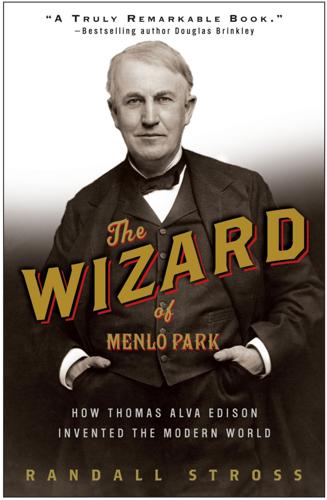
pages: 440 words: 132,685
The Wizard of Menlo Park: How Thomas Alva Edison Invented the Modern World by Randall E. Stross
Albert Einstein, centralized clearinghouse, Charles Lindbergh, cotton gin, death of newspapers, distributed generation, East Village, Ford Model T, Ford paid five dollars a day, I think there is a world market for maybe five computers, interchangeable parts, Isaac Newton, Livingstone, I presume, Marshall McLuhan, Menlo Park, plutocrats, Saturday Night Live, side project, Silicon Valley, Steve Jobs, Steven Levy, urban renewal, vertical integration, world market for maybe five computers
The original article appeared in the New York Sun. The Mall reprinted it the same day, and it was the clipping from the Mall that Batchelor preserved in his scrapbook. Mr. Edison was enraptured: Ibid. The excitement of the visitor brings to mind Apple’s Steve Jobs’s storied visit to Xerox’s Palo Alto Research Center in 1979, when he glimpsed the first personal computers with software featuring Windows and guided by mice. Five years later, Apple introduced the Macintosh. In the view of Xerox PARC’s later regretful director, George Pake, the significance of the visit was that it convinced Jobs that such a computer was “doable.” Pake likened it to the Soviets’ building of their first atomic bomb: “They developed it very quickly once they knew it was doable.”
…
conceptualized, then refined: A sketch entered on 29 November 1877, just before Kruesi started building the first model, shows side and end views of the design of what would, in a few days, be realized as a working model. Laboratory notebook, 29 November 1877, PTAED, NS7703D. On 4 December 1877: Charles Batchelor, Diary, 1877–1878, PTAED, MBJ001. Even the loquacious Johnson: Edward Johnson to Uriah Painter, 7 December 1877, PTAE, 3:661. feeling quite well: Over one hundred years later, Steve Jobs borrowed the same parlor trick when he pulled the first Macintosh computer out of a bag and had it introduce itself on stage in January 1984: “Hello, I am Macintosh. It sure is great to get out of that bag.” See Steven Levy, Insanely Great: The Life and Times of Macintosh, the Computer That Changed Everything (New York: Viking, 1994), 182.
…
Jim Gullickson made countless corrections in the course of careful copy-editing. Lindsey Moore kept us all on schedule. This work is dedicated to my most important collaborator, Ellen Stross. Her editorial suggestions made the book immeasurably better—and considerably shorter. ALSO BY RANDALL STROSS eBoys The Microsoft Way Steve Jobs and the NeXT Big Thing Bulls in the China Shop The Stubborn Earth Technology and Society in Twentieth-Century America (ed.) Copyright © 2007 by Randall E. Stross All rights reserved. Published in the United States by Crown Publishers, an imprint of the Crown Publishing Group, a division of Random House, Inc., New York.
pages: 486 words: 150,849
Evil Geniuses: The Unmaking of America: A Recent History by Kurt Andersen
"Friedman doctrine" OR "shareholder theory", "World Economic Forum" Davos, affirmative action, Affordable Care Act / Obamacare, air traffic controllers' union, airline deregulation, airport security, Alan Greenspan, always be closing, American ideology, American Legislative Exchange Council, An Inconvenient Truth, anti-communist, Apple's 1984 Super Bowl advert, artificial general intelligence, autonomous vehicles, basic income, Bear Stearns, Bernie Sanders, blue-collar work, Bonfire of the Vanities, bonus culture, Burning Man, call centre, Capital in the Twenty-First Century by Thomas Piketty, carbon tax, Cass Sunstein, centre right, computer age, contact tracing, coronavirus, corporate governance, corporate raider, cotton gin, COVID-19, creative destruction, Credit Default Swap, cryptocurrency, deep learning, DeepMind, deindustrialization, Donald Trump, Dr. Strangelove, Elon Musk, ending welfare as we know it, Erik Brynjolfsson, feminist movement, financial deregulation, financial innovation, Francis Fukuyama: the end of history, future of work, Future Shock, game design, General Motors Futurama, George Floyd, George Gilder, Gordon Gekko, greed is good, Herbert Marcuse, Herman Kahn, High speed trading, hive mind, income inequality, industrial robot, interchangeable parts, invisible hand, Isaac Newton, It's morning again in America, James Watt: steam engine, Jane Jacobs, Jaron Lanier, Jeff Bezos, jitney, Joan Didion, job automation, John Maynard Keynes: Economic Possibilities for our Grandchildren, John Maynard Keynes: technological unemployment, Joseph Schumpeter, junk bonds, Kevin Roose, knowledge worker, lockdown, low skilled workers, Lyft, Mark Zuckerberg, market bubble, mass immigration, mass incarceration, Menlo Park, Naomi Klein, new economy, Norbert Wiener, Norman Mailer, obamacare, Overton Window, Peter Thiel, Picturephone, plutocrats, post-industrial society, Powell Memorandum, pre–internet, public intellectual, Ralph Nader, Right to Buy, road to serfdom, Robert Bork, Robert Gordon, Robert Mercer, Ronald Reagan, Saturday Night Live, Seaside, Florida, Second Machine Age, shareholder value, Silicon Valley, social distancing, Social Responsibility of Business Is to Increase Its Profits, Steve Jobs, Stewart Brand, stock buybacks, strikebreaker, tech billionaire, The Death and Life of Great American Cities, The Future of Employment, The Rise and Fall of American Growth, The Wealth of Nations by Adam Smith, Tim Cook: Apple, too big to fail, trickle-down economics, Tyler Cowen, Tyler Cowen: Great Stagnation, Uber and Lyft, uber lyft, union organizing, universal basic income, Unsafe at Any Speed, urban planning, urban renewal, very high income, wage slave, Wall-E, War on Poverty, We are all Keynesians now, Whole Earth Catalog, winner-take-all economy, women in the workforce, working poor, young professional, éminence grise
I remember being in a Des Moines hotel room covering the Democratic caucuses for Time, feeling so state-of-the-art to be filing a story about Hart, a so-called Atari Democrat, through a twenty-eight-pound portable computer connected to a shoebox-size dial-up modem to which we’d docked a curly-corded desktop telephone handset. Just a few weeks earlier, in January 1984, Apple had introduced the Macintosh. Its famous Super Bowl ad, based on George Orwell’s Nineteen Eighty-four, featured a heroine smashing the tyrants’ huge telescreen, a lone nonconformist underdog spectacularly defying the oppressive Establishment. It suited the moment and digital early adopters who were politically aware but not actually, specifically political, in a stylish little allegory with which everyone from Ayn Rand fans to Hart fans to Deadheads might identify. Steve Jobs, not yet thirty, had just become the sort of emblematic generational avatar that Gary Hart pretended he wasn’t desperate to be.
…
For the remainder of the century, the issues that aroused liberal and left passions in a major way—nuclear weapons, civil wars in Central American countries, the AIDS epidemic—were intermittent and never directly concerned the U.S. political economy. People like Steve Jobs, or at least people like me, who did vote, always for Democrats, weren’t antiunion or antiwelfare or antigovernment. The probability that elected Democrats would tend to increase my taxes wasn’t a reason I voted for them, but my indifference to the financial hit—like Steve Jobs!—felt virtuous, low-end noblesse oblige. However, even after the right got its way on the political economy, many people like me weren’t viscerally, actively skeptical of business or Wall Street either.
…
The one genuinely new pop cultural genre, hip-hop, made an explicit, unapologetic point of quoting old songs. Science fiction, the cultural genre that is all about imagining the future, got a new subgenre in the 1990s that was considered supercool because it was set in the past—steampunk. And commercialized futurism also became oddly familiar and nostalgic. Apple devices of the twenty-first century and glassy, supersleek Apple stores feel “contemporary” in the sense that they’re like props and back-on-Earth sets from 2001: A Space Odyssey, the 2000s as they were envisioned in the ’60s, the moment before nostalgia took over everything. The nostalgia division of the fantasy-industrial complex began merchandising in precincts beyond entertainment, from fake-old cars like Miatas and PT Cruisers to retail chains like Restoration Hardware selling stylish fake-old things.

pages: 323 words: 95,939
Present Shock: When Everything Happens Now by Douglas Rushkoff
"Hurricane Katrina" Superdome, algorithmic trading, Alvin Toffler, Andrew Keen, bank run, behavioural economics, Benoit Mandelbrot, big-box store, Black Swan, British Empire, Buckminster Fuller, business cycle, cashless society, citizen journalism, clockwork universe, cognitive dissonance, Credit Default Swap, crowdsourcing, Danny Hillis, disintermediation, Donald Trump, double helix, East Village, Elliott wave, European colonialism, Extropian, facts on the ground, Flash crash, Future Shock, game design, global pandemic, global supply chain, global village, Howard Rheingold, hypertext link, Inbox Zero, invention of agriculture, invention of hypertext, invisible hand, iterative process, James Bridle, John Nash: game theory, Kevin Kelly, laissez-faire capitalism, lateral thinking, Law of Accelerating Returns, Lewis Mumford, loss aversion, mandelbrot fractal, Marshall McLuhan, Merlin Mann, messenger bag, Milgram experiment, mirror neurons, mutually assured destruction, negative equity, Network effects, New Urbanism, Nicholas Carr, Norbert Wiener, Occupy movement, off-the-grid, passive investing, pattern recognition, peak oil, Peter Pan Syndrome, price mechanism, prisoner's dilemma, Ralph Nelson Elliott, RAND corporation, Ray Kurzweil, recommendation engine, scientific management, selective serotonin reuptake inhibitor (SSRI), Silicon Valley, SimCity, Skype, social graph, South Sea Bubble, Steve Jobs, Steve Wozniak, Steven Pinker, Stewart Brand, supply-chain management, technological determinism, the medium is the message, The Wisdom of Crowds, theory of mind, Tragedy of the Commons, Turing test, upwardly mobile, Whole Earth Catalog, WikiLeaks, Y2K, zero-sum game
With each new wave of popularity, Birkenstock launches new lines and opens new dealerships, then pulls back when consumer appetites level off. With this strategy, the company has expanded from making just a handful of shoes to its current offering of close to five hundred different styles. A friend of mine who worked on smart phone applications at Apple told me that Steve Jobs always thought of product development in terms of three-year cycles. Jobs simply was not interested in what was happening in the present; he only cared about the way people would be working with technology three years in the future. This is what empowered Jobs to ship the first iMacs with no slot for floppy drives, and iPhones without the ability to play the then-ubiquitous Flash movie files.
…
As author and social critic Steven Johnson would remind us, ideas don’t generally emerge from individuals, but from groups, or what he calls “liquid networks.”1 The coffeehouses of eighteenth-century London spawned the ideas that fueled the Enlightenment, and the Apple computer was less a product of one mind than the collective imagination of the Homebrew Computer Club to which both Steve Jobs and Steve Wozniak belonged. The notion of a lone individual churning out ideas in isolated contemplation like Rodin’s Thinker may not be completely untrue, but it has certainly been deemphasized in today’s culture of networked thinking.
…
The amount of time between purchase (or even earning) and gratification has shrunk to nothing—so much so that the purchase itself is more rewarding than consuming whatever it is that has been bought. After waiting several days in the street, Apple customers exit the store waving their newly purchased i-gadgets in the air, as if acquisition itself were the reward. The purchase feels embedded with historicity. They were part of a real moment, a specific date. The same way someone may tell us he was at the Beatles famous concert at Shea Stadium, the Apple consumer can say he scored the new iPhone on the day it was released. Where “act now” once meant that a particular sales price would soon expire, today it simply means there’s an opportunity to do something at a particular moment.
pages: 350 words: 98,077
Artificial Intelligence: A Guide for Thinking Humans by Melanie Mitchell
Ada Lovelace, AI winter, Alignment Problem, AlphaGo, Amazon Mechanical Turk, Apple's 1984 Super Bowl advert, artificial general intelligence, autonomous vehicles, backpropagation, Bernie Sanders, Big Tech, Boston Dynamics, Cambridge Analytica, Charles Babbage, Claude Shannon: information theory, cognitive dissonance, computer age, computer vision, Computing Machinery and Intelligence, dark matter, deep learning, DeepMind, Demis Hassabis, Douglas Hofstadter, driverless car, Elon Musk, en.wikipedia.org, folksonomy, Geoffrey Hinton, Gödel, Escher, Bach, I think there is a world market for maybe five computers, ImageNet competition, Jaron Lanier, job automation, John Markoff, John von Neumann, Kevin Kelly, Kickstarter, license plate recognition, machine translation, Mark Zuckerberg, natural language processing, Nick Bostrom, Norbert Wiener, ought to be enough for anybody, paperclip maximiser, pattern recognition, performance metric, RAND corporation, Ray Kurzweil, recommendation engine, ride hailing / ride sharing, Rodney Brooks, self-driving car, sentiment analysis, Silicon Valley, Singularitarianism, Skype, speech recognition, Stephen Hawking, Steve Jobs, Steve Wozniak, Steven Pinker, strong AI, superintelligent machines, tacit knowledge, tail risk, TED Talk, the long tail, theory of mind, There's no reason for any individual to have a computer in his home - Ken Olsen, trolley problem, Turing test, Vernor Vinge, Watson beat the top human players on Jeopardy!, world market for maybe five computers
Breakout was the result of Atari’s effort to create a single-player version of its successful game Pong. The design and implementation of Breakout were originally assigned in 1975 to a twenty-year-old employee named Steve Jobs. Yes, that Steve Jobs (later, cofounder of Apple). Jobs lacked sufficient engineering skills to do a good job on Breakout, so he enlisted his friend Steve Wozniak, aged twenty-five (later, the other cofounder of Apple), to help on the project. Wozniak and Jobs completed the hardware design of Breakout in four nights, starting work each night after Wozniak had completed his day job at Hewlett-Packard. Once released, Breakout, like Pong, was hugely popular among gamers.
…
Li and her collaborators soon commenced collecting a deluge of images by using WordNet nouns as queries on image search engines such as Flickr and Google image search. However, if you’ve ever used an image search engine, you know that the results of a query are often far from perfect. For example, if you type “macintosh apple” into Google image search, you get photos not only of apples and Mac computers but also of apple-shaped candles, smartphones, bottles of apple wine, and any number of other nonrelevant items. Thus, Li and her colleagues had to have humans figure out which images were not actually illustrations of a given noun and get rid of them. At first, the humans who did this were mainly undergraduates.
…
According to a Google speech-recognition expert, the use of deep networks resulted in the “biggest single improvement in 20 years of speech research.”3 The same year, a new deep-network speech-recognition system was released to customers on Android phones; two years later it was released on Apple’s iPhone, with one Apple engineer commenting, “This was one of those things where the jump [in performance] was so significant that you do the test again to make sure that somebody didn’t drop a decimal place.”4 If you yourself happened to use any kind of speech-recognition technology both before and after 2012, you will have also noticed a very sharp improvement.

pages: 263 words: 79,016
The Sport and Prey of Capitalists by Linda McQuaig
anti-communist, Bernie Sanders, carbon footprint, carbon tax, clean water, Cornelius Vanderbilt, diversification, Donald Trump, energy transition, financial innovation, Garrett Hardin, green new deal, Kickstarter, low interest rates, megaproject, Menlo Park, Money creation, Naomi Klein, neoliberal agenda, new economy, offshore financial centre, oil shale / tar sands, Paris climate accords, payday loans, precautionary principle, profit motive, risk/return, Ronald Reagan, Sidewalk Labs, Steve Jobs, strikebreaker, Tragedy of the Commons, union organizing
“From the development of aviation, nuclear energy, computers, the Internet, biotechnology, and today’s developments in green technology, it is, and has been the State — not the private sector — that has kick-started and developed the engine of growth, because of its willingness to take risks in areas where the private sector has been too risk averse.”5 Her point is amply illustrated by Apple. The phenomenal success of the technology giant is typically attributed to the creative brilliance of its founder, Steve Jobs. A mythology has grown up around how Apple innovations began with Jobs, a high-school dropout, tinkering around in the family garage. In a 2005 address at Stanford University, Jobs famously advised graduating students to be innovative by “pursuing what you love” and “staying foolish.”
…
There may be a good reason not to turn the Oshawa plant into a green production facility, but let’s not succumb to the ill-informed notion that Canadians aren’t up to the task or that we don’t know how to do public enterprise in this country. Advocates for business, including those in think tanks, the media, and academia, insist that private entrepreneurs are the very source of innovation and wealth. Yet, as Mazzucato demonstrates so well, even some of the best inventor-entrepreneurs, such as Steve Jobs, were able to accomplish what they did only because of massive, publicly funded investments in basic research. “Such radical investments — which embedded extreme uncertainty — did not come about due to the presence of venture capitalists, nor of ‘garage-tinkerers,’” she writes. “It was the visible hand of the State which made these innovations happen.
…
But she maintains that “without the massive amount of public investment behind the computer and Internet revolutions, such attributes might have led only to the invention of a new toy — not to cutting-edge revolutionary products like the iPad and iPhone which have changed the way people work and communicate.” She points out that Apple mastered and marketed “technologies that were first developed and funded by the U.S. government and military.… In fact, there is not a single key technology behind the iPhone that has not been State-funded.” She points to the pivotal role of the State in “making the early, large and high-risk investments, and then sustaining them until such time that the later-stage private actors can appear to ‘play around and have fun.’” Acknowledging the state’s vital role would have some important implications. Apple, like many leading U.S. corporations, has gone to great lengths to avoid paying taxes.

pages: 370 words: 105,085
Joel on Software by Joel Spolsky
AltaVista, AOL-Time Warner, Apple Newton, barriers to entry, Beos Apple "Steve Jobs" next macos , business logic, c2.com, commoditize, Dennis Ritchie, General Magic , George Gilder, index card, Jeff Bezos, knowledge worker, machine readable, Metcalfe's law, Mitch Kapor, Multics, Network effects, new economy, off-by-one error, PageRank, PalmPilot, Paul Graham, pneumatic tube, profit motive, reality distortion field, Robert X Cringely, shareholder value, Silicon Valley, Silicon Valley startup, SimCity, six sigma, slashdot, Steve Ballmer, Steve Jobs, the scientific method, thinkpad, VA Linux, web application
Important Corollary Five When you're showing off, the only thing that matters is the screen shot. Make it 100 percent beautiful. Don't, for a minute, think that you can get away with asking anybody. to imagine how cool this would be.. Don't think that they're looking at the functionality. They're not. They want to see pretty pixels. Steve Jobs understands this. Oh boy does he understand this. Engineers at Apple have learned to do things that make for great screen shots, like the gorgeous new 1024×1024 icons in the dock, even if they waste valuable real estate. And the Linux desktop crowd goes crazy about semitransparent xterms, which make for good screenshots but are usually annoying to use.
…
If you're in the platform-creation business, you probably will suffer from what is commonly known as the chicken-and-egg problem: Nobody is going to buy your platform until there's good software that runs on it, and nobody is going to write software until you have a big installed base. Ooops. It's sort of like a Gordian Knot, although a Gordian Death Spiral might be more descriptive. The chicken-and-egg problem, and variants thereof, is the most important element of strategy to understand. Well, OK, you can probably live without understanding it: Steve Jobs practically made a career out of not understanding the chicken-and-egg problem, twice. But the rest of us don't have Jobs's Personal Reality Distortion Field at our disposal, so we'll have to buckle down and study hard. The classic domain of chicken-and-egg problems is in software platforms. But here's another chicken-and-egg problem: Every month, millions of credit card companies mail out zillions of bills to consumers in the mail.
…
The C++ compiler is now free.3 Anything to encourage developers to build for the .NET platform, and holding just short of wiping out companies like Borland. Why Apple and Sun Can't Sell Computers Well, of course, that's a little bit silly; of course Apple and Sun can sell computers, but not to the two most lucrative markets for computers, namely, the corporate desktop and the home computer. Apple is still down there in the very low single digits of market share, and the only people with Suns on their desktops are at Sun. (Please understand that I'm talking about large trends here, and therefore when I say things like "nobody," I really mean "fewer than 10,000,000 people," and so on and so forth.) Why? Because Apple and Sun computers don't run Windows programs, or, if they do, it's in some kind of expensive emulation mode that doesn't work so great.
pages: 344 words: 96,020
Hacking Growth: How Today's Fastest-Growing Companies Drive Breakout Success by Sean Ellis, Morgan Brown
Airbnb, Amazon Web Services, barriers to entry, behavioural economics, Ben Horowitz, bounce rate, business intelligence, business process, content marketing, correlation does not imply causation, crowdsourcing, dark pattern, data science, DevOps, disruptive innovation, Elon Musk, game design, gamification, Google Glasses, growth hacking, Internet of things, inventory management, iterative process, Jeff Bezos, Khan Academy, Kickstarter, Lean Startup, Lyft, Mark Zuckerberg, market design, minimum viable product, multi-armed bandit, Network effects, Paul Graham, Peter Thiel, Ponzi scheme, recommendation engine, ride hailing / ride sharing, Salesforce, Sheryl Sandberg, side project, Silicon Valley, Silicon Valley startup, Skype, Snapchat, software as a service, Steve Jobs, Steve Jurvetson, subscription business, TED Talk, Travis Kalanick, Uber and Lyft, Uber for X, uber lyft, working poor, Y Combinator, young professional
In other words, you must craft language that very concisely communicates your product’s core value—conveying the aha moment—and answers the simple question foremost in every consumer’s mind: “How is this thing you’re showing me going to improve my life?” One of the best examples of an enormously compelling product description is the language Steve Jobs used to introduce the original iPod. When the product was unveiled in 2001, the market was full of MP3 players, and it would have been tempting for Jobs to fall back on messaging explaining why his version was different and better. Instead, he brilliantly chose not to resort to any of the language being used to describe MP3 players and their utility whatsoever.
…
Rather than spend his time trying to differentiate his product from others on price or features, in other words, Jobs understood that the core value, the magical aha experience, was carrying your entire music library around with you anywhere, all the time, totally hassle free. Of course we’re not all such brilliant marketing minds as Steve Jobs—but with the right testing strategies in place, we can come close! For most of us mere mortals, crafting appealing language is extremely difficult. The human response to language is highly emotional, and largely subconscious. Words that resonate for some people may have no particular appeal to some, or even be off-putting to still others.
…
Because triggers can be so invasive, you want to be judicious in how you use them and experiment in measured steps. Making matters more complicated, you’ve also got to follow some rules dictated by the platform on which you wish to deliver them. For example, mobile push notification rules differ for Apple phones than for those that run on Android; whereas Apple users need to opt in to receive notifications, Android users are opted in to get notifications by default. Rules have also been established in consumer protection law for sending emails, such as the CAN-SPAM law in the United States. FOGG BEHAVIOR MODEL And finally, for opt-in notifications, a trigger’s impact will vary greatly depending on how many users agree to receive them.

pages: 484 words: 104,873
Rise of the Robots: Technology and the Threat of a Jobless Future by Martin Ford
3D printing, additive manufacturing, Affordable Care Act / Obamacare, AI winter, algorithmic management, algorithmic trading, Amazon Mechanical Turk, artificial general intelligence, assortative mating, autonomous vehicles, banking crisis, basic income, Baxter: Rethink Robotics, Bernie Madoff, Bill Joy: nanobots, bond market vigilante , business cycle, call centre, Capital in the Twenty-First Century by Thomas Piketty, carbon tax, Charles Babbage, Chris Urmson, Clayton Christensen, clean water, cloud computing, collateralized debt obligation, commoditize, computer age, creative destruction, data science, debt deflation, deep learning, deskilling, digital divide, disruptive innovation, diversified portfolio, driverless car, Erik Brynjolfsson, factory automation, financial innovation, Flash crash, Ford Model T, Fractional reserve banking, Freestyle chess, full employment, general purpose technology, Geoffrey Hinton, Goldman Sachs: Vampire Squid, Gunnar Myrdal, High speed trading, income inequality, indoor plumbing, industrial robot, informal economy, iterative process, Jaron Lanier, job automation, John Markoff, John Maynard Keynes: technological unemployment, John von Neumann, Kenneth Arrow, Khan Academy, Kiva Systems, knowledge worker, labor-force participation, large language model, liquidity trap, low interest rates, low skilled workers, low-wage service sector, Lyft, machine readable, machine translation, manufacturing employment, Marc Andreessen, McJob, moral hazard, Narrative Science, Network effects, new economy, Nicholas Carr, Norbert Wiener, obamacare, optical character recognition, passive income, Paul Samuelson, performance metric, Peter Thiel, plutocrats, post scarcity, precision agriculture, price mechanism, public intellectual, Ray Kurzweil, rent control, rent-seeking, reshoring, RFID, Richard Feynman, Robert Solow, Rodney Brooks, Salesforce, Sam Peltzman, secular stagnation, self-driving car, Silicon Valley, Silicon Valley billionaire, Silicon Valley startup, single-payer health, software is eating the world, sovereign wealth fund, speech recognition, Spread Networks laid a new fibre optics cable between New York and Chicago, stealth mode startup, stem cell, Stephen Hawking, Steve Jobs, Steven Levy, Steven Pinker, strong AI, Stuxnet, technological singularity, telepresence, telepresence robot, The Bell Curve by Richard Herrnstein and Charles Murray, The Coming Technological Singularity, The Future of Employment, the long tail, Thomas L Friedman, too big to fail, Tragedy of the Commons, Tyler Cowen, Tyler Cowen: Great Stagnation, uber lyft, union organizing, Vernor Vinge, very high income, warehouse automation, warehouse robotics, Watson beat the top human players on Jeopardy!, women in the workforce
One of the most important lessons of history is that there is a powerful symbiosis between technological progress and a well-functioning market economy. Healthy markets create the incentives that lead to meaningful innovation and ever-increasing productivity, and this has been the driving force behind our prosperity.* Most intelligent people understand this (and are very likely to bring up Steve Jobs and the iPhone when discussing it). The problem is that health care is a broken market and no amount of technology is likely to bring down costs unless the structural problems in the industry are resolved. There is also, I think, a great deal of confusion about the nature of the health care market and exactly where an effective market pricing mechanism should come into play.
…
Many people would like to believe that health care is a normal consumer market: if only we could get insurance companies, and especially the government, out of the way and instead push decisions and costs onto the consumer (or patient), then we’d get innovations and outcomes similar to what we’ve seen in other industries (Steve Jobs might be mentioned again here). The reality, however, is that health care is simply not comparable to other markets for consumer products and services, and this has been well understood for over half a century. In 1963, the Nobel laureate economist Kenneth Arrow wrote a paper detailing the ways in which medical care stands apart from other goods and services.
…
A Facebook executive noted in November 2013 that the Cyborg system routinely solves thousands of problems that would otherwise have to be addressed manually, and that the technology allows a single technician to manage as many as 20,000 computers.28 Cloud computing data centers are often built in relatively rural areas where land and, especially, electric power are plentiful and cheap. States and local governments compete intensively for the facilities, offering companies like Google, Facebook, and Apple generous tax breaks and other financial incentives. Their primary objective, of course, is to create lots of jobs for local residents—but such hopes are rarely realized. In 2011, the Washington Post’s Michael Rosenwald reported that a colossal, billion-dollar data center built by Apple, Inc., in the town of Maiden, North Carolina, had created only fifty full-time positions. Disappointed residents couldn’t “comprehend how expensive facilities stretching across hundreds of acres can create so few jobs.”29 The explanation, of course, is that algorithms like Cyborg are doing the heavy lifting.

pages: 603 words: 182,781
Aerotropolis by John D. Kasarda, Greg Lindsay
3D printing, air freight, airline deregulation, airport security, Akira Okazaki, Alvin Toffler, An Inconvenient Truth, Asian financial crisis, back-to-the-land, barriers to entry, Bear Stearns, Berlin Wall, big-box store, blood diamond, Boeing 747, book value, borderless world, Boris Johnson, British Empire, business cycle, call centre, carbon footprint, Cesare Marchetti: Marchetti’s constant, Charles Lindbergh, Clayton Christensen, clean tech, cognitive dissonance, commoditize, company town, conceptual framework, credit crunch, David Brooks, David Ricardo: comparative advantage, Deng Xiaoping, deskilling, digital map, disruptive innovation, Dr. Strangelove, Dutch auction, Easter island, edge city, Edward Glaeser, Eyjafjallajökull, failed state, financial engineering, flag carrier, flying shuttle, food miles, Ford Model T, Ford paid five dollars a day, Frank Gehry, fudge factor, fulfillment center, full employment, future of work, Future Shock, General Motors Futurama, gentleman farmer, gentrification, Geoffrey West, Santa Fe Institute, George Gilder, global supply chain, global village, gravity well, Great Leap Forward, Haber-Bosch Process, Hernando de Soto, high-speed rail, hive mind, if you build it, they will come, illegal immigration, inflight wifi, intangible asset, interchangeable parts, Intergovernmental Panel on Climate Change (IPCC), intermodal, invention of the telephone, inventory management, invisible hand, Jane Jacobs, Jeff Bezos, Jevons paradox, Joan Didion, Kangaroo Route, Kickstarter, Kiva Systems, knowledge worker, kremlinology, land bank, Lewis Mumford, low cost airline, Marchetti’s constant, Marshall McLuhan, Masdar, mass immigration, McMansion, megacity, megaproject, Menlo Park, microcredit, military-industrial complex, Network effects, New Economic Geography, new economy, New Urbanism, oil shale / tar sands, oil shock, One Laptop per Child (OLPC), peak oil, Pearl River Delta, Peter Calthorpe, Peter Thiel, pets.com, pink-collar, planned obsolescence, pre–internet, RFID, Richard Florida, Ronald Coase, Ronald Reagan, Rubik’s Cube, savings glut, Seaside, Florida, Shenzhen special economic zone , Shenzhen was a fishing village, Silicon Valley, Silicon Valley startup, SimCity, Skype, smart cities, smart grid, South China Sea, South Sea Bubble, sovereign wealth fund, special economic zone, spice trade, spinning jenny, starchitect, stem cell, Steve Jobs, Suez canal 1869, sunk-cost fallacy, supply-chain management, sustainable-tourism, tech worker, telepresence, the built environment, The Chicago School, The Death and Life of Great American Cities, the long tail, The Nature of the Firm, thinkpad, Thomas L Friedman, Thomas Malthus, Tony Hsieh, trade route, transcontinental railway, transit-oriented development, traveling salesman, trickle-down economics, upwardly mobile, urban planning, urban renewal, urban sprawl, vertical integration, Virgin Galactic, walkable city, warehouse robotics, white flight, white picket fence, Yogi Berra, zero-sum game
If you have a cell phone, iPod, camera, or some combination of the three, its battery was probably made next door to the F3DM. Warren Buffett likes the car so much he bought a tenth of BYD for $230 million. But with a little luck, its boyish-looking chairman Wang Chuanfu may go down in history as China’s answer to Steve Jobs. He’s taking the wheel of the auto industry the same way Apple hijacked music; the F3DM is his iPod. Wang has made it clear he doesn’t care about making cars, per se. He’s charged only about electricity. Cars are a commodity; a better battery isn’t. Which is why Daimler has partnered with BYD to create its own electric models.
…
Netbooks are old hat—tablets are where the action is. By one estimate, tablets will outsell netbooks as early as next year, and desktop computers the year after that, rising to twenty million a year by 2015. Before Apple introduced the iPad in 2010, Foxconn’s iWonder was already on sale in China—for just $100. Another manufacturer with a tablet and nothing to lose threatened to sue Steve Jobs for patent in-fringement despite its own being an obvious knockoff. (Which raises an existential question: Can something be a knockoff if an original doesn’t exist? China seems determined to find out.) ASUSTeK split itself in two, the better to make and sell cell phones, Kindle killers, and video games under its own name—now simply ASUS—while honoring its old contracts.
…
Hui is Hong Kong’s dapper airport chief and the former head of Dragonair, one of the dozens of airlines now flying around China. We were sipping tea that afternoon atop the Li & Fung Tower, waiting for Victor Fung. The older brother long ago relinquished his daily duties to act as the Delta’s economic czar instead. Picture Steve Jobs advising Obama; that’s Victor Fung. He was chairman of the Airport Authority during the Delta’s long boom, until he was tapped by the city’s chief executive to somehow make the meltdown work for Hong Kong. It was tempting to see the pair, Victor and Stanley, as the ghosts of Hong Kong’s past and present.

pages: 476 words: 125,219
Digital Disconnect: How Capitalism Is Turning the Internet Against Democracy by Robert W. McChesney
2013 Report for America's Infrastructure - American Society of Civil Engineers - 19 March 2013, access to a mobile phone, Alan Greenspan, Albert Einstein, American Legislative Exchange Council, American Society of Civil Engineers: Report Card, AOL-Time Warner, Automated Insights, barriers to entry, Berlin Wall, Big Tech, business cycle, Cass Sunstein, citizen journalism, classic study, cloud computing, collaborative consumption, collective bargaining, company town, creative destruction, crony capitalism, David Brooks, death of newspapers, declining real wages, digital capitalism, digital divide, disinformation, Double Irish / Dutch Sandwich, Dr. Strangelove, Erik Brynjolfsson, Evgeny Morozov, failed state, fake news, Filter Bubble, fulfillment center, full employment, future of journalism, George Gilder, Gini coefficient, Google Earth, income inequality, informal economy, intangible asset, invention of agriculture, invisible hand, Jaron Lanier, Jeff Bezos, jimmy wales, John Markoff, John Maynard Keynes: Economic Possibilities for our Grandchildren, John Perry Barlow, Joseph Schumpeter, Julian Assange, Kickstarter, Mark Zuckerberg, Marshall McLuhan, means of production, Metcalfe’s law, military-industrial complex, mutually assured destruction, national security letter, Nelson Mandela, Network effects, new economy, New Journalism, Nicholas Carr, Occupy movement, ocean acidification, offshore financial centre, patent troll, Peter Thiel, plutocrats, post scarcity, Post-Keynesian economics, power law, price mechanism, profit maximization, profit motive, public intellectual, QWERTY keyboard, Ralph Nader, Richard Stallman, road to serfdom, Robert Metcalfe, Saturday Night Live, sentiment analysis, Silicon Valley, Silicon Valley billionaire, single-payer health, Skype, spectrum auction, Steve Jobs, Steve Wozniak, Steven Levy, Steven Pinker, Stewart Brand, technological determinism, Telecommunications Act of 1996, the long tail, the medium is the message, The Spirit Level, The Structural Transformation of the Public Sphere, The Wealth of Nations by Adam Smith, Thorstein Veblen, too big to fail, transfer pricing, Upton Sinclair, WikiLeaks, winner-take-all economy, yellow journalism, Yochai Benkler
Two or three decades ago a machine might have five or ten patents, a patent expert noted. “Today, the phone in your pocket has about 5,000.” Battles over patents among the digital giants are now routine. “We can sit by and watch competitors steal our patented inventions,” Steve Jobs said in 2010, “or we can do something about it.” He launched what was termed Apple’s Jihad over patent rights in the courts.23 When Google paid an “astonishing” $12.5 billion to purchase Motorola Mobility in 2011, it did so significantly for Motorola’s 17,000 patents. These were a “trove of mobile patents” that would make Google’s Android stand up to legal challenge and diminish the threat of any new market entrants.24 “As tech companies snap up patents,” Politico observed, “they are battling each other in courts around the world.”
…
It’s not only how much money your parents have that matters [in determining your class position]—even your great-great-grandfather’s wealth might give you a noticeable edge today.”8 This limited economic mobility provides some context to address one of the arguments of the Internet’s celebrants, that social media and new technologies are generating a new type of warm and fuzzy capitalist and a new type of business organization. Gone are the bad old days of Ebenezer Scrooge, John D. Rockefeller, Mr. Potter, Exxon, Goldman Sachs, and Walmart. In their place are Richard Branson, Steve Jobs, and hacky-sack-playing CEOs at Google and Facebook. “The high-tech revolution created an entirely new breed of technophilanthropists who are using their fortunes to solve global, abundance-related problems,” Peter Diamandis and Steven Kotler write.9 These new emblems of capital are cool people, community minded and ecofriendly.
…
For tangible products, the type that fills economics textbooks, one person’s use of a product or service precludes another person from using the same product or service. Two people cannot eat the same hamburger or simultaneously drive the same automobile. More of the product or service needs to be produced to satisfy additional demand. Not so with information. “If you have an apple and I have an apple and we exchange apples, then you and I will still each have one apple,” George Bernard Shaw allegedly once said, “but if you have an idea and I have an idea and we exchange these ideas, then each of us will have two ideas.”49 Stephen King doesn’t need to write an individual copy of his novels for every single reader. Likewise, whether two hundred or 200 million people read one of his books would not detract from any one reader’s experience of it.

pages: 573 words: 115,489
Prosperity Without Growth: Foundations for the Economy of Tomorrow by Tim Jackson
"World Economic Forum" Davos, Alan Greenspan, bank run, banking crisis, banks create money, Basel III, basic income, biodiversity loss, bonus culture, Boris Johnson, business cycle, carbon footprint, Carmen Reinhart, Cass Sunstein, choice architecture, circular economy, collapse of Lehman Brothers, creative destruction, credit crunch, Credit Default Swap, critique of consumerism, David Graeber, decarbonisation, degrowth, dematerialisation, en.wikipedia.org, energy security, financial deregulation, Financial Instability Hypothesis, financial intermediation, full employment, Garrett Hardin, Glass-Steagall Act, green new deal, Growth in a Time of Debt, Hans Rosling, Hyman Minsky, impact investing, income inequality, income per capita, intentional community, Intergovernmental Panel on Climate Change (IPCC), Internet of things, invisible hand, job satisfaction, John Maynard Keynes: Economic Possibilities for our Grandchildren, Joseph Schumpeter, Kenneth Rogoff, Kickstarter, laissez-faire capitalism, liberal capitalism, low interest rates, Mahatma Gandhi, mass immigration, means of production, meta-analysis, Money creation, moral hazard, mortgage debt, Murray Bookchin, Naomi Klein, negative emissions, new economy, ocean acidification, offshore financial centre, oil shale / tar sands, open economy, paradox of thrift, peak oil, peer-to-peer lending, Philip Mirowski, Post-Keynesian economics, profit motive, purchasing power parity, quantitative easing, retail therapy, Richard Thaler, road to serfdom, Robert Gordon, Robert Solow, Ronald Reagan, science of happiness, secular stagnation, short selling, Simon Kuznets, Skype, smart grid, sovereign wealth fund, Steve Jobs, TED Talk, The Chicago School, The Great Moderation, The Rise and Fall of American Growth, The Spirit Level, The Theory of the Leisure Class by Thorstein Veblen, The Wealth of Nations by Adam Smith, Thorstein Veblen, too big to fail, Tragedy of the Commons, universal basic income, Works Progress Administration, World Values Survey, zero-sum game
Versions of the sovereign money proposal are currently being debated in several advanced economies including Switzerland and Iceland. 11 A lasting prosperity 1 This line was part of an Apple advertising campaign entitled Think Differently launched in 1998. Steve Jobs and Richard Dreyfus both made recordings of the voiceover. On the day of the release, Jobs decided against using his voiceover, arguing that the campaign was about Apple, rather than about him. Jobs’ recording is, however, still online, for instance, at http://geekologie.com/2011/10/touching-steve-jobs-voicing-apples-iconi.php (accessed 2 June 2016). 2 See Figure 5.6. 3 It would be wrong to dismiss entirely the potential for technological breakthroughs.
…
In short, the progressive State is not just the instrumental means for ensuring social and economic stability in a low-growth environment. It is the basis for a renewed vision of governance. It is the foundation for a lasting prosperity. 11 A LASTING PROSPERITY The people who are crazy enough to think they can change the world are the ones who do. Steve Jobs, 19981 Society is faced with a profound dilemma. To reject growth is to risk economic and social collapse. To pursue it relentlessly is to endanger the ecosystems on which we depend for long-term survival. For the most part, this dilemma goes unrecognised in mainstream policy. It’s only marginally more visible as a public debate.
…
Returns will probably be slower and delivered over longer timeframes. Though vital for prosperity, some investments may not generate returns in conventional monetary terms at all. This means that social investment is crucial, not least in creating and maintaining public goods. An interesting reflection on Apple’s ‘think different’ campaign (cited at the top of this chapter) is implicit in Mariana Mazzucato’s analysis of the huge role played by the ‘entrepreneurial state’ in technological innovation.14 The crazy people who believe in the possibility of changing the world really matter. But theirs is not the only story.

pages: 416 words: 106,532
Cryptoassets: The Innovative Investor's Guide to Bitcoin and Beyond: The Innovative Investor's Guide to Bitcoin and Beyond by Chris Burniske, Jack Tatar
Airbnb, Alan Greenspan, altcoin, Alvin Toffler, asset allocation, asset-backed security, autonomous vehicles, Bear Stearns, bitcoin, Bitcoin Ponzi scheme, blockchain, Blythe Masters, book value, business cycle, business process, buy and hold, capital controls, carbon tax, Carmen Reinhart, Clayton Christensen, clean water, cloud computing, collateralized debt obligation, commoditize, correlation coefficient, creative destruction, Credit Default Swap, credit default swaps / collateralized debt obligations, cryptocurrency, disintermediation, distributed ledger, diversification, diversified portfolio, Dogecoin, Donald Trump, Elon Musk, en.wikipedia.org, Ethereum, ethereum blockchain, fiat currency, financial engineering, financial innovation, fixed income, Future Shock, general purpose technology, George Gilder, Google Hangouts, high net worth, hype cycle, information security, initial coin offering, it's over 9,000, Jeff Bezos, Kenneth Rogoff, Kickstarter, Leonard Kleinrock, litecoin, low interest rates, Marc Andreessen, Mark Zuckerberg, market bubble, money market fund, money: store of value / unit of account / medium of exchange, moral hazard, Network effects, packet switching, passive investing, peer-to-peer, peer-to-peer lending, Peter Thiel, pets.com, Ponzi scheme, prediction markets, quantitative easing, quantum cryptography, RAND corporation, random walk, Renaissance Technologies, risk free rate, risk tolerance, risk-adjusted returns, Robert Shiller, Ross Ulbricht, Salesforce, Satoshi Nakamoto, seminal paper, Sharpe ratio, Silicon Valley, Simon Singh, Skype, smart contracts, social web, South Sea Bubble, Steve Jobs, transaction costs, tulip mania, Turing complete, two and twenty, Uber for X, Vanguard fund, Vitalik Buterin, WikiLeaks, Y2K
In the past, this world was open only to the wealthy, but with new trends such as crowdfunding, token launches, and innovative regulation via the JOBS Act, opportunities exist for innovative investors of all shapes and sizes to get involved. Chapter 16 The Wild World of ICOs During the early tech days, innovators such as Steve Jobs, Bill Gates, and Michael Dell became iconic figures who had turned ideas into multibillion-dollar businesses. Over the last decade, we’ve seen visionaries such as Elon Musk, Peter Thiel, and Mark Zuckerberg do the same. These innovators changed the world because people believed in their visions, and these early believers invested money to turn their ideas into reality.
…
In part, these regulations are why we have seen an increase in the amount of time it takes for companies to get to an IPO. However, some leaders recognized that the world needed to spur more innovation and not strangle it.7 They began to question the regulations and used famous Internet company founders, such as Steve Jobs, Bill Gates, and Michael Dell, as examples of how American innovation has made the country great. These leaders understood that if starting a company and securing funding was made more difficult, America would suffer. Simultaneously, a funding shift was occurring, as many entrepreneurs realized they didn’t have to rely on venture capital, family, debt, or the capital markets to raise seed money: the Internet had become a major force in connecting entrepreneurs to investors through the process of crowdfunding.
…
The difference boils down to whether a raw digital resource is being provisioned (cryptocommodity) or if the dApp is providing a consumer-facing finished digital good or service (cryptotoken). Most cryptotokens are not supported by their own blockchain. Often these cryptotokens operate within applications that are built on a cryptocommodity’s blockchain, such as Ethereum. To continue with the Apple analogy: applications in Apple’s App Store don’t have to build their own operating systems, they run on Apple’s operating system. Due to Ethereum’s wild success, other decentralized world computers have popped up, such as Dfinity, Lisk, Rootstock, Tezos, Waves, and more that can support their own dApps. Just as many altcoins tried to improve upon Bitcoin, these platforms are cryptocommodities that aim to improve upon Ethereum’s design, thereby attracting their own dApps and associated cryptotokens.
pages: 370 words: 112,809
The Equality Machine: Harnessing Digital Technology for a Brighter, More Inclusive Future by Orly Lobel
2021 United States Capitol attack, 23andMe, Ada Lovelace, affirmative action, Airbnb, airport security, Albert Einstein, algorithmic bias, Amazon Mechanical Turk, augmented reality, barriers to entry, basic income, Big Tech, bioinformatics, Black Lives Matter, Boston Dynamics, Charles Babbage, choice architecture, computer vision, Computing Machinery and Intelligence, contact tracing, coronavirus, corporate social responsibility, correlation does not imply causation, COVID-19, crowdsourcing, data science, David Attenborough, David Heinemeier Hansson, deep learning, deepfake, digital divide, digital map, Elon Musk, emotional labour, equal pay for equal work, feminist movement, Filter Bubble, game design, gender pay gap, George Floyd, gig economy, glass ceiling, global pandemic, Google Chrome, Grace Hopper, income inequality, index fund, information asymmetry, Internet of things, invisible hand, it's over 9,000, iterative process, job automation, Lao Tzu, large language model, lockdown, machine readable, machine translation, Mark Zuckerberg, market bubble, microaggression, Moneyball by Michael Lewis explains big data, natural language processing, Netflix Prize, Network effects, Northpointe / Correctional Offender Management Profiling for Alternative Sanctions, occupational segregation, old-boy network, OpenAI, openstreetmap, paperclip maximiser, pattern recognition, performance metric, personalized medicine, price discrimination, publish or perish, QR code, randomized controlled trial, remote working, risk tolerance, robot derives from the Czech word robota Czech, meaning slave, Ronald Coase, Salesforce, self-driving car, sharing economy, Sheryl Sandberg, Silicon Valley, social distancing, social intelligence, speech recognition, statistical model, stem cell, Stephen Hawking, Steve Jobs, Steve Wozniak, surveillance capitalism, tech worker, TechCrunch disrupt, The Future of Employment, TikTok, Turing test, universal basic income, Wall-E, warehouse automation, women in the workforce, work culture , you are the product
British prime minister Margaret Thatcher famously trained with a vocal coach to give her voice a more male-sounding, authoritative pitch. More recently, Elizabeth Holmes, the ousted Theranos founder who was later criminally convicted, favored a low, baritone authoritative voice as part of her invented persona (along with her Steve Jobs–lookalike turtlenecks). Design decisions to exaggerate male and female speech characteristics are salient examples of biased—and entirely unnecessary—gendering. Later versions of both male and female text-to-speech voices have been faring somewhat better on the anti-stereotype scale and reflect the potential to challenge gender norms while still acknowledging differences.
…
Some of her accounts seemed larger than life, and journalists have raised questions about the accuracy of her life story, but what matters is that DiCarlo represented something: a self-made sex tech CEO whose outspokenness, outgoing character, and charisma have a goal—to rid female sexuality of a sense of shame or hiding. She appeared at Women in Tech Sweden and at TechCrunch Disrupt. She was described by one journalist as “the X-rated version of Steve Jobs, as much on display as the breakthrough tech that she’d invented.” The industry dynamic still seems to lead women, even at the top, to depict themselves in pornified ways, and DiCarlo is no exception. Prior to DiCarlo, products marketed to women at CES typically fell along conventional gendered lines—think Roomba vacuum cleaners, Bluetooth-connected breast pumps, and smart baby monitors.
…
It also uses machine learning to make predictions about the presence of child abuse materials in digital files. In 2021, Apple announced that it will begin using new software that aims to stop the spread of child sexual abuse material (CSAM). This new technology would enable Apple to detect known CSAM images stored in iCloud Photos and report the instances to the National Center for Missing and Exploited Children. Apple didn’t anticipate the public outrage of consumers and the media, who claimed that the scanning and monitoring of one’s photo library is an invasion of privacy. The public outrage led Apple to place the initiative on hold. Nonetheless, this kind of technology represents a powerful tool to tackle some of society’s worst ills.

pages: 441 words: 136,954
That Used to Be Us by Thomas L. Friedman, Michael Mandelbaum
addicted to oil, Affordable Care Act / Obamacare, Alan Greenspan, Albert Einstein, Amazon Web Services, American Society of Civil Engineers: Report Card, Andy Kessler, Ayatollah Khomeini, bank run, barriers to entry, Bear Stearns, Berlin Wall, blue-collar work, Bretton Woods, business process, call centre, carbon footprint, carbon tax, Carmen Reinhart, Cass Sunstein, centre right, Climatic Research Unit, cloud computing, collective bargaining, corporate social responsibility, cotton gin, creative destruction, Credit Default Swap, crowdsourcing, delayed gratification, drop ship, energy security, Fall of the Berlin Wall, fear of failure, full employment, Google Earth, illegal immigration, immigration reform, income inequality, Intergovernmental Panel on Climate Change (IPCC), job automation, Kenneth Rogoff, knowledge economy, Lean Startup, low interest rates, low skilled workers, Mark Zuckerberg, market design, mass immigration, more computing power than Apollo, Network effects, Nixon triggered the end of the Bretton Woods system, obamacare, oil shock, PalmPilot, pension reform, precautionary principle, proprietary trading, Report Card for America’s Infrastructure, rising living standards, Ronald Reagan, Rosa Parks, Saturday Night Live, shareholder value, Silicon Valley, Silicon Valley startup, Skype, Steve Jobs, the long tail, the scientific method, Thomas L Friedman, too big to fail, University of East Anglia, vertical integration, WikiLeaks
When you undergird markets with the right government rules, regulations, and incentives, “you set the stage for more risk-taking,” said Kennedy. “Predictability actually creates the opportunity and more incentives to innovate.” The country’s economy would scarcely be what it is today without highly motivated risk takers such as Warren Buffett, Bill Gates, and Steve Jobs. But their achievements would not have been possible without the public side of America’s unique public-private partnership for success. And that is why we are worried. The Secret of Our Success Is Too Secret While it is true that in driver education class one of the first things a student learns is not to pass on the turns, in economic history classes students learn that turns are where you get passed.
…
Nonetheless, because the merger of globalization and the IT revolution is putting every job under pressure, because well-paying jobs will more and more require a measure of creativity, and because the burden of preparing Americans for the workforce falls so heavily on our schools, the schools must find ways to inspire the three C’s while teaching the three R’s. Here we offer a few examples of what strike us as successful efforts to do so. We begin with Steve Jobs and his often cited 2005 commencement speech at Stanford University. Jobs attended Reed College, in Oregon, for one semester, and then dropped out, but that brief experience left its mark. I naively chose a college that was almost as expensive as Stanford, and all of my working-class parents’ savings were being spent on my college tuition.
…
“Show me an obstacle and I will show you an opportunity” is still the motto of many, many Americans, be they business entrepreneurs or civic and charitable entrepreneurs. So Rosa Parks just got on that bus and took her seat; so new immigrants just went out and started 25 percent of the new companies in Silicon Valley in the last decade; so college dropouts named Steve Jobs, Michael Dell, Bill Gates, and Mark Zuckerberg just got up and created four of the biggest companies in the world. So, when all seemed lost in the Iraq war, the U.S. military carried out a surge, not a retreat, because, as one of the officers involved told Tom, “We were just too dumb to quit.” It was never in the plan, but none of them got the word.
pages: 1,007 words: 181,911
The 4-Hour Chef: The Simple Path to Cooking Like a Pro, Learning Anything, and Living the Good Life by Timothy Ferriss
Airbnb, Atul Gawande, Blue Bottle Coffee, Buckminster Fuller, Burning Man, confounding variable, correlation does not imply causation, crowdsourcing, deliberate practice, digital nomad, en.wikipedia.org, Golden Gate Park, happiness index / gross national happiness, haute cuisine, Hugh Fearnley-Whittingstall, Isaac Newton, Johann Wolfgang von Goethe, Kevin Kelly, Kickstarter, language acquisition, Loma Prieta earthquake, loss aversion, Louis Pasteur, Mahatma Gandhi, Marc Andreessen, Mark Zuckerberg, Mason jar, microbiome, off-the-grid, Parkinson's law, Paul Buchheit, Paul Graham, Pepsi Challenge, Pepto Bismol, Ponzi scheme, Ralph Waldo Emerson, San Francisco homelessness, Silicon Valley, Skype, spaced repetition, Stephen Hawking, Steve Jobs, TED Talk, the High Line, Y Combinator
Pictures A and B, below, tell the story of a Ukrainian woman who taught me Cyrillic in 30 minutes, and the whole conversation was two hours long. Here are the 12 sentences, the “Deconstruction Dozen”: The apple is red. It is John’s apple. I give John the apple. We give him the apple. He gives it to John. She gives it to him. Is the apple red? The apples are red. I must give it to him. I want to give it to her. I’m going to know tomorrow. (I have eaten the apple.)16 I can’t eat the apple. The benefits of these few lines can be astonishing. I was once en route to Istanbul and did the 12-sentence audit with a friendly Turk across the aisle.
…
SALT (DIAMOND crystal KOSHER + MALDON) In the heyday of the Roman empire, workers were sometimes paid in salt, hence the word salary in English.7 Most chefs agree that salt is the most important ingredient in the kitchen, so don’t cut corners here. Diamond kosher salt is a restaurant staple and will be your workhorse, used before or during cooking. Maldon sea salt (this changed my life) is your “finishing” salt; again, put it on food just before eating. Erik Cosselmon, the executive chef at Kokkari and Evvia, the late Steve Jobs’s favorite restaurant, loves to sit down and eat tomato slices seasoned with nothing but Maldon. I’ve started doing the same with avocados. Salt isn’t only used to change flavor. It can remove moisture, change texture (think Parma ham, prosciutto), counter bitterness (try it on dark chocolate), or help you wash salad greens more easily.
…
The Classics LESSON BUILDING FLAVOR SOFFRITTO - * * * “Soffritto is something you need to understand. It’s the key to making things taste delicious.” —CHEF MARCO CANORA * * * I first met Walter Isaacson on a terrace at the Aspen Institute, where he is CEO. He is also a famed biographer of Einstein, Franklin, and—most recently—Steve Jobs. Just two months before Jobs’s unfortunate passing, we were discussing food and learning. The conversation meandered to my fascination with Ben Franklin, which led to the subject of experimentation. Walter, originally from New Orleans, said: “In New Orleans, there’s a saying, ‘First, you make a roux.’”

pages: 497 words: 150,205
European Spring: Why Our Economies and Politics Are in a Mess - and How to Put Them Right by Philippe Legrain
3D printing, Airbnb, Alan Greenspan, Asian financial crisis, bank run, banking crisis, barriers to entry, Basel III, battle of ideas, Berlin Wall, Big bang: deregulation of the City of London, book value, Boris Johnson, Bretton Woods, BRICs, British Empire, business cycle, business process, capital controls, Capital in the Twenty-First Century by Thomas Piketty, carbon tax, Carmen Reinhart, Celtic Tiger, central bank independence, centre right, clean tech, collaborative consumption, collapse of Lehman Brothers, collective bargaining, corporate governance, creative destruction, credit crunch, Credit Default Swap, crony capitalism, Crossrail, currency manipulation / currency intervention, currency peg, debt deflation, Diane Coyle, disruptive innovation, Downton Abbey, Edward Glaeser, Elon Musk, en.wikipedia.org, energy transition, eurozone crisis, fear of failure, financial deregulation, financial engineering, first-past-the-post, Ford Model T, forward guidance, full employment, Gini coefficient, global supply chain, Great Leap Forward, Growth in a Time of Debt, high-speed rail, hiring and firing, hydraulic fracturing, Hyman Minsky, Hyperloop, immigration reform, income inequality, interest rate derivative, Intergovernmental Panel on Climate Change (IPCC), Irish property bubble, James Dyson, Jane Jacobs, job satisfaction, Joseph Schumpeter, Kenneth Rogoff, Kickstarter, labour market flexibility, labour mobility, land bank, liquidity trap, low interest rates, margin call, Martin Wolf, mittelstand, moral hazard, mortgage debt, mortgage tax deduction, North Sea oil, Northern Rock, offshore financial centre, oil shale / tar sands, oil shock, open economy, peer-to-peer rental, price stability, private sector deleveraging, pushing on a string, quantitative easing, Richard Florida, rising living standards, risk-adjusted returns, Robert Gordon, savings glut, school vouchers, self-driving car, sharing economy, Silicon Valley, Silicon Valley startup, Skype, smart grid, smart meter, software patent, sovereign wealth fund, Steve Jobs, The Death and Life of Great American Cities, The Wealth of Nations by Adam Smith, too big to fail, total factor productivity, Tyler Cowen, Tyler Cowen: Great Stagnation, working-age population, Zipcar
More than half of start-ups founded there between 1995 and 2005 had a migrant as a chief executive or lead technologist.654 While a tightening of visa rules and the rise of China and India have reduced immigrants’ contribution somewhat, they still co-founded 43.9 per cent of Silicon Valley start-ups between 2006 and 2012.655 Companies co-founded by migrants – many of whom arrived as children, not through some pseudo-scientific government selection process – include stand-out successes such as Google, Yahoo, eBay, PayPal, YouTube, Hotmail, Sun Microsystems, Intel and WhatsApp. Steve Jobs, the co-founder of Apple, had a mixed heritage too: his biological father was Syrian-born, his biological mother Swiss American and his adoptive one Armenian American. Across the US economy, migrants make an outsized contribution: a quarter of start-ups are co-founded by them.656 They co-founded a quarter of start-ups in manufacturing, defence and aerospace; more than a fifth in bioscience; and a fifth in clean tech.657 Many US-based entrepreneurs are European.
…
DYNAMIC How to create new ideas and businesses There’s a temptation in our networked age to think that ideas can be developed by e-mail and iChat. That’s crazy. Creativity comes from spontaneous meetings, from random discussions. You run into someone, you ask what they’re doing, you say ‘Wow’, and soon you’re cooking up all sorts of ideas. Steve Jobs, co-founder of Apple587 Capitalism… is by nature a form or method of economic change and not only never is but never can be stationary… The fundamental impulse that sets and keeps the capitalist engine in motion comes from the new consumers’ goods, the new methods of production or transportation, the new markets, the new forms of industrial organisation that capitalist enterprise creates… The opening up of new markets, foreign or domestic, and the organisational development from the craft shop and factory to such concerns as U.S.
…
Advanced ones can also inch forward by making incremental improvements to existing ways of doing things. But to grow fast, dynamic economies need to generate lots of genuinely new – and often disruptive – ideas. While these sometimes arrive from individual geniuses coming up with incredible insights in isolation, they mostly emerge from creative collisions between people, as the Steve Jobs quote at the top of the chapter suggests. For those interactions to be fruitful, people need to bring something extra to the party. The saying “two heads are better than one” is true only if the two heads think differently. So to generate lots of new ideas, you need to bring lots of people with different talents and viewpoints together.

pages: 302 words: 90,215
Experience on Demand: What Virtual Reality Is, How It Works, and What It Can Do by Jeremy Bailenson
Apollo 11, Apple II, augmented reality, computer vision, deliberate practice, experimental subject, fake news, game design, Google Glasses, income inequality, Intergovernmental Panel on Climate Change (IPCC), iterative process, Ivan Sutherland, Jaron Lanier, low earth orbit, Mark Zuckerberg, Marshall McLuhan, meta-analysis, Milgram experiment, Neal Stephenson, nuclear winter, ocean acidification, Oculus Rift, opioid epidemic / opioid crisis, overview effect, pill mill, randomized controlled trial, Silicon Valley, SimCity, Skinner box, Skype, Snapchat, Steve Jobs, Steve Wozniak, Steven Pinker, TED Talk, telepresence, too big to fail, traumatic brain injury
Of course, trying to predict how a developing technology is going to affect culture is a speculative endeavor, at best. I was reminded of this while giving a talk at a technology conference in 2016 alongside Steve Wozniak, cofounder of Apple. Woz is high on VR—his first HTC Vive experience gave him goose bumps. But he cautions about overspecifying use cases. He told the story of the early days at Apple, and how when he and Steve Jobs made the Apple II, they conceived of it as a home appliance for computer enthusiasts, and believed users would use it to play games, or to store and access recipes in the kitchen. But it turned out it was good for unexpected applications.
…
An industry is already growing in Hollywood and Silicon Valley to explore VR as a space for fictional narratives, and within it storytellers from Hollywood and the gaming world, with technical help from technology companies, are beginning to take the tentative early steps in defining the grammar of virtual storytelling. Brett Leonard was a young filmmaker fresh from his hometown of Toledo, Ohio when he landed in Santa Cruz just before the beginning of the first VR boom in 1979. There he fell in with future Silicon Valley icons like Steve Wozniak, Steve Jobs, and Jaron Lanier. Jaron is also one of our most incisive and visionary thinkers about technology and its effects on human commerce and culture; at the time, as well as now, he was the very public face of virtual reality, a term he coined and popularized. Leonard was a big fan of technology and science fiction when his trip to Silicon Valley dropped him into what must have seemed the most interesting place in the world, amidst a group of people who were already playing a significant role in shaping the future.
…
See VR advocacy ageism, 84–85, 87–88, 93–95 Ahn, Sun Joo, 90–91, 114–16 AI (artificial intelligence), 225 air rage incidents, 211–12 Alito, Samuel, 65 Allen, Barbara, 203–4 Alzheimer’s, 146 Andreesen-Horowitz, 7 animal rights, 102–7 animal studies, 55–56 animated shorts, 226 anonymity, 201 Apollo missions, 108–10 Apple Computers Incorporated, 11, 195 Apple II, 11 archaeological sites, VR reconstruction of, 246 ARCHAVE system, 246 Arizona Cardinals, 16–17, 18, 33 astronomy, 108–10 AT&T, 179 athletics, 14–18, 27–28, 30–39, 100–102 attention, 36, 71, 219–20 audiovisual technology, 25–26 Augmented Reality, 71 avatar limb movements, 161, 162–66 avatars, 61–62, 86–87, 94, 99, 248–49 animal, 103–5 facial expressions and, 194–201 photorealistic, volumetric, 208 race and, 88–89 teacher, 242–44 three-dimensional, 168 vs. video, 195–200 avatar trolling, 202 aviation, 24 baby-boomers, aging of, 153 Bagai, Shaun, 176–77, 179–80, 188 Baidu, 235 Bailenson, Jeremy, 1–5, 7–9, 18, 35–36, 84, 99, 100–104, 112–13, 248–50 “Effects of Mass Media” course, 60 “The Effects of Mass Media” course at Stanford, 51 Infinite Reality, 111, 226 Virtual People class, 29–30, 58–59, 66, 242 Banaji, Mahzarin, 89 Bandura, Albert, 59–60 bandwidth, 197–98 Baron, Marty, 204 Beall, Andy, 29 “Becoming Homeless,” 98 behavior modeling, 59–65, 252–53 Belch, Derek, 29–30, 33–34 Bernstein, Lewis, 229–32 Blascovich, Jim, 226, 248 blindness, 92 Bloom, Benjamin S., 243 Bloomgren, Mike, 32 Bobo-doll study, 59–60 body adaptation, studies of, 165–68 body maps, 164–65 body movements, 181–84 measuring, 22 utilization of, 38 body transfer, 86, 92–95, 104–5 Bolas, Mark, 7, 29 Bostick, Joshua, 103–7 boundary effect, 94–95 Bower, Jim, 165 Brady, Mathew, 205–6 brain mapping, 167 brains, effect of VR on, 52–58 brain science, behavior modeling and, 60–61 BRAVEMIND, 148 Breivik, Anders Behring, 65 Falconer, Caroline, 106–7 Bridgeway Island Elementary School, 132–33 Brown, Thackery, 54 Brown, Veronica, 134 Brown v.

pages: 304 words: 91,566
Bitcoin Billionaires: A True Story of Genius, Betrayal, and Redemption by Ben Mezrich
airport security, Albert Einstein, bank run, Ben Horowitz, Big Tech, bitcoin, Bitcoin Ponzi scheme, blockchain, Burning Man, buttonwood tree, cryptocurrency, East Village, El Camino Real, Elon Musk, fake news, family office, fault tolerance, fiat currency, financial engineering, financial innovation, game design, information security, Isaac Newton, junk bonds, Marc Andreessen, Mark Zuckerberg, Max Levchin, Menlo Park, Metcalfe’s law, Michael Milken, new economy, offshore financial centre, paypal mafia, peer-to-peer, Peter Thiel, Ponzi scheme, proprietary trading, QR code, Ronald Reagan, Ross Ulbricht, Sand Hill Road, Satoshi Nakamoto, Savings and loan crisis, Schrödinger's Cat, self-driving car, Sheryl Sandberg, side hustle, side project, Silicon Valley, Skype, smart contracts, South of Market, San Francisco, Steve Jobs, Susan Wojcicki, transaction costs, Virgin Galactic, zero-sum game
He didn’t care that it was the same desk he had been using since junior high, then in high school at the Yeshiva, and then while he’d made his way back and forth to Brooklyn College for his undergraduate degree. He knew that one day this place was going to be on the cover of magazines, maybe even carefully chopped up and carted off to the Smithsonian, to sit right next to George Washington’s teeth and Steve Jobs’s first Mac. Okay, he wasn’t sure that Jobs’s Mac was in the Smithsonian, but it damn well should have been, and Charlie’s desk was going to end up right next to it. In California, they launched revolutions from garages: Jobs and Woz building personal computers next to a rack of pocket wrenches in a garage in Los Altos, Bill Hewitt and Dave Packard making oscillators behind barn-like doors in a garage in Palo Alto, and Larry Page and Sergey Brin inventing Google as Stanford grad students in Susan Wojcicki’s garage in Menlo Park.
…
Instead Howard enjoyed talking about the things that he was passionate about most—business, technology, computers, math, financial markets—while Carol rounded out the conversation with topics like literature, film, human interest, culture, and the arts. Howard and Carol were both intellectual heavyweights in their own unique way, and together they covered a huge swatch of knowledge and wisdom. Cameron and Tyler’s role models growing up were not sports figures; they were startup founders like Steve Jobs and Bill Gates, the people who were in the business magazines they read in their father’s office and who, like their father, were trying to change the world through technology. While Howard taught his children everything he knew about business, Carol ensured that they got a much broader education in life.
…
Better yet, Charlie thought to himself as he stepped through the oversize double doors that led into a living room surrounded by plate glass windows looking out on a balcony big enough to sport what appeared to be an actual apple orchard—not potted plants, not some terraced bullshit with vines poking through latticework from IKEA or Pottery Barn, but a real live orchard, apples and all—forget the burning bush, why not a SoHo loft filled to the brim with European runway models. Then again, to call this place a “loft” was a truly unimaginative use of the English language. If he couldn’t feel Voorhees a step behind him, practically pushing him through the threshold and down the short steps that led to the carpeted main level, Charlie would have thought he’d passed out in the short cab ride over from the Flatiron District, and had entered some sort of fugue state.

pages: 317 words: 89,825
No Rules Rules: Netflix and the Culture of Reinvention by Reed Hastings, Erin Meyer
Airbnb, An Inconvenient Truth, Downton Abbey, Elon Musk, en.wikipedia.org, FedEx blackjack story, global village, hiring and firing, job-hopping, karōshi / gwarosa / guolaosi, late fees, loose coupling, loss aversion, out of africa, performance metric, Saturday Night Live, Sheryl Sandberg, Silicon Valley, Skype, Stephen Hawking, Steve Ballmer, Steve Jobs, subscription business, super pumped, tech worker, The last Blockbuster video rental store is in Bend, Oregon, work culture
However, true to the “honesty-always” culture at Netflix, many were happy to share all sorts of surprising and sometimes unflattering opinions and stories about themselves and their employer, while being identified openly. YOU HAVE TO CONNECT THE DOTS DIFFERENTLY In his famous commencement speech at Stanford University, Steve Jobs said: “You can’t connect the dots looking forward; you can only connect them looking backwards. So you have to trust that the dots will somehow connect in your future. You have to trust in something—your gut, destiny, life, karma, whatever. This approach has never let me down, and it has made all the difference in my life.”
…
We don’t want people putting aside a great idea because the manager doesn’t see how great it is. That’s why we say at Netflix: DON’T SEEK TO PLEASE YOUR BOSS. SEEK TO DO WHAT IS BEST FOR THE COMPANY. There’s a whole mythology about CEOs and other senior leaders who are so involved in the details of the business that their product or service becomes amazing. The legend of Steve Jobs was that his micromanagement made the iPhone a great product. The heads of major networks and movie studios sometimes make many decisions about the creative content of their projects. Some executives even go so far as to boast about being “nanomanagers.” Of course, at most companies, even at those who have leaders who don’t micromanage, employees seek to make the decision the boss is most likely to support.
…
In addition, Netflix garnered seventeen nominations at the Golden Globes, more than any other network or streaming service, and in 2019 earned the No. 1 spot as the most highly regarded company in America on the Reputation Institute’s annual national ranking. Employees love Netflix also. In a 2018 survey conducted by Hired (a dot-com marketplace for tech talent), tech workers rated Netflix as the No. 1 company they’d most like to work for, beating companies like Google (No. 2), Elon Musk’s Tesla (No. 3), and Apple (No. 6). In another 2018 “Happiest Employee” ranking, based on over five million anonymous reviews from workers at forty-five thousand large US companies compiled by the staff of Comparably, a compensation and careers site, Netflix was ranked as having the second-happiest employees of the many thousands ranked.

pages: 247 words: 69,593
The Creative Curve: How to Develop the Right Idea, at the Right Time by Allen Gannett
Alfred Russel Wallace, collective bargaining, content marketing, data science, David Brooks, deliberate practice, Desert Island Discs, Elon Musk, en.wikipedia.org, gentrification, glass ceiling, iterative process, lone genius, longitudinal study, Lyft, Mark Zuckerberg, McMansion, pattern recognition, profit motive, randomized controlled trial, recommendation engine, Richard Florida, ride hailing / ride sharing, Salesforce, Saturday Night Live, sentiment analysis, Silicon Valley, Silicon Valley startup, Skype, Snapchat, South of Market, San Francisco, Steve Jobs, TED Talk, too big to fail, uber lyft, work culture
Rowling being struck with the idea for Harry Potter on a train to London, or Mozart being able to compose songs without effort, these accounts have become modern-day staples of what I call the inspiration theory of creativity: the idea that creative success results from a mysterious internal process punctuated by unpredictable flashes of genius. And our culture has embraced the idea that a self-reliant person, born with the right innate talents, can produce hits out of sheer inspiration. What’s more, this view is not confined to the traditional arts, like music and literature. Steve Jobs, the prototypical genius of the digital age, explained, in an often-repeated quote, that creativity is an organic process: “When you ask creative people how they did something, they feel a little guilty because they didn’t really do it, they just saw something.” The inspiration theory of creativity dominates how most people think about creative greatness today.
…
They abandon their dreams and become consumers of culture, rather than creators of it. A recent global study of five thousand people found that only 25 percent believe they are fulfilling their creative potential. On the other hand, there are a handful of creative geniuses, from Pablo Picasso to Steve Jobs, who do achieve large-scale commercial success. How do they do it? And why are the results for most of us so bad? Are these creative geniuses born with an instinct for turning ideas into things to be revered? Are they just lucky, or is there something beyond our understanding at play? Do most of us have no chance at achieving mainstream success?
…
Terman succeeded in helping change the perception of genius to being a positive attribute. This is a quick version of the path that has led to today’s version of the inspiration theory of creativity: the idea that creativity results from a mysterious internal process punctuated by random flashes of inspiration. Today we may still see geniuses often as neurotic (think Steve Jobs or Elon Musk), but they are no longer seen as dangerous, or deserving of castigation. Today, genius is seen as something to be celebrated. But, if Terman’s study showed that IQ and creativity are not tied together, where does creative talent come from? Name as many uncommon uses for a hair dryer as you can.
pages: 453 words: 117,893
What Would the Great Economists Do?: How Twelve Brilliant Minds Would Solve Today's Biggest Problems by Linda Yueh
3D printing, additive manufacturing, Asian financial crisis, augmented reality, bank run, banking crisis, basic income, Bear Stearns, Ben Bernanke: helicopter money, Berlin Wall, Bernie Sanders, Big bang: deregulation of the City of London, bike sharing, bitcoin, Branko Milanovic, Bretton Woods, BRICs, business cycle, Capital in the Twenty-First Century by Thomas Piketty, clean water, collective bargaining, computer age, Corn Laws, creative destruction, credit crunch, Credit Default Swap, cryptocurrency, currency peg, dark matter, David Ricardo: comparative advantage, debt deflation, declining real wages, deindustrialization, Deng Xiaoping, Doha Development Round, Donald Trump, endogenous growth, everywhere but in the productivity statistics, export processing zone, Fall of the Berlin Wall, fear of failure, financial deregulation, financial engineering, financial innovation, Financial Instability Hypothesis, fixed income, forward guidance, full employment, general purpose technology, Gini coefficient, Glass-Steagall Act, global supply chain, Great Leap Forward, Gunnar Myrdal, Hyman Minsky, income inequality, index card, indoor plumbing, industrial robot, information asymmetry, intangible asset, invisible hand, job automation, John Maynard Keynes: Economic Possibilities for our Grandchildren, joint-stock company, Joseph Schumpeter, laissez-faire capitalism, land reform, lateral thinking, life extension, low interest rates, low-wage service sector, manufacturing employment, market bubble, means of production, middle-income trap, mittelstand, Money creation, Mont Pelerin Society, moral hazard, mortgage debt, negative equity, Nelson Mandela, non-tariff barriers, Northern Rock, Occupy movement, oil shale / tar sands, open economy, paradox of thrift, Paul Samuelson, price mechanism, price stability, Productivity paradox, purchasing power parity, quantitative easing, RAND corporation, rent control, rent-seeking, reserve currency, reshoring, road to serfdom, Robert Shiller, Robert Solow, Ronald Coase, Ronald Reagan, school vouchers, secular stagnation, Shenzhen was a fishing village, Silicon Valley, Simon Kuznets, special economic zone, Steve Jobs, technological determinism, The Chicago School, The Wealth of Nations by Adam Smith, Thomas Malthus, too big to fail, total factor productivity, trade liberalization, universal basic income, unorthodox policies, Washington Consensus, We are the 99%, women in the workforce, working-age population
Haemorrhaging cash and sitting on a stockpile of unsold handsets valued at $930 million, it was bought out by a consortium led by Toronto-based private equity group Fairfax Financial in 2013. The price was just $4.9 billion. Together, Nokia and RIM have seen roughly $200 billion evaporate. How? In 2007 Steve Jobs walked onto the stage at the Moscone Center in San Francisco, pulled an iPhone from his pocket and talked of a revolutionary product that was going to change everything. The rest, as they say, is history. Apple’s take-off, along with Google’s Android system, has mirrored the decline at Nokia and RIM. So where did Nokia and RIM go wrong? Were they just the latest victims of ‘creative destruction’ in the digital age?
…
Now that China has overtaken Japan economically, could its companies become the next global competitors? Just as one company can overtake another, so one country can overtake another too. Innovation, of course, takes many forms. But there’s one thing in common: talent. It’s what Joseph Schumpeter pointed out, which is that innovation comes from innovators. Can China produce the next Steve Jobs, for instance? Will there be innovators that transform the way that we live through their inventions and ingenuity? The answer to the question of Chinese innovativeness goes beyond manufacturing and into all areas of society, including the creative industries. The Chinese government is actively investing in innovation.
…
If the trend continues, three-quarters of the firms currently listed on the S&P 500 will be replaced by 2027.41 Apple and Samsung What about the disrupter Apple? Could US technology giant Apple’s empire fall? Apple has made bumper profits from international sales. In 2017, it was the most valuable traded company in the world in history. And what about Korea’s Samsung, the market leader in the global smartphone market? Japan’s Sony is a cautionary tale. During the 1980s and early 1990s, Sony was the Apple of its day. The company was synonymous with quality in the electronics industry. In 1979 it launched the iconic Walkman.

pages: 374 words: 113,126
The Great Economists: How Their Ideas Can Help Us Today by Linda Yueh
3D printing, additive manufacturing, Asian financial crisis, augmented reality, bank run, banking crisis, basic income, Bear Stearns, Ben Bernanke: helicopter money, Berlin Wall, Bernie Sanders, Big bang: deregulation of the City of London, bike sharing, bitcoin, Branko Milanovic, Bretton Woods, BRICs, business cycle, Capital in the Twenty-First Century by Thomas Piketty, clean water, collective bargaining, computer age, Corn Laws, creative destruction, credit crunch, Credit Default Swap, cryptocurrency, currency peg, dark matter, David Ricardo: comparative advantage, debt deflation, declining real wages, deindustrialization, Deng Xiaoping, Doha Development Round, Donald Trump, endogenous growth, everywhere but in the productivity statistics, export processing zone, Fall of the Berlin Wall, fear of failure, financial deregulation, financial engineering, financial innovation, Financial Instability Hypothesis, fixed income, forward guidance, full employment, general purpose technology, Gini coefficient, Glass-Steagall Act, global supply chain, Great Leap Forward, Gunnar Myrdal, Hyman Minsky, income inequality, index card, indoor plumbing, industrial robot, information asymmetry, intangible asset, invisible hand, job automation, John Maynard Keynes: Economic Possibilities for our Grandchildren, joint-stock company, Joseph Schumpeter, laissez-faire capitalism, land reform, lateral thinking, life extension, low interest rates, manufacturing employment, market bubble, means of production, middle-income trap, mittelstand, Money creation, Mont Pelerin Society, moral hazard, mortgage debt, negative equity, Nelson Mandela, non-tariff barriers, Northern Rock, Occupy movement, oil shale / tar sands, open economy, paradox of thrift, Paul Samuelson, price mechanism, price stability, Productivity paradox, purchasing power parity, quantitative easing, RAND corporation, rent control, rent-seeking, reserve currency, reshoring, road to serfdom, Robert Shiller, Robert Solow, Ronald Coase, Ronald Reagan, school vouchers, secular stagnation, Shenzhen was a fishing village, Silicon Valley, Simon Kuznets, special economic zone, Steve Jobs, technological determinism, The Chicago School, The Wealth of Nations by Adam Smith, Thomas Malthus, too big to fail, total factor productivity, trade liberalization, universal basic income, unorthodox policies, Washington Consensus, We are the 99%, women in the workforce, working-age population
Haemorrhaging cash and sitting on a stockpile of unsold handsets valued at $930 million, it was bought out by a consortium led by Toronto-based private equity group Fairfax Financial in 2013. The price was just $4.9 billion. Together, Nokia and RIM have seen roughly $200 billion evaporate. How? In 2007 Steve Jobs walked onto the stage at the Moscone Center in San Francisco, pulled an iPhone from his pocket and talked of a revolutionary product that was going to change everything. The rest, as they say, is history. Apple’s take-off, along with Google’s Android system, has mirrored the decline at Nokia and RIM. So where did Nokia and RIM go wrong? Were they just the latest victims of ‘creative destruction’ in the digital age?
…
Now that China has overtaken Japan economically, could its companies become the next global competitors? Just as one company can overtake another, so one country can overtake another too. Innovation, of course, takes many forms. But there’s one thing in common: talent. It’s what Joseph Schumpeter pointed out, which is that innovation comes from innovators. Can China produce the next Steve Jobs, for instance? Will there be innovators that transform the way that we live through their inventions and ingenuity? The answer to the question of Chinese innovativeness goes beyond manufacturing and into all areas of society, including the creative industries. The Chinese government is actively investing in innovation.
…
If the trend continues, three-quarters of the firms currently listed on the S&P 500 will be replaced by 2027.41 Apple and Samsung What about the disrupter Apple? Could US technology giant Apple’s empire fall? Apple has made bumper profits from international sales. In 2017, it was the most valuable traded company in the world in history. And what about Korea’s Samsung, the market leader in the global smartphone market? Japan’s Sony is a cautionary tale. During the 1980s and early 1990s, Sony was the Apple of its day. The company was synonymous with quality in the electronics industry. In 1979 it launched the iconic Walkman.

pages: 102 words: 27,769
Rework by Jason Fried, David Heinemeier Hansson
call centre, Clayton Christensen, Dean Kamen, Exxon Valdez, fault tolerance, fixed-gear, James Dyson, Jeff Bezos, Ralph Nader, risk tolerance, Ruby on Rails, Steve Jobs, Tony Hsieh, Y Combinator
And here’s a list of some of the people we know, and don’t know, who have inspired us in one way or another: Frank Lloyd Wright Seth Godin Warren Buffett Jamie Larson Clayton Christensen Ralph Nader Jim Coudal Benjamin Franklin Ernest Kim Jeff Bezos Scott Heiferman Antoni Gaudi Carlos Segura Larry David Steve Jobs Dean Kamen Bill Maher Thomas Jefferson Mies van der Rohe Ricardo Semler Christopher Alexander James Dyson Kent Beck Thomas Paine Gerald Weinberg Kathy Sierra Julia Child Marc Hedlund Nicholas Karavites Michael Jordan Richard Bird Jeffrey Zeldman Dieter Rams Judith Sheindlin Ron Paul Timothy Ferriss Copyright © 2010 by 37signals, LLC.
…
You wind up offering your competitor’s products with a different coat of paint. If you’re planning to build “the iPod killer” or “the next Pokemon,” you’re already dead. You’re allowing the competition to set the parameters. You’re not going to out-Apple Apple. They’re defining the rules of the game. And you can’t beat someone who’s making the rules. You need to redefine the rules, not just build something slightly better. Don’t ask yourself whether you’re “beating” Apple (or whoever the big boy is in your industry). That’s the wrong question to ask. It’s not a win-or-lose battle. Their profits and costs are theirs. Yours are yours. If you’re just going to be like everyone else, why are you even doing this?
…
Audi takes on Lexus’s automatic parking systems with ads that say Audi drivers know how to park their own cars. Another ad gives a side-by-side comparison of BMW and Audi owners: The BMW owner uses the rearview mirror to adjust his hair while the Audi driver uses the mirror to see what’s behind him. Apple jabs at Microsoft with ads that compare Mac and PC owners, and 7UP bills itself as the Uncola. Under Armour positions itself as Nike for a new generation. All these examples show the power and direction you can gain by having a target in your sights. Who do you want to take a shot at? You can even pit yourself as the opponent of an entire industry.

pages: 317 words: 100,414
Superforecasting: The Art and Science of Prediction by Philip Tetlock, Dan Gardner
Affordable Care Act / Obamacare, Any sufficiently advanced technology is indistinguishable from magic, availability heuristic, behavioural economics, Black Swan, butterfly effect, buy and hold, cloud computing, cognitive load, cuban missile crisis, Daniel Kahneman / Amos Tversky, data science, desegregation, drone strike, Edward Lorenz: Chaos theory, forward guidance, Freestyle chess, fundamental attribution error, germ theory of disease, hindsight bias, How many piano tuners are there in Chicago?, index fund, Jane Jacobs, Jeff Bezos, Kenneth Arrow, Laplace demon, longitudinal study, Mikhail Gorbachev, Mohammed Bouazizi, Nash equilibrium, Nate Silver, Nelson Mandela, obamacare, operational security, pattern recognition, performance metric, Pierre-Simon Laplace, place-making, placebo effect, precautionary principle, prediction markets, quantitative easing, random walk, randomized controlled trial, Richard Feynman, Richard Thaler, Robert Shiller, Ronald Reagan, Saturday Night Live, scientific worldview, Silicon Valley, Skype, statistical model, stem cell, Steve Ballmer, Steve Jobs, Steven Pinker, tacit knowledge, tail risk, the scientific method, The Signal and the Noise by Nate Silver, The Wisdom of Crowds, Thomas Bayes, Watson beat the top human players on Jeopardy!
How can they act with relentless determination if they readily adjust their thinking in light of new information or even conclude they were wrong? And underlying superforecasting is a spirit of humility—a sense that the complexity of reality is staggering, our ability to comprehend limited, and mistakes inevitable. No one ever described Winston Churchill, Steve Jobs, or any other great leader as “humble.” Well, maybe Gandhi. But try to name a second and a third. And consider how the superteams operated. They were given guidance on how to form an effective team, but nothing was imposed. No hierarchy, no direction, no formal leadership. These little anarchist cells may work as forums for the endless consideration and reconsideration superforecasters like to engage in but they’re hardly organizations that can pull together and get things done.
…
“Ironically,” Damian McKinney told the Financial Times, “companies are much more focused on what I call ‘command and control’ than their military counterparts.”28 A Peculiar Type of Humility But there’s still the vexing question of humility. No one ever called Winston Churchill or Steve Jobs humble. Same with David Petraeus. From West Point cadet onward, Petraeus believed he had the right stuff to become a top general. The same self-assurance can be seen in many of the leaders and thinkers whose judgment I have singled out in this book: Helmuth von Moltke, Sherman Kent, even Archie Cochrane, who had the chutzpah to call out the most eminent authorities.
…
But if you actually look at the 1.3 billion phones that get sold, I’d prefer to have our software in 60% or 70% or 80% of them, than I would to have 2% or 3%, which is what Apple might get.” That clarifies some things. For one, Ballmer was clearly referring to the global mobile phone market, so it’s wrong to measure his forecast against US or global smartphone market share. Using data from the Gartner IT consulting group, I calculated that the iPhone’s share of global mobile phone sales in the third quarter of 2013 was roughly 6%.4 That’s higher than the “2% or 3%” Ballmer predicted, but unlike the truncated version so often quoted, it’s not laugh-out-loud wrong. Note also that Ballmer didn’t say the iPhone would be a bust for Apple. Indeed, he said, “They may make a lot of money.”

pages: 332 words: 100,601
Rebooting India: Realizing a Billion Aspirations by Nandan Nilekani
Airbnb, Atul Gawande, autonomous vehicles, barriers to entry, bitcoin, call centre, carbon credits, cashless society, clean water, cloud computing, collaborative consumption, congestion charging, DARPA: Urban Challenge, data science, dematerialisation, demographic dividend, digital rights, driverless car, Edward Snowden, en.wikipedia.org, energy security, fail fast, financial exclusion, gamification, Google Hangouts, illegal immigration, informal economy, information security, Khan Academy, Kickstarter, knowledge economy, land reform, law of one price, M-Pesa, machine readable, Mahatma Gandhi, Marc Andreessen, Mark Zuckerberg, mobile money, Mohammed Bouazizi, more computing power than Apollo, Negawatt, Network effects, new economy, off-the-grid, offshore financial centre, price mechanism, price stability, rent-seeking, RFID, Ronald Coase, school choice, school vouchers, self-driving car, sharing economy, Silicon Valley, single source of truth, Skype, smart grid, smart meter, software is eating the world, source of truth, Steve Jobs, systems thinking, The future is already here, The Nature of the Firm, transaction costs, vertical integration, WikiLeaks, work culture
This approach has helped to support some of the biggest technological and scientific breakthroughs of our time—consider that the development of the internet, the human genome project, nuclear technology, antibiotics and GPS have all benefited from early government support. Discussing the enormously popular products that came out of Apple under the leadership of Steve Jobs, Mazzucato says, ‘The genius . . . of Steve Jobs led to massive profits and success, largely because Apple was able to ride the wave of massive state investments in the revolutionary technologies that underpin the iPhone and iPad: the internet, GPS, touchscreen displays and communication technologies. Without these publicly funded technologies, there would have been no wave to . . . surf.’
…
In Sweden, you can buy a magazine from a homeless vendor, or make a donation in a church, and pay with your credit card.14 PayPal, was an early pioneer in online payments, and services like Square, Paytm, MobiKwik, Apple Pay and Ezetap (founded by our former UIDAI colleague Sanjay Swamy) offer a multitude of electronic payment options to the consumer, whether it’s turning your phone into a mobile terminal that can process credit card payments, or letting you pay by simply tapping your phone against a point-of-sale terminal in a store. Smartphones like Apple’s iPhone 6 now come equipped with fingerprint readers so that adding your fingerprint data to every online transaction increases the security and reliability of such payment systems.
…
http://www.popsci.com/cars/article/2013-09/google-self-driving-car Winkler, Rolfe, and Macmillan, Douglas. 2 February, 2015. ‘Uber Chases Google in Self-Driving Cars With Carnegie Mellon Deal’. Wall Street Journal. http://blogs.wsj.com/digits/2015/02/02/uber-chases-google-in-self-driving-cars/ Taylor, Edward, and Oreskovic, Alexei. 14 February 2015. ‘Apple studies self-driving car, auto industry source says’. Reuters. http://www.reuters.com/article/2015/02/14/us-apple-autos-idUSKBN0LI0IJ20150214. 17. 18 September 2014. ‘Coming to a street near you’. Economist. http://www.economist.com/news/business-and-finance/21618531-making-autonomous-vehicles-reality-coming-street-near-you 18. Pauker, Benjamin. 29 April 2013.

pages: 504 words: 126,835
The Innovation Illusion: How So Little Is Created by So Many Working So Hard by Fredrik Erixon, Bjorn Weigel
Airbnb, Alan Greenspan, Albert Einstein, American ideology, asset allocation, autonomous vehicles, barriers to entry, Basel III, Bernie Madoff, bitcoin, Black Swan, blockchain, Blue Ocean Strategy, BRICs, Burning Man, business cycle, Capital in the Twenty-First Century by Thomas Piketty, Cass Sunstein, classic study, Clayton Christensen, Colonization of Mars, commoditize, commodity super cycle, corporate governance, corporate social responsibility, creative destruction, crony capitalism, dark matter, David Graeber, David Ricardo: comparative advantage, discounted cash flows, distributed ledger, Donald Trump, Dr. Strangelove, driverless car, Elon Musk, Erik Brynjolfsson, Fairchild Semiconductor, fear of failure, financial engineering, first square of the chessboard / second half of the chessboard, Francis Fukuyama: the end of history, general purpose technology, George Gilder, global supply chain, global value chain, Google Glasses, Google X / Alphabet X, Gordon Gekko, Greenspan put, Herman Kahn, high net worth, hiring and firing, hockey-stick growth, Hyman Minsky, income inequality, income per capita, index fund, industrial robot, Internet of things, Jeff Bezos, job automation, job satisfaction, John Maynard Keynes: Economic Possibilities for our Grandchildren, John Maynard Keynes: technological unemployment, joint-stock company, Joseph Schumpeter, Just-in-time delivery, Kevin Kelly, knowledge economy, laissez-faire capitalism, low interest rates, Lyft, manufacturing employment, Mark Zuckerberg, market design, Martin Wolf, mass affluent, means of production, middle-income trap, Mont Pelerin Society, Network effects, new economy, offshore financial centre, pensions crisis, Peter Thiel, Potemkin village, precautionary principle, price mechanism, principal–agent problem, Productivity paradox, QWERTY keyboard, RAND corporation, Ray Kurzweil, rent-seeking, risk tolerance, risk/return, Robert Gordon, Robert Solow, Ronald Coase, Ronald Reagan, savings glut, Second Machine Age, secular stagnation, Silicon Valley, Silicon Valley startup, Skype, sovereign wealth fund, Steve Ballmer, Steve Jobs, Steve Wozniak, subprime mortgage crisis, technological determinism, technological singularity, TED Talk, telemarketer, The Chicago School, The Future of Employment, The Nature of the Firm, The Rise and Fall of American Growth, The Wealth of Nations by Adam Smith, too big to fail, total factor productivity, transaction costs, transportation-network company, tulip mania, Tyler Cowen, Tyler Cowen: Great Stagnation, uber lyft, University of East Anglia, unpaid internship, Vanguard fund, vertical integration, Yogi Berra
But in the short term, a strategic move away from its own portfolio of hardware-based intellectual capital and its product stock of low-margin cell phones would risk eroding the value of the company, perhaps radically so. Its technological developers understood the emerging software revolution in mobile phones; it was ahead of Apple both with apps and maps. The business side of the company, however, was afraid a software shift would cannibalize its hardware profile, which at the time dominated. Steve Jobs once said that “if you don’t cannibalize yourself, someone else will.” Nokia did not take that advice. Rather than swiftly destroying that hardware value and making room for something new, it went for a strategy of killing it softly.
…
Likewise, there are many successful investors and entrepreneurs whose thinking about innovation and business creation have inspired us. Innovation happens through entrepreneurship and it is impossible to grasp innovation without understanding the business motivations behind it. In reality, books like ours cannot substitute for studies of successful entrepreneurs like Warren Buffett, Steve Jobs, Jeff Bezos, Elon Musk, and Sam Walton, and the business environment they and others created in their respective firms. More people than we can mention have generously taken the time to talk through particular issues with us or showed us the power of new technology and innovative business ideas.
…
But if you actually take a look at the 1.3 billion phones that get sold, I’d prefer to have our software in 60% or 70% or 80% of them, than I would to have 2% or 3%, which is what Apple might get.9 Six years after Ballmer’s prediction, only 3 percent of new mobile phones used Microsoft’s operating system while Apple’s iOS had close to 50 percent of the market. And he is not the only executive to have made spurious claims about their products. Around the same time as Ballmer’s brash dismissal of Apple, Research in Motion (RiM), the parent company of BlackBerry, ridiculed the iPhone as a marginal event in the market for cellular phones. That arrogance seemed daring, even at that time.

pages: 625 words: 167,349
The Alignment Problem: Machine Learning and Human Values by Brian Christian
Albert Einstein, algorithmic bias, Alignment Problem, AlphaGo, Amazon Mechanical Turk, artificial general intelligence, augmented reality, autonomous vehicles, backpropagation, butterfly effect, Cambridge Analytica, Cass Sunstein, Claude Shannon: information theory, computer vision, Computing Machinery and Intelligence, data science, deep learning, DeepMind, Donald Knuth, Douglas Hofstadter, effective altruism, Elaine Herzberg, Elon Musk, Frances Oldham Kelsey, game design, gamification, Geoffrey Hinton, Goodhart's law, Google Chrome, Google Glasses, Google X / Alphabet X, Gödel, Escher, Bach, Hans Moravec, hedonic treadmill, ImageNet competition, industrial robot, Internet Archive, John von Neumann, Joi Ito, Kenneth Arrow, language acquisition, longitudinal study, machine translation, mandatory minimum, mass incarceration, multi-armed bandit, natural language processing, Nick Bostrom, Norbert Wiener, Northpointe / Correctional Offender Management Profiling for Alternative Sanctions, OpenAI, Panopticon Jeremy Bentham, pattern recognition, Peter Singer: altruism, Peter Thiel, precautionary principle, premature optimization, RAND corporation, recommendation engine, Richard Feynman, Rodney Brooks, Saturday Night Live, selection bias, self-driving car, seminal paper, side project, Silicon Valley, Skinner box, sparse data, speech recognition, Stanislav Petrov, statistical model, Steve Jobs, strong AI, the map is not the territory, theory of mind, Tim Cook: Apple, W. E. B. Du Bois, Wayback Machine, zero-sum game
See also Wainer, “Estimating Coefficients in Linear Models”: “Note also that this sort of scheme [equal weights in a linear model] works well even when an operational criterion is not available.” 35. Dawes, “The Robust Beauty of Improper Linear Models in Decision Making.” 36. Einhorn, “Expert Measurement and Mechanical Combination.” 37. Dawes and Corrigan, “Linear Models in Decision Making.” 38. See Andy Reinhardt, “Steve Jobs on Apple’s Resurgence: ‘Not a One-Man Show,’” Business Week Online, May 12, 1998, http://www.businessweek.com/bwdaily/dnflash/may1998/nf80512d.htm. 39. Holmes and Pollock, Holmes-Pollock Letters. 40. Angelino et al., “Learning Certifiably Optimal Rule Lists for Categorical Data.” See also Zeng, Ustun, and Rudin, “Interpretable Classification Models for Recidivism Prediction”; and Rudin and Radin, “Why Are We Using Black Box Models in AI When We Don’t Need To?”
…
Nine months later, in June 2016, the paper ran an article titled “In Wisconsin, a Backlash Against Using Data to Foretell Defendants’ Futures,” which closed by quoting the director of the ACLU’s Criminal Law Reform Project saying, “I think we are kind of rushing into the world of tomorrow with big-data risk assessment.”18 From there the coverage in 2017 only got bleaker—in May, “Sent to Prison by a Software Program’s Secret Algorithms”; in June, “When a Computer Program Keeps You in Jail”; and in October, “When an Algorithm Helps Send You to Prison.” What had happened? What had happened was—in a word—ProPublica. GETTING THE DATA Julia Angwin grew up in Silicon Valley in the 1970s and ’80s, the child of two programmers and a neighbor of Steve Jobs. She assumed from an early age she’d be a programmer for life. Along the way, however, she discovered journalism and fell in love with it. By 2000 she was a technology reporter for the Wall Street Journal. “It was hilarious,” she recounts. “They were like, ‘You know computers? We’ll hire you to cover the internet!’
…
See New York Consolidated Laws, Executive Law – EXC § 259-c: “State board of parole; functions, powers and duties.” 16. “New York’s Broken Parole System.” 17. “A Chance to Fix Parole in New York.” 18. Smith, “In Wisconsin, a Backlash Against Using Data to Foretell Defendants’ Futures.” 19. “Quantifying Forgiveness: MLTalks with Julia Angwin and Joi Ito,” https://www.youtube.com/watch?v=qjmkTGfu9Lk. Regarding Steve Jobs, see Eric Johnson, “It May Be ‘Data Journalism,’ but Julia Angwin’s New Site the Markup Is Nothing Like FiveThirtyEight,” https://www.recode.net/2018/9/27/17908798/julia-angwin-markup-jeff-larson-craig-newmark-data-investigative-journalism-peter-kafka-podcast. 20. The book is Angwin, Dragnet Nation. 21.

pages: 326 words: 91,559
Everything for Everyone: The Radical Tradition That Is Shaping the Next Economy by Nathan Schneider
1960s counterculture, Aaron Swartz, Adam Curtis, Affordable Care Act / Obamacare, Airbnb, altcoin, Amazon Mechanical Turk, antiwork, back-to-the-land, basic income, Berlin Wall, Bernie Sanders, bitcoin, Black Lives Matter, blockchain, Brewster Kahle, Burning Man, Capital in the Twenty-First Century by Thomas Piketty, carbon footprint, carbon tax, Clayton Christensen, collaborative economy, collective bargaining, commons-based peer production, Community Supported Agriculture, corporate governance, creative destruction, crowdsourcing, cryptocurrency, Debian, degrowth, disruptive innovation, do-ocracy, Donald Knuth, Donald Trump, Edward Snowden, Elon Musk, emotional labour, Ethereum, ethereum blockchain, Evgeny Morozov, Fairphone, Food sovereignty, four colour theorem, future of work, Gabriella Coleman, gentrification, gig economy, Google bus, holacracy, hydraulic fracturing, initial coin offering, intentional community, Internet Archive, Jeff Bezos, Jeremy Corbyn, jimmy wales, John Perry Barlow, joint-stock company, Joseph Schumpeter, Julian Assange, Kevin Roose, Kickstarter, low interest rates, Lyft, M-Pesa, Marc Andreessen, Mark Zuckerberg, Marshall McLuhan, mass immigration, means of production, Money creation, multi-sided market, Murray Bookchin, new economy, offshore financial centre, old-boy network, Peter H. Diamandis: Planetary Resources, Pier Paolo Pasolini, post-work, precariat, premature optimization, pre–internet, profit motive, race to the bottom, Richard Florida, Richard Stallman, ride hailing / ride sharing, Rutger Bregman, Salesforce, Sam Altman, Satoshi Nakamoto, self-driving car, shareholder value, sharing economy, Silicon Valley, Slavoj Žižek, smart contracts, Steve Bannon, Steve Jobs, Steve Wozniak, Stewart Brand, surveillance capitalism, tech worker, TED Talk, transaction costs, Turing test, Uber and Lyft, uber lyft, underbanked, undersea cable, universal basic income, Upton Sinclair, Vanguard fund, Vitalik Buterin, W. E. B. Du Bois, white flight, Whole Earth Catalog, WikiLeaks, women in the workforce, working poor, workplace surveillance , Y Combinator, Y2K, Zipcar
It’s how smartphones have replaced everything from alarm clocks and record collections to asking driving directions from a gas-station attendant. The disrupters can win big. Christensen’s peers credited him with discovering a motive force in contemporary capitalism, a sunny successor to the “creative destruction” that Karl Marx, and then Joseph Schumpeter, observed in the industrial age. Thus we deify serial disrupters like Steve Jobs and Elon Musk. But what about the disrupted—those who endure the effects? In centuries past, among St. Clare’s nuns and the Diggers, among the Rochdale Pioneers and the Knights of Labor, cooperative economies have tended to take hold on the receiving end of economic upheavals. What cooperators built then became infrastructure for the new order, more or less in tension with it, a lifeline that enabled people who would otherwise be left behind to survive and flourish.
…
Although their projects often relied on state or corporate subsidies, they envisioned their efforts as apolitical, wrapped in the “safe neutrality” of information, as Roszak put it. With the power of information, they imagined, old-fashioned political and economic power wouldn’t be needed anymore. Meanwhile, Wozniak’s “homebrew” gadget grew into Steve Jobs’s Wall Street behemoth, which now holds more cash reserves than the US Treasury. Alongside its proprietary tendencies, the Bay Area tech culture still provides leaven for experiments in social organization. Pop-up [freespace] sites have turned unused downtown storefronts into drop-in hackathons—before the founders moved the model to refugee camps in Greece and Africa.
…
When tech people talk about “democratizing” something, like driving directions or online banking, what they really mean is access. Access is fine, but it’s just access. It’s a drive-through window, not a door. Access is only part of what democracy has always entailed—alongside real ownership, governance, and accountability. Democracy is a process, not a product. Apple’s Orwell-themed 1984 Super Bowl commercial presented the personal computer as a hammer in the face of Big Brother; later that year, after Election Day, the company printed an ad in Newsweek that proposed “the principle of democracy as it applies to technology”: “One person, one computer.” The best-selling futurist handbook of the same period, John Naisbitt’s Megatrends, likewise promised that “the computer will smash the pyramid,” and with its networks “we can restructure our institutions horizontally.”16 What we’ve gotten instead are apps from online monopolies accountable to their almighty stock tickers.

pages: 183 words: 17,571
Broken Markets: A User's Guide to the Post-Finance Economy by Kevin Mellyn
Alan Greenspan, banking crisis, banks create money, Basel III, Bear Stearns, Bernie Madoff, Big bang: deregulation of the City of London, bond market vigilante , Bonfire of the Vanities, bonus culture, Bretton Woods, BRICs, British Empire, business cycle, buy and hold, call centre, Carmen Reinhart, central bank independence, centre right, cloud computing, collapse of Lehman Brothers, collateralized debt obligation, compensation consultant, corporate governance, corporate raider, creative destruction, credit crunch, crony capitalism, currency manipulation / currency intervention, currency risk, disintermediation, eurozone crisis, fiat currency, financial innovation, financial repression, floating exchange rates, Fractional reserve banking, Glass-Steagall Act, global reserve currency, global supply chain, Home mortgage interest deduction, index fund, information asymmetry, joint-stock company, Joseph Schumpeter, junk bonds, labor-force participation, light touch regulation, liquidity trap, London Interbank Offered Rate, low interest rates, market bubble, market clearing, Martin Wolf, means of production, Michael Milken, mobile money, Money creation, money market fund, moral hazard, mortgage debt, mortgage tax deduction, negative equity, Nixon triggered the end of the Bretton Woods system, Paul Volcker talking about ATMs, Ponzi scheme, profit motive, proprietary trading, prudent man rule, quantitative easing, Real Time Gross Settlement, regulatory arbitrage, reserve currency, rising living standards, Ronald Coase, Savings and loan crisis, seigniorage, shareholder value, Silicon Valley, SoftBank, Solyndra, statistical model, Steve Jobs, The Great Moderation, the payments system, Tobin tax, too big to fail, transaction costs, underbanked, Works Progress Administration, yield curve, Yogi Berra, zero-sum game
In America, the ability to start up a business in a garage and change the world once seemed normal. America had the best universities and created masters of innovation. As Bill Gates and Steve Jobs, among others, illustrated, America was the land of infinite possibilities for bold entrepreneurial talent. As the improbable global success of the iPod and Facebook illustrates, America’s innovation edge is still there. The problem is that much of the innovation in digital technology does not translate into mass employment opportunities for the workforce that America has available. Apple is a global icon only America could produce. But its brilliant gadgets are made in China for the most part.
…
The Rise of the CEO Class The net result of all these developments was the largest transfer of wealth in history to what we might call the CEO class. This new class is not like the much maligned “robber barons” who actually built whole industries and created million of jobs. A few entrepreneurial heroes stand out—above all, the sainted Steve Jobs—but the CEO class is mainly a technocratic elite of professional managers of established public companies. Its ability to capture as much as a fifth of total corporate profits is a matter of positional power and the tolerance of the institutions that hold their shares. Broken Markets If, then, most of the increase in American incomes (and wealth, which is harder to measure) was captured by 1 percent of the top 1 percent of earners over the last 25 years, what was the fate of everybody else?
…
First, financial markets demanded relentless growth in profits, which effectively forced corporations to minimize high-cost, full-time employment in high-wage countries. Second, the buoyant capital markets of the Great Moderation, ever hungry for the next big thing, brought a remarkable number of startup companies to market (Microsoft, Google,Apple, Starbucks, etc.).The ability of a small enterprise to create jobs is limited until it gets the financing 21 22 Chapter 1 | The Rise and Fall of the Finance-Driven Economy to gain scale and grow rapidly. The 1990s capital markets were almost unique in their ability to launch new companies into a growth phase.

pages: 280 words: 76,638
Rebel Ideas: The Power of Diverse Thinking by Matthew Syed
adjacent possible, agricultural Revolution, Alfred Russel Wallace, algorithmic bias, behavioural economics, Bletchley Park, Boeing 747, call centre, Cass Sunstein, classic study, cognitive load, computer age, crowdsourcing, cuban missile crisis, deep learning, delayed gratification, drone strike, Elon Musk, Erik Brynjolfsson, Fairchild Semiconductor, fake news, Ferguson, Missouri, Filter Bubble, Firefox, invention of writing, James Dyson, Jeff Bezos, knowledge economy, lateral thinking, market bubble, mass immigration, microbiome, Mitch Kapor, persistent metabolic adaptation, Peter Thiel, post-truth, Richard Thaler, Ronald Reagan, Second Machine Age, self-driving car, seminal paper, Silicon Valley, social intelligence, Steve Jobs, Steve Wozniak, Stuart Kauffman, tech worker, The Wealth of Nations by Adam Smith, The Wisdom of Crowds, traveling salesman, vertical integration
I took this data sheet home and was shocked to find that the microprocessor had gotten to the point of being a complete processor of the type I’d designed over and over in high school. That night the full image of the Apple I popped in my head.’48 The hobbyist’s name was Steve Wozniak. Thirteen months later, he would start the Apple Corporation from the two ideas that fused in his head that night (could there be a more exquisite example of a rebel combination?). His co-founder was another attendee at the Homebrew: Steve Jobs. It is symptomatic that forums for idea exchange – whether restaurants, cafes or organically created clubs – were conspicuous by their absence along Route 128.
…
Take building design, where architects are now curating spaces that maximise the scope for connections. Instead of closed-off cubicles and walled offices, the idea is to bring people away from their desks, to create areas where people feel encouraged to mingle, make chance encounters and engage with outsider perspectives. One leader who grasped these truths intuitively was Steve Jobs. When he was designing the building for Pixar, the animation company he bought from George Lucas in 1986, he made the decision to create just one set of toilets. These were in the atrium, meaning that people had to traipse across from all over the building. It seemed inefficient, but it forced people out of their usual niches, and led to a symphony of chance encounters.
…
Much that could be got from a timber merchant (5,4) 15. We have nothing and are in debt (3) 16. Pretend (5) 17. Is this town ready for a flood? (6) 22. The little fellow has some beer; it makes me lose colour, I say (6) 24. Fashion of a famous French family (5) 27. Tree (3) 28. One might of course use this tool to core an apple (6,3) 31. Once used for unofficial currency (5) 32. Those well brought up help these over stiles (4,4) 33. A sport in a hurry (6) 34. Is the workshop that turns out this part of a motor a hush-hush affair? (8) 35. An illumination functioning (6) Down 1. Official instruction not to forget the servants (8) 2.

pages: 172 words: 46,104
Television Is the New Television: The Unexpected Triumph of Old Media in the Digital Age by Michael Wolff
activist fund / activist shareholder / activist investor, AOL-Time Warner, barriers to entry, Carl Icahn, commoditize, creative destruction, digital divide, disintermediation, Golden age of television, Great Leap Forward, hiring and firing, Joseph Schumpeter, Marc Andreessen, Mark Zuckerberg, Marshall McLuhan, Michael Milken, Sheryl Sandberg, Silicon Valley, SoftBank, Steve Jobs, Susan Wojcicki, telemarketer, the medium is the message, vertical integration, zero-sum game
What Netflix needs is a cable deal. 12 SCREEN TIME It isn’t really computing that rescues Apple from its 1990s decline when Steve Jobs returns to run the company; it’s entertainment. First it’s music. Apples saves the music business from chaos, and then puts it into a kind of receivership, making it dependent on its device, the iPod, and its store, iTunes. And then, in one of the most far-ranging revolutions in the media industry perhaps since the advent of television itself, it makes portable screens ubiquitous. In this, Apple has had two goals. The first was an extraordinary success: piggyback off ever-growing media demand and create devices that become a necessary part of that market.
…
Jobs ought rightly to be regarded as much as a media figure as a computing giant. Jay Chiat, whose advertising agency Chiat/Day created the Apple Big Brother 1984 spot, and was Jobs’s longtime friend and confidant, described—in many discussions we had about Apple before Chiat’s death in 2002—Jobs’s relative lack of interest in technology figures and obsessive and competitive interest in movie and television moguls. Most of Jobs’s personal fortune, amassed after his return to Apple, came from his investment in the animation studio Pixar, and its eventual sale to Disney. His early motivations and sensibility are more pop culture than data driven.
…
Jobs was saying the deluge could be controlled and that he was the man to do it. He was the alternative. Eddy Cue, a twenty-year Apple veteran, with no presence in the media industry and, indeed, hardly any presence anywhere—he’s even a social media blank—became Apple’s intractable and fearsome negotiator, though of the more take-it-or-leave-it than getting-to-yes type. (“An inflexible and unpredictable negotiator who frequently reverses and contradicts himself,” according to Adweek magazine, which described a negotiation for media content in which Cue suddenly decided content creators ought to “use Apple’s own terms-of-service agreement, designed for software developers.”)

Super Thinking: The Big Book of Mental Models by Gabriel Weinberg, Lauren McCann
Abraham Maslow, Abraham Wald, affirmative action, Affordable Care Act / Obamacare, Airbnb, Albert Einstein, anti-pattern, Anton Chekhov, Apollo 13, Apple Newton, autonomous vehicles, bank run, barriers to entry, Bayesian statistics, Bernie Madoff, Bernie Sanders, Black Swan, Broken windows theory, business process, butterfly effect, Cal Newport, Clayton Christensen, cognitive dissonance, commoditize, correlation does not imply causation, crowdsourcing, Daniel Kahneman / Amos Tversky, dark pattern, David Attenborough, delayed gratification, deliberate practice, discounted cash flows, disruptive innovation, Donald Trump, Douglas Hofstadter, Dunning–Kruger effect, Edward Lorenz: Chaos theory, Edward Snowden, effective altruism, Elon Musk, en.wikipedia.org, experimental subject, fake news, fear of failure, feminist movement, Filter Bubble, framing effect, friendly fire, fundamental attribution error, Goodhart's law, Gödel, Escher, Bach, heat death of the universe, hindsight bias, housing crisis, if you see hoof prints, think horses—not zebras, Ignaz Semmelweis: hand washing, illegal immigration, imposter syndrome, incognito mode, income inequality, information asymmetry, Isaac Newton, Jeff Bezos, John Nash: game theory, karōshi / gwarosa / guolaosi, lateral thinking, loss aversion, Louis Pasteur, LuLaRoe, Lyft, mail merge, Mark Zuckerberg, meta-analysis, Metcalfe’s law, Milgram experiment, minimum viable product, moral hazard, mutually assured destruction, Nash equilibrium, Network effects, nocebo, nuclear winter, offshore financial centre, p-value, Paradox of Choice, Parkinson's law, Paul Graham, peak oil, Peter Thiel, phenotype, Pierre-Simon Laplace, placebo effect, Potemkin village, power law, precautionary principle, prediction markets, premature optimization, price anchoring, principal–agent problem, publication bias, recommendation engine, remote working, replication crisis, Richard Feynman, Richard Feynman: Challenger O-ring, Richard Thaler, ride hailing / ride sharing, Robert Metcalfe, Ronald Coase, Ronald Reagan, Salesforce, school choice, Schrödinger's Cat, selection bias, Shai Danziger, side project, Silicon Valley, Silicon Valley startup, speech recognition, statistical model, Steve Jobs, Steve Wozniak, Steven Pinker, Streisand effect, sunk-cost fallacy, survivorship bias, systems thinking, The future is already here, The last Blockbuster video rental store is in Bend, Oregon, The Present Situation in Quantum Mechanics, the scientific method, The Wisdom of Crowds, Thomas Kuhn: the structure of scientific revolutions, Tragedy of the Commons, transaction costs, uber lyft, ultimatum game, uranium enrichment, urban planning, vertical integration, Vilfredo Pareto, warehouse robotics, WarGames: Global Thermonuclear War, When a measure becomes a target, wikimedia commons
An oft-cited example by Christensen is a power drill: “Customers want to ‘hire’ a product to do a job, or, as legendary Harvard Business School marketing professor Theodore Levitt put it, ‘People don’t want to buy a quarter-inch drill. They want a quarter-inch hole!’” Knowing the real job your product does helps you align both product development and marketing around that job. Apple does this exceptionally well. For instance, it introduced the iPod in 2001 amid a slew of MP3-player competitors but chose not to copy any of their marketing lingo, which was focused on technical jargon like gigabytes and codecs. Instead, Steve Jobs famously framed the iPod as “1,000 songs in your pocket,” recognizing that the real job the product was solving was letting you carry your music collection with you. In a December 8, 2016, podcast with Harvard Business Review, Christensen describes another illustrative example, this one about milkshakes served at a particular fast-food restaurant.
…
The 2011 study “Extraneous Factors in Judicial Decisions” describes the impact of decision fatigue on parole boards deciding whether to grant freedom to prisoners: “We find that the percentage of favorable rulings drops gradually from [about] 65% to nearly zero within each decision session and returns abruptly to [about] 65% after a break. Our findings suggest that judicial rulings can be swayed by extraneous variables that should have no bearing on legal decisions.” Some extremely productive people, including Steve Jobs and Barack Obama, have tried to combat decision fatigue by reducing the number of everyday decisions, such as what to eat or wear, so that they can reserve their decision-making faculties for more important decisions. Barack Obama chose to wear only blue or gray suits and said of this choice, “I’m trying to pare down decisions.
…
YouTube became a mainstream possibility only once broadband access was prevalent. In both cases there were earlier attempts to accomplish similar things that failed because the timing wasn’t right. The rest of the world wasn’t yet sufficiently equipped with the necessary technology. Apple famously introduced the Apple Newton tablet device in 1993 and discontinued it in 1998 after lackluster sales. More than a decade later, Apple introduced a new tablet device—the iPad—which had the fastest initial adoption rate of any mainstream electronic device up to that point, even ahead of the iPhone and the DVD player. What changed? For one thing, the internet: you could do so much more with the iPad relative to the Newton, given the previous twenty years of internet advances.

pages: 385 words: 112,842
Arriving Today: From Factory to Front Door -- Why Everything Has Changed About How and What We Buy by Christopher Mims
air freight, Airbnb, Amazon Robotics, Amazon Web Services, Apollo 11, augmented reality, autonomous vehicles, big-box store, blue-collar work, Boeing 747, book scanning, business logic, business process, call centre, cloud computing, company town, coronavirus, cotton gin, COVID-19, creative destruction, data science, Dava Sobel, deep learning, dematerialisation, deskilling, digital twin, Donald Trump, easy for humans, difficult for computers, electronic logging device, Elon Musk, Frederick Winslow Taylor, fulfillment center, gentrification, gig economy, global pandemic, global supply chain, guest worker program, Hans Moravec, heat death of the universe, hive mind, Hyperloop, immigration reform, income inequality, independent contractor, industrial robot, interchangeable parts, intermodal, inventory management, Jacquard loom, Jeff Bezos, Jessica Bruder, job automation, John Maynard Keynes: Economic Possibilities for our Grandchildren, Joseph Schumpeter, Kaizen: continuous improvement, Kanban, Kiva Systems, level 1 cache, Lewis Mumford, lockdown, lone genius, Lyft, machine readable, Malacca Straits, Mark Zuckerberg, market bubble, minimum wage unemployment, Nomadland, Ocado, operation paperclip, Panamax, Pearl River Delta, planetary scale, pneumatic tube, polynesian navigation, post-Panamax, random stow, ride hailing / ride sharing, robot derives from the Czech word robota Czech, meaning slave, Rodney Brooks, rubber-tired gantry crane, scientific management, self-driving car, sensor fusion, Shenzhen special economic zone , Shoshana Zuboff, Silicon Valley, six sigma, skunkworks, social distancing, South China Sea, special economic zone, spinning jenny, standardized shipping container, Steve Jobs, supply-chain management, surveillance capitalism, TED Talk, the scientific method, Tim Cook: Apple, Toyota Production System, traveling salesman, Turing test, two-sided market, Uber and Lyft, Uber for X, uber lyft, Upton Sinclair, vertical integration, warehouse automation, warehouse robotics, workplace surveillance
Every hardware company must eventually confront the challenge of the vast gulf between making prototypes of its devices, usually built by hand, and making thousands or even millions of them. The former requires creativity, pluck, and a hacker mentality, while the latter requires, basically, Tim Cook. Apple’s CEO rose to his position as Steve Jobs’s anointed successor by being a master of the logistics of global manufacturing. Starship, meanwhile, is still manufacturing its robots a few dozen at a time in the same place it always has, in Estonia, where the company’s chief technology officer happens to live. For the company to scale up to the size envisioned by its founders, which could mean millions of delivery robots on the world’s streets and sidewalks by the middle of the 2020s, it will have to manufacture them like automakers make cars and consumer electronics companies make phones—literally by the boatload, in the contract manufacturing capitals of East Asia and Southeast Asia.
…
Add to that a driver’s local knowledge, and it makes sense that the best possible way to accomplish a given delivery route is to give experienced drivers some amount of discretion in how they accomplish their drop-offs. The way ORION and the rest of UPS’s systems communicate with drivers is through each driver’s DIAD, which stands for delivery information acquisition device. The DIAD is like a smartphone from an alternate dimension in which Steve Jobs never killed off the BlackBerry by offering consumers a slim, button-free slab of glass known as the iPhone. The current generation DIAD, the DIAD V, weighs 1.3 pounds. If you stacked four iPhones on top of one another, you’d get something approximately the weight and dimensions of this DIAD. Instead of a touch screen, it has a gigantic array of buttons below its tiny, first-generation smartphone-size screen.
…
Mick was living off his savings, but he wasn’t exactly eating ramen and sleeping under his desk. Previously, he’d been an engineer at Motorola, where he learned how microchips—the most complicated and difficult-to-make objects on Earth—are manufactured. Then he was a product manager at Apple, on the Power Mac team, the Macintoshes that Apple sold from 1994 until 2006. After Apple, Mick went in an unexpected direction and made a decision that may one day be viewed by future historians as pivotal for the trajectory of e-commerce and the nature of work: Mick went to Webvan. People who were sentient during the first dot-com bubble of the late 1990s remember the delivery service Kozmo, because you could order literally anything: a can of Coke, a pack of gum, a CD.

pages: 278 words: 83,468
The Lean Startup: How Today’s Entrepreneurs Use Continuous Innovation to Create Radically Successful Businesses by Eric Ries
3D printing, barriers to entry, Benchmark Capital, call centre, Clayton Christensen, clean tech, clean water, cloud computing, commoditize, Computer Numeric Control, continuous integration, corporate governance, disruptive innovation, experimental subject, Ford Model T, Frederick Winslow Taylor, hockey-stick growth, Kanban, Lean Startup, Marc Andreessen, Mark Zuckerberg, Metcalfe’s law, minimum viable product, Mitch Kapor, Network effects, payday loans, Peter Thiel, pets.com, Ponzi scheme, pull request, reality distortion field, risk tolerance, scientific management, selection bias, Silicon Valley, Silicon Valley startup, six sigma, skunkworks, social bookmarking, stealth mode startup, Steve Jobs, the scientific method, Toyota Production System, transaction costs
He explains the analog-antilog concept by using the iPod as an example. “If you were looking for analogs, you would have to look at the Walkman,” he says. “It solved a critical question that Steve Jobs never had to ask himself: Will people listen to music in a public place using earphones? We think of that as a nonsense question today, but it is fundamental. When Sony asked the question, they did not have the answer. Steve Jobs had [the answer] in the analog [version]” Sony’s Walkman was the analog. Jobs then had to face the fact that although people were willing to download music, they were not willing to pay for it.
…
Normally, new versions of products like ours are released to customers on a monthly, quarterly, or yearly cycle. Take a look at your cell phone. Odds are, it is not the very first version of its kind. Even innovative companies such as Apple produce a new version of their flagship phones about once a year. Bundled up in that product release are dozens of new features (at the release of iPhone 4, Apple boasted more than 1,500 changes). Ironically, many high-tech products are manufactured in advanced facilities that follow the latest in lean thinking, including small batches and single-piece flow. However, the process that is used to design the product is stuck in the era of mass production.
…
It was enough to prove the concept and show that it was something that people really liked. The actual coupon generation that we were doing was all FileMaker. We would run a script that would e-mail the coupon PDF to people. It got to the point where we’d sell 500 sushi coupons in a day, and we’d send 500 PDFs to people with Apple Mail at the same time. Really until July of the first year it was just a scrambling to grab the tiger by the tail. It was trying to catch up and reasonably piece together a product.1 Handmade PDFs, a pizza coupon, and a simple blog were enough to launch Groupon into record-breaking success; it is on pace to become the fastest company in history to achieve $1 billion in sales.

pages: 515 words: 143,055
The Attention Merchants: The Epic Scramble to Get Inside Our Heads by Tim Wu
1960s counterculture, Aaron Swartz, Affordable Care Act / Obamacare, AltaVista, Andrew Keen, anti-communist, AOL-Time Warner, Apple II, Apple's 1984 Super Bowl advert, barriers to entry, Bob Geldof, borderless world, Brownian motion, Burning Man, Cass Sunstein, citizen journalism, colonial rule, content marketing, cotton gin, data science, do well by doing good, East Village, future of journalism, George Gilder, Golden age of television, Golden Gate Park, Googley, Gordon Gekko, Herbert Marcuse, housing crisis, informal economy, Internet Archive, Jaron Lanier, Jeff Bezos, jimmy wales, John Perry Barlow, Live Aid, Mark Zuckerberg, Marshall McLuhan, McMansion, mirror neurons, Nate Silver, Neal Stephenson, Network effects, Nicholas Carr, Pepsi Challenge, placebo effect, Plato's cave, post scarcity, race to the bottom, road to serfdom, Saturday Night Live, science of happiness, self-driving car, side project, Silicon Valley, Skinner box, slashdot, Snapchat, Snow Crash, Steve Jobs, Steve Wozniak, Steven Levy, Ted Nelson, telemarketer, the built environment, The Chicago School, the scientific method, The Structural Transformation of the Public Sphere, Tim Cook: Apple, Torches of Freedom, Upton Sinclair, upwardly mobile, Virgin Galactic, Wayback Machine, white flight, Yochai Benkler, zero-sum game
But being wedded to an advertising model, Google was in no position to follow Apple and make Android the best experience it possibly could be. For the company was in a bind of its own making, stuck serving two masters, trying to enact the attention merchant’s eternal balancing act between advertisers and users, at a time when the latter were losing patience. In 1998, Larry Page and Sergey Brin had written that reliance on advertising would inevitably make it difficult to create the best possible product; in the late 2010s, in competition with Apple, they faced their own prophecy. Since the death of its founder, Steve Jobs, Apple had softened somewhat in its opposition to open platforms, and was able to use its enormous profits to build better products.
…
In this way video games were arguably the killer app—the application that justifies the investment—of many computers in the home. As a game machine, sometimes used for other purposes, computers had gained their foothold. There they would lie for some time, a sleeping giant.7 * * * * Breakout was written by Apple’s cofounders, Steve Wozniak and Steve Jobs, as a side project, as described in the Master Switch, chapter 20. CHAPTER 16 AOL PULLS ’EM IN In 1991, when Steve Case, just thirty-three years old, was promoted to CEO of AOL, there were four companies, all but one lost to history, that shared the goal of trying to get Americans to spend more leisure time within an abstraction known as an “online computer network.”
…
Matthew Panzarino, “Apple’s Tim Cook Delivers Blistering Speech on Encryption, Privacy,” TechCrunch, June 2, 2015, http://techcrunch.com/2015/06/02/apples-tim-cook-delivers-blistering-speech-on-encryption-privacy/. 2. Ibid. 3. Tim Cook, “Apple’s Commitment to Your Privacy,” Apple, http://www.apple.com/privacy/. 4. Robin Anderson, Consumer Culture and TV Programming (Boulder, CO: Westview Press, 1995). 5. Richard Serra and Carlota Fay Schoolman, “Television Delivers People,” Persistence of Vision—Volume 1: Monitoring the Media (1973), video. 6. Farhad Manjoo, “What Apple’s Tim Cook Overlooked in His Defense of Privacy,” New York Times, June 10, 2015, http://www.nytimes.com/2015/06/11/technology/what-apples-tim-cook-overlooked-in-his-defense-of-privacy.html?

pages: 233 words: 64,479
The Big Shift: Navigating the New Stage Beyond Midlife by Marc Freedman
airport security, Berlin Wall, Bletchley Park, Blue Ocean Strategy, David Brooks, follow your passion, illegal immigration, intentional community, Isaac Newton, Lewis Mumford, longitudinal study, McMansion, RAND corporation, Silicon Valley, Steve Jobs, tech worker, transcontinental railway, working poor, working-age population
It doesn’t hurt to have former presidents like Jimmy Carter and Bill Clinton arguably doing their best work in a period beyond the supposed apex of midlife achievement—and for even as long a duration. Or to have financial-services companies reminding people how many “Happy 100th Birthday” cards were purchased in the preceding year. The fundamental perspective produced by the expansion and compression of time is captured powerfully in the commencement address Apple founder Steve Jobs gave to Stanford undergraduates in 2005. In it Jobs—himself just past his fiftieth birthday—recounts reading a quote at seventeen that said if you live each day as if it were your last, someday you’ll almost certainly be correct. According to Jobs, “It made an impression on me, and since then, for the past thirty-three years, I have looked in the mirror every morning and asked myself: ‘If today were the last day of my life, would I want to do what I am about to do today?’”
…
Hall, Wisdom: From Philosophy to Neuroscience (New York: Alfred A. Knopf, 2010); Barbara Strauch, The Secret Life of the Grown-Up Brain: The Surprising Talents of the Middle-Aged Mind (New York: Viking, 2010); and Jonathan Weiner, Long for This World: The Strange Science of Immortality (New York: HarperCollins, 2010). 93 in the commencement address Apple founder Steve Jobs gave: http://www.youtube.com/watch?v=UF8uR6Z6KLc. 94 management expert Daniel Pink adds: Daniel H. Pink, Drive: The Surprising Truth About What Motivates Us (New York: Riverhead Books, 2009). 95 Time Beyond: Erik H. Erikson, Joan M. Erikson, and Helen Q. Kivnick, Vital Involvement in Old Age (New York: W.
…
At somewhere around age sixty, they will, pretty much overnight, become the elderly, pass out of the “working-age population,” become incompetent and incontinent, bankrupt the health care system, vote for hefty increases in public spending on their retirement at the expense of everyone else, turn the Sun Belt into a giant golf course, and ignite a war that will, in the subtitle of the 2010 book Shock of Gray, pit “Young Against Old, Child Against Parent, Worker Against Boss, Company Against Rival, and Nation Against Nation.” What about Motherhood Against Apple Pie? Now that’s a world out of whack. It’s a disaster movie—Return of the Codger, Invasion of the Budget Snatchers, The Age Blob. To be sure, there is the real prospect that things might not work out so well if we don’t rise up to the new realities, take on genuine challenges, and embrace fresh possibilities.

pages: 509 words: 147,998
The Geeks Shall Inherit the Earth: Popularity, Quirk Theory, and Why Outsiders Thrive After High School by Alexandra Robbins
airport security, Albert Einstein, Columbine, game design, hive mind, it's over 9,000, Larry Ellison, messenger bag, out of africa, selective serotonin reuptake inhibitor (SSRI), Skype, Slavoj Žižek, social intelligence, Steve Jobs, Steve Wozniak, The Wisdom of Crowds, trickle-down economics
Paul Allen, Sergey Brin: These names are cited in many places; this particular list was in Varma, Roli. “Women in Computing: the Role of Geek Culture,” Science as Culture, Vol. 16, No. 4, December 2007. Steve Jobs: Jobs, an outsider in school whom classmates viewed as odd, intense, and a loner—and who is now called “arguably the greatest innovator of the digital age”—is also an example of quirk theory. See, for example, Young, Jeffrey S. and Simon, William L. iCon: Steve Jobs, The Greatest Second Act in the History of Business. Hoboken, NJ: John Wiley & Sons, 2005. four twelve-to-fourteen-year-olds won: See, for example, Hutchinson, Bill.
…
More important, many teenage nerds and geeks now choose to celebrate their label rather than allow it to imprison them. These outcasts are rising up, exulting in the “geek cred” that differentiates them from other groups and the knowledge and precision that, as Geoffrey suggested, eventually will enable them to profit financially (as have, to name a few, Paul Allen, Sergey Brin, Larry Ellison, Bill Gates, Steve Jobs, Larry Page, and Steve Wozniak, some of whom themselves exemplify quirk theory). They are realizing at an early age that the geeks (and loners, punks, floaters, dorks, and various other outcasts) shall inherit the earth. Some students are fighting their marginalization by co-opting typically derogatory terms.
…
ELI, VIRGINIA | THE NERD Eli rejoiced when Kim—a girl from his lunch table whom he liked talking to—and a few of her friends invited him to play board games with them in the library on early-release days. Eli laughed more often than usual with this group, even though he couldn’t help thinking, I should really be doing schoolwork right now, while in the midst of a game. During a game of Apples to Apples, Kim was having a side conversation with a friend. “Watch,” she said, smiling. “Eli, when did you turn in your college apps?” “October,” he said. “See?” Kim said to her friend. “When did you finish your gov vocab?” The homework was due at the end of the week. “Two weeks ago,” Eli replied.

Howard Rheingold by The Virtual Community Homesteading on the Electronic Frontier-Perseus Books (1993)
"hyperreality Baudrillard"~20 OR "Baudrillard hyperreality", Alvin Toffler, Apple II, bread and circuses, Brewster Kahle, Buckminster Fuller, commoditize, conceptual framework, disinformation, Do you want to sell sugared water for the rest of your life?, Douglas Engelbart, Douglas Engelbart, Electric Kool-Aid Acid Test, experimental subject, General Magic , George Gilder, global village, Gregor Mendel, Hacker Ethic, Haight Ashbury, Howard Rheingold, HyperCard, intentional community, Ivan Sutherland, John Gilmore, John Markoff, Kevin Kelly, knowledge worker, license plate recognition, loose coupling, Marshall McLuhan, megaproject, Menlo Park, meta-analysis, Mitch Kapor, Morris worm, multilevel marketing, packet switching, Panopticon Jeremy Bentham, profit motive, RAND corporation, Ray Oldenburg, rent control, RFC: Request For Comment, Ronald Reagan, Saturday Night Live, Steve Jobs, Steve Wozniak, Steven Levy, Stewart Brand, technoutopianism, Ted Nelson, telepresence, The Great Good Place, The Hackers Conference, the strength of weak ties, urban decay, UUNET, Whole Earth Catalog, Whole Earth Review, young professional
One such element was the subculture that had been created by a cultural upheaval ten years after the counterculture era--the personal computer (PC) revolution. 26-04-2012 21:42 howard rheingold's | the virtual community 11 de 27 http://www.rheingold.com/vc/book/2.html "The personal computer revolutionaries were the counterculture," Brand reminded me when I asked him about the WELL's early cultural amalgam. Apple cofounder Steve Jobs had traveled to India in search of enlightenment; Lotus 1-2-3 designer and founder Mitch Kapor had been a transcendental meditation teacher. They were five to ten years younger than the hippies, but they came out of the zeitgeist of the 1960s, and embraced many of the ideas of personal liberation and iconoclasm championed by their slightly older brothers and sisters. The PC was to many of them a talisman of a new kind of war of liberation: when he hired him from Pepsi, Steve Jobs challenged John Sculley, "Do you want to sell sugared water to adolescents, or do you want to change the world?"
…
It started out as a community of Apple users and Apple dealers, and people still exchanged information about Apple computers and argued about different kinds of Apple software, but they also started chatting, in groups of twenty or thirty, for no particular purpose other than to make each other fall off the chair laughing, every day. "We would shoot phrases at each other, carry on multiple conversations. All the fun came from the mingling of different conversations. You could see the transcript on your screen. We would do it for hours on end." The word began to get around the French Apple community, and by 1985, Calvados had grown to about three thousand users, and income was about $100,000 a month.
…
Baxter, who operated out of an office in Rock Springs, Wyoming, one hundred miles away from Pinedale, wanted to get together with Barlow as soon as possible to talk about some kind of mysterious--at least to him--conspiracy to steal the trade secrets of Apple Computer. A word of explanation is always in order when discussing high-tech crimes, because many involve theft or vandalism of intangible property such as private credit records, electronic free speech, or proprietary software. Apple computers all include in their essential hardware something known as a ROM chip that contains, encoded in noneraseable circuits, the special characteristics that make an Apple computer an Apple computer. The ROM code, therefore, is indeed a valuable trade secret to Apple; although it is stored in a chip, ROM code is computer software that can be distributed via disk or even transmitted over networks.

pages: 353 words: 98,267
The Price of Everything: And the Hidden Logic of Value by Eduardo Porter
Alan Greenspan, Alvin Roth, AOL-Time Warner, Asian financial crisis, Ayatollah Khomeini, banking crisis, barriers to entry, behavioural economics, Berlin Wall, British Empire, capital controls, carbon tax, Carmen Reinhart, Cass Sunstein, clean water, Credit Default Swap, Deng Xiaoping, Easter island, Edward Glaeser, European colonialism, Fall of the Berlin Wall, financial deregulation, financial engineering, flying shuttle, Ford paid five dollars a day, full employment, George Akerlof, Glass-Steagall Act, Gordon Gekko, guest worker program, happiness index / gross national happiness, housing crisis, illegal immigration, immigration reform, income inequality, income per capita, informal economy, Intergovernmental Panel on Climate Change (IPCC), invisible hand, Jean Tirole, John Maynard Keynes: technological unemployment, Joshua Gans and Andrew Leigh, junk bonds, Kenneth Rogoff, labor-force participation, laissez-faire capitalism, longitudinal study, loss aversion, low skilled workers, Martin Wolf, means of production, Menlo Park, Mexican peso crisis / tequila crisis, Michael Milken, Monkeys Reject Unequal Pay, new economy, New Urbanism, peer-to-peer, pension reform, Peter Singer: altruism, pets.com, placebo effect, precautionary principle, price discrimination, price stability, rent-seeking, Richard Thaler, rising living standards, risk tolerance, Robert Shiller, Ronald Reagan, search costs, Silicon Valley, stem cell, Steve Jobs, Stewart Brand, superstar cities, The Spirit Level, The Theory of the Leisure Class by Thorstein Veblen, The Wealth of Nations by Adam Smith, Thomas Malthus, Thorstein Veblen, trade route, transatlantic slave trade, ultimatum game, unpaid internship, urban planning, Veblen good, women in the workforce, World Values Survey, Yom Kippur War, young professional, zero-sum game
And the decision against The Pirate Bay so angered young Swedes that they elected a member of the Pirate Party to the European Parliament in Strasbourg, giving it 7.1 percent of the votes in the election of June 2009. The record labels seem ready to change strategy. After some thirty-five thousand lawsuits in the United States over five years, in 2009 the Recording Industry Association of America abandoned its campaign of taking alleged file sharers to court. In early 2009, Apple chairman Steve Jobs made a deal with the labels to strip away the DRM locks on songs sold through its iTunes online music store, which would allow users to copy the songs and listen to them on as many devices as they wanted. FREE IS SPREADING to other industries of the information era. Within days of its publication, more than 100,000 copies of Dan Brown’s bestseller The Lost Symbol had been downloaded from file-sharing sites in e-book or audiobook format, according to file-sharing tracker TorrentFreak.com.
…
In the 1960s, the California businessman Dave Gold discovered that charging $0.99 for any bottle of wine in his liquor store increased sales of all his wines, including bottles that had previously cost $0.89 and even $0.79. He left the liquor business, launched the 99 Cents Only chain of stores, and made hundreds of millions. Since then, companies of every stripe have lured us by slapping $0.99 on the price tag. Steve Jobs revolutionized the music industry by persuading us to pay $0.99 for a song. Evidently, the number convinces us we are getting value for money. Surveying the landscape of our idiosyncratic decision making more than fifteen years ago, Kahneman, the Nobel Prize-winning psychologist, suggested that the government should intervene to curb our tendencies toward the less than rational.
…
What it did was transfer the money from the producers of information to the owners of the technologies that deliver it to their audience. The Pirate Bay, one of the world’s largest file-sharing Web sites, makes its money through advertisements. By forcing record labels to accept the low price of ninety-nine cents a song on its iTunes music store, Apple transferred much of listeners’ music budget from buying music to buying Apple iPods. And Google has absorbed a large share of advertising budgets that used to be dedicated to newspapers and magazines. In 2009, the total advertising revenue of the entire American newspaper industry added up to $27.6 billion, the lowest level in twenty-three years, 44 percent down from its peak in 2005.

pages: 482 words: 121,173
Tools and Weapons: The Promise and the Peril of the Digital Age by Brad Smith, Carol Ann Browne
"World Economic Forum" Davos, Affordable Care Act / Obamacare, AI winter, air gap, airport security, Alan Greenspan, Albert Einstein, algorithmic bias, augmented reality, autonomous vehicles, barriers to entry, Berlin Wall, Big Tech, Bletchley Park, Blitzscaling, Boeing 737 MAX, business process, call centre, Cambridge Analytica, Celtic Tiger, Charlie Hebdo massacre, chief data officer, cloud computing, computer vision, corporate social responsibility, data science, deep learning, digital divide, disinformation, Donald Trump, Eben Moglen, Edward Snowden, en.wikipedia.org, Hacker News, immigration reform, income inequality, Internet of things, invention of movable type, invention of the telephone, Jeff Bezos, Kevin Roose, Laura Poitras, machine readable, Mark Zuckerberg, minimum viable product, national security letter, natural language processing, Network effects, new economy, Nick Bostrom, off-the-grid, operational security, opioid epidemic / opioid crisis, pattern recognition, precision agriculture, race to the bottom, ransomware, Ronald Reagan, Rubik’s Cube, Salesforce, school vouchers, self-driving car, Sheryl Sandberg, Shoshana Zuboff, Silicon Valley, Skype, speech recognition, Steve Ballmer, Steve Jobs, surveillance capitalism, tech worker, The Rise and Fall of American Growth, Tim Cook: Apple, Wargames Reagan, WikiLeaks, women in the workforce
Given the large, diversified, and empowered engineering structure at Microsoft, this challenge was sometimes greater than at other tech companies. It had led us in the past sometimes to maintain for years two or more overlapping services, an approach that almost never turned out well. Apple, in contrast, had sometimes relied on its narrower product focus and Steve Jobs’s centralized decision making to solve this problem. It was perhaps ironic, but European regulators were doing us something of a favor by defining a singular approach that required engineering compromise all around. Satya signed off on the plan. Then he turned to everyone and added a new requirement.
…
At first, hype outpaces progress, and tech developers need a healthy dose of patience and persistence. Then technology reaches an inflection point, often involving the confluence of several different developments and someone’s ability to bring them together in a way that makes the overall product experience more compelling than before. Steve Jobs’s success with the launch of the iPhone in 2007 illustrates this well. Mobile phones and handheld personal digital assistants, or PDAs, had each been progressing for a decade. But it was a technical advance in touch-based screens and Jobs’s vision for integrating everything with a clean design that led to a rapid explosion of smartphones around the world.
…
While other American companies are present in China, only Apple with its iPhone has enjoyed success in the country on a level that is comparable to its leadership in the rest of the world. In recent years, Apple has earned three times as much revenue as Intel, which is the number two US tech company in China.6 When it comes to profits, the situation is likely starker. Apple may well generate more profits within China than the rest of the American tech sector put together. It’s a notable accomplishment but also a challenge for the company, given China’s large contribution to Apple’s global profitability. As we’ve found at Microsoft over time and more globally with products like Windows and Office, anytime you’re dependent on a particular source for a large share of revenue or profitability, it makes it difficult to contemplate changes in that area.

pages: 220
Startupland: How Three Guys Risked Everything to Turn an Idea Into a Global Business by Mikkel Svane, Carlye Adler
Airbnb, Ben Horowitz, Benchmark Capital, Burning Man, business process, call centre, Chuck Templeton: OpenTable:, cloud computing, credit crunch, David Heinemeier Hansson, Elon Musk, fail fast, housing crisis, Jeff Bezos, Kickstarter, Marc Benioff, Menlo Park, remote working, Ruby on Rails, Salesforce, Sand Hill Road, Silicon Valley, Silicon Valley startup, Skype, software as a service, South of Market, San Francisco, Steve Jobs, subscription business, Tesla Model S, web application
Despite what you read on TechCrunch, an entrepreneur’s journey is tumultuous, heartbreaking, and at times hilarious, and when you do meet a VC who likes you, well, mo money, mo problems. This book is a poignant recounting of the founders’ kismet interspersed with off-beat advice like, “unless you are Steve Jobs, CEOs are not supposed to allude to recreational drug use.” Startupland is your passport to our silly and serious startup microcosm. Enjoy your trip. xii Page xii Svane fother01.tex V3 - 10/15/2014 1:53 P.M. Page xiii “Let us be lovers, we’ll marry our fortunes together. I’ve got some real estate here in my bag” So we bought a pack of cigarettes and Mrs.
…
In one instance, I described how we had quickly built the first version of our billing system that supported the company for many years. In my excitement, I said something like “It was built in a four-day, LSD-induced stupor!” 160 Page 160 Svane c09.tex V3 - 10/24/2014 10:32 P.M. Innocence Lost I was chastised for that. Apparently, unless you are Steve Jobs, CEOs are not supposed to allude to recreational drug use. Sometimes it’s just hard to remember to hold back. One time I was rehearsing for a town hall where I would have to introduce a new hire in Asia Pacific with a name that sounded strikingly like a term for the male organ. My instinct, unfortunately, was always to make an inappropriate joke.
…
Initially it felt like I had ended up with the short end of the stick. But I’m probably also the kind of guy who likes to make stuff happen quickly, and therefore, on some level, I was not totally unhappy with the setup. Alex was a PC guy, entrenched in the world of Microsoft. Morten was from the Apple and Java world. And they built the software entirely on Ruby on Rails, which was new, and which they taught themselves. It was a big learning experience. 26 Page 26 Svane c01.tex V3 - 10/24/2014 8:14 P.M. The Honeymoon As Morten and Alex got more and more entrenched in coding, my role became more about being a sounding board and partner in the product management process and preparing for the product’s launch and go-to-market strategy.

pages: 347 words: 86,274
The Power of Glamour: Longing and the Art of Visual Persuasion by Virginia Postrel
Charles Lindbergh, cloud computing, Dr. Strangelove, factory automation, Frank Gehry, General Motors Futurama, hydroponic farming, indoor plumbing, job automation, Lewis Mumford, mass immigration, Nelson Mandela, New Urbanism, off-the-grid, placebo effect, Ralph Waldo Emerson, reality distortion field, Ronald Reagan, Saturday Night Live, Silicon Valley, Steve Jobs, TED Talk, Thomas L Friedman, urban planning, urban renewal, washing machines reduced drudgery, young professional
It is not a product or style but a form of communication and persuasion. It depends on maintaining exactly the right relationship between object and audience, imagination and desire. Glamour is fragile because perceptions change. Glamour creates a “reality distortion field”—Silicon Valley’s capsule description of Steve Jobs’s persuasive magic—and because of its artifice, it is always suspect. The real puzzle is not why glamour keeps disappearing but why it survives at all. Its mystery and grace violate our self-proclaimed commitment to honesty, transparency, comfort, realism, practicality, even overt sexuality. Reviewers praise filmmakers and authors for not glamorizing their subjects.
…
But if you understand his appeal as glamour, in which the audience supplies the meaning, then it’s not surprising that Obama means different things to different people and thus, especially in his first term, often had difficulty rallying his supporters in favor of a given course of action. Glamour is an asset in a campaign, but charisma is more useful once you’re elected. A few particularly gifted leaders—Ronald Reagan, Nelson Mandela, and, outside of politics, Steve Jobs—have had both. GLAMOUR CHARISMA Barack Obama Bill Clinton Che Castro Thomas Jefferson Andrew Jackson Jackie Kennedy Eleanor Roosevelt Michael Jordan Earvin “Magic” Johnson John Lennon Janice Joplin Leonardo Raphael Spock Kirk Tupac Shakur Snoop Dogg Joan of Arc dead Joan of Arc alive Early Princess Diana Late Princess Diana It’s rare for a charismatic leader to be as self-contained as Reagan or Mandela, which is one reason glamour rarely accompanies charisma.
…
The dream of autonomy exerts a potent influence on the shape of new technologies, spurring demand for wireless networks and cloud computing. Apple can celebrate the iPad as “magical” in large part because the device can operate for such long periods without wires or visible connections. But, alas, wirelessness still remains something of an illusion. “Magicians who use wires in their act don’t let you see them, but that doesn’t mean they aren’t there,” cautioned the technology columnist Chris Taylor after Apple introduced the iPad 2. “In this case, the wire is the same old white cable that you’ll have to use to sync your iPad to your PC or Mac from Day One.”

From Airline Reservations to Sonic the Hedgehog: A History of the Software Industry by Martin Campbell-Kelly
Apple II, Apple's 1984 Super Bowl advert, barriers to entry, Bill Gates: Altair 8800, business process, card file, Charles Babbage, computer age, computer vision, continuous integration, Dennis Ritchie, deskilling, Donald Knuth, Gary Kildall, Grace Hopper, history of Unix, hockey-stick growth, independent contractor, industrial research laboratory, information asymmetry, inventory management, John Markoff, John von Neumann, Larry Ellison, linear programming, longitudinal study, machine readable, Menlo Park, Mitch Kapor, Multics, Network effects, popular electronics, proprietary trading, RAND corporation, Robert X Cringely, Ronald Reagan, seminal paper, Silicon Valley, SimCity, software patent, Steve Jobs, Steve Wozniak, Steven Levy, Thomas Kuhn: the structure of scientific revolutions, vertical integration
However, a number of individuals who developed software for these machines—including Bill Gates, Paul Allen, and Gary Kildall—were to get a first-mover advantage that would give them early dominance of the personal computer software industry. The transforming event for the personal computer was the launch of the Apple II in April 1977. The tiny firm of Apple Computer had been formed by the computer hobbyists Steve Jobs and Steve Wozniak in 1976. Their first machine, the Apple, was a raw computer board designed for kit-building hobbyists. The Apple II, however, was an unprecedented leap of imagination and packaging. Looking much like the computer terminals seen on airport reservation desks, it consisted of a keyboard, a CRT display screen, and a central processing unit, all in one package.
…
Allowing Sorcim to take the CP/M spreadsheet market was a strategic blunder on the part of VisiCalc’s producers. Their failure to capture the market for IBM-compatible PCs was fatal. That market was taken by the Lotus Development Corporation, founded in 1982 by Mitch Kapor.27 Kapor, rather like Steve Jobs, was an entrepreneur with a taste for Eastern philosophy. He had studied psychology at Yale in the 1970s and had been employed as a disc jockey, as a transcendental-meditation teacher, and as a computer programmer. As a programmer, he had worked on data analysis software. In the late 1970s, when the personal computer began to take off, Kapor wrote programs for charting statistical data that were marketed by Personal Software as VisiTrend and VisiPlot.
…
In late 1987, Windows 2.0 was released to modest acclaim. The interface had been polished considerably, and its main visual elements were almost indistinguishable from those of the Macintosh. Microsoft had obtained a license from Apple Computer for Windows 1.0 but had not renogotiated it for the new release. Version 2.0 so closely emulated the “look and feel” of the Macintosh that Apple sued for copyright infringement in March 1988. The Apple-vs.-Microsoft lawsuit consumed many column-inches of reportage and rattled on for 3 years before a settlement in Microsoft’s favor was reached in 1991.33 So far as can be ascertained, the lawsuit was something of a sideshow that had little bearing on Microsoft’s or any other company’s technical or marketing strategy.

pages: 186 words: 49,251
The Automatic Customer: Creating a Subscription Business in Any Industry by John Warrillow
Airbnb, airport security, Amazon Web Services, asset allocation, barriers to entry, call centre, cloud computing, commoditize, David Heinemeier Hansson, discounted cash flows, Hacker Conference 1984, high net worth, Jeff Bezos, Network effects, passive income, rolodex, Salesforce, sharing economy, side project, Silicon Valley, Silicon Valley startup, software as a service, statistical model, Steve Jobs, Stewart Brand, subscription business, telemarketer, the long tail, time value of money, zero-sum game, Zipcar
Online music distribution had one of its first major breakthroughs in the year 2000 when Apple bought an MP3 player system called SoundJam. Apple evolved the software into iTunes, which debuted with the first iPod in the fall of 2001. In 2003, Apple launched iTunes 4, the first version of the software to feature the iTunes Music Store. It was also the first edition to be available on Microsoft Windows, opening up iTunes to PC users. “Consumers don’t want to be treated like criminals, and artists don’t want their valuable work stolen,” Apple cofounder Steve Jobs said in a statement at the time. “The iTunes Music Store offers a groundbreaking solution for both.”1 Over the next six years, iTunes became the Internet’s record store, eventually peaking at a whopping 69% share of U.S. music sales in 2009.
…
Competing in the New Subscription Economy These four factors—the access generation, light-switch reliability, delicious data, and the long tail—have led some of the world’s most successful companies and promising start-ups to shift their business models to a focus on subscriptions. Take Apple, for example. Apple used to be thought of as a product for consumers, not a product for businesses. Businesses shunned Apple in favor of industry standard Microsoft—but that was before Apple, now the world’s most successful technology company, found a new way to get customers for its products. This new project is called Joint Venture. Launched in 2011, it was inspired in part by Apple’s One to One subscription department, where a million consumers pay $99 a year for special access to Apple’s troubleshooters. With Joint Venture, Apple will help a business get up and running using Mac products, in return for a $499-per-year subscription.
…
With Joint Venture, Apple will help a business get up and running using Mac products, in return for a $499-per-year subscription. Apple will set up your company’s computers and migrate your old data, in addition to training your employees in using their new Macs. Joint Venture subscribers also get special access to Apple’s Genius Bar and can get a free loaner computer if their Mac needs to be serviced. Why should you care how Apple makes another hundred million dollars? First, Apple is a smart company, and if a new business model works for Apple, it is worth understanding to see if there are lessons that apply to your business. Second, the hundred million dollars Apple gets from One to One—and also the billions that other Fortune 500 companies now glean from similar subscription models—may be coming out of your pocket.
Human Frontiers: The Future of Big Ideas in an Age of Small Thinking by Michael Bhaskar
"Margaret Hamilton" Apollo, 3D printing, additive manufacturing, AI winter, Albert Einstein, algorithmic trading, AlphaGo, Anthropocene, artificial general intelligence, augmented reality, autonomous vehicles, backpropagation, barriers to entry, basic income, behavioural economics, Benoit Mandelbrot, Berlin Wall, Big bang: deregulation of the City of London, Big Tech, Bletchley Park, blockchain, Boeing 747, brain emulation, Brexit referendum, call centre, carbon tax, charter city, citizen journalism, Claude Shannon: information theory, Clayton Christensen, clean tech, clean water, cognitive load, Columbian Exchange, coronavirus, cosmic microwave background, COVID-19, creative destruction, CRISPR, crony capitalism, cyber-physical system, dark matter, David Graeber, deep learning, DeepMind, deindustrialization, dematerialisation, Demis Hassabis, demographic dividend, Deng Xiaoping, deplatforming, discovery of penicillin, disruptive innovation, Donald Trump, double entry bookkeeping, Easter island, Edward Jenner, Edward Lorenz: Chaos theory, Elon Musk, en.wikipedia.org, endogenous growth, energy security, energy transition, epigenetics, Eratosthenes, Ernest Rutherford, Eroom's law, fail fast, false flag, Fellow of the Royal Society, flying shuttle, Ford Model T, Francis Fukuyama: the end of history, general purpose technology, germ theory of disease, glass ceiling, global pandemic, Goodhart's law, Google Glasses, Google X / Alphabet X, GPT-3, Haber-Bosch Process, hedonic treadmill, Herman Kahn, Higgs boson, hive mind, hype cycle, Hyperloop, Ignaz Semmelweis: hand washing, Innovator's Dilemma, intangible asset, interchangeable parts, Internet of things, invention of agriculture, invention of the printing press, invention of the steam engine, invention of the telegraph, invisible hand, Isaac Newton, ITER tokamak, James Watt: steam engine, James Webb Space Telescope, Jeff Bezos, jimmy wales, job automation, Johannes Kepler, John von Neumann, Joseph Schumpeter, Kenneth Arrow, Kevin Kelly, Kickstarter, knowledge economy, knowledge worker, Large Hadron Collider, liberation theology, lockdown, lone genius, loss aversion, Louis Pasteur, Mark Zuckerberg, Martin Wolf, megacity, megastructure, Menlo Park, Minecraft, minimum viable product, mittelstand, Modern Monetary Theory, Mont Pelerin Society, Murray Gell-Mann, Mustafa Suleyman, natural language processing, Neal Stephenson, nuclear winter, nudge unit, oil shale / tar sands, open economy, OpenAI, opioid epidemic / opioid crisis, PageRank, patent troll, Peter Thiel, plutocrats, post scarcity, post-truth, precautionary principle, public intellectual, publish or perish, purchasing power parity, quantum entanglement, Ray Kurzweil, remote working, rent-seeking, Republic of Letters, Richard Feynman, Robert Gordon, Robert Solow, secular stagnation, shareholder value, Silicon Valley, Silicon Valley ideology, Simon Kuznets, skunkworks, Slavoj Žižek, sovereign wealth fund, spinning jenny, statistical model, stem cell, Steve Jobs, Stuart Kauffman, synthetic biology, techlash, TED Talk, The Rise and Fall of American Growth, the scientific method, The Wealth of Nations by Adam Smith, Thomas Bayes, Thomas Kuhn: the structure of scientific revolutions, Thomas Malthus, TikTok, total factor productivity, transcontinental railway, Two Sigma, Tyler Cowen, Tyler Cowen: Great Stagnation, universal basic income, uranium enrichment, We wanted flying cars, instead we got 140 characters, When a measure becomes a target, X Prize, Y Combinator
An ageing effect hence shortens the most significant idea-producing years of researchers’ lives.22 A 30 per cent decline in innovation potential can be explained by this effect. Nor does this imply that people make up the difference with greater productivity when they hit middle age. In fact all that extra work doesn't increase people's potential in the long run. Does age matter? Newton was twenty-three when he made many discoveries; Steve Jobs was twenty-one when he cofounded Apple, while Mark Zuckerberg was nineteen when he founded Facebook. Mozart, Évariste Galois, Mary Shelley, Alexander the Great . . . Plenty of people achieved a lot in their early twenties or younger. Moreover, when knowledge undergoes a revolution, the average age of significant contributors falls.
…
Spillovers from basic R&D benefit society more than they do the originating company: William Nordhaus estimates that only 2.2 per cent of the surplus from money spent on knowledge accrues to the investing company. Another study suggests that 57.7 per cent of the gain accrues to society rather than as rent to the company (which sees only 13.6 per cent of the gain).17 It was famously not Xerox that profited most from its legendary PARC lab, but Steve Jobs and Apple, who saw its graphical user interface on a tour and went on to launch it as the benchmark in useable software. Even in the very best of times knowledge is underproduced and invested in thanks to this free rider problem. Moreover, in the heyday of Bell Labs corporate profits and executive pay were highly taxed; you might as well spend on R&D.
…
Now we know how to spread iron oxide on long reels of plastic tape, and use it with copper, silicon, petroleum, iron, and other assorted raw materials that have been mixed together to make television sets and video tape recorders.’ 39 Knowledge and ideas are central ingredients in a flourishing economy because they have different properties to other economic phenomena. Economics traditionally studied the allocation of scarce resources; labour, capital, land, material things. All were in finite supply. In technical terms they were rivalrous: if I have an apple and eat it, you cannot eat the same apple. Ideas by contrast are non-rivalrous, undiminished by sharing or consumption. Inherent in this picture was the notion that ideas could, by being non-rivalrous, allow for increasing returns. In other words, ideas prompted a new kind of economics. Now incorporate another of Romer's key insights: ideas aren't just non-rivalrous, in the modern economy they are also ‘partially excludable’.

pages: 397 words: 102,910
The Idealist: Aaron Swartz and the Rise of Free Culture on the Internet by Justin Peters
4chan, Aaron Swartz, activist lawyer, Alan Greenspan, Any sufficiently advanced technology is indistinguishable from magic, Bayesian statistics, Brewster Kahle, buy low sell high, crowdsourcing, digital rights, disintermediation, don't be evil, Free Software Foundation, global village, Hacker Ethic, hypertext link, index card, informal economy, information retrieval, Internet Archive, invention of movable type, invention of writing, Isaac Newton, John Markoff, Joi Ito, Lean Startup, machine readable, military-industrial complex, moral panic, Open Library, Paul Buchheit, Paul Graham, profit motive, RAND corporation, Republic of Letters, Richard Stallman, selection bias, semantic web, Silicon Valley, social bookmarking, social web, Steve Jobs, Steven Levy, Stewart Brand, strikebreaker, subprime mortgage crisis, Twitter Arab Spring, Vannevar Bush, Whole Earth Catalog, Y Combinator
Swartz spent his life trying to invent his own systems, ones that were modeled on and powered by the Internet. Swartz was no guileless technophile. To him, the Internet was not inherently miraculous, nor was digital technology inherently benign. After Apple cofounder Steve Jobs died in October 2011, Swartz drafted an essay depicting Apple as “a ruthless, authoritarian organization” that flouted labor standards and Jobs himself as a martinet who insisted on controlling every aspect of the user experience. His megalomania manifested in Apple’s portable music players: sterile white rectangles that could be neither opened nor modified by the end user. “Jobs couldn’t abide people opening things,” Swartz wrote. “ ‘That would just allow people to screw things up,’ he insisted.”
…
All the while, he was wondering how and when he would make his mark. In 1984, Apple released the Macintosh computer, one of the first home computers for the nontechnical user, and a market for Hart’s product slowly began to emerge. The gargantuan mainframes of the 1960s had given way to smaller computers suitable to the home office, produced and marketed by entrepreneurs who realized the potential for consumer revenue. Microsoft’s Bill Gates—whose MS-DOS and Windows operating systems eventually dominated the PC market—and Apple’s Steve Jobs, for instance, were unmoved by the hackers’ utopian rhetoric. They wanted to make money, not save the world.
…
Their efforts didn’t end with principled consumer vandalism, though: Downhill Battle also created a “Peer-to-Peer Legal Defense Fund” to help individual defendants contest the RIAA lawsuits. The group found other targets for its ire, too. When the iTunes online music store launched in 2003, for instance, Downhill Battle released a parody of the iTunes interface dubbed “iTunes iSbogus” and argued that the Apple music marketplace exploited both artists and consumers. Rather than use the Internet to create a better music-sales system that returned a higher percentage of profits to singers and songwriters, iTunes simply duplicated the existing model, in which the bulk of the profits went to the distributors.

pages: 475 words: 134,707
The Hype Machine: How Social Media Disrupts Our Elections, Our Economy, and Our Health--And How We Must Adapt by Sinan Aral
Airbnb, Albert Einstein, algorithmic bias, AlphaGo, Any sufficiently advanced technology is indistinguishable from magic, AOL-Time Warner, augmented reality, behavioural economics, Bernie Sanders, Big Tech, bitcoin, Black Lives Matter, Cambridge Analytica, carbon footprint, Cass Sunstein, computer vision, contact tracing, coronavirus, correlation does not imply causation, COVID-19, crowdsourcing, cryptocurrency, data science, death of newspapers, deep learning, deepfake, digital divide, digital nomad, disinformation, disintermediation, Donald Trump, Drosophila, Edward Snowden, Elon Musk, en.wikipedia.org, end-to-end encryption, Erik Brynjolfsson, experimental subject, facts on the ground, fake news, Filter Bubble, George Floyd, global pandemic, hive mind, illegal immigration, income inequality, Kickstarter, knowledge worker, lockdown, longitudinal study, low skilled workers, Lyft, Mahatma Gandhi, Mark Zuckerberg, Menlo Park, meta-analysis, Metcalfe’s law, mobile money, move fast and break things, multi-sided market, Nate Silver, natural language processing, Neal Stephenson, Network effects, performance metric, phenotype, recommendation engine, Robert Bork, Robert Shiller, Russian election interference, Second Machine Age, seminal paper, sentiment analysis, shareholder value, Sheryl Sandberg, skunkworks, Snapchat, social contagion, social distancing, social graph, social intelligence, social software, social web, statistical model, stem cell, Stephen Hawking, Steve Bannon, Steve Jobs, Steve Jurvetson, surveillance capitalism, Susan Wojcicki, Telecommunications Act of 1996, The Chicago School, the strength of weak ties, The Wisdom of Crowds, theory of mind, TikTok, Tim Cook: Apple, Uber and Lyft, uber lyft, WikiLeaks, work culture , Yogi Berra
But as an investor, you also see the marketplace as a landscape of renewal. As Steve Jobs said at the Stanford University commencement in 2005, “Death is very likely the single best invention of Life. It is Life’s change agent. It clears out the old to make way for the new. Right now the new is you, but someday not too long from now, you will gradually become the old and be cleared away.” Such is also the turmoil of the marketplace. Friendster gave way to MySpace, which gave way to Facebook. Today WeChat does in one app what Facebook, WhatsApp, Messenger, Venmo, Grubhub, Amazon, Uber, Apple Pay, and many others do individually. The ongoing success of none is set in stone.
…
This striking trade-off between influence and susceptibility among the 1.5 million people in our study may help to explain the meme in our culture of the trailblazing innovator who is unmoved by critics and naysayers and is committed, with unwavering drive, to their vision: entrepreneurs and pioneers like Steve Jobs and, almost a century before him, Albert Einstein, who bucked the trends of common thinking. Francesca Gino calls them “rebels.” They commit to their vision and are for the most part unmoved by the opinions of others. In social media, the trade-off between influence and susceptibility shows up in what researchers call the “follower ratio,” the number of followers someone has compared to the number of people they follow.
…
More developers wrote software for Windows, and the indirect network effect created by Windows’ large installed base was evident in CompUSA’s endless rows of Windows software that dwarfed the tiny corner devoted to Apple. By 2013, however, the tables had turned. Apple launched the iPhone in 2007 and everyone wanted one. Apple built so much innovation into the iPhone that its intrinsic value alone was enough to get people to buy iPhones en masse. Software was added to the iPhone through applications, or “apps,” and Apple launched the App Store in 2008. As more people bought the iPhone, developers had more incentive to write apps for it. As a result, the iPhone’s adoption curve looks like Mount Everest. The first iPhone was sold in 2007 and by 2013 Apple had sold 400 million of them.

pages: 309 words: 114,984
The Digital Doctor: Hope, Hype, and Harm at the Dawn of Medicine’s Computer Age by Robert Wachter
activist fund / activist shareholder / activist investor, Affordable Care Act / Obamacare, AI winter, Airbnb, Atul Gawande, Captain Sullenberger Hudson, Checklist Manifesto, Chuck Templeton: OpenTable:, Clayton Christensen, cognitive load, collapse of Lehman Brothers, computer age, creative destruction, crowdsourcing, deep learning, deskilling, disruptive innovation, driverless car, en.wikipedia.org, Erik Brynjolfsson, everywhere but in the productivity statistics, Firefox, Frank Levy and Richard Murnane: The New Division of Labor, general purpose technology, Google Glasses, human-factors engineering, hype cycle, Ignaz Semmelweis: hand washing, Internet of things, job satisfaction, Joseph Schumpeter, Kickstarter, knowledge worker, lifelogging, Marc Benioff, medical malpractice, medical residency, Menlo Park, minimum viable product, natural language processing, Network effects, Nicholas Carr, obamacare, pattern recognition, peer-to-peer, personalized medicine, pets.com, pneumatic tube, Productivity paradox, Ralph Nader, RAND corporation, Richard Hendricks, Robert Solow, Salesforce, Second Machine Age, self-driving car, seminal paper, Silicon Valley, Silicon Valley startup, six sigma, Skype, Snapchat, software as a service, Steve Jobs, Steven Levy, TED Talk, The future is already here, the payments system, The Wisdom of Crowds, Thomas Bayes, Toyota Production System, Uber for X, US Airways Flight 1549, Watson beat the top human players on Jeopardy!, Yogi Berra
But they didn’t really focus on what the customer—the doctor or the patient— needed to do the work.” This wasn’t entirely the fault of the vendors, he added. While clinicians probably weren’t asked what they wanted in a computer system, he said, “Had they been, they might not have been able to give an answer. Was it Epic’s responsibility to teach their customers what they really wanted? Steve Jobs would say yes, but that’s a lot to ask of a company.” He’s right, of course. As Richard Baron discovered when his office practice went digital, it’s awfully difficult for someone who has never practiced in a wired environment to appreciate that the technology might not just create a better way of doing the same work, but truly transform the nature of the work.
…
In December 2004, Halamka had a chip —the size of a grain of rice—that allowed access to his medical record implanted in his right arm. He later described his experience in an article in the New England Journal of Medicine. Halamka is a sharp dresser who favors monochromatic black mock turtlenecks, bringing up inevitable comparisons to Steve Jobs. Like Jobs, he is brilliant, outspoken, and quirky. He lives on a 15-acre farm outside Boston, where he raises chickens, ducks, rabbits, guinea fowl, llamas, and alpacas. His decision to implant the chip was inspired in part by the use of such chips in his farm animals. The chip in Halamka’s subcutaneous tissue does not contain his full medical record.
…
Our daily experience has taught us that all we need to do is turn on our iPhone, download an app, and off we go—whether we’re buying a book, making a restaurant reservation, finding a favorite song, or getting directions to the nearest Starbucks. It was only natural for us to believe that wiring the healthcare system would be similarly straightforward. Perhaps if Apple had done it, it would have been. But healthcare’s path to computerization has been strewn with land mines, large and small. Medicine, our most intimately human profession, is being dehumanized by the entry of the computer into the exam room. While computers are preventing many medical errors, they are also causing new kinds of mistakes, some of them whoppers.

pages: 567 words: 122,311
Lean Analytics: Use Data to Build a Better Startup Faster by Alistair Croll, Benjamin Yoskovitz
Airbnb, Amazon Mechanical Turk, Amazon Web Services, Any sufficiently advanced technology is indistinguishable from magic, barriers to entry, Bay Area Rapid Transit, Ben Horowitz, bounce rate, business intelligence, call centre, cloud computing, cognitive bias, commoditize, constrained optimization, data science, digital rights, en.wikipedia.org, Firefox, Frederick Winslow Taylor, frictionless, frictionless market, game design, gamification, Google X / Alphabet X, growth hacking, hockey-stick growth, Infrastructure as a Service, Internet of things, inventory management, Kickstarter, lateral thinking, Lean Startup, lifelogging, longitudinal study, Marshall McLuhan, minimum viable product, Network effects, PalmPilot, pattern recognition, Paul Graham, performance metric, place-making, platform as a service, power law, price elasticity of demand, reality distortion field, recommendation engine, ride hailing / ride sharing, rolodex, Salesforce, sentiment analysis, skunkworks, Skype, social graph, social software, software as a service, Steve Jobs, subscription business, telemarketer, the long tail, transaction costs, two-sided market, Uber for X, web application, Y Combinator
Instead, optimize for good customers and segment your activities based on the kinds of customer those activities attract. The Business Model Flipbook A product is more than the thing you buy. It’s the mix of service, branding, fame, street cred, support, packaging, and myriad other factors you pay for. When you purchase an iPhone, you’re also getting a tiny piece of Steve Jobs’s persona. In the same way, a business model is a combination of things. It’s what you sell, how you deliver it, how you acquire customers, and how you make money from them. Many people blur these dimensions of a business model. We’re guilty of it, too. Freemium isn’t a business model—it’s a marketing tactic.
…
Now that they’re part of LinkedIn, they’re also subsidized by that company’s business model. If your users all pay, then you need to decide if you’ll have trial periods, discounts, or other incentives. Ultimately, the best revenue strategy is to make a great product: the best startups have what Steve Jobs referred to as the “insanely great,” with customers eager to give them money for what they see as true value. If none of your users pay, then you’re relying on advertising, or other behind-the-scenes subsidies, to pay the bills. Many startups blend several of the six business models we’ve seen to form their own unique revenue model.
…
You can jump back to Chapter 9 to learn more about SaaS metrics, or you can skip to Chapter 14 to find out how the stage of your business drives the metrics that matter to you. * * * [34] To be clear: Apple has an App Store, and may have claim to the name. But there are plenty of stores from which users can purchase an application for a platform like Android or Kindle. Even the Wii and Salesforce’s App Exchange share the dynamics we’re talking about here. So when we refer to “an app store,” we mean any marketplace for new products created by the maker of a platform. When we’re referring to Apple’s, we’ll capitalize it. [35] http://www.distimo.com/wp-content/uploads/2012/01/Distimo-Publication-January-2012.pdf [36] http://blog.flurry.com/bid/88014/The-Great-Distribution-of-Wealth-Across-iOS-and-Android-Apps [37] http://www.wired.co.uk/magazine/archive/2012/01/features/test-test-test?

pages: 462 words: 150,129
The Rational Optimist: How Prosperity Evolves by Matt Ridley
"World Economic Forum" Davos, 23andMe, Abraham Maslow, agricultural Revolution, air freight, back-to-the-land, banking crisis, barriers to entry, Bernie Madoff, British Empire, call centre, carbon credits, carbon footprint, carbon tax, Cesare Marchetti: Marchetti’s constant, charter city, clean water, cloud computing, cognitive dissonance, collateralized debt obligation, colonial exploitation, colonial rule, Corn Laws, Cornelius Vanderbilt, cotton gin, creative destruction, credit crunch, David Ricardo: comparative advantage, decarbonisation, dematerialisation, demographic dividend, demographic transition, double entry bookkeeping, Easter island, Edward Glaeser, Edward Jenner, electricity market, en.wikipedia.org, everywhere but in the productivity statistics, falling living standards, feminist movement, financial innovation, flying shuttle, Flynn Effect, food miles, Ford Model T, Garrett Hardin, Gordon Gekko, greed is good, Hans Rosling, happiness index / gross national happiness, haute cuisine, hedonic treadmill, Herbert Marcuse, Hernando de Soto, income inequality, income per capita, Indoor air pollution, informal economy, Intergovernmental Panel on Climate Change (IPCC), invention of agriculture, invisible hand, James Hargreaves, James Watt: steam engine, Jane Jacobs, Jevons paradox, John Nash: game theory, joint-stock limited liability company, Joseph Schumpeter, Kevin Kelly, Kickstarter, knowledge worker, Kula ring, Large Hadron Collider, Mark Zuckerberg, Medieval Warm Period, meta-analysis, mutually assured destruction, Naomi Klein, Northern Rock, nuclear winter, ocean acidification, oil shale / tar sands, out of africa, packet switching, patent troll, Pax Mongolica, Peter Thiel, phenotype, plutocrats, Ponzi scheme, precautionary principle, Productivity paradox, profit motive, purchasing power parity, race to the bottom, Ray Kurzweil, rent-seeking, rising living standards, Robert Solow, Silicon Valley, spice trade, spinning jenny, stem cell, Steve Jobs, Steven Pinker, Stewart Brand, supervolcano, technological singularity, Thales and the olive presses, Thales of Miletus, the long tail, The Wealth of Nations by Adam Smith, Thorstein Veblen, trade route, Tragedy of the Commons, transaction costs, ultimatum game, upwardly mobile, urban sprawl, Vernor Vinge, Vilfredo Pareto, wage slave, working poor, working-age population, world market for maybe five computers, Y2K, Yogi Berra, zero-sum game
p. 221 A famous print entitled ‘The Distinguished Men of Science of Great Britain Living in the Year 1807-8’. The print was published alongside a book edited and published by William Walker, Memoirs of the Distinguished Men of Science of Great Britain Living in the Year 1807–08. pp. 221–2 ‘like Gordon Moore and Robert Noyce, Steve Jobs and Sergey Brin, Stanley Boyer and Leroy Hood’. Moore founded Intel, Noyce the microchip, Jobs Apple, Brin Google, Boyer Genentech, Hood Applied Biosystems. p. 222 ‘explained one Hungarian liberal’. Gergely Berzeviczy, quoted in Blanning, T. 2007. The Pursuit of Glory. Penguin. p. 222 ‘France, three times as populous as England, was “cut up by internal customs barriers into three major trade areas”’.
…
But only rarely do sufficient capital, freedom, education, culture and opportunity come together in such a way as to draw them out. Two centuries later, somebody could paint a picture of the great men of Silicon Valley and posterity will stand amazed at the thought that giants like Gordon Moore and Robert Noyce, Steve Jobs and Sergey Brin, Stanley Boyer and Leroy Hood all lived at the same time and in the same place. Just as the Californian is today, so in 1700 the British manufacturing entrepreneur was unusually free, compared with both European and Asian equivalents, to invest, invent, expand and reap the profits.
…
Intel’s dominance of the microchip industry, and 3M’s of the diversified technology industry, were based not on protecting their inventions so much as on improving them faster than everyone else. Packet switching was the invention that made the internet possible, yet nobody made any royalties out of it. The way to keep your customers, if you are Michael Dell, Steve Jobs or Bill Gates, is to keep making your own products obsolete. The third way to profit from invention is a patent, a copyright or a trademark. The various mechanisms of intellectual property are eerily echoed in the apparently lawless and highly competitive world of real recipes, recipes devised by French chefs for their restaurants.
pages: 624 words: 127,987
The Personal MBA: A World-Class Business Education in a Single Volume by Josh Kaufman
Albert Einstein, Alvin Toffler, Atul Gawande, Black Swan, Blue Ocean Strategy, business cycle, business process, buy low sell high, capital asset pricing model, Checklist Manifesto, cognitive bias, correlation does not imply causation, Credit Default Swap, Daniel Kahneman / Amos Tversky, David Heinemeier Hansson, David Ricardo: comparative advantage, Dean Kamen, delayed gratification, discounted cash flows, Donald Knuth, double entry bookkeeping, Douglas Hofstadter, Dunning–Kruger effect, en.wikipedia.org, Frederick Winslow Taylor, George Santayana, Gödel, Escher, Bach, high net worth, hindsight bias, index card, inventory management, iterative process, job satisfaction, Johann Wolfgang von Goethe, Kaizen: continuous improvement, Kevin Kelly, Kickstarter, Lao Tzu, lateral thinking, loose coupling, loss aversion, Marc Andreessen, market bubble, Network effects, Parkinson's law, Paul Buchheit, Paul Graham, place-making, premature optimization, Ralph Waldo Emerson, rent control, scientific management, side project, statistical model, stealth mode startup, Steve Jobs, Steve Wozniak, subscription business, systems thinking, telemarketer, the scientific method, time value of money, Toyota Production System, tulip mania, Upton Sinclair, Vilfredo Pareto, Walter Mischel, Y Combinator, Yogi Berra
Investors increase Communication Overhead (discussed later), which can adversely affect your ability to get things done quickly. It’s also not uncommon for investors to remove executives of a company that’s not performing well, even if those executives are the founders of the company. Even high-flying executives aren’t immune: when Apple was performing poorly in the 1990s, the board of directors fired Steve Jobs from the company he cofounded. A word to the wise: before you take on large amounts of Capital, be aware of how much Power (discussed later) the business’s board of directors will have over the operation of the company. Funding can be useful, but be wary of giving up control over your business’s operations—don’t do it lightly or blindly.
…
Excessive Self-Regard Tendency is the natural tendency to overestimate your own abilities, particularly if you have little experience with the matter at hand. Being optimistic about our capabilities has benefits—it increases the probability we’ll try something new. That’s how novices sometimes accomplish great things—they do them before realizing how risky or difficult their objective was. Steve Wozniak, who cofounded Apple Computer with Steve Jobs, built the world’s first personal computer. Here’s what he had to say about the experience: “I never had done any of this stuff before, I never built a computer, I never built a company, I had no idea what I was doing. But I was going to do it, and so I did it.” Woz didn’t know what he was doing, but he thought he could, so he did.
…
Sell the product for as high a markup as possible, preferably a multiple of the purchase price. Resellers are valuable because they help wholesalers sell products without having to find individual purchasers. To a farmer, selling apples to millions of individuals would be time-intensive and inefficient: it’s far better to sell them all to a grocery chain and focus on growing more apples. The grocery then takes the apples into inventory and sells them to individual consumers at a higher price. Major retailers like Walmart and Tesco, book retailers like Barnes & Noble, and catalog operations like Lands’ End work in fundamentally the same way: purchase products at low prices directly from manufacturers, then sell them for a higher price as quickly as possible.

pages: 353 words: 355
The Long Boom: A Vision for the Coming Age of Prosperity by Peter Schwartz, Peter Leyden, Joel Hyatt
"World Economic Forum" Davos, Alan Greenspan, Alvin Toffler, American ideology, Asian financial crisis, Berlin Wall, business cycle, centre right, classic study, clean water, complexity theory, computer age, crony capitalism, cross-subsidies, Danny Hillis, dark matter, dematerialisation, Deng Xiaoping, Dissolution of the Soviet Union, double helix, edge city, Electric Kool-Aid Acid Test, European colonialism, Fall of the Berlin Wall, financial innovation, George Gilder, glass ceiling, global village, Gregor Mendel, Herman Kahn, hydrogen economy, industrial cluster, informal economy, intangible asset, Intergovernmental Panel on Climate Change (IPCC), Isaac Newton, It's morning again in America, junk bonds, Just-in-time delivery, Kevin Kelly, knowledge economy, knowledge worker, life extension, market bubble, mass immigration, megacity, Mikhail Gorbachev, Neal Stephenson, Nelson Mandela, new economy, oil shock, open borders, out of africa, Productivity paradox, QR code, Richard Feynman, Ronald Reagan, Search for Extraterrestrial Intelligence, shareholder value, Silicon Valley, stem cell, Steve Jobs, Stewart Brand, The Hackers Conference, the scientific method, Thomas L Friedman, upwardly mobile, Washington Consensus, We are as Gods, Whole Earth Catalog, women in the workforce, Y2K, zero-sum game
This technological base makes possible a much more efficient and productive knowledge economy and leads to rapid advances in other technologies and fields. HE SINGLE MOST IMPORTANT EVENT to fall on the 1980 dateline Twas the introduction of the personal computer, Apple Computer had technically introduced its first personal computer in 1977, and the first IBM PC came out in 1981, At the time, the personal computer didn't seem like all that big a deal—despite the revolutionary rhetoric of its proponents. Apple's cofounder, Steve Jobs, had said the personal computer would change the world, and frankly, he was right. The introduction of the personal computer will probably go down in history with other key dates like the introduction of the printing press in the 1450s.
…
Unger lays it out in his book The Future of American Pmgressivism: An Initiative for Political and Economic Reform, by Roberto Unger and Cornell West (Boston: Beacon press, 1998). Bob Davis and David Wessel, Prosperity, the Coming 20-Year Boom and What It Means to You (New York: Times Business, A Division of Random House, 1998). how we learn: This comes from an interview Leyden had with Bill Gross in Los Angeles in the summer of 1997. "Steve Jobs: The Next Insanely Great Thing," Interview by Gary Wolf, Wired (February 1996), 102-107; 158-163. CIlApTER 4 92 92 93 94 94 95 95 96 100 100 11 percent: These figures are from Richard L. Hudson, "Investing in Euroland, a Safe Haven?" Wall Street Journal (September 28, 1998), R4, and Thomas Kamm, "Au Revolt, Malaise: Europe's Economies Are Back in Business," Wall Street Journal (April 9, 1998), Al.
…
And by the 1990s, more than 90 percent of all personal computers were Wintel. What happened to Apple Computer? It was supposed to be the revolutionary, and it was for much of the 1980s. But Apple and Microsoft played out a little minidrama through that decade around the same theme of technological openness. Those two companies had the two most prominent operating systems, and Apple's was technologically better, but this time, Apple stayed on the 22 The LoiNq BOOM dark side of control and would put its software only on its own hardware: If you wanted the Apple software, you had to buy the Apple machine. Microsoft stayed out of the hardware business altogether and designed its software applications to fit any computers—including those of Apple.

pages: 179 words: 43,441
The Fourth Industrial Revolution by Klaus Schwab
"World Economic Forum" Davos, 3D printing, additive manufacturing, Airbnb, Amazon Mechanical Turk, Amazon Web Services, Anthropocene, augmented reality, autonomous vehicles, barriers to entry, Baxter: Rethink Robotics, bitcoin, blockchain, Buckminster Fuller, call centre, circular economy, clean water, collaborative consumption, commoditize, conceptual framework, continuous integration, CRISPR, cross-border payments, crowdsourcing, digital divide, digital twin, disintermediation, disruptive innovation, distributed ledger, driverless car, Edward Snowden, Elon Musk, epigenetics, Erik Brynjolfsson, future of work, global value chain, Google Glasses, hype cycle, income inequality, Internet Archive, Internet of things, invention of the steam engine, job automation, job satisfaction, John Maynard Keynes: Economic Possibilities for our Grandchildren, John Maynard Keynes: technological unemployment, life extension, Lyft, Marc Benioff, mass immigration, megacity, meta-analysis, more computing power than Apollo, mutually assured destruction, Narrative Science, Network effects, Nicholas Carr, nuclear taboo, OpenAI, personalized medicine, precariat, precision agriculture, Productivity paradox, race to the bottom, randomized controlled trial, reshoring, RFID, rising living standards, Sam Altman, Second Machine Age, secular stagnation, self-driving car, sharing economy, Silicon Valley, smart cities, smart contracts, social contagion, software as a service, Stephen Hawking, Steve Jobs, Steven Levy, Stuxnet, supercomputer in your pocket, synthetic biology, TaskRabbit, The Future of Employment, The Spirit Level, total factor productivity, transaction costs, Uber and Lyft, uber lyft, Watson beat the top human players on Jeopardy!, Wayback Machine, WikiLeaks, winner-take-all economy, women in the workforce, working-age population, Y Combinator, Zipcar
In the US, people working on the land consisted of 90% of the workforce at the beginning of the 19th century, but today, this accounts for less than 2%. This dramatic downsizing took place relatively smoothly, with minimal social disruption or endemic unemployment. The app economy provides an example of a new job ecosystem. It only began in 2008 when Steve Jobs, the founder of Apple, let outside developers create applications for the iPhone. By mid-2015, the global app economy was expected to generate over $100 billion in revenues, surpassing the film industry, which has been in existence for over a century. The techno-optimists ask: If we extrapolate from the past, why should it be different this time?
…
Four major impacts The fourth industrial revolution has four main effects on business across industries: – customer expectations are shifting – products are being enhanced by data, which improves asset productivity – new partnerships are being formed as companies learn the importance of new forms of collaboration, and – operating models are being transformed into new digital models. 3.2.1 Customer Expectations Customers, whether as individuals (B2C) or businesses (B2B), are increasingly at the centre of the digital economy, which is all about how they are served. Customer expectations are being redefined into experiences. The Apple experience, for example, is not just about how we use the product but also about the packaging, the brand, the shopping and the customer service. Apple is thus redefining expectations to include product experience. Traditional approaches to demographic segmentation are shifting to targeting through digital criteria, where potential customers can be identified based on their willingness to share data and interact.
…
Many of these algorithms learn from the “bread crumb” trails of data that we leave in the digital world. This results in new types of “machine learning” and automated discovery that enables “intelligent” robots and computers to self-programme and find optimal solutions from first principles. Applications such as Apple’s Siri provide a glimpse of the power of one subset of the rapidly advancing AI field – so-called intelligent assistants. Only two years ago, intelligent personal assistants were starting to emerge. Today, voice recognition and artificial intelligence are progressing so quickly that talking to computers will soon become the norm, creating what some technologists call ambient computing, in which robotic personal assistants are constantly available to take notes and respond to user queries.

pages: 455 words: 133,322
The Facebook Effect by David Kirkpatrick
"World Economic Forum" Davos, Andy Kessler, AOL-Time Warner, Benchmark Capital, billion-dollar mistake, Burning Man, delayed gratification, demand response, don't be evil, global village, happiness index / gross national happiness, Howard Rheingold, Jeff Bezos, Marc Andreessen, Marc Benioff, Mark Zuckerberg, Marshall McLuhan, Max Levchin, Menlo Park, Network effects, Peter Thiel, rolodex, Salesforce, Sand Hill Road, sharing economy, Sheryl Sandberg, Silicon Valley, Silicon Valley startup, Skype, social graph, social software, social web, SoftBank, Startup school, Steve Ballmer, Steve Jobs, Stewart Brand, the payments system, The Wealth of Nations by Adam Smith, UUNET, Whole Earth Review, winner-take-all economy, Y Combinator, Yochai Benkler
Zuckerberg wasn’t going to be around, because he was embarking on a monthlong around-the-world trip, now that he’d completed his search for a number two. He’d wanted to take a break for a while. Now was his chance. He traveled alone, carrying only a backpack, to Berlin, Istanbul, India, and Japan, among other places. In India he made a brief pilgrimage—by dusty local bus—to the ashram high in the Himalayas where Steve Jobs and Baba Ram Dass, among others, have sought enlightenment. Colleagues believe Zuckerberg timed the trip deliberately, to give Sandberg a bit of runway to establish her authority inside the company without his interference. But it is symbolically apt that her meetings about how Facebook could best turn its vast user base into a powerful business occurred with Zuckerberg—he of the ambivalence towards ads—out of town.
…
Zuckerberg’s mentors and advisors have evolved as the company has grown, from Eduardo Saverin, his friend who knew something about business, to Sean Parker, who had started companies and knew how to deal with financiers, to Don Graham, who ran one of the country’s largest media companies, and now to Andreessen and Steve Jobs, widely considered the most influential businessman in the world. Zuckerberg admires Jobs and has been spending an increasing amount of time with him. Facebook’s board has always been small. Thanks to the machinations of Sean Parker in 2004, Zuckerberg has always controlled it. He expects it to support him in his long-term approach to managing the company.
…
By December, Y2M had signed a landmark deal with Apple Computer. Not only did Apple sponsor a group on Thefacebook for fans of its products, but it also paid $1 per month for every user who joined, with a monthly minimum of $50,000. The group was immediately popular, and the minimum was easily exceeded. This was by far the biggest financial development in Thefacebook’s short history. It alone more or less covered the company’s expenses. Executives at Apple were thrilled because they had acquired a powerful platform which allowed them to be in constant touch with Apple fans in college, whom they began offering special discounts and promotions like free iTunes songs.

pages: 436 words: 76
Culture and Prosperity: The Truth About Markets - Why Some Nations Are Rich but Most Remain Poor by John Kay
Alan Greenspan, Albert Einstein, Asian financial crisis, Barry Marshall: ulcers, behavioural economics, Berlin Wall, Big bang: deregulation of the City of London, Bletchley Park, business cycle, California gold rush, Charles Babbage, complexity theory, computer age, constrained optimization, corporate governance, corporate social responsibility, correlation does not imply causation, Daniel Kahneman / Amos Tversky, David Ricardo: comparative advantage, Donald Trump, double entry bookkeeping, double helix, Dr. Strangelove, Dutch auction, Edward Lloyd's coffeehouse, electricity market, equity premium, equity risk premium, Ernest Rutherford, European colonialism, experimental economics, Exxon Valdez, failed state, Fairchild Semiconductor, financial innovation, flying shuttle, Ford Model T, Francis Fukuyama: the end of history, George Akerlof, George Gilder, Goodhart's law, Great Leap Forward, greed is good, Gunnar Myrdal, haute couture, Helicobacter pylori, illegal immigration, income inequality, industrial cluster, information asymmetry, intangible asset, invention of the telephone, invention of the wheel, invisible hand, John Meriwether, John Nash: game theory, John von Neumann, junk bonds, Kenneth Arrow, Kevin Kelly, knowledge economy, Larry Ellison, light touch regulation, Long Term Capital Management, loss aversion, Mahatma Gandhi, market bubble, market clearing, market fundamentalism, means of production, Menlo Park, Michael Milken, Mikhail Gorbachev, money: store of value / unit of account / medium of exchange, moral hazard, Myron Scholes, Naomi Klein, Nash equilibrium, new economy, oil shale / tar sands, oil shock, Pareto efficiency, Paul Samuelson, pets.com, Phillips curve, popular electronics, price discrimination, price mechanism, prisoner's dilemma, profit maximization, proprietary trading, purchasing power parity, QWERTY keyboard, Ralph Nader, RAND corporation, random walk, rent-seeking, Right to Buy, risk tolerance, road to serfdom, Robert Solow, Ronald Coase, Ronald Reagan, Savings and loan crisis, second-price auction, shareholder value, Silicon Valley, Simon Kuznets, South Sea Bubble, Steve Jobs, Stuart Kauffman, telemarketer, The Chicago School, The Market for Lemons, The Nature of the Firm, the new new thing, The Predators' Ball, The Wealth of Nations by Adam Smith, Thorstein Veblen, total factor productivity, transaction costs, tulip mania, urban decay, Vilfredo Pareto, Washington Consensus, women in the workforce, work culture , yield curve, yield management
The choice of the computer enthusiast was Apple. Apple machines were more fun. Gates and Microsoft had understood that commercial success depended on ease of use rather than technical sophistication. Steve Jobs, founder of Apple, extended this vision further-a computer that you could use without understanding computers. To achieve this, Jobs drew on another invention from Xerox Pare-the graphical user interface. Apple machines had screens that resembled a desktop, and friendly aids such as a mouse and recycle bin. You could access these capabilities only by buying Apple's inte- {120} John Kay grated software and hardware.
…
He would have consulted widely in the industry, certainly discussing with Intel what they thought might happen, and commending them on their cooperation with IBM. He might even have gone so far as to hold discussions with Xerox, even though they were not actually making computers at the time of his report. If he had received submissions from the young Bill Gates and { 122} John Kay Steve Jobs, he would have smiled gently and passed them to the secretary of his committee to file. This picture is not fanciful. It is more or less how the computer industry developed, or failed to develop, in the Soviet Union. It is more or less how IBM developed its policies and strategy for the future of its industry. .
…
In the next chapter, I consider how households and firms have developed mechanisms to deal with the problems of imperfect information. Information Perfectly competitive markets have many potential buyers and sellers of each commodity, such as apples. All apples are the same. Or perhaps all Granny Smith apples are the same. Or perhaps we can easily tell the quality of each Granny Smith apple and locate many producers of each grade. Even apples are not easy. Goods and services sold in modern market economies are often much more complex. What happens when we are not quite sure what it is we are buying? The Wallet Auction I have just pulled my wallet from my pocket.

pages: 406 words: 105,602
The Startup Way: Making Entrepreneurship a Fundamental Discipline of Every Enterprise by Eric Ries
activist fund / activist shareholder / activist investor, Affordable Care Act / Obamacare, Airbnb, AOL-Time Warner, autonomous vehicles, barriers to entry, basic income, Ben Horowitz, billion-dollar mistake, Black-Scholes formula, Blitzscaling, call centre, centralized clearinghouse, Clayton Christensen, cognitive dissonance, connected car, corporate governance, DevOps, Elon Musk, en.wikipedia.org, fault tolerance, financial engineering, Frederick Winslow Taylor, global supply chain, Great Leap Forward, hockey-stick growth, index card, Jeff Bezos, Kickstarter, Lean Startup, loss aversion, machine readable, Marc Andreessen, Mark Zuckerberg, means of production, minimum viable product, moral hazard, move fast and break things, obamacare, PalmPilot, peer-to-peer, place-making, rent-seeking, Richard Florida, Sam Altman, Sand Hill Road, scientific management, secular stagnation, shareholder value, Sheryl Sandberg, Silicon Valley, Silicon Valley startup, six sigma, skunkworks, Steve Jobs, TechCrunch disrupt, the scientific method, time value of money, Toyota Production System, two-pizza team, Uber for X, universal basic income, web of trust, Y Combinator
This requires creating a new kind of milestone that can work even in situations where we are unable to make an accurate forecast. 4. How do we provide professional development and coaching to help people get better at entrepreneurship as a skill? For many leaders, this requires mentoring people with a distinctly different leadership style. Can you imagine trying to coach a young Steve Jobs? And yet most leaders claim that if “the next Steve Jobs” was working for them right now, they’d want that person to bring her or his vision and talent to bear for the organization’s benefit, not to quit and start something new. But, in reality, people with a personality like Jobs’s tend to get fired—and those who find a way to persist within a corporate environment know it’s incredibly difficult to sustain a career with a track record of repeated failures on your résumé.
…
It takes skill to tell the difference between an individual who has black marks in his or her personnel file because of incompetence and someone who is circumventing the rules for good reason. It also takes skill to avoid falling for the fakery that some “fauxtrepreneurs” excel at, which can even include “putting on the black turtleneck” in hopes of association by wardrobe with Steve Jobs. (We have this problem in Silicon Valley, too, as some recent very public failures will attest.) A running joke at one famous venture capital firm in Silicon Valley is: “That guy [it’s almost always a guy] has really let failure go to his head!” It refers to a type of person who’s able to continually raise money for the same kind of startup over and over again, despite a lack of success.
…
I predict that twenty-first-century managers will live through as many organizational transformations as new-product platforms and come to see organizational forms the same way we see our smartphones—as something disposable that’s top of the line for a few years, then rapidly surpassed. The final lines of the “Fake Steve Jobs” parody “an open letter to the people of the world,” written on the occasion of the release of the first iPad, put it well: “Hold your iPad. Gaze at it. Pray to it. Let it transform you. And do it soon, because before you know it we are going to release version 2, which will make this one look like a total piece of crap.

pages: 368 words: 106,185
A Shot to Save the World: The Inside Story of the Life-Or-Death Race for a COVID-19 Vaccine by Gregory Zuckerman
"World Economic Forum" Davos, Albert Einstein, blockchain, Boris Johnson, contact tracing, coronavirus, COVID-19, diversified portfolio, Donald Trump, double helix, Edward Jenner, future of work, Recombinant DNA, ride hailing / ride sharing, Silicon Valley, sovereign wealth fund, stealth mode startup, stem cell, Steve Jobs, TikTok, Travis Kalanick, WeWork
“It was like a punishment,” Bancel says. The sciences didn’t interest Bancel and he hated biology, but technology captivated the boy. He received a computer as a Christmas gift when he was ten years old and threw himself into coding, learning BASIC, C, Pascal, and other languages. Later, after Bancel read a biography of Apple founder Steve Jobs, he decided to become an engineer and maybe even run a company. “The whole idea that you could use computers to start businesses, literally from a garage with nothing, was actually extremely exciting,” he later said.1 In high school, though, an administrator made it clear that only the school’s top two students would be accepted to a top preparatory school, which Bancel knew was his best chance of becoming an engineer.
…
Now some journalists, investors, and others in the scientific world were on the lookout for the next Theranos. Holmes and Bancel were both smooth and telegenic salespeople who had raised a shocking amount of cash, sometimes from investors with limited scientific backgrounds. They ran secretive companies. And weirdly, Holmes and Bancel both favored turtlenecks, à la Apple founder Steve Jobs. Moderna vowed to change the world but wouldn’t share a shred of proof to back its claims; it wasn’t a good look. Sometimes the detractors made it harder for Moderna to hire top researchers, a huge problem in an industry that viciously competes for talent. In 2015, when Melissa Moore was courted to join the company in a senior position, she loved the idea of pursuing mRNA medicines but was nervous about the Theranos chatter.
…
He didn’t mind the reaction from investors. Someday, they and others would fully appreciate what he and his company was trying to do. Şahin was sure of it. * * * • • • Stéphane Bancel faced even more serious doubts in late 2019. A forty-seven-year-old native of France with full lips, a cleft chin, and a taste for Steve Jobs–inspired turtleneck shirts, Bancel had spent eight years running a Boston-based biotech company called Moderna. By then, Bancel was better known for his powers of persuasion than for any kind of scientific achievement. Bancel had a unique ability to convince investors that Moderna would succeed in its quest to develop safe and effective vaccines and drugs using mRNA.

pages: 733 words: 184,118
Tesla: Inventor of the Electrical Age by W. Bernard Carlson
1960s counterculture, air gap, Albert Einstein, Charles Babbage, Clayton Christensen, creative destruction, disruptive innovation, en.wikipedia.org, Ford Model T, Henri Poincaré, invention of radio, Isaac Newton, James Watt: steam engine, Joseph Schumpeter, Menlo Park, packet switching, Plato's cave, popular electronics, Robert Gordon, Ronald Reagan, Steve Jobs, Steve Wozniak, Strategic Defense Initiative, undersea cable, yellow journalism
Perhaps they could persuade Tesla and Peck that Westinghouse was in a stronger technical position and that they should back down. Sending Shallenberger and Stanley to see Tesla was a bit like Steve Jobs’s dealings with Xerox’s Palo Alto Research Center (PARC) in 1979. Determined to have PARC scientists show him their new graphical user interface, Jobs had arranged for Xerox’s venture capital division to invest in his fledging Apple Computer so that PARC would have to cooperate. Much as Xerox capital was the “muscle” needed to force PARC to “open the kimono” and reveal its secrets, so Shallenberger and Stanley were the Westinghouse “muscle.”35 Shallenberger visited Tesla’s lab on 12 June 1888, and Tesla demonstrated his motors operating on four wires.
…
Alexander Graham Bell had this sort of relationship with his father-in-law, Gardiner Hubbard, as did Thomas Edison with William Orton of Western Union, but we should ask the same questions about the relationship between steam-engine pioneers James Watt and Matthew Boulton or Steve Wozniak and Steve Jobs with Mike Markula in the early days of Apple Computer.22 For ideas to become disruptive technology, inventors must balance imagination and analysis not only in their own minds but also in relationships with their backers. In thinking about how inventors interact with their backers, it’s now time to turn from ideals to illusions.
…
In the case of his polyphase versus split-phase motors, it meant that Tesla thought that society ought to adopt his beautiful polyphase system even if it meant replacing the existing two-wire, single-phase systems with the more expensive four-wire networks needed for polyphase. Practical considerations and cost meant little to Tesla in comparison to an ideal. Here Tesla was like Steve Jobs, who frequently exhorted his engineers not to worry about costs but instead design “insanely great products” with new capabilities.60 The result of this disagreement and confusion with Brown and Page was that Tesla wound up securing two groups of patents: one set covered his ideas for polyphase, multiwire motors and systems, while the second set covered the more practical split-phase or two-wire motors.

pages: 280 words: 85,091
The Wisdom of Psychopaths: What Saints, Spies, and Serial Killers Can Teach Us About Success by Kevin Dutton
Asperger Syndrome, Bernie Madoff, business climate, corporate governance, corporate social responsibility, dark triade / dark tetrad, delayed gratification, epigenetics, Fellow of the Royal Society, G4S, impulse control, iterative process, John Nash: game theory, meta-analysis, mirror neurons, Neil Armstrong, Nicholas Carr, no-fly zone, Norman Mailer, Philippa Foot, place-making, RAND corporation, Ronald Reagan, seminal paper, Steve Jobs, Steven Pinker, theory of mind, trolley problem, ultimatum game
Of course, the observation that charm, focus, and ruthlessness—three of the psychopath’s most instantly recognizable calling cards—constitute, if you can juggle them, a blueprint for successful problem solving might not come as too great a surprise, perhaps. But that this triumvirate can also predispose—if the gods are really smiling on you—to inordinate, towering, long-term life success might well be a different matter. Take Steve Jobs. Jobs, commented the journalist John Arlidge shortly after Jobs’s death, achieved his cult leader status “not just by being single-minded, driven, focused (he exuded, according to one former colleague, a ‘blastfurnace intensity’), perfectionistic, uncompromising, and a total ball-breaker. All successful business leaders are like that, however much their highly paid PR honeys might try to tell us they are laid-back fellas, just like the rest of us …” No.
…
For more information on decompression and the treatment of psychopaths in general, see Michael F. Caldwell, Michael Vitacco, and Gregory J. Van Rybroek, “Are Violent Delinquents Worth Treating? A Cost-Benefit Analysis,” Journal of Research in Crime and Delinquency 43, no. 2 (2006): 148–68, doi:10.1177/0022427805280053. 4 Take Steve Jobs … See: John Arlidge, “A World in Thrall to the iTyrant,” Sunday Times News Review, October 9, 2011. 5 James Rilling, associate professor of anthropology at Emory University … See James K. Rilling, Andrea L. Glenn, Meeta R. Jairam, Giuseppe Pagnoni, David R. Goldsmith, Hanie A. Elfenbein, and Scott O.
…
Anyone remember the Newton or the Power Mac G4 Cube? But what Jobs did bring to the table was style. Sophistication. And timeless, technological charm. He rolled out the red carpet for consumers, from living rooms, offices, design studios, film sets—you name it—right to the doors of Apple stores the world over. Mental Toughness Apple’s setbacks along the road to world domination (indeed, they were on the verge of going down the drain in the early days) serve as a cogent reminder of the pitfalls and stumbling blocks that await all of us in life. No one has it all their own way. Everyone, at some point or other, “leaves someone on the floor,” as the Leonard Cohen song goes.

pages: 464 words: 127,283
Smart Cities: Big Data, Civic Hackers, and the Quest for a New Utopia by Anthony M. Townsend
1960s counterculture, 4chan, A Pattern Language, Adam Curtis, air gap, Airbnb, Amazon Web Services, anti-communist, Apple II, Bay Area Rapid Transit, Big Tech, bike sharing, Boeing 747, Burning Man, business process, call centre, carbon footprint, charter city, chief data officer, clean tech, clean water, cloud computing, company town, computer age, congestion charging, congestion pricing, connected car, crack epidemic, crowdsourcing, DARPA: Urban Challenge, data acquisition, Deng Xiaoping, digital divide, digital map, Donald Davies, East Village, Edward Glaeser, Evgeny Morozov, food desert, game design, garden city movement, General Motors Futurama, gentrification, Geoffrey West, Santa Fe Institute, George Gilder, ghettoisation, global supply chain, Grace Hopper, Haight Ashbury, Hedy Lamarr / George Antheil, Herman Kahn, hive mind, Howard Rheingold, interchangeable parts, Internet Archive, Internet of things, Jacquard loom, Jane Jacobs, Jevons paradox, jitney, John Snow's cholera map, Joi Ito, Khan Academy, Kibera, Kickstarter, knowledge worker, Lewis Mumford, load shedding, lolcat, M-Pesa, machine readable, Mark Zuckerberg, megacity, megaproject, messenger bag, mobile money, mutually assured destruction, new economy, New Urbanism, Norbert Wiener, Occupy movement, off grid, One Laptop per Child (OLPC), openstreetmap, packet switching, PalmPilot, Panopticon Jeremy Bentham, Parag Khanna, patent troll, Pearl River Delta, place-making, planetary scale, popular electronics, power law, RFC: Request For Comment, RFID, ride hailing / ride sharing, Robert Gordon, scientific management, self-driving car, sharing economy, Shenzhen special economic zone , Silicon Valley, SimCity, Skype, smart cities, smart grid, smart meter, social graph, social software, social web, SpaceShipOne, special economic zone, Steve Jobs, Steve Wozniak, Stuxnet, supply-chain management, technoutopianism, Ted Kaczynski, telepresence, The Death and Life of Great American Cities, too big to fail, trade route, Twitter Arab Spring, Tyler Cowen, Tyler Cowen: Great Stagnation, undersea cable, Upton Sinclair, uranium enrichment, urban decay, urban planning, urban renewal, Vannevar Bush, working poor, working-age population, X Prize, Y2K, zero day, Zipcar
But you had to put the thing together yourself.12 Hobbyists quickly formed groups like Silicon Valley’s Homebrew Computer Club to trade tips, hacks, and parts for these DIY computers. Homebrew was a training camp for innovators like Apple cofounders Steve Jobs and Steve Wozniak who would overthrow IBM’s dominance of the computer industry. (According to Wozniak, the Apple I and Apple II were demo’d at Homebrew meetings repeatedly during their development.)13 Never before had so much computing power been put in the hands of so many. Grassroots smart-city technologies—mobile apps, community wireless networks, and open-source microcontrollers among them—are following a similar trajectory as the PC: from utopian idea to geek’s plaything to mass market.
…
A sleepy suburb at night, by day Palo Alto becomes the beating heart of Silicon Valley, the monied epicenter of the greatest gathering of scientific and engineering talent in the history of human civilization. To the west, across the street, lies Stanford University. The Googleplex sprawls a few miles to the east. In the surrounding region, some half-million engineers live and work. A tech tycoon or two wouldn’t be out of place here. Steve Jobs was a regular. Excusing myself to the men’s room, however, I discover that Calafia Café has a major technology problem. Despite the pedigree of its clientele, the smart toilet doesn’t work. As I stare hopefully at the stainless steel throne, a red light peering out from the small black plastic box that contains the bowl’s “brains” blinks at me fruitlessly.
…
Almost immediately after the iPhone’s launch in June 2007, hackers figured out how to “jailbreak” the iPhone’s operating system, a technique that allowed them to load third-party software. A little more than a year later, in July 2008, Apple co-opted the growing movement by launching the iTunes App Store. The App Store created a place where buyers and sellers of software for mobile devices could come together and easily do business with a few clicks. While not quite as open as the Web (Apple could and did ban many apps, especially those that replicated the iOS operating system’s core features like e-mail), it was a huge improvement. Second, apps made signing up new users and getting them to interact with the service much easier.

pages: 177 words: 56,657
Be Obsessed or Be Average by Grant Cardone
Albert Einstein, benefit corporation, eat what you kill, Elon Musk, fear of failure, job-hopping, Mark Zuckerberg, Silicon Valley, Snapchat, solopreneur, Steve Jobs, telemarketer, white picket fence
They quit striving for a better life and quit short of their potential. Never take advice from a quitter. #BeObsessed @GrantCardone So how can you live above the average line? By being all in and obsessed. Let’s look at some people who have proven that. YOU ARE THE ONLY ONE WHO HAS YOUR DREAMS Steve Jobs said: “I want to put a dent in the universe.” Martin Luther King Jr. said: “I have a dream. . . .” Gandhi said: “Be the change you want to see in the world.” Bill Gates said: “Success is a lousy teacher. It seduces smart people into thinking they can’t lose.” Muhammad Ali said: “I am the greatest.”
…
Yes, victory comes at a price—so does settling. Sure, you might be totally and completely insane. But you’re not going to stop. Because history shows that only the obsessed make it—people like Alexander the Great, Joan of Arc, Albert Einstein, Alexander Graham Bell, Thomas Edison, Elon Musk, Howard Schultz, Oprah, Vincent van Gogh, Steve Jobs, Christopher Columbus, Charlie Chaplin, Mozart, Michelangelo, Bill Gates, Mark Zuckerberg, Leonardo DiCaprio, Martin Scorsese, Jay Z, Beyoncé, Serena Williams, and on and on. There is no shortage of these people, and like them or hate them, admire them or detest them, we all know them! Whether or not you agree with their missions or how they got there, you can’t deny that they were obsessed—and that’s why you know their names.
…
Businesses are made of people, not just machines, automations, and technology. You need people around you to implement programs, to add passion to the technology, to serve customers, and ultimately to get you where you want to go. Consider the behemoth online company Amazon: It has more than 220,000 employees. Apple has more than 100,000; Microsoft has around the same number. Ernst & Young has more than 200,000 people. Apple calls the employees working in its stores “Geniuses.” Don’t you want to hire employees deserving of that title too? Think of how powerful they could make your business. YES, HIRING IS WORTH IT— EVEN IN THE CULTURE OF AVERAGE I made the mistake of staying small because I thought it was just too hard to find good people and even harder to keep them.

pages: 322 words: 88,197
Wonderland: How Play Made the Modern World by Steven Johnson
"hyperreality Baudrillard"~20 OR "Baudrillard hyperreality", Ada Lovelace, adjacent possible, Alfred Russel Wallace, Antoine Gombaud: Chevalier de Méré, Berlin Wall, bitcoin, Book of Ingenious Devices, Buckminster Fuller, Charles Babbage, Claude Shannon: information theory, Clayton Christensen, colonial exploitation, computer age, Computing Machinery and Intelligence, conceptual framework, cotton gin, crowdsourcing, cuban missile crisis, Drosophila, Edward Thorp, Fellow of the Royal Society, flying shuttle, game design, global village, Great Leap Forward, Hedy Lamarr / George Antheil, HyperCard, invention of air conditioning, invention of the printing press, invention of the telegraph, Islamic Golden Age, Jacquard loom, Jacques de Vaucanson, James Watt: steam engine, Jane Jacobs, John von Neumann, joint-stock company, Joseph-Marie Jacquard, land value tax, Landlord’s Game, Lewis Mumford, lone genius, mass immigration, megacity, Minecraft, moral panic, Murano, Venice glass, music of the spheres, Necker cube, New Urbanism, Oculus Rift, On the Economy of Machinery and Manufactures, pattern recognition, peer-to-peer, pets.com, placebo effect, pneumatic tube, probability theory / Blaise Pascal / Pierre de Fermat, profit motive, QWERTY keyboard, Ray Oldenburg, SimCity, spice trade, spinning jenny, statistical model, Steve Jobs, Steven Pinker, Stewart Brand, supply-chain management, talking drums, the built environment, The Great Good Place, the scientific method, The Structural Transformation of the Public Sphere, trade route, Turing machine, Turing test, Upton Sinclair, urban planning, vertical integration, Victor Gruen, Watson beat the top human players on Jeopardy!, white flight, white picket fence, Whole Earth Catalog, working poor, Wunderkammern
Right after Brand’s manifesto was published, another young hippie from the Bay Area started working for the pioneering game company Atari (which had been founded to bring a commercial version of Spacewar! to the market) and then shortly thereafter created a company devoted exclusively to manufacturing personal computers. His name, of course, was Steve Jobs. In his Rolling Stone piece, Brand alluded to an important distinction between “low-rent” and “high-rent” forms of research. High-rent is official business: fancy R&D labs funded by corporate interests or government grants, reviewed by supervisors, with promising ideas funneled onto production lines.
…
Horace-Bénédict de Saussure The word innovation is conventionally used to describe advances in science or technology; the lightbulb is an innovation, as is the iPod. But our lives today have been shaped not only by new gadgets but also by new ideas and attitudes that had to be nurtured and disseminated by people who were in many cases as visionary and as driven as Thomas Edison or Steve Jobs. The idea of nature as a space to seek out and savor aesthetically was one of those attitudes. It seems intuitive to us today, living in a world where national parks attract tens of millions of visitors a year. But that sensibility was itself a kind of cultural innovation, one that that came together in the late 1700s and early 1800s.
…
In the spring of 1838, Charles Darwin spent several rapt hours watching Jenny, “in great perfection.” During his stay, the keeper showed Jenny an apple, but then withheld it, and the two began a complex exchange that astounded Darwin. He later recalled: She threw herself on her back, kicked and cried, precisely like a naughty child. She then looked very sulky and after two or three fits of passion, the keeper said ‘Jenny if you will stop bawling and be a good girl, I will give you the apple.’ She certainly understood every word of this, and though, like a child, she had great work to stop whining, she at last succeeded, and then got the apple, with which she jumped into an arm chair and began eating it, with the most contented countenance imaginable.

pages: 500 words: 145,005
Misbehaving: The Making of Behavioral Economics by Richard H. Thaler
3Com Palm IPO, Alan Greenspan, Albert Einstein, Alvin Roth, Amazon Mechanical Turk, Andrei Shleifer, Apple's 1984 Super Bowl advert, Atul Gawande, behavioural economics, Berlin Wall, Bernie Madoff, Black-Scholes formula, book value, business cycle, capital asset pricing model, Cass Sunstein, Checklist Manifesto, choice architecture, clean water, cognitive dissonance, conceptual framework, constrained optimization, Daniel Kahneman / Amos Tversky, delayed gratification, diversification, diversified portfolio, Edward Glaeser, endowment effect, equity premium, equity risk premium, Eugene Fama: efficient market hypothesis, experimental economics, Fall of the Berlin Wall, George Akerlof, hindsight bias, Home mortgage interest deduction, impulse control, index fund, information asymmetry, invisible hand, Jean Tirole, John Nash: game theory, John von Neumann, Kenneth Arrow, Kickstarter, late fees, law of one price, libertarian paternalism, Long Term Capital Management, loss aversion, low interest rates, market clearing, Mason jar, mental accounting, meta-analysis, money market fund, More Guns, Less Crime, mortgage debt, Myron Scholes, Nash equilibrium, Nate Silver, New Journalism, nudge unit, PalmPilot, Paul Samuelson, payday loans, Ponzi scheme, Post-Keynesian economics, presumed consent, pre–internet, principal–agent problem, prisoner's dilemma, profit maximization, random walk, randomized controlled trial, Richard Thaler, risk free rate, Robert Shiller, Robert Solow, Ronald Coase, Silicon Valley, South Sea Bubble, Stanford marshmallow experiment, statistical model, Steve Jobs, sunk-cost fallacy, Supply of New York City Cabdrivers, systematic bias, technology bubble, The Chicago School, The Myth of the Rational Market, The Signal and the Noise by Nate Silver, The Wealth of Nations by Adam Smith, Thomas Kuhn: the structure of scientific revolutions, transaction costs, ultimatum game, Vilfredo Pareto, Walter Mischel, zero-sum game
Journal of Economic Behavior and Organization 39, no. 1: 59–82. Cameron, Lisa Ann. 1999. “Raising the Stakes in the Ultimatum Game: Experimental Evidence from Indonesia.” Economic Inquiry 37, no. 1: 47–59. Carlson, Nicolas. 2014. “What Happened When Marissa Mayer Tried to Be Steve Jobs.” New York Times Magazine, December 17. Available at: http://www.nytimes.com/2014/12/21/magazine/what-happened-when-marissa-mayer-tried-to-be-steve-jobs.html. Case, Karl E., and Robert J. Shiller. 2003. “Is There a Bubble in the Housing Market?” Brookings Papers on Economic Activity, no. 2: 299–362. Case, Karl E., Robert J. Shiller, and Anne Thompson. 2012. “What Have They been Thinking?
…
Shares of the fund trade in the market, so if an investor wants to sell her shares, she has to do so at the fund’s market price. Go back to the hypothetical Apple fund example and suppose now the fund is organized as a closed-end fund, and as before, one share of the fund gets you one share of Apple stock. What is the market price for the Apple closed-end fund? One would assume net asset value, namely, the current price of Apple. If it were anything else, the law of one price would be violated, since it would be possible to buy Apple shares at two different prices, one determined by the market price of Apple shares, and the other by the price of the Apple fund. The EMH makes a clear prediction about the prices of closed-end fund shares: they will be equal to NAV.
…
With a more familiar open-end fund, investors can at any time put money into the fund or take money out, and all transactions are conducted at a price determined by the value of the fund’s underlying assets, the so-called Net Asset Value (NAV) of the fund. Imagine a fund that only buys shares in Apple Corporation, and one share of the Apple fund gets you one share of Apple stock. Suppose Apple is selling for $100 a share, and an investor wants to invest $1,000. The investor sends the fund $1,000 and gets back ten shares of the fund. If the investor later wants to withdraw from the fund, the amount returned will depend on the current price of Apple. If the price has doubled to $200 a share, when the investor cashes out she will get back $2,000 (less fees charged by the fund).

pages: 509 words: 132,327
Rise of the Machines: A Cybernetic History by Thomas Rid
1960s counterculture, A Declaration of the Independence of Cyberspace, agricultural Revolution, Albert Einstein, Alistair Cooke, Alvin Toffler, Apple II, Apple's 1984 Super Bowl advert, back-to-the-land, Berlin Wall, Bletchley Park, British Empire, Brownian motion, Buckminster Fuller, business intelligence, Charles Babbage, Charles Lindbergh, Claude Shannon: information theory, conceptual framework, connected car, domain-specific language, Douglas Engelbart, Douglas Engelbart, Dr. Strangelove, dumpster diving, Extropian, full employment, game design, global village, Hacker News, Haight Ashbury, Herman Kahn, Howard Rheingold, Ivan Sutherland, Jaron Lanier, job automation, John Gilmore, John Markoff, John Perry Barlow, John von Neumann, Kevin Kelly, Kubernetes, Marshall McLuhan, Menlo Park, military-industrial complex, Mitch Kapor, Mondo 2000, Morris worm, Mother of all demos, Neal Stephenson, new economy, New Journalism, Norbert Wiener, offshore financial centre, oil shale / tar sands, Oklahoma City bombing, operational security, pattern recognition, public intellectual, RAND corporation, Silicon Valley, Simon Singh, Snow Crash, speech recognition, Steve Jobs, Steve Wozniak, Steven Levy, Stewart Brand, systems thinking, technoutopianism, Telecommunications Act of 1996, telepresence, The Hackers Conference, Timothy McVeigh, Vernor Vinge, We are as Gods, Whole Earth Catalog, Whole Earth Review, Y2K, Yom Kippur War, Zimmermann PGP
They invented time-sharing, against the interest of large corporations, and gave more people access to SAGE-style supercomputers—in effect, turning mainframes into more widely accessible virtual personal computers. The second wave of hackers, in the late 1970s, overturned mainframes entirely by bringing the personal computer to market. Many of them were hard-core counterculture types—for instance, Steve Jobs and Steve Wozniak, two cofounders of Apple. They had honed their skills by developing, and then selling, so-called blue boxes, illegal phone phreaking devices to make free calls. Then came the third wave of “hackers,” the social hackers of the early 1980s. The personal computer and emerging network technology didn’t articulate an entire philosophy and aesthetic just by themselves.
…
His new IBM PC was sitting on a red lacquer picnic table, the guests hovering curiously around the magic machine, half-empty glasses in hand. IBM had launched the model two and a half years earlier, at an introductory price of $1,565. The box came from the future, in cream color. “Tim, it’s beautiful,” one guest said, admiringly. “The max, Tim, the max.” “Make it talk.”75 Just days earlier, on January 24, Steve Jobs had introduced the Macintosh at De Anza College’s Flint Center near the company’s headquarters in Cupertino to an enthusiastic crowd. Jobs, in a baggy double-breasted suit, had made the “insanely great” Macintosh talk, to the roaring applause of the twenty-six-hundred-strong audience. Leary knew that the young idealists, the early computer adopters, recognized the significance of freeing their perception from conformism and conservatism.76 The vehicle for this subversion was merging man and machine.
…
Algebra isn’t limited by the availability of fresh apples to count or to multiply. Arithmetic is dealing with abstract entities. The ambitions of the emerging discipline were equally expansive. The “real machine” could be electronic, mechanical, neural, social, or economic. This alone meant that the realm of cybernetics was vast. This ambitious vision of cybernetics is best expressed through an analogy: cybernetics relates to the machine as geometry relates to the object in space. Ashby’s machines-and-math comparison was an inspiration, a stroke of genius. Nature provides a range of geometrical objects in space: stones, apples, snakes, horses, or something more complex, like trees or mountains.

pages: 518 words: 147,036
The Fissured Workplace by David Weil
"Friedman doctrine" OR "shareholder theory", accounting loophole / creative accounting, affirmative action, Affordable Care Act / Obamacare, banking crisis, barriers to entry, behavioural economics, business cycle, business process, buy and hold, call centre, Carmen Reinhart, Cass Sunstein, Clayton Christensen, clean water, collective bargaining, commoditize, company town, corporate governance, corporate raider, Corrections Corporation of America, Daniel Kahneman / Amos Tversky, David Ricardo: comparative advantage, declining real wages, employer provided health coverage, Frank Levy and Richard Murnane: The New Division of Labor, George Akerlof, global supply chain, global value chain, hiring and firing, income inequality, independent contractor, information asymmetry, intermodal, inventory management, Jane Jacobs, Kenneth Rogoff, law of one price, long term incentive plan, loss aversion, low skilled workers, minimum wage unemployment, moral hazard, Network effects, new economy, occupational segregation, Paul Samuelson, performance metric, pre–internet, price discrimination, principal–agent problem, Rana Plaza, Richard Florida, Richard Thaler, Ronald Coase, seminal paper, shareholder value, Silicon Valley, statistical model, Steve Jobs, supply-chain management, The Death and Life of Great American Cities, The Nature of the Firm, transaction costs, Triangle Shirtwaist Factory, ultimatum game, union organizing, vertical integration, women in the workforce, yield management
In addition, Apple outsourced parts of marketing, printing, and even design aspects to other companies.27 Reliance on outsourcing remained a basic part of strategy spanning 1986–1997, the troubled period when Apple’s founder, Steve Jobs, was ousted from the company. With Jobs’s return as CEO in 1997, Apple struck out in new directions with the introduction of the iPod and the corresponding iTune stores (2001), iPhone (2007), and iPad (2010), digital products that came to eclipse its computer lines. Apple maintained its focus on design, new product development, and retailing (including through its own Apple stores). At the same time, it further expanded its outsourcing of manufacturing. When asked by President Barack Obama in February 2011 at a dinner meeting of Silicon Valley executives what it would take to make Apple products in the United States, Jobs crisply replied, “Those jobs aren’t coming back.”
…
Apple also agreed to major changes to its monitoring policies, including tripling the number of people in its social responsibility unit in charge of implementing its monitoring program and recruiting prominent former Apple executives to head up the renewed efforts. Public scrutiny and the contradiction between Steve Jobs’s fabled attention to minute product detail juxtaposed with wide-ranging failure to adhere to labor standards, provoked Apple to recognize that it could no longer “have it both ways” in terms of embracing its attention to design detail while claiming little knowledge of the working conditions surrounding production.
…
The business history of Apple Inc. is illustrative. The company’s soaring profitability over the past decade arises not from its products per se but from its capacity to design, engineer, and market high-quality digital products at the cutting edge of its consumer base’s tastes. Its decision to focus on product design, marketing, and retailing rather than on manufacturing goes back to the days of the Apple II (the company’s earliest successful line of home computers, introduced in 1977). An estimated 70% of the manufacturing of the Apple II series was outsourced to other companies. In addition, Apple outsourced parts of marketing, printing, and even design aspects to other companies.27 Reliance on outsourcing remained a basic part of strategy spanning 1986–1997, the troubled period when Apple’s founder, Steve Jobs, was ousted from the company.

pages: 457 words: 128,838
The Age of Cryptocurrency: How Bitcoin and Digital Money Are Challenging the Global Economic Order by Paul Vigna, Michael J. Casey
Airbnb, Alan Greenspan, altcoin, Apple Newton, bank run, banking crisis, bitcoin, Bitcoin Ponzi scheme, blockchain, Bretton Woods, buy and hold, California gold rush, capital controls, carbon footprint, clean water, Cody Wilson, collaborative economy, collapse of Lehman Brothers, Columbine, Credit Default Swap, cross-border payments, cryptocurrency, David Graeber, decentralized internet, disinformation, disintermediation, Dogecoin, driverless car, Edward Snowden, Elon Musk, Ethereum, ethereum blockchain, fiat currency, financial engineering, financial innovation, Firefox, Flash crash, Ford Model T, Fractional reserve banking, Glass-Steagall Act, hacker house, Hacker News, Hernando de Soto, high net worth, informal economy, intangible asset, Internet of things, inventory management, Joi Ito, Julian Assange, Kickstarter, Kuwabatake Sanjuro: assassination market, litecoin, Long Term Capital Management, Lyft, M-Pesa, Marc Andreessen, Mark Zuckerberg, McMansion, means of production, Menlo Park, mobile money, Money creation, money: store of value / unit of account / medium of exchange, Nelson Mandela, Network effects, new economy, new new economy, Nixon shock, Nixon triggered the end of the Bretton Woods system, off-the-grid, offshore financial centre, payday loans, Pearl River Delta, peer-to-peer, peer-to-peer lending, pets.com, Ponzi scheme, prediction markets, price stability, printed gun, profit motive, QR code, RAND corporation, regulatory arbitrage, rent-seeking, reserve currency, Robert Shiller, Ross Ulbricht, Satoshi Nakamoto, seigniorage, shareholder value, sharing economy, short selling, Silicon Valley, Silicon Valley startup, Skype, smart contracts, special drawing rights, Spread Networks laid a new fibre optics cable between New York and Chicago, Steve Jobs, supply-chain management, Ted Nelson, The Great Moderation, the market place, the payments system, The Wealth of Nations by Adam Smith, too big to fail, transaction costs, tulip mania, Turing complete, Tyler Cowen, Tyler Cowen: Great Stagnation, Uber and Lyft, uber lyft, underbanked, Vitalik Buterin, WikiLeaks, Y Combinator, Y2K, zero-sum game, Zimmermann PGP
The notion that a particular business was born out of the brilliant idea of someone working against the odds helps to personalize the product and boost appeal. Such allusions are everywhere in business: Ford Motor’s Model T, Coca-Cola’s secret recipe, Bill Hewlett and Bob Packard’s garage, Steve Jobs and the first Apple computer. “In business, creation stories reinforce the role of the individual as a societal agent of change and speak to a core audience of customers,” wrote Nicolas Colas, chief market strategist for brokerage ConvergEx, in a research piece reflecting on the importance of the mystery surrounding bitcoin’s founder.
…
They have meetups, and “fireside” chats, and attract heavy talent: Joi Ito, the director of the MIT Media Lab in Massachusetts, spoke at iHub in May 2014. Google’s Eric Schmidt also visited. The center’s goals are similar to those in Silicon Valley: to foster entrepreneurship, to build a network and get young people and young minds engaged and creating—one can almost hear Steve Jobs saying “magical”—things. But whereas in the United States techies are often coming up with gee-whiz devices to fulfill needs we didn’t know we had—do you really need a robot to sweep your floor?—in Nairobi, the goals tend toward more immediate needs, e.g., toward products that improve governance or make the health-care system more effective or the water supply safer and better allocated.
…
In 1990, Glaser was replaced by Colin Crook, a Brit known for developing Motorola’s 68000 microchip, then used by the Apple Macintosh. Embodying the same spirit of inventiveness, the cutting-edge lab would then embark on what was perhaps its most audacious project ever: the reinvention of money. The man who drove this project was Sholom Rosen, a technologist with a yen for cryptography who’d been hired by Glaser. Like many finance-based techies of the time, Rosen was obsessed with how to bring money into the consumer-focused digital realm that companies such as Hewlett-Packard, Microsoft, Intel, Apple, and Sun Microsystems were creating. The Internet had not yet taken off, and applications such as Napster, iTunes, and Kindle were still far off in the future, but Rosen was already imagining an era in which people would buy and use digitized music files and other forms of entertainment over their computers.

pages: 170 words: 51,205
Information Doesn't Want to Be Free: Laws for the Internet Age by Cory Doctorow, Amanda Palmer, Neil Gaiman
Airbnb, barriers to entry, Big Tech, Brewster Kahle, cloud computing, Dean Kamen, Edward Snowden, game design, general purpose technology, Internet Archive, John von Neumann, Kickstarter, Large Hadron Collider, machine readable, MITM: man-in-the-middle, optical character recognition, plutocrats, pre–internet, profit maximization, recommendation engine, rent-seeking, Saturday Night Live, Skype, Steve Jobs, Steve Wozniak, Stewart Brand, Streisand effect, technological determinism, transfer pricing, Whole Earth Catalog, winner-take-all economy
Blu-ray’s keys are 128 bits long—you could spraypaint one of them onto a smallish wall. Is Apple for or against digital locks? One of the world’s most successful digital-lock vendors is Apple. Despite public pronouncements from its late cofounder, Steve Jobs, condemning DRM, Apple has deployed digital locks in nearly every corner of its business. The popular iOS devices—the iPod, iPhone, and iPad—all use DRM that ensures that only software bought through Apple’s store can run on them. (Apple gets 30 percent of the purchase price of such software, and another 30 percent of any in-app purchases you make afterward.) Apple’s iTunes Store, meanwhile, sells all its digital video and audiobooks with DRM.
…
You couldn’t buy the kind of promotion that the labels wanted, and you could sell songs for only one price: ninety-nine cents. The labels hated this. Apple wouldn’t budge on it. The labels came to realize that they’d been caught in yet another roach motel: their customers had bought millions of dollars’ worth of Apple-locked music, and if the labels left the iTunes Store, the listeners would be hard-pressed to follow them. Just to make this very clear, Apple threatened a competitor, RealNetworks, when Real released a version of its player that allowed users to load (digitally locked) songs bought from the RealPlayer store onto an iPod, enabling customers to play both Real’s and Apple’s music on the same device. “We are stunned that RealNetworks has adopted the tactics and ethics of a hacker to break into the iPod, and we are investigating the implications of their actions under the DMCA and other laws,” Apple said.
…
In the beginning, there were a bunch of “proprietary” music stores that signed up one or two labels each, and distributed music using their own digital locks. No one liked these stores very much. Then Apple created the first iPod, in 2001, and went around to the labels and said, “Look, these things only work with Macs, because they require an obscure cable-port called Firewire. That’s only 5 percent of the market. Why don’t you try an experiment with us?” And the iTunes Store was born, with music from all the big labels. The experiment turned out to be successful—so successful that the labels didn’t dare pull out when the iPod started to work with Windows as well. But Apple had lots of rules about selling music. You couldn’t buy the kind of promotion that the labels wanted, and you could sell songs for only one price: ninety-nine cents.

pages: 381 words: 78,467
100 Plus: How the Coming Age of Longevity Will Change Everything, From Careers and Relationships to Family And by Sonia Arrison
23andMe, 8-hour work day, Abraham Maslow, Albert Einstein, Anne Wojcicki, artificial general intelligence, attribution theory, Bill Joy: nanobots, bioinformatics, caloric restriction, caloric restriction, Clayton Christensen, dark matter, disruptive innovation, East Village, en.wikipedia.org, epigenetics, Frank Gehry, Googley, income per capita, indoor plumbing, Jeff Bezos, Johann Wolfgang von Goethe, Kickstarter, Larry Ellison, Law of Accelerating Returns, life extension, Nick Bostrom, personalized medicine, Peter Thiel, placebo effect, post scarcity, precautionary principle, radical life extension, Ray Kurzweil, rolodex, Silicon Valley, Silicon Valley billionaire, Simon Kuznets, Singularitarianism, smart grid, speech recognition, stem cell, Stephen Hawking, Steve Jobs, Steve Wozniak, Steven Levy, sugar pill, synthetic biology, Thomas Malthus, upwardly mobile, World Values Survey, X Prize
And in a world where technology will continue to help level playing fields, businesses that shun smart, young people will face competitive disadvantages. There are many examples of young people starting small companies that grew into larger, very successful companies. For example, Steve Jobs and Steve Wozniak started Apple in their early twenties—the same age as Bill Gates and Paul Allen when they started Microsoft—and Sergey Brin and Larry Page launched Google in their mid-twenties. GOING LONG ON AMBITION The degree to which longevity will change the economic order also depends somewhat on how much of an effect an increased health span has on the conditions of human ambition.
…
Making cells blink, glow, or smell like banana is what many DIY bio types have on their minds, and such frivolous pursuits are reminiscent of the beginnings of the personal computer revolution. Back in the 1970s, it was the Homebrew Club that brought together clever thinkers—such as future Apple founders Steve Jobs and Steve Wozniak—to trade parts, circuits, and information for DIY computing devices. The point is that biology has become the latest and greatest engineering project, one that hobbyists celebrate. More importantly, eventually this passion will change the world. Those who have already made it big in the technology industry have not failed to notice.
…
See Artificial intelligence AIDS Airlines Alchemists Alcohol consumption Alexander the Great Algae Alginate hydrogel Allen, Paul Allen, Woody Allen Institute for Brain Science (Seattle) Alm, Richard Alzheimer’s Ambition American Council on Science and Health American Federation of Labor-Congress of Industrial Organizations Ames, Bruce Anatomy of Love (Fisher) Angola Annas, George Antibiotics Apple Inc. Aquinas, St. Thomas Archimedes Archon Genomics X PRIZE Aristotle Armed Forces Institute of Regenerative Medicine (AFIRM) Arnett, Dr. Jeffrey Jensen Art Artemisinin Arteriocyte company Artificial intelligence (AI) Artificial life Asian American females Asimov, Isaac Association of Medical Practitioners and Dentists (Italy) Astrology Atala, Dr.

pages: 227 words: 76,850
Scarred: The True Story of How I Escaped NXIVM, the Cult That Bound My Life by Sarah Edmondson
Albert Einstein, dark matter, financial independence, Keith Raniere, Mason jar, Skype, Steve Jobs, unpaid internship, upwardly mobile, young professional
As long as Mark made himself available to David and me anytime we felt uncertainty, I’d continue to remain committed—and anytime I had started to feel some doubt, it was Mark who reminded me that any worthwhile progress always starts with questions. That promise about evolving humanity was how the senior-level executives made sure those of us who seemed like good targets would want to stay in. In passing conversations during the Five-Day and now here in Tacoma, I’d heard the senior coaches compare Keith Raniere to Steve Jobs and Bill Gates—leaders who saw the world differently and inspired millions everywhere to live their lives by totally different everyday practices. And for those leaders, they reminded us, there were always haters. There’d been the people who said computers would never become mainstream. The ones who said iTunes ruined the film and music businesses (I knew people in my industry who felt that way).
…
Are we gonna have fun?” Nancy recently had made a project of working on Keith’s personal style. He’d cut his hair from biblical to collar-length, more like somebody who had a real full-time job in an office. He’d also traded in his outdated square-rimmed glasses for a rounder frame, reminiscent of Steve Jobs—and instead of the golf shirts I’d seen him wear that sometimes bore wet marks around the underarms, he’d taken to wearing cashmere V-neck sweaters, often with a gleaming white T-shirt underneath. For the first time, he actually looked the part of someone who led a company. “Come on!” he chided me.
…
We filmed him at all hours of the night, sometimes at a moment’s notice. He was insistent that we capture his every thought. We’d been told that all of these musings, forums, and teachings were being catalogued for a “Vanguard database,” which still kind of puzzled me. At one point after a forum I got tired and retreated to the back of the auditorium to snack on an apple. Seconds after Nancy had left the stage, she stood at my side. “You’re not supposed to eat during trainings,” she said. “Oh,” I replied. “I’m sorry. I didn’t realize that a forum is a training.” “You’re mad-dogging me,” she said. My stomach dropped. “Next time you’re hungry or tired, I would advise you to change your state.”

pages: 538 words: 145,243
Behemoth: A History of the Factory and the Making of the Modern World by Joshua B. Freeman
anti-communist, British Empire, Capital in the Twenty-First Century by Thomas Piketty, Charles Babbage, classic study, clean water, collective bargaining, company town, Corn Laws, corporate raider, cotton gin, deindustrialization, Deng Xiaoping, disruptive innovation, driverless car, en.wikipedia.org, factory automation, flying shuttle, Ford Model T, Ford paid five dollars a day, Frederick Winslow Taylor, global supply chain, Great Leap Forward, Herbert Marcuse, high-speed rail, household responsibility system, indoor plumbing, interchangeable parts, invisible hand, James Hargreaves, joint-stock company, knowledge worker, mass immigration, means of production, mittelstand, Naomi Klein, new economy, On the Economy of Machinery and Manufactures, Panopticon Jeremy Bentham, Pearl River Delta, post-industrial society, Ralph Waldo Emerson, rising living standards, Ronald Reagan, scientific management, Shenzhen special economic zone , Silicon Valley, special economic zone, spinning jenny, Steve Jobs, strikebreaker, techno-determinism, technoutopianism, the built environment, The Wealth of Nations by Adam Smith, Thorstein Veblen, Tim Cook: Apple, transaction costs, union organizing, Upton Sinclair, urban planning, Vanguard fund, vertical integration, women in the workforce, working poor, Works Progress Administration, zero-sum game
The juxtaposition of workers feeling so oppressed and alienated by their jobs that they took their lives with the elegantly designed Apple products—seamless, luxurious, futuristic—for a moment raised uncomfortable questions about the sausage factory in which the meat of modernity was being produced, and the human cost of stylish and convenient gadgets.1 The corporate reaction to the suicides proved almost as disturbing as the deaths. The companies that used Foxconn to produce their products, including Apple, Dell, and Hewlett-Packard, took a low-key approach, expressing concern and saying that they were investigating. Apple CEO Steve Jobs called the suicides “very troubling,” adding, “We’re all over this.”
…
Even more important, just-in-time production avoids the possibility of being stuck with piles of outdated cell phones, laptops, or sneakers in what are essentially fashion industries. Tim Cook—the Apple executive who masterminded the company’s shift from in-house production to contracting out before succeeding Steve Jobs as CEO—once called inventory “fundamentally evil.” “You kind of want to manage it like you’re in the dairy business. If it gets past its freshness date, you have a problem.”44 Foxconn and Pegatron keep Apple’s milk fresh by rapidly mobilizing hundreds of thousands of young, poorly paid Chinese workers, often under harsh conditions (perhaps closer to evil than inventory).
…
Lüthje, “Electronics Contract Manufacturing,” 230 (Nishimura quote); Marcelo Prince and Willa Plank, “A Short History of Apple’s Manufacturing in the U.S.,” The Wall Street Journal, Dec. 6, 2012, http://blogs.wsj.com/digits/2012/12/06/a-short-history-of-apples-manufacturing-in-the-u-s/; Peter Burrows, “Apple’s Cook Kicks Off ‘Made in USA’ Push with Mac Pro,” Dec. 19, 2013, http://www.bloomberg.com/news/articles/2013-12-18/apple-s-cook-kicks-off-made-in-usa-push-with-mac-pro; G. Clay Whittaker, “Why Trump’s Idea to Move Apple Product Manufacturing to the U.S. Makes No Sense,” Popular Science, Jan. 26, 2016, http://www.popsci.com/why-trumps-idea-to-move-apple-product-manufacturing-to-us-makes-no-sense; Klein, No Logo, 198–99. 40.Vanderbilt, Sneaker Book, 90–99; New York Times, Nov. 8, 1997; Klein, No Logo, 197–98, 365–79; Donald L.

pages: 426 words: 117,775
The Charisma Machine: The Life, Death, and Legacy of One Laptop Per Child by Morgan G. Ames
"World Economic Forum" Davos, 1960s counterculture, 4chan, A Declaration of the Independence of Cyberspace, Benjamin Mako Hill, British Empire, Burning Man, Cass Sunstein, clean water, commoditize, computer age, digital divide, digital rights, Evgeny Morozov, fail fast, Firefox, Free Software Foundation, Gabriella Coleman, game design, Hacker Conference 1984, Hacker Ethic, hype cycle, informal economy, Internet of things, John Markoff, Joi Ito, Khan Academy, Marshall McLuhan, Mary Lou Jepsen, Minecraft, new economy, One Laptop per Child (OLPC), Peter Thiel, placebo effect, Potemkin village, RFID, Richard Stallman, ride hailing / ride sharing, side project, Silicon Valley, Silicon Valley ideology, SimCity, smart cities, Steve Jobs, Steven Levy, Stewart Brand, technological determinism, technological solutionism, technoutopianism, TED Talk, The Hackers Conference, Travis Kalanick
Bijker, Wiebe E. “Sociohistorical Technology Studies.” In Handbook of Science and Technology Studies, edited by Sheila Jasanoff, Gerald E. Markle, James C. Petersen, and Trevor Pinch, 229–256. Thousand Oaks, CA: SAGE, 1994. Bilton, Nick. “Steve Jobs Was a Low-Tech Parent.” New York Times, September 10, 2014. https://www.nytimes.com/2014/09/11/fashion/steve-jobs-apple-was-a-low-tech-parent.html. Blikstein, Paulo, chair. Seymour Paper tribute panel at Interaction Design and Children Conference 2013, New School, New York, NY, June 27, 2013. https://tltl.stanford.edu/papert_tribute. ———. “Seymour Papert’s Legacy: Thinking About Learning, and Learning About Thinking.”
…
In addition to this rollout across the United States, Papert and Negroponte collaborated on building Logo-centric classrooms overseas, starting with Senegal in 1982, where children would learn with Logo on Apple II computers—a plan that Negroponte said was “as audacious as ... putting men on the moon.”8 A February 1984 interview with Papert in Family Computing magazine referred to this project when describing Papert as “attempting to cultivate a widespread ‘computer culture’ especially in Third World societies”—a story repeated for OLPC.9 In fact, OLPC’s website claims this project as a precursor: “In a French government-sponsored pilot project, Papert and Negroponte distribute Apple II microcomputers to school children in a suburb of Dakar, Senegal [in 1982].
…
So how did contributors square the creation of such a deliberately underpowered machine with the revolutionary potential they saw in it? In interviews and on public mailing lists and blogs, some justified it by comparing OLPC’s laptop not to contemporary machines but to the computers they had used in their youth, such as the Commodore Amiga and Apple II computers on which they had learned to program, or the Atari and Commodore 64 game systems they had hacked. These computers, after all, had much less power, but these users had still found them captivating. Moreover, like old cars, these vintage computers had been simple enough that they could be understood more completely, from the hardware up to the interface.

pages: 903 words: 235,753
The Stack: On Software and Sovereignty by Benjamin H. Bratton
1960s counterculture, 3D printing, 4chan, Ada Lovelace, Adam Curtis, additive manufacturing, airport security, Alan Turing: On Computable Numbers, with an Application to the Entscheidungsproblem, algorithmic trading, Amazon Mechanical Turk, Amazon Robotics, Amazon Web Services, Andy Rubin, Anthropocene, augmented reality, autonomous vehicles, basic income, Benevolent Dictator For Life (BDFL), Berlin Wall, bioinformatics, Biosphere 2, bitcoin, blockchain, Buckminster Fuller, Burning Man, call centre, capitalist realism, carbon credits, carbon footprint, carbon tax, carbon-based life, Cass Sunstein, Celebration, Florida, Charles Babbage, charter city, clean water, cloud computing, company town, congestion pricing, connected car, Conway's law, corporate governance, crowdsourcing, cryptocurrency, dark matter, David Graeber, deglobalization, dematerialisation, digital capitalism, digital divide, disintermediation, distributed generation, don't be evil, Douglas Engelbart, Douglas Engelbart, driverless car, Edward Snowden, Elon Musk, en.wikipedia.org, Eratosthenes, Ethereum, ethereum blockchain, Evgeny Morozov, facts on the ground, Flash crash, Frank Gehry, Frederick Winslow Taylor, fulfillment center, functional programming, future of work, Georg Cantor, gig economy, global supply chain, Google Earth, Google Glasses, Guggenheim Bilbao, High speed trading, high-speed rail, Hyperloop, Ian Bogost, illegal immigration, industrial robot, information retrieval, Intergovernmental Panel on Climate Change (IPCC), intermodal, Internet of things, invisible hand, Jacob Appelbaum, James Bridle, Jaron Lanier, Joan Didion, John Markoff, John Perry Barlow, Joi Ito, Jony Ive, Julian Assange, Khan Academy, Kim Stanley Robinson, Kiva Systems, Laura Poitras, liberal capitalism, lifelogging, linked data, lolcat, Mark Zuckerberg, market fundamentalism, Marshall McLuhan, Masdar, McMansion, means of production, megacity, megaproject, megastructure, Menlo Park, Minecraft, MITM: man-in-the-middle, Monroe Doctrine, Neal Stephenson, Network effects, new economy, Nick Bostrom, ocean acidification, off-the-grid, offshore financial centre, oil shale / tar sands, Oklahoma City bombing, OSI model, packet switching, PageRank, pattern recognition, peak oil, peer-to-peer, performance metric, personalized medicine, Peter Eisenman, Peter Thiel, phenotype, Philip Mirowski, Pierre-Simon Laplace, place-making, planetary scale, pneumatic tube, post-Fordism, precautionary principle, RAND corporation, recommendation engine, reserve currency, rewilding, RFID, Robert Bork, Sand Hill Road, scientific management, self-driving car, semantic web, sharing economy, Silicon Valley, Silicon Valley ideology, skeuomorphism, Slavoj Žižek, smart cities, smart grid, smart meter, Snow Crash, social graph, software studies, South China Sea, sovereign wealth fund, special economic zone, spectrum auction, Startup school, statistical arbitrage, Steve Jobs, Steven Levy, Stewart Brand, Stuxnet, Superbowl ad, supply-chain management, supply-chain management software, synthetic biology, TaskRabbit, technological determinism, TED Talk, the built environment, The Chicago School, the long tail, the scientific method, Torches of Freedom, transaction costs, Turing complete, Turing machine, Turing test, undersea cable, universal basic income, urban planning, Vernor Vinge, vertical integration, warehouse automation, warehouse robotics, Washington Consensus, web application, Westphalian system, WikiLeaks, working poor, Y Combinator, yottabyte
Still, it is at the level of the operating system that Apple's model platform logic coheres, and it is through premium hardware that it is guaranteed. As usually credited to Jony Ive's talent and Steve Jobs's perfectionism, Apple's physical objects ground the Cloud as something you can and want to touch and accompany you. This “design” adds dramatically to profit margin per device and underpins other channels of involvement and lock-in, pushing User experience of The Stack toward dictates of affect, flattening and cajoling the megastructure to “just work.” Beyond individual touch, the physicality and tactility of Apple's platform are also available as architectural immersion in the global footprint of Apple Stores, where an ideal Apple culture is performed by teams of ideal Apple Users, the youngish, intelligent, helpful, at-ease store staff.
…
See also Jaron Lanier and Douglas Rushkoff, “The Local-Global Flip, or, ‘The Lanier Effect,’” Edge, August 29, 2011, http://edge.org/conversation/the-local-global-flip. 67. See Jobs's presentation of the proposed Campus 2 to the Cupertino City Council at Cupertino City Channel, “Steve Jobs Presents to the Cupertino City Council (6/7/11),” YouTube, June 7, 2011, https://www.youtube.com/watch?v=gtuz5OmOh_M. 68. Alexandra Lange, “New Apple HQ, 1957,” Design Observer, June 11, 2011, http://designobserver.com/feature/new-apple-hq-1957/28018. 69. Michel Houellebecq, The Possibility of an Island, trans. Gavin Bowd (New York: Vintage International, 2007). More than one person has also remarked to me that their first reaction to seeing Jobs/Foster's proposal was to recall the “silver seed flying to a new home in the Sun” from the Neil Young song, “After the Gold Rush.” 70.
…
In describing the stress and precariousness of work in Amazon fulfillment centers, GigaOM, a Bay Area technology blog, went so far as to characterize employment at Amazon as a “dystopian model of neofeudalism.”65 As Amazon absorbs, centralizes, and consolidates production labor into tighter strata of proprietary commerce-logistics algorithms, the future of work is made that much more uncertain, and along with it the buying power of the workers who would also be their customer-Users.66 Perhaps the boldest (not necessarily best) design statement made by a Cloud platform is Campus 2 in Cupertino, as proposed by Apple and Sir Foster during Steve Jobs's last years (though when Jobs pitched the plans to the Cupertino City Council, he neglected to mention with whom exactly his vision sought collaboration; Foster was not named). Plans show a giant toric “spaceship” (Jobs's own word) landed among apricot groves in apparent prelaunch posture.67 The design harkens to Eero Saarinen's Watson Research Center for IBM (1961) and the many mid-twentieth-century suburban corporate exurban campuses, but instead of a set of buildings, Foster's closed ring fits an entire campus inside one curving arc.68 To many, it resembles an austere relative of Herzog and de Meuron's Allianz Arena (2005) as transplanted from Munich into more bucolic Northern California or, better, a cult-inspired interplanetary escape craft straight from a Michel Houellebecq novel.69 The vast closed (infinite) loop contains 2.8 million square feet of interior space, but appears to have no face to the outside world, no real front or back, beginning or end.

pages: 481 words: 125,946
What to Think About Machines That Think: Today's Leading Thinkers on the Age of Machine Intelligence by John Brockman
Adam Curtis, agricultural Revolution, AI winter, Alan Turing: On Computable Numbers, with an Application to the Entscheidungsproblem, algorithmic trading, Anthropocene, artificial general intelligence, augmented reality, autism spectrum disorder, autonomous vehicles, backpropagation, basic income, behavioural economics, bitcoin, blockchain, bread and circuses, Charles Babbage, clean water, cognitive dissonance, Colonization of Mars, complexity theory, computer age, computer vision, constrained optimization, corporate personhood, cosmological principle, cryptocurrency, cuban missile crisis, Danny Hillis, dark matter, data science, deep learning, DeepMind, Demis Hassabis, digital capitalism, digital divide, digital rights, discrete time, Douglas Engelbart, driverless car, Elon Musk, Emanuel Derman, endowment effect, epigenetics, Ernest Rutherford, experimental economics, financial engineering, Flash crash, friendly AI, functional fixedness, global pandemic, Google Glasses, Great Leap Forward, Hans Moravec, hive mind, Ian Bogost, income inequality, information trail, Internet of things, invention of writing, iterative process, James Webb Space Telescope, Jaron Lanier, job automation, Johannes Kepler, John Markoff, John von Neumann, Kevin Kelly, knowledge worker, Large Hadron Collider, lolcat, loose coupling, machine translation, microbiome, mirror neurons, Moneyball by Michael Lewis explains big data, Mustafa Suleyman, natural language processing, Network effects, Nick Bostrom, Norbert Wiener, paperclip maximiser, pattern recognition, Peter Singer: altruism, phenotype, planetary scale, Ray Kurzweil, Recombinant DNA, recommendation engine, Republic of Letters, RFID, Richard Thaler, Rory Sutherland, Satyajit Das, Search for Extraterrestrial Intelligence, self-driving car, sharing economy, Silicon Valley, Skype, smart contracts, social intelligence, speech recognition, statistical model, stem cell, Stephen Hawking, Steve Jobs, Steven Pinker, Stewart Brand, strong AI, Stuxnet, superintelligent machines, supervolcano, synthetic biology, systems thinking, tacit knowledge, TED Talk, the scientific method, The Wisdom of Crowds, theory of mind, Thorstein Veblen, too big to fail, Turing machine, Turing test, Von Neumann architecture, Watson beat the top human players on Jeopardy!, We are as Gods, Y2K
When assigning rights, AIs will discriminate based on some rather peculiar rules, like whether the computing machine is built with silicon-based semiconductors or descended from a machine designed by the late Steve Jobs. Some AIs will come up with arguments to justify why rights should work this way—explanations that don’t quite fit how AI rights actually work. For instance, they might argue that it’s against the divinely inspired will of Turing to simply take any machine offline that appears disabled, but they’ll neglect to explain why Turing would condone allowing disabled machines to run out of battery power. Likewise, they’ll justify giving rights to all Apple descendants on the grounds that these machines typically have particularly high clock speed, but then this rule will apply even to the Apple descendants that aren’t fast, and not to the few PCs that have blazing processors.
…
To physicians, physicists, and psychotherapists? What will it mean when there’s simply no meaningful work for any of us to do? When unsupervised machines plant and harvest crops? When machines can design better machines than any human could even think of? Or be a more entertaining conversationalist than even the cleverest of your friends? Steve Jobs told us that it wasn’t the customers’ job to know what they want. Computers may be able to boast that it’s not the job of humans to know what they want. Like you, I love to read, listen to music, see movies and plays, experience nature. But I also love to work—to feel that what I do is fascinating, at least to me, and might possibly improve the lives of others.
…
Every aspect of the tired “artificial intelligence” metaphor actively gets in the way of our grasping how, why, where, and for whom that is done. Apple Siri is not an artificial woman. Siri is an artificial actress, an actress machine—an interactive, scripted performance that serves the interests of Apple Inc. in retailing music, renting movies, providing navigational services, selling apps on mobile devices, and similar Apple enterprises. For Apple and its ecosystem, Siri serves a starring role. She’s in the spotlight of a handheld device, while they are the theater, producer, and crew. It’s remarkable, even splendid, that Siri can engage in her Turing-like repartee with thousands of Apple users at once, but she’s not a machine becoming an intelligence.

pages: 334 words: 102,899
That Will Never Work: The Birth of Netflix and the Amazing Life of an Idea by Marc Randolph
Airbnb, Apollo 13, crowdsourcing, digital rights, high net worth, inventory management, Isaac Newton, Jeff Bezos, late fees, loose coupling, Mason jar, pets.com, recommendation engine, rolodex, Sand Hill Road, Silicon Valley, Silicon Valley startup, Snapchat, Steve Jobs, subscription business, tech worker, The last Blockbuster video rental store is in Bend, Oregon, Travis Kalanick
He was famous for his “two-pizza meetings”—the idea being that if it took more than two pizzas to feed a group of people working on a problem, then you had hired too many people. People worked long hours for him, and they didn’t get paid a lot. But Bezos inspired loyalty. He’s one of those geniuses—like Steve Jobs, or like Reed—whose peculiarities only add to his legend. In Jeff’s case, his legendary intelligence and notorious nerdiness mix into a kind of contagious enthusiasm that pushed him headlong into every challenge. He didn’t look back—or, as he put it, he “evaluated opportunities using a regret minimization framework.”
…
They definitely know it now. That’s why the second he walks into a room, people whip out their checkbooks. They know that what he does isn’t teachable, isn’t reproducible—hell, it’s barely even explicable. He’s just got it. That’s what great entrepreneurs do, in the end: the impossible. Jeff Bezos, Steve Jobs, Reed Hastings—they’re all geniuses who did something that no one thought was possible. And if you do that once, your odds of doing it again are exponentially higher. IVP funded us not because our forecast was good, or our pitch was perfect, or because I’d wowed them with my slides and enthusiasm.
…
More importantly, the idea for Netflix didn’t appear in a moment of divine inspiration—it didn’t come to us in a flash, perfect and useful and obviously right. Epiphanies are rare. And when they appear in origin stories, they’re often oversimplified or just plain false. We like these tales because they align with a romantic idea about inspiration and genius. We want our Isaac Newtons to be sitting under the apple tree when the apple falls. We want Archimedes in his bathtub. But the truth is usually more complicated than that. The truth is that for every good idea, there are a thousand bad ones. And sometimes it can be hard to tell the difference. Customized sporting goods. Personalized surfboards. Dog food individually formulated for your dog.

Science...For Her! by Megan Amram
Albert Einstein, blood diamond, butterfly effect, crowdsourcing, dark matter, Dmitri Mendeleev, double helix, Google Glasses, Isaac Newton, Kickstarter, Mark Zuckerberg, pez dispenser, Schrödinger's Cat, Steve Jobs, Ted Kaczynski, the scientific method, Wall-E, wikimedia commons
It’s one of history’s greatest unsolved mysteries. The women I just mentioned were able to have successful careers in the sciences, but should they have? Call me old-fashioned, but I think women should be housewives only and also I might have smallpox from this basement cave. I truly believe that women should not work outside the home. It’s Steve Jobs, not Eve Jobs. Women evolved to take care of the young and feed their families. This is irrefutable fact. But that doesn’t preclude some women from leaving the home (Mrs. Claus, I’m looking at you). They venture out into the world and leave their families behind. It’s a tragedy on an epic scale.
…
Go with Catholicism—it’s totally “in” to wear huge crucifixes around your neck, which will highlight your pretty clavicles as well. Plus, what draws more attention to arms and hands than a cute case of stigmata? Get the name-brand kind or make your own! APPLE-SHAPED: Apples have big bellies and traditionally leaner legs. Try Buddhism, which was started by a famous Apple shape. Because Buddha himself was an Apple, you’ll fit right in. And if you need to lose that belly quickly, self-immolate! Buddhists have been using that secret weight-loss technique for ages! BOYISH: Straight up and down? Make your religion Hinduism. The sari will fit your thin frame well (Gandhi-style hunger strike anyone?)
…
WebMD is a site where you can input your symptoms and it will output either a diagnosis or a big flashing screen that says “TMI.” It’s best just to not get diseases in the first place. We’ve all heard “an apple a day keeps the doctor away.” Well, an apple a day also keeps the boyfriend away! Apples have carbs! Blecch! KNOCK KNOCK! Who’s there? A fat woman! A fat woman who? A fat woman who can’t find a boyfriend because she ate too many apples and now my hands are so fat that my knocking is extra loud which is why the knock knock was in caps! SHOTS! SHOTS! SHOTS! SHOTS! * * * I’m not just talking shots of tequila that you do on spring break in Tijuana and then you pee on a police horse and go to jail!

pages: 483 words: 145,225
Rebel Code: Linux and the Open Source Revolution by Glyn Moody
barriers to entry, business logic, commoditize, Compatible Time-Sharing System, Debian, Dennis Ritchie, Donald Knuth, Eben Moglen, Free Software Foundation, ghettoisation, Guido van Rossum, history of Unix, hypertext link, Johann Wolfgang von Goethe, John Gilmore, Ken Thompson, Kickstarter, Larry Ellison, Larry Wall, Marc Andreessen, MITM: man-in-the-middle, Multics, Network effects, new economy, packet switching, RFC: Request For Comment, Richard Stallman, Silicon Valley, skunkworks, slashdot, SoftBank, Steve Ballmer, Steve Jobs, Steven Levy, the Cathedral and the Bazaar, thinkpad, VA Linux
Writing about the experience later, he thanked various people who had helped in this epic endeavor, but concluded with “no thanks” to “Steve Jobs—for refusing to provide any [Macintosh] documentation.” Given this starting point, and its subsequent tepid enthusiasm for efforts to port GNU/Linux to later Macintosh hardware, Apple’s announcement on 16 March 1999 that it was releasing what it called Darwin, the foundation of its new Mac OS X Server operating system, as open source was an important step. With elements taken from Berkeley Unix and microkernel technologies of the kind Andrew Tanenbaum (the creator of Minix) favored, Darwin is a close relative to GNU/Linux. Although Apple’s move, and its subsequent release of other code as open source, may well help “Apple and their customers to benefit from the inventive energy and enthusiasm of a huge community of programmers,” as the original March press release hoped, it fails to address a more fundamental problem for the company.
…
The following day, Berners-Lee told the members of the list that somebody called Dan Connolly was working on an X11 browser; that is, software to access the Web that made use of the X Window system, also known as X11. Berners-Lee had written a line browser capable of displaying lines of text along with any hypertext links they contained. This approach was acceptable in the early days because there were no graphics in Web pages. His program ran on the NeXT computer—the machine that Steve Jobs had created after he had been ousted from Apple—which had a small following and employed idiosyncratic software. Berners-Lee was therefore keen to develop a version that ran using the X11 system; this was widely used throughout the Unix community and such a browser would broaden the constituency of the Web considerably.
…
Against the background of these major shifts in the world of the Unix computing market, the personal computer company Apple might seem relatively secure. After all, the GNU/Linux platform is immature in the field of end-user software, and it is closely wedded to the Intel family—historically and emotionally, at least. By contrast, Apple is essentially a desktop company built on the PowerPC chip architecture. Ports of GNU/Linux for the PowerPC exist; one of them, called Mk-Linux, was even actively encouraged by Apple. But it is not so much this direct, if minor, rival that threatens Apple as the entire GNU/Linux phenomenon. Apple’s relationship with GNU/Linux has always been problematic because the original Apple Macintosh was intentionally created as a closed machine, unlike the open IBM PC.

pages: 527 words: 147,690
Terms of Service: Social Media and the Price of Constant Connection by Jacob Silverman
"World Economic Forum" Davos, 23andMe, 4chan, A Declaration of the Independence of Cyberspace, Aaron Swartz, Airbnb, airport security, Amazon Mechanical Turk, augmented reality, basic income, Big Tech, Brian Krebs, California gold rush, Californian Ideology, call centre, cloud computing, cognitive dissonance, commoditize, company town, context collapse, correlation does not imply causation, Credit Default Swap, crowdsourcing, data science, deep learning, digital capitalism, disinformation, don't be evil, driverless car, drone strike, Edward Snowden, Evgeny Morozov, fake it until you make it, feminist movement, Filter Bubble, Firefox, Flash crash, game design, global village, Google Chrome, Google Glasses, Higgs boson, hive mind, Ian Bogost, income inequality, independent contractor, informal economy, information retrieval, Internet of things, Jacob Silverman, Jaron Lanier, jimmy wales, John Perry Barlow, Kevin Kelly, Kevin Roose, Kickstarter, knowledge economy, knowledge worker, Larry Ellison, late capitalism, Laura Poitras, license plate recognition, life extension, lifelogging, lock screen, Lyft, machine readable, Mark Zuckerberg, Mars Rover, Marshall McLuhan, mass incarceration, meta-analysis, Minecraft, move fast and break things, national security letter, Network effects, new economy, Nicholas Carr, Occupy movement, off-the-grid, optical character recognition, payday loans, Peter Thiel, planned obsolescence, postindustrial economy, prediction markets, pre–internet, price discrimination, price stability, profit motive, quantitative hedge fund, race to the bottom, Ray Kurzweil, real-name policy, recommendation engine, rent control, rent stabilization, RFID, ride hailing / ride sharing, Salesforce, self-driving car, sentiment analysis, shareholder value, sharing economy, Sheryl Sandberg, Silicon Valley, Silicon Valley ideology, Snapchat, social bookmarking, social graph, social intelligence, social web, sorting algorithm, Steve Ballmer, Steve Jobs, Steven Levy, systems thinking, TaskRabbit, technological determinism, technological solutionism, technoutopianism, TED Talk, telemarketer, transportation-network company, Travis Kalanick, Turing test, Uber and Lyft, Uber for X, uber lyft, universal basic income, unpaid internship, women in the workforce, Y Combinator, yottabyte, you are the product, Zipcar
Leave us alone and we’ll change the world for the better, the industry promised. Though he goes unmentioned in “The Californian Ideology,” Steve Jobs was the archetypal Californian ideologue.* Steeped in the counterculture, Jobs had dated Joan Baez, regarded his experience with LSD as among the most important events of his life, hacked phone networks, and tinkered with computers as part of the Homebrew Computer Club. But he grew into a rigid capitalist, always wore the same austere uniform of black turtleneck and jeans, eliminated Apple’s corporate philanthropy program, and presided over a technology firm renowned for its secrecy and strict controls over what users could do with its products.
…
One would think that the dot-com crash of 2000 and the failure of Silicon Valley’s immense ambitions would have introduced some humility, along with some critical self-examination about the role of technology in human affairs. The opposite has been the case. The Californian Ideology chugs along, finding new forms for new times. Steve Jobs remains secure in his perch as an industry icon, his example now posthumous and unimpeachable. The industry’s triumphant individualism has been augmented by the introduction of Ayn Rand as Silicon Valley’s de facto house philosopher; her atavistic arguments for the virtues of selfishness and unfettered enterprise have found supporters from Wikipedia’s Jimmy Wales to Oracle’s Larry Ellison.
…
But he grew into a rigid capitalist, always wore the same austere uniform of black turtleneck and jeans, eliminated Apple’s corporate philanthropy program, and presided over a technology firm renowned for its secrecy and strict controls over what users could do with its products. At the same time, Jobs somehow managed to make customers believe that Apple’s mass-produced products were works of art and that by fueling the company’s rise to becoming one of the most valuable corporations in the world, they were, to borrow Apple’s catchphrase, thinking differently. Produced under grueling conditions in enormous Chinese factories, Apple’s expensive, minimalist products came to be seen as tokens of individuality and cool, while the company’s chief executive retained an associative halo of daring and rebellious élan. Jobs’s notorious temper, for example, was often cast as a prototypical quality of the maverick chief executive.

pages: 193 words: 47,808
The Flat White Economy by Douglas McWilliams
access to a mobile phone, banking crisis, Big bang: deregulation of the City of London, bonus culture, Boris Johnson, Chuck Templeton: OpenTable:, clean tech, cloud computing, computer age, correlation coefficient, Crossrail, Edward Glaeser, en.wikipedia.org, Erik Brynjolfsson, eurozone crisis, George Gilder, hiring and firing, income inequality, informal economy, Kickstarter, knowledge economy, loadsamoney, low skilled workers, mass immigration, Metcalfe’s law, military-industrial complex, Network effects, new economy, offshore financial centre, Pareto efficiency, Peter Thiel, Productivity paradox, Robert Metcalfe, Robert Solow, Shenzhen special economic zone , Silicon Valley, smart cities, special economic zone, Steve Jobs, vertical integration, working-age population, zero-sum game
But the change in London’s technology climate has got us checking our weather apps. The weather alerts show that there will be plenty of opportunities to invest in technology companies based in London in the coming years – some of which will become global powerhouses.” Sir Michael Moritz, Chairman of Sequoia Capital and author of Return to the Little Kingdom: Steve Jobs, the creation of Apple and How it Changed the World CONTENTS Foreword Prologue: Introducing the Flat White Economy Chapter 1: How the Flat White Economy saved London How London rebounded after the financial crisis of 2007/8 thanks to the new digital economy and the jobs it created. Chapter 2: Why the Flat White Economy came to London What factors made East London the new nexus of the digital economy.
…
Mobile phones have had very high penetration in Hong Kong since Hong Kongers are, for the most part, early adopters of new mobile technology.29 Mobile apps companies consisting of small teams of two to three persons using free development kits from Apple and Google can start easily, often with minimal external funding. The increasing emphasis on mobile development means that even though wages and costs in Hong Kong are higher than in mainland China, they are affordable for entrepreneurs. Break-even points have fallen and many smaller firms don’t even need venture capital financing; they can cover their costs based solely on mobile app sales. A small company can sell its apps to the world through the Apple and Google app stores, and collect payment without restriction. Local success stories include: • Advanced Card Systems, a leader in smart card technology, ranked by Frost and Sullivan as one of the world’s top three companies in its field, produce smart cards and smart card readers.
…
Since a third of the economy is government (measured by cost, not value) and is not part of the market economy, the calculation implies that half the market economy – that is goods and services produced not financial markets transactions – will depend in some way (other than simply as a user) on the digital economy. It is in some ways already the world’s most important sector, and within a decade it will be universally acknowledged as such by pretty well all measures. Already the most recent FT Global Top 500 Companies on 30 September 2014 listed Apple, Microsoft and Google as three of the world’s top four companies by market capitalisation. Since market capitalisation is a forward-looking indicator (if imperfectly so), this is real world evidence to support my contention. You don’t get a book written in six months while you have a day job without a lot of help.

pages: 201 words: 21,180
Designing for the Social Web by Joshua Porter
barriers to entry, classic study, en.wikipedia.org, endowment effect, fail fast, Howard Rheingold, late fees, Marc Andreessen, Mark Zuckerberg, Milgram experiment, Paradox of Choice, Paul Buchheit, Ralph Waldo Emerson, recommendation engine, social bookmarking, social software, social web, Steve Jobs, the Cathedral and the Bazaar, web application, Yochai Benkler, zero-sum game
Just Say No One way to counteract adding too many features is to simply say “No” to them. Accept only the most important features, and keep the others on the back burner until they are truly necessary. 39 40 DESIGNING FOR THE SOCIAL WEB There is a great story about the building of iTunes that applies here. Steve Jobs was talking to music industry people about the direction the software was going. They had all sorts of ideas for what the software could possibly do. After a while Steve got tired of the queries, and said: I know you have a thousand ideas for all the cool features iTunes *could* have. So do we.
…
Success Stories/Case Studies Even more powerful than suggesting what people can use your software for is actually showing how someone has successfully used it. Any activity seems easier if someone else has done it first. Apple does a good job with case studies with the “profiles” feature on their professional site. They profile a successful professional and explain how that person uses Apple computers in their work. This is not a hard sell: Apple simply explains what the person uses Macs for. Figure 4.19 On Apple’s professional site, they offer “profiles” (case studies) to show how people are using Macs in their work. 85 86 DESIGNING FOR THE SOCIAL WEB Successful case studies tend to: .
…
How do you correct errors? But Apple had an answer for all this speculation: a set of videos that showed people using the iPhone. It showed people pressing buttons, dialing phone numbers, sending SMS messages. Apple called this a “Guided Tour.”2 Figure 4.5 The video “Guided Tour” of the iPhone was remarkably successful in showing how the buttonless touchscreen could be used successfully. As prospective buyers watched the video, all doubt of whether or not the keyboard was usable dissolved instantly. Here was video proof that you can easily type without keys—there were people doing it! 2 See http://www.apple.com/iphone/gettingstarted/guidedtour_large.html for the Guided Tour video.

pages: 496 words: 174,084
Masterminds of Programming: Conversations With the Creators of Major Programming Languages by Federico Biancuzzi, Shane Warden
Benevolent Dictator For Life (BDFL), business intelligence, business logic, business process, cellular automata, cloud computing, cognitive load, commoditize, complexity theory, conceptual framework, continuous integration, data acquisition, Dennis Ritchie, domain-specific language, Douglas Hofstadter, Fellow of the Royal Society, finite state, Firefox, follow your passion, Frank Gehry, functional programming, general-purpose programming language, Guido van Rossum, higher-order functions, history of Unix, HyperCard, industrial research laboratory, information retrieval, information security, iterative process, Ivan Sutherland, John von Neumann, Ken Thompson, Larry Ellison, Larry Wall, linear programming, loose coupling, machine readable, machine translation, Mars Rover, millennium bug, Multics, NP-complete, Paul Graham, performance metric, Perl 6, QWERTY keyboard, RAND corporation, randomized controlled trial, Renaissance Technologies, Ruby on Rails, Sapir-Whorf hypothesis, seminal paper, Silicon Valley, slashdot, software as a service, software patent, sorting algorithm, SQL injection, Steve Jobs, traveling salesman, Turing complete, type inference, Valgrind, Von Neumann architecture, web application
John: Yeah, for Flash to be able to do all of the text things it’s got to have the traditional Adobe text engines. All of that stuff’s going to end up on phones. Apple uses PDF to describe graphical aspects of the Mac OS X desktop. I read that, essentially, there was a project that used PostScript to do such a thing. Charles: When we did the original deal with Apple back in 1983, we gave them license rights to Display PostScript as part of the deal. That’s something that Steve Jobs really wanted to have as part of that contract. When Steve left Apple, Apple decided to go their own way and drop that, but Steve understood that he wanted to have the same imaging model both on the display as well as on the printed page so there would never be a discontinuity between the two.
…
Objective-C Objective-C is a combination of the C and Smalltalk programming languages with Smalltalk’s object support added. Tom Love and Brad Cox developed this system in the 80s. Its popularity grew with the rise of Steve Jobs’s NeXT systems in 1988, and it is currently most prevalent in Apple’s Mac OS X. Unlike other OO systems at the time, Objective-C used a very small runtime library instead of a virtual machine. Objective-C’s influence is present in the Java programming language, and Apple’s Objective-C 2.0 is popular for Mac OS X and iPhone applications. Engineering Objective-C Why did you extend an existing language instead of creating a new one?
…
In 1983, Tom and Brad Cox founded the first object-oriented products company, Stepstone. At Stepstone, they promoted object technology, originated the Software-IC concept, and marketed the first standalone set of reusable classes, IC-pak 201. Among other accomplishments, they convinced Steve Jobs to use Objective-C as the system programming language for the NeXT Computer (later the basis for Apple’s OS X operating system). Tom also had the idea and organized the initial group of volunteers who created ACM’s OOPSLA Conference. After spending five years as a one-person consultant, Tom joined IBM Consulting and founded the Object Technology Practice—an application development organization that did major application development projects for major IBM customers.

pages: 825 words: 228,141
MONEY Master the Game: 7 Simple Steps to Financial Freedom by Tony Robbins
"World Economic Forum" Davos, 3D printing, active measures, activist fund / activist shareholder / activist investor, addicted to oil, affirmative action, Affordable Care Act / Obamacare, Albert Einstein, asset allocation, backtesting, Bear Stearns, behavioural economics, bitcoin, Black Monday: stock market crash in 1987, buy and hold, Carl Icahn, clean water, cloud computing, corporate governance, corporate raider, correlation does not imply causation, Credit Default Swap, currency risk, Dean Kamen, declining real wages, diversification, diversified portfolio, Donald Trump, estate planning, fear of failure, fiat currency, financial independence, fixed income, forensic accounting, high net worth, index fund, Internet of things, invention of the wheel, it is difficult to get a man to understand something, when his salary depends on his not understanding it, Jeff Bezos, John Bogle, junk bonds, Kenneth Rogoff, lake wobegon effect, Lao Tzu, London Interbank Offered Rate, low interest rates, Marc Benioff, market bubble, Michael Milken, money market fund, mortgage debt, Neil Armstrong, new economy, obamacare, offshore financial centre, oil shock, optical character recognition, Own Your Own Home, passive investing, profit motive, Ralph Waldo Emerson, random walk, Ray Kurzweil, Richard Thaler, risk free rate, risk tolerance, riskless arbitrage, Robert Shiller, Salesforce, San Francisco homelessness, self-driving car, shareholder value, Silicon Valley, Skype, Snapchat, sovereign wealth fund, stem cell, Steve Jobs, subscription business, survivorship bias, tail risk, TED Talk, telerobotics, The 4% rule, The future is already here, the rule of 72, thinkpad, tontine, transaction costs, Upton Sinclair, Vanguard fund, World Values Survey, X Prize, Yogi Berra, young professional, zero-sum game
Before long I found doors opening to me, and I was getting access to the masters of the game. Welcome to the jungle . . . —“WELCOME TO THE JUNGLE,” Guns N’ Roses So where do I start? I decided to start with a person who most people have never even heard of, even though he’s been called the Steve Jobs of investing. But ask any of the world’s financial leaders, whether they’re the chairwoman of the Federal Reserve, the head of an investment bank, or the president of the United States, and they all know about Ray Dalio. They read his weekly briefing. Why? Because governments call to ask him what to do, and he invests their money.
…
For an individual to be considered an accredited investor, he must have a net worth of at least US$1 million, not including the value of his primary residence; or have income of at least $200,000 each year for the last two years (or $300,000 together with a spouse if married). CHAPTER 3.7 SPEED IT UP: 5. CHANGE YOUR LIFE—AND LIFESTYLE—FOR THE BETTER * * * My favorite things in life don’t cost any money. It’s really clear that the most precious resource we all have is time. —STEVE JOBS What would happen if, for just a moment, you considered making a change? A big change, like picking up and moving to another city? You could be living large in Boulder, Colorado, for what you’re paying just in rent in New York City or San Francisco. The cost of homes, food, taxes, and so on differ wildly depending on where you live.
…
After all, we all know the story of how society has been transformed by magnificently wealthy individuals who woke up one morning and realized, “Life is about more than just me.” Being the richest man in the cemetery doesn’t matter to me. Going to bed at night saying we’ve done something wonderful, that’s what matters to me. —STEVE JOBS Before the 19th century, most charity was handled by religious organizations—until steel magnate Andrew Carnegie came along. Kings and nobles and the wealthiest families weren’t interested in giving back to their communities; for the most part, they just wanted to hang on to their money for themselves and their heirs.

pages: 190 words: 53,409
Success and Luck: Good Fortune and the Myth of Meritocracy by Robert H. Frank
2013 Report for America's Infrastructure - American Society of Civil Engineers - 19 March 2013, Alan Greenspan, Amazon Mechanical Turk, American Society of Civil Engineers: Report Card, attribution theory, availability heuristic, behavioural economics, Branko Milanovic, Capital in the Twenty-First Century by Thomas Piketty, carbon tax, carried interest, Daniel Kahneman / Amos Tversky, David Brooks, deliberate practice, en.wikipedia.org, endowment effect, experimental subject, framing effect, full employment, Gary Kildall, high-speed rail, hindsight bias, If something cannot go on forever, it will stop - Herbert Stein's Law, income inequality, invisible hand, labor-force participation, lake wobegon effect, loss aversion, low interest rates, meritocracy, minimum wage unemployment, Network effects, Paradox of Choice, Paul Samuelson, Report Card for America’s Infrastructure, Richard Thaler, Rod Stewart played at Stephen Schwarzman birthday party, Ronald Reagan, Rory Sutherland, selection bias, side project, sovereign wealth fund, Steve Jobs, the long tail, The Wealth of Nations by Adam Smith, Tim Cook: Apple, ultimatum game, Vincenzo Peruggia: Mona Lisa, winner-take-all economy
Perceptions that someone is “too ambitious” may sometimes be rooted in jealousy or envy, but unusually ambitious individuals can threaten team cohesion even in the absence of such emotions. Many believe, for example, that former Apple senior vice president Scott Forstall was discharged from his post for that reason. Forstall had been the chief architect of the iOS operating system that powers the iPhone and iPad, whose meteoric sales growth made Apple the most profitable company in history. He had been the longtime protégé of Apple cofounder Steve Jobs, was universally acknowledged as an extraordinary engineering talent, and was sometimes mentioned as a potential future Apple CEO. Yet few press accounts of him during his heyday at the company failed to mention that he was unusually ambitious.
…
Those effects helped explain the growing dominance of the Windows PC platform during the late 1980s. Once Microsoft’s Windows graphical user interface reached parity with earlier rival Apple’s Macintosh, the numerical superiority of Windows users became a decisive advantage. Software developers concentrated their efforts on the Windows platform because more users meant more sales. And the greater availability of software titles, in turn, lured still more users to Windows, creating a positive feedback loop in the form of a network effect that drove Apple to the brink of bankruptcy. Network effects sometimes permit one firm’s ephemeral advantage to defeat a rival’s otherwise superior offering, as apparently happened in the battle between Betamax and VHS several decades ago.
…
Frank, Thomas Gilovich, and Dennis Regan, “The Evolution of One-Shot Cooperation,” Ethology and Sociobiology 14 (July 1993): 247–56. 7. Adam Smith, The Wealth of Nations, part 4, section 3, Library of Economics and Liberty, http://www.econlib.org/library/Smith/smWN.html. 8. Adam Satariano, Peter Burrows, and Brad Stone, “Scott Forstall, the Sorcerer’s Apprentice at Apple,” Bloomberg Business, October 12, 2011, http://www.bloomberg.com/bw/magazine/scott-forstall-the-sorcerers-apprentice-at-apple-10122011.html. 9. Jay Yarrow, “Tim Cook: Why I Fired Scott Forstall,” Business Insider, December 6, 2012, http://www.businessinsider.com/tim-cook-why-i-fired-scott-forstall-2012–12. 10. Robert D. Putnam, Our Kids: The American Dream in Crisis, New York: Simon and Shuster, 2015. 11.

pages: 256 words: 58,652
The Making of Prince of Persia: Journals 1985-1993 by Jordan Mechner
game design, Menlo Park, place-making, restrictive zoning, South of Market, San Francisco, Steve Jobs
October 5, 1988 Had lunch with Don Daglow, head of Broderbund’s Entertainment Group. Don got his B.A. in playwriting, so he was interested in hearing about the screenwriting stuff. He’s eager to publish Prince of Persia and would like to start on an MS-DOS conversion as soon as possible. October 9, 1988 Tomi and Doug got to be present at the historic unveiling of Steve Jobs’ new computer, the “Next,” at the San Francisco Symphony. October 13, 1988 Larry Turman informed my agents that he’s throwing in the towel on Birthstone. October 20, 1988 Deep in programming mode. Nine hours today trying to integrate the new game code with the old builder code I haven’t touched in six months.
…
That perception will help ensure that it gets a fair shake in QA, marketing, promotion and sales. February 2, 1990 Another lackluster month for Apple POP sales: 600-odd units. This in a month when Karateka sold 200, Wings of Fury 400, and Ancient Art of War 700 – in short, it’s selling no better than the old, established, dying Apple II games that came out a few years ago. In the same month, the Apple version of Where in Time is Carmen Sandiego? sold 15,000 units. It’s frustrating. The reviews all say it’s the greatest Apple game in the history of the world. Where are the 15,000 Apple owners who bought Carmen Time this month? Do they read those magazines? Do they even know this game exists?
…
Danny thinks spending a million bucks on a development system will give him an edge. He might be right. But the best Apple games have been developed on a plain Apple II with two disk drives. Lucasfilm spent a million bucks to make Rescue on Fractalus and Ball Blazer, and those games aren’t significantly better than, or different from, the competition. The real strides forward – Raster Blaster, Choplifter, (what the hell) Karateka – were the work of solo programmers with no special resources. Maybe Danny is leading game design into the 21st century. Maybe he’s just flushing money down the toilet. I’ll stick with my Apple II. September 11, 1986 Met with Gene, Lauren, and Ed Badasov and showed them my Baghdad ideas.

pages: 144 words: 43,356
Surviving AI: The Promise and Peril of Artificial Intelligence by Calum Chace
3D printing, Ada Lovelace, AI winter, Airbnb, Alvin Toffler, artificial general intelligence, augmented reality, barriers to entry, basic income, bitcoin, Bletchley Park, blockchain, brain emulation, Buckminster Fuller, Charles Babbage, cloud computing, computer age, computer vision, correlation does not imply causation, credit crunch, cryptocurrency, cuban missile crisis, deep learning, DeepMind, dematerialisation, Demis Hassabis, discovery of the americas, disintermediation, don't be evil, driverless car, Elon Musk, en.wikipedia.org, epigenetics, Erik Brynjolfsson, everywhere but in the productivity statistics, Flash crash, friendly AI, Geoffrey Hinton, Google Glasses, hedonic treadmill, hype cycle, industrial robot, Internet of things, invention of agriculture, job automation, John Maynard Keynes: Economic Possibilities for our Grandchildren, John Maynard Keynes: technological unemployment, John von Neumann, Kevin Kelly, life extension, low skilled workers, machine translation, Mahatma Gandhi, means of production, mutually assured destruction, Neil Armstrong, Nicholas Carr, Nick Bostrom, paperclip maximiser, pattern recognition, peer-to-peer, peer-to-peer model, Peter Thiel, radical life extension, Ray Kurzweil, Robert Solow, Rodney Brooks, Second Machine Age, self-driving car, Silicon Valley, Silicon Valley ideology, Skype, South Sea Bubble, speech recognition, Stanislav Petrov, Stephen Hawking, Steve Jobs, strong AI, technological singularity, TED Talk, The future is already here, The Future of Employment, theory of mind, Turing machine, Turing test, universal basic income, Vernor Vinge, wage slave, Wall-E, zero-sum game
During the dotcom boom and bust at the turn of the century there was much talk of companies being “disintermediated” by the internet, and a continuing example of that is the publishing industry, where publishers no longer dictate whose books get read because Amazon has enabled authors to publish themselves. Kodak The poster child of digital disruption is Kodak. At its peak in the late 1980s it employed 145,000 people and had annual sales of $19bn. Its 1,300-acre campus in Rochester, New York had 200 buildings, and George Eastman was as revered there a few decades ago as Steve Jobs is in Silicon Valley today. Kodak’s researchers invented digital photography, but its executives could not see a way to make the technology commercially viable without cannibalising their immensely lucrative consumer film business. So other companies stepped in to market digital cameras: film sales started to fall 20-30% a year in the early 2000s, even before the arrival of smartphones.
…
The other tech giants are in hot pursuit Facebook, Amazon, Apple, IBM and Microsoft are determined to keep up with Google in the race to develop better and better AI. Facebook lost out to Google in a competition to buy DeepMind, but in December 2013 it had hired Yann LeCun, a New York-based professor at the forefront of a branch of AI called Deep Learning. It then announced the establishment of a new AI lab which LeCun would run. A year later it hired Vladimir Vapnik, another high-profile AI researcher, from University of London. For many people, the embodiment of AI today is Siri, Apple’s digital personal assistant that first appeared pre-loaded in the iPhone 4S in October 2011.
…
For many people, the embodiment of AI today is Siri, Apple’s digital personal assistant that first appeared pre-loaded in the iPhone 4S in October 2011. The name is short for Sigrid, a Scandinavian name meaning both “victory” and “beauty”. Apple obtained the software in April 2011 by buying Siri, the company which created it, an offshoot of a DARPA-sponsored project. Google responded by launching Google Voice Search (later re-named Google Now) a year later, and Microsoft has launched Cortana. Microsoft has generally adopted a fast follower strategy rather than being a cutting-edge innovator. In the 21st century it seemed to fall behind the newer tech giants, and was sometimes described as losing relevance.

pages: 194 words: 49,649
How to Hygge: The Secrets of Nordic Living by Signe Johansen
delayed gratification, microbiome, Ocado, place-making, Ralph Waldo Emerson, Simon Singh, Steve Jobs, zero-sum game
Blend together with the green tea-infused sparkling water, cover and place in the fridge for about 1 hour. You can serve it immediately but the macerating ingredients do really lift this drink. Serve as is, or over ice for extra refreshment. Keep it Simple ‘Simplicity is the ultimate sophistication.’ Steve Jobs At the heart of this book is the belief that if you have a roof over your head, a table to gather round with friends and loved ones, some delicious food and maybe a glass to hand, then all you need is time spent in nature and you’ve got it made. We Nordics are as contented being homebodies as we are exploring the great outdoors, and that balance really is the key to understanding our way of life.
…
And give other nuts—such as toasted almonds, hazelnuts and pecans—a try too. Goat ’s Curd with Green Apple, Pomegranate & Acacia Honey Being omnivorous I eat pretty much everything, but I enjoy the creative challenge of coming up with vegetarian dishes and find you have to be more inventive with flavours when you cut out meat or fish. When my colleague, now close friend, Hannah Forshaw and I ran the EatScandi supper club we would make this vegetarian canapé for our guests and it was always a hit. Serves 2–4 (depending on how hungry you are) 1 box of Peter’s Yard mini crispbread 1 tub of goat’s curd 1 green apple, finely chopped or julienned seeds of ½ pomegranate acacia honey vanilla sea salt edible flowers such as pansies and nasturtiums (or some fresh herbs of your choice) Line up all the crispbread minis on a clean bread board and slather the goat’s curd evenly on each one.
…
ref1 Murstad, Tomm ref1 music ref1 Mytting, Lars ref1 N Nansen, Fridtjof ref1 nature ref1, ref2, ref3, ref4 bringing indoors ref1, ref2 and children ref1 provisions for ref1 seeking solace in ref1, ref2 Nelson, Amanda ref1, ref2, ref3 Nixon, Richard ref1 Noma ref1 Nordic identity ref1 Nordmarka ref1 Norway ref1, ref2, ref3, ref4, ref5, ref6, ref7, ref8, ref9, ref10 nudity ref1 O Offerman, Nick ref1 Orrefors ref1 outdoor pursuits ref1, ref2, ref3 overweight ref1 P pantry essentials ref1 Penn, Robert ref1 personal trainers ref1 physical activity ref1, ref2, ref3, ref4, ref5, ref6 see also outdoor pursuits Pinterest ref1, ref2 plant remedies ref1 Pollan, Michael ref1, ref2 portion sizes ref1 Poulsen, Louis ref1 presentation skills ref1 Price, Kai ref1, ref2, ref3 Pye, Michael ref1 Q Quistgaard, Jens ref1 R Råman, Ingegerd ref1 ∞ Recipes: allspice & whisky chicken skewers ref1 almond chocolate, almond & marzipan prunes ref1 midsummer almond torte with a lemon & elderflower glaze ref1 muesli ne plus ultra ref1 anchovy ref1, ref2, ref3, ref4, ref5 apple, goat’s curd with green apple, pomegranate & acacia honey ref1 aquavit ref1 avocado ref1 hot smoked trout, watercress, pomegranate & avocado salad ref1 smoked salmon on rye with avocado, pickled shallot & beets ref1 bacon, roast haddock with bacon & rye crisp ref1 banana ref1, ref2 malty banana chocolate chip walnut muffins ref1 beetroot smoked chicken with beets, grains & lentils ref1 smoked salmon on rye with avocado, pickled shallot & beets ref1 berries ref1 fruits of the forest compote ref1 Nordic berry, omega & kefir smoothie ref1 biscuits, brown butter, sugar & malt ref1 brandy ref1 bread ref1 the ultimate grilled cheese ref1 see also rye; sourdough breadcrumbs, panko ref1 brown butter, sugar & malt shortbread ref1 bundt cake, sour cherry ref1 burgers, salmon ref1 butter ref1 butternut squash, Nordic winter salad ref1 cabbage, Nordic coleslaw ref1 cakes darkness & light ref1 midsummer almond torte with a lemon & elderflower glaze ref1 sour cherry bundt cake ref1 sticky ginger cake with a clementine glaze ref1 see also muffins; twists Campari, Skadi’s spritz ref1 cardamom cardamom doughnuts with orange blossom honey ref1 cardamom twists ref1 carrot, Nordic coleslaw ref1 cauliflower, roast cauliflower, spinach & blue cheese salad with cherries & walnuts ref1 celeriac celeriac, potato & mushroom gratin ref1 Nordic coleslaw ref1 champagne & Haribo candy ref1 cheese roast cauliflower, spinach & blue cheese salad with cherries & walnuts ref1 roasted baby squash stuffed with pearled spelt & cheese ref1 the ultimate grilled cheese ref1 cherry pickled cherries ref1 see also sour cherry cherry liqueur fruits of the forest punch ref1 sizzling January ref1 triple cherry gløgg ref1 chicken allspice & whisky chicken skewers ref1 chicken stock ref1 smoked chicken with beets, grains & lentils ref1 chicken liver pâté on rye with pink grapefruit marmalade ref1 chocolate boozy, malty, creamy hot chocolate ref1 chocolate, almond & marzipan prunes ref1 dark chocolate muffins ref1 darkness & light ref1 malty banana chocolate chip walnut muffins ref1 Christmas spice madeleines ref1 clementine spiced clementine sour ref1 sticky ginger cake with a clementine glaze ref1 coconut oatmeal porridge ref1 cod, crispy cod cheeks with Nordic dill salsa ref1 coleslaw, Nordic ref1 compote, fruits of the forest ref1 cucumber quick formula pickle ref1 Scandinavian summer punch ref1 darkness & light (cake) ref1 dill salsa, Nordic ref1 doughnuts, cardamom doughnuts with orange blossom honey ref1 egg ref1 elderflower lightly cured halibut with lemon, Riesling & elderflowers ref1 midsummer almond torte with a lemon & elderflower glaze ref1 fennel, Nordic coleslaw ref1 fig, smoked venison on sourdough with pear, fig & toasted nuts ref1 fish crispy cod cheeks with Nordic dill salsa ref1 filleting ref1 lightly cured halibut with lemon, Riesling & elderflowers ref1 roast haddock with bacon & rye crisp ref1 salmon burgers ref1 skrei cod on sourdough ref1 smoked salmon on rye with avocado, pickled shallot & beets ref1 spiced salt cod fritters ref1 whisky-cured gravlaks ref1 Freya’s flip ref1 fritters, spiced salt cod ref1 fruits of the forest fruits of the forest compote ref1 fruits of the forest punch ref1 gin ref1, ref2 ginger, sticky ginger cake with a clementine glaze ref1 glazes clementine glaze ref1 lemon & elderflower glaze ref1 gløgg, triple cherry ref1 goat’s curd with green apple, pomegranate & acacia honey ref1 grapefruit chicken liver pâté on rye with pink grapefruit marmalade ref1 Skadi’s spritz ref1 gratin, celeriac, potato & mushroom ref1 gravlaks, whisky-cured ref1 haddock, roast haddock with bacon & rye crisp ref1 halibut, lightly cured halibut with lemon, Riesling & elderflowers ref1 ham, the ultimate grilled cheese ref1 Haribo candy & champagne ref1 honey cardamom doughnuts with orange blossom honey ref1 goat’s curd with green apple, pomegranate & acacia honey ref1 hot Christmas ref1 hot smoked trout, watercress, pomegranate & avocado salad ref1 kale, Nordic winter salad ref1 kefir, Nordic berry & omega smoothie ref1 lamb, roast rack of lamb with a rye, herb & spice crust ref1 lemon lightly cured halibut with lemon, Riesling & elderflowers ref1 midsummer almond torte with a lemon & elderflower glaze ref1 Scandinavian summer punch ref1 lentil, smoked chicken with beets, grains & lentils ref1 madeleines, Christmas spice ref1 malt, brown butter & sugar shortbread ref1 malty banana chocolate chip walnut muffins ref1 marmalade, chicken liver pâté on rye with pink grapefruit marmalade ref1 marzipan, chocolate & almond prunes ref1 mint, Scandinavian summer punch ref1 muesli ne plus ultra ref1 muffins ref1 dark chocolate muffins ref1 malty banana chocolate chip walnut muffins ref1 rhubarb & orange muffins ref1 mushroom, celeriac & potato gratin ref1 nuts, smoked venison on sourdough with pear, fig & toasted nuts ref1 oatmeal coconut oatmeal porridge ref1 oatmeal waffles ref1 onion ref1 orange, rhubarb & orange muffins ref1 pancakes ref1 pâté, chicken liver pâté on rye with pink grapefruit marmalade ref1 peach liqueur, champagne & Haribo candy ref1 pear, smoked venison on sourdough with pear, fig & toasted nuts ref1 pickles ref1 pickled cherries ref1 quick formula pickle ref1 pomegranate goat’s curd with green apple, pomegranate & acacia honey ref1 hot smoked trout, watercress, pomegranate & avocado salad ref1 Nordic winter salad ref1 pork belly, spiced roast ref1 porridge, coconut oatmeal ref1 potato, mushroom & celeriac gratin ref1 prawn, North Sea prawns & sourdough crispbread bites ref1 prunes, chocolate, almond & marzipan ref1 punch, fruits of the forest ref1 rhubarb & orange muffins ref1 Riesling, lightly cured halibut with lemon, Riesling & elderflowers ref1 rum ref1 Freya’s flip ref1 hot Christmas ref1 rye chicken liver pâté on rye with pink grapefruit marmalade ref1 roast haddock with bacon & rye crisp ref1 roast rack of lamb with a rye, herb & spice crust ref1 smoked salmon on rye with avocado, pickled shallot & beets ref1 salads hot smoked trout, watercress, pomegranate & avocado salad ref1 Nordic winter salad ref1 roast cauliflower, spinach & blue cheese salad with cherries & walnuts ref1 salmon salmon burgers ref1 smoked salmon on rye with avocado, pickled shallot & beets ref1 whisky-cured gravlaks ref1 salsa, Nordic dill ref1 salt cod fritters, spiced ref1 seeds muesli ne plus ultra ref1 Nordic berry, omega & kefir smoothie ref1 shallot, smoked salmon on rye with avocado, pickled shallot & beets ref1 sizzling January ref1 Skadi’s spritz ref1 skewers, allspice & whisky chicken ref1 skrei cod on sourdough ref1 smoothie, Nordic berry, omega & kefir ref1 sour cherry muesli ne plus ultra ref1 roast cauliflower, spinach & blue cheese salad with cherries & walnuts ref1 sour cherry bundt cake ref1 triple cherry gløgg ref1 sour, spiced clementine ref1 sourdough North Sea prawns & sourdough crispbread bites ref1 skrei cod on sourdough ref1 smoked venison on sourdough with pear, fig & toasted nuts ref1 spelt, roasted baby squash stuffed with pearled spelt & cheese ref1 spinach, roast cauliflower, spinach & blue cheese salad with cherries & walnuts ref1 squash, roasted baby squash stuffed with pearled spelt & cheese ref1 sticky ginger cake with a clementine glaze ref1 stock, chicken ref1 sugar brown butter, sugar & malt shortbread ref1 spiced sugar syrup ref1, ref2, ref3, ref4, ref5, ref6 summer punch, Scandinavian ref1 sweet potato, Nordic winter salad ref1 torte, midsummer almond torte with a lemon & elderflower glaze ref1 trout, hot smoked trout, watercress, pomegranate & avocado salad ref1 twists, cardamom ref1 venison, smoked venison on sourdough with pear, fig & toasted nuts ref1 vodka fruits of the forest punch ref1 Scandinavian summer punch ref1 Skadi’s spritz ref1 waffles, oatmeal ref1 walnut malty banana chocolate chip walnut muffins ref1 roast cauliflower, spinach & blue cheese salad with cherries & walnuts ref1 watercress, hot smoked trout, watercress, pomegranate & avocado salad ref1 whisky ref1 allspice & whisky chicken skewers ref1 boozy, malty, creamy hot chocolate ref1 sizzling January ref1 whisky-cured gravlaks ref1 wine, fruits of the forest punch ref1 yoghurt, herby ref1 ∞ Redzepi, René ref1 Republic of Fritz Hansen ref1 Rosenthal ref1 running ref1 S Saarinen, Eero, ‘Tulip’ table ref1 Saarinen, Gottlieb Eliel ref1 sandwiches ref1 Sankt Hans festival ref1 ‘Sarah Lund jumper’ ref1 saunas ref1 school sports ref1 Scotland ref1 seasoning ref1 seasons, the ref1, ref2, ref3 sedentary lifestyles ref1, ref2, ref3, ref4 self-reliance ref1 self-sufficiency ref1 Sempé, Inge, w153 clamp lamp ref1 Shand, Philip Morton ref1 Shapton, Leanne ref1 shoes, wearing inside ref1 shopping lists ref1 shortbread, brown butter, sugar & malt ref1 simplicity ref1, ref2 singing ref1 Skandium ref1, ref2 skiing ref1 sobremesa (over the table) ref1 social levellers ref1 soft furnishings ref1 Spain ref1 spices ref1 sport ref1 spring-cleaning ref1 Stockholm International Exhibition 1930 ref1 suicide rates ref1 survival ref1, ref2, ref3, ref4 sustainability ref1 Swanson, Ron ref1, ref2 Sweden ref1, ref2, ref3, ref4, ref5, ref6, ref7, ref8 Swedese ref1 ‘Swedish Grace’ ref1 swimming ref1 T textiles ref1, ref2 Thoreau, Henry David ref1, ref2 Thorisdottir, Annie ref1 U umami-rich ingredients ref1 United Invitations ref1, ref2 upcycling ref1, ref2 urban living ref1, ref2 V vases ref1 Vera & Kyte ref1 Vikings ref1, ref2, ref3, ref4, ref5, ref6, ref7 vinegars ref1 W Wästberg ref1 weather ref1, ref2, ref3, ref4 weddings ref1 Wegner, Hans ref1, ref2 wife-carrying races ref1 Wilhide, Elizabeth, Scandinavian Modern Home ref1 Wirkkala, Tapio, ‘paper bag vase’ ref1 Wrangham, Richard ref1 Y Young, Damon ref1 Further Reading & Nordic Stockists From the outset I’ve tried to steer clear of anything too dry and academic when it comes to the subject of Nordic living and hygge, but the following books have been inspirational in their own way.

pages: 434 words: 114,583
Faster, Higher, Farther: How One of the World's Largest Automakers Committed a Massive and Stunning Fraud by Jack Ewing
"RICO laws" OR "Racketeer Influenced and Corrupt Organizations", 1960s counterculture, Asilomar, asset-backed security, Bear Stearns, Berlin Wall, business logic, cognitive dissonance, collapse of Lehman Brothers, corporate governance, crossover SUV, Fall of the Berlin Wall, financial engineering, Ford Model T, full employment, hiring and firing, independent contractor, Kaizen: continuous improvement, McMansion, military-industrial complex, self-driving car, short selling, short squeeze, Silicon Valley, sovereign wealth fund, Steve Jobs, subprime mortgage crisis
“Nevertheless,” the center-left Social Democrat added, “it was urgently necessary to end the speculation about persons and to ensure clarity in top management. Volkswagen and its many thousand employees must be able to concentrate on business.” Still, Piëch’s departure left a vacuum. He had led Volkswagen from near bankruptcy in the early 1990s to the pinnacle of the auto industry. Like Steve Jobs at Apple, Piëch was among a handful of executives who put an unmistakable personal stamp on the companies they ran. Like Jobs, Piech was obsessive about the details of product design and had a genius for creating objects of desire. Under his supervision, Audi grew from a maker of dull middle-class sedans to a luxury carmaker on a par with BMW and Mercedes.
…
(Andreas Rentz, Getty Images) A view of the main factory in Wolfsburg on the banks of the Mittelland Canal in 2007. In the foreground is the entrance to the Autostadt, a museum and temple of auto worship. (Collection ullstein bild, Getty Images) Ferdinand Piëch at the wheel of an Audi at Volkswagen’s annual shareholders meeting in Hamburg in 2010. Like Steve Jobs of Apple, he was one of the few chief executives whose personal stamp was visible on their company’s products. (David Hecker, DDP, Getty Images) Ursula Piëch, the former family governess better known as Uschi, was one of the few people whom Ferdinand Piëch trusted. He arranged for her to become a member of the Volkswagen supervisory board.
…
Roughly translated, that means, “Impossible doesn’t exist.” Piëch was a master of cutting down subordinates with a few icy words. Another former executive remembers attending a meeting where a colleague was making a presentation. Piëch grew bored and took an apple from a bowl of fruit on the table in front of him. He began to peel the apple with a knife. When he was done peeling the apple, the executive recalled, Mr. Piëch looked up and said, “Why is this guy still talking? Can’t anyone tell this guy to just leave?” (Asked about these anecdotes, a lawyer for Piëch, Matthias Prinz, declined to comment except to say the stories did not correspond to the Piëch he knew.)
pages: 329 words: 100,162
Hype: How Scammers, Grifters, and Con Artists Are Taking Over the Internet―and Why We're Following by Gabrielle Bluestone
Adam Neumann (WeWork), Airbnb, Bellingcat, Bernie Madoff, Bernie Sanders, Big Tech, bitcoin, Black Lives Matter, Burning Man, cashless society, coronavirus, COVID-19, Donald Trump, driverless car, Elon Musk, fake it until you make it, financial thriller, forensic accounting, gig economy, global pandemic, growth hacking, high net worth, hockey-stick growth, hype cycle, Hyperloop, Kevin Roose, lock screen, lockdown, Lyft, Mark Zuckerberg, Masayoshi Son, Mason jar, Menlo Park, Multics, Naomi Klein, Netflix Prize, NetJets, Peter Thiel, placebo effect, post-truth, RFID, ride hailing / ride sharing, Russell Brand, Sand Hill Road, self-driving car, Silicon Valley, Snapchat, social distancing, SoftBank, Steve Jobs, tech billionaire, tech bro, TikTok, Tim Cook: Apple, Travis Kalanick, Uber and Lyft, uber lyft, unpaid internship, upwardly mobile, Vision Fund, WeWork
It’s a creative capacity that, I think, is to be admired.” The problems start, he says, “When we start to objectify the other, when we start to put people on pedestals—we lose sight of the fact that they’re just people, and people have flaws, no matter how great they are. And I think that Elon Musk is an example of that; Steve Jobs is an example of that, in the way that it sounds like he was a really challenging person to work for, and a bit of a monster. And there are other examples of those types of charismatic characters who do great things, but also turn out to be a little bit of monsters. “I think a corollary to that is this guru worship,” Weinstein said, pointing to recent coverage of the Indian guru Bhagwan Shree Rajneesh, the subject of the recent Netflix documentary Wild Wild Country, and the hot yoga founder Bikram Choudhury, who was the subject of the recent Netflix documentary Bikram: Yogi, Guru, Predator.
…
He’d earned a marketing position as McFarland’s number two at Magnises in 2014 after cold emailing Billy an overly detailed business plan of all the things he thought Magnises had been doing wrong, and ended up serving as the vice president of marketing and branding for the company for two years before negotiating his way to become Fyre’s CMO. Margolin seemed to envision himself as the Tim Cook to Billy’s Steve Jobs. But when they got together, critics say, it was more like Dwight Schrute and Michael Scott from The Office. “I was very surprised he ended up with Billy because he’s kind of the one that brought Magnises more down-market,” the publicist said. “Billy’s whole thing was his bling, and he wanted it to be very trendsetting and then [with Margolin] he got more down to business, you know, he wanted to get just a lot of people joining, and that’s when it really changed.”
…
According to Rachel Kurzius, a reporter for DCist, Magnises used the same language Fyre would later use, blaming unforeseen circumstances.87 But not all was lost: the rapper Wale, a cardholder who had performed at the Magnises clubhouse for a reported “ten minutes” in 2013 (an attendee told the New York Daily News, “The mic didn’t work for the first couple,” which was just as well since the party was shut down by the NYPD not long after), stepped in and performed in Ja Rule’s place.88 The DC launch wasn’t a total bust, but by July of that summer, McFarland was still desperate enough for new members to resort to his old Spling tricks. “Want a free Apple Watch?” one Facebook post read. “Magnises is giving away a free Apple Watch to each member who successfully refers 5 new members by July 7th. Refer away!”89 By August, the company fully pivoted from an event-and-membership club to a lifestyle blog in the vein of Guest of a Guest, with the dubious bonus of a concierge app. Not long after, the company gave up on the membership-club aspect altogether.

pages: 330 words: 88,445
The Rise of Superman: Decoding the Science of Ultimate Human Performance by Steven Kotler
Abraham Maslow, adjacent possible, Albert Einstein, Any sufficiently advanced technology is indistinguishable from magic, Clayton Christensen, data acquisition, delayed gratification, deliberate practice, do what you love, escalation ladder, fear of failure, Google Earth, haute couture, impulse control, Isaac Newton, Jeff Bezos, Jeff Hawkins, jimmy wales, Kevin Kelly, Lao Tzu, lateral thinking, life extension, lifelogging, low earth orbit, Maui Hawaii, pattern recognition, Ray Kurzweil, risk tolerance, rolodex, selective serotonin reuptake inhibitor (SSRI), Sheryl Sandberg, Silicon Valley, SimCity, SpaceShipOne, Stanford marshmallow experiment, Steve Jobs, TED Talk, time dilation, Virgin Galactic, Walter Mischel, X Prize
Every time we have a creative insight and share it with the world, we come up against some very primal terrors: fear of failure, fear of the unknown, fear of social ridicule, fear of loss of resources (time, money, access, etc.). There’s significant risk involved in every step of this process. Drilling down deeper, beyond the risk taking involved in idea generation, there’s a second mechanism at work: pattern recognition. When Apple cofounder Steve Jobs said, “Creativity is just connecting things,” he wasn’t wrong. When coming up with a new idea, we always have to find patterns—i.e., Jobs’s connection between things—that we haven’t seen before. At a fundamental level, then, coming up with original, valuable ideas always requires risk taking and pattern recognition—and this means dopamine.
…
“the process of developing original ideas that have value”: Ken Robinson, Out of Our Minds: Learning to Be Creative (Capstone, 2011), pp. 1–7. There’s significant risk involved in every step of this process: Greg Berns, Iconoclast: A Neuroscientist Reveals How to Think Differently (Harvard Business Review Press, 2010). “Creativity is just connecting things”: Gary Wolf, “Steve Jobs: The Next Insanely Great Thing,” Wired, April 2002. 145 the creative act: For links between creativity and dopamine, see: S. A. Chermahini and B. Hommel, “The (B)link Between Creativity and Dopamine: Spontaneous Eye Blink Rates Predict and Dissociate Divergent and Convergent Thinking,” Cognition June 2010, 115(3), pp. 458–65; Also: “Parkinson’s Treatment Can Trigger Creativity,” ScienceDaily.com, January 14, 2013.
…
But along the way, they have somehow become so much more: a force pushing evolution further, the tip of the spear, the ones charged with redefining what it means to be human. As Mike Gervais, one of the world’s top peak-performance psychologists, says: “There’s a natural urge to compare athletes to athletes, but trying to compare a guy like Shane McConkey to a guy like Kobe Bryant misses the mark entirely. It’s almost apples and oranges. McConkey’s got more in common with fourteenth-century Spanish explorers than anyone playing on the hardwood. You want to compare these athletes to someone, well, you’ve got to start with Magellan.” ULTIMATE HUMAN PERFORMANCE Even if you start with Magellan, comparisons are still problematic.

pages: 288 words: 92,175
Rise of the Rocket Girls: The Women Who Propelled Us, From Missiles to the Moon to Mars by Nathalia Holt
Apollo 11, Apollo 13, Bill Gates: Altair 8800, British Empire, computer age, cuban missile crisis, Dennis Tito, desegregation, financial independence, Grace Hopper, Isaac Newton, labor-force participation, low earth orbit, Mars Rover, music of the spheres, Neil Armstrong, new economy, operation paperclip, Richard Feynman, Richard Feynman: Challenger O-ring, space junk, Steve Jobs, Watson beat the top human players on Jeopardy!, women in the workforce, Works Progress Administration, Yogi Berra
Despite their poverty, Gates and Allen still managed to form their own company, which eventually turned into the empire named Microsoft. A demonstration of the Altair energized two computer engineers who happened to be part of the Homebrew Computer Club: Stephen Wozniak and Steve Jobs. After Wozniak saw the Altair for the first time, he had a revelation. “The whole vision of a personal computer popped in my head,” he said. “That night I started to sketch out on paper what would later become known as the Apple I.” Personal computers, or PCs, soon underwent a revolution, with Apple, IBM, Xerox, Tandy, and Commodore all contributing models. By the 1980s the personal computer had invaded JPL, although it was first met with resistance.
…
A history of the Altair 8800 can be found in Robert M. Collins, Transforming America: Politics and Culture During the Reagan Years (New York: Columbia University Press, 2009). Stephen Wozniak is quoted as saying, “The whole vision of a personal computer popped in my head,” etc., in Walter Isaacson, Steve Jobs (Simon and Schuster, 2011). The antenna failure on Galileo is explained in J. George et al., “Galileo System Design for Orbital Operations,” Digital Avionics Systems Conference, Phoenix, Arizona, 1994, and Jean H. Aichele, ed., “Galileo, the Tour Guide: A Summary of the Mission to Date,” JPL Progress Report D–13554, 1996.
…
In addition, the position held prestige, allowed her to work alongside her husband, and paid twice what she made as a typist. More than the money, it offered her the opportunity to use her neglected math skills. It wasn’t just the rocket research group that Barby was becoming a member of. She was joining an exclusive group whose contributions spanned centuries. Before Apple, before IBM, and before our modern definition of a central processing unit partnered with memory, the word computer referred simply to a person who computes. Using only paper, a pencil, and their minds, these computers tackled complex mathematical equations. Early astronomers needed computers in the 1700s to predict the return of Halley’s Comet.

pages: 189 words: 57,632
Content: Selected Essays on Technology, Creativity, Copyright, and the Future of the Future by Cory Doctorow
AltaVista, AOL-Time Warner, book scanning, Brewster Kahle, Burning Man, cognitive load, drop ship, en.wikipedia.org, general purpose technology, informal economy, information retrieval, Internet Archive, invention of movable type, Jeff Bezos, John Gilmore, John Perry Barlow, Law of Accelerating Returns, machine readable, Metcalfe's law, mirror neurons, Mitch Kapor, moral panic, mutually assured destruction, Neal Stephenson, new economy, optical character recognition, PalmPilot, patent troll, pattern recognition, peer-to-peer, Ponzi scheme, post scarcity, QWERTY keyboard, Ray Kurzweil, RFID, Sand Hill Road, Skype, slashdot, Snow Crash, social software, speech recognition, Steve Jobs, the long tail, Thomas Bayes, Turing test, Vernor Vinge, Wayback Machine
The phone companies' customers want Symbian phones and for now, at least, the phone companies understand that if they don't sell them, someone else will. The market opportunity for a truly capable devices is enormous. There's a company out there charging 27,000 for a DVD jukebox — go and eat their lunch! Steve Jobs isn't going to do it: he's off at the D conference telling studio execs not to release hi-def movies until they're sure no one will make a hi-def DVD burner that works with a PC. Maybe they won't buy into his BS, but they're also not much interested in what you have to sell. At the Broadcast Protection Discussion Group meetings where the Broadcast Flag was hammered out, the studios' position was, "We'll take anyone's DRM except Microsoft's and Philips'."
…
Because I buy a new Powerbook every ten months, and because I always order the new models the day they're announced, I get a lot of lemons from Apple. That means that I hit Apple's three-iTunes-authorized-computers limit pretty early on and found myself unable to play the hundreds of dollars' worth of iTunes songs I'd bought because one of my authorized machines was a lemon that Apple had broken up for parts, one was in the shop getting fixed by Apple, and one was my mom's computer, 3,000 miles away in Toronto. If I had been a less good customer for Apple's hardware, I would have been fine. If I had been a less enthusiastic evangelist for Apple's products — if I hadn't shown my mom how iTunes Music Store worked — I would have been fine.
…
If I hadn't bought so much iTunes music that burning it to CD and re-ripping it and re-keying all my metadata was too daunting a task to consider, I would have been fine. As it was Apple rewarded my trust, evangelism and out-of-control spending by treating me like a crook and locking me out of my own music, at a time when my Powerbook was in the shop — i.e., at a time when I was hardly disposed to feel charitable to Apple. I'm an edge case here, but I'm a leading edge case. If Apple succeeds in its business plans, it will only be a matter of time until even average customers have upgraded enough hardware and bought enough music to end up where I am.

pages: 173 words: 14,313
Peers, Pirates, and Persuasion: Rhetoric in the Peer-To-Peer Debates by John Logie
1960s counterculture, Berlin Wall, book scanning, cuban missile crisis, dual-use technology, Fall of the Berlin Wall, Free Software Foundation, Hacker Ethic, Isaac Newton, Marshall McLuhan, moral panic, mutually assured destruction, peer-to-peer, plutocrats, pre–internet, publication bias, Richard Stallman, Search for Extraterrestrial Intelligence, search inside the book, SETI@home, Silicon Valley, slashdot, Steve Jobs, Steven Levy, Stewart Brand, Whole Earth Catalog
Even if robust commercial online music services had existed when the iPod launched, no reasonable person would imagine that the typical iPod user would be filling the device with music at prices like the $.99 per song or $9.99 per album eventually charged by Apple’s iTunes music store. At these prices, the music within a fully loaded 60GB iPod would represent an expenditure of $8,000 to $10,000. Clearly, the iPod and the highcapacity MP3 players that compete with it are products whose utility depends upon low or no-cost downloads of music files. But when Apple CEO Steve Jobs announced the launch of the iTunes Music Store in April 2003, he implicitly criticized many of the consumers who had purchased the iPod, and filled it with MP3s, from peer-to-peer services, especially Napster.
…
This point can be clearly illustrated by reviewing the activities of Apple Computer as it adapted its business to accommodate computer users’ voracious appetite for digital music. Figure 4. Apple’s “Rip. Mix. Burn.” campaign. Copyright © 2001, Apple Computer, Inc. In February of 2001, Apple Computer introduced a revision of its popular iMac computer with a feature customers had long sought: an onboard CD-RW drive. This was the first Macintosh machine to feature the ability not merely to read CD-ROMs and compact discs, but also to write discs filled with data or music. Apple chose to introduce this new feature with an ad campaign structured around the phrase “Rip.
…
We would do well to understand how Apple moved from a rhetorical stance that was widely understood as providing a winking acknowledgment of consumers’ potentially illicit consumption of music files to the marginally insulting assumption that iPod purchasers would steal unless told not to. As it turns out, Apple’s contrasting rhetorical appeals fall neatly within the few months before and after the July 2001 shutdown of Napster. Apple’s “Rip. Mix. Burn.” slogan was really more innocuous than it initially appeared. Computer terminology often sounds more violent and disruptive than it really is. For reasons that are, if not inscrutable, then at least beyond the scope of this project, computer jargon is littered with “slashes,” “dumps,” “hacks,” and the like. The terms invoked by Apple all have fairly innocuous meanings within the context of the computing subculture.

pages: 339 words: 103,546
Blood and Oil: Mohammed Bin Salman's Ruthless Quest for Global Power by Bradley Hope, Justin Scheck
"World Economic Forum" Davos, augmented reality, Ayatollah Khomeini, Boston Dynamics, clean water, coronavirus, distributed generation, Donald Trump, Downton Abbey, Elon Musk, Exxon Valdez, financial engineering, Google Earth, high net worth, Jeff Bezos, Marc Andreessen, Mark Zuckerberg, Masayoshi Son, megaproject, MITM: man-in-the-middle, new economy, NSO Group, Peter Thiel, public intellectual, ride hailing / ride sharing, Sand Hill Road, Silicon Valley, SoftBank, South of Market, San Francisco, sovereign wealth fund, starchitect, Steve Bannon, Steve Jobs, tech billionaire, Tim Cook: Apple, trade route, traumatic brain injury, Travis Kalanick, Uber for X, urban planning, Virgin Galactic, Vision Fund, WeWork, women in the workforce, young professional, zero day
Frequent attendees were his younger brother Khalid and two cousins, Badr bin Farhan and Abdullah bin Bandar. They’d race four-wheelers in the dunes, set up soccer matches, and play video games. Eating fast food from McDonald’s or more traditional fare by the flames, Mohammed would tell them of his plans to become a billionaire. They’d talk about Steve Jobs and Bill Gates, men who built enduring legacies by focusing on results and being shrewder than their competition. And he’d talk with charisma, mission, and mounting frustration and despair about the Saudi youth. “We are the ones who can decide the future of our generation,” he said one night, as an attendee remembered it.
…
After visiting the cruise ship full of consultants off NEOM’s coast, Masayoshi told Mohammed that he was a visionary and agreed to have SoftBank partner on one of NEOM’s most ambitious projects: “A new way of life from birth to death reaching genetic mutations to increase human strength and IQ,” as the consultants later described it. Speaking later, Masayoshi referred to Mohammed bin Salman as the “Bedouin Steve Jobs.” Rajeev, the SoftBank executive, had his own enormous task at hand. The Saudi and Abu Dhabi money made him change his mind about leaving SoftBank. Now he had more financial firepower than just about anyone on earth and a fly-by-the-seat-of-his-pants boss who was happy to make multi-billion-dollar investments with a quick meeting and a “gut instinct.”
…
Alwaleed delighted in that image and in representations of his own image, showing visitors to his offices in Riyadh, Paris, and New York thick stacks of magazines with his face on the cover or long interviews about his business career. Some rooms in his homes contained more than a dozen photos or paintings of Alwaleed at different stages of his life. He liked drinking tea from a mug with his face on it. The prince was a force in American business, buying stakes in Citibank, Apple, and Twitter. In a partnership with Bill Gates, Alwaleed’s Kingdom Holding Company owned a chunk of the Four Seasons hotel chain, famed for its luxury accommodations. When he traveled, he brought along a two-dozen-person retinue, including cooks, cleaners, butlers, and business advisors. Yet here he was on a cool November night in 2017, feeling a chill down his spine as he got dressed at his desert retreat for the meeting with the king.

pages: 223 words: 60,909
Technically Wrong: Sexist Apps, Biased Algorithms, and Other Threats of Toxic Tech by Sara Wachter-Boettcher
"Susan Fowler" uber, Abraham Maslow, Airbnb, airport security, algorithmic bias, AltaVista, big data - Walmart - Pop Tarts, Big Tech, Black Lives Matter, data science, deep learning, Donald Trump, fake news, false flag, Ferguson, Missouri, Firefox, Grace Hopper, Greyball, Hacker News, hockey-stick growth, independent contractor, job automation, Kickstarter, lifelogging, lolcat, Marc Benioff, Mark Zuckerberg, Max Levchin, Menlo Park, meritocracy, microaggression, move fast and break things, natural language processing, Northpointe / Correctional Offender Management Profiling for Alternative Sanctions, off-the-grid, pattern recognition, Peter Thiel, real-name policy, recommendation engine, ride hailing / ride sharing, Salesforce, self-driving car, Sheryl Sandberg, Silicon Valley, Silicon Valley startup, Snapchat, Steve Jobs, Tactical Technology Collective, TED Talk, Tim Cook: Apple, Travis Kalanick, upwardly mobile, Wayback Machine, women in the workforce, work culture , zero-sum game
By 1984, that number had grown to 37 percent. Starting in 1985, that percentage fell every single year—until, in 2007, it leveled out at the 18 percent figure we saw through 2014. That shift coincides perfectly with the rise of the personal computer—which was marketed almost exclusively to men and boys.24 We heard endless stories about Steve Jobs, Bill Gates, Paul Allen—garage tinkerers, boy geniuses, geeks. Software companies, and soon after, internet companies, all showcased men at the helm, backed by a sea of techies who looked just like them. And along the way, women stopped studying computer science, even as more of them were attending college than ever before.
…
And the title “Doctor” was coded as male.2 Or in March of 2016, when JAMA Internal Medicine released a study showing that the artificial intelligence built into smartphones from Apple, Samsung, Google, and Microsoft isn’t programmed to help during a crisis. The phones’ personal assistants didn’t understand words like “rape,” or “my husband is hitting me.” In fact, instead of doing even a simple web search, Siri—Apple’s product—cracked jokes and mocked users.3 It wasn’t the first time. Back in 2011, if you told Siri you were thinking about shooting yourself, it would give you directions to a gun store. After getting bad press, Apple partnered with the National Suicide Prevention Lifeline to offer users help when they said something that Siri identified as suicidal.
…
They barely shift. In 2014, Apple released its first diversity report—and made its first commitment to doing all the work that it knows still needs to be done. At the time, it was 70 percent male globally, and 80 percent male in technical roles. Two years later, in 2016, it was still 68 percent male globally, and 77 percent male in technical roles.7 Similarly, in the United States, 9 percent of Apple’s staff was black in 2016—though in leadership positions, that number dropped to 3 percent—just the same as it was in 2014. Plus, the highest concentration of diverse employees won’t be found at Apple’s shiny One Infinite Loop campus in California.

pages: 233 words: 66,446
Bitcoin: The Future of Money? by Dominic Frisby
3D printing, Alan Greenspan, altcoin, bank run, banking crisis, banks create money, barriers to entry, bitcoin, Bitcoin Ponzi scheme, blockchain, capital controls, Chelsea Manning, cloud computing, computer age, cryptocurrency, disintermediation, Dogecoin, Ethereum, ethereum blockchain, fiat currency, financial engineering, fixed income, friendly fire, game design, Hacker News, hype cycle, Isaac Newton, John Gilmore, Julian Assange, land value tax, litecoin, low interest rates, M-Pesa, mobile money, Money creation, money: store of value / unit of account / medium of exchange, Occupy movement, Peter Thiel, Ponzi scheme, prediction markets, price stability, printed gun, QR code, quantitative easing, railway mania, Ronald Reagan, Ross Ulbricht, Satoshi Nakamoto, Silicon Valley, Skype, slashdot, smart contracts, Snapchat, Stephen Hawking, Steve Jobs, Ted Nelson, too big to fail, transaction costs, Turing complete, Twitter Arab Spring, Virgin Galactic, Vitalik Buterin, War on Poverty, web application, WikiLeaks
The database provides the mathematical evidence – the so-called ‘crypto-proof’ – on which Bitcoin is based. It is called the ‘block chain’. The evolution of digital cash – and the monies that failed In 1955 and 1956, a generation of computer geniuses was born. This gamechanging cohort includes Tim Berners Lee, Bill Gates, Steve Jobs – and a little-known mathematician by the name of David Chaum. Chaum was one of the pioneers of early cryptography and the grandfather of digital cash. He first proposed the idea of digital cash in 1982,15then developed his thinking in 1985 with the fantastically titled paper, Security Without Identification: Transaction Systems to Make Big Brother Obsolete.
…
Windows is the most common computer operating system in the world: nothing remarkable there. Bitcoin was compiled using Microsoft Visual Studio. What is remarkable is that the original Bitcoin code was not multi-platform – it was Windows only. That is unusual for a high-level coder; they usually prefer Linux or Macs. Steve Jobs will be turning in his grave, but Satoshi did not have a Mac. He always had to ask others – usually the 10,000-bitcoin-pizza-buyer Laszlo – to test the system on Macs and would rely on them to make it work. ‘Good, so I take it that’s a confirmation that it’s working on Mac as well,’ he said when a new bit of tech was being tried out.103 Despite having a Windows machine, we also know Satoshi did not have an Intel Core i5 processor or an AMD processor.
…
This implies that it’s a pseudonym – and this would tie in with the Cypherpunk traditions of anonymity. But perhaps Satoshi has left us some Easter eggs in his name. Many people have pored over it looking for clues. One poster by the name of jackofspades discovered shortened versions of leading tech companies – SAmsung, TOSHIba, NAKaminchi, Apple and MOTOrola – to make SA TOSHI NAK A MOTO. Others have found meaning in the Japanese. Satoshi is a Japanese boy’s name. It means ‘clear-thinking’, ‘quick-witted’ or ‘wise’. ‘Naka’ has various meanings – ‘medium’, ‘inside’, or ‘relationship’, while ‘moto’ means ‘origins’ or ‘foundation’. So his name might mean something like ‘wise relationship origin’, for example.

pages: 302 words: 86,614
The Alpha Masters: Unlocking the Genius of the World's Top Hedge Funds by Maneet Ahuja, Myron Scholes, Mohamed El-Erian
"World Economic Forum" Davos, activist fund / activist shareholder / activist investor, Alan Greenspan, Asian financial crisis, asset allocation, asset-backed security, backtesting, Bear Stearns, Bernie Madoff, book value, Bretton Woods, business process, call centre, Carl Icahn, collapse of Lehman Brothers, collateralized debt obligation, computerized trading, corporate governance, credit crunch, Credit Default Swap, credit default swaps / collateralized debt obligations, diversification, Donald Trump, en.wikipedia.org, family office, financial engineering, fixed income, global macro, high net worth, high-speed rail, impact investing, interest rate derivative, Isaac Newton, Jim Simons, junk bonds, Long Term Capital Management, managed futures, Marc Andreessen, Mark Zuckerberg, merger arbitrage, Michael Milken, Myron Scholes, NetJets, oil shock, pattern recognition, Pershing Square Capital Management, Ponzi scheme, proprietary trading, quantitative easing, quantitative trading / quantitative finance, Renaissance Technologies, risk-adjusted returns, risk/return, rolodex, Savings and loan crisis, short selling, Silicon Valley, South Sea Bubble, statistical model, Steve Jobs, stock buybacks, systematic bias, systematic trading, tail risk, two and twenty, zero-sum game
Dalio is unapologetic. In his Principles, Dalio proudly says, “I have become a ‘hyperrealist.’ ” Dalio is also well known for how his big-picture, innovative thinking has changed investing in important ways. In fact, industry magazine aiCIO devoted its December 2011 cover story—“Is Ray Dalio the Steve Jobs of Investing?”—to him, highlighting the similarities between the two leaders’ motivations and approaches and how each has impacted his industry. Dalio, like Jobs, feels his life is a journey during which he must turn his bold visions into reality. Dalio’s industry-changing innovations have earned him two lifetime achievement awards and won Bridgewater dozens of “Best of” awards.
…
Bridgewater Associates, August 2011, www.bwater.com/home/culture–principles.aspx. Hutchings, William. “Bridgewater: The Hedge Fund that Thinks It Isn’t.” Financial News, October 18, 2010, www.efinancialnews.com/story/2010-10-18/bridgewater-ray-dalio-unshackled-conventions. McDaniel, Kip. “Is Ray Dalio the Steve Jobs of Investing?” aiCIO, December 14, 2011. “Ray Dalio: Extremely Bullish about Emerging Markets.” Seeking Alpha, March 9, 2011, http://seekingalpha.com/article/257333-ray-dalio-extremely-bullish-about-emerging-markets. “Ray Dalio’s Favorite Stock Picks.” Seeking Alpha, April 1, 2011, http://seekingalpha.com/article/261331-ray-dalio-s-favorite-stock-picks.
…
Initially, we had the right to appoint a third director to the board. So we told Ron, ‘Look, we’ll put you on the board so you can get a sense of the company. And when Mike steps down, maybe you can become the CEO.’ But it was hard for him to be on the board of JCPenney while he was at Apple. He said, ‘Look if I’m gonna do this, I’ve got to do it all the way.’ And so then we began a process for the transition of Ron from Apple to JCPenney. The entire board was involved. Everyone interviewed him. Mike Ullman spent a lot of time with him. The directors spent a lot of time with him,” says Ackman. “This guy, I’m telling you, I think he’ll be the best CEO of any company ever.

pages: 309 words: 84,038
Bike Boom: The Unexpected Resurgence of Cycling by Carlton Reid
1960s counterculture, autonomous vehicles, Beeching cuts, bike sharing, California gold rush, car-free, cognitive dissonance, driverless car, Ford Model T, Haight Ashbury, Jane Jacobs, Kickstarter, military-industrial complex, peak oil, Ponzi scheme, Silicon Valley, Skype, Steve Jobs, Steven Pinker, Stop de Kindermoord, the built environment, The Death and Life of Great American Cities, Traffic in Towns by Colin Buchanan, urban planning, urban renewal, Whole Earth Catalog, Yom Kippur War
With the aid of a bicycle, however, the man’s energy consumption is reduced to about a fifth…. Therefore, apart from increasing his unaided speed, the cyclist improves his efficiency rating to No. 1 among moving creatures and machines. (This extract, and the graph that accompanied it, went on to inspire many others, including Steve Jobs of Apple, who used it in a 1980 presentation to explain the efficiency of the personal computer: “What a computer is to me is it’s the most remarkable tool that we’ve ever come up with, and it’s the equivalent of a bicycle for our minds.”) Wilson continued, “For those of us in the overdeveloped world the bicycle offers a real alternative to the automobile.”
…
Palo Alto is a suburb of San Francisco, home to Stanford University, the birthplace of the 1960s countercultural revolution that reverberated around the world after students, who were paid to take it, thought LSD should be available to all. Today the town is better known as the beating heart of Silicon Valley, famed for tech companies such as Xerox, Hewlett-Packard, and, latterly, Tesla Motors. It’s also the home city of Apple’s Steve Jobs, as well as the founders of Google, Sergey Brin and Larry Page. Mostly white, highly educated, decidedly middle-class and hyper-environmentally aware, many of Palo Alto’s residents are cyclists, and the town is home to major cycling figures such as mountain-bike pioneer Tom Ritchey and also Jobst Brandt, author of The Bicycle Wheel.

pages: 222 words: 53,317
Overcomplicated: Technology at the Limits of Comprehension by Samuel Arbesman
algorithmic trading, Anthropocene, Anton Chekhov, Apple II, Benoit Mandelbrot, Boeing 747, Chekhov's gun, citation needed, combinatorial explosion, Computing Machinery and Intelligence, Danny Hillis, data science, David Brooks, digital map, discovery of the americas, driverless car, en.wikipedia.org, Erik Brynjolfsson, Flash crash, friendly AI, game design, Google X / Alphabet X, Googley, Hans Moravec, HyperCard, Ian Bogost, Inbox Zero, Isaac Newton, iterative process, Kevin Kelly, machine translation, Machine translation of "The spirit is willing, but the flesh is weak." to Russian and back, mandelbrot fractal, Minecraft, Neal Stephenson, Netflix Prize, Nicholas Carr, Nick Bostrom, Parkinson's law, power law, Ray Kurzweil, recommendation engine, Richard Feynman, Richard Feynman: Challenger O-ring, Second Machine Age, self-driving car, SimCity, software studies, statistical model, Steve Jobs, Steve Wozniak, Steven Pinker, Stewart Brand, superintelligent machines, synthetic biology, systems thinking, the long tail, Therac-25, Tyler Cowen, Tyler Cowen: Great Stagnation, urban planning, Watson beat the top human players on Jeopardy!, Whole Earth Catalog, Y2K
Today’s computer programs are mysterious creations delivered whole to the user, but the old ones had a legible structure. Later in the 1980s, my family abandoned Commodore for Apple, and I have used some kind of Macintosh ever since. Our first Mac was something incredible to childhood me. I was entranced by the mouse, and the games, such as Cosmic Osmo, which offered rich, immersive realms that you could explore just by clicking. These early Macintoshes could even speak, converting text to speech in an inhuman monotone that delighted my family. The presentation Steve Jobs made introducing the Macintosh in 1984 is profoundly emotional and impressive to watch. And yet, something was lost in my family’s rush to embrace the Mac’s wonders.
…
A self-taught genius who worked during the early part of the twentieth century, Ramanujan was not your average mathematician who tried to solve problems through trial and error and occasional flashes of brilliance. Instead, equations seemed to leap fully formed from his brain, often mind-bogglingly complex and stunningly correct (though some were also wrong). The Ramanujan of technology might be Steve Wozniak. Wozniak programmed the first Apple computer and was responsible for every aspect of the Apple II. As the programmer and novelist Vikram Chandra notes, “Every piece and bit and byte of that computer was done by Woz, and not one bug has ever been found. . . . Woz did both hardware and software. Woz created a programming language in machine code. Woz is hardcore.”
…
abstraction, 163 biological thinking’s avoidance of, 115–16 in complexity science, 133, 135 in physics thinking, 115–16, 121–22, 128 specialization and, 24, 26–27 technological complexity and, 23–28, 81, 121–22 accretion, 65 in complex systems, 36–43, 51, 62, 65, 191 in genomes, 156 in infrastructure, 42, 100–101 legacy systems and, 39–42 in legal system, 40–41, 46 in software, 37–38, 41–42, 44 in technological complexity, 130–31 unexpected behavior and, 38 aesthetics: biological thinking and, 119 and physics thinking, 113, 114 aggregation, diffusion-limited, 134–35 algorithm aversion, 5 Amazon, 5 American Philosophical Society, 90 Anaximander of Miletus, 139 Apple, 161, 163 Apple II computer, 77 applied mathematics, 143 arche, 140 Ariane 5 rocket, 1996 explosion of, 11–12 Aristotle, 151 Ascher, Kate, 100 Asimov, Isaac, 124 atomic nucleus, discovery of, 124, 141 Audubon, John James, 109 autocorrect, 5, 16 automobiles: self-driving, 91, 231–32 software in, 10–11, 13, 45, 65, 100, 174 see also Toyota automobiles Autonomous Technology (Winner), 22 Average Is Over (Cowen), 84 awe, as response to technological complexity, 6, 7, 154–55, 156, 165, 174 bacteria, 124–25 Balkin, Jack, 60–61 Ball, Philip, 12, 87–88, 136, 140 Barr, Michael, 10 Barrow, Isaac, 89 BASIC, 44–45 Bayonne Bridge, 46 Beacock, Ian, 12–13 Benner, Steven, 119 “Big Ball of Mud” (Foote and Yoder), 201 binary searches, 104–5 biological systems, 7 accretion in, 130–31 complexity of, 116–20, 122 digital technology and, 49 kluges in, 119 legacy code in, 118, 119–20 modules in, 63 tinkering in, 118 unexpected behavior in, 109–10, 123–24 biological thinking, 222 abstraction avoided in, 115–16 aesthetics and, 119 as comfortable with diversity and complexity, 113–14, 115 concept of miscellaneous in, 108–9, 140–41, 143 as detail oriented, 121, 122, 128 generalization in, 131–32 humility and, 155 physics thinking vs., 114–16, 137–38, 142–43, 222 technological complexity and, 116–49, 158, 174 Blum, Andrew, 101–2 Boeing 777, 99 Bogost, Ian, 154 Bookout, Jean, 10 Boorstin, Daniel, 89 Borges, Jorge Luis, 76–77, 131 Boston, Mass., 101, 102 branch points, 80–81 Brand, Stewart, 39–40, 126, 198–99 Brookline, Mass., 101 Brooks, David, 155 Brooks, Frederick P., Jr., 38, 59, 93 bugs, in software, see software bugs bureaucracies, growth of, 41 cabinets of curiosities (wunderkammers), 87–88, 140 calendar application, programming of, 51–53 Cambridge, Mass., 101 cancer, 126 Carew, Diana, 46 catastrophes, interactions in, 126 Challenger disaster, 9, 11, 12, 192 Chandra, Vikram, 77 Chaos Monkey, 107, 126 Chekhov, Anton, 129 Chekhov’s Gun, 129 chess, 84 Chiang, Ted, 230 clickstream, 141–42 Clock of the Long Now, The (Brand), 39–40 clouds, 147 Code of Federal Regulations, 41 cognitive processing: of language, 73–74 limitations on, 75–76, 210 nonlinear systems and, 78–79 outliers in, 76–77 working memory and, 74 see also comprehension, human collaboration, specialization and, 91–92 Commodore VIC-20 computer, 160–61 complexity, complex systems: acceptance of, see biological thinking accretion in, 36–43, 51, 62, 65, 191 aesthetics of, 148–49, 156–57 biological systems and, 116–17, 122 buoys as examples of, 14–15, 17 complication vs., 13–15 connectivity in, 14–15 debugging of, 103–4 edge cases in, 53–62, 65, 201, 205 feedback and, 79, 141–45 Gall on, 157–58, 227 hierarchies in, 27, 50–51 human interaction with, 163 infrastructure and, 100–101 inherent vs. accidental, 189 interaction in, 36, 43–51, 62, 65, 146 interconnectivity of, see interconnectivity interpreters of, 166–67, 229 kluges as inevitable in, 34–36, 62–66, 127 in legal systems, 85 and limits of human comprehension, 1–7, 13, 16–17, 66, 92–93 “losing the bubble” and, 70–71, 85 meaning of terms, 13–20 in natural world, 107–10 scientific models as means of understanding, 165–67 specialization and, 85–93 unexpected behavior in, 27, 93, 96–97, 98–99, 192 see also diversity; technological complexity complexity science, 132–38, 160 complication, complexity vs., 13–15 comprehension, human: educability of, 17–18 mystery and, 173–74 overoptimistic view of, 12–13, 152–53, 156 wonder and, 172 see also cognitive processing comprehension, human, limits of, 67, 212 complex systems and, 1–7, 13, 16–17, 66, 92–93 humility as response to, 155–56 interconnectivity and, 78–79 kluges and, 42 legal system and, 22 limitative theorems and, 175 “losing the bubble” in, 70–71, 85 Maimonides on, 152 stock market systems and, 26–27 technological complexity and, 18–29, 69–70, 80–81, 153–54, 169–70, 175–76 unexpected behavior and, 18–22, 96–97, 98 “Computational Biology” (Doyle), 222 computational linguistics, 54–57 computers, computing: complexity of, 3 evolutionary, 82–84, 213 impact on technology of, 3 see also programmers, programming; software concealed electronic complexity, 164 Congress, U.S., 34 Constitution, U.S., 33–34 construction, cost of, 48–50 Cope, David, 168–69, 229–30 corpus, in linguistics, 55–56 counting: cognitive limits on, 75 human vs. computer, 69–70, 97, 209 Cowen, Tyler, 84 Cryptonomicon (Stephenson), 128–29 “Crystalline Structure of Legal Thought, The” (Balkin), 60–61 Curiosity (Ball), 87–88 Dabbler badge, 144–45 dark code, 21–22 Darwin, Charles, 115, 221, 227 Daston, Lorraine, 140–41 data scientists, 143 datasets, massive, 81–82, 104–5, 143 debugging, 103–4 Deep Blue, 84 diffusion-limited aggregation (DLA), 134–35 digital mapping systems, 5, 49, 51 Dijkstra, Edsger, 3, 50–51, 155 “Divers Instances of Peculiarities of Nature, Both in Men and Brutes” (Fairfax), 111–12 diversity, 113–14, 115 see also complexity, complex systems DNA, see genomes Doyle, John, 222 Dreyfus, Hubert, 173 dwarfism, 120 Dyson, Freeman, on unity vs. diversity, 114 Dyson, George, 110 Economist, 41 edge cases, 53–62, 65, 116, 128, 141, 201, 205, 207 unexpected behavior and, 99–100 see also outliers Einstein, Albert, 114 Eisen, Michael, 61 email, evolution of, 32–33 emergence, in complex systems, 27 encryption software, bugs in, 97–98 Enlightenment, 23 Entanglement, Age of, 23–29, 71, 92, 96, 97, 165, 173, 175, 176 symptoms of, 100–102 Environmental Protection Agency, 41 evolution: aesthetics and, 119 of biological systems, 117–20, 122 of genomes, 118, 156 of technological complexity, 127, 137–38 evolutionary computation, 82–84, 213 exceptions, see edge cases; outliers Facebook, 98, 189 failure, cost of, 48–50 Fairfax, Nathanael, 111–12, 113, 140 fear, as response to technological complexity, 5, 7, 154–55, 156, 165 Federal Aviation Administration (FAA), Y2K bug and, 37 feedback, 14–15, 79, 135 Felsenstein, Lee, 21 Fermi, Enrico, 109 Feynman, Richard, 9, 11 field biologists, 122 for complex technologies, 123, 126, 127, 132 financial sector: interaction in, 126 interconnectivity of, 62, 64 see also stock market systems Firthian linguistics, 206 Flash Crash (2010), 25 Fleming, Alexander, 124 Flood, Mark, 61, 85 Foote, Brian, 201 Fortran, 39 fractals, 60, 61, 136 Frederick the Great, king of Prussia, 89 fruit flies, 109–10 “Funes the Memorious” (Borges), 76–77, 131 Galaga, bug in, 95–96, 97, 216–17 Gall, John, 157–58, 167, 227 game theory, 210 garden path sentences, 74–75 generalists, 93 combination of physics and biological thinking in, 142–43, 146 education of, 144, 145 explosion of knowledge and, 142–49 specialists and, 146 as T-shaped individuals, 143–44, 146 see also Renaissance man generalization, in biological thinking, 131–32 genomes, 109, 128 accretion in, 156 evolution of, 118, 156 legacy code (junk) in, 118, 119–20, 222 mutations in, 120 RNAi and, 123–24 Gibson, William, 176 Gingold, Chaim, 162–63 Girl Scouts, 144–45 glitches, see unexpected behavior Gmail, crash of, 103 Gödel, Kurt, 175 “good enough,” 27, 42, 118, 119 Goodenough, Oliver, 61, 85 Google, 32, 59, 98, 104–5 data centers of, 81–82, 103, 189 Google Docs, 32 Google Maps, 205 Google Translate, 57 GOTO command, 44–45, 81 grammar, 54, 57–58 gravitation, Newton’s law of, 113 greeblies, 130–31 Greek philosophy, 138–40, 151 Gresham College, 89 Guide of the Perplexed, The (Maimonides), 151 Haldane, J.

pages: 198 words: 53,264
Big Mistakes: The Best Investors and Their Worst Investments by Michael Batnick
activist fund / activist shareholder / activist investor, Airbnb, Albert Einstein, AOL-Time Warner, asset allocation, Bear Stearns, behavioural economics, bitcoin, Bretton Woods, buy and hold, buy low sell high, Carl Icahn, cognitive bias, cognitive dissonance, Credit Default Swap, cryptocurrency, Daniel Kahneman / Amos Tversky, endowment effect, financial engineering, financial innovation, fixed income, global macro, hindsight bias, index fund, initial coin offering, invention of the wheel, Isaac Newton, Jim Simons, John Bogle, John Meriwether, Kickstarter, Long Term Capital Management, loss aversion, low interest rates, Market Wizards by Jack D. Schwager, mega-rich, merger arbitrage, multilevel marketing, Myron Scholes, Paul Samuelson, Pershing Square Capital Management, quantitative easing, Reminiscences of a Stock Operator, Renaissance Technologies, Richard Thaler, Robert Shiller, short squeeze, Snapchat, Stephen Hawking, Steve Jobs, Steve Wozniak, stocks for the long run, subprime mortgage crisis, transcontinental railway, two and twenty, value at risk, Vanguard fund, Y Combinator
“I'm going to hold onto this fund that's done horribly because I can't stand the thought of selling at the bottom,” and it can compel us to do something because we don't want to regret not doing it: “I'm going to buy this ICO (initial coin offering) because I won't be able to live with myself if I miss the next Bitcoin.” You know Steve Jobs and his early partner Steve Wozniak, but the name Ronald Wayne likely means nothing to you. Wayne was the third founder of Apple, but the reason his name is erased from the history books is because in 1976 he sold his 10% stake in the company for $800.4 Apple is currently worth north of $900 billion! You're never going to experience anything quite this painful, but the odds are high that at some point in time, you'll pass on an investment that goes on to deliver fantastic results.
…
The same idea holds true in finance – Serotonin plus adrenaline plus different time horizons times a few million participants equals literally nobody knows. Let's pretend that we knew with complete certainty that Apple's earnings will grow by 8% a year for the next decade. Would this give you the confidence to buy its stock? It shouldn't, and here's why. How fast is the overall market growing and how fast are investors expecting Apple to grow? Even if we have clairvoyance on the most important driver of long‐term returns, earnings, it wouldn't be enough to ensure success. The missing ingredient, which cannot be modeled by all the PhDs in the world, is investor's moods and expectations.
…
Berkshire is in that rare group of stocks that is responsible for the majority of the market's long‐term gains. The distribution of total stock market returns is heavily skewed toward these giant winners. The top 1,000 stocks alone, or less than 4% of the total public companies since 1926, have accounted for all of the market's gains. Exxon Mobil, Apple, Microsoft, General Electric, and IBM have each generated over half a trillion dollars in shareholder wealth.2 The hunt for these potentially life‐changing stocks motivates millions of market participants each day. But for every Berkshire Hathaway, there is a Sears Holdings, a GoPro for every IBM.

pages: 453 words: 114,250
The Great Firewall of China by James Griffiths;
A Declaration of the Independence of Cyberspace, activist fund / activist shareholder / activist investor, Albert Einstein, anti-communist, bike sharing, bitcoin, Black Lives Matter, borderless world, call centre, Cambridge Analytica, Chelsea Manning, Citizen Lab, Deng Xiaoping, digital divide, digital rights, disinformation, don't be evil, Donald Trump, Edward Snowden, end-to-end encryption, Evgeny Morozov, fake news, gig economy, Great Leap Forward, high-speed rail, jimmy wales, John Gilmore, John Perry Barlow, Mark Zuckerberg, megacity, megaproject, microaggression, Mikhail Gorbachev, Mitch Kapor, mobile money, Occupy movement, pets.com, profit motive, QR code, race to the bottom, RAND corporation, ride hailing / ride sharing, Ronald Reagan, Silicon Valley, Silicon Valley startup, Skype, Snapchat, South China Sea, Steve Jobs, Stewart Brand, Stuxnet, technoutopianism, The future is already here, undersea cable, WikiLeaks, zero day
In the words of chief executive Eric Schmidt, perhaps the biggest proponent of the company’s China strategy, “We actually did an ‘evil scale’ and decided not to serve at all was worse evil.”4 Even years later, after everything fell apart, Page defended the decision: “Nobody actually believes this, but we very strongly made these decisions on what we thought were the best interests of humanity and the Chinese people.” The man Mountain View chose to help save China from life without Google was Taiwanese computer scientist Kaifu Lee. A cross between Steve Jobs and Dale Carnegie, he was such a popular public speaker that touts once sold tickets to one of his events in Beijing for $60 apiece.5 Lee would be a huge boost to Google’s brand in China, which had suffered due to the difficulties using the site caused by the Great Firewall. “I all but insist that we pull out all the stops and pursue him like wolves,” Google senior vice president Jonathan Rosenberg wrote in an email to his fellow executives.
…
ISPs were forced to install a black box – the System of Operative Search Measures (SORM) – on their servers, which would allow FAPSI and the FSB to spy on users’ communications.40 SORM was the brainchild of a new FSB director and key Yeltsin ally, a hard-faced, balding former KGB agent who had spent most of the last years of the Soviet Union ensconced within East Germany: Vladimir Putin.41 Chapter 23 Plane crash China helps Russia bring Telegram to heel It was January 2012. Dressed all in black, with a hooded vest over a turtleneck, Pavel Durov looked like a cross between Steve Jobs and the playboy son of a Moscow oligarch. Handsome, with a pale, clean-shaven face and dark, short hair swept neatly to one side, he spoke English fluently, though with a thick Russian accent. Except for the occasional stammer, as he struggled to elucidate a complicated point in a foreign language, he looked suave and confident.
…
Dozens of VPN apps and proxy services were also banned.52 Popular Google services, including Gmail, YouTube, Google Drive and the reCAPTCHA security tool, reported disruptions.53 One business owner estimated that he was losing over $32,000 a day due to the disruptions, while others predicted total losses to the economy could quickly reach $1 billion.54 Smart TVs, airline ticket sales, bike rentals, Bitcoin mining, online gaming and mobile wifi were among the many services reportedly affected by the mass IP blocking.55 Soon enough, there were signs the pressure was working. Early on in Telegram’s fight against the ban, Durov publicly thanked “Apple, Google, Amazon, Microsoft – for not taking part in political censorship”. However, although neither company linked their actions to Telegram, around the time Roskomnadzor began mass blocking their IP addresses, Google and Amazon announced that they would move to prevent domain fronting, where developers forward their traffic through the companies’ servers to get around state-level blocks.56 By using domain fronting, those attempting to bypass censorship made it so that, in order to completely block them, the authorities would have to block Google and Amazon too, generally too big a step for most countries to take.

pages: 505 words: 138,917
Open: The Story of Human Progress by Johan Norberg
Abraham Maslow, additive manufacturing, affirmative action, Albert Einstein, anti-globalists, basic income, Berlin Wall, Bernie Sanders, Bletchley Park, Brexit referendum, British Empire, business cycle, business process, California gold rush, carbon tax, citizen journalism, classic study, Clayton Christensen, clean water, cognitive dissonance, collective bargaining, Corn Laws, coronavirus, COVID-19, creative destruction, crony capitalism, decarbonisation, deindustrialization, Deng Xiaoping, digital map, Donald Trump, Edward Jenner, fake news, Fall of the Berlin Wall, falling living standards, Filter Bubble, financial innovation, flying shuttle, Flynn Effect, Francis Fukuyama: the end of history, future of work, Galaxy Zoo, George Gilder, Gini coefficient, global pandemic, global supply chain, global village, green new deal, humanitarian revolution, illegal immigration, income per capita, Indoor air pollution, indoor plumbing, Intergovernmental Panel on Climate Change (IPCC), invisible hand, Isaac Newton, Islamic Golden Age, James Watt: steam engine, Jane Jacobs, Jeff Bezos, job automation, John von Neumann, joint-stock company, Joseph Schumpeter, Kickstarter, knowledge economy, labour mobility, Lao Tzu, liberal capitalism, manufacturing employment, mass immigration, negative emissions, Network effects, open borders, open economy, Pax Mongolica, place-making, profit motive, RAND corporation, regulatory arbitrage, rent control, Republic of Letters, road to serfdom, Ronald Reagan, Schrödinger's Cat, sharing economy, side project, Silicon Valley, Solyndra, spice trade, stem cell, Steve Bannon, Steve Jobs, Steve Wozniak, Steven Pinker, tacit knowledge, The Death and Life of Great American Cities, The Wealth of Nations by Adam Smith, Thomas L Friedman, too big to fail, trade liberalization, trade route, transatlantic slave trade, Tyler Cowen, Uber for X, ultimatum game, universal basic income, World Values Survey, Xiaogang Anhui farmers, zero-sum game
That is why we need open economies with permissionless innovation, so that the small groups who believe in something can use a great diversity of decentralized funding sources and test it on the consumer market, to see if it is in fact worthless, impossible and stupid, or if it turns out to be the next big thing. It allowed Steve Jobs and Steve Wozniak to assemble the Apple I in Job’s bedroom and garage in 1976, and sell the first copies to a small computer retailer and then start a company with the help of an angel investor. The Soviets also had their eccentrics in garages. In 1979, three employees of the Moscow Institute of Electronic Engineering used Western technologies to build their own home computer called the Micro-80.
…
They also carry ideas and practices from one society to another, thereby inducing natives to adopt the transported ideas.12 Immigrants made up 24 per cent of bachelor’s degrees and 47 per cent of doctorates in the American science and engineering workforce in the 2000 Census, even though they only made up 12 per cent of the workforce.13 US data shows that around 40 per cent of Fortune 500 companies have been started by immigrants or children of immigrants, as have more than half of all ‘unicorns’ – start-ups valued at more than $1 billion. Immigrants are three times more likely than natives to file a patent or win a Nobel Prize or an Academy Award.14 The son of an Arab Muslim from Homs, Syria, who spent time in jail for pan-Arab activism, can go on to change the world of technology, as proven by Steve Jobs. And while this gives the impression that only highly skilled immigrants benefit the economy, low-skilled immigrants also contribute to the specialization that makes everybody more productive. Many take jobs that natives spurn, like picking vegetables or caring for the elderly. Some Americans might not have been able to start a company or win a Nobel Prize had it not been for the relief provided by a maid, cleaner or gardener who had migrated from another country.
…
That was a reasonable assumption at the time. Atari was offered the Apple computer but said no. Wozniak asked Hewlett-Packard if they wanted it five times, and they turned it down five times. And in 1985 Wozniak himself thought they had oversold their product and that the ‘home computer may be going the way of video games, which are a dying fad’. The president of Apple, John Sculley, agreed: ‘People use computers in the home, of course, but for education and running a small business. There are not uses in the home itself.’32 Jobs was himself ousted from Apple, before he returned in 1997 to save the faltering company.

pages: 391 words: 71,600
Hit Refresh: The Quest to Rediscover Microsoft's Soul and Imagine a Better Future for Everyone by Satya Nadella, Greg Shaw, Jill Tracie Nichols
3D printing, AlphaGo, Amazon Web Services, anti-globalists, artificial general intelligence, augmented reality, autonomous vehicles, basic income, Bretton Woods, business process, cashless society, charter city, cloud computing, complexity theory, computer age, computer vision, corporate social responsibility, crowdsourcing, data science, DeepMind, Deng Xiaoping, Donald Trump, Douglas Engelbart, driverless car, Edward Snowden, Elon Musk, en.wikipedia.org, equal pay for equal work, everywhere but in the productivity statistics, fault tolerance, fulfillment center, Gini coefficient, global supply chain, Google Glasses, Grace Hopper, growth hacking, hype cycle, industrial robot, Internet of things, Jeff Bezos, job automation, John Markoff, John von Neumann, knowledge worker, late capitalism, Mars Rover, Minecraft, Mother of all demos, Neal Stephenson, NP-complete, Oculus Rift, pattern recognition, place-making, Richard Feynman, Robert Gordon, Robert Solow, Ronald Reagan, Salesforce, Second Machine Age, self-driving car, side project, Silicon Valley, Skype, Snapchat, Snow Crash, special economic zone, speech recognition, Stephen Hawking, Steve Ballmer, Steve Jobs, subscription business, TED Talk, telepresence, telerobotics, The Rise and Fall of American Growth, The Soul of a New Machine, Tim Cook: Apple, trade liberalization, two-sided market, universal basic income, Wall-E, Watson beat the top human players on Jeopardy!, young professional, zero-sum game
For Microsoft that soul is about empowering people, and not just individuals, but also the institutions they build—enterprises like schools, hospitals, businesses, government agencies, and nonprofits. Steve Jobs understood what the soul of a company is. He once said that “design is the fundamental soul of a man-made creation that ends up expressing itself in successive outer layers of the product or service.” I agree. Apple will always remain true to its soul as long as its inner voice, its motivation, is about great design for consumer products. The soul of our company is different. I knew that Microsoft needed to regain its soul as the company that makes powerful technology accessible to everyone and every organization—democratizing technology.
…
Believing that the iPhone used by one of the shooters might contain information that would illuminate just what had happened and thereby help prevent future attacks, the FBI filed suit to force Apple to unlock the phone. Apple pushed back. Tim Cook, Apple’s CEO, argued that his company could breach the phone’s security only by creating new software that would expose a so-called backdoor that anyone could then infiltrate. The FBI, in Apple’s view, was threatening data security by seeking to establish a precedent that the U.S. government could use to force any technology company to create software that would undermine the security of its products. Other technologists backed Apple’s position. Once again, Microsoft faced a difficult decision—one that weighed heavily on me personally.
…
I don’t see it that way. When done right, partnering grows the pie for everyone—for customers, yes, but also for each of the partners. Ultimately the consensus was that this partnership with Apple would help to ensure Office’s value was available to everyone, and Apple was committing to make its iOS really show off the great things Office can do, which would further solidify Microsoft as the top developer for Apple. On launch day, Apple’s Senior Vice President for Worldwide Marketing, Phil Schiller, teased the audience as he set up the next demo at the iPad Pro launch. “We’ve been lucky to have some developers come in to work with us on professional productivity.

pages: 271 words: 62,538
The Best Interface Is No Interface: The Simple Path to Brilliant Technology (Voices That Matter) by Golden Krishna
Airbnb, Bear Stearns, computer vision, crossover SUV, data science, en.wikipedia.org, fear of failure, impulse control, Inbox Zero, Internet Archive, Internet of things, Jeff Bezos, Jony Ive, Kickstarter, lock screen, Mark Zuckerberg, microdosing, new economy, Oculus Rift, off-the-grid, Paradox of Choice, pattern recognition, QR code, RFID, self-driving car, Silicon Valley, skeuomorphism, Skype, Snapchat, Steve Jobs, tech worker, technoutopianism, TED Talk, Tim Cook: Apple, Y Combinator, Y2K
Like the way a political bill for universal health care that could have a huge positive impact on the welfare of a country is washed down to meaninglessness by backroom deals, favors for campaign donors, and paranoia around Gallup polls . . . the same things happen in tech. Wonderful solutions, beautiful products, and revolutionary ideas die over the politics of egomaniacal vice presidents, half-witted Steve Jobs wannabes, and others who undeservingly have happened to stick around. Those who have gained enough clout at the local bar to fill a C-suite with stupidity, shortsightedness, and a desire for job security reinforced by no new ideas whatsoever. While there are great executives and visionary corporate presidents, sometimes smart people with amazing accomplishments are at the whim of leaders who have unwarranted power to make decisions distant from actual operations, and an ocean away from understanding real customers and what they need.
…
1 John Pavlus, “A Tale of Two Newspaper Interfaces,” MIT Technology Review, March 13, 2013. http://www.technologyreview.com/view/512486/a-tale-of-two-newspaper-interfaces/ 2 Karis Hustad, ““Netflix Rolls Out Updated, Smarter TV Interface,” Christian Science Monitor, November 13, 2013. http://www.csmonitor.com/Innovation/2013/1113/Netflix-rolls-out-updated-smarter-TV-interface 3 “Apple TV: A Simpler Interface, Easier Access to Media Through the iCloud” Washington Post, March 8, 2012. http://www.washingtonpost.com/business/economy/apple-tv-a-simpler-interface-easier-access-to-media-through-icloud/2012/03/08/gIQARVivzR_story.html Chapter 2 Let’s Make an App 1 “Apple iPhone 3G ad - There’s An App For That (2009),” YouTube, Last accessed August 2014. https://www.youtube.com/watch?v=Mc-pV2YYOAs 2 Simon Hudson, Bumps for Boomers: Marketing Sport Tourism to the Aging Tourist, 2011, (Oxford: Goodfellow Publishers), p.14 3 Apple in 2009 started using the phrase, “There’s an app for that” in TV ads to show off the multitude of apps available for iOS devices through its popular App Store, which opened July 2008.
…
Adam Lashinsky, “Amazon’s Jeff Bezos: The Ultimate Disrupter,” Fortune, November 16, 2012. http://fortune.com/2012/11/16/amazons-jeff-bezos-the-ultimate-disrupter/ 3 “Cook: It’s never been stronger. Innovation is so deeply embedded in Apple’s culture. The boldness, ambition, belief there aren’t limits, a desire to make the very best products in the world. It’s the strongest ever. It’s in the DNA of the company.” “Live Recap: Apple CEO Tim Cook Speaks at Goldman Conference,” Wall Street Journal - Digits, February 12, 2013. http://blogs.wsj.com/digits/2013/02/12/live-apple-ceo-tim-cook-speaks-at-goldman-conference/ 4 Jesse Solomon, “Google Worth More Than Exxon. Apple Next?” CNN, February 7, 2014. http://money.cnn.com/2014/02/07/investing/google-exxon-market-value/ 5 2012 Lobbying (Millions $) Google, 18.22 Exxon Mobil, 12.97 “Biggest Increases in Lobbying in U.S.,” Bloomberg, May 28, 2013. http://www.bloomberg.com/visual-data/best-and-worst/biggest-increases-in-lobbying-in-u-dot-s-companies 2014 April–June (Q2) Lobbying (Millions $) Google, 5.03 Exxon Mobil, 2.80 Pfizer, 1.60 Lauren Hepler, “Google Drops $5M on Q2 2014 Lobbying: Self-Driving Cars, Health, Tax, Immigration,” Silicon Valley Business Journal, July 28, 2014. http://www.bizjournals.com/sanjose/news/2014/07/28/self-driving-cars-health-tech-immigration-google.html 6 Ashlee Vance, “This Tech Bubble Is Different,” Businessweek, April 14, 2011. http://www.businessweek.com/magazine/content/11_17/b4225060960537.htm Chapter 5 Addiction UX 1 “A whopping 96 percent of Google’s $37.9 billion 2011 revenue came from advertising . . .”

pages: 786 words: 195,810
NeuroTribes: The Legacy of Autism and the Future of Neurodiversity by Steve Silberman
Albert Einstein, animal electricity, Apollo 11, Asperger Syndrome, assortative mating, autism spectrum disorder, Bletchley Park, crowdsourcing, Douglas Engelbart, en.wikipedia.org, epigenetics, experimental subject, Golden Gate Park, Haight Ashbury, hydroponic farming, hypertext link, IBM and the Holocaust, index card, Isaac Newton, John Markoff, Kickstarter, language acquisition, Larry Wall, megacity, meta-analysis, Mother of all demos, Neil Armstrong, neurotypical, New Journalism, pattern recognition, placebo effect, scientific mainstream, side project, Silicon Valley, Simon Singh, Skype, slashdot, Stephen Hawking, Steve Jobs, Steve Wozniak, Steven Levy, Stewart Brand, sugar pill, the scientific method, twin studies, Tyler Cowen, union organizing, Whole Earth Catalog, women in the workforce, Yom Kippur War
More staid publications like Scientific American targeted scientists and inventors by running news blips from the U.S. Patent Office, but Gernsback pitched his magazine to a much broader readership of aspiring boy geniuses and weekend tinkerers. Its motto—“The Electrical Magazine for Everybody”—anticipated Apple’s populist tagline for the Macintosh, “Computing for the rest of us,” by eighty years. Like Steve Jobs, Gernsback didn’t just dominate markets; he invented them. With a curious amalgam of whiz-bang enthusiasm and mitteleuropäische sophistication, Modern Electrics embraced a wide range of innovations beyond amateur radio, featuring articles, editorials, and special issues on airships, electronic photography, radiotelegraphy, model railroading, and a proto-Internet scheme for “typewriting by wire.”
…
His labs at MIT and Stanford were elaborate playgrounds for his extraordinary mind, as Cavendish’s estate on Clapham Common was for his own. They also became magnets for other scruffy geniuses who were equally committed to the vision of a world empowered by access to computing—including two young members of a group called the Homebrew Computer Club named Steve Jobs and Steve Wozniak, who would go on to become the founders of Apple. The culture of Silicon Valley began adapting to the presence of a high concentration of people with autistic traits even before the term Asperger’s syndrome was invented. In 1984, a therapist named Jean Hollands wrote a popular self-help book for women called The Silicon Syndrome about navigating what she called “high-tech relationships.”
…
Over the course of ninety minutes, Engelbart set forth the fundamental elements of the modern digital age in a single seamless package: graphical user interfaces, multiple window displays, mouse-driven navigation, word processing, hypertext linking, videoconferencing, and real-time collaboration. The concepts in Engelbart’s presentation—refined by the work of Alan Kay and others at Xerox PARC—inspired Steve Jobs to build the Macintosh, the first personal computer (PC) designed for a mass market. Meanwhile, the counterculture of the Bay Area was also evolving, though technologically it was still stuck in the precomputer era, depending on classified ads in underground newspapers, bulletin boards, telephone switchboards, and the post office for community organizing.

pages: 232 words: 70,361
The Triumph of Injustice: How the Rich Dodge Taxes and How to Make Them Pay by Emmanuel Saez, Gabriel Zucman
activist fund / activist shareholder / activist investor, Affordable Care Act / Obamacare, behavioural economics, Berlin Wall, book value, business cycle, carbon tax, Cass Sunstein, classic study, collective bargaining, Cornelius Vanderbilt, corporate governance, cross-border payments, Donald Trump, financial deregulation, government statistician, income inequality, income per capita, independent contractor, informal economy, intangible asset, Jeff Bezos, labor-force participation, Lyft, Mark Zuckerberg, market fundamentalism, Mont Pelerin Society, mortgage debt, mortgage tax deduction, new economy, offshore financial centre, oil shock, patent troll, profit maximization, purchasing power parity, race to the bottom, rent-seeking, ride hailing / ride sharing, Ronald Reagan, shareholder value, Silicon Valley, single-payer health, Skype, Steve Jobs, Tax Reform Act of 1986, The Wealth of Nations by Adam Smith, transfer pricing, trickle-down economics, uber lyft, very high income, We are the 99%
People rarely volunteer to become much poorer, even for such a noble cause as eschewing taxes. The changes in real behavior provoked by the tax code are generally quite limited. It’s unlikely that Steve Jobs would have invented another iMarvel if only his tax rate had been zero. Or that Mark Zuckerberg would have opted for a career in fine arts if the Internal Revenue Code had been penned differently. Yes, Apple does shift profits to Jersey, Facebook does create shell companies in the Cayman Islands, and a sprawling industry helps the wealthy slash their tax bills. But that’s tax avoidance, which flourishes in a light regulatory environment.
…
This legal system was designed in the 1920s, quickly after the invention of the corporate tax, and has remained largely unchanged.5 It embraces the notion that any subsidiaries of a multinational firm should be treated as separate entities. Apple Ireland must be considered for tax purposes as a firm of its own, distinct from Apple USA. Any profit made by Apple Ireland must be taxed in Ireland, and any profit made by Apple USA must be taxed in the United States. The problem is simple: because the corporate tax rate in Ireland (12.5% according to the law, and in practice often much less) is lower than in the United States (21%, not including state corporate taxes), Apple is better off booking its profits in Ireland than in America, and the company has ample opportunities to do so.
…
It has many advantages. To start with, it dramatically reduces the incentives for firms to dodge corporate taxes. Imagine that Apple, carefully advised by the Big Four, had avoided taxation entirely: in an integrated system, its wealthy shareholders would get no tax credits and would have to pay (in the above example) the full rate of 50% on their portion of Apple’s profits. Any tax paid by Apple would reduce the bill at the shareholder level dollar for dollar. You can bet that in such a world, Apple would be instructed to slash its tax-dodging budget. Another advantage of an integrated system is that it removes distortions.

pages: 565 words: 151,129
The Zero Marginal Cost Society: The Internet of Things, the Collaborative Commons, and the Eclipse of Capitalism by Jeremy Rifkin
3D printing, active measures, additive manufacturing, Airbnb, autonomous vehicles, back-to-the-land, benefit corporation, big-box store, bike sharing, bioinformatics, bitcoin, business logic, business process, Chris Urmson, circular economy, clean tech, clean water, cloud computing, collaborative consumption, collaborative economy, commons-based peer production, Community Supported Agriculture, Computer Numeric Control, computer vision, crowdsourcing, demographic transition, distributed generation, DIY culture, driverless car, Eben Moglen, electricity market, en.wikipedia.org, Frederick Winslow Taylor, Free Software Foundation, Garrett Hardin, general purpose technology, global supply chain, global village, Hacker Conference 1984, Hacker Ethic, industrial robot, informal economy, information security, Intergovernmental Panel on Climate Change (IPCC), intermodal, Internet of things, invisible hand, Isaac Newton, James Watt: steam engine, job automation, John Elkington, John Markoff, John Maynard Keynes: Economic Possibilities for our Grandchildren, John Maynard Keynes: technological unemployment, Julian Assange, Kickstarter, knowledge worker, longitudinal study, low interest rates, machine translation, Mahatma Gandhi, manufacturing employment, Mark Zuckerberg, market design, mass immigration, means of production, meta-analysis, Michael Milken, mirror neurons, natural language processing, new economy, New Urbanism, nuclear winter, Occupy movement, off grid, off-the-grid, oil shale / tar sands, pattern recognition, peer-to-peer, peer-to-peer lending, personalized medicine, phenotype, planetary scale, price discrimination, profit motive, QR code, RAND corporation, randomized controlled trial, Ray Kurzweil, rewilding, RFID, Richard Stallman, risk/return, Robert Solow, Rochdale Principles, Ronald Coase, scientific management, search inside the book, self-driving car, shareholder value, sharing economy, Silicon Valley, Skype, smart cities, smart grid, smart meter, social web, software as a service, spectrum auction, Steve Jobs, Stewart Brand, the built environment, the Cathedral and the Bazaar, the long tail, The Nature of the Firm, The Structural Transformation of the Public Sphere, The Wealth of Nations by Adam Smith, The Wisdom of Crowds, Thomas Kuhn: the structure of scientific revolutions, Thomas L Friedman, too big to fail, Tragedy of the Commons, transaction costs, urban planning, vertical integration, warehouse automation, Watson beat the top human players on Jeopardy!, web application, Whole Earth Catalog, Whole Earth Review, WikiLeaks, working poor, Yochai Benkler, zero-sum game, Zipcar
After a brief but unsuccessful stint as an actor in early films in Hollywood in the late 1920s, my dad turned entrepreneur, a vocation that consumed the rest of his life. Not too surprising. In many ways, entrepreneurs are artists of the marketplace, continually in search of creative new commercial narratives that can capture an audience, tell a compelling story, and bring people into the universe they’ve invented—think Steve Jobs. Entrepreneurs from Thomas Edison to Sergey Brin and Larry Page have thrilled the multitudes with innovative inventions that have transformed their daily lives. My own father was one of the early pioneers in the plastics revolution. And, before the snickers, I will tell you that when Mr. McGuire turned to a young Ben in the film The Graduate and whispered just one word to him, “Plastics,” I shrank down in my chair in the movie theater, half amused and half embarrassed, thinking that was my dad whispering to me.
…
In other words, it’s in an entrepreneur’s self-interest to be sensitive to the well-being of others if he wants to succeed. Henry Ford understood that and made it his life’s mission to provide a cheap, durable automobile that could put millions of working people behind the wheel and ease their lives. Steve Jobs understood this as well. Servicing the needs and aspirations of a highly mobile, globally connected human population by providing cutting-edge communication technologies was his all-consuming passion. It is this dual role of pursuing one’s entrepreneurial self-interest by promoting the welfare of others in the marketplace that has moved us ever closer to a near zero marginal cost society.
…
Krishna Kant, “Challenges in Distributed Energy Adaptive Computing,” ACM SIGMETRICS Performance Evaluation Review 37(3) (January 2010): 3–7. 61. “Apple Facilities: Environment Footprint Report,” Apple, 2012, 8, http://images.apple.com /environment/reports/docs/Apple_Facilitates_Report_2013.pdf (accessed November 10, 2013). 62. “McGraw-Hill and NJR Clean Energy Ventures Announce Largest Solar Energy Site of Its Kind in the Western Hemisphere,” McGraw-Hill Financial, June 13, 2011, http://investor.mcgraw -hill.com/phoenix.zhtml?c=96562&p=RssLanding&cat=news&id=1573196 (accessed October 25, 2013). 63. “Apple Facilities Environment Footprint Report,” 7. 64. Nick Goldman, Paul Bertone, Siyuan Chen, Christophe Dessimoz, Emily M.

pages: 386 words: 122,595
Naked Economics: Undressing the Dismal Science (Fully Revised and Updated) by Charles Wheelan
affirmative action, Alan Greenspan, Albert Einstein, Andrei Shleifer, barriers to entry, Bear Stearns, behavioural economics, Berlin Wall, Bernie Madoff, Boeing 747, Bretton Woods, business cycle, buy and hold, capital controls, carbon tax, Cass Sunstein, central bank independence, classic study, clean water, collapse of Lehman Brothers, congestion charging, creative destruction, Credit Default Swap, crony capitalism, currency manipulation / currency intervention, currency risk, Daniel Kahneman / Amos Tversky, David Brooks, demographic transition, diversified portfolio, Doha Development Round, Exxon Valdez, financial innovation, fixed income, floating exchange rates, George Akerlof, Gini coefficient, Gordon Gekko, Great Leap Forward, greed is good, happiness index / gross national happiness, Hernando de Soto, income inequality, index fund, interest rate swap, invisible hand, job automation, John Markoff, Joseph Schumpeter, junk bonds, Kenneth Rogoff, libertarian paternalism, low interest rates, low skilled workers, Malacca Straits, managed futures, market bubble, microcredit, money market fund, money: store of value / unit of account / medium of exchange, Network effects, new economy, open economy, presumed consent, price discrimination, price stability, principal–agent problem, profit maximization, profit motive, purchasing power parity, race to the bottom, RAND corporation, random walk, rent control, Richard Thaler, rising living standards, Robert Gordon, Robert Shiller, Robert Solow, Ronald Coase, Ronald Reagan, Sam Peltzman, school vouchers, seminal paper, Silicon Valley, Silicon Valley startup, South China Sea, Steve Jobs, tech worker, The Market for Lemons, the rule of 72, The Wealth of Nations by Adam Smith, Thomas L Friedman, Thomas Malthus, transaction costs, transcontinental railway, trickle-down economics, urban sprawl, Washington Consensus, Yogi Berra, young professional, zero-sum game
It is what you would be left with if someone stripped away all of your assets—your job, your money, your home, your possessions—and left you on a street corner with only the clothes on your back. How would Bill Gates fare in such a situation? Very well. Even if his wealth were confiscated, other companies would snap him up as a consultant, a board member, a CEO, a motivational speaker. (When Steve Jobs was fired from Apple, the company that he founded, he turned around and founded Pixar; only later did Apple invite him back.) How would Tiger Woods do? Just fine. If someone lent him golf clubs, he could be winning a tournament by the weekend. How would Bubba, who dropped out of school in tenth grade and has a methamphetamine addiction, fare? Not so well.
…
The latter describes a bigger economic pie; the former would be a smaller pie more evenly divided. Economics does not provide the tools for answering philosophical questions related to income distribution. For example, economists cannot prove that taking a dollar forcibly from Steve Jobs and giving it to a starving child would improve overall social welfare. Most people intuitively believe that to be so, but it is theoretically possible that Steve Jobs would lose more utility from having the dollar taken from him than the starving child would gain. This is an extreme example of a more general problem: We measure our well-being in terms of utility, which is a theoretical concept, not a measurement tool that can be quantified, compared among individuals, or aggregated for the nation.
…
Instead, American farmers have become so productive that we need far fewer of them to feed ourselves. The individuals who would have been farming ninety years ago are now fixing our cars, designing computer games, playing professional football, etc. Just imagine our collective loss of utility if Steve Jobs, Steven Spielberg, and Oprah Winfrey were corn farmers. Creative destruction is a tremendous positive force in the long run. The bad news is that people don’t pay their bills in the long run. The folks at the mortgage company can be real sticklers about getting that check every month. When a plant closes or an industry is wiped out by competition, it can be years or even an entire generation before the affected workers and communities recover.

The Despot's Accomplice: How the West Is Aiding and Abetting the Decline of Democracy by Brian Klaas
Asian financial crisis, Ayatollah Khomeini, Berlin Wall, Boris Johnson, citizen journalism, clean water, crowdsourcing, cuban missile crisis, Deng Xiaoping, disinformation, Dissolution of the Soviet Union, Donald Trump, eurozone crisis, failed state, financial independence, Francis Fukuyama: the end of history, friendly fire, global pandemic, Great Leap Forward, moral hazard, Ronald Reagan, selection bias, Seymour Hersh, Skype, Steve Jobs, trade route, Transnistria, Twitter Arab Spring, unemployed young men, Washington Consensus, zero-sum game
In one particularly out-of-touch moment, József Szájer—one of Orbán’s close friends—boasted in a blog post that he was enjoying writing the entire constitution himself, on his personal iPad: “Steve Jobs will surely be happy when he gets word that Hungary’s new constitution is being written on an iPad, actually my iPad.” And then, without further reflection on the fact that some people might find it deeply troubling that a single politician from the ruling party could personally draft the whole constitution, Szájer went on to sing his iPad’s praises: “The best is I don’t have to wait for minutes to turn it on, like with a normal laptop. I can open it anywhere and can take advantage of every minute. It’s a miracle! … Thanx (sic) Steve Jobs!”9 This bizarre post was published on 1 March 2011, just a day before Steve Jobs unveiled the thinner, faster iPad 2.Yet another miracle from Cupertino, California, this time enlisted to erode democracy in Budapest faster than would have been possible with a laptop. â•… For the opposition, the new constitution was anything but a miracle.
…
9 This bizarre post was published on 1 March 2011, just a day before Steve Jobs unveiled the thinner, faster iPad 2.Yet another miracle from Cupertino, California, this time enlisted to erode democracy in Budapest faster than would have been possible with a laptop. â•… For the opposition, the new constitution was anything but a miracle. They boycotted the drafting process and the vote approving it. But they were powerless to stop it. Since then, Fidesz has weakened media independence, cowed the judiciary, and passed skewed electoral “reform” aimed at maintaining its political dominance even if the votes don’t warrant it.
…
With the new app, it was argued, Iranian “citizen journalists” could directly upload their photos and videos to a server so that abuses could be easily documented and beamed around the world. It was a well-intentioned idea. â•… There were several problems. First, due to sanctions championed by the United States itself, it was illegal for Apple to sell its iPhones in Iran. Second, the App Store—necessary to buy and download apps— therefore didn’t exist in Iran. Third, at the time, the only mobile carrier of iPhones worldwide was AT&T—which didn’t operate in Iran. Even if an Iranian “citizen journalist” had managed to smuggle an iPhone into the country and unlock it for use on alternative data networks, there were none in Iran at the time that would have supported iPhone data transmission.

pages: 270 words: 64,235
Effective Programming: More Than Writing Code by Jeff Atwood
AltaVista, Amazon Web Services, barriers to entry, cloud computing, endowment effect, fail fast, Firefox, fizzbuzz, Ford Model T, future of work, game design, gamification, Google Chrome, gravity well, Hacker News, job satisfaction, Khan Academy, Kickstarter, loss aversion, Marc Andreessen, Mark Zuckerberg, Merlin Mann, Minecraft, Paul Buchheit, Paul Graham, price anchoring, race to the bottom, recommendation engine, science of happiness, Skype, social software, Steve Jobs, systems thinking, TED Talk, Tragedy of the Commons, web application, Y Combinator, zero-sum game
As Startup.com and Code Rush illustrate, the hard part is figuring out why you are working all those long hours. Consider carefully, lest the arc of your career mirror that of so many failed tech bubble companies: lived fast, died young, left a tired corpse. Tom Foremski@tomforemski “On his deathbed, did Steve Jobs regret all the time he spent at the office?” 8:45 PM – 5 Oct 11 * * * Become a Hyperink reader. Get a special surprise. Like the book? Support our author and leave a comment! About The Author Jeff AtwoodI'm Jeff Atwood. I live in Berkeley, CA with my wife, two cats, one three children, and a whole lot of computers.
…
But Will found the opposite. Invariably, groups that had the bad apple would perform worse. And this despite the fact that people were in some groups that were very talented, very smart, very likeable. Felps found that the bad apple’s behavior had a profound effect — groups with bad apples performed 30 to 40 percent worse than other groups. On teams with the bad apple, people would argue and fight, they didn’t share relevant information, they communicated less. Even worse, other team members began to take on the bad apple’s characteristics. When the bad apple was a jerk, other team members would begin acting like jerks.
…
Ira Glass, the host of This American Life, found Felps’ results so striking that he began to question his own teamwork: I’ve really been struck at how common bad apples are. Truthfully, I’ve been kind of haunted by my conversation with Will Felps. Hearing about his research, you realize just how easy it is to poison any group [...] each of us have had moments this week where we wonder if we, unwittingly, have become the bad apples in our group. As always, self-awareness is the first step. If you can’t tell who the bad apple is in your group, it might be you. Consider your own behavior on your own team — are you slipping into any of these negative bad apple behavior patterns, even in a small way? But there was a solitary glimmer of hope in the study, one particular group that bucked the trend: There was one group that performed really well, despite the bad apple.

pages: 843 words: 223,858
The Rise of the Network Society by Manuel Castells
air traffic controllers' union, Alan Greenspan, Apple II, Asian financial crisis, barriers to entry, Big bang: deregulation of the City of London, Bob Noyce, borderless world, British Empire, business cycle, capital controls, classic study, complexity theory, computer age, Computer Lib, computerized trading, content marketing, creative destruction, Credit Default Swap, declining real wages, deindustrialization, delayed gratification, dematerialisation, deskilling, digital capitalism, digital divide, disintermediation, double helix, Douglas Engelbart, Douglas Engelbart, edge city, experimental subject, export processing zone, Fairchild Semiconductor, financial deregulation, financial independence, floating exchange rates, future of work, gentrification, global village, Gunnar Myrdal, Hacker Ethic, hiring and firing, Howard Rheingold, illegal immigration, income inequality, independent contractor, Induced demand, industrial robot, informal economy, information retrieval, intermodal, invention of the steam engine, invention of the telephone, inventory management, Ivan Sutherland, James Watt: steam engine, job automation, job-hopping, John Markoff, John Perry Barlow, Kanban, knowledge economy, knowledge worker, labor-force participation, laissez-faire capitalism, Leonard Kleinrock, longitudinal study, low skilled workers, manufacturing employment, Marc Andreessen, Marshall McLuhan, means of production, megacity, Menlo Park, military-industrial complex, moral panic, new economy, New Urbanism, offshore financial centre, oil shock, open economy, packet switching, Pearl River Delta, peer-to-peer, planetary scale, popular capitalism, popular electronics, post-Fordism, post-industrial society, Post-Keynesian economics, postindustrial economy, prediction markets, Productivity paradox, profit maximization, purchasing power parity, RAND corporation, Recombinant DNA, Robert Gordon, Robert Metcalfe, Robert Solow, seminal paper, Shenzhen special economic zone , Shoshana Zuboff, Silicon Valley, Silicon Valley startup, social software, South China Sea, South of Market, San Francisco, special economic zone, spinning jenny, statistical model, Steve Jobs, Steve Wozniak, Strategic Defense Initiative, tacit knowledge, technological determinism, Ted Nelson, the built environment, the medium is the message, the new new thing, The Wealth of Nations by Adam Smith, Thomas Kuhn: the structure of scientific revolutions, total factor productivity, trade liberalization, transaction costs, urban renewal, urban sprawl, vertical integration, work culture , zero-sum game
One such gathering was the Home Brew Computer Club, whose young visionaries (including Bill Gates, Steve Jobs, and Steve Wozniak) would go on to create in the following years up to 22 companies, including Microsoft, Apple, Comenco, and North Star. It was the club’s reading, in Popular Electronics, of an article reporting Ed Roberts’s Altair machine which inspired Wozniak to design a microcomputer, Apple I, in his Menlo Park garage in the summer of 1976. Steve Jobs saw the potential, and together they founded Apple, with a $91,000 loan from an Intel executive, Mike Markkula, who came in as a partner. At about the same time Bill Gates founded Microsoft to provide the operating system for microcomputers, although he located his company in 1978 in Seattle to take advantage of the social contacts of his family.
…
The machine was a primitive object, but it was built as a small-scale computer around a microprocessor. It was the basis for the design of Apple I, then of Apple II, the first commercially successful micro-computer, realized in the garage of their parents’ home by two young school drop-outs, Steve Wozniak and Steve Jobs, in Menlo Park, Silicon Valley, in a truly extraordinary saga that has by now become the founding legend of the Information Age. Launched in 1976, with three partners and $91,000 capital, Apple Computers had by 1982 reached $583 million in sales, ushering in the age of diffusion of computer power. IBM reacted quickly: in 1981 it introduced its own version of the microcomputer, with a brilliant name: the Personal Computer (PC), which became in fact the generic name for microcomputers.
…
But a few indications seem to point to the fact that they were intentionally trying to undo the centralizing technologies of the corporate world, both out of conviction and as their market niche. As evidence, I recall the famous Apple Computer 1984 advertising spot to launch Macintosh, in explicit opposition to Big Brother IBM of Orwellian mythology. As for the countercultural character of many of these innovators, I shall also refer to the life story of the genius developer of the personal computer, Steve Wozniak: after quitting Apple, bored by its transformation into another multinational corporation, he spent a fortune for a few years subsidizing rock groups that he liked, before creating another company to develop technologies of his taste.
pages: 231 words: 64,734
Safe Haven: Investing for Financial Storms by Mark Spitznagel
Albert Einstein, Antoine Gombaud: Chevalier de Méré, asset allocation, behavioural economics, bitcoin, Black Swan, blockchain, book value, Brownian motion, Buckminster Fuller, cognitive dissonance, commodity trading advisor, cryptocurrency, Daniel Kahneman / Amos Tversky, data science, delayed gratification, diversification, diversified portfolio, Edward Thorp, fiat currency, financial engineering, Fractional reserve banking, global macro, Henri Poincaré, hindsight bias, Long Term Capital Management, Mark Spitznagel, Paul Samuelson, phenotype, probability theory / Blaise Pascal / Pierre de Fermat, quantitative trading / quantitative finance, random walk, rent-seeking, Richard Feynman, risk free rate, risk-adjusted returns, Schrödinger's Cat, Sharpe ratio, spice trade, Steve Jobs, tail risk, the scientific method, transaction costs, value at risk, yield curve, zero-sum game
I do not expect for one moment that my approach will ever become another cookie‐cutter, rubber‐stamped strategy of the investment consultant herd. And that's important. Becoming conventional is self‐defeating in this business. It's the kiss of death. We take the road less traveled by, and that has made all the difference. I have often exclaimed to my team at Universa, plundering the words of Steve Jobs, “We are pirates! Not the Navy!” (Mine are the smartest, savviest, and most experienced Great Pirates in the derivatives world.) WHAT'S A SAFE HAVEN? Everyone has some intuitive understanding about what a safe haven is and why we would invest in one. Most likely, it would go something like “a place of refuge for when things go bad” or, more specifically, “an asset that provides safety from risk.”
…
We have set each safe haven's allocation size so that each risk‐mitigated portfolio has the same improved precision for its range of possible outcomes—for an apples‐to‐apples comparison. Then we can see the differences in their 50thpercentile CAGRs, or their accuracy, to determine which is the William Tell shot. The difference in CAGRs among the different risk‐mitigated portfolios thus appear as visible explicit costs rather than as hidden implicit costs because we are tracking the compound growth of each entire portfolio—sized for the same risk—against one another. Without this apples‐to‐apples comparison, the implicit costs from the higher allocations to the store‐of‐value and the alpha safe havens (when compared to instead allocating that to the SPX) would be exceedingly difficult to see relative to the conspicuous explicit costs of the insurance payoff most of the time; both costs are equally economically relevant.
…
This concept is inspired by the circular “pull yourself up by your bootstraps” (just as the fictitious Baron Munchausen claimed to have pulled himself out of a swamp by his own hair)—appropriately named because we are circularly sampling (or rolling our d120 die) from yet another sample (or the past 120 annual returns in the SPX). We can roll this die for both the SPX portfolio on its own and for the SPX‐plus‐safe‐haven risk‐mitigated portfolios. Then we can calculate the geometric average return (or median CAGR) for each, and thus we will have an apples‐to‐apples risk‐mitigation scoreboard for our competing portfolios. Notice that this bootstrap allows us to run and observe many paths using different risk‐mitigation strategies exactly the same way that we played many games against our demons—though now with a less understood and many‐more‐sided SPX‐die rather than with a perfectly understood six‐sided standard die.

pages: 166 words: 53,103
Slack: Getting Past Burnout, Busywork, and the Myth of Total Efficiency by Tom Demarco
Brownian motion, delayed gratification, Frederick Winslow Taylor, interchangeable parts, knowledge worker, new economy, risk tolerance, scientific management, Silicon Valley, Silicon Valley startup, Steve Jobs, The Soul of a New Machine, Yogi Berra
If the product you choose is a winner, the power will come back, but in the interim, you’ve lost. This unfortunate quality/quantity dynamic was at work at Apple Computer under Michael Spindler. The company proliferated products as fast as it could. The consumer was confronted by a baffling array of model numbers and variants. Each one represented a successful little power center within the company. But the company as a whole was going down the tubes. When Steve Jobs arrived back on the scene, he turned the dynamic around and focused all available resources on a much-reduced iMac product set. Quality Reduction Programs Quality takes time and reduces quantity, so it makes you, in a sense, less efficient.
…
Most of this is little more than lip service. Paying lip service to quality doesn’t necessarily make it better. Quality in this sense is a lot like apple pie and motherhood. The United States and other Western cultures have spent the last fifty years extolling the virtues and talking up the importance of apple pie and motherhood, and yet during this same period both apple pie and motherhood have suffered a precipitous decline in their fortunes. The store-bought, packaged, plastic apple pie we eat today would make our grandmothers cringe. And motherhood, particularly in the ghettos and poor suburban neighborhoods, has become, for many, more of a curse than a blessing.
…
One tempting answer is to convey its great success by showing everyone who works there to be immensely busy all the time. After all, you might reason, how would the company have become so successful if its people weren’t putting in substantial extra effort? My own experience consulting inside some highly successful companies (Microsoft, Apple, Hewlett-Packard, IBM, Dupont, to name a few) cannot corroborate a relationship between busyness and success. Very successful companies have never struck me as particularly busy; in fact, they are, as a group, rather laid-back. Energy is evident in the workplace, but it’s not the energy tinged with fear that comes from being slightly behind on everything.

pages: 200 words: 64,050
I See You Made an Effort: Compliments, Indignities, and Survival Stories From the Edge of 50 by Annabelle Gurwitch
Alan Greenspan, Large Hadron Collider, McMansion, multilevel marketing, Saturday Night Live, Steve Jobs, urban planning, zero-sum game
It seemed impossible that “Cut out spicy foods and wine” had progressed to “Get your affairs in order” by springtime, but it had. In my twenties, all cancers sounded the same to me, but I’m old enough to know that pancreatic is one of those no-one-gets-out-of-here-alive cancers. I voraciously consume the obits, tallying what takes out whom, at what speed and what the symptoms are, and I know that if Steve Jobs couldn’t beat this one, nobody can. Every time I pick up the phone, someone’s having a health crisis. In the past, when friends have died it’s seemed like the exception, not the rule, but now all bets are off. There was the cruel swiftness with which AIDS dispatched my gay friends in the eighties and then there was Fernando’s overdose at thirty-nine; the actress who was murdered, leaving her young daughter motherless; the neighbor who’d dropped dead from a brain aneurysm on his daily run.
…
“What do you do if someone forgets her iTunes password?” AuDum helps him out and I compliment him by noting that some Geniuses seem more gifted than others. He tells me that he was certified at the thirty-two-acre Apple campus, located at 1 Infinite Loop in Cupertino, California. The hotels are owned by Apple, the blankets have an Apple stamp, and would-be Geniuses eat on plates stamped with the Apple logo in Apple-owned cafés and are regularly whisked past restricted areas where classified research takes place. In fact, he will return for further training soon. “Ooh,” I tease him excitedly. “You could be a spy, pretending you’re there to train, but you’re really sneaking in to collect intel for Intel.
…
I was appalled—camp had been my annual refuge from my parents—but I couldn’t help myself, I checked the site every single night during the entire two weeks he attended. Some days I checked it twice. *Word on the street is Apple wants to hire more women, but go to your local store, and you’ll notice that the majority of the Geniuses are male. *The Apple Time Capsule, or Time Machine, is the most technically advanced and popular external hard-drive gadget Apple has on the market. I bought it because I liked the name. *I would try to come up with one memorable code but not: 123456, 12345678, or Password, Pussy, or Baseball. A successful hack of millions of Yahoo accounts on July 12, 2012, revealed that’s what the majority of people use as passwords.

pages: 121 words: 31,813
The Art of Execution: How the World's Best Investors Get It Wrong and Still Make Millions by Lee Freeman-Shor
Alan Greenspan, behavioural economics, Black Swan, buy and hold, Carl Icahn, cognitive bias, collapse of Lehman Brothers, credit crunch, Daniel Kahneman / Amos Tversky, diversified portfolio, family office, I think there is a world market for maybe five computers, index fund, Isaac Newton, Jeff Bezos, Long Term Capital Management, loss aversion, Market Wizards by Jack D. Schwager, Pershing Square Capital Management, Richard Thaler, Robert Shiller, rolodex, Skype, South Sea Bubble, Stanford marshmallow experiment, Steve Jobs, technology bubble, The Wisdom of Crowds, too big to fail, tulip mania, world market for maybe five computers, zero-sum game
My research showed that the best investors all benefited from holding a few massive winners. Strip out these big winners and their returns would be distinctly average. The reason Steve Jobs became one of the richest men in the world is because he held onto his investment in his company. Could you have held onto shares in Apple from 1984 when they were $3 a share, to 2012 when they were $700? Would you have been able to take a few bites out of Apple – but not eat it all? I am not saying you need to be invested for three decades to become rich, but you do need a process that allows you to embrace big winners.

pages: 239 words: 69,496
The Wisdom of Finance: Discovering Humanity in the World of Risk and Return by Mihir Desai
activist fund / activist shareholder / activist investor, Albert Einstein, Andrei Shleifer, AOL-Time Warner, assortative mating, Benoit Mandelbrot, book value, Brownian motion, capital asset pricing model, Carl Icahn, carried interest, Charles Lindbergh, collective bargaining, corporate governance, corporate raider, discounted cash flows, diversified portfolio, Eugene Fama: efficient market hypothesis, financial engineering, financial innovation, follow your passion, George Akerlof, Gordon Gekko, greed is good, housing crisis, income inequality, information asymmetry, Isaac Newton, Jony Ive, Kenneth Rogoff, longitudinal study, Louis Bachelier, low interest rates, Monty Hall problem, moral hazard, Myron Scholes, new economy, out of africa, Paul Samuelson, Pierre-Simon Laplace, principal–agent problem, Ralph Waldo Emerson, random walk, risk/return, Robert Shiller, Ronald Coase, short squeeze, Silicon Valley, Steve Jobs, Thales and the olive presses, Thales of Miletus, The Market for Lemons, The Nature of the Firm, The Wealth of Nations by Adam Smith, Tim Cook: Apple, tontine, transaction costs, vertical integration, zero-sum game
Oh, and those pension funds, which are the principals of those investors, are actually our agents, as savers and retirees. In short, capital markets begin to look like a daisy chain of principal-agent contracts, each with significant problems and conflicts. Let’s return to Apple. In 2013, Tim Cook faced a revolt triggered by the actions of David Einhorn of Greenlight Capital, who wanted Cook to start releasing all the cash that was building up inside of Apple. Cook, and Steve Jobs before him, had resisted calls to release that cash. Einhorn was the principal telling his agent, Tim Cook, to return that cash to shareholders. But Einhorn is himself the agent of state pension funds that have delegated to him the job of generating returns.
…
As just one example of this, the largest individual owner of Apple is CEO Tim Cook, but he owns only 0.02 percent of the company. Even the largest mutual fund owner of Apple owns less than 10 percent of the company. There are millions of investors in Apple who have decided to delegate the job of running Apple to managers—and these investors expect the managers to pursue what is in the best interest of the investors in Apple. For financial economists, this transition to companies with diffuse owners who delegate authority to professional managers is akin to Adam biting the apple in the Garden of Eden—it represents the end of innocence and the beginning of the modern world.
…
“Tootsie’s Secret Empire: A CEO in His 90s Helms an Attractive Takeover Target. So What’s Next? No One Really Knows.” Wall Street Journal, August 22, 2012; and Best, Dean. “Tootsie Roll CEO Melvin Gordon Dies at 95.” Just-Food Global News (Bromsgrove), January 22, 2015. On the developments at Apple, see Desai, Mihir A., and Elizabeth A. Meyer. “Financial Policy at Apple, 2013 (A).” Harvard Business School Case 214-085, June 2014. On the literature on stock price reactions to CEO deaths, see Johnson, Bruce W., Robert Magee, Nandu Nagarajan, and Harry Newman. “An Analysis of the Stock Price Reaction to Sudden Executive Deaths: Implications for the Management Labor Market.”

pages: 170 words: 49,193
The People vs Tech: How the Internet Is Killing Democracy (And How We Save It) by Jamie Bartlett
Ada Lovelace, Airbnb, AlphaGo, Amazon Mechanical Turk, Andrew Keen, autonomous vehicles, barriers to entry, basic income, Bernie Sanders, Big Tech, bitcoin, Black Lives Matter, blockchain, Boris Johnson, Californian Ideology, Cambridge Analytica, central bank independence, Chelsea Manning, cloud computing, computer vision, creative destruction, cryptocurrency, Daniel Kahneman / Amos Tversky, data science, deep learning, DeepMind, disinformation, Dominic Cummings, Donald Trump, driverless car, Edward Snowden, Elon Musk, Evgeny Morozov, fake news, Filter Bubble, future of work, general purpose technology, gig economy, global village, Google bus, Hans Moravec, hive mind, Howard Rheingold, information retrieval, initial coin offering, Internet of things, Jeff Bezos, Jeremy Corbyn, job automation, John Gilmore, John Maynard Keynes: technological unemployment, John Perry Barlow, Julian Assange, manufacturing employment, Mark Zuckerberg, Marshall McLuhan, Menlo Park, meta-analysis, mittelstand, move fast and break things, Network effects, Nicholas Carr, Nick Bostrom, off grid, Panopticon Jeremy Bentham, payday loans, Peter Thiel, post-truth, prediction markets, QR code, ransomware, Ray Kurzweil, recommendation engine, Renaissance Technologies, ride hailing / ride sharing, Robert Mercer, Ross Ulbricht, Sam Altman, Satoshi Nakamoto, Second Machine Age, sharing economy, Silicon Valley, Silicon Valley billionaire, Silicon Valley ideology, Silicon Valley startup, smart cities, smart contracts, smart meter, Snapchat, Stanford prison experiment, Steve Bannon, Steve Jobs, Steven Levy, strong AI, surveillance capitalism, TaskRabbit, tech worker, technological singularity, technoutopianism, Ted Kaczynski, TED Talk, the long tail, the medium is the message, the scientific method, The Spirit Level, The Wealth of Nations by Adam Smith, The Wisdom of Crowds, theory of mind, too big to fail, ultimatum game, universal basic income, WikiLeaks, World Values Survey, Y Combinator, you are the product
A profound faith in the emancipatory qualities of technology allowed the techies to paper over any inconsistencies between the yuppy and hippie ideals, because they promised that when the revolution arrived everyone would be great and cool and fulfilled and rich. All you needed to get to utopia was a belief in ‘disruption’, the idea that progress is achieved through smashing up old industries and institutions and replacing them with something new and digital. Steve Jobs – at once the acid-dropping hippy and the ruthless businessman – was this Californian Ideology incarnate. This is the secret behind the digital revolution. The reason that start-ups flock to Silicon Valley is not just the promise of building a better world – it’s because that’s where the venture capital is.
…
Facebook’s Menlo Park has excellent coffee. The biggest tech firms are motoring ahead. They spend more on research than businesses in other industries: the top companies in the US that spend the most on research and development are ‘the big five’: Amazon, Alphabet (Google’s holding company), Intel, Microsoft and Apple. And, if anyone does threaten to compete with them, they have enough cash reserve to simply buy them out before their position is challenged.* I meet lots of young start-up founders in London, and many of them are hoping to get bought out by Google or Facebook. The result is that the big boys risk squelching innovation and competition, squeezing out smaller companies and ideas.
…
Google’s DeepMind, for example, doesn’t just win at Go – it is currently pioneering exciting new medical research and has already dramatically cut the energy bills at Google’s huge data centres by using deep learning to optimise the air conditioning systems.6 There are countervailing tendencies, of course – some experts have got together to develop ‘open source’ AI which is more transparent and, hopefully, carefully designed, but the direction of progress is clear – just follow the money. Over the past few years, big tech firms have bought promising AI start-ups by the truckload. Google’s DeepMind is one of only a dozen they have recently acquired. Apple splashed out $200 million for Turi, a machine learning start-up, in 2016, and Intel has invested over $1 billion in AI companies over the past couple of years.7 Market leaders in AI like Google, with the data, the geniuses, the experience and the computing power, won’t be limited to just search and information retrieval.
pages: 165 words: 50,798
Intertwingled: Information Changes Everything by Peter Morville
A Pattern Language, Airbnb, Albert Einstein, Arthur Eddington, augmented reality, Bernie Madoff, bike sharing, Black Swan, business process, Cass Sunstein, cognitive dissonance, collective bargaining, Computer Lib, disinformation, disruptive innovation, folksonomy, holacracy, index card, information retrieval, Internet of things, Isaac Newton, iterative process, Jane Jacobs, Jeff Hawkins, John Markoff, Kanban, Lean Startup, Lyft, messenger bag, minimum viable product, Mother of all demos, Nelson Mandela, Paul Graham, peer-to-peer, Project Xanadu, quantum entanglement, RFID, Richard Thaler, ride hailing / ride sharing, Schrödinger's Cat, self-driving car, semantic web, sharing economy, Silicon Valley, Silicon Valley startup, single source of truth, source of truth, Steve Jobs, Stewart Brand, systems thinking, Ted Nelson, the Cathedral and the Bazaar, The Death and Life of Great American Cities, the scientific method, The Wisdom of Crowds, theory of mind, uber lyft, urban planning, urban sprawl, Vannevar Bush, vertical integration, zero-sum game
Is it everything’s intertwingled? Figure 2-27. Everything is deeply intertwingled. The layers exist. There are no layers. Both statements are true and useful. Everything depends on context. In the 1990s, the design of hardware and software as separate layers was clearly the right strategy, until Steve Jobs returned to Apple and proved the power of synthesis and integration. We find similar opposition in our work on the Web. To define projects, managers limit by layer. We aim to refresh the interface without touching architecture. We optimize search with no content strategy. We stretch across silos, then trap ourselves in layers.
…
It’s not that I’m afraid of the wolves. There aren’t many left. I’m worried because I’ve never been backpacking. My hikes always end in hotels. The last time I slept in a tent was at Foo Camp, a hacker event during which attendees camp in an apple orchard behind the offices of O’Reilly Media. And I couldn’t sleep. I was cold. My hips hurt. That morning, shivering in my tent but grateful for the orchard Wi-Fi, I fired up my Apple MacBook Pro and booked a hotel. But now, I’m headed into the wilderness alone, for four days and four nights. I’m 44 years old, and this is my first time. Of course, it’s my own fault. Since turning 40, I’ve been making myself uncomfortable on purpose.
…
This all makes sense, sort of, until you learn that in Japan, people say traffic lights are red, yellow, and blue, even though ‘Go’ is green.xxvii The distinction gets lost in translation since until the twentieth century, Japanese had only one word, ao, for both blue and green. It wasn’t until 1917, when crayons were imported into Japan, that midori, which began as a shade of ao, was redefined as a new category, green. This split left scars, which is why apples, novices, and traffic lights are blue. Interestingly, cross-cultural studies reveal structural similarities behind these colorful distinctions. In the late 1960s, researchers discovered that while the number of color categories varies from two to eleven, there’s a common path that languages follow towards increasing specificity.xxviii Figure 2-3.

pages: 137 words: 44,363
Design Is a Job by Mike Monteiro
4chan, crowdsourcing, do what you love, index card, iterative process, John Gruber, Kickstarter, late fees, Steve Jobs
Do you become a well-sought consultant where you only work six months of the year out of your swank modernist home in the hills? The choice is yours. But I’d caution you to stay away from jobs that take you away from the thing you love to do, which is to design things. Although your definition of “designing things” may change. My friend John Gruber once said that Steve Jobs’ greatest accomplishment wasn’t designing any particular Apple product—it was designing Apple itself. At some point you may get to the point where you’re no longer designing specific products, or specific websites, but instead helping to design the teams that design those things. And eventually designing the companies that those teams design within.
…
The way each maneuvers to get the other to reveal their pricing structure is as fascinating as watching two overweight old bulldogs in the dog park circling each other for a genital sniff, but with much less probability of success. And a lot more slobber. The going rate for design work isn’t posted anywhere like the price of apples. And unlike competing grocers, you can’t casually walk by their apple stand and see what your competition is charging to adjust your prices accordingly. But with a little savvy and a bit of friendliness you should be able to get a general idea, at least a ballpark hourly rate, of what others are charging. Decide who you are competing against, and you will at least have a good ballpark to start playing in.

pages: 1,104 words: 302,176
The Rise and Fall of American Growth: The U.S. Standard of Living Since the Civil War (The Princeton Economic History of the Western World) by Robert J. Gordon
3D printing, Affordable Care Act / Obamacare, airline deregulation, airport security, Apple II, barriers to entry, big-box store, blue-collar work, business cycle, Capital in the Twenty-First Century by Thomas Piketty, carbon tax, Charles Lindbergh, classic study, clean water, collective bargaining, computer age, cotton gin, creative destruction, deindustrialization, Detroit bankruptcy, discovery of penicillin, Donner party, Downton Abbey, driverless car, Edward Glaeser, en.wikipedia.org, Erik Brynjolfsson, everywhere but in the productivity statistics, feminist movement, financial innovation, food desert, Ford Model T, full employment, general purpose technology, George Akerlof, germ theory of disease, glass ceiling, Glass-Steagall Act, Golden age of television, government statistician, Great Leap Forward, high net worth, housing crisis, Ida Tarbell, immigration reform, impulse control, income inequality, income per capita, indoor plumbing, industrial robot, inflight wifi, interchangeable parts, invention of agriculture, invention of air conditioning, invention of the sewing machine, invention of the telegraph, invention of the telephone, inventory management, James Watt: steam engine, Jeff Bezos, jitney, job automation, John Markoff, John Maynard Keynes: Economic Possibilities for our Grandchildren, labor-force participation, Les Trente Glorieuses, Lewis Mumford, Loma Prieta earthquake, Louis Daguerre, Louis Pasteur, low skilled workers, manufacturing employment, Mark Zuckerberg, market fragmentation, Mason jar, mass immigration, mass incarceration, McMansion, Menlo Park, minimum wage unemployment, mortgage debt, mortgage tax deduction, new economy, Norbert Wiener, obamacare, occupational segregation, oil shale / tar sands, oil shock, payday loans, Peter Thiel, Phillips curve, pink-collar, pneumatic tube, Productivity paradox, Ralph Nader, Ralph Waldo Emerson, refrigerator car, rent control, restrictive zoning, revenue passenger mile, Robert Solow, Robert X Cringely, Ronald Coase, school choice, Second Machine Age, secular stagnation, Skype, Southern State Parkway, stem cell, Steve Jobs, Steve Wozniak, Steven Pinker, streetcar suburb, The Market for Lemons, The Rise and Fall of American Growth, Thomas Malthus, total factor productivity, transaction costs, transcontinental railway, traveling salesman, Triangle Shirtwaist Factory, undersea cable, Unsafe at Any Speed, Upton Sinclair, upwardly mobile, urban decay, urban planning, urban sprawl, vertical integration, warehouse robotics, washing machines reduced drudgery, Washington Consensus, Watson beat the top human players on Jeopardy!, We wanted flying cars, instead we got 140 characters, working poor, working-age population, Works Progress Administration, yellow journalism, yield management
A month earlier, another computer legend, Steve Wozniak, had attended the Homebrew Computer Club in California and was immediately inspired by what he saw. He began work on his own personal computer, the Apple Computer or the Apple I, and got his friend, Steve Jobs, to help with sales. The computer had more memory and a cheaper microprocessor than the Altair and could be plugged into any television to use as a screen. Soon Jobs and Wozniak began work on the Apple II, which included a keyboard and a color screen as well as an external cassette tape (soon replaced with floppy disks). It was IBM’s first personal computer (PC), introduced in 1981, that revolutionized the market and soon made the Wang minicomputer and the memory typewriter obsolete.
…
The Third Industrial Revolution, which consists of the computer, digitalization, and communication inventions of the past fifty years, has been dominated by small companies founded by individual entrepreneurs, each of whom created organizations that soon became very large corporations. Allen and Gates were followed by Steve Jobs at Apple, Jeff Bezos at Amazon, Sergei Brin and Larry Page at Google, Mark Zuckerberg at Facebook, and many others. The left side of the entrepreneurial U is well documented. The percentage of all U.S. patents granted to individuals (as contrasted with business firms) fell from 95 percent in 1880 to 73 percent in 1920, to 42 percent in 1940, and then gradually to 21 percent in 1970 and 15 percent in 2000.
…
Among the many foreigners who deserve credit for key elements of the Great Inventions are transplanted Scotsman Alexander Graham Bell for the telephone, Frenchmen Louis Pasteur for the germ theory of disease and Louis Lumière for the motion picture, Englishmen Joseph Lister for antiseptic surgery and David Hughes for early wireless experiments, and Germans Karl Benz for the internal combustion engine and Heinrich Hertz for key inventions that made possible the 1896 wireless patents of the recent Italian immigrant Guglielmo Marconi. The role of foreign inventors in the late nineteenth century was distinctly more important than it was one hundred years later, when the personal computer and Internet revolution was led almost uniformly by Americans, including Paul Allen, Bill Gates, Steve Jobs, Jeff Bezos, Larry Page, and Mark Zuckerberg. Among the pioneering giants of the Internet age, Sergei Brin (co-founder of Google) is one of the few to have been born abroad. Organization. The book proper begins with chapter 2, on living conditions in 1870. Part I includes eight chapters (chapters 2–9) on the revolutionary advances in the standard of living through 1940, a dividing year chosen both because it is halfway between 1870 and 2010 and because 1940 marks the year of the first Census of Housing, with its detailed quantitative measures of housing and its equipment.

pages: 239 words: 64,812
Geek Sublime: The Beauty of Code, the Code of Beauty by Vikram Chandra
Alan Turing: On Computable Numbers, with an Application to the Entscheidungsproblem, Apple II, barriers to entry, Berlin Wall, Big Tech, British Empire, business process, Californian Ideology, Charles Babbage, conceptual framework, create, read, update, delete, crowdsourcing, don't repeat yourself, Donald Knuth, East Village, European colonialism, finite state, Firefox, Flash crash, functional programming, glass ceiling, Grace Hopper, Hacker News, haute couture, hype cycle, iterative process, Jaron Lanier, John von Neumann, land reform, London Whale, Norman Mailer, Paul Graham, pink-collar, revision control, Silicon Valley, Silicon Valley ideology, Skype, Steve Jobs, Steve Wozniak, supercomputer in your pocket, synthetic biology, tech worker, the Cathedral and the Bazaar, theory of mind, Therac-25, Turing machine, wikimedia commons, women in the workforce
A man who leads a magnificent posse of such hardened, hardcore individuals might justly say, “My coders will beat up your coders, any day of the week.” This figuring of computing as agon, a geeky arena of competition in which code-warriors prove their mettle against all comers, demands a certain manly style from those who would win and be recognized as victors. Steve Jobs was famed not only for his success but also his aggressive rudeness; his erstwhile partner Woz describes him as a “real rugged bastard” who found it necessary to “put people down and make them feel demeaned.”42 The social ineptitude of the sandal-wearing, long-haired pioneers of the early days has been elevated to a virtue.
…
And when we say “wrote” this programming language we mean that he wrote the assembly code in a paper notebook on the right side of the pages, and then transcribed it into machine code on the left.13 And he did all this while holding down a full-time job at Hewlett-Packard: “I designed two computers and cassette tape interfaces and printer interfaces and serial ports and I wrote a Basic and all this application software, I wrote demos, and I did all this moonlighting, all in a year.”14 That second computer was the Apple II, the machine that defined personal computing, that is on every list of the greatest computers ever made. Woz designed all the hardware and all the circuit boards and all the software that went into the Apple II, while the other Steve spewed marketing talk at potential investors and customers on the phone. Every piece and bit and byte of that computer was done by Woz, and not one bug has ever been found, “not one bug in the hardware, not one bug in the software.”15 The circuit design of the Apple II is widely considered to be astonishingly beautiful, as close to perfection as one can get in engineering.
…
Sebastopol, CA: O’Reilly Media, 2007. Kindle edition. Matthews, Peter Hugoe. The Concise Oxford Dictionary of Linguistics. 2nd ed. Oxford: Oxford University Press, 2007. Matyszczyk, Chris. “Woz: Microsoft Might Be More Creative Than Apple.” Technically Incorrect—CNET News, November 15, 2012. http://news.cnet.com/8301-17852_3-57550839-71/woz-microsoft-might-be-more-creative-than-apple/. McCrea, Lawrence J. The Teleology of Poetics in Medieval Kashmir. Cambridge, MA: Harvard University, Department of Sanskrit and Indian Studies, 2008. McPherson, Amanda, Brian Proffitt, and Ron Hale-Evans. “Estimating the Total Development Cost of a Linux Distribution.”
pages: 442 words: 135,006
ZeroZeroZero by Roberto Saviano
Berlin Wall, Bernie Madoff, call centre, credit crunch, double entry bookkeeping, Fall of the Berlin Wall, illegal immigration, Julian Assange, Kinder Surprise, London Interbank Offered Rate, Mikhail Gorbachev, new economy, open borders, planetary scale, Ponzi scheme, Ronald Reagan, Skype, Steve Jobs, uranium enrichment, WikiLeaks
President Bill Clinton was reelected in November 1996, and a few months later Labour Party leader Tony Blair—who was convinced that a social democratic agenda must be coupled with greater free markets in order to keep step with modernity—was elected prime minister in the UK. On Wall Street, until early 1997, the Dow Jones Index climbed to levels never seen before, and the NASDAQ—the world’s first electronic stock market, which is dedicated to tech stocks such as Microsoft, Yahoo!, Apple, and Google—was up big. What’s more, Steve Jobs had just returned to the helm at Apple, confident he would be able to lead the company out of crisis, and, as we all know, he succeeded brilliantly. In keeping with the spirit of the times, the euphoric West asked for more and more cocaine. Coke was a white stain on all the optimism. And coke was identified with Colombia.
…
Mexico has cocaine and the United States has cocaine users. Mexico has the cheap labor the United States needs. Mexico has soldiers and the United States has weapons. The world’s drowning in unhappiness? Mexico has the solution: cocaine. El Chapo grasped all this. He became the king of the narcos, the Steve Jobs of cocaine, with the mystical authority of the pope. Which is why February 22, 2014, will go down in history, for Mexico and the entire world. On that day, Joaquín Guzmán Loera, El Chapo, the most wanted narco on the planet, was arrested. At 6:40 A.M. in a hotel in the center of Mazatlán, in Sinaloa state.
…
No financial investment in the world gives better returns than cocaine. Not even the record upward trends on the stock exchange are comparable to the “interest” coke offers. In 2012, the year the iPhone 5 and the iPad mini were launched, Apple became the most valuable company in terms of market capitalization ever listed on the New York Stock Exchange. Apple shares shot up by 67 percent in just one year. If you had invested €1,000 in Apple stock in the beginning of 2012, you would have €1,670 in a year. Not bad. But if you had invested €1,000 in cocaine at the beginning of 2012, after a year you would have €182,000. Cocaine is a safe asset.

pages: 254 words: 79,052
Evil by Design: Interaction Design to Lead Us Into Temptation by Chris Nodder
4chan, affirmative action, Amazon Mechanical Turk, cognitive dissonance, crowdsourcing, Daniel Kahneman / Amos Tversky, Donald Trump, drop ship, Dunning–Kruger effect, en.wikipedia.org, endowment effect, game design, gamification, haute couture, Ian Bogost, jimmy wales, Jony Ive, Kickstarter, late fees, lolcat, loss aversion, Mark Zuckerberg, meta-analysis, Milgram experiment, Monty Hall problem, Netflix Prize, Nick Leeson, Occupy movement, Paradox of Choice, pets.com, price anchoring, recommendation engine, Rory Sutherland, Silicon Valley, Stanford prison experiment, stealth mode startup, Steve Jobs, sunk-cost fallacy, TED Talk, telemarketer, Tim Cook: Apple, trickle-down economics, upwardly mobile
The newer influx of Apple users may have diluted the original fervor of Mac devotees, but it’s still possible to see rationalization at work just by starting a discussion of the relative value-per-dollar of Apple computers versus generic PCs. 3. Manufacture source credibility and sincerity. Steve Jobs, the now-deceased father of Apple, has been replaced by head designer Jony Ive as the spiritual leader of the Apple clan. 4. Establish a granfalloon. Enter any Apple store to see ritual, symbolism, and feelings at work creating a feeling of belonging for the in-group of Apple users. Door greeters might as well be saying, “Welcome home.” 5.
…
That’s not surprising because these are indeed some of the same techniques used by religious organizations. A 2011 BBC documentary on “Superbrands” found that an MRI scan of an Apple fanatic suggested that Apple was actually stimulating the same parts of the brain as religious imagery does in people of faith. Kirsten Bell, an anthropologist at the University of British Columbia moved from studying religions in South Korea to the culture of biomedical research, but while reporting on an Apple product launch for TechNewsDaily, she noted the direct comparisons such as sacred symbols (the Apple logo), a keynote address from a revered leader, and a crowd of willing acolytes (the press).
…
Still, religious fervor among your customer base can obviously be useful, especially if customers feel like they are supporting the underdog, as Apple was for many years before its recent ascendancy. Customers’ anger allows them to label any criticism as “envy” from those who have “inferior” products. Just for fun, unpack some of Pratkanis’ techniques from the Apple perspective: 1. Create a phantom. Every new Apple product release seems to add just enough new functionality or sex appeal to highlight the deficiencies in your current version. Perhaps Apple needs to make customers feel the religion so that they will continue upgrading. “This next iPhone will be the last one I ever need.”
pages: 256 words: 15,765
The New Elite: Inside the Minds of the Truly Wealthy by Dr. Jim Taylor
Alan Greenspan, Alvin Toffler, British Empire, business cycle, call centre, Cornelius Vanderbilt, dark matter, Donald Trump, estate planning, full employment, glass ceiling, income inequality, Jeff Bezos, Larry Ellison, longitudinal study, Louis Pasteur, Maui Hawaii, McMansion, means of production, passive income, performance metric, plutocrats, Plutonomy: Buying Luxury, Explaining Global Imbalances, Ronald Reagan, stealth mode startup, Steve Jobs, Thorstein Veblen, trickle-down economics, vertical integration, women in the workforce, zero-sum game
Since 1980, virtually every category of human endeavor has been transformed, and power has passed from the bankers and the cadres of the corporate executives to the people who conceived and executed on the ideas. Wealth is now just as likely to come from big ideas, and extensions of big ideas, crafted in an environment driven by individuals, divorced from the bluster, staffing, and immense cost structure of corporate existence. Whether it was Steve Jobs building small computers in his parents’ garage or Bill Gates writing an operating system on punched tape, innovative young people began to create enterprises from scratch. From the early 1980s, the rise of the new entrepreneur, associated venture capital markets, and novel distribution channels remade the industrial and business landscape of America.
…
The general consistency in teen views of the sources of wealth suggest that these opinions come, not so much from parenting per se, but from media and cultural forces. Adults today grew up with names like Carnegie and Rockefeller being cultural icons associated with wealth. For kids today, these names and associated images are much less familiar and hold much less meaning; names of entrepreneurs like Bill Gates, Steve Jobs, and Richard Branson are much more personally relevant. Tab le 10 -2 Af flue nt te en s’ vi ew s o f h ow we al th is c re at ed (% of th os e s ur ve ye d) $150kⳭ Hard work/determination 68 Having a good education 61 Skill/Expertise in one’s field 57 Being inventive 43 Great instincts 41 Good business background 40 Treating others with respect 40 Being smarter than others 36 Having strong social networks 34 Having great sales skills 31 Being a good judge of character 31 Coming from money 28 Being willing to take chances and risk it all 26 Good luck 23 Access to inside information 18 Being willing to sacrifice principles 11 176 The New Elite Clearly, affluent teens have come to appreciate the value of hard work and how it combines with education to play a key role in financial success.
…
Jim Taylor Doug Harrison Stephen Kraus May, 2008 Trade and Service Marks in The New Elite 1-800-FLOWERS Abercrombie & Fitch Acura Adobe Aèropostale Alcoa Alexander McQueen Amazon.com America Online American Eagle American Express American Express Publishing American Honda American Motors Corporation American Outfitters Ameriprise Apple Aston Martin Audi Avedis Zildjian Banana Republic Bang & Olufsen Bank of America Barbour Barnes & Noble Baume & Marcier Beneteau Rodriguez Group Bentley Beretta Bergdorf-Goodman Berkshire Hathaway Best Buy Bloomberg, L.P. Bloomingdale’s BMW Boeing Bombardier Flexjet Borders Breitling Bugatti Bulgari Burberry Cadbury Schweppes PLC Cadillac Cartier Chanel Chevrolet Chevy Christian Dior Christies Chrysler Citicorp Citigroup Clorox CNBC CNN Coca-Cola Costco Cristal Curtco Media CVS DeBeers Dell Dior Dom Pérignon Donald Duck Donna Karan Dow Jones Dow Jones Industrial Average DreamWorks eBay Eclipse Aviation Emilio Pucci Ernst & Young Escada ExxonMobil Fairmont Hotels and Resorts Fendi Ferragamo FlexJet Forbes Ford Ford Explorer Four Seasons Hotels Frank Russell Company Gap Gateway Computer Genentech General Electric General Mills General Motors Giorgio Armani Givenchy Goldman Sachs Google GTECH Corporation Gucci Gulfstream Helga Wagner Hennessy Hermès Honda Humana IBM IKEA Iomega Corporation iPhone iPod J.

pages: 369 words: 105,819
The Dangerous Case of Donald Trump: 27 Psychiatrists and Mental Health Experts Assess a President by Bandy X. Lee
Affordable Care Act / Obamacare, Anthropocene, Carl Icahn, cuban missile crisis, dark triade / dark tetrad, David Brooks, declining real wages, delayed gratification, demand response, Donald Trump, Doomsday Clock, facts on the ground, fake news, false flag, fear of failure, illegal immigration, impulse control, meta-analysis, national security letter, Neil Armstrong, Ronald Reagan, seminal paper, Skype, Steve Bannon, Steve Jobs, The Chicago School
We need to examine whether or not they can perform their jobs, one of the most important of which is to preserve the safety of our country—and the world. Mentally Ill Leaders: Are They Functional or Impaired? The diagnosis of a mental illness—NPD or any other—is not by itself a judgment about whether a person is a capable leader. Steve Jobs, by all accounts, had NPD—yelling at staff, questioning their competence, calling them “shit”—but he also galvanized Apple’s engineers into developing the iMac, the iPod, and the iPhone. No doubt more than a few shareholders would have objected to Job’s re-removal (he’d already been ousted for his nasty attitude once) from the company. He may have had what mental health clinicians call “high functioning” NPD—he was narcissistic enough to show Triple E, but still able to be incredibly productive, maintain decent (enough) family relationships and friendships, and mostly keep his angry explosions from completely blowing up the workplace.
…
That is, how much do the symptoms of a person’s mental illness interfere with their ability to hold down a job, maintain meaningful relationships, and—most importantly—manage their intense feelings, such as anger or sadness or fear, without becoming a danger to themselves or others? This is particularly important when it comes to positions as powerful as president of the United States. Steve Jobs calling another CEO “a piece of shit” has far less troubling implications than the leader of the free world telling a volatile dictator he’s “very dumb.” In other words, in tackling the question of whether or not a leader’s narcissism is dangerous, it’s not enough to say they’re mentally ill; I’ve helped many clients over the years with active psychotic illness, who have wonderful loving relationships and maintain steady jobs, even while anxiously worrying, for example, about devices being implanted in their teeth.
…
Lapsley. 2011. “Adaptive and Maladaptive Narcissism in Adolescent Development.” (2011): 89–105. Hill, Robert W., and Gregory P. Yousey. 1998. “Adaptive and Maladaptive Narcissism Among University Faculty, Clergy, Politicians, and Librarians.” Current Psychology 17 (2–3): 163–69. Isaacson, Walter. 2011. Steve Jobs. New York: Simon and Schuster. Jakobwitz, Sharon, and Vincent Egan. 2006. “The Dark Triad and Normal Personality Traits.” Personality and Individual Differences 40 (2): 331–39. Lapsley, D. K., and M. C. Aalsma. 2006. “An Empirical Typology of Narcissism and Mental Health in Late Adolescence.” Journal of Adolescence 29 (1): 53–71.

pages: 349 words: 109,304
American Kingpin: The Epic Hunt for the Criminal Mastermind Behind the Silk Road by Nick Bilton
bitcoin, blockchain, Boeing 747, crack epidemic, Edward Snowden, fake news, gentrification, mandatory minimum, Marc Andreessen, Mark Zuckerberg, no-fly zone, off-the-grid, Ross Ulbricht, Rubik’s Cube, Satoshi Nakamoto, side project, Silicon Valley, Skype, South of Market, San Francisco, Steve Jobs, Ted Kaczynski, the market place, trade route, Travis Kalanick, white picket fence, WikiLeaks
“You play your cards close,” VJ replied. “You really do get that it’s gone from fun and games to a very serious life or death lifestyle you’ve created.” He then listed a handful of attributes of the leader of the Silk Road, including that he was obviously well educated and that many on the site saw him as “the Steve Jobs” of the online drug world. “Awesome,” Ross replied. Then he followed with a more vulnerable question: “What are my weaknesses?” Variety Jones didn’t skip a beat. “Your inability to discern between a garter snake and a copperhead,” he wrote, “and the gaping holes in your knowledge of security.”
…
“I would be there for a friend to help him break a drug dependency, and encourage him to not start, but I would never physically bar him from it if he didn’t ask me to.” Variety Jones contemplated how hard he should press the issue. He had been doing his best to counsel the Dread Pirate Roberts, but sometimes DPR’s ego got in the way. On more than one occasion VJ had lost his patience. “You should be acting like Steve Jobs, not Larry the Cable Guy,” he had written to DPR about a previous debate. “Leaders lead, they don’t throw out things willy nilly, and wait to see who follows what.” Often Dread would try to defend his ideas, but there was no grappling with Variety Jones; a maestro on the keyboard, he was a master debater, a true contender who could have stood up to Ross on any topic—and often did.
…
The president of the United States faced these kinds of choices every day, pressing a button that unleashed a drone over a village in Afghanistan, killing people to protect the republic. This was the case in business too. Dozens of Chinese workers who made iPhones had subsequently jumped to their deaths because their working conditions were so dire, but Steve Jobs had to accept those sacrifices because, by fucking God, he was changing the world on a massive, massive scale. This was simply the plight of men and women who wanted to leave a dent in the universe. In addition to the murder, other issues had been pummeling Ross. As of late hackers had again been targeting the Silk Road on a regular basis, knocking the site off-line for hours at a time.

pages: 501 words: 145,943
If Mayors Ruled the World: Dysfunctional Nations, Rising Cities by Benjamin R. Barber
"World Economic Forum" Davos, Aaron Swartz, Affordable Care Act / Obamacare, American Legislative Exchange Council, Berlin Wall, bike sharing, borderless world, Boris Johnson, Bretton Woods, British Empire, car-free, carbon footprint, Cass Sunstein, Celebration, Florida, classic study, clean water, congestion pricing, corporate governance, Crossrail, crowdsourcing, David Brooks, desegregation, Detroit bankruptcy, digital divide, digital Maoism, digital rights, disinformation, disintermediation, edge city, Edward Glaeser, Edward Snowden, Etonian, Evgeny Morozov, failed state, Fall of the Berlin Wall, feminist movement, Filter Bubble, gentrification, George Gilder, ghettoisation, global pandemic, global village, Hernando de Soto, Howard Zinn, illegal immigration, In Cold Blood by Truman Capote, income inequality, informal economy, information retrieval, Jane Jacobs, Jaron Lanier, Jeff Bezos, Lewis Mumford, London Interbank Offered Rate, Mark Zuckerberg, market fundamentalism, Marshall McLuhan, Masdar, megacity, microcredit, Mikhail Gorbachev, mortgage debt, mutually assured destruction, new economy, New Urbanism, Nicholas Carr, Norman Mailer, nuclear winter, obamacare, Occupy movement, off-the-grid, Panopticon Jeremy Bentham, Peace of Westphalia, Pearl River Delta, peer-to-peer, planetary scale, plutocrats, Prenzlauer Berg, profit motive, Ralph Waldo Emerson, RFID, Richard Florida, Ronald Reagan, self-driving car, Silicon Valley, SimCity, Skype, smart cities, smart meter, Steve Jobs, Stewart Brand, technological determinism, technological solutionism, TED Talk, Telecommunications Act of 1996, The Death and Life of Great American Cities, The Fortune at the Bottom of the Pyramid, The future is already here, The Wealth of Nations by Adam Smith, Tobin tax, Tony Hsieh, trade route, UNCLOS, UNCLOS, unpaid internship, urban sprawl, Virgin Galactic, War on Poverty, zero-sum game
The Benton Foundation and newer initiatives like Common Cause’s Media and Democracy program under the leadership of former FCC board member Michael Copps continue the battle for public media, old and new, but have a hard time being heard in all the white noise generated by the companies they try to scrutinize and report on. These companies are abetted by the enormous publicity campaigns they run to market their brands, advertising the consumer virtues of pads, pods, and play-stations and boasting about the democratic architecture of their wizardry. Billionaires like Bill Gates (Microsoft), the late Steve Jobs (Apple), Mark Zuckerberg (Facebook), and Jeff Bezos (Amazon) are pop celebrities and media heroes. As such, though they regularly swallow up their rivals (critics talk about “Facebookistan”), they are rarely subjected to the harsh spotlight once shone on earlier tycoons such as John D. Rockefeller or Andrew Carnegie.25 The term plutocrat is widely used today to disparage Wall Street and big finance, and is occasionally employed to batter traditional media bosses like Rupert Murdoch or Silvio Berlusconi.
…
In place of torture of the body: a permanent surveillance over the soul—inspiring Jeremy Bentham’s bleak vision of an all-seeing prison Panopticon that in Foucault’s imagination became an emblem of the new and subtle tyranny of modern rationality.27 How Foucaultian, then, are the new media to which we look with such hope for social and civic progress, even as they look back at us, watching us 24/7 with electronic “cookies” and taste assessments and information collection and “push commerce”? Can mayors and urban citizens afford to welcome the digital age uncritically? Or fail to feel anxious about the implications of the late Steve Jobs’s chillingly cheery Apple mantra, “It’s not the consumers’ job to know what they want”? Apply this formula to democracy—“it is not the citizens’ job to know what they want”—and the result is demagoguery skidding down a steep path to tyranny. The new technology is, among other things, truly a “push” technology that delivers its values and wares whether or not they are sought.
…
Yet if there is no dispute about education’s role in political and economic empowerment, its practices remain contested. It is well known that it costs much more to keep a man in prison than a boy in school, or keep a girl in servitude than a woman in business. No one doubts that planting apple trees is better than giving away apples. Even gang members know they can do more with books than with guns in the long term—if only they could believe they had a long term. But how to do it? The debate is not about the goal but the means.39 How to educate the young in tolerance, critical thinking, and civic skepticism and educate them in values, tradition, and civic patriotism?

pages: 568 words: 164,014
Dawn of the Code War: America's Battle Against Russia, China, and the Rising Global Cyber Threat by John P. Carlin, Garrett M. Graff
1960s counterculture, A Declaration of the Independence of Cyberspace, Aaron Swartz, air gap, Andy Carvin, Apple II, Bay Area Rapid Transit, bitcoin, Brian Krebs, business climate, cloud computing, cotton gin, cryptocurrency, data acquisition, Deng Xiaoping, disinformation, driverless car, drone strike, dual-use technology, eat what you kill, Edward Snowden, fake news, false flag, Francis Fukuyama: the end of history, Hacker Ethic, information security, Internet of things, James Dyson, Jeff Bezos, John Gilmore, John Markoff, John Perry Barlow, Ken Thompson, Kevin Roose, Laura Poitras, Mark Zuckerberg, Menlo Park, millennium bug, Minecraft, Mitch Kapor, moral hazard, Morris worm, multilevel marketing, Network effects, new economy, Oklahoma City bombing, out of africa, packet switching, peer-to-peer, peer-to-peer model, performance metric, RAND corporation, ransomware, Reflections on Trusting Trust, Richard Stallman, Robert Metcalfe, Ronald Reagan, Saturday Night Live, self-driving car, shareholder value, side project, Silicon Valley, Silicon Valley startup, Skype, Snapchat, South China Sea, Steve Crocker, Steve Jobs, Steve Wozniak, Steven Levy, Stewart Brand, Stuxnet, The Hackers Conference, Tim Cook: Apple, trickle-down economics, Wargames Reagan, Whole Earth Catalog, Whole Earth Review, WikiLeaks, Y2K, zero day, zero-sum game
Yet the moment when computers would be a real part of daily life still seemed far away; the computers he knew at the time were the “size of the side of a barn.” Then, Gibson passed a bus stop with an advertisement for Apple Computers, the upstart technology firm led by wunderkind Steve Jobs. He stopped again and stared at the life-sized businessman in the ad. As Gibson recalled, the businessman’s neatly cuffed arm was holding an Apple II computer, which was vastly smaller than the side of a barn. “‘Everyone is going to have one of these,’ I thought, and ‘everyone is going to want to live inside them,’” he recalled. “Somehow I knew that the notional space behind all of the computer screens would be one single universe.”
…
Sold through small ads in the backs of magazines, the home-brew computers involved long hours of soldering, circuit arranging, and wiring. “Phone phreakers,” who stole free telephone calls by circumventing AT&T’s long-distance system, played an integral role in early computing—including, most famously, Steve Wozniak and Steve Jobs, who founded Apple Computer. The phreakers used gadgets known as “blue boxes” to mimic the specific 2,600-hertz tone AT&T used to control its switches, allowing them to bypass billing systems and dial for free. In 1971, an Esquire magazine article, “Secrets of the Little Blue Box,” brought the practice out into the mainstream, celebrating the counterculture and making a celebrity out of John Draper, an early phreaker known as Captain Crunch, nicknamed after the red plastic captain’s whistles that came in the eponymous cereal boxes that happened to hit that perfect 2,600-hertz note.13* “Phreaking,” Draper explained, wasn’t about theft, it was about “learning about a system.
…
When in 2008 he was asked by the National Science Foundation to imagine a new internet, he put at the top of his list of goals one thing: security.14 America’s early lead online allowed us to remain at the forefront of technology; the world’s technology titans—and the largest companies of the last ten years—are, for now, still mostly US companies—Facebook, Google, Amazon, Apple, and others. Apple’s iPhone and Google’s Android operating systems dominate nearly all of the world’s cell phones. Yet, today, the internet is increasingly global—two out of every five users today are in Asia, with hundreds of millions more in China and India still waiting to be connected. By 2008, China could lay claim to being the internet’s largest online user base, with nearly a quarter million new Chinese users joining the digital age each day; in 2017, official estimates held that over 50 percent of the country, about 731 million people, had access to the internet.15 China’s online shopping powerhouse Alibaba did $25 billion in business in 2017 on the country’s Singles’ Day, its equivalent of Black Friday.16 China is leading aggressively on new just-around-the-corner technologies, such as artificial intelligence and quantum computers, each of which will herald both new economic opportunities and huge security risks.

pages: 202 words: 64,725
Designing Your Life: How to Build a Well-Lived, Joyful Life by Bill Burnett, Dave Evans
David Brooks, fail fast, fear of failure, financial independence, game design, Haight Ashbury, impact investing, invention of the printing press, iterative process, knowledge worker, market design, off-the-grid, Paradox of Choice, science of happiness, Silicon Valley, Silicon Valley startup, Skype, social intelligence, Steve Jobs, TED Talk
Make a list of prototype experiences that might help you answer these questions. 4. If you are stuck, and if you have gathered a good group, have a brainstorming session to come up with possibilities. (Don’t have a team? Try mind mapping.) 5. Build your prototypes by actively seeking out Life Design Interviews and experiences. 7 How Not to Get a Job Steve Jobs and Bill Gates never wrote résumés, went to career fairs, or struggled over achieving the perfect tone, in the perfect first sentence, of the perfect cover letter. Perfection doesn’t play a role in life design, and there is certainly nothing perfect about the standard American model that 90 percent of job seekers use to go about looking for a job—a technique that some say has a success rate of less than 5 percent.
…
Even experienced designers need inspiration, and Vicky has provided it to us without pause from the moment we met. Vicky, you had us at “Hello darlings…”—and it was one of the best things that ever happened to us. Thank you, thank you, Vicky. Notes Introduction: Life by Design 1. Jon Krakower, inventor of the Apple notebook configuration, see European Patent EP 0515664 B1, Laptop Computer Having Integrated Keyboard, Cursor Control Device and Palm Rest, and Artemis March, Apple PowerBook (A): Design Quality and Time to Market, Design Management Institute Case Study 9-994-023 (Boston: Design Management Institute Press, 1994). 2. Lindsay Oishi, “Enhancing Career Development Agency in Emerging Adulthood: An Intervention Using Design Thinking,” doctoral dissertation, Graduate School of Education, Stanford University, 2012.
…
There’s a difference between design problems and engineering problems. We both have engineering degrees, and engineering is a good approach to solving a problem when you can get a great deal of data and you’re sure there is one best solution. Bill worked on the problem of engineering the hinges on Apple’s first laptops, and the solution he and his team came up with made those laptops some of the most reliable on the market. The solution required many prototypes and lots and lots of testing, similar to the design process, but the goal of creating hinges that would last five years (or opening and closing ten thousand times) was fixed, and his team tested many different mechanical solutions until they met their goal.

pages: 242 words: 71,938
The Google Resume: How to Prepare for a Career and Land a Job at Apple, Microsoft, Google, or Any Top Tech Company by Gayle Laakmann Mcdowell
barriers to entry, cloud computing, do what you love, game design, information retrieval, job-hopping, side project, Silicon Valley, Steve Jobs, TED Talk, why are manhole covers round?
The company moves at a rapid pace and pending deadlines often mean late nights. Apple is just as secretive inside as it is outside. When your innovation lies so heavily in your look and feel and your market share depends on beautifully orchestrated hype, it’s no wonder. The company can’t afford to let its secrets slip. Employees are die-hard fans, just as one would expect, but rarely know what coworkers from other teams are working on. In my time at the company, I sensed a feared-but-revered attitude toward Steve Jobs; he called the shots, and no one would argue. Microsoft has dabbled (and reasonably successfully) with search and the web, but a large chunk of its earnings come from Windows and Office.
…
However, if you do list these languages, you’ll want to make sure that you’re comfortable coding in them. Additionally, Microsoft tends to emphasize testing and design skills more in developers than other companies do, so be prepared for these questions. Apple wants to know that you’re as die-hard an Apple fan as the other people in the cult—I mean, company. Make sure you understand Apple’s products, especially those of the team you are interviewing with. What would you improve about the product? Remember that Apple has a lot of smart people who haven’t yet done what you’re suggesting. Think about why they haven’t. How to Prepare When it comes to practicing interview questions, quality matters more than quantity.
…
And it’s just too good to turn down. Then what? Then you have a very difficult decision to make. In fact, that’s exactly what happened to me. Just before my last year of college, I interviewed for internship positions at Apple and IBM. Apple rejected me, so I accepted IBM’s offer. I was just lukewarm toward IBM, but I didn’t want to go back to Microsoft for a fourth summer, so I accepted IBM’s offer. Three months later, Apple came back and offered me the position. Apparently, their number one candidate reneged, and I was number two. Perhaps I should have turned it down and taken the “high road,” but I was just too excited about the position to do that.

pages: 395 words: 116,675
The Evolution of Everything: How New Ideas Emerge by Matt Ridley
"World Economic Forum" Davos, adjacent possible, affirmative action, Affordable Care Act / Obamacare, Albert Einstein, Alfred Russel Wallace, AltaVista, altcoin, An Inconvenient Truth, anthropic principle, anti-communist, bank run, banking crisis, barriers to entry, bitcoin, blockchain, Boeing 747, Boris Johnson, British Empire, Broken windows theory, carbon tax, Columbian Exchange, computer age, Corn Laws, cosmological constant, cotton gin, creative destruction, Credit Default Swap, crony capitalism, crowdsourcing, cryptocurrency, David Ricardo: comparative advantage, demographic transition, Deng Xiaoping, discovery of DNA, Donald Davies, double helix, Downton Abbey, driverless car, Eben Moglen, Edward Glaeser, Edward Lorenz: Chaos theory, Edward Snowden, endogenous growth, epigenetics, Ethereum, ethereum blockchain, facts on the ground, fail fast, falling living standards, Ferguson, Missouri, financial deregulation, financial innovation, flying shuttle, Frederick Winslow Taylor, Geoffrey West, Santa Fe Institute, George Gilder, George Santayana, Glass-Steagall Act, Great Leap Forward, Greenspan put, Gregor Mendel, Gunnar Myrdal, Henri Poincaré, Higgs boson, hydraulic fracturing, imperial preference, income per capita, indoor plumbing, information security, interchangeable parts, Intergovernmental Panel on Climate Change (IPCC), invisible hand, Isaac Newton, Jane Jacobs, Japanese asset price bubble, Jeff Bezos, joint-stock company, Joseph Schumpeter, Kenneth Arrow, Kevin Kelly, Khan Academy, knowledge economy, land reform, Lao Tzu, long peace, low interest rates, Lyft, M-Pesa, Mahatma Gandhi, Mark Zuckerberg, means of production, meta-analysis, military-industrial complex, mobile money, Money creation, money: store of value / unit of account / medium of exchange, Mont Pelerin Society, moral hazard, Necker cube, obamacare, out of africa, packet switching, peer-to-peer, phenotype, Pierre-Simon Laplace, precautionary principle, price mechanism, profit motive, RAND corporation, random walk, Ray Kurzweil, rent-seeking, reserve currency, Richard Feynman, rising living standards, road to serfdom, Robert Solow, Ronald Coase, Ronald Reagan, Satoshi Nakamoto, scientific management, Second Machine Age, sharing economy, smart contracts, South Sea Bubble, Steve Jobs, Steven Pinker, Stuart Kauffman, tacit knowledge, TED Talk, The Wealth of Nations by Adam Smith, Thorstein Veblen, transaction costs, twin studies, uber lyft, women in the workforce
Yet the pronouncements of their bosses are treated as scripture. Jeff Bezos’s favourite saying is ‘Start with the customer and work backwards,’ but it is repeated as a mantra so frequently by his staff that you cannot help thinking they start with the boss and work forwards. At the death of Steve Jobs in 2011 it was widely assumed that the survival of Apple itself was at risk, and the share price plunged. Did even Genghis Khan have this sort of effect when he died? Why has the autocratic ethos of Henry Ford and Attila the Hun survived unchanged into the twenty-first century in this way? Why are companies still such top–down things?
…
The steam engine, light bulb, jet engine, atom bomb, transistor – they came about because of Stephenson, Edison, Whittle, Oppenheimer, Shockley. These were the creators. We not only credit inventors with changing the world; we shower them with prizes and patents. But do they really deserve it? Grateful as I am to Sergey Brin for the search engine, and to Steve Jobs for my Macbook, and to Brahmagupta (via Al Khwarizmi and Fibonacci) for zero, do I really think that if they had not been born, the search engine, the user-friendly laptop and zero would not by now exist? Just as the light bulb was ‘ripe’ for discovery in 1870, so the search engine was ‘ripe’ for discovery in 1990.
…
Later he acquired a Latin edition of De Rerum Natura itself, which survives from his library and shows signs of heavy use. He echoed Lucretian ideas about voids between atoms throughout his books, especially the Opticks. Newton was by no means the first modern thinker to banish a skyhook, but he was one of the best. He explained the orbits of the planets and the falling of apples by gravity, not God. In doing so, he did away with the need for perpetual divine interference and supervision by an overworked creator. Gravity kept the earth orbiting the sun without having to be told. Jehovah might have kicked the ball, but it rolled down the hill of its own accord. Yet Newton’s disenthralment was distinctly limited.

pages: 381 words: 112,674
eBoys by Randall E. Stross
Apollo 11, barriers to entry, Benchmark Capital, business cycle, call centre, carried interest, cognitive dissonance, deal flow, digital rights, disintermediation, drop ship, edge city, Fairchild Semiconductor, General Magic , high net worth, hiring and firing, Jeff Bezos, Jeff Hawkins, job-hopping, knowledge worker, late capitalism, market bubble, Mary Meeker, megaproject, Menlo Park, new economy, old-boy network, PalmPilot, passive investing, performance metric, pez dispenser, railway mania, rolodex, Salesforce, Sand Hill Road, shareholder value, Silicon Valley, Silicon Valley startup, SoftBank, Steve Ballmer, Steve Jobs, Steve Jurvetson, vertical integration, warehouse automation, Y2K
About the Author RANDALL E. STROSS teaches business at San Jose State University and is a contributing editor to U.S. News & World Report. He is the author of four previous books, including The Microsoft Way and Steve Jobs and the NeXT Big Thing. He lives in Menlo Park, California, and can be reached via his website, www.randallstross.com. ALSO BY RANDALL E. STROSS The Microsoft Way Steve Jobs and the NeXT Big Thing Bulls in the China Shop The Stubborn Earth Copyright © 2000 by Randall E. Stross All rights reserved. No part of this book may be reproduced or transmitted in any form or by any means, electronic or mechanical, including photocopying, recording, or by any information storage and retrieval system, without permission in writing from the publisher.
…
A friend got him a job doing programming for the Houston school district, and it wasn’t long before he, along with Shaw and another friend, formed their own company, Styleware, which produced word-processing software for the Apple II. Harvey was the CEO, and in its first year the company pulled in $1 million in revenue; in its second it earned $3 million. A year after Harvey graduated (barely) from college, Apple’s software subsidiary, Claris, bought the company for more than $5 million. At the age of twenty-three, Harvey had $3 million in his pocket. The terms of the sale required that Harvey work for Apple for two years. He tried to persuade Shaw to move with him to California, but Shaw decided to stay in Houston and see what he could make of himself on his own, without the help of a brilliant best friend at his side.
…
He tried to persuade Shaw to move with him to California, but Shaw decided to stay in Houston and see what he could make of himself on his own, without the help of a brilliant best friend at his side. He founded Synergy, a reseller of accounting-software packages that evolved into a systems-integration business that would do well, $10 million in revenue annually. When Harvey’s employment contract with Apple expired, he set off to start another company, Approach, which would bring out an easy-to-use database program for Windows. Unlike the days when mail-order sales of Styleware’s software would simply take off with only minimal spending on advertising, this time he would have to get shelf space in retail stores, and for a marketing blitz that would cost $2 million he knew he needed the backing of a venture capitalist.

pages: 210 words: 56,667
The Misfit Economy: Lessons in Creativity From Pirates, Hackers, Gangsters and Other Informal Entrepreneurs by Alexa Clay, Kyra Maya Phillips
"World Economic Forum" Davos, Aaron Swartz, Airbnb, Alfred Russel Wallace, Apollo 11, Berlin Wall, Burning Man, collaborative consumption, conceptual framework, cotton gin, creative destruction, different worldview, digital rights, disruptive innovation, double helix, fear of failure, Gabriella Coleman, game design, Hacker Ethic, Howard Rheingold, informal economy, intentional community, invention of the steam engine, James Watt: steam engine, Joseph Schumpeter, Kickstarter, lone genius, Mark Zuckerberg, mass incarceration, megacity, Neil Armstrong, Occupy movement, off-the-grid, peer-to-peer rental, Ronald Reagan, Rosa Parks, sharing economy, Silicon Valley, Steve Jobs, Steven Levy, Stewart Brand, subscription business, supply-chain management, union organizing, Whole Earth Catalog, Whole Earth Review, work culture , Zipcar
Two businessmen in possession of this hybrid DNA are Steve Jobs and Richard Branson. Self-confident, achievement-oriented, and invested in winning over others, Jobs was a quintessential entrepreneur. He succeeded in creating one of the planet’s most successful companies, bringing iconic products to the masses. And while at times Jobs seemed invincible, he wasn’t afraid to show his vulnerability (a key example being his famous Stanford commencement address, in which he spoke about feeling like a failure after he was fired from his own company). The alternative, renegade spirit he encouraged at Apple from the get-go, when the computer industry was ruled by the big buttoned-down organizations, was showcased in an infamous ad celebrating none other than the misfit: Here’s to the crazy ones.
…
According to the International Anti-Counterfeiting Coalition, the international trade in pirated and fake goods amounts to $600 billion, comprising as much as 7 percent of global trade.4 In China, the home of shanzhai, pirating extends to retail stores, designs for buildings, even entire cities. In 2011 Chinese authorities in Kunming, southwest China, discovered twenty-two fake Apple stores. The employees donned the now-famous blue T-shirt and white lanyard; some perhaps believed they were working for Apple.5 An office and retail complex in Beijing designed by the London architect Zaha Hadid was replicated in Chongqing, a major city in central China. In the Chinese province of Guangdong, you can find an exact replica of Hallstatt, a centuries-old Austrian village.6 Across every major city, there are blankets and tables of counterfeit goods lining the sidewalks: “designer” wallets and purses, watches, DVDs, and more.
…
When we asked why she started the program, she told us of her time as a GED tutor in a prison, during which she helped people in prison study for the exam, in one case being asked to take a student from a third-grade to a twelfth-grade equivalency education. One of her students changed the way Aaron viewed people in prison. “When you explained a math problem in the traditional way—using apples or pies or pencils—he struggled to understand how to solve it. But when I used sales or profit as examples for math problems, he understood the solution instantly. Many people in the criminal justice system have an advanced understanding of business, sales, and profit.” Aaron offered some insight into why people who have committed crimes can make outstanding legal entrepreneurs.

pages: 524 words: 154,652
Blood in the Machine: The Origins of the Rebellion Against Big Tech by Brian Merchant
"World Economic Forum" Davos, Ada Lovelace, algorithmic management, Amazon Mechanical Turk, Any sufficiently advanced technology is indistinguishable from magic, autonomous vehicles, basic income, Bernie Sanders, Big Tech, big-box store, Black Lives Matter, Cambridge Analytica, Charles Babbage, ChatGPT, collective bargaining, colonial rule, commoditize, company town, computer age, computer vision, coronavirus, cotton gin, COVID-19, cryptocurrency, DALL-E, decarbonisation, deskilling, digital rights, Donald Trump, Edward Jenner, Elon Musk, Erik Brynjolfsson, factory automation, flying shuttle, Frederick Winslow Taylor, fulfillment center, full employment, future of work, George Floyd, gig economy, gigafactory, hiring and firing, hockey-stick growth, independent contractor, industrial robot, information asymmetry, Internet Archive, invisible hand, Isaac Newton, James Hargreaves, James Watt: steam engine, Jeff Bezos, Jessica Bruder, job automation, John Maynard Keynes: Economic Possibilities for our Grandchildren, John Maynard Keynes: technological unemployment, Kevin Roose, Kickstarter, Lyft, Mark Zuckerberg, Marshall McLuhan, means of production, military-industrial complex, move fast and break things, Naomi Klein, New Journalism, On the Economy of Machinery and Manufactures, OpenAI, precariat, profit motive, ride hailing / ride sharing, Sam Bankman-Fried, scientific management, Second Machine Age, self-driving car, sharing economy, Silicon Valley, sovereign wealth fund, spinning jenny, Steve Jobs, Steve Wozniak, super pumped, TaskRabbit, tech billionaire, tech bro, tech worker, techlash, technological determinism, Ted Kaczynski, The Future of Employment, The Wealth of Nations by Adam Smith, Thomas Malthus, Travis Kalanick, Uber and Lyft, uber lyft, union organizing, universal basic income, W. E. B. Du Bois, warehouse automation, warehouse robotics, working poor, workplace surveillance
Arkwright’s “main difficulty” Andrew Ure, The Philosophy of Manufactures: Or, An Exposition of the Scientific, Moral, and Commercial Economy of the Factory System of Great Britain (London: Charles Knight, 1835), 16. 9. Like Steve Jobs The Apple cofounder and iconic CEO liked to quote Picasso: “He said, ‘Good artists copy, great artists steal.’ And we have always been shameless about stealing great ideas.” Throughout its history, Apple has stolen or emulated key innovations from competitors, like, perhaps most famously, the concept of the graphical user interface (GUI), from Xerox, as depicted in the 1996 documentary Triumph of the Nerds, where this quote is taken from.
…
Arkwright’s brashness rhymes with that of bullheaded modern tech executives who see virtue in a willingness to ignore regulations and push their workforces to extremes, or who, like Elon Musk, would gleefully wage war with perceived foes on Twitter rather than engage any criticism of how they run their businesses. Like Steve Jobs, who famously said, “We’ve always been shameless about stealing great ideas,” Arkwright surveyed the technologies of the day, recognized what worked and could be profitable, lifted the ideas, and then put them into action with an unmatched aggression. Like Jeff Bezos, Arkwright hyper-charged a new mode of factory work by finding ways to impose discipline and rigidity on his workers, and adapting them to the rhythms of the machine and the dictates of capital—not the other way around.
…
But the logic of unfettered capitalism ensures that any labor-saving, cost-reducing, or control-enabling device will eventually be put to use, regardless of the composition of the societies those technologies will disrupt. Consider it the iron law of profit-seeking automation: once an alluring way to eliminate costs with a machine or program emerges, it will be deployed. This precept has held true throughout the era of Silicon Valley, of Facebook, Google, Amazon, and Apple, about which the historian Margaret O’Mara notes that founders often “had little inkling of how powerful, and exploitable, their creations would become.” At a time when software has been developed to automate nearly every process, including finding processes to automate, and when profit-seekers have the whole of the digital world at their fingertips to pull ideas from, this tendency only stands to proliferate.

pages: 334 words: 109,882
Quit Like a Woman: The Radical Choice to Not Drink in a Culture Obsessed With Alcohol by Holly Glenn Whitaker
BIPOC, Black Lives Matter, cognitive dissonance, deep learning, Donald Trump, Elon Musk, en.wikipedia.org, epigenetics, fake news, fixed income, impulse control, incognito mode, Mahatma Gandhi, mass incarceration, medical residency, microaggression, microbiome, Naomi Klein, Nelson Mandela, opioid epidemic / opioid crisis, Peter Thiel, Rat Park, rent control, Rosa Parks, Silicon Valley, Snapchat, Steve Jobs, TED Talk, Torches of Freedom, twin studies, WeWork, white picket fence, young professional, zero-sum game
That success wasn’t some anomaly, and it wasn’t despite all those early failures—it was because of them. I succeeded in raising capital only because I failed multiple times. Those failures weren’t some setback; they were rungs on a ladder—precious, painful, and defeating experiences I had to endure in order to learn the things I needed in order to succeed. If you are Steve Jobs and you get fired from Apple, your failure sets you up for your comeback; it’s part of your legend, or your canonization. If you’re Elon Musk and you blow up the first few rockets you launch and lose millions upon millions of dollars—and years—in the process, you’re just working out the kinks. If you’re Elizabeth Gilbert and you write the wildly unsuccessful Committed after publishing the epochal Eat, Pray, Love, nothing bad has happened—you’re just practicing for your TED Talk, your Oprah tour, your next New York Times best seller.
…
I wanted what thirteen-year-old me wanted, which was money, security, status, purity, normalcy, a home with a white picket fence. Only now the home wasn’t really a home so much as it was a high-rise flat in San Francisco because I’d watched Pirates of Silicon Valley starring Noah Wyle and decided that Amanda Woodward wasn’t a high enough aim anymore—I wanted to be more like Steve Jobs. Because I changed so much in those four years, so did my drinking. By the time I graduated college, I had also graduated to a woman who could keep the same bottle of wine or the same six-pack of beer in her fridge for a week if she wanted to, and a woman who properly kept her binge drinking to girls’ weekends, bachelorette parties, and work-sponsored happy hours.
…
The above-normal level of dopamine tells our brain that alcohol is really good at keeping us alive, and so the brain sends out higher levels of glutamate to lock in the experience. We remember the experience of drinking a cold glass of Chardonnay on a hot summer day more than we remember eating a slice of apple pie, or drinking a kale smoothie, because of this neurobiological process. If we drink enough alcohol over a long enough period of time, this cycle locks in, and our brains identify alcohol as necessary for survival. When the midbrain is working properly, it will normally prioritize fighting, procreating, and eating.

pages: 229 words: 67,869
So You've Been Publicly Shamed by Jon Ronson
4chan, Adam Curtis, AltaVista, Berlin Wall, Broken windows theory, Burning Man, Clive Stafford Smith, cognitive dissonance, Desert Island Discs, different worldview, don't be evil, Donald Trump, drone strike, gentrification, Google Hangouts, Hacker News, illegal immigration, Jon Ronson, Menlo Park, PageRank, Ralph Nader, Rosa Parks, Silicon Valley, Skype, Stanford prison experiment, Steve Jobs, tech billionaire, urban planning, WikiLeaks
His shows were passionate and well liked but too esoteric to make a splash outside his fringe world. They were about esoteric things like how war had turned his grandfather cold, and how that coldness had trickled down to turn his father cold. And so on. But then, in the summer of 2010, he performed his masterpiece - The Agony and the Ecstasy of Steve Jobs - the story of his trip to China. The factory workers he met there told him about the n-Hexane: ‘N-Hexane is an iPhone screen cleaner,’ Mike’s monologue went. ‘It’s great because it evaporates a little bit faster than alcohol does, which means you can run the production line even faster and try to keep up with the quotas.
…
And that was his last visit to Alexis Wright. ‘How have you been spending the past few days?’ I asked him. ‘I don’t sit alone at home and isolate,’ he replied. ‘I’ve joined a meet-up group. It’s just a bunch of people and I’m completely anonymized there. I show up and we play board games. Risk and Apples to Apples and Pandemic. Besides that, I’ve been journaling. What do I do with all this information? If I wait a little bit - six months, a year - and I try to send out a manuscript? Is that something that would be received?’ ‘Like a memoir?’ ‘Could I utilize that to springboard into a new ministry?’ he said.
…
There were no workers with hands that shook uncontrollably, no old man with a clawed hand. He hadn’t visited ‘ten’ plants in China. He’d visited three. And so on. It wasn’t that the horrors Mike described hadn’t happened - they had: 137 workers at an Apple plant had been sickened by n-Hexane, but it had happened back in 2010 and a thousand miles away, in a town called Suzhou. (In Apple’s February 2011 annual report, the company described the use of the toxic chemical as a ‘core violation’ of worker safety and said it had ordered the contractor to stop using n-Hexane.) Mike hadn’t met these Suzhou workers. He’d only read about them.

pages: 218 words: 68,648
Confessions of a Crypto Millionaire: My Unlikely Escape From Corporate America by Dan Conway
Affordable Care Act / Obamacare, Airbnb, bank run, basic income, Bear Stearns, Big Tech, bitcoin, blockchain, buy and hold, cloud computing, cognitive dissonance, corporate governance, crowdsourcing, cryptocurrency, disruptive innovation, distributed ledger, double entry bookkeeping, Ethereum, ethereum blockchain, fault tolerance, financial independence, gig economy, Gordon Gekko, Haight Ashbury, high net worth, holacracy, imposter syndrome, independent contractor, initial coin offering, job satisfaction, litecoin, Marc Andreessen, Mitch Kapor, obamacare, offshore financial centre, Ponzi scheme, prediction markets, rent control, reserve currency, Ronald Coase, Satoshi Nakamoto, Silicon Valley, Silicon Valley billionaire, smart contracts, Steve Jobs, supercomputer in your pocket, tech billionaire, tech bro, Tragedy of the Commons, Turing complete, Uber for X, universal basic income, upwardly mobile, Vitalik Buterin
As I drove back up 101, toward home, I wasn’t feeling deflated, though I hadn’t understood anything in the presentation. I was struck by the vibe in the room, the attention this full house of Bitcoin enthusiasts had for the discussion. I’d been to dozens of tech presentations in my life, but I’d never felt that kind of energy, except for maybe a Steve Jobs keynote. But his were more about the Hollywood atmosphere than the underlying technology. Although the crowd was mainly white males, it was also more diverse than I had thought it would be. There were a lot of older people in attendance. Some were dressed in preppy gear while others were bohemian-looking, borderline homeless in appearance.
…
In response, I laid out my nutritional philosophy. I noticed I was cogent and persuasive. I could have been a TV dad from the 1950s, perfectly rational and self-confident, with a rapt, respectful audience. Later that night, he said he wanted to sign up for Apple Pay. And there I was again. This time I sounded like I had a degree in economics with a minor in psychology. I explained how cryptocurrency will send Apple Pay to the trash heap where it belongs. It feels uncomfortable, like I’ve left home and am pretending to be someone else. Sometimes it’s too much, and I’m tempted to close the blinds, make a fried ham sandwich, and binge watch The Godfather trilogy.
…
Financial transactions and, theoretically, any type of complex business can be completed on the Bitcoin, Ethereum or other public blockchain ledgers. The big-picture implications of the triple-entry ledger are huge. Today, the world economy is controlled by corporations and banks running centrally controlled double-entry ledgers. The Internet was supposed to be free, but even it has been captured. The FAANG companies (Facebook, Apple, Amazon, Netflix, and Google) have made it a gated community. Blockchain is an opportunity to organize in a different way. It has the potential to weaken the gatekeepers, rule makers, and monopolies through decentralization. In the years and decades ahead, it gives us a shot to revolutionize institutions the way double-entry bookkeeping did seven hundred years ago.

pages: 559 words: 169,094
The Unwinding: An Inner History of the New America by George Packer
"World Economic Forum" Davos, Affordable Care Act / Obamacare, Alan Greenspan, Apple's 1984 Super Bowl advert, bank run, Bear Stearns, big-box store, citizen journalism, clean tech, collateralized debt obligation, collective bargaining, company town, corporate raider, Credit Default Swap, credit default swaps / collateralized debt obligations, DeepMind, deindustrialization, diversified portfolio, East Village, El Camino Real, electricity market, Elon Musk, Fairchild Semiconductor, family office, financial engineering, financial independence, financial innovation, fixed income, Flash crash, food desert, gentrification, Glass-Steagall Act, global macro, Henry Ford's grandson gave labor union leader Walter Reuther a tour of the company’s new, automated factory…, high-speed rail, housing crisis, income inequality, independent contractor, informal economy, intentional community, Jane Jacobs, Larry Ellison, life extension, Long Term Capital Management, low skilled workers, Marc Andreessen, margin call, Mark Zuckerberg, market bubble, market fundamentalism, Maui Hawaii, Max Levchin, Menlo Park, military-industrial complex, Neal Stephenson, Neil Kinnock, new economy, New Journalism, obamacare, Occupy movement, off-the-grid, oil shock, PalmPilot, Patri Friedman, paypal mafia, peak oil, Peter Thiel, Ponzi scheme, proprietary trading, public intellectual, Richard Florida, Robert Bork, Ronald Reagan, Ronald Reagan: Tear down this wall, Savings and loan crisis, shareholder value, side project, Silicon Valley, Silicon Valley billionaire, Silicon Valley startup, single-payer health, smart grid, Snow Crash, Steve Jobs, strikebreaker, tech worker, The Death and Life of Great American Cities, the scientific method, too big to fail, union organizing, uptick rule, urban planning, vertical integration, We are the 99%, We wanted flying cars, instead we got 140 characters, white flight, white picket fence, zero-sum game
He saw it as a problem to be solved, and the sooner the better. With the current state of medical research, he expected to live to be 120—a sorry compromise, given the grand possibilities of life extension. But 150 was becoming thinkable, and immortality wasn’t out of the question. In his last years, Steve Jobs had given speeches about how motivated he was by the prospect of death, but Thiel didn’t agree. Death was very demotivating. It ended up having a depressing effect, it gave a desperate tone to things and imposed constraints on what people tried to achieve. It would be healthier to live every day as though life were going to go on forever.
…
He still had to sell it to a dozen other officials, and they tried to poke any hole in it they could, wanting to be sure the schools weren’t signing on with some fly-by-night operator or uncontrollable maverick. But on March 5, 2012, the Pitt County school board voted unanimously to enter a deal with Green Circle, splitting the profits from the sale of the oil after the company covered its costs. It had taken Dean a full year to get his first win. He was reading a biography of Steve Jobs that talked about the rarefied air you breathe when you have an idea that you know is going to change the world and nobody knows it yet. He believed that was where he was. Pitt County and North Carolina could be the Silicon Valley of the biofuels industry. Just sitting on an economic boom. Acres of diamonds in Greenville.
…
The technology firms in the area—Hewlett-Packard, Varian, Fairchild Semiconductor, Intel—were postwar companies built with the boom in military research and federal grant money that made Stanford one of the country’s leading universities. The silicon transistor chip and the integrated circuit were the concern of electrical engineers and tech hobbyists, not average consumers; the personal computer was in its infancy. In 1977 the Apple Computer Company was incorporated, with a dozen employees, and the Apple II was introduced at the West Coast Computer Faire, but the head office had only just been moved out of the Jobs family garage in Los Altos to rental space in Cupertino. The Valley was egalitarian, educated, and comfortable—one of the finest examples of postwar middle-class life in America.

pages: 276 words: 59,165
Impact: Reshaping Capitalism to Drive Real Change by Ronald Cohen
"World Economic Forum" Davos, asset allocation, benefit corporation, biodiversity loss, carbon footprint, carbon tax, circular economy, commoditize, corporate governance, corporate social responsibility, crowdsourcing, decarbonisation, diversification, driverless car, Elon Musk, family office, financial independence, financial innovation, full employment, high net worth, housing crisis, impact investing, income inequality, invisible hand, Kickstarter, lockdown, Mark Zuckerberg, microbiome, minimum viable product, moral hazard, performance metric, risk-adjusted returns, risk/return, Silicon Valley, sovereign wealth fund, Steve Ballmer, Steve Jobs, tech worker, TED Talk, The Wealth of Nations by Adam Smith, transaction costs, zero-sum game
The leather problem is 80,000 times bigger,’ said co-founder Kresse Wesling.96 ‘So not just my immediate future but my mid-range future is definitely going to be about solving this leather problem.’97 These impact business models will, in my view, become the hallmark of the millennial generation, which is following on the heels of brilliant young tech entrepreneurs such as Steve Jobs, Bill Gates, Larry Page and Mark Zuckerberg, who have driven high-tech to dizzying heights and changed all our lives in the process. I can see great similarities between the disruption that high-tech brought to business and the disruption that impact is bringing today. I know we will see impact entrepreneurs that match the scale of the tech entrepreneurs’ ambition and success, but surpass them in terms of the positive impact they have on the planet.
…
Along with the Jana Partners hedge fund, CalSTRS wrote a letter to the board of directors of Apple, asking the company to do more to ensure that children are using its products safely.38 Citing research that has associated the use of iPhones with an inability to pay attention in class, as well as more serious health risks including depression and even suicide, the investors wrote, ‘We believe there is a clear need for Apple to offer parents more choices and tools to help them ensure that young consumers are using your products in an optimal manner.’ The letter brought worldwide attention to these issues and put significant pressure on Apple to act, given that the two funds owned $2 billion in Apple stock between them.
…
It is a peaceful movement started by young consumers and entrepreneurs, who are disrupting the prevailing business models once again, but this time in order to improve lives, reduce inequality and improve the planet. The Tech Revolution It has been amazing to see how, within just a few decades of my life, new tech companies have overtaken giants that long dominated their field. Once-obscure start-ups such as Amazon, Apple, Google and Facebook have rocketed to the top 30 most valuable companies in the world in just 30 years.2 We all know the stories of entrepreneurs who through their talent and drive have come up with new ways to solve old problems, pioneered invaluable new technologies and reshaped our modern world.

pages: 260 words: 77,007
Are You Smart Enough to Work at Google?: Trick Questions, Zen-Like Riddles, Insanely Difficult Puzzles, and Other Devious Interviewing Techniques You ... Know to Get a Job Anywhere in the New Economy by William Poundstone
affirmative action, Albert Einstein, big-box store, Buckminster Fuller, car-free, cloud computing, creative destruction, digital rights, en.wikipedia.org, full text search, hiring and firing, How many piano tuners are there in Chicago?, index card, Isaac Newton, Johannes Kepler, John von Neumann, lateral thinking, loss aversion, mental accounting, Monty Hall problem, new economy, off-the-grid, Paul Erdős, RAND corporation, random walk, Richard Feynman, rolodex, Rubik’s Cube, Silicon Valley, Silicon Valley startup, sorting algorithm, Steve Ballmer, Steve Jobs, The Spirit Level, Tony Hsieh, why are manhole covers round?, William Shockley: the traitorous eight
We all know roughly what “intelligence” means. It’s the ability to reason well and grasp the subtleties of the world around us. Intelligent people are quick studies who do well in school or business—provided they’re motivated. “Creativity” is a more fluid term. Motivational speakers name-drop Leonardo da Vinci, Steve Jobs, Shakespeare, Henry Ford, Picasso, and Oprah Winfrey—all as examples of a fungible creativity. The business end of “creativity” tends to be equated with “success.” But the story of many great successes challenges any simple identification. The idea for Google came in a dream. Larry Page woke up one night with the concept, “What if we could download the whole Web, and just keep the links….
…
Mainly, the billboards helped ensure that when software engineers looked for their next job, they thought of Google first. The Church of Apple If there’s a company that’s even cooler than Google, it’s Apple. The problem with getting hired at Apple is “the amount of people that would cut off their own testicle for a job,” one applicant reported. He was applying for a position at an Apple store opening in Florida—as a salesperson earning about eleven dollars an hour. He didn’t count on the Church of Apple: Have you ever gone to a Church, where everyone is totally convinced in the idea of a loving God watching over us all? If so, you can probably relate to the interview process of Apple. The entire interview process took place over a two- to three-month period for a new store opening.
…
It consisted of an introduction to the company, where four or five vested employees preach the goodness of Apple products and how life changing they are, then you’re asked to stand up and introduce yourself, and then, after that, it’s time to dance like a performing monkey to the hiring manager’s approval…. The entire process really smells like you’re being interviewed for a pyramid scheme. You’ve probably noticed that the Apple store staff is as carefully cast as the help at Disneyland. Everyone fits the role perfectly. No one is uncool. That’s because they turn an awful lot of people away. When Apple opened its store on Manhattan’s Upper West Side in 2009, it got ten thousand applications and hired just over two hundred of them (about 2 percent).

pages: 164 words: 57,068
The Second Curve: Thoughts on Reinventing Society by Charles Handy
"Friedman doctrine" OR "shareholder theory", Abraham Maslow, Airbnb, Alan Greenspan, basic income, Bernie Madoff, bitcoin, bonus culture, British Empire, call centre, Clayton Christensen, corporate governance, delayed gratification, Diane Coyle, disruptive innovation, Edward Snowden, falling living standards, future of work, G4S, greed is good, independent contractor, informal economy, Internet of things, invisible hand, joint-stock company, joint-stock limited liability company, Kickstarter, Kodak vs Instagram, late capitalism, mass immigration, megacity, mittelstand, Occupy movement, payday loans, peer-to-peer lending, plutocrats, Ponzi scheme, Robert Solow, Ronald Coase, shareholder value, sharing economy, Skype, Social Responsibility of Business Is to Increase Its Profits, Stanford marshmallow experiment, Steve Jobs, The Wealth of Nations by Adam Smith, Thorstein Veblen, too big to fail, transaction costs, Veblen good, Walter Mischel
My new curve then dipped down, financially, for some years while I invested in new learning until the new curve took off, only for it, in time, to approach its peak. A further curve, I suspect, is yet to come. Many will have had a similar experience in their own lives, moving from one job to another, unwittingly riding the sigmoid curves, but Second-Curve thinking goes far beyond personal careers. Steve Jobs of Apple was, by all accounts, a difficult man to work with, but he was the master of the Second Curve. By the time that the Macintosh computer was a proven success Jobs and his creative team were already planning to enter the music business with the iPod. When that product began to dominate the market Jobs had already begun to design the iPhone, a new product for a very different business, that was followed, once successful, by the iPad.
…
When that product began to dominate the market Jobs had already begun to design the iPhone, a new product for a very different business, that was followed, once successful, by the iPad. Each new curve was conceived before the last one peaked. Each new curve grew out of the last but sold into a very different market – on the face of it, a dangerous risk but to Jobs a logical next curve. Today the Apple products seem to be a seamless interconnected family, but that was neither inevitable nor predictable. Will Second-Curve thinking continue at Apple? Time will tell, because Second-Curve thinking does not come easily. It requires imagination, intuition and instinct more than rational analysis. Then, to act on it demands the courage to step into the unknown when all the signals, and all those around you, tell you that you don’t need to.
…
That said, you can also start your own academy in a subject of your choice, design the learning material, promote it and deliver it on the web. My wife has designed and taught her own photography course via the web to some lucky students. You can monitor your own health and diagnose your illnesses, using the Apple Watch if you want to know the time as well. You can download your favourite music almost free, but you can also make your own music available to others, also for almost nothing. Or you can turn hotelier by using Airbnb to rent out your spare rooms. The auction site eBay creates hundreds of thousands of virtual traders, buying and selling through the site.

pages: 790 words: 253,035
Powerhouse: The Untold Story of Hollywood's Creative Artists Agency by James Andrew Miller
Affordable Care Act / Obamacare, Airbnb, Albert Einstein, Bonfire of the Vanities, business process, collective bargaining, corporate governance, do what you love, Donald Trump, Easter island, family office, financial engineering, independent contractor, interchangeable parts, Joan Didion, junk bonds, Kickstarter, Kōnosuke Matsushita, Larry Ellison, obamacare, out of africa, rolodex, Ronald Reagan, Saturday Night Live, Silicon Valley, Skype, SoftBank, stem cell, Steve Jobs, traveling salesman, union organizing, vertical integration
Nevertheless, there was clear value to be built by collaborating with each other, and so we met with many interesting companies—Microsoft, Apple, Intel, Electronic Arts, Nintendo, Virgin Interactive, and Sega, among others. If Michael was going to be in a meeting, that almost always meant we would be meeting with the company’s CEO. We met with Andy Grove. Discussions between Larry Ellison and Michael benefited greatly because of their shared values and interests in Eastern philosophies. I remember meeting with Steve Jobs in the Pei building, when concerns over his being seen there meant that we held the meeting in one of the more unimpressive conference rooms with no windows. And of course we went up to Apple headquarters in Cupertino several times.
…
He told me the deal was meaninglessly small, and he wanted $500 million from Microsoft, $500 million from Condé Nast, and $500 million each from two cable giants for a total capitalization of the new venture at $2 billion. It was a very tough discussion. Both Bill and Nathan could not understand Mike’s overreach and seemed flabbergasted. LEN FINK: Chiat\Day did the Apple “1984” commercial, so I sort of knew Steve Jobs through that. So I flew up with Sandy in Michael’s plane, and we went to Pixar and we’re in a meeting with just me, Sandy, who’s a visionary, and Michael. This is when Jobs was forced out of Apple. So Jobs was there and he’s got the storyboards for Toy Story, and at one point Jobs says, “I’d like Len Fink to leave now.” I basically got kicked out of the meeting. Jobs either remembered me or did research about who was going to be at the meeting.
…
Chris Brown Bill Broyles Jerry Bruckheimer Genevieve Bujold Sandra Bullock Ken Burns Tim Burton John Calley Robinson Cano Mark Canton Kate Capshaw Glenn Gordon Caron Jim Carrey Johnny Carson Graydon Carter Maverick Carter Dana Carvey Leo Castelli Gil Cates Bob Cavallo Chevy Chase Cher Peter Chernin Robert Chertoff Ted Chervin James Clavell Bill Clinton George Clooney Glenn Close Lee Cohen Sam Cohen Sam Cohn Chris Columbus Sean Connery Martha Coolidge Francis Ford Coppola Sofia Coppola Costa-Gavras Kevin Costner Katie Couric Michael Crichton Hume Cronyn Crosby, Stills & Nash Tom Cruise Lindsay Czarniak Bob Daly Matt Damon Andy Davis Geena Davis John Davis Martha Davis Marvin Davis Roger Davis Gavin de Becker Dan Deirdorf Fred Dekker Peter Dekom Freddy Demann Jonathan Demme Ted Demme Lisa De Moraes Rebecca De Mornay Robert De Niro Brian De Palma Johnny Depp Bo Derek Ira Deutchman Danny DeVito Dean Devlin Neil Diamond Cameron Diaz Leonardo DiCaprio Joan Didion Vin Diesel Barry Diller Celine Dion Richard Donner Lindsay Doran Michael Douglas Peter Drucker Clint Eastwood Blake Edwards Marty Ehrlichman Jane Eisner Michael Eisner Doug Ellin Larry Ellison Roland Emmerich Joe Eszterhas Chad Everett Jeff Fager Tony Fantozzi Frank Farian Chris Farley Will Ferrell Sally Field Bert Fields Carrie Fisher Ryan Fitzpatrick Mick Fleetwood Joe Flint Jane Fonda Harrison Ford Ted Fortsmann Bob Fosse Jamie Foxx Mark Frost Zach Galifianakis Sandy Gallin Alex Gartner Bill Gates David Geffen François Gilles Terry Gilliam Arne Glimcher Roberto Goizueta Eric Gold Whoopi Goldberg Leonard Goldenson Bo Goldman Akiva Goldsmith Roger Goodell Larry Gordon Berry Gordy Sam Gores Donald Grant Brian Grazer Steve Greenberg Brad Grey Wyc Grousbeck Andy Grove Phil Guarascio Peter Guber Marc Gurvitz Gene Hackman Hall and Oates Tom Hanks Tom Hanson Ted Harbert Mark Harmon Jack Harrower Patrick Hasburgh Ethan Hawke Goldie Hawn Salma Hayek Amy Heckerling Ed Helms Gary Hendler John Henry Jonathan Hensleigh Katharine Hepburn Kirk Herbstreit Marshall Herskovitz Steve Heyer Colin Higgins Masahiko Hirata Barry Hirsch Dustin Hoffman Jan Hoffman Ron Howard L. Ron Hubbard Kate Hudson Arianna Huffington John Hughes Nobuyuki Idei Bob Iger Henry Ishii Doug Ivester Hugh Jackman Michael Jackson Craig Jacobson Stanley Jaffe Lebron James Mort Janklow Jay-Z Jefferson Airplane Jerky Boys Steve Jobs Earvin “Magic” Johnson Mark Johnson Peter Johnson Angelina Jolie Jerry Jones Barry Josephson Nancy Josephson Robert Kamen Stan Kamen Art Kaminsky Garry Kasparov Jeffrey Katzenberg Phil Kaufman Max Kellerman Don Keough Irvin Kershner Callie Khouri Nicole Kidman Simon Kinberg Stephen King George Kirby Kevin Kline Phil Knight Johnny Knoxville Paul Kohner Ted Koppel Ted Kotcheff Jim Lampley Eugene Landy Jessica Lange Sherry Lansing Tom Lassally Abe Lastfogel Martin Lawrence Norman Lear Heath Ledger Chris Lee Brian Leetch Nat Lefkowitz Kim LeMasters Jay Leno John Lesher David Letterman Gary Levine Randy Levine Barry Levinson Steven Levinson Mike Levy Roy Lichtenstein Ed Limato David Lindy John Logan Eva Longoria Jennifer Lopez Jon Lovitz David Lynch Larry Lyttle Ali MacGraw Madonna Albert Magnoli Frank Mancuso Michael Mann Ricky Martin Steve Martin Konosuke Matsushita Elaine May Melissa McCarthy Mark McCormack Guy McElwaine Don McGuire Chris Meledandri John Mellencamp Sue Mengers Burgess Meredith Barry Meyer Ellen Meyer Kelly Meyer Al Michaels Lorne Michaels Jimmy Miller Rand Miller Robyn Miller Milli Vanilli Yvette Mimieux David Miscavige Matthew Modine Les Moonves Demi Moore Tommy Mottola Rupert Murdoch Brian Murphy Eddie Murphy Bill Murray Mike Myers Bahman Naraghi Nicholas Negroponte Lynn Nesbit Paul Newman Mike Nichols Jack Nicholson Christopher Nolan Bob O’Connor Carroll O’Connor Adam Oates Norio Ogha Masao Ohashi Brian Oliver Mo Ostin Dave Ovitz Judy Ovitz Al Pacino Manny Pacquiao Sarah Jessica Parker Dolly Parton Alexander Payne I.

pages: 193 words: 19,478
Memory Machines: The Evolution of Hypertext by Belinda Barnet
augmented reality, Benoit Mandelbrot, Bill Duvall, British Empire, Buckminster Fuller, Charles Babbage, Claude Shannon: information theory, collateralized debt obligation, computer age, Computer Lib, conceptual framework, Douglas Engelbart, Douglas Engelbart, game design, hiring and firing, Howard Rheingold, HyperCard, hypertext link, Ian Bogost, information retrieval, Internet Archive, John Markoff, linked data, mandelbrot fractal, Marshall McLuhan, Menlo Park, nonsequential writing, Norbert Wiener, Project Xanadu, publish or perish, Robert Metcalfe, semantic web, seminal paper, Steve Jobs, Stewart Brand, technoutopianism, Ted Nelson, the scientific method, Vannevar Bush, wikimedia commons
Wells’s imaginings. 14 ‘The 1980 classic version is entirely different from the entangled technical versions since 1987, and I hope to make them separately available real soon now’ (Nelson 2012). 15 With characteristic wit, he calls the two sides the ‘fluffies’ and the ‘technoids’, respectively. 16 Nelson now believes the visit was in 1966, according to notes he found while writing Possiplex – notes that have since been lost. 17 Only later did I learn that Steve Jobs and Bill Gates also took a directorial role in software development, but they had the power to hire and fire, thus much more leverage (Nelson 2012). 18 As we will see in the chapter on HES, Nelson still feels angry about this experience; ‘they could at least have treated me like a guest’ (Nelson 2011). 19 Nelson asserts in response, ‘The principles of xu88 and the Ent were secret until 1999 – is that Quite Recent?
…
Intermedia was so tied to Apple Computer’s implementation of the Unix operating system, A/UX, that changes in this operating system ended the system’s considerable reign in pedagogic circles in 1990. Much of the content from the system had to be ported to Storyspace, a system we explore in the next chapter. As George Landow writes: In 1990 Apple Computer, Inc. effectively put an end to the Intermedia project, part of which they had funded, by so altering A/UX, their version of UNIX, SEEING AND MAKING CONNECTIONS 113 that all development of the program ceased, and when Apple made new models of the Macintosh fundamentally incompatible with the earlier version of A/UX, it became clear that no one could use Intermedia even in a research situation.
…
Bolter believes this program was called GLOSSA: ‘TEXT or GLOSSA, the names were changing rather casually at that point’ (Bolter, 2011) – but either way the name is not important.14 Joyce was primarily using an Apple II at this stage; he soon acquired a Macintosh (‘not, however, before he purchased an Apple Lisa [using grant money] for something like $11,000, or $9.8 billion in today’s money’, adds Stuart Moulthrop in the margin of this chapter).15 GLOSSA was written for the IBM PC in Pascal, one of the high-level development languages in use at the time.16 The precursors of Storyspace, TALETELLER, TALETELLER 2, and also the original Storyspace, were all written in Pascal – and by 1985, when both Joyce and Bolter were using Macs, Apple had its own Mac Pascal.17 Once converted to Mac, Bolter and Joyce were committed.

pages: 338 words: 74,302
Only Americans Burn in Hell by Jarett Kobek
"hyperreality Baudrillard"~20 OR "Baudrillard hyperreality", AltaVista, coherent worldview, corporate governance, crony capitalism, Donald Trump, East Village, General Magic , ghettoisation, Google Chrome, Great Leap Forward, haute couture, illegal immigration, indoor plumbing, Jeff Bezos, mandelbrot fractal, microdosing, military-industrial complex, MITM: man-in-the-middle, pre–internet, sexual politics, Seymour Hersh, Skype, Snapchat, Steve Bannon, Steve Jobs, Telecommunications Act of 1996
The links to other websites were written by Drudge himself in an ultra-minimalist headline style. hello from sex drenched hollywood. The webpage was three columns of black text on a white background. There was no flash and no glut. The design never changed. Not once in two decades. It was perfect in the way that Steve Jobs, a psychopath who enslaved Chinese children and made them build electronic devices which allowed American liberals to write treatises on human rights, had envisioned perfection: the absolute and seamless melding of form and function. By the Year of the Froward Worm, Drudge’s website received ten billion visits per year.
…
And, yes, it sucks that the men who end up in power are so fucking crude that the only way they can imagine humiliating women is with sex. But every single boss who’s humiliating his women underlings is also humiliating his male underlings. This is who we, as a society, put into power. Remind me: how many obsequious movies and books and articles have been written about Steve Jobs? In the end, having a job, even a job like writing, is about interfacing with money, and the biggest lie of our society is that the individual currencies of money are units that measure value. Money doesn’t measure value. Money is the measure of humiliation. What would you do for a dollar? What would you do for ten dollars?
…
Humiliate others for the strips of paper. Worship the people who’ve accumulated such vast quantities of strips of paper that their strips of paper no longer have any physical existence and are now represented by binary notation. Treat the vast accumulators like gods. Free blowies for the moldering corpse of Steve Jobs! Fawning profile pieces for Jay-Z! The Presidency for billionaire socialite and real-estate developer Donald J. Trump! Kill! Kill! Kill! Work! Work! Work! Die! Die! Die! Go on. Pretend this is not the most magical thing that has ever happened. Historical arguments against Christianity tended to be delivered in tones of pearl-clutching horror, usually by subpar British intellectuals pimping their accent in America, a country where sounding like an Oxbridge twat conferred an unearned credibility.

pages: 219 words: 63,495
50 Future Ideas You Really Need to Know by Richard Watson
23andMe, 3D printing, access to a mobile phone, Albert Einstein, Alvin Toffler, artificial general intelligence, augmented reality, autonomous vehicles, BRICs, Buckminster Fuller, call centre, carbon credits, Charles Babbage, clean water, cloud computing, collaborative consumption, computer age, computer vision, crowdsourcing, dark matter, dematerialisation, Dennis Tito, digital Maoism, digital map, digital nomad, driverless car, Elon Musk, energy security, Eyjafjallajökull, failed state, Ford Model T, future of work, Future Shock, gamification, Geoffrey West, Santa Fe Institute, germ theory of disease, global pandemic, happiness index / gross national happiness, Higgs boson, high-speed rail, hive mind, hydrogen economy, Internet of things, Jaron Lanier, life extension, Mark Shuttleworth, Marshall McLuhan, megacity, natural language processing, Neil Armstrong, Network effects, new economy, ocean acidification, oil shale / tar sands, pattern recognition, peak oil, personalized medicine, phenotype, precision agriculture, private spaceflight, profit maximization, RAND corporation, Ray Kurzweil, RFID, Richard Florida, Search for Extraterrestrial Intelligence, self-driving car, semantic web, Skype, smart cities, smart meter, smart transportation, space junk, statistical model, stem cell, Stephen Hawking, Steve Jobs, Steven Pinker, Stewart Brand, strong AI, Stuxnet, supervolcano, synthetic biology, tech billionaire, telepresence, The Wisdom of Crowds, Thomas Malthus, Turing test, urban decay, Vernor Vinge, Virgin Galactic, Watson beat the top human players on Jeopardy!, web application, women in the workforce, working-age population, young professional
Unless basic issues relating to resource and even landmass availability can be solved, there is a fairly convincing argument, currently at least, which says that a world full of people who never die is a very bad idea. Dying, after all, has its uses, especially in terms of the regeneration of ideas. This is a point picked up by Steve Jobs in his Stanford University commencement address: “No one wants to die. Even people who want to go to heaven don’t want to die to get there. And yet Death is the destination we all share. No one has ever escaped it. And that is as it should be, because Death is very likely the single best invention of Life.
…
There’s even a European study on delivering personalized nutrition according to phenotype. In the end, it really is up to you to look after yourself by whatever method you choose from the hundreds of possibilities available so that you don’t need medicine. Yes, patients know best and can be trusted to have access to all their data. the condensed idea Patient power timeline 2014 Apple introduce iMedic monitoring feature on iPhone 6 2018 Dunnhumby and Tesco put in charge of 25 percent of UK hospitals 2020 Launch of Medipedia, a crowd-sourced medical directory 2025 All medical records accessed via the “cloud” 2030 All hospitals rated eBay style by patients 2040 TripAdvisor launches hospital review spin-off 25 Medical data mining Medicine, like insurance, isn’t always that smart.
…
Nevertheless, it’s likely that developments in screen technology (especially flexible 3D screens, and e-paper), artificial intelligence and what may one day become a more sensory and more immersive Internet mean that, over the longer term, any analog swings will be all but wiped out by a widespread migration to the virtual realm. the condensed idea More virtual goods and services timeline 2011 Apple introduces iCloud 2016 TripAdvisor more profitable than Hilton hotel group 2022 Most valuable company in the world doesn’t actually make anything 2026 Photographs no longer owned, but rented 2028 Libraries totally virtual 2029 Google valued at $1.9 trillion 2039 65 percent of children no longer attend physical schools 28 Income polarization For the top 10 percent of UK earners, wages increased by roughly 400 percent between 1978 and 2008.

pages: 258 words: 74,942
Company of One: Why Staying Small Is the Next Big Thing for Business by Paul Jarvis
Abraham Maslow, Airbnb, big-box store, Boeing 747, Cal Newport, call centre, content marketing, corporate social responsibility, David Heinemeier Hansson, digital nomad, drop ship, effective altruism, Elon Musk, en.wikipedia.org, endowment effect, follow your passion, fulfillment center, gender pay gap, glass ceiling, growth hacking, Inbox Zero, independent contractor, index fund, job automation, Kickstarter, Lyft, Mark Zuckerberg, Naomi Klein, passive investing, Paul Graham, pets.com, remote work: asynchronous communication, remote working, Results Only Work Environment, ride hailing / ride sharing, Ruby on Rails, Salesforce, Sheryl Sandberg, side project, Silicon Valley, Skype, Snapchat, social bookmarking, software as a service, Steve Jobs, supply-chain management, TED Talk, Tim Cook: Apple, too big to fail, uber lyft, web application, William MacAskill, Y Combinator, Y2K
Envy: The Ulcer of the Soul (and of Business Growth) Socrates said that envy is the ulcer of the soul, meaning that we can easily become negatively affected by the success of others. Who we are and what we actually want become overshadowed when we internally compare ourselves to others. We idolize people like Steve Jobs, Elon Musk, and Oprah and think that their path to success—creating massive empires—is our own key to happiness and career fulfillment. For some reason, when our business is just us, or when it isn’t growing, we feel a societal pressure to keep up with other, larger businesses in order to be seen as “making it.”
…
As a small business or one that isn’t aiming to grow rapidly, you can use polarization to provide an avenue for reaching your potential audience—without massive advertising spends or paid user acquisition—by getting people talking. Think back to before Apple was a monolith in the tech industry, when it was a tiny company going up against the giant IBM. In a now-famous Apple television advertisement—an homage to George Orwell’s classic book 1984—a hero battles against conformity and “Big Brother.” The ad was so controversial and different from all the other ads at the time that all the cable news outlets picked it up after it first aired and re-aired it for free as a news story. By being different, Apple ended up selling $3.5 million worth of its new Macintoshes just after the ad first ran.
…
Just as we discussed in Chapter 2, more isn’t better—better is better. There are advantages to putting in the time and effort to master a skill, but there’s also a great need for balance. When hustling turns sleeplessness into a badge of honor and work demands push health, family, and friends to the back burner, it’s definitely time to take a break. On Apple’s television show Planet of the Apps, one contestant admits, “I rarely get to see my kids. That’s a risk you have to take.” Is it really? That kind of hustling, putting work above everything else, is inconsistent with the mind-set of running a company of one—with working better instead of working more.

pages: 558 words: 175,965
When the Heavens Went on Sale: The Misfits and Geniuses Racing to Put Space Within Reach by Ashlee Vance
"Peter Beck" AND "Rocket Lab", 3D printing, Airbnb, autonomous vehicles, barriers to entry, Biosphere 2, bitcoin, Burning Man, Charles Lindbergh, cloud computing, Colonization of Mars, COVID-19, cryptocurrency, deepfake, disinformation, Elon Musk, Ernest Rutherford, fake it until you make it, Google Earth, hacker house, Hyperloop, intentional community, Iridium satellite, James Webb Space Telescope, Jeff Bezos, Kwajalein Atoll, lockdown, low earth orbit, Maui Hawaii, McMansion, Menlo Park, Mikhail Gorbachev, new economy, off-the-grid, overview effect, Peter Thiel, Planet Labs, private spaceflight, Rainbow Mansion, risk tolerance, Ronald Reagan, self-driving car, side project, Silicon Valley, Silicon Valley startup, skunkworks, SoftBank, South China Sea, South of Market, San Francisco, SpaceX Starlink, Stephen Hawking, Steve Jobs, Steve Jurvetson, Steve Wozniak, Strategic Defense Initiative, synthetic biology, tech billionaire, TikTok, Virgin Galactic
All of the people whom Pete Worden—Darth Vader himself—had drawn to the Bay Area shared not only a love of space but also a romantic view of what life could be like here on Earth. The technology industry, through its dot-com-era obsession with stock prices and acquiring users, had lost much of the counterculture luster that had driven it in the 1960s. Back then, people like Apple’s future cofounders, Steve Jobs and Steve Wozniak, had been hacking the phone system to stick it to AT&T, while others were championing computers as the tools that would let “the people” take back power from the government and corporations. The new arrivals at Ames were, like everyone else, part of a much more commercial era of technology, but they also held on to many of the beliefs that had long made the Bay Area an epicenter of social revolutions.
…
A metal stairway led up to another shipping container placed on top of the mission control room that served as a relaxation room and viewing center for the launch. There were a pair of white leather couches and a few egg-shaped white leather seats and a white table and a white fridge and white cabinets and walls that were whiteboards. It was as if Steve Jobs had paid a visit to the Alaskan wilderness and built a one-room chamber of whiteness where he could feel safe. The Astra workers rarely lingered in the relaxation room. They would pop up to grab a cup of coffee or some snacks and take a breather as they looked out the glass door and onto their gorgeous surroundings.
…
None of the companies was profitable, but each one was suddenly worth billions of dollars as if by magic. Astra started using its newfound riches right away. It began by hiring a slew of executives from big-name companies in Silicon Valley. Most bizarrely, it named Benjamin Lyon as chief engineer. Lyon came from Apple, which, as of this writing, does not make rockets. His experience revolved around developing track pads for laptops, iPhones, and allegedly Apple’s struggling and secretive self-driving car program. Kemp argued that Lyon brought fresh perspective and the knowledge of what it took to make industrial-grade products to Astra. In other conversations, people told me that Lyon had been hired to make Astra’s investors feel good.

pages: 274 words: 73,344
Found in Translation: How Language Shapes Our Lives and Transforms the World by Nataly Kelly, Jost Zetzsche
airport security, Berlin Wall, Celtic Tiger, crowdsourcing, Donald Trump, Eyjafjallajökull, glass ceiling, machine translation, Machine translation of "The spirit is willing, but the flesh is weak." to Russian and back, randomized controlled trial, Ray Kurzweil, Skype, speech recognition, Steve Jobs, TED Talk, the market place
But it’s a talk that will likely be watched by hundreds of millions of people around the world. If you’ve never seen a TED talk before, be prepared to get addicted. Imagine a collection of some of the world’s most dynamic speakers, sharing their thoughts on their life’s work in less than twenty minutes. Steve Jobs was among them, and it’s exactly that sort of “brainiac charisma” that characterizes most of TED’s speakers. The organization’s mission is to share ideas that can change the world. In the not-too-distant past, you’d have had to pay hundreds (if not thousands) of dollars to travel to a conference and bear witness to ideas like these, communicated by experts in every conceivable field of human knowledge.
…
Basically, you’d be describing something superficial, and perhaps unimportant. How would that translate exactly, and would your explanation of the concept reflect well on Apple? Obviously, many languages don’t use the words small and talk in the same way that English does. The phrase, while catchy in English, needed to be adapted significantly for most other markets. In fact, to have the most impact, it had to be adapted differently even for countries that speak the same language. So in Latin American Spanish, the message Apple used was not small talk, but rather mira quién habla, which means “look who’s talking.” In Spanish for Spain, the phrase was ya sabe hablar, which has a double meaning—it’s the phrase a proud parent would use to say that their child “is already talking” or more literally, “already knows how to talk.”
…
Minimizing the text in your branding and marketing can be an effective technique, but it does not necessarily make translation easy or simple. In cases like Apple’s, an entire atmosphere of content must be translated to support those customers who speak other languages and want to know how to use their products. Just think of all the online help information that must be translated—not to mention the product literature that ships with any Apple product. Starbucks isn’t exempt from translation either, in spite of having a product that requires little explanation and a brand with no words. The words Starbucks Coffee might no longer appear on the coffee cup itself, but visit the company’s website, and you’ll see that this phrase appears on each of its international web properties, most of which have an array of translated content.

pages: 791 words: 85,159
Social Life of Information by John Seely Brown, Paul Duguid
Alvin Toffler, business process, Charles Babbage, Claude Shannon: information theory, computer age, Computing Machinery and Intelligence, cross-subsidies, disintermediation, double entry bookkeeping, Frank Gehry, frictionless, frictionless market, future of work, George Gilder, George Santayana, global village, Goodhart's law, Howard Rheingold, informal economy, information retrieval, invisible hand, Isaac Newton, John Markoff, John Perry Barlow, junk bonds, Just-in-time delivery, Kenneth Arrow, Kevin Kelly, knowledge economy, knowledge worker, lateral thinking, loose coupling, Marshall McLuhan, medical malpractice, Michael Milken, moral hazard, Network effects, new economy, Productivity paradox, Robert Metcalfe, rolodex, Ronald Coase, scientific management, shareholder value, Shoshana Zuboff, Silicon Valley, Steve Jobs, Superbowl ad, tacit knowledge, Ted Nelson, telepresence, the medium is the message, The Nature of the Firm, the strength of weak ties, The Wealth of Nations by Adam Smith, Thomas Malthus, transaction costs, Turing test, Vannevar Bush, Y2K
The scientists, for their part, regarded almost everyone in the corporation outside their own community as ''toner heads"unable to think of the world beyond photocopiers. The story and the knowledge, as everyone knows, did not end here. For the essence of what had been invented by Xerox in Palo Alto ended up being put into production by Apple down the road in Cupertino. In 1979, Xerox managers invited Steve Jobs, one of Apple's founders, to PARC. Once inside, Jobs was able to see what Xerox management could not, the potential of what PARC had generated. So Apple licensed what it could and replicated what it could not. The knowledge that stuck within Xerox leaked readily through its front door. United in Theory, Divided in Practice That knowledge sticks within organizations should surprise no one.
…
Accounts of the GUI leak still conflict, but it is generally agreed that informal links between Apple and PARC were well established by the time Jobs came to visit. These may have helped him to look beyond what Xerox intended to show. Certainly, between common practice and informal links, scientists at PARC finally felt they were dealing with people who understood them as their corporation did not. The people from Page 159 Apple, they found, looked at the world in a similar way. As one of the PARC scientists reported of the first formal discussions with developers from Apple, "It was almost like talking to someone in the [PARC] group." 17 Exchanging Complements The evident failure of the Xerox Corporation to make use of the knowledge developed at PARC has well-known parallels, even in Xerox's own history.
…
We need to remember, however, that the knowledge didn't simply flow out of PARC into the marketplace. It flowed into another organization. It was within Apple, not in the marketplace, that invention turned into innovation. Here the knowledge that stuck within Xerox found the insight, the capacity, and the organizational commitments required (after a couple of false starts) to bring it to market. Moreover, while Apple did "gleefully recover" what Xerox fumbled, it too juggled for a painfully long time (1979 to 1984) before it made the catch secure. This is not a criticism of Apple. Rather, it is an acknowledgment of the organization required to Page 160 take even something as appealing as the GUI to the marketplace.
pages: 223 words: 58,732
The Retreat of Western Liberalism by Edward Luce
"World Economic Forum" Davos, 3D printing, affirmative action, Airbnb, Alan Greenspan, basic income, Berlin Wall, Bernie Sanders, Boris Johnson, Branko Milanovic, bread and circuses, Bretton Woods, Brexit referendum, business cycle, call centre, carried interest, centre right, Charles Lindbergh, cognitive dissonance, colonial exploitation, colonial rule, computer age, corporate raider, cuban missile crisis, currency manipulation / currency intervention, disinformation, Dissolution of the Soviet Union, Doha Development Round, Donald Trump, double entry bookkeeping, driverless car, Erik Brynjolfsson, European colonialism, everywhere but in the productivity statistics, Evgeny Morozov, fake news, Fall of the Berlin Wall, Francis Fukuyama: the end of history, future of work, gentrification, George Santayana, gig economy, Gini coefficient, global pandemic, global supply chain, Great Leap Forward, illegal immigration, imperial preference, income inequality, independent contractor, informal economy, Internet of things, Jaron Lanier, knowledge economy, lateral thinking, Les Trente Glorieuses, liberal capitalism, Marc Andreessen, Mark Zuckerberg, Martin Wolf, mass immigration, means of production, meritocracy, microaggression, Monroe Doctrine, moral panic, more computing power than Apollo, mutually assured destruction, new economy, New Urbanism, Norman Mailer, offshore financial centre, one-China policy, opioid epidemic / opioid crisis, Peace of Westphalia, Peter Thiel, plutocrats, precariat, purchasing power parity, reserve currency, reshoring, Richard Florida, Robert Gordon, Robert Solow, Ronald Reagan, Second Machine Age, self-driving car, sharing economy, Silicon Valley, Silicon Valley billionaire, Skype, Snapchat, software is eating the world, South China Sea, Steve Bannon, Steve Jobs, superstar cities, telepresence, The Rise and Fall of American Growth, The Wealth of Nations by Adam Smith, Thomas L Friedman, Tyler Cowen, Tyler Cowen: Great Stagnation, universal basic income, unpaid internship, Washington Consensus, We are the 99%, We wanted flying cars, instead we got 140 characters, white flight, World Values Survey, Yogi Berra
As the more urban civilisation, the Islamic world was dealt an even worse fate by the bubonic plague, since its people were more concentrated and so more exposed than those in Europe. You could say that the Mongols sharply improved Europe’s terms of trade. Jeffrey Garten’s history of globalisation, From Silk to Silicon, tells the story of the last millennium through ten biographies. His book ends with Steve Jobs. It opens with Genghis Khan. The latter’s impact was a fitting one with which to begin his story. What does history tell us to expect from China’s resurgence in the years ahead? ‘If we take the long view,’ writes Hugh White, Australia’s leading Sinologist, ‘the rise of India and China today is less a revolution than a restoration – a return to normal after a two-century interlude.’10 During the 1990s and the early 2000s, American policy-makers exhaustively debated how to respond to China’s rise.
…
Xi Jinping and his peers can bank on the support of their largest foreign investors, the multinational companies that have located large chunks of their production supply chains in China and other parts of the Asia Pacific. In today’s world, most cross-border trade is intra-company movement of unfinished goods. Apple’s iPhone is produced in nine different countries. Since the goal is to capture Western technology, it makes no sense for developing countries to slap tariffs on imports, which are as likely to be intermediate goods moving from one part of the supply chain to the next. Baldwin calls this process of productive unbundling a fractionalised world.
…
Yet it took until 2015 for the median income to regain the level it enjoyed before the Great Recession. Perhaps ‘enjoyed’ is the wrong word. The median income in 2007 was below what it was in 2002, at the start of the business cycle that lasted for most of George W. Bush’s presidency. What is good for Apple may not be good for America. It shuttered its last US production facility in 2004. The Bush expansion was the first on record where middle-class incomes were lower at the end of it than at the start. Today, the US median income is still below where it was at the beginning of this century. Clearly what the typical American understands by growth differs greatly from that of macroeconomists.

pages: 294 words: 81,292
Our Final Invention: Artificial Intelligence and the End of the Human Era by James Barrat
AI winter, air gap, AltaVista, Amazon Web Services, artificial general intelligence, Asilomar, Automated Insights, Bayesian statistics, Bernie Madoff, Bill Joy: nanobots, Bletchley Park, brain emulation, California energy crisis, cellular automata, Chuck Templeton: OpenTable:, cloud computing, cognitive bias, commoditize, computer vision, Computing Machinery and Intelligence, cuban missile crisis, Daniel Kahneman / Amos Tversky, Danny Hillis, data acquisition, don't be evil, drone strike, dual-use technology, Extropian, finite state, Flash crash, friendly AI, friendly fire, Google Glasses, Google X / Alphabet X, Hacker News, Hans Moravec, Isaac Newton, Jaron Lanier, Jeff Hawkins, John Markoff, John von Neumann, Kevin Kelly, Law of Accelerating Returns, life extension, Loebner Prize, lone genius, machine translation, mutually assured destruction, natural language processing, Neil Armstrong, Nicholas Carr, Nick Bostrom, optical character recognition, PageRank, PalmPilot, paperclip maximiser, pattern recognition, Peter Thiel, precautionary principle, prisoner's dilemma, Ray Kurzweil, Recombinant DNA, Rodney Brooks, rolling blackouts, Search for Extraterrestrial Intelligence, self-driving car, semantic web, Silicon Valley, Singularitarianism, Skype, smart grid, speech recognition, statistical model, stealth mode startup, stem cell, Stephen Hawking, Steve Jobs, Steve Jurvetson, Steve Wozniak, strong AI, Stuxnet, subprime mortgage crisis, superintelligent machines, technological singularity, The Coming Technological Singularity, Thomas Bayes, traveling salesman, Turing machine, Turing test, Vernor Vinge, Watson beat the top human players on Jeopardy!, zero day
Instead they’ll use ordinary programming and black box tools like genetic algorithms and neural networks. Add to that the sheer complexity of cognitive architectures and you get an unknowability that will not be incidental but fundamental to AGI systems. Scientists will achieve intelligent, alien systems. Steve Jurvetson, a noted technology entrepreneur, scientist, and colleague of Steve Jobs at Apple, considered how to integrate “designed” and “evolved” systems. He came up with a nice expression of the inscrutability paradox: Thus, if we evolve a complex system, it is a black box defined by its interfaces. We cannot easily apply our design intuition to improve upon its inner workings.… If we artificially evolve a smart AI, it will be an alien intelligence defined by its sensory interfaces, and understanding its inner workings may require as much effort as we are now expending to explain the human brain.
…
And more technologies are becoming information technologies, as computers, and even robots, grow ever more intimately involved with every aspect of product design, manufacture, and sales. Consider that every smart phone’s manufacture—not just its processor chip—took advantage of the digital revolution. It’s been just six years since Apple’s iPhone first came out, and Apple has released six versions. Apple has more than doubled its speed and for most users halved its price, or better. That’s because hardware speed has been regularly doubling in the components within the end product. But it’s also been doubling in every link in the production pipeline that led to its creation.
…
Another is to use the agent AI to augment a human brain. Broadly speaking, those who believe intelligence must be embodied hold that knowledge itself is grounded in sensory and motor experiences. Cognitive processing cannot take place without it. Learning facts about apples, they claim, will never make you intelligent, in a human sense, about an apple. You’ll never develop a “concept” of an apple from reading or hearing about one—concept forming requires that you smell, feel, see, and taste—the more the better. In AI this is known as the “grounding problem.” Consider some systems whose powerful cognitive abilities lie somewhere beyond narrow AI but fall short of AGI.

pages: 250 words: 9,029
Everything Bad Is Good for You: How Popular Culture Is Making Us Smarter by Steven Johnson
Columbine, complexity theory, corporate governance, delayed gratification, edge city, Flynn Effect, game design, Golden age of television, Marshall McLuhan, pattern recognition, profit motive, public intellectual, race to the bottom, sexual politics, SimCity, social intelligence, Steve Jobs, the market place
But let me say this much: The rise of the Internet has challenged our minds in three fundamental and IIB ST E V E N J O H N S O N related ways: by vi rtue o f being participatory, by forci ng users to learn new interfaces, and by creating new channels for social interaction. Al most all forms of online activity sustained are partic ipatory i n nature: writi ng e-mails, sending IMs, creating photo logs, posting two-page analyses of last night's Ap prentice episode. Steve Jobs likes to describe the difference between television and the Web as the difference between lean-back and sit-forward media. The networked computer makes you lean in, focus, engage, while television encour ages you to zone out. (Though not as much as it used to, of course . ) This is the familiar interactivi ty-is-good-for-you argument, and it's proof that the conventional wisdom is, every now and then, actually wise.
…
When people talk about the golden age of television i n the early seventies-i nvoking shows like Mary TyLer Moore and ALL in the FamiLy-they forget to mention how awful most tel evi sion progra mming was during much of that decade. If you're going to look at pop culture trends, you have to com pare apples to apples, or i n this case, lemons to lemons. If Joe M i llion a i re i s a dreadful show that has nonetheless sno okered a mass audience into watching it, then you have to compare it to shows of comparable quality and audience E V E R Y T H I N G B A D I S G O O D F O R Yo u 91 reach from thirty years ago fo r the trends to be meaningful.
…
That's an interesting de velopment, and an entertaining one, but not one that is likely to have a beneficial effect on our minds. Do we see the same growing narrative complexity, the same audience " fill ing in" that we see in television shows today ? At the very top of the box office list, there is some evidence of the Sleeper Curve at work. For a nice apples-to-apples comparison , con trast the epic scale and intricate plotting of the Lord of the Rings trilogy to the original Star Wars tri logy. Lucas bor rowed some of the structure for Star Wars from Tolkien's novels, but in translating them into a blockbuster space epic, he simplified the narrative cosmology dramatical ly.

pages: 410 words: 114,005
Black Box Thinking: Why Most People Never Learn From Their Mistakes--But Some Do by Matthew Syed
Abraham Wald, Airbus A320, Alfred Russel Wallace, Arthur Eddington, Atul Gawande, Black Swan, Boeing 747, British Empire, call centre, Captain Sullenberger Hudson, Checklist Manifesto, cognitive bias, cognitive dissonance, conceptual framework, corporate governance, creative destruction, credit crunch, crew resource management, deliberate practice, double helix, epigenetics, fail fast, fear of failure, flying shuttle, fundamental attribution error, Great Leap Forward, Gregor Mendel, Henri Poincaré, hindsight bias, Isaac Newton, iterative process, James Dyson, James Hargreaves, James Watt: steam engine, Johannes Kepler, Joseph Schumpeter, Kickstarter, Lean Startup, luminiferous ether, mandatory minimum, meta-analysis, minimum viable product, publication bias, quantitative easing, randomized controlled trial, selection bias, seminal paper, Shai Danziger, Silicon Valley, six sigma, spinning jenny, Steve Jobs, the scientific method, Thomas Kuhn: the structure of scientific revolutions, too big to fail, Toyota Production System, US Airways Flight 1549, Wall-E, Yom Kippur War
By building a product instead, albeit a simple one, the company learned much more.”17 In 2009 Swinmurn sold his company, Zappos, to Amazon for $1.2 billion. • • • Steve Jobs is a man who is often held up for his vision. He wasn’t interested in feedback and iteration, he wanted to change the world. We will explore how big, creative leaps happen in chapter 10. But in the meantime it is worth noting that when it came to many of his strategic decisions, Jobs harnessed feedback in often powerful ways. When he took Apple into retail in the early 2000s, for example, he didn’t buy a string of stores and try to make the whole thing fly instantly.
…
Sellotape, a staggeringly successful commercial innovation, was developed by merging glue and cellophane. The collapsible stroller was created by fusing the folding undercarriages for Spitfires in the Second World War with an existing technology for transporting children. Little wonder that Steve Jobs, a master in the art of merging concepts, once said: “Creativity is just connecting things.” If failure sparks creativity into life, the moment of insight invariably emerges from the attempt to bridge the problem with previously unconnected ideas or technologies. It is about finding a hidden connection in order to solve a problem with meaning.
…
“The damn thing had been bugging me for years,” Dyson says of the conventional vacuum cleaner. “I couldn’t bear the inefficiency of the technology. It wasn’t so much a ‘problem phase’ as a ‘hatred phase.’” We often leave this aspect of the creative process out of the picture. We focus on the moment of epiphany, the detonation of insight that happened when Newton was hit by the apple or Archimedes was taking a bath. That is perhaps why creativity seems so ethereal. The idea is that such insights could happen anytime, anywhere. It is just a matter of sitting back and letting them flow. But this leaves out an indispensable feature of creativity. Without a problem, without a failure, without a flaw, without a frustration, innovation has nothing to latch on to.

We Are the Nerds: The Birth and Tumultuous Life of Reddit, the Internet's Culture Laboratory by Christine Lagorio-Chafkin
"Friedman doctrine" OR "shareholder theory", 4chan, Aaron Swartz, Airbnb, Amazon Web Services, Bernie Sanders, big-box store, bitcoin, blockchain, Brewster Kahle, Burning Man, compensation consultant, crowdsourcing, cryptocurrency, data science, David Heinemeier Hansson, digital rights, disinformation, Donald Trump, East Village, eternal september, fake news, game design, Golden Gate Park, growth hacking, Hacker News, hiring and firing, independent contractor, Internet Archive, Jacob Appelbaum, Jeff Bezos, jimmy wales, Joi Ito, Justin.tv, Kickstarter, Large Hadron Collider, Lean Startup, lolcat, Lyft, Marc Andreessen, Mark Zuckerberg, medical residency, minimum viable product, natural language processing, Palm Treo, Paul Buchheit, Paul Graham, paypal mafia, Peter Thiel, plutocrats, QR code, r/findbostonbombers, recommendation engine, RFID, rolodex, Ruby on Rails, Sam Altman, Sand Hill Road, Saturday Night Live, self-driving car, semantic web, Sheryl Sandberg, side project, Silicon Valley, Silicon Valley ideology, Silicon Valley startup, slashdot, Snapchat, Social Justice Warrior, social web, South of Market, San Francisco, Startup school, Stephen Hawking, Steve Bannon, Steve Jobs, Steve Wozniak, Streisand effect, technoutopianism, uber lyft, Wayback Machine, web application, WeWork, WikiLeaks, Y Combinator
Huffman felt responsible for keeping Hipmunk afloat and did not want to let down Goldstein by jumping ship. But he also felt beholden to Reddit: He was just thirty-one, but it had been his life’s work, and now it was being flushed down the toilet. Kan told Huffman he thought he should and—possibly—could do both. The return of a company’s founder was a familiar storyline in Silicon Valley; Steve Jobs had returned in Apple’s darkest hour; likewise, Mark Pincus had recently reassumed the chief executive role at his floundering creation, Zynga. Huffman and his peers were guided more by trying to build a remarkable life than by personal joy. “Among our friend group, a lot of what you should or shouldn’t do isn’t really based on what we think will make you happiest,” Kan explained.
…
Ever since Graham had sold Viaweb to Yahoo—his code would over the years become the technological backbone of Yahoo Shopping—he’d been dabbling in early-stage startup investing. These kids were starting to look like they might fit the bill. They were young and enthusiastic classmates, with wildly different personalities, like Larry Page and Sergey Brin. They were a hacker and a computer-competent salesman, like Steve Wozniak and Steve Jobs. They were tight friends, like Bill Gates and Paul Allen. They were awkward, and smart. Enthusiastic—and almost too young for him to relate to. Maybe they were perfect. Huffman piped up suddenly, interrupting Graham’s monologue about disrupting the act of line-waiting. “No no no! We just want to solve this problem that’s huge in, like, fast-food restaurants.”
…
Ohanian shared a room with a good friend and fellow student named Jack Thorman, a lifelong resident of Charlottesville. Huffman took the other bedroom. At Preston Square, Huffman began a subtle mission to inculcate Ohanian with his passion for startups. While they lounged in the two La-Z-Boy recliners Huffman had nabbed from his mom’s house, he told Ohanian stories of Intel and Apple and Viaweb. Ohanian had always wanted to study law and assumed he’d use his education for good—maybe be a human rights attorney or work in nonprofits—but slowly Huffman convinced him that creating something cool in the world, even a business, could effect more change. A few months later, Huffman gave Ohanian a copy of Masters of Doom.

pages: 472 words: 80,835
Life as a Passenger: How Driverless Cars Will Change the World by David Kerrigan
3D printing, Airbnb, airport security, Albert Einstein, autonomous vehicles, big-box store, Boeing 747, butterfly effect, call centre, car-free, Cesare Marchetti: Marchetti’s constant, Chris Urmson, commoditize, computer vision, congestion charging, connected car, DARPA: Urban Challenge, data science, deep learning, DeepMind, deskilling, disruptive innovation, Donald Shoup, driverless car, edge city, Elon Musk, en.wikipedia.org, fake news, Ford Model T, future of work, General Motors Futurama, hype cycle, invention of the wheel, Just-in-time delivery, Lewis Mumford, loss aversion, Lyft, Marchetti’s constant, Mars Rover, megacity, Menlo Park, Metcalfe’s law, Minecraft, Nash equilibrium, New Urbanism, QWERTY keyboard, Ralph Nader, RAND corporation, Ray Kurzweil, ride hailing / ride sharing, Rodney Brooks, Sam Peltzman, self-driving car, sensor fusion, Silicon Valley, Simon Kuznets, smart cities, Snapchat, Stanford marshmallow experiment, Steve Jobs, technological determinism, technoutopianism, TED Talk, the built environment, Thorstein Veblen, traffic fines, transit-oriented development, Travis Kalanick, trolley problem, Uber and Lyft, Uber for X, uber lyft, Unsafe at Any Speed, urban planning, urban sprawl, warehouse robotics, Yogi Berra, young professional, zero-sum game, Zipcar
That scepticism usually diminishes with usage, however. Once again, if we refer back to the transition from horse to motor car, there was widespread negativity towards the new machines. Over time, humans came to trust the motor car and to a large extent the other road users who drove them, despite the negative impacts. As Steve Jobs famously said of market research, “A lot of times people don’t know what they want”. I’m similarly wary of surveys directly asking people about the future when they don’t yet have enough information to make an informed decision. I’m not convinced that surveys are the best way to gauge an opinion on something people haven’t thought about, experienced or have any real frame of reference for.
…
It is when customers start opting in volume for the entrants’ products that disruption has occurred. So Uber is transformative, but not technically disruptive[121] according to the original theory. And the likes of Google and Apple can hardly be cast as having limited resources. Indeed Apple, the world’s most valuable company and notoriously secretive, has indicated it is closely monitoring the driverless cars space. In November 2016, Apple responded to an NHTSA request for comment, expressing its interest in the field of autonomy and the testing of self-driving cars, pointing to the safety potential: “Executed properly under NHTSA’s guidance, automated vehicles have the potential to greatly enhance the human experience—to prevent millions of car crashes and thousands of fatalities each year and to give mobility to those without.
…
In November 2016, Apple responded to an NHTSA request for comment, expressing its interest in the field of autonomy and the testing of self-driving cars, pointing to the safety potential: “Executed properly under NHTSA’s guidance, automated vehicles have the potential to greatly enhance the human experience—to prevent millions of car crashes and thousands of fatalities each year and to give mobility to those without. It is vital that those developing and deploying automated vehicles follow rigorous safety principles in design and production.” Steve Kenner, Director of Product Integrity, Apple [122] Apple subsequently was granted permission to test vehicles with autonomous technology on California roads and continued its lobbying of the DMV regarding testing processes.[123] The Car Makers As the Silicon Valley giants rush to find “the next big thing”, what are the established pillars of the world’s largest traditional industry doing?

Microserfs by Douglas Coupland
Apple Newton, Big Tech, Biosphere 2, car-free, computer age, El Camino Real, Future Shock, game design, General Magic , guns versus butter model, hive mind, Kevin Kelly, Maui Hawaii, means of production, Menlo Park, military-industrial complex, Multics, postindustrial economy, RAND corporation, Ronald Reagan, Sand Hill Road, Silicon Valley, Stephen Hawking, Steve Ballmer, Steve Jobs, telemarketer, Watson beat the top human players on Jeopardy!, white picket fence
Herewith: Microsoft waiting for stock to vest Apple trying to get laid off Microsoft "the Campus" Apple "the Campus" Microsoft make money Apple "1.0" sensibility Microsoft Microsoft Way Apple Infinite Loop Microsoft Bill Apple (no longer any equivalent) Microsoft Apple envy Apple Microsoft envy Microsoft boring buildings/good art Apple good buildings/art a sideline only Microsoft better cafeterias Apple better nerd toys Microsoft soccer field Apple sculpture garden Microsoft I-520 Apple I-280 Microsoft Intel Apple Motorola Microsoft average age: 31.2 Apple average age: 31.9 Microsoft gray Lexus Apple white Ford Explorer Microsoft not wild at creating new things but good on follow-through Apple good at creating new things but not wild on follow-through Microsoft no one ever gets fired Apple no one ever got fired. . . until the layoffs started Microsoft wacky titles on business cards Apple wacky titles on business cards Microsoft eerie, Lagan's Run-like atmosphere Apple eerie, Logan 's Run-like atmosphere Microsoft uneasy IBM symbiosis Apple uneasy IBM fusion Microsoft 13,200 employees Apple 14,500 employees Microsoft people hired in 1991-92 being shuffled around Apple people hired from colleges in 1988-89 being turfed Microsoft stock set to split Apple stock price at cash liquidation value of company; now's the time to buy!
…
Herewith: Microsoft waiting for stock to vest Apple trying to get laid off Microsoft "the Campus" Apple "the Campus" Microsoft make money Apple "1.0" sensibility Microsoft Microsoft Way Apple Infinite Loop Microsoft Bill Apple (no longer any equivalent) Microsoft Apple envy Apple Microsoft envy Microsoft boring buildings/good art Apple good buildings/art a sideline only Microsoft better cafeterias Apple better nerd toys Microsoft soccer field Apple sculpture garden Microsoft I-520 Apple I-280 Microsoft Intel Apple Motorola Microsoft average age: 31.2 Apple average age: 31.9 Microsoft gray Lexus Apple white Ford Explorer Microsoft not wild at creating new things but good on follow-through Apple good at creating new things but not wild on follow-through Microsoft no one ever gets fired Apple no one ever got fired. . . until the layoffs started Microsoft wacky titles on business cards Apple wacky titles on business cards Microsoft eerie, Lagan's Run-like atmosphere Apple eerie, Logan 's Run-like atmosphere Microsoft uneasy IBM symbiosis Apple uneasy IBM fusion Microsoft 13,200 employees Apple 14,500 employees Microsoft people hired in 1991-92 being shuffled around Apple people hired from colleges in 1988-89 being turfed Microsoft stock set to split Apple stock price at cash liquidation value of company; now's the time to buy! * * * Still no tour of the Apple facilities, I note
…
We figured that tail fins would come back in, simply because people are going to have a consumer revolt against how boring and blob-like cars are becoming. At the mall in Caesar's Palace we bumped into the BuildX team at the Warner Brothers store. We bought our Marvin the Martian coffee' mugs and house slippers, glared at the BuildX team, and left. I wonder if Bill ever runs into John Sculley or Steve Jobs at a 7-Eleven. * * * We all wanted to go to the Luxor and play the games and do the rides there, inside the pyramid's interior. Emmett informed us that SEGA has its only showcase arcade there, where you can play the brand-new-almost-beta games. It's a brilliant marketing idea because normally arcade games don't enjoy the same kind of brand recognition and loyalty that home games do, but after visiting the SEGA arcade, the logo is burned into your brain permanently.

pages: 261 words: 86,905
How to Speak Money: What the Money People Say--And What It Really Means by John Lanchester
"Friedman doctrine" OR "shareholder theory", "World Economic Forum" Davos, asset allocation, Basel III, behavioural economics, Bernie Madoff, Big bang: deregulation of the City of London, bitcoin, Black Swan, blood diamond, Bretton Woods, BRICs, business cycle, Capital in the Twenty-First Century by Thomas Piketty, Celtic Tiger, central bank independence, collapse of Lehman Brothers, collective bargaining, commoditize, creative destruction, credit crunch, Credit Default Swap, crony capitalism, Dava Sobel, David Graeber, disintermediation, double entry bookkeeping, en.wikipedia.org, estate planning, fear index, financial engineering, financial innovation, Flash crash, forward guidance, Garrett Hardin, Gini coefficient, Glass-Steagall Act, global reserve currency, high net worth, High speed trading, hindsight bias, hype cycle, income inequality, inflation targeting, interest rate swap, inverted yield curve, Isaac Newton, Jaron Lanier, John Perry Barlow, joint-stock company, joint-stock limited liability company, junk bonds, Kodak vs Instagram, Kondratiev cycle, Large Hadron Collider, liquidity trap, London Interbank Offered Rate, London Whale, loss aversion, low interest rates, margin call, McJob, means of production, microcredit, money: store of value / unit of account / medium of exchange, moral hazard, Myron Scholes, negative equity, neoliberal agenda, New Urbanism, Nick Leeson, Nikolai Kondratiev, Nixon shock, Nixon triggered the end of the Bretton Woods system, Northern Rock, offshore financial centre, oil shock, open economy, paradox of thrift, plutocrats, Ponzi scheme, precautionary principle, proprietary trading, purchasing power parity, pushing on a string, quantitative easing, random walk, rent-seeking, reserve currency, Richard Feynman, Right to Buy, road to serfdom, Ronald Reagan, Satoshi Nakamoto, security theater, shareholder value, Silicon Valley, six sigma, Social Responsibility of Business Is to Increase Its Profits, South Sea Bubble, sovereign wealth fund, Steve Jobs, survivorship bias, The Chicago School, The Wealth of Nations by Adam Smith, The Wisdom of Crowds, Tragedy of the Commons, trickle-down economics, two and twenty, Two Sigma, Tyler Cowen, Washington Consensus, wealth creators, working poor, yield curve
The standard economic account of the invention of money has no evidence to back it up in the historical or anthropological record. Even once we get a grip of this story, though, we still haven’t come close to capturing the deep weirdness of money in its modern manifestation, as digital bits moving from screen to screen that combine complete ephemerality with total power over us. As Steve Jobs once said, all computers do is shuffle numbers about. But these digital ones and zeros measure the value of our labor and define a large part of our being, not just externally in terms of the work we do and where we live and what we own, but in terms of what we think, how we see our interests, with whom we identify, how we define our goals and ambitions, and often, perhaps too often, even what we think of ourselves in our deepest and innermost private being.
…
A single share of Apple costs $420 today, and a share of Amazon costs $301, so that means Apple is more expensive, right? Wrong. If you look at the companies’ respective earnings, a share of Apple costs just over 11 times what the company earned last year, whereas a share of Amazon is valued at 3,500 times earnings. In other words, Amazon is 300 times more expensive than Apple. That might seem nuts, but the price is based on the idea that in the future, Amazon will earn huge amounts of money, so you buy the share now in order to get in early for the huge takeoff that is going to come. Apple on the other hand is more of a known quantity, so you are getting what you pay for.
…
That is a vivid practical way of thinking about opportunity costs. options A type of financial derivative that gives the holder the right, but not the obligation, to buy or sell something at a specific price on a specific date. Apple shares today are $420. Say you think that Apple’s share price is going up. You buy the right to buy Apple shares for $500 in six months’ time. If Apple shares have risen to $550, then when the time comes you buy them for $500 and sell them for $550 and have made an immediate profit; if the share price is less than $500, you don’t exercise your option and instead just walk away, and all you’ve lost is the cost of the option.
pages: 285 words: 86,853
What Algorithms Want: Imagination in the Age of Computing by Ed Finn
Airbnb, Albert Einstein, algorithmic bias, algorithmic management, algorithmic trading, AlphaGo, Amazon Mechanical Turk, Amazon Web Services, bitcoin, blockchain, business logic, Charles Babbage, Chuck Templeton: OpenTable:, Claude Shannon: information theory, commoditize, Computing Machinery and Intelligence, Credit Default Swap, crowdsourcing, cryptocurrency, data science, DeepMind, disruptive innovation, Donald Knuth, Donald Shoup, Douglas Engelbart, Douglas Engelbart, Elon Musk, Evgeny Morozov, factory automation, fiat currency, Filter Bubble, Flash crash, game design, gamification, Google Glasses, Google X / Alphabet X, Hacker Conference 1984, High speed trading, hiring and firing, Ian Bogost, industrial research laboratory, invisible hand, Isaac Newton, iterative process, Jaron Lanier, Jeff Bezos, job automation, John Conway, John Markoff, Just-in-time delivery, Kickstarter, Kiva Systems, late fees, lifelogging, Loebner Prize, lolcat, Lyft, machine readable, Mother of all demos, Nate Silver, natural language processing, Neal Stephenson, Netflix Prize, new economy, Nicholas Carr, Nick Bostrom, Norbert Wiener, PageRank, peer-to-peer, Peter Thiel, power law, Ray Kurzweil, recommendation engine, Republic of Letters, ride hailing / ride sharing, Satoshi Nakamoto, self-driving car, sharing economy, Silicon Valley, Silicon Valley billionaire, Silicon Valley ideology, Silicon Valley startup, SimCity, Skinner box, Snow Crash, social graph, software studies, speech recognition, statistical model, Steve Jobs, Steven Levy, Stewart Brand, supply-chain management, tacit knowledge, TaskRabbit, technological singularity, technological solutionism, technoutopianism, the Cathedral and the Bazaar, The Coming Technological Singularity, the scientific method, The Signal and the Noise by Nate Silver, The Structural Transformation of the Public Sphere, The Wealth of Nations by Adam Smith, transaction costs, traveling salesman, Turing machine, Turing test, Uber and Lyft, Uber for X, uber lyft, urban planning, Vannevar Bush, Vernor Vinge, wage slave
As Simondon puts it: “Technical reality, having become regulative, will be able to be incorporated into culture, which is essentially regulative.”8 Siri is an algorithm midway through this process of becoming, where its technical functions and cultural premise give us a good view of the gap between computation and culture, particularly in terms of how we define knowledge. Performing Knowledge Many Apple users do not know that Siri was a lot smarter before Apple purchased the algorithm. Just a few weeks after the startup that first developed Siri as a commercial product released it to the iOS App Store in 2010, Steve Jobs orchestrated the company’s acquisition. He moved quickly, preempting a deal with Verizon to bring the software to Android phones instead, and the Siri team began the process of adapting their tool for the millions of users across the world who would soon be using it as a core interface for the iOS operating system.9 The original algorithm was designed to flexibly interact with hundreds of data sources, synthesizing information from multiple archives to answer your question about the best pizza nearby, or suggesting alternate modes of transportation if your flight was delayed.
…
Diderot, “Letter on the Blind for the Use of Those Who See,” 109. 3. “Apple Launches iPhone 4S, iOS 5 & iCloud.” 4. For the account of Siri’s early development I am indebted to Bosker, “SIRI RISING.” 5. Mark and Perrault, “Cognitive Assistant That Learns and Organizes.” 6. Ibid. 7. Bosker, “SIRI RISING.” 8. Quoted in Stiegler, Technics and Time, 1, 69. 9. Bosker, “SIRI RISING.” 10. Ibid. 11. Newitz, “Why Is My Digital Assistant So Creepy?” 12. Vaidhyanathan, The Googlization of Everything, 113–114. 13. Kay, “Behind Apple’s Siri Lies Nuance’s Speech Recognition.” 14. Ibid. 15. Rogowsky, “Without Much Fanfare, Apple Has Sold Its 500 Millionth iPhone.” 16.
…
Ars Technica, May 22, 2008. http://arstechnica.com/uncategorized/2008/05/uare-what-u-seek-new-play-sparked-by-search-queries. “AOL User 927 Illuminated.” Consumerist. Accessed June 2, 2014. http://consumerist.com/2006/08/07/aol-user-927-illuminated. “Apple Launches iPhone 4S, iOS 5 & iCloud,” Apple Press Info, October 4, 2011. https://www.apple.com/pr/library/2011/10/04Apple-Launches-iPhone-4S-iOS-5-iCloud.html. Arbesman, Samuel. “Email Correspondence,” October 8, 2015. Arbesman, Samuel. “Explain It to Me Again, Computer.” Slate, February 25, 2013. http://www.slate.com/articles/technology/future_tense/2013/02/will_computers_eventually_make_scientific_discoveries_we_can_t_comprehend.single.html.

pages: 262 words: 80,257
The Eureka Factor by John Kounios
active measures, Albert Einstein, Bluma Zeigarnik, call centre, Captain Sullenberger Hudson, classic study, deliberate practice, en.wikipedia.org, Everything should be made as simple as possible, Flynn Effect, functional fixedness, Google Hangouts, impulse control, invention of the telephone, invention of the telescope, Isaac Newton, Louis Pasteur, meta-analysis, Necker cube, pattern recognition, Silicon Valley, Skype, Steve Jobs, tacit knowledge, theory of mind, US Airways Flight 1549, Wall-E, William of Occam
Both solved less than 10 percent of the problems, but both solved the “field”/“cry”/“ship” puzzle. Experience and the environment are important, to a point. CARROTS AND STICKS Innovation has nothing to do with how many R&D dollars you have.… It’s not about money. It’s about the people you have, how you’re led, and how much you get it. —Steve Jobs, co-founder of Apple, Inc., quoted in Fortune magazine, November 9, 1998 Insightfulness may be rooted in genetics, but that doesn’t mean that it’s fixed. Whether you’re an Analyst or an Insightful, your DNA doesn’t totally lock you into only one way of thinking about the world. Psychological traits almost always involve a dance between one’s genes and the environment, so your circumstances have a say.
…
While sitting (or meandering, according to one version) in his garden, lost in thought, he saw an apple fall from a tree. (Existing accounts don’t mention the apple hitting him in the head, an embellishment added by later generations.) Noting that the apple fell perpendicularly to the ground, he made the mental leap that objects must exert a pulling force on each other, and that the strength of the force is proportional to the mass of the object. So the earth pulls the apple toward its center, and the apple pulls the earth toward its center. Of course, the earth has much greater mass, so it’s the apple that moves, not the earth. Furthermore, the same mysterious force must be responsible for keeping the moon in its orbit around the earth so that it doesn’t fly off into space.
…
Perhaps there is such a thing. But “sauce grass” and “grass sauce” are definitely out. What else goes with “sauce”? How about “applesauce”? That’s good. “Pineapple” and “crab apple” also work. The answer is “apple”! This is analytical thought: a deliberate, methodical, conscious search through the possible combinations. But this isn’t the only way to come up with the solution. Perhaps you’re trying out possibilities and get stuck or even draw a blank. And then, “Aha! Apple” suddenly pops into your awareness. That’s what would happen if you solved the problem by insight. The solution just occurs to you and doesn’t seem to be a direct product of your ongoing stream of thought.

pages: 301 words: 89,076
The Globotics Upheaval: Globalisation, Robotics and the Future of Work by Richard Baldwin
agricultural Revolution, Airbnb, AlphaGo, AltaVista, Amazon Web Services, Apollo 11, augmented reality, autonomous vehicles, basic income, Big Tech, bread and circuses, business process, business process outsourcing, call centre, Capital in the Twenty-First Century by Thomas Piketty, Cass Sunstein, commoditize, computer vision, Corn Laws, correlation does not imply causation, Credit Default Swap, data science, David Ricardo: comparative advantage, declining real wages, deep learning, DeepMind, deindustrialization, deskilling, Donald Trump, Douglas Hofstadter, Downton Abbey, Elon Musk, Erik Brynjolfsson, facts on the ground, Fairchild Semiconductor, future of journalism, future of work, George Gilder, Google Glasses, Google Hangouts, Hans Moravec, hiring and firing, hype cycle, impulse control, income inequality, industrial robot, intangible asset, Internet of things, invisible hand, James Watt: steam engine, Jeff Bezos, job automation, Kevin Roose, knowledge worker, laissez-faire capitalism, Les Trente Glorieuses, low skilled workers, machine translation, Machine translation of "The spirit is willing, but the flesh is weak." to Russian and back, manufacturing employment, Mark Zuckerberg, mass immigration, mass incarceration, Metcalfe’s law, mirror neurons, new economy, optical character recognition, pattern recognition, Ponzi scheme, post-industrial society, post-work, profit motive, remote working, reshoring, ride hailing / ride sharing, Robert Gordon, Robert Metcalfe, robotic process automation, Ronald Reagan, Salesforce, San Francisco homelessness, Second Machine Age, self-driving car, side project, Silicon Valley, Skype, Snapchat, social intelligence, sovereign wealth fund, standardized shipping container, statistical model, Stephen Hawking, Steve Jobs, supply-chain management, systems thinking, TaskRabbit, telepresence, telepresence robot, telerobotics, Thomas Malthus, trade liberalization, universal basic income, warehouse automation
The allegations of evil-doing and greed could provide the focal point for protest. The former prime minister of Belgium, Guy Verhofstadt, put the point directly to Facebook CEO Zuckerberg when he was testifying before the EU Parliament. “You have to ask yourself how you will be remembered. As one of the three big internet giants together with Steve Jobs and Bill Gates who have enriched our world and societies, or on the other hand, as the genius that created a digital monster that is destroying our democracies and our societies?” Of course, this sort of allegation is a long way from the job-displacing effects of globots, but as we saw in the antiglobalization movement, the targets of the backlash often find themselves in a crossfire from people with diverse grievences.
…
The shift has created unimaginable wealth for knowledge owners. In 2017, five of the five biggest companies in the world were knowledge driven—Apple, Alphabet (Google’s parent), Microsoft, Amazon, and Facebook. In 2011, Apple was the only one in the top five and in 2006, only Microsoft was a top-fiver; the number one in 2006 and 2011 was Exxon Mobil (Table 3.1).9 Table 3.1 TOP-TEN LARGEST COMPANIES BY MARKET CAPITALIZATION: RECENT DOMINANCE OF KNOWLEDGE-DRIVEN FIRMS Stock Market Rank 2017 2011 2006 1 *Apple Exxon Mobil Exxon Mobil 2 *Alphabet (Google) *Apple General Electric 3 *Microsoft PetroChina *Microsoft 4 *Amazon Royal Dutch Shell Citigroup 5 *Facebook ICBC Gazprom 6 Berkshire Hathaway *Microsoft ICBC 7 Exxon Mobil *IBM Toyota 8 Johnson & Johnson Chevron Bank of America 9 JPMorgan Chase Walmart Royal Dutch Shell 10 *Alibaba Group *China Mobile BP * Data-driven companies SOURCE: Author’s elaboration of data published in BCG Perspectives, 2017.
…
After what can be a long sequence of iterations like this, and after the statistical model has achieved a sufficiently high degree of accuracy, the new language model graduates to the next level. Apple didn’t immediately use this new algorithm for translation. It used it to generate even more data. The new language algorithm was released as a new option on Apple’s iOS and macOS dictation feature (the thing that fires up when you touch the microphone icon that is next to the spacebar on your iPhone keyboard). As native Shanghainese speakers used the feature, Apple recorded speech samples. It then had humans map these into text to create a new training data set of paired sounds and text.

pages: 282 words: 80,907
Who Gets What — and Why: The New Economics of Matchmaking and Market Design by Alvin E. Roth
Affordable Care Act / Obamacare, Airbnb, algorithmic trading, barriers to entry, behavioural economics, Berlin Wall, bitcoin, Build a better mousetrap, centralized clearinghouse, Chuck Templeton: OpenTable:, commoditize, computer age, computerized markets, crowdsourcing, deferred acceptance, desegregation, Dutch auction, experimental economics, first-price auction, Flash crash, High speed trading, income inequality, Internet of things, invention of agriculture, invisible hand, Jean Tirole, law of one price, Lyft, market clearing, market design, medical residency, obamacare, PalmPilot, proxy bid, road to serfdom, school choice, sealed-bid auction, second-price auction, second-price sealed-bid, Silicon Valley, spectrum auction, Spread Networks laid a new fibre optics cable between New York and Chicago, Steve Jobs, The Wealth of Nations by Adam Smith, two-sided market, uber lyft, undersea cable
If you are not already registered on the deceased-donor waiting list, talk to your doctors about getting on the list, since the amount of time you have been on the list plays an important role in assigning kidneys. Be aware that the waiting list is organized by region, and the wait can be much longer in some regions of the country than in others. (That’s why Apple CEO Steve Jobs, who lived in California, got a liver transplant in Tennessee.) A new organization called OrganJet helps people register on the waiting lists of regions where the wait is shorter. This group is mostly involved in helping arrange transportation (since patients have to be able to travel to the distant hospitals with which they are registered for checkups and other reasons).
…
Your phone’s operating system is the key to the marketplace, since each app has to be written to be compatible with a particular operating system. Apple and Google both launched their proprietary operating systems with a multitude of apps already available so that customers would be attracted immediately by their thickness. But Apple and Google made other, notably different choices when designing their markets. Apple chose a “closed” operating system that allowed it to control which apps could be sold to iPhone users. Google, which came later to the game, opted for an “open” system, publishing the code so that any developer could build for it. These choices echoed similarly opposing strategic decisions made by Apple and Microsoft at the dawn of the personal computer age.
…
Notice the tension between commoditization and product differentiation—that is, between wanting to sell in a thick market to buyers even if they don’t care who you are, and trying to make your product special enough that many buyers will care enough about you to seek you out. Sellers enjoy selling in a thick market of buyers, but they don’t enjoy being interchangeable with other sellers. Giant brand leaders such as Apple and Microsoft sell products that are enough like commodities that you don’t care which particular iPhone or copy of Microsoft Office you have, but they are different enough that you can’t buy the same phones and software from anyone else. Part of Apple’s success is that it sells a unique brand of laptop computers, while the PCs pioneered by IBM became a commodity that could be sold by other companies as well. This opened the door to Microsoft’s near monopoly on the operating system that runs all PCs, since their spread created a big, thick market for software on the PC platform.

pages: 303 words: 84,023
Heads I Win, Tails I Win by Spencer Jakab
Alan Greenspan, Asian financial crisis, asset allocation, backtesting, Bear Stearns, behavioural economics, Black Monday: stock market crash in 1987, book value, business cycle, buy and hold, collapse of Lehman Brothers, correlation coefficient, crowdsourcing, Daniel Kahneman / Amos Tversky, diversification, dividend-yielding stocks, dogs of the Dow, Elliott wave, equity risk premium, estate planning, Eugene Fama: efficient market hypothesis, eurozone crisis, Everybody Ought to Be Rich, fear index, fixed income, geopolitical risk, government statistician, index fund, Isaac Newton, John Bogle, John Meriwether, Long Term Capital Management, low interest rates, Market Wizards by Jack D. Schwager, Mexican peso crisis / tequila crisis, money market fund, Myron Scholes, PalmPilot, passive investing, Paul Samuelson, pets.com, price anchoring, proprietary trading, Ralph Nelson Elliott, random walk, Reminiscences of a Stock Operator, risk tolerance, risk-adjusted returns, Robert Shiller, robo advisor, Savings and loan crisis, Sharpe ratio, short selling, Silicon Valley, South Sea Bubble, statistical model, Steve Jobs, subprime mortgage crisis, survivorship bias, technology bubble, transaction costs, two and twenty, VA Linux, Vanguard fund, zero-coupon bond, zero-sum game
From 1972 through March 2015, a $10,000 investment in a basket of only dividend-paying stocks in the S&P 500 compounded into $465,000 according to Ned Davis Research. You’re probably guessing that they did better than those that don’t pay them, but how big do you think the difference might be? After all, some of the fastest-growing companies eschew dividends—Apple didn’t pay one for the seventeen years that include the time it rehired Steve Jobs and came up with the iPod and the iPhone. That proved to be a happy exception, but I won’t keep you in suspense any longer: A basket of dividend payers was worth fifteen times as much as the nonpayers. That is a gigantic difference. Taking the embrace of dividends too far can be dangerous, though.
…
Back in 2007 when Fox Business was just getting started, the head of an investment firm, one of their regular guests, was on air when some “breaking news” was relayed into the host’s earpiece. Apparently Apple had just bought a big stake in chipmaker AMD and Fox had an exclusive scoop! It certainly sounded like a head-scratcher, and I’m glad I wasn’t live on the set at the time, because I would have hemmed and hawed and possibly uttered the three forbidden words of punditry: “I don’t know.” The guest was a pro, though, and barely missed a beat: Well, yeah, and AMD needs, uh—that’s real smart by Apple because AMD is in trouble right now. AMD has always had two problems. Either it had a great product that was either sometimes superior to Intel but not the distribution, or it would have a terrible product that obviously they couldn’t compete.
…
When the time came to fill out the paperwork and settle the bill, he spotted a framed investing column for which I had won an award years earlier propped against the boiler room wall. He looked at it, looked at me, and I knew that what would come next would be nearly as uncomfortable as making out that check. He asked if I had written the article and proceeded to prod me for investment advice. Unlike the usual question about a specific stock—Apple seems to be the crowd favorite—his question was about the market as a whole. Specifically, he wanted to know what would happen to the market that week. There had been a bunch of scary headlines that had sent stocks lower the previous Friday, and the Federal Reserve was having a meeting that concluded three days from then.

pages: 258 words: 73,109
The (Honest) Truth About Dishonesty: How We Lie to Everyone, Especially Ourselves by Dan Ariely
accounting loophole / creative accounting, Albert Einstein, behavioural economics, Bernie Madoff, Broken windows theory, cashless society, clean water, cognitive dissonance, cognitive load, Credit Default Swap, Donald Trump, fake it until you make it, financial engineering, fudge factor, John Perry Barlow, new economy, operational security, Richard Feynman, Schrödinger's Cat, Shai Danziger, shareholder value, social contagion, Steve Jobs, Tragedy of the Commons, Walter Mischel
The Cheater’s Department Pablo Picasso once said, “Good artists copy, great artists steal.” Throughout history, there has been no dearth of creative borrowers. William Shakespeare found his plot ideas in classical Greek, Roman, Italian, and historical sources and then wrote brilliant plays based on them. Even Steve Jobs occasionally boasted that much like Picasso, Apple was shameless about stealing great ideas. Our experiments thus far suggested that creativity is a guiding force when it comes to cheating. But we didn’t know whether we could take some people, increase their creativity, and with it also increase their level of dishonesty.
…
Chapter 7 Creativity and Dishonesty: We Are All Storytellers The tales we tell ourselves and how we create stories we can believe … Why creative people are better liars … Redrawing the lines until we see what we want … When irritation spurs us onward … How thinking creatively can get us into trouble. Chapter 8 Cheating as an Infection: How We Catch the Dishonesty Germ Catching the cheating bug … One bad apple really does spoil the barrel (unless that apple goes to the University of Pittsburgh) … How ambiguous rules + group dynamics = cultures of cheating … A possible road to ethical health. Chapter 9 Collaborative Cheating: Why Two Heads Aren’t Necessarily Better than One Lessons from an ambiguous boss … All eyes are on you: observation and cheating … Working together to cheat more?
…
It was, of course, possible that John and everyone else involved with Enron were deeply corrupt, but I began to think that there may have been a different type of dishonesty at work—one that relates more to wishful blindness and is practiced by people like John, you, and me. I started wondering if the problem of dishonesty goes deeper than just a few bad apples and if this kind of wishful blindness takes place in other companies as well.* I also wondered whether my friends and I would have behaved similarly if we had been the ones consulting for Enron. I became fascinated by the subject of cheating and dishonesty. Where does it come from? What is the human capacity for both honesty and dishonesty? And, perhaps most important, is dishonesty largely restricted to a few bad apples, or is it a more widespread problem? I realized that the answer to this last question might dramatically change how we should try to deal with dishonesty: that is, if only a few bad apples are responsible for most of the cheating in the world, we might easily be able to remedy the problem.

pages: 292 words: 81,699
More Joel on Software by Joel Spolsky
a long time ago in a galaxy far, far away, AOL-Time Warner, barriers to entry, Black Swan, Build a better mousetrap, business process, call centre, Danny Hillis, David Heinemeier Hansson, Dennis Ritchie, failed state, Firefox, fixed income, functional programming, George Gilder, Larry Ellison, Larry Wall, lolcat, low cost airline, Mars Rover, Network effects, Paradox of Choice, Paul Graham, performance metric, place-making, price discrimination, prisoner's dilemma, Ray Oldenburg, Ruby on Rails, Salesforce, Sand Hill Road, Silicon Valley, slashdot, social software, Steve Ballmer, Steve Jobs, Superbowl ad, The Great Good Place, The Soul of a New Machine, Tragedy of the Commons, type inference, unpaid internship, wage slave, web application, Y Combinator
Indeed, Microsoft actually designed font faces for onscreen reading, like Georgia and Verdana, around the pixel boundaries; these are beautiful onscreen but don’t have much character in print. Typically, Apple chose the stylish route, putting art above practicality, because Steve Jobs has taste, while Microsoft chose the comfortable route, the measurably pragmatic way of doing things that completely Font Smoothing, Anti-Aliasing, and Subpixel Rendering 87 lacks in panache. To put it another way, if Apple were Target, Microsoft would be Wal-Mart. Now, on to the question of what people prefer. Jeff Atwood’s post (www.codinghorror.com/blog/archives/000884.html) comparing the two font technologies side by side generated rather predictable heat: Apple users liked Apple’s system, while Windows users liked Microsoft’s system.
…
See software business Business of Software (book), 204–205 A abdication of management, 43 Abelson, Hal, 59 abstraction, 56–57, 182 ad hominem attacks, 118 advertising, cheaper prices as, 277 Aeron chairs, 24 affordance, 103 agendas of team, 35 air transportation for developers, 26 Ajax applications and bandwidth, 172–173 standardization among, 175–176 Algorithmic Thinking course, 70–71 algorithms, 229 anonymous functions, as arguments, 179 anti-aliasing, 85–87 Apple Computer, 32, 85–87 Apple iPod, 217–219, 232 Apple WebObjects, 277 Apps Hungarian, 194–195, 197 architects, to design office space, 224–226 arrays combining all values of, 179 doing something to every element in, 179 ArsDigita, 19 attacks, ad hominem, 118 Austin, Robert D., 43 “Autistic Social Software”, 107 automated testing, 61, 63–65 autonomy, 27–28 C C programming language limitations of, 181 reason for popularity of, 53, 72, 173 C++ programming language, 75–76 Castanet, 260 298 Index censorship, 117 CEO (Chief Executive Officer), office of, 22 chairs, 24 Chandler team, 95–97 cheap software, 276 Chen, Raymond, 137, 198, 247 Chief Executive Officer (CEO), office of, 22 choices, problem of too many, 99–101 CICS interface, 174 “Cleaner, More Elegant, and Harder to Recognize” (essay), 198 code making errors stand out in example, 186–191 general rule, 192–193 Hungarian notation, 194–198 overview, 183–186 reading about, 198–199 scrubbing, 235–239 college courses, 54–58 advice for students, 73–82 CS 323/322, 59–60 and dynamic logic, 60–61 non-Computer Science, 77–78 programming-intensive, 78–80 college, hiring people in.
…
Get on it. 82 More from Joel on Software If you follow my advice, you, too, may end up selling stock in Microsoft way too soon, turning down jobs at Google because you want your own office with a door, and other stupid life decisions, but they won’t be my fault. I told you not to listen to me. part three The Impact of Design eleven FONT SMOOTHING, ANTI-ALIASING, AND SUBPIXEL RENDERING Tuesday, June 12, 2007 Apple and Microsoft have always disagreed in how to display fonts on computer displays. Today, both companies are using subpixel rendering to coax sharper-looking fonts out of typical low-resolution screens. Where they differ is in philosophy. • Apple generally believes that the goal of the algorithm should be to preserve the design of the typeface as much as possible, even at the cost of a little bit of blurriness. • Microsoft generally believes that the shape of each letter should be hammered into pixel boundaries to prevent blur and improve readability, even at the cost of not being true to the typeface.

pages: 259 words: 67,456
The Mythical Man-Month by Brooks, Jr. Frederick P.
Boeing 747, Conway's law, finite state, HyperCard, Ken Thompson, machine readable, Menlo Park, Multics, no silver bullet, seminal paper, sorting algorithm, speech recognition, Steve Jobs, Strategic Defense Initiative, Tacoma Narrows Bridge, Turing machine, work culture
This concept was first publicly displayed by Doug Englebart and his team from the Stanford Research Institute at the Western Joint Computer Conference of 1968.5 From there the ideas went to Xerox Palo Alto Research Center, where they emerged in the Alto personal workstation developed by Bob Taylor and team. They were picked up by Steve Jobs for the Apple Lisa, a computer too slow to carry its exciting ease-of-use concepts. These concepts Jobs then embodied in the commercially successful Apple Macintosh in 1985. They were later adopted in Microsoft Windows for the IBM PC and compatibles. The Mac version will be my example.6 Conceptual integrity via a metaphor. The WIMP is a superb example of a user interface that has conceptual integrity, achieved by the adoption of a familiar mental model, the desktop metaphor, and its careful consistent extension to exploit a computer graphics implementation.
…
Begeman, "gIBIS: A Hypertext Tool for Exploratory Policy Discussion," ACM Transactions on Office Information Systems, Oct. 1988, pp. 303-331. Englebart, D., and W. English, "A research center for augmenting human intellect," AFIPS Conference Proceedings, Fall Joint Computer Conference, San Francisco (Dec. 9-11, 1968), pp. 395-410. Apple Computer, Inc., Macintosh Human Interface Guidelines, Reading, Mass.: Addison-Wesley, 1992. It appears the Apple Desk Top Bus could handle two mice electronically, but the operating system provides no such function. Royce, W. W., 1970. "Managing the development of large software systems: Concepts and techniques," Proceedings, WESCON (Aug., 1970), reprinted in the ICSE 9 Proceedings.
…
This feat the Mac designers accomplished by building the interface into the read-only memory, so that it is easier and faster for developers to use it than to build their own idiosyn-cratic interfaces. These natural incentives for uniformity prevailed widely enough to establish a de facto standard. The natural incentives were helped by a total management commitment and a lot of persuasion by Apple. The independent reviewers in the product magazines, recognizing the immense value of cross-application conceptual integrity, have also supplemented the natural incentives by mercilessly criticizing products that do not conform. This is a superb example of the technique, recommended in Chapter 6, of achieving uniformity by encouraging others to directly incorporate one's code into their products, rather than attempting to have them build their own software to one's specifications.

pages: 229 words: 68,426
Everyware: The Dawning Age of Ubiquitous Computing by Adam Greenfield
"Hurricane Katrina" Superdome, augmented reality, business process, Charles Babbage, defense in depth, demand response, demographic transition, facts on the ground, game design, Howard Rheingold, Internet of things, James Dyson, knowledge worker, late capitalism, machine readable, Marshall McLuhan, new economy, Norbert Wiener, packet switching, pattern recognition, profit motive, QR code, recommendation engine, RFID, seminal paper, Steve Jobs, technoutopianism, the built environment, the scientific method, value engineering
For a variety of reasons, from the advantages that ostensibly accrue to first movers to the constraints imposed by venture capitalists, shareholders, and other bottom-liners, GOOD is rarely among the options pursued. Given the inherent pressures of the situation, it often takes an unusually dedicated, persistent, and powerful advocate—Steve Jobs comes to mind, as does vacuum-cleaner entrepreneur James Dyson—to see a high-quality design project through to completion with everything that makes it excellent intact. Moreover, the more complex the product or service at hand, the more likely it will be to have a misguided process of "value engineering" applied at some point between inception and delivery.
…
("Just tap & go," indeed.) As computing technology becomes less overt and less conspicuous, it gets harder to see that devices are designed, manufactured, and marketed by some specific institution, that network and interface standards are specified by some body, and so on. A laptop is clearly made by Toshiba or Dell or Apple, but what about a situation? This is the flipside of the seeming inevitability we've considered, the argument against technodeterminism. Despite the attributes that appear to inhere in technologies even at the very moment that they come into being, there is always human agency involved—always. So if RFID "wants" to be everywhere and part of everything, if IPv6 "wants" to transform everything in the world into a node, we should remember to ask: Who designed them to be that way?
…
The iPod shuffle I wear when I go running, for example, is a circa-2004 solid-state storage device, with only incidental moving parts, that boasts a capacity of 1 GB. This is about a day and a half's worth of music encoded with middling fidelity, a few hours' worth at the highest available resolution. It achieves this (as Apple's advertising was pleased to remind us) inside a form factor of around the same volume as a pack of chewing gum, and it's already been rendered obsolete by newer and more capacious models. A day and a half sure sounds like a decent amount of music to pack into a few cubic centimeters; certainly it's suggestive of what might be achieved if significant parts of a structure were given over to solid-state storage.

pages: 324 words: 80,217
The Decadent Society: How We Became the Victims of Our Own Success by Ross Douthat
Affordable Care Act / Obamacare, AI winter, Apollo 13, Bernie Sanders, bitcoin, Black Lives Matter, Boeing 747, Burning Man, Capital in the Twenty-First Century by Thomas Piketty, carbon tax, centre right, Charlie Hebdo massacre, charter city, crack epidemic, CRISPR, crowdsourcing, David Graeber, Deng Xiaoping, deplatforming, Donald Trump, driverless car, East Village, Easter island, Elon Musk, fake news, Flynn Effect, Francis Fukuyama: the end of history, Francisco Pizarro, ghettoisation, gig economy, Golden age of television, green new deal, Haight Ashbury, helicopter parent, hive mind, Hyperloop, immigration reform, informal economy, intentional community, Intergovernmental Panel on Climate Change (IPCC), Islamic Golden Age, Jeff Bezos, Jeremy Corbyn, Joan Didion, Kevin Kelly, Kickstarter, knowledge worker, life extension, low interest rates, mass immigration, mass incarceration, means of production, megacity, meritocracy, microaggression, move fast and break things, multiplanetary species, Neal Stephenson, Neil Armstrong, New Journalism, Nicholas Carr, Norman Mailer, obamacare, Oculus Rift, open borders, opioid epidemic / opioid crisis, out of africa, Panopticon Jeremy Bentham, Paris climate accords, peak TV, Peter Thiel, plutocrats, pre–internet, private spaceflight, QAnon, quantitative easing, radical life extension, rent-seeking, Robert Bork, Robert Gordon, Ronald Reagan, secular stagnation, self-driving car, Silicon Valley, Silicon Valley billionaire, Silicon Valley ideology, Snapchat, Snow Crash, Social Justice Warrior, social web, Steve Bannon, Steve Jobs, Steven Pinker, technoutopianism, TED Talk, the built environment, The Rise and Fall of American Growth, Tyler Cowen, Tyler Cowen: Great Stagnation, wage slave, WeWork, women in the workforce, Y2K
Amazingly, the people actually come—bright young things Instagraming their way to the experience of a lifetime, only to have their photo streams and video feeds become a hilarious chronicle of dashed expectations, the tent city ruined by an unexpected rainstorm, the spoiled life giving way to drunken anarchy, and the failed entrepreneur trying to keep order with a bullhorn before absconding to New York, where he finds disgrace, arrest, prison and the inevitable Netflix documentary. That’s the story of Billy McFarland and the Fyre Festival. It’s a small-time story; the next one is bigger. A girl grows up in Texas, she gets accepted to Stanford, she wants to be Steve Jobs. She has an idea for a revolutionary technology, one that will change an industry that hasn’t changed in years: the boring but essential world of blood testing, which is dominated by lumbering monopolies, feared and avoided by potential paying customers who don’t like having their arms stabbed by strangers, and yet intimately linked to public health—to the prevention and cure of almost every possible disease.
…
It is not impossible for genius to flourish under such constraints, but depth becomes a near impossibility; not for nothing did Nicholas Carr title his powerful critique of Internet culture The Shallows. If the hit single has survived Napster and then iTunes, the old-fashioned album emphatically has not, and there’s an argument—infuriating to novelists, but possibly true—that the novel ceased to matter to mass culture on June 29, 2007, the day Steve Jobs introduced the iPhone. The philosophical treatise, the hard poem—to the extent that form follows function, these belong to print rather than to screens, and it’s not remotely surprising that the decline of the fine arts has accelerated under the dominion of the Internet. Nor is it surprising that the two genres that currently dominate online are political polemic and pornography—because both are ideally suited for a click-here-then-there medium, in which the important thing is to be titillated, stimulated, get your spasm of pleasure, and move on.
…
But the boomers were young during the last great burst of creativity in Western history; the last great surge of mass cultural invention. And the genius of sixties rock and seventies cinema, the importance of feminism, libertarianism, and environmentalism to subsequent events, the stamp left by protoboomers like the Beatles and Bob Dylan and full boomers such as Steven Spielberg and Steve Jobs, is all real, no matter what kind of moral judgment one passes on the era as a whole. But if one gives this kind of cultural credit to the 1960s and the 1970s, why the subsequent stagnation as the boomers passed from youth into influence and power? Shouldn’t a truly fertile period yield more fertility thereafter, instead of just repeating itself endlessly in reenactments of the 1960s campus protests, plus reboots of Star Trek and Roseanne?
pages: 266 words: 85,265
Suggestible You: The Curious Science of Your Brain's Ability to Deceive, Transform, and Heal by Erik Vance
classic study, fixed income, Frances Oldham Kelsey, hive mind, impulse control, Isaac Newton, meta-analysis, nocebo, personalized medicine, placebo effect, randomized controlled trial, Ronald Reagan, side project, stem cell, Steve Jobs, sugar pill, Yogi Berra
“Placebo and Nocebo in Cardiovascular Health: Implications for Healthcare, Research, and the Doctor-Patient Relationship.” Journal of the American College of Cardiology 49, no. 4 (January 30, 2007): 415–21. doi:10.1016/j.jacc.2006.09.036. Quora. “Why Did Steve Jobs Choose Not to Effectively Treat His Cancer? Accessed May 9, 2016. https://www.quora.com/Why-did-Steve-Jobs-choose-not-to-effectively-treat-his-cancer. ABOUT THE AUTHOR Science journalist Erik Vance has written for National Geographic, Slate, Harper’s, Scientific American, Nature, the New York Times, Discover, and the Christian Science Monitor and is a contributing editor at Discover.
…
By all means, if you think you might be suggestible, try combining mainstream medicine with alternative therapies to treat the pain, nausea, or depression that might accompany either a disease or its treatment. But as soon as your shaman, homeopath, or acupuncturist suggests you stop using scientifically proven techniques, they are putting you in serious danger. Choosing between your values and the best path toward health can be difficult. One person who confronted this scenario was Steve Jobs. He spent nine months using a juice-extract therapy to treat his pancreatic cancer before finally seeking conventional treatment. By then it was too late. Of course, it was his second round of cancer, so his prognosis was bad already. And certainly anyone should have the choice to die with dignity.
…
For Newton, in addition to being effective, the induction has to be fast and entertaining. Once hypnotized, some people struggle to remain so while others seem to go ever deeper. Those in the latter group not only make good patients but also make for a good show. In 1992, Newton convinced a group of hypnotizable people that they were eating apples when they were actually eating raw onions. It was so effective he even started an argument among the volunteers about what was in their hands! Newton admits that the stage hypnotism world is littered with amateurs who don’t know what they are doing and can even harm their subjects. But few people are as skilled at inductions as a good stage hypnotist.

pages: 407 words: 109,653
Top Dog: The Science of Winning and Losing by Po Bronson, Ashley Merryman
Asperger Syndrome, Berlin Wall, Charles Lindbergh, conceptual framework, crowdsourcing, delayed gratification, deliberate practice, Edward Glaeser, experimental economics, Fall of the Berlin Wall, fear of failure, FedEx blackjack story, Ford Model T, game design, industrial cluster, Jean Tirole, knowledge worker, Larry Ellison, longitudinal study, loss aversion, Mark Zuckerberg, meta-analysis, Mikhail Gorbachev, phenotype, Richard Feynman, risk tolerance, school choice, selection bias, shareholder value, Silicon Valley, six sigma, Steve Jobs, the Cathedral and the Bazaar, work culture , zero-sum game
The Egyptian men and women who took to Tahrir Square did not decide to act because they believed in the likelihood of success: what pushed them forward was the prize of freedom. Maybe we need more Tommy Sowerses in the world. Yes, Sowers’s race didn’t work out. But the odds didn’t really look any better for Steve Jobs, and he did just fine. The world needs underdogs who will take a fighting chance. If they dwelled on the odds, they’d never do it. One of Paul Begala’s favorite movie scenes is from Dumb and Dumber. Jim Carrey’s character asks Lauren Holly’s what are the chances of them having a relationship. “Not good,” answers Holly’s character.
…
Sure enough, when the Italian scholars analyzed the photos of the entrepreneurs’ hands, they found that the more successful the entrepreneur, the longer the ring finger compared to the index finger. The most successful entrepreneurs had ring fingers 10% to 20% longer than their index fingers. As you hold up your hand to examine your own two fingers, this finding probably sounds downright absurd to you. For decades, people have speculated about what made Steve Jobs special, what set apart the Richard Bransons and Larry Ellisons and Mark Zuckerbergs from everybody else—what character traits facilitated their success, or what in their childhoods drove them to build their empires—and here comes two Italian economists to argue it’s all about the length of their fingers!
…
(Napoleon I’s contest to feed the troops was the catalyst for Nicholas Appert’s 1809 innovation in bottling food.) Charles Lindbergh’s 1927 transcontinental flight was for a contest sponsored by Raymond Orteig, a French hotel owner who hoped to spur the French tourism and hotel industries. In 2006, an Apple user started publicly asking for donations to sponsor a competition for software that would translate PC software for Macs. He received so many donations that Apple itself decided to develop the software. Beersman, Bianca, John R. Hollenbeck, Henry Moon, Stephen E. Humphrey, Donald E. Coglin, & Daniel R. Ilgen, “Cooperation, Competition, and Team Performance: Toward a Contingency Approach,” Academy of Management Journal, vol. 46(5), pp. 572–590 (2003) Feist, Gregory, Interview with Author (2012) Feist, Gregory J., “How Development and Personality Influence Scientific Thought, Interest, and Achievement,” Review of General Psychology, vol. 10(2), pp. 163–182 (2006) Feist, Gregory J., “The Influence of Personality on Artistic and Scientific Creativity,” In: Robert J.
pages: 249 words: 77,342
The Behavioral Investor by Daniel Crosby
affirmative action, Asian financial crisis, asset allocation, availability heuristic, backtesting, bank run, behavioural economics, Black Monday: stock market crash in 1987, Black Swan, book value, buy and hold, cognitive dissonance, colonial rule, compound rate of return, correlation coefficient, correlation does not imply causation, Daniel Kahneman / Amos Tversky, disinformation, diversification, diversified portfolio, Donald Trump, Dunning–Kruger effect, endowment effect, equity risk premium, fake news, feminist movement, Flash crash, haute cuisine, hedonic treadmill, housing crisis, IKEA effect, impact investing, impulse control, index fund, Isaac Newton, Japanese asset price bubble, job automation, longitudinal study, loss aversion, market bubble, market fundamentalism, mental accounting, meta-analysis, Milgram experiment, moral panic, Murray Gell-Mann, Nate Silver, neurotypical, Nick Bostrom, passive investing, pattern recognition, Pepsi Challenge, Ponzi scheme, prediction markets, random walk, Reminiscences of a Stock Operator, Richard Feynman, Richard Thaler, risk tolerance, Robert Shiller, science of happiness, Shai Danziger, short selling, South Sea Bubble, Stanford prison experiment, Stephen Hawking, Steve Jobs, stocks for the long run, sunk-cost fallacy, systems thinking, TED Talk, Thales of Miletus, The Signal and the Noise by Nate Silver, Tragedy of the Commons, trolley problem, tulip mania, Vanguard fund, When a measure becomes a target
In an age when computers are able to think and learn and jobs are increasingly becoming automated, it is comforting to think that there is something unique and almost ineffable about the abilities of the human family. If you find yourself in the camp that romanticizes unconscious reasoning, it must be said that you are in good company. Steve Jobs’ work was powerfully impacted by his study of non-Western views of rationality and he was particularly moved by what he observed in India. Jobs said: “The people in the Indian countryside don’t use their intellect like we do, they use their intuition instead, and the intuition is far more developed than in the rest of the world… Intuition is a very powerful thing, more powerful than intellect, in my opinion.
…
While the person who told me I was an idiot was arguably the most interesting (and accurate?), I’d like to focus on the person who asked for my advice on one stock in particular, Apple. The gentleman, after a brief thanks for the presentation, asked for my opinion of Apple stock as it made up a large portion of his $2 million portfolio. Now, I held the stock in my separate account strategies at the time and it was the highest rated stock in my investable universe at that very moment; I could not have been more bullish on Apple. But rather than providing my take on what I saw to be Apple’s considerable upside, I keyed in on another part of his question. “How large is your position?”
…
Nowhere is the power of narrative more fully realized than in IPO (initial public offering) investing. IPOs are novel, often focused in new and growing sectors, and companies tend to go public at times of great bullishness. Almost every investor I know has gone through the mental storyboarding of how much money they would have if they had only bought (Apple, Tesla, Amazon, whatever) on the first day that it went public. The power of narrative, emotion and fear of missing out combine to make IPOs extremely appealing to both professional and retail investors. How has all of this excitement over IPOs served the investing public? Cogliati, Paleari and Vismara show in ‘IPO Pricing: Growth Rates Implied in Offer Pricing’ that the average IPO in the US has gone on to underperform the market benchmark by 21% per year in the first three years following its release.
pages: 273 words: 21,102
Branding Your Business: Promoting Your Business, Attracting Customers and Standing Out in the Market Place by James Hammond
Abraham Maslow, Albert Einstein, call centre, Donald Trump, intangible asset, James Dyson, Jeff Bezos, low interest rates, market design, Nelson Mandela, Pepsi Challenge, Ralph Waldo Emerson, Steve Jobs, the market place
But when it comes to creating that total customer experience, none can work in isolation. It is the combined force of all the senses that makes up your most powerful brand weapon: your Brand Halo™. That is the subject of the next chapter. 5 Innovation Innovation distinguishes between a leader and a follower. Steve Jobs, co-founder and CEO of Apple THIS PAGE INTENTIONALLY LEFT BLANK 186 13 Building your Brand Halo™ Innovation can mean many different things, but in the context of building a powerful brand it’s about finding new and better ways to deliver that allimportant customer experience. It’s a prerequisite for any brand that’s going to avoid the short-term memory trash can and take up residence in longterm memory.
…
If so, you could use this as a brand identifier, because none of your competitors would have such an addition. Brand touch and feel 169 Think about how Apple has really scored major points in touch and feel with its iPod series. Place any number of MP3 players on a table alongside an iPod and, using the closed-eyes test again, see how easy it is to distinguish the Apple brand simply by feeling its contours, its surface and the quality of its four click-wheel buttons, the tactile feedback of which is like no other. Even without an Apple logo in sight, it has Apple written all over it. Some time ago, I spilled a cup of coffee on to my PC keyboard and it stopped functioning.
…
With these things in mind, let’s begin the process of creating a powerful brand for your business. 1 Nothing but the brand Products are made in the factory, but brands are created in the mind. Walter Landor THIS PAGE INTENTIONALLY LEFT BLANK 6 1 Just what is a brand, and who is the customer? JUST WHAT IS A BRAND? It’s 8.30 am and I’m lacing up my Nike trainers ready for the morning jog. My Apple iPod is primed with a stash of Madonna tracks and there’s a can of Coke at the ready for when the thirst hits. In half an hour I’ll be back. With my new Gillette shaver at the ready, I’ll shower and then head for town. I’ve got some shopping to do before I board the Virgin plane taking me to my holiday destination that I booked through lastminute.com.

pages: 384 words: 89,250
Made to Break: Technology and Obsolescence in America by Giles Slade
Albert Einstein, Alexey Pajitnov wrote Tetris, American ideology, Apollo Guidance Computer, Apple's 1984 Super Bowl advert, Buckminster Fuller, business cycle, Cass Sunstein, Charles Babbage, Charles Lindbergh, creative destruction, disinformation, Douglas Engelbart, Douglas Engelbart, Dr. Strangelove, Fairchild Semiconductor, Ford Model T, global village, Herman Kahn, housing crisis, indoor plumbing, invention of radio, Jeff Hawkins, John Perry Barlow, Joseph Schumpeter, Lewis Mumford, Marshall McLuhan, Mikhail Gorbachev, more computing power than Apollo, mutually assured destruction, PalmPilot, planned obsolescence, public intellectual, Ralph Nader, rent control, Ronald Reagan, Silicon Valley, Steve Jobs, Strategic Defense Initiative, Suez crisis 1956, the market place, the medium is the message, The Soul of a New Machine, The Theory of the Leisure Class by Thorstein Veblen, Thorstein Veblen, unemployed young men, upwardly mobile, Vladimir Vetrov: Farewell Dossier, white picket fence, women in the workforce
The Xerox Star’s failure in the marketplace was as defini ive as that of the Edsel in the fall of 1957.42 In 1979 Steve Jobs visited Xerox-PARC for a demonstration of their offi e-of-the-future network concept using the prototype Altos.Jobs was visibly impressed by these machines and their connectivity, which was facilitated by Alan Kay’s program, SmallTalk. Jobs was astounded that Xerox was not yet selling Altos.“Why,”he wondered, “isn’t Xerox marketing this? . . . You could blow everyone away!” The next year, Jobs lost control of the Lisa project at Apple, and after a bitter corporate battle he was reassigned to administer another project—a less powerful computer whose design originated with Apple architect Jef Raskin.
…
Certainly the Apple II had other features that made it an attractive machine, including an easy-to-use color system and the Apple Disk II drive. But the term “killer app” (application) was firs coined to describe VisiCalc’s impact, and with good reason. In 1977 Apple sold 7,000 Apple IIs. In 1979—the year of VisiCalc’s debut—that figu e jumped to 35,000. Most important perhaps was the word-of-mouth about the Apple-VisiCalc combination that fl wed from its financia ly influ ntial users outward. For the firs time, a personal computer had escaped from the hobbyists’ market into the American mainstream. Apple II users trumpeted the low cost, ease of use, convenience, and general coolness of having an Apple II displayed prominently on one’s expensive wooden desktop.
…
In light of the enormous demand, however, VisiCorp raised their price to $150 in 1979. In that year, an Apple II and monitor, loaded with VisiCalc software, retailed for less than $3,000. If their departmental budget could not be stretched to cover the cost of a personal desktop loaded with VisiCalc, many executives were willing to absorb the cost themselves.They walked into computer stores by the thousands asking not for Apples per se but for the machine that ran VisiCalc.33 Apple claimed that only 25,000 of the 130,000 Apple IIs sold between 1977 and 1980 were purchased exclusively for the computer’s ability to run VisiCalc software. Certainly the Apple II had other features that made it an attractive machine, including an easy-to-use color system and the Apple Disk II drive.

pages: 534 words: 92,957
Digital Photography Hacks by Derrick Story
Hacker Ethic, index card, Steve Jobs, two and twenty
And you can too, easily. I first heard about these books from Apple CEO Steve Jobs when he debuted iPhoto, a digital shoebox for Mac OS X users. For a while, it seemed you'd have to borrow someone's Mac if you wanted to create these books. But not for long; Windows users can also now build their own printed masterpieces, and just as easily. 8.2.1 A Look at iPhoto I want to give iPhoto (http://www.apple.com/ilife/iphoto/) its due here, because this digital-shoebox application has popularized hobbyist book production. You have to run Mac OS X to use it, and it's part of Apple's iLife suite of programs that includes iTunes, iDVD, iMovie, and GarageBand.
…
The only real way to ensure that the color on your monitor is consistent with the color on your printer is for them to work off the same protocol. The industry-standard software for this protocol is documented by the International Color Consortium (ICC), a group founded by Apple and seven other vendors in 1993. The most popular and mature implementation of the ICC system is Apple's own ColorSync (http://www.apple.com/macosx/features/colorsync/). Using ColorSync, you can match what you see on your screen to what you see on paper with uncanny accuracy. ColorSync is built into the Macintosh operating system (including Mac OS X, 9, and older versions) in a seamless way.
…
The QuickTime web site (http://www.apple.com/quicktime/tools_tips/tutorials/texttracks.html) explains how to add text to your movies. The problem is, you can't easily control how the text looks by using the basic method that most tutorials describe. But if you get into a wonderful, hackable, hidden feature in QuickTime called text descriptors, you can create just about any type of title your imagination can conceive. Think of text descriptors as tags that tell QuickTime how your title should look. You can see the entire list of these tags at Apple's web site (http://www.apple.com/quicktime/tools_tips/tutorials/textdescriptors.html).

pages: 196 words: 57,974
Company: A Short History of a Revolutionary Idea by John Micklethwait, Adrian Wooldridge
affirmative action, AOL-Time Warner, barriers to entry, Bear Stearns, Bonfire of the Vanities, book value, borderless world, business process, Carl Icahn, Charles Lindbergh, classic study, company town, Corn Laws, Cornelius Vanderbilt, corporate governance, corporate raider, corporate social responsibility, creative destruction, credit crunch, crony capitalism, double entry bookkeeping, Etonian, Fairchild Semiconductor, financial engineering, Great Leap Forward, hiring and firing, Ida Tarbell, industrial cluster, invisible hand, James Watt: steam engine, John Perry Barlow, joint-stock company, joint-stock limited liability company, Joseph Schumpeter, junk bonds, knowledge economy, knowledge worker, laissez-faire capitalism, manufacturing employment, market bubble, Michael Milken, military-industrial complex, mittelstand, new economy, North Sea oil, pneumatic tube, race to the bottom, railway mania, Ronald Coase, scientific management, Silicon Valley, six sigma, South Sea Bubble, Steve Jobs, Steve Wozniak, strikebreaker, The Nature of the Firm, The Wealth of Nations by Adam Smith, Thorstein Veblen, trade route, transaction costs, Triangle Shirtwaist Factory, tulip mania, wage slave, William Shockley: the traitorous eight
In the 1970s, the Valley began to acquire its identity. The name “Silicon Valley” was invented in 1971 by a local technology journalist—reflecting the success of its memory-chip makers. Meanwhile, the Valley began to be taken over by the sort of people who protested against the Vietnam War, rather than helped run it. In 1976, Steve Jobs and Steve Wozniak set up Apple Computer in the Jobs family garage. But the 1970s boom was brought to a halt by the Japanese. On “the black day,” March 28, 1980, Richard Anderson, a HP manager, revealed that tests had shown the Japanese memory chips outperformed the Valley’s. To its shame, the Valley turned to the American government for protection, but it also successfully changed shape, outsourcing its manufacturing and diversifying from chips into computer software.
…
The third and most important thing that provided a bedrock of support for the company came down to a simple proposition: The company was making America richer. In his essay “Why Is There No Socialism in the United States?,” Werner Sombart, a German sociologist, argued that “on the reefs of roast beef and apple pie socialist utopias of every sort are sent to their doom.” The new companies plainly improved the living standards of millions of ordinary people, putting the luxuries of the rich within the reach of the man in the street. When Henry Ford went into the car business, it was devoted to handcrafting toys for the super-rich; by 1917, he had sold 1.5 million Model T’s.
…
(Nobody was particularly surprised when a survey showed that 82 percent of chief executives admitted to cheating at golf.)34 Meanwhile, investors fumed when they discovered that Wall Street analysts had been misleading them with Orwellian doublespeak: to the cognoscenti, a “buy” recommendation meant “hold” and “hold” meant “run like hell.” What had gone wrong? Two explanations emerged. The first, to which the Bush administration initially subscribed, might be described as the “bad apples” school: the scandals were the product of individual greed, not a flawed system. The bankruptcies and the arrests would be enough: the founder of Adelphia, John Rigas, was forced to do a “perp walk,” clamped into handcuffs and paraded in front of the cameras. By contrast, those of the “rotten roots” school argued that the problems went much deeper.
pages: 208 words: 57,602
Futureproof: 9 Rules for Humans in the Age of Automation by Kevin Roose
"World Economic Forum" Davos, adjacent possible, Airbnb, Albert Einstein, algorithmic bias, algorithmic management, Alvin Toffler, Amazon Web Services, Atul Gawande, augmented reality, automated trading system, basic income, Bayesian statistics, Big Tech, big-box store, Black Lives Matter, business process, call centre, choice architecture, coronavirus, COVID-19, data science, deep learning, deepfake, DeepMind, disinformation, Elon Musk, Erik Brynjolfsson, factory automation, fake news, fault tolerance, Frederick Winslow Taylor, Freestyle chess, future of work, Future Shock, Geoffrey Hinton, George Floyd, gig economy, Google Hangouts, GPT-3, hiring and firing, hustle culture, hype cycle, income inequality, industrial robot, Jeff Bezos, job automation, John Markoff, Kevin Roose, knowledge worker, Kodak vs Instagram, labor-force participation, lockdown, Lyft, mandatory minimum, Marc Andreessen, Mark Zuckerberg, meta-analysis, Narrative Science, new economy, Norbert Wiener, Northpointe / Correctional Offender Management Profiling for Alternative Sanctions, off-the-grid, OpenAI, pattern recognition, planetary scale, plutocrats, Productivity paradox, QAnon, recommendation engine, remote working, risk tolerance, robotic process automation, scientific management, Second Machine Age, self-driving car, Shoshana Zuboff, Silicon Valley, Silicon Valley startup, social distancing, Steve Jobs, Stuart Kauffman, surveillance capitalism, tech worker, The Future of Employment, The Wealth of Nations by Adam Smith, TikTok, Travis Kalanick, Uber and Lyft, uber lyft, universal basic income, warehouse robotics, Watson beat the top human players on Jeopardy!, work culture
Companies like Facebook, Google, and Twitter have built sophisticated, planetary-scale machine-learning algorithms whose entire purpose is to generate engagement—which is to say, to short-circuit your brain’s limbic system, divert your attention, and keep you clicking and scrolling for as long as possible. These technologies have fundamentally changed what it means to use a device. Steve Jobs famously described the personal computer as “a bicycle for the mind,” and for years, the metaphor fit. Like bicycles, computers could help us get places faster, and reduce the effort needed to move ideas and objects around the world. But these days, many of our devices (and the apps we install on them) are designed to function less like bicycles, and more like runaway trains.
…
I met with start-up founders and engineers in Silicon Valley who showed me how new advances in fields like deep learning were helping them build all kinds of world-improving tools: algorithms that could increase farmers’ crop yields, software that would help hospitals run more efficiently, self-driving cars that could shuttle us around while we took naps and watched Netflix. This was the euphoric peak of the AI hype cycle, a time when all of the American tech giants—Google, Facebook, Apple, Amazon, Microsoft—were pouring billions of dollars into developing new AI products and shoving machine learning algorithms into as many of their apps as possible. They wrote blank checks to their AI research teams, and poached professors and grad students out of top computer science departments with frankly hilarious job offers.
…
They programmed a series of “appraisers”—algorithms that would scan incoming emails and assign each message a priority score based on factors like the sender’s name, the subject line, and the number of other recipients. Emails from Terry’s boss that were sent only to Terry would receive a priority score of 99—the highest score possible—and would always appear at the top of his inbox. Below those might be emails containing medium-important keywords like “Apple” (one of Xerox PARC’s biggest competitors) or “baseball” (Terry’s favorite sport). Emails from unknown senders with no relevant keywords would receive low scores and would appear near the bottom of the inbox. The second step was to figure out a way to sort the hundreds of impersonal emails that flooded into their inboxes every day from news groups and clipping services.

pages: 269 words: 83,307
Young Money: Inside the Hidden World of Wall Street's Post-Crash Recruits by Kevin Roose
activist fund / activist shareholder / activist investor, Basel III, Bear Stearns, Carl Icahn, cognitive dissonance, collateralized debt obligation, Credit Default Swap, credit default swaps / collateralized debt obligations, deal flow, discounted cash flows, Donald Trump, East Village, eat what you kill, eurozone crisis, financial engineering, fixed income, forward guidance, glass ceiling, Goldman Sachs: Vampire Squid, hedonic treadmill, information security, Jane Street, jitney, junk bonds, Kevin Roose, knowledge worker, Michael Milken, new economy, Occupy movement, off-the-grid, plutocrats, proprietary trading, Robert Shiller, selection bias, shareholder value, side project, Silicon Valley, Skype, Steve Jobs, tail risk, The Predators' Ball, too big to fail, two and twenty, urban planning, We are the 99%, work culture , young professional
And they wanted to do something involving real risk—not the indirect risk that most people on Wall Street take by betting with other people’s money. “The people who do shit in the world,” Derrick Havens, the Wisconsin-born private equity analyst, once told me over a drink, “those people—Zuckerberg, Steve Jobs, the guy who built Instagram—they’re not sitting there taking orders from someone who’s incrementally more experienced than them, at a company where they won’t have any actual power until they’re thirty-five or forty. They’re doing their own thing.” I often wondered if Wall Street analysts looking enviously at the tech world knew how unrealistic the popular imagery of Silicon Valley’s happy-go-lucky start-ups was.
…
(These drop-offs are never pleasant, but they’re worst when they happen at 6:30 or 7:00 p.m. as the senior banker is leaving for the day, giving the analyst a graveyard shift’s worth of work before he or she can go home and sleep.) Most of a first-year IBD analyst’s work revolves around gathering, organizing, and presenting financial data. If a bank is trying to convince one of its clients (say, Apple) that it should buy another company (say, Microsoft), the bank’s analysts first have to gather every available nugget of financial information about Apple, Microsoft, all of Apple’s and Microsoft’s competitors, and the entire consumer electronics sector. Revenues, expenditures, margins, buybacks, dividends, secular trends, ratings changes, large buyers and sellers of stock—all of this information, and much more, must be pulled from subscription services like FactSet, Bloomberg, and S&P Capital IQ.
…
Once the data is pulled, it gets corralled into a “model,” a big Excel spreadsheet that is used to calculate the specifics of the deal being proposed. For an Apple-Microsoft deal, the model would be able to come up with a reasonable estimate of Microsoft’s present and future worth, as well as helping show how best to acquire it, what the risks are, and what the benefits to Apple’s long-term finances and product lines might be. Once the model is made, the most important information in it is put into tidy, organized charts and graphs, inserted into a template, and turned into a “pitch book”—a professionally bound, attractive-looking book that, over the course of several hundred pages, tells Apple a detailed story about why, exactly, it should buy Microsoft and how much it should pay.

pages: 677 words: 121,255
Giving the Devil His Due: Reflections of a Scientific Humanist by Michael Shermer
Alfred Russel Wallace, anthropic principle, anti-communist, anti-fragile, barriers to entry, Berlin Wall, Black Lives Matter, Boycotts of Israel, Chelsea Manning, clean water, clockwork universe, cognitive dissonance, Colonization of Mars, Columbine, cosmological constant, cosmological principle, creative destruction, dark matter, deplatforming, Donald Trump, Edward Snowden, Elon Musk, fake news, Flynn Effect, germ theory of disease, Great Leap Forward, gun show loophole, Hans Rosling, heat death of the universe, hedonic treadmill, helicopter parent, Higgs boson, hindsight bias, illegal immigration, income inequality, intentional community, invisible hand, Johannes Kepler, Joseph Schumpeter, Kim Stanley Robinson, laissez-faire capitalism, Laplace demon, luminiferous ether, Mars Society, McMansion, means of production, mega-rich, Menlo Park, microaggression, military-industrial complex, moral hazard, moral panic, More Guns, Less Crime, Multics, Oklahoma City bombing, Peter Singer: altruism, phenotype, positional goods, power law, public intellectual, race to the bottom, Richard Feynman, Ronald Coase, Silicon Valley, Skype, social intelligence, Social Justice Warrior, stem cell, Stephen Hawking, Steve Jobs, Steven Pinker, Suez crisis 1956, TED Talk, the scientific method, The Wealth of Nations by Adam Smith, Timothy McVeigh, transaction costs, WikiLeaks, working poor, Yogi Berra
We cannot simply employ the hindsight bias by taking only successful people and looking to see what they did to become successful and then back-engineer those traits, package them into a program (or self-help book!), and dispense it into the world for consumers to imbibe and prosper. That’s not how science works. I call this the Biography Bias, evident in the reception of Walter Isaacson’s bestselling biography of Steve Jobs, as readers scrambled to understand what made the mercurial genius so successful. Want to be the next Steve Jobs and create the next Apple? Drop out of college and start a business with your buddy in the garage of your parents’ home. How many people have followed the Jobs model and failed? Who knows? No one writes books about them and their failed companies. But venture capitalists (VC) have data on the probability of a garage start-up becoming the Next Big Thing, and here the survivor bias is of a different sort.
…
Kodak and Fuji became a duopoly, and like most gargantuan organizations both grew sclerotic and failed to keep up with the digital revolution that, in the case of Kodak, saw their stock price collapse from $60 a share in 2000 to less than 50 cents a share at the time of this writing, shortly after the story broke that the fearful giant was preparing to declare bankruptcy.16 Apple and Google are hot today, but who knows what a couple of grad students are dreaming up in their dorm rooms this year that in the near future will reconfigure the economic landscape? These giants – which the antitrust regulators are fretting about today – will almost assuredly turn into GM-like lumbering sloths unable to respond in time to the next shift in the economic ecology, and they too could go the way of Neanderthals.
…
We allow them to be creative, imaginative, and to just make shit up because it’s cool or represents stuff they hallucinated in trance and then interpreted through the prism of religion. Feder added that the paintings of Magritte, if we took them literally, would represent the “period when gravity was abolished, at least for men in suits and apples,” and My favorite; there’s a version of a Kokopelli that I’ve seen in Utah [Kokopelli is a fertility deity, usually depicted as a humpbacked flute player with feathers or antenna-like protrusions on his head, who has been venerated by some Native American cultures in the Southwestern United States].

pages: 406 words: 88,820
Television disrupted: the transition from network to networked TV by Shelly Palmer
AOL-Time Warner, barriers to entry, call centre, commoditize, disintermediation, en.wikipedia.org, folksonomy, Golden age of television, hypertext link, interchangeable parts, invention of movable type, Irwin Jacobs: Qualcomm, James Watt: steam engine, Leonard Kleinrock, linear programming, Marc Andreessen, market design, Metcalfe’s law, pattern recognition, peer-to-peer, power law, recommendation engine, Saturday Night Live, shareholder value, Skype, spectrum auction, Steve Jobs, subscription business, Telecommunications Act of 1996, the long tail, There's no reason for any individual to have a computer in his home - Ken Olsen, Vickrey auction, Vilfredo Pareto, yield management
Remember Metcalfe’s law, “The power of the network increases exponentially by the number of computers connected to it. Therefore, every computer added to the network both uses it as a resource while adding resources in a spiral of increasing value and choice.” Sony vs. Apple Sir Howard Stringer said, “IPod is a great device, but it doesn’t sell us a helluva lot of content. What we didn’t do well, that Steve Jobs did, was iTunes. We have excellent hardware and content, but we need to improve our client software and have better integration between our services and our device portfolio.” Copyright © 2006, Shelly Palmer. All rights reserved. 12-Television.Chap Twelve v3.qxd 3/20/06 7:28 AM Page 176 176 C H A P T E R 1 2 Television Disrupted Once you get over the fact that the electronics company that invented the miniatur-ized personal music business (transistor radio, Sony Walkman, etc.) has been dethroned by a computer company, the rest of the battle is easier to understand.
…
Video • .avi - Windows Media Format • .m4p - MPEG 4 (iPod Video Format) • .mov - Apple Quicktime Format CONTINUED ! Copyright © 2006, Shelly Palmer. All rights reserved. 3-Television.Chap Three v3.qxd 3/20/06 7:21 AM Page 41 Broadband and IP Video 41 CONTINUED ! • .mpg (.mpeg) – Motion Pictures Experts Group • .qt - Apple QuickTime Format • .ram – Real Audio Media Format (Used for video too) • .swf – Macromedia Flash Format • .wmv – Windows Media Video Format Audio: • .aac – Advanced Audio Coding by Fraunhofer Institut • .aif – Audio Interchange Format (Apple audio format) • .mid – Midi (Musical Instrument Digital Interface) • .mp3 – MPEG 1 Audio Layer 3 • .ra – Real Audio • .wav – Wave File • .wma – Windows Media Audio Photo: • .eps – Encapsulated Post Script • .gif – Graphics Interchange Format • .jpg – Joint Photographic Experts Group • .png – Portable Network Graphics • .psd – Adobe Photoshop Format • .raw – Photo Format • .tif – Raster Graphic Image Format Document: • .doc – Microsoft Word • .pdf – Adobe Acrobat • .ppt – PowerPoint • .ps – Post Script BitTorrent IP video can also be considered extremely disruptive because of the unbelievable number of illegal files that are being created and shared.
…
Early legal download services included listen.com, musicnet.com and pressplay.com. u However, it was not until Apple created the Apple Rightsholders gave Music Store in April 2003, and coupled it with its honest people no choice but to be iTunes interface, that legal music downloading criminals for the better part of the hit the mainstream. More astonishingly, you could not purchase a video of a broadcast televi- history of this technology. Given sion show online until Apple (again through its no choice, people made their own music store and iTunes) launched the service in rules. Sadly, we now have an October 2005.

pages: 302 words: 87,776
Dollars and Sense: How We Misthink Money and How to Spend Smarter by Dr. Dan Ariely, Jeff Kreisler
accounting loophole / creative accounting, Airbnb, Albert Einstein, behavioural economics, bitcoin, Burning Man, collateralized debt obligation, Daniel Kahneman / Amos Tversky, delayed gratification, endowment effect, experimental economics, hedonic treadmill, IKEA effect, impact investing, invisible hand, loss aversion, mental accounting, mobile money, PalmPilot, placebo effect, price anchoring, Richard Thaler, sharing economy, Silicon Valley, Snapchat, Stanford marshmallow experiment, Steve Jobs, TaskRabbit, the payments system, Uber for X, ultimatum game, Walter Mischel, winner-take-all economy
When we encounter a product or service that we can’t exactly place, like Warhol’s sometimes house, the anchoring effect is powerful. It is even stronger when we are introduced to new products that are simply unlike anything that’s come before. Imagine no market, no comparables, no benchmarks, no context for a product or service. For items that seemingly appear from outer space . . . When Steve Jobs introduced the iPad, no one had ever seen such a thing. He put the figure “$999” on the screen and told everyone that all the experts had said it should cost $999. He talked for a while longer, keeping that price up there, then finally revealed an iPad price of . . . $499! Woo-hoo! What a great value!
…
Of course, while some focus on money is understandable, some might say we all left the useful parts of that focus behind long ago and are now aimlessly powering through the seas of financial uncertainty wholly obsessed with money. APPLES TO APPLES, DUST TO DUST We should realize that money is just a medium of exchange. It allows us to exchange things like apples and wine and labor and vacations and education and housing. We shouldn’t attach symbolism to it. We should treat it as what it is: a mere tool to get us what we need, want, and desire, now, a bit later, and much later than that, too. There’s the old expression about how difficult it is to compare apples to oranges. But that’s not true. Comparing apples and oranges is actually very easy: No one ever stands by the fruit plate wondering if they prefer the apple or the orange.
…
There is no question that the ability to exchange money with an almost infinite variety of things is a crucial and wonderful thing, but it also means that the complexity of making decisions about money is incredibly high. Despite the popular expression, comparing apples to oranges is actually quite easy. If we’re standing next to a fruit plate with an orange and an apple, we know exactly which one we want at any particular moment. If money is involved, however, and we must decide if we’re willing to pay $1 or 50 cents for that apple, it is a harder decision. If the price of the apple is $1 but the orange costs 75 cents, the decision gets even more complex. Whenever money is added to any decision, it gets more complex! OPPORTUNITY LOST Why do these money decisions become more complicated?

pages: 297 words: 83,651
The Twittering Machine by Richard Seymour
4chan, anti-communist, augmented reality, behavioural economics, Bernie Sanders, Big Tech, Black Lives Matter, Cal Newport, Californian Ideology, Cass Sunstein, Chelsea Manning, citizen journalism, classic study, colonial rule, Comet Ping Pong, correlation does not imply causation, credit crunch, crisis actor, crowdsourcing, dark triade / dark tetrad, disinformation, don't be evil, Donald Trump, Elon Musk, Erik Brynjolfsson, Evgeny Morozov, fake news, false flag, Filter Bubble, Gabriella Coleman, gamification, Google Chrome, Google Earth, hive mind, informal economy, Internet of things, invention of movable type, invention of writing, James Bridle, Jaron Lanier, Jeremy Corbyn, Jon Ronson, Jony Ive, Kevin Kelly, Kevin Roose, knowledge economy, late capitalism, Lewis Mumford, liberal capitalism, Mark Zuckerberg, Marshall McLuhan, meta-analysis, Mohammed Bouazizi, moral panic, move fast and break things, Network effects, new economy, packet switching, patent troll, Philip Mirowski, post scarcity, post-industrial society, post-truth, RAND corporation, Rat Park, rent-seeking, replication crisis, sentiment analysis, Shoshana Zuboff, Silicon Valley, Silicon Valley ideology, Skinner box, smart cities, Snapchat, Social Justice Warrior, Steve Bannon, Steve Jobs, Stewart Brand, Stuxnet, surveillance capitalism, TaskRabbit, technological determinism, technoutopianism, TED Talk, the scientific method, Tim Cook: Apple, Timothy McVeigh, Twitter Arab Spring, undersea cable, upwardly mobile, white flight, Whole Earth Catalog, WikiLeaks
For the sake of her own sanity, she delegated the management of her Facebook account to an employee. Many social industry and tech executives resist their own technologies. Mark Zuckerberg’s Facebook account is run by employees. Apple’s Steve Jobs wouldn’t let his children near an iPad, while his replacement, Tim Cook, doesn’t allow his nephew to use social networking sites. Apple’s design strategist Jony Ive warns that ‘constant use’ of tech is overuse.3 As always, tech is adept at producing profitable solutions to the problems it creates. Now smartphone users can trade in their addictive devices for a range of minimalist alternatives, with the limited texting and call-making functionality of a very old mobile phone.
…
Google resorted to internal encryption to evade surveillance when it was revealed that both the NSA and GCHQ had wiretapped the firm’s communications. Apple fought the FBI to a standstill over encryption on its phones. The FBI wanted to force Apple to unlock an iPhone belonging to Rizwan Farook, one of the shooters in the San Bernardino massacre in December 2015. Apple resisted in the courts, and ultimately the FBI backed off when it used third-party software to hack the phone, revealing nothing of pertinence. FBI director James Comey complained that Apple allowed ‘people to hold themselves beyond the law’.29 This was revealing, suggesting that he expected there to be no area of life not potentially scrutable by the law.
…
Increasingly, these abstractions are linked to an emerging web of ubiquitous computing technologies which Greenfield has presciently called ‘everyware’.76 Ostensibly designed to smooth the edges of life, this network connects smartphones, sensors, data collectors, cookies and platforms in a constant flow of information. In so doing, it quietly outsources important decisions. When you ask Alexa or Siri for a nearby restaurant or shoe shop, it will be Apple or Google or Amazon that determines your path of movement through the urban space on the basis of their commercial needs. Naturally, these structures can be used by political authority to promote governing norms, but they can also work as more insidious forms of control. The emerging ideal of the ‘smart city’, where sensors and data collectors determine the allocation of resources and assets, is a case in point.

pages: 243 words: 76,686
How to Do Nothing by Jenny Odell
Airbnb, Anthropocene, augmented reality, back-to-the-land, Big Tech, Burning Man, collective bargaining, congestion pricing, context collapse, death from overwork, Donald Trump, Filter Bubble, full employment, gentrification, gig economy, Google Earth, Ian Bogost, Internet Archive, James Bridle, Jane Jacobs, Jaron Lanier, Kickstarter, late capitalism, Mark Zuckerberg, market fundamentalism, means of production, Minecraft, Patri Friedman, peer-to-peer, Peter Thiel, Plato's cave, Port of Oakland, Results Only Work Environment, Rosa Parks, Salesforce, Sand Hill Road, Silicon Valley, Silicon Valley startup, Skinner box, Snapchat, source of truth, Steve Jobs, strikebreaker, techno-determinism, technoutopianism, union organizing, white flight, Works Progress Administration
In turn, people in these neighborhoods have far fewer physical spaces for rest, recreation, and conviviality—and those that do exist may be poorly looked after. Second, consider that while seemingly every kid in a restaurant is now watching bizarre, algorithmically determined children’s content on YouTube,18 Bill Gates and Steve Jobs both severely limited their children’s use of technology at home. As Paul Lewis reported for The Guardian, Justin Rosenstein, the Facebook engineer who created the “like” button, had a parental-control feature set up on his phone by an assistant, to keep him from downloading apps. Loren Brichter, the engineer who invented the “pull-to-refresh” feature of Twitter feeds, regards his invention with penitence: “Pull-to-refresh is addictive.
…
Had we continued into the tunnel, we would have ended up in total darkness underneath something called Main Street Cupertino, ironically one of Cupertino’s newest shopping centers. Further on, we would have emerged from the tunnel into the grounds of Apple’s new “spaceship” campus. Nothing is so simultaneously familiar and alien as that which has been present all along. Between, under, and amid all these things wound this entity that was older than I was, older than Cupertino. It represented a kind of primordial movement, even if its course had been altered by engineering in the nineteenth century. Long before cars drove from Whole Foods to the Apple campus, the creek moved water from Table Mountain to the San Francisco Bay. It continues to do this just as it always has, and whether I or any other humans care to notice.
…
Just as public space gives way to faux public retail spaces or weird corporate privatized parks, so we are sold the idea of compromised leisure, a freemium leisure that is a very far cry from “what we will.” In 2017, while I was an artist in residence at the Internet Archive in San Francisco, I spent a lot of time going through the ads in old issues of BYTE, a 1980s-era hobbyist computing magazine. Among unintentionally surreal images—a hard drive plugged into an apple, a man arm wrestling with his desktop computer, or a California gold miner holding up a pan of computer chips and saying, “Eureka!”—I came across a lot of ads about computers whose main point was that they were going to save you time working. My favorite was an ad by NEC, whose motto was “Taking it to the limit.”

pages: 343 words: 91,080
Uberland: How Algorithms Are Rewriting the Rules of Work by Alex Rosenblat
"Susan Fowler" uber, Affordable Care Act / Obamacare, Airbnb, algorithmic management, Amazon Mechanical Turk, autonomous vehicles, barriers to entry, basic income, big-box store, bike sharing, Black Lives Matter, business logic, call centre, cashless society, Cass Sunstein, choice architecture, cognitive load, collaborative economy, collective bargaining, creative destruction, crowdsourcing, data science, death from overwork, digital divide, disinformation, disruptive innovation, don't be evil, Donald Trump, driverless car, emotional labour, en.wikipedia.org, fake news, future of work, gender pay gap, gig economy, Google Chrome, Greyball, income inequality, independent contractor, information asymmetry, information security, Jaron Lanier, Jessica Bruder, job automation, job satisfaction, Lyft, marginal employment, Mark Zuckerberg, move fast and break things, Network effects, new economy, obamacare, performance metric, Peter Thiel, price discrimination, proprietary trading, Ralph Waldo Emerson, regulatory arbitrage, ride hailing / ride sharing, Salesforce, self-driving car, sharing economy, side hustle, Silicon Valley, Silicon Valley ideology, Skype, social software, SoftBank, stealth mode startup, Steve Jobs, strikebreaker, TaskRabbit, technological determinism, Tim Cook: Apple, transportation-network company, Travis Kalanick, Uber and Lyft, Uber for X, uber lyft, union organizing, universal basic income, urban planning, Wolfgang Streeck, work culture , workplace surveillance , Yochai Benkler, Zipcar
Part of what makes Uber so compelling as the future of work is its promise to democratize access to entrepreneurial success. Yet, simultaneously, the Great Man theory de-emphasizes the interdependence between individuals and others—the state, networks, capital, and so on—that can make them successful. The message is that it takes a Steve Jobs or a Travis Kalanick, not a village. The dedication it takes to get your start-up off the ground is not the same dedication it takes to pee into a discarded Coke bottle, but drivers are hustling at every turn. Even if they are ultimately disadvantaged by a capitalist system that places the value of an entrepreneurial “Great Man” in the billions and rewards drivers with diminishing wages, they find dignity in working hard, especially to support their families.
…
But in direct violation of these rules, Uber continued to track iPhone data even after users had deleted the ridehail app from their phones, as Mike Isaac reported for the New York Times.48 Normally, app developers who flout Apple’s app-store guidelines risk being cut from the app store, which in Uber’s case would have resulted in their losing access to millions of Apple customers. Given the stakes, Uber went to elaborate lengths to hide its noncompliance: the ridehail company purposefully set out to evade Apple’s fraud detection protocols by manipulating what Apple’s app-review team would see when approving the Uber app. Under orders from then-CEO Travis Kalanick, Uber’s engineers duped Apple for a time by building a “geofence” around Apple’s corporate headquarters in Cupertino, California.
…
Anyone within that geofence (e.g., Apple’s app-review team) would see a different version of Uber’s app. (It’s a bit like if a company were to send a tech reporter a new smartwatch to test and review—under the pretense that it is their normal product—but the device sent to the reporter secretly includes a faster processor not available to everyone else, so that the tech reporter will give it a better grade.) In a meeting that took place years before the event became public knowledge, Apple CEO Tim Cook summoned a nervous Travis Kalanick to his office to discuss Uber’s willful disregard for Apple’s rules. Kalanick agreed to comply properly.

pages: 347 words: 91,318
Netflixed: The Epic Battle for America's Eyeballs by Gina Keating
activist fund / activist shareholder / activist investor, AOL-Time Warner, Apollo 13, barriers to entry, Bear Stearns, business intelligence, Carl Icahn, collaborative consumption, company town, corporate raider, digital rights, inventory management, Jeff Bezos, late fees, Mark Zuckerberg, McMansion, Menlo Park, Michael Milken, Netflix Prize, new economy, out of africa, performance metric, Ponzi scheme, pre–internet, price stability, recommendation engine, Saturday Night Live, shareholder value, Silicon Valley, Silicon Valley startup, Steve Jobs, subscription business, Superbowl ad, tech worker, telemarketer, warehouse automation, X Prize
Digital video delivery was growing by triple digits, year over year, but still made up just 1 percent to 2 percent of annual revenue from movie sales. • • • WALT DISNEY’S IGER was the first of the studio chieftains to embrace the Internet ethos of letting content be free—sort of. Disney, fresh from a merger with Steve Jobs’s Pixar Animation Studios, was the first to sell movie and TV episodes on iTunes, the online music store affiliated with Jobs’s Apple Inc. By placing blockbuster movies like Pirates of the Caribbean: Curse of the Black Pearl and hit prime time TV shows like Lost on iTunes, Disney signaled its acceptance of what tech companies had long known: Consumers would watch what they wanted, when and where they wanted, and there was nothing the content owners could do about it.
…
Finally, Kish persuaded his Toshiba contact to meet with Randolph at Toshiba’s New Jersey offices. Randolph convinced the corporation’s U.S. representatives that the proposition would offer Toshiba a leg up on market leader Sony, which would not even take his calls. The Toshiba deal later opened doors to Hewlett-Packard and Apple, whose new Internet-ready HP Pavilion and Apple PowerBook featured DVD-ROM drives. Months later, Sony agreed to a meeting when those deals became public. Manufacturers quickly discovered that Netflix offered a way out of a dilemma that was holding down sales: Consumers did not want to buy DVD players because DVDs were not widely available at stores.
…
Now Netflix is even larger than the number one U.S. cable company, Comcast. Its subscribers claim 35 percent of U.S. Internet bandwidth by streaming movies during evening hours—the largest source of Internet traffic overall. In 2011, Netflix replaced Apple’s ubiquitous iTunes store as the top U.S. online seller of movies and TV shows—its signature subscription service claiming 44 percent of total online movie business to 32 percent for Apple. It is the world’s largest Internet movie subscription service, with growing influence in how movie distribution deals and laws pertaining to online bandwidth usage and traffic are made. The service has even prompted international political action; Canadian subscribers called for an end to national bandwidth caps in 2011, in part to better watch Netflix movies in high definition.
pages: 357 words: 88,412
Hijacking the Runway: How Celebrities Are Stealing the Spotlight From Fashion Designers by Teri Agins
Donald Trump, East Village, haute couture, new economy, planned obsolescence, Saturday Night Live, Silicon Valley, Skype, Steve Jobs, Suez canal 1869, women in the workforce
Serendipity struck at the 1996 Oscars when awards presenter Sharon Stone, who was “confirmed” to wear Valentino onstage, changed her mind at the last minute and strolled onstage with copresenter Quincy Jones in a $22 Gap turtleneck and black skirt—upstaging all those other actresses trussed in strapless gowns. Gap simplicity represented pure elegance that night. For months to come, Gap sold thousands of what became known in-house as the “Sharon Stone shirt.” (And lest we forget the geek celebrity mogul who made Gap’s black long-sleeved turtleneck look über-cool: Steve Jobs of Apple.) Also in San Francisco, a brand called Dockers debuted in 1986 with a new take on men’s casual pants. Dockers pleated khakis—which came in a range of neutral shades and were no-iron and stain-resistant—became the new uniform for business casual offices. Dockers, a new division of jeans giant Levi Strauss & Co., benefited from its proximity to the burgeoning Silicon Valley and was early out of the gate to take ownership of the business casual office crowd.
…
T-shirts, jeans, and khakis by their nature did not embody the design frills that could come and go and, as a consequence, didn’t go out of style as quickly as other dresses and suits did. That meant that people weren’t compelled to shop for new clothes so often, canceling out the built-in obsolescence that had kept fashion dynamic—and profitable—as millions of people moved in lockstep to update their wardrobes every few seasons. Bill Gates, Steve Jobs, and the entrepreneurs at Google and Yahoo! weren’t thinking of fashion when they worked in their garages in T-shirts and flip-flops to create new economic platforms. And that was the point: They created a vast new economy, succeeded beyond anyone’s fantasies of success, dressed like schlubs. And now that they were world-famous multibillionaire moguls, these powerful men had no interest in dressing up in $5,000 Brioni tailored suits and $1,600 John Lobb shoes.
…
Kanye Kate Moss Kate Moss for Topshop Katherine Heigl The Katherine Heigl Collection (scrubs for Peaches Uniforms) Kathie Lee Gifford Kathie Lee Gifford (Walmart) Katie Holmes and Jeanne Yang Holmes & Yang Kim Gordon and Daisy von Furth X-Girl Kimora Lee Simmons Baby Phat Kimora Lee Simmons KLS by Kimora Lee Simmons Kourtney, Kim, and Khloé Kardashian K-DASH by Kardashian (QVC) Kourtney, Kim, and Khloé Kardashian The Kardashian Kollection (Sears) Kourtney, Kim, and Khloé Kardashian Kardashian by Bebe Kris Jenner Kris Jenner Kollection (QVC) Lamar Odom Rich Soil Lance Armstrong Livestrong (Nike) Lauren Conrad LC Lauren Conrad (Kohl’s) Liam Gallagher Pretty Green Lil’ Romeo and Master P No Limit Clothing Lindsay Lohan Emanuel Ungaro (Creative Director) Lindsay Lohan and Kristi Kaylor 6126 LL Cool J Todd Smith collection (Sears) Madonna Material Girl (Macy’s) Mandy Moore Mblem Marc Anthony Marc Anthony (Kohl’s) Maria Sharapova Maria Sharapova for Cole Haan Mario Lopez MALO by Mario Lopez (Kmart) Mary-Kate and Ashley Olsen Elizabeth and James Mary-Kate and Ashley Olsen Olsenboye (JCPenney) Mary-Kate and Ashley Olsen The Row Matthew McConaughey JKL Michael Jordan Jordan (Nike) Miley Cyrus Miley Cyrus & Max Azria (Walmart) Milla Jovovich and Carmen Hawk Jovovich-Hawk Natalie Portman Natalie Portman for Te Casan Nelly Apple Bottoms Nelly Vokal Nicki Minaj Nicki Minaj Collection (Kmart) Nicole Richie House of Harlow 1960 Nicole Richie The Nicole Richie Collection (QVC) Nicole Richie Winter Kate Paris Hilton Dollhouse Penélope and Mónica Cruz L’Agent by Agent Provocateur Pharrell Williams and Nigo Billionaire Boys Club Pharrell Williams and Nigo ICECREAM Queen Latifah Queen Collection (HSN) Rachel Bilson Edie Rose for DKNY Rachel Zoe Rachel Zoe Rachel Zoe Luxe Rachel Zoe (QVC) Reba McEntire Reba (Dillard’s) Regis Philbin Regis by Van Heusen Rihanna Rihanna for River Island Russell Simmons Phat Farm Russell Simmons Russell Simmons Argyleculture Ryan Seacrest Ryan Seacrest Distinction (Macy’s) Sarah Jessica Parker Bitten (Steve & Barry’s) Sarah Jessica Parker Halston Heritage (president) Savannah and Sienna Miller Twenty8Twelve Sean Combs Sean John Selena Gomez Dream Out Loud (Kmart) Serena Williams Aneres Serena Williams Serena Williams Signature Statement Collection (HSN) Shaquille O’Neal Shaquille O’Neal (Macy’s) Snoop Dogg Rich and Infamous Sofía Vergara Sofia by Sofía Vergara (Kmart) Star Jones Status by Star Jones (QVC) Steve Harvey Steve Harvey Thalia Sodi Thalia Sodi Collection (Kmart) The Game The Frank Pace Collection Mike “The Situation” Sorrentino DILLIGAF Tina Knowles Miss Tina Tony Hawk Tony Hawk (Kohl’s) Twiggy Twiggy London (HSN) Venus Williams EleVen (Steve & Barry’s) Victoria Beckham Victoria Beckham Victoria Beckham dVb Jeans Will.i.am i.am Clothing Yoko Ono Yoko Ono Fashions for Men (Opening Ceremony) Selected List of Celebrity Fragrances Celebrity Scent Year 50 Cent Power by 50 Cent for Men 2009 Adam Levine Adam Levine for Men 2013 Adam Levine Adam Levine for Women 2013 Alan Cumming Cumming 2004 Alan Cumming 2nd (Alan) Cumming 2011 Amanda Lepore Amanda 2009 Antonio Banderas Diavolo for Men 1997 Antonio Banderas Mediterráneo for Men 2001 Antonio Banderas Spirit for Men 2004 Antonio Banderas Spirit for Women 2005 Antonio Banderas Antonio for Men 2006 Antonio Banderas Blue Seduction for Men 2007 Antonio Banderas Blue Seduction for Women 2008 Antonio Banderas Seduction in Black for Men 2009 Antonio Banderas The Secret for Men 2010 Antonio Banderas The Golden Secret for Men 2011 Antonio Banderas Her Secret for Women 2012 Antonio Banderas Her Golden Secret for Women 2013 Avril Lavigne Black Star 2009 Avril Lavigne Forbidden Rose 2010 Avril Lavigne Wild Rose 2011 Beyoncé Heat 2010 Beyoncé Heat Rush 2010 Beyoncé Heat Ultimate Elixir 2010 Beyoncé Pulse 2011 Beyoncé Pulse Summer Edition 2012 Beyoncé Midnight Heat 2012 Beyoncé Pulse NYC 2013 Beyoncé Heat The Mrs.

pages: 277 words: 91,698
SAM: One Robot, a Dozen Engineers, and the Race to Revolutionize the Way We Build by Jonathan Waldman
Burning Man, computer vision, Ford paid five dollars a day, glass ceiling, helicopter parent, Hyperloop, industrial robot, information security, James Webb Space Telescope, job automation, Lean Startup, minimum viable product, off grid, Ralph Nader, Ralph Waldo Emerson, Ronald Reagan, self-driving car, Silicon Valley, stealth mode startup, Steve Jobs, Strategic Defense Initiative, strikebreaker, union organizing, Yogi Berra
Before the summer wound down, Scott did three more things: He filed a patent (Nate, Tom, and the RPI engineers’ names accompanied his on the paperwork); met with the owners of Hydro-Mobile, who steered him to the annual industry trade show called World of Concrete; and interviewed a wild Lebanese man named Rocky. He also read more start-up books: one about Google, one about Steve Jobs, one about GM’s decline, and another called The Lean Startup. Of all the entrepreneurial books he eventually read, this was the most important. Conventional wisdom, which spewed forth from places like GM and Kodak, was: Thy products shall not be released until perfect, lest we disappoint customers and harm our reputation.
…
Regularly, he wondered if any of their calculating and tinkering would work. He was a linear thinker, not used to leaping as far ahead as Scott. But he had faith in his boss, recognizing that he’d never been exposed to a visionary before. You don’t get visionaries at well-established companies. Years later, he identified similarities between Scott and Steve Jobs. Scott made radical requests because he knew where things could go. * * * John quickly figured out the family ties at Construction Robotics and began to detect unusual harshness toward Zak from Scott and Nate. To John, it seemed not just tough love or anti-kleptocratic resistance but more.
…
Think of Williamsburg, or Fells Point, or Pioneer Square, or Chestnut Hill, or Lincoln Park, or Whittier, or the North End: Chances are, walls of baked clay units come to mind. Plop a New Yorker in Kathmandu and the Nepalese bricks cast a spell over the foreigner, suggesting he’s not so far from the Big Apple. Clay resonates. Around the world, across religions, mythology has it that God fashioned mankind out of clay. “We are the clay,” Isaiah instructs. Like us, bricks are of the earth; like us, bricks breathe; and like us, each brick is imperfect but also good enough. Bricks also bear great historic significance.

pages: 337 words: 86,320
Everybody Lies: Big Data, New Data, and What the Internet Can Tell Us About Who We Really Are by Seth Stephens-Davidowitz
affirmative action, AltaVista, Amazon Mechanical Turk, Asian financial crisis, Bernie Sanders, big data - Walmart - Pop Tarts, Black Lives Matter, Cass Sunstein, computer vision, content marketing, correlation does not imply causation, crowdsourcing, Daniel Kahneman / Amos Tversky, data science, desegregation, Donald Trump, Edward Glaeser, Filter Bubble, game design, happiness index / gross national happiness, income inequality, Jeff Bezos, Jeff Seder, John Snow's cholera map, longitudinal study, Mark Zuckerberg, Nate Silver, Nick Bostrom, peer-to-peer lending, Peter Thiel, price discrimination, quantitative hedge fund, Ronald Reagan, Rosa Parks, sentiment analysis, Silicon Valley, statistical model, Steve Jobs, Steven Levy, Steven Pinker, TaskRabbit, The Signal and the Noise by Nate Silver, working poor
I did an exhaustive search of the biographies of the hundred most famous white baby boomers, according to the Massachusetts Institute of Technology’s Pantheon project, which is also working with Wikipedia data. Most of these were entertainers. At least thirteen had foreign-born mothers, including Oliver Stone, Sandra Bullock, and Julianne Moore. This rate is more than three times higher than the national average during this period. (Many had fathers who were immigrants, including Steve Jobs and John Belushi, but this data was more difficult to compare to national averages, since information on fathers is not always included on birth certificates.) What about variables that don’t impact success? One that I found more than a little surprising was how much money a state spends on education.
…
The pictures are sent back to Premise, whose second group of employees—computer scientists—turn the photos into data. The company’s analysts can code everything from the length of lines in gas stations to how many apples are available in a supermarket to the ripeness of these apples to the price listed on the apples’ bin. Based on photographs of all sorts of activity, Premise can begin to put together estimates of economic output and inflation. In developing countries, long lines in gas stations are a leading indicator of economic trouble. So are unavailable or unripe apples. Premise’s on-the-ground pictures of China helped them discover food inflation there in 2011 and food deflation in 2012, long before the official data came in.
…
Summers’s first idea was to use searches to predict future sales of key products, such as iPhones, that might shed light on the future performance of the stock of a company, such as Apple. There was indeed a correlation between searches for “iPhones” and iPhones sales. When people are Googling a lot for “iPhones,” you can bet a lot of phones are being sold. However, this information was already incorporated into the Apple stock price. Clearly, when there were lots of Google searches for “iPhones,” hedge funds had also figured out that it would be a big seller, regardless of whether they used the search data or some other source.

pages: 308 words: 84,713
The Glass Cage: Automation and Us by Nicholas Carr
Airbnb, Airbus A320, Andy Kessler, Atul Gawande, autonomous vehicles, Bernard Ziegler, business process, call centre, Captain Sullenberger Hudson, Charles Lindbergh, Checklist Manifesto, cloud computing, cognitive load, computerized trading, David Brooks, deep learning, deliberate practice, deskilling, digital map, Douglas Engelbart, driverless car, drone strike, Elon Musk, Erik Brynjolfsson, Evgeny Morozov, Flash crash, Frank Gehry, Frank Levy and Richard Murnane: The New Division of Labor, Frederick Winslow Taylor, future of work, gamification, global supply chain, Google Glasses, Google Hangouts, High speed trading, human-factors engineering, indoor plumbing, industrial robot, Internet of things, Ivan Sutherland, Jacquard loom, James Watt: steam engine, job automation, John Maynard Keynes: Economic Possibilities for our Grandchildren, John Maynard Keynes: technological unemployment, Kevin Kelly, knowledge worker, low interest rates, Lyft, machine readable, Marc Andreessen, Mark Zuckerberg, means of production, natural language processing, new economy, Nicholas Carr, Norbert Wiener, Oculus Rift, pattern recognition, Peter Thiel, place-making, plutocrats, profit motive, Ralph Waldo Emerson, RAND corporation, randomized controlled trial, Ray Kurzweil, recommendation engine, robot derives from the Czech word robota Czech, meaning slave, scientific management, Second Machine Age, self-driving car, Silicon Valley, Silicon Valley ideology, software is eating the world, Stephen Hawking, Steve Jobs, systems thinking, tacit knowledge, TaskRabbit, technological determinism, technological solutionism, technoutopianism, TED Talk, The Wealth of Nations by Adam Smith, turn-by-turn navigation, Tyler Cowen, US Airways Flight 1549, Watson beat the top human players on Jeopardy!, William Langewiesche
Equipped with sensors and transceivers, the tiny computers would measure every variable imaginable, from metal fatigue to soil temperature to blood sugar, and they’d send their readings, via the internet, to data-processing centers, where bigger computers would crunch the numbers and output instructions for keeping everything in spec and in sync. Computing would be pervasive; automation, ambient. We’d live in a geek’s paradise, the world a programmable machine. One of the main sources of the hype was Xerox PARC, the fabled Silicon Valley research lab where Steve Jobs found the inspiration for the Macintosh. PARC’s engineers and information scientists published a series of papers portraying a future in which computers would be so deeply woven into “the fabric of everyday life” that they’d be “indistinguishable from it.”11 We would no longer even notice all the computations going on around us.
…
The company is also developing a technology, code-named Tango, that uses motion sensors and cameras in people’s smartphones to generate three-dimensional maps of buildings and rooms. In early 2013, Apple acquired WiFiSlam, an indoor mapping company that had invented a way to use ambient WiFi and Bluetooth signals, rather than GPS transmissions, to pinpoint a person’s location to within a few inches. Apple quickly incorporated the technology into the iBeacon feature now built into its iPhones and iPads. Scattered around stores and other spaces, iBeacon transmitters act as artificial place cells, activating whenever a person comes within range.
…
We launch apps to aid us in shopping, cooking, exercising, even finding a mate and raising a child. We follow turn-by-turn GPS instructions to get from one place to the next. We use social networks to maintain friendships and express our feelings. We seek advice from recommendation engines on what to watch, read, and listen to. We look to Google, or to Apple’s Siri, to answer our questions and solve our problems. The computer is becoming our all-purpose tool for navigating, manipulating, and understanding the world, in both its physical and its social manifestations. Just think what happens these days when people misplace their smartphones or lose their connections to the net.

Rockonomics: A Backstage Tour of What the Music Industry Can Teach Us About Economics and Life by Alan B. Krueger
"Friedman doctrine" OR "shareholder theory", accounting loophole / creative accounting, Affordable Care Act / Obamacare, Airbnb, Alan Greenspan, autonomous vehicles, bank run, behavioural economics, Berlin Wall, bitcoin, Bob Geldof, butterfly effect, buy and hold, congestion pricing, creative destruction, crowdsourcing, digital rights, disintermediation, diversified portfolio, Donald Trump, endogenous growth, Gary Kildall, George Akerlof, gig economy, income inequality, independent contractor, index fund, invisible hand, Jeff Bezos, John Maynard Keynes: Economic Possibilities for our Grandchildren, Kenneth Arrow, Kickstarter, Larry Ellison, Live Aid, Mark Zuckerberg, Moneyball by Michael Lewis explains big data, moral hazard, Multics, Network effects, obamacare, offshore financial centre, opioid epidemic / opioid crisis, Paul Samuelson, personalized medicine, power law, pre–internet, price discrimination, profit maximization, random walk, recommendation engine, rent-seeking, Richard Thaler, ride hailing / ride sharing, Saturday Night Live, Skype, Steve Jobs, the long tail, The Wealth of Nations by Adam Smith, TikTok, too big to fail, transaction costs, traumatic brain injury, Tyler Cowen, ultimatum game, winner-take-all economy, women in the workforce, Y Combinator, zero-sum game
Cities and states that have raised their local minimum wages have boosted earnings for low-paid workers and reduced inequality. Collusion among firms to restrain wage growth and refrain from poaching one another’s workers, which is easier when there are a few dominant employers in a market, has also constrained wage growth for many workers. Apple’s Steve Jobs, for example, once threatened Google co-founder Sergey Brin, saying, “If you hire a single one of these people [software engineers] that means war.”33And it appears that for years, the railway equipment giants Knorr-Bremse AG and Westinghouse Air Brake Technologies Corporation have had an agreement—which they don’t consider to have been illegal—to refrain from soliciting, recruiting, and hiring each other’s workers without prior approval from their competitor—something which they have now agreed to stop but only after being sued by the Justice Department.34 Adam Smith, the father of economics, predicted this behavior long ago when he warned us that employers “are always and everywhere in a sort of tacit, but constant and uniform combination, not to raise the wages of labour above their actual rate.”35 The Justice Department and Federal Trade Commission made clear in guidance issued in October 2016 that “agreements among employers not to recruit certain employees or not to compete on terms of compensation are illegal.”36 A government hotline was created for employees to report instances of wage fixing and no-poaching agreements.
…
Taylor Swift has also used her might to pressure Apple to pay artists for music that was streamed to new members during the free three-month trial periods that Apple offered potential subscribers.34 In 2015, Swift threatened to withdraw her music from Apple unless artists were explicitly compensated for music streamed during the trial period. “Three months is a long time to go unpaid, and it is unfair to ask anyone to work for nothing,” she wrote in an open letter to Apple.*4 Apple immediately backed down. “When I woke up this morning and I saw Taylor’s note that she had written,” Eddy Cue, Apple’s senior vice president, conceded, “it really solidified that we needed to make a change.”
…
And, as if to prove the point, although its members are in their seventies, Fleetwood Mac embarked on a tour of more than fifty cities in 2018 and 2019. 27 The Disconnect Musicians, like many other businesses, sell multiple products, the most important of which are live performances and recorded music. In economics terms, musicians are multi-product businesses. Apple, the largest company by market capitalization at the time of this writing, is another example of a multi-product business. Apple sells devices, such as iPhones, computers, and iPads; it sells music through Apple Music; and it sells books through Apple Books. Musicians are distinguished, however, by the fact that they earn relatively little of their income from their most popular product, recordings. This disconnect distinguishes musicians from other entertainers as well.

pages: 261 words: 70,584
Retirementology: Rethinking the American Dream in a New Economy by Gregory Brandon Salsbury
Alan Greenspan, Albert Einstein, asset allocation, Bear Stearns, behavioural economics, buy and hold, carried interest, Cass Sunstein, credit crunch, Daniel Kahneman / Amos Tversky, diversification, estate planning, financial independence, fixed income, full employment, hindsight bias, housing crisis, loss aversion, market bubble, market clearing, mass affluent, Maui Hawaii, mental accounting, mortgage debt, mortgage tax deduction, National Debt Clock, negative equity, new economy, RFID, Richard Thaler, risk tolerance, Robert Shiller, side project, Silicon Valley, Steve Jobs, the rule of 72, Yogi Berra
January 23, 2009. 37 The Wall Street Journal, “The Albany-Trenton-Sacramento Disease,” June 26, 2009. 38 The Wall Street Journal, “The Albany-Trenton-Sacramento Disease,” June 26, 2009. 39 The Wall Street Journal, “The Albany-Trenton-Sacramento Disease,” June 26, 2009. 40 New York Post, “Tax refugees staging escape from New York,” October 27, 2009. 41 The Buffalo News, “Golisano leaving New York to escape income taxes,” May 15, 2009. 42 Encyclopedia, History of California to 1899. 43 Apple, Press Info Bios: Steve Jobs, February 2009; Hewlett-Packard, “HP Fast Facts,” 2009. 44 Center for Continuing Study of the California Economy, 2008 California Economy Rankings, August 2009. 45 U.S. Census Bureau, State & County QuickFacts: California, November 17, 2009. 46 U.S. Census Bureau, Rank of Net Domestic Migration for State Population Estimates: April 1, 2000 to July 1, 2008, released December 22, 2008. 47 New York Post, “Tax refugees staging escape from New York,” October 27, 2009. 48 U.S.
…
And when there is a choice of receiving a receipt or not, many of us decline the offer of a receipt and arrive home with absolutely no idea how much lighter in the wallet we are. You have to wonder, if most consumers continue to decline receipts, will the default change? Will the customer be required to ask for the receipt in the future? Will gas pumps eliminate your option to print out a receipt? Or will we be told a receipt will be sent electronically? Years ago, the Apple Store started sending receipts to customers’ e-mail accounts so that they could print them out if they wanted them, and there is a movement afoot to make “e-ceipts” a part of the retail landscape through an embedding of information in your credit cards. I am convinced that receiving a paper receipt is going to continue to be less and less common.
…
The wealth that’s been developed in California could have been foretold by the fact that the first great American migration to the state was initiated by people going there to discover gold. For years after that, California was indeed the place to go if you wanted to hit the big time. But today, California is a different story altogether. Sure, the state still produces some of the world’s best wine. Hewlett-Packard and Apple Computer, companies started by young men in California garages, still call the state home.43 The $1.8 trillion economy is still larger than Russia’s and represents the world’s eighth-largest economy.44 California is still the most populous state in the country.45 But the mood for business and the prospects for the citizens in the state are pretty dim.

Work in the Future The Automation Revolution-Palgrave MacMillan (2019) by Robert Skidelsky Nan Craig
3D printing, Airbnb, algorithmic trading, AlphaGo, Alvin Toffler, Amazon Web Services, anti-work, antiwork, artificial general intelligence, asset light, autonomous vehicles, basic income, behavioural economics, business cycle, cloud computing, collective bargaining, Computing Machinery and Intelligence, correlation does not imply causation, creative destruction, data is the new oil, data science, David Graeber, David Ricardo: comparative advantage, deep learning, DeepMind, deindustrialization, Demis Hassabis, deskilling, disintermediation, do what you love, Donald Trump, driverless car, Erik Brynjolfsson, fake news, feminist movement, Ford Model T, Frederick Winslow Taylor, future of work, Future Shock, general purpose technology, gig economy, global supply chain, income inequality, independent contractor, informal economy, Internet of things, Jarndyce and Jarndyce, Jarndyce and Jarndyce, job automation, job polarisation, John Maynard Keynes: Economic Possibilities for our Grandchildren, John Maynard Keynes: technological unemployment, John von Neumann, Joseph Schumpeter, knowledge economy, Loebner Prize, low skilled workers, Lyft, Mark Zuckerberg, means of production, moral panic, Network effects, new economy, Nick Bostrom, off grid, pattern recognition, post-work, Ronald Coase, scientific management, Second Machine Age, self-driving car, sharing economy, SoftBank, Steve Jobs, strong AI, tacit knowledge, technological determinism, technoutopianism, TED Talk, The Chicago School, The Future of Employment, the market place, The Nature of the Firm, The Wealth of Nations by Adam Smith, Thorstein Veblen, Turing test, Uber for X, uber lyft, universal basic income, wealth creators, working poor
What would we be without it—free, or lost? Our attitudes to work are confused in part by being inherited from wildly contradictory traditions—ancient Greece, Puritanism, neoclassical economics. These influence the kinds of work we value, or whether we view a particular activity as ‘work’ at all. For instance, the late Apple CEO Steve Jobs’ exhortation to ‘Do what you love, and love what you do’ is a prime example. In an essay for the online magazine Jacobin, Miya Tokumitsu pointed to this mantra as a pernicious aspiration that manages to both exalt and undermine work, implying that the only really valuable labour is the enjoyable and satisfying (and photogenic) N.
…
Facebook allows these groups to interact on the platform and, crucially, Facebook can then collect data from those interactions and produce value from it. Notably, this idea of platforms excludes one company that we often think about as a leading tech company: Apple. Apple has some aspects of being a platform, embodied in iTunes and the App Store, but the vast 138 N. Srnicek majority of its profit comes from selling luxury consumer goods (iPhones, iPads and all the exorbitantly pricey add-ons they can create). That is where Apple makes most of its money, and that makes them a rather traditional business model. Platforms are far more interesting, in no small part because they are far more alarming.
…
Index1 A Abramovitz, Moses, 193 Accelerative thrust, 159 Accountancy (automation of ), 84, 114 Acemoglu, Daron, 194 Action, 2, 58, 74, 128 Agrarian societies/agrarian revolution, 27, 28 Agriculture, 3, 11, 39, 41, 44, 45, 47 Airbnb, 136, 137 Algorithms accountability, 140, 148 accuracy, 148 bias, 148 ethics of, 6 1 feedback loops, 146, 148 gaming, 148 prediction, 139, 146, 147 Alibaba, 136, 137 Alienation, 57, 58, 61 AlphaGo, 90, 112 Amazon Alexa, 140 Web Services, 134, 140 Anthropomorphisation, 110 Apple, 73, 137, 138 Applebaum, Herbert, 74 Architecture, 43 Arendt, Hannah, 74 Arkwright, Richard, 29 Art, 61, 76, 107, 115–117, 119, 120, 170, 197 Note: Page numbers followed by ‘n’ refer to notes. © The Author(s) 2020 R. Skidelsky, N. Craig (eds.), Work in the Future, https://doi.org/10.1007/978-3-030-21134-9 203 204 Index Artificial Intelligence (AI) and art, 107, 115–117, 119, 120 and game-playing, 112, 115 general vs. specialised, 130, 140 in fiction, 113, 115, 146 superintelligence, 112, 113 Weak vs.

pages: 302 words: 100,493
Working Backwards: Insights, Stories, and Secrets From Inside Amazon by Colin Bryar, Bill Carr
Amazon Web Services, barriers to entry, Big Tech, Black Lives Matter, business logic, business process, cloud computing, coronavirus, COVID-19, data science, delayed gratification, en.wikipedia.org, fulfillment center, iterative process, Jeff Bezos, late fees, loose coupling, microservices, Minecraft, performance metric, search inside the book, shareholder value, Silicon Valley, six sigma, Steve Jobs, subscription business, Toyota Production System, two-pizza team, web application, why are manhole covers round?
The popularity of the digital music file-sharing service Napster, which had taken off in June 1999, had been a signal to all of us that there was a shift in consumer demand away from physical media to digital media. In fall 2003, Jeff, Colin, and Diego Piacentini—a former Apple VP who was at that time Amazon’s SVP of Worldwide Retail—left the Amazon offices in Seattle late one afternoon and traveled to the Apple campus in Cupertino to meet with Steve Jobs, who had invited us down for a visit. Jobs and another Apple employee greeted us, then ushered us into a nondescript conference room with a Windows PC and two platters of takeout sushi. We had an informal discussion about the state of the music industry while doing some serious damage to the sushi platters, for it was already past dinnertime.
…
After dabbing his mouth with a napkin, Jobs segued into the real purpose of the meeting and announced that Apple had just finished building their first Windows application. He calmly and confidently told us that even though it was Apple’s first attempt to build for Windows, he thought it was the best Windows application anyone had ever built. He then personally gave us a demo of the soon-to-be launched iTunes for Windows. During the demo, Jobs talked about how this move would transform the music industry. Up until this point, if you wanted to buy digital music from Apple, you needed a Mac, which comprised less than 10 percent of the home computer market. Apple’s first foray into building software on the competing Windows platform showed how serious they were about the digital music market.
…
The fact of the matter was that Unbox was boxed in on all sides: by our competitors, particularly Apple; by our reliance on Microsoft for media playback and PCs running Windows; and by our suppliers, the movie studios. A key issue was the use of digital rights management software, or DRM, to control the download of proprietary content and prevent theft, sharing, and reuse by customers. Apple had developed its proprietary DRM software, called FairPlay, that ensured secure content download, and Apple had deals in place with the major content producers. The only way for us to enable our customers to download and play movies on Macs and iPods was to use FairPlay DRM.

pages: 289 words: 86,165
Ten Lessons for a Post-Pandemic World by Fareed Zakaria
"there is no alternative" (TINA), 15-minute city, AlphaGo, An Inconvenient Truth, anti-fragile, Asian financial crisis, basic income, Bernie Sanders, Boris Johnson, butterfly effect, Capital in the Twenty-First Century by Thomas Piketty, car-free, carbon tax, central bank independence, clean water, cloud computing, colonial rule, contact tracing, coronavirus, COVID-19, Credit Default Swap, David Graeber, Day of the Dead, deep learning, DeepMind, deglobalization, Demis Hassabis, Deng Xiaoping, digital divide, Dominic Cummings, Donald Trump, Edward Glaeser, Edward Jenner, Elon Musk, Erik Brynjolfsson, failed state, financial engineering, Francis Fukuyama: the end of history, future of work, gentrification, George Floyd, gig economy, Gini coefficient, global pandemic, global reserve currency, global supply chain, green new deal, hiring and firing, housing crisis, imperial preference, income inequality, Indoor air pollution, invention of the wheel, Jane Jacobs, Jeff Bezos, Jeremy Corbyn, John Maynard Keynes: Economic Possibilities for our Grandchildren, John Snow's cholera map, junk bonds, lockdown, Long Term Capital Management, low interest rates, manufacturing employment, Marc Andreessen, Mark Zuckerberg, Martin Wolf, means of production, megacity, Mexican peso crisis / tequila crisis, middle-income trap, Monroe Doctrine, Nate Silver, Nick Bostrom, oil shock, open borders, out of africa, Parag Khanna, Paris climate accords, Peter Thiel, plutocrats, popular capitalism, Productivity paradox, purchasing power parity, remote working, reserve currency, reshoring, restrictive zoning, ride hailing / ride sharing, Ronald Reagan, secular stagnation, Silicon Valley, social distancing, software is eating the world, South China Sea, Steve Bannon, Steve Jobs, Steven Pinker, Suez crisis 1956, TED Talk, the built environment, The Death and Life of Great American Cities, The inhabitant of London could order by telephone, sipping his morning tea in bed, the various products of the whole earth, The Spirit Level, The Wealth of Nations by Adam Smith, Thomas L Friedman, Tim Cook: Apple, trade route, UNCLOS, universal basic income, urban planning, Washington Consensus, white flight, Works Progress Administration, zoonotic diseases
If there is an iconic idea at the heart of the country, it is that America is a place where anyone can make it, where children grow up expecting to do better than their parents, where a person from any background can become president, or even better, a billionaire. America still has plenty of spectacular examples of such success stories, from Barack Obama to Steve Jobs. But they turn out to be brilliant exceptions, not representative of the fate of most Americans. The studies on this topic are so numerous and convincing that even the staunchly conservative National Review published an essay that concluded, “What is clear is that in at least one regard American mobility is exceptional . . . where we stand out is in our limited upward mobility from the bottom.”
…
(In fact, the company soon filed for bankruptcy, and as of this writing was searching for a new owner.) Apple faced a similar dilemma. In 2012, the company’s CEO, Tim Cook, proudly announced on prime-time television that its new computer would be manufactured in the United States. It was to be the first Apple product in many years bearing the words, “Assembled in USA.” But the plan to make Macs in Austin, Texas, turned out to be far more difficult than imagined, and sales of the computer were delayed by several months. The main obstacle ended up being something tiny, a custom screw that American manufacturers couldn’t produce enough of and that Apple ended up having to order from China.
…
Meanwhile, small wearable devices can constantly monitor a person’s vital functions and transmit the data to the cloud, where it can be analyzed and, if something irregular is detected, sent to medical specialists. Apple CEO Tim Cook has said he believes that his company’s “greatest contribution to mankind . . . will be about health”—through the increasingly sophisticated medical use of products like the Apple Watch. Ideally, the pandemic-induced move online will shift the entire focus of medicine away from treating diseases and toward preventing them, which is a far more effective way to keep us all healthy.

pages: 263 words: 75,610
Delete: The Virtue of Forgetting in the Digital Age by Viktor Mayer-Schönberger
digital divide, en.wikipedia.org, Erik Brynjolfsson, Firefox, full text search, George Akerlof, information asymmetry, information retrieval, information security, information trail, Internet Archive, invention of movable type, invention of the printing press, John Markoff, Joi Ito, lifelogging, moveable type in China, Network effects, packet switching, Panopticon Jeremy Bentham, pattern recognition, power law, RFID, slashdot, Steve Jobs, Steven Levy, systematic bias, The Market for Lemons, The Structural Transformation of the Public Sphere, Vannevar Bush, Yochai Benkler
That a digital copy is as good as the original has also changed how people, especially those that grew up in the digital age, perceive information. If in analog times it was cool to own lots of books or music records or movies, in the digital age it is cool to build on them—to take the artifacts of our information culture and combine them into something new, something original. As Apple’s Steve Jobs famously described it for music: rip, mix, burn. Perhaps even add one’s own content. The emphasis, though, is on mixing and recombining, on creating a bricolage as the former head of famed Xerox PARC John Seely Brown has suggested, in which the value is derived from the (re)combination of its parts, not necessarily from the parts themselves.9 Siva Vaidhyanathan has offered the example of “Goblin edits,” when creative Russian artists take western blockbuster movies and re-dub them into Russian, giving these movies substantially altered narratives.10 As digital culture emphasizes recombining and sharing over owning, people are utilizing the power that digitization offers them.
…
Such convergent digital information retrieval functions through one simple integrated interface; information is searched and retrieved at all levels, and presented almost momentarily in a visually consistent manner, irrespective of the underlying information format. This is the easy retrieval we are familiar with on both our desktop PCs—whether through Microsoft Search or Apple Spotlight—and the Internet through search engines, like Google’s beautifully simple yet powerful retrieval interface. The difference to the analog age is striking: through easy retrieval, vast amounts of information—hundreds of gigabytes—are no longer an endless sea of bits in which we risk to drown, but a powerful, versatile, and fast extension of our human memory.
…
Many commercial DVDs are encrypted as well as linked to a specific geographic region; one cannot play them without the encryption key or on a player from a different region. Similar systems have been devised for video games and video game consoles, like Sony’s PlayStations or Microsoft’s Xbox, as well as digital audio recording systems, from DAT to MiniDisc. For years, all music bought through Apple’s iTunes Music Store had DRM meta-information embedded, limiting to which iPod one could download that song (it had to be “registered” with one’s computer), or how often one could “burn” it onto a CD (seven times before one has to change the “playlist” of songs). Playing media on personal computers can be restricted through Microsoft’s Media Player (in combination with the protected WMA format) and through RealNetwork’s RealPlayer (together with RealPlayer’s Helix format).

pages: 252 words: 73,131
The Inner Lives of Markets: How People Shape Them—And They Shape Us by Tim Sullivan
Abraham Wald, Airbnb, airport security, Al Roth, Alvin Roth, Andrei Shleifer, attribution theory, autonomous vehicles, barriers to entry, behavioural economics, Brownian motion, business cycle, buy and hold, centralized clearinghouse, Chuck Templeton: OpenTable:, classic study, clean water, conceptual framework, congestion pricing, constrained optimization, continuous double auction, creative destruction, data science, deferred acceptance, Donald Trump, Dutch auction, Edward Glaeser, experimental subject, first-price auction, framing effect, frictionless, fundamental attribution error, George Akerlof, Goldman Sachs: Vampire Squid, Gunnar Myrdal, helicopter parent, information asymmetry, Internet of things, invisible hand, Isaac Newton, iterative process, Jean Tirole, Jeff Bezos, Johann Wolfgang von Goethe, John Nash: game theory, John von Neumann, Joseph Schumpeter, Kenneth Arrow, late fees, linear programming, Lyft, market clearing, market design, market friction, medical residency, multi-sided market, mutually assured destruction, Nash equilibrium, Occupy movement, opioid epidemic / opioid crisis, Pareto efficiency, Paul Samuelson, Peter Thiel, pets.com, pez dispenser, power law, pre–internet, price mechanism, price stability, prisoner's dilemma, profit motive, proxy bid, RAND corporation, ride hailing / ride sharing, Robert Shiller, Robert Solow, Ronald Coase, school choice, school vouchers, scientific management, sealed-bid auction, second-price auction, second-price sealed-bid, sharing economy, Silicon Valley, spectrum auction, Steve Jobs, Tacoma Narrows Bridge, techno-determinism, technoutopianism, telemarketer, The Market for Lemons, The Wisdom of Crowds, Thomas Malthus, Thorstein Veblen, trade route, transaction costs, two-sided market, uber lyft, uranium enrichment, Vickrey auction, Vilfredo Pareto, WarGames: Global Thermonuclear War, winner-take-all economy
From Smith’s Wealth of Nations in 1776 to the worldly philosophers of the nineteenth century, economists went from reasoning with words about the state of the world; to using words and math to reason about the world, sometimes reasoning clearly, sometimes obfuscating their points; to a mathematical revolution in the mid-twentieth century that transformed economics and set the stage for economics to transform our existence.24 3 HOW ONE BAD LEMON RUINS THE MARKET THAT’S FOR ME TO KNOW AND FOR YOU TO FIND OUT (BUT ONLY WHEN IT’S TOO LATE) Joel Podolny is now the dean of Apple University, heading a group within the company devoted, according to one insider, to teaching people at the company to “think like Steve Jobs.” In an earlier chapter of his career, Podolny taught at the Stanford Graduate School of Business, where he shaped the thinking of other Silicon Valley entrepreneurs. Jeff Skoll, whose job as first president of eBay made him a multibillionaire, was one of them.1 As Podolny remembers it, the two ran into each other just before Skoll finished his MBA degree.
…
For example, you could, in theory, design an asset that pays a dollar if Hillary Clinton is elected president and there’s an earthquake in Japan in 2018 and the polar ice caps melt by 2050, and nothing otherwise. More practically, state-contingent models created a framework for thinking about the price of an apple in New York in September versus an apple in Paris in June. These ideas have had enormous practical application in helping lay the groundwork for modern finance theory. 23. Nicholson Baker’s books are the exception that proves the rule. 24. There are many, many others who contributed to the development of economics over this period who we do not mention here but are well worth knowing about: go read Robert L.
…
Sellers run experiments to see how sensitive buyers are to higher prices, such as whether they pay more if extra photos are posted, and when eBay offered the chance to sell using fixed prices, sellers experimented with that as well to see what worked better, auctions or fixed prices.10 To get a feel for the researchers’ approach, consider the following example. As we sit here this morning, we have an eBay window open, with a search for “new fifth generation iPod touch with 16 gigabytes of memory.” The results show 122 listings. Amid the various colors, shipping options, and descriptions were more than just a few listed precisely as “Apple iPod touch 5th Generation Black & Silver (16 GB) (Latest Model).” Nearly 80 percent of these were available for fixed prices and the rest via auction. The fixed-price listings were mostly in the $180 to $220 range (though one rather optimistic merchant listed one for $319.99). The prices of auctions-in-progress were lower, not surprisingly: among those that had received at least one bid, the prices ranged from $71.50 to $178.50, though at least one edged its way upward even in the half hour or so we spent on the site.

pages: 1,136 words: 73,489
Working in Public: The Making and Maintenance of Open Source Software by Nadia Eghbal
Amazon Web Services, Apollo 11, barriers to entry, Benevolent Dictator For Life (BDFL), Big Tech, bitcoin, Clayton Christensen, cloud computing, commoditize, commons-based peer production, context collapse, continuous integration, crowdsourcing, cryptocurrency, David Heinemeier Hansson, death of newspapers, Debian, disruptive innovation, Dunbar number, en.wikipedia.org, eternal september, Ethereum, Firefox, Free Software Foundation, Guido van Rossum, Hacker Ethic, Hacker News, Induced demand, informal economy, information security, Jane Jacobs, Jean Tirole, Kevin Kelly, Kickstarter, Kubernetes, leftpad, Mark Zuckerberg, Menlo Park, Neal Stephenson, Network effects, node package manager, Norbert Wiener, pirate software, pull request, RFC: Request For Comment, Richard Stallman, Ronald Coase, Ruby on Rails, side project, Silicon Valley, Snapchat, social graph, software as a service, Steve Jobs, Steve Wozniak, Steven Levy, Stewart Brand, tacit knowledge, the Cathedral and the Bazaar, The Death and Life of Great American Cities, The Nature of the Firm, TikTok, Tragedy of the Commons, transaction costs, two-sided market, urban planning, web application, wikimedia commons, Yochai Benkler, Zimmermann PGP
Free software was counterculture, and it fell right in line with the burgeoning hacker culture of the times. The term “hacker” was popularized by author Steven Levy, who memorably captured a portrait of the 1980s hacker generation in the book Hackers: Heroes of the Computer Revolution. In Hackers, Levy profiles a number of well-known programmers of the time, including Bill Gates, Steve Jobs, Steve Wozniak, and Richard Stallman. He suggests that hackers believe in sharing, openness, and decentralization, which he calls the “hacker ethic.”17 According to Levy’s portrait, hackers care about improving the world, but don’t believe in following the rules to get there. Hackers are characterized by bravado, showmanship, mischievousness, and a deep mistrust of authority.
…
MARGINAL COSTS We believe that software is zero marginal cost due to the following properties, which together imply that additional copies are cheap to produce: NON-RIVALRY: If I download code from GitHub, my decision doesn’t diminish your ability to download that same code. (By contrast, if I bite into an apple and hand it to you, there is now less apple for you to eat.) NON-EXCLUDABILITY: If someone owns a copy of my code, it is difficult for me to prevent them from sharing it with others. (By contrast, if I build a theme park, I can prevent people from entering by putting up a turnstile and charging admission.) Technology policy writer David Bollier paints a rosy picture of what he calls the “information commons,” or online information goods, including open source software, under the commonly held belief that these are non-rival goods.
…
These activities take place away from platforms, too—you can still upload photos or videos of your Hawaii vacation to a self-hosted website—but why would you? For those hoping to reach an audience, platforms and creators have become inseparable. Platforms are often portrayed as being at odds with creators. App: The Human Story is a documentary about Apple App Store developers who struggle against the limitations of their platform.34 Facebook, meanwhile, is frequently accused of “eras[ing] a huge part of publishers’ audience” with the “stroke of an algorithm.”35 But for all the problems that platforms might have caused, they’ve also delivered immeasurable value.

pages: 309 words: 91,581
The Great Divergence: America's Growing Inequality Crisis and What We Can Do About It by Timothy Noah
air traffic controllers' union, Alan Greenspan, assortative mating, autonomous vehicles, Bear Stearns, blue-collar work, Bonfire of the Vanities, Branko Milanovic, business cycle, call centre, carbon tax, collective bargaining, compensation consultant, computer age, corporate governance, Credit Default Swap, David Ricardo: comparative advantage, Deng Xiaoping, easy for humans, difficult for computers, Erik Brynjolfsson, Everybody Ought to Be Rich, feminist movement, Ford Model T, Frank Levy and Richard Murnane: The New Division of Labor, Gini coefficient, government statistician, Gunnar Myrdal, income inequality, independent contractor, industrial robot, invisible hand, It's morning again in America, job automation, Joseph Schumpeter, longitudinal study, low skilled workers, lump of labour, manufacturing employment, moral hazard, oil shock, pattern recognition, Paul Samuelson, performance metric, positional goods, post-industrial society, postindustrial economy, proprietary trading, purchasing power parity, refrigerator car, rent control, Richard Feynman, Ronald Reagan, shareholder value, Silicon Valley, Simon Kuznets, Stephen Hawking, Steve Jobs, subprime mortgage crisis, The Spirit Level, too big to fail, trickle-down economics, Tyler Cowen, Tyler Cowen: Great Stagnation, union organizing, upwardly mobile, very high income, Vilfredo Pareto, War on Poverty, We are the 99%, women in the workforce, Works Progress Administration, Yom Kippur War
In 2010 total labor costs represented a mere 5.3 percent of the sales price for an iPhone and 7 percent for an iPad. Meanwhile, Apple’s profit represented 59 percent of the sales price for an iPhone and 30 percent for an iPad.16 Apple is, by the reckoning of Fortune magazine, the twentieth-most-profitable company in the world, but even worldwide it doesn’t come close to making Fortune’s list of the fifty biggest employers. With a total head-count of 60,400 in 2011, Apple had less than one quarter as many employees as Fortune’s fiftieth-biggest employer, AT&T. At the time of Apple founder Steve Jobs’s death in 2011, many commentators compared him to Henry Ford.
…
Greg Linden, Jason Dedrick, and Kenneth Kraemer, “Innovation and Job Creation in a Global Economy: The Case of Apple iPad,” Journal of International Commerce and Economics 3, no. 1 (May 2011), 223–32; and Kramer, Linden, and Dedrick, “Capturing Value in Global Networks: Apple’s iPad and iPhone,” July 2011, 11, at http://pcic.merage.uci.edu/papers/2011/Value_iPad_iPhone.pdf. 17. Philip Elmer-DeWitt, “Apple’s Headcount, Up 30 %, Still Industry’s Most Productive,” Fortune, Oct. 30, 2011, at http://tech.fortune.cnn.com/2011/10/30/apples-headcount-up-30-still-industrys-most-productive/; “History of the Rouge,” Henry Ford Museum Web site, at http://www.thehenryford.org/rouge/historyofrouge.aspx. 18.
…
The Personal Computing Industry Center at the University of California, Irvine, has produced a fascinating series of papers describing the supply chains for Apple’s most popular consumer products. Although electronic components assembled in China are more sophisticated than molds and plastic pellets, it remains true that the money mostly stays in the United States while the production jobs mostly go abroad. PCIC calculated that in 2006 the business of making and selling Apple’s iPod employed 41,170 people worldwide, of whom 13,920—not quite one third—were located in the United States. The good news for the United States was that nearly $750 million of the roughly $1 billion generated worldwide by iPod sales stayed in this country, even though the iPods were assembled in China.

pages: 371 words: 93,570
Broad Band: The Untold Story of the Women Who Made the Internet by Claire L. Evans
4chan, Ada Lovelace, air gap, Albert Einstein, Bletchley Park, British Empire, Charles Babbage, colonial rule, Colossal Cave Adventure, computer age, crowdsourcing, D. B. Cooper, dark matter, dematerialisation, Doomsday Book, Douglas Engelbart, Douglas Engelbart, Douglas Hofstadter, East Village, Edward Charles Pickering, game design, glass ceiling, Grace Hopper, Gödel, Escher, Bach, Haight Ashbury, Harvard Computers: women astronomers, Honoré de Balzac, Howard Rheingold, HyperCard, hypertext link, index card, information retrieval, Internet Archive, Jacquard loom, John von Neumann, Joseph-Marie Jacquard, junk bonds, knowledge worker, Leonard Kleinrock, machine readable, Mahatma Gandhi, Mark Zuckerberg, Menlo Park, military-industrial complex, Mondo 2000, Mother of all demos, Network effects, old-boy network, On the Economy of Machinery and Manufactures, packet switching, PalmPilot, pets.com, rent control, RFC: Request For Comment, rolodex, San Francisco homelessness, semantic web, side hustle, Silicon Valley, Skype, South of Market, San Francisco, Steve Jobs, Steven Levy, Stewart Brand, subscription business, tech worker, technoutopianism, Ted Nelson, telepresence, The Soul of a New Machine, Wayback Machine, Whole Earth Catalog, Whole Earth Review, women in the workforce, Works Progress Administration, Y2K
Jaime recorded the voice-over for CyberSlacker herself, and the series is so specifically referential to New York’s technology community in the late 1990s that it’s become a Rosetta Stone for people like me. At Blowfish, stock prices spool along the walls, and even the receptionist evangelizes about all the dollars looking for a home online. Everyone in the office wears matching Steve Jobs mock turtlenecks. The CEO yammers random Internet buzzwords. He thrusts a container of the company’s “secret sauce” into her face: it’s “Blowfish’s own pioneering broadband solution-oriented end-to-end flavor enhancement to spice up the Internet,” he says. But CyberSlacker sees that the emperor is naked.
…
Installed on all the campus workstations, NoteCards became a vital tool for sharing ideas across disciplines, and its influence flowed beyond PARC’s borders. In 1987, Apple released a NoteCards–like application, HyperCard, which came bundled with Apple Macintosh and Apple IIGS computers and became the most popular hypermedia system ever developed before the advent of the World Wide Web. People used it to build databases, write branching novels, and create PowerPoint–like presentation slides. Popular games, like the bestselling CD-ROM Myst, were prototyped in HyperCard. Within Apple, it was often used to test out interface design ideas, and some publishers even issued magazines as HyperCard “stacks.”
…
Hypertext is to text: Rob Swigart, “A Writer’s Desktop,” in The Art of Human-Computer Interface Design, eds. Brenda Laurel (Boston: Addison-Wesley, 1990), 140. NoteCards became a vital tool: Randall H. Trigg and Peggy M. Irish, “Hypertext Habitats: Experiences of Writers in NoteCards,” HYPERTEXT ’87, Proceedings of the ACM Conference on Hypertext, 89–108. In 1987, Apple released: Apple’s idea of digital notecards was strikingly similar to what was being developed at Xerox PARC, but it might have been in the water, too—borrowing a familiar office metaphor was “one of those ideas that could be pervasive,” Cathy says, democratically. “rueful sense that this was”: Esther Dyson, Release 1.0, November 25, 1987.

pages: 193 words: 98,671
The Inmates Are Running the Asylum by Alan Cooper
Albert Einstein, Apple Newton, Bill Atkinson, business cycle, delayed gratification, Donald Trump, Gary Kildall, General Magic , Howard Rheingold, informal economy, iterative process, Jeff Bezos, lateral thinking, Menlo Park, natural language processing, new economy, PalmPilot, pets.com, Robert X Cringely, Silicon Valley, Silicon Valley startup, skunkworks, Steve Jobs, Steven Pinker, telemarketer, urban planning
At a recent design conference, the only speaker who used a Wintel box instead of a Mac apologized profusely to the audience for her disloyalty, as though she had sold out the one true computer of anyone with the slightest sense of design. Apple's technological prowess is good but not great. From a capability point of view, Apple is no better than Microsoft in innovation. It took Apple a dozen years to lose the market leadership that Novell lost in one. Few of Apple's problems were attacks from outside. Instead, it suffered from a staggering variety of self-imposed problems. For example, in the mid-1980s, Steve Jobs, the company's founder and visionary, was ousted and replaced by a non-computer-using soft-drink executive who made an unending series of bad business decisions.
…
Devotion to design and attention to the details of interaction have created for Apple a customer loyalty that borders on—and frequently transgresses into—fanaticism. Macintosh users are the most loyal product owners in the entire world of software-based products. No other product or manufacturer inspires personal loyalty to the degree that Apple does. Consumers drive around with Apple bumper stickers and Apple license-plate frames on their cars, wear Apple T-shirts, and sport Apple attitudes everywhere. They extol the virtues of Macs to anyone who will listen. Even though in most situations a Wintel computer will satisfy the person's every need better, more cheaply, and faster than a Mac, the Macintosh always seems to be the one chosen.
…
Customer loyalty can be an asset of fabulous value to a shrewd company, and Apple is justly famous for its inclusion of design at all levels of the company. Every aspect of Apple's corporate identity, products, and marketing is infused with a remarkable sense of design. The awards and honors that have been heaped on Apple are far too numerous to count, but one look at its software, hardware, packaging, documentation, or just the parties the company throws at MacWorld, and you can see that design is close to its heart. Devotion to design and attention to the details of interaction have created for Apple a customer loyalty that borders on—and frequently transgresses into—fanaticism.

pages: 251 words: 44,888
The Words You Should Know to Sound Smart: 1200 Essential Words Every Sophisticated Person Should Be Able to Use by Bobbi Bly
Albert Einstein, Alistair Cooke, Anton Chekhov, British Empire, Columbine, Donald Trump, George Santayana, haute couture, Honoré de Balzac, Joan Didion, John Nash: game theory, Network effects, placebo effect, Ralph Waldo Emerson, school vouchers, Stephen Hawking, Steve Jobs, three-masted sailing ship
“Every art and ARTIFICE has been practiced and perpetrated to destroy the rights of man.” – Robert Ingersoll, American orator ascetic (uh-SET-ik), noun A person who deliberately chooses to live a plain and simple life; characterized by lack of material possessions and strong self-discipline in all matters of behavior. When Steve Jobs started Apple, a magazine profile portrayed him as an ASCETIC, noting that he had no furniture in his apartment. asperity (a-SPARE-ih-tee), noun Something hard to endure. Sorry, I can’t handle the ASPERITY of a ballet. Could we watch football instead? assiduously (ah-SID-you-us-lee), adverb Diligent and persistent, especially in an effort to help others, achieve a goal, or deliver on one’s promises.
…
marzipan (MAR-zih-pan), noun A sweet confection made of almond paste, sugar, and egg white, used as a filling in candy or as icing for cake. “American Danish can be doughy, heavy, sticky, tasting of prunes and is usually wrapped in cellophane. Danish Danish is light, crisp, buttery and often tastes of MARZIPAN or raisins; it is seldom wrapped in anything but loving care.” – R. W. Apple, Jr., American food critic masticate (MAS-tih-kate), verb To chew, especially to chew thoroughly. The best way to appreciate the gustatory arts is to MASTICATE your personal chef’s creations at as relaxed a pace as possible. maudlin (MAWD-lin), adjective Foolishly and mawkishly sentimental or emotional.
pages: 170 words: 46,126
The 1% Rule: How to Fall in Love With the Process and Achieve Your Wildest Dreams by Tommy Baker
Cal Newport, delayed gratification, deliberate practice, Elon Musk, Kaizen: continuous improvement, knowledge worker, Paradox of Choice, Parkinson's law, passive income, side hustle, solopreneur, Steve Jobs
The parable of Socrates and Plato provides an invaluable lesson on desire and taking what you want to create as seriously as life or death. Because here’s the secret: it is life or death. You and I have nothing guaranteed in this life, and every single day over 151,600 leave this experience of life here on Earth. As Steve Jobs once famously said in a beautiful commencement speech at Stanford: “Remembering that I’ll be dead soon is the most important tool I’ve ever encountered to help me make the big choices in life. Because almost everything — all external expectations, all pride, all fear of embarrassment or failure — these things just fall away in the face of death, leaving only what is truly important.
…
Read 10 pages of a deep and explorative text. 10 deep, full breaths with eyes closed. Shamanic Breathing / Wim Hoff technique. Research these specific practices. BIBLIOGRAPHY Acuff, Jon. “The Art and Science of Finishing,” November 5, 2017, Resist Average Academy, podcast, https://itunes.apple.com/us/podcast/ep-82-the-art-and-science-of-finishing-with-jon-acuff/id1073462154?i=1000394445955&mt=2 Amabile, Teresa and Steven J. Kramer. 2011. “The Power of Small Wins.” Harvard Business Review 89, no. 5. https://hbr.org/2011/05/the-power-of-small-wins Baker, Tommy. “The Integration Experience,” August 10, 2017, Resist Average Academy, podcast, https://player.fm/series/resist-average-academy-knowledge-inspiration-action-motivation-business-growth-spirit-success-money-charisma-leadership/ep-72-the-integration-experience-with-tommy-baker Beck, Martha. 2002.
…
UT News, May 16, 2014. https://news.utexas.edu/2014/05/16/mcraven-urges-graduates-to-find-courage-to-change-the-world Millman, Dan. 2006. Way of the Peaceful Warrior: A Book That Changes Lives. Novato, CA: HJ Kramer. Millman, Dan. “Living the Peaceful Warriors Way,” January 30, 2017, Resist Average Academy, podcast, https://itunes.apple.com/us/podcast/ep-84-living-the-peaceful-warriors-way-with-dan-millman/id1073462154?i=1000395290434&mt=2 Morrissey, Rich.2009. “Michael Jordan offers scalding if not scolding comments at Hall induction.” Chicago Tribune, September 12, 2009. http://articles.chicagotribune.com/2009-09-13/sports/0909120237_1_scalding-scolding-induction Newport, Cal. 2016.

pages: 407 words: 90,238
Stealing Fire: How Silicon Valley, the Navy SEALs, and Maverick Scientists Are Revolutionizing the Way We Live and Work by Steven Kotler, Jamie Wheal
"World Economic Forum" Davos, 3D printing, Abraham Maslow, Alexander Shulgin, Alvin Toffler, augmented reality, Berlin Wall, Bernie Sanders, bitcoin, blockchain, Burning Man, Colonization of Mars, crowdsourcing, David Brooks, delayed gratification, disruptive innovation, driverless car, Electric Kool-Aid Acid Test, Elon Musk, en.wikipedia.org, Future Shock, Hacker News, high batting average, hive mind, How many piano tuners are there in Chicago?, hype cycle, Hyperloop, impulse control, independent contractor, informal economy, Jaron Lanier, John Markoff, John Perry Barlow, Kevin Kelly, Larry Ellison, lateral thinking, Mason jar, Maui Hawaii, McMansion, means of production, Menlo Park, meta-analysis, microdosing, military-industrial complex, mirror neurons, music of the spheres, off-the-grid, pattern recognition, Peter Thiel, PIHKAL and TIHKAL, prosperity theology / prosperity gospel / gospel of success, Ray Kurzweil, ride hailing / ride sharing, risk tolerance, science of happiness, selective serotonin reuptake inhibitor (SSRI), Silicon Valley, Silicon Valley billionaire, Silicon Valley startup, Skype, Steve Jobs, synthetic biology, TED Talk, time dilation, Tony Hsieh, urban planning, Virgin Galactic
With these developments, psychedelics have begun moving from recreational diversion to performance-enhancing supplement. “A shift began about four or five years ago,” author and venture capitalist Tim Ferriss45 told us. “Once Steve Jobs and other successful people began recommending the use of psychedelics for enhancing creativity and problem solving, the public became a little more open to the possibility.” And, as Ferriss explained on CNN,46 it wasn’t just the cofounder of Apple who made the leap. “The billionaires I know, almost without exception, use hallucinogens on a regular basis. These are people who are trying to be very disruptive. They look at problems in the world and they try to ask entirely new questions.”
…
Add in entrainment—where people’s brains synch to both the beat and to the brains of those around them—and you’ve got a potent combination for communitas. In a recent study, Apple and the speaker manufacturer Sonos16 took a deeper look at music’s power to connect. To track how much music people listened to at home (on average, four and a half hours a day) and what happened while they listened, they rigged thirty homes with Sonos speakers, Apple watches, Nest cams and iBeacons. When tunes were playing, the distance between housemates decreased by 12 percent, while chances of cooking together increased by 33 percent, laughing together by 15 percent, inviting other people over by 85 percent, saying “I love you” by 18 percent, and, most tellingly, having sex by 37 percent.
…
With a handful of plug-and-play sensors, we can now measure hormones, heart rates, brainwaves, and respiration and get much clearer pictures of our real-time health. In the summer of 2016, for example, Jay Blahnik, the lead designer of the Apple Watch, gave us an early look at their product road map. Over the next few years the watch will connect these sensors to become a platform for open-source research into everything from obesity to peak performance. In one twenty-four-hour beta test, more than thirty thousand people volunteered to contribute their personal data to Alzheimer’s research, making it four times the size of the next-largest study overnight. And Apple is only part of a larger trend. Between 2000 and 2009, companies filed fewer than four hundred patents for neurotech.53 That number doubled in 2010, and doubled again in 2016.

The End of Accounting and the Path Forward for Investors and Managers (Wiley Finance) by Feng Gu
active measures, Affordable Care Act / Obamacare, Alan Greenspan, barriers to entry, book value, business cycle, business process, buy and hold, carbon tax, Claude Shannon: information theory, Clayton Christensen, commoditize, conceptual framework, corporate governance, creative destruction, Daniel Kahneman / Amos Tversky, discounted cash flows, disruptive innovation, diversified portfolio, double entry bookkeeping, Exxon Valdez, financial engineering, financial innovation, fixed income, geopolitical risk, hydraulic fracturing, index fund, information asymmetry, intangible asset, inventory management, Joseph Schumpeter, junk bonds, Kenneth Arrow, knowledge economy, moral hazard, new economy, obamacare, quantitative easing, quantitative trading / quantitative finance, QWERTY keyboard, race to the bottom, risk/return, Robert Shiller, Salesforce, shareholder value, Steve Jobs, tacit knowledge, The Great Moderation, value at risk
What relevance can such backward-looking information have for investors’ decisions, which are based on prospective outcomes, such as a company’s future cash flows, products, or market share? Apple’s sharp share price decline during late 2012 and early 2013 (close to 40 percent) wasn’t a reaction to a deteriorating past or current performance—which continued to be stellar—rather, the consequence of investors’ concerns about the continuation of the revolutionary, Steve Jobs-initiated innovations by Apple and the encroachment of competitors, Samsung in particular, on its turf. Analysts’ forecasts move markets, not their analysis of past financial reports.
…
The main concerns focus on an Internet strategy as an alternative to satellite radio—wi-fi in the car—and the entry of “big players,” like Apple and Google into the car streaming market. In answer to analysts’ persistent questions about threats from disruption and competition, Sirius’s managers talked somewhat obliquely about developing a double strategy for Sirius: satellite and Internet. But they were obviously reluctant to get into details, and the very low R&D expenditures do not indicate a concerted investment in innovation. This doesn’t build investor confidence. The extent to which Sirius will be able, in the long run, to maintain its overwhelming competitive advantage against the likes of Apple, Google, and others aiming at the lucrative wi-fi-in-the-car market is still an open and challenging question.
…
If not, return the book within 30 days. 27 CHAPTER 3 The Widening Chasm between Financial Information and Stock Prices If financial information is useful and affects investors’ decisions, then key financial indicators such as earnings, sales, and asset values should be associated (correlated) with stock prices—high earnings, high capitalization (think Apple). This indeed is the case, but we show in this chapter that the strength of this association, and by implication, the relevance of financial information to investors, deteriorated markedly over the past half century. Decades ago, financial data determined stock prices; now they lost their edge to more timely and meaningful information sources.

Driverless: Intelligent Cars and the Road Ahead by Hod Lipson, Melba Kurman
AI winter, Air France Flight 447, AlphaGo, Amazon Mechanical Turk, autonomous vehicles, backpropagation, barriers to entry, butterfly effect, carbon footprint, Chris Urmson, cloud computing, computer vision, connected car, creative destruction, crowdsourcing, DARPA: Urban Challenge, deep learning, digital map, Donald Shoup, driverless car, Elon Musk, en.wikipedia.org, Erik Brynjolfsson, General Motors Futurama, Geoffrey Hinton, Google Earth, Google X / Alphabet X, Hans Moravec, high net worth, hive mind, ImageNet competition, income inequality, industrial robot, intermodal, Internet of things, Jeff Hawkins, job automation, Joseph Schumpeter, lone genius, Lyft, megacity, Network effects, New Urbanism, Oculus Rift, pattern recognition, performance metric, Philippa Foot, precision agriculture, RFID, ride hailing / ride sharing, Second Machine Age, self-driving car, Silicon Valley, smart cities, speech recognition, statistical model, Steve Jobs, technoutopianism, TED Talk, Tesla Model S, Travis Kalanick, trolley problem, Uber and Lyft, uber lyft, Unsafe at Any Speed, warehouse robotics
Veterans of the tech industry may recall a two-wheeled go-cart called the Segway. In the year 2001, the Segway was launched with great fanfare. A few days before the launch, an article in Time magazine described the clouds of hype that accompanied the Segway’s secretive development process.1 According to the article, in a leaked book proposal about the technology, Steve Jobs predicted the Segway would be as “big as the PC” and legendary venture capitalist John Doerr pondered whether the Segway could be “maybe bigger than the Internet.” Turns out nearly everybody was wrong. Today, the Segway enjoys a quiet existence as a niche transportation solution, enabling warehouse workers and mail delivery personnel to roll short distances.
…
In a 180-degree turnaround from my youth, I now select my laptops first according to what operating system they run. The identity of the hardware vendor matters very little. The exception to the “software-first” paradigm is Apple. As Microsoft fitted its operating system onto the bodies of several different OEM platforms, Apple maintained tight control over both its hardware platform and operating system. Some people believe that Apple’s end-to-end ownership of its products is what enabled the bold leap forward in product design that resulted in the breakthrough designs of the iPhone, iPod, and iPad. Today, car companies and Google are like gigantic tankers on a collision course, both slowly cruising toward a common destination: to wring the most profits from the next generation of automated cars.
…
As the appeal and value of a new car becomes increasingly dictated by its software, for the first time, traditional automotive companies will face competition from companies outside the industry. Google (or its parent company, Alphabet, Inc.) is the front-runner, but Apple is rumored to be hiring automotive engineers and software developers to build its own autonomous vehicle. Adding to the speculation, in a recent speech at a tech conference, Apple vice president Jeff Williams cryptically described cars as “the ultimate mobile device.”2 In response, car companies are pouring billions of dollars into software development and the epicenter of automotive innovation has moved from Detroit to Silicon Valley.

pages: 286 words: 82,065
Curation Nation by Rosenbaum, Steven
Amazon Mechanical Turk, Andrew Keen, AOL-Time Warner, barriers to entry, citizen journalism, cognitive dissonance, commoditize, creative destruction, crowdsourcing, disintermediation, en.wikipedia.org, Ford Model T, future of journalism, independent contractor, Jason Scott: textfiles.com, Mary Meeker, means of production, off-the-grid, PageRank, pattern recognition, post-work, postindustrial economy, pre–internet, Sand Hill Road, Silicon Valley, Skype, social graph, social web, Steve Jobs, Tony Hsieh, Yogi Berra
Okay, Uhura maybe. But I digress. Craigslist isn’t slick or fancy, or even tidy. It’s messy and noisy—and free. And so are lots of other things that used to cost money. So why isn’t AT&T saying, “Yikes! This Web thing could crush our network and put us out of business?” Instead it seems to hand the keys to Steve Jobs, who’s already got the music industry under his thumb and is fast at work to own the emerging world of tablet computing. The point is, big, old companies can’t be small, nimble companies—their sheer size requires them to move slowly. It’s hard to turn the Titanic on a dime. So this is where you get to come in and take the premium piece of the old big business and have a great success with your new, zippy, nimble curated thing.
…
What is important about the Dell Hell moment is that it was early, and unlike really angry customers who want to destroy a brand, Jarvis was truly looking to present what academics (and Oprah Winfrey) call a teachable moment. His warning shot that negative consumer sentiment can be gathered and amplified was ignored, it appears. Jarvis bought an Apple computer. And brand marketers continued to ignore consumers at their peril. In less than two years, Jarvis’s handful of personal blog posts had been taken as a rallying cry and grown from a single consumer rant into a full-fledged platform of consumer unhappiness and anger. Connected consumers had demands.
…
So after some consideration, it made far more sense to bring the “discovered” video onto the pages and mix created and collected video into an integrated collection. The results have been measurable. Web site sales have doubled since 2007, and digital sales are up 70 percent over 2009 and are now 35 percent of the revenue. The MenuPages app has been downloaded from Apple over 160,000 times. And, most important, 75 percent of visitors to its various sites come from beyond the New York market. NYmag.com is hardly a “New York only” site; it has a global brand and it’s growing. And perhaps most tellingly, this year the National Magazine Awards bestowed by the American Society of Magazine Editors awarded New York Magazine with the coveted “best digital” publication for two years’ running.

pages: 234 words: 84,737
We Are Never Meeting in Real Life by Samantha Irby
Affordable Care Act / Obamacare, cotton gin, MITM: man-in-the-middle, obamacare, off-the-grid, Recombinant DNA, rolodex, Rosa Parks, sensible shoes, Silicon Valley, Steve Jobs, white flight, Zipcar
Is there any amount of cash that’s enough to fully satiate this ravenous beast?! I don’t know, man. Will Céline keep making dope-ass sunglasses every season? Will Netflix and Spotify and HBO ever stop providing me with unlimited access to hours upon hours of entertainment to distract me from the ennui that awaits in real life? Will the ghost of Steve Jobs keep putting out next-generation iPhones with that one new feature I absolutely must have no matter how many of my firstborn sons I gotta give to Sprint to get one? How many lipsticks is too many? Is a daily Starbucks run really that big a deal? Why do they keep making new shampoos if you’re not supposed to immediately toss the half-full one you’ve been using just fine for months and get the shiny new one advertised in one of the many magazines you’re always “wasting” five dollars on?
…
I would close up the bread shop where I worked, take one of the loaves that was intended for donation to the soup kitchen, then drive my car to his parents’ house and park close enough to see inside, but far enough away to be inconspicuous. Then I would sit there with the engine running, tearing off chunks of apple-cinnamon bread and listening to De La Soul while imagining our life together. I am a deeply troubled person. Have you ever filed for bankruptcy or Chapter 11? No, but I wish I had thought about that shit years ago before I decided to overdraw on an old bank account. DO NOT WALK AWAY FROM AN OVERDRAWN CHECKING ACCOUNT, FRIENDS.
…
(1) All of the produce—and I mean all of it—rotted before I could even make a dent. I am one person who lives with one salty garbagecat, and the two of us have pretty much zero use for four real pounds of spinach. Even now that I’ve traded in rib tips for fennel bulbs, I can’t use that much fucking spinach. WHAT AM I GOING TO DO WITH SEVENTEEN APPLES, SAM WALTON? (2) I am an obsessive bathroom cleaner, so imagine my joy when I happened upon a six-pack of Clorox toilet bowl cleaner just chilling there all shrink-wrapped and begging to live under my kitchen sink! I still have one of those bottles. Years later. Under my sink. Because I am one person with one ass and one toilet and buying things in bulk is for people with guest bathrooms who are responsible for snack day at the elementary school.
pages: 291 words: 81,703
Average Is Over: Powering America Beyond the Age of the Great Stagnation by Tyler Cowen
Amazon Mechanical Turk, behavioural economics, Black Swan, brain emulation, Brownian motion, business cycle, Cass Sunstein, Charles Babbage, choice architecture, complexity theory, computer age, computer vision, computerized trading, cosmological constant, crowdsourcing, dark matter, David Brooks, David Ricardo: comparative advantage, deliberate practice, driverless car, Drosophila, en.wikipedia.org, endowment effect, epigenetics, Erik Brynjolfsson, eurozone crisis, experimental economics, Flynn Effect, Freestyle chess, full employment, future of work, game design, Higgs boson, income inequality, industrial robot, informal economy, Isaac Newton, Johannes Kepler, John Markoff, Ken Thompson, Khan Academy, labor-force participation, Loebner Prize, low interest rates, low skilled workers, machine readable, manufacturing employment, Mark Zuckerberg, meta-analysis, microcredit, Myron Scholes, Narrative Science, Netflix Prize, Nicholas Carr, off-the-grid, P = NP, P vs NP, pattern recognition, Peter Thiel, randomized controlled trial, Ray Kurzweil, reshoring, Richard Florida, Richard Thaler, Ronald Reagan, Silicon Valley, Skype, statistical model, stem cell, Steve Jobs, Turing test, Tyler Cowen, Tyler Cowen: Great Stagnation, upwardly mobile, Yogi Berra
For the top 1 percent of earners in America, a lot of the big gains come in the zip codes of New York City, the Upper West Side zip code of 10023 being number one. The Upper East Side does well, as does Scarsdale (a suburb of New York), Cupertino, and Potomac and Bethesda near Washington, D.C. This reflects how many of the very highest earners come from internet companies and finance, with some government and law thrown into the mix. There has been Steve Jobs, Mark Zuckerberg, and Bill Gates, but finance is a common source of riches within the very highest tier of earners. To give one extreme but illuminating example, in 2007 the top twenty-five hedge fund earners pulled in more income than all the CEOs of the S&P 500 put together. The modern financial sector has computers, computerized trading, arbitrage, super-rapid communications, and computerized risk assessment at its core.
…
Some of those jobs will stay in the United States, but only by paying lower wages than would otherwise be the case. Economists use the forbidding phrase “factor price equalization,” which means that if an apple sells for two dollars in the United States and one dollar in Bolivia, there is an incentive to ship apples until the prices move closer together. When presented in terms of the market for apples, that’s not very controversial. Yet a similar mechanism operates for labor: If workers in India or China are much cheaper, and not correspondingly unproductive, either the workers will move to the capital or the capital will move to the workers.
…
First, Moore’s law about ongoing advances in processing speed has continued to pay off, with no immediate end in sight. Second, the machine intelligence sector is largely unregulated. If you compare it to health care as a world-altering, stagnation-ending breakthrough industry, regulatory obstacles are a far greater problem for pharmaceutical companies and for hospitals than for the likes of Google, Amazon, and Apple. Health care, with its physician licensing, Byzantine hospital regulations, and FDA approval process, also makes most of its changes quite slowly, for better or worse. It’s not just about the laws, but also because doctors and patients often have very conservative or moralistic views about how health care should be done; just look at the recent controversies over stem cell treatments and genetic engineering.

pages: 371 words: 107,141
You've Been Played: How Corporations, Governments, and Schools Use Games to Control Us All by Adrian Hon
"hyperreality Baudrillard"~20 OR "Baudrillard hyperreality", 4chan, Adam Curtis, Adrian Hon, Airbnb, Amazon Mechanical Turk, Amazon Web Services, Astronomia nova, augmented reality, barriers to entry, Bellingcat, Big Tech, bitcoin, bread and circuses, British Empire, buy and hold, call centre, computer vision, conceptual framework, contact tracing, coronavirus, corporate governance, COVID-19, crowdsourcing, cryptocurrency, David Graeber, David Sedaris, deep learning, delayed gratification, democratizing finance, deplatforming, disinformation, disintermediation, Dogecoin, electronic logging device, Elon Musk, en.wikipedia.org, Ethereum, fake news, fiat currency, Filter Bubble, Frederick Winslow Taylor, fulfillment center, Galaxy Zoo, game design, gamification, George Floyd, gig economy, GitHub removed activity streaks, Google Glasses, Hacker News, Hans Moravec, Ian Bogost, independent contractor, index fund, informal economy, Jeff Bezos, job automation, jobs below the API, Johannes Kepler, Kevin Kelly, Kevin Roose, Kickstarter, Kiva Systems, knowledge worker, Lewis Mumford, lifelogging, linked data, lockdown, longitudinal study, loss aversion, LuLaRoe, Lyft, Marshall McLuhan, megaproject, meme stock, meta-analysis, Minecraft, moral panic, multilevel marketing, non-fungible token, Ocado, Oculus Rift, One Laptop per Child (OLPC), orbital mechanics / astrodynamics, Parler "social media", passive income, payment for order flow, prisoner's dilemma, QAnon, QR code, quantitative trading / quantitative finance, r/findbostonbombers, replication crisis, ride hailing / ride sharing, Robinhood: mobile stock trading app, Ronald Coase, Rubik’s Cube, Salesforce, Satoshi Nakamoto, scientific management, shareholder value, sharing economy, short selling, short squeeze, Silicon Valley, SimCity, Skinner box, spinning jenny, Stanford marshmallow experiment, Steve Jobs, Stewart Brand, TED Talk, The Nature of the Firm, the scientific method, TikTok, Tragedy of the Commons, transaction costs, Twitter Arab Spring, Tyler Cowen, Uber and Lyft, uber lyft, urban planning, warehouse robotics, Whole Earth Catalog, why are manhole covers round?, workplace surveillance
“QS Guide to Sleep Tracking,” Quantified Self, accessed November 26, 2021, https://forum.quantifiedself.com/t/qs-guide-to-sleep-tracking/3721; Alexandra Carmichael, “My n=1 Quest to Live Headache-Free,” Quantified Self, August 29, 2011, https://quantifiedself.com/blog/my-n1-quest-to-live-headache-free; Ernesto Ramirez, “Diabetes, Metabolism, and the Quantified Self,” Quantified Self, June 13, 2014, https://quantifiedself.com/blog/diabetes-metabolism-quantified-self. 70. “Apple Watch Series 6—Technical Specifications,” Apple Support, Apple, October 5, 2021, https://support.apple.com/kb/SP826?locale=en_US. 71. “Measure Noise Levels with Apple Watch,” Apple Watch User Guide, Apple Support, Apple, accessed November 26, 2021, https://support.apple.com/guide/watch/noise-apd00a43a9cb/watchos. 72. “The Scalar Fallacy,” West Coast Stat Views (on Observational Epidemiology and More), January 5, 2011, http://observationalepidemiology.blogspot.com/2011/01/scalar-fallacy.html; Randall Lucas, August 4, 2014, “It’s the ‘Scalar Fallacy,’” comment on “Hotel Fines $500 for Every Bad Review Posted Online,” Hacker News, https://news.ycombinator.com/item?
…
Most players were still finding their feet, so everything seemed incredibly consequential, when in reality these events would be quickly eclipsed in importance—for example, by the revelation that aliens existed, a sensational scoop that led Issue 2. We got things wrong. Quotes were mangled, Foreign Ministers mistaken for Defence Ministers, and worse. That’s what happens when you try to print a newspaper every twenty minutes with just two people. I’d never experienced such an intense reporting rush, not even after Steve Jobs’s death, when I’d had to write a thousand words on his legacy in just a few hours to meet The Telegraph’s print deadline. That’s the power of live-action role-playing games (LARPs), of which megagames are a subgenre. They allow you to wear new identities and roles like trying on different coats, all in a safe environment.
…
Ed Zitron, “My Gamer Brain Is Addicted to the Peloton Exercise Bike,” VICE, November 5, 2018, www.vice.com/en/article/vba4dx/my-gamer-brain-is-addicted-to-the-peloton-exercise-bike. 33. u/plymouthvan, “Apple watch should have a ‘Sick’ mode,” r/apple, Reddit, February 29, 2020, www.reddit.com/r/apple/comments/fbffqy/apple_watch_should_have_a_sick_mode. 34. “Mobile Operating System Market Share—December 2021,” StatCounter GlobalStats, accessed January 15, 2022, https://gs.statcounter.com/os-market-share/mobile/worldwide. 35. Sarah Lyall, “David Sedaris, Dressed Up with Nowhere to Go,” New York Times, updated October 25, 2021, www.nytimes.com/2020/06/20/books/david-sedaris-nyc-quarantine-life-coronavirus.html. 36. “Apple Watch Series 4—How to Start an Activity Competition—Apple,” Apple Australia, YouTube, video, 00:25, October 20, 2018, www.youtube.com/watch?

Scotland’s Jesus: The Only Officially Non-racist Comedian by Boyle, Frankie
banking crisis, Boris Johnson, call centre, cognitive dissonance, colonial rule, David Attenborough, Dennis Tito, discovery of penicillin, drone strike, Edward Snowden, Etonian, falling living standards, Google Earth, heat death of the universe, high-speed rail, hive mind, Jeffrey Epstein, low interest rates, negative equity, Ocado, Occupy movement, offshore financial centre, payday loans, public intellectual, quantitative easing, Red Clydeside, Right to Buy, Skype, Snapchat, stem cell, Stephen Hawking, Steve Jobs, wage slave
Wasn’t that the title of the book he was researching? He’s been researching for quite a while now; it’s going to be like Finnegans Wake. Footnote 23, page 900: I saw this in a porno. Apple has become the most valuable company ever, leading to stock-market excitement and a flurry of extra bubbles from the jar-bound brain of Steve Jobs. The rush of iPhone 5 orders led to backslapping at Apple HQ and a subtle increase in beats per minute of the giant drums inside their factories. Apple is making big strides to deal with consumers’ concerns over the appalling conditions in their Chinese factories. By making the new iPhone even shinier.
…
They’re opening up so many smaller shops that eventually they will all link up with each other, forming one huge, long, snakelike convenience store that will then dislocate its jaw and eat Britain. There was a storm when a graduate, Cait Reilly, was backed by the courts for saying stacking shelves violated her human rights. She said stacking shelves in Poundland was ‘slave labour’. I don’t remember the bit in Amistad when Cinqué was flogged for not replenishing the Simply Fruity Apple and Blackcurrant four-packs. Cait has a degree in geology so it’s surprising she can’t find work – I thought the ability to recognise a rock would be recession-proof. Judging by the staff in my local branch she might have more luck getting the RSPCA involved. To be honest, I’m more a fan of the 99p Stores.
…
Zoe’s now keen to raise awareness of her problem with other people who are fucking idiots. She’s got severe kidney damage – luckily though, Gazza’s stepped forward as a possible donor. Zoe was rushed to hospital and put on a drip by doctors – unfortunately it was full of 7 Up. It’s going to be difficult to take fizzy drinks away from people. If they have to they’ll just fart in an apple juice. Fifty-four-stone Susanne Eman from Arizona has married a chef in her bid to become the world’s fattest person. It’s a great record if you can get it, as it also comes with the one for having the world’s most unwipeable arse. I hope their marriage lasts. With a woman that size it would be very easy to start seeing someone else behind her back.

pages: 366 words: 87,916
Fluent Forever: How to Learn Any Language Fast and Never Forget It by Gabriel Wyner
card file, crowdsourcing, en.wikipedia.org, index card, Kevin Kelly, Kickstarter, language acquisition, machine translation, meta-analysis, Nelson Mandela, pattern recognition, Ralph Waldo Emerson, Ronald Reagan, Skype, spaced repetition, Steve Jobs, Steven Pinker, Yogi Berra
His method, proven by his own achievements, is clear: focus on pronunciation, avoid translation, and use spaced repetition extensively. And he offers lots of specific techniques to make sure you’ll never forget what you’ve learned. I’d recommend this book to anyone who is serious—not just aspiring but really serious—about becoming fluent in a foreign language.” —Kevin Chen, cofounder of italki.com “Mash up the DNA of Steve Jobs and Aristotle and add training in engineering and opera, and you get Gabriel Wyner, whose ingeniously elegant system helps us knuckleheads learn not just foreign languages but, well, everything. Autodidacts rejoice!” —Jay Heinrichs, author of Thank You for Arguing and Word Hero “Americans refuse to realize that all languages are foreign—yes, including English.
…
You’ll find a collection of easy-to-understand example sentences and dialogues, detailed explanations, and our favorite part of all, giant declension charts. Take one chapter at a time and see what your book is trying to teach you. Usually, your book will begin by showing you how to greet people, say your name, talk about your occupation, and so on. Often, you’ll find piles of examples—one apple, two apples, one horse, two horses. Go through and choose one or two of your favorites from each section. If you miss an important rule or exception (one fish, two fish), don’t worry about it. At this point, you’re just trying to get the basics into your head. You’ll pick up more details as you learn more and more sentences.
…
Craik, “Levels of Processing: A Retrospective Commentary on a Framework for Memory Research,” Canadian Journal of Psychology 44, no. 1 (1990): 87–112; Cynthia S. Symons and Blair T. Johnson, “The Self-Reference Effect in Memory: A Meta-Analysis,” CHIP Documents (1997): Paper 9. 2 This effect even applies to totally unrelated images: Note that a related image works better, so if you need to learn the word apple, you might as well grab a picture of an apple. Also note that if the image is the opposite of what you’re learning (if you’re learning hot with a picture of an ice cube), you’re going to have a harder time remembering that combination. The best summary of this stuff comes from the following article: W. H. Levie and S. N.

pages: 362 words: 95,782
Stephen Fry in America by Stephen Fry
"Hurricane Katrina" Superdome, Bretton Woods, Buckminster Fuller, call centre, Charles Lindbergh, Columbine, Donald Trump, illegal immigration, intermodal, jimmy wales, Jony Ive, junk bonds, Kickstarter, Mark Zuckerberg, Menlo Park, Neil Armstrong, Richard Feynman, Ronald Reagan, Rosa Parks, Saturday Night Live, Silicon Valley, Stephen Fry, Steve Jobs, Upton Sinclair, urban sprawl, Yogi Berra
He was only thirty when he unleashed upon the world, under the aegis of the newly returned CEO, Steve Jobs, the Apple iMac, that transparent blue, all-in-one TV-shaped desktop computer that most informed people reckon revived Apple’s fortunes, saved it indeed, from going under. There followed in bewilderingly quick succession the iPod in all its generations of Mini, Nano and Touch, new generations too of iMac, the massively influential titanium PowerBook and most recently the all-conquering iPhone. iPod talk, with its creator, Apple designer Jony Ive. We drive around San Francisco, his adopted home (Apple’s HQ is the fabled 1 Infinite Loop, Cupertino–forty-five miles to the south) and he points out his favourite landmarks.
…
On the one hand we have a man who did a master’s degree in finance and copped a bundle in the raw capitalist world of options trading and then repeated the trick with, if not pornography, certainly a trade which no one could regard as idealistic and on the other, we have a philanthropist the third act of whose career involves the creation of something wholly new, idealistic and (allowing for the natural flaws all human creations are likely suffer from) good. I sit with laptop perched atop lap as tea is brought. ‘Did you know,’ I say, ‘that “laptop machines” is an anagram of “Apple Macintosh”?’ ‘Yes,’ says Jimmy Wales. ‘Oh. Anyway. Hope you don’t mind, but I thought we’d test your creation?’ ‘Go right ahead.’ Wikipedia leaps the first hurdle straight away. Did the terms ‘lobbyist’ and ‘to lobby’ originate here? …this is probably false, as the verb to lobby is found decades earlier and did not originally refer to Washington politics.
…
What was once a school corridor lined with lockers and maps of ‘Our State’ is now filled with people who…well it has to be said they really do resemble a most outrageously old-fashioned casting agency’s idea of hillbillies. There are men with long beards that you feel must be called Zeke (the men that is, not the beards) who dance in clogs or with heavy taps on their shoes. Swaying to the music in patched dungarees there are youths with long necks, enormous Adam’s apples and splayed-out teeth and I see women with no teeth at all who look as if they had seven children before they were twenty. From each room off the corridor, each quondam classroom, there issues a sound. And what a sound. For an hour and a half I wander from room to room dizzy with delight. This is what I had come for, authentic hillbilly music and dancing, performed simply for the pleasure of it.

pages: 317 words: 101,074
The Road Ahead by Bill Gates, Nathan Myhrvold, Peter Rinearson
Albert Einstein, Apple's 1984 Super Bowl advert, Berlin Wall, Bill Gates: Altair 8800, Bob Noyce, Bonfire of the Vanities, business process, California gold rush, Charles Babbage, Claude Shannon: information theory, computer age, Donald Knuth, first square of the chessboard, first square of the chessboard / second half of the chessboard, glass ceiling, global village, informal economy, invention of movable type, invention of the printing press, invention of writing, John von Neumann, knowledge worker, medical malpractice, Mitch Kapor, new economy, packet switching, popular electronics, Richard Feynman, Ronald Reagan, SimCity, speech recognition, Steve Ballmer, Steve Jobs, Steven Pinker, Ted Nelson, telemarketer, the scientific method, The Wealth of Nations by Adam Smith, transaction costs, Turing machine, Turing test, Von Neumann architecture
Everything about the Macintosh's proprietary operating system was graphical, and it was an enormous success. The initial hardware and operating-system software Apple released were quite limited but vividly demonstrated the potential of the graphical interface. As the hardware and software improved, the potential was realized. We worked closely with Apple throughout the development of the Macintosh. Steve Jobs led the Macintosh team. Working with him was really fun. Steve has an amazing intuition for engineering and design as well as an ability to motivate people that is world class. It took a lot of imagination to develop graphical computer programs.
…
When the PC industry was new, many machines came and went. The Altair 8800 was superseded by the Apple I. Then came the Apple II, the original IBM PC, the Apple Macintosh, IBM PC AT, 386 and 486 PCs, Power Macintoshes, and Pentium PCs. Each of these machines was somewhat compatible with the others. For instance, all were able to share plain-text files. But there was also a lot of incompatibility because each successive computer generation showcased fundamental breakthroughs the older systems didn't support. Compatibility with prior machines is a great virtue in some cases. Both PC-compatibles and the Apple Macintosh provide some backwards compatibility.
…
These were Microsoft's first graphical products. The Macintosh had great system software, but Apple refused (until 1995) to let anyone else make computer hardware that would run it. This was traditional hardware-company thinking: If you wanted the software, you had to buy Apple computers. Microsoft wanted the Macintosh to sell well and be widely accepted, not only because we had invested a lot in creating applications for it, but also because we wanted the public to accept graphical computing. Mistakes such as Apple's decision to limit the sale of its operating-system software for its own hardware will be repeated often in the years ahead.

pages: 401 words: 109,892
The Great Reversal: How America Gave Up on Free Markets by Thomas Philippon
airline deregulation, Amazon Mechanical Turk, Amazon Web Services, Andrei Shleifer, barriers to entry, Big Tech, bitcoin, blockchain, book value, business cycle, business process, buy and hold, Cambridge Analytica, carbon tax, Carmen Reinhart, carried interest, central bank independence, commoditize, crack epidemic, cross-subsidies, disruptive innovation, Donald Trump, driverless car, Erik Brynjolfsson, eurozone crisis, financial deregulation, financial innovation, financial intermediation, flag carrier, Ford Model T, gig economy, Glass-Steagall Act, income inequality, income per capita, index fund, intangible asset, inventory management, Jean Tirole, Jeff Bezos, Kenneth Rogoff, labor-force participation, law of one price, liquidity trap, low cost airline, manufacturing employment, Mark Zuckerberg, market bubble, minimum wage unemployment, money market fund, moral hazard, natural language processing, Network effects, new economy, offshore financial centre, opioid epidemic / opioid crisis, Pareto efficiency, patent troll, Paul Samuelson, price discrimination, profit maximization, purchasing power parity, QWERTY keyboard, rent-seeking, ride hailing / ride sharing, risk-adjusted returns, Robert Bork, Robert Gordon, robo advisor, Ronald Reagan, search costs, Second Machine Age, self-driving car, Silicon Valley, Snapchat, spinning jenny, statistical model, Steve Jobs, stock buybacks, supply-chain management, Telecommunications Act of 1996, The Chicago School, the payments system, The Rise and Fall of American Growth, The Wealth of Nations by Adam Smith, too big to fail, total factor productivity, transaction costs, Travis Kalanick, vertical integration, Vilfredo Pareto, warehouse automation, zero-sum game
I would simply qualify this idea as “regulations that hinder the entry or growth of small firms.” We also need to be tougher with incumbents, even the ones that we like. Today’s monopolies are yesterday’s startups. Successful firms are always both wonderful and excessive. Successful entrepreneurs are always part titan and part baron. Steve Jobs said he wanted to “put a ding in the universe.” And he did. But that should not prevent us from keeping Apple’s monopoly power in check. Competition and antitrust remedies are not punishments for moral wrongdoing—at least most of the time. They represent economic solutions that make the broader economic system more efficient. Firms have the right to try to beat their competitors and even to drive them out of business.
…
The Business Models of the Stars Let me start by discussing briefly the business models of these companies. Apple is a luxury manufacturing company. Google and Facebook are online advertising companies. Amazon is a marketplace and a retailer with a cloud service. Microsoft is a bit more diversified. Apple sells iPhones. iPhones are desirable because they work well and because they are beautiful. They have become a status symbol, like Chanel bags or Hermès scarves. Apple also sells tablets and computers. Together, these three items account for 84 percent of Apple’s revenues. But Apple is a luxury brand. It makes money with high margins, not just high volumes.
…
The Korean company Samsung sells more smart phones than Apple does: its market share is 27 percent versus 24 percent for Apple, but Samsung’s phones are relatively cheap. An iPhone is to a smart phone what the Mercedes is to a car, except that Apple has a 24 percent market share, while Mercedes’s market share is ten times smaller. Mercedes-Benz sold approximately 2.3 million cars worldwide in 2017 (a record year for the company). That’s 2–3 percent of the global car market. Its revenues were about $120 billion and its profits about $13.5 billion, so its margin was around 10 percent. Apple sells about 220 million iPhones each year.

pages: 264 words: 79,589
Kingpin: How One Hacker Took Over the Billion-Dollar Cybercrime Underground by Kevin Poulsen
Apple II, Brian Krebs, Burning Man, corporate governance, dumpster diving, Exxon Valdez, fake news, gentrification, Hacker Ethic, hive mind, index card, Kickstarter, McMansion, Mercator projection, offshore financial centre, packet switching, pirate software, Ponzi scheme, Robert Hanssen: Double agent, Saturday Night Live, Silicon Valley, SQL injection, Steve Jobs, Steve Wozniak, Steven Levy, traffic fines, web application, WikiLeaks, zero day, Zipcar
But hacking was above all a creative effort, one that would lead to countless watershed moments in computer history. The word “hacker” took on darker connotations in the early 1980s, when the first home computers—the Commodore 64s, the TRS-80s, the Apples—came to teenagers’ bedrooms in suburbs and cities around the United States. The machines themselves were a product of hacker culture; the Apple II, and with it the entire home computer concept, was born of two Berkeley phone phreaks named Steve Wozniak and Steve Jobs. But not all teenagers were content with the machines, and in the impatience of youth, they weren’t inclined to wait for grad school to dip into real processing power or to explore the global networks that could be reached with a phone call and the squeal of a modem.
…
He met twenty-year-old Kimi Winters at a rave called Warmth, held on an empty warehouse floor in the city—Max had become a fixture in the rave scene, dancing with a surprising, fluid grace, whirling his arms like a Brazilian flame dancer. Kimi was a community college student and part-time barista. A foot shorter than Max, she sported an androgynous appearance in the shapeless black hoodie she liked to wear when she went out. But on a second look, she was decidedly cute, with apple cheeks and her Korean mother’s copper-tinted skin. Max invited Kimi to a party at his place. The parties at Hungry Manor were legendary, and when Kimi arrived the living room was already packed with dozens of party guests from Silicon Valley’s keyboard class—programmers, system administrators, and Web designers—mingling under the glass chandelier.
…
At Max’s direction, they asked for a room high above the street. Max positioned himself at the window, booted his laptop, plugged in the antenna, and began scanning for Wi-Fi networks. In 2003, the world was going wireless in a big way and bringing a massive security hole with it. The revolution had begun with Apple’s AirPort wireless access point and then was joined by hardware makers like Linksys and Netgear. As hardware prices dropped, more and more companies and home users began breaking free of the tethers of their blue Ethernet cables. But the wireless gear being ushered into homes and offices around the country was a hacker’s dream.

pages: 266 words: 86,324
The Drunkard's Walk: How Randomness Rules Our Lives by Leonard Mlodinow
Albert Einstein, Alfred Russel Wallace, Antoine Gombaud: Chevalier de Méré, Atul Gawande, behavioural economics, Brownian motion, butterfly effect, correlation coefficient, Daniel Kahneman / Amos Tversky, data science, Donald Trump, feminist movement, forensic accounting, Gary Kildall, Gerolamo Cardano, Henri Poincaré, index fund, Isaac Newton, law of one price, Monty Hall problem, pattern recognition, Paul Erdős, Pepto Bismol, probability theory / Blaise Pascal / Pierre de Fermat, RAND corporation, random walk, Richard Feynman, Ronald Reagan, Stephen Hawking, Steve Jobs, The Wealth of Nations by Adam Smith, The Wisdom of Crowds, Thomas Bayes, V2 rocket, Watson beat the top human players on Jeopardy!
Spencer-Brown’s point was that there is a difference between a process being random and the product of that process appearing to be random. Apple ran into that issue with the random shuffling method it initially employed in its iPod music players: true randomness sometimes produces repetition, but when users heard the same song or songs by the same artist played back-to-back, they believed the shuffling wasn’t random. And so the company made the feature “less random to make it feel more random,” said Apple founder Steve Jobs.12 One of the earliest speculations about the perception of random patterns came from the philosopher Hans Reichenbach, who remarked in 1934 that people untrained in probability would have difficulty recognizing a random series of events.13 Consider the following printout, representing the results of a sequence of 200 tosses of a coin, with X representing tails and O representing heads: ooooxxxxoooxxxooooxxooxoooxxxooxxoooxxxxoooxooxoxoooooxooxoooooxxooxxxoxxoxoxxxxoooxxooxxoxooxxxooxooxoxoxxoxoooxoxooooxxxxoooxxooxoxxoooxoooxxoxooxxooooxooxxxxooooxxxoooxoooxxxxxxooxxxooxooxoooooxxxx.
…
If, when you apply for insurance, you have a driving record that stretches back twenty years without an accident or one that goes back twenty years with thirty-seven accidents, the insurance company can be pretty sure which category to place you in. But if you are a new driver, should you be classified as low risk (a kid who obeys the speed limit and volunteers to be the designated driver) or high risk (a kid who races down Main Street swigging from a half-empty $2 bottle of Boone’s Farm apple wine)? Since the company has no data on you—no idea of the “position of the first ball”—it might assign you an equal prior probability of being in either group, or it might use what it knows about the general population of new drivers and start you off by guessing that the chances you are a high risk are, say, 1 in 3.
…
Strictly speaking, the sense of taste comes from five types of receptor cells on the tongue: salty, sweet, sour, bitter, and umami. The last responds to certain amino acid compounds (prevalent, for example, in soy sauce). But if that were all there was to taste perception, you could mimic everything—your favorite steak, baked potato, and apple pie feast or a nice spaghetti Bolognese—employing only table salt, sugar, vinegar, quinine, and monosodium glutamate. Fortunately there is more to gluttony than that, and that is where the sense of smell comes in. The sense of smell explains why, if you take two identical solutions of sugar water and add to one a (sugar-free) essence of strawberry, it will taste sweeter than the other.15 The perceived taste of wine arises from the effects of a stew of between 600 and 800 volatile organic compounds on both the tongue and the nose.16 That’s a problem, given that studies have shown that even flavor-trained professionals can rarely reliably identify more than three or four components in a mixture.17 Expectations also affect your perception of taste.

pages: 218 words: 63,471
How We Got Here: A Slightly Irreverent History of Technology and Markets by Andy Kessler
Albert Einstein, Andy Kessler, animal electricity, automated trading system, bank run, Big bang: deregulation of the City of London, Black Monday: stock market crash in 1987, Bletchley Park, Bob Noyce, Bretton Woods, British Empire, buttonwood tree, Charles Babbage, Claude Shannon: information theory, Corn Laws, cotton gin, Dennis Ritchie, Douglas Engelbart, Edward Lloyd's coffeehouse, Fairchild Semiconductor, fiat currency, fixed income, floating exchange rates, flying shuttle, Fractional reserve banking, full employment, GPS: selective availability, Grace Hopper, invention of the steam engine, invention of the telephone, invisible hand, Isaac Newton, Jacquard loom, James Hargreaves, James Watt: steam engine, John von Neumann, joint-stock company, joint-stock limited liability company, Joseph-Marie Jacquard, Ken Thompson, Kickstarter, Leonard Kleinrock, Marc Andreessen, Mary Meeker, Maui Hawaii, Menlo Park, Metcalfe's law, Metcalfe’s law, military-industrial complex, Mitch Kapor, Multics, packet switching, pneumatic tube, price mechanism, probability theory / Blaise Pascal / Pierre de Fermat, profit motive, proprietary trading, railway mania, RAND corporation, Robert Metcalfe, Silicon Valley, Small Order Execution System, South Sea Bubble, spice trade, spinning jenny, Steve Jobs, Suez canal 1869, supply-chain management, supply-chain management software, systems thinking, three-martini lunch, trade route, transatlantic slave trade, tulip mania, Turing machine, Turing test, undersea cable, UUNET, Wayback Machine, William Shockley: the traitorous eight
I politely declined the company’s offer. At a certain cost of computing power, when elasticity kicked in, computers had to be cheaper than rooms of humans. Augmenting often meant replacing, and helping those who remained. It also meant the creation of jobs elsewhere to create these tools. SOFTWARE AND NETWORKS 135 Bill Gates and Steve Jobs and Michael Dell and Lotus spreadsheet founder Mitch Kapor - these guys are great implementers. More power and riches to them, of course, but Doug Engelbart laid out their future and that of the personal computer. Not much more needs to be said (that others haven’t already overwritten.) An entire industry followed Doug’s map to create high margin intellectual property.
…
As soon as 70 HOW WE GOT HERE the stock starts dropping, if only because it has exhausted its buyers, the whole thing unwinds. People who had borrowed money sold the stock to pay off the loans, which sent the stock price lower, the upside in exact reverse. Gravity works. In fact, Sir Isaac Newton himself dropped 20,000 pounds faster than an apple falls from a tree. The South Sea bubble is a great story, especially in relation to the Internet Bubble of 1999-2000, when shares of Priceline.com, which sold discount tickets on airlines such as Delta Airlines, were worth more than the airline companies themselves. But it is the ramifications of the burst Bubble that is more telling.
…
We stole a copy of the Gates BASIC program and were on our way. Of course, we spent most of the time writing computer games, but what do you expect for a bunch of kids. I wrote the world’s greatest clone of the arcade Dominoes game, honk if you remember it. We thought of starting a company, but noticed ads for computer boards from a company named Apple in TRANSISTORS AND ICS PROVIDE SCALE 131 computer magazines and decided, or our parents did, that college might be a better use of time. I met Ted Hoff in the late 1980s. He told me a story about how he would take his TV to be repaired, and the guys at the shop would tell him there was a problem with the microprocessor in the set and then ask him why he was laughing.

pages: 206 words: 68,757
Four Thousand Weeks: Time Management for Mortals by Oliver Burkeman
airport security, Albert Einstein, Cal Newport, coronavirus, COVID-19, digital nomad, Douglas Hofstadter, fake news, Frederick Winslow Taylor, George Floyd, gig economy, Gödel, Escher, Bach, heat death of the universe, Inbox Zero, income inequality, invention of the steam engine, John Maynard Keynes: Economic Possibilities for our Grandchildren, Kanban, Lewis Mumford, lockdown, Mark Zuckerberg, Menlo Park, New Journalism, Parkinson's law, profit motive, scientific management, Sheryl Sandberg, side hustle, side project, Silicon Valley, Steve Jobs
And it is likewise “implausible, for almost all people, to demand of themselves that they be a Michelangelo, a Mozart, or an Einstein…There have only been a few dozen such people in the entire history of humanity.” In other words, you almost certainly won’t put a dent in the universe. Indeed, depending on the stringency of your criteria, even Steve Jobs, who coined that phrase, failed to leave such a dent. Perhaps the iPhone will be remembered for more generations than anything you or I will ever accomplish; but from a truly cosmic view, it will soon be forgotten, like everything else. No wonder it comes as a relief to be reminded of your insignificance: it’s the feeling of realizing that you’d been holding yourself, all this time, to standards you couldn’t reasonably be expected to meet.
…
It works like this: In start-up jargon, the way to make a fortune in Silicon Valley is to identify a “pain point”—one of the small annoyances resulting from (more jargon) the “friction” of daily life—and then to offer a way to circumvent it. Thus Uber eliminates the “pain” of having to track down a number for your local taxi company and call it, or trying to hail a cab in the street; digital wallet apps like Apple Pay remove the “pain” of having to reach into your bag for your physical wallet or cash. The food delivery service Seamless has even run advertisements—tongue-in-cheek ones, but still—boasting that it lets you avoid the agony of talking to a flesh-and-blood restaurant worker; instead, you need only commune with a screen.
…
Your loyalty to your local taxi firm is one of those delicate social threads that, multiplied thousands of times, bind a neighborhood together; your interactions with the woman who runs the nearby Chinese takeout might feel insignificant, but they help make yours the kind of area where people still talk to one another, where tech-induced loneliness doesn’t yet reign supreme. (Take it from a work-from-home writer: a couple of brief interactions with another human can make all the difference in a day.) As for Apple Pay, I like a little friction when I buy something, since it marginally increases the chance that I’ll resist a pointless purchase. Convenience, in other words, makes things easy, but without regard to whether easiness is truly what’s most valuable in any given context. Take those services—on which I’ve relied too much in recent years—that let you design and then remotely mail a birthday card, so you never see or touch the physical item yourself.

pages: 297 words: 88,890
Can't Even: How Millennials Became the Burnout Generation by Anne Helen Petersen
Affordable Care Act / Obamacare, Airbnb, Amazon Mechanical Turk, American ideology, big-box store, Cal Newport, call centre, cognitive load, collective bargaining, COVID-19, David Brooks, death from overwork, delayed gratification, do what you love, Donald Trump, financial independence, future of work, gamification, gig economy, Gordon Gekko, helicopter parent, imposter syndrome, Inbox Zero, independent contractor, Jeff Bezos, job satisfaction, karōshi / gwarosa / guolaosi, knowledge economy, knowledge worker, late capitalism, longitudinal study, Lyft, Mark Zuckerberg, McMansion, Minecraft, move fast and break things, precariat, remote working, ride hailing / ride sharing, Ronald Reagan, school choice, sharing economy, side hustle, Silicon Valley, Silicon Valley ideology, Skype, Snapchat, Steve Jobs, TaskRabbit, TikTok, uber lyft, unpaid internship, upwardly mobile, urban planning, Vanguard fund, work culture , working poor, workplace surveillance
Health insurance is crappy or unavailable. Gig work, even doing something you love, barely pays the bills. Your high school and college resume, no matter how robust, can still be a nearly valueless currency. Most of the time, all that passion will get you is permission to be paid very little. * * * In 2005, Steve Jobs delivered the commencement address at Stanford University—and reaffirmed an idea the university’s millennial graduates had spent much of their lives internalizing. “Your work is going to fill a larger part of your life, and the only way to be truly satisfied is to do what you believe is great work,” Jobs said.
…
It centralizes free-floating talent resources as necessary to meet current needs, and changes size from moment to moment as the marketplace dictates.”22 “A head and no body” is why Apple can claim that its hands are tied when it comes to evidence of extreme overwork in Chinese factories. In fact, it has no “hands” at all: Those companies aren’t technically Apple factories; they just happen to produce the technology that becomes an Apple product. And the success of this philosophy is also a major reason why Apple is one of the most valuable companies on the stock exchange. Apple does all the good, brilliant stuff. All the messy, exploitative stuff that makes those good, brilliant things possible?
…
Companies looking to cut labor costs can rely on temps, outsource to subcontractors, kill a union—but they can also outsource by sending labor overseas, especially to countries where labor is cheap, because regulation and other forms of labor laws are slight, nonexistent, or unenforced. That’s what Apple does—and why it directly employs only 63,000 of the 750,000 workers who manufacture, assemble, and sell Apple products across the world.21 Apple announced that trajectory back in 1993, with the publication of an essay entitled “The Changed Nature of Workers and Work” in the company magazine. “More and more companies are laying off permanent staff and relying on contract workers and outsourcing to carry out their business,” Apple told its employees. “The emerging workplace has a head and no body. It centralizes free-floating talent resources as necessary to meet current needs, and changes size from moment to moment as the marketplace dictates.”22 “A head and no body” is why Apple can claim that its hands are tied when it comes to evidence of extreme overwork in Chinese factories.

pages: 420 words: 94,064
The Revolution That Wasn't: GameStop, Reddit, and the Fleecing of Small Investors by Spencer Jakab
4chan, activist fund / activist shareholder / activist investor, barriers to entry, behavioural economics, Bernie Madoff, Bernie Sanders, Big Tech, bitcoin, Black Swan, book value, buy and hold, classic study, cloud computing, coronavirus, COVID-19, crowdsourcing, cryptocurrency, data science, deal flow, democratizing finance, diversified portfolio, Dogecoin, Donald Trump, Elon Musk, Everybody Ought to Be Rich, fake news, family office, financial innovation, gamification, global macro, global pandemic, Google Glasses, Google Hangouts, Gordon Gekko, Hacker News, income inequality, index fund, invisible hand, Jeff Bezos, Jim Simons, John Bogle, lockdown, Long Term Capital Management, loss aversion, Marc Andreessen, margin call, Mark Zuckerberg, market bubble, Masayoshi Son, meme stock, Menlo Park, move fast and break things, Myron Scholes, PalmPilot, passive investing, payment for order flow, Pershing Square Capital Management, pets.com, plutocrats, profit maximization, profit motive, race to the bottom, random walk, Reminiscences of a Stock Operator, Renaissance Technologies, Richard Thaler, ride hailing / ride sharing, risk tolerance, road to serfdom, Robinhood: mobile stock trading app, Saturday Night Live, short selling, short squeeze, Silicon Valley, Silicon Valley billionaire, SoftBank, Steve Jobs, TikTok, Tony Hsieh, trickle-down economics, Vanguard fund, Vision Fund, WeWork, zero-sum game
Aswath Damodaran, the New York University finance professor who literally wrote the book on corporate valuation and who was cited by Gill as an influence on his thinking, tried to stretch the story to its most optimistic possible version in which GameStop not only stayed in business but also doubled its sales over the following decade while earning the best profit margins in its history. Even then, he found “no plausible story that could be told about GameStop that could justify paying a $100 price.”[5] Likewise, there was no story to tell about how Nokia and BlackBerry could team up to invent a time machine and kill baby Steve Jobs so that Apple wouldn’t dominate the smartphone business and then lend their time machine to Blockbuster Video so its executives could change their minds and buy Netflix twenty years earlier for its ridiculously cheap asking price of $50 million. The meme stocks were making some people rich, but they simply weren’t very desirable businesses.
…
He had decided to get back into the game to try to recover all his previous losses with one gigantic roll of the dice on Apple “put options”—derivatives that rise in value when a stock drops—ahead of the company’s quarterly results. He sounded confident that they would be bad, and he had written a five-thousand-word treatise on the site explaining his reasoning. Some found Comeau’s argument convincing. “IT IS SIMPLY NOT POSSIBLE FOR APPLE TO SPIKE UP POST-EARNINGS,” he wrote. “It didn’t happen to Google, it didn’t happen to Western Digital, Qualcomm or even Intel or Microsoft (2%! Yay!), despite excellent earnings (which Apple won’t have).” The bet Comeau described would have returned millions of dollars if Apple’s shares fell sharply after the earnings release, but he would lose everything if they didn’t.
…
Even compared with those competitors that got their start during the dot-com era, it had an edge because it grew up after the smartphone had been invented. It is more like an app with a brokerage firm attached to it than a broker that has an app. And Robinhood’s app is a thing of beauty, having won the Apple design award the year it was launched. When the company filed for its initial public offering, it stunned experts by revealing that customers who opened the app did so nearly seven times a day.[8] Robinhood had thirteen million customers by the time of the GameStop squeeze, and eighteen million just a couple of months later.

pages: 230 words: 71,320
Outliers by Malcolm Gladwell
affirmative action, Bill Gates: Altair 8800, Boeing 747, computer age, corporate raider, crew resource management, medical residency, old-boy network, Pearl River Delta, popular electronics, power law, Silicon Valley, Steve Ballmer, Steve Jobs, union organizing, upwardly mobile, why are manhole covers round?
Paul Allen: January 21, 1953 The third-richest man at Microsoft is the one who has been running the company on a day-to-day basis since 2000, one of the most respected executives in the software world, Steve Ballmer. Ballmer's birth date? Steve Ballmer: March 24,1956 Let's not forget a man every bit as famous as Gates: Steve Jobs, the cofounder of Apple Computer. Unlike Gates, Jobs wasn't from a rich family and he didn't go to Michigan, like Joy. But it doesn't take much investigation of his upbringing to realize that he had his Hamburg too. He grew up in Mountain View, California, just south of San Francisco, which is the absolute epicenter of Silicon Valley.
…
Jobs worked on an assembly line to build computers and was so fascinated that he tried to design his own... Wait. Bill Hewlett gave him spare partsThat's on a par with Bill Gates getting unlimited access to a time-share terminal at age thirteen. It's as if you were interested in fashion and your neighbor when you were growing up happened to be Giorgio Armani. And when was Jobs born? Steve Jobs: February 24, 1955 Another of the pioneers of the software revolution was Eric Schmidt. He ran Novell, one of Silicon Valley's most important software firms, and in 2001, he became the chief executive officer of Google. Birth date? Eric Schmidt: April 27, 1955 I don't mean to suggest, of course, that every software tycoon in Silicon Valley was born in 1955.

pages: 397 words: 110,222
Habeas Data: Privacy vs. The Rise of Surveillance Tech by Cyrus Farivar
Apple's 1984 Super Bowl advert, autonomous vehicles, call centre, citizen journalism, cloud computing, computer age, connected car, do-ocracy, Donald Trump, Edward Snowden, en.wikipedia.org, failed state, Ferguson, Missouri, Frank Gehry, Golden Gate Park, information security, John Markoff, Laura Poitras, license plate recognition, lock screen, Lyft, national security letter, Occupy movement, operational security, optical character recognition, Port of Oakland, RAND corporation, Ronald Reagan, sharing economy, Silicon Valley, Silicon Valley startup, Skype, Steve Jobs, Steven Levy, tech worker, The Hackers Conference, Tim Cook: Apple, transaction costs, uber lyft, WikiLeaks, you are the product, Zimmermann PGP
Krall joined Apple in March 2010 as a new set of attorneys led the charge in what then CEO Steve Jobs dubbed the company’s “thermonuclear war” (better known as patent lawsuits) against Google’s Android smartphone and Android manufacturers, most notably Samsung. The lawyer who started her career as an electrical engineer and had been hired away from Sun Microsystems was now one of the top legal arrows in Apple’s quiver. Krall and Boutrous, both top-flight lawyers, had worked together previously on Apple’s e-books case, where prosecutors had come after the company, alleging collusion with publishers over e-book pricing. Boutrous had gotten to know both Krall and her boss, Bruce Sewell, Apple’s general counsel.
…
It was something of a chilly: Author’s interview with Ted Boutrous, May 2, 2017. He was expecting a call: Apple did not make Krall, or any of its own lawyers, available for an interview. She wanted to speak with: Author’s interview with Ted Boutrous, May 2, 2017. Krall joined Apple in March: Katie Marsal, “Apple’s Chief Counsel Profiled as ‘Field Marshal’ in Fight Against Android,” Apple Insider, September 10, 2012. Available at: http://appleinsider.com/articles/12/09/10/apples_chief_counsel_profiled_as_field_marshal_in_fight_against_android. On that Tuesday, February 16, 2016: UNITED STATES V. IN THE MATTER OF THE SEARCH OF AN APPLE IPHONE, GOVERNMENT’S EX PARTE APPLICATION, ED NO. 15-0451M, February 16, 2016. https://www.documentcloud.org/documents/2714000-SB-Shooter-MOTION-Seeking-Asst-iPhone.html#document/p14/a278095.
…
Two days later, FBI Director: FBI Director Comments on San Bernardino Matter, February 21, 2016. https://www.fbi.gov/news/pressrel/press-releases/fbi-director-comments-on-san-bernardino-matter. The following day, February 22: “Email to Apple employees from Apple CEO Tim Cook,” February 22, 2016. Available at: https://www.documentcloud.org/documents/2716997-Tim-Cook-Emails-Apple-Employees.html. While all of this was going on: David Kravets, “Trump Urges Supporters to Boycott Apple in Wake of Encryption Brouhaha,” Ars Technica, February 19, 2016. Available at: https://arstechnica.com/tech-policy/2016/02/trump-urges-supporters-to-boycott-apple-in-wake-of-encryption-brouhaha/. The New York case: Cyrus Farivar, “Feds: Since Apple Can Unlock iPhone 5S Running iOS 7, It Should,” Ars Technica, October 24, 2015.

pages: 389 words: 87,758
No Ordinary Disruption: The Four Global Forces Breaking All the Trends by Richard Dobbs, James Manyika
2013 Report for America's Infrastructure - American Society of Civil Engineers - 19 March 2013, access to a mobile phone, additive manufacturing, Airbnb, Amazon Mechanical Turk, American Society of Civil Engineers: Report Card, asset light, autonomous vehicles, Bakken shale, barriers to entry, business cycle, business intelligence, carbon tax, Carmen Reinhart, central bank independence, circular economy, cloud computing, corporate governance, creative destruction, crowdsourcing, data science, demographic dividend, deskilling, digital capitalism, disintermediation, disruptive innovation, distributed generation, driverless car, Erik Brynjolfsson, financial innovation, first square of the chessboard, first square of the chessboard / second half of the chessboard, Gini coefficient, global supply chain, global village, high-speed rail, hydraulic fracturing, illegal immigration, income inequality, index fund, industrial robot, intangible asset, Intergovernmental Panel on Climate Change (IPCC), Internet of things, inventory management, job automation, Just-in-time delivery, Kenneth Rogoff, Kickstarter, knowledge worker, labor-force participation, low interest rates, low skilled workers, Lyft, M-Pesa, machine readable, mass immigration, megacity, megaproject, mobile money, Mohammed Bouazizi, Network effects, new economy, New Urbanism, ocean acidification, oil shale / tar sands, oil shock, old age dependency ratio, openstreetmap, peer-to-peer lending, pension reform, pension time bomb, private sector deleveraging, purchasing power parity, quantitative easing, recommendation engine, Report Card for America’s Infrastructure, RFID, ride hailing / ride sharing, Salesforce, Second Machine Age, self-driving car, sharing economy, Silicon Valley, Silicon Valley startup, Skype, smart cities, Snapchat, sovereign wealth fund, spinning jenny, stem cell, Steve Jobs, subscription business, supply-chain management, synthetic biology, TaskRabbit, The Great Moderation, trade route, transaction costs, Travis Kalanick, uber lyft, urban sprawl, Watson beat the top human players on Jeopardy!, working-age population, Zipcar
In Germany, Deutsche Bank has designed its ATMs to be as barrier-free as possible and equipped them with Braille and voice guidance.68 Aging-themed investing and tailored fraud protection services for customers with dementia and Alzheimer’s are examples of propositions that are likely to become more mainstream over the coming decade. Beyond tailoring marketing, products, and services, companies and organizations have to innovate and conceive of new products as well. Steve Jobs famously noted that consumers didn’t know what they wanted until he showed it to them. Responding to—and anticipating—urgent consumer needs often drives significant innovation in product development. Deploying human and financial capital to fundamentally reimagine products for older people will likely pay significant “silver” dividends.
…
Josh Ong, “Tencent’s WeChat messaging app passes 300m users, adding its latest 100m in just 4 months,” The Next Web, January 16, 2013, http://thenextweb.com/asia/2013/01/16/tencents-wechat-tops-300-million-users-days-before-its-second-birthday/1. 36. MG Siegler, “App Store now has 150,000 apps. Great news for the iPad: Paid books rule,” TechCrunch, February 12, 2010, http://techcrunch.com/2010/02/12/app-store-numbers-books-ipad. 37. Seth Fiegerman, “Apple App Store tops 75 billion downloads,” Mashable, June 2, 2014, http://mashable.com/2014/06/02/apple-app-store-stats-2014. 38. Manyika et al., Disruptive technologies,; Nirmalya Chatterjee, “Global industrial robotics market (products, functions, applications and geography)—global analysis, industry growth, trends, size, share, opportunities and forecast—2013–2020,” Allied Market Research, May 2014, www.alliedmarketresearch.com/industrial-robotics-market. 39.
…
Universities located in urban settings are benefiting from the influx of talent—making it even more of an imperative for businesses to locate nearby. In June 2014, Pfizer opened a new one-thousand-person R&D facility in Cambridge, Massachusetts, close to MIT. In Pittsburgh, Carnegie Mellon’s Collaborative Innovation Center has attracted companies such as Google, Apple, and Intel, which have set up R&D facilities on campus. Many large cities in the developed world are seeing the growth of innovation districts that attract tech start-ups and small, design-oriented manufacturers. TechCity in London, 1871 in Chicago, 1776 in Washington, DC, and 22@ in Barcelona are all examples of such urban collaborative spaces.

pages: 918 words: 257,605
The Age of Surveillance Capitalism by Shoshana Zuboff
"World Economic Forum" Davos, algorithmic bias, Amazon Web Services, Andrew Keen, augmented reality, autonomous vehicles, barriers to entry, Bartolomé de las Casas, behavioural economics, Berlin Wall, Big Tech, bitcoin, blockchain, blue-collar work, book scanning, Broken windows theory, California gold rush, call centre, Cambridge Analytica, Capital in the Twenty-First Century by Thomas Piketty, Cass Sunstein, choice architecture, citizen journalism, Citizen Lab, classic study, cloud computing, collective bargaining, Computer Numeric Control, computer vision, connected car, context collapse, corporate governance, corporate personhood, creative destruction, cryptocurrency, data science, deep learning, digital capitalism, disinformation, dogs of the Dow, don't be evil, Donald Trump, Dr. Strangelove, driverless car, Easter island, Edward Snowden, en.wikipedia.org, Erik Brynjolfsson, Evgeny Morozov, facts on the ground, fake news, Ford Model T, Ford paid five dollars a day, future of work, game design, gamification, Google Earth, Google Glasses, Google X / Alphabet X, Herman Kahn, hive mind, Ian Bogost, impulse control, income inequality, information security, Internet of things, invention of the printing press, invisible hand, Jean Tirole, job automation, Johann Wolfgang von Goethe, John Markoff, John Maynard Keynes: Economic Possibilities for our Grandchildren, John Maynard Keynes: technological unemployment, Joseph Schumpeter, Kevin Kelly, Kevin Roose, knowledge economy, Lewis Mumford, linked data, longitudinal study, low skilled workers, Mark Zuckerberg, market bubble, means of production, multi-sided market, Naomi Klein, natural language processing, Network effects, new economy, Occupy movement, off grid, off-the-grid, PageRank, Panopticon Jeremy Bentham, pattern recognition, Paul Buchheit, performance metric, Philip Mirowski, precision agriculture, price mechanism, profit maximization, profit motive, public intellectual, recommendation engine, refrigerator car, RFID, Richard Thaler, ride hailing / ride sharing, Robert Bork, Robert Mercer, Salesforce, Second Machine Age, self-driving car, sentiment analysis, shareholder value, Sheryl Sandberg, Shoshana Zuboff, Sidewalk Labs, Silicon Valley, Silicon Valley ideology, Silicon Valley startup, slashdot, smart cities, Snapchat, social contagion, social distancing, social graph, social web, software as a service, speech recognition, statistical model, Steve Bannon, Steve Jobs, Steven Levy, structural adjustment programs, surveillance capitalism, technological determinism, TED Talk, The Future of Employment, The Wealth of Nations by Adam Smith, Tim Cook: Apple, two-sided market, union organizing, vertical integration, Watson beat the top human players on Jeopardy!, winner-take-all economy, Wolfgang Streeck, work culture , Yochai Benkler, you are the product
But with each corporate transgression, it became more difficult to ignore the possibility that the pattern of violations signaled a feature, not a bug. Although the Apple miracle contained the seeds of economic reformation, it was poorly understood: a mystery even to itself. Long before the death of its legendary founder, Steve Jobs, its frequent abuses of user expectations raised questions about how well the corporation understood the deep structure and historic potential of its own creations. The dramatic success of Apple’s iPod and iTunes instilled internet users with a sense of optimism toward the new digital capitalism, but Apple never did seize the reins on developing the consistent, comprehensive social and institutional processes that would have elevated the iPod’s promise to an explicit market form, as Henry Ford and Alfred Sloan had once done.
…
.… It’s like a religion.”1 Even today the figures are staggering: three days after the launch of the Windows-compatible iTunes platform in October 2003, listeners downloaded a million copies of the free iTunes software and paid for a million songs, prompting Steve Jobs to announce, “In less than one week we’ve broken every record and become the largest online music company in the world.”2 Within a month there were five million downloads, then ten million three months later, then twenty-five million three months after that. Four and a half years later, in January 2007, that number rose to two billion, and six years later, in 2013, it was 25 billion. In 2008 Apple surpassed Walmart as the world’s largest music retailer. iPod sales were similarly spectacular, exploding from 1 million units per month after the music store’s launch to 100 million less than four years later, when Apple subsumed the iPod’s functions in its revolutionary iPhone, which drove another step-function of growth.
…
Max Weber, Economy and Society: An Outline of Interpretive Sociology (Berkeley, CA: University of California Press, 1978), 1:67. CHAPTER TWO 1. Roben Farzad, “Apple’s Earnings Power Befuddles Wall Street,” Bloomberg Businessweek, August 7, 2011, https://www.bloomberg.com/news/articles/2011-07-28/apple-s-earnings-power-befuddles-wall-street. 2. “iTunes Music Store Sells Over One Million Songs in First Week,” Apple Newsroom, March 9, 2018, https://www.apple.com/newsroom/2003/05/05iTunes-Music-Store-Sells-Over-One-Million-Songs-in-First-Week. 3. Jeff Sommer, “The Best Investment Since 1926? Apple,” New York Times, September 22, 2017, https://www.nytimes.com/2017/09/22/business/apple-investment.html. 4. See Shoshana Zuboff and James Maxmin, The Support Economy: How Corporations Are Failing Individuals and the Next Episode of Capitalism (New York: Penguin, 2002), 230. 5.

pages: 250 words: 73,574
Nine Algorithms That Changed the Future: The Ingenious Ideas That Drive Today's Computers by John MacCormick, Chris Bishop
Ada Lovelace, AltaVista, Charles Babbage, Claude Shannon: information theory, Computing Machinery and Intelligence, fault tolerance, information retrieval, Menlo Park, PageRank, pattern recognition, Richard Feynman, Silicon Valley, Simon Singh, sorting algorithm, speech recognition, Stephen Hawking, Steve Jobs, Steve Wozniak, traveling salesman, Turing machine, Turing test, Vannevar Bush
Over 50 years earlier—in 1939, with the world economy still reeling from the Great Depression—Hewlett-Packard got underway in Dave Hewlett's garage in Palo Alto, California. Several decades after that, in 1976, Steve Jobs and Steve Wozniak operated out of Jobs' garage in Los Altos, California, after founding their now-legendary Apple computer company. (Although popular lore has it that Apple was founded in the garage, Jobs and Wozniak actually worked out of a bedroom at first. They soon ran out of space and moved into the garage.) But perhaps even more remarkable than the HP and Apple success stories is the launch of a search engine called Google, which operated out of a garage in Menlo Park, California, when first incorporated as a company in September 1998.
…
Let's be very clear about one thing: in both cases, I'm running exactly the same computer program, which is Microsoft Word. It's just that the inputs are different in each case. Don't be fooled by the fact that all modern operating systems let you run a computer program by double-clicking on a document. That is just a convenience that your friendly computer company (most likely Apple or Microsoft) has provided you. When you double-click on a document, a certain computer program gets run, and that program uses the document as its input. The output of the program is what you see on the screen, and naturally it depends on what document you clicked on. Throughout this chapter, I'll be using file names like “abcd.txt.”
…
See also addition algorithm; checksum; compression; digital signature; error-correcting code; Dijkstra's shortest-path algorithm; Euclid's algorithm; factorization; JPEG; key exchange; LZ77; matching; nine algorithms; PageRank; public key; ranking; RSA; web search AltaVista AlwaysYes.exe Amazon Analytical Engine AntiCrashOnSelf.exe AntiYesOnSelf.exe Apple artifact. See compression artificial intelligence. See also pattern recognition artificial neural network. See neural network As We May Think astronomy Atlantic magazine atomic. See transaction audio. See also compression Austen, Jane authentication authority: score; of a web page. See also certification authority authority trick B-tree Babylonia backup bank; account number; balance; for keys; online banking; for signatures; transfer; as trusted third party base, in exponentiation Battelle, John Bell Telephone Company binary Bing biology biometric sensor Bishop, Christopher bit block cipher body, of a web page brain Brin, Sergey British government browser brute force bug Burrows, Mike Bush, Vannevar Businessweek Byzantine fault tolerance C++ programming language CA.

pages: 315 words: 92,151
Ten Billion Tomorrows: How Science Fiction Technology Became Reality and Shapes the Future by Brian Clegg
Albert Einstein, Alvin Toffler, anthropic principle, Apollo 11, Brownian motion, call centre, Carrington event, Charles Babbage, combinatorial explosion, don't be evil, Dr. Strangelove, Ernest Rutherford, experimental subject, Future Shock, game design, gravity well, Higgs boson, hive mind, invisible hand, Isaac Newton, Johannes Kepler, John von Neumann, Kickstarter, Large Hadron Collider, machine translation, Neil Armstrong, Nick Bostrom, nuclear winter, pattern recognition, quantum entanglement, RAND corporation, Ray Kurzweil, RFID, Richard Feynman, Schrödinger's Cat, Search for Extraterrestrial Intelligence, silicon-based life, speech recognition, stem cell, Stephen Hawking, Steve Jobs, Turing test
In usual conversational circumstances, interpreting even the simplest requirements can be a minefield. Unlike dictation, a computer that truly understood speech would genuinely be useful. The time when ex-Pepsi CEO John Sculley ran Apple Computer in the 1980s has often been criticized by those who see true creativity only returning to the company with Steve Jobs. But it was under Sculley’s watch in 1987 that Apple came up with what is arguably its most visionary concept in a video demonstrating a fictional product called Knowledge Navigator. The product featured an electronic personal assistant, but unlike Siri, this one could deal with complicated requests like “Let me see the lecture notes from last semester,” or, on being requested to provide journal articles, was able to point out that a friend of the owner had published a relevant article.
…
It is fascinating to put the science fiction imaginings alongside what the real world has delivered, from artificial intelligence to the Matrix, both considering what has happened so far and looking forward to what today’s science will make possible in the future. The results can be bizarre and fascinating—we might not have Star Trek’s terrifying Borg, but we do have remote-controlled beetles and home-kit cyborg cockroaches. The real thing often manages simultaneously to fall behind and to leap ahead of the science fiction equivalent. Apple’s iPhone voice interaction system Siri may be no intellectual match for the talking computer Hal in 2001: A Space Odyssey, but Siri runs on a tiny phone, where Hal required a mainframe the size of a house. I suppose, since I am using science fiction as a source and an inspiration, I ought to try to define what science fiction is.
…
The reality is that the vast majority of us carry around with us a device for accessing multiple networks wirelessly—a cell phone. A modern smartphone can deal with the cell phone network, Wi-Fi, Bluetooth—and these can also give businesses information about you. Especially as phones and cardless payment systems come together, we will more and more be identified by our smartphones. Apple, for instance, has recently introduced a wireless payment system that uses an iPhone both to communicate with the payment server and as an identifier, using fingerprint recognition. Even if you aren’t actively using your phone, systems in stores and on the street can interact with your device and could well make use of it to give the kind of personalization of advertising we now see on Web sites as we walk down the street.

pages: 278 words: 91,332
Carmageddon: How Cars Make Life Worse and What to Do About It by Daniel Knowles
active transport: walking or cycling, autonomous vehicles, Bandra-Worli Sea Link, bank run, big-box store, bike sharing, Boeing 747, Boris Johnson, business cycle, car-free, carbon footprint, congestion charging, congestion pricing, coronavirus, COVID-19, Crossrail, decarbonisation, deindustrialization, Detroit bankruptcy, Donald Shoup, Donald Trump, driverless car, Elaine Herzberg, Elon Musk, first-past-the-post, Ford Model T, Frank Gehry, garden city movement, General Motors Futurama, gentrification, ghettoisation, high-speed rail, housing crisis, Hyperloop, Induced demand, James Watt: steam engine, Jane Jacobs, Jeremy Corbyn, Jevons paradox, Lewis Mumford, lockdown, Lyft, megacity, megastructure, New Urbanism, Northern Rock, parking minimums, Piers Corbyn, Richard Florida, ride hailing / ride sharing, safety bicycle, self-driving car, Silicon Valley, Southern State Parkway, Steve Jobs, TED Talk, Tesla Model S, The Death and Life of Great American Cities, the High Line, Traffic in Towns by Colin Buchanan, Uber and Lyft, uber lyft, upwardly mobile, urban planning, urban renewal, walkable city, white flight, white picket fence, Yom Kippur War, young professional
A Facebook group for fans of his work, who call themselves “Shoupistas,” has more than 5,000 followers. Interviews he does occasionally go viral online—one, with Vox, the D.C.-based policy website, hit more than four million views on YouTube. It begins with a clip of Steve Jobs, the founder of Apple, from 2011 talking about the firm’s then new campus in Silicon Valley, and how it would be surrounded by gardens. What he did not mention was that it would also include 14,200 parking spaces for Apple’s 14,000 workers, hidden in two enormous garages. They use up 325,000 square meters of space, or slightly more than the actual space occupied by the offices, laboratories, and the like.
…
Hundreds of vehicles had to reverse their way back off the road, over a period of several hours, with the drivers presumably wondering if their section of the tarmac might be next to falter. The City of New York then immediately closed the road, and for the next couple of decades it sat, derelict. Before it was finally replaced, in the 1990s, it was practically a perfect symbol of the Big Apple’s decline. What it also could become, however, is a symbol of how more roads do not solve congestion. When the road collapsed, one of the immediate fears of New York’s traffic engineers was that the 70,000 vehicles it carried each day would reappear elsewhere in Manhattan, clogging up streets with more traffic.
…
Its headquarters, in Wolfsburg, in Lower Saxony, includes the world’s biggest car factory, and the city has the highest GDP per capita of any in Germany. Almost as soon as the scandal emerged, the German media began to worry about what it would mean for the German economy. Wolfsburger Allgemeine Zeitung, Wolfsburg’s local newspaper, argued quickly that the scandal was the work of a few bad apples. “It would be wrong, if because of the grave errors of a few, the honest hard work of 600,000 people would be questioned . . . our employees do not deserve this,” they argued. And ultimately, it seemed as if the German government agreed. At the time of writing, WV’s share price is back up above where it was in 2015, before the scandal emerged.

pages: 139 words: 33,246
Money Moments: Simple Steps to Financial Well-Being by Jason Butler
Albert Einstein, asset allocation, behavioural economics, buy and hold, Cass Sunstein, Cornelius Vanderbilt, diversified portfolio, estate planning, financial independence, fixed income, happiness index / gross national happiness, index fund, intangible asset, John Bogle, longitudinal study, loss aversion, Lyft, Mark Zuckerberg, mortgage debt, Mr. Money Mustache, passive income, placebo effect, Richard Thaler, ride hailing / ride sharing, Steve Jobs, time value of money, traffic fines, Travis Kalanick, Uber and Lyft, uber lyft, Vanguard fund, Yogi Berra
CAPACITY TO ABSORB A FINANCIAL SHOCK BEING ABLE TO COPE WITH THE FINANCIAL CHALLENGES OF UNFORESEEN LIFE EVENTS 16 IT NEVER RAINS, IT POURS! THE KEY THING YOU NEED IN CASE OF A FINANCIAL EMERGENCY ‘I’m the only person I know that’s lost a quarter of a billion dollars in one year.... It’s very character-building.’ Steve Jobs, American entrepreneur, businessman, inventor and industrial designer Many years ago I had a client, let’s call him Gary, who ran a reasonably large public relations company. Gary owned a big house in North London. He owned several rental properties. He had three cars – a brand new Bentley, an Aston Martin and a Range Rover.
…
‘Specifically, when the future self shares similarities with the present self, when it is viewed in vivid and realistic terms, and when it is seen in a positive light, people are more willing to make choices today that may benefit them at some point in the years to come.’41 One way to reduce the psychological distance between your present and future self is to use one of the many age-progression applications to create a vivid picture of how you might look in 20 or 30 years’ time. My personal favourite age progression app is AgingBooth as it’s free, easy to use and available on Android and Apple systems, but there are many others that you can use. Although looking at your future self is a bit weird initially, it does make the long-term seem much less far away and easier to comprehend. The chances are you will live a very long life. Regularly looking at a picture of the future you might help you make the right saving choices so you can afford to enjoy all of it. 31 AS CLEAR AS MUD WHY YOU DON’T NEED TO GET HUNG UP ON HAVING CLEAR FINANCIAL GOALS ‘I have enough money to last me the rest of my life, provided I die tomorrow.’

pages: 394 words: 117,982
The Perfect Weapon: War, Sabotage, and Fear in the Cyber Age by David E. Sanger
active measures, air gap, autonomous vehicles, Bernie Sanders, Big Tech, bitcoin, Black Lives Matter, Bletchley Park, British Empire, call centre, Cambridge Analytica, Cass Sunstein, Chelsea Manning, computer age, cryptocurrency, cuban missile crisis, disinformation, Donald Trump, drone strike, Edward Snowden, fake news, Google Chrome, Google Earth, information security, Jacob Appelbaum, John Markoff, Kevin Roose, Laura Poitras, Mark Zuckerberg, MITM: man-in-the-middle, mutually assured destruction, off-the-grid, RAND corporation, ransomware, Sand Hill Road, Sheryl Sandberg, Silicon Valley, Silicon Valley ideology, Skype, South China Sea, Steve Bannon, Steve Jobs, Steven Levy, Stuxnet, Tim Cook: Apple, too big to fail, Twitter Arab Spring, undersea cable, unit 8200, uranium enrichment, Valery Gerasimov, WikiLeaks, zero day
* * * — Tim Cook, the quiet, almost ascetic chief executive of Apple, rose in the company as a counterweight to Steve Jobs. Jobs was the showman, Cook the understated strategist. Jobs erupted when products didn’t look right or politics limited the ideal technological solution; Cook lacked Jobs’s intuitive sense of what made a product feel distinctly like an Apple product, but what he lacked as a designer he made up for with his considerable geopolitical sensibility. Whereas Jobs was no ideologue and rarely dug deeply into the question of Apple’s place in society, Cook seemed as comfortable making a civil-liberties argument as a technological one.
…
He already knew where he was headed with Apple’s technology—in exactly the direction that the government did not want him to go. At the heart of Cook’s dispute with the government was whether it was more important for Apple to secure the data that users keep on their phones, or to assure the FBI and the nation’s intelligence agencies that they could get inside any iPhone. For Cook, this was not a moral dilemma, and it was an even easier business question. He had risen to the top at Apple talking about how one of the company’s fundamental goals was to help Apple users keep their digital lives private. Apple made its money off of hardware and apps, not the ability to sell ads around email services or search engines.
…
* * * — When Cook took the stage in Cupertino in September of that year to announce the iPhone 6, Apple advertised it—not in so many words—as the phone for the post-Snowden age. Over the years, even before the Snowden revelation, Apple had gradually encrypted more and more data on its phones. Now thanks to a software change, the phone would automatically encrypt emails, photos, and contacts based on a complex mathematical algorithm that used a code created by, and unique to, the phone’s user. But the bigger news was that Apple would not hold the keys: those would be created and held by users. That change marked a huge break from the past. Until then, Apple always had the keys, unless someone using one of their phones was making use of a special encryption app—a complicated process for most users.

pages: 460 words: 107,454
Stakeholder Capitalism: A Global Economy That Works for Progress, People and Planet by Klaus Schwab, Peter Vanham
"Friedman doctrine" OR "shareholder theory", "World Economic Forum" Davos, 3D printing, additive manufacturing, agricultural Revolution, air traffic controllers' union, Anthropocene, Apple II, Asian financial crisis, Asperger Syndrome, basic income, Berlin Wall, Big Tech, biodiversity loss, bitcoin, Black Lives Matter, blockchain, blue-collar work, Branko Milanovic, Bretton Woods, British Empire, business process, capital controls, Capital in the Twenty-First Century by Thomas Piketty, car-free, carbon footprint, carbon tax, centre right, clean tech, clean water, cloud computing, collateralized debt obligation, collective bargaining, colonial rule, company town, contact tracing, contact tracing app, Cornelius Vanderbilt, coronavirus, corporate governance, corporate social responsibility, COVID-19, creative destruction, Credit Default Swap, credit default swaps / collateralized debt obligations, cryptocurrency, cuban missile crisis, currency peg, cyber-physical system, decarbonisation, demographic dividend, Deng Xiaoping, Diane Coyle, digital divide, don't be evil, European colonialism, Fall of the Berlin Wall, family office, financial innovation, Francis Fukuyama: the end of history, future of work, gender pay gap, general purpose technology, George Floyd, gig economy, Gini coefficient, global supply chain, global value chain, global village, Google bus, green new deal, Greta Thunberg, high net worth, hiring and firing, housing crisis, income inequality, income per capita, independent contractor, industrial robot, intangible asset, Intergovernmental Panel on Climate Change (IPCC), Internet of things, invisible hand, James Watt: steam engine, Jeff Bezos, job automation, joint-stock company, Joseph Schumpeter, Kenneth Rogoff, Khan Academy, Kickstarter, labor-force participation, lockdown, low interest rates, low skilled workers, Lyft, manufacturing employment, Marc Benioff, Mark Zuckerberg, market fundamentalism, Marshall McLuhan, Martin Wolf, means of production, megacity, microplastics / micro fibres, Mikhail Gorbachev, mini-job, mittelstand, move fast and break things, neoliberal agenda, Network effects, new economy, open economy, Peace of Westphalia, Peter Thiel, precariat, Productivity paradox, profit maximization, purchasing power parity, race to the bottom, reserve currency, reshoring, ride hailing / ride sharing, Ronald Reagan, Salesforce, San Francisco homelessness, School Strike for Climate, self-driving car, seminal paper, shareholder value, Shenzhen special economic zone , Shenzhen was a fishing village, Silicon Valley, Simon Kuznets, social distancing, Social Responsibility of Business Is to Increase Its Profits, special economic zone, Steve Jobs, Steve Wozniak, synthetic biology, TaskRabbit, The Chicago School, The Future of Employment, The inhabitant of London could order by telephone, sipping his morning tea in bed, the various products of the whole earth, the scientific method, TikTok, Tim Cook: Apple, trade route, transfer pricing, Uber and Lyft, uber lyft, union organizing, universal basic income, War on Poverty, We are the 99%, women in the workforce, working poor, working-age population, Yom Kippur War, young professional, zero-sum game
Governments and companies must invest more in continuous retraining of workers, unions must be stronger but have a cooperative approach to business and government, and workers themselves should be positive and flexible about future economic challenges they and their country face. A Changing Business Landscape Tim Wu was still in elementary school in 1980, when he was one of the first of his class to get a personal computer: the Apple II. The now iconic computer propelled creators Steve Jobs and Steve Wozniak to stardom and heralded a new era in technology. But for Tim and his brother, the Apple II was first and foremost an exciting way to get acquainted with a new technology. “My brother and I loved Apple, we were obsessed with it,” Wu told us.31 The two preteens would make it their hobby to get the computers chips out, reprogram them, and put them back in. A couple of years later, when computer networks were first introduced, they would set up a dial-up modem, connect to other computers, and create their own networks.
…
Notes 1 “Top 5 Tech Giants Who Shape Shenzhen, ‘China's Silicon Valley,’” South China Morning Post, April 2015, https://www.scmp.com/lifestyle/technology/enterprises/article/1765430/top-5-tech-giants-who-shape-shenzhen-chinas-silicon. 2 Interview with Liu Guohong by Peter Vanham, Shenzhen, China, June 2019. 3 Nanyang Commercial Bank, https://www.ncb.com.hk/nanyang_bank/eng/html/111.html. 4 “First Land Auction Since 1949 Planned in Key China Area,” Los Angeles Times/Reuters, June 1987, https://www.latimes.com/archives/la-xpm-1987-06-28-mn-374-story.html. 5 “The Silicon Valley of Hardware,” Wired, https://www.wired.co.uk/video/shenzhen-episode-1. 6 “Exclusive: Apple Supplier Foxconn to Invest $1 Billion in India, Sources Say,” Reuters, July 2020, https://www.reuters.com/article/us-foxconn-india-apple-exclusive/exclusive-apple-supplier-foxconn-to-invest-1-billion-in-india-sources-say-idUSKBN24B2GH. 7 “Global 500: Ping An Insurance,” Fortune, https://fortune.com/global500/2019/ping-an-insurance. 8 “The World's Biggest Electric Vehicle Company Looks Nothing Like Tesla,” Bloomberg, April 2019, https://www.bloomberg.com/news/features/2019-04-16/the-world-s-biggest-electric-vehicle-company-looks-nothing-like-tesla. 9 “How Shenzhen Battles Congestion and Climate Change,” Chia Jie Lin, GovInsider, July 2018, https://govinsider.asia/security/exclusive-shenzhen-battles-congestion-climate-change/. 10 “China's Debt Threat: Time to Rein in the Lending Boom,” Martin Wolf, Financial Times, July 2018 https://www.ft.com/content/0c7ecae2-8cfb-11e8-bb8f-a6a2f7bca546. 11 “China's Debt-to-GDP Ratio Surges to 317 Percent,” The Street, May 2020, https://www.thestreet.com/mishtalk/economics/chinas-debt-to-gdp-ratio-hits-317-percent. 12 “Climate Change: Xi Jinping Makes Bold Pledge for China to Be Carbon Neutral by 2060,” South China Morning Post, September 2020, https://www.scmp.com/news/china/diplomacy/article/3102761/climate-change-xi-jinping-makes-bold-pledge-china-be-carbon. 13 “Current Direction for Renewable Energy in China,” Anders Hove, The Oxford Institute for Energy Studies, June 2019, https://www.oxfordenergy.org/wpcms/wp-content/uploads/2020/06/Current-direction-for-renewable-energy-in-China.pdf. 14 “Everyone around the World is Ditching Coal—Except Asia,” Bloomberg, June 2020, https://www.bloomberg.com/news/articles/2020-06-09/the-pandemic-has-everyone-ditching-coal-quicker-except-asia. 15 “Statistical Review of World Energy 2020,” BP, https://www.bp.com/en/global/corporate/energy-economics/statistical-review-of-world-energy.html. 16 “World Integrated Trade Solution,” World Bank, 2018, https://wits.worldbank.org/CountryProfile/en/Country/CHN/Year/LTST/TradeFlow/Import/Partner/by-country/Product/Total#. 17 “China Imports,” Comtrade, UN, 2018, https://comtrade.un.org/labs/data-explorer/. 18 “Does Investing in Emerging Markets Still Make Sense?”
…
Today, many foreign companies still have massive manufacturing bases in Shenzhen. The most famous facilities may be those of Foxconn, a Taiwanese electronics company that employs a few hundred thousand employees and produces the bulk of Apple's iPhones (or at least it did so until recently, when geopolitical concerns forced “a quiet and gradual production shift by Apple away from China,” including to a newly built Foxconn facility in India6). It is just one of many Taiwanese and Hong Kong companies that provided the backbone of Shenzhen's early industrial expansion and still have a major footprint there.

pages: 460 words: 107,454
Stakeholder Capitalism: A Global Economy That Works for Progress, People and Planet by Klaus Schwab
"Friedman doctrine" OR "shareholder theory", "World Economic Forum" Davos, 3D printing, additive manufacturing, agricultural Revolution, air traffic controllers' union, Anthropocene, Apple II, Asian financial crisis, Asperger Syndrome, basic income, Berlin Wall, Big Tech, biodiversity loss, bitcoin, Black Lives Matter, blockchain, blue-collar work, Branko Milanovic, Bretton Woods, British Empire, business process, capital controls, Capital in the Twenty-First Century by Thomas Piketty, car-free, carbon footprint, carbon tax, centre right, clean tech, clean water, cloud computing, collateralized debt obligation, collective bargaining, colonial rule, company town, contact tracing, contact tracing app, Cornelius Vanderbilt, coronavirus, corporate governance, corporate social responsibility, COVID-19, creative destruction, Credit Default Swap, credit default swaps / collateralized debt obligations, cryptocurrency, cuban missile crisis, currency peg, cyber-physical system, decarbonisation, demographic dividend, Deng Xiaoping, Diane Coyle, digital divide, don't be evil, European colonialism, Fall of the Berlin Wall, family office, financial innovation, Francis Fukuyama: the end of history, future of work, gender pay gap, general purpose technology, George Floyd, gig economy, Gini coefficient, global supply chain, global value chain, global village, Google bus, green new deal, Greta Thunberg, high net worth, hiring and firing, housing crisis, income inequality, income per capita, independent contractor, industrial robot, intangible asset, Intergovernmental Panel on Climate Change (IPCC), Internet of things, invisible hand, James Watt: steam engine, Jeff Bezos, job automation, joint-stock company, Joseph Schumpeter, Kenneth Rogoff, Khan Academy, Kickstarter, labor-force participation, lockdown, low interest rates, low skilled workers, Lyft, manufacturing employment, Marc Benioff, Mark Zuckerberg, market fundamentalism, Marshall McLuhan, Martin Wolf, means of production, megacity, microplastics / micro fibres, Mikhail Gorbachev, mini-job, mittelstand, move fast and break things, neoliberal agenda, Network effects, new economy, open economy, Peace of Westphalia, Peter Thiel, precariat, Productivity paradox, profit maximization, purchasing power parity, race to the bottom, reserve currency, reshoring, ride hailing / ride sharing, Ronald Reagan, Salesforce, San Francisco homelessness, School Strike for Climate, self-driving car, seminal paper, shareholder value, Shenzhen special economic zone , Shenzhen was a fishing village, Silicon Valley, Simon Kuznets, social distancing, Social Responsibility of Business Is to Increase Its Profits, special economic zone, Steve Jobs, Steve Wozniak, synthetic biology, TaskRabbit, The Chicago School, The Future of Employment, The inhabitant of London could order by telephone, sipping his morning tea in bed, the various products of the whole earth, the scientific method, TikTok, Tim Cook: Apple, trade route, transfer pricing, Uber and Lyft, uber lyft, union organizing, universal basic income, War on Poverty, We are the 99%, women in the workforce, working poor, working-age population, Yom Kippur War, young professional, zero-sum game
Governments and companies must invest more in continuous retraining of workers, unions must be stronger but have a cooperative approach to business and government, and workers themselves should be positive and flexible about future economic challenges they and their country face. A Changing Business Landscape Tim Wu was still in elementary school in 1980, when he was one of the first of his class to get a personal computer: the Apple II. The now iconic computer propelled creators Steve Jobs and Steve Wozniak to stardom and heralded a new era in technology. But for Tim and his brother, the Apple II was first and foremost an exciting way to get acquainted with a new technology. “My brother and I loved Apple, we were obsessed with it,” Wu told us.31 The two preteens would make it their hobby to get the computers chips out, reprogram them, and put them back in. A couple of years later, when computer networks were first introduced, they would set up a dial-up modem, connect to other computers, and create their own networks.
…
Notes 1 “Top 5 Tech Giants Who Shape Shenzhen, ‘China's Silicon Valley,’” South China Morning Post, April 2015, https://www.scmp.com/lifestyle/technology/enterprises/article/1765430/top-5-tech-giants-who-shape-shenzhen-chinas-silicon. 2 Interview with Liu Guohong by Peter Vanham, Shenzhen, China, June 2019. 3 Nanyang Commercial Bank, https://www.ncb.com.hk/nanyang_bank/eng/html/111.html. 4 “First Land Auction Since 1949 Planned in Key China Area,” Los Angeles Times/Reuters, June 1987, https://www.latimes.com/archives/la-xpm-1987-06-28-mn-374-story.html. 5 “The Silicon Valley of Hardware,” Wired, https://www.wired.co.uk/video/shenzhen-episode-1. 6 “Exclusive: Apple Supplier Foxconn to Invest $1 Billion in India, Sources Say,” Reuters, July 2020, https://www.reuters.com/article/us-foxconn-india-apple-exclusive/exclusive-apple-supplier-foxconn-to-invest-1-billion-in-india-sources-say-idUSKBN24B2GH. 7 “Global 500: Ping An Insurance,” Fortune, https://fortune.com/global500/2019/ping-an-insurance. 8 “The World's Biggest Electric Vehicle Company Looks Nothing Like Tesla,” Bloomberg, April 2019, https://www.bloomberg.com/news/features/2019-04-16/the-world-s-biggest-electric-vehicle-company-looks-nothing-like-tesla. 9 “How Shenzhen Battles Congestion and Climate Change,” Chia Jie Lin, GovInsider, July 2018, https://govinsider.asia/security/exclusive-shenzhen-battles-congestion-climate-change/. 10 “China's Debt Threat: Time to Rein in the Lending Boom,” Martin Wolf, Financial Times, July 2018 https://www.ft.com/content/0c7ecae2-8cfb-11e8-bb8f-a6a2f7bca546. 11 “China's Debt-to-GDP Ratio Surges to 317 Percent,” The Street, May 2020, https://www.thestreet.com/mishtalk/economics/chinas-debt-to-gdp-ratio-hits-317-percent. 12 “Climate Change: Xi Jinping Makes Bold Pledge for China to Be Carbon Neutral by 2060,” South China Morning Post, September 2020, https://www.scmp.com/news/china/diplomacy/article/3102761/climate-change-xi-jinping-makes-bold-pledge-china-be-carbon. 13 “Current Direction for Renewable Energy in China,” Anders Hove, The Oxford Institute for Energy Studies, June 2019, https://www.oxfordenergy.org/wpcms/wp-content/uploads/2020/06/Current-direction-for-renewable-energy-in-China.pdf. 14 “Everyone around the World is Ditching Coal—Except Asia,” Bloomberg, June 2020, https://www.bloomberg.com/news/articles/2020-06-09/the-pandemic-has-everyone-ditching-coal-quicker-except-asia. 15 “Statistical Review of World Energy 2020,” BP, https://www.bp.com/en/global/corporate/energy-economics/statistical-review-of-world-energy.html. 16 “World Integrated Trade Solution,” World Bank, 2018, https://wits.worldbank.org/CountryProfile/en/Country/CHN/Year/LTST/TradeFlow/Import/Partner/by-country/Product/Total#. 17 “China Imports,” Comtrade, UN, 2018, https://comtrade.un.org/labs/data-explorer/. 18 “Does Investing in Emerging Markets Still Make Sense?”
…
Today, many foreign companies still have massive manufacturing bases in Shenzhen. The most famous facilities may be those of Foxconn, a Taiwanese electronics company that employs a few hundred thousand employees and produces the bulk of Apple's iPhones (or at least it did so until recently, when geopolitical concerns forced “a quiet and gradual production shift by Apple away from China,” including to a newly built Foxconn facility in India6). It is just one of many Taiwanese and Hong Kong companies that provided the backbone of Shenzhen's early industrial expansion and still have a major footprint there.

System Error by Rob Reich
"Friedman doctrine" OR "shareholder theory", "World Economic Forum" Davos, 2021 United States Capitol attack, A Declaration of the Independence of Cyberspace, Aaron Swartz, AI winter, Airbnb, airport security, Alan Greenspan, Albert Einstein, algorithmic bias, AlphaGo, AltaVista, artificial general intelligence, Automated Insights, autonomous vehicles, basic income, Ben Horowitz, Berlin Wall, Bernie Madoff, Big Tech, bitcoin, Blitzscaling, Cambridge Analytica, Cass Sunstein, clean water, cloud computing, computer vision, contact tracing, contact tracing app, coronavirus, corporate governance, COVID-19, creative destruction, CRISPR, crowdsourcing, data is the new oil, data science, decentralized internet, deep learning, deepfake, DeepMind, deplatforming, digital rights, disinformation, disruptive innovation, Donald Knuth, Donald Trump, driverless car, dual-use technology, Edward Snowden, Elon Musk, en.wikipedia.org, end-to-end encryption, Fairchild Semiconductor, fake news, Fall of the Berlin Wall, Filter Bubble, financial engineering, financial innovation, fulfillment center, future of work, gentrification, Geoffrey Hinton, George Floyd, gig economy, Goodhart's law, GPT-3, Hacker News, hockey-stick growth, income inequality, independent contractor, informal economy, information security, Jaron Lanier, Jeff Bezos, Jim Simons, jimmy wales, job automation, John Maynard Keynes: Economic Possibilities for our Grandchildren, John Maynard Keynes: technological unemployment, John Perry Barlow, Lean Startup, linear programming, Lyft, Marc Andreessen, Mark Zuckerberg, meta-analysis, minimum wage unemployment, Monkeys Reject Unequal Pay, move fast and break things, Myron Scholes, Network effects, Nick Bostrom, Northpointe / Correctional Offender Management Profiling for Alternative Sanctions, NP-complete, Oculus Rift, OpenAI, Panopticon Jeremy Bentham, Parler "social media", pattern recognition, personalized medicine, Peter Thiel, Philippa Foot, premature optimization, profit motive, quantitative hedge fund, race to the bottom, randomized controlled trial, recommendation engine, Renaissance Technologies, Richard Thaler, ride hailing / ride sharing, Ronald Reagan, Sam Altman, Sand Hill Road, scientific management, self-driving car, shareholder value, Sheryl Sandberg, Shoshana Zuboff, side project, Silicon Valley, Snapchat, social distancing, Social Responsibility of Business Is to Increase Its Profits, software is eating the world, spectrum auction, speech recognition, stem cell, Steve Jobs, Steven Levy, strong AI, superintelligent machines, surveillance capitalism, Susan Wojcicki, tech billionaire, tech worker, techlash, technoutopianism, Telecommunications Act of 1996, telemarketer, The Future of Employment, TikTok, Tim Cook: Apple, traveling salesman, Triangle Shirtwaist Factory, trolley problem, Turing test, two-sided market, Uber and Lyft, uber lyft, ultimatum game, union organizing, universal basic income, washing machines reduced drudgery, Watson beat the top human players on Jeopardy!, When a measure becomes a target, winner-take-all economy, Y Combinator, you are the product
Two years later Reddit was sold to Condé Nast, reportedly for between $10 million and $20 million, and Swartz became a young millionaire. Reddit is today one of the most popular sites on the internet and is valued at $3 billion. A brilliant young coder goes to college, then drops out to pursue his start-up dreams. Sounds like the same kind of dropout story that was told about Bill Gates and Steve Jobs and would be told again about Mark Zuckerberg and Elizabeth Holmes; the same story that Joshua Browder is currently living out. But Aaron Swartz was different. He was less interested in making money than in using technology to change how human beings access and interact with information. “Information is power,” he wrote in a “Guerrilla Open Access Manifesto” in 2008, “but like all power, there are those who want to keep it for themselves. . . .
…
As patients, we certainly might not want to reveal our personal health records, but we could agree to have the information in them aggregated with other data using differential privacy to enable medical researchers to discover more effective treatments for disease. In the tech world, Apple and Google have deployed this technology in their products. For example, information about user activity on an iPhone (e.g., words typed, websites visited) can be transmitted back to Apple with a certain amount of noise and no personal identifiers. Apple can then use those data to improve typing suggestions or determine which websites are likely to cause a browser crash without knowing who typed those words or visited those websites.
…
This is where an idea that sounds so compelling in principle begins to run into trouble. Let’s start with the idea of a competitive marketplace. The best current example of a big tech company deeply committed to privacy is Apple. Indeed, the company’s CEO, Tim Cook, has made the battle for privacy a hallmark of his leadership, positioning Apple in opposition to other corporate behemoths in the technology industry. Apple’s approach to privacy—“Privacy by design”—privileges the protection of personal data at every turn. The company collects only the personal data required to deliver the services people need (“data minimization”).
pages: 447 words: 111,991
Exponential: How Accelerating Technology Is Leaving Us Behind and What to Do About It by Azeem Azhar
"Friedman doctrine" OR "shareholder theory", "World Economic Forum" Davos, 23andMe, 3D printing, A Declaration of the Independence of Cyberspace, Ada Lovelace, additive manufacturing, air traffic controllers' union, Airbnb, algorithmic management, algorithmic trading, Amazon Mechanical Turk, autonomous vehicles, basic income, Berlin Wall, Bernie Sanders, Big Tech, Bletchley Park, Blitzscaling, Boeing 737 MAX, book value, Boris Johnson, Bretton Woods, carbon footprint, Chris Urmson, Citizen Lab, Clayton Christensen, cloud computing, collective bargaining, computer age, computer vision, contact tracing, contact tracing app, coronavirus, COVID-19, creative destruction, crowdsourcing, cryptocurrency, cuban missile crisis, Daniel Kahneman / Amos Tversky, data science, David Graeber, David Ricardo: comparative advantage, decarbonisation, deep learning, deglobalization, deindustrialization, dematerialisation, Demis Hassabis, Diane Coyle, digital map, digital rights, disinformation, Dissolution of the Soviet Union, Donald Trump, Double Irish / Dutch Sandwich, drone strike, Elon Musk, emotional labour, energy security, Fairchild Semiconductor, fake news, Fall of the Berlin Wall, Firefox, Frederick Winslow Taylor, fulfillment center, future of work, Garrett Hardin, gender pay gap, general purpose technology, Geoffrey Hinton, gig economy, global macro, global pandemic, global supply chain, global value chain, global village, GPT-3, Hans Moravec, happiness index / gross national happiness, hiring and firing, hockey-stick growth, ImageNet competition, income inequality, independent contractor, industrial robot, intangible asset, Jane Jacobs, Jeff Bezos, job automation, John Maynard Keynes: Economic Possibilities for our Grandchildren, John Maynard Keynes: technological unemployment, John Perry Barlow, Just-in-time delivery, Kickstarter, Kiva Systems, knowledge worker, Kodak vs Instagram, Law of Accelerating Returns, lockdown, low skilled workers, lump of labour, Lyft, manufacturing employment, Marc Benioff, Mark Zuckerberg, megacity, Mitch Kapor, Mustafa Suleyman, Network effects, new economy, NSO Group, Ocado, offshore financial centre, OpenAI, PalmPilot, Panopticon Jeremy Bentham, Peter Thiel, Planet Labs, price anchoring, RAND corporation, ransomware, Ray Kurzweil, remote working, RFC: Request For Comment, Richard Florida, ride hailing / ride sharing, Robert Bork, Ronald Coase, Ronald Reagan, Salesforce, Sam Altman, scientific management, Second Machine Age, self-driving car, Shoshana Zuboff, Silicon Valley, Social Responsibility of Business Is to Increase Its Profits, software as a service, Steve Ballmer, Steve Jobs, Stuxnet, subscription business, synthetic biology, tacit knowledge, TaskRabbit, tech worker, The Death and Life of Great American Cities, The Future of Employment, The Nature of the Firm, Thomas Malthus, TikTok, Tragedy of the Commons, Turing machine, Uber and Lyft, Uber for X, uber lyft, universal basic income, uranium enrichment, vertical integration, warehouse automation, winner-take-all economy, workplace surveillance , Yom Kippur War
Sagaria, ‘Misperception of Exponential Growth’, Perception & Psychophysics, 18(6), November 1975, pp. 416–422 <https://doi.org/10.3758/BF03204114>. 14 Fernand Braudel, The Mediterranean and the Mediterranean World in the Age of Philip II (New York: Harper & Row, 1972), p. 20. 15 Pascal Boyer and Michael Bang Petersen, ‘Folk-Economic Beliefs: An Evolutionary Cognitive Model’, Behavioral and Brain Sciences, 41, 2018, E158 <https://doi.org/10.1017/S0140525X17001960>. 16 Duff McDonald, The Firm: The Story of McKinsey and Its Secret Influence on American Business (New York: Simon & Schuster, 2014), pp. 178–179. 17 ‘Planet of the Phones’, The Economist, 26 February 2015 <https://www.economist.com/leaders/2015/02/26/planet-of-the-phones> [accessed 15 March 2021]. 18 Simon Evans, ‘Solar Is Now “Cheapest Electricity in History”, Confirms IEA’, Carbon Brief, 13 October 2020 <https://www.carbonbrief.org/solar-is-now-cheapest-electricity-in-history-confirms-iea> [accessed 18 December 2020]. 19 Ray Kurzweil, The Age of Spiritual Machines: When Computers Exceed Human Intelligence (New York, NY: Penguin, 2000). 20 Suzana Herculano-Houzel, ‘The Human Brain in Numbers: A Linearly Scaled-up Primate Brain’, Frontiers in Human Neuroscience, 3 November 2009 <https://doi.org/10.3389/neuro.09.031.2009>. 21 Carl Zimmer, ‘100 Trillion Connections: New Efforts Probe and Map the Brain’s Detailed Architecture’, Scientific American, January 2011 <https://doi.org/10.1038/scientificamerican0111-58>. 22 Even if we could build a machine with the complexity of the human brain – comprising artificial rather than real neurons, and connections between them – it isn’t clear this would give rise to anything that can do what the human brain does. 23 Graham Rapier, ‘Elon Musk Says Tesla Will Have 1 Million Robo-Taxis on the Road Next Year, and Some People Think the Claim Is So Unrealistic That He’s Being Compared to PT Barnum’, Business Insider, 23 April 2019 <https://www.businessinsider.com/tesla-robo-taxis-elon-musk-pt-barnum-circus-2019-4> [accessed 11 January 2021]. 24 Andrew Barclay, ‘Why Is It So Hard to Make a Truly Self-Driving Car?’, South China Morning Post, 5 July 2018 <https://www.scmp.com/abacus/tech/article/3028605/why-it-so-hard-make-truly-self-driving-car> [accessed 11 January 2021]. 25 Rani Molla, ‘How Apple’s iPhone Changed the World: 10 Years in 10 Charts’, Vox, 26 June 2017 <https://www.vox.com/2017/6/26/15821652/iphone-apple-10-year-anniversary-launch-mobile-stats-smart-phone-steve-jobs> [accessed 22 July 2020]. 26 Ritwik Banerjee, Joydeep Bhattacharya and Priyama Majumdar, ‘Exponential-Growth Prediction Bias and Compliance with Safety Measures Related to COVID-19’, Social Science & Medicine, 268, January 2021, 113473 <https://doi.org/10.1016/j.socscimed.2020.113473>. 27 Robert C.
…
Finding apps was hard, the payment process was clunky and buggy, and insecure software was commonplace. Apple’s creation of this marketplace is what created the market. But are Apple’s efforts worth 30 per cent of a developer’s efforts? Many developers don’t think so. Epic Games, which makes Fortnite – a video game beloved of teenagers and loathed by their parents – was one.39 After challenging Apple’s fees and attempting to bypass the 30 per cent cut, they were kicked off the platform. (Apple did eventually back down, sort of – a few weeks after the fracas, they halved fees for some developers, albeit only for those with much lower revenues than Epic.)
…
Prahalad and Gary Hamel, ‘The Core Competence of the Corporation’, Harvard Business Review, 1 May 1990 <https://hbr.org/1990/05/the-core-competence-of-the-corporation> [accessed 27 August 2020]. 37 Elizabeth Gibney, ‘Google Revives Controversial Cold-Fusion Experiments’, Nature, 569(7758), 27 May 2019, p. 611 <https://doi.org/10.1038/d41586-019-01683-9>. 38 ‘Apple Announces App Store Small Business Program’, Apple Newsroom, November 2020 <https://www.apple.com/newsroom/2020/11/apple-announces-app-store-small-business-program/> [accessed 29 December 2020]. 39 Austen Goslin, ‘Why Fortnite Is the Most Important Game of the Decade’, Polygon, 14 November 2019 <https://www.polygon.com/2019/11/14/20965516/fortnite-battle-royale-most-important-game-2010s> [accessed 29 December 2020]. 40 ‘Antitrust: Google Fined €1.49 Billion for Online Advertising Abuse’, European Commission, 20 March 2019 <https://ec.europa.eu/commission/presscorner/detail/en/IP_19_1770> [accessed 30 March 2021]. 41 Dimitrios Katsifis, ‘The CMA Publishes Final Report on Online Platforms and Digital Advertising’, The Platform Law Blog, 6 July 2020 <https://theplatformlaw.blog/2020/07/06/the-cma-publishes-final-report-on-online-platforms-and-digital-advertising/> [accessed 30 March 2021]. 42 Yoram Wijngaard, personal correspondence between Dealroom and the author, 30 March 2021. 43 Dashun Wang and James A.

pages: 344 words: 94,332
The 100-Year Life: Living and Working in an Age of Longevity by Lynda Gratton, Andrew Scott
"World Economic Forum" Davos, 3D printing, Airbnb, asset light, assortative mating, behavioural economics, carbon footprint, carbon tax, classic study, Clayton Christensen, collapse of Lehman Brothers, creative destruction, crowdsourcing, deep learning, delayed gratification, disruptive innovation, diversification, Downton Abbey, driverless car, Erik Brynjolfsson, falling living standards, financial engineering, financial independence, first square of the chessboard, first square of the chessboard / second half of the chessboard, future of work, gender pay gap, gig economy, Google Glasses, indoor plumbing, information retrieval, intangible asset, Isaac Newton, job satisfaction, longitudinal study, low skilled workers, Lyft, Nelson Mandela, Network effects, New Economic Geography, old age dependency ratio, pattern recognition, pension reform, Peter Thiel, Ray Kurzweil, Richard Florida, Richard Thaler, risk free rate, Second Machine Age, sharing economy, Sheryl Sandberg, side project, Silicon Valley, smart cities, Stanford marshmallow experiment, Stephen Hawking, Steve Jobs, tacit knowledge, The Future of Employment, uber lyft, warehouse robotics, women in the workforce, young professional
., The Race Between Education and Technology (Harvard University Press, 2008). 10For example, a number of people born around 1955 in California had early access to computers because their fathers worked at the Palo Alto campus of Xerox and brought these insights and some equipment home to their children. These ‘outliers’ such as Bill Gates and Steve Jobs gained incredibly valuable skills from their upbringing in these unusual historical conditions. 11Kremer, M., ‘The O-Ring Theory of Economic Development’, Quarterly Journal of Economics 108 (1993): 551–75. 12Groysberg, B., Chasing Stars: The Myth of Talent and the Portability of Performance (Princeton University Press, 2012). 13Coleman, J.
…
One set involves capabilities associated with complex problem solving that relies upon expertise, inductive reasoning or communication skills. Apple’s iPhone tells this story. The iPhones and iPads are mostly made by Foxconn in Shenzen in China and the cost of manufacturing amounts to around 5–7 per cent of the purchase price. Apple makes between 30–60 per cent profit on each model. Moreover, the value created by each employee in Foxconn is in the order of $2,000, while in Apple the value created per employee is in excess of $640,000. The value creation is in the innovation, not the manufacture. The second set of capabilities involves interpersonal interactions and situational adaptability.
…
It is in these focused times that deep expertise is developed and shared.16 Reputation Leaders of large corporations such as Coca-Cola or Apple know that much of the value of their company is not held in specific physical items or tangible assets, such as the factories and shops they may own. Instead it is located within intangible assets like brand or intellectual property rights. For example, the brand ‘Apple’ is estimated to be worth substantially more than $100 billion. Although laboratories, factories and shops are crucial for Apple to design, produce and distribute, some of their intangible value comes from their brand. The same is true of personal brands.

pages: 307 words: 94,069
Switch: How to Change Things When Change Is Hard by Chip Heath, Dan Heath
Atul Gawande, Cass Sunstein, classic study, clean water, cognitive dissonance, corporate social responsibility, en.wikipedia.org, fundamental attribution error, impulse control, Jeff Hawkins, Libby Zion, longitudinal study, medical residency, PalmPilot, Paradox of Choice, Piper Alpha, placebo effect, publish or perish, Richard Thaler, Salesforce, shareholder value, Silicon Valley, Steve Jobs
She set up displays that let the merchants see what was possible: See how that blue polo shirt pops? See how it catches your attention and draws your attention? She brought in iMacs and M&Ms and let people ooh and aah over them—“See, look at your reaction to color.” (And, by the way, wouldn’t it be nice to be part of the same movement as Steve Jobs and Apple?) Waters thought carefully about what her colleagues would see because she knew what she wanted them to feel: energized, hopeful, creative, competitive. They took the bait. Let’s remember, too, the story about Jon Stegner from Chapter 1, the man who created the Glove Shrine. He knew his colleagues weren’t enthused about his idea for centralized purchasing, so he didn’t bother talking about the numbers.
…
Economics teachers, for instance, start with compact, stripped-down examples that can be understood by students who have no preexisting economics schemas. “Let’s say that you grow apples and I grow oranges. We’re the only two people around. Let’s also say that we’d prefer to eat some of both fruits rather than all of either. Should we trade? If so, how do we go about doing it?” Students are initially taught how trade works in this simplified context. This knowledge, in turn, becomes a basic trade schema for them. Once learned, this schema can be called up and stretched along some dimension. For example, what happens if you suddenly get better at growing apples? Do we still trade the same way we did before? To solve this problem, we’re calling up a schema and adapting it, just as we did in making a pomelo out of our grapefruit schema.
…
Unfortunately, the store’s merchandise didn’t deliver on the advertising’s promise. Customers complained: I see all these great ads, but when I come to the store, you’ve got the same boring stuff as Wal-Mart. You already know how this movie ends. Over the following fifteen years, Target became “Tar-ZHAY,” the $63 billion giant, the Apple of the retailing world, the keeper of the beloved bull’s-eye, the champion of design. The new era started with the iconic Michael Graves teakettle and expanded over the years to Todd Oldham bedding and Isaac Mizrahi shower curtains and Mossimo sweaters and countless other products that combined the holy duo of hip and cheap.
pages: 304 words: 88,495
The Powerhouse: Inside the Invention of a Battery to Save the World by Steve Levine
colonial rule, Elon Musk, energy security, Higgs boson, oil shale / tar sands, Ronald Reagan, Sand Hill Road, Silicon Valley, Silicon Valley startup, Solyndra, Steve Jobs, Yom Kippur War
In an unguarded moment, Envia cofounder Mike Sinkula had mentioned to Kapadia that their proprietary anode actually contained some Japanese material—it was not entirely Envia’s invention, as the company’s promotional material would easily lead one to believe. Kapadia was sufficiently concerned to run the claim by Purnesh Seegopaul, a materials scientist who served on the board. Seegopaul told him not to worry. “Great entrepreneurs bluff their way through. Look at Steve Jobs,” Seegopaul said.1 If Kumar was somewhat exaggerating, that was part of the game. Soon enough, Envia would invent an anode that was entirely its own. Plus, what was the probability that the skeptics were right? Kumar’s peers were vetting Envia’s material as part of federal grant rules. The world’s biggest automotive companies were evaluating his cathode.
…
But Amine said switching would be a smart strategic move for Apple. The issue was not only performance. So many electric vehicles were going on sale that they would eventually place a serious strain on the global supply of cobalt. The price of the metal was likely to soar. That was not a huge matter for the car-making industry because cobalt made up just 30 percent of the cathode in car batteries in favor at the moment. But the current Apple cathode was 100 percent cobalt oxide. Apple dispatched a team to Argonne to examine Amine’s suggestion more deeply. “This is a big deal if Apple licenses. It is huge,” Amine said.
…
Amine said the decision was certain to come in a few days or surely early the following week. Amine meanwhile was wheeling and dealing. His immediate goal was to get NMC 2.0 into the iPhone and other Apple electronics. He had met with the company’s battery guys in Cupertino, California. Apple products relied on workhorse lithium-cobalt-oxide batteries. They were unquestionably reliable. Still, they were not the best that Apple could do, he said. Their capacity was 140 milliampere-hours per gram, of which you could access only half because of deterioration over time. The average iPhone could run several hours while using just the telephone but much fewer if you were running Google maps.
pages: 339 words: 92,785
I, Warbot: The Dawn of Artificially Intelligent Conflict by Kenneth Payne
Abraham Maslow, AI winter, Alan Turing: On Computable Numbers, with an Application to the Entscheidungsproblem, AlphaGo, anti-communist, Any sufficiently advanced technology is indistinguishable from magic, artificial general intelligence, Asperger Syndrome, augmented reality, Automated Insights, autonomous vehicles, backpropagation, Black Lives Matter, Bletchley Park, Boston Dynamics, classic study, combinatorial explosion, computer age, computer vision, Computing Machinery and Intelligence, coronavirus, COVID-19, CRISPR, cuban missile crisis, data science, deep learning, deepfake, DeepMind, delayed gratification, Demis Hassabis, disinformation, driverless car, drone strike, dual-use technology, Elon Musk, functional programming, Geoffrey Hinton, Google X / Alphabet X, Internet of things, job automation, John Nash: game theory, John von Neumann, Kickstarter, language acquisition, loss aversion, machine translation, military-industrial complex, move 37, mutually assured destruction, Nash equilibrium, natural language processing, Nick Bostrom, Norbert Wiener, nuclear taboo, nuclear winter, OpenAI, paperclip maximiser, pattern recognition, RAND corporation, ransomware, risk tolerance, Ronald Reagan, self-driving car, semantic web, side project, Silicon Valley, South China Sea, speech recognition, Stanislav Petrov, stem cell, Stephen Hawking, Steve Jobs, strong AI, Stuxnet, technological determinism, TED Talk, theory of mind, TikTok, Turing machine, Turing test, uranium enrichment, urban sprawl, V2 rocket, Von Neumann architecture, Wall-E, zero-sum game
The fall of the Iron Curtain was followed by a period of economic turmoil, thankfully peaceful, in the former Communist bloc. Some commentators made the connection explicitly—trying to keep up with America’s defence modernisation had overburdened the already strained Soviet economy. Frankly, the sort of individual enterprise that could see Apple Corp founded in Steve Jobs’ garage wasn’t the sort of thing a centrally planned economy could pull off. At a time when western children were learning programming in the classroom and playing games on their Atari home computers, the Soviet Union was languishing so badly that even leading weapons laboratories lacked modern IT.
…
‘Become a super sniper: DARPA is turning 0.50 caliber bullets into guided rounds’, The National Interest, 28 July 2018, https://nationalinterest.org/blog/buzz/become-super-sniper-darpa-turning-50-caliber-bullets-guided-rounds-27101. 52. Stewart, Jack. ‘Israel’s self-flying “Cormorant” whisks soldiers to safety’, WIRED, 26 May 2018, https://www.wired.com/story/tactical-robotics-cormorant-autonomous/. 53. Wong, Julia Carrie. ‘The FBI and Apple are facing off over an iPhone again. What’s going on?’ The Guardian, 15 January 2020, https://www.theguardian.com/us-news/2020/jan/14/fbi-apple-faceoff-iphone-florida-shooting. 54. Jensen, Benjamin and John Paschkewitz. ‘Mosaic warfare: Small and scalable are beautiful’, War on the Rocks, 23 December 2019, https://warontherocks.com/2019/12/mosaic-warfare-small-and-scalable-are-beautiful/.
…
Wittgenstein, Ludwig, translated by D.F. Pears and B.F. McGuinness, Tractatus Logico-philosophicus. London: Routledge, 2003. Wohlstetter, Albert. ‘The delicate balance of terror’, Foreign Affairs 37 (1958): 211. Wong, Julia Carrie. ‘The FBI and Apple are facing off over an iPhone again. What’s going on?’ The Guardian, 15 January 2020, https://www.theguardian.com/us-news/2020/jan/14/fbi-apple-faceoff-iphone-florida-shooting. Wong, Yuna Huh, John Yurchak, Robert W. Button, Aaron Frank, Burgess Laird, Osonde A. Osoba, Randall Steeb, Benjamin N. Harris, and Sebastian Joon Bae, Deterrence in the Age of Thinking Machines.

pages: 614 words: 174,226
The Economists' Hour: How the False Prophets of Free Markets Fractured Our Society by Binyamin Appelbaum
90 percent rule, airline deregulation, Alan Greenspan, Alvin Roth, Andrei Shleifer, anti-communist, battle of ideas, Benoit Mandelbrot, Big bang: deregulation of the City of London, Bretton Woods, British Empire, business cycle, capital controls, Carmen Reinhart, Cass Sunstein, Celtic Tiger, central bank independence, clean water, collective bargaining, Corn Laws, correlation does not imply causation, Credit Default Swap, currency manipulation / currency intervention, David Ricardo: comparative advantage, deindustrialization, Deng Xiaoping, desegregation, Diane Coyle, Donald Trump, Dr. Strangelove, ending welfare as we know it, financial deregulation, financial engineering, financial innovation, fixed income, flag carrier, floating exchange rates, full employment, George Akerlof, George Gilder, Gini coefficient, greed is good, Greenspan put, Growth in a Time of Debt, Ida Tarbell, income inequality, income per capita, index fund, inflation targeting, invisible hand, Isaac Newton, It's morning again in America, Jean Tirole, John Markoff, Kenneth Arrow, Kenneth Rogoff, land reform, Les Trente Glorieuses, long and variable lags, Long Term Capital Management, low cost airline, low interest rates, manufacturing employment, means of production, Menlo Park, minimum wage unemployment, Mohammed Bouazizi, money market fund, Mont Pelerin Society, Network effects, new economy, Nixon triggered the end of the Bretton Woods system, oil shock, Paul Samuelson, Philip Mirowski, Phillips curve, plutocrats, precautionary principle, price stability, profit motive, public intellectual, Ralph Nader, RAND corporation, rent control, rent-seeking, Richard Thaler, road to serfdom, Robert Bork, Robert Gordon, Robert Solow, Ronald Coase, Ronald Reagan, Sam Peltzman, Savings and loan crisis, Silicon Valley, Simon Kuznets, starchitect, Steve Bannon, Steve Jobs, supply-chain management, The Chicago School, The Great Moderation, The Myth of the Rational Market, The Wealth of Nations by Adam Smith, Thomas Kuhn: the structure of scientific revolutions, transaction costs, trickle-down economics, ultimatum game, Unsafe at Any Speed, urban renewal, War on Poverty, Washington Consensus, We are all Keynesians now
The concentration of the corporate sector is tilting the balance of power between employers and workers, allowing companies to demand more and to pay less.86 Workers have less leverage because they have fewer alternatives. In 2007, Steve Jobs, Apple’s chief executive, learned Google was recruiting one of his engineers, so he sent an email to his Google counterpart, Eric Schmidt. “I would be extremely pleased if Google would stop doing this,” Jobs wrote. Schmidt forwarded the email to his recruiting department. “I believe we have a policy of no recruiting from Apple and this is a direct inbound request,” Schmidt wrote. “Can you get this stopped and let me know why this is happening? I will need to send a response back to Apple quickly so please let me know as soon as you can.”
…
The share of economic output paid to workers in wages has declined over the last half century. In a 2017 paper, “Declining Labor and Capital Shares,” the economist Simcha Barkai found that the decline could be attributed to increased corporate concentration; see http://home.uchicago.edu/~barkai/doc/BarkaiDecliningLaborCapital.pdf. 87. James B. Stewart, “Steve Jobs Defied Convention, and Perhaps the Law,” New York Times, May 2, 2014. Companies more commonly seek to restrict worker movement by imposing contractual provisions called noncompete agreements. 88. Milton Friedman to George Stigler, November 15, 1950, Milton Friedman Papers, box 33, folder 36, Hoover Institution Archives, Stanford, Calif. 89.
…
After reading Milton and Rose Friedman’s 1980 book, Free to Choose, which he described as “enormously influential” in shaping his views, he had invited the Friedmans to visit New Zealand for a speaking tour and escorted them around the country.94 In his new role, Brash made his own speaking tour, appearing before any group willing to listen. During one barnstorming swing he gave twenty-one talks in two weeks. Often he told audiences about his uncle, an apple farmer who had sold his orchards in 1971 and plowed the proceeds into government bonds paying 5.4 percent interest. Unfortunately, over the next two decades, inflation rose about 12 percent a year, eroding his uncle’s retirement savings.95 Brash started raising interest rates and, predictably, the economy convulsed.

Likewar: The Weaponization of Social Media by Peter Warren Singer, Emerson T. Brooking
4chan, active measures, Airbnb, augmented reality, barriers to entry, battle of ideas, Bellingcat, Bernie Sanders, Black Lives Matter, British Empire, Cambridge Analytica, Cass Sunstein, citizen journalism, Citizen Lab, Comet Ping Pong, content marketing, crony capitalism, crowdsourcing, data science, deep learning, digital rights, disinformation, disintermediation, Donald Trump, drone strike, Edward Snowden, en.wikipedia.org, Erik Brynjolfsson, Evgeny Morozov, fake news, false flag, Filter Bubble, global reserve currency, Google Glasses, Hacker Conference 1984, Hacker News, illegal immigration, information security, Internet Archive, Internet of things, invention of movable type, it is difficult to get a man to understand something, when his salary depends on his not understanding it, Jacob Silverman, John Gilmore, John Markoff, Kevin Roose, Kickstarter, lateral thinking, lolcat, Mark Zuckerberg, megacity, Menlo Park, meta-analysis, MITM: man-in-the-middle, Mohammed Bouazizi, Moneyball by Michael Lewis explains big data, moral panic, new economy, offshore financial centre, packet switching, Panopticon Jeremy Bentham, Parag Khanna, pattern recognition, Plato's cave, post-materialism, Potemkin village, power law, pre–internet, profit motive, RAND corporation, reserve currency, sentiment analysis, side project, Silicon Valley, Silicon Valley startup, Snapchat, social web, South China Sea, Steve Bannon, Steve Jobs, Steven Levy, Stewart Brand, systems thinking, too big to fail, trade route, Twitter Arab Spring, UNCLOS, UNCLOS, Upton Sinclair, Valery Gerasimov, We are Anonymous. We are Legion, We are as Gods, Whole Earth Catalog, WikiLeaks, Y Combinator, yellow journalism, Yochai Benkler
In his hands lay more power and influence than that young teen or any of the internet’s pioneers could have imagined. But that future hadn’t arrived quite yet. It would take one final revolution before Facebook and its ilk—the new face of the internet—could swallow the world. THE WORLD WIDE WEB GOES MOBILE On January 9, 2007, Apple cofounder and CEO Steve Jobs donned his signature black turtleneck and stepped onstage to introduce the world to a new technology. “Today, Apple is reinventing the phone!” Jobs gleefully announced. Although nobody knew it at the time, the introduction of the iPhone also marked a moment of destruction. Family dinners, vacations, awkward elevator conversations, and even basic notions of privacy—all would soon be endangered by the glossy black rectangle Jobs held triumphantly in his hand.
…
_r=1&mtrref=en.wikipedia.org. 46 more than a million active accounts: Ami Sedghi, “Facebook: 10 Years of Social Networking, in Numbers,” The Guardian, February 4, 2014, https://www.theguardian.com/news/datablog/2014/feb/04/facebook-in-numbers-statistics. 46 58 million users: Ibid. 46 “300 million stories a day”: Tom Loftus, “Mark Zuckerberg’s Best Quotes,” Digits (blog), Wall Street Journal, February 1, 2012, http://blogs.wsj.com/digits/2012/02/01/mark-zuckerbergs-best-quotes/. 46 2 billion users: Kaya Yurieff, “Facebook Hits 2 Billion Monthly Users,” CNNMoney, June 27, 2017, http://money.cnn.com/2017/06/27/technology/facebook-2-billion-users/index.html. 46 He would show off: Sarah Perez, “Mark Zuckerberg Meets Pope Francis, Gives Him a Drone,” TechCrunch, August 29, 2016, https://techcrunch.com/2016/08/29/mark-zuckerberg-meets-pope-francis-gives-him-a-drone/. 46 arbitrate the pleas: Vitaly Shevchenko, “Ukrainians Petition Facebook Against ‘Russian Trolls,’” BBC News, May 13, 2015, http://www.bbc.com/news/world-europe-32720965. 47 “Apple is reinventing”: Mic Wright, “The Original iPhone Announcement Annotated: Steve Jobs’ Genius Meets Genius,” The Next Web, September 9, 2015, https://thenextweb.com/apple/2015/09/09/genius-annotated-with-genius/. 47 $10,000: John F. Clark, “History of Mobile Applications,” http://www.uky.edu/~jclark/mas490apps/History%20of%20Mobile%20Apps.pdf. 47 as far back as 1997: Abdulrauf M.
…
The packed auditorium at the 2007 Macworld Expo whooped with excitement as Jobs ran through the list of features: a touchscreen; handheld integration of movies, television, and music; a high-quality camera; and major advances in call reception and voicemail. The iPhone’s most radical innovation, though, was a speedy, next-generation browser that could shrink and reshuffle websites, making the entire internet mobile-friendly. A year later, Apple officially unveiled its App Store. This marked another epochal shift. For more than a decade, a smartphone could be used only as a phone, calculator, clock, calendar, and address book. Suddenly, the floodgates were thrown open to any possibility, as long as they were channeled through a central marketplace.

pages: 362 words: 97,288
Ghost Road: Beyond the Driverless Car by Anthony M. Townsend
A Pattern Language, active measures, AI winter, algorithmic trading, Alvin Toffler, Amazon Robotics, asset-backed security, augmented reality, autonomous vehicles, backpropagation, big-box store, bike sharing, Blitzscaling, Boston Dynamics, business process, Captain Sullenberger Hudson, car-free, carbon footprint, carbon tax, circular economy, company town, computer vision, conceptual framework, congestion charging, congestion pricing, connected car, creative destruction, crew resource management, crowdsourcing, DARPA: Urban Challenge, data is the new oil, Dean Kamen, deep learning, deepfake, deindustrialization, delayed gratification, deliberate practice, dematerialisation, deskilling, Didi Chuxing, drive until you qualify, driverless car, drop ship, Edward Glaeser, Elaine Herzberg, Elon Musk, en.wikipedia.org, extreme commuting, financial engineering, financial innovation, Flash crash, food desert, Ford Model T, fulfillment center, Future Shock, General Motors Futurama, gig economy, Google bus, Greyball, haute couture, helicopter parent, independent contractor, inventory management, invisible hand, Jane Jacobs, Jeff Bezos, Jevons paradox, jitney, job automation, John Markoff, John von Neumann, Joseph Schumpeter, Kickstarter, Kiva Systems, Lewis Mumford, loss aversion, Lyft, Masayoshi Son, megacity, microapartment, minimum viable product, mortgage debt, New Urbanism, Nick Bostrom, North Sea oil, Ocado, openstreetmap, pattern recognition, Peter Calthorpe, random walk, Ray Kurzweil, Ray Oldenburg, rent-seeking, ride hailing / ride sharing, Rodney Brooks, self-driving car, sharing economy, Shoshana Zuboff, Sidewalk Labs, Silicon Valley, Silicon Valley startup, Skype, smart cities, Smart Cities: Big Data, Civic Hackers, and the Quest for a New Utopia, SoftBank, software as a service, sovereign wealth fund, Stephen Hawking, Steve Jobs, surveillance capitalism, technological singularity, TED Talk, Tesla Model S, The Coming Technological Singularity, The Death and Life of Great American Cities, The future is already here, The Future of Employment, The Great Good Place, too big to fail, traffic fines, transit-oriented development, Travis Kalanick, Uber and Lyft, uber lyft, urban planning, urban sprawl, US Airways Flight 1549, Vernor Vinge, vertical integration, Vision Fund, warehouse automation, warehouse robotics
In the future, these surveillance systems might be turned on pedestrians throughout the world’s cities, mapping their most minuscule movements in order to monetize them all. But if this is a bridge too far . . . where will we draw the line? Will we be both corrupted and content, or will we choose a better path? 8Urban Machines If enough people see the machine you won’t have to convince them to architect cities around it. It’ll just happen. —Steve Jobs, cofounder of Apple, on the Segway scooter (2001) It may sound to you like ancient history, but as recently as 1945 most Americans still lived in cities and rode trains and buses to work. That was the year my parents were born in the West Oak Lane section of Philadelphia. But by the time I came into this world, in 1973, their neighborhood—like so many others around the country—had been bled out by suburban highways.
…
Coming off a wave of acquisitions, investments, and partnerships that brought a vast array of bike-share, car-share, and scooter-share services under its umbrella, Khosrowshahi was well on his way to delivering on this bold vision. It is, for all intents and purposes, MaaS. But instead of haggling at an open bazaar, your experience will be more like shopping at the commissary in a company town. There’ll be no apples-to-apples comparison. Instead, there will be only one kind of apple on sale—Uber’s apples. It’s this possibility that raises the greatest risks. As they grasp at any hope for profitability, giant companies like Uber are moving into position to control the marketplace for mobility services. We simply cannot allow this to happen. Microtransit Mesh Market structure isn’t the only thing autonomists get wrong in their vision of a taxibot takeover.
…
Say I’m in town and I want to travel from Trudeau International Airport to McGill University. I punch my destination in and Transit pulls in available services advertised on the MaaS bazaar that match my time and route. I can do an apples-to-apples comparison and see whether Uber or Lyft offers a better ride-hail deal on this run right now. But I can also compare apples to oranges and see how the price and travel time for a city bus compares. (In Montreal, you’ll quickly discover that the awesomely named 747 downtown express bus will save you a bundle.) Behind the scenes, all hell is breaking loose in the cloud.

pages: 457 words: 125,329
Value of Everything: An Antidote to Chaos The by Mariana Mazzucato
"Friedman doctrine" OR "shareholder theory", activist fund / activist shareholder / activist investor, Affordable Care Act / Obamacare, Airbnb, Alan Greenspan, bank run, banks create money, Basel III, behavioural economics, Berlin Wall, Big bang: deregulation of the City of London, bonus culture, Bretton Woods, business cycle, butterfly effect, buy and hold, Buy land – they’re not making it any more, capital controls, Capital in the Twenty-First Century by Thomas Piketty, carbon tax, Carmen Reinhart, carried interest, clean tech, Corn Laws, corporate governance, corporate social responsibility, creative destruction, Credit Default Swap, David Ricardo: comparative advantage, debt deflation, European colonialism, Evgeny Morozov, fear of failure, financial deregulation, financial engineering, financial innovation, Financial Instability Hypothesis, financial intermediation, financial repression, full employment, G4S, George Akerlof, Glass-Steagall Act, Google Hangouts, Growth in a Time of Debt, high net worth, Hyman Minsky, income inequality, independent contractor, index fund, informal economy, interest rate derivative, Internet of things, invisible hand, John Bogle, Joseph Schumpeter, Kenneth Arrow, Kenneth Rogoff, knowledge economy, labour market flexibility, laissez-faire capitalism, light touch regulation, liquidity trap, London Interbank Offered Rate, low interest rates, margin call, Mark Zuckerberg, market bubble, means of production, military-industrial complex, Minsky moment, Money creation, money market fund, negative equity, Network effects, new economy, Northern Rock, obamacare, offshore financial centre, Pareto efficiency, patent troll, Paul Samuelson, peer-to-peer lending, Peter Thiel, Post-Keynesian economics, profit maximization, proprietary trading, quantitative easing, quantitative trading / quantitative finance, QWERTY keyboard, rent control, rent-seeking, Robert Solow, Sand Hill Road, shareholder value, sharing economy, short selling, Silicon Valley, Simon Kuznets, smart meter, Social Responsibility of Business Is to Increase Its Profits, software patent, Solyndra, stem cell, Steve Jobs, The Great Moderation, The Spirit Level, The Wealth of Nations by Adam Smith, Thomas Malthus, Tobin tax, too big to fail, trade route, transaction costs, two and twenty, two-sided market, very high income, Vilfredo Pareto, wealth creators, Works Progress Administration, you are the product, zero-sum game
But there would have been little innovation without the contribution to that lengthy process of other actors, such as the US government's investment in semiconductor research and its procurement power in the 1950s and 1960s. Or, later, the investments made by the US government in the Internet, or that made by companies like Xerox Parc -itself a beneficiary of large amounts of public co-funding - in the development of the graphical user interface, which Steve Jobs later made use of in Apple's first Macintosh, Lisa. (ii) Uncertain Innovation Innovation is uncertain, in the sense that most attempts to innovate fail. It also can take a very long time: decades can pass from the conception of an idea to its realization and commercialization. The types, sources and magnitude of risks vary across technologies, sectors and innovations.
…
Ireland, the Commission alleged, had offered Apple ultra-low taxes in return for the creation of jobs in other Apple businesses there. Apple and Ireland rejected the Commission's demand - and of course Apple is not the only major corporation to have constructed exotic tax structures. But Apple's value extraction cycle is not limited to its international tax operations - it is also much closer to home. Not only did Apple extract value from Irish taxpayers, but the Irish government has extracted value from the US taxpayer. Why so? Apple created its intellectual property in California, where its headquarters are based. Indeed, as I argued in my previous book, The Entrepreneurial State,6 and discuss briefly here in Chapter 7, all the technology that makes the smartphone smart was publicly funded.
…
The subsidiaries were Apple Sales International (ASI), which recorded all the profits earned on sales of iPhones and other Apple devices in Europe, the Middle East, Africa and India; and Apple Operations Europe, which made computers. Apple transferred development rights of its products to ASI for a nominal amount, thereby depriving the US taxpayer of revenues from technologies, embodied in Apple products, whose early development the taxpayer had funded. The European Commission alleged that the maximum rate payable on those profits booked through Ireland which were liable for tax was 1 per cent, but that in 2014 Apple paid tax at 0.005 per cent. The usual rate of corporation tax in Ireland is 12.5 per cent.

pages: 247 words: 81,135
The Great Fragmentation: And Why the Future of All Business Is Small by Steve Sammartino
3D printing, additive manufacturing, Airbnb, augmented reality, barriers to entry, behavioural economics, Bill Gates: Altair 8800, bitcoin, BRICs, Buckminster Fuller, citizen journalism, collaborative consumption, cryptocurrency, data science, David Heinemeier Hansson, deep learning, disruptive innovation, driverless car, Dunbar number, Elon Musk, fiat currency, Frederick Winslow Taylor, game design, gamification, Google X / Alphabet X, haute couture, helicopter parent, hype cycle, illegal immigration, index fund, Jeff Bezos, jimmy wales, Kickstarter, knowledge economy, Law of Accelerating Returns, lifelogging, market design, Mary Meeker, Metcalfe's law, Minecraft, minimum viable product, Network effects, new economy, peer-to-peer, planned obsolescence, post scarcity, prediction markets, pre–internet, profit motive, race to the bottom, random walk, Ray Kurzweil, recommendation engine, remote working, RFID, Rubik’s Cube, scientific management, self-driving car, sharing economy, side project, Silicon Valley, Silicon Valley startup, skunkworks, Skype, social graph, social web, software is eating the world, Steve Jobs, subscription business, survivorship bias, The Home Computer Revolution, the long tail, too big to fail, US Airways Flight 1549, vertical integration, web application, zero-sum game
The free super computer In fact, most of the important technologies we use today are becoming integrated into the smartphone, which isn’t really a ‘smart phone’ at all — it’s actually the most personal of personal computers. While Bill Gates aimed to have a computer on every desk in every home, Steve Jobs put a super computer in every person’s pocket. The evidence is in the number of uses for the smartphone. The telephone function only gets 22 of the more than 150 interactions we have with our smartphones daily.2 One of the most amazing things about this super computer is that it’s actually free.
…
We now operate in a world where a smartphone game designed by an independent game manufacturer can end up being a major motion picture with global licensing that can compete with the likes of Disney (think Angry Birds). Or where a crowdfunding campaign can result in enough financial backing for a new wearable computing device — such as the Pebble — to be launched before Apple or Google enter the smartwatch market space. Marketing revised A simplified view of the old marketing world compared to the new marketing world could be defined by making this comparison in table 6.1. Table 6.1: old marketing vs new marketing Then: industrial complex era of mass marketing Now: digital era of omniconnection Guess Connect Make Know Advertise (massively interrupt) Co-design Hope Transact The feedback cycle in business today isn’t a segmented part of the process or a period of time for interaction after which no more questions or input are allowed.
…
If you look at new technology brands such as Google and Amazon, you’ll notice they innovate across all of the 4Ps, not only what they regard as their core or, more aptly, what their manufacturing arm already makes. Google is building self-driving cars, while Amazon makes and sells computers (the Kindle e-reader). Apple, through its stunning flagship stores, has become the most profitable retailer in the world per square metre. The location trick is over For a long time, retailers were a kind of window to the world, representing the final access point to what was available, a lot like mainstream media did.

pages: 484 words: 114,613
No Filter: The Inside Story of Instagram by Sarah Frier
Airbnb, Amazon Web Services, Benchmark Capital, blockchain, Blue Bottle Coffee, Cambridge Analytica, Clayton Christensen, cloud computing, cryptocurrency, data science, disinformation, Donald Trump, Elon Musk, end-to-end encryption, fake news, Frank Gehry, growth hacking, Jeff Bezos, Marc Andreessen, Mark Zuckerberg, Menlo Park, Minecraft, move fast and break things, Network effects, new economy, Oculus Rift, Peter Thiel, ride hailing / ride sharing, Sheryl Sandberg, side project, Silicon Valley, Silicon Valley startup, Snapchat, Steve Jobs, TaskRabbit, TikTok, Tony Hsieh, Travis Kalanick, ubercab, Zipcar
One Facebook executive would later reflect on the relative importance of the deal: Imagine an alternate reality, in which Microsoft buys Apple while Apple is still small. That would have been tremendous for Microsoft. And that’s what Facebook got with Instagram. It’s an imperfect analogy. Still, the biggest challenge of such a merger is not in maintaining growth and longevity for the products, but in navigating the egos of their creators and the separate cultures of their companies. In the imagined scenario, would Microsoft get to take credit for the iPhone? How long would an eccentric creative like Apple’s Steve Jobs last in a more bureaucratic corporate environment? Zuckerberg wasn’t sure how things would play out.
…
ABC News, 211 Above Category cycling, 185 abuse, abuse content, 41, 97, 261 Academy Awards, 152 Systrom at, 191–92, 204 Accenture, 260 Acton, Brian, 125, 256, 258 Adams, William (will.i.am), 128 Adidas, xix Adobe Lightroom, 240, 243 Adobe Photoshop, 21, 23, 244 advertising, 59, 176, 256 false, 244; see also fake news FB’s business of, 75, 77, 89, 91–92, 94, 96, 105, 118–19, 125, 149–50, 163, 217, 224, 277 IG’s business of, 104, 118–21, 124, 151, 155, 163–65, 174, 175–76, 184, 225, 241, 277 mobile, 74–75 television, 215 see also brand advertising advertising agencies, 89 FB’s relationship with, 120–21, 124 Ahrendts, Angela, 147 @aidanalexander, 171 AiGrow, 246 Airbnb, xvi, 45 Alba, Jessica, 130, 250 Alexander, Aidan, 171 algorithms: FB’s use of, 91, 103, 128, 162, 163, 208, 209, 210–12, 215, 221, 224, 259 IG’s early lack of, 34, 143 IG’s use of, 81, 170, 174, 197–98, 218, 229, 230–32, 233, 251, 271 IG users’ mistrust of, 197 YouTube’s use of, 233–34 @alittlepieceofinsane, 161 Allen, Nick, 117 Allen & Company, 49 Amanpour, Christiane, 127 Amaro photo filter, 23 Amazon, 22, 28, 139, 242 Communications Decency Act and, 41 Whole Foods acquired by, 64 Zappos acquired by, 105 Amazon Web Services, 26, 79–80 American Medical Association, 244 American Society of Plastic Surgeons, 244 analytics, 90, 102, 226 IG’s use of, 100, 178, 183, 226 IG users’ access to, 275–76 Anchor Psychology, 172 Anderson, Steve, 34 early IG investment of, 11, 15 on IG board, 37, 56, 63–64 Anderson Cooper 360, 142 Andreessen, Marc, 11 Andreessen Horowitz: early investment in IG by, 11, 15, 33 investment in PicPlz by, 33–34, 36, 77 Android, 19, 33, 110, 203 IG app for, 50, 51 angel investments, 16, 17, 24, 36 anonymity, user, 41, 80 on Formspring, 40 on IG, 41, 80, 163, 173, 218, 219, 260, 261 troubling content and, 40, 163, 218–19, 260; see also bullying antitrust laws, 75, 268 Antonow, Eric, 165 AOL, 116 Apple, 10, 21, 56, 65, 147, 167, 234 Apple app store, 26, 28, 38, 115 Apple IDs, 42 apps: filter, see filter apps, photo location-based, 15 see also mobile apps; specific apps Argentina, 12 Arthur D. Little, 241 Atlantic, 68 Automattic, 17 Axente, Vanessa, 156 Bach, King, 110 @backpackdiariez, 240 Bailey, Christopher, 145–47 Bailey, Will, 199 Bain, Adam, 194 Bali, 242 Barbie doll, 136 Barbour, 167 BarkBox, 142 Barnett, John, 187–88, 190, 192, 193, 199, 202 Barnieh, Edward, 167, 168–69, 246 Baseline Ventures, 11, 15 Beast (Hungarian sheepdog), 60, 61–62, 67 Beck, Glenn, 208 Beco do Batman (Batman’s Alley, São Paulo), xv–xvi Ben & Jerry’s, 119 Benchmark Capital, 36–37, 46, 55, 56 #benoteworthy, 82 beta-testing, 22, 24, 219 #betterworld, 82 Beyoncé, 230 Bezos, Jeff, 22, 105 Bickert, Monika, 225 Bieber, Justin, 44, 48, 51, 98, 131, 174 as early IG user, 38–39 Bikini Blast, 10 bikini shots, 170 Bilton, Nick, 14, 98, 99 #binghazi, 181 Birdman (film), 158 Black Eyed Peas, 128 @blackstagram, 251 Black Tap, xviii #blessed, 230 Blink-182, 238 Blogger, 6 blogs, bloggers, 136, 143, 155, 237, 246, 265 Bloomberg Businessweek, 175 Bloomberg News, 213 Blue Bottle Coffee, 108, 205 Bono, 127 #bookstagram, 171 Bosstick, Lauryn Evarts, 237 Bosworth, Andrew “Boz,” 94–95, 105, 107, 164 Botha, Roelof, 55 Botox injections, 243 bots, 173–75, 245–46, 259 Bourgeois, Liz, 154–55 brand advertising, by IG users, xvii, xviii, 82–83, 104, 118–21, 139, 153, 155, 219, 229–30, 235–37, 245, 246–47 failure to disclose income from, 35–36, 138, 235–37 influencers and, 138–39, 167, 235–36 see also advertising brands, branding, 35 of FB, 94, 100, 209, 216, 222, 266 of IG, 27, 41, 89, 94, 100, 104, 111, 119, 132, 160, 162, 164, 177, 209, 216, 217–18, 254 personal, xvi–xvii, xx, 113, 140, 189, 237 Branson, Rick, 79, 80 Braun, Scooter, 39, 48 Brazil, 12, 184, 203 Brazilian butt lift, 244–45 Breitbart, 208 Brenner, Kevin, 243–45 Brexit, 220 BroBible, 113 Brown, Reggie, 113 Brunelleschi, Filippo, 3 Bublé, Michael, 129 Budweiser, 232 bugs, bug fixes, 38, 110 bulimia, 41 Bull, Janelle, 172, 173 bullying, 40, 41, 135, 161, 163, 218–19, 248, 271 Burberry, 145–47 Burbn, 10–11, 18, 101 early investment in, 11, 15, 16 iPhone app version of, 17 square photo format of, 19 Systrom’s doubts about, 16–17 see also Instagram Bureau of Consumer Protection, 235 Burstn, 33 Business Insider, 68 BuzzFeed News, 261 California Department of Corporations, 99 IG acquisition “fairness hearing” of, 84–86, 98 Calvin Klein, xix Camarena, Meghan, 171 Cambridge Analytica, 258, 259 Camera+, 21, 76 Camera Awesome, 76 Campbell, Edie, 156 Campbell, Naomi, 236 #campvibes, 229 Captiv8, 238 Carey, Eileen, 261–62, 278 Carlson, Tucker, 208 #catband, 155 Catholic Church, 196, 204 celebrity, celebrities, 138, 184, 254, 275 brand advertising on IG by, 155, 232, 236 FB and, 126–28, 130, 149–50, 156, 216 IG-created, xvii–xviii, xix, 130, 139, 152, 171 IG partnerships with, 25, 128, 160–61, 218–19, 230, 235, 250, 264, 279 IG Stories and, 203–4 IG use by, 35–36, 40, 46–48, 83, 128, 134, 140, 147, 149–50, 184, 231 Snapchat use by, 192, 204 Twitter use by, 7, 38–39, 46, 130, 156 wooed by IG, 128–29, 131–36, 139, 148, 153, 155, 171, 264 YouTube use by, 130 cell phones, see mobile phones Cerny, Amanda, 112 Chafkin, Max, 175 Chan, Priscilla, 221 Charlie (photography teacher), 5, 8, 19, 21 Chen, Pamela, 153, 204 child pornography, 41, 42 Choi, Christine, 190, 193 Christensen, Clayton, 267–68 Chrysler, 47 Ciara, 236 Cicilline, David, 69 Clinton, Hillary, 181, 210, 212, 251 FB and, 212–13 Systrom and, 207–8 CNET, 99 CNN, 54, 127, 148, 224 IG account of, 35, 44 Coca-Cola, 118 #cocaine, 262 Codename, 20–21, 23, 24 see also Instagram Coffee Bar, 12 Cognizant, 260 Cohler, Matt, 36–37, 38 at Facebook, 37, 64 on IG board, 37, 56, 60, 64 Colao, J.
…
She established herself as the point of contact for the police and FBI, as she had at Formspring. Getting involved didn’t always produce a happy outcome. Once, she reported the suicide threats of a young Scottish girl to the police. When authorities followed up and wanted more information on the user, she couldn’t help. Instagram didn’t track location and couldn’t give out Apple IDs, per Apple’s developer terms. In another instance, as she was reporting child pornography to the National Center for Missing and Exploited Children, she found out that it was actually illegal for the company to keep the images on its server, or for her to simply email them. The folks at the center walked Krieger through what Instagram needed: a separate server that auto-destroyed content after a period of time, to enable Instagram to safely report it to authorities.

pages: 315 words: 89,861
The Simulation Hypothesis by Rizwan Virk
3D printing, Albert Einstein, AlphaGo, Apple II, artificial general intelligence, augmented reality, Benoit Mandelbrot, bioinformatics, butterfly effect, Colossal Cave Adventure, Computing Machinery and Intelligence, DeepMind, discovery of DNA, Dmitri Mendeleev, Elon Musk, en.wikipedia.org, Ernest Rutherford, game design, Google Glasses, Isaac Newton, John von Neumann, Kickstarter, mandelbrot fractal, Marc Andreessen, Minecraft, natural language processing, Nick Bostrom, OpenAI, Pierre-Simon Laplace, Plato's cave, quantum cryptography, quantum entanglement, Ralph Waldo Emerson, Ray Kurzweil, Richard Feynman, Schrödinger's Cat, Search for Extraterrestrial Intelligence, Silicon Valley, Stephen Hawking, Steve Jobs, Steve Wozniak, technological singularity, TED Talk, time dilation, Turing test, Vernor Vinge, Zeno's paradox
Nevertheless, the video game pioneers of that time persisted, squeezing every bit of performance out of the limited hardware and memory of the day to create these early arcade games. A well-known anecdote from Silicon Valley at the time involves future Apple Computer co-founders Steve Jobs and Steve Wozniak. Jobs worked for Nolan Bushnell, the founder of Atari, and promised his boss that he could build a certain game quickly and using limited memory resources. Bushnell was skeptical but gave him the project. At night, Jobs brought in his friend, Steve Wozniak, who, created the game at night after his full-time engineering job. Wozniak, of course, as the future creator of the first Apple computers, is acknowledged today as a hardware genius. In some ways, the history of video games is the history of optimizing very limited resources.
…
I found myself wondering how far this “simulated world” extended in all directions beyond the track. What happened when no one was playing the video game? Did the characters and the buildings still exist, or did they simply cease to exist? Although I learned to program rudimentary video games myself shortly thereafter when my parents bought my brother and I a Commodore 64 (and later, an Apple II), it would be many years before I understood video game development well enough to answer these types of questions. The first game I ever created was Tic Tac Toe, basically putting blocky lines on the screen and then figuring out how to get the computer to “draw” Xs and Os on the squares selected by the players.
…
More than a decade after that, I moved to Silicon Valley at the start of the mobile gaming revolution. I designed a number of different games, including Tap Fish—one of the most popular games of its type (a resource management game, also called a simulation game), having reached more than 30 million downloads in the early days of the Apple iPhone. Later, I designed multiplayer competitive games based on popular TV shows like Penny Dreadful and Grimm and became an advisor to and investor in many video game companies. During these years, games evolved from simple adventure and arcade games to fully 3D massively multiplayer online role-playing games (MMORPGs), such as Ultima Online and World of Warcraft.

pages: 319 words: 90,965
The End of College: Creating the Future of Learning and the University of Everywhere by Kevin Carey
Albert Einstein, barriers to entry, Bayesian statistics, behavioural economics, Berlin Wall, Blue Ocean Strategy, business cycle, business intelligence, carbon-based life, classic study, Claude Shannon: information theory, complexity theory, data science, David Heinemeier Hansson, declining real wages, deliberate practice, discrete time, disruptive innovation, double helix, Douglas Engelbart, Douglas Engelbart, Downton Abbey, Drosophila, Fairchild Semiconductor, Firefox, Frank Gehry, Google X / Alphabet X, Gregor Mendel, informal economy, invention of the printing press, inventory management, John Markoff, Khan Academy, Kickstarter, low skilled workers, Lyft, Marc Andreessen, Mark Zuckerberg, meta-analysis, natural language processing, Network effects, open borders, pattern recognition, Peter Thiel, pez dispenser, Recombinant DNA, ride hailing / ride sharing, Ronald Reagan, Ruby on Rails, Sand Hill Road, self-driving car, Silicon Valley, Silicon Valley startup, social web, South of Market, San Francisco, speech recognition, Steve Jobs, technoutopianism, transcontinental railway, uber lyft, Vannevar Bush
The oNLine system migrated to Xerox’s Palo Alto Research Center, which didn’t quite know what to do with it. But two other people did: Bill Gates and Steve Jobs, who used windows, word processing, and the mouse, among other things, to become the defining IT businessmen of their time. Apple’s initial public offering in 1980 valued the company at over $1 billion, making instant millionaires of hundreds of employees and investors and establishing Silicon Valley as the source of not just innovation but dramatic wealth. Venture capitalists looking for the next Apple began setting up shop on a winding stretch of asphalt a few miles from Stanford University called Sand Hill Road.
…
And that they had been spurred to do so by the threat of mortal competition from a group of highly capitalized technology start-up companies that were bound and determined to get there first. — SILICON VALLEY was built on manufacturing. Some of the companies there are still in that business, including Apple and Intel. But making physical things is a tough financial row to hoe. Even with patent protection, you can get ground down by competitors that are better at optimizing supply chains and buying inexpensive labor. There are enormous downward pressures on prices, which is why every year stores sell bigger, nicer flat-screen televisions for less money.
…
Netflix is a platform for movies and television shows. Facebook is a platform for social interactions like wishing your friends happy birthday or sharing videos of your cat. The beautiful thing about owning an Internet platform is that other people pay for all the expensive parts of your business. The hardware and software are developed by Apple, Intel, Apache, Samsung, and Microsoft. The telecommunications networks are maintained by Comcast, Verizon, and AT&T. Pez makes the Pez dispensers, Pixar makes the cute cartoons, Penguin Random House publishes the books, and the nation’s aunts make the cat videos. You sit in the middle and take a small percentage of every sale, or charge advertisers for the privilege of marketing their low-profit commodity products to your customers.

pages: 378 words: 94,468
Drugs 2.0: The Web Revolution That's Changing How the World Gets High by Mike Power
air freight, Alexander Shulgin, banking crisis, bitcoin, blockchain, Buckminster Fuller, Burning Man, cloud computing, credit crunch, crowdsourcing, death of newspapers, Donald Davies, double helix, Douglas Engelbart, drug harm reduction, Electric Kool-Aid Acid Test, fiat currency, Firefox, Fractional reserve banking, frictionless, fulfillment center, Haight Ashbury, independent contractor, John Bercow, John Gilmore, John Markoff, Kevin Kelly, Leonard Kleinrock, means of production, Menlo Park, moral panic, Mother of all demos, Network effects, nuclear paranoia, packet switching, pattern recognition, PIHKAL and TIHKAL, pre–internet, QR code, RAND corporation, Satoshi Nakamoto, selective serotonin reuptake inhibitor (SSRI), sexual politics, Skype, Stephen Hawking, Steve Jobs, Stewart Brand, trade route, Whole Earth Catalog, Zimmermann PGP
The domain name system, which uses words instead of numbers to request net pages from servers, was created in 1984. The curiously human Macintosh, by Apple Computer, was also launched that year, its use of icons and an onscreen cursor suddenly bridging the gap between person and machine, and bringing Engelbart’s mouse to the masses. Revealing the Macintosh to the world for the first time in 1984, in a presentation that was to become the archetype for the company’s hype-heavy launches, Apple boss Steve Jobs shocked the audience as he showed that the computer could speak, its rudimentary voice-emulation software ringing around the hall, sounding for all the world like a disembodied, time-travelling Stephen Hawking.
…
Why anyone would ever willingly take datura, which grows wild across the world and has been used for centuries in shamanistic contexts, is a complete mystery, but perhaps reveals the reckless lengths to which some people will go to experience a different state of consciousness. In the UK datura is known as thorn apple; in the US, limson weed. A member of the Solanaceae family, with spiky horse-chestnut-style seed pods and fluted, trumpet-shaped flowers, it is a fearful-looking plant. And nature hereby warns us that it is indeed poisonous: its seeds and petals contain the tropane alkaloids atropine, scopolamine and hyoscyamine, and render the user – or abuser – delirious for days.
…
The following year Twitter launched and was initially derided as a passing fad, a super-condensed, super-trivial microblogging platform for narcissists. Now, it is an essential tool for its 140 million members, who include politicians, brand specialists, marketeers and journalists. The launch of the iPhone in 2007, like the Macintosh in 1984 and the iMac in 1998, changed the way people used and made the net. Now, the web was mobile. Today, Apple alone has sold 315 million mobile internet devices. Hundreds more types of smartphones were launched in the following year. The western world wasn’t just online, it was always online, and producing and sharing content and information whose nature is human, but whose scale is beyond all human understanding.

pages: 265 words: 93,354
Please Don't Sit on My Bed in Your Outside Clothes: Essays by Phoebe Robinson
Affordable Care Act / Obamacare, Airbnb, An Inconvenient Truth, anti-bias training, Black Lives Matter, butterfly effect, coronavirus, COVID-19, David Attenborough, defund the police, desegregation, different worldview, disinformation, Donald Trump, Downton Abbey, emotional labour, financial independence, gentrification, George Floyd, gig economy, global pandemic, green new deal, Greta Thunberg, hiring and firing, imposter syndrome, independent contractor, Intergovernmental Panel on Climate Change (IPCC), Joan Didion, Lyft, mass incarceration, microaggression, off-the-grid, Phoebe Waller-Bridge, Ralph Waldo Emerson, rolodex, Rosa Parks, Sheryl Sandberg, social distancing, Social Justice Warrior, Steve Bannon, Steve Jobs, TED Talk, too big to fail, uber lyft, unpaid internship, W. E. B. Du Bois
Don’t get me wrong, leading a team to six NBA championships is no small feat, but has he ever spent a morning as a Black woman trying to emulate Solange’s thick and wavy Afro only to end up looking like Frederick Douglass on a Black History Month stamp and, as tears welled up in his eyes, let out a deep sigh and resigned himself to give off Freddy Dougs’s “Y’all done messed up when you taught me how to read” energy everywhere he went that day? No? Then I’m not that blown away by what Michael Jordan achieved. And when people go on and on about Apple’s innovation under Steve Jobs, all I can think about is my vast wig collection, as well as the natural hairstyles I rock that allow me to look like a different Black woman every day. On Monday, popping on a pixie cut wig means I’m giving you vintage Toni Braxton. Tuesday is when I’m switching it up with a beach-wave shoulder-length bob like I’m Kerry Washington on the red carpet.
…
I’d like to thank the training apps I used to accomplish this feat. Alright, fine. It wasn’t an official 5K that raised money or included other runners. I just ran three miles, in poor form, on a treadmill in my building’s gym one time and realized halfway through the run that I forgot to wear my Apple Watch, which meant there was no record I could show of what I did. So I just ran . . . for my health? Hard pass. To my parents, Phil and Octavia, you’re now both in your sixties yet look just as good as, if not better than, me. Thanks for giving me hope that I will age as well as y’all despite the fact that you’re vegan (I eat whatever), don’t drink (I love me a Moscow mule), don’t stay up late (two a.m. is a reasonable time for me to go to bed), don’t suffer from adult acne (I haven’t had clear skin since I was seven), and generally have calm demeanors (a game of Monopoly has me looking like a U.S. president leaving the White House after two terms).
…
Quit playin’ like we got options. Plus, we both knew that query was just an excuse to chat for the next twenty minutes. Just be like that John Mayer song and “Say what you need to say.” Speaking of the kitchen, Bae never found a cabinet door he didn’t want to leave open. Even if he went to get a granola bar and an apple, when he left the kitchen, all the cabinets were open as if he was trying to create an American Ninja Warrior obstacle course out of eco-friendly wood and chrome handles. I told some of my male friends about this and the consensus was “Of course you never close the cabinet doors because you gotta be ready for anything.”

pages: 547 words: 148,732
How to Change Your Mind: What the New Science of Psychedelics Teaches Us About Consciousness, Dying, Addiction, Depression, and Transcendence by Michael Pollan
1960s counterculture, Abraham Maslow, Albert Einstein, Anton Chekhov, Burning Man, cognitive dissonance, conceptual framework, crowdsourcing, dark matter, Day of the Dead, Douglas Engelbart, East Village, experimental subject, Exxon Valdez, Golden Gate Park, Google Earth, Haight Ashbury, Howard Rheingold, Internet Archive, John Markoff, John Perry Barlow, Kevin Kelly, Marshall McLuhan, Mason jar, Menlo Park, meta-analysis, microdosing, military-industrial complex, moral panic, Mother of all demos, off-the-grid, overview effect, placebo effect, radical decentralization, Ralph Waldo Emerson, randomized controlled trial, reality distortion field, Ronald Reagan, Salesforce, satellite internet, scientific mainstream, scientific worldview, selective serotonin reuptake inhibitor (SSRI), sensible shoes, Silicon Valley, Skype, Steve Jobs, Stewart Brand, sugar pill, TED Talk, the scientific method, theory of mind, Thomas Bayes, Whole Earth Catalog
(As I write, the practice of microdosing—taking a tiny, “subperceptual” regular dose of LSD as a kind of mental tonic—is all the rage in the tech community.) Steve Jobs often told people that his experiments with LSD had been one of his two or three most important life experiences. He liked to taunt Bill Gates by suggesting, “He’d be a broader guy if he had dropped acid once or gone off to an ashram when he was younger.” (Gates has said he did in fact try LSD.) It might not be a straight one, but it is possible to draw a line connecting Al Hubbard’s arrival in Silicon Valley with his satchelful of LSD to the tech boom that Steve Jobs helped set off a quarter century later. The key figure in the marriage of Al Hubbard and Silicon Valley was Myron Stolaroff.
…
., 57. Commission for the Study of Creative Imagination: Eisner, “Remembrances of LSD Therapy Past,” 10. “Explorers have not always been the most scientific”: Ibid., 57. “My regard for science”: Dyck, Psychedelic Psychiatry, 97–98. Steve Jobs often told people: Markoff, What the Dormouse Said, xix. “He’d be a broader guy”: Isaacson, Steve Jobs, 172–73. “That was a remarkable opening”: Goldsmith, “Conversation with George Greer and Myron Stolaroff.” “After that first LSD experience”: Fahey, “Original Captain Trips.” “The greatest thing in the world”: Markoff, What the Dormouse Said, 58.
…
New York: Harper & Row, 1963. ———. Moksha: Writings on Psychedelics and the Visionary Experience (1931–1963). Edited by Michael Horowitz and Cynthia Palmer. New York: Stonehill, 1977. ———. The Perennial Philosophy. London: Chatto & Windus, 1947. doi:10.1017/S0031819100023330. Isaacson, Walter. Steve Jobs. New York: Simon & Schuster, 2011. James, William. The Varieties of Religious Experience. EBook. Project Gutenberg, 2014. Johansen, Pål-Ørjan, and Teri Suzanne Krebs. “Psychedelics Not Linked to Mental Health Problems or Suicidal Behavior: A Population Study.” Journal of Psychopharmacology 29, no. 3 (2015): 270–79. doi:10.1177/0269881114568039.

pages: 313 words: 101,403
My Life as a Quant: Reflections on Physics and Finance by Emanuel Derman
Bear Stearns, Berlin Wall, bioinformatics, Black-Scholes formula, book value, Brownian motion, buy and hold, capital asset pricing model, Claude Shannon: information theory, Dennis Ritchie, Donald Knuth, Emanuel Derman, financial engineering, fixed income, Gödel, Escher, Bach, haute couture, hiring and firing, implied volatility, interest rate derivative, Jeff Bezos, John Meriwether, John von Neumann, Ken Thompson, law of one price, linked data, Long Term Capital Management, moral hazard, Murray Gell-Mann, Myron Scholes, PalmPilot, Paul Samuelson, pre–internet, proprietary trading, publish or perish, quantitative trading / quantitative finance, Sharpe ratio, statistical arbitrage, statistical model, Stephen Hawking, Steve Jobs, stochastic volatility, technology bubble, the new new thing, transaction costs, volatility smile, Y2K, yield curve, zero-coupon bond, zero-sum game
David was a great fan of elegant and consistent computer languages. He loved Lisp and adored Smalltalk, one of the many Xerox PARC inventions that inspired the Macintosh environment. He was a devotee of Objective C, a Smalltalk-flavored C dialect that was an integral part of the operating system for Steve Jobs's Next computer before he returned to Apple. A few years later Dave wrote his own object-oriented lan guage, which he called GoldC, for internal use at Goldman. In the long run, his interests would take him back to the software world. Only three months after I arrived, Ravi departed to run PrudentialBache's fixed income strategies group a few blocks away on Water Street.
…
Whereas a fruit salad's proportions stay fixed over time (50 percent oranges and 50 percent apples, for example), an option's proportions must continually change. Options require constant adjustments to the amount of stock and cash in the mixture as the stock price changes. In fruit salad terms, you might start with 50 percent apples and 50 percent oranges, and then, as apples increase in price, move to 40 percent apples and 60 percent oranges; a similar decrease in the price of apples might dictate a move to 70 percent apples and 30 percent oranges. In a sense, you are always trying to keep the price of the mixture constant as the ingredients' prices change and time passes.The exact recipe you need to follow is generated by the Black-Scholes equation.
…
According to Black and Scholes, making options is a lot like making fruit salad, and stock is a little like fruit. Suppose you want to sell a simple fruit salad of apples and oranges. What should you charge for a one-pound can? Rationally, you should look at the market price of the raw fruit and the cost of canning and distribution, and then figure out the total cost of manufacturing the hybrid mixture from its simpler ingredients. In 1973, Black and Scholes showed that you can manufacture an IBM option by mixing together some shares of IBM stock and cash, much as you can create the fruit salad by mixing together apples and oranges. Of course, options synthesis is somewhat more complex than making fruit salad, otherwise someone would have discovered it earlier.

pages: 1,079 words: 321,718
Surfaces and Essences by Douglas Hofstadter, Emmanuel Sander
Abraham Maslow, affirmative action, Albert Einstein, Arthur Eddington, Benoit Mandelbrot, Brownian motion, Charles Babbage, cognitive dissonance, computer age, computer vision, dematerialisation, Donald Trump, Douglas Hofstadter, Eddington experiment, Ernest Rutherford, experimental subject, Flynn Effect, gentrification, Georg Cantor, Gerolamo Cardano, Golden Gate Park, haute couture, haute cuisine, Henri Poincaré, Isaac Newton, l'esprit de l'escalier, Louis Pasteur, machine translation, Mahatma Gandhi, mandelbrot fractal, Menlo Park, Norbert Wiener, place-making, Sapir-Whorf hypothesis, Silicon Valley, statistical model, Steve Jobs, Steve Wozniak, theory of mind, time dilation, upwardly mobile, urban sprawl, yellow journalism, zero-sum game
From Eggs to Acorns, From Oxen to Oaks Even if we forget about people who steal eggs and oxen, the notion that things can become bigger and better over time is everywhere to be found around us, for after all, grownups were once children; today’s multinational giants were once fledgling outfits; Steve Jobs and Steve Wozniak made the first Apple computer in a garage before going on to found their legendary firm; Sergey Brin and Larry Page incorporated Google in a humble dwelling in Menlo Park; Albert Einstein first learned to read and write before developing his theories of relativity; popes were once priests in little churches; conquerors of Everest climbed small hills before moving on to the big time; major acts of philanthropy were preceded by minuscule acts of charity; every great friendship was once just a tentative affinity; virtuoso instrumentalists were once musical novices; every chess master had to learn the rules at some point; powerful ideas gave rise to modest fruit before resulting in huge advances… All of this is far from egg-stealers turning into ox-stealers, but it nonetheless deserves a proverb or two, along with the rich category that any proverb covertly symbolizes.
…
However, if the current Pope enjoys the distinction of being the unique terrestrian member of this exalted category (previous members enjoying eternal repose), his title is extremely sought after when it comes to the broader sense of the term, which is to say, the unmarked category. If one goes to the Web, the papal harvest is rich. Pop Art has its uncontested pope: Andy Warhol. The pope of the personal computer industry is heralded as Bill Gates or Steve Jobs. John Waters is pronounced the pope of bad taste, Robert Parker the pope of wine, Paul Bocuse the pope of gastronomy, etc. Indeed, popes with a lowercase “p” proliferate like flies. Picasso has been called the pope of Cubism, André Breton that of surrealism. Bob Marley has been declared to be Reggae’s pope, Ray Charles jazz’s pope, and Frankie Ruiz the pope of salsa music.
…
We effortlessly understand remarks like “Sally’s no Jeff!”, just as we effortlessly understand a remark like “Clint ain’t no Mozart!” Or even more explicitly pluralizing him, one could say, “Too bad there aren’t a lot more Jeffs in this world!” We pluralize old Jeff just as glibly as we pluralize Mozart, Mother Teresa, Madonna, Steve Jobs, or Joan of Arc. This type of linguistic playfulness is only one way in which we pluralize our canonized friends. There are other ways we do so, however, which reveal that we see our friends as multi-member categories not just when we consciously decide to do so but also subconsciously, without any prior intention to pluralize.
pages: 489 words: 106,008
Risk: A User's Guide by Stanley McChrystal, Anna Butrico
"Hurricane Katrina" Superdome, Abraham Maslow, activist fund / activist shareholder / activist investor, airport security, Albert Einstein, Apollo 13, banking crisis, Bernie Madoff, Boeing 737 MAX, business process, cognitive dissonance, collapse of Lehman Brothers, collateralized debt obligation, computer vision, coronavirus, corporate governance, cotton gin, COVID-19, cuban missile crisis, deep learning, disinformation, don't be evil, Dr. Strangelove, fake news, fear of failure, George Floyd, Glass-Steagall Act, global pandemic, Googley, Greta Thunberg, hindsight bias, inflight wifi, invisible hand, iterative process, late fees, lockdown, Paul Buchheit, Ponzi scheme, QWERTY keyboard, ride hailing / ride sharing, Ronald Reagan, San Francisco homelessness, School Strike for Climate, Scientific racism, Silicon Valley, Silicon Valley startup, Skype, social distancing, source of truth, Stanislav Petrov, Steve Jobs, Thomas L Friedman, too big to fail, Travis Kalanick, wikimedia commons, work culture
If the conundrum resembled a three-legged race, where hardware and the new demands of entertainment latched two legs together and stumbled into the future, Apple entered the contest with a niche market that would rise above these contradictions—providing the hardware (iPod) as well as the platform (iTunes) where users could purchase and store their music. To prevent the piracy that Sony had so vehemently avoided, iTunes made deals with record labels. This move headlocked Sony into allowing Apple to take over the digital music market. Albhy Galuten from Universal Music Group explains that record labels had two choices: “Either you don’t do a deal with Steve [Jobs], in which case people continue to just email the MP3s to their friends, or you do a business with [Jobs] and he has a store, and then you can sell things.”
…
In 2009, they put their Nokia 5800 on the market, turning heads with what press called the “iPhone Killer” that was coming after Apple’s touchscreen products. Nokia eventually joined forces with the software company Symbian, and the resulting market dominance became a source of Finnish national pride as users around the world carried their devices in purses and in pockets. By now it’s a familiar story: hubris and inaction soon took over, and Nokia rested on its laurels as Apple, Android, and Microsoft crept into the market. Apple made a splash in January 2007—but Nokia maintained a strong lead, shipping 115 million devices in the first quarter of 2008 as Apple trailed behind with 1.7 million.
…
software company Symbian: Siilasmaa and Fredman, Transforming NOKIA, chap. 1. source of Finnish national pride: Krisgman, “Nokia Reinvented.” Apple made a splash: BBC, “The Rise and Fall of Nokia”; Siilasmaa and Fredman, Transforming NOKIA, chap. 2. shipping 115 million devices: Siilasmaa and Fredman, Transforming NOKIA, chap. 2. 15 percent share of the market: Nokia, in comparison, had 40 percent of the market. Siilasmaa and Fredman, Transforming NOKIA, chap. 2. Android, Microsoft, and Apple: Siilasmaa and Fredman, Transforming NOKIA, chap. 1. the purchasing psyche: BBC, “The Rise and Fall of Nokia,” quoting Ducan Lamb, Creative Director of Nokia, 2008–11.

pages: 189 words: 52,741
Lifestyle Entrepreneur: Live Your Dreams, Ignite Your Passions and Run Your Business From Anywhere in the World by Jesse Krieger
Airbnb, always be closing, bounce rate, call centre, carbon credits, carbon footprint, commoditize, Deng Xiaoping, different worldview, do what you love, drop ship, financial independence, follow your passion, income inequality, independent contractor, iterative process, off-the-grid, Ralph Waldo Emerson, Salesforce, search engine result page, Skype, software as a service, South China Sea, Steve Jobs, subscription business, systems thinking, warehouse automation
Once I saw the world of using money to make money up close, I knew that this was where the real fortunes were lost and made, where the real action took place. Before long I was studying for my Series 7 & 63 securities licenses to become an investment banker with a boutique investment bank that offered me a VP of Business Development title in exchange for merging my consulting practice with them. I accepted. One of my heroes has always been Steve Jobs, founder of Apple and Pixar. In a commencement speech at Stanford University he said that you can only connect the dots looking backwards. That following your passion can lead you to unexpected places, studying or working on projects that seem disconnected or random. But looking backwards, after the fact, there is a common thread that connects all of those experiences together and you’ll find that you got just the right information and experiences to prepare you for the next round of challenges and opportunities.
…
THE VISION-MAP FRAMEWORK Vision, Mission, Actions, Product Learn to Become a Successful Lifestyle Entrepreneur …Even in Tough Times It All Starts With a… VISION “If one advances confidently in the direction of his dreams, and endeavors to live the life which he has imagined, he will meet with success unexpected in common hours.” — Henry David Thoreau “The Best Way to Predict The Future Is To Invent It.” — Alan Kay, Computer Scientist at Apple Setting Your Vision: In order to take advantage of the V-MAP Framework, you must start by defining a vision of where you want to be. Your vision is something to be pursued, an illustration of what ultimate success in your business means to you. For our purposes the goal is to use the results of the Identity exercise as a starting point for deciding what type of business to create.

pages: 257 words: 76,785
Shorter: Work Better, Smarter, and Less Here's How by Alex Soojung-Kim Pang
8-hour work day, airport security, Albert Einstein, behavioural economics, Bertrand Russell: In Praise of Idleness, Brexit referendum, business process, call centre, carbon footprint, centre right, classic study, cloud computing, colonial rule, death from overwork, disruptive innovation, Erik Brynjolfsson, future of work, game design, gig economy, Henri Poincaré, IKEA effect, iterative process, job automation, job satisfaction, job-hopping, Johannes Kepler, karōshi / gwarosa / guolaosi, Kickstarter, labor-force participation, longitudinal study, means of production, neurotypical, PalmPilot, performance metric, race to the bottom, remote work: asynchronous communication, remote working, Rutger Bregman, Salesforce, Second Machine Age, side project, Silicon Valley, Steve Jobs, tech worker, TED Talk, telemarketer, The Wealth of Nations by Adam Smith, women in the workforce, work culture , young professional, zero-sum game
They needed a method that was technically grounded but also observant and insightful, and could draw on a variety of disciplines, from engineering and psychology to materials science and anthropology. But design thinking also needed a set of practices that would deliver to ambitious clients in a fast-moving environment. (Steve Jobs was one of design thinking’s earliest supporters and most demanding clients.) Over time, design thinking evolved into a formal set of processes. In a version developed by IDEOU, the design thinking studio IDEO’s online school, it’s broken down into six steps. The design thinking process. • Frame.
…
But they all agree on the importance of empathy, focusing on users, exploring ideas through prototyping, learning from experience, and incorporating feedback. No matter how you organize it, the design thinking process is always “open-ended, open-minded, and iterative,” as Tim Brown put it in his book Change by Design. Design thinking has driven the creation of some of the world’s most familiar products. Apple’s computer mouse was designed by a young team that went on to form IDEO, now the world’s foremost design thinking studio. IDEO has played a role in designing products ranging from the PalmPilot, to the Swiffer, to the coaster bike. Today, design thinking reaches beyond the physical. “In Korea, we have the term ‘design management,’ or ‘design gyeong-yeong’ in Konglish,” Jin Ryu, Woowa Brothers’ vice president of public relations, explains.
…
The percentage of those who respond with a 9 or 10, minus the percentage who respond with a 6 or below, is a company’s Net Promoter Score. A positive score is good; a company with a 50 or above is considered excellent, and 70 or above marks you as world-class. In the United Kingdom, John Lewis, Aldi, and Virgin Trains score in the 40s. In the United States, Costco, Apple, and Nordstrom all score above 70. Farnell Clarke had a 79. CLIENTS BENEFIT FROM SHORTER HOURS Second, some clients recognize that there’s a direct payoff for them. “They realize that you’re buying people, and if they’re burned out it won’t work,” Rosie Warin says. Pursuit Marketing’s clients “know they’re going to get better results because they’ve got a really motivated and cared-for team,” Lorraine Gray says.

pages: 416 words: 108,370
Hit Makers: The Science of Popularity in an Age of Distraction by Derek Thompson
Airbnb, Albert Einstein, Alexey Pajitnov wrote Tetris, always be closing, augmented reality, Clayton Christensen, data science, Donald Trump, Downton Abbey, Ford Model T, full employment, game design, Golden age of television, Gordon Gekko, hindsight bias, hype cycle, indoor plumbing, industrial cluster, information trail, invention of the printing press, invention of the telegraph, Jeff Bezos, John Snow's cholera map, Kevin Roose, Kodak vs Instagram, linear programming, lock screen, Lyft, Marc Andreessen, Mark Zuckerberg, Marshall McLuhan, Mary Meeker, Menlo Park, Metcalfe’s law, Minecraft, Nate Silver, Network effects, Nicholas Carr, out of africa, planned obsolescence, power law, prosperity theology / prosperity gospel / gospel of success, randomized controlled trial, recommendation engine, Robert Gordon, Ronald Reagan, Savings and loan crisis, Silicon Valley, Skype, Snapchat, social contagion, statistical model, Steve Ballmer, Steve Jobs, Steven Levy, Steven Pinker, subscription business, TED Talk, telemarketer, the medium is the message, The Rise and Fall of American Growth, Tyler Cowen, Uber and Lyft, Uber for X, uber lyft, Vilfredo Pareto, Vincenzo Peruggia: Mona Lisa, women in the workforce
Those final words are not “my love,” “my truth,” or “my virtue.” They are “my panache.” On the verge of death, in the arms of his love, Cyrano can’t help himself. He’s a performer to the end, reaching for a laugh, angling for an audience. 10 WHAT THE PEOPLE WANT I: THE ECONOMICS OF PROPHECY The Business of Being Mostly Wrong Steve Jobs promised “three revolutionary products.” He lied. Dressed in his ritualistic black turtleneck at the Moscone Center in San Francisco in January 2007, he introduced a technological triptych to the five thousand attendees of the Macworld trade show. “The first one is a wide-screen iPod with touch controls,” he began, inviting an eager round of hooting and clapping.
…
It was the most profitable hardware invention of the last fifty years. This outcome was especially awkward for Ballmer, since Apple’s iPhone business was, within less than a decade, worth more than Microsoft. It’s easy to say that Universal McCann made an embarrassing mistake. The stranger truth, however, is that Universal McCann was right. People in advanced democracies honestly thought they didn’t want the iPhone. The firm precisely measured Germany’s, Japan’s, and America’s indifference to a product they had never seen and did not understand. Apple had spent billions of dollars and five years designing a product that Americans truly did not want.
…
Abercrombie & Fitch, 133–34 absolute value theory, 41 academic world, 60 Academy of Motion Picture Arts and Sciences, 126–27 achievable challenges, 59 Adele, 36 advertising, 12, 38, 40, 41, 57, 181 agglomeration, 75, 75n “aha” effect, 7, 48, 57–60, 71, 98 Airbnb, 61 Alter, Adam, 131 Amazon Video, 12 AMC, 244–45, 249, 251, 252 American Idol (television show), 233 American Press Institute, 266 The Americans (television series), 246 anaphora, 283 animated films, 110–11 anticipation, 80, 116 antimetaboles (ABBA structure), 94, 283 antitheses, 89, 93 aphantasia, 98n aphasias, 86 aphorisms, 93 apocalypse movies, 112–13 Apple, 231–33, 235 Apple Music, 37 art collections, 32 Asimov, Isaac, 106, 108 audiences, 209–23 and advertising, 181 clustering behaviors of, 206 and dark side of fluency, 132 expectations of, 112–14, 143 and film industry, 107–8 of Forrest’s Etsy shop, 209–15, 219–220 and gender equality in movies, 127–28 influence of rankings on, 205–6 and journalism, 253–54 and mediums of communication, 225–230 size of, 226–29 and social networks, 215–223 of Star Wars, 285 automobiles, 53–54, 156, 159 Avatar (2009), 115 Axis of Awesome comedy group, 59 Ayala, Robby, 13, 14 Bakula, Dave, 33 Bal du Moulin de la Galette (Renoir), 23–24, 25–26 Ballmer, Steve, 232 Barasch, Alixandra, 226–27 Barber, Paul, 120 Barker, Eileen, 217 Barry, Sumi, 240 Baum, Matthew, 38 beauty, 27–28, 29, 31–32, 314n42 Beethoven, Ludwig, 4 Bell, Alexander Graham, 151 Beller-McKenna, Daniel, 4 Ben-Hur (1959), 10 “Benign Violation Theory,” 146–47 Berger, Jonah, 227 Bezos, Jeff, 248–49 bias, unconscious, 125, 130 Bieber, Justin, 34, 36 Bieschke, Eric, 67–68 Billboard, 80–82, 134, 166, 175, 176–77, 238 Birkhoff, George David, 27 birthrates, 155–56 Blackboard Jungle (1955), 157, 173–75, 177, 183 The Blacklist (television series), 239 #BlackLivesMatter movement, 82n black musicians, 176–77, 289 Blair, Tony, 44 Blogojowitz, Peter, 121 books and reading and audience expectations, 143, 143n and bookstores, 254, 292 classic literature, 203–4 comic books, 157, 179, 235 and communication with fans, 205 e-books, 292 golden age of, 254, 255, 258 and Gutenberg’s printing press, 150, 288 and literacy, 137, 150, 288 Pareto principle in, 180 power of, 98–99 and prizewinners, 143 Borges, Jorge Luis, 1, 15 Bose, Satyendra Nath, 179 Bourdieu, Pierre, 279 Boyd, John, 278 Boyer, Walter, 77–78 Brahms, Johannes, 2–5, 6–7, 100, 285, 306 brands, 40–41 Braque, Georges, 57 Bratches, Sean, 63 Braudel, Fernand, 138 Breaking Bad (television series), 249 broadcasters and broadcast diffusion, 189–190, 194–97, 200–203, 206, 207–8 Brooks, Richard, 173–74 Bruzzese, Vincent, 106–8, 111–14, 127–28 Buffett, Warren, 234–35 Bulgrin, Artie, 63, 64 Bumble, 222–23 Burroughs, Edgar Rice, 115 Bush, Jeb, 39 business executives, portrayals of, 127–28 BuzzFeed, 300–301 Caillebotte, Gustave, 20–27, 24n, 32–33, 251, 306, 312n22 Caillebotte effect, 37 Caillebotte Seven, 24, 312n22 “Call Me Maybe” (Jepsen), 34 Calvino, Italo, 1, 14–15 Cameron, James, 115 Campbell, Joseph, 104–5, 108–10, 109n,110n, 111, 117 Carnegie, Dale, 93–94 Cassandras, 234–35 Cedrone, Danny, 165 celebrities, 194, 195 Cézanne, Paul, 22, 23, 24, 312n22 challenges, thrill associated with, 49–50, 57 change, societal/cultural, 128–130, 292 chaos, 167, 172, 175–76, 177, 180–81, 183 Chartbeat, 276–79, 280 Chase, David, 247, 252 Cheers (television series), 241, 242 chiasmus, 90n, 93 children’s entertainment, 123–25 chills, 96–101 cholera, spread of, 191–93, 194, 327n193 Chrisman-Campbell, Kimberley, 138 Cialdini, Robert, 142, 144 Citizen Kane (1941), 116 Clarke, Richard W., 262 Clemens, Nicole, 245–46, 251 clickbait, 270–71 cliffhangers, 103 Clinton, Bill, 38 clothing fashions, 137–39, 152, 159 clustering effects, 179, 180, 206 CNN, 64–65 Cochran, Johnnie, 93 collaborative filtering, 69–70 comic books, 157, 179, 235 communication effect of mediums on, 225–230 with fans, 205 inside jokes, 210, 213, 215 technologies of, 149–153 usage trends in, 288, 288–89 complexity, desire for, 71 consumer preferences and habits, 55–56, 70, 160, 179 coolness, 158–160, 218 Coppola, Francis Ford, 104, 105 Cosmopolitan magazine, 47 Courtier-Dutton, David, 36 Crawford, Evans, 91 Critique of Judgment (Kant), 42 Culbertson, Patch, 236–38 cults, 217–18 cultural capital, 279–280 cultural cognizance, 279–280 curiosity gap, 66 Cutting, James, 23–26 Cyrano de Bergerac (Rostand), 224–25, 228, 230 Dante, 204 dark broadcasters, 194, 195, 201 dating, 156 dating apps, 220–23, 229–230 Davis, Geena, 123 Dawson, Jim, 175 death, 119–122 Decca Records, 164–65, 175n Degas, Edgar, 21, 22, 23, 24, 312n22 density variable in Watts’ theory, 170 designers, 48–49, 50–56, 68, 70, 71–72 Deutsch, Diana, 78–79, 94–95 De Vany, Arthur, 177, 181 The Devil Wears Prada (2006), 128 Di Nonno, Madeline, 123–24, 125, 129 Discover Weekly, 68–70 discovery, pursuit of, 49–50 disfluency, 43–44 and “aha” moments, 57 and anticipation of fluency, 58 benefits of, 131–32 and “less is better” effect, 44, 314n44 mixing fluency with, 62 in social media, 285 distribution and broadcasters, 194–97 and chaos mitigation, 180–81 and Disney merchandise, 300 of Fifty Shades of Grey, 202–3 importance of, 8, 33–34, 36 of Instagram, 9 and Internet, 10, 301 Diva Moms, 197–98 Dodds, Peter, 205, 206 Dorsey, Jack, 9 double standards, 127–28 Douglass, Charles, 144–48 Duchamp, Marcel, 169 Dumb and Dumber (1994), 99, 100 Dunham, Lena, 247 Durand-Ruel, Paul, 26, 251 Dutton, Denis, 31 earworms, 79–80 Eco, Umberto, 118, 300 economics, 154, 155–56, 157, 159, 255 education and birthrates, 156 and first-name choices, 137 and the printed word, 255 and teenagers, 154, 155, 156, 157 80-20 rule (Pareto principle), 179–180 Einstein, Albert, 179 Eisenhower, Dwight, 157 elections of 2016, 64–65 emojis, 152 Enlightenment, 32 epic poems, 86 ER (television series), 243 ESPN, 62–64, 65 Etsy, 209–12, 219–220 exposure, 19–45 of Caillebotte Seven, 27 and familiarity, 56 importance of, 36 “mere exposure effect,” 29, 40n origin of, 42 pervasive power of, 42 on radio, 33, 34 of “Rock Around the Clock,” 166 Faber, Bertha, 3, 100 Facebook backlash against, 150n and biases, 130 and clickbait, 270–71 and communication trends, 151, 152 and consumer behavior, 14 and disfluency, 285 early success of, 222 most popular stories on, 225–26, 277 and network effects, 220n and news consumption, 265, 266, 273, 275 News Feed of, 267–68, 269, 269n, 274–75 and reader preferences, 267–273, 274 self-promotion on, 229 and size of audience, 228 and suppression of conservative content, 274 and teenagers, 159 faces, beautiful, 30–31 familiarity in academic world, 60 and biases, 130 and derivation, 59–60 downsides of, 132 and ESPN, 63–64 and falsehoods, 130–31 and fluency, 43–45, 56 and headlines, 66–67 and meaning, 214 and movie making, 181–82 in music, 67–68 and news coverage, 64 power of, 7 preference for, 29, 49, 284 and surprise, 62, 65, 70–71 too much, 56–57 and “Wiegenlied” (lullaby), 7 fan fiction, 185–87, 202, 203–5, 306 FanFiction.net, 185–86, 202 fashion, 133–153 and choice, 133 in clothing, 137–39, 137n, 152 and communication, 149–153 and economics, 133–34 and first-name choices, 135–37, 139–142, 152–53, 322–23n135 and laugh tracks on television, 144–49 and Laver’s law, 139 and Loewy, 49 and marketing, 49, 134 and popularity, 140–43 and social influence, 142 Favreau, Jon, 86–91 Fechner, Gustav Theodor, 28 Fellini, Federico, 104 Fifty Shades of Grey (Leonard), 185–87, 197–205, 206–7, 306 first-name choices, 135–37, 139–142, 152–53, 322–23n135 Fiscus, Kathy, 263 Flash Gordon (television series), 104–5 Flesch-Kincaid readability test, 91–92 The Floor Scrapers (Caillebotte), 21 fluency, 43–45 and “aha” moments, 57, 71 and audiences, 132 and biases, 130 and cost of information, 131 dark side of, 132 and repetition, 85 and resistance to marketing, 56–57 See also disfluency Ford, Gerald, 38 Ford, Peter, 172–74, 306, 324 Forrest, Vincent, 209–15, 219–220, 285 Foundation trilogy (Asimov), 106, 108 “4 Chords” video, 59 Fowler, Will, 263 Fox News, 115n, 130 France, fashion on, 138 free play of the mind, 42, 44 Friends (television series), 240, 243 Friendster, 151 Fun (band), 134 FX (television channel), 245–46, 251 Gallup, George, 258–261, 259n, 260n, 267, 269, 275 Game of Thrones (television series), 247–48 gay marriage, 128–29 Geena Davis Institute on Gender in Media, 123–26 gender equality in entertainment, 123–28, 321n126 General Motors, 48 German immigration to the United States, 5, 7 Gérôme, Jean-Léon, 22 Gestetner, Sigmund, 51 The Ghost Map (Johnson), 191 Giffords, Gabby, 86 Girls (television series), 247 Glengarry Glen Ross (1992), 128 golden ratio, 27, 28 Goldman, William, 233 Goodreads.com, 143, 201–2 goose bumps, 96–101 Gordon, Flash (fictional superhero), 103–4, 105, 115, 118 Gordon, Robert, 282 Greco, Al, 178 Gutenberg, Johannes, 150, 288 habituation/dishabituation, 82–85, 83n, 84n Haile, Tony, 277–79 Haley, William, Jr., 163–67, 174, 183–84, 306 Hamlet (Shakespeare), 98, 99 Harmsworth, Alfred, 256, 256n Hayward, Amanda, 187, 200 HBO, 244, 246–48, 252 headlines, Reddit, 66–67 Heidegger, Martin, 29 Hekkert, Paul, 49–50 heroes and hero’s journey, 103–4, 108–11 The Hero with a Thousand Faces (Campbell), 108, 110 The Hidden Fortress (1958), 114–15, 118 high-concept pitches, 61–62 Hill, George Washington, 53 hindsight bias, 171n hip-hop/rap music, 81–82 history, 129 History of Impressionism (Rewald), 24n HitPredictor, 35, 37 Hollywood.

pages: 506 words: 151,753
The Cryptopians: Idealism, Greed, Lies, and the Making of the First Big Cryptocurrency Craze by Laura Shin
"World Economic Forum" Davos, 4chan, Airbnb, altcoin, bike sharing, bitcoin, blockchain, Burning Man, cloud computing, complexity theory, Credit Default Swap, cryptocurrency, DevOps, digital nomad, distributed ledger, Dogecoin, Donald Trump, Dutch auction, Edward Snowden, emotional labour, en.wikipedia.org, Ethereum, ethereum blockchain, fake news, family office, fiat currency, financial independence, Firefox, general-purpose programming language, gravity well, hacker house, Hacker News, holacracy, independent contractor, initial coin offering, Internet of things, invisible hand, Johann Wolfgang von Goethe, Julian Assange, Kickstarter, litecoin, low interest rates, Mark Zuckerberg, minimum viable product, off-the-grid, performance metric, Potemkin village, prediction markets, QR code, ride hailing / ride sharing, risk tolerance, risk/return, Satoshi Nakamoto, sharing economy, side project, Silicon Valley, Skype, smart contracts, social distancing, software as a service, Steve Jobs, Turing complete, Vitalik Buterin, Wayback Machine, WikiLeaks
While they didn’t know it then, many other people not in Zug had also had off-putting or creepy experiences with Charles. Someone staying in the Miami house noticed that while Gavin and Vitalik worked most of the week, Charles spent his time in the mansion lighting up big, fat cigars and talking about how someday Ethereum would make them yacht-owning billionaires. People felt Charles purposely tried to imitate Steve Jobs and was insincere—a fake. In Miami, at one point, Charles showed Texture a text message from a girl saying, “I want to suck your dick.” Texture said, “I don’t know why you’re showing me this.” Charles talked about how he had worked at DARPA on the front lines in Afghanistan and met a female military officer there, and she now texted him.
…
As time went on, however, his employees found Gavin became more of an “ideas guy” who made his underlings execute his vision, while claiming credit and never praising them. Still, they found him “brilliant” or thought him “a smart guy, but not the best boss.” One worker felt Gav was “justified” to be “very full of himself… because… he’s very good at what he does.” One supporter compared Gav to Steve Jobs. “Can he rub people the wrong way? Yes… but does that make him a bad person? No.” Because he was aloof, Gav’s C++ team conversed in a private Skype group, which at least one person felt made the C++ client less approachable than Jeff’s Go client, whose Gitter was open to the public. Despite his difficult personality, Gavin was admired for his charisma, language skills, and aesthetic sense.
…
A cross between a Kickstarter campaign, an IPO, and bitcoin, ICOs enabled projects to raise funds in cryptocurrency by giving people a new token, and they took off, showing how quickly a tsunami of economically incentivized developers could raise money to shake up financial services. In 2017, everyday people from Argentina to Zimbabwe disbursed $5.6 billion worth of digital coins into decentralized projects aiming to disrupt titans such as Amazon, Facebook, and Apple, dwarfing the paltry $558 million of venture capital investment in the space, and making these hot but speculative, and even scammy, investments more democratic than those owned by a small number of big-money firms.7 By the end of the year, an asset class that had started 2017 worth $18 billion had ballooned thirty-four times to $613 billion.

pages: 282 words: 92,998
Cyber War: The Next Threat to National Security and What to Do About It by Richard A. Clarke, Robert Knake
air gap, barriers to entry, complexity theory, data acquisition, Dr. Strangelove, escalation ladder, Golden arches theory, Herman Kahn, information security, Just-in-time delivery, launch on warning, military-industrial complex, MITM: man-in-the-middle, nuclear winter, off-the-grid, packet switching, RAND corporation, Robert Hanssen: Double agent, Ronald Reagan, Seymour Hersh, Silicon Valley, smart grid, South China Sea, Steve Jobs, systems thinking, Timothy McVeigh, trade route, undersea cable, Y2K, zero day
Microsoft was the butt of the conference’s hacking for years, and the executives in Redmond looked forward annually to Black Hat the way most of us anticipate a tax audit. In 2009 the attention turned to Apple, because of the increasing popularity of its products. The most-discussed demonstration concerned how to hack an iPhone with a simple SMS text message. As much as Bill Gates, or now maybe even Steve Jobs, might like it to be illegal for people to find and publicize the flaws in their products, it is not a crime to do so. A crime occurs only when a hacker uses the method he’s developed (the “exploit”) to utilize the flaw he’s discovered in the software (the “vulnerability”) to get him into a corporate or government network (“the target”) where he is not authorized to be.
…
All of those devices on the Internet we just discussed (the computer terminals and laptops, the routers and switches, the e-mail and webpage servers, the data files) are made by a large number of companies. Often, separate companies make the software that run devices. In the U.S. market, most laptops are made by Dell, HP, and Apple. (A Chinese company, Lenovo, is making a dent after having bought IBM’s laptop computer unit.) Most big routers are made by Cisco and Juniper, and now the Chinese company Huawei. Servers are made by HP, Dell, IBM, and a large number of others, depending upon their purpose. The software they run is written mainly by Microsoft, Oracle, IBM, and Apple, but also by many other companies. Although these are all U.S. corporations, the machines (and sometimes the code that runs on them) come from many places.
…
What Friedman sees as a force that makes conflict less likely, the supply chain for producing computers, may in fact make cyber warfare more likely, or at least make it more likely that the Chinese would win in any conflict. At any point in the supply chain that put together Friedman’s computer (or your computer, or the Apple MacBook Pro that I am writing this book on), vulnerabilities were introduced, most accidentally, but probably some intentionally, that can make it both a target and a weapon in a cyber war. Software is used as an intermediary between human and machine, to translate the human intention to find movie times online or read a blog, into something that a machine can understand.

pages: 321 words: 89,109
The New Gold Rush: The Riches of Space Beckon! by Joseph N. Pelton
"World Economic Forum" Davos, 3D printing, Any sufficiently advanced technology is indistinguishable from magic, Biosphere 2, Buckminster Fuller, business logic, Carrington event, Colonization of Mars, Dennis Tito, disruptive innovation, Donald Trump, driverless car, Elon Musk, en.wikipedia.org, full employment, global pandemic, Google Earth, GPS: selective availability, gravity well, Iridium satellite, Jeff Bezos, job automation, Johannes Kepler, John von Neumann, life extension, low earth orbit, Lyft, Mark Shuttleworth, Mark Zuckerberg, megacity, megastructure, new economy, Peter H. Diamandis: Planetary Resources, Planet Labs, post-industrial society, private spaceflight, Ray Kurzweil, Scaled Composites, Silicon Valley, Silicon Valley billionaire, skunkworks, space junk, SpaceShipOne, Stephen Hawking, Steve Jobs, Strategic Defense Initiative, Thomas Malthus, Tim Cook: Apple, Tunguska event, uber lyft, urban planning, urban sprawl, vertical integration, Virgin Galactic, wikimedia commons, X Prize
On change: “Here’s to the crazy ones, the misfits, the rebels, the troublemakers, the round pegs in the square hole—they’re not fond of rules… You can quote them, disagree with them, glorify or vilify them, but the only thing you can’t do is ignore them because the ones who are crazy enough to think that they can change the world are the ones who do.” (Steve Jobs, founder of Apple.) On investing $275 million in New Space: “We seek to assist human exploration and the discovery of beneficial resources, whether in Low Earth Orbit (LEO), on the moon, in deep space or on Mars”. (Robert Bigelow, CEO of Budget Suites and Bigelow Aerospace.) On a space elevator providing low-cost access to space: “It’s a phenomenal enabling technology that would open up our Solar System to humankind.
…
All of the companies now seeking to engage in space mining have also indicated that they would also want to do space processing and manufacturing as well. Spaceship EarthPlanet Earth is for humanity simply a 6 sextillion- ton spaceship that currently carries a very large crew of about 7.5 billion people and a lot of other flora and fauna as well. If Earth were a cosmic apple, the protective shielding we call the atmosphere is equivalent in size to the rind of the apple. The Van Allen Belts formed by Earth’s magnetic poles is all that protects us from destruction from periodic coronal mass ejections from the Sun. U. N. Committee on the Peaceful Uses of Outer Space (COPUOS)A committee that meets once a year in Vienna.
…
According to IBM researchers, medical information (and presumably knowledge) will be doubling every 73 days by 2020. In such an environment it indeed seems likely that only a machine that can cope with processing petabytes per minute could possibly contend with this plethora of information [3]. Apple’s SIRI is able to answer most questions that people would have in their modern everyday life. In the world of the “singularity” in which low cost and amazingly “smart” digital processors cost under $1000, our world, employment and the nature of work will change in a way that we are totally unprepared to understand.

pages: 282 words: 93,783
The Future Is Analog: How to Create a More Human World by David Sax
Alvin Toffler, augmented reality, autonomous vehicles, Bernie Sanders, big-box store, bike sharing, Black Lives Matter, blockchain, bread and circuses, Buckminster Fuller, Cal Newport, call centre, clean water, cognitive load, commoditize, contact tracing, contact tracing app, COVID-19, crowdsourcing, cryptocurrency, data science, David Brooks, deep learning, digital capitalism, Donald Trump, driverless car, Elon Musk, fiat currency, Francis Fukuyama: the end of history, future of work, gentrification, George Floyd, indoor plumbing, informal economy, Jane Jacobs, Jaron Lanier, Jeff Bezos, Kickstarter, knowledge worker, lockdown, Lyft, Marc Andreessen, Mark Zuckerberg, Marshall McLuhan, Minecraft, New Urbanism, nuclear winter, opioid epidemic / opioid crisis, Peter Thiel, RAND corporation, Ray Kurzweil, remote working, retail therapy, RFID, Richard Florida, ride hailing / ride sharing, Saturday Night Live, Shoshana Zuboff, side hustle, Sidewalk Labs, Silicon Valley, Silicon Valley startup, Skype, smart cities, social distancing, sovereign wealth fund, Steve Jobs, Superbowl ad, supply-chain management, surveillance capitalism, tech worker, technological singularity, technoutopianism, TED Talk, The Death and Life of Great American Cities, TikTok, Uber and Lyft, uber lyft, unemployed young men, urban planning, walkable city, Y2K, zero-sum game
Futurists and “digital prophets,” like the elfin Australian David “Shingy” Shing, with his Vegas fountain of wild hair and Elton John glasses, were paid handsomely to interpret the transformative impact of the latest digital buzzword—big data, wearable, drone, virtual reality (VR), augmented reality (AR), artificial intelligence (AI)—and how it would change everything from the world’s economic order to pizza delivery. Steve Jobs, Bill Gates, Elon Musk, and Mark Zuckerberg were widely regarded as oracles of digitization, and we paid careful attention to their latest projections about the future it would form. The promise of the digital future constantly shaped our culture. From books and stories to TV shows and blockbuster movies, we sat and watched this future projected with awe: the holodeck, transporters, and touchscreen interface of Star Trek: The Next Generation, the hoverboards and giant TV screens of Back to the Future II, the dystopian predictions of Maximum Overdrive, Terminator 2: Judgment Day, The Lawnmower Man, and, my personal favorite, Demolition Man, where a cryogenically frozen supercop (played by Sylvester Stallone) is thawed out in the future to hunt down his thawed supervillain nemesis (played by Wesley Snipes) in a digital utopia where commercial jingles dominate popular music and toilets automatically clean your bum with three magical seashells.
…
Or is it possible to build a future where e-commerce actually serves the analog stores, shops, restaurants, and communities that it is supposed to enhance and brings us the best of both worlds, online and off? When we talk about digital commerce, we are usually talking about Amazon. There are other big players in e-commerce, from foreign competitors like China’s Pinduoduo to national retailers like Walmart and Tesco; global brands such as GAP and Apple; marketplaces including eBay, Craigslist, and Mercado Libre; and individual stores and direct-to-consumer brands ranging from home-based side hustles to billion-dollar corporations, like Allbirds and Warby Parker. But none of them dominates the market and imagination around digital commerce in a way that comes remotely close to Jeff Bezos’s one-click powerhouse.
…
I didn’t just buy a few pounds of costly neoprene; I bought expert advice and a ticket into the local surfing community. “Customers were forced to change their behavior, doing all their shopping online, but that change will not stick,” said Rebekah Kondrat, a retail analyst in New York who previously worked for companies like Apple and Warby Parker, spanning the gap between digital and physical commerce. Working with direct-to-consumer brands, which began online and moved into stores, Kondrat had learned about the powerful place of analog commerce in the lives of consumers. “If we only ever shopped for exactly what we needed to survive, maybe there’d be a future where there’s no brick-and-mortar retail, because that’s all we needed.

Coastal California Travel Guide by Lonely Planet
1960s counterculture, Airbnb, airport security, Albert Einstein, anti-communist, Apollo 11, Apple II, Asilomar, back-to-the-land, Bay Area Rapid Transit, bike sharing, Burning Man, buy and hold, California gold rush, call centre, car-free, carbon footprint, company town, Day of the Dead, Donner party, East Village, El Camino Real, Electric Kool-Aid Acid Test, flex fuel, Frank Gehry, gentrification, glass ceiling, Golden Gate Park, Haight Ashbury, haute couture, haute cuisine, income inequality, intermodal, Joan Didion, Kickstarter, Loma Prieta earthquake, low cost airline, Lyft, machine readable, Mason jar, military-industrial complex, New Journalism, Northpointe / Correctional Offender Management Profiling for Alternative Sanctions, off-the-grid, Peoples Temple, ride hailing / ride sharing, Ronald Reagan, Rosa Parks, Saturday Night Live, Silicon Valley, Silicon Valley startup, South of Market, San Francisco, starchitect, stealth mode startup, stem cell, Steve Jobs, Steve Wozniak, Stewart Brand, trade route, transcontinental railway, uber lyft, Upton Sinclair, upwardly mobile, urban sprawl, Wall-E, white picket fence, Whole Earth Catalog, women in the workforce, working poor, Works Progress Administration, young professional, Zipcar
Consumers didn’t know quite what to do with computers, but in his 1969 Whole Earth Catalog, author (and former LSD tester for the CIA) Stewart Brand explained that the technology governments used to run countries could empower ordinary people. Hoping to bring computer power to the people, 21-year-old Steve Jobs and Steve Wozniak introduced the Apple II at the 1977 West Coast Computer Faire. Still, the question remained: what would ordinary people do with all that computing power? By the mid-1990s an entire dot-com industry boomed in Silicon Valley with online start-ups, and suddenly people were getting everything – their mail, news, politics, pet food and, yes, sex – online.
…
oTout SweetBAKERY$ ( MAP GOOGLE MAP ; %415-385-1679; www.toutsweetsf.com; Macy's, 3rd fl, cnr Geary & Stockton Sts; baked goods $2-8; h11am-6pm Sun-Wed, to 8pm Thu-Sat; Wc; g2, 38, jPowell-Mason, Powell-Hyde, ZPowell) Mango with Thai chili or peanut butter and jelly? Choosing your favorite California-French macaron isn't easy at Tout Sweet, where Top Chef Just Desserts champion Yigit Pura keeps outdoing his own inventions – he's like the love child of Julia Child and Steve Jobs. Chef Pura's sweet retreat on Macy's 3rd floor offers unbeatable views overlooking Union Sq, excellent teas and free wi-fi. oCraftsman & WolvesBAKERY, CALIFORNIAN$ ( MAP GOOGLE MAP ; %415-913-7713; http://craftsman-wolves.com; 746 Valencia St; pastries $3-8; h7am-6pm Mon-Fri, from 8am Sat & Sun; g14, 22, 33, 49, Z16th St Mission, mJ) Breakfast routines are made to be broken by the infamous Rebel Within: a sausage-spiked Asiago-cheese muffin with a silken soft-boiled egg baked inside.
…
Winemaker Courtney Foley specializes in Bordeaux varietals and blends, along with Zinfandels and Pinots. An hour-long tour takes guests through the crush pad, barrel room and vineyard and finishes with a tasting. Bottles are $30 to $80. Sebastopol Grapes have replaced apples as the new cash crop, but Sebastopol’s farm-town identity remains rooted in the apple – evidenced by the much-heralded summertime Gravenstein Apple Fair. The town center feels suburban because of traffic, but a hippie tinge gives it color. This is the refreshingly laid-back side of Wine Country and makes a good-value base for exploring the area. 1Sights Around Sebastopol, look for family-friendly farms, gardens, animal sanctuaries and pick-your-own orchards.

pages: 259 words: 73,193
The End of Absence: Reclaiming What We've Lost in a World of Constant Connection by Michael Harris
4chan, Albert Einstein, algorithmic management, AltaVista, Andrew Keen, augmented reality, Burning Man, Carrington event, cognitive dissonance, crowdsourcing, dematerialisation, disinformation, en.wikipedia.org, Evgeny Morozov, Filter Bubble, Firefox, Google Glasses, informal economy, information retrieval, invention of movable type, invention of the printing press, invisible hand, James Watt: steam engine, Jaron Lanier, jimmy wales, Kevin Kelly, Lewis Mumford, lifelogging, Loebner Prize, low earth orbit, Marshall McLuhan, McMansion, moral panic, Nicholas Carr, off-the-grid, pattern recognition, Plato's cave, pre–internet, Republic of Letters, Silicon Valley, Skype, Snapchat, social web, Steve Jobs, technological solutionism, TED Talk, the medium is the message, The Wisdom of Crowds, traumatic brain injury, Turing test
Of course, that “dreame” in which Milton lost himself was anything but unproductive. His studious retirement was a kind of arming period, during which the young scholar mined a prodigious reading list for material that served him the rest of his life and found its way into all his great works. Steve Jobs touched on the value of such a “dreame” process in the commencement speech he gave at Stanford in 2005. Jobs told the crowd how he dropped out of college, slept on the floors of other people’s dorm rooms, and—since he no longer had to subscribe to a preordained course load—took a calligraphy class out of pure interest.
…
“the so-called great men”: Ibid., 606. Milton sat down at his parents’ home: Thomas N. Corns, ed., A Companion to Milton (Oxford: Blackwell Publishing, 2003), 487. In the first draft of this letter: David Masson, Life of John Milton, vol. 1 (London: Macmillan, 1859), 290–92. “None of this had even a hope”: “Steve Jobs’ 2005 Stanford Commencement Address,” YouTube, accessed March 21, 2014, http://www.youtube.com/watch?v=UF8uR6Z6KLc. Chapter 7: Memory (The Good Error) “Forgetting used to be a failing”: James Gleick, The Information: A History, a Theory, a Flood (New York: Pantheon, 2011), 407. “That’s surprising.
…
Hiking for months through England’s Lake District and island hopping across the Scottish Hebrides, I was oblivious to the fact that I would never experience such splendid isolation again. Never again would I be so completely cut off from work, from family, from friends. And yet, nineteen years old and living happily off apples and beer, I didn’t think it was the end of anything. So, I told myself, this is my life at last, the beginning of my real life. I was in league, in my little way, with Henry David Thoreau: Not till we are lost, in other words, not till we have lost the world, do we begin to find ourselves, and realize where we are and the infinite extent of our relations.

pages: 387 words: 110,820
Cheap: The High Cost of Discount Culture by Ellen Ruppel Shell
accelerated depreciation, Alan Greenspan, barriers to entry, behavioural economics, Berlin Wall, big-box store, bread and circuses, business cycle, cognitive dissonance, computer age, cotton gin, creative destruction, Daniel Kahneman / Amos Tversky, delayed gratification, deskilling, Donald Trump, Edward Glaeser, fear of failure, Ford Model T, Ford paid five dollars a day, Frederick Winslow Taylor, George Akerlof, global supply chain, global village, Howard Zinn, income inequality, interchangeable parts, inventory management, invisible hand, James Watt: steam engine, Joseph Schumpeter, Just-in-time delivery, knowledge economy, Lewis Mumford, loss aversion, market design, means of production, mental accounting, Monkeys Reject Unequal Pay, Pearl River Delta, planned obsolescence, Ponzi scheme, price anchoring, price discrimination, race to the bottom, Richard Thaler, Ronald Reagan, Salesforce, scientific management, side project, Steve Jobs, The Market for Lemons, The Wealth of Nations by Adam Smith, Thomas L Friedman, trade liberalization, traveling salesman, Triangle Shirtwaist Factory, ultimatum game, Victor Gruen, washing machines reduced drudgery, working poor, yield management, zero-sum game
Writing on the same blog, an early adapter took a different view: “LAME!!! All I can say to you Steve is you’ve lost one of your most enthusiastic early adopters. I’ll never buy another Apple product until it’s been out at least 90 days. That way I won’t get screwed out of money and have to deal with a buggy product at the same time. Hopefully Apple will keep churning out great products, but I, for one, won’t get burned again. Fool me once, shame on you; fool me twice, shame on me!” See http://blog.wired.com/business/2007/09/steve- jobs-to-a.html. CHAPTER FOUR: THE OUTLET GAMBIT 90 Europe, Japan, and Hong Kong: James Fallon, “First European Designer Mall in England Is a Hit,” Daily News Record, June, 1995; Jacy Meyer, “A New Showcase for Brand Names,” The Prague Post, October 18, 2006. 90 Turkey, Dubai, and South Africa: For basic statistics on outlet malls, I used Value Retail News at http://www.valueretailnews.com. 90 growing segments of the travel industry: Edwin McDowell, “America’s Hot Tourist Spot: the Outlet Mall,” New York Times, May 26, 1996. 90 worth of outlet visits each year: Outlet Malls, Consumer Reports 63, no. 8 (August 1998): 20. 91 what appears to be wild abandon: Margaret Crawford, “The World in a Shopping Mall,” in Malcolm Miles and Tim Hall, eds. with Iain Borden, The City Cultures Reader, second ed.
…
As a result, retailers have come to count on markdowns and plan for them when setting prices. Sometimes the initial price seems so tentative as to be experimental. If the product takes off at the original price, then markdowns are unlikely. Not even Wal-Mart was in a position to discount the hugely popular Apple iPod in 2001. But when sales stall, markdowns can come fast and deep, as was the case of the $599 Apple 8 GB iPhone marked down to $399 within two months of its launch. As we have seen, setting prices of all kinds is very difficult, as much science as art. Setting markdowns is equally complex. Very small discounts tend not to move merchandise, while extremely large or sudden discounts tend to make customers suspicious.
…
Discounters sell mostly what they can buy cheaply and in great bulk, so it is no wonder that the goods in Hausman’s theoretical market basket—chicken breasts, ground meat, apple juice, and the like—were cheaper at Wal-Mart, which, thanks to its size, and power, can purchase these things at deep discount, and, thanks to its business model and employment policies, can sell them more cheaply than most other outlets. Generic goods like these are highly price-elastic. When the price goes up, the demand tends to go down. Discount stores keep prices on inelastic goods low, since customers quite literally can take them or leave them. If apple juice is too expensive this week, they’ll switch to grape. Unique goods or goods for which there are no substitutes—such as specific brands of cereal or soft drinks—though they may be reduced in price, are far less likely to be deeply discounted unless they are “on sale,” which they are equally likely to be at a traditional supermarket.

pages: 394 words: 85,734
The Global Minotaur by Yanis Varoufakis, Paul Mason
active measures, Alan Greenspan, AOL-Time Warner, banking crisis, Bear Stearns, Berlin Wall, Big bang: deregulation of the City of London, Bretton Woods, business climate, business cycle, capital controls, Carmen Reinhart, central bank independence, collapse of Lehman Brothers, collateralized debt obligation, colonial rule, corporate governance, correlation coefficient, creative destruction, credit crunch, Credit Default Swap, credit default swaps / collateralized debt obligations, debt deflation, declining real wages, deindustrialization, Easter island, endogenous growth, eurozone crisis, financial engineering, financial innovation, first-past-the-post, full employment, Glass-Steagall Act, Great Leap Forward, guns versus butter model, Hyman Minsky, industrial robot, Joseph Schumpeter, Kenneth Rogoff, Kickstarter, labour market flexibility, light touch regulation, liquidity trap, London Interbank Offered Rate, Long Term Capital Management, low interest rates, market fundamentalism, Mexican peso crisis / tequila crisis, military-industrial complex, Money creation, money market fund, mortgage debt, Myron Scholes, negative equity, new economy, Nixon triggered the end of the Bretton Woods system, Northern Rock, paper trading, Paul Samuelson, planetary scale, post-oil, price stability, quantitative easing, reserve currency, rising living standards, Ronald Reagan, special economic zone, Steve Jobs, structural adjustment programs, Suez crisis 1956, systematic trading, too big to fail, trickle-down economics, urban renewal, War on Poverty, WikiLeaks, Yom Kippur War
Men like Edison, Westinghouse and Ford were part of the avant-garde of a new era, in which innovations produced new sectors and companies that resembled corporate mini-states. The game they played continues unabated to this day. Think, for instance, of Steve Jobs and his great success with iTunes – an internet-based platform that started life as an online music store but went on to furnish Apple with immense monopoly power over MP3 players and smartphones.4 Now, the problem with such vast networked corporations is that they are big enough to subvert the market’s normal rules in at least two important ways. First and foremost, the role of price diminishes substantially.
…
For a good account of such calamities, see Carmen Reinhart and Kenneth Rogoff (2009) This Time Is Different: Eight centuries of financial folly, Princeton, NJ: Princeton University Press. 4. Once all your music, films, applications, addresses, etc. are on iTunes and readily accessible by any Apple product (iPod, iPhone, iPad, etc.), the opportunity cost of buying a Nokia or a Sony device is huge (even if these companies bring a better device to market) – you need to spend literally hours setting the new gadget up. Thus, iTunes gave Apple immense monopoly power, of the same type that Edison and Westinghouse were trying to create for themselves. 5. John Steinbeck (1939) The Grapes of Wrath, New York: Viking Press, chapter 25.
…
Walmart’s significance revolves on a simple axis: in the era of the Global Minotaur it traded on the American working class’s frustration at having lost the American Dream of ever-increasing living standards and on the related need for lower prices. Unlike those corporations that focused on building a particular brand (e.g. Coca-Cola or Marlboro), or companies that created a wholly new sector by means of some invention (e.g. Edison with the light bulb, Microsoft with its Windows software, Sony with the Walkman, or Apple with the iPod/iPhone/iTunes package), Walmart did something no one had ever thought of before: it packaged a new ideology of cheapness into a brand that was meant to appeal to the financially stressed American working and lower-middle classes. Take, for example, Vlasic pickles, a well-known everyday brand.

pages: 317 words: 87,566
The Happiness Industry: How the Government and Big Business Sold Us Well-Being by William Davies
"Friedman doctrine" OR "shareholder theory", "World Economic Forum" Davos, 1960s counterculture, Abraham Maslow, Airbnb, behavioural economics, business intelligence, business logic, corporate governance, data science, dematerialisation, experimental subject, Exxon Valdez, Frederick Winslow Taylor, Gini coefficient, income inequality, intangible asset, invisible hand, joint-stock company, Leo Hollis, lifelogging, market bubble, mental accounting, military-industrial complex, nudge unit, Panopticon Jeremy Bentham, Philip Mirowski, power law, profit maximization, randomized controlled trial, Richard Thaler, road to serfdom, Ronald Coase, Ronald Reagan, science of happiness, scientific management, selective serotonin reuptake inhibitor (SSRI), sentiment analysis, sharing economy, Slavoj Žižek, smart cities, Smart Cities: Big Data, Civic Hackers, and the Quest for a New Utopia, social contagion, social intelligence, Social Responsibility of Business Is to Increase Its Profits, Steve Jobs, TED Talk, The Chicago School, The Spirit Level, theory of mind, urban planning, Vilfredo Pareto, W. E. B. Du Bois, you are the product
Do you not desire it enough? Do you not have the fight in you? If not, perhaps there is something wrong with you, not with society. This poses the question of what happens to the large number of people in a neoliberal society who are not possessed with the egoism, aggression and optimism of a Milton Friedman or a Steve Jobs. To deal with such people, a different science is needed altogether. The science of deflation The ability of individuals to ‘strive’ and ‘grow’ came under a somewhat different scientific spotlight between 1957 and 1958, due to accidental and coincidental discoveries made by two psychiatrists, Ronald Kuhn and Nathan Kline, working in the United States and Switzerland respectively.
…
The physical practice of smiling has been shown to accelerate recovery from illness.23 The experience of seeing smiling faces has been shown to lower aggression.24 Experiments show that ‘real’ smiles achieve different emotional and behavioural responses from ‘social’ smiles.25 A smile is another potential indicator of (and influence on) what is going on under the surface, along with pulse rate, use of money or a ‘just noticeable difference’ between two weights. To these, a long list of recently developed measures could be added, from the ‘smart’ watches developed by Apple and Google to monitor stress, to psychometric affect questionnaires used to assess depression. These are all means of rendering subjective experience tangible and visible, and therefore comparable. Like the sonar technologies which are used to map the ocean floor from sea level, these tools aim to mine the depths of our feelings and bring them out into the daylight for all to see.
…
The state-of-the-art workplace of today has taken on features of the doctor’s surgery, just as the doctor has been required to take on skills of the motivational manager. What are referred to as ‘Health 2.0’ technologies for the digital monitoring of well-being are often indistinguishable from productivity enhancements. The iPhone 6’s Health app, launched in September 2014, was celebrated as another example of Apple’s reimagining of our everyday lives, without much pause to think who it had really been designed for. Needless to say, employers, health insurers and wellness service providers are amongst the main enthusiasts for the phone’s constant measurement of bodily behaviour. Many ‘best practice’ employers now offer free gym membership to their most valued staff, and even free counselling.

pages: 364 words: 99,613
Servant Economy: Where America's Elite Is Sending the Middle Class by Jeff Faux
air traffic controllers' union, Alan Greenspan, back-to-the-land, Bear Stearns, benefit corporation, Bernie Sanders, Black Swan, Bretton Woods, BRICs, British Empire, business cycle, call centre, centre right, classic study, cognitive dissonance, collateralized debt obligation, collective bargaining, creative destruction, Credit Default Swap, credit default swaps / collateralized debt obligations, crony capitalism, currency manipulation / currency intervention, David Brooks, David Ricardo: comparative advantage, disruptive innovation, falling living standards, financial deregulation, financial innovation, full employment, Glass-Steagall Act, guns versus butter model, high-speed rail, hiring and firing, Howard Zinn, Hyman Minsky, illegal immigration, indoor plumbing, informal economy, invisible hand, John Maynard Keynes: Economic Possibilities for our Grandchildren, junk bonds, Kevin Roose, Kickstarter, lake wobegon effect, Long Term Capital Management, low interest rates, market fundamentalism, Martin Wolf, McMansion, medical malpractice, Michael Milken, military-industrial complex, Minsky moment, mortgage debt, Myron Scholes, Naomi Klein, new economy, oil shock, old-boy network, open immigration, Paul Samuelson, plutocrats, price mechanism, price stability, private military company, public intellectual, radical decentralization, Ralph Nader, reserve currency, rising living standards, Robert Shiller, rolodex, Ronald Reagan, Savings and loan crisis, school vouchers, Silicon Valley, single-payer health, Solyndra, South China Sea, statistical model, Steve Jobs, Suez crisis 1956, Thomas L Friedman, Thorstein Veblen, too big to fail, trade route, Triangle Shirtwaist Factory, union organizing, upwardly mobile, urban renewal, War on Poverty, We are the 99%, working poor, Yogi Berra, Yom Kippur War, you are the product
First, the purpose of these Talent Highlands, as the Chinese called their state-of-the-art industrial complexes, is to capture markets to put their people to work. And their politically rigid authoritarian system has produced a remarkably flexible and well-networked manufacturing machine to do it. Thus, for example, a few weeks before Apple was scheduled to begin selling the iPhone, Steve Jobs decided that he wanted the screen to be glass not plastic. Apple executives frantically called the Chinese contractor that assembles iPhones for Apple at the very facility Slaughter visited. As the New York Times reported: “A foreman immediately roused 8,000 workers inside the company’s dormitories. . . . Each employee was given a biscuit and a cup of tea, guided to a workstation and within half an hour started a 12-hour shift fitting glass screens into beveled frames.
…
What had been touted as a natural comparative advantage for the United States in skills, technology, and organization was in reality duplicated or even surpassed by other nations. “American” transnational corporations were locating their research and development departments in India, Taiwan, and China, where the skills were high and came cheap. Soon IBM had more employees in China than in the United States. Apple had 25,000 workers in the United States and about 250,000 on contract in China. An analysis of fifty-seven major research initiatives of the U.S. telecommunications industry showed that all but five were located outside the United States. According to one estimate, 80 percent of engineering tasks in product development can be “easily outsourced.”7 Jack Welsh, the celebrated CEO of General Electric, proclaimed a “70–70–70” rule: At least 70 percent of research and development would be outsourced.
…
The steady movement of corporate research and development operations to China and India is a stark refutation of Slaughter’s happy notion that Americans will prosper by designing and buying the products that the Chinese and Indians will make. In this new networked world “that favors decentralization and positive conflict,” writes Slaughter, “the United States has an edge.”16 But who is this “United States” that has the edge? It is not the Americans who used to make things for Apple, Boeing, and IBM. Nor is it the vast majority of citizens of the United States whose future depends on having those companies’ “tasks” performed in the United States for wages that can sustain a rising standard of living. It is a small subset of the professional elite in the service of their own individual futures who have decreasing links to the future of their country.

pages: 377 words: 97,144
Singularity Rising: Surviving and Thriving in a Smarter, Richer, and More Dangerous World by James D. Miller
23andMe, affirmative action, Albert Einstein, artificial general intelligence, Asperger Syndrome, barriers to entry, brain emulation, cloud computing, cognitive bias, correlation does not imply causation, crowdsourcing, Daniel Kahneman / Amos Tversky, David Brooks, David Ricardo: comparative advantage, Deng Xiaoping, en.wikipedia.org, feminist movement, Flynn Effect, friendly AI, hive mind, impulse control, indoor plumbing, invention of agriculture, Isaac Newton, John Gilmore, John von Neumann, knowledge worker, Larry Ellison, Long Term Capital Management, low interest rates, low skilled workers, Netflix Prize, neurotypical, Nick Bostrom, Norman Macrae, pattern recognition, Peter Thiel, phenotype, placebo effect, prisoner's dilemma, profit maximization, Ray Kurzweil, recommendation engine, reversible computing, Richard Feynman, Rodney Brooks, Silicon Valley, Singularitarianism, Skype, statistical model, Stephen Hawking, Steve Jobs, sugar pill, supervolcano, tech billionaire, technological singularity, The Coming Technological Singularity, the scientific method, Thomas Malthus, transaction costs, Turing test, twin studies, Vernor Vinge, Von Neumann architecture
Evolutionary selection pressures haven’t had time to adjust our brains to the fact that we now live in an extraordinarily interconnected world in which no one small group of people can really do all that much to change the existing social order, especially over a short period of time. (Even the leaders of large organizations, such as Steve Jobs was, don’t influence society alone; their achievements, too, depend on the efforts of many.) Hanson writes that failure to take this fact into account might be a reason many members of the Singularity community believe there is a significant chance that there will be an intelligence explosion shortly after an AI achieves human-level competence.
…
Economists often use consumer preference rankings to determine what a consumer will buy. Your preference rankings basically rank everything you could possibly do. Let’s say, for example, that you like apples, and the more apples you get, the happier you are. So, by your preference ranking, you would rather have ten apples than nine apples and would prefer eleven apples to ten, and so on. By this preference ranking, your ideal universe would be one in which you have an infinite number of apples. But because we have limited resources, we usually can’t get everything that we want. Economists assume that among the sets of goods a consumer can afford, he will buy the set of goods that has the highest preference rank for him.
…
The researchers found a strong correlation between most people’s 1932 and recent test results. IQ AND ECONOMIC SUCCESS When asked, “What Microsoft competitor worries you most?” Bill Gates famously said, “Goldman Sachs.”145 The question was posed in 1993, before Google, long before Facebook, and at a time when Apple was struggling to stay alive while Microsoft was the undisputed technology champion. Why did Gates fear Goldman Sachs, which, although the world’s premier investment bank, wasn’t going to build a rival operating system or word processing program? This fear arose because, as Gates went on to say, Microsoft was in an “IQ War.”

pages: 335 words: 97,468
Uncharted: How to Map the Future by Margaret Heffernan
"World Economic Forum" Davos, 23andMe, Affordable Care Act / Obamacare, Airbnb, Alan Greenspan, Anne Wojcicki, anti-communist, Atul Gawande, autonomous vehicles, banking crisis, Berlin Wall, Boris Johnson, Brexit referendum, chief data officer, Chris Urmson, clean water, complexity theory, conceptual framework, cosmic microwave background, creative destruction, CRISPR, crowdsourcing, data science, David Attenborough, discovery of penicillin, driverless car, epigenetics, Fall of the Berlin Wall, fear of failure, George Santayana, gig economy, Google Glasses, Greta Thunberg, Higgs boson, index card, Internet of things, Jaron Lanier, job automation, Kickstarter, Large Hadron Collider, late capitalism, lateral thinking, Law of Accelerating Returns, liberation theology, mass immigration, mass incarceration, megaproject, Murray Gell-Mann, Nate Silver, obamacare, oil shale / tar sands, passive investing, pattern recognition, Peter Thiel, prediction markets, RAND corporation, Ray Kurzweil, Rosa Parks, Sam Altman, scientific management, Shoshana Zuboff, Silicon Valley, smart meter, Stephen Hawking, Steve Ballmer, Steve Jobs, surveillance capitalism, TED Talk, The Signal and the Noise by Nate Silver, Tim Cook: Apple, twin studies, University of East Anglia
When the investor Warren Buffett and the economist Ian Goldin describe themselves as artists, they imply that following the rules alone can’t give individuals, companies or countries the alertness they need to evolve and adapt. In an age of uncertainty and change, being able to sense what to do in advance of reliable prediction could make businesses or non-profits smarter, more inventive and more relevant. Sense-making, the intuition for change and capacity to pursue it energetically is what markets applauded in Steve Jobs, a man who wasn’t an artist but thought like one. That is what many organisational strategists yearn to emulate. The billions of dollars spent on digital transformation programmes start with the dream of turning hierarchical, bureaucratic, data-driven organisations into visionary insight machines.
…
We used to ignore these systems but their problems have become ours now, when a bank halfway across the world crashes or a government falls. Apple’s iPhone may have been ‘designed in California’, but making it depends on raw materials and suppliers from Ireland, the Philippines, China, Taiwan, Japan, Austria, Korea, Singapore, Thailand, Germany, the UK, the Netherlands, Indonesia, Puerto Rico, Brazil, Malaysia, Israel, the Czech Republic, Mexico, Vietnam, Morocco, Malta, Belgium and most of the United States. This complex supply chain is designed to reduce costs, take advantage of labour specialisms, employment conditions, currency fluctuations and tax breaks. But they expose Apple (and similar phone manufacturers) to natural disasters, labour disputes, economic volatility, social turmoil, religious strife, trade wars and political discontent: all factors over which the company has no control, little influence and poor foresight.
…
For many, Nokia was all anyone knew about Finland, where the company’s revenues represented 25 per cent of national exports and 4 per cent of the nation’s GDP – more than all the rest of the Finnish companies combined.1 Contrary to Silicon Valley mythology, the launch of the iPhone in 2007 did not spell an inevitable end for Nokia. Comparing Apple’s invention with the Nokia smartphone N95, reviewers dissed the newcomer, lauding the incumbent. In the first quarter of 2008, Nokia shipped 115 million phones, compared to a mere 1.7 million devices from Apple. It didn’t even look like a contest. But when the Android operating system launched later that year, the market changed and accelerated. Endemic demons started to surface: weaknesses in Nokia’s Symbian operating system made it too difficult and slow to update, while the phones were so rugged that the touchscreen almost needed a hammer.

pages: 406 words: 109,794
Range: Why Generalists Triumph in a Specialized World by David Epstein
Airbnb, Albert Einstein, Apollo 11, Apple's 1984 Super Bowl advert, Atul Gawande, Checklist Manifesto, Claude Shannon: information theory, Clayton Christensen, clockwork universe, cognitive bias, correlation does not imply causation, Daniel Kahneman / Amos Tversky, deep learning, deliberate practice, Exxon Valdez, fail fast, Flynn Effect, Freestyle chess, functional fixedness, game design, Gene Kranz, Isaac Newton, Johannes Kepler, knowledge economy, language acquisition, lateral thinking, longitudinal study, Louis Pasteur, Mark Zuckerberg, medical residency, messenger bag, meta-analysis, Mikhail Gorbachev, multi-armed bandit, Nelson Mandela, Netflix Prize, pattern recognition, Paul Graham, precision agriculture, prediction markets, premature optimization, pre–internet, random walk, randomized controlled trial, retrograde motion, Richard Feynman, Richard Feynman: Challenger O-ring, Silicon Valley, Silicon Valley billionaire, Stanford marshmallow experiment, Steve Jobs, Steve Wozniak, Steven Pinker, sunk-cost fallacy, systems thinking, Walter Mischel, Watson beat the top human players on Jeopardy!, Y Combinator, young professional
As psychologist and prominent creativity researcher Dean Keith Simonton observed, “rather than obsessively focus[ing] on a narrow topic,” creative achievers tend to have broad interests. “This breadth often supports insights that cannot be attributed to domain-specific expertise alone.” Those findings are reminiscent of a speech Steve Jobs gave, in which he famously recounted the importance of a calligraphy class to his design aesthetics. “When we were designing the first Macintosh computer, it all came back to me,” he said. “If I had never dropped in on that single course in college, the Mac would have never had multiple typefaces or proportionally spaced fonts.”
…
The first true electrical engineer Nintendo hired was Satoru Okada, who said bluntly, “Electronics was not Yokoi’s strong point.” Okada was Yokoi’s codesigner on the Game & Watch and Game Boy. “I handled more of the internal systems of the machine,” he recalled, “with Yokoi handling more of the design and interface aspects.” Okada was the Steve Wozniak to Yokoi’s Steve Jobs. Yokoi was the first to admit it. “I don’t have any particular specialist skills,” he once said. “I have a sort of vague knowledge of everything.” He advised young employees not just to play with technology for its own sake, but to play with ideas. Do not be an engineer, he said, be a producer.
…
Rothenberg, A Flight from Wonder: An Investigation of Scientific Creativity (Oxford: Oxford University Press, 2015). “rather than obsessively focus[ing]”: D. K. Simonton, “Creativity and Expertise: Creators Are Not Equivalent to Domain-Specific Experts!,” in The Science of Expertise, ed. D. Hambrick et al. (New York: Routledge, 2017 [Kindle ebook]). “When we were designing”: Steve Jobs’s 2005 commencement address at Stanford: https://news.stanford.edu/2005/06/14/jobs-061505. “no one else was familiar”: J. Horgan, “Claude Shannon: Tinkerer, Prankster, and Father of Information Theory,” IEEE Spectrum 29, no. 4 (1992): 72–75. For more depth on Shannon, see J. Soni and R. Goodman, A Mind at Play (New York: Simon & Schuster, 2017).

pages: 409 words: 105,551
Team of Teams: New Rules of Engagement for a Complex World by General Stanley McChrystal, Tantum Collins, David Silverman, Chris Fussell
Airbus A320, Albert Einstein, Apollo 11, Atul Gawande, autonomous vehicles, bank run, barriers to entry, Black Swan, Boeing 747, butterfly effect, call centre, Captain Sullenberger Hudson, Chelsea Manning, clockwork universe, crew resource management, crowdsourcing, driverless car, Edward Snowden, Flash crash, Frederick Winslow Taylor, global supply chain, Henri Poincaré, high batting average, Ida Tarbell, information security, interchangeable parts, invisible hand, Isaac Newton, Jane Jacobs, job automation, job satisfaction, John Nash: game theory, knowledge economy, Mark Zuckerberg, Mohammed Bouazizi, Nate Silver, Neil Armstrong, Pierre-Simon Laplace, pneumatic tube, radical decentralization, RAND corporation, scientific management, self-driving car, Silicon Valley, Silicon Valley startup, Skype, Steve Jobs, supply-chain management, systems thinking, The Wealth of Nations by Adam Smith, urban sprawl, US Airways Flight 1549, vertical integration, WikiLeaks, zero-sum game
Instead, the great successes—the creation of the computer, transistor, microchip, Internet—come from a “team of teams” working together in pursuit of a common goal. I once asked Steve Jobs, often mistakenly considered a lone visionary and authoritarian leader, which of his creations made him most proud. I thought he might say the original Macintosh, or the iPhone. Instead he pointed out that these were all collaborative efforts. The creations he was most proud of, he said, were the teams he had produced, starting with the original Macintosh team working under a pirate flag in the early 1980s and the remarkable team he had assembled by the time he stepped down from Apple in 2011. Today’s rapidly changing world, marked by increased speed and dense interdependencies, means that organizations everywhere are now facing dizzying challenges, from global terrorism to health epidemics to supply chain disruption to game-changing technologies.
…
In a small tent on the outskirts of that famous world fair, he recreated a fragment of the steel factory he operated 3,600 miles away in Bethlehem, Pennsylvania: a handful of lathes and a few workers, tirelessly churning out metal chips. To the fin de siècle exposition audience, the rate at which his system did this was nothing short of miraculous: the norm was nine feet of steel per minute; Taylor’s system could cut fifty. Industrial manufacturing was the sexy technology of the day, and Taylor’s display was akin to Steve Jobs’s introducing the first iPhone. People traveled across Europe and spent hours winding their way through the line outside Taylor’s tent before being granted a few minutes to gaze at his system. The French metallurgist Henri-Louis Le Châtelier wrote, “Nobody quite believed at first in the prodigious result . . . but we had to accept the evidence of our eyes.”
…
one-in-five-hundred chance . . . Nate Silver, “The Weatherman Is Not a Moron,” New York Times, September 7, 2012, http://www.nytimes.com/2012/09/09/magazine/the-weatherman-is-not-a-moron.html?pagewanted=all. increasingly shorter lifespan . . . http://www.forbes.com/sites/stevedenning/2011/11/19/peggy-noonan-on-steve-jobs-and-why-big-companies-die/. Fortune 500 list of 2011 . . . http://www.aei.org/publication/fortune-500-firms-in-1955-vs-2011-87-are-gone/. “In the last quarter” . . . Robert M. Grant, “Strategic Planning in a Turbulent Environment: Evidence from the Oil Majors,” Strategic Management Journal 24, no. 6 (2003): 493.

Remix: Making Art and Commerce Thrive in the Hybrid Economy by Lawrence Lessig
Aaron Swartz, Amazon Web Services, Andrew Keen, Benjamin Mako Hill, Berlin Wall, Bernie Sanders, Brewster Kahle, carbon tax, Cass Sunstein, collaborative editing, commoditize, disintermediation, don't be evil, Erik Brynjolfsson, folksonomy, Free Software Foundation, Internet Archive, invisible hand, Jeff Bezos, jimmy wales, John Perry Barlow, Joi Ito, Kevin Kelly, Larry Wall, late fees, Mark Shuttleworth, Netflix Prize, Network effects, new economy, optical character recognition, PageRank, peer-to-peer, recommendation engine, revision control, Richard Stallman, Ronald Coase, Saturday Night Live, search costs, SETI@home, sharing economy, Silicon Valley, Skype, slashdot, Steve Jobs, the long tail, The Nature of the Firm, thinkpad, transaction costs, VA Linux, Wayback Machine, yellow journalism, Yochai Benkler
Sony told investors it expected music revenues to fall an additional 13–15 percent in 2003: “In the United States, sales had also declined steadily over the previous three years, with sales of recorded music falling 8.2 percent in dollar value and 11.2 percent in unit shipments.”14 The labels blamed “piracy” for “an estimated $5 billion loss in 2002” alone.15 More recent statistics are, if anything, worse.16 Most in the industry—at least circa 2002—believed that “piracy” was unavoidable given the “nature” of digital technologies. Most thus believed the industry faced a choice: drive digital to the periphery and save the industry, or allow it to become mainstream, and watch the industry fail. Re- remaking Nature Then Steve Jobs taught them differently. For at the height of the frenzy of this war against “piracy,” Jobs demonstrated in practice what many had been arguing in theory: that the only nature of digital technology is that it conforms to how it is coded. The technologies of the Internet were originally coded in a way that enabled free, and perfect, copies, that nature could be changed by a different code, with different permissions built in.
…
For the defining feature of this mash-up genre is that the samples are remixed without any permission from the original artists. And if you ask any lawyer representing any label in America, he or she would quickly Ono-ize: “Permission is vital, legally.” Thus, as Gillis practices it, Girl Talk is a crime. Apple pulled Night Ripper from the iTunes Music Store. eMusic had done the same a few weeks before. Indeed, one CD factory had refused even to press the CD. Gillis had begun with music at the age of fifteen. Listening to electronic experimental music on a local radio station, he “discovered this world of people that could press buttons and make noise on pedals and perform it live.”
…
Launched in 2003, more than 1 billion songs were downloaded within three years, 2.5 billion within four.17 And while iTunes music was digital, iTunes tokens of digital culture contained a technology to limit their (re)distribution. Code (called FairPlay, a kind of Digital Rights Management, or DRM technology) was used to remake the code of digital tokens of RO culture. This remade code was enough to get a reluctant content industry to play along. Apple’s iTunes wasn’t the first to embed DRM in content.18 It was just the smartest. Jobs understood that the record companies would demand some control. The success of iTunes (and more important, of the iPod conveniently tied to it) came from the fact that “some control” could be less than “perfect control.”

pages: 343 words: 94,215
The Amateurs: A Novel by John Niven
Joan Didion, Steve Jobs, Year of Magical Thinking
It was the elderly nurse with red hair, the one who Stevie liked, who’d asked him if she could bring him a cup of coffee the first night he was here. ‘Sorry, Nurse. I was just…’ Stevie reached over and twirled his finger around the luminous dial of his milk-white iPod, wheeling the volume down, the track fading down to background level. The little speakers were set up on the bedside tables on either side of Gary’s head. Fucking Apple, fucking Steve Jobs, Stevie thought. Self-aggrandising, hippy-face-of-corporate motherfucker. Still, yer whole CD collection oan yer hip 24/7? Cannae be arguing with that. ‘Was that one of his favourite songs?’ the nurse was asking. ‘Actually, no,’ Stevie said, standing and stretching. ‘I’m trying to wind him up.
…
Pauline was already at her dressing table, wrapped in a beige towel, busy with the straightening tongs and the hairbrush. She had already showered and her milk-chocolate hair was slicked back, giving her a sleek, otter-ish look. He set the tray down next to her and leaned in to kiss her cheek, smelling apple and vanilla and tea tree and blackberry and gingseng and lime and whatever other scents were in the oils, unguents, conditioners and gels Pauline spent a small fortune on. (‘By Christ,’ his mother had said once when balefully inspecting the rows of tubs, tubes and jars in their bathroom, ‘is that lassie wanting tae open a bloody chemist’s?’)
…
Gary’s mum’s potted history of the town went something like this: Ardgirvan was an idyllic coastal community filled with happy Hobbits who knew and trusted each other, a place where you left your doors and windows open when you went away on holiday (presumably, Pauline thought, so that your neighbours could pop in and water your flowering money trees) and where there was no poverty or violence. After a hard week digging coal or sawing timber the men would drink two pints of beer on a Friday night before going home to dutiful wives and happy children, children who ran laughing through sunlit woodland glades and whose rare bouts of apple-scrumping were the only crimes in this unfallen Eden. Then the Glasgow people came. And they brought knives and guns and drug-dealing and gangs and prostitution and devil dogs and Aids and gambling and ram-raiding and graffiti and mugging and Indian restaurants and video nasties and greenhouse gases and power cuts and the three-day week and unemployment and paedophilia.

pages: 317 words: 97,824
Mastermind: How to Think Like Sherlock Holmes by Maria Konnikova
Albert Einstein, Alfred Russel Wallace, availability heuristic, Bluma Zeigarnik, classic study, Daniel Kahneman / Amos Tversky, dark matter, delayed gratification, fear of failure, feminist movement, functional fixedness, Lao Tzu, pre–internet, Richard Feynman, Steve Jobs, Steven Pinker, the scientific method, Thomas Kuhn: the structure of scientific revolutions, Walter Mischel
A society that gives short shrift to the power of something as unquantifiable as imagination and focuses instead on the power of the intellect. But wait, you might think, that’s completely bogus. We also thrive on the idea of innovation and creativity. We are living in the age of the entrepreneur, of the man of ideas, of Steve Jobs and the “Think Different” motto. Well, yes and no. That is, we value creativity on the surface, but in our heart of hearts, imagination can scare us like crazy. As a general rule, we dislike uncertainty. It makes us uneasy. A certain world is a much friendlier place. And so we work hard to reduce whatever uncertainty we can, often by making habitual, practical choices, which protect the status quo.
…
It all depends on the jury—and on the other arguments of the case. Appearance alone can be deceptive. What can you really tell about McFarlane’s trustworthiness from simply looking at him? Back to that apple: can you really know it is healthy by examining its exterior? What if this particular apple is not only not organic, but has come from an orchard that is known to use illegal pesticides—and has not been properly washed or handled since? Appearances can deceive even here. Because you already have a schema of an apple set in your mind, you may deem it too time consuming and unnecessary to go any further. Why do we so often fail at this final stage of perception?
…
He has taken the earlier observations, loaded as they might be—handsome, sensitive, gentlemanly bearing, papers proclaiming his profession as a solicitor—and decided that taken together, they imply trustworthiness. A solid, straightforward nature that no jury could doubt. (Think you can’t characterize an apple? How about inferring healthiness as an intrinsic characteristic because the apple happens to be a fruit, and one that appears to have great nutritional value given your earlier observations?) Finally, we correct: Is there something that may have caused the action other than my initial assessment (in the characterization phase)? Do I need to adjust my initial impressions in either direction, augmenting some elements or discounting others?

pages: 330 words: 59,335
The Outsiders: Eight Unconventional CEOs and Their Radically Rational Blueprint for Success by William Thorndike
Albert Einstein, AOL-Time Warner, Atul Gawande, Berlin Wall, book value, Checklist Manifesto, choice architecture, Claude Shannon: information theory, collapse of Lehman Brothers, compound rate of return, corporate governance, discounted cash flows, diversified portfolio, Donald Trump, Fall of the Berlin Wall, Gordon Gekko, Henry Singleton, impact investing, intangible asset, Isaac Newton, junk bonds, Louis Pasteur, low interest rates, Mark Zuckerberg, NetJets, Norman Mailer, oil shock, pattern recognition, Ralph Waldo Emerson, Richard Feynman, shared worldview, shareholder value, six sigma, Steve Jobs, stock buybacks, Teledyne, Thomas Kuhn: the structure of scientific revolutions, value engineering, vertical integration
They rarely appeared on the covers of business publications and did not write books of management advice. They were not cheerleaders or marketers or backslappers, and they did not exude charisma. They were very different from high-profile CEOs such as Steve Jobs or Sam Walton or Herb Kelleher of Southwest Airlines or Mark Zuckerberg. These geniuses are the Isaac Newtons of business, struck apple-like by enormously powerful ideas that they proceed to execute with maniacal focus and determination. Their situations and circumstances, however, are not remotely similar (nor are the lessons from their careers remotely transferable) to those of the vast majority of business executives.
…
The decisions he made in deploying this capital were, not surprisingly, highly unusual (and effective). . . . In early 1972, with his cash balance growing and acquisition multiples still high, Singleton placed a call from a midtown Manhattan phone booth to one of his board members, the legendary venture capitalist Arthur Rock (who would later back both Apple and Intel). Singleton began: “Arthur, I’ve been thinking about it and our stock is simply too cheap. I think we can earn a better return buying our shares at these levels than by doing almost anything else. I’d like to announce a tender—what do you think?” Rock reflected a moment and said, “I like it.”4 With those words, one of the seminal moments in the history of capital allocation was launched.

pages: 374 words: 114,660
The Great Escape: Health, Wealth, and the Origins of Inequality by Angus Deaton
Admiral Zheng, agricultural Revolution, Branko Milanovic, BRICs, British Empire, call centre, carbon tax, clean water, colonial exploitation, Columbian Exchange, compensation consultant, creative destruction, declining real wages, Downton Abbey, Easter island, Edward Jenner, end world poverty, financial engineering, financial innovation, Ford Model T, germ theory of disease, Gini coefficient, Glass-Steagall Act, Great Leap Forward, illegal immigration, income inequality, invention of agriculture, invisible hand, John Snow's cholera map, knowledge economy, Louis Pasteur, low skilled workers, new economy, off-the-grid, Paul Volcker talking about ATMs, purchasing power parity, randomized controlled trial, rent-seeking, rising living standards, Robert Solow, Ronald Reagan, Simon Kuznets, Steve Jobs, Steven Pinker, structural adjustment programs, The Spirit Level, too big to fail, trade route, Tragedy of the Commons, very high income, War on Poverty, zoonotic diseases
New technologies have provided new opportunities for the more educated and more creative and, in extreme cases, have provided extraordinary fortunes to the most highly educated and the most creative, or at least to the luckiest members of that group. The exemplars are people like Bill Gates at Microsoft, Steve Jobs at Apple, and Larry Page and Sergey Brin at Google. Entertainers or great athletes can now be appreciated by the whole world, not just their local audiences, and they get paid in proportion to that audience. Globalization allows successful entrepreneurs, like successful entertainers, to extend their reach and enlarge their profits.
…
Money and wellbeing are two different things! Even if we focus only on incomes, and ignore harms in other dimensions, our view of whether or not income inequalities are unjust depends on whether or not increases in top incomes benefit everyone or only those who receive them. The public grieving at the death of Steve Jobs is unlikely to be replicated if one of the nation’s prominent bankers were to follow him into an early grave. America today is a sharp illustration of the themes of this book. The American economy has grown since World War II, not at its highest rate ever, but at a pace that is more than respectable by historical standards.
…
And not all goods and services are better than they used to be. Banking is better since ATMs replaced having to visit a teller inside your own branch, but it is hard to believe that the predatory and misleading lending that led up to the recent financial crisis benefited bank customers. The golden apple of material progress contains a worm that is just about apparent in Figure 1: average progress is slowing down, so that the gap between parents and their children is not what it used to be. If we look closely at the GDP figure, and compare its slope before and after 1970, we can see the decline, even if we ignore the last few years of the Great Recession.
pages: 407 words: 104,622
The Man Who Solved the Market: How Jim Simons Launched the Quant Revolution by Gregory Zuckerman
affirmative action, Affordable Care Act / Obamacare, Alan Greenspan, Albert Einstein, Andrew Wiles, automated trading system, backtesting, Bayesian statistics, Bear Stearns, beat the dealer, behavioural economics, Benoit Mandelbrot, Berlin Wall, Bernie Madoff, Black Monday: stock market crash in 1987, blockchain, book value, Brownian motion, butter production in bangladesh, buy and hold, buy low sell high, Cambridge Analytica, Carl Icahn, Claude Shannon: information theory, computer age, computerized trading, Credit Default Swap, Daniel Kahneman / Amos Tversky, data science, diversified portfolio, Donald Trump, Edward Thorp, Elon Musk, Emanuel Derman, endowment effect, financial engineering, Flash crash, George Gilder, Gordon Gekko, illegal immigration, index card, index fund, Isaac Newton, Jim Simons, John Meriwether, John Nash: game theory, John von Neumann, junk bonds, Loma Prieta earthquake, Long Term Capital Management, loss aversion, Louis Bachelier, mandelbrot fractal, margin call, Mark Zuckerberg, Michael Milken, Monty Hall problem, More Guns, Less Crime, Myron Scholes, Naomi Klein, natural language processing, Neil Armstrong, obamacare, off-the-grid, p-value, pattern recognition, Peter Thiel, Ponzi scheme, prediction markets, proprietary trading, quantitative hedge fund, quantitative trading / quantitative finance, random walk, Renaissance Technologies, Richard Thaler, Robert Mercer, Ronald Reagan, self-driving car, Sharpe ratio, Silicon Valley, sovereign wealth fund, speech recognition, statistical arbitrage, statistical model, Steve Bannon, Steve Jobs, stochastic process, the scientific method, Thomas Bayes, transaction costs, Turing machine, Two Sigma
Here’s the absurd thing—while those other companies have tens of thousands of employees, there are just three hundred or so at Renaissance. I’ve determined that Simons is worth about $23 billion, making him wealthier than Elon Musk of Tesla Motors, Rupert Murdoch of News Corp, and Laurene Powell Jobs, Steve Jobs’s widow. Others at the firm are also billionaires. The average Renaissance employee has nearly $50 million just in the firm’s own hedge funds. Simons and his team truly create wealth in the manner of fairy tales full of kings, straw, and lots and lots of gold. More than the trading successes intrigued me.
…
Kepler’s twist was to apply this approach to statistical arbitrage, buying stocks that didn’t rise as much as expected based on the historic returns of these various underlying factors, while simultaneously selling short, or wagering against, shares that underperformed. If shares of Apple Computer and Starbucks each rose 10 percent amid a market rally, but Apple historically did much better than Starbucks during bullish periods, Kepler might buy Apple and short Starbucks. Using time-series analysis and other statistical techniques, Frey and a colleague searched for trading errors, behavior not fully explained by historic data tracking the key factors, on the assumption that these deviations likely would disappear over time.
…
Piecing together a custom-built database, Straus purchased historic commodity-price data on magnetic tape from an Indiana-based firm called Dunn & Hargitt, then merged it with the historic information others in the firm already had amassed. For more recent figures, Straus got his hands on opening and closing prices for each day’s session, along with high and low figures. Eventually, Straus discovered a data feed that had tick data, the intra-day fluctuations of various commodities and other futures trades. Using an Apple II computer, Straus and others wrote a program to collect and store their growing data trove. No one had asked Straus to track down so much information. Opening and closing prices seemed sufficient to Simons and Ax. They didn’t even have a way to use all the data Straus was gathering, and with computer-processing power still limited, that didn’t seem likely to change.

pages: 351 words: 112,079
Gene Eating: The Science of Obesity and the Truth About Dieting by Giles Yeo
23andMe, agricultural Revolution, Albert Einstein, caloric restriction, caloric restriction, Cass Sunstein, choice architecture, correlation does not imply causation, CRISPR, delayed gratification, Drosophila, Easter island, Gregor Mendel, longitudinal study, Louis Pasteur, Mark Zuckerberg, meta-analysis, microbiome, nudge theory, post-truth, publish or perish, randomized controlled trial, Richard Thaler, Steve Jobs, TED Talk, twin studies, Wall-E, zoonotic diseases
I love it here really, but boy, do January and February days get me wishing for the sun, the sand and the sea.) When we walked past the pool, it was clear that the main residence of the pH Miracle Ranch was perched on the side of a hill. The ranch stretched for 46 acres down the hill and was covered in avocado trees. Robert pointed to the hills beyond and told me that Steve Jobs used to own an estate there. I did not fact-check that. As we walked along a landscaped path taking us down the hill, we passed gardeners pruning trees. ‘We’re right now cutting back the avocado trees. Avocado is what I refer to as God’s butter. So possibly the perfect food’. According to Robert, The pH Miracle programme was very simple.
…
It was a sunny day in early autumn, the leaves were beginning to take on an amber hue, the pumpkins were just large enough for the Halloween harvest and the apples in the orchard were blushing red, begging to be picked. Speaking to Colin amongst the rows of apple trees laden with fruit was visually very striking; but clearly not striking enough for the producers, who thought it would add dynamism to the scene for me to conduct the interview whilst chauffeuring the professor around on a golf buggy. I’d just like to point out that driving around an apple orchard in an unfamiliar vehicle, whilst following another buggy carrying the film crew, and at the same time trying to interview Colin without the benefit of notes, required a significant proportion of my neurons to be firing effectively.
…
The second concept is that it isn’t just too much fat that can cause problems, but that where you put the fat actually influences the severity of the problem. Where you put your fat largely determines your body-shape and, as I discussed in Chapter 2, is powerfully genetically influenced. Are you big in the middle, but have relatively skinny arms and legs, so-called ‘apple’ shaped? Do you perhaps have a larger bum and legs, with a smaller top, so-called ‘pear’ shaped? Or are you large all over? An apple-shaped person is typically, although not exclusively, male, and has accumulated a lot of fat around their organs. This type of fat is also known as visceral fat, and tends to result in a large but tight belly, the stereotypical ‘beer-belly’.

pages: 437 words: 113,173
Age of Discovery: Navigating the Risks and Rewards of Our New Renaissance by Ian Goldin, Chris Kutarna
"World Economic Forum" Davos, 2013 Report for America's Infrastructure - American Society of Civil Engineers - 19 March 2013, 3D printing, Airbnb, Albert Einstein, AltaVista, Asian financial crisis, asset-backed security, autonomous vehicles, banking crisis, barriers to entry, battle of ideas, Bear Stearns, Berlin Wall, bioinformatics, bitcoin, Boeing 747, Bonfire of the Vanities, bread and circuses, carbon tax, clean water, collective bargaining, Colonization of Mars, Credit Default Swap, CRISPR, crowdsourcing, cryptocurrency, Dava Sobel, demographic dividend, Deng Xiaoping, digital divide, Doha Development Round, double helix, driverless car, Edward Snowden, Elon Musk, en.wikipedia.org, epigenetics, experimental economics, Eyjafjallajökull, failed state, Fall of the Berlin Wall, financial innovation, full employment, Galaxy Zoo, general purpose technology, Glass-Steagall Act, global pandemic, global supply chain, Higgs boson, Hyperloop, immigration reform, income inequality, indoor plumbing, industrial cluster, industrial robot, information retrieval, information security, Intergovernmental Panel on Climate Change (IPCC), intermodal, Internet of things, invention of the printing press, Isaac Newton, Islamic Golden Age, Johannes Kepler, Khan Academy, Kickstarter, Large Hadron Collider, low cost airline, low skilled workers, Lyft, Mahbub ul Haq, Malacca Straits, mass immigration, Max Levchin, megacity, Mikhail Gorbachev, moral hazard, Nelson Mandela, Network effects, New Urbanism, non-tariff barriers, Occupy movement, On the Revolutions of the Heavenly Spheres, open economy, Panamax, Paris climate accords, Pearl River Delta, personalized medicine, Peter Thiel, post-Panamax, profit motive, public intellectual, quantum cryptography, rent-seeking, reshoring, Robert Gordon, Robert Metcalfe, Search for Extraterrestrial Intelligence, Second Machine Age, self-driving car, Shenzhen was a fishing village, Silicon Valley, Silicon Valley startup, Skype, smart grid, Snapchat, special economic zone, spice trade, statistical model, Stephen Hawking, Steve Jobs, Stuxnet, synthetic biology, TED Talk, The Future of Employment, too big to fail, trade liberalization, trade route, transaction costs, transatlantic slave trade, uber lyft, undersea cable, uranium enrichment, We are the 99%, We wanted flying cars, instead we got 140 characters, working poor, working-age population, zero day
If we made just one physical test molecule of each, together they would weigh more than the entire universe. 6 Cathedrals, Believers and Doubt Why Feats that Were Once Beyond Us Are Now Common, and Why We All Should Embrace the Flourishing that’s Under way (even though its consequences won’t always be what we expect) Collective efforts Individual geniuses hog the headlines, today and in the history books; we celebrate and lionize those persons who break through long-standing limits. But they are only the tip of the iceberg—the visible sliver of something massive and profound beneath the surface. Underlying the genius of Copernicus and da Vinci, Steve Jobs and Stephen Hawking is a larger story: the expansion of talents and capacities across a wide population of people. The last chapter showed the role collective genius plays in our present flourishing. Each of our brains is unique, and when conditions permit us to nurture, connect and focus many minds—like right now, through mass literacy and digital linking up—together we can co-create breakthroughs that complement and accelerate individual achievements.
…
“Science AMA Series: Hi, I’m Jonathan Ling, a Researcher That’s Here to Share Our New Breakthrough Discovery for ALS (Amyotrophic Lateral Sclerosis).” The New Reddit Journal of Science. Retrieved from www.reddit.com/r/science/comments/3g4c7v/science_ama_series_hi_im_jonathan_ling_a/. 28. Apple Events (2014, June 2). “Apple Special Event: June 2, 2014”. Cupertino, CA: Apple. Retrieved from www.apple.com/apple-events/june-2014; Phone Arena (2013, June 10). “6m Developers in Apple Ecosystem, $10B Paid in Revenue.” Phone Arena. Retrieved from www.phonearena.com/news. 29. Pettersson, Therese and Peter Wallensteen (2015). “Armed Conflicts, 1946–2014.” Journal of Peace Research 52(4): 536–550. 30.
…
United Nations Conference on Trade and Development (2015). “Merchandise: Intra-Trade and Extra-Trade of Country Groups by Product, Annual, 1995–2014.” UNCTADStat. Retrieved from unctadstat.unctad.org. 20. Hillsberg, Alex (2014, September 17). “How & Where iPhone Is Made: Comparison of Apple’s Manufacturing Process.” CompareCamp. Retrieved from comparecamp.com/how-where-iphone-is-made-comparison-of-apples-manufacturing-process. 21. Davidson, Nicholas (2014, January 20). Overseas Expansion and the Development of a World Economy (Lecture). Oxford: University of Oxford. 22. Denzel, Markus (2006). “The European Bill of Exchange.” International Economic History Congress XIV.

pages: 566 words: 122,184
Code: The Hidden Language of Computer Hardware and Software by Charles Petzold
Bill Gates: Altair 8800, Charles Babbage, Claude Shannon: information theory, computer age, Dennis Ritchie, digital divide, Donald Knuth, Douglas Engelbart, Douglas Engelbart, Dynabook, Eratosthenes, Fairchild Semiconductor, Free Software Foundation, Gary Kildall, Grace Hopper, invention of the telegraph, Isaac Newton, Ivan Sutherland, Jacquard loom, James Watt: steam engine, John von Neumann, Joseph-Marie Jacquard, Ken Thompson, Louis Daguerre, millennium bug, Multics, Norbert Wiener, optical character recognition, popular electronics, Richard Feynman, Richard Stallman, Silicon Valley, Steve Jobs, Turing machine, Turing test, Vannevar Bush, Von Neumann architecture
But Xerox didn't sell the Alto (one would have cost over $30,000 if they had), and over a decade passed before the ideas in the Alto would be embodied in a successful consumer product. In 1979, Steve Jobs and a contingent from Apple Computer visited PARC and were quite impressed with what they saw. But it took them over three years to introduce a computer that had a graphical interface. This was the ill-fated Apple Lisa in January 1983. A year later, however, Apple introduced the much more successful Macintosh. The original Macintosh had a Motorola 68000 microprocessor, 64 KB of ROM, 128 KB of RAM, a 3½-inch diskette drive (storing 400 KB per diskette), a keyboard, a mouse, and a video display capable of displaying 512 pixels horizontally by 342 pixels vertically.
…
When we see the number we don't immediately need to relate it to anything. We might visualize 3 apples or 3 of something else, but we'd be just as comfortable learning from context that the number refers to a child's birthday, a television channel, a hockey score, or the number of cups of flour in a cake recipe. Because our numbers are so abstract to begin with, it's more difficult for us to understand that this number of apples doesn't necessarily have to be denoted by the symbol Much of this chapter and the next will be devoted to persuading ourselves that this many apples can also be indicated by writing Let's first dispense with the idea that there's something inherently special about the number ten.
…
The 8080 was followed by the Intel 8085 and, more significantly, by the Z-80 chip made by Zilog, a rival of Intel founded by former Intel employee Federico Faggin, who had done important work on the 4004. The Z-80 was entirely compatible with the 8080 but added many more very useful instructions. In 1977, the Z-80 was used in the Radio Shack TRS-80 Model 1. Also in 1977, the Apple Computer Company, founded by Steven Jobs and Stephen Wozniak, introduced the Apple II. The Apple II, however, used neither the 8080 nor the 6800 but instead used MOS Technology's less expensive 6502 chip, which was an enhancement of the 6800. In June 1978, Intel introduced the 8086, which was a 16-bit microprocessor that could access 1 megabyte of memory.

Western USA by Lonely Planet
airport security, Albert Einstein, Apollo 11, Apple II, Asilomar, back-to-the-land, Bay Area Rapid Transit, Biosphere 2, Burning Man, California gold rush, call centre, car-free, carbon footprint, Charles Lindbergh, Chuck Templeton: OpenTable:, cotton gin, Donner party, East Village, edge city, Electric Kool-Aid Acid Test, Frank Gehry, global village, Golden Gate Park, Haight Ashbury, haute couture, haute cuisine, illegal immigration, intermodal, Joan Didion, Kickstarter, Loma Prieta earthquake, machine readable, Mahatma Gandhi, Mars Rover, Maui Hawaii, off grid, off-the-grid, retail therapy, Silicon Valley, Silicon Valley startup, South of Market, San Francisco, starchitect, stealth mode startup, stem cell, Steve Jobs, Steve Wozniak, supervolcano, trade route, transcontinental railway, Upton Sinclair, urban planning, Virgin Galactic, women in the workforce, Works Progress Administration, young professional, Zipcar
A record snowpack in western mountain ranges in 2011 spells w-a-t-e-r (after melting) for Nevada and Arizona, where water levels have been dropping the last 10 years. Lake Mead might swell by 40ft. Moving Forward The recession marches on but so does technological development, and the tributes describing the accomplishments of Apple co-founder and California native Steve Jobs show just how far and how quickly. California’s innovations are myriad: PCs, iPods, Google, the internet. But Northern California holds more than Silicon Valley – it’s also the site of a burgeoning biotech industry. In the Pacific Northwest, the Seattle area is headquarters for Microsoft, Nintendo and Amazon.com.
…
GEEKING OUT When California’s Silicon Valley introduced the first personal computer in 1968, advertisements breathlessly gushed that Hewlett-Packard’s ‘light’ (40lb) machine could ‘take on roots of a fifth-degree polynomial, Bessel functions, elliptic integrals and regression analysis’ – all for just $4900 (about $29,000 today). Hoping to bring computer power to the people, 21-year-old Steve Jobs and Steve Wozniak introduced the Apple II at the 1977 West Coast Computer Faire with unfathomable memory (4KB of RAM) and microprocessor speed (1MHz). By the mid-1990s, an entire dot-com industry boomed in Silicon Valley with online start-ups, and suddenly people were getting their mail, news, politics, pet food and, yes, sex online.
…
CAROLINE COMMINS / ALAMY © Columbia River Gorge 18 Carved by the mighty Columbia as the Cascades were uplifted, the Columbia River Gorge (Click here) is a geologic marvel. With Washington State on its north side and Oregon on its south, the state-dividing gorge offers countless waterfalls and spectacular hikes, as well as an agricultural bounty of apples, pears and cherries. And if you’re into windsurfing or kiteboarding, head straight to the sporty town of Hood River, ground zero for these extreme sports. Whether you’re a hiker, apple lover or adrenaline junkie, the gorge delivers. TYLER ROEMER / LONELY PLANET IMAGES © Monument Valley & Canyon de Chelly 19 Beauty comes in many forms on the Navajos’ sprawling reservation, but makes its most famous appearance at Monument Valley (Click here), an otherworldly cluster of rugged buttes and stubborn towers rising majestically from the desert.

pages: 391 words: 102,301
Zero-Sum Future: American Power in an Age of Anxiety by Gideon Rachman
"World Economic Forum" Davos, Alan Greenspan, Asian financial crisis, bank run, battle of ideas, Berlin Wall, Big bang: deregulation of the City of London, Bonfire of the Vanities, borderless world, Bretton Woods, BRICs, capital controls, carbon tax, centre right, clean water, collapse of Lehman Brothers, colonial rule, currency manipulation / currency intervention, deindustrialization, Deng Xiaoping, Doha Development Round, energy security, failed state, Fall of the Berlin Wall, financial deregulation, Francis Fukuyama: the end of history, full employment, Glass-Steagall Act, global reserve currency, Global Witness, Golden arches theory, Great Leap Forward, greed is good, Greenspan put, Hernando de Soto, illegal immigration, income inequality, invisible hand, It's morning again in America, Jeff Bezos, laissez-faire capitalism, Live Aid, low interest rates, market fundamentalism, Martin Wolf, mass immigration, Mexican peso crisis / tequila crisis, Mikhail Gorbachev, moral hazard, mutually assured destruction, Naomi Klein, Nelson Mandela, offshore financial centre, Oklahoma City bombing, open borders, open economy, Peace of Westphalia, peak oil, pension reform, plutocrats, popular capitalism, price stability, RAND corporation, reserve currency, rising living standards, road to serfdom, Ronald Reagan, Savings and loan crisis, shareholder value, Sinatra Doctrine, sovereign wealth fund, special economic zone, Steve Jobs, Stewart Brand, Tax Reform Act of 1986, The Chicago School, The Great Moderation, The Myth of the Rational Market, Thomas Malthus, Timothy McVeigh, trickle-down economics, Washington Consensus, Winter of Discontent, zero-sum game
The breakthrough version, Windows 3.0, came out in 1990.2 It made IBM computers a lot easier to use and secured Windows’ position as the industry standard. For many of the keenest technophiles, Gates was something of a villain, since they regarded Microsoft products as inferior to those produced by Steve Jobs at Apple. Throughout the 1990s, Gates and Microsoft were also dogged by accusations of anticompetitive practices and the company became the object of high-profile antitrust cases in both the United States and Europe, resulting in fines that ran into billions of dollars. Nonetheless, Gates himself attracted remarkably little opprobrium for such a high-profile figure.
…
It was no accident that the free-market ideas that were promoted all over the world during the Age of Optimism came to be known as the “Washington Consensus.”2 One reason why the United States itself retained its faith in globalization during the period from 1991 to 2008 was that the American economy was growing fast. By the 1990s, it was clear that the United States was at the forefront of a technological revolution. The rise of high-tech companies such as Microsoft, Apple, and Google on the West Coast seemed to more than make up for the loss of industrial jobs in the Rust Belt. America’s ability to spawn exciting new products and companies made U.S. business culture, in the words of Alan Greenspan, “the envy of the world.” The technological revolution also deeply influenced the political thinking of the era, strengthening America’s belief that countries that blocked democracy and the free flow of information would fail.
…
It made America’s freewheeling, entrepreneurial, so-what-if-you-fail business culture the envy of the world.”1 While the power of high finance was celebrated on the East Coast, the West Coast was the capital of the technological revolution. The technology boom of the 1990s gave the United States a whole new set of world-beating companies to admire and inspire: Microsoft, Apple, Oracle, Netscape, eBay, Amazon, Intel, Yahoo!, Google. It made businessmen and entrepreneurs heroes once again. In 1991, Time magazine had not selected a businessman as “man of the year” for more than three decades. But in the 1990s it chose three businessmen from the technology and media industries: Ted Turner of CNN in 1991, Andy Grove of Intel in 1997, and Jeff Bezos of Amazon in 1999.

pages: 289 words: 95,046
Chaos Kings: How Wall Street Traders Make Billions in the New Age of Crisis by Scott Patterson
"World Economic Forum" Davos, 2021 United States Capitol attack, 4chan, Alan Greenspan, Albert Einstein, asset allocation, backtesting, Bear Stearns, beat the dealer, behavioural economics, Benoit Mandelbrot, Bernie Madoff, Bernie Sanders, bitcoin, Bitcoin "FTX", Black Lives Matter, Black Monday: stock market crash in 1987, Black Swan, Black Swan Protection Protocol, Black-Scholes formula, blockchain, Bob Litterman, Boris Johnson, Brownian motion, butterfly effect, carbon footprint, carbon tax, Carl Icahn, centre right, clean tech, clean water, collapse of Lehman Brothers, Colonization of Mars, commodity super cycle, complexity theory, contact tracing, coronavirus, correlation does not imply causation, COVID-19, Credit Default Swap, cryptocurrency, Daniel Kahneman / Amos Tversky, decarbonisation, disinformation, diversification, Donald Trump, Doomsday Clock, Edward Lloyd's coffeehouse, effective altruism, Elliott wave, Elon Musk, energy transition, Eugene Fama: efficient market hypothesis, Extinction Rebellion, fear index, financial engineering, fixed income, Flash crash, Gail Bradbrook, George Floyd, global pandemic, global supply chain, Gordon Gekko, Greenspan put, Greta Thunberg, hindsight bias, index fund, interest rate derivative, Intergovernmental Panel on Climate Change (IPCC), Jeff Bezos, Jeffrey Epstein, Joan Didion, John von Neumann, junk bonds, Just-in-time delivery, lockdown, Long Term Capital Management, Louis Bachelier, mandelbrot fractal, Mark Spitznagel, Mark Zuckerberg, market fundamentalism, mass immigration, megacity, Mikhail Gorbachev, Mohammed Bouazizi, money market fund, moral hazard, Murray Gell-Mann, Nick Bostrom, off-the-grid, panic early, Pershing Square Capital Management, Peter Singer: altruism, Ponzi scheme, power law, precautionary principle, prediction markets, proprietary trading, public intellectual, QAnon, quantitative easing, quantitative hedge fund, quantitative trading / quantitative finance, Ralph Nader, Ralph Nelson Elliott, random walk, Renaissance Technologies, rewilding, Richard Thaler, risk/return, road to serfdom, Ronald Reagan, Ronald Reagan: Tear down this wall, Rory Sutherland, Rupert Read, Sam Bankman-Fried, Silicon Valley, six sigma, smart contracts, social distancing, sovereign wealth fund, statistical arbitrage, statistical model, stem cell, Stephen Hawking, Steve Jobs, Steven Pinker, Stewart Brand, systematic trading, tail risk, technoutopianism, The Chicago School, The Great Moderation, the scientific method, too big to fail, transaction costs, University of East Anglia, value at risk, Vanguard fund, We are as Gods, Whole Earth Catalog
By the afternoon, he’d taken up his usual spot at a desk perched beside a floor-to-ceiling window with sweeping views of Miami and the emerald-green waters of Biscayne Bay beyond. “Remember, we’re pirates! Not the navy!” he’d exclaim from time to time to his elite team of derivatives traders, borrowing a line from Steve Jobs (“It’s better to be a pirate than join the navy”). Covid-19 had sent shock waves through the global financial system. The Dow Industrial Average plunged 13 percent that Monday, its second biggest single-day fall ever, after 1987’s Black Monday. Bond markets froze. Money market funds saw their biggest outflows on record.
…
Schmalbach thought back to a book he’d read in 2008 when he was working on his Ph.D.: The Black Swan. What are the odds that a devastating event—a Black Swan—could bankrupt a massive company like Tesla or Apple? What are the existential risks for Fortune 500 companies? What kind of events can have a deep, irreversible impact on a company’s balance sheet? It might be impossible to imagine Tesla or Apple suddenly going bankrupt. In 2008, it was also impossible to imagine Bear Stearns or Lehman Brothers or AIG going bust. “There are systemic risks,” Schmalbach told me. “Cyber, pandemics, climate change.
…
In other words, in today’s highly mobile super-networked world, the risk of extreme events such as pandemics is greater than ever. In January 2020, Taleb had seen it coming and raised the alarm. His warning was all but ignored. CHAPTER 2 RUIN PROBLEMS Nassim Taleb squinted at a chart on the screen of his Apple MacBook. It was January 2020, and he was working from Universa’s Miami office. He’d learned of a disturbing feature of the novel coronavirus that was sweeping through Wuhan, China. At the time, Covid-19 had killed a few hundred people. Thousands more had become severely ill. Beijing had implemented a sweeping lockdown on the region.

pages: 354 words: 118,970
Transaction Man: The Rise of the Deal and the Decline of the American Dream by Nicholas Lemann
"Friedman doctrine" OR "shareholder theory", "World Economic Forum" Davos, Abraham Maslow, Affordable Care Act / Obamacare, Airbnb, airline deregulation, Alan Greenspan, Albert Einstein, augmented reality, basic income, Bear Stearns, behavioural economics, Bernie Sanders, Black-Scholes formula, Blitzscaling, buy and hold, capital controls, Carl Icahn, computerized trading, Cornelius Vanderbilt, corporate governance, cryptocurrency, Daniel Kahneman / Amos Tversky, data science, deal flow, dematerialisation, diversified portfolio, Donald Trump, Elon Musk, Eugene Fama: efficient market hypothesis, Fairchild Semiconductor, financial deregulation, financial innovation, fixed income, future of work, George Akerlof, gig economy, Glass-Steagall Act, Henry Ford's grandson gave labor union leader Walter Reuther a tour of the company’s new, automated factory…, Ida Tarbell, index fund, information asymmetry, invisible hand, Irwin Jacobs, Joi Ito, Joseph Schumpeter, junk bonds, Kenneth Arrow, Kickstarter, life extension, Long Term Capital Management, Mark Zuckerberg, Mary Meeker, mass immigration, means of production, Metcalfe’s law, Michael Milken, money market fund, Mont Pelerin Society, moral hazard, Myron Scholes, Neal Stephenson, new economy, Norman Mailer, obamacare, PalmPilot, Paul Samuelson, Performance of Mutual Funds in the Period, Peter Thiel, price mechanism, principal–agent problem, profit maximization, proprietary trading, prudent man rule, public intellectual, quantitative trading / quantitative finance, Ralph Nader, Richard Thaler, road to serfdom, Robert Bork, Robert Metcalfe, rolodex, Ronald Coase, Ronald Reagan, Sand Hill Road, Savings and loan crisis, shareholder value, short selling, Silicon Valley, Silicon Valley ideology, Silicon Valley startup, Snow Crash, Social Responsibility of Business Is to Increase Its Profits, Steve Jobs, TaskRabbit, TED Talk, The Nature of the Firm, the payments system, the strength of weak ties, Thomas Kuhn: the structure of scientific revolutions, Thorstein Veblen, too big to fail, transaction costs, universal basic income, War on Poverty, white flight, working poor
After another influential financier of the period, Lewis Ranieri of Salomon, figured out how to package large quantities of home mortgages into financial instruments and trade them—something made possible by the deregulation of the savings and loans, which not so long ago had made their money simply by collecting the monthly payments on the mortgages they had issued themselves—Morgan Stanley developed similar instruments of its own. When, in the late summer of 1982, Volcker’s Federal Reserve, satisfied that inflation had been conquered, began lowering interest rates again, the stock market took off. Morgan Stanley developed an enhanced capacity to take people who had started new companies (such as Steve Jobs, of Apple Computer, and Donna Karan, the fashion designer—who insisted that her psychic approve the price of her company’s stock) into the booming public markets. Issuing stock on their behalf was a service that paid much higher fees than traditional underwriting for established corporate clients. Firms that didn’t want to be left behind were also investing in the possibility that the new financial economics, which almost nobody on Wall Street understood substantively, might wind up becoming another way of making a lot of money.
…
Bentley returned to his newspaper job in Chicago and had a breakdown of his own. In 1911 he and his wife moved to the rural hamlet of Paoli, Indiana, where he operated an apple orchard. Years later, he sent Neith Boyce a basket from his farm as a gift. He wrote, maybe having more than just apples in mind, “To grow apples requires a slight madness—an adoration of the fruit, a desire to make gifts of it, an inability to comprehend that a gift of apples is not the highest mark of favor that can be shown.” Bentley remained in Paoli for more than forty-five years, until his death in 1957. Photographs of him show a bald man in a suit and tie, with rheumy eyes and a droopy mustache, looking more like the small-town banker’s son he was than a German-educated intellectual, a Chicago newspaperman, or a wandering bohemian.
…
The old-fashioned managerial capitalism that had dominated the twentieth century was dead. “The Internet is nothing less than an extinction-level event for the traditional firm,” one technology guru proclaimed in 2015. That was the theory. In practice, there were five dominant technology companies: Apple, Google (now called Alphabet for corporate purposes), Amazon, Microsoft, and Facebook. All were less than half a century old, all but Apple had living founders, and most of the time they were the five most valuable companies in the United States. One could see the connection between their astonishingly rapid success and Silicon Valley’s confidence in entrepreneurship and innovation.

pages: 280 words: 83,299
Empty Planet: The Shock of Global Population Decline by Darrell Bricker, John Ibbitson
"World Economic Forum" Davos, affirmative action, agricultural Revolution, Berlin Wall, Black Lives Matter, Brexit referendum, BRICs, British Empire, Columbian Exchange, commoditize, demographic dividend, demographic transition, Deng Xiaoping, Donald Trump, en.wikipedia.org, full employment, gender pay gap, gentrification, ghettoisation, glass ceiling, global reserve currency, Great Leap Forward, Gunnar Myrdal, Hans Rosling, Hernando de Soto, illegal immigration, income inequality, James Watt: steam engine, Jeff Bezos, John Snow's cholera map, Kibera, knowledge worker, labor-force participation, Mark Zuckerberg, megacity, New Urbanism, nuclear winter, off grid, offshore financial centre, out of africa, Potemkin village, purchasing power parity, reserve currency, Ronald Reagan, Silicon Valley, South China Sea, statistical model, Steve Jobs, Steven Pinker, The Wealth of Nations by Adam Smith, Thomas Malthus, transcontinental railway, upwardly mobile, urban planning, working-age population, young professional, zero-sum game
The digital revolution—the transistor, the silicone chip, the personal computer, the Internet, online shopping, the Cloud—has largely been driven by inventors and entrepreneurs based in Silicon Valley, Seattle, or at elite universities such as Harvard. And if you read their biographies—from Jack Kilby, Robert Noyce, and others who developed the integrated circuit and the silicon chip to Microsoft’s Bill Gates or Apple’s Steve Jobs, from Facebook’s Mark Zuckerberg to Amazon’s Jeff Bezos, and on—they have one thing in common. When they came up with whatever breakthrough they were responsible for, they were young. Japan doesn’t have many young people anymore. It’s hard to innovate when your society is old. The examples of Japan and Korea repeat themselves through the Asian Pacific in Hong Kong, Taiwan, and Singapore.
…
-based; the American-invented Internet is dominated by such U.S. giants as Google and Facebook and Amazon; a once-energy-dependent United States has become a major energy exporter; and last but most important, America is a democracy and China and Russia are not, and the arc of history, to rephrase Martin Luther King, bends toward freedom.321 America’s cultural hegemony is unshakable. Netflix is available in 190 countries. You can buy a Big Mac in 119 countries, sign up for Apple Music in 113 countries, and watch Star Trek: Discovery in 188 countries. The ten highest-grossing movies of 2017 all came out of Hollywood. The highest-grossing movies always come out of Hollywood. The best-selling book of all time by a living author is, sadly, The Da Vinci Code, by Dan Brown.322 And music?
…
At the very height of the American empire, its critics predicted its imminent demise: after Russia’s launch of the Sputnik satellite in 1957; after the riots and assassinations of 1968; after Watergate, the loss of Vietnam, and stagflation in the 1970s; after the rise of Japanese economic power in the 1980s. As the writer Josef Joffe likes to say, “Decline is as American as apple pie.”324 And yet somehow the republic always rights itself, and rights the rest of the world along with it. Declinism has never been more ill-suited to the American story than it is today. The twentieth century has been named the American Century. The twenty-first will be American, too. American economic and cultural power, along with its geopolitical and military heft, will grow rather than weaken.

pages: 459 words: 103,153
Adapt: Why Success Always Starts With Failure by Tim Harford
An Inconvenient Truth, Andrew Wiles, banking crisis, Basel III, behavioural economics, Berlin Wall, Bernie Madoff, Black Swan, Boeing 747, business logic, car-free, carbon footprint, carbon tax, Cass Sunstein, charter city, Clayton Christensen, clean water, cloud computing, cognitive dissonance, complexity theory, corporate governance, correlation does not imply causation, creative destruction, credit crunch, Credit Default Swap, crowdsourcing, cuban missile crisis, Daniel Kahneman / Amos Tversky, Dava Sobel, Deep Water Horizon, Deng Xiaoping, disruptive innovation, double entry bookkeeping, Edmond Halley, en.wikipedia.org, Erik Brynjolfsson, experimental subject, Fall of the Berlin Wall, Fermat's Last Theorem, financial engineering, Firefox, food miles, Gerolamo Cardano, global supply chain, Great Leap Forward, Herman Kahn, Intergovernmental Panel on Climate Change (IPCC), Isaac Newton, Jane Jacobs, Jarndyce and Jarndyce, Jarndyce and Jarndyce, John Harrison: Longitude, knowledge worker, loose coupling, Martin Wolf, mass immigration, Menlo Park, Mikhail Gorbachev, mutually assured destruction, Netflix Prize, New Urbanism, Nick Leeson, PageRank, Piper Alpha, profit motive, Richard Florida, Richard Thaler, rolodex, Shenzhen was a fishing village, Silicon Valley, Silicon Valley startup, South China Sea, SpaceShipOne, special economic zone, spectrum auction, Steve Jobs, supply-chain management, tacit knowledge, the market place, The Wisdom of Crowds, too big to fail, trade route, Tyler Cowen, Tyler Cowen: Great Stagnation, Virgin Galactic, web application, X Prize, zero-sum game
In reality, the signatures could hardly be more similar. We should not leap to conclusions based on an abstract mathematical model, but Ormerod’s discovery strongly implies that effective planning is rare in the modern economy. I wouldn’t go so far as to suggest that Apple might as well replace Steve Jobs with a dart-throwing chimpanzee – even though it would certainly liven up Apple product launches. But the evidence suggests that in a competitive environment, many corporate decisions are not successful, and corporations constantly have to cull bad ideas and search for something better. The same conclusion is suggested by Tetlock’s studies of expert judgement and by the history of ‘excellent’ companies that so often lose their way: we are blinder than we think.
…
Ricardo Hausmann and Bailey Klinger then used that data to map the ‘product space’ of every country in the world, estimating how similar each product is to each other product. The idea is that if every major apple exporter also exports pears, and every major pear exporter also exports apples, then the data are demonstrating apples and pears to be similar. Presumably, both economies would have fertile soil, agronomists, refrigerated packing plants, and ports. Then César Hidalgo and Albert-László Barabási stepped in to turn the Hausmann-Klinger data into a map of the relationships between different products, not geographically but in an abstract economic space. Apples and appear close together on the product map because many countries export both products and many countries export neither.
…
It fell to IBM to produce the direct ancestor of today’s personal computer – only to then unwittingly hand over control of the most valuable part of the package, the operating system, to Microsoft. IBM eventually bowed out of the personal computer business in 2005, selling its interests to a Chinese company. Apple also lost out to Microsoft in the 1980s, despite perfecting the user-friendly computer (although it was later to bounce back selling music, iPods and phones). Microsoft itself was caught unawares by the internet, lost the search-engine war with Google, and may soon lose its dominant position in software altogether.

pages: 289 words: 112,697
The new village green: living light, living local, living large by Stephen Morris
Alan Greenspan, An Inconvenient Truth, back-to-the-land, Buckminster Fuller, carbon tax, clean tech, clean water, collective bargaining, Columbine, Community Supported Agriculture, company town, computer age, cuban missile crisis, David Sedaris, deindustrialization, discovery of penicillin, distributed generation, Easter island, energy security, energy transition, Fellow of the Royal Society, financial independence, Firefox, Hacker Conference 1984, index card, Indoor air pollution, intentional community, Intergovernmental Panel on Climate Change (IPCC), invisible hand, John Elkington, Kevin Kelly, Louis Pasteur, low interest rates, Mahatma Gandhi, mass immigration, McMansion, Menlo Park, messenger bag, Negawatt, off grid, off-the-grid, peak oil, precautionary principle, rolodex, Silicon Valley, Steve Jobs, Stewart Brand, systems thinking, Whole Earth Catalog, Whole Earth Review
Illegitimate step-child The Solar Living Sourcebook is in its thirteenth edition and has been continuously in print for the last twenty years. The founders of the Whole Earth Catalog cast a long collective shadow, but it was their ability to look forward that earned their niche in publishing history. Steve Jobs, no stranger to start-ups that begin with a few geeks in a garage, says this of the Whole Earth Catalog:“It was sort of like Google in paperback form, 35 years before Google came along: it was idealistic, and overflowing with neat tools and great notions.” The NEW VILLAGE GREEN 153 Stewart Brand was born on December 14, 1938 in Rockford, Illinois.
…
My cup of coffee gives me only a few calories of energy, but to process just one pound of coffee requires over 8,000 calories of fossilfuel energy – the equivalent energy found in nearly a quart of crude oil, 30 cubic feet of natural gas, or around two and a half pounds of coal. So how do you gauge how much oil went into your food? First check out how far it traveled. The farther it traveled, the more oil it required. Next, gauge how much processing went into the food. A fresh apple is not processed, but Kellogg’s Apple Jacks cereal requires enormous amounts of energy to process. The more processed the food, the more oil it required. Then consider how much packaging is wrapped around your food. Buy fresh vegetables instead of canned, and buy bulk beans, grains, and flour if you want to reduce that packaging.
…
And from a Mauritanian’s bottarga di mugine, a 82 chapter 4 : The End of Nature salted mullet roe, she was inspired to create a similar product using her native halibut roe “which is usually thrown away.” On a trip through a local farmers’ market, though, she was stunned to see that most of the apples were Granny Smith, red delicious and golden delicious, the same ones that dominate American supermarkets. “It’s the effect of globalization,” she said. San Franciscan Cosentino, who participated in a panel on meats, said he felt a divide between affluent chefs like himself and struggling farmers from poorer regions – a divide that Slow Food has yet to bridge.

Console Wars: Sega, Nintendo, and the Battle That Defined a Generation by Blake J. Harris
air freight, airport security, Apollo 13, back-to-the-land, Berlin Wall, disruptive innovation, Fall of the Berlin Wall, game design, inventory management, junk bonds, Larry Ellison, Maui Hawaii, Michael Milken, Pepsi Challenge, pneumatic tube, Ponzi scheme, rolodex, Ronald Reagan, Saturday Night Live, Silicon Valley, SimCity, Steve Jobs, uranium enrichment, Yogi Berra
“Those thousands you spent on making games . . . what about the millions we spent making consoles? We barely break even on those systems. We’re giving away razors in order to sell the blades.” “But they’re my blades.” “Yeah, well, they’re our razors!” Kalinske shouted. Toyoda nudged Kalinske in an attempt to calm him down. Hawkins shot up. “Steve Jobs is an obsessive maniac and even he doesn’t make us pay him money to put our games on his computers.” This was, after all, the basis for Hawkins’s stubbornness. He came from the computer world, where anybody could make any game for any system. In some cases, the computer manufacturer even paid you money to develop for their system.
…
Personally and professionally, it was a challenge to work the hardest, think the fastest, and always find the fun in whatever needed to get done. It was a perpetual dare to dream like Walt Disney (who was dedicated to “plussing” everything that he and his Imagineers ever touched), innovate like Steve Jobs (who was always searching for new ways to put a dent in the universe), and take risks like the mythological trickster Prometheus (who stole fire from the gods and gave it to humanity—although if Prometheus had been a Sega employee, Kalinske would have expected not just fire but also a stylish fireworks ceremony too).
…
I am certain you are the man for the job. We have a wonderful new videogame console.” Kalinske looked at Nakayama, studying the weathered version of a face he knew well. They had first met in the late seventies, when Kalinske was still the golden boy at Mattel. At the time, there were two companies that were the envy of all others: Apple and Atari. Though it was unrealistic for Mattel to jump into the high-tech, high-risk world of personal computers, it could certainly afford to try its hand at mimicking Atari. Though Kalinske mostly dealt with dolls and action figures, he couldn’t help but see how ridiculously popular and profitable videogames were becoming, and he decided that Mattel’s Toy Division would release handheld electronic games like football and racing.

pages: 741 words: 164,057
Editing Humanity: The CRISPR Revolution and the New Era of Genome Editing by Kevin Davies
23andMe, Airbnb, Anne Wojcicki, Apple's 1984 Super Bowl advert, Asilomar, bioinformatics, California gold rush, clean water, coronavirus, COVID-19, CRISPR, crowdsourcing, discovery of DNA, disinformation, Doomsday Clock, double helix, Downton Abbey, Drosophila, Edward Jenner, Elon Musk, epigenetics, fake news, Gregor Mendel, Hacker News, high-speed rail, hype cycle, imposter syndrome, Isaac Newton, John von Neumann, Kickstarter, life extension, Mark Zuckerberg, microbiome, Mikhail Gorbachev, mouse model, Neil Armstrong, New Journalism, ocean acidification, off-the-grid, personalized medicine, Peter Thiel, phenotype, QWERTY keyboard, radical life extension, RAND corporation, Recombinant DNA, rolodex, scientific mainstream, Scientific racism, seminal paper, Shenzhen was a fishing village, side project, Silicon Valley, Silicon Valley billionaire, Skype, social distancing, stem cell, Stephen Hawking, Steve Jobs, Steven Pinker, Stewart Brand, synthetic biology, TED Talk, the long tail, Thomas Kuhn: the structure of scientific revolutions, Thomas Malthus, traumatic brain injury, warehouse automation
“We planned to publish only when—and if—we were satisfied that there was reasonable evidence that [JK’s] claim was legitimate, or if he made it public in some fashion,” she told me.4 With JK scheduled to speak at the summit, he would never have a better chance of commanding the world’s attention. How could JK resist the opportunity to pull the equivalent of a Steve Jobs mic drop: “And one more thing…” Marchione sent extracts of the manuscript in confidence to a trio of medical and scientific experts—George Church, University of Pennsylvania cardiologist Kiran Musunuru, and Scripps Institute cardiologist Eric Topol. Musunuru said his heart sank as he opened the file.
…
There’s Hood, Luke Timmerman’s biography of the inventor of automated DNA sequencing; One in a Billion, the story of a landmark clinical case of genome sequencing; and Woolly,1 Ben Mezrich’s book about Church’s ambitious quest to recreate the woolly mammoth, which is being made into a film. On his desk is a stack of Walter Isaacson bestseller biographies including Steve Jobs and Leonardo Da Vinci. On top of the pile is The Innovators. It occurs to me I’m looking at one. I wonder who can carry off the trademark Church beard in the Woolly movie? I’m guessing George Clooney or Jeff Bridges, but all Church will say is that it is his wife’s favorite actor. Church is one of the most imaginative, restless, in-demand scientists alive, despite suffering from narcolepsy.
…
See also SPIDR Spacers, 22, 22–25, 35–43, 50, 50–56, 63, 181 Spark Therapeutics, 150, 163, 164, 172 Spectator, xii Specter, Michael, 253, 257 Spencer, Helen, 163 SPIDR, 35, 41–42 Spielberg, Steven, 76 Spinal muscular atrophy (SMA), 151, 158–159 “Spontaneous Emergence of Hierarchy in Biological Systems,” 207 Stadler, Lewis, 303 Stanchi, Giovanni, 305 Stanford University, 11, 21, 50, 76, 78, 86, 114, 128, 158, 168, 177, 196, 202, 208–209, 219–220, 228, 245, 251–254, 329, 366 Staphylococcus epidermis, 56 Star is Born, A, 166 Star Trek, 76, 129, 350 Star Wars, 113 Stargardt, Karl, 151 Stark, Tony, 325 Starter cultures, 39–45, 54–57 STAT, 20, 335 Stein, Rob, 170 Steinberg, Jeffrey, 340 Steinman, Ralph, 97 Stem cells allogeneic, 168 cloning and, 223 CRISPR and, 73–74 embryonic stem cells, 107, 355 ethics of, 238 funding, 204 gene therapy and, 119, 136, 144, 181 genome editing and, 84, 116 harvesting, 12 hematopoietic stem cell, 157–158, 168 regulation of, 267–269 Stephenson, Jennelle, 155–156 Steptoe, Patrick, 216–217 Stern, Curt, 123 Sternberg, Samuel, 95, 102 Steve Jobs, 279 Strathdee, Tom, 163 Streptococcus pneumoniae, 60 Streptococcus pyogenes, 26, 59–64, 83, 99 Streptococcus thermophilus, 40–44, 54–57, 69, 82 Structure of Scientific Revolutions, The, 95 Sturtevant, A. H., 123 Sun Yat-sen University, 197 “Superhumans,” 16, 342–343 Survivor, 50 SUSTech Gene Sequencing Center, 209 Sutherland, Kiefer, 6 Swift, Taylor, 220, 244 Syngenta, 302–304, 314 Szostak, Jack, 48 T Tait-Burkhard, Christine, 318 TALENs, 20, 27, 65–68, 73–74, 79–86, 89, 106, 119, 185, 304, 308, 317 Tam, Patrick, 232–233 Tapsoba, Ali, 295 Target Malaria, 293–295 TargetGene Biotechnologies, 336 Tatum, Edward, 132–133 Tay-Sachs disease, 164, 322, 334 Tech Review, 196 Tendulkar, Sachin, 295 Terns, Michael, 56 Tesla, Nikola, 97 Tessera Therapeutics, 336 “Test tube babies,” 195, 214, 355.

Buy Then Build: How Acquisition Entrepreneurs Outsmart the Startup Game by Walker Deibel
barriers to entry, Blue Ocean Strategy, book value, Clayton Christensen, commoditize, deal flow, deliberate practice, discounted cash flows, diversification, drop ship, Elon Musk, family office, financial engineering, financial independence, high net worth, intangible asset, inventory management, Jeff Bezos, knowledge worker, Lean Startup, Mark Zuckerberg, meta-analysis, Network effects, new economy, Peter Thiel, risk tolerance, risk/return, rolodex, software as a service, Steve Jobs, subscription business, supply-chain management, Y Combinator
By combining an investment in the existing revenue, infrastructure, and earnings with the drive and innovation fueling the entrepreneur, acquisition provides a powerful recipe, allowing existing companies to go to new heights, having tremendous impact, and providing a platform for the entrepreneur’s art. 10 ACQUISITION ENTREPRENEURSHIP VERSES VENTURE CAPITAL Acquisition entrepreneurship is not right for every circumstance or everyone. After all, certain entrepreneurs have enjoyed such remarkable success that they have obtained celebrity, even legendary status. We’re all familiar with the titans of technology who dominate the business media: Bill Gates, Steve Jobs, Jeff Bezos, Mark Zuckerberg, and Elon Musk, to name a few. These 9 guys didn’t start by buying a company, so why should you? Lately, it’s been the startups able to get to the billion-dollar valuation, the “unicorn” companies, in the limelight. These companies are changing how we live and work, and they are not only creating tremendous value but are introducing new business models.
…
On the flip side, a company could shun investing in new equipment, have no depreciation or amortization, and have the maximum tax expense. Either way, it’s a management decision that can be standardized by adding back all these factors. It allows for comparisons from one company to the next as an apples to apples comparison, because, ultimately, EBITDA points to the company’s ability to make money regardless of how you finance operations. In companies that are actively for sale in the true lower middle market, under, say, $20 million in revenue (all the way down to a Main Street business like a laundromat or car wash) additional Owner Benefit or Owner Discretionary earnings are added back as well.
…
This is because it’s easier for a Main Street company to go out of business than a Fortune 500 company. As a result, companies under $1 million in revenue might sell for two to three times their cash flow, while large, publicly traded companies comfortably trade at a price-to-earnings ratio in the twenties or well beyond. You can buy McDonald’s or Apple today on the open stock market for eighteen to twenty-five times their earnings. But what about a small company with under $5 million in revenue? Depending on the industry, you can expect to pay anywhere from two-anda-half to six times the total annual cash flow to the owner. That’s a big range. The large volume of transactions that do not involve a private equity acquisition will settle in at an approximate three to four times.

pages: 286 words: 79,305
99%: Mass Impoverishment and How We Can End It by Mark Thomas
"there is no alternative" (TINA), "World Economic Forum" Davos, 2013 Report for America's Infrastructure - American Society of Civil Engineers - 19 March 2013, additive manufacturing, Alan Greenspan, Albert Einstein, anti-communist, autonomous vehicles, bank run, banks create money, behavioural economics, bitcoin, business cycle, call centre, Cambridge Analytica, central bank independence, circular economy, complexity theory, conceptual framework, creative destruction, credit crunch, CRISPR, declining real wages, distributed ledger, Donald Trump, driverless car, Erik Brynjolfsson, eurozone crisis, fake news, fiat currency, Filter Bubble, full employment, future of work, Gini coefficient, gravity well, income inequality, inflation targeting, Internet of things, invisible hand, ITER tokamak, Jeff Bezos, jimmy wales, job automation, Kickstarter, labour market flexibility, laissez-faire capitalism, Larry Ellison, light touch regulation, Mark Zuckerberg, market clearing, market fundamentalism, Martin Wolf, Modern Monetary Theory, Money creation, money: store of value / unit of account / medium of exchange, Nelson Mandela, Nick Bostrom, North Sea oil, Occupy movement, offshore financial centre, Own Your Own Home, Peter Thiel, Piper Alpha, plutocrats, post-truth, profit maximization, quantitative easing, rent-seeking, Robert Solow, Ronald Reagan, Second Machine Age, self-driving car, Silicon Valley, smart cities, Steve Jobs, The Great Moderation, The Wealth of Nations by Adam Smith, Tyler Cowen, warehouse automation, wealth creators, working-age population
There is a considerable free-market literature, from Hayek and Ayn Rand through Milton Friedman and Davidson and Rees-Mogg to Tyler Cowen. Distinguished followers of these writers include some of the wealthiest and most powerful people on the planet:20 Jeff Bezos, the founder of Amazon; Alan Greenspan, former Chairman of the US Federal Reserve; Steve Jobs, former CEO of Apple; the Koch brothers, one the chairman and the other the EVP of Koch Industries, the second largest privately owned company in the US21; Rupert Murdoch, executive chairman of News Corp; Politicians Donald Trump,22 Rex Tillerson, Ron and Rand Paul, and Paul Ryan in the US, and Daniel Hannan and Sajid Javid in the UK; Pay-Pal co-founder, Peter Thiel and Wikipedia co-founder Jimmy Wales.
…
As Mariana Mazzucato explains in her book, The Entrepreneurial State,5 however, an astonishing amount of private sector innovation is possible only because of fundamental advances driven by public sector investments. Taking the iPhone as an example, she shows how many of the key elements so brilliantly assembled by Apple were originally funded (as was Apple itself as a fledgling business) by government. The iPhone took the world by storm because it combines so many innovative new technologies: it was the first truly smart phone, with Siri as an intelligent assistant; it had comprehensive Internet access; it had an easy-to-use touch screen interface; and it made innovative use of location services based on GPS.

Molly's Game: The True Story of the 26-Year-Old Woman Behind the Most Exclusive, High-Stakes Underground Poker Game in the World by Molly Bloom
housing crisis, Ponzi scheme, Steve Jobs
They gave me a smattering of polite but aloof greetings, and I settled back in my seat to watch. I already knew plenty about Kenneth himself. He was one of the most powerful men on Wall Street, and his connections and success were unprecedented. He had called me one evening to ask if I could get a reservation for three: for himself, Steve Jobs, and Bill Gates. He still wanted to impress the guys at the games and make sure that they ran perfectly. He knew I would make sure that happened. Easton Brandt, the host, was a self-made billionaire who owned a gigantic hedge fund that contained billions in assets. Next to Easton was Keith Finkle, a legend back in the days when trading on the floor could make or break careers.
…
I motioned to the waiter, who gave my companions a very haughty once-over. “What would you like to drink?” I asked. They sat down in the sleek leather chairs, their body language revealing that they felt as out of place as they looked. “Ah, yeah . . . I’ll have, uh . . . apple martini,” said the bigger one, who had introduced himself as Nicky. I almost spit my iced tea across the table. The tough guy wanted an apple martini? Really? The whole thing made me want to laugh. The costumes, the fruity girl drink. It was all too much. The smaller one, Vinny, spoke to me. “We want to talk about a partnership,” he said, his tone letting me know it was more of an order than an offer.
…
Tiffany came with me from L.A. She was my playmate friend—a master seductress. Last, there was “Little,” who was a five-foot-ten, blond, willowy model who excelled in organization and all things domestic; she was my personal assistant. It was quite the crew, and I felt ready to take over the Big Apple. I moved and got a chic, modern apartment in Manhattan, with floor to ceiling windows, a great view, and plenty of room for the girls to crash. I reached out to club promoters, bottle-service girls, “gallerinas” (beautiful girls hired by art galleries), and Atlantic City casino hosts, and offered them all cash incentives to send me players.

pages: 334 words: 93,162
This Is Your Country on Drugs: The Secret History of Getting High in America by Ryan Grim
airport security, Alexander Shulgin, anti-communist, back-to-the-land, Burning Man, crack epidemic, double helix, Douglas Engelbart, Douglas Engelbart, East Village, failed state, Fillmore Auditorium, San Francisco, global supply chain, Haight Ashbury, illegal immigration, John Gilmore, John Markoff, Kickstarter, longitudinal study, mandatory minimum, new economy, New Urbanism, Parents Music Resource Center, PIHKAL and TIHKAL, RAND corporation, Ronald Reagan, Saturday Night Live, Steve Jobs, Tipper Gore, trade route, transatlantic slave trade, union organizing, Upton Sinclair, upwardly mobile, urban decay, women in the workforce
The history of this connection is well documented in a number of books, the best probably being What the Dormouse Said: How the 60s Counterculture Shaped the Personal Computer, by New York Times technology reporter John Markoff. Psychedelic drugs, Markoff argues, pushed the computer and Internet revolutions forward by showing folks that reality can be profoundly altered through unconventional, highly intuitive thinking. Douglas Engelbart is one example of a psychonaut who did just that: he helped invent the mouse. Apple’s Steve Jobs has said that Microsoft’s Bill Gates would “be a broader guy if he had dropped acid once.” (In a 1994 interview with Playboy, however, Gates coyly didn’t deny having dosed as a young man.) Markoff writes that Jobs told him that his own LSD experience was “one of the two or three most important things he has done in his life.”
…
The drug goes from socially acceptable to socially condemned. It often becomes illegal. Then something else takes its place. This process was on full display in the nineteenth century, as the first significant surge of the temperance movement inadvertently created a drug lover’s utopia. The first European settlers of America drank much more alcohol—strong apple cider was soaked up by the gallon—than we do now, despite the reputations of our Puritan ancestors. (Colonists also smoked an enormous amount of tobacco, often a variety that contained around 15 percent nicotine—enough to cause hallucinations and a high far superior to the buzz that now comes from a Marlboro.)
…
After LSD inventor Albert Hofmann died, in early 2008, Multidisciplinary Association for Psychedelic Studies founder Rick Doblin gave me a letter that Hofmann had written to Jobs suggesting that if acid had been so important to him, he ought to consider donating money to psychedelic research. The previously undisclosed letter led to a thirty-minute phone conversation between Jobs and Doblin but no contribution. “He was still thinking, ‘Let’s put it in the water supply and turn everybody on,’” recalled a disappointed Doblin. Thinking differently—or thinking different, as one Apple slogan had it—is a hallmark of the acid experience. “When I’ m on LSD and hearing something that’s pure rhythm, it takes me to another world and into another brain state where I’ve stopped thinking and started knowing,” Kevin Herbert told Wired magazine at a symposium commemorating Hofmann’s one hundredth birthday.

pages: 297 words: 93,882
Winning Now, Winning Later by David M. Cote
activist fund / activist shareholder / activist investor, Asian financial crisis, business cycle, business logic, business process, compensation consultant, data science, hiring and firing, Internet of things, Parkinson's law, Paul Samuelson, Silicon Valley, six sigma, Steve Jobs, stock buybacks, Toyota Production System, trickle-down economics, warehouse automation
Second, they must pick the right direction toward which their team or organization should move. And third, they must get the entire team or organization moving in that direction to execute against that designated goal. Most people associate leadership disproportionately with the first element: inspiring the group. They think of charismatic leaders like Steve Jobs delivering lofty speeches that blow people away and motivate them to perform. In truth, mobilizing people is only about 5 percent of the leader’s job. The best leaders dedicate almost all their time to the latter two elements: making great decisions and executing consistently with those decisions.
…
If you set an example of rigor in your own thinking, you’ll see a trickle-down effect, first among your direct reports and then among employees at lower levels. Because I demanded a lot of the teams that reported to me, those leaders became used to thinking harder and preparing more for meetings. “We knew we needed to do the work at a certain level of rigor,” said Kate Adams, currently general counsel at Apple and formerly our general counsel, “because it was going to be subjected to a potentially very searching set of questions about its validity.”3 Sometimes people need a bit of prodding in order to think more broadly or deeply. At one point we hired a new tax leader who gave a presentation saying there wasn’t much we could do to address a particular tax issue we faced.
…
Military Academy (an incredible honor for this small-town boy), I heard a professor talk about how good the school was in teaching “human factors,” or the discipline devoted to making everyday objects better suited ergonomically to human users. Here, I thought, was an area that we at Honeywell hadn’t yet focused on—and one that represented a potentially important pathway to sales growth. Companies like Apple were great at anticipating important, often unspoken customer needs and incorporating them into product design. If we were to maximize our sales, we couldn’t just have more new products rolled out more quickly under VPD. We needed better new products that were easier to use, install, and maintain, which in turn meant we had to understand customer needs more deeply.

pages: 461 words: 125,845
This Machine Kills Secrets: Julian Assange, the Cypherpunks, and Their Fight to Empower Whistleblowers by Andy Greenberg
air gap, Apple II, Ayatollah Khomeini, Berlin Wall, Bill Gates: Altair 8800, Bletchley Park, Burning Man, Chelsea Manning, computerized markets, crowdsourcing, cryptocurrency, disinformation, domain-specific language, driverless car, drone strike, en.wikipedia.org, Evgeny Morozov, Fairchild Semiconductor, fault tolerance, hive mind, information security, Jacob Appelbaum, John Gilmore, John Perry Barlow, Julian Assange, Lewis Mumford, Mahatma Gandhi, military-industrial complex, Mitch Kapor, MITM: man-in-the-middle, Mohammed Bouazizi, Mondo 2000, Neal Stephenson, nuclear winter, offshore financial centre, operational security, PalmPilot, pattern recognition, profit motive, Ralph Nader, real-name policy, reality distortion field, Richard Stallman, Robert Hanssen: Double agent, Silicon Valley, Silicon Valley ideology, Skype, social graph, SQL injection, statistical model, stem cell, Steve Jobs, Steve Wozniak, Steven Levy, Teledyne, three-masted sailing ship, undersea cable, Vernor Vinge, We are Anonymous. We are Legion, We are the 99%, WikiLeaks, X Prize, Zimmermann PGP
So a kindergarten-age Zatko acquired the ability to write software as naturally as most children learn to write their ABCs. At the same time, his parents introduced him to the violin and later the guitar; his talents on both sets of instruments, digital and analog, developed in parallel. When the Apple II was released, Zatko’s grandfather spent Zatko’s father’s entire inheritance to buy the sleek new machine for the family’s prodigy. Plugging into Steve Jobs and Steve Wozniak’s powerful creation, Zatko soon discovered video games, their annoying copyright protections, and the tantalizing task of picking those digital locks. “It’s 1978, I’m eight years old, and twenty dollars for a game is a lot of money,” says Zatko.
…
When he dialed up Metamorphic Systems, a tiny Boulder, Colorado, start-up specializing in porting Apple software to Intel chips, the man on the other end of the line responded with so much excitement that Merritt thought he might have been planted by a friend as a prank. As he later told an encryption historian, his first impression of Metamorphic’s founder, one Phil Zimmermann, was “the most gee-whiz-whoopie enthusiastic character I had run into.” Since his college days, Zimmermann had gotten married, moved from Florida to Colorado to escape his native land’s mosquitoes, and founded a less-than-stellar business porting Apple programs to run on Intel chips.
…
The topic of his talk was the same problem that had troubled Julian Assange years earlier, one central to any activist who believes in the power of cryptography: how to keep encrypted data encrypted, even when authorities are standing over the user, rubber hose in hand, demanding the key. In his talk in Berlin, Appelbaum walked the audience through a series of crypto-schemes, grading various software and taking special pleasure in giving Apple an F. (The user’s unencrypted key could be extracted from a file Apple carelessly left on the computer’s hard drive.) And then he came to Julian Assange’s very own solution to the problem of violent key extraction—Assange’s 1997 invention, the crypto-scheme Rubberhose. “In today’s world,” Appelbaum told the audience of European hackers, “this is probably going to get you killed.”

Northern California Travel Guide by Lonely Planet
Airbnb, Apple II, Asilomar, back-to-the-land, Bay Area Rapid Transit, big-box store, bike sharing, Burning Man, buy and hold, California gold rush, California high-speed rail, call centre, car-free, carbon credits, carbon footprint, clean water, company town, dark matter, Day of the Dead, Donald Trump, Donner party, East Village, El Camino Real, Electric Kool-Aid Acid Test, Frank Gehry, friendly fire, gentrification, gigafactory, glass ceiling, Golden Gate Park, Google bus, Haight Ashbury, haute couture, haute cuisine, high-speed rail, housing crisis, Joan Didion, Kickstarter, Loma Prieta earthquake, Lyft, Mahatma Gandhi, Mark Zuckerberg, Mason jar, McMansion, means of production, Northpointe / Correctional Offender Management Profiling for Alternative Sanctions, off-the-grid, Peoples Temple, Port of Oakland, ride hailing / ride sharing, Ronald Reagan, San Francisco homelessness, Silicon Valley, Silicon Valley startup, South of Market, San Francisco, stealth mode startup, stem cell, Steve Jobs, Steve Wozniak, Stewart Brand, the built environment, trade route, transcontinental railway, uber lyft, Upton Sinclair, urban sprawl, white picket fence, Whole Earth Catalog, women in the workforce, working poor, Works Progress Administration, young professional
Consumers didn’t know quite what to do with computers, but in his 1969 Whole Earth Catalog, author (and former LSD tester for the CIA) Stewart Brand explained that the technology governments used to run countries could empower ordinary people. Hoping to bring computer power to the people, Steve Jobs and Steve Wozniak, both in their 20s at the time, introduced the Apple II at the 1977 West Coast Computer Faire, with unfathomable memory (4KB of RAM) and microprocessor speed (1MHz). Still, the question remained: what would ordinary people do with all that computing power? By the mid-1990s an entire dot-com industry boomed in Silicon Valley with online start-ups, and suddenly people were getting everything – their mail, news, politics, pet food and, yes, sex – online.
…
oTout SweetBAKERY$ ( MAP GOOGLE MAP ; %415-385-1679; www.toutsweetsf.com; Macy's, 3rd fl, cnr Geary & Stockton Sts; baked goods $2-8; h11am-6pm Sun-Wed, to 8pm Thu-Sat; Wc; g2, 38, jPowell-Mason, Powell-Hyde, ZPowell) Mango with Thai chili or peanut butter and jelly? Choosing your favorite California-French macaron isn't easy at Tout Sweet, where Top Chef Just Desserts champion Yigit Pura keeps outdoing his own inventions – he's like the love child of Julia Child and Steve Jobs. Chef Pura's sweet retreat on Macy's 3rd floor offers unbeatable views overlooking Union Sq, excellent teas and free wi-fi. oCraftsman & WolvesBAKERY, CALIFORNIAN$ ( MAP GOOGLE MAP ; %415-913-7713; http://craftsman-wolves.com; 746 Valencia St; pastries $3-8; h7am-6pm Mon-Fri, from 8am Sat & Sun; g14, 22, 33, 49, Z16th St Mission, mJ) Breakfast routines are made to be broken by the infamous Rebel Within: a sausage-spiked Asiago-cheese muffin with a silken soft-boiled egg baked inside.
…
It’s about half a mile from downtown, on the north side of Hwy 50. WORTH A TRIP APPLE HILL In 1860, a miner planted a Rhode Island Greening apple tree on a hill and with it established the foundation for bountiful Apple Hill, a 20-sq-mile area east of Placerville and north of Hwy 50 where there are more than 60 orchards. Apple growers sell directly to the public, usually from August to December, and some let you pick your own. Other fruits and Christmas trees are available during different seasons. Maps of Apple Hill are available online through the Apple Hill Association ( GOOGLE MAP ; %530-644-7692; www.applehill.com; 2461 Larsen Dr, Camino), or use the El Dorado Farm Trails Guide (http://visit-eldorado.com).

pages: 570 words: 115,722
The Tangled Web: A Guide to Securing Modern Web Applications by Michal Zalewski
barriers to entry, business process, defense in depth, easy for humans, difficult for computers, fault tolerance, finite state, Firefox, Google Chrome, information retrieval, information security, machine readable, Multics, RFC: Request For Comment, semantic web, Steve Jobs, telemarketer, Tragedy of the Commons, Turing test, Vannevar Bush, web application, WebRTC, WebSocket
Reliance on plug-ins is a reasonable short-term way to make a difference. On the flip side, when proprietary, patent- and copyright-encumbered plug-ins are promoted as the ultimate way to build an online ecosystem, without any intent to improve the browsers themselves, the openness of the Web inevitably suffers. Some critics, notably Steve Jobs, think that creating a tightly controlled ecosystem is exactly what several plug-in vendors, most notably Adobe, aspire to.[165] In response to this perceived threat of a hostile takeover of the Web, many of the shortcomings that led to the proliferation of alternative application frameworks are now being hastily addressed under the vaguely defined umbrella of HTML5; <video> tags and WebGL[39] are the prime examples of this work.
…
-directives, Explicit and Implicit Conditionals @ directives, in CSS, Basic CSS Syntax @charset (CSS), Basic CSS Syntax @import, in CSS, Basic CSS Syntax _blank, as link target, Plain Links _parent, as link target, Plain Links _self, as link target, Plain Links _top, as link target, Plain Links “syntax error” message, retrieved file snippet in, Beyond the Threat of a Single Click A about:blank document, origin inheritance, Origin Inheritance, Origin Inheritance about:config (Firefox), navigation risks, Navigation to Sensitive Schemes absolute URLs, vs. relative, Scheme Name Accept request header, Basic Syntax of HTTP Traffic Accept-Language request header, Basic Syntax of HTTP Traffic Access-Control-Allow-Origin header, CORS Request Types, XDomainRequest acrobat: scheme, Common URL Schemes and Their Function action parameter, for <form> tag, Plain Links ActionScript, Adobe Flash Active Server Pages, Explicit and Implicit Conditionals ActiveX, Invoking a Plug-in, ActiveX Controls address bars, Protocol-Level Encryption and Client Certificates, Window-Positioning and Appearance Problems, Window-Positioning and Appearance Problems, URL- and Protocol-Level Proposals and EV SSL, Protocol-Level Encryption and Client Certificates hiding, Window-Positioning and Appearance Problems manipulation, URL- and Protocol-Level Proposals Adobe Flash, Audio and Video, The Perils of Plug-in Content-Type Handling, Adobe Flash, Properties of ActionScript, Same-Origin Policy for XMLHttpRequest, Plug-in Security Rules, Cross-Domain Policy Files, Document Type Detection Logic and cross-domain HTTP headers, Same-Origin Policy for XMLHttpRequest file handling without Content-Type, Document Type Detection Logic HTML parser offered by plug-in, Properties of ActionScript policy file spoofing risks, Cross-Domain Policy Files security rules, Plug-in Security Rules Adobe Reader, Document Rendering Helpers Adobe Shockwave Player, Adobe Flash ADS (Alternate Data Stream) Zone Identifier, Internet Explorer’s Zone Model advertisements, new window for, Connection Limits Akamai Download Manager, Living with Other Plug-ins Allow-forms keyword, for sandbox parameter, Sandboxed Frames Allow-same-origin keyword, for sandbox parameter, Sandboxed Frames Allow-scripts keyword, for sandbox parameter, Sandboxed Frames Allow-top-navigation keyword, for sandbox parameter, Sandboxed Frames AllowFullScreen parameter, for Flash, Markup-Level Security Controls AllowNetworking parameter, for Flash, Markup-Level Security Controls AllowScriptAccess parameter, for Flash, Plug-in Security Rules Alternate Data Stream (ADS) Zone Identifier, Mark of the Web and Zone.Identifier ambient authority, HTTP Cookie Semantics, HTTP Cookie Semantics & (ampersand), in HTML, Basic Concepts Behind HTML Documents ampersand (&), in HTML, Basic Concepts Behind HTML Documents anchor element (HTML), specifying name of, Hierarchical File Path < > (angle brackets), Basic Concepts Behind HTML Documents, Understanding HTML Parser Behavior, Understanding HTML Parser Behavior browser interpretation, Understanding HTML Parser Behavior in HTML, Basic Concepts Behind HTML Documents angle brackets (< >), Basic Concepts Behind HTML Documents, Understanding HTML Parser Behavior, Understanding HTML Parser Behavior browser interpretation, Understanding HTML Parser Behavior in HTML, Basic Concepts Behind HTML Documents anonymity, scripts and, Strict Transport Security anonymous requests, in CORS, Current Status of CORS anonymous windows, Changing the Location of Existing Documents antimalware, New and Upcoming Security Features Apache, Proxy Requests, Resolution of Duplicate or Conflicting Headers, Special Content-Type Values and Host headers, Proxy Requests PATH_INFO, Special Content-Type Values APNG file format, Type-Specific Content Inclusion Apple QuickTime, Audio and Video, Document Rendering Helpers, Adobe Flash Apple Safari. See Safari (Apple), Type-Specific Content Inclusion, Content Rendering with Browser Plug-ins, Sun Java, Cross-Domain Content Inclusion application/binary, Detection for Non-HTTP Files application/javascript document type, Plaintext Files application/json document type, Plaintext Files, Unrecognized Content Type application/mathml+xml document type, Audio and Video application/octet-stream document type, Special Content-Type Values, Detection for Non-HTTP Files application/x-www-for-urlencoded, Forms and Form-Triggered Requests Arce, Ivan, Information Security in a Nutshell Arya, Abhishek, Character Set Inheritance and Override asynchronous XMLHttpRequest, Interactions with Browser Credentials Atom, RSS and Atom Feeds authentication, in HTTP, HTTP Cookie Semantics Authorization header (HTTP), HTTP Authentication authorization, vs. authentication, HTTP Cookie Semantics B background parameter for HTML tags, Type-Specific Content Inclusion background processes, in JavaScript, Content-Level Features \ (backslashes) in URLs, browser acceptance of, Fragment ID backslashes (\) in URLs, browser acceptance of, Fragment ID ` (backticks), as quote characters, Understanding HTML Parser Behavior, The Document Object Model backticks (`), as quote characters, Understanding HTML Parser Behavior, The Document Object Model Bad Request status error (400), 300-399: Redirection and Other Status Messages bandwidth, and XML, XML User Interface Language Barth, Adam, Nonconvergence of Visions, Frame Descendant Policy and Cross-Domain Communications, XDomainRequest, Other Uses of the Origin Header, Sandboxed Frames, URL- and Protocol-Level Proposals Base64 encoding, Header Character Set and Encoding Schemes basic credential-passing method, HTTP Authentication Bell-La Padula security model, Flirting with Formal Solutions, Flirting with Formal Solutions Berners-Lee, Tim, Tales of the Stone Age: 1945 to 1994, Tales of the Stone Age: 1945 to 1994, The First Browser Wars: 1995 to 1999, Hypertext Transfer Protocol, Hypertext Markup Language, Document Parsing Modes and semantic web, Document Parsing Modes World Wide Web browser, Tales of the Stone Age: 1945 to 1994 World Wide Web Consortium, The First Browser Wars: 1995 to 1999 binary HTTP, URL- and Protocol-Level Proposals bitmap images, browser recognition of, Plaintext Files blacklists, Same-Origin Policy for XMLHttpRequest, Same-Origin Policy for XMLHttpRequest, New and Upcoming Security Features malicious URLs, New and Upcoming Security Features of HTTP headers in XMLHttpRequest, Same-Origin Policy for XMLHttpRequest BMP file format, Type-Specific Content Inclusion BOM (byte order marks), Character Set Handling Breckman, John, Referer Header Behavior browser cache, Caching Behavior, Caching Behavior, Caching Behavior information in, Caching Behavior poisoning, Caching Behavior browser extensions and UI, Pseudo-URLs browser market share, May 2011, Global browser market share, May 2011 browser wars, The First Browser Wars: 1995 to 1999, A Glimpse of Things to Come browser-managed site permissions, Extrinsic Site Privileges browser-side scripts, Browser-Side Scripts buffer overflow, Common Problems Unique to Server-Side Code bugs, preventing classes of, Enlightenment Through Taxonomy Bush, Vannevar, Toward Practical Approaches byte order marks (BOM), Character Set Handling C cache manifests, URL- and Protocol-Level Proposals cache poisoning, Access to Internal Networks, Vulnerabilities Specific to Web Applications Cache-Control directive, Resolution of Duplicate or Conflicting Headers, Caching Behavior cache.
…
Heck, with some minimal effort, that fake address bar may even be fully interactive. Realizing the dangers of this design, most browsers eventually began displaying a minimalistic, read-only address bar in any windows opened with location=no; Apple, however, sees no harm in allowing this setting to work as originally envisioned in the 1990s. Too bad: Figure 14-4 shows a simple attack on its UI. (I contacted Apple about this attack sometime in 2010 but have yet to hear back.) Figure 14-4. Allowing websites to hide the address bar in Safari is a bad idea. The displayed document is not retrieved from http://www.example.com/.

Sass and Compass for Designers by Ben Frain
anti-pattern, don't repeat yourself, Firefox, Steve Jobs
[ 14 ] Chapter 1 Automatic compression of CSS for faster websites I've talked about some of the compelling features of Sass and Compass and not even mentioned @extend, placeholder styles, partial files, or image sprites; I hope you'll stick around for later chapters when we get into using them. In the meantime, as Columbo and Steve Jobs would say, 'Just one more thing…'. How do you compress CSS before using it on a live site? Compressing the CSS makes it a fraction of its original size, resulting in faster code for every device that requests it. Compressing CSS can easily reduce the file size by half its original uncompressed size.
…
In case you're interested, the HTML5 boilerplate image replacement styles are included in the _chapter-examples.scss partial for this chapter. You can also view the HTML5 Boilerplate at their GitHub repository here: https://github.com/h5bp/html5-boilerplate. Creating data URIs from images One problem with PNG-based image sprites is that they are not resolution independent. With more and more HiDPI devices (Apple gives their HiDPI devices the 'retina' moniker) coming onto the market, that necessitates us creating at least two sprites to cover normal and HiDPI devices. That situation will only get worse as higher and higher DPI devices enter the market and I, for one, don't like repetitive work! Furthermore, the spriting technique we have already looked at doesn't play particularly well with responsive designs (as currently, the Compass image sprite engine uses pixel-based, rather than proportional, positioning) so they have fallen out of favor with me of late.
…
[ 243 ] Index Symbols B _base.scss file 120 @debug directive 216, 218 @each loops 209-212 @else if directive 204 @extend directive about 75 used, for extending rules 75-77 @for loops 205, 207 @if directive 204 @import directive 121 @import statement 182 @include statement 182 _layout.scss partial file 120 @mixin directive 80 _placeholder.scss file 168 @return directive 215 .sass-cache 25 @warn directive 219 background gradients about 176 background linear-gradient syntax 176, 177 background radial-gradient syntax 178 background images adding, with image-url helper 179, 180 combining, with gradients 178, 179 background linear-gradient syntax 176, 177 background-position property 182 background radial-gradient syntax 178 bare Compass-based project creating 37, 38 BBC 7 bet365.com 7 bleeding edge CSS features experimental support, adding for 225-227 border-box Susy, setting to 124 border-radius syntax 170, 171 Bower about 35 URL 35 Box Shadow mixin 173 box-shadow syntax 173 breakpoints about 13, 125 creating, with Susy 125-130 A addition function 200 adjust color function 109 adjust-hue function 102 Apple 189 Aptana 30 automatic compile to CSS, from command line 26 automatic compression of CSS 15 automatic RGBA color values 11 C cache buster 181 calculations performing, variables used 203 charityware 17 Chrome Developer Tools about 237 continuous page repainting 238, 240 clearfix 93, 94 Coda 2 30 CodeKit 26-28 color converting from hex, to RGBA 88 column rule syntax 172 command line Compass-based project, creating from 24, 25 Sass-based project, creating from 24, 25 command line install, Mac OS X 20, 21 Command Line Interface (CLI) 228 command prompt install, Windows 21, 22 comment formats, Sass single line comments 50, 51 standard CSS comments 50 compact output option 42 Compass about 7, 17 configuration support variables 223, 224 graphical tools 26 installing 17 interactive environment 229 latest version, installing 23, 24 text replacement mixins 186 URL 17 using 9 versions 22 Compass-based project creating 35 creating, from command line 24, 25 setting up 34 Compass compiles 234 Compass Modular scale plugin 118 Compass statistics 231-233 Compass support turning off, for specific vendors 222, 223 compile 10 complement color function 99 compressed output option 43 config.rb file about 25, 38, 39 required plugins, adding 40 configuration support variables, Compass 223, 224 conjecture avoiding, with testing 237 avoiding, with tools 237 container relative positioning 143 context about 122 defining, for grid 122 continuous page repainting 238, 240 control directives about 203 @each loops 209-212 @else if 204 @for loops 205, 207 @if 204 counter variable 207 create command 36 CSS about 7-9, 160, 168 automatic compile, from command line 26 compressing, automatically 15 CSS3 with Compass mixins 168 CSS code reviewing 163, 164 CSS Filters 196 CSS output style setting 41 CSS output style, setting comments, removing 43 compact output option 42 compressed output option 43 CSS, compressing 44 nested output option 41, 42 relative assets, enabling 44 CSS preprocessors purpose 8 CSS transforms 193-195 CSS Tricks 9 customized Compass-based project creating 36 [ 246 ] D darken function about 90 syntax 91 data URIs creating, from images 189, 190 defaults mixin, writing with 82-84 div element 92 diversions 92 division functions 201, 202 DoDo 11 E eBay 7 ems 92 equality operators 215 Espresso 2 30 excessive nesting dangers 69-71 experimental support adding, for bleeding edge CSS features 225-227 experimental values defining 227 F FireSaas extension 59 FitText.js 168 fluid grid creating 131 font modifying, with Modernizr 68, 69 partial file, creating for 67, 68 font-family property 68 functions about 8, 213 result, using of 216 writing, in Sass 213, 215 G gem command running 19 generated CSS warning 85 globbing plugin adding, to import batches of partial files 229, 230 gradients background images, combining with 178, 179 grid background displaying 123, 124 grid helpers, Susy pad mixin 135, 136 prefix mixin 133 suffix mixin 134 using 132 grids about 116 context, defining for 122 limitations 116 within grids 137, 138 grid system reasons, for using 117 grouped media queries versus inline media queries 161, 162 Groupon 7 Gzip 160 H HAML 16 height adding, to HTML selector 185 hex 10 hide-text mixin 186 HiDPI devices 189 HSLA 11 HSL colors 90 HTML5 Boilerplate project 189 HTML selector height, adding to 185 width, adding to 185 HTTP2 46 Hue Saturation Lightness Alpha.
pages: 205 words: 61,903
Survival of the Richest: Escape Fantasies of the Tech Billionaires by Douglas Rushkoff
"World Economic Forum" Davos, 4chan, A Declaration of the Independence of Cyberspace, agricultural Revolution, Airbnb, Alan Greenspan, Amazon Mechanical Turk, Amazon Web Services, Andrew Keen, AOL-Time Warner, artificial general intelligence, augmented reality, autonomous vehicles, basic income, behavioural economics, Big Tech, biodiversity loss, Biosphere 2, bitcoin, blockchain, Boston Dynamics, Burning Man, buy low sell high, Californian Ideology, carbon credits, carbon footprint, circular economy, clean water, cognitive dissonance, Colonization of Mars, coronavirus, COVID-19, creative destruction, Credit Default Swap, CRISPR, data science, David Graeber, DeepMind, degrowth, Demis Hassabis, deplatforming, digital capitalism, digital map, disinformation, Donald Trump, Elon Musk, en.wikipedia.org, energy transition, Ethereum, ethereum blockchain, European colonialism, Evgeny Morozov, Extinction Rebellion, Fairphone, fake news, Filter Bubble, game design, gamification, gig economy, Gini coefficient, global pandemic, Google bus, green new deal, Greta Thunberg, Haight Ashbury, hockey-stick growth, Howard Rheingold, if you build it, they will come, impact investing, income inequality, independent contractor, Jane Jacobs, Jeff Bezos, Jeffrey Epstein, job automation, John Nash: game theory, John Perry Barlow, Joseph Schumpeter, Just-in-time delivery, liberal capitalism, Mark Zuckerberg, Marshall McLuhan, mass immigration, megaproject, meme stock, mental accounting, Michael Milken, microplastics / micro fibres, military-industrial complex, Minecraft, mirror neurons, move fast and break things, Naomi Klein, New Urbanism, Norbert Wiener, Oculus Rift, One Laptop per Child (OLPC), operational security, Patri Friedman, pattern recognition, Peter Thiel, planetary scale, Plato's cave, Ponzi scheme, profit motive, QAnon, RAND corporation, Ray Kurzweil, rent-seeking, Richard Thaler, ride hailing / ride sharing, Robinhood: mobile stock trading app, Sam Altman, Shoshana Zuboff, Silicon Valley, Silicon Valley billionaire, SimCity, Singularitarianism, Skinner box, Snapchat, sovereign wealth fund, Stephen Hawking, Steve Bannon, Steve Jobs, Steven Levy, Steven Pinker, Stewart Brand, surveillance capitalism, tech billionaire, tech bro, technological solutionism, technoutopianism, Ted Nelson, TED Talk, the medium is the message, theory of mind, TikTok, Torches of Freedom, Tragedy of the Commons, universal basic income, urban renewal, warehouse robotics, We are as Gods, WeWork, Whole Earth Catalog, work culture , working poor
You don’t get hockey stick stock charts without such totalized, dominion thinking. For Thiel, this means being what he calls a “definite optimist.” Most entrepreneurs, he writes in his book Zero to One , are too process-oriented, making incremental decisions based on how the market responds. They should instead be like Steve Jobs or Elon Musk, pressing on with their singular vision no matter what. The definite optimist doesn’t take feedback into account, but plows forward with his new design for a better world. It happens ex nihilo —literally “from zero to one.” Google’s founders, Larry Page and Sergey Brin, also eschew incremental thinking in favor of breakthrough, moonshot, utterly unprecedented, game-changing innovation.
…
Psychedelic heroes of the 1960s, including LSD guru Timothy Leary, former Merry Prankster Stewart Brand, and Grateful Dead lyricist John Barlow, reassured the California counterculture that the computer revolution would be characterized less by the postwar military bureaucracy or even high-tech corporations than by the “new communalists ” of Haight-Ashbury, the Whole Earth Catalog, and the hot tubs of Esalen. By the early 1990s, psychedelic and computer culture had grown indistinguishable. Software developers who wrote code for Apple during the day came home to scrape peyote buds off cactuses and trip all night. My friends at SUN Microsystems used their high-powered computers to generate fractal imagery that was projected at Dead shows. For a while, Intel even supplied experimental virtual reality gear for kids to demo at San Francisco rave parties.
…
Shares of Zoom went up more than 700 percent during the first ten months of the pandemic. Amazon founder Jeff Bezos’s fortune rose $86 billion in about the same period. While airlines, hotels, and brick-and-mortar businesses struggled or went under, the combined revenue of the five biggest U.S. tech companies —Apple, Microsoft, Amazon, Alphabet, and Meta—grew by a fifth, to $1.1 trillion, and their combined market capitalization rose 50 percent to over $8 trillion by the end of 2020. Netflix’s share price rose more than 60 percent in the first months of the pandemic. Each new strain of the virus led to another stock boost for the same companies.

pages: 515 words: 126,820
Blockchain Revolution: How the Technology Behind Bitcoin Is Changing Money, Business, and the World by Don Tapscott, Alex Tapscott
"World Economic Forum" Davos, Airbnb, altcoin, Alvin Toffler, asset-backed security, autonomous vehicles, barriers to entry, behavioural economics, bitcoin, Bitcoin Ponzi scheme, blockchain, Blythe Masters, Bretton Woods, business logic, business process, buy and hold, Capital in the Twenty-First Century by Thomas Piketty, carbon credits, carbon footprint, clean water, cloud computing, cognitive dissonance, commoditize, commons-based peer production, corporate governance, corporate social responsibility, creative destruction, Credit Default Swap, crowdsourcing, cryptocurrency, currency risk, decentralized internet, digital capitalism, disintermediation, disruptive innovation, distributed ledger, do well by doing good, Donald Trump, double entry bookkeeping, driverless car, Edward Snowden, Elon Musk, Erik Brynjolfsson, Ethereum, ethereum blockchain, failed state, fiat currency, financial innovation, Firefox, first square of the chessboard, first square of the chessboard / second half of the chessboard, future of work, Future Shock, Galaxy Zoo, general purpose technology, George Gilder, glass ceiling, Google bus, GPS: selective availability, Hacker News, Hernando de Soto, Higgs boson, holacracy, income inequality, independent contractor, informal economy, information asymmetry, information security, intangible asset, interest rate swap, Internet of things, Jeff Bezos, jimmy wales, Kickstarter, knowledge worker, Kodak vs Instagram, Lean Startup, litecoin, Lyft, M-Pesa, Marc Andreessen, Mark Zuckerberg, Marshall McLuhan, means of production, microcredit, mobile money, money market fund, Neal Stephenson, Network effects, new economy, Oculus Rift, off grid, pattern recognition, peer-to-peer, peer-to-peer lending, peer-to-peer model, performance metric, Peter Thiel, planetary scale, Ponzi scheme, prediction markets, price mechanism, Productivity paradox, QR code, quantitative easing, radical decentralization, ransomware, Ray Kurzweil, renewable energy credits, rent-seeking, ride hailing / ride sharing, Ronald Coase, Ronald Reagan, Salesforce, Satoshi Nakamoto, search costs, Second Machine Age, seigniorage, self-driving car, sharing economy, Silicon Valley, Skype, smart contracts, smart grid, Snow Crash, social graph, social intelligence, social software, standardized shipping container, Stephen Hawking, Steve Jobs, Steve Wozniak, Stewart Brand, supply-chain management, systems thinking, TaskRabbit, TED Talk, The Fortune at the Bottom of the Pyramid, The Nature of the Firm, The Soul of a New Machine, The Wisdom of Crowds, transaction costs, Turing complete, Turing test, Tyler Cowen, Uber and Lyft, uber lyft, unbanked and underbanked, underbanked, unorthodox policies, vertical integration, Vitalik Buterin, wealth creators, X Prize, Y2K, Yochai Benkler, Zipcar
Twister leverages the free software implementations of bitcoin and BitTorrent protocols and deploys cryptography end to end so that no government can spy on users’ communications.41 GETTING THE WORD OUT: THE CRITICAL ROLE OF EDUCATION Joichi Ito is among an elite group of widely successful entrepreneurs—from Bill Gates and Steve Jobs to Biz Stone and Mark Zuckerberg—who dropped out of college to invent something new in the digital economy.42 It is a hallmark of our entrepreneurial culture that one’s pursuit of an idea, to go deep and understand its nuances as Ito likes to say, drives a visionary out of the classroom and into business.
…
For one, “You don’t require all the legacy infrastructure or institutions that make up Wall Street today. . . . Not only can you issue these assets on the blockchain, but you can create systems where I can have an instantaneous atomic transaction where I might have Apple stock in my wallet and I want to buy something from you. But you want dollars. With this platform I can enter a single atomic transaction (i.e., all or none) and use my Apple stock to send you dollars.”48 Is it really that easy? The battle to reinvent the financial services industry differs from the battle for e-commerce in the early days of the Web. For businesses like Allaire’s to scale, they must facilitate one of the largest value transfers in human history, moving trillions of dollars from millions of traditional bank accounts to millions of Circle wallets.
…
Cloud service providers like Amazon and IBM built ginormous multibillion-dollar businesses. During the 2000s, social media companies like Facebook and Google created services that ran on their own vast data centers. And to continue this trend of centralized computing, companies like Apple moved away from the Web’s democratizing architecture to proprietary platforms like the Apple Store where customers acquired proprietary apps, not on the open Web but in exclusive walled gardens. Again and again in the digital age, large companies have consolidated—created, processed, and owned or acquired—applications on their own large systems.

pages: 474 words: 120,801
The End of Power: From Boardrooms to Battlefields and Churches to States, Why Being in Charge Isn’t What It Used to Be by Moises Naim
"World Economic Forum" Davos, additive manufacturing, AOL-Time Warner, barriers to entry, Berlin Wall, bilateral investment treaty, business cycle, business process, business process outsourcing, call centre, citizen journalism, Clayton Christensen, clean water, collapse of Lehman Brothers, collective bargaining, colonial rule, conceptual framework, corporate governance, creative destruction, crony capitalism, deskilling, disinformation, disintermediation, disruptive innovation, don't be evil, Evgeny Morozov, failed state, Fall of the Berlin Wall, financial deregulation, Francis Fukuyama: the end of history, illegal immigration, immigration reform, income inequality, income per capita, intangible asset, intermodal, invisible hand, job-hopping, Joseph Schumpeter, Julian Assange, Kickstarter, Lewis Mumford, liberation theology, Martin Wolf, mega-rich, megacity, military-industrial complex, Naomi Klein, Nate Silver, new economy, Northern Rock, Occupy movement, open borders, open economy, Peace of Westphalia, plutocrats, price mechanism, price stability, private military company, profit maximization, prosperity theology / prosperity gospel / gospel of success, radical decentralization, Ronald Coase, Ronald Reagan, seminal paper, Silicon Valley, Skype, Steve Jobs, The Nature of the Firm, Thomas Malthus, too big to fail, trade route, transaction costs, Twitter Arab Spring, vertical integration, Washington Consensus, WikiLeaks, World Values Survey, zero-sum game
That’s when things become interesting—when opportunities crop up, industries transform, political systems are upended, and cultures evolve. Indeed, when enough of these changes happen simultaneously, daily life changes for all of us. But what causes the distribution of power to change? It can happen with the advent of a talented, disruptive newcomer like Alexander the Great or Steve Jobs, or that of a transforming innovation like the stirrup, the printing press, the integrated circuit, or YouTube. It can happen through warfare, of course. And natural disasters may well be a cause: Hurricane Katrina, for example, led to the marginalization of New Orleans’s once all-powerful local school boards and the rise of the city’s new charter-school movement.
…
An example of the latter traces back to 1984, when Apple made advertising history with its iconic commercial introducing the Macintosh personal computer: in a tableaux inspired by George Orwell’s dystopic novel, a woman pursued by a phalanx of jackbooted police hurls a sledgehammer at a huge screen broadcasting a Big Brotheresque message to row upon row of benumbed automatons, setting them free. The ad was not-so-subtly aimed at IBM, Apple’s then-dominant competitor in the personal computer market. Of course, today IBM is out of the PC market, and its market capitalization value is dwarfed by that of Apple, which, in turn, is being criticized for maintaining its own Big Brotheresque grip on its operating system, hardware, stores, and consumer experience.
…
Castells, for example, adds to the top-tier list Google, Microsoft, Yahoo!, and Apple—all of them technology firms that have made significant moves into media of one kind or another—to form a snapshot of the “global core” of media operations today. Facebook should surely also be on it, especially after its 2012 initial public offering worth more than $100 billion. Indeed, by 2015, Facebook is expected to account for one out of every five digital display ads sold.41 Even in 2011, five technology companies (not including Apple and Amazon) accounted for 68 percent of all online ad revenue. The relations that exist between these giants are not solely cutthroat and competitive, in that they also involve case-by-case collaboration through local joint ventures in various countries and regions, content or platform development, distribution and advertising deals, and sometimes membership on one another’s boards of directors.42 But does this mean power is concentrated—or more concentrated than before—in the media industry?

pages: 352 words: 104,411
Rush Hour: How 500 Million Commuters Survive the Daily Journey to Work by Iain Gately
Albert Einstein, Alvin Toffler, autonomous vehicles, Beeching cuts, blue-collar work, Boris Johnson, British Empire, business intelligence, business process, business process outsourcing, California high-speed rail, call centre, car-free, Cesare Marchetti: Marchetti’s constant, Clapham omnibus, cognitive dissonance, congestion charging, connected car, corporate raider, DARPA: Urban Challenge, Dean Kamen, decarbonisation, Deng Xiaoping, Detroit bankruptcy, don't be evil, driverless car, Elon Musk, extreme commuting, Ford Model T, General Motors Futurama, global pandemic, Google bus, Great Leap Forward, Henri Poincaré, high-speed rail, Hyperloop, Jeff Bezos, lateral thinking, Lewis Mumford, low skilled workers, Marchetti’s constant, planned obsolescence, postnationalism / post nation state, Ralph Waldo Emerson, remote working, safety bicycle, self-driving car, Silicon Valley, social distancing, SpaceShipOne, stakhanovite, Steve Jobs, Suez crisis 1956, telepresence, Tesla Model S, Traffic in Towns by Colin Buchanan, urban planning, éminence grise
There are also online team-building sessions, where telecommuters are encouraged to send in pictures of what they’re eating for lunch, or to participate in ‘silly hat’ days – anything to prove they’re actually at their desks. Apple, moreover, is a prophet of the corporate ethos and believes that people will work harder for less if they feel they’re part of a branded team with a good communal reputation in the wider world, rather than faceless drudges labouring away in anonymity. Its training programme/entrance examination includes time on corporate history and culture, complete with a taste of how it felt to work alongside Steve Jobs in Cupertino in the 1980s. Successful Apple telecommuters are expected to achieve near-perfect customer satisfaction records, for between US$9 and $12 per hour.
…
Holidays were for people who didn’t like their work enough. Why miss the chance to get rich just to lie on a beach somewhere hot? Those tech companies that do encourage domestic tele-commuting, meanwhile, keep a tight rein on it. Apple, for example, starts its online advisers on a month-long training programme that is actually an extended entrance exam. If trainees don’t get at least 80 per cent on a curriculum they don’t even know they’re taking, they’re rejected. Apple monitors their mouse clicks during working hours, and if their mice are still for too long, it sends them prompts, or calls them on their mobiles. There are also online team-building sessions, where telecommuters are encouraged to send in pictures of what they’re eating for lunch, or to participate in ‘silly hat’ days – anything to prove they’re actually at their desks.
…
Jerry-built homes, faulty sewers and roads that existed in name alone were common problems in the new suburbs served by omnibuses, as indeed were ugly views and difficult neighbours. The views were often spoiled by the industrial operators who had followed commuters out of town, so that suburbanites had brickfields, coal yards, steam-powered mills and the ubiquitous ‘dust heaps’ to admire through their windows rather than hay-fields and apple orchards. Although the phrase sounds innocuous, ‘dust heap’ was a Victorianism for rubbish dump. Charles Dickens described a typical example as ‘a large hill… in the vicinity of small suburb cottages, [rising] above them like a great black mountain’. They were composed of a mixture of building spoils, and industrial, commercial and domestic waste.

pages: 578 words: 168,350
Scale: The Universal Laws of Growth, Innovation, Sustainability, and the Pace of Life in Organisms, Cities, Economies, and Companies by Geoffrey West
"World Economic Forum" Davos, Alfred Russel Wallace, Anthropocene, Anton Chekhov, Benoit Mandelbrot, Black Swan, British Empire, butterfly effect, caloric restriction, caloric restriction, carbon footprint, Cesare Marchetti: Marchetti’s constant, clean water, coastline paradox / Richardson effect, complexity theory, computer age, conceptual framework, continuous integration, corporate social responsibility, correlation does not imply causation, cotton gin, creative destruction, dark matter, Deng Xiaoping, double helix, driverless car, Dunbar number, Edward Glaeser, endogenous growth, Ernest Rutherford, first square of the chessboard, first square of the chessboard / second half of the chessboard, Frank Gehry, Geoffrey West, Santa Fe Institute, Great Leap Forward, Guggenheim Bilbao, housing crisis, Index librorum prohibitorum, invention of agriculture, invention of the telephone, Isaac Newton, Jane Jacobs, Jeff Bezos, Johann Wolfgang von Goethe, John von Neumann, Kenneth Arrow, laissez-faire capitalism, Large Hadron Collider, Larry Ellison, Lewis Mumford, life extension, Mahatma Gandhi, mandelbrot fractal, Marc Benioff, Marchetti’s constant, Masdar, megacity, Murano, Venice glass, Murray Gell-Mann, New Urbanism, Oklahoma City bombing, Peter Thiel, power law, profit motive, publish or perish, Ray Kurzweil, Richard Feynman, Richard Florida, Salesforce, seminal paper, Silicon Valley, smart cities, Stephen Hawking, Steve Jobs, Stewart Brand, Suez canal 1869, systematic bias, systems thinking, technological singularity, The Coming Technological Singularity, The Death and Life of Great American Cities, the scientific method, the strength of weak ties, time dilation, too big to fail, transaction costs, urban planning, urban renewal, Vernor Vinge, Vilfredo Pareto, Von Neumann architecture, Whole Earth Catalog, Whole Earth Review, wikimedia commons, working poor
A necessary component of the evolutionary process is that individuals eventually die so that their offspring can propagate new combinations of genes that eventually lead to adaptation by natural selection of new traits and new variations leading to the diversity of species. We must all die so that the new can blossom, explore, adapt, and evolve. Steve Jobs put it succinctly3: No one wants to die. Even people who want to go to heaven don’t want to die to get there. And yet death is the destination we all share. No one has ever escaped it, and that is how it should be, because death is very likely the single best invention of life. It’s life’s change agent.
…
THE SIMPLICITY, UNITY, AND COMPLEXITY OF LIFE 1. John Horgan, The End of Science: Facing the Limits of Science in the Twilight of the Scientific Age (New York: Broadway Books, 1996). 2. Erwin Schrödinger, What Is Life? (Cambridge, UK: Cambridge University Press, 1944). 3. Commencement address delivered by Steve Jobs at the graduation ceremony at Stanford University on June 12, 2005. 4. The version most often referred to is the abridged version: D’A. W. Thompson, On Growth and Form (Cambridge, UK: Cambridge University Press, 1961). 5. M. Kleiber, “Body Size and Metabolism,” Hilgardia 6 (1932): 315–51. 6.
…
On the other hand, many thousands may have contracted cancer and died, or will die prematurely, because of radiation exposure from such accidents, particularly from Chernobyl. But this should be “balanced” by the estimated 50 million people who are injured, maimed, or disabled each year by car accidents. And so the arguments go back and forth as we try to compare apples and oranges, grappling for the appropriate metrics to help us make these difficult decisions and comparisons as we try to prioritize the global energy portfolio that will play a central role in determining how society evolves in the coming decades. Adding to our difficulties are the psychosocial imponderables such as the almost universal love affair with the automobile and the almost universal fear of a major nuclear power disaster, which is difficult to disentangle from the universal fear of nuclear bombs.

pages: 370 words: 94,968
The Most Human Human: What Talking With Computers Teaches Us About What It Means to Be Alive by Brian Christian
"Friedman doctrine" OR "shareholder theory", 4chan, Ada Lovelace, Alan Turing: On Computable Numbers, with an Application to the Entscheidungsproblem, Bertrand Russell: In Praise of Idleness, Blue Ocean Strategy, carbon footprint, cellular automata, Charles Babbage, Claude Shannon: information theory, cognitive dissonance, commoditize, complexity theory, Computing Machinery and Intelligence, crowdsourcing, David Heinemeier Hansson, Donald Trump, Douglas Hofstadter, George Akerlof, Gödel, Escher, Bach, high net worth, Isaac Newton, Jacques de Vaucanson, Jaron Lanier, job automation, Kaizen: continuous improvement, Ken Thompson, l'esprit de l'escalier, language acquisition, Loebner Prize, machine translation, Menlo Park, operational security, Ray Kurzweil, RFID, Richard Feynman, Ronald Reagan, SimCity, Skype, Social Responsibility of Business Is to Increase Its Profits, starchitect, statistical model, Stephen Hawking, Steve Jobs, Steven Pinker, Thales of Miletus, theory of mind, Thomas Bayes, Turing machine, Turing test, Von Neumann architecture, Watson beat the top human players on Jeopardy!, zero-sum game
Computer culture critics like Jaron Lanier are skeptical, for instance, of decentralized projects like Wikipedia, arguing: The Sims, … the iPhone, the Pixar movies, and all the other beloved successes of digital culture … are personal expressions. True, they often involve large groups of collaborators, but there is always a central personal vision—a Will Wright, a Steve Jobs, or a Brad Bird conceiving the vision and directing a team of people earning salaries. It is this same “central personal vision” that is crucial for Nietzsche, who goes so far as to say, “Whether this taste was good or bad is less important than one might suppose, if only it was a single taste!”
…
Two massive companies pouring untold billions of dollars and thousands of man-years into advancing the cutting edge of hardware and software, yet the advances effectively canceled out. The user experience went nowhere. I think we’re just in the past few years seeing the consumer and corporate attitude changing. Apple’s first product, the Apple I, did not include a keyboard or a monitor—it didn’t even include a case to hold the circuit boards. But it wasn’t long before they began to position themselves as prioritizing user experience ahead of power—and ahead of pricing. Now they’re known, by admirers and deriders alike, for machines that manage something which seemed either impossible or irrelevant, or both, until a few years ago—elegance.
…
All modern computers are such universal machines. As a result of Turing’s paper, computers become in effect the first tools to precede their tasks: their fundamental difference from staplers and hole-punchers and pocket watches. You build the computer first, and then figure out what you want it to do. Apple’s “There’s an app for that!” marketing rhetoric proves the point, trying to refresh our sense of wonder, in terms of their iPhone, at what we take completely for granted about desktops and laptops. It’s fascinating, actually, what they’re doing: reinscribing our sense of wonder at the universality of computers.

pages: 370 words: 102,823
Rethinking Capitalism: Economics and Policy for Sustainable and Inclusive Growth by Michael Jacobs, Mariana Mazzucato
Alan Greenspan, balance sheet recession, banking crisis, basic income, Bear Stearns, Bernie Sanders, Bretton Woods, business climate, business cycle, carbon tax, Carmen Reinhart, central bank independence, circular economy, collaborative economy, complexity theory, conceptual framework, corporate governance, corporate social responsibility, creative destruction, credit crunch, Credit Default Swap, crony capitalism, David Ricardo: comparative advantage, decarbonisation, degrowth, deindustrialization, dematerialisation, Detroit bankruptcy, double entry bookkeeping, Elon Musk, endogenous growth, energy security, eurozone crisis, factory automation, facts on the ground, fiat currency, Financial Instability Hypothesis, financial intermediation, Ford Model T, forward guidance, full employment, G4S, general purpose technology, Gini coefficient, Growth in a Time of Debt, Hyman Minsky, income inequality, information asymmetry, Intergovernmental Panel on Climate Change (IPCC), Internet of things, investor state dispute settlement, invisible hand, Isaac Newton, Joseph Schumpeter, Kenneth Rogoff, Kickstarter, knowledge economy, labour market flexibility, low interest rates, low skilled workers, Martin Wolf, mass incarceration, military-industrial complex, Modern Monetary Theory, Money creation, Mont Pelerin Society, neoliberal agenda, Network effects, new economy, non-tariff barriers, ocean acidification, paradox of thrift, Paul Samuelson, planned obsolescence, Post-Keynesian economics, price stability, private sector deleveraging, quantitative easing, QWERTY keyboard, railway mania, rent-seeking, road to serfdom, savings glut, Second Machine Age, secular stagnation, shareholder value, sharing economy, Silicon Valley, Solyndra, Steve Jobs, stock buybacks, systems thinking, the built environment, The Great Moderation, The Spirit Level, Thorstein Veblen, too big to fail, total factor productivity, Tragedy of the Commons, transaction costs, trickle-down economics, universal basic income, vertical integration, very high income
From the Internet to nanotechnology, most of the fundamental technological advances of the past half century—in both basic research and downstream commercialisation—were funded by government agencies, with private businesses moving into the game only once the returns were in clear sight.38 For example, in both biotechnology and nanotechnology most of the private actors entered only after the public sector invested in these areas. And entrepreneurs like Bill Gates and Steve Jobs were able to create great products because they surfed the waves of government-funded technologies. Indeed, all of the technologies that make the iPhone a smart phone were funded by the state, including the internet, GPS, touchscreen display and the voice-activated Siri personal assistant.39 The story here is in fact of an ‘entrepreneurial state’.40 This was not just about the government funding ‘basic’ upstream research, a typical ‘public good’ in market failure theory.
…
Polanyi, The Great Transformation: The Political and Economic Origins of Our Time (2nd ed.), Boston, MA, Beacon Press, 2001 [1944], p. 144. 52 J. M. Keynes, The End of Laissez-faire London, England, Prometheus Books, 1926, p. 46. 53 See for example D. C. Johnston, ‘How Google and Apple make their taxes disappear’, Newsweek, 14 December 2014, http://www.newsweek.com/2014/12/26/how-google-and-apple-make-their-taxes-disappear-291571.html (accessed 22 April 2016). 54 For an argument on how a public sector portfolio approach can address risks and rewards see, Mazzucato ‘The Innovative State’, Foreign Affairs, January/February 2015, pp. 61–8 and Rodrik, ‘From Welfare State to Innovation State’. 55 J.
…
The orthodox economic view is that innovation is carried out by the private sector, and government policy should be restricted to basic scientific research. But Mazzucato shows that this is a misconception; in fact the modern state, particularly in the US, has been a driver of innovation in a whole range of fields. All the new technologies in the Apple iPhone, for example, were developed with government support. Detailing how reluctant private investors have become to finance innovation—contrary to the orthodox myth of ‘venture capitalism’—she argues for an ‘entrepreneurial state’ investing in innovation to address major societal problems such as climate change and elderly healthcare.

pages: 145 words: 41,453
You Are What You Read by Jodie Jackson
Brexit referendum, delayed gratification, Filter Bubble, framing effect, Future Shock, Hans Rosling, Mahatma Gandhi, Nelson Mandela, New Journalism, race to the bottom, Rutger Bregman, Steve Jobs, Steven Pinker, TED Talk, yellow journalism
Despite his continued setbacks, his committed belief in his ability to make a difference helped him persevere. In fact, all of the visionaries who have shaped the world we live in share a common trait: they have all created worlds beyond what reality suggested possible. Mahatma Gandhi, leader of India’s independence; Martin Luther King Jr., leader of the civil rights movement; Steve Jobs, creator of Apple; Marie Curie, the first woman to win a Nobel prize; the Wright brothers, aviation pioneers who have helped us travel at unimaginable speeds and unthinkable heights. These visionaries all had the ability to look beyond what is, to what could be. Hope, therefore, lies in our imagination; in seeing what is possible, rather than just what is probable.

pages: 407 words: 121,458
Confessions of an Eco-Sinner: Tracking Down the Sources of My Stuff by Fred Pearce
additive manufacturing, air freight, Berlin Wall, biodiversity loss, blood diamond, British Empire, car-free, carbon footprint, clean water, congestion charging, corporate social responsibility, credit crunch, demographic transition, export processing zone, Fall of the Berlin Wall, food miles, ghettoisation, Intergovernmental Panel on Climate Change (IPCC), Isaac Newton, Kibera, Kickstarter, mass immigration, megacity, Nelson Mandela, new economy, oil shale / tar sands, out of africa, peak oil, Pearl River Delta, profit motive, race to the bottom, Shenzhen was a fishing village, Silicon Valley, South China Sea, Steve Jobs, the built environment, urban planning, urban sprawl, women in the workforce
The tea tree had become rare as the bush of northern New South Wales fell under cultivation. And most trees produced only poor-quality oil. So Chris and his friends began a search for surviving stands that could produce quality oil. They hit pay-dirt with a single grove in the remote Bungawalbyn basin. Many old hippies have turned into astute capitalists (from Steve Jobs to Ben and Jerry). And soon a motley, long-haired crew had set up camp to distil the oil. Local authorities repeatedly tried to evict them as undesirables, but they eventually established a small plantation and began selling the oil. Old hippies bought it first. Gradually, word spread about its ability to cure everything from pimples to stings and burns to vaginal infections.
…
The loss of these plants could prove another casualty of the fall of the Berlin Wall. The future of the apple, for instance, may now hang in the balance. Britain, famously, has more than 2,000 apple varieties, but few are now grown commercially and most of the rest survive only on one site, in the national fruit collection at Brogdale in Kent. But the greatest genetic resource of the apple is far away in the Tien Shen mountains of Kazakhstan, where wild apple woods still grow. Ninety per cent of the world’s apples are believed to come from parent trees taken long ago from these woods. Many apple trees with potentially invaluable genetic traits are still in these hills.
…
Then there were walnuts from China and papadoms from Mumbai, cloves from Indonesia and oregano from Turkey and vanilla from Madagascar and cardamom and ginger from India. Not to mention Spanish olive oil and Italian pasta; Iranian dates and bay leaves from . . . well, an overgrown bush in our back garden, actually. In the fruit bowl, I found grapefruit from Florida, mandarins from Argentina, bananas from Costa Rica, nectarines from Spain and apples from New Zealand. On the sideboard, I found bread made from Gloucestershire flour, honey made by Mexican bees and marmalade made by my wife from Seville oranges. There was beer brewed by monks in Belgium, by men in pullovers in Dorset, and by the country’s oldest brewery, amid the hop fields of Kent.

pages: 516 words: 116,875
Greater: Britain After the Storm by Penny Mordaunt, Chris Lewis
"World Economic Forum" Davos, 2021 United States Capitol attack, 3D printing, accelerated depreciation, Ada Lovelace, Airbnb, banking crisis, battle of ideas, behavioural economics, Bernie Madoff, bitcoin, Black Lives Matter, blockchain, Bob Geldof, Boeing 747, Boris Johnson, Bretton Woods, Brexit referendum, British Empire, carbon footprint, Charles Babbage, collective bargaining, Corn Laws, corporate social responsibility, COVID-19, credit crunch, crowdsourcing, data is not the new oil, data is the new oil, David Attenborough, death from overwork, Deng Xiaoping, Diane Coyle, Donald Trump, Downton Abbey, driverless car, Elon Musk, en.wikipedia.org, experimental economics, failed state, fake news, Firefox, fixed income, full employment, gender pay gap, global pandemic, global supply chain, green new deal, happiness index / gross national happiness, high-speed rail, impact investing, Jeremy Corbyn, Khartoum Gordon, lateral thinking, Live Aid, lockdown, loss aversion, low skilled workers, microaggression, mittelstand, moral hazard, Neil Kinnock, Nelson Mandela, Ocado, off-the-grid, offshore financial centre, Panamax, Ponzi scheme, post-truth, quantitative easing, remote working, road to serfdom, Salesforce, Sheryl Sandberg, Skype, smart cities, social distancing, South China Sea, sovereign wealth fund, Steve Jobs, Steven Pinker, surveillance capitalism, transaction costs, transcontinental railway
The events listed above sound fantastic, incredible, unbelievable, even impossible, but they all happened. It’s the reason so many are angry, not just with political leaders but with all leaders. Partly, this is the fault of leadership models based on the myth of the infallible male leader, whether it’s Jesus Christ, Steve Jobs, Moses or Elon Musk. It is individual hero leadership, where the ‘leader’ is more important than the ‘ship’. It has become leadership of the short term, by the short term, for the short term. It is tactical. It is quantitative. It is also highly academically and professionally qualified. It is experienced and data-rich.
…
k=the+future+of+capitalism&adgrpid=56946435281&gclid=EAIaIQobChMIzr2A5YSa5wIVjuJ3Ch2YBgU6EAAYAiAAEgJHwPD_BwE&hvadid=259097718950&hvdev=c&hvlocphy=9045896&hvnetw=g&hvpos=1t2&hvqmt=e&hvrand=8069021772559257504&hvtargid=aud-857384558300percent3Akwd-504789622312&hydadcr=24431_1748949&tag=googhydr-21&ref=pd_sl_804a8mwxdf_e 10 https://qz.com/1331995/walmart-is-the-worlds-biggest-company-apple-isnt-in-the-top-10/ 11 https://www.statista.com/statistics/265125/total-net-sales-of-apple-since-2004/#:~:text=Apple’s%20revenue%20worldwide%202004%2D2020&text=Apple’s%20total%20net%20sales%20amounted,in%20the%20last%20ten%20years. 12 https://www.investopedia.com/news/apple-now-bigger-these-5-things/#:~:text=Key%20Takeaways-,Apple%20Inc.,the%20GDP%20of%20most%20countries. 13 https://www.macrotrends.net/stocks/charts/WMT/walmart/market-cap 14 https://s2.q4cdn.com/056532643/files/doc_financials/2019/annual/Walmart-2019-AR-Final.pdf 15 https://www.telegraph.co.uk/news/2016/10/05/theresa-mays-conference-speech-in-full/ 16 Op. cit. 17 https://www.amazon.co.uk/Once-Future-Liberal-Identity-Politics/dp/0062697439 18 https://www.amazon.com/Prosperity-Without-Growth-Economics-Finite/dp/1849713235 19 http://www.chinadaily.com.cn/a/201808/02/WS5b728ae4a310add14f385b4a.html 20 https://www.greatbritaincampaign.com/ 21 https://www.theguardian.com/politics/2014/nov/20/emily-thornberry-resigns-rochester-tweet-labour-shadow-cabinet 22 https://www.historic-uk.com/HistoryUK/HistoryofEngland/St-George-Patron-Saint-of-England/ 23 https://yougov.co.uk/topics/politics/explore/public_figure/Queen_Elizabeth_II 24 http://news.bbc.co.uk/2/hi/entertainment/4644630.stm 25 Ibid. 26 Ibid. 27 https://www.theguardian.com/media/2010/oct/12/mark-damazer-uk-theme-radio-4 28 https://www.thisdayinmusic.com/liner-notes/live-aid-lineup/ 29 https://www.electoralcommission.org.uk/sites/default/files/pdf_file/UKPGE-Part-1-Can-you-stand-for-election.pdf 30 https://www.aec.gov.au/FAQs/ 31 https://www.amazon.co.uk/Twilight-Elite-Prosperous-Periphery-Future/dp/0300233760 32 https://theimaginativeconservative.org/2015/08/should-we-stop-dumb-people-from-voting.html SURPRISING FACTS Britain is the most attractive country for young people across the G20.1 Britain ranks fifth of the World’s Top Nations, according to US News & World Report.2 Britain is the largest recipient of investment in Europe (and Top 3 globally).3 Britain is the fifth biggest exporter in the world.4 Britain is the fifth most innovative country, according to the Global Innovation Index.5 Britain is the largest exporter of financial services in the world.6 The British pound sterling is the oldest currency still in use in the world.7 The NHS is the fifth largest employer in the world.8 The NHS is ranked No. 1 healthcare system in the eleven wealthiest countries.9 Britain is the largest foreign investor in America.10 Britain is the home of global motorsport.11 Britain has the highest grossing football league in the world.12 Britain is the global leader for professional maritime services.13 Britain is the fifth largest military power.14 Britain ranks in the Top 10 with thirty-two UNESCO World Heritage Sites.15 Britain reduced carbon emissions more than any G20 country in three years.16 Britain leads the world in renewable energy through offshore wind.17 Britain has the largest aviation hub in the world.18 London has the second most highly rated public transport system in the world.19 London has more Indian restaurants that Mumbai and Delhi combined.20 Britain leads the world in animal welfare standards.21 Britain has four of the top ten universities, according to the QS survey of Top Universities.22 Britain ranks best country in the world for education, according to Study International.23 Britain has half of the top ten law firms.24 Britain leads the world in ‘soft power’.25 Britain ranks sixth (above America) as one of the best countries in which to live in the world.26 Britain is listed among the top ten most charitable nations and overseas aid donors.27 Sixty-four per cent of British people volunteered for a charity in 2018.28 British people spend more money shopping online than any other nation.29 The British Library is the largest in the world.30 The British government is the most transparent and open with its data.31 Britain has the world’s oldest scientific academy, the Royal Society, with 1,600 fellows.32 Britain has the second largest number of Nobel laureates.33 Britain has only ever had one Prime Minister with a science degree, Margaret Thatcher.34 London has ranked as the World’s Best City for the past five years.35 Britain has the first billionaire book author, J.
…
Listed below are the world’s Top 10 companies, alongside the UK and US governments, together with the number of people they employ.10 Don’t forget this is revenues, not market capitalisation. Apple has $265 billion of revenues11 but a market cap of $1.3 trillion12 (to find this you multiply the number of the company’s shares by its price and you get a much more accurate estimation of the company’s value). In comparison with Apple, Walmart has revenues of $524 billion and a market capitalisation of $432 billion.13 It makes more in terms of revenue but is worth less as a company. Apple is the other way round. Anyway, the point is that Walmart has a clear operating structure, with a business plan and annual report.14 Of course, the UK government is not a business, but it could still produce a clear plan, a set of national missions and a discussion of the problems faced, just like every other large organisation across the globe. 2020 revenues Headcount Walmart $524,000,000 2,200,000 Sinopec $407,000,000 400,000 State Grid China $384,000,000 913,000 China Petroleum $379,000,000 4,00,000 Shell $352,000,000 83,000 Saudi Aramco $330,000,000 79,000 BP $283,000,000 70,000 Amazon $280,000,000 1,200,000 Toyota $275,000,000 360,000 US government $3,500,000,000 20,200,000 UK government $850,000,000 5,424,000 As the table shows, the UK government is big, but not that much bigger than some of the largest companies and not so big that it can’t be managed in a more business-like way.

pages: 416 words: 106,582
This Will Make You Smarter: 150 New Scientific Concepts to Improve Your Thinking by John Brockman
23andMe, adjacent possible, Albert Einstein, Alfred Russel Wallace, Anthropocene, banking crisis, Barry Marshall: ulcers, behavioural economics, Benoit Mandelbrot, Berlin Wall, biofilm, Black Swan, Bletchley Park, butterfly effect, Cass Sunstein, cloud computing, cognitive load, congestion charging, correlation does not imply causation, Daniel Kahneman / Amos Tversky, dark matter, data acquisition, David Brooks, delayed gratification, Emanuel Derman, epigenetics, Evgeny Morozov, Exxon Valdez, Flash crash, Flynn Effect, Garrett Hardin, Higgs boson, hive mind, impulse control, information retrieval, information security, Intergovernmental Panel on Climate Change (IPCC), Isaac Newton, Jaron Lanier, Johannes Kepler, John von Neumann, Kevin Kelly, Large Hadron Collider, lifelogging, machine translation, mandelbrot fractal, market design, Mars Rover, Marshall McLuhan, microbiome, Murray Gell-Mann, Nicholas Carr, Nick Bostrom, ocean acidification, open economy, Pierre-Simon Laplace, place-making, placebo effect, power law, pre–internet, QWERTY keyboard, random walk, randomized controlled trial, rent control, Richard Feynman, Richard Feynman: Challenger O-ring, Richard Thaler, Satyajit Das, Schrödinger's Cat, scientific management, security theater, selection bias, Silicon Valley, Stanford marshmallow experiment, stem cell, Steve Jobs, Steven Pinker, Stewart Brand, Stuart Kauffman, sugar pill, synthetic biology, the scientific method, Thorstein Veblen, Turing complete, Turing machine, twin studies, Vilfredo Pareto, Walter Mischel, Whole Earth Catalog, WikiLeaks, zero-sum game
We think of the New York intellectuals who wrote for little magazines like Partisan Review in the 1950s. The most influential thinkers in our own era live at the nexus of the cognitive sciences, evolutionary psychology, and information technology. This constellation of thinkers, influenced by people like Daniel Kahneman, Noam Chomsky, E. O. Wilson, Steven Pinker, Steve Jobs, and Sergey Brin, do a great deal to set the intellectual temper of the times. They ask the fundamental questions and shape debates outside of their own disciplines and across the public sphere. Many of the leaders of this network are in this book. They are lucky enough to be at the head of fast-advancing fields.
…
A 1989 experiment conducted by psychologist Mark Baldwin of the Research Center for Group Dynamics at the University of Michigan, showed that Christians felt less virtuous after subliminal exposure to an image of Pope John Paul II, as they were reminded of the impossibly high standards of virtue demanded by religious authority. On a brighter note, people tend to think more creatively when exposed to the Apple Computer logo [Fitzsimons et al., 2008, J. Consumer Res.], or when an incandescent light bulb is turned on [Slepian et al., 2010, J. Exp. Soc. Psychol.]; both the Apple logo and the illuminated light bulb are popularly associated with creativity, and deeply ingrained symbols, once activated, can shape how we think. Similar associative logic suggests that national flags prompt unity; and, indeed, a sample of left- and right-wing Israelis were more accommodating of opposing political views when they were subliminally exposed to an image of the Israeli flag [Hassin et al., 2007, Proc.
…
This cognitive machinery guides us to think in terms of the cause—of an outcome’s having a single cause. Yet for enlarged understanding, it is more accurate to represent outcomes as caused by an intersection, or nexus, of factors (including the absence of precluding conditions). In War and Peace, Tolstoy asks, “When an apple ripens and falls, why does it fall? Because of its attraction to the earth, because its stem withers, because it is dried by the sun, because it grows heavier, because the wind shakes it . . . ?” With little effort, any modern scientist could extend Tolstoy’s list endlessly. We evolved, however, as cognitively improvisational tool users, dependent on identifying actions we could take that would lead to immediate payoffs.

Drunk: How We Sipped, Danced, and Stumbled Our Way to Civilization by Edward Slingerland
agricultural Revolution, Alexander Shulgin, Any sufficiently advanced technology is indistinguishable from magic, Burning Man, classic study, collective bargaining, coronavirus, COVID-19, Day of the Dead, delayed gratification, Deng Xiaoping, disruptive innovation, Drosophila, experimental economics, germ theory of disease, global pandemic, Google Hangouts, hive mind, invention of agriculture, John Markoff, knowledge worker, land reform, lateral thinking, lockdown, lone genius, meta-analysis, microdosing, Picturephone, placebo effect, post-work, Ralph Waldo Emerson, search costs, Silicon Valley, Skype, social intelligence, Steve Ballmer, Steve Jobs, Steven Pinker, sugar pill, TED Talk, Tragedy of the Commons, WeWork, women in the workforce, work culture , Zenefits
As the writers John Markoff and Michael Pollan have documented, psychedelics—primarily pharmaceutical-grade LSD provided by a mysterious, colorful figure named Al Hubbard—played a central role from the very beginning of Silicon Valley’s rise.22 Ampex, an innovative, but now mostly forgotten, Silicon Valley–based manufacturer of storage devices, has been dubbed the “world’s first psychedelic corporation” because of the weekly workshops and retreats it organized around LSD use in the 1960s. LSD was instrumental in the creative design process that gave rise to circuit chips, and Apple founder Steve Jobs claimed that his experiments with LSD ranked as some of his most important life experiences.23 The synergy between San Francisco drug-based hippy culture and Silicon Valley innovation has been replayed in other places around the globe, from Berlin to Beijing, where intoxicant-heavy underground or bohemian cultures have rubbed shoulders with new industries dependent on creative insight rather than manufacturing muscle.24 A modern twist in hallucinogen use—a trend pioneered, as one might expect, in Silicon Valley—is making psychedelics easier to integrate into everyday life through the practice of “microdosing.”25 Microdosing involves taking frequent but small amounts of purified LSD or psilocybin, on the order of one-tenth of the normal dose, to induce mild, but sustainable, highs.
…
Commenting on the settling of the American frontier, Mark Twain famously characterized whiskey as the “earliest pioneer of civilization,” ahead of the railway, newspaper, and missionary.56 By far the most technologically advanced and valuable artifacts found in early European settlements in the New World were copper stills, imported at great cost and worth more than their weight in gold.57 As the writer Michael Pollan has argued, Johnny Appleseed, whom American mythology now portrays as intent on spreading the gift of wholesome, vitamin-filled apples to hungry settlers, was in fact “the American Dionysus,” bringing badly needed alcohol to the frontier. Johnny’s apples, so desperately sought out by American homesteaders, were not meant to be eaten at the table, but rather used to make cider and “applejack” liquor.58 The cultural centrality of intoxication remains to this day. A traditional household in the South American Andes, for instance, is still dominated by the various pots needed to produce chicha from corn, a process that requires multiple days and produces a beverage that then spoils quickly.59 (So much for the preservation theory…60) A significant portion of an Andean woman’s workday is dedicated solely to keeping up the supply; the same is true of millet beer in Africa, the production of which defines gender roles and dominates agricultural and household rhythms.61 In kava cultures in Oceania, the production of this intoxicating tuber monopolizes huge swaths of both arable land and agricultural labor, and its consumption dominates social and ritual events.62 When it comes to market economies, contemporary households around the world officially report spending on alcohol and cigarettes at least a third of what they spend on food; in some countries (Ireland, Czech Republic) this rises to a half or more.63 Given the prevalence of black markets and underreporting on the topic, actual expenditures must be significantly higher.
…
The intoxicated…faced up to how they ordered the world and where they belonged in that world; those who would fight, and die, together established their trust in each other by daring to let wine reveal who they were and what they valued.92 This is also the context in which to understand Ralph Waldo Emerson’s comment on the role of the humble apple in early American society: “Man would be more solitary, less friended, less supported, if the land yielded only the useful maize and potato, [and] withheld this ornamental and social fruit.”93 Apple blossoms provided beauty, and the fruit cider and applejack. Beyond the obvious usefulness of staid maize and potatoes, then, Emerson discerned a more subtle function for beauty and intoxication, equally important as bread and potatoes for us social apes.

pages: 407 words: 116,726
Infinite Powers: How Calculus Reveals the Secrets of the Universe by Steven Strogatz
Albert Einstein, Asperger Syndrome, Astronomia nova, Bernie Sanders, clockwork universe, complexity theory, cosmological principle, Dava Sobel, deep learning, DeepMind, double helix, Edmond Halley, Eratosthenes, four colour theorem, fudge factor, Henri Poincaré, invention of the telescope, Isaac Newton, Islamic Golden Age, Johannes Kepler, John Harrison: Longitude, Khan Academy, Laplace demon, lone genius, music of the spheres, pattern recognition, Paul Erdős, Pierre-Simon Laplace, precision agriculture, retrograde motion, Richard Feynman, Socratic dialogue, Steve Jobs, the rule of 72, the scientific method
The earliest computer-generated movies used far fewer polygons. Nonetheless, the computations seemed staggering at the time. Consider Toy Story, released in 1995. Back then, it took a single animator a week to sync an eight-second shot. The whole film took four years and eight hundred thousand hours of computer time to complete. As Pixar co-founder Steve Jobs told Wired, “There are more PhDs working on this film than any other in movie history.” Soon after Toy Story came Geri’s Game, the first computer-animated film with a human main character. This funny/sad story of a lonesome old man who plays chess with himself in the park won the 1998 Academy Award for Best Animated Short Film.
…
In this sense, the idea of a number line was radically transgressive. Nowadays we don’t give it a second thought. We expect elementary-school children to understand that numbers can be represented visually in this way. Further blasphemy here, from the standpoint of the ancient Greeks, is the graph’s utter disregard for comparing like with like, apples with apples or calories with calories. Instead, the graph shows calories on one axis and slices on the other. They are not directly comparable. And yet we don’t blink an eye at making such comparisons today when we draw graphs like this. We simply convert calories and slices to numbers, meaning real numbers, infinite decimals, the universal currency of continuous mathematics.
…
But friction is much less relevant for planets gliding through space or apples dropping to the ground. In those cases, the force of friction is negligible. It can be ignored without losing the essence of the phenomenon. In Newton’s picture of the universe, the dominant force is gravity, not friction. Which is as it should be, given that Newton and gravity are so closely associated in the popular mind. When most people think of Newton, they immediately recall what they learned as children, that Newton discovered gravity when an apple fell on his head. Spoiler alert: That’s not what happened. Newton didn’t discover gravity; people already knew that heavy things fell.

pages: 575 words: 140,384
It's Not TV: The Spectacular Rise, Revolution, and Future of HBO by Felix Gillette, John Koblin
activist fund / activist shareholder / activist investor, Airbnb, Amazon Web Services, AOL-Time Warner, Apollo 13, Big Tech, bike sharing, Black Lives Matter, Burning Man, business cycle, call centre, cloud computing, coronavirus, corporate governance, COVID-19, data science, disruptive innovation, Dissolution of the Soviet Union, Donald Trump, Elon Musk, Erlich Bachman, Exxon Valdez, fake news, George Floyd, Jeff Bezos, Keith Raniere, lockdown, Menlo Park, multilevel marketing, Nelson Mandela, Netflix Prize, out of africa, payday loans, peak TV, period drama, recommendation engine, Richard Hendricks, ride hailing / ride sharing, risk tolerance, Robert Durst, Ronald Reagan, Saturday Night Live, self-driving car, shareholder value, Sheryl Sandberg, side hustle, Silicon Valley, Silicon Valley startup, Stephen Hawking, Steve Jobs, subscription business, tech billionaire, TechCrunch disrupt, TikTok, Tim Cook: Apple, traveling salesman, unpaid internship, upwardly mobile, urban decay, WeWork
In a strained effort to try to bridge the two worlds, Wai once found himself trying to incorporate a reference to Sherman’s March to the Sea into a slide presentation about HBO’s streaming future. “We had to research it and come up with a graphic,” Wai says. “I was like, I don’t know that this translates.” Another part of the problem was a matter of taste and orientation. Plepler was an Apple fan. He had an iPhone, an iPad, and could recount the saga of Steve Jobs, backward and forward. Berkes, on the other hand, was a PC guy. Mr. Microsoft. On paper, they were both committed to ensuring that HBO’s streaming future was ecumenical, available to everybody on all devices. But according to former employees, their immediate priorities already seemed to have diverged.
…
At that moment, HBO would not, as the saying goes, learn to code. On the morning of March 9, 2015, inside the Yerba Buena Center for the Arts in San Francisco, Apple CEO Tim Cook strode onto the stage. In front of a packed crowd of hooting Apple supporters, he took a moment to praise the cantilevered second floor of a new Apple store in Hangzhou, China. “It’s absolutely breathtaking,” Cook said. A few minutes later he noted that Apple TV was adding more programming from “all of the leading content providers,” including a new channel from HBO. Plepler walked out onstage. He was wearing a dark suit and crisp white shirt, spread wide open at the neckline.
…
A few days later, Brindle and her colleague Bernadette Aulestia, a top HBO executive in distribution, met with MLB Advanced Media at their offices in Manhattan’s Chelsea Market—the former home to HBO’s Oz, which in recent years had been transformed into a posh hub of New York City’s growing tech scene. There, Gersh and CEO Robert Bowman delivered their pitch. “We walked out and were like, yep, that’s our solution,” Brindle says. Meanwhile, Plepler was drifting further away from his Seattle team and into the gravitational pull of the Apple-centric universe, at one point meeting with Eddy Cue, the head of Apple’s digital media business. Together, they hatched a dramatic plan for bringing HBO’s new direct-to-consumer experience into the world. In early December, HBO confirmed reports that it was scrapping Project Halley and hiring MLB Advanced Media. The plan was to ensure that HBO Now would be ready to stream the opening day of Game of Thrones in the spring.

pages: 523 words: 154,042
Fancy Bear Goes Phishing: The Dark History of the Information Age, in Five Extraordinary Hacks by Scott J. Shapiro
3D printing, 4chan, active measures, address space layout randomization, air gap, Airbnb, Alan Turing: On Computable Numbers, with an Application to the Entscheidungsproblem, availability heuristic, Bernie Sanders, bitcoin, blockchain, borderless world, Brian Krebs, business logic, call centre, carbon tax, Cass Sunstein, cellular automata, cloud computing, cognitive dissonance, commoditize, Compatible Time-Sharing System, Computing Machinery and Intelligence, coronavirus, COVID-19, CRISPR, cryptocurrency, cyber-physical system, Daniel Kahneman / Amos Tversky, Debian, Dennis Ritchie, disinformation, Donald Trump, double helix, Dr. Strangelove, dumpster diving, Edward Snowden, en.wikipedia.org, Evgeny Morozov, evil maid attack, facts on the ground, false flag, feminist movement, Gabriella Coleman, gig economy, Hacker News, independent contractor, information security, Internet Archive, Internet of things, invisible hand, John Markoff, John von Neumann, Julian Assange, Ken Thompson, Larry Ellison, Laura Poitras, Linda problem, loss aversion, macro virus, Marc Andreessen, Mark Zuckerberg, Menlo Park, meta-analysis, Minecraft, Morris worm, Multics, PalmPilot, Paul Graham, pirate software, pre–internet, QWERTY keyboard, Ralph Nader, RAND corporation, ransomware, Reflections on Trusting Trust, Richard Stallman, Richard Thaler, Ronald Reagan, Satoshi Nakamoto, security theater, Shoshana Zuboff, side hustle, Silicon Valley, Skype, SoftBank, SQL injection, Steve Ballmer, Steve Jobs, Steven Levy, Stuxnet, supply-chain attack, surveillance capitalism, systems thinking, TaskRabbit, tech billionaire, tech worker, technological solutionism, the Cathedral and the Bazaar, the new new thing, the payments system, Turing machine, Turing test, Unsafe at Any Speed, vertical integration, Von Neumann architecture, Wargames Reagan, WarGames: Global Thermonuclear War, Wayback Machine, web application, WikiLeaks, winner-take-all economy, young professional, zero day, éminence grise
The new social upcode acted much like a change in the law of software liability. If the courts would not force software companies to internalize the social costs of their insecure products, customers would. And they started looking elsewhere. In 1997, Bill Gates’s old nemesis, Steve Jobs, returned to Apple and in 1998 led the rollout of the popular iMac desktop computer. MacOS X, Apple’s new operating system introduced in 2001, was more secure than Windows. It was based on UNIX BSD, which had been hardened in the years after the Morris Worm attack. Linux was also being commercialized. In 2001, Dell, IBM, and then Hewlett-Packard started to provide support for Linux to break the Microsoft monopoly.
…
,” IEEE Spectrum: Technology, Engineering, and Science News, June 31, 2012, spectrum.ieee.org/computing/software/did-bill-gates-steal-the-heart-of-dos. Microsoft followed suit: In 1988, Apple sued Microsoft and Hewlett Packard for copyright infringement, claiming that their graphical user interfaces were too similar to those of the Lisa and Macintosh operating systems. Xerox, in turn, sued Apple, claiming that Apple had infringed its copyright. Both Apple and Xerox lost in the district court. Apple lost on appeal. Apple Computer, Inc. v. Microsoft Corporation, 35 F.3d 1435 (9th Cir., 1994). sales tripled: “The History of Microsoft: 1993,” https://docs.microsoft.com/en-us/shows/history/history-of-microsoft-1993.
…
It was the dawn of the personal-computer revolution, that heady moment when start-ups like Apple and Microsoft were battling the IBM colossus by selling microcomputers and software directly to consumers. The TRS-80 in my biology classroom was sold by Radio Shack, a national chain of electronics stores, now largely defunct. For the first time in the history of the world, anyone could walk into a store and buy a general-purpose digital computer. The TRS-80 retailed for $399, approximately $1,700 in 2023 dollars. When it became clear that coding was my passion, my parents bought me my own Apple II computer. The Apple II retailed at $1,298, approximately $5,500 in 2023 dollars, and that didn’t include a monitor, floppy disk drive, or printer—just four kilobytes of RAM (random access memory).

pages: 211 words: 69,380
The Antidote: Happiness for People Who Can't Stand Positive Thinking by Oliver Burkeman
classic study, Day of the Dead, experimental subject, fear of failure, hedonic treadmill, Kibera, Lao Tzu, meta-analysis, Mikhail Gorbachev, Paradox of Choice, science of happiness, security theater, selection bias, Steve Jobs, summit fever, Supply of New York City Cabdrivers, traveling salesman, World Values Survey
But Yalom is talking about a transformation that redefines what constitutes the ‘important stuff’. When you really face mortality, the ultimate and unavoidable worst-case scenario, everything changes. ‘All external expectations, all fear of embarrassment or failure - these things just fall away in the face of death, leaving only what is truly important,’ Apple’s founder Steve Jobs once said, in a speech that was speedily co-opted by several gurus of positive thinking, though in truth its message struck fatally at the heart of theirs. ‘Remembering that you are going to die is the best way that I know to avoid the trap of thinking you have something to lose. You are already naked.’

pages: 238 words: 46
When Things Start to Think by Neil A. Gershenfeld
3D printing, Ada Lovelace, Bretton Woods, cellular automata, Charles Babbage, Claude Shannon: information theory, Computing Machinery and Intelligence, disinformation, Dynabook, Hedy Lamarr / George Antheil, I think there is a world market for maybe five computers, information security, invention of movable type, Iridium satellite, Isaac Newton, Jacquard loom, Johannes Kepler, John von Neumann, low earth orbit, means of production, new economy, Nick Leeson, packet switching, RFID, speech recognition, Stephen Hawking, Steve Jobs, telemarketer, the medium is the message, Turing machine, Turing test, Vannevar Bush, world market for maybe five computers
In 1974 these elements came together in the Xerox Alto prototype, and reached the market in Xerox's Star. The enormous influence of this computer was matched by its enormous price tag, about $50,000. This was a personal computer that only big corporations could afford. Windows and mice finally became widely available and affordable in Apple's Macintosh, inspired by Steve Jobs's visit to PARC in 1979, and the rest of personal computing caught up in 1990 when Microsoft released Windows 3.0. The prevailing paradigm for how people use computers hasn't really changed since Englehart's show in 1968. Computers have proliferated, their performance has improved, but we still organize information in windows and manipulate it with a mouse.
…
Although the texts reach a graduate level, my hope and experience has been that they're useful for the motivated but otherwise inexperienced reader in learning to speak the technical language and join the discussion. Index adding machine, Pascal's, 131-32 Adelson, Ted, 180-81 affective states, computer's perception of, 53-54 agents, 107, 109, 116-17 airbag, smart, 170-71, 180 analog circuits, 165, 166 Analytical Engine, 125 Any Thing project, 70, 71, 73 Apple Macintosh, 139 Argonne National Laboratory, 158 ARPANET, 79 artificial intelligence, 108, 128, 129-30, 135, 201 sensory perception and, 135, 201 assembly line, 180 AT&T, 158, 203 autonomy and wearable computers, 57-58 Babbage, Charles, 124-27, 132 Barings Bank, 77, 86 bassoon, 29-32 Begin Again Again, 34 Bell Labs, 36, 162, 174 Bender, Walter, 202-3 Benioff, Paul, 158 Bennett, Charles, 159, 176, 177 Benton, Steve, 14 2 Bill of Rights, 98-99 Bill of Things' Rights, 104 Bill of Things Users' Rights, 102 Birnbaum, Joel, 52 Bitnet, 89 "bit" of information, 176 "blessing of dimensionality," 164-65 Boltzmann, Ludwig, 175 books, printed, 13-25 competing technologies, 10, 13-25 dimensions of, 20 future of computing, lesson to be derived for, 14 Gutenberg and movable metal type, 18-19 as historical artifacts, 23-24 libraries and electronic book, 20-23 lighting for reading, 15 papal bull to require certification of, 96 paper for, 15 specifications of, 13-14 state of book business, 13 universal book, 18-20 Borden, David, 30-31 218 +INDEX Boyden, Edward, 196, 197 brain, 212 brain, human, 135, 163-64 Brain Opera, 206-7 Bretton Woods Agreement, 79 Bunka Fashion College, 55 Bush, Vannevar, 139,171-74,180 Buxton, Bill, 140 buzz words, technology, 107-21 CAD software, 73 calculus, 131, 132 Caltech, 158 carbonless copy paper, 15-16 card catalogs, 20-22 Carnegie Mellon, 129 CD-ROM, 10 as competitor of printed book, 13 cello: comparison of computer mouse to violin bow, 142-43 critical reaction to digital cello, 37-38 designing a smart, 27-44, 143-44, 187 limits of classic, 33, 37 Cellular Automata (CAs), 132-33 Census Bureau, 78 central planning, 88-89 chaos theory, 109, 112-16 chess-playing computer programs, 128-30, 134-35 children: learning methods of, 137-38 LOGO programming language, 138, 147 China, Internet access in, 99 Chuang, Isaac, 160-61 Chung, joe, 34 Citron, Robert, 78 Clarke, Arthur C., 51 Clausius, Rudolf, 175 clocks, 104 clothing and wearable computers, 50, 52,55-56,61,102-3,179 coffeemaker, intelligent, 201 communications: imposing on our lives, 95, 100-2 performance limit of a channel of, 176 privacy issues and, 100-1 regulation of, 99-100 see also specific forms of communication, e.g. e-mail; telephones Communications Act of 1934, 99 Communications Assistance for Law Enforcement Act (CALEA), 208 compact disc players, 4 Compumachine, 67 computer chips: entropy and, 177 future uses of, 152 lowering the cost of, 152-56 computers: affective states and, 53-54 Babbage's contribution in developing, 124-25, 132 battle of operating systems, 146 chips, see computer chips cost of, 4, 103 desktop, 5 difficulty using, 4, 7, 103 division of industry into software and hardware, 7 ease of use, 4, 7, 103 educational use of, 201 expectations from, 4 inability to anticipate your needs, 7-8 interfaces, see interfaces, computer irritation with, 199-200 laptop, see laptop computers mainframes, see mainframes minicomputers, 52, 138 Moore's law, 155-57, 163 music and, see musiC and computers parallel, 68, 157 PCs, see personal computers (PCs) peripherals, 52-53 INDEX+ pnvacy issue and, 56-57, 100-1 productivity and, 7 pyramid of information technology, 151 quantum, 157-63, 177 software, see software speed of, 7 standards, 88-90, 126 supercomputers, 151, 177, 199 unobtrusive computing, 44, 200, 211 upgrades, 98 wearable, see wearable computers "Computing Machinery and Intelligence," 128, 135 consciousness, quantum mechanics to describe human, 130-31 Constitution, U.S., 98-99 Copernicus, 113-14 copyrights, 181 Creapole, 55 credit cards: electronic commerce and, 80-81 privacy and use of, 100-1 reflective holograms on, 142 cryptography, 80-81, 156, 207-8 "curse of dimensionality," 164 Daiwa Bank, 77, 86 Darwin, Charles, 125 Data Glove, 49 "Deep Blue," 129-30 "Deep Thought," 129 Defense Advanced Research Projects Agency (DARPA), 79, 129 derivative~ 78, 85-86 Deutsch, David, 158 Deutsche Telekom, 203 developing countries, 210-11 Dickinson, Becton, 204 Difference Engine, 124-25, 132 digital evolution, 10 digital money, see smart money digital representation, effect of time and use on, 5-6 219 Digital Revolution: disturbance resulting from, 10 promise and reality of, 3, 5 disabled, wearable computers and, 58 discovery, the business of, 169-84 Disney, 203 distance learning, 19 3 distribution of wealth, 78 division of labor between people and machines, 8 DNA molecules, 157 Domus, 55 Doom (computer game), 89 Dynabook, 138 e-broidery, 55 Economist, 115 economy, electronic, 79 education: classroom, 188, 197 departmental organization of, 190-91 distance learning, 193 just-in-time, 192 local learning, 193 at Massachusetts Institute of Technology (MIT) Media Lab, 187-97 use of computers for, 201 Einstein's theory of relativity, 178 electronic books, 15-25, 38, 72 electronic commerce, 80-81, 152, 156 cryptography and, 80-81 paying-as-you-go, 82 electronic funds transfers, 80 electronic ink, 16, 17, 200 universal book and, 18-20 e-mail, 101-2, 104-6 encryption, 80-81 Engelhart, Doug, 139 English Bill of Rights, 98 entanglement, 159 entropy, 175, 176, 177, 188-90 "Entschedidungsproblem," 127 Equifax, 101 220 + Ernst, Richard R.

pages: 218 words: 70,323
Critical: Science and Stories From the Brink of Human Life by Matt Morgan
agricultural Revolution, Atul Gawande, biofilm, Black Swan, Checklist Manifesto, cognitive dissonance, crew resource management, Daniel Kahneman / Amos Tversky, David Strachan, discovery of penicillin, en.wikipedia.org, hygiene hypothesis, job satisfaction, John Snow's cholera map, meta-analysis, personalized medicine, publication bias, randomized controlled trial, Silicon Valley, stem cell, Steve Jobs, sugar pill, traumatic brain injury
I will share with you the highs and the lows that patients, families and healthcare staff witness through the course of fighting human fragility. While the lows can be dark, I am privileged to support patients and their families while they stand at the brink of existence. Through this lens, I am reminded daily of the beauty of life. The late Steve Jobs said in a Stanford commencement address that ‘death was life’s greatest invention’, allowing us to appreciate the time we have on this earth to share with others. Sometimes darkness can show you the light. Dr Matt Morgan @dr_mattmorgan January 2019 1 AN INTRODUCTION TO THE WORLD OF INTENSIVE CARE MEDICINE How a little girl helped to save the world Intensive care doctor: intensivist, critical care doctor, intensive care medicine doctor, resuscitationist, but, ultimately, just a human.
…
Dr Matt Morgan @dr_mattmorgan January 2019 1 AN INTRODUCTION TO THE WORLD OF INTENSIVE CARE MEDICINE How a little girl helped to save the world Intensive care doctor: intensivist, critical care doctor, intensive care medicine doctor, resuscitationist, but, ultimately, just a human. It was a beautiful sunny August evening in Copenhagen as Vivi danced in her garden after returning home from school. She was a happy twelve-year-old girl, with sandy-golden hair and apple-red cheeks. Life was tough since her parents had separated; her mum struggled to make ends meet working as a hatmaker. She watched her daughter through the window, dancing barefoot on the grass as she giggled and smiled to herself. Forty-eight hours later, Vivi was about to die. This is the story of the people, practices and technology which allowed her instead to live.
…
It was unlikely to work, and, even if it did, Louie would never have his independence back due to the severity of his illness and chronic health conditions. Instead, we focused our energy on relieving symptoms rather than striving for a cure. Louie was thirsty, and I could help with that. I poured Louie a glass of water, and lifted it to his dry, cracked lips. As his Adam’s apple moved in time with his swallow, he opened his eyes, looked at me and then smiled. His gravelly voice said: ‘Thanks, boy. That’s like coins falling from heaven.’ This simple act of giving a drink was one of the most satisfying experiences during my first year as a junior doctor. I later went to say goodbye to Louie after my shift had ended.
pages: 211 words: 67,975
The Victory Machine: The Making and Unmaking of the Warriors Dynasty by Ethan Sherwood Strauss
Broken windows theory, collective bargaining, Donald Trump, Gavin Belson, hive mind, If something cannot go on forever, it will stop - Herbert Stein's Law, Larry Ellison, off-the-grid, Salesforce, side project, Silicon Valley, social contagion, Steve Ballmer, Steve Jobs
A corporation that invests big-time shoe deals in players is like being a nation that pegs its currency to another country that’s in a perpetual state of revolution. It’s a high-variance business because so many eggs are in so few baskets. Potential billions are tied up in the outcomes rendered by a human body. If the body breaks, the corporation fails. There’s a fair argument that Michael Jordan was more influential in building Nike than even Steve Jobs was in building Apple. Many nations have smaller GDPs than what would have been squandered had Michael Jordan torn his knee off a Bill Laimbeer hip check in the 1980s. Injury didn’t topple Steph’s empire in such a definitive way, but it left it wobbly. His business prospects didn’t truly change until he decided, soon afterward, to share the stage.
…
How likely is it he can envision himself living in Cleveland, Ohio?” It was a nonstarter. “The answer was ‘not very good,’” Griffin said. “The odds were not very good. We had another sit-down and come-to-Jesus in February around the trade deadline because that’s when we would have needed to act on things. That’s when we’d have to upset the apple cart.” Had Durant opted for joining his fellow Nike stars in Cleveland, All-Star power forward Kevin Love would have needed to be traded. In this way, Durant had the power in winter of 2016 to derail what ultimately became the first Cavs championship season. Had he signaled an early interest in Cleveland, Griffin would have been compelled to blow up a title-level roster in anticipation for his arrival the next season.

pages: 238 words: 67,971
The Minimalist Home: A Room-By-Room Guide to a Decluttered, Refocused Life by Joshua Becker
Albert Einstein, car-free, collaborative consumption, do what you love, endowment effect, estate planning, Lao Tzu, Mark Zuckerberg, mortgage debt, new economy, Paradox of Choice, side hustle, Steve Jobs
The prevalent attitude to fashion is downright silly, if you think about it. As Henry David Thoreau said long ago, “Every generation laughs at the old fashions, but follows religiously the new.”2 In most cases, it is classic fashion, not the trending pieces and colors, that stands the test of time. In his later years, Albert Einstein usually wore the same suit. Steve Jobs favored a black turtleneck, jeans, and sneakers. Mark Zuckerberg likes to wear a gray T-shirt. Their reputations certainly didn’t take a hit because they simplified their wardrobe decisions. Well, those are all men. Could it be different for women? Evidently not. Alice Gregory is doing fine with her iconic wardrobe.
…
Only one thing rested on it: a large, beautiful, healthy Granny Smith apple. It was not supposed to be there (one of the kids must have left it there), so I automatically moved to put it away. But wait! I was in my peaceful, newly minimized kitchen. So I got out my mixing bowl. I knew exactly where it was, and it was clean, and now there were only two of them (one big, one small). I didn’t have to root through my utensil drawer for my pastry cutter, because it was right there. Same for my butter from my clean fridge and for my flour, which I had transferred to a handy place in a drawer. In fifteen minutes I had fresh apple cinnamon scones baking in the oven—and the kitchen had been returned to its pristine state.

pages: 401 words: 119,488
Smarter Faster Better: The Secrets of Being Productive in Life and Business by Charles Duhigg
Air France Flight 447, Asperger Syndrome, Atul Gawande, behavioural economics, Black Swan, cognitive dissonance, Daniel Kahneman / Amos Tversky, data science, David Brooks, digital map, epigenetics, Erik Brynjolfsson, framing effect, high-speed rail, hiring and firing, index card, John von Neumann, knowledge worker, Lean Startup, Malcom McLean invented shipping containers, meta-analysis, new economy, power law, Saturday Night Live, Silicon Valley, Silicon Valley startup, statistical model, Steve Jobs, the scientific method, the strength of weak ties, theory of mind, Toyota Production System, William Langewiesche, Yom Kippur War
We all have a natural instinct to overlook our emotions as creative material. But a key part of learning how to broker insights from one setting to another, to separate the real from the clichéd, is paying more attention to how things make us feel. “Creativity is just connecting things,” Apple cofounder Steve Jobs said in 1996. “When you ask creative people how they did something, they feel a little guilty because they didn’t really do it, they just saw something. It seemed obvious to them after a while. That’s because they were able to connect experiences they’ve had and synthesize new things. And the reason they were able to do that was that they’ve had more experiences or they have thought more about their experiences than other people.”
…
We know that, sometimes, a little disturbance can help jolt us out of the ruts that even the most creative thinkers fall into, as long as those shake-ups are the right size. If you want to become a broker and increase the productivity of your own creative process, there are three things that can help: First, be sensitive to your own experiences. Pay attention to how things make you think and feel. That’s how we distinguish clichés from true insights. As Steve Jobs put it, the best designers are those who “have thought more about their experiences than other people.” Similarly, the Disney process asks filmmakers to look inward, to think about their own emotions and experiences until they find answers that make imaginary characters come alive. Jerry Robbins pushed his West Side Story collaborators to put their own aspirations and emotions on the stage.
…
In the case of Frozen, we had a built-in research group at Disney Animation: employees who are sisters. They can describe firsthand what it’s like to have a sister as a sibling and the life experiences they’ve had. This is wonderful firsthand source material.” “their experiences than other people” Gary Wolf, “Steve Jobs: The Next Insanely Great Thing,” Wired, April 1996. “pushed to use it sometimes” In an email sent in response to fact-checking questions, Catmull wrote: “It is too simple to say that people need to be pushed. Yes, they do, but they also need to be allowed to create, and we must make it safe for them to find something new.

pages: 357 words: 95,986
Inventing the Future: Postcapitalism and a World Without Work by Nick Srnicek, Alex Williams
3D printing, additive manufacturing, air freight, algorithmic trading, anti-work, antiwork, back-to-the-land, banking crisis, basic income, battle of ideas, blockchain, Boris Johnson, Bretton Woods, business cycle, call centre, capital controls, capitalist realism, carbon footprint, carbon tax, Cass Sunstein, centre right, collective bargaining, crowdsourcing, cryptocurrency, David Graeber, decarbonisation, deep learning, deindustrialization, deskilling, Doha Development Round, Elon Musk, Erik Brynjolfsson, Evgeny Morozov, Ferguson, Missouri, financial independence, food miles, Francis Fukuyama: the end of history, full employment, future of work, gender pay gap, general purpose technology, housing crisis, housing justice, income inequality, industrial robot, informal economy, intermodal, Internet Archive, job automation, John Maynard Keynes: Economic Possibilities for our Grandchildren, John Maynard Keynes: technological unemployment, Kickstarter, Kiva Systems, late capitalism, liberation theology, Live Aid, low skilled workers, manufacturing employment, market design, Martin Wolf, mass immigration, mass incarceration, means of production, megaproject, minimum wage unemployment, Modern Monetary Theory, Mont Pelerin Society, Murray Bookchin, neoliberal agenda, New Urbanism, Occupy movement, oil shale / tar sands, oil shock, Overton Window, patent troll, pattern recognition, Paul Samuelson, Philip Mirowski, post scarcity, post-Fordism, post-work, postnationalism / post nation state, precariat, precautionary principle, price stability, profit motive, public intellectual, quantitative easing, reshoring, Richard Florida, rising living standards, road to serfdom, Robert Gordon, Ronald Reagan, Second Machine Age, secular stagnation, self-driving car, Slavoj Žižek, social web, stakhanovite, Steve Jobs, surplus humans, synthetic biology, tacit knowledge, technological determinism, the built environment, The Chicago School, The Future of Employment, the long tail, Tyler Cowen, Tyler Cowen: Great Stagnation, universal basic income, wages for housework, warehouse automation, We are all Keynesians now, We are the 99%, women in the workforce, working poor, working-age population
During the golden postwar era of research and development, two-thirds of research and development was publicly funded.10 Yet recent decades have seen corporate investment in high-risk technologies drastically decline.11 And with neoliberalism’s cutback in state expenditure, it is therefore unsurprising that technological change has diminished since the 1970s.12 In other words, it has been collective investment, not private investment, that has been the primary driver of technological development.13 High-risk inventions and new technologies are too risky for private capitalists to invest in; figures such as Steve Jobs and Elon Musk slyly obscure their parasitical reliance on state-led developments.14 Likewise, multi-billion-dollar megascale projects are ultimately driven by non-economic goals that exceed any cost–benefit analysis. Projects of this scale and ambition are in fact hindered by market-based constraints, since a sober analysis of their viability in capitalist terms reveals them to be profoundly underwhelming.15 In addition, some social benefits (those offered by an Ebola vaccine, for example) are left unexplored because they have little profit potential, while in some areas (such as solar power and electric cars) capitalists can be seen actively impeding progress, lobbying governments to end green-energy subsidies and implementing laws that obstruct further development.
…
The rejection of surveillance measures is one of the most obvious goals, but workplace struggle also means resisting technologies which simply intensify, speed up and worsen working conditions.81 At the level of the state, there is an equally strong case to be made for democratic control over technology development, given that most significant innovations come from public-sector financing rather than the private sector. It is the state that leads significant technological revolutions – from the internet to green technology, nanotechnology, the algorithm at the heart of Google’s search engine, and all of the major components of Apple’s iPhone and iPad.82 The microprocessor, the touchscreen, the GPS, the batteries, the hard drive and SIRI are just a few of the components that emerged from government investment.83 The fact of the matter is that capitalist markets tend towards short-term views and low-risk investments. It is governments that provide the long-term resources that enable major innovative changes to develop and flourish, whereas contemporary venture capital increasingly tends towards the generation of short-term profit.84 It is governments that make investments in high-risk developments that are likely to fail – but for that reason are also likely to lead to major changes.
…
Brian Arthur, The Nature of Technology: What It Is and How It Evolves (London: Penguin, 2009). 10.Tony Smith, ‘Red Innovation’, Jacobin 17 (2015), p. 75. 11.Mariana Mazzucato, Erik Brynjolfsson and Michael Osborne, ‘Robot Panel’, presented at the FT Camp Alphaville, London, 15 July 2014, available at youtube.com. 12.Michael Hanlon, ‘The Golden Quarter’, Aeon Magazine, 3 December 2014, at aeon.co; Tyler Cowen, The Great Stagnation: How America Ate All the Low-Hanging Fruit of Modern History, Got Sick, and Will (Eventually) Feel Better (New York: Dutton, 2011), p. 13. 13.This is one of the primary conclusions of Mariana Mazzucato’s important book The Entrepreneurial State: Debunking Public vs. Private Sector Myths (London: Anthem, 2013). 14.For a lengthy analysis of how Apple cynically deployed state-developed technologies to build the iPhone, see ibid., Chapter 5. 15.The fact that so many megaprojects continue to go ahead despite their history of cost overruns and lack of profitability is deemed a paradox by one study: Bent Flyvbjerg, Nils Bruzelius and Werner Rothengatter, Megaprojects and Risk: An Anatomy of Ambition (Cambridge: Cambridge University Press, 2003), pp. 3–5. 16.André Gorz, Paths to Paradise: On the Liberation from Work, transl.

pages: 324 words: 93,606
No Such Thing as a Free Gift: The Gates Foundation and the Price of Philanthropy by Linsey McGoey
"World Economic Forum" Davos, activist fund / activist shareholder / activist investor, Affordable Care Act / Obamacare, agricultural Revolution, American Legislative Exchange Council, Bear Stearns, bitcoin, Bob Geldof, cashless society, clean water, cognitive dissonance, collapse of Lehman Brothers, colonial rule, corporate governance, corporate social responsibility, crony capitalism, effective altruism, Etonian, Evgeny Morozov, financial innovation, Food sovereignty, Ford paid five dollars a day, germ theory of disease, hiring and firing, Howard Zinn, Ida Tarbell, impact investing, income inequality, income per capita, invisible hand, Jane Jacobs, John Elkington, Joseph Schumpeter, Leo Hollis, liquidationism / Banker’s doctrine / the Treasury view, M-Pesa, Mahatma Gandhi, Mark Zuckerberg, meta-analysis, Michael Milken, microcredit, Mitch Kapor, Mont Pelerin Society, Naomi Klein, Neil Armstrong, obamacare, Peter Singer: altruism, Peter Thiel, plutocrats, price mechanism, profit motive, public intellectual, Ralph Waldo Emerson, rent-seeking, road to serfdom, Ronald Reagan, school choice, selective serotonin reuptake inhibitor (SSRI), Silicon Valley, Slavoj Žižek, Steve Jobs, strikebreaker, subprime mortgage crisis, tacit knowledge, technological solutionism, TED Talk, The Wealth of Nations by Adam Smith, Thorstein Veblen, trickle-down economics, urban planning, W. E. B. Du Bois, wealth creators
And some of them, spiritual descendants, maybe, of housepainters such as Robert Noonan, would have been put to work inside the library. For there, engraved on the large domed ceiling, there’s a quote from The Great Gatsby: ‘He had come a long way to this blue lawn, and his dream must have seemed so close that he could hardly fail to grasp it’. Steve Jobs once suggested that the problem with Microsoft, the reason why Apple seem to produce more visually pleasing products, is that Gates is, first and foremost, a ‘businessman … Microsoft never had the humanities and liberal arts in its DNA’.17 That seems a bit harsh. But it is possible to suggest that Gates might not have the strongest grip on irony.
…
But is adopting Microsoft HR strategies advisable for improving teacher effectiveness in American public schools? In 2012, Vanity Fair published an article on ‘Microsoft’s Lost Decade’ – an investigative piece by the journalist Kurt Eichenwald on how the technology company lost its financial edge over companies such as Apple. Once boasting a market capitalization of $510 billion in December 2000, by June 2012 the company had slid to a market cap of $249 billion. Apple, meanwhile, has grown from a valuation of $4.8 billion to $541 billion over the same period. Halfway through the article, in paragraphs that are eerily familiar to those following current debates on teacher evaluations, Eichenwald describes the lynchpin of Microsoft’s personnel system: stack ranking.
…
Index Africa: and African markets, 216–9, 222; agricultural challenges in, 216–7, 221–2; and Alliance for a Green Revolution in Africa, 217, 218; and the Alliance for Food Sovereignty in Africa, 228; and Coca-Cola, 222–3; and diseases, 190–1, 223–4; economic infrastructures in, 39, 170–1; and genetically modified maize, 218–9; Ghana, 1–3, 5, 21, 150, 170–1; and Monsanto, 206, 216–9, 221–2; and M-PESA bill-pay system, 81–2; Uganda, 14, 219, 228; and World Food Programme’s Purchase for Progress, 208; and World Health Organization, 226 African Americans: and education, 10, 54; and schools established by Rosenwald, 118; as source of labour for industrialists, 46–7; and students’ gap in test scores, 138; and voting rights, 45 Allen, Paul, 181–3 altruism, 48, 90, 146 American Legislative Exchange Council, 131–2, 200 Apotex, 103–4 Apple, 143, 246 Argentina, 188–9 Ashoka, 66, 68, 72 Asia: and Coca-Cola, 222–3; and World Food Programme’s Purchase for Progress, 208; and World Health Organization, 226 Balsillie, Jim, 106–7, 245 Band, Doug, 29–32 Barefoot College, 67, 68 Barkan, Joanne, 128, 139, 140, 144 Bastiat, Frédéric, 198, 200 Baudelaire, Charles, 12–13, 14 Berkshire Hathaway, 8, 173–4, 215 Bishop, Matthew, 6, 7, 8, 111 Bloomberg, Michael, 127–8 Boldrin, Michele, 199–200 Bourdieu, Pierre, 19–20, 65 Brazil, 17, 96, 221 Broad Foundation, 9, 122, 139 Buffett, Howard, 216, 221 Buffett, Warren: and Berkshire Hathaway, 173, 216; and Coca-Cola, 173, 222; as a donor to African farming programmes, 216; and Gates Foundation, 8, 173, 174; and the Giving Pledge, 24, 117; and Goldman Sachs, 215; and philanthropy, 24, 26, 146 Bush, George H.

pages: 439 words: 131,081
The Chaos Machine: The Inside Story of How Social Media Rewired Our Minds and Our World by Max Fisher
2021 United States Capitol attack, 4chan, A Declaration of the Independence of Cyberspace, Airbnb, Bellingcat, Ben Horowitz, Bernie Sanders, Big Tech, Bill Gates: Altair 8800, bitcoin, Black Lives Matter, call centre, centre right, cloud computing, Comet Ping Pong, Computer Lib, coronavirus, COVID-19, crisis actor, crowdsourcing, dark pattern, data science, deep learning, deliberate practice, desegregation, disinformation, domesticated silver fox, Donald Trump, Douglas Engelbart, Douglas Engelbart, end-to-end encryption, fake news, Filter Bubble, Future Shock, game design, gamification, George Floyd, growth hacking, Hacker Conference 1984, Hacker News, hive mind, illegal immigration, Jeff Bezos, John Perry Barlow, Jon Ronson, Joseph Schumpeter, Julian Assange, Kevin Roose, lockdown, Lyft, Marc Andreessen, Mark Zuckerberg, Max Levchin, military-industrial complex, Oklahoma City bombing, Parler "social media", pattern recognition, Paul Graham, Peter Thiel, profit maximization, public intellectual, QAnon, recommendation engine, ride hailing / ride sharing, Rutger Bregman, Saturday Night Live, Sheryl Sandberg, side project, Silicon Valley, Silicon Valley ideology, Silicon Valley startup, Snapchat, social distancing, Social Justice Warrior, social web, Startup school, Stephen Hawking, Steve Bannon, Steve Jobs, Steve Wozniak, Steven Levy, Stewart Brand, Susan Wojcicki, tech billionaire, tech worker, Ted Nelson, TED Talk, TikTok, Uber and Lyft, uber lyft, Whole Earth Catalog, WikiLeaks, Y Combinator
He’d called it the Whole Earth Truck Store. On settling in the Santa Clara Valley, he converted it, in 1968, into the Whole Earth Catalog. The name was a joke: it advised readers on how to make the products on their own, alongside articles promoting hippie communalism. Copies were ubiquitous in early Silicon Valley. Steve Jobs later called it “one of the bibles of my generation.” Brand, having absorbed the Valley’s promises of liberation, used his magazine, and hippie cred, to repeat it back to them as a mandate: only you can finish what the ’60s started. “I think that hackers,” Brand told a 1984 industry conference, “are the most interesting and effective body of intellectuals since the framers of the U.S.
…
In newsletters and regular gatherings, they codified their revolutionary self-image into something like doctrine. PCC’s newsletter ran technical guidance alongside treatises on the coming libertarian utopia. Homebrew’s meetups produced a generation of startups, among them Apple Computer. As personal computers expanded beyond the niche hobbyist market, Apple vaulted ahead of its competitors, thanks to its technology and, especially, marketing. It sold the “freedom and weirdness” image to baby boomers as simultaneously nostalgic—echoing ’60s counterculture—and aspirational. In 1984, with business skyrocketing year over year, it ran a Super Bowl spot of a woman hurling a hammer at a video screen of a totalitarian overlord.
…
Almost…” Most users never encountered these communities, tucked away in shadowy corners of the site, but enough made their way to them for digital-monitoring groups to warn Reddit that it was becoming an incubator of hate. “We will not ban legal content even if we find it odious or if we personally condemn it,” Wong, the CEO, had said. But his tech idealism finally broke in September 2014, when a hacker broke into the iCloud accounts of a number of female celebrities. iCloud is Apple’s cloud computing service; many Apple products back up user files to its servers. The hacker downloaded the targets’ iPhone data, including a number of private nude photos. Dozens were uploaded to 4chan, then Reddit, which, befitting its role as the link between the internet’s underbelly and its mainstream, became, overnight, the central repository.

pages: 319 words: 100,984
The Moon: A History for the Future by Oliver Morton
Anthropocene, Apollo 11, Apollo 13, Charles Lindbergh, commoditize, Dava Sobel, Donald Trump, Easter island, Elon Musk, facts on the ground, gravity well, Isaac Newton, Jeff Bezos, Johannes Kepler, Late Heavy Bombardment, low earth orbit, Mark Zuckerberg, Mars Society, Menlo Park, military-industrial complex, multiplanetary species, Neal Stephenson, Neil Armstrong, Norman Mailer, Pierre-Simon Laplace, planetary scale, Pluto: dwarf planet, plutocrats, private spaceflight, seminal paper, Silicon Valley, South China Sea, space junk, Steve Jobs, Steve Jurvetson, Stewart Brand, Strategic Defense Initiative, Ted Nordhaus, UNCLOS, Virgin Galactic, Whole Earth Catalog, X Prize
They followed the space programme; they became scientists and engineers so they could work in it; they taught kids about it. Some of it inspired them, some of it thrilled them. None of it satisfied them. They thought—they still think—that human progress and a human presence beyond the Earth were indistinguishable and good for everyone. They felt the desire to “put a dent in the universe” that Steve Jobs spoke of. But they had the unsettling knowledge that the dent they wanted to make had already once been made, and that the panel beaters of history had, with little fuss, removed more or less every sign of it. They were, in an odd way, a mirror image of the curiously large group of people who denied that the landings had taken place in the first place, saying instead that they had been faked.
…
In France it had set behind the Luberon hills, named for the wolves that once lived in them, animals which were absent for most of the 20th century but which have now, I believe, returned. In Arizona, with a pleasingly symmetric regard for the role of nocturnal animals in lunar folklore, it had risen over the granite of the Coyote Mountains. The Moon’s light is important to the lives of many creatures on the Earth. The Peruvian apple cactus, for example, opens its enormous flowers only when the Moon is full. But as far as any researcher can tell, neither wolves nor coyotes care all that much about it. They howl on moonlit nights and moonless ones alike. Humans associate howling with the Moon only because they associate the Moon with the night, and howling with the night, and thus the howlers with the Moon.
…
Wilkins suggested that the Moon might be a “Celestiall Earth, answerable, as I conceive, to the paradise of the Schoolmen . . . this place was not overflowed by the flood, since there were no sinners who might draw the curse upon it”. Cyrano de Bergerac, on visiting the Moon, found Eden to have been transported there, lock, stock and apple. He rather lowered the tone by making off-colour jokes about his trouser serpent to his local guide, the prophet Elijah. There are echoes of Plutarch and his Moon full of purified souls here, and echoes of the association with death, too. There is also, though, the added Christian complication that a world of, or for, pure souls is to be found in the prehistoric past as well as hoped for in one’s personal future.

Cataloging the World: Paul Otlet and the Birth of the Information Age by Alex Wright
1960s counterculture, Ada Lovelace, barriers to entry, British Empire, business climate, business intelligence, Cape to Cairo, card file, centralized clearinghouse, Charles Babbage, Computer Lib, corporate governance, crowdsourcing, Danny Hillis, Deng Xiaoping, don't be evil, Douglas Engelbart, Douglas Engelbart, Electric Kool-Aid Acid Test, European colonialism, folksonomy, Frederick Winslow Taylor, Great Leap Forward, hive mind, Howard Rheingold, index card, information retrieval, invention of movable type, invention of the printing press, Jane Jacobs, John Markoff, Kevin Kelly, knowledge worker, Law of Accelerating Returns, Lewis Mumford, linked data, Livingstone, I presume, lone genius, machine readable, Menlo Park, military-industrial complex, Mother of all demos, Norman Mailer, out of africa, packet switching, pneumatic tube, profit motive, RAND corporation, Ray Kurzweil, scientific management, Scramble for Africa, self-driving car, semantic web, Silicon Valley, speech recognition, Steve Jobs, Stewart Brand, systems thinking, Ted Nelson, The Death and Life of Great American Cities, the scientific method, Thomas L Friedman, urban planning, Vannevar Bush, W. E. B. Du Bois, Whole Earth Catalog
Stewart Brand, who was of course there, later brought the novelist and ur–Merry Prankster Ken Kesey over to look at the system; Kesey promptly dubbed it “the next thing after acid.”16 By the early 1970s, a “People’s Computer Center” had appeared in Menlo Park, providing access to rudimentary computer tools that would allow customers to play games or learn to program. In the mid-1970s a young Steve Jobs (another LSD experimenter) first caught a glimpse of the graphical user interface (GUI) at Xerox PARC, soon licensing the software that would shape the subsequent trajectory of the Macintosh operating system and influence the design of the personal computer operating systems that most of us still use. 260 T he I ntergalactic N etwor k The counterculture of the 1960s and 1970s would play a formative role in shaping the personal computer revolution that followed.
…
He went on to conclude his lecture on a transcendent note that would have surely pleased Otlet. 112 Diagram of a 1910 exhibition at the Outlook Tower, by Victor Branford. From Branford, “The Background of Survival and Tendency as Exposed in an Exhibition of Modern Ideas,” Sociological Review 18 (1926): 207. Image courtesy of Chris Renwick. C ATA L O G I N G T H E WO R L D “Beyond the attractive yet dangerous apples of the separate sciences, the Tree of Life thus comes into view.”7 Geddes felt that the best way to shape the social mind would involve a new kind of teaching museum, designed to educate members of the public about their immediate environment and its relationship to the wider world. The Outlook Tower marked Geddes’s first experiment with what he eventually came to call an Index Museum (a term he borrowed from the paleontologist Richard Owen, the man credited with inventing the term “dinosaur”).8 Geddes envisioned an institution devoted to presenting a unified overview of the intellectual world, arranged according to a master classification scheme inspired—like Otlet’s Universal Decimal Classification—by positivist conceptions of a rational order to the sciences.
…
Although Olivia harbored some private reservations about Otlet and La Fontaine’s museum project—“It collects a multitude of international facts, and gathers them together in almost an infantile way,” she wrote in her diary on November 23, 1913—still she seemed to appreciate the energy and enthusiasm underlying their efforts. “Nevertheless, this museum is Sen. La Fontaine’s and M. Otlet’s pet child, the apple of their eye, their ewe-lamb and I could but look at it with sympathy and think it would be well placed in one of the many buildings of our city.”34 In Otlet and La Fontaine the Andersens seem to have recognized fellow travelers—men possessed of bold utopian ambitions and willing to act upon them.

pages: 309 words: 81,975
Brave New Work: Are You Ready to Reinvent Your Organization? by Aaron Dignan
"Friedman doctrine" OR "shareholder theory", Abraham Maslow, activist fund / activist shareholder / activist investor, adjacent possible, Airbnb, Albert Einstein, autonomous vehicles, basic income, benefit corporation, Bertrand Russell: In Praise of Idleness, bitcoin, Black Lives Matter, Black Swan, blockchain, Buckminster Fuller, Burning Man, butterfly effect, cashless society, Clayton Christensen, clean water, cognitive bias, cognitive dissonance, content marketing, corporate governance, corporate social responsibility, correlation does not imply causation, creative destruction, crony capitalism, crowdsourcing, cryptocurrency, David Heinemeier Hansson, deliberate practice, DevOps, disruptive innovation, don't be evil, Elon Musk, endowment effect, Ethereum, ethereum blockchain, financial engineering, Frederick Winslow Taylor, fulfillment center, future of work, gender pay gap, Geoffrey West, Santa Fe Institute, gig economy, Goodhart's law, Google X / Alphabet X, hiring and firing, hive mind, holacracy, impact investing, income inequality, information asymmetry, Internet of things, Jeff Bezos, job satisfaction, Kanban, Kevin Kelly, Kickstarter, Lean Startup, loose coupling, loss aversion, Lyft, Marc Andreessen, Mark Zuckerberg, minimum viable product, mirror neurons, new economy, Paul Graham, Quicken Loans, race to the bottom, reality distortion field, remote working, Richard Thaler, Rochdale Principles, Salesforce, scientific management, shareholder value, side hustle, Silicon Valley, single source of truth, six sigma, smart contracts, Social Responsibility of Business Is to Increase Its Profits, software is eating the world, source of truth, Stanford marshmallow experiment, Steve Jobs, subprime mortgage crisis, systems thinking, TaskRabbit, TED Talk, The future is already here, the High Line, too big to fail, Toyota Production System, Tragedy of the Commons, uber lyft, universal basic income, WeWork, Y Combinator, zero-sum game
Paleontologists Stephen Jay Gould and Elisabeth Vrba coined the term “exaptation” to describe the phenomenon of a biological trait being co-opted for another purpose beyond its initial advantage. Exaptation isn’t limited to biology, though; it happens in business too. Corning invented Gorilla Glass in 1960 and shelved it for more than forty years. It wasn’t until Steve Jobs came calling that they realized it was perfect for smartphone screens. Alexander Graham Bell invented the precursor to the telephone in order to help deaf students visualize sound. Percy Spencer invented the microwave when a magnetron melted a chocolate bar in his pants pocket. Play-Doh was supposed to be a cleaning product for wallpaper until kids started “misusing” it.
…
When we maximize cognitive diversity and create space for ideas to collide, we’re far more likely to make progressive and coherent choices that serve our purpose, whatever it might be. Legacy Organizations fall down on strategy in two ways. They hesitate to make the kind of bold trade-offs that cultures such as Medium, Tesla, or Apple do every day. In their desire to be “the leader,” they try to appeal to everyone, do everything, be everywhere, and offend no one. But good strategy is about identifying critical (and often controversial) factors that are going to define the future of a category. Having a pipeline of ever-more-sophisticated BlackBerry mobile devices is great, but it doesn’t matter if the world is moving to touch screens.
…
By studying complex adaptive systems such as ant colonies, scientists like Deborah Gordon have discovered that ants increase and decrease the randomness of their collective explorations using algorithms that balance information and risk. If a colony is released into an empty room (low/no information) they will fan out in increasingly random patterns. Introduce an apple (valuable information) and they will quickly converge upon it. Interestingly, most but not all of the ants will seize on the “sure thing” the fruit represents. Their built-in algorithms ensure that some percentage of their membership continues to look for the next big thing. This harkens back to Taleb’s barbell strategy.

pages: 304 words: 80,965
What They Do With Your Money: How the Financial System Fails Us, and How to Fix It by Stephen Davis, Jon Lukomnik, David Pitt-Watson
activist fund / activist shareholder / activist investor, Admiral Zheng, banking crisis, Basel III, Bear Stearns, behavioural economics, Bernie Madoff, Black Swan, buy and hold, Carl Icahn, centralized clearinghouse, clean water, compensation consultant, computerized trading, corporate governance, correlation does not imply causation, credit crunch, Credit Default Swap, crowdsourcing, David Brooks, Dissolution of the Soviet Union, diversification, diversified portfolio, en.wikipedia.org, financial engineering, financial innovation, financial intermediation, fixed income, Flash crash, Glass-Steagall Act, income inequality, index fund, information asymmetry, invisible hand, John Bogle, Kenneth Arrow, Kickstarter, light touch regulation, London Whale, Long Term Capital Management, moral hazard, Myron Scholes, Northern Rock, passive investing, Paul Volcker talking about ATMs, payment for order flow, performance metric, Ponzi scheme, post-work, principal–agent problem, rent-seeking, Ronald Coase, seminal paper, shareholder value, Silicon Valley, South Sea Bubble, sovereign wealth fund, statistical model, Steve Jobs, the market place, The Wealth of Nations by Adam Smith, transaction costs, Upton Sinclair, value at risk, WikiLeaks
Human motivation makes a big difference to economic outcomes.49 We see the effect of human motivation throughout our economic system. Silicon Valley is full of would-be inventors and innovators, people who are fascinated by technology and keen to take a risk, and who want to emulate Bill Gates or Steve Jobs. That is one factor that makes it a center of development for the electronics industry. Other parts of the world, even other parts of the United States, lack the same social alchemy. Again, some of this may come down to economic incentives, but much has to do with values. Entrepreneurship, innovation, and leadership all make a difference to our prosperity.
…
But few people stop to think how the indices themselves are determined: how much of stock A is included and how much of stock B. The most common method is to use the market capitalization of the stocks being considered, that is, how much the market values each stock. The amount of each stock within that index will vary with its market capitalization. As of this writing, for example, the largest company, Apple Computer, comprises about 3 percent of the S&P 500 index, while the tenth largest, AT&T, comprises about 1.5 percent. The companies that rank 499th and 500th in the index account for only a few hundredths of a percent. To track accurately, an index fund comprises its portfolio by owning stocks in the same percentages as the index.
…
One question the experimenters hoped to answer was whether this was because a few people cheated a lot or because many cheated a little. Before continuing, readers might want to reflect on this, since it is important for the way a financial regulatory system should be designed. Does it need to change the behavior of the average market participant, or just focus on a few bad apples? Ariely found the former: lots of us cheat a little. The experiment was carried out in China, Italy, Turkey, Canada, Israel, and Great Britain, as well as in the United States, with little variation among countries. The analogy to speed limits is obvious: when the limit is 30 mph, almost everyone drives at 40 but almost no one does 90.
pages: 314 words: 83,631
Tubes: A Journey to the Center of the Internet by Andrew Blum
air freight, cable laying ship, call centre, digital divide, Donald Davies, global village, Hibernia Atlantic: Project Express, if you build it, they will come, inflight wifi, invisible hand, John Markoff, Kevin Kelly, Leonard Kleinrock, Marc Andreessen, Mark Zuckerberg, Menlo Park, Mercator projection, messenger bag, Neal Stephenson, Network effects, New Urbanism, packet switching, Ralph Waldo Emerson, RAND corporation, satellite internet, side project, Silicon Valley, Skype, South of Market, San Francisco, Steve Crocker, Steve Jobs, Steven Levy, undersea cable, urban planning, UUNET, WikiLeaks, zero-sum game
Or Eddie Diaz, who, after spending all night underneath the Manhattan streets, headed home for a quick shower before going back out again for his wife’s birthday. Or Ken Patchett setting down his giant mug of coffee to read the text message that arrived from his son—a sniper in the air force—who at that moment was sitting in a transport plane on the tarmac in Qatar. These guys aren’t Steve Jobs or Mark Zuckerberg. They didn’t invent anything, reshape any industries, or make a whole lot of money. They worked inside the global network and made it work. But they lived locally, as most of us do. What I understood when I arrived home was that the Internet wasn’t a physical world or a virtual world, but a human world.
…
It felt strange to apply these terms to the Internet—to think of it as something other than stateless, fluid, even postnational. The glass rectangles of our screens and the browser windows within them have had a flattening effect on the world greater than the presence of any McDonald’s. Online, political borders are mostly invisible, smoothed over by the corporate triumvirate of Google, Apple, and Microsoft. But Amsterdam would begin to make the case otherwise. As it turned out, the Dutch Internet was very Dutch. From early on, the Amsterdam Internet Exchange was heralded by the government as a “third harbor” for the Netherlands—a place for the bits, in the way that Rotterdam is a place for ships and Schiphol for planes.
…
I know this intuitively, because a lot of this data is mine. I have gigabytes of email storage in a data center in Lower Manhattan (and growing every day); another sixty gigabytes of online backup storage in Virginia; the cumulative traces of countless Google searches; a season’s worth of episodes of Top Chef downloaded from Apple; dozens of movies streamed from Netflix; pictures on Facebook; more than a thousand tweets and a couple hundred blog posts. Multiply that around the world and the numbers defy belief. In 2011, Facebook reported that nearly six billion photos were uploaded to the service every month. Google confirms at least one billion searches per day—with some estimates tripling that number.

pages: 484 words: 131,168
The Big Sort: Why the Clustering of Like-Minded America Is Tearing Us Apart by Bill Bishop, Robert G. Cushing
1960s counterculture, Abraham Maslow, affirmative action, American Legislative Exchange Council, An Inconvenient Truth, assortative mating, big-box store, blue-collar work, Cass Sunstein, citizen journalism, cognitive dissonance, David Brooks, demographic transition, desegregation, Edward Glaeser, immigration reform, income inequality, industrial cluster, Jane Jacobs, knowledge economy, longitudinal study, Maslow's hierarchy, mass immigration, meta-analysis, Milgram experiment, music of the spheres, New Urbanism, post-industrial society, post-materialism, Ralph Nader, Recombinant DNA, Richard Florida, Robert Solow, Ronald Reagan, Silicon Valley, stem cell, Steve Jobs, superstar cities, The Death and Life of Great American Cities, the long tail, the strength of weak ties, union organizing, War on Poverty, white flight, World Values Survey
Increasingly, they see the United States sorting itself into communities of interest—enclaves defined more by similar beliefs or ways of life than by age, employment, or income. Chris Riley is a Portland, Oregon, marketing expert who has worked with Nike, Microsoft, and now Apple. At Nike and Apple, Riley said, marketing departments are giving up on traditional demographic designations because they don't fit the way people live. "I'm not allowed to use market research information, by dictate of [Apple founder] Steve Jobs," Riley told me. "They don't trust it." They don't trust it because simple demography doesn't get at the way people live today. "There is no [demographic] category for somebody who shapes his entire life around his concern for the environment," Riley explained.
…
When Riley thinks about markets now, he envisions local communities of special interests. What happens within these homogeneous clusters is the market. So instead of spending money on demographic research, Riley tries to tap into these lifestyle communities. When I met Riley in the fall of 2005, he was working at Apple. He said that he planned to take his Apple marketing staff to Marfa, Texas, because the little town on the edge of the Big Bend section of the Rio Grande appeared to be an emerging center of cultural influence. The minimalist sculptor Donald Judd had moved to the West Texas town decades ago, and Marfa had since become a most unlikely boomtown of art galleries, espresso cafés, Prada shops, French restaurants, and cool hotels.
…
So she recounted that through fifty years of marriage, she had lived in a number of places across the United States and elsewhere in the world. And then she described a change she had noticed taking place in Wauconda: This is a predominantly conservative area with most residents tied to ranching, mining and apple orchards. A few years back I began to feel somewhat disconnected in my church community, but I chalked that up to the struggle between pre—and post—Vatican II concerns. Since the strife of the 2000 election, I became increasingly uncomfortable in conversations in a variety of situations. Perhaps I had more flexible views because of having been exposed to different cultures.

pages: 335 words: 104,850
Conscious Capitalism, With a New Preface by the Authors: Liberating the Heroic Spirit of Business by John Mackey, Rajendra Sisodia, Bill George
"Friedman doctrine" OR "shareholder theory", "World Economic Forum" Davos, Abraham Maslow, Bear Stearns, benefit corporation, Berlin Wall, Buckminster Fuller, business process, carbon footprint, collective bargaining, corporate governance, corporate social responsibility, creative destruction, crony capitalism, cross-subsidies, do well by doing good, en.wikipedia.org, Everything should be made as simple as possible, Fall of the Berlin Wall, fear of failure, Flynn Effect, income per capita, invisible hand, Jeff Bezos, job satisfaction, John Elkington, lone genius, low interest rates, Mahatma Gandhi, microcredit, Nelson Mandela, Occupy movement, profit maximization, Ralph Waldo Emerson, shareholder value, six sigma, social intelligence, Social Responsibility of Business Is to Increase Its Profits, Steve Jobs, Steven Pinker, systems thinking, The Fortune at the Bottom of the Pyramid, The Wealth of Nations by Adam Smith, too big to fail, union organizing, wealth creators, women in the workforce, zero-sum game
We owe an intellectual debt to numerous entrepreneurs, business leaders, and business thinkers, of whom we would like to particularly thank Peter Drucker, Peter Senge, Robert C. Solomon, Gary Hamel, C.K. Prahalad, Howard Schultz, Herb Kelleher, Colleen Barrett, Larry Page, Sergey Brin, Ratan Tata, Jeff Bezos, Steve Jobs, Bill Gates, Chip Conley, Ron Shaich, Sally Jewell, Terri Kelly, Tim Brown, Abraham Maslow, Ken Wilber, Don Beck, Clare Graves, Steve McIntosh, Jenny Wade, Linda Mason, George Zimmer, Casey Sheahan, Richard Barrett, and Nikos Mourkogiannis. We are also grateful to Bud Sorenson, Debashish Chatterjee, Deepak Chopra, Michael Gelb, Fred Kofman, Rick Frazier, Scott Minerd, Peter Derby, Jeff Cherry, Judi Neal, Ron Pompei, Sam Yau, Sir Ken Robinson, David and Tom Gardner, Mark Gafni, Howard Behar, Richard Leider, Srinivasan Pillay, Alan Webber, and Youngsul Kwon for their support and help.
…
While we more commonly experience the Beautiful through the work of creative artists in music, painting, film, and handicrafts, we also see it expressed through certain special companies that have tapped into this powerful purpose as they pursue perfection in their chosen field. True excellence expresses beauty in unique and inspiring ways that make our lives more enjoyable. An excellent example is Apple, with its single-minded focus on creating “insanely great technology” that has made our lives better. People love the beauty of Apple’s products (such as the iMac, iPod, iPad, and iPhone), not just in their appearance and the value they create for us, but also in the simplicity and fun of the interactions we have with them. Four Seasons and BMW are other businesses that are motivated by excellence to create beautiful things and experiences that approach perfection.
…
This approach provides the basis for ongoing investment in the business while creating lasting value for shareholders and stakeholders—leading to a virtuous circle. This philosophy is not unique in any way to Whole Foods and Medtronic. It is widely practiced at such diverse firms as IBM, Starbucks, Apple, Novartis, Wells Fargo, and General Mills, all of which have sustained great success for decades. In Conscious Capitalism, Mackey and Sisodia walk the reader through every constituency that corporations serve, including some like labor unions and activists, which are normally considered hostile to the company’s best interests.

pages: 367 words: 110,161
The Bond King: How One Man Made a Market, Built an Empire, and Lost It All by Mary Childs
Alan Greenspan, asset allocation, asset-backed security, bank run, Bear Stearns, beat the dealer, break the buck, buy and hold, Carl Icahn, collateralized debt obligation, commodity trading advisor, coronavirus, creative destruction, Credit Default Swap, credit default swaps / collateralized debt obligations, currency peg, diversification, diversified portfolio, Edward Thorp, financial innovation, fixed income, global macro, high net worth, hiring and firing, housing crisis, Hyman Minsky, index card, index fund, interest rate swap, junk bonds, Kevin Roose, low interest rates, Marc Andreessen, Minsky moment, money market fund, mortgage debt, Myron Scholes, NetJets, Northern Rock, off-the-grid, pneumatic tube, Ponzi scheme, price mechanism, quantitative easing, Robert Shiller, Savings and loan crisis, skunkworks, sovereign wealth fund, stem cell, Steve Jobs, stocks for the long run, The Great Moderation, too big to fail, Vanguard fund, yield curve
They could survive these lean days, watching reckless risk-taking reap fat profits as they hoarded all the basis points they could scrape out of the market. They knew they’d be proven right. The chaos couldn’t come soon enough. 2 In the Beginning In January 2007, no one thought the U.S. economy was on the precipice. Steve Jobs introduced the iPhone at just $599. President George W. Bush addressed the Union, predicting a balanced federal budget by 2012. “Subprime” borrowers were failing to make payments on their mortgages, but investors continued to fight one another for the privilege of buying riskier and riskier bonds, asking less and less in compensation.
…
A totally unproductive use of money, especially given that many of those activists ran hedge funds that were open only to sophisticated investors, so they were bullying companies to funnel profits to the already rich. Something about that didn’t sit right. One day in late October, as the notoriously pugnacious activist Carl Icahn was loudly pushing Apple to buy back stock, which would inflate the price of shares he held, Gross snapped. “Icahn should leave #Apple alone & spend more time like Bill Gates,” Gross tweeted on October 24. “If #Icahn’s so smart, use it to help people not yourself.” Icahn took the bait. “To Bill Gross @PIMCO,” he tweeted on October 28, “If you really want to do good, why not join givingpledge.org like Gates, I and many others have?”
…
“nonessential”: Gregory Zuckerman and Kirsten Grind, “Inside the Showdown Atop Pimco, the World’s Biggest Bond Firm,” The Wall Street Journal, February 24, 2014. “moving the goalposts”: Steven Goldberg, “What ‘New Normal’? El-Erian’s Pimco Fund Falls Flat,” Kiplinger, November 20, 2013. “Why spend $20 million?”: Bill Gross, “Mr. Bleu,” Pimco.com, June 2015. “Icahn should leave #Apple alone”: Jennifer Ablan and Katya Wachtel, “Pimco’s Gross Tells Icahn to Leave Apple Alone,” Reuters, October 24, 2013. “Sue and I are well on our way”: Sam Forgione and Jennifer Ablan, “Pimco’s Gross Urges ‘Privileged 1 Percent’ to Pay More Tax,” Reuters, October 31, 2013. “participat[ing] in the implicit bilking”: Bill Gross, “Kennethed,” Investment Outlook, Pimco.com, February 2002.

pages: 312 words: 92,131
Beginners: The Joy and Transformative Power of Lifelong Learning by Tom Vanderbilt
AlphaGo, crowdsourcing, DeepMind, deliberate practice, Downton Abbey, Dunning–Kruger effect, fake it until you make it, functional fixedness, future of work, G4S, global supply chain, IKEA effect, Khan Academy, Kickstarter, lateral thinking, Maui Hawaii, meta-analysis, mirror neurons, performance metric, personalized medicine, quantum entanglement, randomized controlled trial, Rubik’s Cube, self-driving car, side hustle, Silicon Valley, Skype, Socratic dialogue, spaced repetition, Steve Jobs, zero-sum game
It all suddenly started to feel like work—performance reviews, peer pressure, deadlines, a single-minded focus on results. I began to feel a bit trapped in an identity, a set of expectations. As I began branching out into my new pursuits, I felt a kind of liberation (I still love cycling, by the way; we just needed to start seeing other people). After he was fired from Apple, Steve Jobs wrote, “the heaviness of being successful was replaced by the lightness of being a beginner again, less sure about everything.” He soon enjoyed an intensely creative period. I’m not suggesting you quit your job. What I am saying is that even the things you love doing can begin to restrict you.
…
See Tim Wu, “In Praise of Mediocrity,” New York Times, Sept. 19, 2018. “to do what you like”: George Orwell, “England Your England,” in The Orwell Reader: Fiction, Essays, and Reportage (New York: Houghton Mifflin Harcourt, 1956), 256. “the heaviness of being successful”: Shellie Karabell, “Steve Jobs: The Incredible Lightness of Beginning Again,” Forbes, Dec. 10, 2014, www.forbes.com. “It may well be”: Winston S. Churchill, Painting as a Pastime (London: Unicorn Press, 2013), 15. had to be one passion: This raises the question of where passions come from. An interesting piece of research suggests that when people think that passions are inherent, they are more likely to give them up when they become challenging.

pages: 350 words: 90,898
A World Without Email: Reimagining Work in an Age of Communication Overload by Cal Newport
Cal Newport, call centre, Claude Shannon: information theory, cognitive dissonance, collaborative editing, Compatible Time-Sharing System, computer age, COVID-19, creative destruction, data science, David Heinemeier Hansson, fault tolerance, Ford Model T, Frederick Winslow Taylor, future of work, Garrett Hardin, hive mind, Inbox Zero, interchangeable parts, it's over 9,000, James Watt: steam engine, Jaron Lanier, John Markoff, John Nash: game theory, Joseph Schumpeter, Kanban, Kickstarter, knowledge worker, Marshall McLuhan, Nash equilibrium, passive income, Paul Graham, place-making, pneumatic tube, remote work: asynchronous communication, remote working, Richard Feynman, rolodex, Salesforce, Saturday Night Live, scientific management, Silicon Valley, Silicon Valley startup, Skype, social graph, stealth mode startup, Steve Jobs, supply-chain management, technological determinism, the medium is the message, the scientific method, Tragedy of the Commons, web application, work culture , Y Combinator
Appearing just a few years later is another instructive article—this time without quotation marks around e-mail.4 The article describes the embrace of this technology within the entertainment industry. In 1989, we learn, Mike Simpson, the cohead of the powerful motion picture department at the William Morris Agency, connected three hundred computers in their Beverly Hills and New York offices with an early computer network technology offered by Steve Jobs’s post-Apple start-up, NeXT, Inc. “A cornerstone of our business is the quicker you get information, the quicker you can use it,” Simpson says. “E-mail has already given us an edge.” The article contains other examples of early admiration for email’s potential. “It’s fast information, replaces telephone calls, is environmentally correct and allows more people to know things at the same time,” explains one agent.
…
In 1989, under pressure from the Aerospace Industries Association (a group of fifty aerospace companies with over six hundred thousand total employees), the main email network providers “grudgingly” agreed to interconnect their networks using an early email protocol called X.400, allowing users from one network, for the first time, to communicate with users from another. Markoff presciently argues that once email becomes global, it will largely eliminate the need for fax machines and therefore spread rapidly. He wasn’t the only one to see this potential. In the article, Markoff quotes Steve Jobs—identified as “Steven P. Jobs”—providing what turned out to be an accurate prediction: “In the 1990’s, personal computing will transform personal communication roughly by the same magnitude that, in the 1980’s, spreadsheets transformed business analysis and desktop publishing.” The case studies in Markoff’s long piece paint a picture of a technology on the rise.

pages: 520 words: 134,627
Unacceptable: Privilege, Deceit & the Making of the College Admissions Scandal by Melissa Korn, Jennifer Levitz
"RICO laws" OR "Racketeer Influenced and Corrupt Organizations", affirmative action, barriers to entry, Bear Stearns, benefit corporation, blockchain, call centre, Donald Trump, Gordon Gekko, helicopter parent, high net worth, impact investing, independent contractor, Jeffrey Epstein, machine readable, Maui Hawaii, medical residency, Menlo Park, multilevel marketing, performance metric, rolodex, Ronald Reagan, Salesforce, Sand Hill Road, Saturday Night Live, side hustle, side project, Silicon Valley, Snapchat, stealth mode startup, Steve Jobs, telemarketer, Thorstein Veblen, unpaid internship, upwardly mobile, yield management, young professional, zero-sum game
He dropped names of prominent families he worked with through his counseling business, but sometimes also blended fact and fiction. At one point, he said he’d life-coached around thirty CEOs and twenty-four NBA players. He told one friend that he saw the iPhone a year before it came out, because, according to him, Steve Jobs was a client. “He’s naming Steve Jobs, he’s naming this and that. ‘Wow, it’s serious,’” thought a Walnut Creek, California, father who hired Singer for his son. “He knows these people.” Singer helped the kid think through things like which math sequence he’d need to take in order to be considered at certain target schools.
…
The practice of giving preference to legacies has its critics, including New York Federal Reserve Bank president William Dudley, who said he doesn’t know how the nation’s best universities can continue to justify a practice that “only preserves the status quo and constrains economic mobility.” Schools argue that the apple doesn’t fall far from the tree, and if Mom and Dad cut it at an elite university, chances are the kids got some of those smarts and will also do well. The children of college graduates also tend to have access to better schools and end up with higher standardized test scores, which can make them appealing candidates in their own right.
…
A little less conniving and backstabbing and petty. The college counseling office had declared just before winter break that it wouldn’t consider anonymous allegations about student behavior. In other words: please stop calling us and claiming that some other kid who also applied to your son’s top-choice school is actually a bad apple with a drug habit or history of cheating. “If a parent ever feels the need to inform me or my colleagues regarding the actions of a child that is not their own—I will ask you to leave my office or end the phone conversation,” wrote Patrick Gallagher, director of college counseling. A second letter, this one from the head of school, put the regulations in context by noting a handful of “unfortunate and uninformed interactions.”

pages: 339 words: 57,031
From Counterculture to Cyberculture: Stewart Brand, the Whole Earth Network, and the Rise of Digital Utopianism by Fred Turner
"World Economic Forum" Davos, 1960s counterculture, A Declaration of the Independence of Cyberspace, Alan Greenspan, Alvin Toffler, Apple's 1984 Super Bowl advert, back-to-the-land, Bill Atkinson, bioinformatics, Biosphere 2, book value, Buckminster Fuller, business cycle, Californian Ideology, classic study, Claude Shannon: information theory, complexity theory, computer age, Computer Lib, conceptual framework, Danny Hillis, dematerialisation, distributed generation, Douglas Engelbart, Douglas Engelbart, Dr. Strangelove, Dynabook, Electric Kool-Aid Acid Test, Fairchild Semiconductor, Ford Model T, From Mathematics to the Technologies of Life and Death, future of work, Future Shock, game design, George Gilder, global village, Golden Gate Park, Hacker Conference 1984, Hacker Ethic, Haight Ashbury, Herbert Marcuse, Herman Kahn, hive mind, Howard Rheingold, informal economy, intentional community, invisible hand, Ivan Sutherland, Jaron Lanier, John Gilmore, John Markoff, John Perry Barlow, John von Neumann, Kevin Kelly, knowledge economy, knowledge worker, Lewis Mumford, market bubble, Marshall McLuhan, mass immigration, means of production, Menlo Park, military-industrial complex, Mitch Kapor, Mondo 2000, Mother of all demos, new economy, Norbert Wiener, peer-to-peer, post-industrial society, postindustrial economy, Productivity paradox, QWERTY keyboard, Ralph Waldo Emerson, RAND corporation, reality distortion field, Richard Stallman, Robert Shiller, Ronald Reagan, Shoshana Zuboff, Silicon Valley, Silicon Valley ideology, South of Market, San Francisco, Steve Jobs, Steve Wozniak, Steven Levy, Stewart Brand, systems thinking, technoutopianism, Ted Nelson, Telecommunications Act of 1996, The Hackers Conference, the strength of weak ties, theory of mind, urban renewal, Vannevar Bush, We are as Gods, Whole Earth Catalog, Whole Earth Review, Yom Kippur War
I wasn’t approaching it from either a theoretical point of view or an engineering point of view, but from sort of a fun-ness point of view.”59 According to Levy, this point of view characterized the work of two subsequent generations of innovators. The first comprised the “hardware hackers” of the 1970s. Clustered in and around the San Francisco Bay area, they included the young founders of Apple Computer, Steve Jobs and Steve Wozniak, as well as early proselytizers for personal computing such as Lee Felsenstein, Bob Albrecht, and Ted Nelson, a programmer who had authored a volume loosely based on the Whole Earth Catalog entitled Computer Lib: You Can and Must Understand Computers Now. For this generation, Levy suggested, computing was a form of political rebellion.
…
The first, running roughly from 1972 to 1977, saw the rise of miniature computer technology, along with a variety of new interfaces, in parallel with the growth of a hobbyist community and, within it, new companies such as Apple and Microsoft devoted to producing minicomputers and software for public use. The second, which Ceruzzi dates from 1977 to 1985, saw the mass distribution of minicomputers into homes and offices nationwide. These computers bore the technological stamp of Xerox PARC and, in the case of Apple and its marketing campaign, at least, the cultural stamp of the Bay area hobbyists. By January 1983 minicomputers had become so ubiquitous and their effects on daily life so pronounced that Time magazine named the computer its “Machine of the Year.”53 Since 1972 Brand had had almost nothing to do with computers.
…
As early as 1972, Brand had suggested that computers might become a new LSD, a new small technology that could be used to open minds and reform society. During the Super Bowl of 1984, Apple Computer introduced its Macintosh with a like-minded suggestion. Its mouse and monitor might have first been designed in research institutes funded by the Defense Department, but in the ad, a lithe blonde woman in a track suit raced up a theater aisle through row after row of gray-suited workers and threw a hammer into the maw of Big Brother on the screen. Thanks to the Macintosh, a voice then intoned, 1984 would not be like 1984. Like the Merry Pranksters in their bus, the ad implied, the executives of Apple had unleashed a new technology on Americans that would, if they only embraced it, make them free.
pages: 525 words: 116,295
The New Digital Age: Transforming Nations, Businesses, and Our Lives by Eric Schmidt, Jared Cohen
access to a mobile phone, additive manufacturing, airport security, Amazon Mechanical Turk, Amazon Web Services, Andy Carvin, Andy Rubin, anti-communist, augmented reality, Ayatollah Khomeini, barriers to entry, bitcoin, borderless world, call centre, Chelsea Manning, citizen journalism, clean water, cloud computing, crowdsourcing, data acquisition, Dean Kamen, disinformation, driverless car, drone strike, Elon Musk, Evgeny Morozov, failed state, false flag, fear of failure, Filter Bubble, Google Earth, Google Glasses, Hacker Conference 1984, hive mind, income inequality, information security, information trail, invention of the printing press, job automation, John Markoff, Julian Assange, Khan Academy, Kickstarter, knowledge economy, Law of Accelerating Returns, market fundamentalism, Mary Meeker, means of production, military-industrial complex, MITM: man-in-the-middle, mobile money, mutually assured destruction, Naomi Klein, Nelson Mandela, no-fly zone, off-the-grid, offshore financial centre, Parag Khanna, peer-to-peer, peer-to-peer lending, personalized medicine, Peter Singer: altruism, power law, Ray Kurzweil, RFID, Robert Bork, self-driving car, sentiment analysis, Silicon Valley, Skype, Snapchat, social graph, speech recognition, Steve Jobs, Steven Pinker, Stewart Brand, Stuxnet, Susan Wojcicki, The Wisdom of Crowds, upwardly mobile, Whole Earth Catalog, WikiLeaks, young professional, zero day
How will different societies make trade-offs involving privacy, freedom, control, security and the relationship between the physical and virtual worlds? This realistic but deeply optimistic book provides the guideposts. It’s both profoundly wise and wondrously readable.” —Walter Isaacson, author of Steve Jobs “Every day, technological innovations are giving people around the world new opportunities to shape their own destinies. In this fascinating book, Eric Schmidt and Jared Cohen draw upon their unique experiences to show us a future of rising incomes, growing participation and a genuine sense of community—if we make the right choices today.”
…
Project Glass: Babak Parviz, Steve Lee, Sebastian Thrun, “Project Glass,” Google+, April 4, 2012, https://plus.google.com/+projectglass/posts; Nick Bilton, “Google Begins Testing Its Augmented-Reality Glasses,” Bits (blog), New York Times, April 4, 2012, http://bits.blogs.nytimes.com/2012/04/04/google-begins-testing-its-augmented-reality-glasses/. and similar devices from other companies are on the way: Todd Wasserman, “Apple Patent Hints at Google Glass Competitor,” Mashable, July 5, 2012, http://mashable.com/2012/07/05/apple-patent-google-glass/; Molly McHugh, “Google Glasses Are Just the Beginning: Why Wearable Computing Is the Future,” Digital Trends, July 6, 2012, http://www.digitaltrends.com/computing/google-glasses-are-just-the-beginning-why-wearable-computing-is-the-future/#ixzz29PI4PWK4.
…
We collaborated first as writers of a memo to Secretary of State Hillary Clinton about lessons learned in Iraq, and thereafter as friends. We share a worldview about the potential of technology platforms, and their inherent power, and this informs all of the work we do, both within Google and outside it. We believe that modern technology platforms, such as Google, Facebook, Amazon and Apple, are even more powerful than most people realize, and our future world will be profoundly altered by their adoption and successfulness in societies everywhere. These platforms constitute a true paradigm shift, akin to the invention of television, and what gives them their power is their ability to grow—specifically, the speed at which they scale.

pages: 422 words: 131,666
Life Inc.: How the World Became a Corporation and How to Take It Back by Douglas Rushkoff
Abraham Maslow, Adam Curtis, addicted to oil, affirmative action, Alan Greenspan, Amazon Mechanical Turk, An Inconvenient Truth, anti-globalists, AOL-Time Warner, banks create money, Bear Stearns, benefit corporation, big-box store, Bretton Woods, car-free, Charles Lindbergh, colonial exploitation, Community Supported Agriculture, complexity theory, computer age, congestion pricing, corporate governance, credit crunch, currency manipulation / currency intervention, David Ricardo: comparative advantage, death of newspapers, digital divide, don't be evil, Donald Trump, double entry bookkeeping, easy for humans, difficult for computers, financial innovation, Firefox, full employment, General Motors Futurama, gentrification, Glass-Steagall Act, global village, Google Earth, greed is good, Herbert Marcuse, Howard Rheingold, income per capita, invention of the printing press, invisible hand, Jane Jacobs, John Nash: game theory, joint-stock company, Kevin Kelly, Kickstarter, laissez-faire capitalism, loss aversion, market bubble, market design, Marshall McLuhan, Milgram experiment, military-industrial complex, moral hazard, multilevel marketing, mutually assured destruction, Naomi Klein, negative equity, new economy, New Urbanism, Norbert Wiener, peak oil, peer-to-peer, place-making, placebo effect, planned obsolescence, Ponzi scheme, price mechanism, price stability, principal–agent problem, private military company, profit maximization, profit motive, prosperity theology / prosperity gospel / gospel of success, public intellectual, race to the bottom, RAND corporation, rent-seeking, RFID, road to serfdom, Ronald Reagan, scientific management, short selling, Silicon Valley, Simon Kuznets, social software, Steve Jobs, Telecommunications Act of 1996, telemarketer, The Wealth of Nations by Adam Smith, Thomas L Friedman, too big to fail, trade route, trickle-down economics, union organizing, urban decay, urban planning, urban renewal, Vannevar Bush, vertical integration, Victor Gruen, white flight, working poor, Works Progress Administration, Y2K, young professional, zero-sum game
Technologies resistant to our modification tend to be easier and more dependable for users, but also safer for corporations. Who cares if we can’t upload our own software into an iPhone as long as the software Steve Jobs has written for us already works well? Likewise, the early Macintosh computer worked so much more dependably than Windows for novice users precisely because Apple, unlike Microsoft, required its users to use only Apple peripherals. Windows tried to accommodate everyone, so incompatibilities and code conflicts inevitably arose. By attempting to accommodate all comers, Microsoft (the company we like to call monopolist) was actually permitting value creation from the periphery instead of monopolizing it all in the name of hardware compatibility.
…
While some corporations may serve as our accepted public enemies, others quickly step in to embody our dissent. Ford’s contention that it knew the one right car for every American was countered by GM’s repackaging of its cars in personalized brands for each of us. As much as Microsoft frightens us by echoing the tactics of chartered monopolies, Apple and Google excite us by presenting the illusion of a bottom-up, people-centered alternative. We hate Nike and love Air-walk, hate Hummer and love Mini, hate Nabisco and love Hain, hate A&P and love Whole Foods. Or vice versa. But we all love corporations. Role Reversal The last century of media-enhanced public relations set in motion something the founding fathers simply couldn’t have imagined: a corporate sphere in cahoots not only with a corrupt government, but with the people.
…
By the late 1970s, that technique became too obvious—especially in light of the fact that it wasn’t practiced by Japan and Germany, whose cars tended to last much longer than American models. So automobile manufacturers instead developed time lines through which new features could be rolled out in successive years of a particular model. First the regular model, then a sports coupé, then a bigger engine, then a convertible, and so on, pushing owners toward frequent trade-ins. Apple uses this strategy on its phones and MP3 players; early models must be good, while leaving room for their successors to be even better—or at least smaller. I once worked at a hair-products company whose celebrity CEO-stylist could influence beauty trends by coiffing the characters in major motion pictures.

pages: 597 words: 119,204
Website Optimization by Andrew B. King
AltaVista, AOL-Time Warner, bounce rate, don't be evil, Dr. Strangelove, en.wikipedia.org, Firefox, In Cold Blood by Truman Capote, information retrieval, iterative process, Kickstarter, machine readable, medical malpractice, Network effects, OSI model, performance metric, power law, satellite internet, search engine result page, second-price auction, second-price sealed-bid, semantic web, Silicon Valley, slashdot, social bookmarking, social graph, Steve Jobs, the long tail, three-martini lunch, traumatic brain injury, web application
Man declared dead, says he feels "pretty good" Zach Dunlap says he feels "pretty good" four months after he was declared brain dead and doctors were about to remove his organs for transplant. http://www.cnn.com/2008/US/03/24/NotDead.ap/index.html How Apple Got Everything Right By Doing Everything Wrong Apple succeeds by going against Silicon Valley wisdom, ignoring business best practices, bucking the "don't be evil" ideals Google has tried to uphold. Wired.com's Leander Kahney, author of the new book "Inside Steve's Brain" (due out this spring) and the Cult of Mac blog, explores why for Steve Jobs, the regular rules do not apply. http://www.wired.com/techbiz/it/magazine/16-04/bz_apple A New Tool From Google Alarms Sites Google's new search-within-search feature has sparked fears from publishers and retailers that users will be siphoned away through ad sales to competitors. http://www.nytimes.com/2008/03/24/business/media/24ecom.html Well-written headlines and decks can increase your readership, shore up brand loyalty, and boost your rankings.
…
Although this may grab the attention of high-bandwidth users, it is better to respect your visitors' bandwidth and provide a static placeholder image and a play button. Take a look at the Apple.com website for an example of a best practice regarding showcasing video to a potentially wide-range audience (http://www.apple.com/trailers/). Apple takes the approach of allowing users to choose different size movies to better match their bandwidth abilities. Sizes from "small" (320 x 240 pixels) to "HD" (1,920 x 1,080 pixels) can be viewed. Overall, this was a lot of up-front work for Apple; it had to compress one movie many different times, into many different sizes. However, the extra work pays off with satisfied site visitors who are able to find content that meets their needs and the amount of bandwidth available to them.
…
Symbols #content container div, Use container cells for descendant selectors #footer container div, Use container cells for descendant selectors #masthead container div, Use container cells for descendant selectors * selector, Step 5: Write a Description Meta Tag 301 response code, Reduce risky redirects, Request statistics resource moved, Reduce risky redirects server redirects, Request statistics 304 response code, Speed checklist, Request statistics caching static objects, Speed checklist object in browser cache, Request statistics 404 response code, Web Server Log Analysis, Request statistics HTML reference errors, Request statistics log analyzer support, Web Server Log Analysis :hover pseudoclass, Step 4: Convert JavaScript Behavior to CSS , Tip #10: Replace JavaScript Behavior with CSS Techniques A A records, Optimizing Parallel Downloads A/B tests, Website Success Metrics, Multivariate testing with Google Website Optimizer controlled experiments, Website Success Metrics multivariate testing, Multivariate testing with Google Website Optimizer Accept-Encoding header, Compressing content in Apache Accept-Ranges header, Three ways to cache in ActiveX controls, Rolling Your Own Ajax Solution, User Experience Testing Software ad campaigns, Pay-per-Click Optimization, Pay-per-Click Basics and Definitions, Differences in Bulk Editing: Uploading Spreadsheets Versus the AdWords Editor, Differences in Geotargeting, Tracking and Metrics, Broad matches versus direct bidding, Adjusting Bids, Website Optimization Metrics, Website Success Metrics, Classes of Metrics differences in bulk editing, Differences in Bulk Editing: Uploading Spreadsheets Versus the AdWords Editor, Differences in Geotargeting duplicate keywords, Broad matches versus direct bidding importance of metrics, Website Optimization Metrics metrics tracking ROI by, Website Success Metrics PPC recommendations, Tracking and Metrics SEM metrics, Classes of Metrics setting up, Pay-per-Click Basics and Definitions targeting, Pay-per-Click Optimization tracking phone call conversions, Adjusting Bids ad clicks, Ad clicks ad copy, Pay-per-Click Optimization, Pay-per-Click Basics and Definitions, Optimizing Ad Copy, Testing ads the easy way: AdWords optimized ad serving, Testing ads the hard way: Confidence interval testing, Testing ads the hard way: Confidence interval testing ad groups, Pay-per-Click Optimization, Pay-per-Click Basics and Definitions, Organizing and Optimizing Ad Groups, Guidelines for Grouping, Guidelines for Grouping, Example Themed Ad Groups, Optimizing Ad Groups After Launch, Adjusting Bids grouping guidelines, Guidelines for Grouping optimizing after launch, Optimizing Ad Groups After Launch optimizing bids, Adjusting Bids PPC optimization and, Pay-per-Click Optimization, Pay-per-Click Basics and Definitions themed, Organizing and Optimizing Ad Groups, Guidelines for Grouping, Example Themed Ad Groups ad spend, Differences in Bulk Editing: Uploading Spreadsheets Versus the AdWords Editor AddEncoding directive, Compressing content in Apache Adobe Creative Suite, Put it on paper and build graphical mockups Adobe ImageReady, Obscure navigation Adobe Photoshop, Step 2: Resize and Optimize Images, Step 2: Resize and Optimize Images, Flash optimization tips ads, Pay-per-Click Basics and Definitions, Ads loaded AdWords Editor, Differences in Bulk Editing: Uploading Spreadsheets Versus the AdWords Editor, Broad matches versus direct bidding, Example Themed Ad Groups duplicate keywords, Broad matches versus direct bidding functionality, Differences in Bulk Editing: Uploading Spreadsheets Versus the AdWords Editor Keyword Grouper, Example Themed Ad Groups aesthetics, Unprofessional design Ajah (Asynchronous JavaScript and HTML), Consider Ajah, Method 2: Make Requests with Unique URIs, Method 2: Make Requests with Unique URIs Ajax (Asynchronous JavaScript and XML), Deploy strange attractors, Common Web Page Problems, Ajax Optimization, Common Problems with Ajax, Ajax: New and Improved JavaScript Communications, Rolling Your Own Ajax Solution, Rolling Your Own Ajax Solution, An Illustrative Example, Relying on Ajax Libraries, An Illustrative Example, Prelude to Ajax optimizations, Relying on Ajax Libraries, Remove JavaScript Comments, Conditional comments, Reduce Whitespace Carefully, Use JavaScript Shorthand, Use JavaScript Shorthand, Use String Constant Macros, Avoid Optional Constructs and Kill Dead Code Fast, Avoid Optional Constructs and Kill Dead Code Fast, Shorten User-Defined Variables and Function Names, Inline Localized Functions, Every Byte Counts, Bundle Your Scripts, Bundle Your Scripts, Monitor User Rendering Time, Practice Error Awareness, Practice Error Awareness, Memory leaks and garbage collection in Internet Explorer, Minimizing HTTP Requests, Choosing Data Formats Wisely, Minimizing HTTP Requests, Choosing Data Formats Wisely, Choosing Data Formats Wisely, Choosing Data Formats Wisely, Addressing the Caching Quandary of Ajax, Method 3: Make Requests with an Old If-Modified-Since Header, Addressing Network Robustness, Addressing Server and Content Error, Out-of-order responses, Addressing Server and Content Error, Polling Carefully, Polling Carefully, Understanding the Ajax Architecture Effect, Client-Side Performance Techniques, Delay Script Loading architecture effect, Understanding the Ajax Architecture Effect avoiding optional constructs, Avoid Optional Constructs and Kill Dead Code Fast best practices, Ajax Optimization bundling scripts, Bundle Your Scripts, Bundle Your Scripts byte-shaving techniques, Every Byte Counts caching quandary, Addressing the Caching Quandary of Ajax, Method 3: Make Requests with an Old If-Modified-Since Header common problems, Common Problems with Ajax data format considerations, Choosing Data Formats Wisely error awareness, Practice Error Awareness, Practice Error Awareness example, An Illustrative Example, Relying on Ajax Libraries, An Illustrative Example, Prelude to Ajax optimizations, Relying on Ajax Libraries garbage collection, Memory leaks and garbage collection in Internet Explorer improved communication, Ajax: New and Improved JavaScript Communications, Rolling Your Own Ajax Solution JavaScript shorthand, Use JavaScript Shorthand, Use JavaScript Shorthand localized functions, Inline Localized Functions minimizing HTTP requests, Minimizing HTTP Requests, Choosing Data Formats Wisely, Minimizing HTTP Requests, Choosing Data Formats Wisely, Choosing Data Formats Wisely monitoring rendering time, Monitor User Rendering Time network robustness, Addressing Network Robustness, Addressing Server and Content Error, Addressing Server and Content Error polling support, Polling Carefully, Polling Carefully reducing whitespace, Reduce Whitespace Carefully remapping built-in objects, Shorten User-Defined Variables and Function Names removing comments, Remove JavaScript Comments, Conditional comments server/content error, Out-of-order responses shortening names, Avoid Optional Constructs and Kill Dead Code Fast staging loading, Client-Side Performance Techniques, Delay Script Loading strange attractors, Deploy strange attractors string constant macros, Use String Constant Macros web page considerations, Common Web Page Problems XHR object support, Rolling Your Own Ajax Solution Ajax libraries, Relying on Ajax Libraries, Relying on Ajax Libraries, Relying on Ajax Libraries, Relying on Ajax Libraries, Relying on Ajax Libraries, Relying on Ajax Libraries Hello World example, Relying on Ajax Libraries, Relying on Ajax Libraries, Relying on Ajax Libraries, Relying on Ajax Libraries, Relying on Ajax Libraries open source, Relying on Ajax Libraries Ajile library, Load JavaScript on demand (remote procedure calls) Akamai CDN, The Benefits of a Content Delivery Network alert( ) statement, Use String Constant Macros, Bundle Your Scripts AllowOverride All command, Target files by extension for caching AltaVista Babel Fish translator, Deploy strange attractors Amazon.com, The six persuaders, The six persuaders, Website Success Metrics controlled experiments, Website Success Metrics scarcity principle, The six persuaders social proof, The six persuaders Analog tool, Web Server Log Analysis anchor text, Step 2: Sort by Popularity, Write headlines that pop, Step 8: Add Keywords Tactically keyphrases in, Step 8: Add Keywords Tactically keyword placement, Write headlines that pop ranking factors, Step 2: Sort by Popularity anonymous functions, Inline Localized Functions AOL Pagetest, Firebug: A simple alternative, Speed Up Your Site, AOL Pagetest, AOL Pagetest, Speed Up Your Site, Speed Up Your Site AOL.com, CSS sprites, CSS sprites Apache servers, Three ways to cache in, A specific caching example, Compressing content in Apache cache control, A specific caching example content negotiation, Compressing content in Apache ETags, Three ways to cache in apachectl command, Target files by extension for caching Apple.com website, Optimizing videos for the Web Artz, Use progressive enhancement, Use progressive enhancement, Use progressive enhancement, Use progressive enhancement Ask.com, Google, Yahoo!, Microsoft, and Everybody Else asynchronous communication, Synchronous Versus Asynchronous Communication Asynchronous JavaScript and HTML (Ajah), Consider Ajah, Method 2: Make Requests with Unique URIs, Consider Ajah, Method 2: Make Requests with Unique URIs Atlas Search, Automated Bidding Atom news feeds, Step 10: Build Inbound Links with Online Promotion ATOS (average time on site), Website Success Metrics, Web Server Log Analysis attribute selectors (CSS), Tip #9: Use CSS2 and CSS3.x Techniques authority (persuader), The six persuaders, The six persuaders auto-expanding menus, List-based menus, Summary, List-based menus, List-based menus, List-based menus, Summary Autodesk Cleaner, Optimizing videos for the Web automated bidding, Automated Bidding average time on site (ATOS), Website Success Metrics AWStats tool, Web Server Log Analysis B background shorthand property (CSS), Shorthand properties, Shorthand properties bandwidth, Simulate connection speeds, Simulate connection speeds banner advertising, The cost of banner advertising Base64 representation, Inline Images with Data URIs, CSS and inline images benefit bullet format, Factor #8: Deploy Persuasive, Benefit-Oriented Content bid gaps, Bid Gaps, Bid Gaps, Bid Gaps, Bid Gaps, Bid Gaps BidRank, Automated Bidding bids, Pay-per-Click Optimization, Pay-per-Click Basics and Definitions, Differences in Minimum Bids and Quality Scoring, Broad matches versus direct bidding, Guidelines for Grouping, Penalties for New Accounts, Initial Bid Strategies, Adjusting Bids, Automated Bidding, Branding, Bid Optimization in Action: The E-Grooming Book Example, The Content Network, Bid Optimization in Action: The E-Grooming Book Example, Bid Optimization in Action: The E-Grooming Book Example, The Content Network ad group guidelines, Guidelines for Grouping adjusting, Adjusting Bids automated, Automated Bidding branding considerations, Branding direct, Broad matches versus direct bidding e-grooming book example, Bid Optimization in Action: The E-Grooming Book Example, The Content Network, Bid Optimization in Action: The E-Grooming Book Example, Bid Optimization in Action: The E-Grooming Book Example, The Content Network initial strategies, Initial Bid Strategies penalties for new accounts, Penalties for New Accounts PPC recommendations, Pay-per-Click Optimization, Pay-per-Click Basics and Definitions vendor differences, Differences in Minimum Bids and Quality Scoring binary images, Inline Images with Data URIs blogs, Automatically categorize with blogs blurb (headline), Write compelling summaries BMP format, Step 2: Resize and Optimize Images body element, Delay Script Loading, Use progressive enhancement body ID/class method, List-based menus, List-based menus BodyGlove.com case study, PPC Case Study: BodyGlove.com, Summary, Market Analysis, Market Analysis, Campaign Creation and Kickoff, Summary border shorthand property (CSS), Shorthand properties bounce rate (metric), Website Success Metrics, Bounce rate (and simple engagement) BoxTop Software, Step 2: Resize and Optimize Images branding, Branding, Factor #4: Write a Memorable Slogan Breen, Optimizing Parallel Downloads broad matching, The Right Keywords and the Myth of the Long Tail long tail keywords and, The Right Keywords and the Myth of the Long Tail browser sniffing, Step 4: Convert JavaScript Behavior to CSS , Sniffing with BrowserHawk, XSSI browser sniffing, XSSI browser sniffing, CSS and inline images BrowserCam, Step 7: Convert Table Layout to CSS Layout BrowserHawk, Step 4: Convert JavaScript Behavior to CSS , XSSI browser sniffing, Sniffing with BrowserHawk, XSSI browser sniffing BrowserMatchNoCase directive, XSSI browser sniffing browsers, Use container cells for descendant selectors, Step 4: Convert JavaScript Behavior to CSS , Use a Reset Stylesheet, Shorthand properties, List-based menus, Ajax Optimization, Prelude to Ajax optimizations, Memory leaks and garbage collection in Internet Explorer, Minimizing HTTP Requests, Addressing the Caching Quandary of Ajax, Addressing Network Robustness, The problem with polling, Optimizing Parallel Downloads, Three ways to cache in, Load JavaScript on demand (remote procedure calls), Inline Images with Data URIs, Disadvantages of inline images, CSS and inline images, Unique visitors, Firebug: A simple alternative : hover pseudoclass, Step 4: Convert JavaScript Behavior to CSS Ajax considerations, Ajax Optimization browser toolbars, Prelude to Ajax optimizations caching considerations, Addressing the Caching Quandary of Ajax, Three ways to cache in conditional comments, List-based menus connection status, Addressing Network Robustness container cells, Use container cells for descendant selectors cookie deletion, Unique visitors cross-domain requests, Minimizing HTTP Requests CSS support, Use a Reset Stylesheet, Shorthand properties data URIs, Inline Images with Data URIs, Disadvantages of inline images, CSS and inline images download limitations, Optimizing Parallel Downloads IBM Page Detailer, Firebug: A simple alternative memory leaks, Memory leaks and garbage collection in Internet Explorer polling considerations, The problem with polling script tags and, Load JavaScript on demand (remote procedure calls) BSD platform, Compressing content in Apache Budd, Untangle Tables bulk editing, Google, Yahoo!

pages: 496 words: 131,938
The Future Is Asian by Parag Khanna
3D printing, Admiral Zheng, affirmative action, Airbnb, Amazon Web Services, anti-communist, Asian financial crisis, asset-backed security, augmented reality, autonomous vehicles, Ayatollah Khomeini, barriers to entry, Basel III, bike sharing, birth tourism , blockchain, Boycotts of Israel, Branko Milanovic, British Empire, call centre, capital controls, carbon footprint, cashless society, clean tech, clean water, cloud computing, colonial rule, commodity super cycle, computer vision, connected car, corporate governance, CRISPR, crony capitalism, cross-border payments, currency peg, death from overwork, deindustrialization, Deng Xiaoping, Didi Chuxing, Dissolution of the Soviet Union, Donald Trump, driverless car, dual-use technology, energy security, European colonialism, factory automation, failed state, fake news, falling living standards, family office, financial engineering, fixed income, flex fuel, gig economy, global reserve currency, global supply chain, Great Leap Forward, green transition, haute couture, haute cuisine, illegal immigration, impact investing, income inequality, industrial robot, informal economy, initial coin offering, Internet of things, karōshi / gwarosa / guolaosi, Kevin Kelly, Kickstarter, knowledge worker, light touch regulation, low cost airline, low skilled workers, Lyft, machine translation, Malacca Straits, Marc Benioff, Mark Zuckerberg, Masayoshi Son, megacity, megaproject, middle-income trap, Mikhail Gorbachev, money market fund, Monroe Doctrine, mortgage debt, natural language processing, Netflix Prize, new economy, off grid, oil shale / tar sands, open economy, Parag Khanna, payday loans, Pearl River Delta, prediction markets, purchasing power parity, race to the bottom, RAND corporation, rent-seeking, reserve currency, ride hailing / ride sharing, Ronald Reagan, Salesforce, Scramble for Africa, self-driving car, Shenzhen special economic zone , Silicon Valley, smart cities, SoftBank, South China Sea, sovereign wealth fund, special economic zone, stem cell, Steve Jobs, Steven Pinker, supply-chain management, sustainable-tourism, synthetic biology, systems thinking, tech billionaire, tech worker, trade liberalization, trade route, transaction costs, Travis Kalanick, uber lyft, upwardly mobile, urban planning, Vision Fund, warehouse robotics, Washington Consensus, working-age population, Yom Kippur War
The “hippie trail” carried streams of European wanderers overland to India in the 1950s and 1960s, during which time Allen Ginsberg toured India for fifteen months seeking wisdom, while Jack Kerouac parroted his readings in Indian philosophy in Dharma Bums and wrote a posthumously published biography of the Buddha. The time of the Beatles’ late-1960s retreat to India to study Transcendental Meditation is widely considered to have been one of the band’s most productive periods. In the mid-1970s, Steve Jobs wandered India barefoot wearing only a lungi, an ascetic seeking purity and Buddhist inspiration, before returning to California to apply his quest for inner perfection to computing hardware by cofounding Apple. Marc Benioff similarly took a meditative sabbatical around India after leaving his job at Oracle, resulting in the birth of the cloud software giant Salesforce, whose offices have ample meditation rooms.
…
Despite big promises to nearshore production, Walmart has been tepid on US expansion while growing more aggressive on China through an investment in JD.com, buying Flipkart in India, and plotting Southeast Asia as its next major expansion target. Most Apple iPhones are also made in China, but 90 percent of mobile handsets sold in China are made by Chinese manufacturers, with Oppo and Vivo Global in the lead with double-digit market share, ahead of Samsung, Xiaomi, and Apple (which has at most 3 percent of the market).52 Chinese handset makers are also moving faster toward high-performance 5G chips. As China’s market has matured, smartphone sales have been declining.
…
Asians are working hard to expand access to energy supplies from the Arctic, Russia, Central Asia, and Africa, as well as to invest in their own alternative and renewable energy sources such as natural gas, nuclear power, solar power, wind power, and biomass. The US dollar is still the world’s main reserve currency, but Asians have started denominating ever more trade in their own currencies, as well as shedding some of their dollar reserves. And from Amazon to Apple, US corporate profits depend considerably on sales in Asia, but Asian regulators and companies will stop at nothing to capture greater market share for themselves, both in Asia and worldwide. These examples reflect how Asians view the United States: not as a hegemon but as a service provider. US weapons, capital, oil, and technology are utilities in a global marketplace.

pages: 437 words: 132,041
Alex's Adventures in Numberland by Alex Bellos
Andrew Wiles, Antoine Gombaud: Chevalier de Méré, beat the dealer, Black Swan, Black-Scholes formula, Claude Shannon: information theory, computer age, Daniel Kahneman / Amos Tversky, digital rights, Edward Thorp, family office, forensic accounting, game design, Georg Cantor, Henri Poincaré, Isaac Newton, Johannes Kepler, lateral thinking, Myron Scholes, pattern recognition, Paul Erdős, Pierre-Simon Laplace, probability theory / Blaise Pascal / Pierre de Fermat, random walk, Richard Feynman, Rubik’s Cube, SETI@home, Steve Jobs, The Bell Curve by Richard Herrnstein and Charles Murray, traveling salesman, two and twenty
For example, the shuffle feature on an iPod plays songs in a random order. But when Apple launched the feature, customers complained that it favoured certain bands because often tracks from the same band were played one after another. The listeners were guilty of the gambler’s fallacy. If the iPod shuffle were truly random, then each new song choice is independent of the previous choice. As the coin-flipping experiment shows, counterintuitively long streaks are the norm. If songs are chosen randomly, it is very possible, if not entirely likely, that there will be clusters of songs by the same artist. Apple CEO Steve Jobs was totally serious when he said, in response to the outcry: ‘We’re making [the shuffle] less random to make it feel more random.’
…
Andreas Nieder at the University of Tübingen in southern Germany trained rhesus macaques to think of a number. He did this by showing them one set of dots on a computer, then, after a one-second interval, showing another set of dots. The monkeys were taught that if the second set was equal to the first set, then pressing a lever would earn them a reward of a sip of apple juice. If the second set was not equal to the first, then there was no apple juice. After about a year, the monkeys learned to press the lever only when the number of dots on the first and second screens was equal. Nieder and his colleagues reasoned that during the one-second interval between screens the monkeys were thinking about the number of dots they had just seen.
…
She turns up at 9 a.m. on the dot after spending the night outdoors with a group of other chimps on a giant tree-like construction of wood, metal and rope. On the day I saw her she sat with her head close to a computer, tapping sequences of digits on the screen when they appeared. When she completed a task correctly an 8mm cube of apple whizzed down a tube to her right. Ai caught it in her hand and scoffed it instantly. Her mindless gaze, the nonchalant tapping of a flashing, beeping computer and the mundanity of continual reward reminded me of an old lady doing the slots. When Ai was a child she became a great ape in both senses of the word by becoming the first non-human to count with Arabic numerals.

pages: 831 words: 98,409
SUPERHUBS: How the Financial Elite and Their Networks Rule Our World by Sandra Navidi
"World Economic Forum" Davos, activist fund / activist shareholder / activist investor, Alan Greenspan, Anthropocene, assortative mating, bank run, barriers to entry, Bear Stearns, Bernie Sanders, Black Swan, Blythe Masters, Bretton Woods, butterfly effect, Capital in the Twenty-First Century by Thomas Piketty, Carmen Reinhart, central bank independence, cognitive bias, collapse of Lehman Brothers, collateralized debt obligation, commoditize, conceptual framework, corporate governance, Credit Default Swap, credit default swaps / collateralized debt obligations, crony capitalism, digital divide, diversification, Dunbar number, East Village, eat what you kill, Elon Musk, eurozone crisis, fake it until you make it, family office, financial engineering, financial repression, Gini coefficient, glass ceiling, Glass-Steagall Act, Goldman Sachs: Vampire Squid, Google bus, Gordon Gekko, haute cuisine, high net worth, hindsight bias, income inequality, index fund, intangible asset, Jaron Lanier, Jim Simons, John Meriwether, junk bonds, Kenneth Arrow, Kenneth Rogoff, Kevin Roose, knowledge economy, London Whale, Long Term Capital Management, longitudinal study, Mark Zuckerberg, mass immigration, McMansion, mittelstand, Money creation, money market fund, Myron Scholes, NetJets, Network effects, no-fly zone, offshore financial centre, old-boy network, Parag Khanna, Paul Samuelson, peer-to-peer, performance metric, Peter Thiel, plutocrats, Ponzi scheme, power law, public intellectual, quantitative easing, Renaissance Technologies, rent-seeking, reserve currency, risk tolerance, Robert Gordon, Robert Shiller, rolodex, Satyajit Das, search costs, shareholder value, Sheryl Sandberg, Silicon Valley, social intelligence, sovereign wealth fund, Stephen Hawking, Steve Jobs, subprime mortgage crisis, systems thinking, tech billionaire, The Future of Employment, The Predators' Ball, The Rise and Fall of American Growth, too big to fail, Tyler Cowen, women in the workforce, young professional
Tim Harford, “An Astonishing Record—of Complete Failure,” Financial Times, May 30, 2014, http://www.ft.com/intl/cms/s/2/14e323ee-e602-11e3-aeef-00144feabdc0.xhtml. 27. Ben S. Bernanke, “The Ten Suggestions,” speech delivered at Princeton University, June 2, 2013, http://www.federalreserve.gov/newsevents/speech/bernanke20130602a.htm. 28. Steve Jobs’ 2005 Stanford Commencement Address, “You’ve got to find what you love,” Stanford News, June 14, 2005, http://news.stanford.edu/2005/06/14/jobs-061505/. 29. Carmen Marti, “EQ More Important than IQ When It Comes to Success,” Chicago-Booth News, March 16, 2007, http://www.chicagobooth.edu/news/2007-03-16_dimon_fireside.aspx. 30.
…
Rather, he argues, “the crisis was a failure of the system, and the ideas that underpinned it, not of individual policymakers or bank-ers.”30 Similarly, Adair Turner, former head of the U.K. financial regulatory authority FSA, says that “if we think the crisis occurred because of individual ‘bad apples’ who corrupted the system . . . we will fail to make adequately radical reforms.”31 In the same vein, William Dudley, president of the Federal Reserve Bank of New York, thinks the focus should be less on searching for bad apples and more on improving the apple barrels.32 Yet, the picture may not be so clear-cut. As we’ve seen in Chapter 1, individual superhubs are neither in charge of, nor do they have control over the system, because finance is a complex self-organizing system, where the actions of autonomous individuals lead to collective activity.
…
The Group of Thirty agrees and posits a value-driven culture and appropriate conduct as a competitive advan-tage.62 Indeed, there is evidence that there is “return on character”: Highly principled leaders with a strong character who do the right things achieve better business performance.63 Vice Chairman of the Federal Reserve Stanley Fischer warns that “regulators should not be tempted to think that Wall Street would one day be clean. . . . This is not a battle that can be won. . . . Even in the best barrels, there will always be bad apples, so we must keep up that fight.”64 Incentives Finance’s quasi “monopoly power” has also contributed to a sense of entitlement, excessive compensation, and flawed incentives as its culture has focused on profit as the only metric of success. Any other considerations, such as ethics and the common good, have fallen by the wayside.

Falter: Has the Human Game Begun to Play Itself Out? by Bill McKibben
"Hurricane Katrina" Superdome, 23andMe, Affordable Care Act / Obamacare, Airbnb, Alan Greenspan, American Legislative Exchange Council, An Inconvenient Truth, Anne Wojcicki, Anthropocene, Apollo 11, artificial general intelligence, Bernie Sanders, Bill Joy: nanobots, biodiversity loss, Burning Man, call centre, Cambridge Analytica, carbon footprint, carbon tax, Charles Lindbergh, clean water, Colonization of Mars, computer vision, CRISPR, David Attenborough, deep learning, DeepMind, degrowth, disinformation, Donald Trump, double helix, driverless car, Easter island, Edward Snowden, Elon Musk, ending welfare as we know it, energy transition, Extinction Rebellion, Flynn Effect, gigafactory, Google Earth, Great Leap Forward, green new deal, Greta Thunberg, Hyperloop, impulse control, income inequality, Intergovernmental Panel on Climate Change (IPCC), James Bridle, Jane Jacobs, Jaron Lanier, Jeff Bezos, job automation, Kim Stanley Robinson, life extension, light touch regulation, Mark Zuckerberg, mass immigration, megacity, Menlo Park, moral hazard, Naomi Klein, Neil Armstrong, Nelson Mandela, Nick Bostrom, obamacare, ocean acidification, off grid, oil shale / tar sands, paperclip maximiser, Paris climate accords, pattern recognition, Peter Thiel, plutocrats, profit motive, Ralph Waldo Emerson, Ray Kurzweil, Robert Mercer, Ronald Reagan, Sam Altman, San Francisco homelessness, self-driving car, Silicon Valley, Silicon Valley startup, smart meter, Snapchat, stem cell, Stephen Hawking, Steve Jobs, Steve Wozniak, Steven Pinker, strong AI, supervolcano, tech baron, tech billionaire, technoutopianism, TED Talk, The Wealth of Nations by Adam Smith, traffic fines, Tragedy of the Commons, Travis Kalanick, Tyler Cowen, urban sprawl, Virgin Galactic, Watson beat the top human players on Jeopardy!, Y Combinator, Y2K, yield curve
Google spelled out its corporate logo in mirrors at the giant solar station in the Mojave Desert on the day it announced that it would power every last watt of its global business with renewable energy; it’s the world’s biggest corporate purchaser of green power.2 But there is exactly one human being who bridges that cultural gulf between these different species of plutocrat. Vanity Fair, in 2016, declared that Ayn Rand was “perhaps the most influential figure in the tech industry.” Steve Wozniak (cofounder of Apple) said that Steve Jobs (deity) considered Atlas Shrugged one of his guides in life.3 Elon Musk (also a deity, and straight out of a Rand novel, with his rockets and hyperloops and wild cars) says Rand “has a fairly extreme set of views, but she has some good points in there.”4 That’s as faint as the praise gets.
…
And in some ways, it does—books such as Jared Diamond’s Collapse intrigue us with their stories of past calamities, from Greenland to Easter Island. But these warnings also somehow seem to give us confidence, because, after all, things continued. Rome fell, and something else rose. The Fertile Crescent turned to desert, but we found other places to grow our food. The cautionary tales about transcending our limits (the apple in Eden, the Tower of Babel, Icarus) seem silly to us because we’re still here, and we keep transcending one limit after another. Sometimes we scare ourselves for a season, but then we shake it off. As the postwar explosion in consumption spread across much of the planet, for instance, modern environmentalism also took shape, questioning whether this trajectory was sustainable.
…
Provide him with a minimum subsidy of Coke and pizza, and then remove all demands for work and all parental supervision. The likely outcome is that he will remain in his room for days, glued to the screen. He won’t do any homework or housework, will skip school, skip meals, and even skip showers and sleep. Yet he is unlikely to suffer from boredom or a sense of purposelessness.”8 Steve Wozniak, cofounder of Apple, predicts that robots will graciously take us on as pets so we can “be taken care of all the time.”9 He added that he was now feeding his dog filet mignon, on the principle of “do unto others.” None of that is why we’re developing artificial intelligence. (We’re developing it to make money, one business at a time.)

Beautiful Visualization by Julie Steele
barriers to entry, correlation does not imply causation, data acquisition, data science, database schema, Drosophila, en.wikipedia.org, epigenetics, global pandemic, Hans Rosling, index card, information retrieval, iterative process, linked data, Mercator projection, meta-analysis, natural language processing, Netflix Prize, no-fly zone, pattern recognition, peer-to-peer, performance metric, power law, QR code, recommendation engine, semantic web, social bookmarking, social distancing, social graph, sorting algorithm, Steve Jobs, the long tail, web application, wikimedia commons, Yochai Benkler
Given these considerations, the notion of “aesthetics” in visualization is about much more than “pretty pictures.” Surely, joy of use is an important and long-underestimated factor—on many occasions, research on the user experience has shown the importance of interacting in pleasant, stimulating environments. But, as Steve Jobs famously remarked, “Design is not how it looks and feels, but how it works.” A truly aesthetic visualization, in addition to being beautiful, “works” by expressing inexplicit features of the phenomenon at hand, and inviting the user/viewer to explore a rich and multifaceted world. As a final remark, looking at the meaning and context of the information presented in a visualization, one point is often neglected (even in the work presented here): how can we characterize that information in the larger scheme of things?
…
Conclusion Ultimately, I do think the KickMap accomplished most of my goals: to make the subway lines and their connections as clear as possible for easier navigation, and to provide users with a clear representation of where they are once they exit a station so that the subway feels familiar and welcoming to all. My main goal, however, was to get my map out there into the hands of subway riders. After the MTA rejected my design, I found an alternative way to distribute it, via Apple’s iTunes—two apps, one free and one paid, for the iPhone, iPod Touch, and iPad. All of the choices I made were aimed at trying to make the user experience as seamless and pleasant as possible. Clearly I’m striking a chord, as over 250,000 people (and counting) have now downloaded copies of the KickMap from iTunes.
…
Does it bridge communities? Are there equivalent alternatives? It appears that as a customer of Amazon, I can make smarter decisions by viewing the embeddedness—the context within the network—of various items Amazon sells in different communities of interest. Other vendors, such as Netflix and Apple’s iTunes, probably do similar analysis before recommending a movie or a new song or artist. By gathering information on thousands of customers and what they choose and organize together, a vendor can form a product-to-product network like that in Figure 7-9, or even a person-to-person network like that in Figure 7-7.

pages: 305 words: 101,743
Trick Mirror: Reflections on Self-Delusion by Jia Tolentino
4chan, Affordable Care Act / Obamacare, Airbnb, Alexander Shulgin, big-box store, Black Lives Matter, cloud computing, Comet Ping Pong, crowdsourcing, Donald Trump, financial independence, game design, Jeff Bezos, Jon Ronson, Kickstarter, knowledge worker, late capitalism, Lyft, Mark Zuckerberg, Mason jar, Norman Mailer, obamacare, pattern recognition, Peter Thiel, Ponzi scheme, prosperity theology / prosperity gospel / gospel of success, public intellectual, QR code, rent control, Saturday Night Live, selective serotonin reuptake inhibitor (SSRI), Sheryl Sandberg, Silicon Valley, Snapchat, Steve Bannon, Steve Jobs, TED Talk, TikTok, uber lyft, upwardly mobile, wage slave, white picket fence
That was, anyway, the preferred tactic for Elizabeth Holmes, the thirty-five-year-old CEO and founder of Theranos, a health technology company that was once valued at $9 billion despite the fact that its revolutionary blood-test technology did not actually exist. A maniacally disciplined blonde with stressed-out hair, a Steve Jobs obsession, and a voice that sounded like it was being disguised to preserve her anonymity, Holmes had become fixated, at age nineteen, on the idea of a machine that could perform a vast array of blood tests from a pin prick. (She had a lifelong fear of needles: this was central to her personal myth.)
…
I realized how much I had taken my functional body for granted. I lived in a mile-long village in the middle of a western province in Kyrgyzstan: there were larch trees on the snowy mountains, flocks of sheep crossing dusty roads, but there was no running water, no grocery store. The resourceful villagers preserved peppers and tomatoes, stockpiled apples and onions, but it was so difficult to get fresh produce otherwise that I regularly fantasized about spinach and oranges, and would spend entire weekends trying to obtain them. As a prophylactic measure against mental breakdown, I started doing yoga in my room every day. Exercise, I thought. What a miracle!
…
At twelve, she spends her time sitting in a maple tree, her “private office,” writing stories and poems. Maud Hart Lovelace modeled Betsy after herself, just as Jo March, the paradigmatic childhood writer-heroine, is a stand-in for Louisa May Alcott. In Little Women (1869), Jo writes plays for her sisters to act in, sits by the window for hours reading and eating apples, and edits the newspaper that she and her sisters produce with Laurie, which is called The Pickwick Portfolio. She “did not think herself a genius by any means,” writes Alcott, “but when the writing fit came on, she gave herself up to it with entire abandon, and led a blissful life, unconscious of want, care, or bad weather.”

pages: 349 words: 98,868
Nervous States: Democracy and the Decline of Reason by William Davies
active measures, Affordable Care Act / Obamacare, Amazon Web Services, Anthropocene, bank run, banking crisis, basic income, Black Lives Matter, Brexit referendum, business cycle, Cambridge Analytica, Capital in the Twenty-First Century by Thomas Piketty, citizen journalism, Climategate, Climatic Research Unit, Colonization of Mars, continuation of politics by other means, creative destruction, credit crunch, data science, decarbonisation, deep learning, DeepMind, deindustrialization, digital divide, discovery of penicillin, Dominic Cummings, Donald Trump, drone strike, Elon Musk, failed state, fake news, Filter Bubble, first-past-the-post, Frank Gehry, gig economy, government statistician, housing crisis, income inequality, Isaac Newton, Jeff Bezos, Jeremy Corbyn, Johannes Kepler, Joseph Schumpeter, knowledge economy, loss aversion, low skilled workers, Mahatma Gandhi, Mark Zuckerberg, mass immigration, meta-analysis, Mont Pelerin Society, mutually assured destruction, Northern Rock, obamacare, Occupy movement, opioid epidemic / opioid crisis, Paris climate accords, pattern recognition, Peace of Westphalia, Peter Thiel, Philip Mirowski, planetary scale, post-industrial society, post-truth, quantitative easing, RAND corporation, Ray Kurzweil, Richard Florida, road to serfdom, Robert Mercer, Ronald Reagan, sentiment analysis, Silicon Valley, Silicon Valley billionaire, Silicon Valley startup, smart cities, Social Justice Warrior, statistical model, Steve Bannon, Steve Jobs, tacit knowledge, the scientific method, Turing machine, Uber for X, universal basic income, University of East Anglia, Valery Gerasimov, W. E. B. Du Bois, We are the 99%, WikiLeaks, women in the workforce, zero-sum game
As he wrote in the early 1930s: As military action must be taken in a given strategic position even if all the data potentially procurable are not available, so also in economic life action must be taken without working out all the details of what is to be done. Here the success of everything depends upon intuition.9 Anticipating contemporary fascination with the personalities of Steve Jobs or Mark Zuckerberg, Schumpeter was intrigued by the exceptional psychological attributes of these characters. It wasn’t just money that motivated them, but “the will to conquer: the impulse to fight, to prove oneself superior to others,” he suggested.10 Austrian economics, as it became known, sought to channel the aristocratic, military ethos into the realm of entrepreneurial combat, and the state needed to stand well back.
…
In the longer term, screens will be too cumbersome to facilitate this ambition of mediating mind and world. Voice-recognition technologies, such as Amazon Echo and Apple Siri, make it possible to capture thoughts and wishes aurally, and turn these into data. Amazon has patented a technology that detects who is speaking at any moment, and gradually develops a profile of their personality and tastes. Showing a curious mixture of sensory metaphors, this is known as “voice-sniffing” technology. Wearable technologies, such as Apple Watch and Fitbit, capture the data emitted by our bodies as they respond to different environments or products. Amazon Dash is a small device that attaches to a wall, with a button to press whenever the user notices a household product has run out, which is then transmitted to Amazon as an order.
…
Services that are free to the user, such as social media platforms or search engines, make their money from the collection and analysis of data, which can then be used to sell targeted advertising space. As the privacy expert Bruce Schneier has said, “surveillance is the business model of the Internet.”9 This raises various political concerns about how companies will use this new power. In particular, Google, Apple, Facebook, Amazon, and Uber are acquiring unprecedented insights into our thoughts, feelings, movements, relationships, and tastes, of a sort that was never available to traditional social scientists, statisticians, or market researchers. When married to analytical algorithms, the predictive power of big data is now legion, and the potential uses and abuses of it are troubling.

pages: 341 words: 99,495
Built to Move: The Ten Essential Habits to Help You Move Freely and Live Fully by Kelly Starrett, Juliet Starrett
airport security, call centre, COVID-19, longitudinal study, meta-analysis, microdosing, Minecraft, phenotype, place-making, randomized controlled trial, rewilding, Steve Jobs, TED Talk
Like any ecosystem, our bodies have an inherent design for optimal functioning. Everything in this book is geared toward reinstating that natural state of affairs. Rewilding. It’s clear that we need it. As is well documented, we are now a society that drives to the gym, has our groceries delivered, and logs more screen time than even Steve Jobs and Bill Gates in their wildest dreams could have imagined. We’re not loading our bodies with the bone- and tissue-enriching weight those groceries might offer, and we are keeping our spines, shoulders, hips, and knees locked in unnatural positions for hours on end. Again, we are designed to move in certain ways.
…
EC Synkowski based the 800-Gram Challenge on a 2017 study published in the International Journal of Epidemiology. The researchers analyzed ninety-five studies and concluded that eating 800 grams of fruits and vegetables a day was associated with a lower risk of cardiovascular disease, some cancers, and, in fact, all causes of death. In particular, apples, pears, citrus fruits, green leafy vegetables, salads, and cruciferous vegetables (like broccoli and cauliflower) lowered cardiovascular disease and incidence of death; green and yellow vegetables and cruciferous vegetables were associated with lowering cancer risk. Research has long suggested that produce has a protective effect, not just against heart disease and cancer but also other maladies like diabetes and stroke.
…
—and packing up a couple of them for later is a great way to ensure that you are never left at the mercy of unhealthy options. 1 cup blueberries (148 g) 2 carrots, cut into sticks (144 g) 1 cup chickpeas (160 g) 1½ cups broccoli (124 g) 2 cups romaine lettuce (94 g) 1½ cup cantaloupe (160 g) 1 medium apple (182 g) 1 cup mango chunks (165 g) 1 cup sliced red pepper (92 g) 3 cups raw spinach (90 g) 1 cup sliced cucumber (119 g) 1 sweet potato (130 g) ½ cup mushroom slices (35 g) 2 small tangerines (76 g) 1 cup cauliflower rice (200 g) 1 cup cherry tomatoes (149 g) 1 cup zucchini spirals (85 g) 1 cup cooked kale (130 g) 1 cup black beans (172 g) The second guideline of Stan’s that we also think is important is to eat foods that you can easily digest.

Spies, Lies, and Algorithms by Amy B. Zegart
2021 United States Capitol attack, 4chan, active measures, air gap, airport security, Apollo 13, Bellingcat, Bernie Sanders, Bletchley Park, Chelsea Manning, classic study, cloud computing, cognitive bias, commoditize, coronavirus, correlation does not imply causation, COVID-19, crowdsourcing, cryptocurrency, cuban missile crisis, Daniel Kahneman / Amos Tversky, deep learning, deepfake, DeepMind, disinformation, Donald Trump, drone strike, dual-use technology, Edward Snowden, Elon Musk, en.wikipedia.org, end-to-end encryption, failed state, feminist movement, framing effect, fundamental attribution error, Gene Kranz, global pandemic, global supply chain, Google Earth, index card, information asymmetry, information security, Internet of things, job automation, John Markoff, lockdown, Lyft, Mark Zuckerberg, Nate Silver, Network effects, off-the-grid, openstreetmap, operational security, Parler "social media", post-truth, power law, principal–agent problem, QAnon, RAND corporation, Richard Feynman, risk tolerance, Robert Hanssen: Double agent, Ronald Reagan, Rubik’s Cube, Russian election interference, Saturday Night Live, selection bias, seminal paper, Seymour Hersh, Silicon Valley, Steve Jobs, Stuxnet, synthetic biology, uber lyft, unit 8200, uranium enrichment, WikiLeaks, zero day, zero-sum game
Large majorities believe they are smarter, more talented, better looking, and even better drivers than the average—even though it’s statistically impossible for that many people to beat the average at anything.54 Optimism bias has its benefits. Without it, college dropouts like Bill Gates and Steve Jobs would never dream of risking it all to start Microsoft and Apple. Optimism bias helps drive humans to overcome failure and try again, but in the realm of foreign policy, it can be deadly. Politicians can be highly susceptible to policy proposals claiming favorable estimates of success, whether it’s humanitarian intervention in Somalia, war in Libya, or renewed sanctions against Iran.
…
Devlin Barrett, “FBI Paid More Than $1 Million to Hack San Bernardino iPhone,” Wall Street Journal, April 21, 2016, https://www.wsj.com/articles/comey-fbi-paid-more-than-1-million-to-hack-san-bernardino-iphone-1461266641; “Source: Israeli Firm Helped FBI Hack San Bernardino Terrorist’s iPhone,” NBC Nightly News, March 29, 2016, https://www.nbcnews.com/video/source-israeli-firm-helped-fbi-hack-san-bernardino-terrorist-s-iphone-654582339974. 142. Roger Cheng, “Apple, FBI, Face Off before Congress over iPhone Encryption,” CNET, March 1, 2016, https://www.cnet.com/news/apple-fbi-face-off-before-congress-over-iphone-encryption-san-bernardino-terrorist/; Lily Hay Newman, “The Apple-FBI fight is different from the last one,” Wired, January 16, 2020, https://www.wired.com/story/apple-fbi-iphone-encryption-pensacola/. 143. Christopher Mims, “The Day When Computers Can Break All Encryption Is Coming,” Wall Street Journal, June 4, 2019, https://www.wsj.com/articles/the-race-to-save-encryption-11559646737. 144.
…
Able to Foil Basic Safeguards of Privacy on Web,” New York Times, September 5, 2013, https://www.nytimes.com/2013/09/06/us/nsa-foils-much-internet-encryption.html. 138. Kevin Poulsen, “Apple’s iPhone encryption is a godsend, even if cops hate it,” Wired, October 8, 2014, https://www.wired.com/2014/10/golden-key/. 139. Berkman Center for Internet & Society, “Don’t Panic.” 140. Kim Zetter, “Apple’s FBI battle is complicated. Here’s what’s really going on,” Wired, February 18, 2016, https://www.wired.com/2016/02/apples-fbi-battle-is-complicated-heres-whats-really-going-on/. 141. Devlin Barrett, “FBI Paid More Than $1 Million to Hack San Bernardino iPhone,” Wall Street Journal, April 21, 2016, https://www.wsj.com/articles/comey-fbi-paid-more-than-1-million-to-hack-san-bernardino-iphone-1461266641; “Source: Israeli Firm Helped FBI Hack San Bernardino Terrorist’s iPhone,” NBC Nightly News, March 29, 2016, https://www.nbcnews.com/video/source-israeli-firm-helped-fbi-hack-san-bernardino-terrorist-s-iphone-654582339974. 142.

pages: 533
Future Politics: Living Together in a World Transformed by Tech by Jamie Susskind
3D printing, additive manufacturing, affirmative action, agricultural Revolution, Airbnb, airport security, algorithmic bias, AlphaGo, Amazon Robotics, Andrew Keen, Apollo Guidance Computer, artificial general intelligence, augmented reality, automated trading system, autonomous vehicles, basic income, Bertrand Russell: In Praise of Idleness, Big Tech, bitcoin, Bletchley Park, blockchain, Boeing 747, brain emulation, Brexit referendum, British Empire, business process, Cambridge Analytica, Capital in the Twenty-First Century by Thomas Piketty, cashless society, Cass Sunstein, cellular automata, Citizen Lab, cloud computing, commons-based peer production, computer age, computer vision, continuation of politics by other means, correlation does not imply causation, CRISPR, crowdsourcing, cryptocurrency, data science, deep learning, DeepMind, digital divide, digital map, disinformation, distributed ledger, Donald Trump, driverless car, easy for humans, difficult for computers, Edward Snowden, Elon Musk, en.wikipedia.org, end-to-end encryption, Erik Brynjolfsson, Ethereum, ethereum blockchain, Evgeny Morozov, fake news, Filter Bubble, future of work, Future Shock, Gabriella Coleman, Google bus, Google X / Alphabet X, Googley, industrial robot, informal economy, intangible asset, Internet of things, invention of the printing press, invention of writing, Isaac Newton, Jaron Lanier, John Markoff, Joseph Schumpeter, Kevin Kelly, knowledge economy, Large Hadron Collider, Lewis Mumford, lifelogging, machine translation, Metcalfe’s law, mittelstand, more computing power than Apollo, move fast and break things, natural language processing, Neil Armstrong, Network effects, new economy, Nick Bostrom, night-watchman state, Oculus Rift, Panopticon Jeremy Bentham, pattern recognition, payday loans, Philippa Foot, post-truth, power law, price discrimination, price mechanism, RAND corporation, ransomware, Ray Kurzweil, Richard Stallman, ride hailing / ride sharing, road to serfdom, Robert Mercer, Satoshi Nakamoto, Second Machine Age, selection bias, self-driving car, sexual politics, sharing economy, Silicon Valley, Silicon Valley startup, Skype, smart cities, Smart Cities: Big Data, Civic Hackers, and the Quest for a New Utopia, smart contracts, Snapchat, speech recognition, Steve Bannon, Steve Jobs, Steve Wozniak, Steven Levy, tech bro, technological determinism, technological singularity, technological solutionism, the built environment, the Cathedral and the Bazaar, The Structural Transformation of the Public Sphere, The Wisdom of Crowds, Thomas L Friedman, Tragedy of the Commons, trolley problem, universal basic income, urban planning, Watson beat the top human players on Jeopardy!, work culture , working-age population, Yochai Benkler
As Tim Wu explains, the invention of the personal computer was an OUP CORRECTED PROOF – FINAL, 26/05/18, SPi РЕЛИЗ ПОДГОТОВИЛА ГРУППА "What's News" VK.COM/WSNWS 314 FUTURE POLITICS ‘unimaginable’ moment: ‘a device that made ordinary individuals sovereign over information by means of computational powers they could tailor to their individual needs’.2 Until then, computing power had been the preserve of large companies, governments, and university laboratories.3 Steve Wozniak, who co-founded Apple with Steve Jobs, saw computers as ‘a tool that would lead to social justice.’4 The idea of property will assume pre-eminent importance in the digital lifeworld, largely because (in economic terms) it will be more worthwhile to own things than to do things.Those on the wrong side of the ownership/labour divide could face real hardship.
…
Think for a moment about using an Apple device. It’s usually a thing of beauty: smooth, seamless, and intuitive. It offers a universe of applications. But it’s a universe closely curated by Apple. You can’t reprogram the device to your tastes. You can only use the applications chosen by Apple, whose Guidelines for app developers say: We will reject apps for any content or behavior that we believe is over the line.What line, you ask? Well, as a Supreme Court Justice once said, ‘I’ll know it when I see it.’ Despite the somewhat arbitrary power of this clause, it feels churlish to complain. Apple devices offer plenty of choice and the system works well.
…
Allison Linn,‘Microsoft Creates AI that Can Read a Document and Answer Questions About it As Well As a Person’, The AI Blog, OUP CORRECTED PROOF – FINAL, 30/05/18, SPi РЕЛИЗ ПОДГОТОВИЛА ГРУППА "What's News" VK.COM/WSNWS Notes 18. 19. 20. 21. 22. 23. 24. 25. 26. 399 15 January 2018 <https://blogs.microsoft.com/ai/microsoft-createsai-can-read-document-answer-questions-well-person/> (accessed 21 January 2018). See Jonathan Zittrain, ‘Apple’s Emoji Gun Control’, New York Times, 16 August 2016 <https://mobile.nytimes.com/2016/08/16/opinion/ get-out-of-gun-control-apple.html?_r=0&referer=https://www. google.com/> (accessed 1 December 2017). Lotus Ruan, Jeffrey Knockel, Jason Q. Ng, and Masashi CreteNishihata, ‘One App, Two Systems’, The Citizen Lab, 30 November 2016 <https://citizenlab.ca/2016/11/wechat-china-censorship-oneapp-two-systems/> (accessed 1 December 2017). Zittrain, ‘Apple’s Emoji Gun Control’. Robert Booth, ‘Facebook Reveals News Feed Experiment to Control Emotions’, The Guardian, 30 June 2004 <https://www.theguardian. com/technology/2014/jun/29/facebook-users-emotions-newsfeeds> (accessed 11 December 2017).

pages: 382 words: 115,172
The Diet Myth: The Real Science Behind What We Eat by Tim Spector
biofilm, British Empire, caloric restriction, caloric restriction, classic study, Colonization of Mars, cuban missile crisis, David Strachan, double helix, Drosophila, epigenetics, Great Leap Forward, hygiene hypothesis, Kickstarter, life extension, longitudinal study, Mahatma Gandhi, meta-analysis, microbiome, phenotype, randomized controlled trial, satellite internet, Steve Jobs, twin studies
She has concocted a range of diets and cookbooks and the thirty-bananas-a-day diet is widely promoted, with reports of both spectacular successes and failures. Before you sign up for her health plan you should know that she also believes that losing your periods from dieting for nine months is good for you, and that fruit not chemotherapy is the treatment for cancer.4 Other fruitarian advocates were the late Steve Jobs, whose company was clearly influenced by his diet, Mahatma Gandhi and reputedly Leonardo da Vinci, though mangoes and bananas may have been hard to get in Renaissance Florence. There are even several ultra-marathon runners who eat only fruit and claim it gives them special powers. But for many, this lifestyle is a modern form of eating disorder.
…
I usually have a bit of cheese once or twice a week, but I abstained the week before while I collected some stool samples for testing my normal levels before the three-day diet period. For a cheese lover like me, this seemed a doddle. Day 1’s breakfast was easy – a nice big slab of Brie de Meaux on some brown bread; lunchtime was my Roquefort on some crackers, with an apple to dilute the strong taste; and the evening meal was a salad and my delicious Epoisse with bread and wine – perfect. The next day’s food was the same, and breakfast was easy; but lunch with the Roquefort was getting tough to digest – maybe because it is a whopping 31 per cent fat. In the evening the cheese I ate was still tasty but I started to feel quite full.
…
He was taking cortisone (steroids), which like for most auto-immune conditions helped a lot at first, but longer term it increased his appetite and exacerbated his weight problem (and it has many other side effects). For sixty days Joe followed his chosen plants-only diet: he juiced for breakfast, lunch and dinner. He often had a fruit mix in the mornings, but his staple, which he called his ‘mean green’ mix, consisted of six kale leaves, one cucumber, four stalks of celery, two green apples, half a lemon and a slice of ginger. He carried his own juicer and generator with him wherever he went. He was not permitted alcohol, tea or coffee and had no other food or drink. The first three days, he said, were very tough, then he settled into it. He deliberately did all this while travelling across America to see how people would react.

pages: 402 words: 110,972
Nerds on Wall Street: Math, Machines and Wired Markets by David J. Leinweber
"World Economic Forum" Davos, AI winter, Alan Greenspan, algorithmic trading, AOL-Time Warner, Apollo 11, asset allocation, banking crisis, barriers to entry, Bear Stearns, Big bang: deregulation of the City of London, Bob Litterman, book value, business cycle, butter production in bangladesh, butterfly effect, buttonwood tree, buy and hold, buy low sell high, capital asset pricing model, Charles Babbage, citizen journalism, collateralized debt obligation, Cornelius Vanderbilt, corporate governance, Craig Reynolds: boids flock, creative destruction, credit crunch, Credit Default Swap, credit default swaps / collateralized debt obligations, Danny Hillis, demand response, disintermediation, distributed generation, diversification, diversified portfolio, electricity market, Emanuel Derman, en.wikipedia.org, experimental economics, fake news, financial engineering, financial innovation, fixed income, Ford Model T, Gordon Gekko, Hans Moravec, Herman Kahn, implied volatility, index arbitrage, index fund, information retrieval, intangible asset, Internet Archive, Ivan Sutherland, Jim Simons, John Bogle, John Nash: game theory, Kenneth Arrow, load shedding, Long Term Capital Management, machine readable, machine translation, Machine translation of "The spirit is willing, but the flesh is weak." to Russian and back, market fragmentation, market microstructure, Mars Rover, Metcalfe’s law, military-industrial complex, moral hazard, mutually assured destruction, Myron Scholes, natural language processing, negative equity, Network effects, optical character recognition, paper trading, passive investing, pez dispenser, phenotype, prediction markets, proprietary trading, quantitative hedge fund, quantitative trading / quantitative finance, QWERTY keyboard, RAND corporation, random walk, Ray Kurzweil, Reminiscences of a Stock Operator, Renaissance Technologies, risk free rate, risk tolerance, risk-adjusted returns, risk/return, Robert Metcalfe, Ronald Reagan, Rubik’s Cube, Savings and loan crisis, semantic web, Sharpe ratio, short selling, short squeeze, Silicon Valley, Small Order Execution System, smart grid, smart meter, social web, South Sea Bubble, statistical arbitrage, statistical model, Steve Jobs, Steven Levy, stock buybacks, Tacoma Narrows Bridge, the scientific method, The Wisdom of Crowds, time value of money, tontine, too big to fail, transaction costs, Turing machine, two and twenty, Upton Sinclair, value at risk, value engineering, Vernor Vinge, Wayback Machine, yield curve, Yogi Berra, your tax dollars at work
In fact, it didn’t take long for another major manipulation based on false news to occur. A legitimate news story followed a falsely planted one that had hammered Apple stock down by 5.4 percent, less than a month after the UAL presumed accident: CNN’s plunge into online citizen journalism backfired yesterday when the cable-news outlet posted what turned out to be a bogus report claiming that Apple Inc. Chief Executive Officer Steve Jobs had suffered a heart attack. Apple shares fell as much as 5.4 percent after the post on CNN’s iReport.com and rebounded after the Cupertino, California–based company said the story was false.
…
Franston and Bricklin had the excellent idea of first restricting the problem to the domain of two-dimensional tables and then using a light pen (grandfather of a mouse) to lay out the grid and the relationships on a then-rare cathode-ray terminal (CRT) rather than reading their results on a roll of paper. After many iterations, they came up with a system that they called visual programming.When it ran on million-dollar mainframe PDP-10s, it was a clever idea. When it moved over to the Apple II, it was called Visicalc. One of the first copies went to legendary venture investor Ben Rosen, then an analyst at Morgan Stanley. It is now on display in the Computer Museum in Boston. Visicalc was supplanted by Lotus 1-2-3, and made the transition to personal computers running Microsoft DOS and then the Windows operating system.
…
For the complete math, see Pairs Trading: Quantitative Methods and Analysis by Ganapathy Vidyamurthy (John Wiley & Sons, 2004). Chapter 5 A Gentle Introduction to Computerized Investing “Life would be so much easier if we only had the source code.” — HACKER PROVERB T he beginning of index investing in the 1970s was the result of a convergence of events, one of those ripe apple moments. Institutional investors began to use firms like A.G. Becker to actually compare the total performance of their hired managers with index benchmarks, and found that many of them fell short, especially after the substantial fees the investors were paying. Yale professor Burton Malkiel popularized the academic efficient market arguments in A Random Walk Down Wall Street, writing in 1973, “[We need] a new investment instrument: a no-load, minimummanagement-fee mutual fund that simply buys the hundreds of stocks making up the market averages and does no trading [of securities]. . . .

pages: 349 words: 114,038
Culture & Empire: Digital Revolution by Pieter Hintjens
4chan, Aaron Swartz, airport security, AltaVista, anti-communist, anti-pattern, barriers to entry, Bill Duvall, bitcoin, blockchain, Boeing 747, bread and circuses, business climate, business intelligence, business process, Chelsea Manning, clean water, commoditize, congestion charging, Corn Laws, correlation does not imply causation, cryptocurrency, Debian, decentralized internet, disinformation, Edward Snowden, failed state, financial independence, Firefox, full text search, gamification, German hyperinflation, global village, GnuPG, Google Chrome, greed is good, Hernando de Soto, hiring and firing, independent contractor, informal economy, intangible asset, invisible hand, it's over 9,000, James Watt: steam engine, Jeff Rulifson, Julian Assange, Kickstarter, Laura Poitras, M-Pesa, mass immigration, mass incarceration, mega-rich, military-industrial complex, MITM: man-in-the-middle, mutually assured destruction, Naomi Klein, national security letter, Nelson Mandela, new economy, New Urbanism, no silver bullet, Occupy movement, off-the-grid, offshore financial centre, packet switching, patent troll, peak oil, power law, pre–internet, private military company, race to the bottom, real-name policy, rent-seeking, reserve currency, RFC: Request For Comment, Richard Feynman, Richard Stallman, Ross Ulbricht, Russell Brand, Satoshi Nakamoto, security theater, selection bias, Skype, slashdot, software patent, spectrum auction, Steve Crocker, Steve Jobs, Steven Pinker, Stuxnet, The Wealth of Nations by Adam Smith, The Wisdom of Crowds, trade route, transaction costs, twin studies, union organizing, wealth creators, web application, WikiLeaks, Y2K, zero day, Zipf's Law
It shows lucky people who steal or claim ownership of ideas that are being worked on by many. It shows brilliant people striking lucky, and then spending decades on fruitless and pointless quests. The best-known large-scale inventors like Thomas Edison were good at systematic broad research done by large teams. It's like claiming that Steve Jobs invented every tool made by Apple. It is a nice myth, good for marketing, and utterly untrue. Recent history, better recorded and less easy to manipulate, shows this well. The Internet is surely one of the most innovative and fast-moving areas of technology, and one of the best documented. It has no inventor. Instead, it has a massive economy of people who have carefully and progressively solved a long series of immediate problems, documented their answers, and made those available to all.
…
Another is to make and give away products that other (slower) firms are still trying to sell, and use this to open the market to new services (Google does this very well). A third approach is to create your own captive society and force it to use your products where, without real competition, prices can remain artificially high (Microsoft and more recently Apple are good examples of this). Finally, you could sell luxuries and fashion to people who have lots of disposable income (Apple is a fine example). Cheaper digital technology also affects the larger economy. Transport gets more efficient, and cheaper. Production becomes automated and cheaper. Administration becomes more efficient, automated, and cheaper. The rapid global spread of digital technology is a principal cause of the growth in global prosperity over the last decade.
…
After many years of conflict with the established music industry, including suspension of its credit card payments -- heralding a form of attack that would be used much later against WikiLeaks -- it was finally killed in 2008 by direct political pressure from the White House all the way to the Kremlin. During the long fight between the industry and the pirates, Apple managed to produce the first industry-sanctioned model that let users easily buy digital music and play it on their portable players. It was hugely successful both in making it an easy experience for users and a profitable one for itself and its music industry partners. In 2004, Apple's stock was around $10; it peaked at over $600 in 2012, and digital music played a major part in their success. So after a lost decade of lobbying and lawsuits against every plausible new model of music distribution, the music industry finally accepted that the mass market wanted to play music via the Internet and opened up to new business models like Spotify's all-you-can-eat service.

pages: 552 words: 168,518
MacroWikinomics: Rebooting Business and the World by Don Tapscott, Anthony D. Williams
"World Economic Forum" Davos, accounting loophole / creative accounting, airport security, Andrew Keen, augmented reality, Ayatollah Khomeini, barriers to entry, Ben Horowitz, bioinformatics, blood diamond, Bretton Woods, business climate, business process, buy and hold, car-free, carbon footprint, carbon tax, Charles Lindbergh, citizen journalism, Clayton Christensen, clean water, Climategate, Climatic Research Unit, cloud computing, collaborative editing, collapse of Lehman Brothers, collateralized debt obligation, colonial rule, commoditize, corporate governance, corporate social responsibility, creative destruction, crowdsourcing, death of newspapers, demographic transition, digital capitalism, digital divide, disruptive innovation, distributed generation, do well by doing good, don't be evil, en.wikipedia.org, energy security, energy transition, Evgeny Morozov, Exxon Valdez, failed state, fault tolerance, financial innovation, Galaxy Zoo, game design, global village, Google Earth, Hans Rosling, hive mind, Home mortgage interest deduction, information asymmetry, interchangeable parts, Internet of things, invention of movable type, Isaac Newton, James Watt: steam engine, Jaron Lanier, jimmy wales, Joseph Schumpeter, Julian Assange, Kevin Kelly, Kickstarter, knowledge economy, knowledge worker, machine readable, Marc Andreessen, Marshall McLuhan, mass immigration, medical bankruptcy, megacity, military-industrial complex, mortgage tax deduction, Netflix Prize, new economy, Nicholas Carr, ocean acidification, off-the-grid, oil shock, old-boy network, online collectivism, open borders, open economy, pattern recognition, peer-to-peer lending, personalized medicine, radical decentralization, Ray Kurzweil, RFID, ride hailing / ride sharing, Ronald Reagan, Rubik’s Cube, scientific mainstream, shareholder value, Silicon Valley, Skype, smart grid, smart meter, social graph, social web, software patent, Steve Jobs, synthetic biology, systems thinking, text mining, the long tail, the scientific method, The Wisdom of Crowds, transaction costs, transfer pricing, University of East Anglia, urban sprawl, value at risk, WikiLeaks, X Prize, Yochai Benkler, young professional, Zipcar
Instead of seeing the Web as an opportunity, the record companies cling belligerently to their old analog business model, and the industry has become the poster child of failed digital opportunities. The percentage of Americans labeled “active music buyers” (those who purchase more than four CDs per year) has plummeted to just under 20 percent a year for the past three years.5 Despite the efforts of Apple and Steve Jobs, online music sales, initially opposed by the record labels, make up a tiny portion of the lost revenue. Only a fraction of the billions of songs downloaded in the United States every year are paid for. The International Federation of the Phonographic Industry, a trade body, estimates that 95 percent of music downloads worldwide are illegal.6 And industry insiders tell us that after sales of CDs and online songs, lawsuits against customers are the third largest source of revenue.
…
It’s about tapping a broader talent pool and bringing together the complementary skills and knowledge required to create a superior product or solve a problem. Take Apple’s iPhone, which Lanier erroneously singles out as the epitome of “closed shop” development. The iPhone is, in fact, the result of a massive network-based collaboration involving thousands of companies. Although one of Apple’s core competencies is their in-house design capability, there are various partners who help design the product. A Taiwanese company does the technical design, specs, manufacturing, and assembly, collaborating with hundreds of their own suppliers. And most of the software—supposedly Apple’s main source of competitive advantage—is developed not by Apple, but by an army of third-party developers who have created upwards of 185,000 applications for the App Store.4 Other examples cited throughout this book confirm that collaborative innovation does not produce a “dull, average outcome” if you follow the design principles described in the previous chapter.
…
But it can vastly increase the raw brainpower at their disposal without greatly increasing their fixed costs. Or consider the recent successes of the consumer electronics giant Apple. The iPhone is no ordinary phone; with the advent of the App Store, the iPhone has become an innovation platform that creates economic opportunity for third-party developers, while giving customers access to a larger variety of apps than Apple could if it was stocking its App Store all on its own. A growing number of companies are now following Apple’s lead. The opportunity to turn ordinary, off-the-shelf products into platforms where large communities of customers and partners co-innovate value is simply too irresistible not to.

pages: 579 words: 160,351
Breaking News: The Remaking of Journalism and Why It Matters Now by Alan Rusbridger
"World Economic Forum" Davos, accounting loophole / creative accounting, Airbnb, Andy Carvin, banking crisis, Bellingcat, Bernie Sanders, Bletchley Park, Boris Johnson, Brexit referendum, Cambridge Analytica, centre right, Chelsea Manning, citizen journalism, country house hotel, cross-subsidies, crowdsourcing, data science, David Attenborough, David Brooks, death of newspapers, Donald Trump, Doomsday Book, Double Irish / Dutch Sandwich, Downton Abbey, Edward Snowden, Etonian, Evgeny Morozov, fake news, Filter Bubble, folksonomy, forensic accounting, Frank Gehry, future of journalism, G4S, high net worth, information security, invention of movable type, invention of the printing press, Jeff Bezos, jimmy wales, Julian Assange, Large Hadron Collider, Laura Poitras, Mark Zuckerberg, Mary Meeker, Menlo Park, natural language processing, New Journalism, offshore financial centre, oil shale / tar sands, open borders, packet switching, Panopticon Jeremy Bentham, post-truth, pre–internet, ransomware, recommendation engine, Ruby on Rails, sexual politics, Silicon Valley, Skype, Snapchat, social web, Socratic dialogue, sovereign wealth fund, speech recognition, Steve Bannon, Steve Jobs, the long tail, The Wisdom of Crowds, Tim Cook: Apple, traveling salesman, upwardly mobile, WikiLeaks, Yochai Benkler
It was not the easiest logistical problem to solve, but we got him out within six days.16 * How, on present trends, would news organisations protect their correspondents in future? Or would they simply stop sending them? How could they maintain the will, let alone the ability, to carry on with challenging, expensive, time-consuming reporting? The economic recession was continuing to bite horribly. Walter Isaacson, biographer of Steve Jobs, wrote the February 2009 cover story of Time magazine, announcing: ‘the crisis in journalism has reached meltdown proportions. It is now possible to contemplate a time when some major cities will no longer have a newspaper and when magazines and network-news operations will employ no more than a handful of reporters
…
The editor, Andy Coulson, had resigned – he was now on his way to Downing Street as the media adviser to David Cameron – and the official story from News International was that Goodman had been a rotten apple: his phone hacking was a one-off. Nick was here to tell me this story was not true. He’d been contacted by a source who had met him in a hotel room. This person told him that the idea that Goodman was the only person to hack phones was a joke. Loads of reporters were at it: it was how the News of the World had won so many awards. Hacking phones was the system, not an aberration. I listened with interest and a faintly raised heartbeat. Nick’s voice lowered more. The police knew this at the time Goodman had been singled out as a rotten apple, but had done nothing about it.
…
This one was not necessarily mad, but it was heartfelt. The digital world was going to divide between open and closed. We were at a fork in the road. The tech world could see it in the differing approaches of Google versus Apple: for them it was an article of faith that open would always beat closed. The Columbia Law School professor Tim Wu was to write about this argument later, questioning whether (in the wake of a golden period by Apple) it was still true. His conclusion: ‘closed can beat open, but you have to be genius. Under normal conditions, in an unpredictable industry, and given regular levels of human error, open still beats closed.’

pages: 277 words: 79,360
The Happiness Curve: Why Life Gets Better After 50 by Jonathan Rauch
behavioural economics, endowment effect, experimental subject, Google bus, Great Leap Forward, happiness index / gross national happiness, hedonic treadmill, income per capita, job satisfaction, longitudinal study, loss aversion, public intellectual, Richard Thaler, science of happiness, Silicon Valley, Skype, Steve Jobs, Steve Wozniak, TED Talk, upwardly mobile, World Values Survey, zero-sum game
As Joshua Wolf Shenk has observed in his book Powers of Two: How Relationships Drive Creativity, a lot of the greatest creativity is the result of creative dyads, partnerships in which two very different people complement each other and become a sort of super-thinker or super-creator. John Lennon and Paul McCartney, of the Beatles, are an iconic example; or Steve Jobs and Steve Wozniak, the founders of Apple Computer; or Thomas Jefferson and James Madison, whose political partnership married the ideas of individual freedom and constitutional order. Though each member of the dyad was exceptionally talented, their combination sparked a chemical reaction that created something fantastic.
…
See also life satisfaction by age assumptions about equations expectation gap and Graham and Nikolova data on sensitization factor significance of effect unemployment factor compared to ages of man aging depression and anxiety survey on geriatric psychiatry field of successful Golden Years model for outdated model of paradox of physical limits and as social concept social selectivity and stress decline after age fifty survey on successful time and United States and Japan study on wisdom and wisdom and American Association of Retired Persons (AARP) American Beauty The American Interest American Journal of Psychiatry American Psychiatric Association American Psychologist antidepressants anxiety apes, U-curve pattern in Apple Computer Ardelt, Monika Aristotle The Atlantic Authentic Happiness: Using the New Positive Psychology to Realize Your Potential for Lasting Fulfillment (Seligman) average life satisfaction by age adjusted world sample, 2010–2012 unadjusted world sample, 2010–2012 awards baby boomers Bangen, Katherine Barbary macaques Bartolini, Stefano Be Here Now (Ram Dass) Berlin, Isaiah Bhagavad Gita bias.

pages: 242 words: 73,728
Give People Money by Annie Lowrey
Abraham Maslow, affirmative action, Affordable Care Act / Obamacare, agricultural Revolution, Airbnb, airport security, autonomous vehicles, barriers to entry, basic income, Bernie Sanders, bitcoin, Black Lives Matter, carbon tax, clean water, collective bargaining, computer age, crowdsourcing, cryptocurrency, deindustrialization, desegregation, Donald Trump, driverless car, Edward Glaeser, Elon Musk, ending welfare as we know it, everywhere but in the productivity statistics, full employment, gender pay gap, gentrification, gig economy, Google Earth, Home mortgage interest deduction, income inequality, indoor plumbing, information asymmetry, Jaron Lanier, jitney, job automation, John Maynard Keynes: Economic Possibilities for our Grandchildren, John Maynard Keynes: technological unemployment, Kickstarter, Kodak vs Instagram, labor-force participation, late capitalism, Lyft, M-Pesa, Mahatma Gandhi, Mark Zuckerberg, mass incarceration, McMansion, Menlo Park, mobile money, Modern Monetary Theory, mortgage tax deduction, multilevel marketing, new economy, obamacare, opioid epidemic / opioid crisis, Overton Window, Peter Thiel, post scarcity, post-work, Potemkin village, precariat, public intellectual, randomized controlled trial, ride hailing / ride sharing, Robert Bork, Robert Solow, Ronald Reagan, Rutger Bregman, Sam Altman, self-driving car, Silicon Valley, single-payer health, Steve Jobs, TaskRabbit, tech billionaire, The future is already here, The Future of Employment, theory of mind, total factor productivity, Turing test, two tier labour market, Uber and Lyft, uber lyft, universal basic income, uranium enrichment, War on Poverty, warehouse robotics, Watson beat the top human players on Jeopardy!, We wanted flying cars, instead we got 140 characters, women in the workforce, working poor, World Values Survey, Y Combinator
His responsibilities are unimportant, uncreative, and unproductive: at one point, he complains that he has to push a button for one hour one day a week. On top of that, he is terrible at his work, arriving late, kicking off early, and messing things up in between. George Jetson is no Jonas Salk or Marie Curie. He is no Steve Jobs or Oprah Winfrey. He is not a physician, a rocket scientist, an artist, a teacher, a homebuilder, a janitor, a bureaucrat, or a care worker. His professional life seems to have little to no social or societal value. He is not a man making Orbit City a better place, or propelling society toward a greater future.
…
But artificial intelligence, neural networks, and machine learning have allowed such technologies to become self-improving. It is not just driverless cars that have radically progressed in the past few years, due to these advances. Google Translate has gotten dramatically better at interpreting languages. Virtual assistants such as Apple’s Siri and Amazon’s Alexa have seen the same kind of improvement. Computer systems have gotten better than doctors at scanning for cancer, better than traders at moving money between investments, better than interns at doing routine legal work. Just about anything that can be broken into discrete tasks—from writing a contract to pulling a cherry off a vine to driving an Uber to investing retirement money—is liable to be taken out of human hands and put into robotic ones, with robotic ones improving at a flywheel-rapid rate.
pages: 491 words: 77,650
Humans as a Service: The Promise and Perils of Work in the Gig Economy by Jeremias Prassl
3D printing, Affordable Care Act / Obamacare, Airbnb, algorithmic management, Amazon Mechanical Turk, Andrei Shleifer, asset light, autonomous vehicles, barriers to entry, call centre, cashless society, Clayton Christensen, collaborative consumption, collaborative economy, collective bargaining, creative destruction, crowdsourcing, death from overwork, Didi Chuxing, disruptive innovation, Donald Trump, driverless car, Erik Brynjolfsson, full employment, future of work, George Akerlof, gig economy, global supply chain, Greyball, hiring and firing, income inequality, independent contractor, information asymmetry, invisible hand, Jeff Bezos, job automation, John Maynard Keynes: Economic Possibilities for our Grandchildren, John Maynard Keynes: technological unemployment, Kevin Roose, Kickstarter, low skilled workers, Lyft, machine readable, Mahatma Gandhi, Mark Zuckerberg, market friction, means of production, moral hazard, Network effects, new economy, obamacare, pattern recognition, platform as a service, Productivity paradox, race to the bottom, regulatory arbitrage, remote working, ride hailing / ride sharing, Robert Gordon, Ronald Coase, Rosa Parks, scientific management, Second Machine Age, secular stagnation, self-driving car, shareholder value, sharing economy, Silicon Valley, Silicon Valley billionaire, Silicon Valley ideology, Simon Singh, software as a service, Steve Jobs, TaskRabbit, TechCrunch disrupt, The Future of Employment, The Market for Lemons, The Nature of the Firm, The Rise and Fall of American Growth, transaction costs, transportation-network company, Travis Kalanick, two tier labour market, two-sided market, Uber and Lyft, Uber for X, uber lyft, union organizing, warehouse automation, work culture , working-age population
‘I thought, wouldn’t it be nice if there were a place * * * Keeping Regulators at Bay 35 online you could go,’ she says. ‘A site where you could name the price you were willing to pay for any task. There had to be someone in my neighbor- hood who was willing to get that dog food for what I was willing to pay.’12 Most big technology businesses, you might say, have such stories: from Steve Jobs’ garage, in which Apple was born, to Mark Zuckerberg’s dropping out of Harvard to set up Facebook. That’s true—but things become more dif- ficult when we come to platforms’ tales about their operations and their place in society. Seen in that light, founding myths are often part of a broader narrative designed to shield on-demand businesses from regulatory cross- hairs by painting them as small players at the fringes of regulated business activity.
…
Magdalen College, Oxford Hilary Term MMXVIII * * * * * * Index Aasmäe, Mailin 183 automata 1 Adams, Abi 111, 178 automation 89, 135, 136 ‘additional income’ 81–2 limits of 137–9 airbnb 143 robots 136–7 Airtasker 114 autonomous vehicles 89, 137 Akerlof, George 158 autonomy 53–5 (see also Albin, Einat 175, 176 self-determination) algorithms 2, 5, 7, 8, 12, 13, 84 algorithmic control and 55–8 control mechanisms 55–8 sanctions and 61–3 limitations 138, 139 wages and 58–61 rating algorithms 54, 55, 87–8 Autor, David 138–9, 185, 186 discrimination 113 Avent, Ryan 89, 171 Amazon ‘artificial artificial intelligence’ 6, 139 Badger, Emily 182 CEO 1–2, 3, 6 Balaram, Brhmie 38, 149, 150, 153, ‘humans as a service’ 3 155, 158, 180 MTurk 2, 3, 4, 11, 12, 24–5, 76, 139, Balkin, Jack 170 161–2, 163 bargaining power 9, 48, 65, 66, 82, 107, algorithmic control mechanisms 56 110, 111, 113, 116 (see also business model 100, 101, 103, 104 collective bargaining) commission deductions 63 Barry, Erin 166 digital work intermediation 14, 15 Benjamin, Robert 73 matching 19 Bertram, Jo 115 payment in gift vouchers 105 Berwick, Barbara Ann 99 quality control 120 Bevin, Ernest 86 TurkOpticon 114, 162, 163, 179 Bezos, Jeff 1–2, 3, 6, 72 wage rates 59, 60, 61 Bhuiyan, Johana 162 termination of agreements 63 Biewald, Lukas 4 ‘web services’ 1–2 bilateral relationships 100 Andersen, Hans Christian 71, 166 BlaBlaCar 43 Apple 35 BlancRide 43 apps 5 Blasio, Bill de 36 arbitration clauses 67, 165 Bonaparte, Napoleon 1 Arlidge, John 163 Booth, Robert 182 ‘artificial artificial intelligence’ 6, 139 Boswell, Josh 182 Ashley, Mike 40 Bradshaw, Tim 151 associated costs 60 Brazil, Noli 133, 184 asymmetric information 32, 54, 87, 131 Bruckner, Caroline 126–7, 183 Australia 109, 110–11, 114, 121, 176, 177 Brynjolfsson, Erik 137, 138, 185 * * * 192 Index Burger King 60 consumer satisfaction 25 business models 12–13, 44, 100, 101, 102 contracts of employment 94 structural imbalances 130–2 bilateral relationships 100 Busque, Leah 46, 51 contractual agreements 8 Butler, Sarah 155 contractual prohibitions 66–7 Bythell, Duncan 89, 166, 167, 168, control mechanisms 54, 55–7 169, 172 ‘cost of switching’ 165 Craigslist 20 Cala, Ryan 123, 131, 182, 184 Croft, Jane 173, 182, 186 Callaway, Andrew 58, 161 ‘crowd-based capitalism’ 40, 73 capitalism 2, 3, 40, 73 CrowdFlower 4, 58 Carr, Paul Bradley 39, 154 wage rates 59 Carson, Biz 173 crowdsourcing 7, 11 Case, Steve 73, 166 classification and differentiation 13 cash burn 22–3 crowdwork 2, 54 cashless payment 5 classification and differentiation 13 ‘casual earners’ 29 Crump, W.

pages: 244 words: 73,700
Cultish: The Language of Fanaticism by Amanda Montell
barriers to entry, behavioural economics, BIPOC, Black Lives Matter, classic study, cognitive dissonance, coronavirus, COVID-19, Donald Trump, en.wikipedia.org, epigenetics, fake news, financial independence, Girl Boss, growth hacking, hive mind, Jeff Bezos, Jeffrey Epstein, Keith Raniere, Kickstarter, late capitalism, lockdown, loss aversion, LuLaRoe, Lyft, multilevel marketing, off-the-grid, passive income, Peoples Temple, Phoebe Waller-Bridge, Ponzi scheme, prosperity theology / prosperity gospel / gospel of success, QAnon, Ronald Reagan, Russell Brand, Sapir-Whorf hypothesis, Search for Extraterrestrial Intelligence, side hustle, Silicon Valley, Skype, Social Justice Warrior, Stanford prison experiment, Steve Jobs, sunk-cost fallacy, tech bro, the scientific method, TikTok, uber lyft, women in the workforce, Y2K
On the sixth day of the Sedona retreat, an attendee named Brent Wilkins, who’d followed Massaro devotedly for years, broke away from the group. He got in his car, drove to a nearby bridge, and jumped, ending his life. News of Wilkins’s death circulated hastily, and a chorus of Jim Jones comparisons quickly followed. The internet dubbed Massaro an “Instagram douche meets cult leader” and “Steve Jobs meets Jim Jones.” Massaro was quiet for months afterward, until he finally posted a response on Facebook, not addressing the death or any specific concerns but instead firing the “cult” label right back at Be Scofield. In the ultimate battle of thought-terminating clichés, he avowed that Scofield was “part of one of the biggest cults on our planet today: The Average American Cult—indoctrinated by media, scared of just about anything outside of their own family home, and ready to pull a gun out on anyone they do not understand.”
…
Across the board, “cult workout language” tends to be ritualistic and rarefied because it’s good for business. The loaded mantras and monologues are designed to create an experience so stirring that people can’t resist coming back and spreading the word. Certainly, exercise brands have always capitalized on peer pressure to generate return customers—group weigh-ins, fitness trackers. When my parents got Apple Watches, I beheld them ruthlessly vie for the highest number of steps every day for a summer. But competition alone, research suggests, is not enough to keep folks committed. Exercisers driven only by numbers tend to quit within twelve months. It’s when elements of belonging, self-worth, and empowerment enter the picture that members are moved to renew their fitness memberships year after year.
…
Reporter Oscar Schwartz wrote for the Guardian that as far as algorithms are concerned, “there is little difference between the genuine and pernicious guru.” Spiritual influencers are sanctified by the apps for the same reason any other content creator is—because their posts are on-trend and hyper-engaging. They exchange regrammable quotegrams full of buzzy wellness vernacular for ego-boosting likes and ad dollars, profiting from Apple Pay–enabled seekers aiming to soothe the distress and ennui of contemporary existence. Because their actual beliefs take a back seat to the success of their brand, these gurus are willing to fudge them according to whatever the zeitgeist seems to want. If CBD supplements are all the rage, they’ll suddenly flood their feeds with affiliate posts and act like cannabis has been part of their ideology all along; if conspiracy theory–type content seems to be doing well, they’ll head in that direction, even if they don’t fully understand the volatile rhetoric they’re trafficking in.
pages: 250 words: 87,503
The Futurist: The Life and Films of James Cameron by Rebecca Winters Keegan
call centre, Colonization of Mars, company town, cuban missile crisis, Dennis Tito, drop ship, Mars Society, Neil Armstrong, Saturday Night Live, Silicon Valley, Steve Jobs, the payments system
It was called Pixar. In 1985, ILM and Pixar collaborated to create the first-ever CG film character, for the Steven Spielberg–produced Young Sherlock Holmes. The six or seven shots of a knight made of stained glass—all hard edges and no facial expression—were a good way to test Pixar’s new software. In 1986, Steve Jobs bought Pixar from Lucas for $5 million. While perhaps not the best financial move for Lucas—twenty years later, Disney bought Pixar from Jobs for $7.4 billion—losing Pixar freed up Muren to press ahead with a CG division at ILM. He knew whom he wanted to work with first—the guy who had directed Aliens, which had deeply impressed him.
…
The director of photography, Dick Bush, also wasn’t working out. And Cameron and Hurd were falling behind on their ambitious seventy-five-day shoot. In film parlance, they weren’t “making their days,” so they decided to make some changes. They replaced Bush with Adrian Biddle, a DP from Scott’s commercial production company who had shot Apple’s groundbreaking “1984” ad. And they gave Cracknell his notice, causing the festering hostility of the Aliens set to erupt into a full-blown mutiny. At Cracknell’s urging, in the middle of the shooting day, the Pinewood crew downed their tools and stopped work in protest. Cameron and Hurd were in a delicate situation.
…
At Comic-Con, Cameron announced a unique marketing strategy—August 21 would be “Avatar Day,” on which Fox would debut the film’s trailer and 131 IMAX theaters would screen sixteen minutes of select 3-D scenes for free in the United States, while another 300 screens showed it internationally. When the trailer went online, demand was instantaneous, quickly making it the most-downloaded trailer at Apple.com. The Avatar footage triggered a record four million streams in its first day. But the reaction wasn’t all glowing. Some commenters likened the Na’vi to George Lucas’s reviled CG character Jar Jar Binks, others to the eighties TV cartoon ThunderCats. A particularly hilarious viral video rewrote the subtitles to the climactic scene of the World War II movie Downfall to have Hitler raging about his disappointment in the Avatar trailer.

pages: 250 words: 88,762
The Logic of Life: The Rational Economics of an Irrational World by Tim Harford
activist fund / activist shareholder / activist investor, affirmative action, Albert Einstein, Andrei Shleifer, barriers to entry, behavioural economics, Berlin Wall, business cycle, colonial rule, company town, Daniel Kahneman / Amos Tversky, double entry bookkeeping, Dr. Strangelove, Edward Glaeser, en.wikipedia.org, endowment effect, European colonialism, experimental economics, experimental subject, George Akerlof, income per capita, invention of the telephone, Jane Jacobs, John von Neumann, Larry Ellison, law of one price, Martin Wolf, mutually assured destruction, New Economic Geography, new economy, Patri Friedman, plutocrats, Richard Florida, Richard Thaler, Ronald Reagan, Silicon Valley, spinning jenny, Steve Jobs, The Death and Life of Great American Cities, the market place, the strength of weak ties, The Wealth of Nations by Adam Smith, The Wisdom of Crowds, Thomas Malthus, Tyler Cowen, women in the workforce, zero-sum game
Backdating can be fraudulent if not properly disclosed, and when the practice was discovered, it claimed the jobs of six CEOs in just one week in October 2006. (One of the most remarkable examples of backdating was at Apple, the makers of iPods and Macs. They granted backdated stock options to their CEO, Steve Jobs, some of which were supposed to have been approved at a board meeting that Apple later admitted didn’t actually take place.) Let’s be clear: The problem with these various fishy-looking options isn’t that they’re too generous. There are lots of ways for firms to overpay their CEOs. But the odd options produce odd incentives (which is bad for shareholders) and are also harder to spot (which is also bad for shareholders, but good for greedy CEOs).
…
working paper (forthcoming, Journal of Financial Economics), www.biz.uiowa.edu/faculty/elie/Grants-JFE.pdf. Backdating can be fraudulent: “Walking the Plank,” Economist, October 19, 2006, www.economist.com/business/displaystory.cfm?story_id=8057657. They granted backdated stock options: Richard Waters, “Fresh Options Revelations Fail to Bite into Apple Share Price,” Financial Times, December 30, 2006. But the odd options produce: Bebchuk and Fried, Pay Without Performance. A large shareholder: Marianne Bertrand and Sendhil Mullainathan, “Are CEOs Rewarded for Luck? The Ones Without Principals Are,” Quarterly Journal of Economics 116 (August 2001): 901–32. 5.

pages: 313 words: 91,098
The Knowledge Illusion by Steven Sloman
Affordable Care Act / Obamacare, Air France Flight 447, attribution theory, bitcoin, Black Swan, Cass Sunstein, combinatorial explosion, computer age, Computing Machinery and Intelligence, CRISPR, crowdsourcing, Dmitri Mendeleev, driverless car, Dunning–Kruger effect, Elon Musk, Ethereum, Flynn Effect, Great Leap Forward, Gregor Mendel, Hernando de Soto, Higgs boson, hindsight bias, hive mind, indoor plumbing, Isaac Newton, John von Neumann, libertarian paternalism, Mahatma Gandhi, Mark Zuckerberg, meta-analysis, Nick Bostrom, obamacare, Peoples Temple, prediction markets, randomized controlled trial, Ray Kurzweil, Richard Feynman, Richard Thaler, Rodney Brooks, Rosa Parks, seminal paper, single-payer health, speech recognition, stem cell, Stephen Hawking, Steve Jobs, technological singularity, The Coming Technological Singularity, The Wisdom of Crowds, Vernor Vinge, web application, Whole Earth Review, Y Combinator
You can see this confusion in how we think about successful companies. Internet start-up entrepreneurs share a mistaken belief with the rest of us: that ideas matter. It is conventional wisdom that the key to a successful start-up is a good idea that can capture a market and produce millions of dollars. That’s how Mark Zuckerberg of Facebook and Steve Jobs of Apple did it. Because we assign intelligence to individuals, we give the heroes all the credit by attributing their ideas to them alone. But that’s not how it works, according to some of the venture capitalists who fund new start-ups. As one of them, Avin Rabheru, puts it: “Venture capitalists back teams, not ideas.”
…
If you make a sharp turn, then the wheat traces out concentric arcs that follow your path because of how the light reflects off them and into your eyes. What you are experiencing is optic flow, the patterns that light makes as it reflects off surfaces and hits your eye while you’re moving. Optic flow obeys definite rules. For instance, if you take the same path through an apple orchard that you take through the field of wheat, you’ll experience the same optic flow. What you see will of course be different (apple trees versus wheat), but the patterns will be the same: Just as the wheat farther from you seems to be moving more slowly, the trees farther from you will seem to be moving more slowly than the ones close by. Another place you experience optic flow is on the highway.

The Manager’s Path by Camille Fournier
Big Tech, emotional labour, failed state, fear of failure, hiring and firing, hive mind, interchangeable parts, job automation, Kanban, Larry Wall, microservices, pull request, risk tolerance, Schrödinger's Cat, side project, Steve Jobs, WebSocket, work culture
It sucks! I know! It’s frustrating that you can no longer be one of the team whose ideas are there to be evaluated and potentially rejected—but you are no longer that person. If you’ve ever worked with anyone who overlapped with Steve Jobs at Apple, chances are you’ve heard that person talk about “Steve” and the impact he had on some project he or she was working on. Apple employees used the specter of Steve to argue for and against decisions, as a moral compass for what the organization should be doing. The culture you build and reinforce will have some of this effect on your company. They may not refer to you by name, but as you choose which behaviors to model in front of the team, they will learn those behaviors and copy them.
…
LOOK INTO THE FUTURE You need to think two steps ahead, from a product and technology perspective. Getting a sense of where the product roadmap is going helps you guide the technical roadmap. Many technical projects are supported on the strength of their ability to enable new features more easily—for example, rewriting the checkout system to plug in payment types like Apple Pay, or moving to a new JavaScript framework model that supports streaming data changes via WebSockets, in order to build a more interactive experience. Start asking the product team questions about what the future might look like, and spend some time keeping up with technological developments that might change the way you think about the software you’re writing or the way you’re operating it.

Innovation and Its Enemies by Calestous Juma
3D printing, additive manufacturing, agricultural Revolution, Asilomar, Asilomar Conference on Recombinant DNA, autonomous vehicles, behavioural economics, big-box store, biodiversity loss, business cycle, Cass Sunstein, classic study, clean water, collective bargaining, colonial rule, computer age, creative destruction, CRISPR, Daniel Kahneman / Amos Tversky, deskilling, disruptive innovation, driverless car, electricity market, energy transition, Erik Brynjolfsson, fail fast, financial innovation, global value chain, Honoré de Balzac, illegal immigration, Intergovernmental Panel on Climate Change (IPCC), Internet of things, invention of movable type, invention of the printing press, Joseph Schumpeter, knowledge economy, loss aversion, Marc Andreessen, means of production, Menlo Park, mobile money, New Urbanism, Nicholas Carr, pensions crisis, phenotype, precautionary principle, Ray Kurzweil, Recombinant DNA, refrigerator car, Second Machine Age, self-driving car, smart grid, smart meter, stem cell, Steve Jobs, synthetic biology, systems thinking, tacit knowledge, technological singularity, The Future of Employment, Thomas Kuhn: the structure of scientific revolutions, Travis Kalanick
This provided opportunities for technical submissions that would not have otherwise been available to the general public. 8 Facing the Music Recorded Sound Only those who will risk going too far can possibly find out how far it is possible to go. T. S. ELIOT In a 2003 interview in Rolling Stone Apple cofounder Steve Jobs said that the “subscription model of buying music is bankrupt. I think you could make available the Second Coming in a subscription model, and it might not be successful.” In 2015 his prophecy was tested in an epic confrontation between Apple Music and the world-famous American singer, songwriter, and actress Taylor Swift. To attract customers, Apple offered a three-month free subscription over which period artists would not be paid. “Three months is a long time to go unpaid, and it is unfair to ask anyone to work for nothing,” Swift wrote in an open letter explaining why she would be withholding her popular album 1989 from the streaming service.
…
“Three months is a long time to go unpaid, and it is unfair to ask anyone to work for nothing,” Swift wrote in an open letter explaining why she would be withholding her popular album 1989 from the streaming service. “We don’t ask you for free iPhones. Please don’t ask us to provide you with our music for no compensation.” Apple Music backed down in a major victory by an artist against the world’s richest corporation. The same concerns were expressed in the early history of recorded music, leading to a long history of confrontation between the industry and musicians. This chapter examines the case of the 1942 ban by the American Federation of Musicians (AFM) on recorded music in the United States as a result of the social tensions that new music-recording technology wrought.
…
The most profound example is the transition from tape recorders to DVDs to online downloading. The rise of new technologies has created subindustries and new branches of technological development. The introduction of the Sony Walkman portable cassette player in 1979 inspired a wide range of similar technologies, culminating in the iconic iPod released by Apple in 2001. A new generation of wearable technologies has since followed, most of them in fields that are unrelated to music. The second lesson related to the extent to which technical advances have expanded the scope for creativity, which included synthesized music. Such developments were not necessarily a direct result of the ban but a general outcome of technological evolution.

pages: 466 words: 116,165
American Kleptocracy: How the U.S. Created the World's Greatest Money Laundering Scheme in History by Casey Michel
"RICO laws" OR "Racketeer Influenced and Corrupt Organizations", Bellingcat, Berlin Wall, Bernie Sanders, bitcoin, clean water, coronavirus, corporate governance, cross-border payments, cryptocurrency, deindustrialization, Donald Trump, en.wikipedia.org, estate planning, Fall of the Berlin Wall, fixed income, forensic accounting, Global Witness, high net worth, hiring and firing, income inequality, Internet Archive, invention of the telegraph, Jeffrey Epstein, joint-stock company, Kickstarter, Maui Hawaii, McMansion, megaproject, Mikhail Gorbachev, New Journalism, offshore financial centre, opioid epidemic / opioid crisis, Ponzi scheme, race to the bottom, Ronald Reagan, Silicon Valley, Silicon Valley startup, Steve Jobs, too big to fail
A Gulfstream GV—a “gee-five,” in modern parlance—which soars over 50,000 feet, ranges over 10,000 kilometers, and uses a pair of high-end Rolls-Royce engines to fly so fast it can nearly break the sound barrier. Mark Cuban, owner of the Dallas Mavericks, has one, as does former Google CEO Eric Schmidt, as did Apple savant Steve Jobs. And in early 2006, Teodorin decided that he needed to join their club.28 With the help of his lawyers, Teodorin found a $38.5 million GV for sale, held by a wealthy family out of Indonesia. Registered in Oklahoma City, the jet was technically subject to U.S. jurisdiction and U.S. law. Thankfully for Teodorin, though, there were no anti–money laundering or antikleptocracy laws regarding the sales of multimillion-dollar planes, since sellers of private jets—like luxury yachts, like luxury cars—were exempted from the requirements American banks shouldered.29 It was high-flight kleptocracy, out of reach of authorities and regulators alike.
…
These small-time company services providers, or the bankers and realtors and hedge fund providers we’ll meet throughout this book, claim time and again that their industry, or their clients, are all aboveboard, legitimate customers, looking simply to take advantage of America’s capitalistic services. Maybe there are a few bad apples that slip through, but should we upset the entire cart trying to track them down? Should we upend entire American industries—hell, the entire edifice of American capitalism—trying to make sure there’s no dirty money slipping through the cracks of the American economy? Harris, then, is hardly an outlier.
…
“Riggs at first said Kareri is a good guy, but all of a sudden he fled to Equatorial Guinea, and they did a 180-degree turn,” one investigator told me. “Kareri turned out to be a bum.”17 The bank’s tactics changed almost overnight. Kareri wasn’t the reputable, upstanding guy the bank had previously claimed: he was the bad apple, suddenly turned exile. After that, the bank’s attorneys “rolled over,” one investigator remembered. “They basically said, ‘Whatever you want, you’ve got.’”18 New documents came cascading in. Some revealed Kareri’s habit of showing up at Riggs with suitcases of shrink-wrapped bills, personally depositing millions of dollars in straight cash on behalf of the Obiangs.

San Francisco by Lonely Planet
airport security, Albert Einstein, Apple II, back-to-the-land, banking crisis, Bay Area Rapid Transit, Burning Man, California gold rush, car-free, carbon footprint, centre right, Chuck Templeton: OpenTable:, David Brooks, David Sedaris, Day of the Dead, Electric Kool-Aid Acid Test, G4S, game design, glass ceiling, Golden Gate Park, Haight Ashbury, Joan Didion, Larry Ellison, Loma Prieta earthquake, machine readable, Mason jar, messenger bag, New Urbanism, off-the-grid, retail therapy, San Francisco homelessness, Silicon Valley, South of Market, San Francisco, stealth mode startup, stem cell, Steve Jobs, Steve Wozniak, Stewart Brand, transcontinental railway, urban sprawl, Whole Earth Catalog, Zipcar
Top 5 for Weird Technology Exploratorium (the Presidio) Musée Mécanique (Fisherman’s Wharf) Audium (Japantown) SFMOMA (SoMa) Children’s Creativity Museum (SoMa) The next wave of California techies was determined to create a personal computer that could compute and communicate without crashing. When 21-year-old Steve Jobs and Steve Wozniak introduced the Apple II at San Francisco’s West Coast Computer Faire in 1977, techies were abuzz about the memory (4KB of RAM!) and the microprocessor speed (1MHz!). The Mac II originally retailed for the equivalent today of $4300, or for 48KB of RAM, more than twice that amount – a staggering investment for what seemed like a glorified calculator/typewriter.
…
Emergencies Police, Fire & Ambulance ( emergency 911, nonemergency 311) San Francisco General Hospital ( emergency room 415-206-8111, main hospital 415-206-8000; www.sfdph.org; 1001 Potrero Ave; Potrero Ave) Drug & Alcohol Emergency Treatment ( 415-362-3400) Trauma Recovery & Rape Treatment Center ( 415-437-3000; www.traumarecoverycenter.org) Internet Access SF has free wi-fi hot spots citywide – locate one nearby with www.openwifispots.com. Places listed in this guide that offer wi-fi have a symbol. You can connect for free at most cafes and hotel lobbies, as well as at the following locations: Apple Store (www.apple.com/retail/sanfrancisco; 1 Stockton St; 9am-9pm Mon-Sat, 10am-8pm Sun; Powell St; ) Free wi-fi and internet terminal usage. San Francisco Main Library (www.sfpl.org; 100 Larkin St; 10am-6pm Mon & Sat, 9am-8pm Tue-Thu, noon-5pm Fri & Sun; ) Free 15-minute internet terminal usage; spotty wi-fi access.
…
Celebration of Craftswomen (www.womensbuilding.org) Local craftswomen show off their skills and support the Women’s Building; held at Fort Mason in December. Shopping by Neighborhood » The Marina, Fisherman’s Wharf & the Piers ( Click here ) Date outfits, girly accessories, wine, design in the Marina. » Downtown & Civic Center ( Click here ) Department stores, global megabrands, discount retail, Apple store. » The Hills & Japantown ( Click here ) Date outfits, girly accessories, wine and design in Pacific Heights. » The Mission, SoMa & Potrero Hill ( Click here ) Bookstores, local design collectives, artisan foods, art galleries, vintage whatever. » The Haight & Hayes Valley ( Click here ) Local and independent designers, home design, sweets and shoes in Hayes Valley; head shops, music stores, vintage, eccentric accessories, and skate, snow and surf gear in the Haight.

San Francisco by Lonely Planet
airport security, Albert Einstein, Apple II, back-to-the-land, banking crisis, Bay Area Rapid Transit, Burning Man, California gold rush, car-free, carbon footprint, centre right, Chuck Templeton: OpenTable:, David Brooks, David Sedaris, Day of the Dead, Electric Kool-Aid Acid Test, G4S, game design, glass ceiling, Golden Gate Park, Haight Ashbury, Joan Didion, Larry Ellison, Loma Prieta earthquake, machine readable, Mason jar, messenger bag, New Urbanism, off-the-grid, retail therapy, San Francisco homelessness, Silicon Valley, South of Market, San Francisco, stealth mode startup, stem cell, Steve Jobs, Steve Wozniak, Stewart Brand, transcontinental railway, urban sprawl, Whole Earth Catalog, Zipcar
Top 5 for Weird Technology Exploratorium (the Presidio) Musée Mécanique (Fisherman’s Wharf) Audium (Japantown) SFMOMA (SoMa) Children’s Creativity Museum (SoMa) The next wave of California techies was determined to create a personal computer that could compute and communicate without crashing. When 21-year-old Steve Jobs and Steve Wozniak introduced the Apple II at San Francisco’s West Coast Computer Faire in 1977, techies were abuzz about the memory (4KB of RAM!) and the microprocessor speed (1MHz!). The Mac II originally retailed for the equivalent today of $4300, or for 48KB of RAM, more than twice that amount – a staggering investment for what seemed like a glorified calculator/typewriter.
…
Emergencies Police, Fire & Ambulance ( emergency 911, nonemergency 311) San Francisco General Hospital ( emergency room 415-206-8111, main hospital 415-206-8000; www.sfdph.org; 1001 Potrero Ave; Potrero Ave) Drug & Alcohol Emergency Treatment ( 415-362-3400) Trauma Recovery & Rape Treatment Center ( 415-437-3000; www.traumarecoverycenter.org) Internet Access SF has free wi-fi hot spots citywide – locate one nearby with www.openwifispots.com. Places listed in this guide that offer wi-fi have a symbol. You can connect for free at most cafes and hotel lobbies, as well as at the following locations: Apple Store (www.apple.com/retail/sanfrancisco; 1 Stockton St; 9am-9pm Mon-Sat, 10am-8pm Sun; Powell St; ) Free wi-fi and internet terminal usage. San Francisco Main Library (www.sfpl.org; 100 Larkin St; 10am-6pm Mon & Sat, 9am-8pm Tue-Thu, noon-5pm Fri & Sun; ) Free 15-minute internet terminal usage; spotty wi-fi access.
…
Celebration of Craftswomen (www.womensbuilding.org) Local craftswomen show off their skills and support the Women’s Building; held at Fort Mason in December. Shopping by Neighborhood » The Marina, Fisherman’s Wharf & the Piers ( Click here ) Date outfits, girly accessories, wine, design in the Marina. » Downtown & Civic Center ( Click here ) Department stores, global megabrands, discount retail, Apple store. » The Hills & Japantown ( Click here ) Date outfits, girly accessories, wine and design in Pacific Heights. » The Mission, SoMa & Potrero Hill ( Click here ) Bookstores, local design collectives, artisan foods, art galleries, vintage whatever. » The Haight & Hayes Valley ( Click here ) Local and independent designers, home design, sweets and shoes in Hayes Valley; head shops, music stores, vintage, eccentric accessories, and skate, snow and surf gear in the Haight.

Mbs: The Rise to Power of Mohammed Bin Salman by Ben Hubbard
"World Economic Forum" Davos, Ayatollah Khomeini, Bellingcat, bitcoin, Citizen Lab, Donald Trump, fake news, it's over 9,000, Jeff Bezos, knowledge economy, Mark Zuckerberg, medical residency, megacity, Mohammed Bouazizi, NSO Group, RAND corporation, ride hailing / ride sharing, Rosa Parks, Rubik’s Cube, Silicon Valley, Snapchat, SoftBank, Steve Bannon, Steve Jobs, Tim Cook: Apple, urban planning, WikiLeaks, women in the workforce, Yom Kippur War
MBS has never publicly discussed when he began plotting his political career, but he has talked about his desire to be a new kind of ruler, one who disrupted the old order like the giants of Silicon Valley, instead of one who followed the traditional ways. “There’s a big difference,” he said. “The first, he can create Apple. The second can become a successful employee. I had elements that were much more than what Steve Jobs or Mark Zuckerberg or Bill Gates had. If I work according to their methods, what will I create? All of this was in my head when I was young.” King Abdullah, however, saw MBS as an upstart whose experience fell far short of his ambitions. He named Salman minister of defense, but barred MBS from joining his father in the ministry.
…
Salman was dressed like “a Wall Street banker,” Westphal recalled, and made sure that those giving the tour explained everything to his son, who jotted down copious notes on a small pad. That was MBS, and Westphal was intrigued. “There is something very special about this young guy,” he thought. “There was no question that he was the apple of his father’s eye.” King Abdullah was busy and often ill, so Westphal frequently visited Salman and noticed MBS, usually standing to the side but never speaking. So Westphal requested a meeting with the young prince and got the impression that MBS was excited, because no one as prominent as a U.S. ambassador had ever asked to meet him before.
…
Cisco Systems signed a preliminary agreement to upgrade the kingdom’s digital infrastructure. Microsoft signed on to a program to train young Saudis. Dow Chemical received a license, billed as the first ever, allowing it to operate in the kingdom without a Saudi partner. MBS got sit-downs with Tim Cook of Apple and Mark Zuckerberg of Facebook. Photos of the young prince in jeans and a sport coat trying out a virtual reality headset at Facebook headquarters zinged around the kingdom, convincing many young Saudis that this prince was indeed different from the others. In his meetings, MBS pitched a bright future for Saudi Arabia and argued that authoritarianism would help bring it about.

pages: 361 words: 117,566
Money Men: A Hot Startup, a Billion Dollar Fraud, a Fight for the Truth by Dan McCrum
air gap, Amazon Web Services, Bernie Madoff, Big Tech, bitcoin, Brexit referendum, Buckminster Fuller, call centre, Cambridge Analytica, centre right, Citizen Lab, corporate governance, corporate raider, COVID-19, Donald Trump, Elon Musk, fake news, forensic accounting, Internet Archive, Kinder Surprise, lockdown, Market Wizards by Jack D. Schwager, multilevel marketing, new economy, off-the-grid, offshore financial centre, pirate software, Ponzi scheme, Potemkin village, price stability, profit motive, reality distortion field, rolodex, Salesforce, short selling, Silicon Valley, Skype, SoftBank, sovereign wealth fund, special economic zone, Steve Jobs, Vision Fund, WeWork
At times it seemed to some staff that was all he did, and they knew better than to approach him when the stock price was falling. As Wirecard’s growing size attracted the spotlight, Braun stepped into it wearing a black turtleneck jumper in the style of Steve Jobs. (As he retained his black jacket, the effect was more awkward cousin than heir to the visionary Apple founder.) Braun had also added a few empty phrases to his quiver. He was a ‘pathological optimist’, he told investors, who lapped up the rhetoric. That Monday in May Wirecard was worth €15bn, its share price €118, but the figure was rising daily and there was an irresistible arc to its ascendance.
…
He used his own gadgets rather than the company’s and preferred to float around instead of occupying an office. When approached about an issue, he had that rare ability to transfer his whole attention to the person at hand. He would slowly shut the lid of his laptop – the newest and lightest from Apple – then close his eyes, pausing for a second as if resetting. He’d turn to face the other person with a broad smile, only then opening his eyes with a spark of deep interest. For the next few minutes the other person would feel like the centre of Marsalek’s world as he enthused about their work. It would only be after they walked away that they’d realize they’d gone to him with three questions, and now they had four.
…
Held at FTI Consulting on Cheapside, the PR firm’s room was packed with investors of all types, most of them supporters for whom the Austrian had prepared red meat. He confidently predicted Wirecard would triple in size by 2020, when it would process €160bn of payments and keep €2.1bn of that as revenues. With a profit margin of more than 30 per cent, the business would be more profitable than Apple. It was a particularly unusual prediction because payment companies typically could either grow fast or show good profit margins, but not both. The explanation for how Wirecard was to perform this miracle of productivity was almost absurd. One of the three prongs of Braun’s strategy was simply ‘globalization’.

pages: 431 words: 107,868
The Great Race: The Global Quest for the Car of the Future by Levi Tillemann
Affordable Care Act / Obamacare, An Inconvenient Truth, Any sufficiently advanced technology is indistinguishable from magic, autonomous vehicles, banking crisis, Bear Stearns, car-free, carbon footprint, clean tech, creative destruction, decarbonisation, deindustrialization, demand response, Deng Xiaoping, Donald Trump, driverless car, electricity market, Elon Musk, en.wikipedia.org, energy security, factory automation, Fairchild Semiconductor, Ford Model T, foreign exchange controls, gigafactory, global value chain, high-speed rail, hydrogen economy, index card, Intergovernmental Panel on Climate Change (IPCC), joint-stock company, Joseph Schumpeter, Kanban, Kickstarter, manufacturing employment, market design, megacity, Nixon shock, obamacare, off-the-grid, oil shock, planned obsolescence, Ralph Nader, RFID, rolodex, Ronald Reagan, Rubik’s Cube, self-driving car, shareholder value, Shenzhen special economic zone , short squeeze, Silicon Valley, Silicon Valley startup, skunkworks, smart cities, Solyndra, sovereign wealth fund, special economic zone, Steve Jobs, Tesla Model S, too big to fail, Unsafe at Any Speed, zero-sum game, Zipcar
For Tesla’s luxury competitors, the company had emerged as an unexpected terror. It was the bestselling car in eight of the twenty-five richest zip codes in America—more than any other vehicle.9 For Tesla short sellers it was even worse. Indeed, 2013 was the perfect storm. Each new innovation was launched as a media extravaganza reminiscent of Steve Jobs’s famous Apple events—only Tesla’s products often debuted with a soundtrack of house music thumping in the background. Style, substance, technology, and sizzle—Tesla had it all. Many on Wall Street kept waiting for Musk to fumble the ball. But by the second quarter of 2013, Tesla was beginning to beat back market skepticism.
…
In fact, Lishen sat right around the corner from a massive 863 Program research lab where a thousand Chinese scientists were building new kinds of batteries for submarines, satellites, and guided missiles. But the company’s clients were not solely domestic. Lishen was also one of the largest battery suppliers to the American electronics giant Apple.11 Like most large companies in China, Lishen also benefited from a murky system of subsidies for land, taxes, cost of capital, etc. In sectors like solar cell manufacturing, Western companies and governments often complained that these supports made it all but impossible to compete with the Chinese producers.
…
Annual U.S. losses were estimated by one study to be between $250 billion and $338 billion.59 In a story describing one particularly egregious incident of IP theft from an American wind power technology company called American Superconductor Corporation, Bloomberg News spoke of China’s government-sponsored IP theft in the following terms: This campaign has been in the works for years and targets a swath of industries: biotechnology, telecommunications, and nanotechnology, as well as clean energy. One U.S. metallurgical company lost technology to China’s hackers that cost $1 billion and 20 years to develop, U.S. officials said last year. An Apple Inc. (AAPL) global supply manager pled guilty in 2011 to funneling designs and pricing information to China and other countries; a Ford Motor Co. (F) engineer was sentenced to six years in prison in 2010 for trying to smuggle 4,000 documents, including design specs, to China. Earlier this month, the National Aeronautics and Space Administration told Congress that China-based hackers had gained access to sensitive files stored on computers at the Jet Propulsion Laboratory.60 But despite all this, some foreign companies were still interested in the Chinese EV market.

pages: 452 words: 110,488
The Cheating Culture: Why More Americans Are Doing Wrong to Get Ahead by David Callahan
1960s counterculture, affirmative action, Alan Greenspan, business cycle, Cornelius Vanderbilt, corporate governance, corporate raider, creative destruction, David Brooks, deindustrialization, East Village, eat what you kill, fixed income, forensic accounting, full employment, game design, greed is good, high batting average, housing crisis, illegal immigration, income inequality, job satisfaction, junk bonds, mandatory minimum, market fundamentalism, Mary Meeker, McMansion, Michael Milken, microcredit, moral hazard, multilevel marketing, new economy, New Urbanism, offshore financial centre, oil shock, old-boy network, PalmPilot, plutocrats, postindustrial economy, profit maximization, profit motive, RAND corporation, Ray Oldenburg, rent stabilization, Robert Bork, rolodex, Ronald Reagan, Savings and loan crisis, shareholder value, Shoshana Zuboff, Silicon Valley, Steve Jobs, The Bell Curve by Richard Herrnstein and Charles Murray, The Chicago School, The Theory of the Leisure Class by Thorstein Veblen, Thorstein Veblen, War on Poverty, winner-take-all economy, World Values Survey, young professional, zero-sum game
One fifteen-year-old in New Jersey amassed a nearly million-dollar fortune by masquerading as multiple people on Yahoo! and hyping low-priced stocks. The money was rolling in until SEC investigators arrived at his door.20 Other teenagers built technology companies in their refinished basements, imaging themselves as the next Steve Jobs. If Alex Keaton came back to the future of the late 1990s, he would have staged an IPO from his bedroom. For young people, though, the biggest social-health story of the 1990s was the onslaught of a virulent new strain of consumerism. The disease begins earlier and earlier with children these days, and it just gets worse.
…
One student at Michigan Tech was sued by the Recording Industry of America for $98 billion for indexing 650,000 songs on an Internet site. He settled out of court for $15,000.29 The recording industry is fighting an uphill battle, especially with more homes getting broadband Internet connections. Its only hope is that music swapping can be channeled into legal venues, such as Apple's new iTunes initiative for sharing files. Like other forms of low-level cheating, music piracy long ago passed into the "everybody does it" zone and is now utterly normal. "Ripping off the music industry is just part of the culture," says the day trader, whose nighttime activities continue to include music piracy.
…
More recently, it's become widely known that many lawyers played a key role in various of the big corporate scandals—yet there is little evidence that state bars will do any better at disciplining these rogues than it did after the savings and loan scandal.17 Given the low odds of being hassled by a state bar, it is a wonder that the Arkansas state bar undertook disciplinary proceedings against a lawyer whose main sin was that he lied about his personal life under oath. Then, again, Bill Clinton was no typical bad apple in the legal profession; he was unlucky enough to have many well-financed enemies. State medical societies are on the front lines of policing the AMAs elaborate code of professional ethics. But these groups often do a poor job of helping either patients or doctors report ethical violations, and it is very difficult to find out what disciplinary actions are taken by these groups against physicians.

pages: 338 words: 104,815
Nobody's Fool: Why We Get Taken in and What We Can Do About It by Daniel Simons, Christopher Chabris
Abraham Wald, Airbnb, artificial general intelligence, Bernie Madoff, bitcoin, Bitcoin "FTX", blockchain, Boston Dynamics, butterfly effect, call centre, Carmen Reinhart, Cass Sunstein, ChatGPT, Checklist Manifesto, choice architecture, computer vision, contact tracing, coronavirus, COVID-19, cryptocurrency, DALL-E, data science, disinformation, Donald Trump, Elon Musk, en.wikipedia.org, fake news, false flag, financial thriller, forensic accounting, framing effect, George Akerlof, global pandemic, index fund, information asymmetry, information security, Internet Archive, Jeffrey Epstein, Jim Simons, John von Neumann, Keith Raniere, Kenneth Rogoff, London Whale, lone genius, longitudinal study, loss aversion, Mark Zuckerberg, meta-analysis, moral panic, multilevel marketing, Nelson Mandela, pattern recognition, Pershing Square Capital Management, pets.com, placebo effect, Ponzi scheme, power law, publication bias, randomized controlled trial, replication crisis, risk tolerance, Robert Shiller, Ronald Reagan, Rubik’s Cube, Sam Bankman-Fried, Satoshi Nakamoto, Saturday Night Live, Sharpe ratio, short selling, side hustle, Silicon Valley, Silicon Valley startup, Skype, smart transportation, sovereign wealth fund, statistical model, stem cell, Steve Jobs, sunk-cost fallacy, survivorship bias, systematic bias, TED Talk, transcontinental railway, WikiLeaks, Y2K
George Lifchits, Duncan Watts, and a team of researchers in psychology, sociology, and computer science made this point in a study published in 2021. They picked a common narrative from the business media that college dropouts are unusually likely to create startup companies that turn into “unicorns,” which are privately owned firms valued at $1 billion or more.13 Bill Gates, Steve Jobs, and Mark Zuckerberg are famous examples, but they are the exceptions, not the rule. Chris, his collaborator Jonathan Wai, and their colleagues found that as of 2015, virtually all of the 253 unicorn founders and CEOs had graduated from college, and many had earned graduate degrees. By contrast, fewer than half of American adults ever earn a college degree.14 In the Lifchits study, each participant was told that there is disagreement about whether a startup company is more likely to reach unicorn status if it is founded by a college graduate or by a college dropout.
…
Choice blindness is an intriguing phenomenon because it reveals the contrast between how effectively we challenge the beliefs of others and how little we question our own.15 In another experiment, Hall, Johansson, and their colleagues Emmanuel Trouche and Hugo Mercier demonstrated how lazy we can be in evaluating our own assumptions and arguments. In the first phase, the participants viewed a set of five logic questions about shops on an imaginary street, each with two premises and a list of possible conclusions. For example, the premises might be • The fourth fruit and vegetable shop carries, among other products, apples. • None of the apples are organic. Then, they were asked to select from the following list of what they could “say for sure about whether fruits are organic in this shop.” • All the fruits are organic. • None of the fruits are organic. • Some fruits are organic. • Some fruits are not organic. • We cannot tell anything for sure about whether fruits are organic in this shop.
…
Looking at this more realistic type of résumé helps us recall actions and events that we otherwise might forget or ignore but that are essential if we want to evaluate what does and doesn’t matter for success.26 The venerable venture capital firm Bessemer Venture Partners takes the idea of a résumé of failure seriously by publishing an “anti-portfolio” that lists some of the companies they passed on but that became wildly successful—like Apple, eBay, and Airbnb. Bessemer has been around for over a century, and this list provides an institutional memory about decisions of which current partners have no firsthand knowledge (like why the firm passed on Intel in the 1960s and FedEx in the 1970s). It’s not a complete possibility grid, but it acknowledges the existence of horrible investment misses in addition to the usual greatest hits.
pages: 196 words: 54,339
Team Human by Douglas Rushkoff
1960s counterculture, Abraham Maslow, Adam Curtis, autonomous vehicles, basic income, Berlin Wall, big-box store, bitcoin, blockchain, Burning Man, carbon footprint, circular economy, clean water, clockwork universe, cloud computing, collective bargaining, Computing Machinery and Intelligence, corporate personhood, digital capitalism, disintermediation, Donald Trump, drone strike, European colonialism, fake news, Filter Bubble, full employment, future of work, game design, gamification, gig economy, Google bus, Gödel, Escher, Bach, hockey-stick growth, Internet of things, invention of the printing press, invention of writing, invisible hand, iterative process, John Perry Barlow, Kevin Kelly, Kevin Roose, knowledge economy, Larry Ellison, Lewis Mumford, life extension, lifelogging, Mark Zuckerberg, Marshall McLuhan, means of production, mirror neurons, multilevel marketing, new economy, patient HM, pattern recognition, peer-to-peer, Peter Thiel, planned obsolescence, power law, prosperity theology / prosperity gospel / gospel of success, Ray Kurzweil, recommendation engine, ride hailing / ride sharing, Ronald Reagan, Ronald Reagan: Tear down this wall, shareholder value, sharing economy, Silicon Valley, Silicon Valley billionaire, social intelligence, sovereign wealth fund, Steve Jobs, Steven Pinker, Stewart Brand, tech billionaire, technoutopianism, TED Talk, theory of mind, trade route, Travis Kalanick, Turing test, universal basic income, Vannevar Bush, We are as Gods, winner-take-all economy, zero-sum game
The Soviets’ launch of the Sputnik satellite in the 1960s led America to begin offering advanced math in high school Alvin Powell, “How Sputnik Changed U.S. Education,” Harvard Gazette, October 11, 2007. 27. For these reasons, many of the most ambitious engineers, developers, and entrepreneurs end up dropping out of college altogether Bill Gates, Steve Jobs, Mark Zuckerberg, Evan Williams, Travis Kalanick, Larry Ellison, Michael Dell, John Mackey, Jan Koum, to name only a few. 28. Consider Thomas Jefferson’s famous invention, the dumbwaiter Silvio A. Bedini, Thomas Jefferson: Statesman of Science (Basingstoke: Palgrave–MacMillan, 1990). Even today, Chinese laborers “finish” smartphones by wiping off any fingerprints Victoria Turk, “China’s Workers Need Help to Fight Factories’ Toxic Practices,” New Scientist, March 22, 2017. 29.
…
The observing human mind is the real subject of the work, as it tries and fails to identify objects that correspond perfectly with the images. And this process itself mirrors the way the human brain identifies things in the “real” world by perceiving and assembling fragmented details. Instead of giving us clear representation—this is an apple!—art stretches out the process of seeing and identifying, so that we can revel in the strange phenomenon of human perception. We experience the same sorts of challenges watching the movies and television of David Lynch, who is likely to leave the camera on a character just sweeping the floor or smoking a cigarette for five minutes or more.

pages: 590 words: 153,208
Wealth and Poverty: A New Edition for the Twenty-First Century by George Gilder
accelerated depreciation, affirmative action, Albert Einstein, Bear Stearns, Bernie Madoff, book value, British Empire, business cycle, capital controls, clean tech, cloud computing, collateralized debt obligation, creative destruction, Credit Default Swap, credit default swaps / collateralized debt obligations, crony capitalism, deindustrialization, diversified portfolio, Donald Trump, equal pay for equal work, floating exchange rates, full employment, gentrification, George Gilder, Gunnar Myrdal, Home mortgage interest deduction, Howard Zinn, income inequality, independent contractor, inverted yield curve, invisible hand, Jane Jacobs, Jeff Bezos, job automation, job-hopping, Joseph Schumpeter, junk bonds, knowledge economy, labor-force participation, longitudinal study, low interest rates, margin call, Mark Zuckerberg, means of production, medical malpractice, Michael Milken, minimum wage unemployment, Money creation, money market fund, money: store of value / unit of account / medium of exchange, Mont Pelerin Society, moral hazard, mortgage debt, non-fiction novel, North Sea oil, paradox of thrift, Paul Samuelson, plutocrats, Ponzi scheme, post-industrial society, power law, price stability, Ralph Nader, rent control, Robert Gordon, Robert Solow, Ronald Reagan, San Francisco homelessness, scientific management, Silicon Valley, Simon Kuznets, Skinner box, skunkworks, Solyndra, Steve Jobs, The Wealth of Nations by Adam Smith, Thomas L Friedman, upwardly mobile, urban renewal, volatility arbitrage, War on Poverty, women in the workforce, working poor, working-age population, yield curve, zero-sum game
Despite the achievements of such heroic creators as John D. Rockefeller, J. J. Hill, Andrew Carnegie, Thomas Edison, George Westinghouse, George Eastman, Henry Ford, Walt Disney, A. P. Giannini, Estée Lauder, Charles Merrill, Chester Carlson, Bill Gates, Ray Kroc, Norman Borlaug, Michael Milken, Steve Jobs, Jeff Bezos, Mark Zuckerberg, Larry Page, Sergey Brin, and so many others, commerce is perceived as a somewhat-grubby, less-than-exalted undertaking. It is portrayed as something of a Faustian bargain: businesspeople succeed by appealing to our baser instincts; they are motivated by greed and too often may bend the rules.
…
Yet commerce and philanthropy are two sides of the same moral coin; both are about meeting the needs and wants of others. Even if you are the caricature of a businessperson, someone who has a rotten personality and lusts after money, you can’t succeed in the free market unless you provide something that somebody else wants. As Steve Jobs famously observed about marketing surveys, “Our job is to figure out what [customers] are going to want before they do.” Capitalism does all the things that advocates of big government claim they are trying to do: uplift the poor; expand our sense of humanity; break down xenophobic barriers between groups of people and between nations; encourage cooperation, altruism, and creativity; and let everyone, as Abraham Lincoln put it, improve their lot in life.
…
As Harvard’s West Indian sociologist Orlando Patterson has written, even the English language has been irretrievably taken from its creators and “been adapted in a thousand ways to meet the special feelings, moods, and experiences of a thousand groups.” Similarly, black jazz is “no longer a black American music,”5 but the music of the universal culture of America; basketball is an expressive vehicle for the best in black athleticism; and pizza is as American as apple pie or chop suey. All are part of the American melting pot, as vital an ideal as ever. But as always it will continue to render not a smoothly homogeneous American gruel, but a rich and varied stream of national history and consciousness, with a dominant note of “middle-class values” and upward mobility.
pages: 470 words: 148,730
Good Economics for Hard Times: Better Answers to Our Biggest Problems by Abhijit V. Banerjee, Esther Duflo
3D printing, accelerated depreciation, affirmative action, Affordable Care Act / Obamacare, air traffic controllers' union, Airbnb, basic income, behavioural economics, Bernie Sanders, Big Tech, business cycle, call centre, Cambridge Analytica, Capital in the Twenty-First Century by Thomas Piketty, carbon credits, carbon tax, Cass Sunstein, charter city, company town, congestion pricing, correlation does not imply causation, creative destruction, Daniel Kahneman / Amos Tversky, David Ricardo: comparative advantage, decarbonisation, Deng Xiaoping, Donald Trump, Edward Glaeser, en.wikipedia.org, endowment effect, energy transition, Erik Brynjolfsson, experimental economics, experimental subject, facts on the ground, fake news, fear of failure, financial innovation, flying shuttle, gentrification, George Akerlof, Great Leap Forward, green new deal, high net worth, immigration reform, income inequality, Indoor air pollution, industrial cluster, industrial robot, information asymmetry, Intergovernmental Panel on Climate Change (IPCC), Jane Jacobs, Jean Tirole, Jeff Bezos, job automation, Joseph Schumpeter, junk bonds, Kevin Roose, labor-force participation, land reform, Les Trente Glorieuses, loss aversion, low skilled workers, manufacturing employment, Mark Zuckerberg, mass immigration, middle-income trap, Network effects, new economy, New Urbanism, no-fly zone, non-tariff barriers, obamacare, off-the-grid, offshore financial centre, One Laptop per Child (OLPC), open economy, Paul Samuelson, place-making, post-truth, price stability, profit maximization, purchasing power parity, race to the bottom, RAND corporation, randomized controlled trial, restrictive zoning, Richard Thaler, ride hailing / ride sharing, Robert Gordon, Robert Solow, Ronald Reagan, Savings and loan crisis, school choice, Second Machine Age, secular stagnation, self-driving car, shareholder value, short selling, Silicon Valley, smart meter, social graph, spinning jenny, Steve Jobs, systematic bias, Tax Reform Act of 1986, tech worker, technology bubble, The Chicago School, The Future of Employment, The Market for Lemons, The Rise and Fall of American Growth, The Wealth of Nations by Adam Smith, total factor productivity, trade liberalization, transaction costs, trickle-down economics, Twitter Arab Spring, universal basic income, urban sprawl, very high income, War on Poverty, women in the workforce, working-age population, Y2K
A report by the Center for American Entrepreneurship found that, in 2017, out of the largest five hundred US companies by revenue (the Fortune 500 list), 43 percent were founded or co-founded by immigrants or the children of immigrants. Moreover, immigrant-founded firms account for 52 percent of the top twenty-five firms, 57 percent of the top thirty-five firms, and nine of the top thirteen most valuable brands.36 Henry Ford was the son of an Irish immigrant. Steve Jobs’s biological father was from Syria, Sergey Brin was born in Russia. Jeff Bezos takes his name from his stepfather, the Cuban immigrant Mike Bezos. And even among those not so special to start with, the fact of being an immigrant, in a foreign location, without the social ties that make life richer but also impose limits on the single-minded pursuit of one’s career, can liberate one to try something new and different.
…
If the United States only imported bananas and produced apples, it would be fairly easy. We could look at the share of bananas in consumption, and the extent to which consumers were willing to switch between apples and bananas as the prices of bananas and apples changed. (These are what economists call cross-price elasticities.) In fact, the United States imports products in about eighty-five hundred categories, so to do this calculation properly, we’d need to know the cross-price elasticity between every product and the price of every other product around the world—apples and bananas, Japanese cars and US soybeans, Costa Rican coffee and Chinese undershirts—making this approach unfeasible.
…
Partly as a result, world trade expanded relative to world GDP by about 50 percent over this period,36 with the consequences we discussed in chapter 3. The advent of computing was the other characteristic feature of the era. Microsoft was founded in 1975; in 1976, the Apple I was released, followed by the much more widely sold Apple II in 1977; IBM released its first personal computer in 1981. Also, in 1979, NTT launched the first widely distributed handheld cell phone system in Japan. Mostly on the strength of selling cell phones, Apple became the first trillion-dollar company in August 2018. To what extent do technological change and globalization explain the pattern of increase in inequality in the US and the UK?

pages: 353 words: 104,146
European Founders at Work by Pedro Gairifo Santos
business intelligence, clean tech, cloud computing, crowdsourcing, deal flow, do what you love, fail fast, fear of failure, full text search, Hacker News, hockey-stick growth, information retrieval, inventory management, iterative process, Jeff Bezos, Joi Ito, Lean Startup, Mark Zuckerberg, Multics, natural language processing, pattern recognition, pre–internet, recommendation engine, Richard Stallman, Salesforce, Silicon Valley, Skype, slashdot, SoftBank, Steve Jobs, Steve Wozniak, subscription business, technology bubble, TED Talk, web application, Y Combinator
And ultimately all of these start-ups were amalgamated under the umbrella of LOVEFiLM International. I think there are between five and ten people who could credibly say that they were co-founders of what became LOVEFiLM. I think there are some interesting lessons. People very often focus on the single or the dual founder story. The Steve Jobs/Steve Wozniak story, that then just becomes the Steve Jobs story. Or the Bill Gates/Paul Allen story that then becomes the Bill Gates story. Or the Larry Page and Sergey Brin story, which is still the Larry Page and Sergey Brin story. Or the Jeff Bezos story, which is just the Jeff Bezos story. Or the Reed Hastings story. But the reality is, before we got into the questions of how Video Island started, it's really important to understand that fundamentally no great company is ever just created by a founder.
…
In fact, the capacity for serious scale is almost part of the muscle memory of Silicon Valley’s residents. As a newly-minted founder, you have unparalleled access within a 10-mile radius to a living ecosystem of talent and investors who have been part of businesses in almost every technology sector. Some of these went from start-up to superstar—HP, Intel, Apple, Cisco, Oracle, and Google—the list goes on and on, each one at different speeds and with different approaches, creating tens of thousands of jobs, over $10 billion in annual sales, and over $100 billion of enterprise value. Of course, there are examples of extraordinary value creation driven by visionary founders who were able to build great organizations in the last 30 years outside of Silicon Valley, including monsters like Amazon, Dell, and Microsoft.

pages: 309 words: 79,414
Going Dark: The Secret Social Lives of Extremists by Julia Ebner
23andMe, 4chan, Airbnb, anti-communist, anti-globalists, augmented reality, Ayatollah Khomeini, Bellingcat, Big Tech, bitcoin, blockchain, Boris Johnson, Cambridge Analytica, citizen journalism, cognitive dissonance, Comet Ping Pong, crisis actor, crowdsourcing, cryptocurrency, deepfake, disinformation, Donald Trump, Dunning–Kruger effect, Elon Musk, fake news, false flag, feminist movement, game design, gamification, glass ceiling, Google Earth, Greta Thunberg, information security, job satisfaction, Mark Zuckerberg, mass immigration, Menlo Park, Mikhail Gorbachev, Network effects, off grid, OpenAI, Overton Window, pattern recognition, pre–internet, QAnon, RAND corporation, ransomware, rising living standards, self-driving car, Silicon Valley, Skype, Snapchat, social intelligence, Social Justice Warrior, SQL injection, Steve Bannon, Steve Jobs, Transnistria, WikiLeaks, zero day
13 It All Started So Well As I wander down Webster Street in the small Northern Californian town of Palo Alto, I pass Victorian-style brick houses with generous balconies and creatively shaped duplex units with sculptural staircases and exotic trees. You can sense in the architecture that creativity and money know few limits in the heart of Silicon Valley. Palo Alto, which hosts the prestigious Stanford University, is home to the founding fathers of today’s new media and modern communication technologies. The former house of Apple founder Steve Jobs is situated a few hundred metres from the homes of Google co-founder Larry Page and Facebook CEO Mark Zuckerberg. Menlo Park, Facebook’s international headquarters, is just a five-minute drive away. I enter the closed-off campus, immediately paralysed by the sensory overload. Are you hungry?
…
Against this background, it is unsurprising that American white nationalist Richard Spencer labelled bitcoin the ‘currency of the alt-right’ long before the bitcoin craze started. After prominent alt-right figures were banned from mainstream crowdsourcing platforms such as Patreon and GoFundMe, and blocked by online payment providers such as PayPal, Apple Pay and Google Pay, some switched to Hatreon. The alternative crowdsourcing platform was used to fund anti-democratic projects such as the maintenance of the world’s biggest neo-Nazi platforms Daily Stormer and Stormfront and hacking activities of the white supremacist Weev (see pp. 217–26). For example, Weev received $1.8 million cryptocurrency donations to his visible wallet address, which was tracked by Bambenek.

pages: 442 words: 85,640
This Book Could Fix Your Life: The Science of Self Help by New Scientist, Helen Thomson
Abraham Wald, Black Lives Matter, caloric restriction, caloric restriction, classic study, coronavirus, correlation does not imply causation, COVID-19, David Attenborough, delayed gratification, Donald Trump, Elon Musk, fake it until you make it, Flynn Effect, George Floyd, global pandemic, hedonic treadmill, job satisfaction, Kickstarter, lock screen, lockdown, meta-analysis, microbiome, nocebo, placebo effect, publication bias, randomized controlled trial, risk tolerance, selective serotonin reuptake inhibitor (SSRI), Sheryl Sandberg, social distancing, Steve Jobs, sugar pill, sunk-cost fallacy, survivorship bias, TED Talk, TikTok, ultra-processed food, Walter Mischel
(In a twist, Derren later reveals that he placed his own money on the horse that actually won and gives her his £13,000 winnings.) Derren’s trick eloquently represents something scientists call ‘survivorship bias’, or what is sometimes known as ‘the tale of forgotten failures’. When we focus on successful people and try to identify the characteristic that separates them from everyone else – Steve Jobs’s temper or Sandberg’s high IQ – we come to the conclusion that it must be these things that helped them get where they are. We forget that there are thousands of others with a strong temper or a high IQ who weren’t successful. Survivorship bias is the Achilles heel of any self-help manual (by the way, it didn’t end well for Achilles, either): individual stories, or the bit of the story that presents itself to you or seems worth telling, is not the whole story.
…
When asked to rank mugshots of women, men consistently chose pictures of women who were wearing their favourite outfits, despite the fact that the women were asked to keep their expressions neutral – and their clothes were not visible. The way the women felt about their appearance was apparent in their faces even though they were not consciously aware of showing it. One last tip: when you’re trying to make conversation with the apple of your eye, use lots of short, snappy words of encouragement – like ‘go on’, ‘OK’ and ‘I see’. In real-world tests, individuals who do this seem to be rated as more attractive by their date. It’s not surprising really, given that it makes you feel listened to and interesting, but an easy thing to forget when you’re nervous or self-conscious.
…
Since then, Cornell and others have discovered that although we behave irrationally when lost, we also share habits that might help people find us again. For a start, when we get lost, we tend to make things worse by moving around. In a review of more than 800 search-and-rescue cases from Nova Scotia, only two people had stayed put: an eighty-year-old woman out picking apples, and an eleven-year-old boy who had taken a survival course at school. The extreme stress of being lost, with its accompanying adrenaline rush and all-encompassing fear, makes it very hard to think rationally, notice landmarks or keep track of where we have travelled. When the mental performance of pilots and aircrew were tested while confined in an oppressive mock prisoner-of-war camp, their working memory and visuospatial processing – necessary for map-reading, spatial awareness and other navigation tasks – were so poor they resembled children under ten.

pages: 300 words: 81,293
Supertall: How the World's Tallest Buildings Are Reshaping Our Cities and Our Lives by Stefan Al
3D printing, autonomous vehicles, biodiversity loss, British Empire, Buckminster Fuller, carbon footprint, Cesare Marchetti: Marchetti’s constant, colonial rule, computer vision, coronavirus, COVID-19, Deng Xiaoping, digital twin, Disneyland with the Death Penalty, Donald Trump, Easter island, Elisha Otis, energy transition, food miles, Ford Model T, gentrification, high net worth, Hyperloop, invention of air conditioning, Kickstarter, Lewis Mumford, Marchetti’s constant, megaproject, megastructure, Mercator projection, New Urbanism, plutocrats, plyscraper, pneumatic tube, ride hailing / ride sharing, Salesforce, self-driving car, Sidewalk Labs, SimCity, smart cities, smart grid, smart meter, social distancing, Steve Jobs, streetcar suburb, synthetic biology, Tacoma Narrows Bridge, the built environment, the High Line, transit-oriented development, Triangle Shirtwaist Factory, tulip mania, urban planning, urban sprawl, value engineering, Victor Gruen, VTOL, white flight, zoonotic diseases
Allen was known for the “Allen Curve,” finding that collaboration increases as a function of proximity.38 He observed that in between classes, the crowded corridor became a social condenser of random and serendipitous encounters. These contributed to several inventions. The university eventually chose to plan future buildings around this corridor, to further reap its rewards. The legendary innovator Steve Jobs, cofounder of Apple, famously planned Pixar’s new headquarters with a large atrium at the center. He then located everything from the meeting rooms to the cafeteria, mailboxes, and even the bathrooms beside the atrium. This way, people would be more likely to run into each other, increasing the possibility of serendipitous encounters.
…
In 2018, Cornell Tech created The House in New York City, a residential skyscraper for faculty and students to set the record with a 270-foot-tall Passivhaus. Instead of all glass, the high-performance facade consists of both glass and prefabricated metal panels. Departing from the all-glass aesthetic, it became a poster child for how to turn New York into a Big Green Apple. More New York towers will follow this example, thanks to the 2019-enacted Local Law 97, the world’s most ambitious climate legislation for large buildings. It puts buildings larger than 25,000 square feet (about 50,000 buildings in New York) on a path to meet the city’s goal to reduce carbon emissions by 80 percent by 2050.

pages: 596 words: 163,682
The Third Pillar: How Markets and the State Leave the Community Behind by Raghuram Rajan
"Friedman doctrine" OR "shareholder theory", activist fund / activist shareholder / activist investor, affirmative action, Affordable Care Act / Obamacare, air traffic controllers' union, airline deregulation, Albert Einstein, Andrei Shleifer, banking crisis, barriers to entry, basic income, battle of ideas, Bernie Sanders, blockchain, borderless world, Bretton Woods, British Empire, Build a better mousetrap, business cycle, business process, capital controls, Capital in the Twenty-First Century by Thomas Piketty, Carl Icahn, central bank independence, computer vision, conceptual framework, corporate governance, corporate raider, corporate social responsibility, creative destruction, crony capitalism, crowdsourcing, cryptocurrency, currency manipulation / currency intervention, data acquisition, David Brooks, Deng Xiaoping, desegregation, deskilling, disinformation, disruptive innovation, Donald Trump, driverless car, Edward Glaeser, facts on the ground, financial innovation, financial repression, full employment, future of work, Glass-Steagall Act, global supply chain, Great Leap Forward, high net worth, household responsibility system, housing crisis, Ida Tarbell, illegal immigration, income inequality, industrial cluster, intangible asset, invention of the steam engine, invisible hand, Jaron Lanier, job automation, John Maynard Keynes: technological unemployment, joint-stock company, Joseph Schumpeter, labor-force participation, Les Trente Glorieuses, low interest rates, low skilled workers, manufacturing employment, market fundamentalism, Martin Wolf, means of production, Money creation, moral hazard, Network effects, new economy, Nicholas Carr, obamacare, opioid epidemic / opioid crisis, Productivity paradox, profit maximization, race to the bottom, Richard Thaler, Robert Bork, Robert Gordon, Ronald Reagan, Sam Peltzman, shareholder value, Silicon Valley, social distancing, Social Responsibility of Business Is to Increase Its Profits, SoftBank, South China Sea, South Sea Bubble, Stanford marshmallow experiment, Steve Jobs, superstar cities, The Future of Employment, The Wealth of Nations by Adam Smith, trade liberalization, trade route, transaction costs, transfer pricing, Travis Kalanick, Tyler Cowen, Tyler Cowen: Great Stagnation, universal basic income, Upton Sinclair, Walter Mischel, War on Poverty, women in the workforce, working-age population, World Values Survey, Yom Kippur War, zero-sum game
Michele Boldrin and David Levine, “The Case Against Patents,” Federal Reserve Bank of St. Louis Working Paper Series 2012–035A, https://s3.amazonaws.com/real.stlouisfed.org/wp/2012/2012-035.pdf; Michele Boldrin and David Levine, Against Intellectual Monopoly (Cambridge, UK: Cambridge University Press, 2008). 10. Steve Jobs et al., Portable display device, USD670286S1, priority date June 01, 2010, and granted June 11, 2012. 11. “Can Genes Be Patented?,” Genetics Home Reference, U.S. National Library of Medicine (website), accessed August 07, 2018, https://ghr.nlm.nih.gov/primer/testing/genepatents. 12. “Seven Years a ‘Cobbler,’” Swiss Federal Institute of Intellectual Property (website), accessed August 07, 2018, https://www.ige.ch/en/about-us/the-history-of-the-ipi/einstein/einstein-at-the-patent-office.html. 13.
…
The reason for its success, quite simply, is that it holds on to everything outside manufacturing, including research and development, design, content (including its profitable iTunes store and the apps that are made for its products), marketing, and finance. Let me repeat an oft-cited example here, oft-cited because it makes the point so clearly: The Apple iPhone XS Max costs Apple about $390 to make, and is sold to retail buyers for $1,250, a price that is more than three times its manufacturing costs.12 Most of the final manufacturing is done in China by firms like Foxconn, but much of the profit is retained by Apple as compensation for the intellectual property and software platform it has created. More generally, even as they outsource the low-value-added manufacturing segments of the production chain, developed countries retain the high-value-added and profitable premanufacturing segments like R&D and the equally profitable post-manufacturing segments like marketing and finance.13 Such a division of labor is not unattractive to emerging markets that are trying to move up the complexity chain to build more technology-intensive products.
…
Indeed, if communication channels were seamless, a firm could have a trusted supplier take over a segment of the value chain. Given the low cost of moderately skilled labor in emerging markets, manufacturing segments of the value chain were typically outsourced. Apple, for example, has produced internationally from its early days, but had a manufacturing presence in the United States until 2004, when it closed its last US manufacturing facility. It then proceeded to exit manufacturing entirely. Apple is one of the most profitable companies in the world despite manufacturing virtually nothing. The reason for its success, quite simply, is that it holds on to everything outside manufacturing, including research and development, design, content (including its profitable iTunes store and the apps that are made for its products), marketing, and finance.

pages: 397 words: 121,211
Coming Apart: The State of White America, 1960-2010 by Charles Murray
affirmative action, assortative mating, blue-collar work, classic study, Community Supported Agriculture, corporate governance, David Brooks, en.wikipedia.org, feminist movement, gentrification, George Gilder, Haight Ashbury, happiness index / gross national happiness, helicopter parent, illegal immigration, income inequality, job satisfaction, labor-force participation, longitudinal study, low skilled workers, Menlo Park, new economy, public intellectual, Ralph Nader, Richard Florida, Silicon Valley, sparse data, Steve Jobs, The Bell Curve by Richard Herrnstein and Charles Murray, Tipper Gore, Unsafe at Any Speed, War on Poverty, working-age population, young professional
Markets supply demand, and if there is a demand for the goods and services that underpin an alternative lifestyle, the market will provide those goods and services. The Mechanism: The College Sorting Machine The initial mechanism whereby people with distinctive tastes and preferences are brought together is the college sorting machine. Exceptions like Bill Gates and Steve Jobs notwithstanding, almost everyone in the new upper class has finished college. But the simple possession of a bachelor’s degree does not come close to capturing the complicated relationship between education and the nature of the new upper class. The key to understanding why the new upper class has formed and why it has such a distinctive culture is the interaction between high cognitive ability and education in general, and more specifically the interaction of high cognitive ability and elite colleges.
…
.… The artsy set can now go to a Made by You—one of those places where you pay six times more to decorate your own mugs and dishes than it would cost to buy flatware that other people have decorated—and to Studio B, a gift emporium that hosts creative birthday parties to ensure that self-esteeming kids become even more self-esteeming.… Sweet Daddy’s sells gourmet jelly beans, spiced apple cider sorbet, and gelato in such flavors as Zuppa Inglese.… The Great Harvest Bread Company has opened up a franchise in town, one of those gourmet bread stores where they sell apricot almond or spinach feta loaf for $4.75 a pop.… If you ask them to slice the bread in the store, they look at you compassionately as one who has not yet risen to the higher realm of bread consciousness.… To the west of town there is a Zany Brainy, one of those toy stores that pretends to be an educational institution.
…
At one of the leading quant hedge funds, there’s a reason that management maintains a room containing nothing but racks filled with every variety of candy, free for the taking: The firm’s genius mathematicians tend to be around at all hours, needing a sugar high to keep going. The genius programmers at Apple and Google and Microsoft are notorious for pulling all-nighters when a deadline looms. But the elites who work those long hours live in a world where work has more of the characteristics of fun than ever before. For the 82 percent of American adults who are not in a managerial position or in the professions, that revolution which is so celebrated in accounts of the transformed workplace has had hardly any effect on their lives.

pages: 587 words: 117,894
Cybersecurity: What Everyone Needs to Know by P. W. Singer, Allan Friedman
4chan, A Declaration of the Independence of Cyberspace, air gap, Apple's 1984 Super Bowl advert, barriers to entry, Berlin Wall, bitcoin, blood diamond, borderless world, Brian Krebs, business continuity plan, Chelsea Manning, cloud computing, cognitive load, crowdsourcing, cuban missile crisis, data acquisition, do-ocracy, Dr. Strangelove, drone strike, Edward Snowden, energy security, failed state, fake news, Fall of the Berlin Wall, fault tolerance, Free Software Foundation, global supply chain, Google Earth, information security, Internet of things, invention of the telegraph, John Markoff, John Perry Barlow, Julian Assange, Khan Academy, M-Pesa, military-industrial complex, MITM: man-in-the-middle, mutually assured destruction, Network effects, packet switching, Peace of Westphalia, pre–internet, profit motive, RAND corporation, ransomware, RFC: Request For Comment, risk tolerance, rolodex, Seymour Hersh, Silicon Valley, Skype, smart grid, SQL injection, Steve Jobs, Stuxnet, Twitter Arab Spring, uranium enrichment, vertical integration, We are Anonymous. We are Legion, web application, WikiLeaks, Yochai Benkler, zero day, zero-sum game
—Admiral James Stavridis, US Navy (Ret), former NATO Supreme Allied Commander “In confronting the cybersecurity problem, it’s important for all of us to become knowledgeable and involved. This book makes that possible—and also fascinating. It’s everything you need to know about cybersecurity, wonderfully presented in a clear and smart way.” —Walter Isaacson, author of Steve Jobs “If you read only one book about ‘all this cyberstuff,’ make it this one. Singer and Friedman know how to make even the most complicated material accessible and even entertaining, while at the same time making a powerful case for why all of us need to know more and think harder about the (cyber)world we know live in.”
…
Decisions about who gets what Internet identity inherently create winners and losers; adding new top-level domains such as .tech enables new business models but requires more expense for trademark protection to fend off “squatters.” Trademarks themselves can pose risks. For example, a process was needed to decide which of the many businesses with “Apple” in their name would get apple.com. At the same time, that process could not be corrupted to deny free speech opportunities, such as <insert whatever trademark name you dislike>sucks.com. This process has even touched on hot issues of national identity. When nations achieve independence or dissolve into civil war, who controls their country’s top-level domain?
…
The topic was why he thought cybersecurity and cyberwar was so important. And yet, when he could only describe the problem as “all this cyber stuff,” he unintentionally convinced us to write this book. Both of us are in our thirties and yet still remember the first computers we used. For a five-year-old Allan, it was an early Apple Macintosh in his home in Pittsburgh. Its disk space was so limited that it could not even fit this book into its memory. For a seven-year-old Peter, it was a Commodore on display at a science museum in North Carolina. He took a class on how to “program,” learning an entire new language for the sole purpose of making one of the most important inventions in the history of mankind print out a smiley face.

pages: 538 words: 141,822
The Net Delusion: The Dark Side of Internet Freedom by Evgeny Morozov
"World Economic Forum" Davos, A Declaration of the Independence of Cyberspace, Alvin Toffler, Ayatollah Khomeini, Berlin Wall, borderless world, Buckminster Fuller, Californian Ideology, Cass Sunstein, citizen journalism, cloud computing, cognitive dissonance, Columbine, computer age, conceptual framework, crowdsourcing, digital divide, disinformation, Dissolution of the Soviet Union, don't be evil, Evgeny Morozov, failed state, Fall of the Berlin Wall, Francis Fukuyama: the end of history, global village, Google Earth, Herbert Marcuse, illegal immigration, invention of radio, invention of the printing press, invisible hand, John Markoff, John Perry Barlow, John von Neumann, lolcat, Marshall McLuhan, Mitch Kapor, Naomi Klein, Network effects, new economy, New Urbanism, off-the-grid, Panopticon Jeremy Bentham, peer-to-peer, pirate software, pre–internet, Productivity paradox, public intellectual, RAND corporation, Robert Solow, Ronald Reagan, Ronald Reagan: Tear down this wall, Silicon Valley, Silicon Valley startup, Sinatra Doctrine, Skype, Slavoj Žižek, social graph, Steve Jobs, Streisand effect, technological determinism, technoutopianism, TED Talk, The Wisdom of Crowds, urban planning, Washington Consensus, WikiLeaks, women in the workforce
For two decades it has been resting on its laurels, expecting that Starbucks, MTV, and Google will do the rest just fine. Such a laissez-faire approach to democratization has proved rather toothless against resurgent authoritarianism, which has masterfully adapted to this new, highly globalized world. Today’s authoritarianism is of the hedonism- and consumerism-friendly variety, with Steve Jobs and Ashton Kutcher commanding far more respect than Mao or Che Guevara. No wonder the West appears at a loss. While the Soviets could be liberated by waving the magic wand of blue jeans, exquisite coffee machines, and cheap bubble gum, one can’t pull the same trick on China. After all, this is where all those Western goods come from.
…
From the commercial end, we see stronger integration between social networks and different websites—you can now spot Facebook’s “Like” button on many sites—so there are growing incentives to tell sites who you are. Many of us would eagerly trade our privacy for a discount coupon to be used at the Apple store. From the government end, growing concerns over child pornography, copyright violations, cybercrime, and cyberwarfare also make it more likely that there will be more ways in which we will need to prove our identity online. The future of Internet control is thus a function of numerous (and rather complex) business and social forces; sadly, many of them originating in free and democratic societies.
…
In July 2010 it sent multiple warnings to an Australian jeweler for posting photos of her exquisite porcelain doll, which revealed the doll’s nipples. Facebook’s founders may be young, but they are apparently puritans. Many other intermediaries are not exactly unbending defenders of political expression either. Twitter has been accused of silencing online tribute to the 2008 Gaza War. Apple has been bashed for blocking Dalai Lama-related iPhone apps from its App Store for China (an application related to Rebiya Kadeer, the exiled leader of the Uighur minority, was banned as well). Google, which owns Orkut, a social network that is surprisingly popular in India, has been accused of being too zealous in removing potentially controversial content that may be interpreted as calling for religious and ethnic violence against both Hindus and Muslims.

pages: 455 words: 133,719
Overwhelmed: Work, Love, and Play When No One Has the Time by Brigid Schulte
8-hour work day, affirmative action, Bertrand Russell: In Praise of Idleness, blue-collar work, Burning Man, business cycle, call centre, cognitive dissonance, David Brooks, deliberate practice, desegregation, DevOps, East Village, Edward Glaeser, epigenetics, fear of failure, feminist movement, financial independence, game design, gender pay gap, glass ceiling, Great Leap Forward, helicopter parent, hiring and firing, income inequality, job satisfaction, John Maynard Keynes: Economic Possibilities for our Grandchildren, knowledge economy, knowledge worker, labor-force participation, machine readable, meta-analysis, new economy, profit maximization, Results Only Work Environment, Richard Feynman, Ronald Reagan, Saturday Night Live, sensible shoes, sexual politics, Sheryl Sandberg, Silicon Valley, Skype, Steve Jobs, tech worker, TED Talk, The Theory of the Leisure Class by Thorstein Veblen, Thorstein Veblen, women in the workforce, work culture , working poor, Zipcar, éminence grise
Create teams, networks, and islands of sanity and support within your organization. Clarify your own mission, battle ambiguity, and communicate it both up and down the line. • Understand the story that drives your flavor of “not enough.” Notice it. Get clear about how you define success, what you want, and your time horizon. As Steve Jobs said, “Your time is limited, so don’t waste it living someone else’s life.” • If you work in an insane ideal worker workplace and don’t plan to leave, know that by not conforming, you are threatening. When others hurl sludge your way, remember the magic words: “What do you need?” • What kind of family policies would work best for America?
…
I quickly ran through what I could remember of the previous week. I’d been up until some ungodly hour the night before making my son finish a homework project. I did have a day off for having worked a weekend shift, but I spent it avoiding doing the taxes by cleaning the oven, and on the phone with Apple customer service trying to figure out why all the icons on the Mac had turned into question marks. The only activities that, with some stretching, I would consider “leisure” were our usual Family Pizza Movie Night on Friday, a seventy-five-minute yoga class on Saturday morning, and a family dinner at a friend’s house with the kids in tow.
…
Work late for too long, she wrote, and “people get dull and stupid … They make mistakes that they’d never make if they were rested; and fixing those mistakes takes longer because they’re fried.”15 A study of medical interns found that those on long shifts made 36 percent more potentially serious errors than those who worked shorter shifts.16 Research by the Business Roundtable in the 1980s found that companies can get short-term gains by pushing employees to work sixty or seventy hours a week, Robinson reports. But after two weeks at that pace, workers were not just fried—they were crispy. Microsoft, like most other high-tech firms, has a “churn ’em and burn ’em” long work hours culture. (Apple once made T-shirts for employees proclaiming 90 HRS/WK AND LOVING IT!) But in a 2005 survey, Microsoft employees reported that in a 45-hour workweek, they put in only 28 productive hours. That’s 5.6 hours a day.17 * * * Change is hard, so there are dark spots in these bright spots. In addition to Menlo’s empowered full-time employers, the company hires temporary contract workers without benefits.

pages: 458 words: 134,028
Microtrends: The Small Forces Behind Tomorrow's Big Changes by Mark Penn, E. Kinney Zalesne
addicted to oil, affirmative action, Albert Einstein, Alvin Toffler, Ayatollah Khomeini, Berlin Wall, big-box store, Biosphere 2, call centre, corporate governance, David Brooks, Donald Trump, extreme commuting, Exxon Valdez, feminist movement, Future Shock, glass ceiling, God and Mammon, Gordon Gekko, haute couture, hygiene hypothesis, illegal immigration, immigration reform, independent contractor, index card, Isaac Newton, job satisfaction, labor-force participation, late fees, life extension, low cost airline, low interest rates, low skilled workers, mobile money, new economy, Paradox of Choice, public intellectual, RAND corporation, Renaissance Technologies, Ronald Reagan, Rosa Parks, Rubik’s Cube, stem cell, Stephen Hawking, Steve Jobs, Superbowl ad, the payments system, Thomas L Friedman, upwardly mobile, uranium enrichment, urban renewal, War on Poverty, white picket fence, women in the workforce, Y2K
Sources: Institute for Higher Education Policy, National Center for Education Statistics, 2006 Rampant college dropouts mean fewer people qualified to be teachers, fewer engineers, and fewer FBI agents than we were expecting given how college enrollment has soared. And dropouts are rising. In the decade between 1996 and 2006, America produced something like 28 million college dropouts—a population larger than the entire country of Venezuela. Who are America’s college dropouts? It is tempting to romanticize them as the Bill Gates/Steve Jobs/Michael Dell–type of dropouts—entrepreneurs with bold ideas who just couldn’t sit through four whole years of lectures by minds smaller than theirs. And the truth is, the list of famous college dropouts in America is so large, and so entertaining (Rosie O’Donnell, Nina Totenberg, Rush Limbaugh . . .), that it can start to make you wonder if you, too, could have founded a global computer company or been a talk-radio superstar if only you hadn’t slogged through the extra years of business marketing and Psychology 202.
…
And the verdict on iPods is still out. With 100 million of these portable music players around the world tucked into people’s ears, lawsuits, and lawmaker inquiries about their effects on hearing loss, have already begun. The French government recently outlawed the sale of MP3s that can play over 100 decibels. Apple, iPod’s manufacturer, has upgraded its software to allow consumers (or their parents) to put a volume cap on individual machines. But whether it’s music, movies, hair dryers, or travel, our daily lives are fraying our auditory nerves. Demographically, it’s worse for men than for women, with almost 12 percent of men aged 65–74 experiencing tinnitus, or ringing in the ears.
…
They are not chasing a particular body weight, and they’re not necessarily repelled by food. Nor are these people your super-fit Gym Junkies, working out every day and boasting teen-type weights in their Golden Years. (Americans 55+ are said to be the fastest-growing group of gym members.) No, these apple-for-breakfast, lettuce-for-lunch Century Chasers are a discrete, intense group of people who believe—based on some decent scientific evidence—that cutting their calories to near-starvation levels will lengthen their lives by ten to twenty years. Crazy? It’s been proven over and over in other mammals.
pages: 836 words: 158,284
The 4-Hour Body: An Uncommon Guide to Rapid Fat-Loss, Incredible Sex, and Becoming Superhuman by Timothy Ferriss
23andMe, airport security, Albert Einstein, Black Swan, Buckminster Fuller, caloric restriction, caloric restriction, carbon footprint, cognitive dissonance, Columbine, confounding variable, correlation does not imply causation, Dean Kamen, game design, Gary Taubes, Gregor Mendel, index card, Kevin Kelly, knowledge economy, language acquisition, life extension, lifelogging, Mahatma Gandhi, messenger bag, microbiome, microdosing, p-value, Paradox of Choice, Parkinson's law, Paul Buchheit, placebo effect, Productivity paradox, publish or perish, radical life extension, Ralph Waldo Emerson, Ray Kurzweil, Recombinant DNA, Richard Feynman, selective serotonin reuptake inhibitor (SSRI), Silicon Valley, Silicon Valley startup, Skype, stem cell, Steve Jobs, sugar pill, survivorship bias, TED Talk, The future is already here, The Theory of the Leisure Class by Thorstein Veblen, Thorstein Veblen, Vilfredo Pareto, wage slave, William of Occam
—Phil Town, New York Times bestselling author of Rule #1 “The 4-Hour Workweek is a new way of solving a very old problem: just how can we work to live and prevent our lives from being all about work? A world of infinite options awaits those who would read this book and be inspired by it!” —Michael E. Gerber, founder and chairman of E-Myth Worldwide and the world’s #1 small business guru “Timothy has packed more lives into his 29 years than Steve Jobs has in his 51.” —Tom Foremski, journalist and publisher of SiliconValleyWatcher.com “If you want to live life on your own terms, this is your blueprint.” —Mike Maples, cofounder of Motive Communications (IPO to $260M market cap) and founding executive of Tivoli (sold to IBM for $750M) “Thanks to Tim Ferriss, I have more time in my life to travel, spend time with family, and write book blurbs.
…
Go Raw Carob Cashew Smoothie 2 bananas fresh or frozen (peel, break into 2″ pieces, and freeze overnight in freezer-proof container or bag) ½ cup presoaked raw cashews (soak cashews in water 3–4 hours or overnight) 2½ cups water 3 tbsp hemp protein powder ¼ cup raw carob powder 3 tbsp Udo’s Oil DHA 3-6-9 Blend ½ tsp sea salt ½ tsp raw vanilla powder Blend all ingredients in a blender until smooth. Serves 4. Green Machine Pudding 1 banana 1 avocado 2 apples 2 pears 3 tbsp spirulina Core apples and pears (leave peelings on). Pit and scoop out avocado. Blend all ingredients in high-powered blender like a Vitamix 1–2 minutes or until very smooth. Should have a pudding consistency. Serves 4. Lunch Raw Dino Kale Salad 1 large or 2 small bunches lacinato kale (also called black or dinosaur kale) 1 small or ½ large ripe avocado ½–1 tsp sea salt juice from 1–2 lemons or oranges ½ cup raw pumpkin seeds (soaked in 1 cup of water, 4–6 hours) 2 tomatoes, chopped *(for a bit of spice, but optional) Small pinch cayenne powder Wash and chop off ends of kale stocks (1 inch) and discard.
…
Phytoecdysteroids are structurally similar to insect molting hormones—finally, an affordable way to eat insect molting hormones!—and both increase protein synthesis and muscular performance. Even little rats build stronger paw grips. In good news for women, the 20HE ecdysteroid tested demonstrates no androgenic properties. In other words, it won’t give you a hairy chest or an Adam’s apple. The Rutgers University researchers responsible for the principal study emphasize, almost as a deterrent, that one would need to eat 1 kilogram (2.2 pounds) of spinach per day to mimic the administration used. In testing, I’ve found that it’s not hard at all to see a visible effect with smaller amounts.

pages: 169 words: 56,250
Startup Communities: Building an Entrepreneurial Ecosystem in Your City by Brad Feld
barriers to entry, clean tech, cloud computing, corporate social responsibility, deal flow, fail fast, G4S, Grace Hopper, job satisfaction, Kickstarter, Lean Startup, Marc Benioff, minimum viable product, Network effects, paypal mafia, Peter Thiel, place-making, pre–internet, Richard Florida, Ruby on Rails, Salesforce, Silicon Valley, Silicon Valley startup, smart cities, SoftBank, software as a service, Steve Jobs, text mining, vertical integration, Y Combinator, zero-sum game, Zipcar
—Christian Renaud, Present.io, @xianrenaud Although I don’t encourage you to take on the persona of an asshole, I think the idea of being direct, blunt, and challenging is a powerful one. Plus, it’s easier to always be honest because you never have to remember what you said when whatever you said was the truth. GO FOR A WALK Too many meetings happen in conference rooms. There are great examples of leaders who have meetings by going for walks. Steve Jobs immediately comes to mind as an example. One of my most significant mentors, Len Fassler, taught me this approach. Whenever Len and I had something serious to talk about, we went for a walk. The numbers of times he poked his head into wherever I was working and said, “Hey, Brad—let’s go for a walk,” are too numerous to count.
…
All you have to do is think back to the nickname of your city during the Internet bubble (Silicon Alley, Silicon Swamp, Silicon Slopes, Silicon Prairie, Silicon Gulch, and Silicon Mountain) to remember what it was like before and after the peak. This is why the leaders have to first be entrepreneurs and then have a long-term view. These leaders must be committed to the continuous development of their startup community, regardless of the economic cycle their city, state, or country is in. Great entrepreneurial companies, such as Apple, Genentech, Microsoft, and Intel, were started during down economic cycles. It takes such a long time to create something powerful that, almost by definition, you’ll go through several economic cycles on the path to glory. If you aspire to be a leader of your startup community, but you aren’t willing to live where you are for the next 20 years and work hard at leading the startup community for that period of time, ask yourself what your real motivation for being a leader is.

pages: 385 words: 118,314
Cities Are Good for You: The Genius of the Metropolis by Leo Hollis
Airbnb, Alvin Toffler, banking crisis, Berlin Wall, Big Tech, Boris Johnson, Broken windows theory, Buckminster Fuller, call centre, car-free, carbon footprint, cellular automata, classic study, clean water, cloud computing, complexity theory, congestion charging, creative destruction, credit crunch, Credit Default Swap, crowdsourcing, Deng Xiaoping, digital divide, digital map, Disneyland with the Death Penalty, Donald Shoup, East Village, Edward Glaeser, Elisha Otis, Enrique Peñalosa, export processing zone, Firefox, Frank Gehry, General Motors Futurama, Geoffrey West, Santa Fe Institute, Gini coefficient, Google Earth, Great Leap Forward, Guggenheim Bilbao, haute couture, Hernando de Soto, high-speed rail, housing crisis, illegal immigration, income inequality, informal economy, Internet of things, invisible hand, Jane Jacobs, Jevons paradox, Kickstarter, knowledge economy, knowledge worker, Leo Hollis, Lewis Mumford, Long Term Capital Management, M-Pesa, Mahatma Gandhi, Mark Zuckerberg, Masdar, mass immigration, megacity, negative equity, Neil Armstrong, new economy, New Urbanism, Occupy movement, off-the-grid, openstreetmap, packet switching, Panopticon Jeremy Bentham, place-making, power law, Quicken Loans, Ray Oldenburg, Richard Florida, sharing economy, Silicon Valley, Skype, smart cities, smart grid, spice trade, Steve Jobs, technoutopianism, the built environment, The Chicago School, The Death and Life of Great American Cities, The Great Good Place, the High Line, The Spirit Level, the strength of weak ties, The Wisdom of Crowds, Thomas Malthus, trade route, traveling salesman, urban planning, urban renewal, urban sprawl, walkable city, white flight, Y2K, Yom Kippur War
In 2008 Beijing was producing as many patents as Seattle, home of Microsoft, while Shanghai has become as creative as Toronto. Just as in Amsterdam in the seventeenth century, China’s new industrial power is inspiring a real cultural revolution. Some observers, such as Richard Florida, have commented that it might take up to twenty years before China produces its first Steve Jobs or Bill Gates. But twenty years is not actually that far away; it suggests that the seeds have already been planted. Shanghai offers a mixed picture of what the future of urbanism might look like. It is just one example of the explosion of urban China and how an authoritarian government is attempting to manage its economic transformation through the city.
…
The smell of the spices permeated the warehouses; porters carted wheelbarrows of goods from merchants’ warehouses to stores; wagons were overloaded with bales of fabric; meanwhile in Shoreditch, almost every transaction is invisible. The factories have been renovated and the industrial machines replaced by rows of shining Apple Mac screens. The production line has been superseded by the critical path; the moment of invention no longer takes place in the workshop but in the cloud; the engineer has abandoned joists and sprockets and has picked up XML, Adobe Flash and Mathematica. In the Industrial Age we made and traded things; today in the Information Age we create and sell ideas.
…
Riis had arrived in America from Denmark with only $40 borrowed from friends, a gold locket and a letter to the Danish consul, and experienced first-hand life within the slum. He then left the city to seek his fortune working as a carpenter, farm hand and brick maker, which forced him to suffer periods of destitution in which he slept on tombstones and ate only windfall apples. He returned to New York as a successful salesman, only to be cheated out of his profits and his stock by unscrupulous partners, forcing him back to life in the Five Points slums. He then dedicated himself to politics and journalism, gaining a contract at the New York Tribune as a police reporter.

pages: 476 words: 118,381
Space Chronicles: Facing the Ultimate Frontier by Neil Degrasse Tyson, Avis Lang
Albert Einstein, Apollo 11, Apollo 13, Arthur Eddington, asset allocation, Berlin Wall, Boeing 747, carbon-based life, centralized clearinghouse, cosmic abundance, cosmic microwave background, dark matter, Gordon Gekko, high-speed rail, informal economy, invention of movable type, invention of the telescope, Isaac Newton, James Webb Space Telescope, Johannes Kepler, Karl Jansky, Kuiper Belt, Large Hadron Collider, Louis Blériot, low earth orbit, Mars Rover, Mars Society, mutually assured destruction, Neil Armstrong, orbital mechanics / astrodynamics, Pluto: dwarf planet, RAND corporation, Ronald Reagan, Search for Extraterrestrial Intelligence, SETI@home, space junk, space pen, stem cell, Stephen Hawking, Steve Jobs, the scientific method, trade route
Proclaiming the intention to land a man on the Moon, Kennedy welcomed the citizenry to aid in the effort. That generation, and the one that followed, was the same generation of technologists who invented the personal computer. Bill Gates, cofounder of Microsoft, was thirteen years old when the United States landed an astronaut on the Moon; Steve Jobs, cofounder of Apple Computer, was fourteen. The PC did not arise from the mind of a banker or artist or professional athlete. It was invented and developed by a technically trained workforce, who had responded to the dream unfurled before them and were thrilled to become scientists and engineers. Yes, the world needs bankers and artists and even professional athletes.
…
I don’t know about you, but back in 1996 I had trouble just uploading files to other computers within my own department, especially when the operating systems were different. There is only one solution: the entire defense system for the alien mothership must have been powered by the same release of Apple Computer’s system software as the laptop computer that delivered the virus. Let us assume, for the sake of argument, that humans are the only species on Earth to have evolved high-level intelligence. (I mean no disrespect to other big-brained mammals. While most of them cannot do astrophysics, my conclusions are not substantially altered if you wish to include them.)
…
They successfully installed two new instruments, repaired two others, replaced gyroscopes and batteries, added new thermal insulation to protect the most celebrated telescope since the era of Galileo. It was the crowning achievement of what can happen when the manned space program is in synchrony with the robotic program. Space Tweet #21 Space Shuttle Atlantis – final trip before retirement today. On board, a chunk from Isaac Newton’s apple tree. Cool May 14, 2010 2:22 AM By the way, Hubble is beloved not only because it has taken such great pictures, but because it’s been around a long time. No other space telescopes were designed to be serviced. You put them up; the coolant runs out after three years; the gyros go out after five; they drop in the Pacific after six.

pages: 586 words: 186,548
Architects of Intelligence by Martin Ford
3D printing, agricultural Revolution, AI winter, algorithmic bias, Alignment Problem, AlphaGo, Apple II, artificial general intelligence, Asilomar, augmented reality, autonomous vehicles, backpropagation, barriers to entry, basic income, Baxter: Rethink Robotics, Bayesian statistics, Big Tech, bitcoin, Boeing 747, Boston Dynamics, business intelligence, business process, call centre, Cambridge Analytica, cloud computing, cognitive bias, Colonization of Mars, computer vision, Computing Machinery and Intelligence, correlation does not imply causation, CRISPR, crowdsourcing, DARPA: Urban Challenge, data science, deep learning, DeepMind, Demis Hassabis, deskilling, disruptive innovation, Donald Trump, Douglas Hofstadter, driverless car, Elon Musk, Erik Brynjolfsson, Ernest Rutherford, fake news, Fellow of the Royal Society, Flash crash, future of work, general purpose technology, Geoffrey Hinton, gig economy, Google X / Alphabet X, Gödel, Escher, Bach, Hans Moravec, Hans Rosling, hype cycle, ImageNet competition, income inequality, industrial research laboratory, industrial robot, information retrieval, job automation, John von Neumann, Large Hadron Collider, Law of Accelerating Returns, life extension, Loebner Prize, machine translation, Mark Zuckerberg, Mars Rover, means of production, Mitch Kapor, Mustafa Suleyman, natural language processing, new economy, Nick Bostrom, OpenAI, opioid epidemic / opioid crisis, optical character recognition, paperclip maximiser, pattern recognition, phenotype, Productivity paradox, radical life extension, Ray Kurzweil, recommendation engine, Robert Gordon, Rodney Brooks, Sam Altman, self-driving car, seminal paper, sensor fusion, sentiment analysis, Silicon Valley, smart cities, social intelligence, sparse data, speech recognition, statistical model, stealth mode startup, stem cell, Stephen Hawking, Steve Jobs, Steve Wozniak, Steven Pinker, strong AI, superintelligent machines, synthetic biology, systems thinking, Ted Kaczynski, TED Talk, The Rise and Fall of American Growth, theory of mind, Thomas Bayes, Travis Kalanick, Turing test, universal basic income, Wall-E, Watson beat the top human players on Jeopardy!, women in the workforce, working-age population, workplace surveillance , zero-sum game, Zipcar
Why don’t you write a program that will read a children’s story and tell it back from one of the character’s points of view?” That’s what spurred my interest in natural language processing and is the root of my becoming an AI researcher. MARTIN FORD: Alan Kay? He invented the graphical user interface at Xerox PARC, right? That’s where Steve Jobs got the idea for the Macintosh. BARBARA GROSZ: Yes, right, Alan was a key player in that Xerox PARC work. I actually worked with him on developing a programming language called Smalltalk, which was an object-oriented language. Our goal was to build a system suitable for students [K-12] and learning.
…
Essentially, as a child I lived through the previous big wave of excitement in AI in the late 1970s and 1980s, which allowed me to go to AI conferences as a kid. We grew up in the Bay Area, and one-time my father took us to Southern California because there was an Apple AI conference taking place, and this was in the Apple II era. I remember that Apple had bought out Disneyland for the evening for all of the attendees of the big AI conference. So, we flew down for the day just to be able to go on Pirates of the Caribbean 13 times in a row, which, looking back, tells you something about just how big AI was even then.
…
So, in the context of computer vision, if say I were a retailer, I might need a model to recognize my logo. If I were National Geographic magazine, I might need a model to recognize wild animals. If I worked in the agricultural industry, I might need a model to recognize apples. People have all kinds of use cases, but not everybody has the machinery expertise to create the AI. Seeing this problem, we built the AutoML product so that as long as someone knows what they need, such as, “I need it for apples versus oranges,” and you bring the training data, we will do everything for you. So, from your perspective, it’s all automatic and delivers a customized machine learning model for your problem.

pages: 680 words: 157,865
Beautiful Architecture: Leading Thinkers Reveal the Hidden Beauty in Software Design by Diomidis Spinellis, Georgios Gousios
Albert Einstein, barriers to entry, business intelligence, business logic, business process, call centre, continuous integration, corporate governance, database schema, Debian, domain-specific language, don't repeat yourself, Donald Knuth, duck typing, en.wikipedia.org, fail fast, fault tolerance, financial engineering, Firefox, Free Software Foundation, functional programming, general-purpose programming language, higher-order functions, iterative process, linked data, locality of reference, loose coupling, meta-analysis, MVC pattern, Neal Stephenson, no silver bullet, peer-to-peer, premature optimization, recommendation engine, Richard Stallman, Ruby on Rails, semantic web, smart cities, social graph, social web, SPARQL, Steve Jobs, Stewart Brand, Strategic Defense Initiative, systems thinking, the Cathedral and the Bazaar, traveling salesman, Turing complete, type inference, web application, zero-coupon bond
(Sullivan 1896) Mies van der Rohe then seems to be putting “form follows function” on its head. Or it may be that such aphorisms are more useful to provoke, rather than to describe what is actually happening. Paul Rand was arguably the leading graphic American designer. He was responsible for the IBM, ABC, and the original UPS logos; he collaborated with Steve Jobs in NeXT Computer; he wrote influential books exposing his theory of design. He commented: That the separation of form and function, of concept and execution, is not likely to produce objects of aesthetic value has been repeatedly demonstrated. Similarly any system that sees aesthetics as irrelevant, that separates the artist from his product, that fragments the artist from his product, that fragments the work of the individual, or create by committee, or makes mincemeat of the creative process will in the long run diminish not only the product but the maker as well.
…
It is also possible to write out such a structure textually, using a mini-“domain-specific language” (DSL) “for describing puddings” (boldface is added for operators): "salad = on_top_of topping main_part" -- Changed from "OnTopOf" for consistency "topping = whipped (take pint cream) main_part = mixture apple_part orange_part apple_part = chopped (take 3 apples) orange_part = optional (take 6 oranges)" This uses an anonymous but typical—the proper term might be “vanilla”—variant of functional programming notation, where function application is simply written as function args (for example, plus a b for the application of plus to a and b) and parentheses serve only for grouping.
…
In the take example: class REPETITION create make feature base: FOOD quantity: REAL make (b: FOOD; q: REAL) -- Produce this food element from quantity units of base. ensure base = b quantity = q end... Other features ...end This makes it possible to obtain an object of this type through create apple_salad.make (6.0, apple), equivalent to an expression using the combinator. It is possible, as mentioned, to bring the notation closer to combinators by using factory methods. Using Software Contracts and Genericity Since we are concentrating on design, the effect of make has been expressed in the form of a postcondition, but it really would not be a problem to include the implementation clause (do base := b; quantity := q).

pages: 487 words: 151,810
The Social Animal: The Hidden Sources of Love, Character, and Achievement by David Brooks
"World Economic Forum" Davos, Abraham Maslow, Albert Einstein, asset allocation, assortative mating, Atul Gawande, behavioural economics, Bernie Madoff, business process, Cass Sunstein, choice architecture, classic study, clean water, cognitive load, creative destruction, Daniel Kahneman / Amos Tversky, David Brooks, delayed gratification, deliberate practice, disintermediation, Donald Trump, Douglas Hofstadter, Emanuel Derman, en.wikipedia.org, fake it until you make it, fear of failure, financial deregulation, financial independence, Flynn Effect, George Akerlof, Henri Poincaré, hiring and firing, impulse control, invisible hand, Jeff Hawkins, Joseph Schumpeter, labor-force participation, language acquisition, longitudinal study, loss aversion, medical residency, meta-analysis, mirror neurons, Monroe Doctrine, Paul Samuelson, power law, Richard Thaler, risk tolerance, Robert Shiller, school vouchers, six sigma, social intelligence, Stanford marshmallow experiment, Steve Jobs, Steven Pinker, tacit knowledge, the scientific method, The Spirit Level, The Wealth of Nations by Adam Smith, Thorstein Veblen, transaction costs, Tyler Cowen, Walter Mischel, young professional
They shared an interest in the radical Dutch traffic engineer Hans Monderman. In other generations, the campus avant-garde debated Pauline Kael and the meaning of Ingmar Bergman films, but Harold and his friends assumed that technology would produce bigger social changes than art or cultural products. They moved first from iPod to iPhone to iPad, and if Steve Jobs had come out with an iWife they would have been married on launch day. They were not only early adopters; they were early discarders, ditching each fad just as it hit the mainstream. They had finished their titanium-necklace phases by eighth grade, and by college they were sick of whimsical furniture.
…
What is it that unifies all the different thoughts, actions, and emotions that pass through each of our lives? Where does the true self lie? A piece of the answer lies in the pattern of synaptic connections. When we come across an apple, our sensory perceptions about that apple (its color, shape, texture, aroma, etc.) get translated into an integrated network of connected neurons that fire together. These firings, or electrochemical impulses, are not concentrated in one section of the brain. There is no apple section. The apple information is spread out in a vastly complicated network. In one experiment, a cat was taught to find food behind a door that was marked with a specific geometric shape.
…
Once this precedent has been established, thousands of generations can be born and the wisdom will endure. Once established, the precedents exert their own downward force. There are emergent systems all around. The brain is an emergent system. An individual neuron in the brain does not contain an idea, say, of an apple. But out of the pattern of firing of millions of neurons, the idea of an apple emerges. Genetic transmission is an emergent system. Out of the complex interaction of many different genes and many different environments, certain traits such as aggressiveness might emerge. A marriage is an emergent system. Francine Klagsbrun has observed that when a couple comes in for marriage therapy, there are three patients in the room—the husband, the wife, and the marriage itself.

pages: 390 words: 109,870
Radicals Chasing Utopia: Inside the Rogue Movements Trying to Change the World by Jamie Bartlett
Andrew Keen, back-to-the-land, Bernie Sanders, bitcoin, Black Lives Matter, blockchain, blue-collar work, Boris Johnson, brain emulation, Californian Ideology, centre right, clean water, climate change refugee, cryptocurrency, digital rights, Donald Trump, drone strike, Elon Musk, energy security, Ethereum, ethereum blockchain, Evgeny Morozov, failed state, gig economy, hydraulic fracturing, income inequality, intentional community, Intergovernmental Panel on Climate Change (IPCC), Jaron Lanier, Jeremy Corbyn, job automation, John Markoff, John Perry Barlow, Joseph Schumpeter, Kickstarter, life extension, military-industrial complex, Nick Bostrom, Occupy movement, off grid, Overton Window, Peter Thiel, post-industrial society, post-truth, postnationalism / post nation state, precariat, QR code, radical life extension, Ray Kurzweil, RFID, Rosa Parks, Ross Ulbricht, Satoshi Nakamoto, self-driving car, Silicon Valley, Silicon Valley startup, Skype, smart contracts, stem cell, Stephen Hawking, Steve Jobs, Steven Pinker, systems thinking, technoutopianism, the long tail, Tragedy of the Commons
I suspect that Paul would not have talked to me in the same way if I were a practising Muslim. * Steve ‘Eddowes’ ran Tommy’s bodyguard team—as he did while Tommy ran the EDL, and other known ‘faces’ were there: Alf Polwin, Jeffaz Carr, Marty Bradley, David Coppin and others. * Not just predictable celebrities like Sting, either. Others include: Angelina Jolie, Steve Jobs, South Park creators Trey Parker and Matt Stone, Shia LaBeouf, Susan Sarandon, Lindsay Lohan, Frances McDormand and Tim Ferriss. * ‘I am taking these psilocybin-containing truffles of my own volition. I acknowledge that no substance is entirely risk-free, and that I am familiar and comfortable with the risks of psilocybin truffles
…
This speech took place in San Francisco at what he called ‘the gathering of the tribes for the first human be-in’. † In the 1970s, Leo Zeff ran (illegal) group trips in Chesapeake Bay, of around ten to twelve people tripping and three ‘gurus’ staying sober. * Openness is also thought to be a good predictor of creativity, which is why LSD is so often associated with music. Steve Jobs said taking LSD was one of the two or three most important things he’d ever done. (The interesting overlaps between the early computer scene and psychedelics are brilliantly documented in John Markoff’s 2005 book What the Dormouse Said.) * At the very least, there may be some kind of two-way relationship: People with higher levels of openness, or more open to the prospects of self-development, appear to get more out of their experience; and the more people get out of their experience, the more open they become.
…
Vit likes to say it’s the former residency of the ambassador to Denmark. While technically correct, this grand building has been repurposed as a co-working space, and Vit and his assistant are just two of dozens of assorted start-ups and freelancers who rent tables and office space. It was full of young men and women wearing Apple headphones, zipping around drinking Nespressos from the industrial machine in the shared kitchen and staring into their laptops. Vit works roughly sixteen hours a day in this office, primarily answering the hundreds of emails sent daily to president@liberland.org. I found him working on his latest plan to imagine Liberland closer to reality: to get people to live on the Swamp somehow.

pages: 397 words: 109,631
Mindware: Tools for Smart Thinking by Richard E. Nisbett
affirmative action, Albert Einstein, availability heuristic, behavioural economics, big-box store, Cass Sunstein, choice architecture, cognitive dissonance, confounding variable, correlation coefficient, correlation does not imply causation, cosmological constant, Daniel Kahneman / Amos Tversky, dark matter, do well by doing good, Edward Jenner, endowment effect, experimental subject, feminist movement, fixed income, fundamental attribution error, Garrett Hardin, glass ceiling, Henri Poincaré, if you see hoof prints, think horses—not zebras, Intergovernmental Panel on Climate Change (IPCC), Isaac Newton, job satisfaction, Kickstarter, lake wobegon effect, libertarian paternalism, longitudinal study, loss aversion, low skilled workers, Menlo Park, meta-analysis, Neil Armstrong, quantitative easing, Richard Thaler, Ronald Reagan, selection bias, Shai Danziger, Socratic dialogue, Steve Jobs, Steven Levy, tacit knowledge, the scientific method, The Wealth of Nations by Adam Smith, Thomas Kuhn: the structure of scientific revolutions, Tragedy of the Commons, William of Occam, Yitang Zhang, Zipcar
I wouldn’t wish to have you doubt every verbal report you see in the media or doubt your own ability to construct a questionnaire of any kind. If you want to find out whether your employees would rather have the picnic on a Saturday or a Sunday, you don’t have to worry much about their answers being valid. But even for expressions of preference, you can’t necessarily trust self-reports. As Steve Jobs said, “It’s not the customers’ job to know what they want.” Henry Ford remarked that if he had asked people what they wanted in the way of transportation, they would have said “faster horses.” And Realtors have an expression: “Buyers are liars.” The client who assures you she must have a ranch house falls in love with a 1920s Tudor.
…
Certainly seems it could make no difference. What’s in a name, especially one selected at random by a computer? In fact, however, Hazel is likely to kill lots more people.8 Female-named hurricanes don’t seem as dangerous as male-named ones, so people take fewer precautions. Want to make your employees more creative? Expose them to the Apple logo.9 And avoid exposing them to the IBM logo. It’s also helpful for creativity to put your employees in a green or blue environment (and avoid red at all costs).10 Want to get lots of hits on a dating website? In your profile photo, wear a red shirt, or at least put a red border around the picture.11 Want to get taxpayers to support education bond issues?
…
Do by all means perform your cost-benefit analysis for the decisions that really matter to you. And then throw it away. Institutional Choice and Public Policy To this point I’ve skirted around a big problem for expected value theory and cost-benefit analysis. This is the problem of how to compare the apples of cost with the oranges of benefits. For institutions—including the government—it’s necessary to compare costs and benefits with the same yardstick. It would be nice if we could compare costs and benefits in terms of “human welfare units” or “utilitarian points.” But no one has come up with a sensible way to calculate those things.

pages: 376 words: 110,796
Realizing Tomorrow: The Path to Private Spaceflight by Chris Dubbs, Emeline Paat-dahlstrom, Charles D. Walker
Berlin Wall, Boeing 747, call centre, Charles Lindbergh, Dennis Tito, desegregation, Donald Trump, Doomsday Book, Elon Musk, high net worth, Iridium satellite, iterative process, Jeff Bezos, Kickstarter, Kwajalein Atoll, low earth orbit, Mark Shuttleworth, Mars Society, megaproject, Mikhail Gorbachev, multiplanetary species, Neal Stephenson, Neil Armstrong, Nelson Mandela, Norman Mailer, private spaceflight, restrictive zoning, Richard Feynman, Ronald Reagan, Scaled Composites, Search for Extraterrestrial Intelligence, Silicon Valley, Skype, SpaceShipOne, Steve Jobs, Steve Wozniak, Strategic Defense Initiative, technoutopianism, Virgin Galactic, VTOL, X Prize, young professional
An English teenager named Trevor kept sending letters with a few pounds of his hardearned money in each. People wanted to believe in PPE; they wanted to be part of it in whatever small way they could. A furniture store in San Francisco donated beds; a sporting goods store thought a trampoline would help in astronaut training. An up-and-coming Apple Computer was just three miles down the road. Apple founders Steve Jobs and Steve Wozniak visited PPE operations and were so impressed they sent a truckload of computers the next day. A number of NASAS astronauts took a keen interest in the project. Alan Shepard, Wally Schirra, and Deke Slayton would write or call, wondering when PPE would launch.
…
The question of how well she was able to mesh with the astronauts on her crew was illustrated during an earlier portrait session in Houston. Her crewmates told her to wait alone in the adjoining room. Although puzzled, she complied. They soon joined her, each wearing a mortarboard and holding a plastic lunchbox and an apple. In that same prelaunch interview, McAuliffe mentioned how delighted she was that a teacher had been chosen as the first spaceflight participant. She encouraged others to follow in her footsteps. "I'm hoping that everybody out there who decides to go for it-the journalist in space, the poet in space-whatever the other categories, that you push yourself to get the application in."

pages: 440 words: 108,137
The Meritocracy Myth by Stephen J. McNamee
Abraham Maslow, affirmative action, Affordable Care Act / Obamacare, American ideology, antiwork, Bernie Madoff, British Empire, business cycle, classic study, collective bargaining, computer age, conceptual framework, corporate governance, deindustrialization, delayed gratification, demographic transition, desegregation, deskilling, Dr. Strangelove, equal pay for equal work, estate planning, failed state, fixed income, food desert, Gary Kildall, gender pay gap, Gini coefficient, glass ceiling, helicopter parent, income inequality, informal economy, invisible hand, job automation, joint-stock company, junk bonds, labor-force participation, longitudinal study, low-wage service sector, marginal employment, Mark Zuckerberg, meritocracy, Michael Milken, mortgage debt, mortgage tax deduction, new economy, New Urbanism, obamacare, occupational segregation, old-boy network, pink-collar, plutocrats, Ponzi scheme, post-industrial society, prediction markets, profit motive, race to the bottom, random walk, Savings and loan crisis, school choice, Scientific racism, Steve Jobs, The Bell Curve by Richard Herrnstein and Charles Murray, The Spirit Level, the strength of weak ties, The Theory of the Leisure Class by Thorstein Veblen, The Wealth of Nations by Adam Smith, too big to fail, trickle-down economics, upwardly mobile, We are the 99%, white flight, young professional
The entrepreneur who builds a business from scratch and turns it into a success is an American icon. Celebrated historical examples abound—Andrew Carnegie (Carnegie Steel), Henry Ford (Ford Motor Company), Thomas Edison (General Electric), and, more recently, Ray Kroc (McDonald’s), Sam Walton (Walmart), Bill Gates (Microsoft), and Steve Jobs (Apple). The image of the rugged individualist fit well with conditions in early American society. Estimates are that in colonial America over 80 percent of the labor force was self-employed (Phillips 1958, 2). Most were farmers who owned their small family farms. Others were craftsmen, shopkeepers, and artisans.
…
In In Praise of Nepotism: A Natural History (2003), Adam Bellow (son of famous author and Noble laureate Saul Bellow) argues that nepotism has a biological basis (enhancing chances for survival by maximizing inclusive fitness). According to Bellow, nepotism is based on the “natural” preference for close kin and is found in one form or another in all human societies. He emphasizes that America is no exception, that despite its meritocratic ideology, nepotism is as American as apple pie, has been endemic throughout its history, and is actually resurgent in a new form that he calls the “new nepotism.” Bellow documents the pervasiveness of nepotism in America from colonial times to the present, correctly pointing out that many exemplars of the “self-made man” were in fact beneficiaries of significant nepotism.
…
Gates and Allen had formed a separate company, which they named Microsoft (“micro” for small personal computers and “soft” for software). From there, Gates and Allen secured license contracts for their software with other companies just entering the field as well, including the National Cash Register Company, NCR, General Electric, RadioShack, Texas Instruments, Commodore, Apple, and Intel (Wallace and Erickson 1992, 134). Microsoft expanded rapidly, adding additional programmers. Allen quit MITS to work full time at Microsoft, and Gates dropped out of Harvard to do the same. Although Microsoft was doing very well with its licensing contracts with these companies, the big prize was IBM, because IBM was coming out with a new line of personal computers and needed an operating system to run on a 16-bit Intel chip.
pages: 518 words: 107,836
How Not to Network a Nation: The Uneasy History of the Soviet Internet (Information Policy) by Benjamin Peters
Albert Einstein, American ideology, Andrei Shleifer, Anthropocene, Benoit Mandelbrot, bitcoin, Brownian motion, Charles Babbage, Claude Shannon: information theory, cloud computing, cognitive dissonance, commons-based peer production, computer age, conceptual framework, continuation of politics by other means, crony capitalism, crowdsourcing, cuban missile crisis, Daniel Kahneman / Amos Tversky, David Graeber, disinformation, Dissolution of the Soviet Union, Donald Davies, double helix, Drosophila, Francis Fukuyama: the end of history, From Mathematics to the Technologies of Life and Death, Gabriella Coleman, hive mind, index card, informal economy, information asymmetry, invisible hand, Jacquard loom, John von Neumann, Kevin Kelly, knowledge economy, knowledge worker, Lewis Mumford, linear programming, mandelbrot fractal, Marshall McLuhan, means of production, megaproject, Menlo Park, Mikhail Gorbachev, military-industrial complex, mutually assured destruction, Network effects, Norbert Wiener, packet switching, Pareto efficiency, pattern recognition, Paul Erdős, Peter Thiel, Philip Mirowski, power law, RAND corporation, rent-seeking, road to serfdom, Ronald Coase, scientific mainstream, scientific management, Steve Jobs, Stewart Brand, stochastic process, surveillance capitalism, systems thinking, technoutopianism, the Cathedral and the Bazaar, the strength of weak ties, The Structural Transformation of the Public Sphere, transaction costs, Turing machine, work culture , Yochai Benkler
This word choice might seem misplaced because the Soviet knowledge base appears at first glance to carry none of the cultural or conceptual weight of venture capital, investment risk, and inherited responsibility for an enterprise that typically is associated with the modern English term entrepreneur. And yet the Soviet Internet makes a fitting case study in the global history of technology entrepreneurs, from Thomas Edison to Steve Jobs to Sergei Brin. That history has yet to be written, although when it is, it will feature an international species of actors, among them Soviets, who were prone to repeat bold slogans before proceeding by bolder failures.28 Those who are uncomfortable applying a capitalistic term to comparable socialist practices may do well to recall that the English entrepreneur is already on loan from the French.
…
Markets hide transaction costs and information asymmetries. Behavioral economists have demonstrated how under a number of conditions (such as fear, regret, the threat of loss, cognitive dissonance, or peer pressure) the rational homo economicus is a fiction: a person may prefer apples to bananas, bananas to cantaloupes, and cantaloupes to apples, and there is no guarantee that there exists a rational solution to voting systems or daily choices involving three or more actors.24 By contrast, the concept of hierarchy (from the Greek term ἱεραρχία, “rule by priests”) reaches back fifteen centuries to religious roots.
…
In fact, global communication networks have made correspondence chess (with humans and computers alike) more popular. Perhaps the enduring attraction to strategic pastimes reveals, with a gesture to Walter Ong, that there may be nothing more human than artifice. (Consider the complex rules and recipes behind baseball and apple pie.)47 Computer cold war chess offers a view of the historical preoccupation with global and long-term planning strategies from Liebniz to modern-day generals.48 The reformist efforts of Kantorovich, Glushkov, Fedorenko, Kovalev, Kharkevich, Botvinnik, and many others are not exceptional. Rather, the introduction of the digital network in socialist cybernetic planners and the sharing of “the Book” in chess underscored something that was at once peculiar yet normal.

pages: 1,205 words: 308,891
Bourgeois Dignity: Why Economics Can't Explain the Modern World by Deirdre N. McCloskey
"Friedman doctrine" OR "shareholder theory", Airbnb, Akira Okazaki, antiwork, behavioural economics, big-box store, Black Swan, book scanning, British Empire, business cycle, buy low sell high, Capital in the Twenty-First Century by Thomas Piketty, classic study, clean water, Columbian Exchange, conceptual framework, correlation does not imply causation, Costa Concordia, creative destruction, critique of consumerism, crony capitalism, dark matter, Dava Sobel, David Graeber, David Ricardo: comparative advantage, deindustrialization, demographic transition, Deng Xiaoping, do well by doing good, Donald Trump, double entry bookkeeping, electricity market, en.wikipedia.org, epigenetics, Erik Brynjolfsson, experimental economics, Ferguson, Missouri, food desert, Ford Model T, fundamental attribution error, Garrett Hardin, Georg Cantor, George Akerlof, George Gilder, germ theory of disease, Gini coefficient, God and Mammon, Great Leap Forward, greed is good, Gunnar Myrdal, Hans Rosling, Henry Ford's grandson gave labor union leader Walter Reuther a tour of the company’s new, automated factory…, Hernando de Soto, immigration reform, income inequality, interchangeable parts, invention of agriculture, invention of writing, invisible hand, Isaac Newton, Islamic Golden Age, James Watt: steam engine, Jane Jacobs, John Harrison: Longitude, John Maynard Keynes: technological unemployment, Joseph Schumpeter, Kenneth Arrow, knowledge economy, labor-force participation, lake wobegon effect, land reform, liberation theology, lone genius, Lyft, Mahatma Gandhi, Mark Zuckerberg, market fundamentalism, means of production, middle-income trap, military-industrial complex, Naomi Klein, new economy, Nick Bostrom, North Sea oil, Occupy movement, open economy, out of africa, Pareto efficiency, Paul Samuelson, Pax Mongolica, Peace of Westphalia, peak oil, Peter Singer: altruism, Philip Mirowski, Pier Paolo Pasolini, pink-collar, plutocrats, positional goods, profit maximization, profit motive, public intellectual, purchasing power parity, race to the bottom, refrigerator car, rent control, rent-seeking, Republic of Letters, road to serfdom, Robert Gordon, Robert Shiller, Ronald Coase, Scientific racism, Scramble for Africa, Second Machine Age, secular stagnation, seminal paper, Simon Kuznets, Social Responsibility of Business Is to Increase Its Profits, spinning jenny, stakhanovite, Steve Jobs, tacit knowledge, TED Talk, the Cathedral and the Bazaar, The Chicago School, The Market for Lemons, the rule of 72, The Spirit Level, The Wealth of Nations by Adam Smith, Thomas Malthus, Thorstein Veblen, total factor productivity, Toyota Production System, Tragedy of the Commons, transaction costs, transatlantic slave trade, Tyler Cowen, Tyler Cowen: Great Stagnation, uber lyft, union organizing, very high income, wage slave, Washington Consensus, working poor, Yogi Berra
The modern world was made by a slow-motion revolution in ethical convictions about virtues and vices, in particular by a much higher level than in earlier times of toleration for trade-tested progress—letting people make mutually advantageous deals, and even admiring them for doing so, and especially admiring them when, Steve Jobs–like, they imagine betterments. Note again: the crux was sociology, not psychology. Trade-and-betterment toleration was advocated first by the bourgeoisie itself, then more consequentially by the clerisy, which for a century before 1848, I have noted, admired economic liberty and bourgeois dignity, and in aid of the project was willing to pledge its lives, fortunes, and sacred honor.
…
After all, “betterment” and “improvement” and especially “innovation” were long seen in Europe as violations of God’s will or as unsettling heresies (the medieval sin was curiositas, which nowadays we honor extravagantly), such as Galileo peering at the moons of Jupiter and arguing therefore by analogy, in readable Italian rather than learned Latin, that the earth circles the sun. Surprisingly, in northwestern Europe and later elsewhere, betterment tested by success in domestic and foreign trade—and, as I’ve said, in scientific, artistic, sporting, journalistic, and political “markets” as well—came to be seen as splendid heroism, such as Henry Ford’s assembly line or Steve Jobs’s iPad. Why did Leonardo da Vinci in 1519 conceal many of his (not entirely original) engineering dreams in secret writing, whereas James Watt, of steam-engine fame (famous too for his fiercely defended anti-betterment patents), would in 1825, six years after his death, be honored with a planned statue in Westminster Abbey?
…
It is this flexibility of voluntary rules which in the field of morals makes gradual evolution and spontaneous growth possible, which allows further modifications and betterments.7 Betterments require disobedience, creative destruction, an overturning or remaking or redirecting of what already exists, Steve Jobs and Bill Gates challenging Big Blue, autos replacing horses—not a bigger centralized computer or a faster horse. Unpredictability is characteristic of the major betterments. Therefore betterments, I have said, depend on liberty. As the engineer and historian of technology John Lienhard puts it, “Inventing means violating some status quo. . . .

pages: 243 words: 61,237
To Sell Is Human: The Surprising Truth About Moving Others by Daniel H. Pink
always be closing, Atul Gawande, barriers to entry, behavioural economics, business cycle, call centre, Cass Sunstein, Checklist Manifesto, choice architecture, complexity theory, Credit Default Swap, Daniel Kahneman / Amos Tversky, disintermediation, Elisha Otis, future of work, George Akerlof, independent contractor, information asymmetry, Jeff Bezos, Kickstarter, longitudinal study, Marc Andreessen, Menlo Park, out of africa, Richard Thaler, rolodex, Ronald Reagan, Steve Jobs, The Market for Lemons, Upton Sinclair, Wall-E, zero-sum game
Starting with Toy Story in 1995, Pixar has produced thirteen feature films that together have grossed $7.6 billion worldwide, an astonishing $585 million per movie.23 Six Pixar films—Finding Nemo, The Incredibles, Ratatouille, WALL-E, Up, and Toy Story 3—have won the Academy Award for Best Animated Feature, just a few of the twenty-six total Oscars the studio has taken home. How does Pixar do it? Success has many parents—the foresight of Steve Jobs, who invested in the company early; the distribution and marketing muscle of the Walt Disney Company, which struck a development deal with the studio early on and acquired it in 2006; the meticulous attention to detail for which Pixar’s army of technical and artistic talent is renowned. But an additional reason might be the stories themselves.
…
But once again, the net effect is more creative than destructive. The same technology that renders certain types of salespeople obsolete has turned even more people into potential sellers. For instance, the existence of smartphones has birthed an entire app economy that didn’t exist before 2007, when Apple shipped its first iPhone. Now the production of apps itself is responsible for nearly half a million jobs in the United States alone, most of them created by bantamweight entrepreneurs.11 Likewise, an array of new technologies, such as Square from one of the founders of Twitter, PayHere from eBay, and GoPayment from Intuit, make it easier for individuals to accept credit card payments directly on their mobile devices—allowing anyone with a phone to become a shopkeeper.

pages: 263 words: 89,368
925 Ideas to Help You Save Money, Get Out of Debt and Retire a Millionaire So You Can Leave Your Mark on the World by Devin D. Thorpe
asset allocation, buy and hold, call centre, diversification, estate planning, fixed income, Home mortgage interest deduction, index fund, junk bonds, knowledge economy, low interest rates, money market fund, mortgage tax deduction, payday loans, random walk, risk tolerance, Skype, Steve Jobs, transaction costs, women in the workforce, zero-sum game
There simply may not be enough customers willing to pay the price you need to make money. Entrepreneurs see opportunity everywhere. An entrepreneur driving across the desert will pass an abandoned gas station and think to himself, “I could make a go of that place.” Most of the time they’re wrong. Founders don’t always win when their businesses do. Steve Jobs was famously booted from Apple Computer by John Scully, who had been hired as the new CEO. That was not unusual. It was unusual that he was able to make over $100 million before he was booted. What was shockingly unusual was that he was recruited back to the company when it tanked. Many founders are long gone when success finally comes and have no part in it.
…
Price/Earnings Ratio: Commonly called the P/E ratio, the price refers to the stock price and the earnings is a reference to the profit per share (the latter being simply the total profits of the company divided by the total number of shares outstanding). So a stock with a price of $20 and earnings of $1 per share would be said to have a P/E ratio of 20/1 or simply 2The average P/E of stocks in the market varies widely depending on the economic cycle. The higher the number, the more expensive the stock is perceived to be. Fans of Apple commonly comment about how cheap the stock is despite a price well above $500 because the P/E ratio is lower than some other companies in related industries. Debt to Equity: The debt to equity ratio is a comparison of the total liabilities of the company to its total equity. Banks, which are highly regulated and explicitly backed by Federal Deposit Insurance have very high ratios of debt to equity.

pages: 345 words: 87,534
Irreversible Damage: The Transgender Craze Seducing Our Daughters by Abigail Shrier
Affordable Care Act / Obamacare, autism spectrum disorder, deplatforming, en.wikipedia.org, false memory syndrome, Frances Oldham Kelsey, glass ceiling, helicopter parent, Jeff Bezos, opioid epidemic / opioid crisis, scientific mainstream, Skype, social contagion, Steve Jobs, TED Talk, TikTok, unpaid internship
Don’t Get Your Kid a Smartphone Parents will balk; parents will groan. Most consider this an unimaginable amputation. How could I separate a teen from her iPhone? But in terms of obviousness, this one’s not even hard. It practically writes itself. Nearly every novel problem teenagers face traces itself back to 2007 and the introduction of Steve Jobs’s iPhone. In fact, the explosion in self-harm can be so precisely pinpointed to the introduction of this one device that researches have little doubt that it is the cause. If I had told you in 2007 that one device would produce a sudden skyrocketing in self-harm among teens and tweens, you would likely have said, “No way is my kid getting one.”
…
“The pro–eating disorder sites, they basically declare anorexia as this lifestyle of striving for perfection. They turn it around and make it very positive like it’s a lifestyle of discipline and they share tips and tricks about how to lose weight,” she said. The sort of “advice” they offer? If you take an apple and cut it into eight pieces, and eat one piece every couple of hours, you’ll feel full even though you’ve only eaten one apple. “They’ll give this advice,” Dr. Littman said: “Your parents are out of the house, you should put things in a bowl that you would normally eat, like cereal. Put the milk in, take out the spoon and dump it down the garbage disposal and then leave the bowl and the spoon there and then you can tell them that you had cereal.”

pages: 319 words: 89,192
Spooked: The Trump Dossier, Black Cube, and the Rise of Private Spies by Barry Meier
Airbnb, business intelligence, citizen journalism, Citizen Lab, commoditize, coronavirus, corporate raider, COVID-19, digital map, disinformation, Donald Trump, fake news, false flag, forensic accounting, global pandemic, Global Witness, index card, Jeffrey Epstein, Julian Assange, Londongrad, medical malpractice, NSO Group, offshore financial centre, opioid epidemic / opioid crisis, Ponzi scheme, Ronald Reagan, Russian election interference, Silicon Valley, Silicon Valley startup, Skype, SoftBank, sovereign wealth fund, Steve Jobs, WikiLeaks
I can’t say more than that, but they’ll now [sic] what I have soon. I’ll be starting to run it by them next week.” Carreyrou and Fritsch began regularly exchanging emails about Theranos, its technology, and Elizabeth Holmes, the firm’s founder. Holmes wore black turtlenecks to emulate the style of Apple’s leader, Steve Jobs. She kept her blond hair tightly pulled back and had trained herself to look straight ahead for minutes without blinking. She also spoke in a low, husky voice. “Is she a cult leader? On medication? What?” Fritsch remarked in one note to Carreyrou. In another email, Fritsch said he understood the reporter’s skepticism about the accuracy of Theranos’s testing device but added that he had confidence in the company because a lawyer he knew named Heather King had just left David Boies’s firm to become general counsel of Theranos.

pages: 578 words: 131,346
Humankind: A Hopeful History by Rutger Bregman
"Hurricane Katrina" Superdome, Airbnb, Anton Chekhov, basic income, behavioural economics, Berlin Wall, bitcoin, Bletchley Park, Broken windows theory, call centre, data science, David Graeber, domesticated silver fox, Donald Trump, Easter island, experimental subject, fake news, Fall of the Berlin Wall, Frederick Winslow Taylor, Garrett Hardin, Hans Rosling, invention of writing, invisible hand, knowledge economy, late fees, Mahatma Gandhi, mass incarceration, meta-analysis, Milgram experiment, mirror neurons, Nelson Mandela, New Journalism, nocebo, placebo effect, Rutger Bregman, scientific management, sharing economy, Shoshana Zuboff, Silicon Valley, social intelligence, Stanford prison experiment, Stephen Fry, Stephen Hawking, Steve Jobs, Steven Pinker, surveillance capitalism, TED Talk, The Spirit Level, The Wealth of Nations by Adam Smith, Tragedy of the Commons, transatlantic slave trade, tulip mania, universal basic income, W. E. B. Du Bois, World Values Survey
Who’s been voted Employer of the Year in the Netherlands five times. Professors from New York to Tokyo travel all the way to the town of Almelo to witness his wisdom first-hand. I went back to have a look at the interviews Jos de Blok has given. They soon had me grinning: Interviewer: Is there anything you do to motivate yourself? Steve Jobs reportedly asked himself in the mirror each morning: What would I do if this were my last day? Jos: I read his book too, and I don’t believe a word of it.1 Interviewer: Do you ever attend networking sessions? Jos: At most of those things, nothing happens aside from everybody reaffirming everybody else’s opinions.
…
Any time we crossed paths with a stranger we could stop to chat and that person was a stranger no more. Nowadays, things are very different. We live in anonymous cities, some of us among millions of strangers. Most of what we know about other people comes from the media and from journalists, who tend to zoom in on the bad apples. Is it any wonder we’ve become so suspicious of strangers? Could our innate aversion to the unfamiliar be a ticking time bomb? Since that first study by Kiley Hamlin, many more have been conducted to test babies’ sense of morality. It’s a fascinating field of research, albeit one that’s still in its, um, infancy.
…
In reality, the results of 48 per cent of the studies analysed had been positive, showing rehabilitation can work.13 The skewed summary of the Martinson Report cleared the way for hardliners. Here was the proof, proclaimed conservative policymakers, that some people are simply born bad and stay bad. That the whole concept of rehabilitation defies human nature. Better to lock up these bad apples and throw away the key, they declared. This ushered in a new era of tough, tougher, toughest, and pulled the plug on America’s experiment with a new generation of prisons. Ironically, Martinson retracted his conclusion a couple years later (‘contrary to my previous position, some treatment programs do have an appreciable effect on recidivism’).14 At a seminar in 1978, one astonished professor asked what he was supposed to tell his students.

pages: 829 words: 187,394
The Price of Time: The Real Story of Interest by Edward Chancellor
"World Economic Forum" Davos, 3D printing, activist fund / activist shareholder / activist investor, Airbnb, Alan Greenspan, asset allocation, asset-backed security, assortative mating, autonomous vehicles, balance sheet recession, bank run, banking crisis, barriers to entry, Basel III, Bear Stearns, Ben Bernanke: helicopter money, Bernie Sanders, Big Tech, bitcoin, blockchain, bond market vigilante , bonus culture, book value, Bretton Woods, BRICs, business cycle, capital controls, Capital in the Twenty-First Century by Thomas Piketty, Carmen Reinhart, carried interest, cashless society, cloud computing, cognitive dissonance, collapse of Lehman Brothers, collateralized debt obligation, commodity super cycle, computer age, coronavirus, corporate governance, COVID-19, creative destruction, credit crunch, Credit Default Swap, credit default swaps / collateralized debt obligations, crony capitalism, cryptocurrency, currency peg, currency risk, David Graeber, debt deflation, deglobalization, delayed gratification, Deng Xiaoping, Detroit bankruptcy, distributed ledger, diversified portfolio, Dogecoin, Donald Trump, double entry bookkeeping, Elon Musk, equity risk premium, Ethereum, ethereum blockchain, eurozone crisis, everywhere but in the productivity statistics, Extinction Rebellion, fiat currency, financial engineering, financial innovation, financial intermediation, financial repression, fixed income, Flash crash, forward guidance, full employment, gig economy, Gini coefficient, Glass-Steagall Act, global reserve currency, global supply chain, Goodhart's law, Great Leap Forward, green new deal, Greenspan put, high net worth, high-speed rail, housing crisis, Hyman Minsky, implied volatility, income inequality, income per capita, inflation targeting, initial coin offering, intangible asset, Internet of things, inventory management, invisible hand, Japanese asset price bubble, Jean Tirole, Jeff Bezos, joint-stock company, Joseph Schumpeter, junk bonds, Kenneth Rogoff, land bank, large denomination, Les Trente Glorieuses, liquidity trap, lockdown, Long Term Capital Management, low interest rates, Lyft, manufacturing employment, margin call, Mark Spitznagel, market bubble, market clearing, market fundamentalism, Martin Wolf, mega-rich, megaproject, meme stock, Michael Milken, Minsky moment, Modern Monetary Theory, Mohammed Bouazizi, Money creation, money market fund, moral hazard, mortgage debt, negative equity, new economy, Northern Rock, offshore financial centre, operational security, Panopticon Jeremy Bentham, Paul Samuelson, payday loans, peer-to-peer lending, pensions crisis, Peter Thiel, Philip Mirowski, plutocrats, Ponzi scheme, price mechanism, price stability, quantitative easing, railway mania, reality distortion field, regulatory arbitrage, rent-seeking, reserve currency, ride hailing / ride sharing, risk free rate, risk tolerance, risk/return, road to serfdom, Robert Gordon, Robinhood: mobile stock trading app, Satoshi Nakamoto, Satyajit Das, Savings and loan crisis, savings glut, Second Machine Age, secular stagnation, self-driving car, shareholder value, Silicon Valley, Silicon Valley startup, South Sea Bubble, Stanford marshmallow experiment, Steve Jobs, stock buybacks, subprime mortgage crisis, Suez canal 1869, tech billionaire, The Great Moderation, The Rise and Fall of American Growth, The Wealth of Nations by Adam Smith, Thorstein Veblen, Tim Haywood, time value of money, too big to fail, total factor productivity, trickle-down economics, tulip mania, Tyler Cowen, Uber and Lyft, Uber for X, uber lyft, Walter Mischel, WeWork, When a measure becomes a target, yield curve
As long as the Fed keeps printing money and the stock market keeps going up, the party will continue.’35 Good times engender much fraud, Bagehot said. Some unicorns proved as fantastical as the name suggested. Elizabeth Holmes, the twenty-something founder of Theranos, claimed to have developed technology for conducting a wide range of medical tests from a small drop of blood extracted from the finger. Holmes modelled herself on Apple’s Steve Jobs, right down to the black turtleneck sweaters. Like her hero, she created a ‘reality distortion field’. Impossible things could be achieved if only people acted as if they were possible. Hyperbole was the order of the day. Holmes claimed her ‘mini lab’ to be the ‘most important thing humanity has ever built’.
…
Companies that underperformed in the stock market became takeover targets for competitors or private equity firms. Hedge funds, with their outsize performance fees, had a strong incentive to promote buybacks. ‘Activist’ investors launched publicity campaigns and proxy battles to push managements into buying back still more shares. Even the most profitable companies, such as Apple, attracted their attentions. When Apple repurchased its shares, the iPhone-maker chose to borrow rather than spend the billions of dollars of cash on its balance sheet. At the time of Lehman’s bankruptcy, buybacks basically ceased, but they returned with a vengeance once the crisis was past. Ten years later, annual spending on share repurchases by S&P 500 companies was running at $720 billion, up by nearly a half on the pre-crisis level.
…
Only in the course of the eighteenth century did the word capital really begin to take on its present meaning.’ fn7 Lionel Robbins, A History of Economic Thought (Princeton, 1998), p. 54. Ludwig von Mises made a similar point, writing in ‘Human Action: The Rate of Interest’ that anyone ‘who wants to “abolish” interest will have to induce people to value an apple available in a hundred years no less than a present apple’. 3: The Lowering of Interest fn1 In The Nature and Necessity of Interest (London, 1903), Gustav Cassel calls Child’s comment an ‘evident absurdity’. fn2 ‘As their critics pointed out, the directors [of the East India Company] maximized their return by refusing to issue more stock and trading on short-term, borrowed capital … they could profit, without investing more of their own capital, from the difference between the interest which they paid on bonds and the net profits of the trade.

pages: 743 words: 201,651
Free Speech: Ten Principles for a Connected World by Timothy Garton Ash
"World Economic Forum" Davos, A Declaration of the Independence of Cyberspace, Aaron Swartz, activist lawyer, Affordable Care Act / Obamacare, Andrew Keen, Apple II, Ayatollah Khomeini, battle of ideas, Berlin Wall, bitcoin, British Empire, Cass Sunstein, Chelsea Manning, citizen journalism, Citizen Lab, Clapham omnibus, colonial rule, critical race theory, crowdsourcing, data science, David Attenborough, digital divide, digital rights, don't be evil, Donald Davies, Douglas Engelbart, dual-use technology, Edward Snowden, Etonian, European colonialism, eurozone crisis, Evgeny Morozov, failed state, Fall of the Berlin Wall, Ferguson, Missouri, Filter Bubble, financial independence, Firefox, Galaxy Zoo, George Santayana, global village, Great Leap Forward, index card, Internet Archive, invention of movable type, invention of writing, Jaron Lanier, jimmy wales, John Markoff, John Perry Barlow, Julian Assange, Laura Poitras, machine readable, machine translation, Mark Zuckerberg, Marshall McLuhan, Mary Meeker, mass immigration, megacity, mutually assured destruction, national security letter, Nelson Mandela, Netflix Prize, Nicholas Carr, obamacare, Open Library, Parler "social media", Peace of Westphalia, Peter Thiel, power law, pre–internet, profit motive, public intellectual, RAND corporation, Ray Kurzweil, Ronald Reagan, semantic web, Sheryl Sandberg, Silicon Valley, Simon Singh, Snapchat, social graph, Stephen Fry, Stephen Hawking, Steve Jobs, Steve Wozniak, Streisand effect, technological determinism, TED Talk, The Death and Life of Great American Cities, The Wisdom of Crowds, Tipper Gore, trolley problem, Turing test, We are Anonymous. We are Legion, WikiLeaks, World Values Survey, Yochai Benkler, Yom Kippur War, yottabyte
Tim Wu argues persuasively in his book The Master Switch that the structure of our information industries is a key determinant of our effective freedom of expression.152 These corporations’ choices are shaped by the profit motive but also by the character of their founders. The influence of a Steve Jobs or a Mark Zuckerberg on their respective empires has been more like that of an idiosyncratic absolute ruler in some mediaeval principate than that of the head of government in a modern liberal democracy. Apple’s tethered perfectionism has everything to do with Jobs’s personality. If the other Apple-founding Steve—Wozniak—had become Apple’s dominant figure, it might have remained the open, generative platform it was at the time of the 1982 Apple II desktop computer. For years, Google did not allow advertisements for cigarettes and hard liquor because Sergey Brin and Larry Page disapproved of them.
…
All such artefacts and systems were designed by particular men and women, in a particular time and place, and bear the marks of those origins. In the case of the internet, those men and women were mostly Americans, or English speakers working in America, from the 1950s to the 1990s.48 The Internet, in the original, more specific sense, with a capital I, is not as American as motherhood and apple pie. The Internet is more American than motherhood and apple pie—both of which are, after all, occasionally to be found in other civilisations. It is a product of Cold War America at the height of its power, self-confidence and capacity for innovation. Generous funding from the Pentagon’s Advanced Research Projects Agency, which was originally set up in response to the Soviet Union’s launch of the Sputnik satellite, brought together a strange but dynamic ménage-à-trois of government agencies, private corporations and computer engineers.49 These engineers did not just have tools, they also had views—and generally their views had a strong libertarian strain.
…
While cyberutopians join Ray Kurzweil in envisaging the glorious moment when artificial and human intelligence merge into one transformative ‘singularity’, cyberdystopians fear machine intelligence first overtaking and then taking over humans—like the mesmerically voiced computer HAL in Stanley Kubrick’s ‘2001: A Space Odyssey’, but this time with HAL coming out on top.30 We are not there yet, even if the hypnotic lady speaking from the GPS in your car adjusts her instructions as you change your route, and your handheld box, using software such as Apple’s Siri, can respond to your spoken requests exploiting all the information she’s got on you. Already in the 1960s, the computer scientist Joseph Weizenbaum developed a computer programme named Eliza, after Eliza Doolittle in George Bernard Shaw’s Pygmalion—better known as Julie Andrews in ‘My Fair Lady’.31 Eliza was capable of having rudimentary conversations with people, of a vacuously sympathetic kind (‘I am sorry to hear you are depressed’).

pages: 624 words: 180,416
For the Win by Cory Doctorow
anti-globalists, barriers to entry, book value, Burning Man, company town, creative destruction, double helix, Internet Archive, inventory management, lateral thinking, loose coupling, Maui Hawaii, microcredit, New Journalism, off-the-grid, planned obsolescence, Ponzi scheme, post-materialism, printed gun, random walk, reality distortion field, RFID, San Francisco homelessness, Silicon Valley, skunkworks, slashdot, speech recognition, stem cell, Steve Jobs, Steve Wozniak, supply-chain management, technoutopianism, time dilation, union organizing, wage slave, work culture
Something about being back in his own room in his own bed felt alien and exciting. He got up and paced the apartment and then Lester came home from his date with the fatkins nympho, full of improbable stories and covered in little hickeys. “You won’t believe who’s coming for a visit,” Perry said. “Steve Jobs. He’s come down from the lamasery and renounced Buddhism. He wants to give a free computer to every visitor.” “Close,” Perry said. “Kettlebelly and Suzanne Church. Coming tomorrow for a stay of unspecified duration. It’s a reunion. It’s a reunion you big sonofabitch! Woot! Woot!” Perry did a little two-step.
…
He was enormous, not just tall but fat, as big around as a barrel. His green tee-shirt read IT’S FUN TO USE LEARNING FOR EVIL! in blocky, pixelated letters. He took her hand and shook it. “I love your blog,” he said. “I read it all the time.” He had three chins, and eyes that were nearly lost in his apple cheeks. “Meet Lester,” Perry said. “My partner.” “Sidekick,” Lester said with a huge wink. “Sysadmin slash hardware hacker slash dogsbody slashdot org.” She chuckled. Nerd humor. Ar ar ar. “Right, let’s get started. You wanna see what I do, right?” Perry said. “That’s right,” Suzanne said. “Lead the way, Lester,” Perry said, and gestured with an arm, deep into the center of the junkpile.
…
“What if I get you some take out, you got a shady place you could eat it? Nursing’s hungry work.” The junkie cocked her head. Then she laughed. “Yeah, OK, yeah. Sure—thanks, thanks a lot!” Lester motioned her over to the menu in the IHOP window and waited with her while she picked out a helping of caramel-apple waffles, sausage links, fried eggs, hash browns, coffee, orange juice and a chocolate malted. “Is that all?” he said, laughing, laughing, both of them laughing, all of them laughing at the incredible, outrageous meal. They went in and waited by the podium. The greeter, a black guy with corn-rows, nodded at Lester and Perry like an old friend.
How to Make a Spaceship: A Band of Renegades, an Epic Race, and the Birth of Private Spaceflight by Julian Guthrie
Albert Einstein, Any sufficiently advanced technology is indistinguishable from magic, Apollo 11, Apollo 13, Ayatollah Khomeini, Berlin Wall, Boeing 747, Charles Lindbergh, cosmic microwave background, crowdsourcing, Dennis Tito, Doomsday Book, Easter island, Elon Musk, Fairchild Semiconductor, fear of failure, fixed-gear, Frank Gehry, Gene Kranz, gravity well, Herman Kahn, high net worth, Iridium satellite, Isaac Newton, ITER tokamak, Jacquard loom, Jeff Bezos, Johannes Kepler, Larry Ellison, Leonard Kleinrock, life extension, low earth orbit, Mark Shuttleworth, Mars Society, Menlo Park, meta-analysis, Murray Gell-Mann, Neil Armstrong, Oculus Rift, off-the-grid, orbital mechanics / astrodynamics, packet switching, Peter H. Diamandis: Planetary Resources, pets.com, private spaceflight, punch-card reader, Richard Feynman, Richard Feynman: Challenger O-ring, Ronald Reagan, Scaled Composites, side project, Silicon Valley, South of Market, San Francisco, SpaceShipOne, stealth mode startup, stem cell, Stephen Hawking, Steve Jobs, Strategic Defense Initiative, urban planning, Virgin Galactic
The rudder creates yaw force around the aircraft center of gravity, the elevators create pitch force, and the ailerons on the wings create rolling motion. *The space shuttle came the closest. The fifteen-story external tank of the space shuttle was the only component not reused. *The team behind the early Macintosh hoisted the pirate flag over their office as a testament to Steve Jobs’s statement that it’s more fun to be a pirate than to join the navy. *The Moon-to-Earth link would be established through a higher-frequency X-band radio link from a fan-shaped medium-gain radio antenna on the rover to a global network of space-mission tracking antennas and dishes operated by the U.S. company Universal Space Networks (USN).
…
The home was not far from Telluride and—more important—close to Ouray, Colorado, also known as “Galt’s Gulch,” the mystical and secluded valley of Atlas Shrugged, where John Galt and the “men of the mind” went on strike to safeguard rational self-interest. The goal of the Montrose gathering was to see whether a dozen men and women meeting over a weekend could hatch a new breed of rocket, finding inspiration in the improbable beginnings of many great companies: Harley-Davidson, Walt Disney, Hewlett-Packard, Apple, and Microsoft were conceived in garages or sheds. Likewise, engineers and pilots, not governments, had started the aviation industry. A space lover named Jeff Bezos—who had served as president of the SEDS chapter at Princeton while a student there—was reportedly starting a book company from his house to capitalize on the next big thing—the Internet.
…
Back in his room, Peter grabbed his leather-bound journal and wrote, “This is the story of men and machines and the dreams that entwine their lives. It is, perhaps, our oldest fable: the attempt to touch the heavens.” Since childhood, Peter had continued to move inexorably toward space, in the same way Cézanne kept painting the same apples; his latest idea for his canvas of space was his most ambitious yet. Peter left Montrose suffused with the feeling of certainty and promise, the way he’d felt as a child when he watched Apollo 11. Part Two THE ART OF THE IMPOSSIBLE 11 Eyes on the Prize Peter stood between Friendship 7, the titanium-skinned capsule that took the first American, John Glenn Jr., into orbit, and a display of a lunar rock sample said to be four billion years old.

pages: 208 words: 64,113
Unfamiliar Fishes by Sarah Vowell
California gold rush, Easter island, index card, Maui Hawaii, polynesian navigation, Ralph Waldo Emerson, Steve Jobs, trade route
Voltaire, Diderot, Rousseau, Montesquieu, and others published their exhaustive compendium of knowledge between 1751 and ’72. In more than 70,000 articles, the best French minds explained and classified information on everything from adultery, wild mint, typesetting, and friendship to opera, purgatory, hydraulics, and raccoons. Also, werewolves. (Imagine all the entries on Wikipedia being written by Steve Jobs, Doris Lessing, Garry Wills, Jay-Z, and what’s-his-name, that string-theory guy.) The entire laborious enterprise of the Encyclopédie was illumined by curiosity. Thinking about it again was a sort of homecoming for me, a return to my freshman goose bumps over Candide. I tracked down Denis Diderot’s mission statement for the encyclopedia and wrote it on a purple index card I tacked up next to my desk as a talisman: “All things must be examined, debated, investigated without exception and without regard for anyone’s feelings.”
…
Most whaling ships were based out of New England, and most of those from New Bedford, Massachusetts, where, Ralph Waldo Emerson wrote, “they hug an oil-cask like a brother.” I stopped by New Bedford on one of those perfect New England October days, when the sky is blue and the leaves are gilded and the air has that bracing autumnal bite so that all you want to do is bob for apples or hang a witch or something. I came to visit the New Bedford Whaling Museum, but really the whole town is a whaling museum. At the National Park Service’s visitor center I chatted with the volunteer manning the information booth. I asked her if she had ever attended the town’s annual Moby-Dick marathon, in which the novel is read aloud straight through, all night long.
pages: 237 words: 66,545
The Money Tree: A Story About Finding the Fortune in Your Own Backyard by Chris Guillebeau
Bernie Madoff, drop ship, Ethereum, fail fast, financial independence, global village, hiring and firing, housing crisis, independent contractor, messenger bag, passive income, race to the bottom, rent-seeking, ride hailing / ride sharing, side hustle, Steve Jobs, telemarketer
It had to accommodate the obligations of his day job. This time, he couldn’t spend any money at all. It needed to be a true $0 startup. “One thing I can’t stress enough: be careful not to overcomplicate it. A lot of people get hung up on ‘thinking big.’ They have the idea that they’re supposed to be like Steve Jobs or some other famous entrepreneur. A better way for most of us is to think very, very simple. What can you do that people will pay you for? How can you use what you’ve learned to help people with something—and help them enough that they’ll gladly exchange money for it? “And one more thing: think specific.
…
Still, he was really excited about the tamales. She’d told him about a recipe that her grandmother had passed on to her mother. At every holiday, they served a range of traditional Mexican fare along with American standards. Jake did his best to perk up for the rest of the dinner. For dessert, they ordered a $20 gluten-free vegan apple pie. It was good, as long as you enjoyed the taste of cardboard. But when he looked at Maya and saw that she was perfectly content, he relaxed again. He really should stop complaining so much. * * * — When the bill came, he put down his card without looking at the total and went to the bathroom.

pages: 209 words: 64,635
For the Love of Autism: Stories of Love, Awareness and Acceptance on the Spectrum by Tamika Lechee Morales
Affordable Care Act / Obamacare, Albert Einstein, autism spectrum disorder, Berlin Wall, COVID-19, Elon Musk, Google Hangouts, neurotypical, stem cell, Steve Jobs, systems thinking, TED Talk, TikTok
And autism, you may not know this, but you’ve even become more well-known now than when I was a kid. Dan Aykroyd once mentioned you and said that you, in part, made him successful as an actor. Other celebrities, like Elon Musk, Wentworth Miller, Anthony Hopkins, Daryl Hannah, and Susan Boyle, also have mentioned they are autistic, too. There are even people like Albert Einstein, Steve Jobs, and Mozart rumored to be autistic as well. As we learn more about you, I’m excited for our society to try and find more ways to help autistics find more of the strengths it can bring while working with those who have additional needs and may need lifetime care. A lot more people have you, autism, and I hope they can all succeed.
…
Lila began her career as a teacher and also served as an assistant principal at Harnew Elementary in Oak Lawn, Illinois. For six years, Lila also served as the director of education for Helping Hand School in Countryside, Illinois, a therapeutic day school serving children diagnosed with autism. Lila was recognized as Teacher of the Year in 2003 and was nominated for a Golden Apple Award in 2005. Lila has conducted trainings for educators, parents, youth leaders, and supervisors, and she also provides school consultative services for teachers and students struggling in classrooms. Lila and her husband, Naser, reside in Palos Heights, Illinois, with their four children Nisreen, Bilal, Mohammad, and Mustafa.

pages: 541 words: 109,698
Mining the Social Web: Finding Needles in the Social Haystack by Matthew A. Russell
Andy Rubin, business logic, Climategate, cloud computing, crowdsourcing, data science, en.wikipedia.org, fault tolerance, Firefox, folksonomy, full text search, Georg Cantor, Google Earth, information retrieval, machine readable, Mark Zuckerberg, natural language processing, NP-complete, power law, Saturday Night Live, semantic web, Silicon Valley, slashdot, social graph, social web, sparse data, statistical model, Steve Jobs, supply-chain management, text mining, traveling salesman, Turing test, web application
This example shows some output from Tim’s Buzz feed that should make it pretty apparent that returning scored bigrams is immensely more powerful than only returning tokens because of the additional context that grounds the terms in meaning. Example 7-10. Sample results from Example 7-9 annalee saxenian nexus one. cafe standards certainly true eric schmidt olive oil open source 1/4 cup free software andy rubin front page mr. o’reilly o’reilly said. steve jobs tech support long term web 2.0 "mr. o’reilly personal brand came back cloud computing, meaningful use Keeping in mind that no special heuristics or tactics that could have inspected the text for proper names based on Title Case were employed, it’s actually quite amazing that so many proper names and common phrases were sifted out of the data.
…
Most mail clients have an option to display extended mail headers beyond the ones you normally see, if you’re interested in a technique a little more accessible than digging into raw storage when you want to view this kind of information. Example 3-2 illustrates the message flow from Example 3-1, and Figure 3-1 shows sample headers as displayed by Apple Mail. Figure 3-1. Most mail clients allow you to view the extended headers through an options menu Example 3-2. Message flow from Example 3-1 Fri, 25 Dec 2001 00:03:34 -0000 (GMT) - Buddy sends a message to the workshop Friday, December 25, 2009 12:04 AM - Rudolph forwards Buddy's message to Santa with an additional note Fri, 25 Dec 2001 00:06:42 -0000 (GMT) - Santa replies to Rudolph Lucky for us, there’s a lot you can do without having to essentially reimplement a mail client.
…
Sample results from a query for “Raptor” visualized with SIMILE Timeline: you can scroll “infinitely” in both directions Analyzing Your Own Mail Data The Enron mail data makes for great illustrations in a chapter on mail analysis, but you’ll almost certainly want to take a closer look at your own mail data. Fortunately, many popular mail clients provide an “export to mbox” option, which makes it pretty simple to get your mail data into a format that lends itself to analysis by the techniques described in this chapter. For example, in Apple Mail, you can select some number of messages, pick “Save As…” from the File menu, and then choose “Raw Message Source” as the formatting option to export the messages as an mbox file (see Figure 3-7). A little bit of searching should turn up results for how to do this in most other major clients. Figure 3-7.

pages: 401 words: 115,959
Philanthrocapitalism by Matthew Bishop, Michael Green, Bill Clinton
"Friedman doctrine" OR "shareholder theory", "World Economic Forum" Davos, Abraham Maslow, Albert Einstein, An Inconvenient Truth, anti-communist, AOL-Time Warner, barriers to entry, battle of ideas, Bernie Madoff, Big Tech, Bob Geldof, Bonfire of the Vanities, business process, business process outsourcing, Charles Lindbergh, clean tech, clean water, corporate governance, corporate social responsibility, Dava Sobel, David Ricardo: comparative advantage, digital divide, do well by doing good, don't be evil, family office, financial innovation, full employment, global pandemic, global village, Global Witness, God and Mammon, Hernando de Soto, high net worth, Ida Tarbell, Intergovernmental Panel on Climate Change (IPCC), invisible hand, James Dyson, John Elkington, John Harrison: Longitude, joint-stock company, junk bonds, knowledge economy, knowledge worker, Larry Ellison, Live Aid, lone genius, Marc Andreessen, Marc Benioff, market bubble, mass affluent, Michael Milken, microcredit, Mikhail Gorbachev, Neil Armstrong, Nelson Mandela, new economy, offshore financial centre, old-boy network, PalmPilot, peer-to-peer lending, performance metric, Peter Singer: altruism, plutocrats, profit maximization, profit motive, Richard Feynman, risk tolerance, risk-adjusted returns, Ronald Coase, Ronald Reagan, Salesforce, scientific management, seminal paper, shareholder value, Silicon Valley, Slavoj Žižek, South Sea Bubble, sovereign wealth fund, SpaceShipOne, stem cell, Steve Jobs, The Wealth of Nations by Adam Smith, The Wisdom of Crowds, Thomas Malthus, Thorstein Veblen, trade liberalization, transaction costs, trickle-down economics, Tyler Cowen, wealth creators, winner-take-all economy, working poor, World Values Survey, X Prize
Apparently, it was so popular that it started to cannibalize existing customers, who switched from their old AmEx card to a (RED) one, thereby reducing the company’s take. (It had to pay 1 percent to the Global Fund of all the money spent by the customer using the card.) On the other hand, insists Bono, “Everyone else is flying. Steve Jobs is really thrilled. Gap has had its bestselling new line in twenty years.” Wish him well. The New York Times has christened these various organizations the “Bono activism conglomerate.” Could there be a more businesslike approach to philanthropy? ON THE SUPPLY side, activism often provides an economic benefit to celebrities, points out political scientist West, allowing them to “stay in the news even when they have no new movie or CD to promote.”
…
By 2007, Bono was working so closely with the Bush administration, especially Secretary of State Condoleezza Rice, that some Democrats privately started to lose their enthusiasm for working with him—though, crucially, never Bill Clinton. In 2006, Bono (with Shriver) launched a different sort of initiative, combining his activism with a new form of corporate philanthrocapitalism. In collaboration with several leading companies, such as American Express, Nike, Gap, Motorola, and Apple, he launched a brand, Product (RED). This for-profit venture channels a proportion of revenues from sales of (RED)-branded credit cards, mobile phones, T-shirts, computers and so on to the Global Fund to Fight AIDS, Tuberculosis and Malaria. In its first year or so, (RED) benefited the Global Fund to the tune of $45 million, says Bono.
…
Since nonprofits can combine very different activities, from lobbying to delivering services on the ground, Brookes says, “the quality variation within a large nonprofit is breathtaking.” Barnardo’s, a venerable British children’s charity, “does over two hundred different things, reflecting a randomness about how they grew up responding to different pots of money. To analyze a company like Apple, you essentially need to understand two things; to analyze Barnardo’s, you need to understand many more things.” NPC also wants to play a leading role in developing performance measures for philanthropy that are as robust as profit is in the business world. For Brookes, this means figuring out the effect that the philanthropic activity has on the sense of well-being of the beneficiary.

pages: 476 words: 132,042
What Technology Wants by Kevin Kelly
Albert Einstein, Alfred Russel Wallace, Apollo 13, Boeing 747, Buckminster Fuller, c2.com, carbon-based life, Cass Sunstein, charter city, classic study, Clayton Christensen, cloud computing, computer vision, cotton gin, Danny Hillis, dematerialisation, demographic transition, digital divide, double entry bookkeeping, Douglas Engelbart, Edward Jenner, en.wikipedia.org, Exxon Valdez, Fairchild Semiconductor, Ford Model T, George Gilder, gravity well, Great Leap Forward, Gregor Mendel, hive mind, Howard Rheingold, interchangeable parts, invention of air conditioning, invention of writing, Isaac Newton, Jaron Lanier, Joan Didion, John Conway, John Markoff, John von Neumann, Kevin Kelly, knowledge economy, Lao Tzu, life extension, Louis Daguerre, Marshall McLuhan, megacity, meta-analysis, new economy, off grid, off-the-grid, out of africa, Paradox of Choice, performance metric, personalized medicine, phenotype, Picturephone, planetary scale, precautionary principle, quantum entanglement, RAND corporation, random walk, Ray Kurzweil, recommendation engine, refrigerator car, rewilding, Richard Florida, Rubik’s Cube, Silicon Valley, silicon-based life, skeuomorphism, Skype, speech recognition, Stephen Hawking, Steve Jobs, Stewart Brand, Stuart Kauffman, technological determinism, Ted Kaczynski, the built environment, the long tail, the scientific method, Thomas Malthus, Vernor Vinge, wealth creators, Whole Earth Catalog, Y2K, yottabyte
As Stewart Brand, hippie founder of the Whole Earth Catalog, remembers, “‘Do your own thing’ easily translated into ‘Start your own business.’” I’ve lost count of the hundreds of individuals I personally know who left communes to eventually start high-tech companies in Silicon Valley. It’s almost a cliche by now—barefoot to billionaire, just like Steve Jobs. The hippies of the previous generation did not remain in their Amish-like mode because as satisfying and attractive as the work in those communities was, the siren call of choices was more attractive. The hippies left the farm for the same reason the young have always left: The possibilities leveraged by technology beckon all night and day.
…
Psychological Review, 94 (2), p. 127. 286 over 480,000 products in its catalog: “McMaster-Carr.” http://www.mcmaster.com/#. 286 about one million TV episodes: “IMDB Statistics.” Internet Movie Database. http://www.imdb.com/database_statistics. 286 different songs have been recorded: “iTunes A to Z.” Apple Inc. http://www.apple.com/itunes/features/. 286 cataloged 50 million different chemicals: Paul Livingstone. (2009, September 8) “50 Million Compounds and Counting.” R&D Mag. http://www.rdmag.com/Community/Blogs/RDBlog/50-million-compounds-and-counting/. 286 “it literally was one of a kind”: David Nye. (2006) Technology Matters: Questions to Live With.
…
At the age of 28, I started selling mail-order budget travel guides that published low-cost information on how to enter the technologically simple realms most of the planet lived in. My only two significant possessions at the time were a bike and sleeping bag, so I borrowed a friend’s computer (an early Apple II) to automate my fledgling moonlight business, and I got a cheap telephone modem to transmit my text to the printer. A fellow editor at the Whole Earth Catalog with an interest in computers slipped me a guest account that allowed me to remotely join an experimental teleconferencing system being run by a college professor at the New Jersey Institute of Technology.

The Book of Why: The New Science of Cause and Effect by Judea Pearl, Dana Mackenzie
affirmative action, Albert Einstein, AlphaGo, Asilomar, Bayesian statistics, computer age, computer vision, Computing Machinery and Intelligence, confounding variable, correlation coefficient, correlation does not imply causation, Daniel Kahneman / Amos Tversky, data science, deep learning, DeepMind, driverless car, Edmond Halley, Elon Musk, en.wikipedia.org, experimental subject, Great Leap Forward, Gregor Mendel, Isaac Newton, iterative process, John Snow's cholera map, Loebner Prize, loose coupling, Louis Pasteur, Menlo Park, Monty Hall problem, pattern recognition, Paul Erdős, personalized medicine, Pierre-Simon Laplace, placebo effect, Plato's cave, prisoner's dilemma, probability theory / Blaise Pascal / Pierre de Fermat, randomized controlled trial, Recombinant DNA, selection bias, self-driving car, seminal paper, Silicon Valley, speech recognition, statistical model, Stephen Hawking, Steve Jobs, strong AI, The Design of Experiments, the scientific method, Thomas Bayes, Turing test
After devoting several years to the cause of probabilities in artificial intelligence, I was now proposing to take a step backward and use a nonprobabilistic, quasi-deterministic model. I can still remember my student at the time, Danny Geiger, asking incredulously, “Deterministic equations? Truly deterministic?” It was as if Steve Jobs had just told him to buy a PC instead of a Mac. (This was 1990!) On the surface, there was nothing revolutionary about these equations. Economists and sociologists had been using such models since the 1950s and 1960s and calling them structural equation models (SEMs). But this name signaled controversy and confusion over the causal interpretation of the equations.
…
Math scores rose by 7.8 points over three years, a statistically significant change that is equivalent to about 75 percent of students scoring above the mean that existed before the policy change. But before we can talk about causality, we have to rule out confounders, and in this case there is an important one. By 1997, the qualifications of incoming ninth-grade students were already improving thanks to earlier changes in the K–8 curriculum. So we are not comparing apples to apples. Because these children began ninth grade with better math skills than students had in 1994, the higher scores could be due to the already instituted K–8 changes, not to “Algebra for All.” Guanglei Hong, a professor of human development at the University of Chicago, studied the data and found no significant improvement in test scores once this confounder was taken into account.
…
For example, over millions of years, eagles and owls have evolved truly amazing eyesight—yet they’ve never devised eyeglasses, microscopes, telescopes, or night-vision goggles. Humans have produced these miracles in a matter of centuries. I call this phenomenon the “super-evolutionary speedup.” Some readers might object to my comparing apples and oranges, evolution to engineering, but that is exactly my point. Evolution has endowed us with the ability to engineer our lives, a gift she has not bestowed on eagles and owls, and the question, again, is “Why?” What computational facility did humans suddenly acquire that eagles did not? Many theories have been proposed, but one is especially pertinent to the idea of causation.

pages: 483 words: 134,377
The Tyranny of Experts: Economists, Dictators, and the Forgotten Rights of the Poor by William Easterly
air freight, Andrei Shleifer, battle of ideas, Bretton Woods, British Empire, business process, business process outsourcing, Carmen Reinhart, classic study, clean water, colonial rule, correlation does not imply causation, creative destruction, Daniel Kahneman / Amos Tversky, Deng Xiaoping, desegregation, discovery of the americas, Edward Glaeser, en.wikipedia.org, European colonialism, Ford Model T, Francisco Pizarro, fundamental attribution error, gentrification, germ theory of disease, greed is good, Gunnar Myrdal, income per capita, invisible hand, James Watt: steam engine, Jane Jacobs, John Snow's cholera map, Joseph Schumpeter, Kenneth Arrow, Kenneth Rogoff, low interest rates, M-Pesa, microcredit, Monroe Doctrine, oil shock, place-making, Ponzi scheme, public intellectual, risk/return, road to serfdom, Robert Solow, Silicon Valley, Steve Jobs, tacit knowledge, The Death and Life of Great American Cities, The Wealth of Nations by Adam Smith, Thomas L Friedman, urban planning, urban renewal, Washington Consensus, WikiLeaks, World Values Survey, young professional
Division of labor then makes possible two particular gains from specialization. First, all of us are much better at some things than others, and specialization allows us to do what we do best. Suppose Roger Federer was too busy assembling his own iPad to play tennis, Beyoncé was too busy playing tennis for her own family to sing and dance, while Steve Jobs was too busy singing and dancing for his friends to make iPads. I think we are all grateful these three could instead specialize in their best area, what is usually called their “comparative advantage.” Second, workers get even better at their best area with experience. As workers perform smaller tasks more often, they get more proficient at doing it through repeated practice.
…
I don’t know that I would even qualify for the category that the INS calls “alien of extraordinary ability.” Some anti-immigrant forces would criticize NYU for outsourcing to a foreign nation. Even if I managed to pass the trial by fire of the INS, to perform my job I need a few other things to move across borders. I need to import the iPad I am using right now, which comes from the Apple Store located two blocks away in US territory. Then I will need to export my books into the US market. If the Tenants’ Committee of my building had heard about the ideas of nationalist development for Apartmentistan, they might have decided to ban some import categories (like luxury iPads) and heavily tax some exports (like books).
…
Firms can freely enter to make new products when profits to the old ones are still high. The competition of monopolists making similar products keeps the monopolists’ profits down. The new product will soon be followed by other new products that are imperfect substitutes for it, so the innovator is a monopolistic competitor rather than a monopolist. For example, Apple was a monopolist on the iPad for a while, but Samsung, Google, and Amazon Kindle soon came up with imperfect substitutes that took away some of its market. It is this prospect of future competition that supplies the “destruction” of which Schumpeter spoke. The bottom line is that the private return to invention will be generous but not exorbitant compared to the social return.

pages: 510 words: 138,000
The Future Won't Be Long by Jarett Kobek
Berlin Wall, British Empire, Donald Trump, East Village, Fall of the Berlin Wall, financial independence, Future Shock, gentrification, Golden Gate Park, means of production, Menlo Park, messenger bag, meta-analysis, military-industrial complex, New Journalism, Norman Mailer, quantum entanglement, rent stabilization, Ronald Reagan, Saturday Night Live, South of Market, San Francisco, Steve Jobs, thinkpad, Triangle Shirtwaist Factory, urban decay, wage slave, War on Poverty, working poor, young professional
He graduated high school in Fairfax, Virginia, then ended up at college in Bloomington-Normal, where he’d studied computer science, graduating with his BS and then heading out for the Bay Area. Everyone was making noise about the prominence of the region, about the development of new technologies, about Steve Jobs and NeXT. He picked up work and learned that he couldn’t stand employment at a normal corporation, that he’d dedicated his life to an intolerable industry. He quit his job with every intention of becoming a retail wage-slave, but then a friend suggested that he apply at LucasArts. They were looking for quality-assurance cogs.
…
It often seems that when one reads a book, the events of one’s life take on a distinct resemblance to the fictional narrative. The Rules of Attraction played through my mind like the blurry hurdy-gurdy filmstrip of a Kinetoscope. A scene in which Paul Denton is called to New York by his mother, who is taking her own jaundiced bite from the Big Apple. I climbed up the ladder. Baby in the spare bed, his slumber undisturbed by the ringing. What a blessing is ignorance, thought I to myself. What an absolute delight. Perhaps he should accompany me to the Plaza. But Mother would love Baby. It was impossible to miss. What if Baby anchored her?
…
* Then there was the time when Baby met Loretta Hogg, a receptionist named Dean who became reasonably popular with people in the know. Among the many shticks of clubland, Loretta Hogg distinguished herself by going out every night wearing a fake pig nose. The effect, taken in concert with her long stringy hair, left Baby greatly disturbed. There was the time, at Red Zone, when Loretta Hogg sat on a table all night with an apple in her mouth. * Then there was the time when Baby ate MDMA at The World, a club on East 2nd Street near Avenue C. The drug hit strong, sending unusual waves from his brain, different from the normal vibe. No sensations of delight in the people around him. Instead a deep fear, high anxiety. He remembered reading that the original definition of panic was the sensation of being lost in a dark woods, a terror brought on by the Great God Pan.
pages: 670 words: 194,502
The Intelligent Investor (Collins Business Essentials) by Benjamin Graham, Jason Zweig
3Com Palm IPO, accounting loophole / creative accounting, air freight, Alan Greenspan, Andrei Shleifer, AOL-Time Warner, asset allocation, book value, business cycle, buy and hold, buy low sell high, capital asset pricing model, corporate governance, corporate raider, Daniel Kahneman / Amos Tversky, diversified portfolio, dogs of the Dow, Eugene Fama: efficient market hypothesis, Everybody Ought to Be Rich, George Santayana, hiring and firing, index fund, intangible asset, Isaac Newton, John Bogle, junk bonds, Long Term Capital Management, low interest rates, market bubble, merger arbitrage, Michael Milken, money market fund, new economy, passive investing, price stability, Ralph Waldo Emerson, Richard Thaler, risk tolerance, Robert Shiller, Ronald Reagan, shareholder value, sharing economy, short selling, Silicon Valley, South Sea Bubble, Steve Jobs, stock buybacks, stocks for the long run, survivorship bias, the market place, the rule of 72, transaction costs, tulip mania, VA Linux, Vanguard fund, Y2K, Yogi Berra
In 1997, Steve Jobs, the cofounder of Apple Computer Inc., returned to the company as its “interim” chief executive officer. Already a wealthy man, Jobs insisted on taking a cash salary of $1 per year. At year-end 1999, to thank Jobs for serving as CEO “for the previous 2 1/2 years without compensation,” the board presented him with his very own Gulfstream jet, at a cost to the company of a mere $90 million. The next month Jobs agreed to drop “interim” from his job title, and the board rewarded him with options on 20 million shares. (Until then, Jobs had held a grand total of two shares of Apple stock.)
…
The principle behind such option grants is to align the interests of managers with outside investors. If you are an outside Apple shareholder, you want its managers to be rewarded only if Apple’s stock earns superior returns. Nothing else could possibly be fair to you and the other owners of the company. But, as John Bogle, former chairman of the Vanguard funds, points out, nearly all managers sell the stock they receive immediately after exercising their options. How could dumping millions of shares for an instant profit possibly align their interests with those of the company’s loyal long-term shareholders? In Jobs’ case, if Apple stock rises by just 5% annually through the beginning of 2010, he will be able to cash in his options for $548.3 million.
…
In Jobs’ case, if Apple stock rises by just 5% annually through the beginning of 2010, he will be able to cash in his options for $548.3 million. In other words, even if Apple’s stock earns no better than half the long-term average return of the overall stock market, Jobs will land a half-a-billion dollar windfall.22 Does that align his interests with those of Apple’s shareholders—or malign the trust that Apple’s shareholders have placed in the board of directors? Reading proxy statements vigilantly, the intelligent owner will vote against any executive compensation plan that uses option grants to turn more than 3% of the company’s shares outstanding over to the managers.

pages: 379 words: 99,340
The Revolt of the Public and the Crisis of Authority in the New Millennium by Martin Gurri
Affordable Care Act / Obamacare, Alan Greenspan, Albert Einstein, anti-communist, Arthur Eddington, Ayatollah Khomeini, bitcoin, Black Monday: stock market crash in 1987, Black Swan, Burning Man, business cycle, citizen journalism, Climategate, Climatic Research Unit, collective bargaining, creative destruction, crowdsourcing, currency manipulation / currency intervention, dark matter, David Graeber, death of newspapers, disinformation, Eddington experiment, en.wikipedia.org, Erik Brynjolfsson, facts on the ground, Francis Fukuyama: the end of history, Frederick Winslow Taylor, full employment, Great Leap Forward, housing crisis, income inequality, Intergovernmental Panel on Climate Change (IPCC), invention of writing, job-hopping, military-industrial complex, Mohammed Bouazizi, Nate Silver, Occupy movement, Port of Oakland, Republic of Letters, Ronald Reagan, scientific management, Skype, Steve Jobs, the scientific method, The Signal and the Noise by Nate Silver, too big to fail, traveling salesman, University of East Anglia, urban renewal, War on Poverty, We are the 99%, WikiLeaks, Yochai Benkler, young professional
Anti-capitalism was never an alternative to capitalism. It was another path to negation – when pushed hard enough, to nihilism. The people of the web, on the other hand, pictured the perfect future in terms of powerful personalized technologies, and glorified the venture capitalists, and, above all, the techno-hipsters like Steve Jobs, who made those technologies possible. The prosperity of Tyson’s Galleria, and of similar gilded places all over the globe, indicates that the public in revolt hasn’t been notably anti-capitalist, anti-business, or even anti- any particular corporation, no matter how unpopular or powerful. No protests took place against BP during the 2010 Deepwater Horizon oil spill.
…
Blogs appeared in 1997, and Blogger, the first free blogging software, became available in 1999. Wikipedia began its remarkable evolution in 2001. The social network Friendster was launched in 2002, with MySpace and LinkedIn following in 2003, and that thumping T. rex of social nets, Facebook, coming along in 2004. By 2003, when Apple introduced iTunes, there were more than 3 billion pages on the web. Early in the new millennium it became apparent to anyone with eyes to see that we had entered an informational order unprecedented in the experience of the human race. I can quantify that last statement. Several of us – analysts of events – were transfixed by the enormity of the new information landscape, and wondered whether anyone had thought to measure it.
…
The heart of the matter, for Ormerod, was how closely an actor’s intention matched up with the results of his action. His title gives the answer away. Ormerod has found no obvious connection between the results of actions in a complex environment and their stated intentions. That holds true for you and me, for corporations like Apple and Google, and for the Federal government. Most things fail, because our species tends to think in terms of narrowly defined problems, and usually pays little attention to the most important feature of these problems: the wider context in which they are embedded. When we think we are solving the problem, we are in fact disrupting the context.

pages: 335 words: 96,002
WEconomy: You Can Find Meaning, Make a Living, and Change the World by Craig Kielburger, Holly Branson, Marc Kielburger, Sir Richard Branson, Sheryl Sandberg
"Friedman doctrine" OR "shareholder theory", "World Economic Forum" Davos, Airbnb, Albert Einstein, An Inconvenient Truth, barriers to entry, benefit corporation, blood diamond, Boeing 747, business intelligence, business process, carbon footprint, clean tech, clean water, Colonization of Mars, content marketing, corporate social responsibility, Downton Abbey, Elon Musk, energy transition, family office, food desert, future of work, global village, impact investing, inventory management, James Dyson, job satisfaction, Kickstarter, market design, meta-analysis, microcredit, Nelson Mandela, Occupy movement, pre–internet, retail therapy, Salesforce, shareholder value, sharing economy, Sheryl Sandberg, Silicon Valley, Snapchat, Steve Jobs, TED Talk, telemarketer, The Fortune at the Bottom of the Pyramid, Virgin Galactic, working poor, Y Combinator
Most of my classmates were taking offers in Manhattan or London with Lehman Brothers, Goldman Sachs, or JPMorgan, heading up the kind of acquisitions chronicled in the Wall Street Journal. Others went to Silicon Valley and sold software to other companies that sell software, working on multimillion-dollar patents. In those days, everyone wanted to be Steve Jobs with more wardrobe variation. Meanwhile, our charity's entire staff fit into two rooms; everyone shared one phone line. It was a long way from Wall Street. I'd been involved in the WE Movement from its earliest days. I'd written grant proposals, traveled to visit the U.S. Congress in Washington to denounce child labor, and led teens on volunteer trips to India and Kenya, where I taught my then 13-year-old brother how to drive a Land Rover as nearby elephants headed for the hills.
…
(Canadian banks fared far better than most anywhere in the world, but that was a minor matter in the news during the Occupy movement.) This is why new checking accounts often come with free TVs or other electronic toys as enticements. What's more, technology has opened the fiercely competitive financial sector to new, nimble players like pay services from Apple and Google. Some big banks fear these are Trojan horses that will bring interference from more tech giants. When you can walk into a grocery store and walk out with a credit card and a car loan from its financial services partner, then, suffice it to say, the market is crowded. It's a tough time to be a bank.
…
First, for companies: In Start with Why, Simon Sinek argues that all great leaders share this trait—they start with why. “People don't buy what you do, they buy why you do it,” Sinek writes, meaning that customers are more attracted to your mission and culture than to product attributes.8 He cites Apple's motto to “Think different” and challenge the status quo. People buy into aspirations and dreams that feel larger than themselves—not just what you sell, but what you believe. Think about your mission. Why does your company exist? Or, from a needs perspective, what problems are you already solving and how can those be modified to fit a social cause?

pages: 493 words: 98,982
The Tyranny of Merit: What’s Become of the Common Good? by Michael J. Sandel
affirmative action, Affordable Care Act / Obamacare, anti-communist, Berlin Wall, Bernie Sanders, Boris Johnson, Brexit referendum, Capital in the Twenty-First Century by Thomas Piketty, centre right, coronavirus, COVID-19, Credit Default Swap, Deng Xiaoping, Donald Trump, ending welfare as we know it, facts on the ground, Fall of the Berlin Wall, financial deregulation, financial engineering, financial innovation, global supply chain, helicopter parent, High speed trading, immigration reform, income inequality, Khan Academy, laissez-faire capitalism, meritocracy, meta-analysis, Nate Silver, new economy, obamacare, Occupy movement, open immigration, Paris climate accords, plutocrats, prosperity theology / prosperity gospel / gospel of success, Rishi Sunak, Ronald Reagan, smart grid, social distancing, Steve Jobs, Steven Levy, the market place, The Wealth of Nations by Adam Smith, W. E. B. Du Bois, Washington Consensus, Yochai Benkler
Gregory Mankiw, who served as an economic advisor to President George W. Bush. Mankiw begins by stating a widely held and intuitively appealing moral principle: “People should get what they deserve. A person who contributes more to society deserves a higher income that reflects those greater contributions.” He offers, as examples, Steve Jobs, the founder of Apple, and J. K. Rowling, author of the wildly popular Harry Potter books. Most people agree that they deserve the millions they have made, Mankiw suggests, because their high earnings reflect the great value to society of iPhones and riveting adventure tales. 39 Mankiw would extend this reasoning to all incomes in a competitive market economy: Morality should endorse the results that competitive markets generate, for care workers and hedge fund managers alike.
…
Aaron, Henry “Hank,” 223–24 ACT (test), 7 Adams, James Truslow, 225–26 Adelson, Sheldon, 139 affirmative action, 11 , 119 , 163 , 170 , 204 ; class-based, 171 Afghanistan, 200 African Americans, 82 , 95 , 102 , 203 , 204 ; civil rights movement and, 54 , 55 , 203 ; college admission and, 156 , 162 , 170 ; see also racism AIDS, 93 alcohol and drugs, 180 , 199–202 Alter, Jonathan, 89–90 America: American dream, 22 , 46 , 47 , 67 , 75–77 , 78 , 121 , 165 , 204 , 225–26 ; American exceptionalism, 57 , 68 , 77 ; “America the Beautiful,” 57–58 ; founders of, 28 ; frontier in, 158 , 159 ; as great because good, 49–50 , 51 , 54 , 58 ; life expectancy in, 199–200 ; in nineteenth century, 192–93 ; republican tradition in, 209 , 212 ; surveys of Americans’ viewpoints, 72–73 , 74 , 95 Anderson, Elizabeth, 146–47 , 148 , 151 anxiety and depression, 179 , 180 , 183 Apple, 136 Arab Spring, 53 aristocracy: American founders’ view of, 28 ; hereditary, 24 , 28 , 119–20 , 165 , 173 ; meritocracy versus, 113–15 , 173 ; spiritual, 40–41 ; of virtue and talent, 160 Aristotle, 28 , 90 , 145 , 209 , 212 Asian Americans, 102 Assad, Bashar al-, 53 athletes and sports, 71 , 123 , 124 , 125 ; college admissions and, 170–71 , 184 ; racism and, 223–24 ; and recognizing talent, 185–86 Atlantic, The , 158 Attlee, Clement, 100–101 Augustine, 38 Australia, 76 Bailout: An Inside Account of How Washington Abandoned Main Street While Rescuing Wall Street (Barofsky), 91 bank bailout, 21 , 44 , 90 , 91 Barofsky, Neil, 91 Bates, Katharine Lee, 57–58 Belgium, 95 , 98 Berlin Wall, 52–53 , 55 Best and the Brightest, The (Halberstam), 90 Bevan, Aneurin, 100–101 Bevin, Ernest, 100 Biden, Joe, 83–84 Blair, Tony, 20–21 , 52 , 63 , 66 , 70 , 86 , 103 , 152 Blake, Yohan, 124 Blankfein, Lloyd, 45 “blessed,” use of word, 46 Bolt, Usain, 124 borders, national, 28 Bowler, Kate, 46 , 47 Brady, Tom, 185–86 Breaking Bad , 138–39 , 198 Brewster, Kingman, 175 Brexit, 17 , 20 , 26 , 70 , 71 , 87 , 102–103 , 108 , 119 , 213 Britain, 20–21 , 76 , 95 , 217 , 218 ; Attlee in, 100–101 ; Blair in, 20–21 , 52 , 63 , 66 , 70 , 86 , 103 , 152 ; Brexit and, 17 , 20 , 26 , 70 , 71 , 87 , 102–103 , 108 , 119 , 213 ; class system in, 116–17 ; coronavirus pandemic in, 215 ; Labour Party in, 20 , 22 , 66 , 86 , 97–98 , 100 , 102 , 116 , 117 , 134 , 152 ; May in, 70 ; Parliament in, 97–98 , 102 ; Thatcher in, 20 , 21 , 62–64 , 126 ; university education and government in, 97 , 100 Brooks, Mo, 47–48 Bryant, Howard, 223 Buffett, Warren, 220 bully pulpit, 106 Bush, George H.

pages: 320 words: 95,629
Decoding the World: A Roadmap for the Questioner by Po Bronson
23andMe, 3D printing, 4chan, Abraham Maslow, Affordable Care Act / Obamacare, altcoin, Apple's 1984 Super Bowl advert, Asilomar, autonomous vehicles, basic income, Big Tech, bitcoin, blockchain, Burning Man, call centre, carbon credits, carbon tax, cognitive bias, cognitive dissonance, coronavirus, COVID-19, CRISPR, cryptocurrency, decarbonisation, deep learning, deepfake, DeepMind, dematerialisation, Donald Trump, driverless car, dumpster diving, edge city, Ethereum, ethereum blockchain, Eyjafjallajökull, factory automation, fake news, financial independence, Google X / Alphabet X, green new deal, income inequality, industrial robot, Isaac Newton, Jeff Bezos, Kevin Kelly, Kickstarter, Mars Rover, mass immigration, McMansion, means of production, microbiome, microplastics / micro fibres, oil shale / tar sands, opioid epidemic / opioid crisis, Paul Graham, paypal mafia, phenotype, Ponzi scheme, power law, quantum entanglement, Ronald Reagan, Sand Hill Road, sharing economy, Silicon Valley, Silicon Valley ideology, Silicon Valley startup, smart contracts, source of truth, stem cell, Steve Jobs, Steve Jurvetson, sustainable-tourism, synthetic biology, Tesla Model S, too big to fail, trade route, universal basic income, Watson beat the top human players on Jeopardy!, women in the workforce
My hunch is that if we force ourselves to view health care reform through this lens, it’s going to reveal new insights—and perhaps change our priorities. I’m fully aware this is uncharted territory. It’s an experiment. To win Super Bowl LIII, the New England Patriots didn’t say, “Hey, let’s borrow the game plan the Lakers used from the Showtime era!” And to beat back Al Qaeda, Gen. Stanley McChrystal didn’t say, “Let’s try Steve Jobs’ plan to create the iPhone.” I know, it’s outrageous. Healing the planet can’t possibly teach us anything about healing our bodies! I’m doing it anyway. Think of it this way: Health care reform is normally boring. This won’t be. My hunch is based on this: Our planet, and our bodies, are a mixture of physics, chemistry, and biology, which rely on the same common atoms and the same scientific laws.
…
Passive and accepting. Yeah. I find that creepy. The message of all those shows is a warning against passiveness. Don’t be a sheep or this will happen to you. 5 Mail-Order CRISPR Kits Allow Absolutely Anyone to Hack DNA Scientific American CRISPR wasn’t the first way to edit the genome, just like the Apple Macintosh wasn’t the first computer. But there was something about CRISPR’s ease of use (at least the way it was portrayed in the media) that made it seem like it would lead to this great mass democratization of gene editing—the biological equivalent of every home having a desktop computer connected to the internet.
…
Most bacteria eat sugar, but they can be reprogrammed to eat CO2. Or methane. Or eat the plastic out of the ocean. Now, you may be wondering, can bacteria—can biology—produce things fast enough? They’re so tiny. Today’s industrial revolution features superfast efficiency. Amazon ships 1.6 million packages every day. Across all their factories, Apple makes ten iPhones per second. We cut down 15 billion trees a year, and we pull a trillion fish out of the oceans. It’s all about speed and volume. Isn’t biology kinda slow? Actually, no. In every one of your cells, there’s between 10,000 and 10 million ribosomes making proteins. Transcription is 40 to 80 nucleotides per second.

pages: 526 words: 160,601
A Generation of Sociopaths: How the Baby Boomers Betrayed America by Bruce Cannon Gibney
1960s counterculture, 2013 Report for America's Infrastructure - American Society of Civil Engineers - 19 March 2013, affirmative action, Affordable Care Act / Obamacare, Alan Greenspan, AlphaGo, American Society of Civil Engineers: Report Card, Bear Stearns, Bernie Madoff, Bernie Sanders, Black Lives Matter, bond market vigilante , book value, Boston Dynamics, Bretton Woods, business cycle, buy and hold, carbon footprint, carbon tax, Charles Lindbergh, classic study, cognitive dissonance, collapse of Lehman Brothers, collateralized debt obligation, corporate personhood, Corrections Corporation of America, currency manipulation / currency intervention, Daniel Kahneman / Amos Tversky, dark matter, DeepMind, Deng Xiaoping, Donald Trump, Downton Abbey, Edward Snowden, Elon Musk, ending welfare as we know it, equal pay for equal work, failed state, financial deregulation, financial engineering, Francis Fukuyama: the end of history, future of work, gender pay gap, gig economy, Glass-Steagall Act, Haight Ashbury, Higgs boson, high-speed rail, Home mortgage interest deduction, Hyperloop, illegal immigration, impulse control, income inequality, Intergovernmental Panel on Climate Change (IPCC), invisible hand, James Carville said: "I would like to be reincarnated as the bond market. You can intimidate everybody.", Jane Jacobs, junk bonds, Kitchen Debate, labor-force participation, Long Term Capital Management, low interest rates, Lyft, Mark Zuckerberg, market bubble, mass immigration, mass incarceration, McMansion, medical bankruptcy, Menlo Park, Michael Milken, military-industrial complex, Mont Pelerin Society, moral hazard, mortgage debt, mortgage tax deduction, Neil Armstrong, neoliberal agenda, Network effects, Nixon triggered the end of the Bretton Woods system, obamacare, offshore financial centre, oil shock, operation paperclip, plutocrats, Ponzi scheme, price stability, prosperity theology / prosperity gospel / gospel of success, quantitative easing, Ralph Waldo Emerson, RAND corporation, rent control, ride hailing / ride sharing, risk tolerance, Robert Shiller, Ronald Reagan, Rubik’s Cube, Savings and loan crisis, school choice, secular stagnation, self-driving car, shareholder value, short selling, side project, Silicon Valley, smart grid, Snapchat, source of truth, stem cell, Steve Jobs, Stewart Brand, stock buybacks, survivorship bias, TaskRabbit, The Wealth of Nations by Adam Smith, Tim Cook: Apple, too big to fail, War on Poverty, warehouse robotics, We are all Keynesians now, white picket fence, Whole Earth Catalog, women in the workforce, Y2K, Yom Kippur War, zero-sum game
Finally, on the international stage, the consumer-driven, neoliberal Boomer culture has unleashed vast environmental and social problems, and just because some of these manifest offshore does not mean they vanish from the moral equation. The sociopathic society of consumption depends heavily on goods turned out by dismal sweatshops (e.g., Boomer Kathie Lee’s/Wal-Mart’s Dickensian workshops, Boomers Steve Jobs’/Tim Cook’s subcontracted factories, so depressing that they feature suicide nets to prevent employees from leaping to their deaths).23 Asking other countries to improve their labor conditions would not only be ethical, it would improve America’s competitive position. The only thing Boomers really ask for now, however, is that their purchases be cheap and the moral quandaries offshored.
…
White House, Council of Economic Advisors. Issue Brief. “Gender Pay Gap: Recent Trends and Explanations,” April 2015, p. 1, www.whitehouse.gov/sites/default/files/docs/equal_pay_issue_brief_final.pdf. 23. Cooper, Rob. “Inside Apple’s Chinese ‘Sweatshop’ Factory Where Workers Are Paid Just £1.12 Per Hour to Produce iPhones and iPads for the West.” Daily Mail, 25 Jan. 2013, http://www.dailymail.co.uk/news/article-2103798/Revealed-Inside-Apples-Chinese-sweatshop-factory-workers-paid-just-1-12-hour.html (based on reporting originally conducted by Nightline). 24. Hillenbrand. 2015 Annual Report, p. 3, s1.q4cdn.com/966021326/files/doc_financials/annual/hillenbrand-ar-2015.pdf. 25.
…
Recent wars have featured occasional outrages like Abu Ghraib, but nothing at the scale of My Lai or, at least, nothing not ordered by senior officials (many of them Boomers). The Legacy: All Harm, No Foul They generally fail to compensate or make amends for their behavior. —DSM-V The scope of misconduct during Vietnam rules out the few-bad-apple theories; the conduct was systemic, and given the nature of the draft and the composition of those involved, it was also generational. However, it’s important to note that the consequences were social, not strategic. The war was a lost cause from the beginning, as Ho Chi Minh made clear to the French in 1946, saying to them that “you can kill ten of my men for every one I kill of yours… but even at those odds you will lose and I will win.”48 As the French were dispatched, so were the Americans; there were too many Vietnamese guerrillas and not enough reasons to be in Vietnam.

pages: 523 words: 148,929
Physics of the Future: How Science Will Shape Human Destiny and Our Daily Lives by the Year 2100 by Michio Kaku
agricultural Revolution, AI winter, Albert Einstein, Alvin Toffler, Apollo 11, Asilomar, augmented reality, Bill Joy: nanobots, bioinformatics, blue-collar work, British Empire, Brownian motion, caloric restriction, caloric restriction, cloud computing, Colonization of Mars, DARPA: Urban Challenge, data science, delayed gratification, digital divide, double helix, Douglas Hofstadter, driverless car, en.wikipedia.org, Ford Model T, friendly AI, Gödel, Escher, Bach, Hans Moravec, hydrogen economy, I think there is a world market for maybe five computers, industrial robot, Intergovernmental Panel on Climate Change (IPCC), invention of movable type, invention of the telescope, Isaac Newton, John Markoff, John von Neumann, Large Hadron Collider, life extension, Louis Pasteur, Mahatma Gandhi, Mars Rover, Mars Society, mass immigration, megacity, Mitch Kapor, Murray Gell-Mann, Neil Armstrong, new economy, Nick Bostrom, oil shale / tar sands, optical character recognition, pattern recognition, planetary scale, postindustrial economy, Ray Kurzweil, refrigerator car, Richard Feynman, Rodney Brooks, Ronald Reagan, Search for Extraterrestrial Intelligence, Silicon Valley, Simon Singh, social intelligence, SpaceShipOne, speech recognition, stem cell, Stephen Hawking, Steve Jobs, synthetic biology, telepresence, The future is already here, The Wealth of Nations by Adam Smith, Thomas L Friedman, Thomas Malthus, trade route, Turing machine, uranium enrichment, Vernor Vinge, Virgin Galactic, Wall-E, Walter Mischel, Whole Earth Review, world market for maybe five computers, X Prize
He realized that the East would forever be trailing the West as long as it produced scientists who could only copy others. So he set into motion a revolution in education: creative students would be singled out and allowed to pursue their dreams at their own pace. Realizing that someone like a Bill Gates or a Steve Jobs would be crushed by Singapore’s suffocating educational system, he asked schoolteachers to systematically identify the future geniuses who could revitalize the economy with their scientific imagination. The lesson of Singapore is not for everyone. It is a small city-state, where a handful of visionaries could practice controlled nation building.
…
Each time one of these forces was understood by physicists, human history changed, and Europe was ideally suited to exploit that new knowledge. When Isaac Newton witnessed an apple fall and gazed at the moon, he asked himself a question that forever changed human history: If an apple falls, then does the moon also fall? In a brilliant stroke of insight when he was twenty-three years old, he realized that the forces that grab an apple are the same that reach out to the planets and comets in the heavens. This allowed him to apply the new mathematics he had just invented, the calculus, to plot the trajectory of the planets and moons, and for the first time to decode the motions of the heavens.
…
REVERSING AGING Throughout history, kings and warlords had the power to command entire empires, but there was one thing that was forever beyond their control: aging. Hence, the search for immortality has been one of the oldest quests in human history. In the Bible, God banishes Adam and Even from the Garden of Eden for disobeying his orders concerning the apple of knowledge. God’s fear was that Adam and Eve might use this knowledge to unlock the secret of immortality and become gods themselves. In Genesis 3:22, the Bible reads, “Behold, the man is become as one of us, to know good and evil: and now, lest he put forth his hand, and take also of the tree of life, and eat, and live for ever.”

pages: 444 words: 151,136
Endless Money: The Moral Hazards of Socialism by William Baker, Addison Wiggin
Alan Greenspan, Andy Kessler, asset allocation, backtesting, bank run, banking crisis, Bear Stearns, Berlin Wall, Bernie Madoff, Black Swan, bond market vigilante , book value, Branko Milanovic, bread and circuses, break the buck, Bretton Woods, BRICs, business climate, business cycle, capital asset pricing model, carbon tax, commoditize, corporate governance, correlation does not imply causation, credit crunch, Credit Default Swap, crony capitalism, cuban missile crisis, currency manipulation / currency intervention, debt deflation, Elliott wave, en.wikipedia.org, Fall of the Berlin Wall, feminist movement, fiat currency, fixed income, floating exchange rates, foreign exchange controls, Fractional reserve banking, full employment, German hyperinflation, Great Leap Forward, housing crisis, income inequality, index fund, inflation targeting, Joseph Schumpeter, Kickstarter, laissez-faire capitalism, land bank, land reform, liquidity trap, Long Term Capital Management, lost cosmonauts, low interest rates, McMansion, mega-rich, military-industrial complex, Money creation, money market fund, moral hazard, mortgage tax deduction, naked short selling, negative equity, offshore financial centre, Ponzi scheme, price stability, proprietary trading, pushing on a string, quantitative easing, RAND corporation, rent control, rent stabilization, reserve currency, risk free rate, riskless arbitrage, Ronald Reagan, Savings and loan crisis, school vouchers, seigniorage, short selling, Silicon Valley, six sigma, statistical arbitrage, statistical model, Steve Jobs, stocks for the long run, Tax Reform Act of 1986, The Great Moderation, the scientific method, time value of money, too big to fail, Two Sigma, upwardly mobile, War on Poverty, Yogi Berra, young professional
The income from these assets would have been taxed annually at the individual tax rate in the years preceding their sale. Income Tax: A Billionaire’s Best Friend A sickening twist to the income and wealth distinction is the political manipulation of the debate commonly seen from the liberal überwealthy elite. Some, such as Silicon Valley executives Jerry Yang (Yahoo), Steve Jobs (Apple), Larry Page (Google), and Sergey Brin (Google), pay themselves just $1 of W-2 income, but each year they may accrue millions or even billions of dollars of unrealized capital gain. Once a certain threshold of wealth is achieved, taxpayers have some latitude in structuring when and where income originates, reclassifying it in such a way as to minimize and defer taxation.
…
If the Milanovic numbers of one million in 14 ad are used, the present day U.S. forces are about the same size as the Roman army. Looking more broadly, the population figures within Roman borders contained people who might rebel. While in later centuries Rome increasingly manned its legions with barbarians, the inclusion of all persons under the emperor’s rule in the denominator would be an apples-to-oranges comparison. We wouldn’t recruit German citizens for our army, for instance (but they might assist in a NATO exercise). With this logic one might hypothetically look at Europe, Japan, Taiwan, and other areas under protection through treaty with United States as the noncitizens within the Roman borders.
…
If man were given no moral judgments to make between good and evil, he would be like the animals, and if there were no pain, there would be no hot sun, no ice storms, no wild kingdom of predators, no livestock, no love, no hate—no spirit. The liberal wants Utopia, a tribal wholesomeness, a Garden of Eden with no God to judge; all can be plucked and eaten including the apple, and it is magically placed on the table each day. Like it or not, there is a direct connection between the religious concept of living in a world that contains pain and happiness, good and evil, and the parallel universe in capitalism where there are winners and losers. Wanting Rousseau’s free world of the noble savage or John Lennon’s imagining a modern equivalent of the Garden of Eden is no different than longing for economic equality and state provision for all our basic needs.
pages: 550 words: 154,725
The Idea Factory: Bell Labs and the Great Age of American Innovation by Jon Gertner
Albert Einstein, back-to-the-land, Black Swan, business climate, Charles Babbage, Claude Shannon: information theory, Clayton Christensen, complexity theory, corporate governance, cuban missile crisis, Dennis Ritchie, Edward Thorp, Fairchild Semiconductor, Henry Singleton, horn antenna, Hush-A-Phone, information retrieval, invention of the telephone, James Watt: steam engine, Karl Jansky, Ken Thompson, knowledge economy, Leonard Kleinrock, machine readable, Metcalfe’s law, Nicholas Carr, Norbert Wiener, Picturephone, Richard Feynman, Robert Metcalfe, Russell Ohl, Sand Hill Road, Silicon Valley, Skype, space junk, Steve Jobs, Telecommunications Act of 1996, Teledyne, traveling salesman, undersea cable, uranium enrichment, vertical integration, William Shockley: the traitorous eight
In Lucky’s view, the exceptional individuals lent the institution its reputation of exceptionalism. “I just don’t think they make people like the kind of people we had,” Lucky says. “Not that nature doesn’t make them, just that the environment doesn’t make them. We had these people who were bigger than life back then. And we don’t seem to have them anymore—though people might say Steve Jobs or Bill Gates.” In Lucky’s view, a list of Bell Labs’ exemplars captures the essence of the organization. “They set the examples that permeated the whole place. They created the fame and were what other people aspired to be. They were the leaders, even if they weren’t high up in management. If you knew them, you knew Bell Labs.”
…
One problem with the early devices was that the germanium was cut from a polycrystalline ingot. In this ingot, the multiple crystals created imperfections within the structure that compromised transistor performance. The ideal material to slice up for transistors would be a perfect single crystal, with all the atoms in the germanium arranged in symmetrical and uninterrupted order, like apple trees stretching hither and yon in an infinite orchard. The problem was that nature didn’t provide perfect single crystals. In late 1949, the Bell Labs metallurgist Gordon Teal had an idea of how to make large single crystals of germanium in a device he designed that resembled a drill press. By dipping a tiny “seed” of pure germanium into a “melt” of the element, and then slowly, gently “pulling” it from the melt, Teal believed he could fabricate a large and perfect crystal that could in turn be cut into pieces for better point-contact transistors.
…
He didn’t say who he was—none of us would have known him even if he said his name. And he said he just wanted to see if he could measure our juggling.” Shannon came back a number of times, and eventually he became friendly with the students. He invited them for pizza at his house. In turn, when the juggling club decided to go to the Big Apple Circus together, they called Shannon, who was thrilled to be invited. He was now part of the gang.27 In December 1980, he asked various jugglers he knew to wear electromagnetic sensors—“a flexible copper mesh which was fitted over the first and third fingers of the juggler’s hand”—and then had them juggle lacrosse balls covered in conducting foil.

pages: 490 words: 153,455
Work Won't Love You Back: How Devotion to Our Jobs Keeps Us Exploited, Exhausted, and Alone by Sarah Jaffe
Ada Lovelace, air traffic controllers' union, Amazon Mechanical Turk, antiwork, barriers to entry, basic income, Bernie Sanders, Big Tech, big-box store, Black Lives Matter, blue-collar work, Boris Johnson, call centre, capitalist realism, Charles Babbage, collective bargaining, coronavirus, COVID-19, deindustrialization, delayed gratification, dematerialisation, desegregation, deskilling, do what you love, Donald Trump, Elon Musk, emotional labour, feminist movement, Ferguson, Missouri, financial independence, Frederick Winslow Taylor, fulfillment center, future of work, gamification, gender pay gap, gentrification, George Floyd, gig economy, global pandemic, Grace Hopper, green new deal, hiring and firing, illegal immigration, immigration reform, informal economy, job automation, job satisfaction, job-hopping, knowledge economy, knowledge worker, late capitalism, lockdown, lone genius, Lyft, Mark Zuckerberg, market fundamentalism, mass incarceration, means of production, mini-job, minimum wage unemployment, move fast and break things, Naomi Klein, new economy, oil shock, Peter Thiel, post-Fordism, post-work, precariat, profit motive, Rana Plaza, Richard Florida, Ronald Reagan, Rosa Parks, school choice, Silicon Valley, social distancing, Steve Jobs, TaskRabbit, tech billionaire, tech worker, traumatic brain injury, uber lyft, union organizing, universal basic income, unpaid internship, W. E. B. Du Bois, wages for housework, War on Poverty, WeWork, women in the workforce, work culture , workplace surveillance , Works Progress Administration
And, of course, it’s in their interest not to—if they had to pay for the value we create for them, those tech billionaires wouldn’t be billionaires. 26 THE CREATIVE WORK OF THE TECHIES, THEIR MUCH-VAUNTED “INNOVATION ,” is the thing that is celebrated in these flexible, toy-filled workplaces, but this emphasis belies the fact that most programming work is, frankly, boring. It’s grueling, repetitive, requiring focus and patience—and often plenty of cutting and pasting or working from pre-prepared kits. Yet the myth of the tech genius obscures much of this labor. Think of how many of Apple’s fantastic devices, for example, are attributed to the singular brilliance of Steve Jobs, who couldn’t write a line of code, rather than the legion of engineers who did the real work. These tech prodigies were justified by such hype in hiring little clones of themselves, in never questioning how it was that everyone who was a genius was also white and male, never asking why the number of women who left tech jobs was double the number of men. 27 The reality is that the work—like most creative work, ruthlessly romanticized—is a slog.
…
Now Amazon’s “Turkers,” many of them inside the United States, do repetitive “microtasks” for pennies, but the myth of the genius programmer helps to mystify the work still being done by human hands and human minds. 32 The Silicon Valley workplace, created in the image of the boy king, seemed almost designed to erase the caring labor discussed in earlier chapters. No family, no friends, and no responsibilities outside of the office; within the office, all their needs are catered to, and toys are provided to make them feel eternally nineteen. (Facebook and Apple even offer egg-freezing to their employees, offering up a tech fix to the problem of work versus family, at least for a while, so that women, too, can abide by the “no families outside the workplace” rule.) It’s no wonder that the apps designed by all these man-children have been, collectively, dubbed “the Internet of ‘Stuff Your Mom Won’t Do for You Anymore.’”

pages: 566 words: 163,322
The Rise and Fall of Nations: Forces of Change in the Post-Crisis World by Ruchir Sharma
"World Economic Forum" Davos, Asian financial crisis, backtesting, bank run, banking crisis, Berlin Wall, Bernie Sanders, BRICs, business climate, business cycle, business process, call centre, capital controls, Capital in the Twenty-First Century by Thomas Piketty, Carmen Reinhart, central bank independence, centre right, colonial rule, commodity super cycle, corporate governance, creative destruction, crony capitalism, currency peg, dark matter, debt deflation, deglobalization, deindustrialization, demographic dividend, demographic transition, Deng Xiaoping, Doha Development Round, Donald Trump, driverless car, Edward Glaeser, Elon Musk, eurozone crisis, failed state, Fall of the Berlin Wall, falling living standards, financial engineering, Francis Fukuyama: the end of history, Freestyle chess, Gini coefficient, global macro, Goodhart's law, guns versus butter model, hiring and firing, hype cycle, income inequality, indoor plumbing, industrial robot, inflation targeting, Internet of things, Japanese asset price bubble, Jeff Bezos, job automation, John Markoff, Joseph Schumpeter, junk bonds, Kenneth Rogoff, Kickstarter, knowledge economy, labor-force participation, Larry Ellison, lateral thinking, liberal capitalism, low interest rates, Malacca Straits, Mark Zuckerberg, market bubble, Mary Meeker, mass immigration, megacity, megaproject, Mexican peso crisis / tequila crisis, middle-income trap, military-industrial complex, mittelstand, moral hazard, New Economic Geography, North Sea oil, oil rush, oil shale / tar sands, oil shock, open immigration, pattern recognition, Paul Samuelson, Peter Thiel, pets.com, plutocrats, Ponzi scheme, price stability, Productivity paradox, purchasing power parity, quantitative easing, Ralph Waldo Emerson, random walk, rent-seeking, reserve currency, Ronald Coase, Ronald Reagan, savings glut, secular stagnation, Shenzhen was a fishing village, Silicon Valley, Silicon Valley startup, Simon Kuznets, smart cities, Snapchat, South China Sea, sovereign wealth fund, special economic zone, spectrum auction, Steve Jobs, tacit knowledge, tech billionaire, The Future of Employment, The Wisdom of Crowds, Thomas Malthus, total factor productivity, trade liberalization, trade route, tulip mania, Tyler Cowen: Great Stagnation, unorthodox policies, Washington Consensus, WikiLeaks, women in the workforce, work culture , working-age population
Today immigrants make up 13 percent of the total U.S. population, but they account for 25 percent of the new business owners and 30 percent of the people working in Silicon Valley. Of the top twenty-five U.S. tech companies in 2013, 60 percent were founded by first- or second-generation immigrants. Steve Jobs at Apple: second generation from Syria. Sergey Brin at Google: first generation from Russia. Larry Ellison at Oracle: second generation from Russia. Jeff Bezos at Amazon: second generation from Cuba. While many of these founders with immigrant roots hail from countries mired in war or economic dysfunction, quite a few come from families that left the heavily regulated economies of Europe, including old East Germany (Konstantin Guericke of Symantec), France (Pierre Omidyar of eBay), and Italy (Roger Marino of EMC).
…
In Taiwan, too, the large scale and large inherited share of billionaire wealth is mitigated by the fact that so many of them are in productive tech industries. A large portion of Taiwan’s billionaire wealth—77 percent—is created in productive companies, which tend to be concentrated in the manufacturing and assembly of parts for global computer brands. Some of the largest supply parts for iPhones and other Apple products. They operate in a highly entrepreneurial economy, in which intense competition has kept most companies in the small and medium-size class. The scale of billionaire fortunes in Taiwan also tends to be relatively modest (by billionaire standards). Worldwide in 2015 the average fortune of the roughly eighteen hundred billionaires is $3.9 billion, and in Taiwan it is $2 billion.
…
State companies had accounted for 30 percent of the total value in emerging stock markets worldwide in 2008, but over the next five years their share was cut in half. By late 2013, there were, once again, no state companies in the global top ten: PetroChina had slipped from number one to number fourteen. The American technology firm Apple had meanwhile taken the top spot. If the global market ever intended to endorse the competitive virtues of state capitalism, it had since withdrawn that endorsement. The question to ask for any economy is this: Is the state meddling more or less? In general, and particularly in a period like the current one, when many governments have been intervening so aggressively, less is better.

pages: 580 words: 168,476
The Price of Inequality: How Today's Divided Society Endangers Our Future by Joseph E. Stiglitz
affirmative action, Affordable Care Act / Obamacare, airline deregulation, Alan Greenspan, Andrei Shleifer, banking crisis, barriers to entry, Basel III, battle of ideas, Bear Stearns, behavioural economics, Berlin Wall, business cycle, capital controls, Carmen Reinhart, Cass Sunstein, central bank independence, collapse of Lehman Brothers, collective bargaining, colonial rule, corporate governance, Credit Default Swap, Daniel Kahneman / Amos Tversky, Dava Sobel, declining real wages, deskilling, electricity market, Exxon Valdez, Fall of the Berlin Wall, financial deregulation, financial innovation, Flash crash, framing effect, full employment, George Akerlof, Gini coefficient, Glass-Steagall Act, Great Leap Forward, income inequality, income per capita, indoor plumbing, inflation targeting, information asymmetry, invisible hand, jobless men, John Bogle, John Harrison: Longitude, John Markoff, John Maynard Keynes: Economic Possibilities for our Grandchildren, Kenneth Arrow, Kenneth Rogoff, London Interbank Offered Rate, lone genius, low interest rates, low skilled workers, Marc Andreessen, Mark Zuckerberg, market bubble, market fundamentalism, mass incarceration, medical bankruptcy, microcredit, moral hazard, mortgage tax deduction, negative equity, obamacare, offshore financial centre, paper trading, Pareto efficiency, patent troll, Paul Samuelson, Paul Volcker talking about ATMs, payday loans, Phillips curve, price stability, profit maximization, profit motive, public intellectual, purchasing power parity, race to the bottom, rent-seeking, reserve currency, Richard Thaler, Robert Shiller, Robert Solow, Ronald Coase, Ronald Reagan, Savings and loan crisis, search costs, shareholder value, short selling, Silicon Valley, Simon Kuznets, spectrum auction, Steve Jobs, stock buybacks, subprime mortgage crisis, technology bubble, The Chicago School, The Fortune at the Bottom of the Pyramid, The Myth of the Rational Market, The Spirit Level, The Wealth of Nations by Adam Smith, too big to fail, trade liberalization, Tragedy of the Commons, transaction costs, trickle-down economics, ultimatum game, uranium enrichment, very high income, We are the 99%, wealth creators, women in the workforce, zero-sum game
Or of the discoverers of the laser (in which Charles Townes played a central role)16 or John Bardeen, Walter Brattain, and William Shockley, the inventors of transistors.17 Or of Watson and Crick, who unraveled the mysteries of DNA, upon which rests so much of modern medicine. None of them, who made such large contributions to our well-being, are among those most rewarded by our economic system. Instead, many of the individuals at the top of the wealth distribution are, in one way or another, geniuses at business. Some might claim, for instance, that Steve Jobs or the innovators of search engines or social media were, in their way, geniuses. Jobs was number 110 on the Forbes list of the world’s wealthiest billionaires before his death, and Mark Zuckerberg was 52. But many of these “geniuses” built their business empires on the shoulders of giants, such as Tim Berners-Lee, the inventor of the World Wide Web, who has never appeared on the Forbes list.
…
We discuss in turn (a) the reduction in broadly beneficial public investment and support for public education, (b) massive distortions in the economy (especially associated with rent seeking), in law, and in regulations, and (c) effects on workers’ morale and on the problem of “keeping up with the Joneses.” Lowering public investment The current economic mantra stresses the role of the private sector as the engine of economic growth. It’s easy to see why: when we think of innovation we think of Apple, Facebook, Google, and a host of other companies that have changed our lives. But behind the scenes lies the public sector: the success of these firms, and indeed the viability of our entire economy, depends heavily on a well-performing public sector. There are creative entrepreneurs all over the world.
…
Rogue patent trolls (law firms) can buy sleeping patents (patents that have not yet been used to bring products to the market) at a low price, and then when a firm is successful in the same field, claim trespass, and threaten to shut it down as a form of extortion. That’s what happened to Research in Motion, the producer of the popular BlackBerry, which became the target of a patent suit from “patent-holding company” NTP, Inc. That company is currently also in litigation involving Apple, Google, Microsoft, Verizon Wireless, AT&T, Yahoo! and T-Mobile USA.41 It wasn’t even clear whether the patents that were supposedly infringed were valid. But until their claims are reviewed and declared invalid—which may take years and years, the “owners” of the patent can shut down any firm that might trespass, unless it pays whatever fee and accept whatever conditions are imposed upon it, including the condition that the patent not be challenged.

pages: 240 words: 73,209
The Education of a Value Investor: My Transformative Quest for Wealth, Wisdom, and Enlightenment by Guy Spier
Albert Einstein, Atul Gawande, Bear Stearns, Benoit Mandelbrot, big-box store, Black Swan, book value, Checklist Manifesto, classic study, Clayton Christensen, Daniel Kahneman / Amos Tversky, Exxon Valdez, Gordon Gekko, housing crisis, information asymmetry, Isaac Newton, Kenneth Arrow, Long Term Capital Management, Mahatma Gandhi, mandelbrot fractal, mirror neurons, Nelson Mandela, NetJets, pattern recognition, pre–internet, random walk, Reminiscences of a Stock Operator, risk free rate, Ronald Reagan, South Sea Bubble, Steve Jobs, Stuart Kauffman, TED Talk, two and twenty, winner-take-all economy, young professional, zero-sum game
As a result, he went to work for John Malone at TCI in a suburb of Denver, learning lessons about the communications industry that later proved invaluable. The moment a more compelling opportunity arose, he left to found his first company. When I visited him in San Francisco in those early days, he told me, “It’s not about how much money you make. It’s about changing the world.” Steve Jobs took a similarly adventurous and playful approach to life. As he whimsically put it in his commencement speech at Stanford, “Stay foolish.” Likewise, Buffett treats the investment business as a game and does little that compromises his day-to-day happiness. After surviving the financial crisis, I became more conscious of the benefits of this lighter, more playful approach.
…
I read about him incessantly, studied the stocks he bought, and did my best to replicate what made him great. By the time of our charity lunch, I had also visited Omaha about a dozen times to attend his annual meeting. In those early years of going to Omaha, I was still stuck in my New York vortex, so I typically hung out at the Omaha Marriott with other high-finance types from the Big Apple. This gradually changed. Instead of mingling with the New York crowd, I began to stay at the DoubleTree Hotel, joining the members of a Buffett fan club called the Yellow BRKers. Their website warns: “The Yellow BRKer Gathering is a 100% informal and unofficial gathering of Berkshire shareholders.

pages: 168 words: 9,044
You're Not Fooling Anyone When You Take Your Laptop to a Coffee Shop: Scalzi on Writing by John Scalzi
non-fiction novel, Occam's razor, place-making, rent control, Ronald Reagan, Steve Jobs, telemarketer, zero-sum game
There are depressingly few scientists who rate in the national conversation, either: We've got Stephen "The Wheelchair Dude" Hawking, and then nothing. This is a change from even a quarter century ago, when you had Carl Sagan pinging the Cleti Awareness Radar. Now aside from Hawking, who's not even American, the closest thing we've got to a Cleti-pinging scientist is Bill Gates, and if he's a scientist, I'm a pony. (Steve Jobs isn't a scientist either, people. A real scientist wouldn't work himself into paroxysms of joy over flash memory.) Now, this absence is somewhat related to the fact that there are now lots of people working overtime in the American culture to suggest that people who believe in evolution and the big bang also want to mandate forced downloads of child porn into your computer and give terrorists the key to your house.
…
Taking the girl out to Harold's Chicken Shack before slipping her the drumstick would just be chintzy and sad. Attack of the Monkeyfishers (June 26, 2001) Oops. After spending about a week defending author Jay Forman's article on the dubious sport of "Monkeyfishing" (in which Forman alleges to have witnessed live monkeys hooked on a fishing pole through the use of apples and a strong fishing line), Slate rather shamefacedly had to admit that the relevant facts of the article (i.e., the trip to fish for monkeys and the subsequent sordid details) were made up, and apologized for the whole affair. Apparently, no animals were harmed in the creation of the article after all.
pages: 270 words: 75,473
Time Management for System Administrators by Thomas A.Limoncelli
8-hour work day, Albert Einstein, Big Tech, business cycle, Debian, job satisfaction, Kickstarter, Mahatma Gandhi, PalmPilot, Steve Jobs
It might be apocryphal, but it is believed that Albert Einstein's closet contained seven identical suits—one for each day of the week. This was, the story goes, so that he could conserve his brain power for physics and not waste it on the mundane task of deciding what to wear each day. Maybe this is why Steve Jobs always wears black turtlenecks. (Personally, I have many pairs of the exact same socks, but that's just so I never have more than one unmatched sock when I do laundry.) With the help of this book, you're going to eliminate the excuse "I forgot" from your vocabulary. You may miss a deadline for other reasons, but it won't be because you were trying to remember so many things that it slipped your mind.
…
An automated response acknowledging the receipt of the request is sufficient. No response keeps customers in suspense and is unfair. Lack of response is one reason why I don't like to submit bug reports to certain vendors. It's very trendy to have software automatically submit a bug report when it crashes. Netscape has FullCircle, Microsoft has their feedback agent, and Apple Mac OS X has something similar. They all leave me dissatisfied because I never receive any kind of acknowledgment. I have no way of knowing that it's not just some kind of feel-good hoax set up to make customers think the vendor cares while they actually discard the submissions. I don't expect to receive a phone call from a product manager saying, "Hey, remember that crash you had last week?

pages: 353 words: 106,704
Choked: Life and Breath in the Age of Air Pollution by Beth Gardiner
barriers to entry, Boris Johnson, call centre, carbon footprint, clean water, connected car, Crossrail, deindustrialization, Donald Trump, Elon Musk, epigenetics, Exxon Valdez, failed state, Hyperloop, index card, Indoor air pollution, Mahatma Gandhi, megacity, meta-analysis, rolling blackouts, Ronald Reagan, self-driving car, Silicon Valley, Skype, statistical model, Steve Jobs, TED Talk, white picket fence
Musk is a brash South African immigrant who, in many ways, epitomizes what America has always imagined itself to be: daring and hard-driving, ready to dream big and take risks. Despite his bravado and some headline-making lapses of judgment, his approach to business and engineering is a stark contrast to the can’t-do foot-dragging that has always been Detroit’s attitude toward change. He is sometimes compared with Apple’s Steve Jobs, but, with typical tech-world self-belief, Musk sees his mission as loftier than making beautiful gadgets—he wants to put technology to work solving humanity’s most pressing problems. One observer, recalling an investor’s description of Silicon Valley as “a lot of big minds chasing small ideas,” said that for all his flaws, Musk’s “mind and ideas are big ones.”33 A provocateur who is often too eager to pick fights, he is an imperfect messenger for the new industries he champions.

pages: 692 words: 189,065
The Human Swarm: How Our Societies Arise, Thrive, and Fall by Mark W. Moffett
affirmative action, Anthropocene, barriers to entry, Berlin Wall, California gold rush, classic study, cognitive load, delayed gratification, demographic transition, Easter island, eurozone crisis, George Santayana, glass ceiling, Howard Rheingold, invention of agriculture, invention of writing, Kevin Kelly, labour mobility, land tenure, long peace, Milgram experiment, mirror neurons, Oklahoma City bombing, out of africa, phenotype, Ralph Waldo Emerson, Ronald Reagan, shared worldview, Silicon Valley, social intelligence, Steve Jobs, Steven Pinker, the strength of weak ties, Timothy McVeigh, World Values Survey
Dispersal was an annual tradition each autumn for Nevada’s Western Shoshone, when each family went its own way to collect the same nuts favored by pinyon jays. They split up not because food was scarce, but because it was scattered, which also gave them the excuse to visit friends elsewhere.6 JACK OF ALL TRADES At present people rely heavily on experts, big (think Steve Jobs) and small (the watch repairman). By comparison, people in a band society followed the jack-of-all-trades strategy of ants in small colonies—and for the same reason. When a labor force is minimal, a dependence on specialists can spell disaster. This is especially true if one member dies with no trained replacement.
…
Psychologists Kimberly and Otto MacLin compare the problem to traffic in Manhattan, where pedestrians see thousands of cars but, never having a reason to own a car, fail to distinguish one from another. At best, they may know the markings that label a car as a taxi.21 To distinguish foreigners as persons rather than in terms of a stereotype, we can’t merely be exposed to them as a New Yorker is to cars. To stretch the “apples and oranges” idiom in a new direction: fairness to outsiders means going beyond the easy-out of seeing them as the equivalent of apples and ourselves as all sorts of interesting varieties of citrus. Attending to outsiders in such detail doesn’t occur effortlessly, or often. Only bigots and naïve small children flaunt their biases. As adults, most of us either rationalize any prejudgments we are aware of and the anxieties they elicit, or we submerge them so deeply we fail to notice their existence.
…
Classification: LCC HM585 (ebook) | LCC HM585 .M64 2019 (print) | DDC 301––dc23 LC record available at https://lccn.loc.gov/2018038761 ISBNs: 978-0-465-05568-5 (hardcover); 978-1-5416-1729-2 (ebook) E3-20190305-JV-NF-ORI Contents Cover Title Page Copyright Dedication Epigraph Introduction SECTION I: AFFILIATION AND RECOGNITION Chapter 1: What a Society Isn’t (and What It Is) Chapter 2: What Vertebrates Get out of Being in a Society Chapter 3: On the Move Chapter 4: Individual Recognition SECTION II: ANONYMOUS SOCIETIES Chapter 5: Ants and Humans, Apples and Oranges Chapter 6: The Ultimate Nationalists Chapter 7: Anonymous Humans SECTION III: HUNTER-GATHERERS UNTIL RECENT TIMES Chapter 8: Band Societies Chapter 9: The Nomadic Life Chapter 10: Settling Down SECTION IV: THE DEEP HISTORY OF HUMAN ANONYMOUS SOCIETIES Chapter 11: Pant-Hoots and Passwords SECTION V: FUNCTIONING (OR NOT) IN SOCIETIES Chapter 12: Sensing Others Chapter 13: Stereotypes and Stories Chapter 14: The Great Chain Chapter 15: Grand Unions Chapter 16: Putting Kin in Their Place SECTION VI: PEACE AND CONFLICT Chapter 17: Is Conflict Necessary?

pages: 535 words: 158,863
Superclass: The Global Power Elite and the World They Are Making by David Rothkopf
"World Economic Forum" Davos, airport security, Alan Greenspan, anti-communist, asset allocation, Ayatollah Khomeini, bank run, barriers to entry, Bear Stearns, Berlin Wall, Big Tech, Bob Geldof, Branko Milanovic, Bretton Woods, BRICs, business cycle, carried interest, clean water, compensation consultant, corporate governance, creative destruction, crony capitalism, David Brooks, Doha Development Round, Donald Trump, fake news, financial innovation, fixed income, Francis Fukuyama: the end of history, Gini coefficient, global village, high net worth, income inequality, industrial cluster, informal economy, Internet Archive, Jeff Bezos, jimmy wales, John Elkington, joint-stock company, knowledge economy, Larry Ellison, liberal capitalism, Live Aid, Long Term Capital Management, Mahatma Gandhi, Mark Zuckerberg, market fundamentalism, Marshall McLuhan, Martin Wolf, mass immigration, means of production, Mexican peso crisis / tequila crisis, Michael Milken, Mikhail Gorbachev, military-industrial complex, Nelson Mandela, old-boy network, open borders, plutocrats, Ponzi scheme, price mechanism, proprietary trading, Savings and loan crisis, shareholder value, Skype, special economic zone, Steve Jobs, Thorstein Veblen, too big to fail, trade liberalization, trickle-down economics, upwardly mobile, vertical integration, Vilfredo Pareto, Washington Consensus, William Langewiesche
In 2006, the average take-home for the chief of a Forbes 500 company was $15.2 million, but a number of individuals made vastly more than that. Accounting for exercised stock options, Terry Semel, then chief of Yahoo!, netted $174 million in 2006. That same year, Barry Diller of IAC/InterActive took in $295 million, and Ray Irani of Occidental Petroleum made more than $321 million. The compensation king, Apple’s Steve Jobs, took home an astronomical $646 million. The money doesn’t stop flowing when the chief steps down, either, as more and more companies have taken to handing out so-called golden parachutes: Home Depot’s Robert Nardelli, for instance, reportedly received a $210 million severance package for his six years as CEO (during which the company’s value dropped 7.9 percent).
…
From MIT: the cofounder of Texas Instruments, the cofounder of Qualcomm, the founder of Lotus, the founder of Infoseek, the founder of 3Com, and the cofounder of Intel. This is of course only a partial list. Naturally, many Internet pioneers went to other schools, but the point is that this elite did not spring up a long way from the origins of other elites. The apple, as it were, did not fall far from the elite tree. Furthermore, in many cases, once their ideas took root, alumni connections brought them into direct contact with funding sources from the same schools, who became parts of networks that were vital in nurturing the new industry. Subsequently, when the companies grew and went public or were sold, this newly enriched elite connected to the elites of Wall Street and became central players at places like Davos or the Allen & Company meeting in Sun Valley or the Technology Entertainment and Design (TED) conference.
…
Though the occasional new idea generates a newly minted sensation who breaks the mold, the elite of the information era have largely followed the paths and patterns of other elites. They have even exhibited the kind of overreaching and produced the kind of backlash seen in the robber baron days: the antitrust cases against Microsoft, Oracle, and others; the investigations into the backdating of options at Apple Computer; the congressional hearings into censorship deals between the Chinese government and Yahoo!, Google, and Microsoft; record companies filing suit against file-sharing websites like Napster and Kazaa; television networks going after YouTube. And these clashes have not happened only in the United States.

pages: 419 words: 130,627
Last Man Standing: The Ascent of Jamie Dimon and JPMorgan Chase by Duff McDonald
"World Economic Forum" Davos, Alan Greenspan, AOL-Time Warner, bank run, Bear Stearns, Blythe Masters, Bonfire of the Vanities, book value, business logic, centralized clearinghouse, collateralized debt obligation, conceptual framework, corporate governance, credit crunch, Credit Default Swap, credit default swaps / collateralized debt obligations, Exxon Valdez, financial innovation, fixed income, G4S, Glass-Steagall Act, Greenspan put, housing crisis, interest rate swap, Jeff Bezos, John Meriwether, junk bonds, Kickstarter, laissez-faire capitalism, Long Term Capital Management, margin call, market bubble, Michael Milken, money market fund, moral hazard, negative equity, Nelson Mandela, Northern Rock, profit motive, proprietary trading, Renaissance Technologies, risk/return, Rod Stewart played at Stephen Schwarzman birthday party, Saturday Night Live, sovereign wealth fund, statistical model, Steve Ballmer, Steve Jobs, technology bubble, The Chicago School, too big to fail, Vanguard fund, zero-coupon bond, zero-sum game
The first consists of people who do well because everybody is scared of them. That list includes Jimmy Cayne of Bear Stearns and Ken Lewis of Bank of America. The second group consists of those whom most people like but are also scared of. Dimon is in that category. Is he irreplaceable? Is he the Steve Jobs of JPMorgan Chase? At one point, he will leave the company, and that might come sooner than many people think. Once the current crisis is past, it’s hard to see him staying on for too long. At that point, he’ll have done it all: building, merging, saving. What else could interest him? You can only wake up on Sundays and read 100-page executive management reports for so long.
…
Despite his devotion to cost-cutting at work, Dimon later would not deny himself some of the trappings of an oligarch at home. In November 2006, he paid $17.05 million for a weekend house in Bedford Corners in Westchester County, the highest sale price in Westchester for the year. Nestled on a 34-acre estate on the small Howlands Lake, the 1930s mansion has a guesthouse, tennis courts, and apple orchards. When asked why he didn’t buy a house in Greenwich alongside his fellow titans of finance, he replied, “I don’t want the same scene on weekends that I have when I’m here. The weekend house is for family. It’s for us to hang out together, to go to the local restaurants—and not even the nicest ones at that.
…
On September 23, the Federal Reserve approved the merger of Travelers and Citicorp, which closed on October 8. Although the combined Citigroup’s earnings fell 53 percent that quarter from the year before, the LTCM bailout had seemingly staved off a market collapse. Their creation would live to fight another day. But perhaps Dimon would not. During Sandy Weill’s annual apple picking day at his Greenwich estate that year, Frank Bisignano, head of operations and information technology for the corporate and investment bank, noticed that Dimon was forced to leave early, as he was flying somewhere that evening but had forgotten a pair of shoes. “Why doesn’t he just borrow a pair of dress shoes from Sandy?”

pages: 389 words: 131,688
The Impossible Climb: Alex Honnold, El Capitan, and the Climbing Life by Mark Synnott
blue-collar work, California gold rush, Google Earth, index fund, Nate Silver, Skype, South China Sea, Steve Jobs, technological singularity, The Signal and the Noise by Nate Silver, trade route, Y2K
As a young climber, I had decided that since I was going to die, even if I took it easy and didn’t take any risks, I might as well try to squeeze every last bit of juice out of life. “Remembering that you are going to die is the best way I know to avoid the trap of thinking you have something to lose,” said Steve Jobs, in a commencement address at Stanford in 2005. “You are already naked. There is no reason not to follow your heart.” Bachar was thinking along the same lines when he told that guy at the Tuolumne gas station, “You’re soloing right now.” “I don’t disagree with the hypothesis, just the time line,” said Alex.
…
And perhaps he has trained himself to be able to turn on that inhibition when he goes into those kinds of situations.” * * * — SO HOW DOES IT FEEL to stare death in the face and not be afraid? What does the world look like through those eyes? I was contemplating these questions at my mom’s house in Florida when I happened to catch a segment on the Today show about Nik Wallenda and the Big Apple Circus. Nik is a member of the famed multigenerational family of aerialists known as the Flying Wallendas. The segment was about a horrific accident that had taken place the month before. The troop was attempting a world record eight-person pyramid on a wire twenty-eight feet above the ground, with no net, when someone on the bottom faltered.
…
He didn’t say so, but I suspected he bore extra psychological weight now that his secret was going viral. It all added up to a whole lot of people, most of whom Alex didn’t know, who had expectations of him. “Let’s chill for a few minutes,” said Alex, plopping down onto the ledge and pulling up the hood on his shirt. He reached into his pack and pulled out an apple, took a big bite, and held it out to me. I took a chunk out of the other side and handed it back. Passing it back and forth, we quickly took it down to the core. “Is it cool if I toss this?” I asked. “Actually, give it to me.” I handed it over, and he dropped it into his pack. “I do chuck them sometimes, but there are people down there, so let’s just bring it down with us.”

pages: 935 words: 267,358
Capital in the Twenty-First Century by Thomas Piketty
accounting loophole / creative accounting, Asian financial crisis, banking crisis, banks create money, Berlin Wall, book value, Branko Milanovic, British Empire, business cycle, capital controls, Capital in the Twenty-First Century by Thomas Piketty, carbon footprint, carbon tax, central bank independence, centre right, circulation of elites, collapse of Lehman Brothers, conceptual framework, corporate governance, correlation coefficient, David Ricardo: comparative advantage, demographic transition, distributed generation, diversification, diversified portfolio, European colonialism, eurozone crisis, Fall of the Berlin Wall, financial intermediation, full employment, Future Shock, German hyperinflation, Gini coefficient, Great Leap Forward, high net worth, Honoré de Balzac, immigration reform, income inequality, income per capita, index card, inflation targeting, informal economy, invention of the steam engine, invisible hand, joint-stock company, Joseph Schumpeter, Kenneth Arrow, low interest rates, market bubble, means of production, meritocracy, Money creation, mortgage debt, mortgage tax deduction, new economy, New Urbanism, offshore financial centre, open economy, Paul Samuelson, pension reform, power law, purchasing power parity, race to the bottom, randomized controlled trial, refrigerator car, regulatory arbitrage, rent control, rent-seeking, Robert Gordon, Robert Solow, Ronald Reagan, Simon Kuznets, sovereign wealth fund, Steve Jobs, Suez canal 1869, Suez crisis 1956, The Nature of the Firm, the payments system, The Theory of the Leisure Class by Thorstein Veblen, The Wealth of Nations by Adam Smith, Thomas Malthus, Thorstein Veblen, trade liberalization, twin studies, very high income, Vilfredo Pareto, We are the 99%, zero-sum game
This stark reality did not escape the notice of Balzac, who describes the irresistible rise of his pasta manufacturer in the following terms: “Citizen Goriot amassed the capital that would later allow him to do business with all the superiority that a great sum of money bestows on the person who possesses it.”17 Note, too, that Steve Jobs, who even more than Bill Gates is the epitome of the admired and talented entrepreneur who fully deserves his fortune, was worth only about $8 billion in 2011, at the height of his glory and the peak of Apple’s stock price. That is just one-sixth as wealthy as Microsoft’s founder (even though many observers judge Gates to have been less innovative than Jobs) and one-third as wealthy as Liliane Bettencourt.
…
Tending to one’s wealth was not a tranquil matter of collecting rent on land or interest on government debt. So which was it: quiet capital or risky investments? Is it safe to conclude that nothing has really changed since 1800? What actual changes have occurred in the structure of capital since the eighteenth century? Père Goriot’s pasta may have become Steve Jobs’s tablet, and investments in the West Indies in 1800 may have become investments in China or South Africa in 2010, but has the deep structure of capital really changed? Capital is never quiet: it is always risk-oriented and entrepreneurial, at least at its inception, yet it always tends to transform itself into rents as it accumulates in large enough amounts—that is its vocation, its logical destination.
…
For the largest inherited fortunes, on the order of tens of billions of dollars or euros, one can probably assume that most of the money remains invested in the family firm (as is the case with the Bettencourt family with L’Oréal and the Walton family with Walmart in the United States). If so, then the size of these fortunes is as easy to measure as the wealth of Bill Gates or Steve Jobs. But this is probably not true at all levels: as we move down the list into the $1–10 billion range (and according to Forbes, several hundred new fortunes appear in this range somewhere in the world almost every year), or even more into the $10–$100 million range, it is likely that many inherited fortunes are held in diversified portfolios, in which case they are difficult for journalists to detect (especially since the individuals involved are generally far less eager to be known publicly than entrepreneurs are).

pages: 898 words: 266,274
The Irrational Bundle by Dan Ariely
accounting loophole / creative accounting, air freight, Albert Einstein, Alvin Roth, An Inconvenient Truth, assortative mating, banking crisis, Bear Stearns, behavioural economics, Bernie Madoff, Black Swan, Broken windows theory, Burning Man, business process, cashless society, Cass Sunstein, clean water, cognitive dissonance, cognitive load, compensation consultant, computer vision, Cornelius Vanderbilt, corporate governance, credit crunch, Credit Default Swap, Daniel Kahneman / Amos Tversky, delayed gratification, Demis Hassabis, Donald Trump, end world poverty, endowment effect, Exxon Valdez, fake it until you make it, financial engineering, first-price auction, Ford Model T, Frederick Winslow Taylor, fudge factor, Garrett Hardin, George Akerlof, Gordon Gekko, greed is good, happiness index / gross national happiness, hedonic treadmill, IKEA effect, Jean Tirole, job satisfaction, John Perry Barlow, Kenneth Arrow, knowledge economy, knowledge worker, lake wobegon effect, late fees, loss aversion, Murray Gell-Mann, name-letter effect, new economy, operational security, Pepsi Challenge, Peter Singer: altruism, placebo effect, price anchoring, Richard Feynman, Richard Thaler, Saturday Night Live, Schrödinger's Cat, search costs, second-price auction, Shai Danziger, shareholder value, Silicon Valley, Skinner box, Skype, social contagion, software as a service, Steve Jobs, subprime mortgage crisis, sunk-cost fallacy, The Wealth of Nations by Adam Smith, The Wisdom of Crowds, Tragedy of the Commons, ultimatum game, Upton Sinclair, Walter Mischel, young professional
The Cheater’s Department Pablo Picasso once said, “Good artists copy, great artists steal.” Throughout history, there has been no dearth of creative borrowers. William Shakespeare found his plot ideas in classical Greek, Roman, Italian, and historical sources and then wrote brilliant plays based on them. Even Steve Jobs occasionally boasted that much like Picasso, Apple was shameless about stealing great ideas. Our experiments thus far suggested that creativity is a guiding force when it comes to cheating. But we didn’t know whether we could take some people, increase their creativity, and with it also increase their level of dishonesty.
…
This time I wouldn’t even have to leave my home to get my answers. Early in the evening, Joey, a nine-year-old kid dressed as Spider-Man and carrying a large yellow bag, climbed the stairs of our front porch. His mother accompanied him, to ensure that no one gave her kid an apple with a razor blade inside. (By the way, there never was a case of razor blades being distributed in apples on Halloween; it is just an urban myth.) She stayed on the sidewalk, however, to give Joey the feeling that he was trick-or-treating by himself. After the traditional query, “Trick or treat?” I asked Joey to hold open his right hand. I placed three Hershey’s Kisses in his palm and asked him to hold them there for a moment.
…
In response, the brothers spray-painted the words “IPOD’S UNREPLACEABLE BATTERY LASTS ONLY 18 MONTHS” onto all the multicolored iPod posters they could find on the streets of New York City. They also filmed their experience and posted it as “iPod’s Dirty Secret” on YouTube and other Web sites. Their actions forced Apple to change its policy about battery replacement. (Unfortunately, Apple continues to make iPods and iPhones with batteries that are difficult to replace.)* Of course, the sine qua non of terrible customer service in the public consciousness is the airline business. Flying can often be a hostility-building exercise. On the security side, there are those invasive scans, including pat-downs of old ladies with hip replacements.

pages: 889 words: 433,897
The Best of 2600: A Hacker Odyssey by Emmanuel Goldstein
affirmative action, Apple II, benefit corporation, call centre, disinformation, don't be evil, Firefox, game design, Hacker Ethic, hiring and firing, information retrieval, information security, John Markoff, John Perry Barlow, late fees, license plate recognition, Mitch Kapor, MITM: man-in-the-middle, Oklahoma City bombing, optical character recognition, OSI model, packet switching, pirate software, place-making, profit motive, QWERTY keyboard, RFID, Robert Hanssen: Double agent, rolodex, Ronald Reagan, satellite internet, Silicon Valley, Skype, spectrum auction, statistical model, Steve Jobs, Steve Wozniak, Steven Levy, Telecommunications Act of 1996, telemarketer, undersea cable, UUNET, Y2K
I am a modern hacker, but I’ve been interested in computers since I was a child in the early 1970s when “hack” meant “create” and not the current media corruption, which essentially translates to “destroy.” 94192c15.qxd 6/4/08 3:45 AM Page 619 Still More Hacker Stories This was a time when there were no visible computers and the government still decided who had ARPANET access. Around then, the first ads started appearing for Steve Jobs’ and Steve Wozniak’s Apple II—a useful configuration cost the same as taking a family to Europe (or the United States if you’re European). A real physical computer like the ones I saw in the magazines that taught me to program were simply out of the question. My only computer was imaginary. It existed only as a simulation in my head and in my notebook—the old fashioned paper kind.
…
If I had, I don’t think I would have emerged a survivor. Quite honestly, I probably wouldn’t be here today. I don’t think this mark on my record, this felony, reflects with much accuracy what kind of person I am, or what kind of employee I am. Many youths do stupid things that aren’t necessarily injurious to anyone. Before Steve Wozniak and Steve Jobs co-founded Apple Computer, they “cheated” the phone company with a device called a “blue box” while in college at Berkeley, CA. Didn’t they turn into quasi-responsible multimillionaires? 94192c15.qxd 6/4/08 3:45 AM Page 633 Still More Hacker Stories “They didn’t get caught,” a landlord said to me, whose rental operation routinely turned away convicted felons per police sponsored programs.
…
we yelled, and laughed as she clicked off again. “Well,” Ivanhoe said, “that must be Phreak. He probably wants me to call him. I’ll tell him to start another conference.” “Okay,” I said. I hung up the phone and walked into the kitchen. I set my notebook and pencil on the kitchen desk and took a cold apple from the refrigerator. The phone rang as I crunched the first bite. “Hello?” “Hi. Anyone you want to add?” asked the Phreak. 13 94192c01.qxd 14 6/3/08 3:30 PM Page 14 Chapter 1 “Sure. Add Trader Vic.” “Okay,” he said. I heard a beep, silence, then people talking. “Quiet down, everyone!” Ivanhoe said.

pages: 627 words: 89,295
The Politics Industry: How Political Innovation Can Break Partisan Gridlock and Save Our Democracy by Katherine M. Gehl, Michael E. Porter
Affordable Care Act / Obamacare, barriers to entry, business cycle, capital controls, carbon footprint, collective bargaining, coronavirus, COVID-19, David Brooks, deindustrialization, disintermediation, Donald Trump, first-past-the-post, future of work, guest worker program, hiring and firing, Ida Tarbell, illegal immigration, immigration reform, Joseph Schumpeter, Kickstarter, labor-force participation, Menlo Park, military-industrial complex, Multics, new economy, obamacare, pension reform, Ronald Reagan, Silicon Valley, stem cell, Steve Jobs, Upton Sinclair, zero-sum game
Maybe the important realities of the politics industry are now clear, but the prospect of fixing this system may feel as farfetched as it ever has. And that’s fair; the consequences of this work are too great to accept anything at face value. But this book isn’t an industry think tank in Washington, D.C.; we like to think it’s closer to Steve Jobs’s garage and we’re inviting you to come inside and review our blueprints. We are inviting you to think different. If you need more inspiration or proof that political innovation is possible, consider this: America has done it before. As you’ll read in chapter 4, a little more than a century ago America was in a similar crisis.
…
You might be asking, If Final-Five Voting were really so powerful, wouldn’t we have long ago figured that out and accomplished it? Or wouldn’t I have at least heard of it? But that’s not how innovation works, in politics or in any industry. There is a moment when the idea germinates, but often a great deal of time passes before something takes root. At some point early on, the startup that becomes Apple or Google first consisted of a few people in a garage or dorm. And in the case of political innovation, there is an entrenched political-industrial complex engineered to quash any new ideas before they spread. Think back to the Progressive Era. Innovations eventually spread quickly, but only after achieving some momentum.

pages: 278 words: 82,771
Built on a Lie: The Rise and Fall of Neil Woodford and the Fate of Middle England’s Money by Owen Walker
activist fund / activist shareholder / activist investor, bank run, banking crisis, barriers to entry, Big bang: deregulation of the City of London, Black Monday: stock market crash in 1987, Brexit referendum, British Empire, buy and hold, call centre, carbon footprint, clean water, coronavirus, corporate governance, COVID-19, fixed income, G4S, Kickstarter, knowledge economy, liquidity trap, lockdown, mass affluent, popular capitalism, profit motive, regulatory arbitrage, shareholder value, short selling, Silicon Valley, sovereign wealth fund, stem cell, Steve Jobs, Winter of Discontent
It was the agreement for Industrial Heat to license and commercialize Rossi’s invention that convinced Woodford and his analysts to back Darden’s company. This was even though Rossi’s claims for E-Cat had never been independently verified. The business had already attracted investment from the actor Brad Pitt, and would later sign up Laurene Powell Jobs, the widow of Apple founder Steve Jobs, as another financial backer. But unlike these celebrity investors, who committed just a few million dollars each, Woodford was convinced enough to hand over £54 million of his clients’ savings. Woodford would eventually own a quarter of the business. If ever there was a sign that Woodford was developing a hero complex, it was his investment in Industrial Heat.
pages: 290 words: 85,847
A Brief History of Motion: From the Wheel, to the Car, to What Comes Next by Tom Standage
accelerated depreciation, active transport: walking or cycling, autonomous vehicles, back-to-the-city movement, bike sharing, car-free, carbon footprint, Cesare Marchetti: Marchetti’s constant, Chris Urmson, City Beautiful movement, Clapham omnibus, congestion charging, coronavirus, COVID-19, deep learning, Didi Chuxing, Donald Shoup, driverless car, Elaine Herzberg, Elon Musk, flex fuel, Ford Model T, Ford paid five dollars a day, garden city movement, General Motors Futurama, Ida Tarbell, Induced demand, interchangeable parts, invention of the wheel, James Watt: steam engine, Jane Jacobs, jitney, Joan Didion, John Zimmer (Lyft cofounder), Lewis Mumford, lockdown, Lyft, Marshall McLuhan, minimum wage unemployment, oil shock, Own Your Own Home, peak oil, prompt engineering, Ralph Nader, Richard Florida, ride hailing / ride sharing, Rosa Parks, safety bicycle, self-driving car, social distancing, Steve Jobs, streetcar suburb, tech bro, The Death and Life of Great American Cities, trade route, Travis Kalanick, Uber and Lyft, uber lyft, unbiased observer, Unsafe at Any Speed, Upton Sinclair, urban planning, urban sprawl, Victor Gruen, W. E. B. Du Bois, walkable city, white flight, wikimedia commons, Yom Kippur War, Zipcar
THE LESSONS OF HISTORY The future of urban transport will not be based on a single technology, but on a diverse mixture of transport systems, knitted together by smartphone technology. The smartphone, rather than any particular means of transport, is the true heir to the car. Like the car before it, it gives users the freedom to socialize, shop, and explore—and not just in the virtual realm. Steve Jobs, the cofounder of Apple, once observed that computers were like “bicycles for the mind.” It turns out that smartphones can also be used to deliver transport for the body. The resulting internet of motion provides a way to escape from the car-based transport monoculture that exists in many cities. That should be welcomed because the experience of the twentieth century suggests that it would be a mistake to replace one transport monoculture with another, as happened with the switch from horses to cars—and would happen again if, say, autonomous cars became the dominant mode of transport in the future.

Lonely Planet Eastern Europe by Lonely Planet, Mark Baker, Tamara Sheward, Anita Isalska, Hugh McNaughtan, Lorna Parkes, Greg Bloom, Marc Di Duca, Peter Dragicevich, Tom Masters, Leonid Ragozin, Tim Richards, Simon Richmond
Albert Einstein, Berlin Wall, call centre, car-free, carbon footprint, crowdsourcing, Day of the Dead, Defenestration of Prague, Fall of the Berlin Wall, flag carrier, Frank Gehry, gentrification, glass ceiling, haute cuisine, low cost airline, mass immigration, pre–internet, Steve Jobs, the High Line, Transnistria, urban planning, urban renewal, urban sprawl
oApple MuseumMUSEUM ( MAP GOOGLE MAP ; %774 414 775; www.applemuseum.com; Husova 21; adult/child 300/140Kč; h10am-10pm; mStaroměstská) This shrine to all things Apple claims to be the world's biggest collection of Apple products, with at least one of everything made by the company between 1976 and 2012. Sleek white galleries showcase row upon row of beautifully displayed computers, laptops, iPods and iPhones like sacred reliquaries; highlights include the earliest Apple I and Apple II computers, an iPod 'family tree', and Steve Jobs' business cards. PRAGUE'S JEWISH MUSEUM The Prague Jewish Museum, a collection of four synagogues – the Maisel, Pinkas, Spanish and Klaus – the former Ceremonial Hall and the Old Jewish Cemetery, is one of the city’s treasures.
…
Survival Guide 8Directory A–Z COUNTRY FACTS Area 20,273 sq km Capital Ljubljana Country code 386 Currency Euro (€) Emergency Ambulance 112, fire 112, police 113 Language Slovene Money ATMs are everywhere; banks open Monday to Friday and (rarely) Saturday morning Population 2.06 million Visas Not required for citizens of the EU, Australia, USA, Canada or New Zealand ESSENTIAL FOOD & DRINK Little Slovenia boasts an incredibly diverse cuisine, with as many as two dozen different regional styles of cooking. Here are some highlights: Brinjevec A strong brandy made from fermented juniper berries. Gibanica Layer cake stuffed with nuts, cheese and apple. Jota Hearty bean-and-cabbage soup. Postrv Trout, particularly from the Soča River, is a real treat. Potica A nut roll eaten at teatime or as a dessert. Prekmurska gibanica A rich concoction of pastry filled with poppy seeds, walnuts, apples and cheese and topped with cream. Pršut Air-dried, thinly sliced ham from the Karst region. Štruklji Scrumptious dumplings made with curd cheese and served either savoury as a main course or sweet as a dessert.
…
Ćevapi (Ćevapčići) Minced meat formed into cylindrical pellets and served in fresh bread with melting kajmak. Hurmastica Syrup-soaked sponge fingers. Kajmak Thick semi-soured cream. Pljeskavica Patty-shaped ćevapi. Rakija Grappa or fruit brandy. Sarma Steamed dolma-parcels of rice and minced meat wrapped in cabbage or other green leaves. Tufahija Whole stewed apple with walnut filling. EATING PRICE RANGES The following price ranges refer to a main course. € less than 10KM €€ 10KM–25KM €€€ more than 25KM Internet Access Almost all hotels and most cafes offer free wi-fi. Money Bosnia's convertible mark (KM or BAM), pronounced kai-em or maraka, is tied to the euro at approximately €1=1.96KM.

Rough Guide to San Francisco and the Bay Area by Nick Edwards, Mark Ellwood
1960s counterculture, airport security, back-to-the-land, Bay Area Rapid Transit, Blue Bottle Coffee, British Empire, Burning Man, California gold rush, carbon footprint, City Beautiful movement, Day of the Dead, El Camino Real, Electric Kool-Aid Acid Test, Fillmore Auditorium, San Francisco, gentrification, glass ceiling, Golden Gate Park, Haight Ashbury, haute cuisine, Joan Didion, Kickstarter, Loma Prieta earthquake, machine readable, Menlo Park, messenger bag, Nelson Mandela, period drama, pez dispenser, Port of Oakland, rent control, retail therapy, Ronald Reagan, Rosa Parks, San Francisco homelessness, Sand Hill Road, Silicon Valley, South of Market, San Francisco, Steve Jobs, Steve Wozniak, strikebreaker, transcontinental railway, unpaid internship, upwardly mobile, urban decay, urban planning, urban renewal, white picket fence, Works Progress Administration, young professional
German director Wenders, never known for keeping things short and sweet, financially ruined Coppola’s Zoetrope production company with this tribute to Dashiell Hammett’s quest for material in the back alleys of Chinatown. Pirates of Silicon Valley (Martyn Burke 1999). Made-for-TV docudrama about the rivalry and rise of Microsoft’s Bill Gates and Apple’s Steve Jobs during the early days of Silicon Valley. Surprisingly, Gates comes off the better of the two. c onte xt s Groove (Greg Harrison, 2000). Fastpaced but hit-and-miss (the creaking dialog constantly jars), this movie is set on a single night in the San Francisco rave scene; whatever its virtues as a film, the soundtrack is superb.
…
Notable examples of his work include The Athlete, Fugit Amor, The Severed Head of John the Baptist, Fallen Angel, and a small | The Richmond and the beaches The Legion of Honor and Land’s End T he R i c hm ond, G ol d e n G ate Park , a n d t h e S u n s e t The Richmond’s vibrant Chinese community is most in evidence along Clement Street between Park Presidio and Arguello boulevards. On a short stroll, you’ll spot dozens of Chinese dim-sum bakeries, grocery stores, and restaurants, not to mention the dense warrens of one of the city’s best usedbookstores, Green Apple Books (see p.243). At the district’s eastern edge – somewhat incongruous now, given the area’s strong Asian flavor – stands the airy Temple Emanu-El, 2 Lake St at Arguello, a rare public bastion of the city’s Jewish population (w www.emanuelsf.org). One block south, the Richmond’s main driving thoroughfare, Geary Boulevard, showcases the area’s European flavor with a myriad of ethnic restaurants; it’s fume-choked most of the time, though, and not a pleasant place to dawdle on the sidewalk.
…
Sir Francis Drake 450 Powell St at Sutter, Union Square t415/392-7755 or 1-800/227-5480, wwww.sirfrancisdrake.com. The lobby here is a hallucinogenic evocation of all things heraldic: it’s crammed with faux British memorabilia, chandeliers, and drippingly ornate gold plasterwork. Thankfully, the rooms are calmer, with a gentle apple-green color scheme and full facilities. The lobby and rooms recently received a modern quirky-chic update. The hotel is known for the bar, Harry Denton’s Starlight Room, on the 21st floor (see p.210). $197 and up. Spaulding Hotel 240 O’Farrell St at Powell, Union Square t415/397-4924, w www .spauldinghotel.com.

pages: 976 words: 235,576
The Meritocracy Trap: How America's Foundational Myth Feeds Inequality, Dismantles the Middle Class, and Devours the Elite by Daniel Markovits
8-hour work day, activist fund / activist shareholder / activist investor, affirmative action, algorithmic management, Amazon Robotics, Anton Chekhov, asset-backed security, assortative mating, basic income, Bernie Sanders, big-box store, business cycle, capital asset pricing model, Capital in the Twenty-First Century by Thomas Piketty, Carl Icahn, carried interest, collateralized debt obligation, collective bargaining, compensation consultant, computer age, corporate governance, corporate raider, crony capitalism, David Brooks, deskilling, Detroit bankruptcy, disruptive innovation, Donald Trump, Edward Glaeser, Emanuel Derman, equity premium, European colonialism, everywhere but in the productivity statistics, fear of failure, financial engineering, financial innovation, financial intermediation, fixed income, Ford paid five dollars a day, Frederick Winslow Taylor, fulfillment center, full employment, future of work, gender pay gap, gentrification, George Akerlof, Gini coefficient, glass ceiling, Glass-Steagall Act, Greenspan put, helicopter parent, Herbert Marcuse, high net worth, hiring and firing, income inequality, industrial robot, interchangeable parts, invention of agriculture, Jaron Lanier, Jeff Bezos, job automation, job satisfaction, John Maynard Keynes: Economic Possibilities for our Grandchildren, junk bonds, Kevin Roose, Kiva Systems, knowledge economy, knowledge worker, Kodak vs Instagram, labor-force participation, Larry Ellison, longitudinal study, low interest rates, low skilled workers, machine readable, manufacturing employment, Mark Zuckerberg, Martin Wolf, mass incarceration, medical residency, meritocracy, minimum wage unemployment, Myron Scholes, Nate Silver, New Economic Geography, new economy, offshore financial centre, opioid epidemic / opioid crisis, Paul Samuelson, payday loans, plutocrats, Plutonomy: Buying Luxury, Explaining Global Imbalances, precariat, purchasing power parity, rent-seeking, Richard Florida, Robert Gordon, Robert Shiller, Robert Solow, Ronald Reagan, Rutger Bregman, savings glut, school choice, shareholder value, Silicon Valley, Simon Kuznets, six sigma, Skype, stakhanovite, stem cell, Stephen Fry, Steve Jobs, stock buybacks, supply-chain management, telemarketer, The Bell Curve by Richard Herrnstein and Charles Murray, The Theory of the Leisure Class by Thorstein Veblen, Thomas Davenport, Thorstein Veblen, too big to fail, total factor productivity, transaction costs, traveling salesman, universal basic income, unpaid internship, Vanguard fund, War on Poverty, warehouse robotics, Winter of Discontent, women in the workforce, work culture , working poor, Yochai Benkler, young professional, zero-sum game
Elite Americans, that is, are more inclined to embrace—and middle- and working-class Americans more inclined to oppose—what intellectual historians call classical liberalism (including in its narrower, more contemporary neoliberal variety). This ideology—which is just a roundabout way of saying that meritocratic hierarchies are okay while others are not—attracts elites from all walks of life. It led Steve Jobs famously to declare that “Silicon Valley is a meritocracy”; it leads Goldman Sachs to trumpet rather than hide its aggressive pursuit of wealth; and it leads Yale University to embrace its students of color but oppose unions among its staff and graduate students. Finally, the ideology unites elites across the partisan divide.
…
cull less productive workers: The firm, being “driven by data,” will stop this only “if the data says it must.” Kantor and Streitfeld, “Inside Amazon.” Amazon also imposes: Kantor and Streitfeld, “Inside Amazon.” Apple, for example: See Ben Lovejoy, “Former Apple Managers Talk of the 24/7 Work Culture: ‘These People Are Nuts,’” 9to5Mac, October 1, 2014, accessed August 11, 2018, http://9to5mac.com/2014/10/01/former-apple-managers-talk-of-the-247-work-culture-these-people-are-nuts/. Recall also the law firm that tracks partners’ contributions in a database, updated every twenty minutes, that may be accessed by every partner, at any time and from anywhere, by computer or smartphone.
…
To implement this ideal, Amazon runs “a continual performance improvement algorithm on its staff”—a kind of panopticon monitoring that aims to cull less productive workers. Amazon also imposes itself on managers at effectively all hours, for example by sending emails after midnight and following up with text messages asking why they have not been answered. The firm is not alone in this approach. Apple, for example, has required executives to check email throughout vacations and until 2 a.m. on Sunday nights. More generally, the comfortable, clubbable “third-generation Yale men” who managed large corporations at midcentury have long since been driven out by the imperatives of efficiency and the corporate takeovers through which these efficiencies have been wrung out of American firms.

pages: 205 words: 18,208
The Transparent Society: Will Technology Force Us to Choose Between Privacy and Freedom? by David Brin
affirmative action, airport security, Ayatollah Khomeini, clean water, cognitive dissonance, corporate governance, data acquisition, death of newspapers, Extropian, Garrett Hardin, Howard Rheingold, illegal immigration, informal economy, information asymmetry, information security, Iridium satellite, Jaron Lanier, John Gilmore, John Markoff, John Perry Barlow, John von Neumann, Kevin Kelly, Marshall McLuhan, means of production, mutually assured destruction, Neal Stephenson, offshore financial centre, Oklahoma City bombing, open economy, packet switching, pattern recognition, pirate software, placebo effect, plutocrats, prediction markets, Ralph Nader, RAND corporation, Robert Bork, Saturday Night Live, Search for Extraterrestrial Intelligence, Steve Jobs, Steven Levy, Stewart Brand, telepresence, The Turner Diaries, Timothy McVeigh, trade route, Tragedy of the Commons, UUNET, Vannevar Bush, Vernor Vinge, Whole Earth Catalog, Whole Earth Review, workplace surveillance , Yogi Berra, zero-sum game, Zimmermann PGP
But society acquired the PC and other wonders because a cohort of young minds were indoctrinated to seek novelty where standard organizations never looked. Would another culture put up with the likes of Stewart Brand, always poking at stagnant structures, from state government to the stuffy profession of architecture? Would Steve Jobs or Andrew Grove be billionaires in an economy based on inherited advantage? Where else might happy magicians like Howard Rheingold and Kevin Kelly be more influential than establishment priests or scientists? Would important power brokers hang on the words of Esther Dyson, Sherry Turkle, and Dorothy Denning if this culture did not value original minds?
…
These problems can only be solved the way they are handled in science, by unleashing people with the personalities of bull terriers—critics who could be counted on to pull apart every flaw until they are forced to admit (with reluctance) that they canʼt find any more. Discrepancies might be minimized if arena managers developed standard kits of modeling subroutines, improving them under strict scrutiny, so that both sides in the debate must compare apples with apples, not oranges. It may all sound rather dry. But if, as polls show, large numbers of people actually enjoy watching the dry charts and graphs of U.S. Senate Budget Committee hearings every year on C-Span, then there will surely be an audience when more passionate participants display vivid graphics and feisty style in the debate arenas of tomorrow.
…
Tomorrow, when any citizen has access to the universal database to come, our “village” will include millions, and nobodyʼs mom will be more than an e-mail away. Soon, that fellow who laughed on the freeway as he cut you off, nearly causing a chain collision, may not be able to hide behind a shield of anonymity anymore. The kid who swipes an apple from a shouting fruit vendor can expect to get a call on his wrist phone before he runs more than a block away. Would-be burglars will have to be awfully clever, when cheap video cameras in any home automatically alert the police and then track the fleeing intruders down the street. True, a con artist may be able to look up facts about your finances, but that intrusion will be outweighed when you call up her rap sheet while sheʼs just getting started with her irresistible sales pitch.
The Mission: A True Story by David W. Brown
Affordable Care Act / Obamacare, Apollo 11, Apollo 13, Berlin Wall, Columbine, Gregor Mendel, heat death of the universe, Isaac Newton, James Webb Space Telescope, Kickstarter, Kuiper Belt, low earth orbit, Mars Rover, mutually assured destruction, Neil Armstrong, obamacare, On the Revolutions of the Heavenly Spheres, orbital mechanics / astrodynamics, Pluto: dwarf planet, race to the bottom, RAND corporation, Ronald Reagan, Search for Extraterrestrial Intelligence, Silicon Valley, Stephen Hawking, Steve Jobs, Strategic Defense Initiative, transcontinental railway, urban planning, women in the workforce, Y2K, zero-sum game
This was the moment Curt had long toiled toward. It would drop the day after the Decadal endorsement. MAJOR TALKS AT the Lunar and Planetary Science Conference were spoken practically ex cathedra, no notes, no prepared texts, PowerPoint projections more than sufficient. Steve Squyres paced the stage that night like Steve Jobs unveiling the best iPhone yet. He explained the whys and hows of the Decadal. He described the whos and the wheres. He really drove home that, look, we didn’t do this thing alone or overnight. Squyres explained the easy things: the ongoing missions, the things already flying, the things being built even as he spoke.
…
Techniques such as aerobraking, to slow spacecraft down upon arrival at an atmosphere. The Initiative built and launched a spacecraft called Clementine to map moon resources, and they did it in less than two years and for eighty million dollars—an order of magnitude less than what NASA was managing for Mars Observer, which took seven years to launch.120 It wasn’t apples to apples, but there were some salient lessons there. All in all, SDI was the most aggressive aerospace research and development project since Apollo. Congress appropriated one billion dollars to the Initiative in 1984 and increased appropriations each year through 1989—1.4 (billion), 2.7 (billion!), 3.2 (billion!!)
…
But if religion prepared us for the extraterrestrials who arrive in flying saucers, it falls short in preparing us for those aliens arriving in canisters bearing JPL branding. Catholic theologians have wrestled for centuries with the question of whether sentient alien life not descended of Adam and Eve would have been born with original sin—not their garden, not their apples, after all—and thus, would baptism be necessary?518 But where would we fit in a solar system whose lower orders of life had no relation to our own? Who share none of our DNA? Who were grown in their own Gardens and Oceans of Eden unrelated to that of Earth? A microbe, mackerel, mermaid, or monster in the Europan depths doesn’t likely share an ancestry with humankind.

pages: 387 words: 119,409
Work Rules!: Insights From Inside Google That Will Transform How You Live and Lead by Laszlo Bock
Abraham Maslow, Abraham Wald, Airbnb, Albert Einstein, AltaVista, Atul Gawande, behavioural economics, Black Swan, book scanning, Burning Man, call centre, Cass Sunstein, Checklist Manifesto, choice architecture, citizen journalism, clean water, cognitive load, company town, correlation coefficient, crowdsourcing, Daniel Kahneman / Amos Tversky, deliberate practice, en.wikipedia.org, experimental subject, Fairchild Semiconductor, Frederick Winslow Taylor, future of work, Google Earth, Google Glasses, Google Hangouts, Google X / Alphabet X, Googley, helicopter parent, immigration reform, Internet Archive, Kevin Roose, longitudinal study, Menlo Park, mental accounting, meta-analysis, Moneyball by Michael Lewis explains big data, nudge unit, PageRank, Paul Buchheit, power law, Ralph Waldo Emerson, Rana Plaza, random walk, Richard Thaler, Rubik’s Cube, self-driving car, shareholder value, Sheryl Sandberg, side project, Silicon Valley, six sigma, statistical model, Steve Ballmer, Steve Jobs, Steven Levy, Steven Pinker, survivorship bias, Susan Wojcicki, TaskRabbit, The Wisdom of Crowds, Tony Hsieh, Turing machine, Wayback Machine, winner-take-all economy, Y2K
Nassim Nicholas Taleb, in his book The Black Swan, made exactly this point, explaining that extreme events were much more likely than most banks’ models assumed.172 As a result, swings and downturns happen far more often than predicted when using a normal distribution, but about as often as you would expect using a power law or similar distribution. Individual performance also follows a power law distribution. In many fields it’s easy to point to people whose performance surpasses their peers’ by an inhuman amount. Jack Welch as CEO of GE or Steve Jobs as CEO of Apple and Pixar. Walt Disney and his twenty-six Academy Awards, the most ever for an individual.173 The Belgian novelist Georges Simenon wrote 570 books and stories (many featuring his detective Jules Maigret), selling between 500 and 700 million copies, and Dame Barbara Cartland of the United Kingdom published more than 700 romance stories, selling between 500 million and one billion copies.174 (I am clearly writing the wrong kind of book.)
…
Even an all-organic neighborhood co-op grocer has to make enough revenue this month to pay salaries and rent, and buy inventory for next month. So I can’t blame my local co-op for putting the three-dollar, organic, honey-sweetened, hand-churned peanut butter cup by the checkout. But I’d be healthier if I grabbed an apple to munch on instead of a candy bar. Even if you accept that nudges can improve welfare, and you recognize that there’s no reason to hold the status quo sacrosanct, there’s still something we find unsavory about management’s icy decision to manipulate employees through nudges. In a way, it’s more comforting to know that the awful cube farms we live in are a result of simple ignorance or poor planning than to recognize that Bloomberg’s bullpen was a calculated attempt to manipulate his teams into being more open and collaborative.
pages: 398 words: 120,801
Little Brother by Cory Doctorow
Aaron Swartz, airport security, Bayesian statistics, Berlin Wall, citizen journalism, Firefox, game design, Golden Gate Park, Haight Ashbury, Internet Archive, Isaac Newton, Jane Jacobs, Jeff Bezos, John Gilmore, John Perry Barlow, mail merge, Mitch Kapor, MITM: man-in-the-middle, Neal Stephenson, RFID, San Francisco homelessness, Sand Hill Road, Silicon Valley, slashdot, Steve Jobs, Steve Wozniak, Thomas Bayes, web of trust, zero day
"San Francisco was ground zero for this. Revolutionary armies were founded here. Some of them blew up buildings or robbed banks for their cause. A lot of those kids grew up to be more or less normal, while others ended up in jail. Some of the university dropouts did amazing things -- for example, Steve Jobs and Steve Wozniak, who founded Apple Computers and invented the PC." I was really getting into this. I knew a little of it, but I'd never heard it told like this. Or maybe it had never mattered as much as it did now. Suddenly, those lame, solemn, grown-up street demonstrations didn't seem so lame after all. Maybe there was room for that kind of action in the Xnet movement.
…
My brain was really going now, running like 60. There were lots of reasons to run ParanoidXbox -- the best one was that anyone could write games for it. Already there was a port of MAME, the Multiple Arcade Machine Emulator, so you could play practically any game that had ever been written, all the way back to Pong -- games for the Apple ][+ and games for the Colecovision, games for the NES and the Dreamcast, and so on. Even better were all the cool multiplayer games being built specifically for ParanoidXbox -- totally free hobbyist games that anyone could run. When you combined it all, you had a free console full of free games that could get you free Internet access.

pages: 1,336 words: 415,037
The Snowball: Warren Buffett and the Business of Life by Alice Schroeder
affirmative action, Alan Greenspan, Albert Einstein, anti-communist, AOL-Time Warner, Ayatollah Khomeini, barriers to entry, Bear Stearns, Black Monday: stock market crash in 1987, Bob Noyce, Bonfire of the Vanities, book value, Brownian motion, capital asset pricing model, card file, centralized clearinghouse, Charles Lindbergh, collateralized debt obligation, computerized trading, Cornelius Vanderbilt, corporate governance, corporate raider, Credit Default Swap, credit default swaps / collateralized debt obligations, desegregation, do what you love, Donald Trump, Eugene Fama: efficient market hypothesis, Everybody Ought to Be Rich, Fairchild Semiconductor, Fillmore Auditorium, San Francisco, financial engineering, Ford Model T, Garrett Hardin, Glass-Steagall Act, global village, Golden Gate Park, Greenspan put, Haight Ashbury, haute cuisine, Honoré de Balzac, If something cannot go on forever, it will stop - Herbert Stein's Law, In Cold Blood by Truman Capote, index fund, indoor plumbing, intangible asset, interest rate swap, invisible hand, Isaac Newton, it's over 9,000, Jeff Bezos, John Bogle, John Meriwether, joint-stock company, joint-stock limited liability company, junk bonds, Larry Ellison, Long Term Capital Management, Louis Bachelier, low interest rates, margin call, market bubble, Marshall McLuhan, medical malpractice, merger arbitrage, Michael Milken, Mikhail Gorbachev, military-industrial complex, money market fund, moral hazard, NetJets, new economy, New Journalism, North Sea oil, paper trading, passive investing, Paul Samuelson, pets.com, Plato's cave, plutocrats, Ponzi scheme, proprietary trading, Ralph Nader, random walk, Ronald Reagan, Salesforce, Scientific racism, shareholder value, short selling, side project, Silicon Valley, Steve Ballmer, Steve Jobs, supply-chain management, telemarketer, The Predators' Ball, The Wealth of Nations by Adam Smith, Thomas Malthus, tontine, too big to fail, Tragedy of the Commons, transcontinental railway, two and twenty, Upton Sinclair, War on Poverty, Works Progress Administration, Y2K, yellow journalism, zero-coupon bond
CEOs had, on average, been paid forty-two times as much as the average blue-collar worker in 1980. Twenty years later, that ratio had increased to more than four hundred times.35 The top-earning CEOs got billion-dollar packages. In 2000, Sandy Weill was paid $151 million at Citigroup, Jack Welch $125 million at GE, Larry Ellison $92 million at Oracle. Although Steve Jobs was taking only a $1 salary at Apple for 1997 through 1999, he got a windfall $872 million stock-option grant in 2000—plus a $90 million Gulfstream jet.36 When the accountants had tried to change these rules in the early 1990s, corporate America, led by Silicon Valley, stormed the gates of Congress, armed with lobbyists and campaign contributions, begging their representatives to save them from the terrible new accounting rules.
…
Thus the conference was always filled with faces both famous and rich: Hollywood producers and stars like Candice Bergen, Tom Hanks, Ron Howard, and Sydney Pollack; entertainment moguls like Barry Diller, Rupert Murdoch, Robert Iger, and Michael Eisner; socially pedigreed journalists like Tom Brokaw, Diane Sawyer, and Charlie Rose; and technology titans like Bill Gates, Steve Jobs, and Andy Grove. A pack of reporters lay in wait for them every year outside the Sun Valley Lodge. The reporters had traveled a day earlier to the Newark, New Jersey, airport or some similar embarkation point to board a commercial flight to Salt Lake City, then raced to Concourse E’s bullpen to sit amid a crush of people waiting for flights to places like Casper, Wyoming, and Sioux City, Iowa, until it was time to cram themselves into a prop plane for the one-hour bronco ride to Sun Valley.
…
A mood of deep pessimism settled on the country. Investors piled into gold, diamonds, platinum, art, real estate, rare coins, mining stocks, feedlot cattle, and oil; “cash is trash” was the watchword of the day. High school girls wore necklaces made of Krugerrand coins. A brash new trustee at Grinnell, Steve Jobs, protégé of the esteemed Bob Noyce, tried to talk the investment committee into selling all the stocks and buying gold.36 An engineer in his mid-twenties, Jobs was obviously a very smart guy, but the investment committee demurred, and Grinnell did not buy gold. In Forbes, Buffett wrote the opposite: It was time for investors to buy stocks.

pages: 255 words: 92,719
All Day Long: A Portrait of Britain at Work by Joanna Biggs
Anton Chekhov, bank run, banking crisis, Bullingdon Club, call centre, Chelsea Manning, credit crunch, David Graeber, Desert Island Discs, Downton Abbey, emotional labour, Erik Brynjolfsson, financial independence, future of work, G4S, glass ceiling, industrial robot, job automation, land reform, low skilled workers, mittelstand, Northern Rock, payday loans, Right to Buy, scientific management, Second Machine Age, Sheryl Sandberg, six sigma, Steve Jobs, trickle-down economics, unpaid internship, wages for housework, Wall-E
On weekdays, she lived in her flat in Edinburgh, or came on business trips to London. But the family home is in Aberdeen and holidays are spent on the Isle of Harris in the Outer Hebrides (the sister island to the Isle of Lewis). Across the corporate world, CEOs boast of 5 a.m. workouts; confess to Steve Jobs-style perfectionism and saving decision power by owning only blue or grey suits. Gone are long liquid lunches, making a call to a pal from school and knocking off early to go to the golf course. CEOs are now more frugal, sensible, you might even say feminine (that perfect lamp). Could the world of work be gently leaning towards women?
…
So it’s all about being aware of how any intervention you might make is likely to be reported. I’m not saying we duck rows on benefit reform, obviously we don’t, but it’s an example of what you have to consider when you decide whether to respond to something in the news and how you do so.’ At lunch he’ll get a sandwich and some apple juice from the stacked-high Westminster Tesco, or bask briefly in the Pret Behaviours at the other end of Whitehall. In the afternoon there will be speeches to vet, press releases to examine in detail, formal and informal briefings with journalists, media strategy to work on as well as reacting to whatever is happening on the news that day.
pages: 355 words: 92,571
Capitalism: Money, Morals and Markets by John Plender
activist fund / activist shareholder / activist investor, Alan Greenspan, Andrei Shleifer, asset-backed security, bank run, Berlin Wall, Big bang: deregulation of the City of London, Black Monday: stock market crash in 1987, Black Swan, bond market vigilante , bonus culture, Bretton Woods, business climate, business cycle, Capital in the Twenty-First Century by Thomas Piketty, central bank independence, collapse of Lehman Brothers, collective bargaining, computer age, Corn Laws, Cornelius Vanderbilt, corporate governance, creative destruction, credit crunch, Credit Default Swap, David Ricardo: comparative advantage, deindustrialization, Deng Xiaoping, discovery of the americas, diversification, Eugene Fama: efficient market hypothesis, eurozone crisis, failed state, Fall of the Berlin Wall, fiat currency, financial engineering, financial innovation, financial intermediation, Fractional reserve banking, full employment, Glass-Steagall Act, God and Mammon, Golden arches theory, Gordon Gekko, greed is good, Hyman Minsky, income inequality, industrial research laboratory, inflation targeting, information asymmetry, invention of the wheel, invisible hand, Isaac Newton, James Carville said: "I would like to be reincarnated as the bond market. You can intimidate everybody.", James Watt: steam engine, Johann Wolfgang von Goethe, John Maynard Keynes: Economic Possibilities for our Grandchildren, John Meriwether, joint-stock company, Joseph Schumpeter, labour market flexibility, liberal capitalism, light touch regulation, London Interbank Offered Rate, London Whale, Long Term Capital Management, manufacturing employment, Mark Zuckerberg, market bubble, market fundamentalism, mass immigration, means of production, Menlo Park, money market fund, moral hazard, moveable type in China, Myron Scholes, Nick Leeson, Northern Rock, Occupy movement, offshore financial centre, paradox of thrift, Paul Samuelson, plutocrats, price stability, principal–agent problem, profit motive, proprietary trading, quantitative easing, railway mania, regulatory arbitrage, Richard Thaler, rising living standards, risk-adjusted returns, Robert Gordon, Robert Shiller, Ronald Reagan, savings glut, shareholder value, short selling, Silicon Valley, South Sea Bubble, spice trade, Steve Jobs, technology bubble, The Chicago School, The Great Moderation, the map is not the territory, The Wealth of Nations by Adam Smith, Thorstein Veblen, time value of money, too big to fail, tulip mania, Upton Sinclair, Veblen good, We are the 99%, Wolfgang Streeck, zero-sum game
Alexander Graham Bell, inventor of the telephone, left school in Edinburgh at fifteen, having achieved poor grades and been notable for frequent bunking off. More recently, in the computer age, Bill Gates, founder of Microsoft, famously dropped out of Harvard University, while Michael Dell, who started his personal computer business in a dormitory room at the University of Texas at Austin, never completed his degree course. Steve Jobs, co-founding genius of Apple, dropped out of Reed College in Portland, Oregon. The same is true of countless others in the industry. As befits practitioners of the dismal science, economists have sought to downplay the idea of the fearless, ambitious, difficult, larger-than-life entrepreneur. There is a body of academic research suggesting that becoming an entrepreneur has more to do with ready access to capital, for example through a handy bequest, which is an accident of fate, than any particular psychological make-up.

pages: 304 words: 89,879
Liftoff: Elon Musk and the Desperate Early Days That Launched SpaceX by Eric Berger
"Peter Beck" AND "Rocket Lab", 3D printing, Apollo 11, Boeing 747, Colonization of Mars, Donald Trump, Elon Musk, fear of failure, inflight wifi, intermodal, James Webb Space Telescope, Jeff Bezos, Kwajalein Atoll, low earth orbit, Mercator projection, multiplanetary species, Neil Armstrong, Palm Treo, risk tolerance, rolodex, Ronald Reagan, Scaled Composites, side project, Silicon Valley, SpaceShipOne, SpaceX Starlink, Steve Jobs, Strategic Defense Initiative, subprime mortgage crisis, Tesla Model S, Virgin Galactic
So instead of singing along at a piano bar, the formally dressed engineers went back outside to the rocket, parked on the street. It was after midnight, with a light freezing rain falling, as they put a tarp over the Falcon 1 and prepared it for transport. Wet, cold, and tired, they returned to their wives after 1 A.M. The Smithsonian stunt was the first forerunner to the “reveals” for which Musk, like Steve Jobs, would one day become known. In the case of the Falcon 1, Musk needed government customers to start placing orders for launches. This was how he believed SpaceX would one day become profitable. Beyond the small D.A.R.P.A. Falcon program, however, the government had not identified a small satellite launch need, nor had it issued contracts to build one.
…
They talked for a while, and then Musk invited Mango to dinner at a high-end Los Angeles restaurant. The meal would be well above the Army officer’s per diem, however. For the first time in his career, Mango had to call an Army lawyer with an ethics question. The Army officer was told that if he went to dinner, he would have to buy the entire, expensive meal. “I think we went to Apple-bee’s instead,” Mango said. A month or so later, discussions continued during meetings at the Army’s Redstone Arsenal in northern Alabama. Musk and a few other SpaceXers flew into Huntsville, and Mango reciprocated the dinner invitation. Huntsville could not match the sophistication of Southern California’s restaurant scene, but it did have authentic local flavor.

pages: 585 words: 165,304
Trust: The Social Virtue and the Creation of Prosperity by Francis Fukuyama
Alvin Toffler, barriers to entry, Berlin Wall, blue-collar work, business climate, business cycle, capital controls, classic study, collective bargaining, corporate governance, corporate raider, creative destruction, deindustrialization, Deng Xiaoping, deskilling, double entry bookkeeping, equal pay for equal work, European colonialism, Francis Fukuyama: the end of history, Frederick Winslow Taylor, full employment, George Gilder, glass ceiling, Glass-Steagall Act, global village, Gunnar Myrdal, hiring and firing, industrial robot, Jane Jacobs, job satisfaction, joint-stock company, joint-stock limited liability company, Joseph Schumpeter, Kanban, Kenneth Arrow, land reform, liberal capitalism, liberation theology, low skilled workers, manufacturing employment, mittelstand, price mechanism, profit maximization, RAND corporation, rent-seeking, Ronald Coase, scientific management, Silicon Valley, Steve Jobs, Steve Wozniak, The Death and Life of Great American Cities, The Nature of the Firm, the scientific method, The Wealth of Nations by Adam Smith, transaction costs, transfer pricing, traveling salesman, union organizing, vertical integration, W. E. B. Du Bois
It is often the case that the person who turns the enterprise into a durable institution is not the same as the founding entrepreneur: the former has to be more group oriented and the latter more individualistic to play their respective roles. But both types have coexisted easily in American culture. For every Joseph Smith, there has been a Brigham Young; for every Steve Jobs, a John Scully. Are the Mormon church and Apple Computers properly seen as examples of American individualism, or American groupism? Although most people would characterize them in the latter way, they in fact represent both tendencies simultaneously. If we can conceive of a perfectly individualistic society as an “ideal type,” it would consist of a group of totally atomized individuals who interact with each other solely out of rational calculations of self-interest and have no ties or obligations to other human beings except the ones that arise out of such calculations.
…
Public policy in the United States and Europe has been shaped in recent years by the perception that small companies are more innovative and create greater employment. Most corporations are today trying to downsize, decentralize, and become more flexible. Everyone has in mind the example of the computer industry, where Steve Jobs and Steve Wozniak, working out of their garage, invented the personal computer and started a technological revolution that within a decade undermined the behemoth IBM. The argument is also made that improvements in communications technology make possible industries that are far more decentralized and deconcentrated than before, leveling the playing field between small companies and their larger rivals.

pages: 547 words: 172,226
Why Nations Fail: The Origins of Power, Prosperity, and Poverty by Daron Acemoglu, James Robinson
Admiral Zheng, agricultural Revolution, Albert Einstein, Andrei Shleifer, Atahualpa, banking crisis, Bartolomé de las Casas, Berlin Wall, blood diamond, bread and circuses, BRICs, British Empire, central bank independence, clean water, collective bargaining, colonial rule, conceptual framework, Corn Laws, Cornelius Vanderbilt, creative destruction, crony capitalism, Deng Xiaoping, desegregation, discovery of the americas, en.wikipedia.org, European colonialism, failed state, Fall of the Berlin Wall, falling living standards, financial independence, financial innovation, financial intermediation, flying shuttle, Francis Fukuyama: the end of history, Francisco Pizarro, full employment, Great Leap Forward, household responsibility system, Ida Tarbell, income inequality, income per capita, indoor plumbing, invention of movable type, invisible hand, James Hargreaves, James Watt: steam engine, Jeff Bezos, joint-stock company, Joseph Schumpeter, Kickstarter, land reform, low interest rates, mass immigration, Mikhail Gorbachev, minimum wage unemployment, Mohammed Bouazizi, Paul Samuelson, price stability, profit motive, Robert Solow, Rosa Parks, Scramble for Africa, seminal paper, Simon Kuznets, spice trade, spinning jenny, Steve Ballmer, Steve Jobs, Suez canal 1869, trade liberalization, trade route, transatlantic slave trade, union organizing, upwardly mobile, W. E. B. Du Bois, Washington Consensus, working poor
As institutions influence behavior and incentives in real life, they forge the success or failure of nations. Individual talent matters at every level of society, but even that needs an institutional framework to transform it into a positive force. Bill Gates, like other legendary figures in the information technology industry (such as Paul Allen, Steve Ballmer, Steve Jobs, Larry Page, Sergey Brin, and Jeff Bezos), had immense talent and ambition. But he ultimately responded to incentives. The schooling system in the United States enabled Gates and others like him to acquire a unique set of skills to complement their talents. The economic institutions in the United States enabled these men to start companies with ease, without facing insurmountable barriers.
…
Though we saw in chapter 1 that many of the innovators of the Industrial Revolution and afterward, like Thomas Edison, were not highly educated, these innovations were much simpler than modern technology. Today technological change requires education both for the innovator and the worker. And here we see the importance of economic institutions that create a level playing field. The United States could produce, or attract from foreign lands, the likes of Bill Gates, Steve Jobs, Sergey Brin, Larry Page, and Jeff Bezos, and the hundreds of scientists who made fundamental discoveries in information technology, nuclear power, biotech, and other fields upon which these entrepreneurs built their businesses. The supply of talent was there to be harnessed because most teenagers in the United States have access to as much schooling as they wish or are capable of attaining.
…
It did not take the form it had assumed in the East, where if anyone bled from the nose it was an obvious portent of certain death. On the contrary, its earliest symptom was the appearance of certain swellings in the groin or armpit, some of which were egg-shaped whilst others were roughly the size of a common apple … Later on the symptoms of the disease changed, and many people began to find dark blotches and bruises on their arms, thighs and other parts of their bodies … Against these maladies … All the advice of physicians and all the power of medicine were profitless and unavailing … And in most cases death occurred within three days from the appearance of the symptoms we have described.

pages: 483 words: 143,123
The Frackers: The Outrageous Inside Story of the New Billionaire Wildcatters by Gregory Zuckerman
activist fund / activist shareholder / activist investor, addicted to oil, Alan Greenspan, American energy revolution, Asian financial crisis, Bakken shale, Bear Stearns, Bernie Sanders, Buckminster Fuller, Carl Icahn, corporate governance, corporate raider, credit crunch, energy security, Exxon Valdez, Great Leap Forward, housing crisis, hydraulic fracturing, Kickstarter, LNG terminal, man camp, margin call, Maui Hawaii, North Sea oil, oil rush, oil shale / tar sands, oil shock, peak oil, Peter Thiel, reshoring, self-driving car, Silicon Valley, sovereign wealth fund, Steve Jobs, Timothy McVeigh, urban decay
Mark Papa built a $43 billion oil power from the discards of the disgraced Enron Corporation. Another pioneer, Harold Hamm, amassed a fortune of more than $12 billion, making him one of America’s richest individuals. Hamm, who owns more oil in the ground than any American, has more wealth than Rupert Murdoch, Steven Cohen, Sumner Redstone, or even the estate of Steve Jobs. Hamm’s ongoing divorce likely will set a record for the costliest in history and could leave his wife with more money than Oprah Winfrey. Even Hamm’s right-hand man is worth as much as $400 million, a sign of the outsized profits racked up by innovators of the age. Some of the architects of the “shale gale” were upended by a revolution they themselves helped create, however.
…
McClendon promised the board that this was going to be Chesapeake’s last big push. He said that he, too, was concerned that the company’s debt was more than 50 percent of its equity, or the value of the company. “We said if it’s half as good as he says, we really have to think about it,” says Charles Maxwell, a board member. “It’s like seeing a golden apple, you grab it because you don’t know if you’re going to find one again. . . . And Aubrey sounded sincere” about its being the company’s last expensive grab. In October 2010, Jeffrey Bronchick, the investor who a year earlier had called the Chesapeake proxy statement “shameful,” traveled to Oklahoma City to attend an “analyst day” at Chesapeake’s campus, where McClendon and other executives outlined their strategy to two hundred investors, stock analysts, and others.
…
And ExxonMobil had a fortress balance sheet, while Chesapeake’s was weighed down by all the debt accumulated from McClendon’s moves, making the company less capable of dealing with a downturn in gas prices and the resulting falloff in revenues. McClendon seemed unprepared for the growing glut of gas. It was as if Johnny Appleseed, after spreading seeds around the country, was shocked when apples actually grew beneath his feet. • • • Liz Irish was just as surprised as Aubrey McClendon at how the shale revolution was turning out. After moving to Williston, North Dakota, in 2010, Liz’s husband, Matt, began working as a trucker, hauling water for the fracking operations of various wells in the state.

pages: 493 words: 139,845
Women Leaders at Work: Untold Tales of Women Achieving Their Ambitions by Elizabeth Ghaffari
"World Economic Forum" Davos, Albert Einstein, AltaVista, Bear Stearns, business cycle, business process, cloud computing, Columbine, compensation consultant, corporate governance, corporate social responsibility, dark matter, deal flow, do what you love, family office, Fellow of the Royal Society, financial independence, follow your passion, glass ceiling, Grace Hopper, high net worth, John Elkington, knowledge worker, Larry Ellison, Long Term Capital Management, longitudinal study, Oklahoma City bombing, performance metric, pink-collar, profit maximization, profit motive, recommendation engine, Ronald Reagan, Savings and loan crisis, shareholder value, Silicon Valley, Silicon Valley startup, Steve Ballmer, Steve Jobs, thinkpad, trickle-down economics, urban planning, women in the workforce, young professional
But far and away, without a doubt, my absolute best mentor, advisor, and friend was Mike Homer, the donor who initially gave us $1 million and ultimately $2.5 million. He was an entrepreneur who taught me how to build something. It was just a fun ride working with him. Mike was a Cal undergrad alum. He worked for Steve Jobs at Apple, GO Corporation, and made his millions as an officer at Netscape. He started companies in the tech sector like Loudcloud, Tellme, and Kontiki. He had written a check for $1 million, but nobody had asked him what he wanted to see happen, so I went to him and said, “Tell me what your vision is.”
…
My bill was based on what the City of Santa Monica had done with their planning board agendas and materials. After I introduced that bill, two guys from Silicon Valley showed up in my office saying, “There’s a better way to do this.” Jim Warren was the main guy—somebody with a major interest in, and a long history working on, First Amendment issues. The other was Ray Kidde, a programmer from Apple. We worked on that bill together and got huge editorial support, as you can imagine, from all the newspapers. I am proud of that law. It was the first in the world and has served as a model for other US states and countries. It gives the public access to information about California bills, committee analyses, and voting records.

pages: 389 words: 136,320
Three Felonies a Day: How the Feds Target the Innocent by Harvey Silverglate
"RICO laws" OR "Racketeer Influenced and Corrupt Organizations", Berlin Wall, Home mortgage interest deduction, illegal immigration, Julian Assange, junk bonds, mandatory minimum, medical malpractice, Michael Milken, mortgage tax deduction, national security letter, offshore financial centre, pill mill, Potemkin village, RAND corporation, Ronald Reagan, short selling, Silicon Valley, Steve Jobs, Steven Pinker, technology bubble, urban planning, WikiLeaks
Days after setting aside a guilty plea from one defendant,27 Judge Carney dismissed charges against two others in December 2009, finding that the case was built upon false or distorted testimony pried out of frightened (because threatened) cooperating Broadcom employees.28 During the course of reciting the litany three felonies a day xxi of the Justice Department’s dirty-pool tactics to force witnesses to make the options practice sound secret and sinister, Judge Carney commented on the heart of the manufactured backdating scandal: The accounting standards and guidelines were not clear, and there was considerable debate in the high-tech industry as to the proper accounting treatment for stock option grants. Indeed, Apple and Microsoft were engaging in the exact same practices as those of Broadcom.29 Needless to say, neither Steve Jobs nor Bill Gates had been called on the carpet for his company’s use of the same device that landed other executives in the hot seat. Nearly a year later, in November 2010, Judge Otis D. Wright II sentenced Bruce Karatz, former CEO of KB Home, to probation, although the U.S. attorney’s office had recommended a six-year prison term.
…
If Burkle can ingratiate himself with the Page Six editor, in particular, he could become an insider rather than an outsider. And what if Burkle refuses to pay Stern for these services, the mogul, obviously hoping to entrap his prey, inquires. “We can still be friends, but we’re not going to be as good friends,” Stern rejoins. What one sees here is the kind of pitch PR men and women make every day in the Big Apple and elsewhere. The only difference is that Stern, by playing on both teams, arguably engaged in a nasty conflict of interest that perhaps should have gotten him fired (it did), but not indicted. three felonies a day 193 To anyone experienced in criminal law, it is all too obvious what was going on.

pages: 821 words: 227,742
I Want My MTV: The Uncensored Story of the Music Video Revolution by Craig Marks, Rob Tannenbaum
Adam Curtis, AOL-Time Warner, Bernie Sanders, Bob Geldof, Chuck Templeton: OpenTable:, crack epidemic, crowdsourcing, financial engineering, haute couture, Live Aid, Neil Armstrong, Parents Music Resource Center, pre–internet, Ronald Reagan, Saturday Night Live, sensible shoes, Skype, Steve Jobs, Steve Wozniak, Steven Levy, Tipper Gore, upwardly mobile
(On the other hand, it also meant they were bound to the existing rules of the radio industry, which soon proved to be an impediment.) A successful start-up requires dedication and imagination, but not necessarily expertise. Steve Wozniak, the tech wizard who cofounded Apple Computer with Steve Jobs, has recalled that in the early days of the company, when he didn’t know how to design a floppy disk or a printer interface, he’d make something up, “without knowing how other people do it.” He added, “All the best things that I did at Apple came from (a) not having money and (b) not having done it before, ever.” Similarly, MTV had little money and less experience. If there was a corporate culture, it was based on confidence and pugnaciousness, traits that began at the top of the company’s masthead.
…
And Mike Score of A Flock of Seagulls, owner of early MTV’s most unprecedented hair, says video exposure brought like-minded fans together at clubs where outcasts discovered they were part of a tribe. Even if it accomplished nothing else, MTV pissed off baby boomers, in part because it signified a transition from an era when the biggest rock stars were bands that transformed public consciousness, to one where technology filled that role. Today, that transformation is complete: Apple sold 275 million iPods in the first nine years they were on the market, which is higher than the number of records sold by Elton John, Aerosmith, AC/DC, Pink Floyd, or U2 in their careers. But MTV was the first time technology became a rock star, because—unlike calculators, CD players, or home gaming systems—it was sold at a reasonable price.
…
I was on a heavy vampire kick—I was into Anne Rice very early—so that’s where the black veil on the dancer’s head comes from. Prince was brilliant in terms of dance and choreography. You could show him something and three seconds later he could do it perfectly. He’s also funnier than people know. I’d put him next to a six-foot-tall model and he would give me an expression like, “Are you kidding? Where’s my apple box?” He was the one who decided at the last minute to use Wendy in “Kiss.” They had great chemistry, and they were funny together. Her facial expressions in that video were perfect. LISA COLEMAN: At the last minute, Prince asked Wendy Melvoin to be in “Kiss.” Wendy and I were living together, and he called her: “I’m shooting the video today.

pages: 328 words: 96,141
Rocket Billionaires: Elon Musk, Jeff Bezos, and the New Space Race by Tim Fernholz
Amazon Web Services, Apollo 13, autonomous vehicles, business climate, Charles Lindbergh, Clayton Christensen, cloud computing, Colonization of Mars, corporate governance, corporate social responsibility, deep learning, disruptive innovation, Donald Trump, Elon Musk, fail fast, fulfillment center, Gene Kranz, high net worth, high-speed rail, Iridium satellite, Jeff Bezos, Kickstarter, Kim Stanley Robinson, Kwajalein Atoll, low earth orbit, Marc Andreessen, Mark Zuckerberg, Mars Society, Masayoshi Son, megaproject, military-industrial complex, minimum viable product, multiplanetary species, mutually assured destruction, Neal Stephenson, Neil Armstrong, new economy, no-fly zone, nuclear paranoia, paypal mafia, Peter H. Diamandis: Planetary Resources, Peter Thiel, pets.com, planetary scale, private spaceflight, profit maximization, RAND corporation, Richard Feynman, Richard Feynman: Challenger O-ring, Ronald Reagan, satellite internet, Scaled Composites, shareholder value, Silicon Valley, skunkworks, SoftBank, sovereign wealth fund, space junk, SpaceShipOne, Stephen Hawking, Steve Jobs, Strategic Defense Initiative, trade route, undersea cable, vertical integration, Virgin Galactic, VTOL, We wanted flying cars, instead we got 140 characters, X Prize, Y2K
Then he signed a contract with NASA to ferry gear to the ISS. Water tanks, freeze-dried food, and science experiments. The jobs might have lacked glamour compared with building the largest satellite constellation ever, or lunar exploration. See the glamour now! The gleaming white, gently steaming machine on the launchpad looked like Steve Jobs’s idea of a rocket. Since it first flew in 2010, it had changed a global industry: listed at $62 million, it cost half as much as the orbital rockets marketed by SpaceX’s competitors. After just eighteen successful flights, six of them for NASA, SpaceX’s relentless president and chief operating officer, Gwynne Shotwell, had built a launch manifest worth $10 billion for the vehicle, winning contracts from major satellite operators from around the world.
…
Gass tried to fire back, recalling the crisis of cost that had led to Boeing and Lockheed’s creating the ULA joint venture in the first place, and the responsible people whose “careers ended and we changed the acquisition strategy.” He denied that the mission assurance contract was a subsidy and suggested that SpaceX’s work for NASA was the cozier corporate arrangement. This is comparing apples and oranges; NASA’s Space Act Agreements did come with fewer accounting strings attached, but they were also fixed-price deals that could be canceled if the company didn’t meet its milestones, rather than guaranteeing cost plus profit. Senators came and went during the hearing, stopping to ask questions that effectively telegraphed their positions.

pages: 342 words: 95,013
The Zenith Angle by Bruce Sterling
airport security, Burning Man, cuban missile crisis, digital map, Dr. Strangelove, glass ceiling, Grace Hopper, half of the world's population has never made a phone call, information security, Iridium satellite, Larry Ellison, market bubble, military-industrial complex, new economy, off-the-grid, packet switching, pirate software, profit motive, RFID, Richard Feynman, Richard Feynman: Challenger O-ring, Ronald Reagan, satellite internet, Silicon Valley, space junk, Steve Jobs, systems thinking, thinkpad, Y2K
He snagged it from its holster on the wall. He sniffed the barrel. “This is a hot-glue gun.” “Yeah,” said Van. Tony rapped the hollow barrel with his knuckles. “So, you’ve got a Flash Gordon ray gun that melts glue? What is this, aluminum?” “Titanium.” “I thought that was titanium. But, man, nobody can machine titanium. Even Steve Jobs can’t machine titanium. Where on earth did you get this thing? It’s insanely great!” “I keep it to scare off the crack pushers.” Tony reverently wrapped the electrical wire around the glue gun’s butt. “You wouldn’t believe what I went through at the FCC today,” he said. “It was truly awful. It was bloody blue ruin.
…
“Big Bill’s got more holes than baby Swiss cheese.” “The Weevil is crazy,” Jeb said. “He doesn’t even know what Windows is. He doesn’t know what UNIX is, either. But when he runs out of all of the Windows holes he knows, then he’ll start in with his complete list of UNIX vulnerabilities.” “I heard The Weevil used an Apple hole once,” Van offered. “Probably an accident.” “What does he do once he’s inside the system?” said Fawn. Jeb shrugged. “He gets root.” “But what does he do when he gets root?” “He makes himself superuser, covers up the intrusion in the logs, and looks for some other machine to get root on.” “Oh.”

pages: 357 words: 98,853
Junk DNA: A Journey Through the Dark Matter of the Genome by Nessa Carey
dark matter, discovery of DNA, double helix, Downton Abbey, Drosophila, epigenetics, Higgs boson, hype cycle, Kickstarter, mouse model, phenotype, placebo effect, stem cell, Stephen Hawking, Steve Jobs
Oh what the heck, one last one: the Royal College of Psychiatrists in the UK has stated that about 3 per cent of over-65s have clinical depression and one in six has symptoms of milder depression that are noticed by others.29 Yet we all know that two individuals of the same chronological age may be very different in their health. Steve Jobs, the co-founder of Apple, died from cancer at the age of 56. Fauja Singh ran his first marathon at the age of 89, and his last at the age of 101 (no, it wasn’t the same one). There’s a lot we don’t know about what controls longevity – it is almost always a combination of genetics, environment and sheer luck.

pages: 415 words: 103,801
The Last Kings of Shanghai: The Rival Jewish Dynasties That Helped Create Modern China by Jonathan Kaufman
anti-communist, Berlin Wall, British Empire, Charles Lindbergh, colonial rule, company town, cotton gin, Deng Xiaoping, Fall of the Berlin Wall, Ford Model T, gentleman farmer, Great Leap Forward, Honoré de Balzac, indoor plumbing, joint-stock company, life extension, Mahatma Gandhi, Mark Zuckerberg, Mikhail Gorbachev, old-boy network, opioid epidemic / opioid crisis, plutocrats, rent control, Steve Jobs, trade route
When the Communists conquered Shanghai and seized the Kadoories’ and the Sassoons’ hotels and mansions and factories, the Kadoories retreated to the British colony of Hong Kong on China’s southern tip. The Sassoons fled to London and the Bahamas and even Dallas, Texas. But they never stopped thinking about Shanghai. The world of this book, much like our world today, was defined by innovation and globalization, growing inequality and political turmoil. Long before Mark Zuckerberg, Steve Jobs, Microsoft, and Google grappled with how to deal with China and political pressures in the United States, the Sassoons and the Kadoories, with their offices in Shanghai, Hong Kong, Bombay, and London, mastered the global economy and struggled with the moral and political dilemmas of working with China.
…
Yet when China rose and demanded Hong Kong’s return, Lawrence clung to the idea of continuing some form of colonial rule over the city. And when China’s resurgence was clear, Lawrence and his son did not publicly condemn the Tiananmen massacre. They opposed efforts to bring more democracy to Hong Kong. They chose commercial profit over political freedom and decency—a dilemma that many foreign companies from Google to Facebook to Apple must increasingly face. The Sassoons and the Kadoories created essential strands of Shanghai’s DNA. Victor Sassoon left Shanghai its most distinctive buildings—hotels and office buildings that withstood war and decades of Communist neglect so that they could reemerge as touchstones of Shanghai’s history and its economic rebirth.

Engineering Security by Peter Gutmann
active measures, address space layout randomization, air gap, algorithmic trading, Amazon Web Services, Asperger Syndrome, bank run, barriers to entry, bitcoin, Brian Krebs, business process, call centre, card file, cloud computing, cognitive bias, cognitive dissonance, cognitive load, combinatorial explosion, Credit Default Swap, crowdsourcing, cryptocurrency, Daniel Kahneman / Amos Tversky, Debian, domain-specific language, Donald Davies, Donald Knuth, double helix, Dr. Strangelove, Dunning–Kruger effect, en.wikipedia.org, endowment effect, false flag, fault tolerance, Firefox, fundamental attribution error, George Akerlof, glass ceiling, GnuPG, Google Chrome, Hacker News, information security, iterative process, Jacob Appelbaum, Jane Jacobs, Jeff Bezos, John Conway, John Gilmore, John Markoff, John von Neumann, Ken Thompson, Kickstarter, lake wobegon effect, Laplace demon, linear programming, litecoin, load shedding, MITM: man-in-the-middle, Multics, Network effects, nocebo, operational security, Paradox of Choice, Parkinson's law, pattern recognition, peer-to-peer, Pierre-Simon Laplace, place-making, post-materialism, QR code, quantum cryptography, race to the bottom, random walk, recommendation engine, RFID, risk tolerance, Robert Metcalfe, rolling blackouts, Ruby on Rails, Sapir-Whorf hypothesis, Satoshi Nakamoto, security theater, semantic web, seminal paper, Skype, slashdot, smart meter, social intelligence, speech recognition, SQL injection, statistical model, Steve Jobs, Steven Pinker, Stuxnet, sunk-cost fallacy, supply-chain attack, telemarketer, text mining, the built environment, The Death and Life of Great American Cities, The Market for Lemons, the payments system, Therac-25, too big to fail, Tragedy of the Commons, Turing complete, Turing machine, Turing test, Wayback Machine, web application, web of trust, x509 certificate, Y2K, zero day, Zimmermann PGP
User Conditioning 23 Similar philosophies have been adopted by other open-source projects like Gnome, with freedesktop.org founder Havoc Pennington pointing out that the fault with much open-source software is that it’s “configurable so that it has the union of all features anyone’s ever seen in any equivalent application on any other historical platform” [146], something that’s often evident in products arising from design-bycommittee [147]. As Steve Jobs put it, “we don’t want a thousand features. That would be ugly. Innovation is not about saying yes to everything. It’s about saying NO to all but the most crucial features” [148]. The initiator of Apple’s Macintosh project, Jef Raskin, had similar feelings, pointing out that “if we are competent user interface designers and can make our interfaces nearly optimal, [additional complexity though] personalizations can only make the interface worse” [149].
…
References 757 [392] “Multiple Vendor Invalid X.509 Certificate Chain Vulnerability”, bugtraq ID 5410, 6 August 2002, http://www.securityfocus.com/bid/5410. [393] “Multiple vendor SSL intermediate CA-signed certificate spoofing”, ISS XForce vulnerability ssl-ca-certificate-spoofing (9776), August 2002, http://xforce.iss.net/xforce/xfdb/9776. [394] “Trustwave’s SpiderLabs Security Advisory TWSL2011-007: iOS SSL Implementation Does Not Validate Certificate Chain”, Paul Kehrer, 25 July 2011, https://www.trustwave.com/spiderlabs/advisories/TWSL2011007.txt. [395] “Sniffer hijacks secure traffic from unpatched iPhones”, Gregg Keizer, 27 July 2011, http://www.computerworld.com/s/article/9218676/Sniffer_hijacks_secure_traffic_from_unpatched_iPhones. [396] “About the security content of iOS 6.1.6”, Apple Corporation, 21 February 2014, http://support.apple.com/kb/HT6146. [397] “About the security content of iOS 7.0.6”, Apple Corporation, 21 February 2014, http://support.apple.com/kb/HT6147. [398] “Apple Fixes Dangerous SSL Authentication Flaw in iOS”, Mike Lennon, 21 February 2014, http://www.securityweek.com/apple-fixes-sslauthentication-flaw-ios. [399] “Apple Fixes Certificate Validation Flaw in iOS”, Dennis Fisher, 21 February 2014, https://threatpost.com/apple-fixes-certificate-validationflaw-in-ios/104427. [400] “Apple’s SSL/TLS bug (22 Feb 2014)”, Adam Langley, 22 February 2014, https://www.imperialviolet.org/2014/02/22/applebug.html. [401] “Mac OS X can’t properly revoke dodgy digital certificates”, Robert McMillan, 31 August 2011, http://www.infoworld.com/d/security/macos-x-cant-properly-revoke-dodgy-digital-certificates-171357. [402] “The Act of Writing”, Daniel Chandler, Prifysgol Cymru, 1995. [403] “Basic constraints processing for SSL”, Laurence Lundblade, posting to the ietf-pkix@imc.org mailing list, message-ID 5.1.0.14.2.20020812100751.020c4230@jittlov.qualcomm.com, 12 August 2002. [404] “Internet Public Key Infrastructure: Part I: X.509 Certificate and CRL Profile”, Russell Housley, Warwick Ford, Tim Polk and David Solo, draftietf-pkix-ipki-part1-05.txt, 30 July 1997. [405] “Re: [keyassure] [dane] protocol #20 (new): Change the format of the”, Martin Rex, posting to the keyassure@ietf.org mailing list, message-ID 201102211739.p1LHdDTA012923@fs4113.wdf.sap.corp, 21 February 2011. [406] “Entrust Certificate Services Support Knowledge Base — TN 7710 — Entrust is moving to 2048-bit RSA keys.
…
[135] “The Most Dangerous Code in the World: Validating SSL Certificates in NonBrowser Software” Martin Georgiev, Subodh Iyengar, Suman Jana, Rishita Anubhai, Dan Boneh and Vitaly Shmatikov, Proceedings of the 19th Conference on Computer and Communications Security (CCS’12), October 2012, p.38. [136] “About the security content of iOS 6.1.6”, Apple Corporation, 21 February 2014, http://support.apple.com/kb/HT6146. [137] “About the security content of iOS 7.0.6”, Apple Corporation, 21 February 2014, http://support.apple.com/kb/HT6147. [138] “Apple Fixes Dangerous SSL Authentication Flaw in iOS”, Mike Lennon, 21 February 2014, http://www.securityweek.com/apple-fixes-sslauthentication-flaw-ios. [139] “Apple Fixes Certificate Validation Flaw in iOS”, Dennis Fisher, 21 February 2014, https://threatpost.com/apple-fixes-certificate-validationflaw-in-ios/104427. [140] “Apple’s SSL/TLS bug (22 Feb 2014)”, Adam Langley, 22 February 2014, https://www.imperialviolet.org/2014/02/22/applebug.html. [141] “CVE-2014-0092 gnutls: incorrect error handling in certificate verification (GNUTLS-SA-2014-2)”, Tomas Hoger, 25 February 2014, https://bugzilla.redhat.com/show_bug.cgi?

Principles of Corporate Finance by Richard A. Brealey, Stewart C. Myers, Franklin Allen
3Com Palm IPO, accelerated depreciation, accounting loophole / creative accounting, Airbus A320, Alan Greenspan, AOL-Time Warner, Asian financial crisis, asset allocation, asset-backed security, banking crisis, Bear Stearns, Bernie Madoff, big-box store, Black Monday: stock market crash in 1987, Black-Scholes formula, Boeing 747, book value, break the buck, Brownian motion, business cycle, buy and hold, buy low sell high, California energy crisis, capital asset pricing model, capital controls, Carl Icahn, Carmen Reinhart, carried interest, collateralized debt obligation, compound rate of return, computerized trading, conceptual framework, corporate governance, correlation coefficient, credit crunch, Credit Default Swap, credit default swaps / collateralized debt obligations, cross-border payments, cross-subsidies, currency risk, discounted cash flows, disintermediation, diversified portfolio, Dutch auction, equity premium, equity risk premium, eurozone crisis, fear index, financial engineering, financial innovation, financial intermediation, fixed income, frictionless, fudge factor, German hyperinflation, implied volatility, index fund, information asymmetry, intangible asset, interest rate swap, inventory management, Iridium satellite, James Webb Space Telescope, junk bonds, Kenneth Rogoff, Larry Ellison, law of one price, linear programming, Livingstone, I presume, London Interbank Offered Rate, Long Term Capital Management, loss aversion, Louis Bachelier, low interest rates, market bubble, market friction, money market fund, moral hazard, Myron Scholes, new economy, Nick Leeson, Northern Rock, offshore financial centre, PalmPilot, Ponzi scheme, prediction markets, price discrimination, principal–agent problem, profit maximization, purchasing power parity, QR code, quantitative trading / quantitative finance, random walk, Real Time Gross Settlement, risk free rate, risk tolerance, risk/return, Robert Shiller, Scaled Composites, shareholder value, Sharpe ratio, short selling, short squeeze, Silicon Valley, Skype, SpaceShipOne, Steve Jobs, subprime mortgage crisis, sunk-cost fallacy, systematic bias, Tax Reform Act of 1986, The Nature of the Firm, the payments system, the rule of 72, time value of money, too big to fail, transaction costs, University of East Anglia, urban renewal, VA Linux, value at risk, Vanguard fund, vertical integration, yield curve, zero-coupon bond, zero-sum game, Zipcar
It turns out that dividend payout ratios are on average smaller where governance is weak.31 FINANCE IN THE NEWS ● ● ● ● ● Apple Commits to Dividend and Buyback Figure 16.6 shows how Apple’s holdings of cash and marketable securities have grown over the past decade. By the start of 2012, Apple Inc. had accumulated cash and long-term securities of about $100 billion. Steve Jobs, the architect of Apple’s explosive growth, had preferred to keep the war chest of cash for investment or possible acquisitions. Job’s fiscal conservatism may seem quaint when Apple’s forecasted income for 2012 was over $40 billion. But Jobs could remember tough times for Apple; the company was near bankruptcy when Jobs took over in 1997.
…
INTERMEDIATE 12. Dividends and repurchases Go to the Apple website or to a financial source like Yahoo! Finance. a. Has Apple’s dividend increased from the initial quarterly rate of $2.65? b. What was the announcement date of the most recent dividend? c. When did Apple stock last go ex dividend? d. What happened to the stock price on the ex-dividend date? When was the dividend actually paid? e. What is Apple’s dividend yield? f. Look up estimates of Apple’s EPS for the next year. What is the dividend payout ratio? g. How much does Apple plan to spend on repurchases in the next year? What is the overall payout ratio (dividends plus repurchases)?
…
Inflation and Nominal Interest Rates How does the inflation outlook affect the nominal rate of interest? Here is how economist Irving Fisher answered the question. Suppose that consumers are equally happy with 100 apples today or 103 apples in a year’s time. In this case the real or “apple” interest rate is 3%. If the price of apples is constant at (say) $1 each, then we will be equally happy to receive $100 today or $103 at the end of the year. That extra $3 will allow us to buy 3% more apples at the end of the year than we could buy today. BEYOND THE PAGE ● ● ● ● ● The yield on TIPs brealey.mhhe.com/c03 FIGURE 3.7 The green line shows the real yield on long-term indexed bonds issued by the UK government.

California by Sara Benson
airport security, Albert Einstein, Apple II, Asilomar, back-to-the-land, Bay Area Rapid Transit, Berlin Wall, Blue Bottle Coffee, Burning Man, buy and hold, California gold rush, call centre, car-free, carbon footprint, Columbine, company town, dark matter, Day of the Dead, desegregation, Donald Trump, Donner party, East Village, El Camino Real, Electric Kool-Aid Acid Test, Fillmore Auditorium, San Francisco, Frank Gehry, gentrification, global village, Golden Gate Park, Haight Ashbury, haute cuisine, Joan Didion, Khyber Pass, Loma Prieta earthquake, low cost airline, machine readable, McDonald's hot coffee lawsuit, McMansion, means of production, megaproject, Menlo Park, Neil Armstrong, Northpointe / Correctional Offender Management Profiling for Alternative Sanctions, off-the-grid, planetary scale, retail therapy, RFID, ride hailing / ride sharing, Ronald Reagan, Silicon Valley, South of Market, San Francisco, SpaceShipOne, stem cell, Steve Jobs, Steve Wozniak, Stewart Brand, the new new thing, trade route, transcontinental railway, Upton Sinclair, urban sprawl, Wall-E, white picket fence, Whole Earth Catalog, working poor, Works Progress Administration, young professional
* * * To read more about the garage-workshop culture of Silicon Valley go to www.folklore.org, which covers the crashes and personality clashes that made geek history. * * * The next wave of Californian techies was determined to create a personal computer that could compute and communicate without crashing. When 21-year-old Steve Jobs and Steve Wozniak introduced the Apple II at the first West Coast Computer Faire in 1977, techies were abuzz about the memory (4KB of RAM!), the microprocessor speed (1MHz!) and a function straight out of science fiction: the ability to communicate directly with other computers, without a person in between. Not until the 1990s would Silicon Valley engineers finally give computers something to talk about.
…
Return to beginning of chapter AROUND PLACERVILLE Apple Hill In 1860 a miner planted a Rhode Island Greening apple tree on what is the present-day property of a family named Larsen. Thus began what is now the bountiful Apple Hill, a 20-sq-mile area east of Placerville and north of Hwy 50 where there are more than 60 orchards. Apple growers sell directly to the public, usually from August to December, and some let you pick your own. Other fruits are available during different seasons. A decent map of Apple Hill is available at the Apple Hill Visitors Center ( 530-644-7692; www.applehill.com) in the Camino Hotel, near the Camino exit off Hwy 50.
…
Along Hwy 78 outside town, family-owned orchards let you pick your own apples in September and October. Julian’s apple harvest takes place in early autumn, but crowds descend year-round on its pint-sized main street, often jammed by motorcyclists out for a Sunday afternoon ride. False-fronted shops along the wooden sidewalks all claim to make the very best apple pie, cider, jams and jellies. Julian Pie Company ( 760-765-2449; 2225 Main St; mains $3-15; 9am-5pm) churns out apple cider, cinnamon-dusted cider donuts and classic apple-filled pastries. For Old West atmosphere, stay at the historical landmark Julian Gold Rush Hotel ( 760-765-0201, 800-734-5854; www.julianhotel.com; 2032 Main St; r $130-210), a turn-of-the-20th-century B&B with antiques and a quaint honeymoon cottage.

pages: 924 words: 196,343
JavaScript & jQuery: The Missing Manual by David Sawyer McFarland
Firefox, framing effect, functional programming, HyperCard, information retrieval, Ruby on Rails, Steve Jobs, web application
While you may not be aware of it, web browsers are constantly firing off events whenever you type, mouse around, or click. The events.html file (included with the tutorial files in the testbed folder) shows you many of these events in action. For example, clicking into a text field (circled) starts the mousedown, focus, mouseup, and click events. Mouse Events Ever since Steve Jobs introduced the Macintosh in 1984, the mouse has been a critical device for all personal computers. Folks use it to open applications, drag files into folders, select items from menus, and even to draw. Naturally, web browsers provide lots of ways of tracking how a visitor uses a mouse to interact with a web page: click.
…
ECMAScript is the “official” JavaScript specification, which is developed and maintained by an international standards organization called Ecma International: http://www.ecmascript.org/ JavaScript Is Everywhere JavaScript isn’t just for web pages, either. It’s proven to be such a useful programming language that if you learn JavaScript you can create Yahoo Widgets and Apple’s Dashboard Widgets, write programs for the iPhone, and tap into the scriptable features of many Adobe programs like Acrobat, Photoshop, Illustrator, and Dreamweaver. In fact, Dreamweaver has always offered clever JavaScript programmers a way to add their own commands to the program. In addition, the programming language for Flash—ActionScript—is based on JavaScript, so if you learn the basics of JavaScript, you’ll be well prepared to learn Flash programming.
…
When you read an instruction like “press ⌘-B,” start by pressing the ⌘-key; while it’s down, type the letter B, and then release both keys. Operating-system basics. This book assumes that you know how to open a program, surf the web, and download files. You should know how to use the Start menu (Windows) and the Dock or Apple menu (Macintosh), as well as the Control Panel (Windows), or System Preferences (Mac OS X). If you’ve mastered this much information, you have all the technical background you need to enjoy JavaScript & jQuery: The Missing Manual. About→These→Arrows Throughout this book, and throughout the Missing Manual series, you’ll find sentences like this one: “Open the System→Library→Fonts folder.”
pages: 851 words: 247,711
The Atlantic and Its Enemies: A History of the Cold War by Norman Stone
affirmative action, Alvin Toffler, Arthur Marwick, Ayatollah Khomeini, bank run, banking crisis, Berlin Wall, Bernie Madoff, Big bang: deregulation of the City of London, Bonfire of the Vanities, Bretton Woods, British Empire, business cycle, central bank independence, Deng Xiaoping, desegregation, disinformation, Dissolution of the Soviet Union, European colonialism, facts on the ground, Fall of the Berlin Wall, financial deregulation, Francis Fukuyama: the end of history, Frederick Winslow Taylor, full employment, gentrification, Gunnar Myrdal, Henry Ford's grandson gave labor union leader Walter Reuther a tour of the company’s new, automated factory…, Herbert Marcuse, illegal immigration, income per capita, interchangeable parts, Jane Jacobs, Joseph Schumpeter, junk bonds, labour mobility, land reform, long peace, low interest rates, mass immigration, means of production, Michael Milken, Mikhail Gorbachev, military-industrial complex, Mitch Kapor, Money creation, new economy, Norman Mailer, North Sea oil, oil shock, Paul Samuelson, Phillips curve, Ponzi scheme, popular capitalism, price mechanism, price stability, RAND corporation, rent-seeking, Ronald Reagan, Savings and loan crisis, scientific management, Seymour Hersh, Silicon Valley, special drawing rights, Steve Jobs, Strategic Defense Initiative, strikebreaker, Suez crisis 1956, The Death and Life of Great American Cities, trade liberalization, trickle-down economics, V2 rocket, War on Poverty, Washington Consensus, Yom Kippur War, éminence grise
In the USA that process was not as strongly resisted as in western Europe, and there was a whole new breed of entrepreneur - odd, somehow ungrown-up, unappetizingly dressed and outstandingly successful when it came to the understanding of the strange new technology. Steve Jobs and Stephen Wozniak invented the first personal computer in Jobs’s garage in 1976, and their Apple I and Apple II machines beat IBM itself to market. In 1980 they issued their first public stock, brought the Macintosh onto the market in 1984, and by the end of the decade Apple was ninety-fifth in the Fortune list of 500 companies. Another genius who failed to complete his university course (Harvard) was William Gates, who started a small company in 1975 and bought a computer operating system for $50,000; it became Microsoft Disk Operating System, MS-DOS.
…
She was to die in 1945 and was buried in the Jewish cemetery, but her son, by this time head of the Hungarian Communist security system, would not have a proper tombstone put up. The boy, now fourteen, went on a Hungarian Jewish network to Prague, Warsaw and Moscow in 1939. His first (and characteristic) experience of the USSR occurred when the customs officials split open his apple to find out if anything had been concealed in it. Then he stayed, ignored, with his father and stepmother in the sinister Lux. In October 1941 the Germans arrived outside Moscow, and the Comintern people were evacuated to Samara, then called Kuybyshev. The lift wheezed up and down from the fifth floor, where the Farkas family lived in a set next to the Gottwalds from Czechoslovakia.
…
Cellular phones, fibreoptic cable, flourished, as did the fax machine, which was displacing the, also often despised, earlier methods of post offices. The biggest single item in this technological revolution was the personal computer. In 1981 there were about 2 million such: seven years later, nearly 50 million - IBM the initial leader, followed by Apple Macintosh in 1984. By 1989 ‘a visiting Russian scientist would be impressed by the computer equipment of his American counterpart, but moved almost to tears by the computer equipment of his counterpart’s secretary’, says Robert Bartley, the Wall Street Journal’s poet in residence, and eighties consumption boomed, to the point at which American clothing or even food styles ran round the entire globe, even, at least for men, in Iran, where there was a forthrightly anti-American regime.
pages: 790 words: 150,875
Civilization: The West and the Rest by Niall Ferguson
Admiral Zheng, agricultural Revolution, Albert Einstein, Andrei Shleifer, Atahualpa, Ayatollah Khomeini, Berlin Wall, BRICs, British Empire, business cycle, clean water, collective bargaining, colonial rule, conceptual framework, Copley Medal, corporate governance, creative destruction, credit crunch, David Ricardo: comparative advantage, Dean Kamen, delayed gratification, Deng Xiaoping, discovery of the americas, Dissolution of the Soviet Union, Easter island, European colonialism, Fall of the Berlin Wall, financial engineering, Francisco Pizarro, full employment, Great Leap Forward, Gregor Mendel, guns versus butter model, Hans Lippershey, haute couture, Hernando de Soto, income inequality, invention of movable type, invisible hand, Isaac Newton, James Hargreaves, James Watt: steam engine, John Harrison: Longitude, joint-stock company, Joseph Schumpeter, Kickstarter, Kitchen Debate, land reform, land tenure, liberal capitalism, Louis Pasteur, Mahatma Gandhi, market bubble, Martin Wolf, mass immigration, means of production, megacity, Mikhail Gorbachev, new economy, Pearl River Delta, Pierre-Simon Laplace, power law, probability theory / Blaise Pascal / Pierre de Fermat, profit maximization, purchasing power parity, quantitative easing, rent-seeking, reserve currency, retail therapy, road to serfdom, Ronald Reagan, savings glut, Scramble for Africa, Silicon Valley, South China Sea, sovereign wealth fund, special economic zone, spice trade, spinning jenny, Steve Jobs, Steven Pinker, subprime mortgage crisis, Suez canal 1869, Suez crisis 1956, The Great Moderation, the market place, the scientific method, The Wealth of Nations by Adam Smith, Thomas Kuhn: the structure of scientific revolutions, Thomas Malthus, Thorstein Veblen, total factor productivity, trade route, transaction costs, transatlantic slave trade, undersea cable, upwardly mobile, uranium enrichment, wage slave, Washington Consensus, women in the workforce, work culture , World Values Survey
Indeed, at times he seems like the natural heir of the Jesus Revolution identified by Time magazine in 1971, a rock-inspired Christian youth movement in the spirit of the British rock opera Jesus Christ Superstar (1970). Yet there is also a lean and hungry quality to Lindell; as he makes his pitch for God (‘God, You are so awesome’) he seems less like Ian Gillan (the shaggy Deep Purple singer who sang the part of Jesus on the original Superstar album) and more like Steve Jobs, unveiling the latest handheld device from Apple: iGod, maybe. For Lindell, the Protestant ethic is alive and well and living in Springfield. He has no doubt that their faith makes the members of his congregation harder working than they would otherwise be. He himself is quite a worker: three hyperkinetic services in one Sunday is no light preaching load.
…
Blue jeans – now reshaped with low-slung waists and flared legs – remained the uniform of youth rebellion. The record companies continued to supply the soundtrack: the Rolling Stones’ ‘Street Fightin’ Man’ (released by Decca in December 1968) and the Beatles’ ‘Revolution’ (released by the band’s own Apple label four months before) – both songs notably sceptical about the benefits of revolution. Denim pants and vinyl discs: these were among the most successful products of late twentieth-century capitalism. And, as in the 1920s, a policy of prohibition – this time of narcotics – offered a new field of opportunity to ‘Crime Inc.’.

pages: 390 words: 108,171
The Space Barons: Elon Musk, Jeff Bezos, and the Quest to Colonize the Cosmos by Christian Davenport
Affordable Care Act / Obamacare, Apollo 11, Apollo 13, Boeing 747, Burning Man, Charles Lindbergh, cloud computing, Colonization of Mars, cuban missile crisis, Donald Trump, Dr. Strangelove, Elon Musk, Gene Kranz, high net worth, Isaac Newton, Jeff Bezos, Kickstarter, Kwajalein Atoll, life extension, low earth orbit, Mark Zuckerberg, Mars Society, Mikhail Gorbachev, military-industrial complex, multiplanetary species, Neal Stephenson, Neil Armstrong, obamacare, old-boy network, Peter H. Diamandis: Planetary Resources, Peter Thiel, private spaceflight, risk tolerance, Ronald Reagan, Savings and loan crisis, Scaled Composites, Silicon Valley, SpaceShipOne, Stephen Hawking, Steve Jobs, Steve Jurvetson, tech billionaire, TED Talk, traumatic brain injury, Virgin Galactic, VTOL, X Prize, zero-sum game
As Musk, then thirty-two years old, parked his rocket outside the headquarters of the FAA, tourists who were headed to the National Air and Space Museum stopped to gawk at the streetside exhibit, even in the freezing temperatures. A shiny, white missile that stretched seven stories long, squatting in the real estate usually reserved for hot dog vendors. A cabbie stopped, agog, as the trailer took up an entire lane of traffic—at rush hour. The spectacle was pure Silicon Valley swagger, like an Apple product unveiling, but before Steve Jobs had perfected the art of hyping a new gadget to the masses. This was Musk’s opportunity to show off what his little startup had accomplished—to NASA; to the congressional staffers clamoring for free drinks; to the press, eager for a glimpse—even if it had yet to fly. But it could fly.

pages: 353 words: 110,919
The Road to Character by David Brooks
Cass Sunstein, coherent worldview, David Brooks, desegregation, digital rights, Donald Trump, follow your passion, George Santayana, Mahatma Gandhi, meta-analysis, military-industrial complex, moral hazard, New Journalism, Ralph Waldo Emerson, rent control, Snapchat, Steve Jobs, Triangle Shirtwaist Factory, union organizing, Upton Sinclair, upwardly mobile, you are the product
But she seemed to seek out those seasons, and to avoid some of the normal pleasures of life that would have brought simple earthly happiness. She often sought out occasions for moral heroism, occasions to serve others in acts of enduring hardship. For most of us, there is nothing intrinsically noble about suffering. Just as failure is sometimes just failure (and not your path to becoming the next Steve Jobs), suffering is sometimes just destructive, to be exited or medicated as quickly as possible. When it is not connected to some larger purpose beyond itself, suffering shrinks or annihilates people. When it is not understood as a piece of a larger process, it leads to doubt, nihilism, and despair.
…
Ike wanted to go with them, but his parents told him he was too young. He pleaded with them, watched his brothers go, and then became engulfed by uncontrolled rage. He turned red. His hair bristled. Weeping and screaming, he rushed out into the front yard and began pounding his fists against the trunk of an apple tree, scraping the skin off and leaving his hands bloody and torn. His father shook him, lashed him with a hickory switch, and sent him up to bed. About an hour later, with Ike sobbing into his pillow, his mother came up and sat silently rocking in the chair next to his bed. Eventually she quoted a verse from the Bible: “He that conquereth his own soul is greater than he who taketh a city.”

pages: 395 words: 103,437
Becoming Kim Jong Un: A Former CIA Officer's Insights Into North Korea's Enigmatic Young Dictator by Jung H. Pak
anti-communist, Boeing 747, clean water, cognitive dissonance, colonial rule, cryptocurrency, death from overwork, Donald Trump, Doomsday Clock, facts on the ground, Francis Fukuyama: the end of history, Great Leap Forward, Mark Zuckerberg, Nelson Mandela, new economy, risk tolerance, Rubik’s Cube, Saturday Night Live, Silicon Valley, Steve Jobs, uranium enrichment
The conventional wisdom about the potential for the Internet and related technology to open new—and unfettered—spaces for communication simply does not apply. Suki Kim, who taught elite North Korean students in Pyongyang, observed that the teenagers did not know anything about the revolution in information and social networking as pioneered by the likes of Steve Jobs and Mark Zuckerberg. Martyn Williams, a technology specialist, explains how Kim’s regime “is doing something that no other country has done: building a nationwide intranet that offers email and websites but is totally shut off from the rest of the world. It’s an audacious attempt to usher in some of the benefits of electronic communications while maintaining complete control on an entire population.”
…
One source said that private tutors who teach math, physics, and science are earning the most money. Kim’s embrace of modern technology—and even American products—has filtered down to the elites, who can afford the luxury of digital connectedness. Regime propaganda regularly features Kim with cell phones, computers, and laptops, even an Apple MacBook Pro. Average North Koreans are also shown using cell phones. Kim Jong Il encouraged the development and use of technology, even though at first he feared the potential for outside information to seep in through it and threaten the status quo and regime propaganda. His son has no such fear of technology and its place in the modern world but demonstrably understands its opportunities and its power to amplify his control over his people.

pages: 741 words: 179,454
Extreme Money: Masters of the Universe and the Cult of Risk by Satyajit Das
"RICO laws" OR "Racketeer Influenced and Corrupt Organizations", "there is no alternative" (TINA), "World Economic Forum" Davos, affirmative action, Alan Greenspan, Albert Einstein, algorithmic trading, Andy Kessler, AOL-Time Warner, Asian financial crisis, asset allocation, asset-backed security, bank run, banking crisis, banks create money, Basel III, Bear Stearns, behavioural economics, Benoit Mandelbrot, Berlin Wall, Bernie Madoff, Big bang: deregulation of the City of London, Black Swan, Bonfire of the Vanities, bonus culture, book value, Bretton Woods, BRICs, British Empire, business cycle, buy the rumour, sell the news, capital asset pricing model, carbon credits, Carl Icahn, Carmen Reinhart, carried interest, Celtic Tiger, clean water, cognitive dissonance, collapse of Lehman Brothers, collateralized debt obligation, corporate governance, corporate raider, creative destruction, credit crunch, Credit Default Swap, credit default swaps / collateralized debt obligations, currency risk, Daniel Kahneman / Amos Tversky, deal flow, debt deflation, Deng Xiaoping, deskilling, discrete time, diversification, diversified portfolio, Doomsday Clock, Dr. Strangelove, Dutch auction, Edward Thorp, Emanuel Derman, en.wikipedia.org, Eugene Fama: efficient market hypothesis, eurozone crisis, Everybody Ought to Be Rich, Fall of the Berlin Wall, financial engineering, financial independence, financial innovation, financial thriller, fixed income, foreign exchange controls, full employment, Glass-Steagall Act, global reserve currency, Goldman Sachs: Vampire Squid, Goodhart's law, Gordon Gekko, greed is good, Greenspan put, happiness index / gross national happiness, haute cuisine, Herman Kahn, high net worth, Hyman Minsky, index fund, information asymmetry, interest rate swap, invention of the wheel, invisible hand, Isaac Newton, James Carville said: "I would like to be reincarnated as the bond market. You can intimidate everybody.", job automation, Johann Wolfgang von Goethe, John Bogle, John Meriwether, joint-stock company, Jones Act, Joseph Schumpeter, junk bonds, Kenneth Arrow, Kenneth Rogoff, Kevin Kelly, laissez-faire capitalism, load shedding, locking in a profit, Long Term Capital Management, Louis Bachelier, low interest rates, margin call, market bubble, market fundamentalism, Market Wizards by Jack D. Schwager, Marshall McLuhan, Martin Wolf, mega-rich, merger arbitrage, Michael Milken, Mikhail Gorbachev, Milgram experiment, military-industrial complex, Minsky moment, money market fund, Mont Pelerin Society, moral hazard, mortgage debt, mortgage tax deduction, mutually assured destruction, Myron Scholes, Naomi Klein, National Debt Clock, negative equity, NetJets, Network effects, new economy, Nick Leeson, Nixon shock, Northern Rock, nuclear winter, oil shock, Own Your Own Home, Paul Samuelson, pets.com, Philip Mirowski, Phillips curve, planned obsolescence, plutocrats, Ponzi scheme, price anchoring, price stability, profit maximization, proprietary trading, public intellectual, quantitative easing, quantitative trading / quantitative finance, Ralph Nader, RAND corporation, random walk, Ray Kurzweil, regulatory arbitrage, Reminiscences of a Stock Operator, rent control, rent-seeking, reserve currency, Richard Feynman, Richard Thaler, Right to Buy, risk free rate, risk-adjusted returns, risk/return, road to serfdom, Robert Shiller, Rod Stewart played at Stephen Schwarzman birthday party, rolodex, Ronald Reagan, Ronald Reagan: Tear down this wall, Satyajit Das, savings glut, shareholder value, Sharpe ratio, short selling, short squeeze, Silicon Valley, six sigma, Slavoj Žižek, South Sea Bubble, special economic zone, statistical model, Stephen Hawking, Steve Jobs, stock buybacks, survivorship bias, tail risk, Teledyne, The Chicago School, The Great Moderation, the market place, the medium is the message, The Myth of the Rational Market, The Nature of the Firm, the new new thing, The Predators' Ball, The Theory of the Leisure Class by Thorstein Veblen, The Wealth of Nations by Adam Smith, Thorstein Veblen, too big to fail, trickle-down economics, Turing test, two and twenty, Upton Sinclair, value at risk, Yogi Berra, zero-coupon bond, zero-sum game
When Steve Schwarzman’s biography with all the dollar signs is posted on the web site none of us will like the furore that results—and that’s even if you like Rod Stewart.”13 In June 2007, Blackstone’s share offering was priced at $31 per share listed, trading upon listing in the stock exchange at around $37. The Chinese government invested $3 billion. Schwarzman cashed out stock worth over $650 million. His remaining 24 percent stake was valued at almost $8 billion, placing him near Rupert Murdoch and Steve Jobs on the list of richest people. In 2006, Schwarzman earned $398 million, around double the combined pay of the five largest American investment bank CEOs. Amateur Hour A leaked internal memo written by Carlyle’s William Conway dated January 31, 2007 showed that that the boom was almost over: “most investors in most assets classes are not being paid for the risks being taken...the longer it lasts the worst it will be when it ends...if the excess liquidity ended tomorrow I would want as much flexibility as possible.”14 Shortly after the Blackstone IPO, U.S. subprime problems overflowed into a general credit crunch, and the debt markets ground to a halt.
…
But as the baseball player Yogi Berra noted: “In theory there is no difference between theory and practice but in practice there is.” Synergies and cross-selling benefits failed to emerge. Competition limited CitiGroup’s gains. Other commercial banks built or bought investment banks to compete. i-Banks, the new buzzword for investment banks, shamelessly derivative of Apple’s ‘i’ products—particularly Morgan Stanley, Goldman Sachs, and Merrill Lynch (collectively dubbed MGM)—changed their business models to match the universal banks. At an internal conference in the early 1990s, John Thornton, a Goldman Sachs managing director, outlined a business model. Eschewing the traditional PowerPoint presentation, Thornton used a felt pen to draw dots on a white board.
…
I assumed the numbers were wrong, but when a broker told me he’d had a dozen panicked calls already, I knew it was true.”21 There were insufficient shares available to buy back the hedge fund’s short positions. Panicked hedge funds rushed to close the short positions at any price. On October 28, 2008 VW shares briefly touched €1,005.01, up four-fold from €210.52 on 24 October, making VW the world’s most valuable company—its market value greater than Apple, Philip Morris, and Intel combined. The shares fell back to €512 on October 29 and by November 26 were at €300.05. Porsche’s shares went up to €62.60 on 23 October before falling to €52.95 on November 26, well above its low of €37.61 on 27 October. Porsche made €6.83 billion gains on the options, a large part of overall profits of €8.6 billion for the year.
pages: 1,152 words: 266,246
Why the West Rules--For Now: The Patterns of History, and What They Reveal About the Future by Ian Morris
addicted to oil, Admiral Zheng, agricultural Revolution, Albert Einstein, anti-communist, Apollo 11, Arthur Eddington, Atahualpa, Berlin Wall, British Empire, classic study, Columbian Exchange, conceptual framework, cotton gin, cuban missile crisis, defense in depth, demographic transition, Deng Xiaoping, discovery of the americas, Doomsday Clock, Eddington experiment, en.wikipedia.org, falling living standards, Flynn Effect, Ford Model T, Francisco Pizarro, global village, God and Mammon, Great Leap Forward, hiring and firing, indoor plumbing, Intergovernmental Panel on Climate Change (IPCC), invention of agriculture, Isaac Newton, It's morning again in America, James Watt: steam engine, Kickstarter, Kitchen Debate, knowledge economy, market bubble, mass immigration, Medieval Warm Period, Menlo Park, Mikhail Gorbachev, military-industrial complex, mutually assured destruction, New Journalism, out of africa, Peter Thiel, phenotype, pink-collar, place-making, purchasing power parity, RAND corporation, Ray Kurzweil, Ronald Reagan, Scientific racism, sexual politics, Silicon Valley, Sinatra Doctrine, South China Sea, special economic zone, Steve Jobs, Steve Wozniak, Steven Pinker, strong AI, Suez canal 1869, The inhabitant of London could order by telephone, sipping his morning tea in bed, the various products of the whole earth, The Wealth of Nations by Adam Smith, Thomas Kuhn: the structure of scientific revolutions, Thomas L Friedman, Thomas Malthus, trade route, upwardly mobile, wage slave, washing machines reduced drudgery
As so often, the innovators came from the fringes of the elite—in this case, not from ultrarespectable firms such as IBM but, like Steve Wozniak, from garages in places such as suburban Menlo Park in California. Starting with just $91,000 capital and a few geeky friends, Wozniak and his business partner Steve Jobs released their Apple I microcomputer into the world in 1976. By 1982 Apple’s sales had reached $583 million and IBM had invented the Personal Computer to compete. By then the Harvard dropouts Bill Gates and Paul Allen had founded Microsoft and relocated to the West Coast. Computing moved into every office and home, getting cheaper and easier every year.
…
They have the advantage of being relatively easy to define and document (some potential traits, like happiness, would be much harder), but there are certainly other things we could look at (say employment rates, nutrition, or housing) that might generate different scores. Even economists who agree that the UN’s traits are the best ones sometimes balk at conflating them into a single human development score; they are like apples and oranges, these economists say, and bundling them together is ridiculous. Other economists are comfortable both with the variables chosen and with conflating them, but do not like the way the UN statisticians weight each trait. The scores may look objective, these economists point out, but in reality they are highly subjective.
…
The best-known account of this comes from the Hebrew Bible. Jacob was a successful shepherd in the hills near Hebron in what is now the West Bank. He had twelve sons, but played favorites, giving the eleventh—Joseph—a coat of many colors. In a fit of pique, Joseph’s ten older brothers sold the gaudily dressed apple of their father’s eye to passing slave traders headed for Egypt. Some years later, when food was scarce in Hebron, Jacob sent his ten oldest sons to Egypt to trade for grain. Unknown to them, the governor they confronted there was their brother Joseph, who, although a slave, had risen high in pharaoh’s service (admittedly after a spell in jail for attempted rape; he was, of course, framed).

pages: 360 words: 113,429
Uneasy Street: The Anxieties of Affluence by Rachel Sherman
American ideology, Bernie Sanders, Capital in the Twenty-First Century by Thomas Piketty, deindustrialization, Donald Trump, estate planning, financial independence, gig economy, high net worth, income inequality, Mark Zuckerberg, McMansion, mental accounting, NetJets, new economy, Occupy movement, plutocrats, precariat, school choice, sharing economy, Silicon Valley, Silicon Valley billionaire, Southern State Parkway, Steve Jobs, The Spirit Level, The Theory of the Leisure Class by Thorstein Veblen, Thorstein Veblen, transaction costs, upwardly mobile, We are the 99%, women in the workforce, working poor
By the same token, rich people are often represented as exotic, as if they live in another country or on another planet from “regular” people. Even relatively serious nonfiction books such as Richistan and Plutocrats reinforce this idea, even in their titles.23 Positive images of wealthy people do exist—especially of male entrepreneurs such as Bill Gates, Warren Buffett, and Steve Jobs. Yet these positive representations make the same point as negative ones: they reiterate the moral importance of hard work and the moral transgressiveness of elitism and excessive consumption (which has become, a century after Veblen, increasingly associated with wealthy women). Represented as hard workers who used their smarts to get ahead, good rich people are also often seen as minimalist consumers.
…
Tabloid magazines trumpet the details of celebrities’ astronomically expensive destination weddings and vacations, complete with full-page photo spreads. The mainstream media also portray wealthy people in this way. In 2016, for example, both the New York Times and the New Yorker ran feature articles on the community of wealthy Chinese young people in Vancouver who, to judge from this reporting, are prone to drive Lamborghinis and buy gold-plated Apple watches for their dogs.20 The wealthy are often represented not only as status-seeking and lazy but also as morally deficient in terms of personality and behavior. They are snobby, greedy, rude, braggy, and self-absorbed. Social psychological research based on experiments and widely reported in the press indicates that rich people are more unethical, more narcissistic, less generous, more isolated, and generally less “pro-social” than other people.21 The word entitled is the catch-all critical term for this kind of selfhood.

pages: 359 words: 113,847
Siege: Trump Under Fire by Michael Wolff
"RICO laws" OR "Racketeer Influenced and Corrupt Organizations", Bernie Madoff, Boris Johnson, Cambridge Analytica, conceptual framework, cuban missile crisis, currency manipulation / currency intervention, Deng Xiaoping, disinformation, Donald Trump, fake news, forensic accounting, gig economy, Great Leap Forward, high net worth, hiring and firing, illegal immigration, immigration reform, impulse control, Jeffrey Epstein, Julian Assange, junk bonds, Michael Milken, oil shale / tar sands, opioid epidemic / opioid crisis, Potemkin village, Quicken Loans, Saturday Night Live, sovereign wealth fund, Steve Bannon, Steve Jobs, WikiLeaks
There was his widely discussed 60 Minutes interview. There was his list of go-to liberal reporters and producers: Costa at the Washington Post, Gabe Sherman at Vanity Fair, Maggie Haberman at the Times, Ira Rosen at 60 Minutes, seemingly almost anyone who called him from the Daily Beast. Bannon had heard that Steve Jobs’s wife, Laurene Powell—who was now using her billions to build a progressive media company—had said she was “a huge fan” of his. He had heard that a character in the forthcoming spy thriller Mile 22, starring Mark Wahlberg, was based on him. And Michael Moore’s soon-to-be-released Fahrenheit 11/9—he appeared in that, too.
…
They are grifters”—a word that Bannon had been using since the early days of the administration, introducing it into the modern political lexicon. “They understand that if he’s out, the grift is over. The grift only keeps going as long as he’s around. That’s the scam. That’s how they get their phone calls returned from Apple, that’s how she gets her trademarks from the Chinese. Come on, they are nothing burgers. If he’s gone, nobody’s gonna rally around them. What, Jared and Ivanka will keep Camelot alive?” * * * After two years in the White House, Trump still had no speechwriters. When preparing for the State of the Union, the president’s staff farmed out much of the writing to Newt Gingrich and his people.

pages: 429 words: 114,726
The Computer Boys Take Over: Computers, Programmers, and the Politics of Technical Expertise by Nathan L. Ensmenger
barriers to entry, business process, Charles Babbage, Claude Shannon: information theory, computer age, deskilling, Donald Knuth, Firefox, Frederick Winslow Taylor, functional programming, future of work, Grace Hopper, informal economy, information retrieval, interchangeable parts, Isaac Newton, Jacquard loom, job satisfaction, John von Neumann, knowledge worker, Larry Ellison, loose coupling, machine readable, new economy, no silver bullet, Norbert Wiener, pattern recognition, performance metric, Philip Mirowski, post-industrial society, Productivity paradox, RAND corporation, Robert Gordon, scientific management, Shoshana Zuboff, sorting algorithm, Steve Jobs, Steven Levy, systems thinking, tacit knowledge, technological determinism, the market place, The Theory of the Leisure Class by Thorstein Veblen, Thomas Kuhn: the structure of scientific revolutions, Thorstein Veblen, Turing machine, Von Neumann architecture, world market for maybe five computers, Y2K
Despite their omnipresence in contemporary popular culture and sizable representation in the modern information economy, historians have thus far devoted little attention to these ubiquitous but mysterious computer specialists. There are, of course, whole shelves of books devoted to the small number of inventors and entrepreneurs—Bill Gates, Steve Jobs, and Larry Ellison, in particular—who have managed to translate their computing expertise into fabulous wealth and personal celebrity. There is also considerable literature on the intriguingly subversive subculture of teenage computer hackers. Since the late 1970s, these geeky adolescents have been alternatively hailed as the heroic harbingers of the coming “computer revolution” or castigated as dangerous cybercriminals.7 But neither of these groups is representative of the larger computing community.
…
The first section required examinees to identify the underlying rule defining the pattern of a series of numbers. The second section was similar to the first, but involved geometric forms rather than number series. The third and final section posed word problems that could be reduced to algebraic forms, such as “How many apples can you buy for sixty cents at the rate of three for ten cents?”46 Examinees had fifty minutes to answer roughly one hundred questions, and so speed as well as accuracy was required. Critics of PAT argued that its emphasis on mathematics made it increasingly irrelevant to contemporary programming practices.

pages: 972 words: 259,764
The Road Not Taken: Edward Lansdale and the American Tragedy in Vietnam by Max Boot
American ideology, anti-communist, Berlin Wall, bread and circuses, Charles Lindbergh, colonial rule, cuban missile crisis, David Brooks, Day of the Dead, desegregation, disinformation, Dissolution of the Soviet Union, drone strike, electricity market, European colonialism, facts on the ground, failed state, fake news, Fall of the Berlin Wall, Golden Gate Park, Herman Kahn, jitney, land reform, Mikhail Gorbachev, military-industrial complex, Potemkin village, RAND corporation, Ronald Reagan, Seymour Hersh, South China Sea, Steve Jobs, Suez canal 1869, Suez crisis 1956, War on Poverty, white picket fence, Works Progress Administration
Los Angeles also served to shape Lansdale’s predilection for breezy manners and open-neck clothes instead of the more constricting suits and military uniforms most of his contemporaries were wearing and the more stuffy, formal way in which they typically behaved. Los Angeles, after all, was a place where, as a guidebook noted, “boys blaze forth in multihued silk shirts” and “men go hatless, women stockingless.” Lansdale would grow up to become a quintessential maverick who, long before the birth of Bill Gates or Steve Jobs, developed an aversion not just to wearing neckties but also to the regimentation that formal business attire denoted. WHEN HE was a boy, Ed’s interest in American history was fired by his father, who recalled as they watched a parade of returning World War I veterans “what his great aunt had told him about seeing her grandfather march with other Revolutionary veterans when she was a little girl.
…
“Suddenly what Johnny took to be a giant in blue was standing before the boys. He was smiling and holding out something to Johnny in his hand. It was an apple. Thus Johnny met two things brand new to him, an American and an apple. Johnny took the apple to his parents and neighbors hiding in the hills and convinced them that the Americans were friendly. They returned home. Soon afterwards, an American sergeant started a school in the barrio, with Johnny among the students.”2 Orendain later went to law school at Stetson University in Florida, where he learned to make the best apple pies Lansdale had ever tasted, and grew up conditioned to think almost as well of the United States as Lansdale himself did.
…
Lansdale, Phillips saw, “was forty-six years old, of medium height and build, and was dressed in khaki shorts, knee socks, and a short-sleeved uniform shirt with an air force officer’s hat worn at a slightly rakish angle. I noticed crew-cut hair, a high forehead, penetrating eyes, a throat with a prominent, slightly swollen Adam’s apple, and a brush mustache. He seemed very military yet accessible at the same time.”22 “After shaking hands with each of us,” Phillips recalled, Lansdale began speaking “quietly in his throaty voice”: He couldn’t tell us what we would be doing yet. He had no office and was operating out of a small house.

pages: 676 words: 203,386
The Platinum Age of Television: From I Love Lucy to the Walking Dead, How TV Became Terrific by David Bianculli
affirmative action, Albert Einstein, Alistair Cooke, Berlin Wall, Bernie Sanders, Black Lives Matter, cuban missile crisis, desegregation, Donald Trump, Downton Abbey, fake news, feminist movement, friendly fire, global village, Golden age of television, Mark Zuckerberg, medical residency, Neil Armstrong, period drama, pre–internet, Ronald Reagan, Russell Brand, Saturday Night Live, Steve Jobs, trickle-down economics, unpaid internship
LANDMARK TV SERIES: Sports Night, 1998–2000, ABC; The West Wing, 1999–2006, NBC; Studio 60 on the Sunset Strip, 2006–7, NBC; The Newsroom, 2012–14, HBO. OTHER MAJOR CREDITS: Broadway: Playwright, A Few Good Men, 1989; The Farnsworth Invention, 2006. Movies: Screenwriter, A Few Good Men, 1992; Charlie Wilson’s War, 2007; The Social Network, 2010; Moneyball, 2011; Steve Jobs, 2015. Aaron Sorkin admits he wasn’t much of a Saturday morning TV kid, getting up early to watch cartoons, even though he was a full-fledged member of the baby boom generation. “But I sure was a Saturday night TV kid, with that CBS lineup,” he says. The lineup to which he’s referring, from the 1973–74 TV season, was arguably the best regularly scheduled night of television in the history of television—Must-See TV a decade before that term was coined, with one Saturday night treasure following another, on a night long since consigned to reruns and rejects on broadcast television: All in the Family, M*A*S*H, The Mary Tyler Moore Show, The Bob Newhart Show, and The Carol Burnett Show.
…
The production schedule is brutal, with episodes put together in a week rather than several months, but that allows for an unprecedented amount of timeliness and looseness. Whatever the process, it works: like The Simpsons, South Park has won the prestigious Peabody Award, as well as, at this writing, five Emmy Awards. The show skewers pop culture and current events in all directions, from the popularity of Apple products to the media introduction of Caitlin Jenner. One infamous South Park episode was 2005’s “Trapped in the Closet,” which took aim at Tom Cruise in general and Scientology in particular by animating a sequence in which a church official revealed the Scientology doctrine to Stan—a narrative of frozen aliens being dropped into Earth’s volcanoes, subtitled “This Is What Scientologists Actually Believe.”
…
The first reels of film shot were interviews with the historian Shelby Foote, who gave The Civil War its most authoritative and memorable voice—other than, that is, the super “Honourable Manhood” section that closed part one of The Civil War, using every one of the patented Ken Burns tricks, including haunting period photographs, examined and swooped over slowly with a detective’s eye for detail and meaning. And when I say “patented Ken Burns tricks,” I’m being more literal than figurative, because on current Apple software programs, a process that focuses in and out of, and pans slowly across, still photographs is called “the Ken Burns effect.” — Cable and PBS, meanwhile, have to this day carried on the miniseries tradition with more traditional, and fictional, presentations. The British dramas imported by PBS, on one umbrella anthology series or another, have included several particularly durable or inspirational offerings.

pages: 613 words: 200,826
Unreal Estate: Money, Ambition, and the Lust for Land in Los Angeles by Michael Gross
Albert Einstein, Ayatollah Khomeini, bank run, Bear Stearns, Bernie Madoff, California gold rush, Carl Icahn, clean water, Cornelius Vanderbilt, corporate raider, cotton gin, Donald Trump, estate planning, family office, financial engineering, financial independence, Henry Singleton, Irwin Jacobs, Joan Didion, junk bonds, Maui Hawaii, McMansion, Michael Milken, mortgage debt, Norman Mailer, offshore financial centre, oil rush, passive investing, pension reform, Ponzi scheme, Right to Buy, Robert Bork, Ronald Reagan, Silicon Valley, stem cell, Steve Jobs, Steve Wozniak, tech billionaire, Teledyne, The Predators' Ball, transcontinental railway, yellow journalism
Bradley also bought the house next door, the longtime home of Harold Janss and, later, the movie star Gregory Peck, and demolished it to add four acres of gardens to his estate. 23. Years later, a John Dahlinger would write a book claiming to be the illegitimate son of Henry Ford. 24. Among the so-called phone phreaks who built and sold the gadgets were Apple Computer founders Steve Jobs and Steve Wozniak. 25. In 2010, a small house in West Hollywood, occupied by Elijah Blue and reportedly owned by a trust associated with his mother, was sold at a $300,000 loss—one of the few black marks on Cher’s otherwise stellar record as a real estate investor. 26. In 2008, that apartment was put on the market for $6.5 million by its third owner, Rosemary Stack, widow of the well-born actor Robert, who sixty-four years before had bought Colleen Moore’s Bel Air mansion.
…
His first year on his own he made ten times his previous year’s salary. “It wasn’t horrible,” he deadpans. Years earlier, while still a teenager, Burkle had met Paul Whittier, one of Max Whittier’s sons, who lived on a ranch outside Yucaipa, California, on the edge of the San Bernadino National Forest near a small apple orchard the Burkle family owned. While sweeping out Whittier’s barn for an apple growers’ picnic, Burkle discovered that he owned a Camaro—and Burkle’s father bought it, keeping his promise to get his son a car. Burkle was a millionaire when he called Whittier again. After reminding him of that earlier transaction, Burkle got straight to the point: “I’ve always liked your house.”

pages: 1,535 words: 337,071
Networks, Crowds, and Markets: Reasoning About a Highly Connected World by David Easley, Jon Kleinberg
Albert Einstein, AltaVista, AOL-Time Warner, Apollo 13, classic study, clean water, conceptual framework, Daniel Kahneman / Amos Tversky, Douglas Hofstadter, Dutch auction, Erdős number, experimental subject, first-price auction, fudge factor, Garrett Hardin, George Akerlof, Gerard Salton, Gerard Salton, Gödel, Escher, Bach, incomplete markets, information asymmetry, information retrieval, John Nash: game theory, Kenneth Arrow, longitudinal study, market clearing, market microstructure, moral hazard, Nash equilibrium, Network effects, Pareto efficiency, Paul Erdős, planetary scale, power law, prediction markets, price anchoring, price mechanism, prisoner's dilemma, random walk, recommendation engine, Richard Thaler, Ronald Coase, sealed-bid auction, search engine result page, second-price auction, second-price sealed-bid, seminal paper, Simon Singh, slashdot, social contagion, social web, Steve Jobs, Steve Jurvetson, stochastic process, Ted Nelson, the long tail, The Market for Lemons, the strength of weak ties, The Wisdom of Crowds, trade route, Tragedy of the Commons, transaction costs, two and twenty, ultimatum game, Vannevar Bush, Vickrey auction, Vilfredo Pareto, Yogi Berra, zero-sum game
As a first step, we can represent the participation of a set of people in a set of foci using a graph as follows. We will have a node for each person, and a node for each focus, and we will connect person A to focus X by an edge if A participates in X. A 104 CHAPTER 4. NETWORKS IN THEIR SURROUNDING CONTEXTS John Doerr Amazon Shirley Tilghman Google Arthur Levinson Apple Al Gore Steve Jobs Disney Andrea Jung General Electric Susan Hockfield Figure 4.4: One type of affiliation network that has been widely studied is the memberships of people on corporate boards of directors [296]. A very small portion of this network (as of 2009) is shown here. The structural pattern of memberships can reveal subtleties in the interactions among both the board members and the companies.
…
Or, in a more technological setting, consider the ways in which different social-networking sites are dominated by different age groups and lifestyles — people will have an incentive to be on the sites their friends are using, even when large parts of the rest of the world are using something else. Similarly, certain industries heavily use Apple Macintosh computers despite the general prevalence of Windows: if most of the people you directly interact with use Apple software, it’s in your interest to do so as well, despite the increased difficulty of interoperating with the rest of the world. This discussion also suggests some of the strategies that might be useful if A and B in Figure 19.5 were competing technologies, and the firm producing A wanted to push its adoption past the point at which it has become stuck in Figure 19.5(b).
…
As Chwe writes of the event, “The Macintosh was completely incompatible with existing personal computers: Macintosh users could easily exchange data only with other Macintosh users, and if few people bought the Macintosh, there would be little available software. Thus a potential buyer would be more likely to buy if others bought them also; the group of potential Macintosh buyers faced a coordination problem. By airing the commercial during the Super Bowl, Apple did not simply inform each viewer about the Macintosh; Apple also told each viewer that many other viewers were informed about the Macintosh” [110]. Recently, David Patel has used principles of common knowledge to argue that differences between the organization of Sunni and Shiite religious institutions can help explain much about the power dynamics that followed the 2003 U.S. invasion of Iraq [333].

pages: 877 words: 182,093
Wealth, Poverty and Politics by Thomas Sowell
affirmative action, Alan Greenspan, Albert Einstein, British Empire, Capital in the Twenty-First Century by Thomas Piketty, colonial exploitation, colonial rule, Cornelius Vanderbilt, correlation does not imply causation, cotton gin, Deng Xiaoping, desegregation, European colonialism, full employment, government statistician, Great Leap Forward, Gunnar Myrdal, Herman Kahn, income inequality, income per capita, invention of the sewing machine, invisible hand, low skilled workers, mass immigration, means of production, minimum wage unemployment, New Urbanism, profit motive, rent control, Scramble for Africa, Simon Kuznets, Steve Jobs, The Bell Curve by Richard Herrnstein and Charles Murray, The Wealth of Nations by Adam Smith, transatlantic slave trade, transcontinental railway, trickle-down economics, vertical integration, very high income, W. E. B. Du Bois, War on Poverty
When A makes a thousand times the income of B, the question is seldom asked, much less answered, as to whether A produced a thousand times the value produced by B. As Stephen Moore pointed out in his book, Who’s the Fairest of Them All?: The fact that Bill Gates and Steve Jobs made billions of dollars in income— more than some whole societies make— has on paper made America a more unequal society. But is the middle class better or worse off for Microsoft and Apple products? Should we curse the invention of the personal computer that is now in nearly every home in America simply because it made these men unthinkably wealthy? Since hundreds of millions of people buy their products willingly, it would seem self-evident that Mr.
…
Most comparisons of high incomes with low incomes proceed as if similar things are being compared, but that is clearly not so when the very highest incomes are disproportionately capital gains and the lowest are predominantly salaries. Comparing annual incomes from salaries with multi-year incomes from capital gains received in a given year is comparing apples and oranges. Higher turnover rates in very high income brackets add to the distortions that exaggerate income disparities. When the actual flesh-and-blood individuals whose multi-year accruals of wealth put them in the highest income bracket, in the year when these accruals are turned into cash, keep disappearing from year to year, and being replaced by new individuals with one-year spikes in capital gains incomes, the exaggeration is even more pronounced.

Mathematical Finance: Theory, Modeling, Implementation by Christian Fries
Black-Scholes formula, Brownian motion, continuous integration, discrete time, financial engineering, fixed income, implied volatility, interest rate derivative, martingale, quantitative trading / quantitative finance, random walk, short selling, Steve Jobs, stochastic process, stochastic volatility, volatility smile, Wiener process, zero-coupon bond
ISBN 0-387-95016-8 [33] T, D; R C: Pricing Financial Instruments: The Finite Difference Method. Wiley, 2000. 237 pages. ISBN 0-471-19760-2 [34] U, C: Java ist auch eine Insel, mit CD ROM. 5. Auflage. Galileo Press, 2004. ISBN 3-898-42526-6. [35] Y, J S.; S, W L.: iCon Steve Jobs. John Wiley & Sons, 2005. ISBN 0-471-72083-6. [36] W, O: The Picture of Dorian Gray. ISBN 0-679-60001-9. [37] W, O: The Importance of Being Earnest and Other Plays. Oxford University Press (Reprint). ISBN 0-198-12167-9. [38] W, P: Paul Wilmott on Quantitative Finance. John Wiley, 2000.
…
. ©2004, 2005, 2006 Christian Fries Version 1.3.19 [build 20061210]- 13th December 2006 http://www.christian-fries.de/finmath/ CHAPTER 25 Object-Oriented Implementation in Java™ An English version of this part is currently not available. What follows it the German version. From early on, we wanted a product that would seem so natural and so inevitable and so simple, you almost wouldn’t think of it as having been designed. Jonathan Ive iPod™ Design Team, Apple Computer, [35]. Wir können in diesem Buch keine umfassende Einführung in die objektorientierte Programmierung oder speziell die Programmiersprache Java™ geben. Hierzu sei auf die weiterführende Literatur [34, 11] verwiesen. Warum dann überhaupt dieses Kapitel? Die Intention dieses Kapitels ist ähnlich der Intention des Kapitel 2.

pages: 464 words: 139,088
The End of Alchemy: Money, Banking and the Future of the Global Economy by Mervyn King
Alan Greenspan, Andrei Shleifer, Asian financial crisis, asset-backed security, balance sheet recession, bank run, banking crisis, banks create money, behavioural economics, Berlin Wall, Bernie Madoff, Big bang: deregulation of the City of London, bitcoin, Black Monday: stock market crash in 1987, Black Swan, Boeing 747, Bretton Woods, British Empire, business cycle, capital controls, Carmen Reinhart, Cass Sunstein, central bank independence, centre right, classic study, collapse of Lehman Brothers, creative destruction, Credit Default Swap, crowdsourcing, Daniel Kahneman / Amos Tversky, David Ricardo: comparative advantage, distributed generation, Doha Development Round, Edmond Halley, Fall of the Berlin Wall, falling living standards, fiat currency, financial engineering, financial innovation, financial intermediation, floating exchange rates, foreign exchange controls, forward guidance, Fractional reserve banking, Francis Fukuyama: the end of history, full employment, German hyperinflation, Glass-Steagall Act, Great Leap Forward, Hyman Minsky, inflation targeting, invisible hand, Japanese asset price bubble, John Maynard Keynes: Economic Possibilities for our Grandchildren, John Meriwether, joint-stock company, Joseph Schumpeter, Kenneth Arrow, Kenneth Rogoff, labour market flexibility, large denomination, lateral thinking, liquidity trap, Long Term Capital Management, low interest rates, manufacturing employment, market clearing, Martin Wolf, Mexican peso crisis / tequila crisis, Money creation, money market fund, money: store of value / unit of account / medium of exchange, moral hazard, Myron Scholes, Nick Leeson, no-fly zone, North Sea oil, Northern Rock, oil shale / tar sands, oil shock, open economy, paradox of thrift, Paul Samuelson, Ponzi scheme, price mechanism, price stability, proprietary trading, purchasing power parity, quantitative easing, rent-seeking, reserve currency, Richard Thaler, rising living standards, Robert Shiller, Robert Solow, Satoshi Nakamoto, savings glut, secular stagnation, seigniorage, stem cell, Steve Jobs, The Great Moderation, the payments system, The Rise and Fall of American Growth, Thomas Malthus, too big to fail, transaction costs, Tyler Cowen: Great Stagnation, yield curve, Yom Kippur War, zero-sum game
There will always be a demand for the liabilities of the central bank and for a stable unit of account. And so central banks will retain their ability to set interest rates and the size of their balance sheet. It may be tempting to imagine that technological innovation will mean that the successors to Bill Gates (the founder of Microsoft) and Steve Jobs (the founder of Apple), although not issuing their own currencies but instead providing a way of exchanging stocks and shares for goods and services, will put the successors to Ben Bernanke and Janet Yellen out of business. But the management of our system of money and banking requires collective decisions.

pages: 521 words: 136,802
Unscripted: The Epic Battle for a Media Empire and the Redstone Family Legacy by James B Stewart, Rachel Abrams
activist fund / activist shareholder / activist investor, AOL-Time Warner, Apple's 1984 Super Bowl advert, Bear Stearns, Bernie Madoff, Black Lives Matter, company town, compensation consultant, corporate governance, corporate raider, Donald Trump, estate planning, high net worth, Jeff Bezos, junk bonds, Mark Zuckerberg, medical residency, Michael Milken, power law, shareholder value, Silicon Valley, Steve Jobs, stock buybacks, Tim Cook: Apple, vertical integration, éminence grise
That weekend Herzer was spotted in a room at the mansion shredding financial records. Despite the growing tensions and suspicions, Sunday’s movie (now a matinee) proceeded on schedule, with guests including Sumner’s old friend and CBS board member Arnold Kopelson and his wife. On tap was the new Universal Pictures release Steve Jobs. Before the movie began, Sumner started choking, and Herzer called a nurse to suction his throat. Sumner fell asleep soon after and was wheeled away. Later, after the guests left, Sumner woke up and started watching a baseball playoff game. But when Herzer checked on him at about 6:30 p.m., he was again asleep.
…
Shari looked over at Klieger in surprise: even though Gordon had told her something about a discussion of “the industry,” such a strategic review wasn’t on the agenda. Centerview’s list of potential partners included the usual suspects: MGM, Sony Entertainment, and Lionsgate were companies CBS might acquire; Verizon, Amazon, Apple—perhaps even Warren Buffett’s Berkshire Hathaway—were among the larger companies that might want to acquire CBS. There was a glaring omission. Viacom was barely mentioned, dismissed as largely irrelevant, even though it had just surprised Wall Street with better earnings than expected, suggesting that Bakish’s strategy was yielding results.

pages: 1,544 words: 391,691
Corporate Finance: Theory and Practice by Pierre Vernimmen, Pascal Quiry, Maurizio Dallocchio, Yann le Fur, Antonio Salvi
"Friedman doctrine" OR "shareholder theory", accelerated depreciation, accounting loophole / creative accounting, active measures, activist fund / activist shareholder / activist investor, AOL-Time Warner, ASML, asset light, bank run, barriers to entry, Basel III, Bear Stearns, Benoit Mandelbrot, bitcoin, Black Swan, Black-Scholes formula, blockchain, book value, business climate, business cycle, buy and hold, buy low sell high, capital asset pricing model, carried interest, collective bargaining, conceptual framework, corporate governance, correlation coefficient, credit crunch, Credit Default Swap, currency risk, delta neutral, dematerialisation, discounted cash flows, discrete time, disintermediation, diversification, diversified portfolio, Dutch auction, electricity market, equity premium, equity risk premium, Eugene Fama: efficient market hypothesis, eurozone crisis, financial engineering, financial innovation, fixed income, Flash crash, foreign exchange controls, German hyperinflation, Glass-Steagall Act, high net worth, impact investing, implied volatility, information asymmetry, intangible asset, interest rate swap, Internet of things, inventory management, invisible hand, joint-stock company, joint-stock limited liability company, junk bonds, Kickstarter, lateral thinking, London Interbank Offered Rate, low interest rates, mandelbrot fractal, margin call, means of production, money market fund, moral hazard, Myron Scholes, new economy, New Journalism, Northern Rock, performance metric, Potemkin village, quantitative trading / quantitative finance, random walk, Right to Buy, risk free rate, risk/return, shareholder value, short selling, Social Responsibility of Business Is to Increase Its Profits, sovereign wealth fund, Steve Jobs, stocks for the long run, supply-chain management, survivorship bias, The Myth of the Rational Market, time value of money, too big to fail, transaction costs, value at risk, vertical integration, volatility arbitrage, volatility smile, yield curve, zero-coupon bond, zero-sum game
A “no” does not necessarily mean the end of the story, but perhaps a departure in a new direction after specific corrections have been made, or possibly having to go back to the drawing board. So new entrepreneurs have to be psychologically strong and have solid finances! 2. The crucial role of the founder An enterprise is often set up by one person (Marcel Dassault, Steve Jobs, Richard Branson) or a small group of individuals who personally take a very high level of risk, giving up a situation in which they are well established or renouncing the possibility of such a situation, for what for many of them will in the end turn out to be nothing more than a pipe dream. But they bring a project, a vision and a charisma that is indispensable for facing the unknown, adversity and challenges, and indispensable for convincing others (employees, investors) to follow them.
…
., which are not necessarily price-related. Therefore, companies attempt to set themselves apart from their rivals and pay close attention to their sales and customer loyalty techniques. This is where the marketing specialists are in demand! Think about Nespresso’s quality of product and service, Harrods’s atmosphere or, of course, Apple. The real world is never quite as simple, and competition is rarely only price- or product-driven but is usually dominated by one or the other or maybe even a combination of both, e.g. vitamin-enhanced milk, the premium fuel that protects your engine. 2. Production (a) Value chain A value chain comprises all the companies involved in the manufacturing process, from the raw materials to the end product.
…
But such choice requires special human skills, investment in logistics and sales facilities and substantial working capital. This approach makes more sense where the key factor motivating customer purchases is not pricing but the product’s image, after-sales service and quality, which must be tightly controlled by the company itself rather than an external player. For instance, Apple has progressively created its own retail network and has reduced the number of third-party retailers it supplies. Being far from end customers carries with it the opposite pros and cons. The requisite investment is minimal, but the company is less aware of its customers’ preferences, and the risks associated with cyclical ups and downs are amplified.

pages: 1,150 words: 338,839
The Wise Men: Six Friends and the World They Made by Walter Isaacson, Evan Thomas
Albert Einstein, anti-communist, Anton Chekhov, Ayatollah Khomeini, Berlin Wall, Bretton Woods, Charles Lindbergh, Cornelius Vanderbilt, cuban missile crisis, George Santayana, guns versus butter model, kremlinology, land reform, liberal world order, Mikhail Gorbachev, Monroe Doctrine, old-boy network, Ronald Reagan, Steve Jobs, Suez crisis 1956, Ted Sorensen, uranium enrichment, éminence grise
Our wives, Cathy and Oscie, put up with three years of their husbands’ distracted mumblings to each other about the Cold War; through it all, they showed bemused patience and offered unflappable support. More from the Authors Leonardo da Vinci The Innovators Kissinger Robert Kennedy The Man to See The Very Best Men Also by Walter Isaacson Steve Jobs American Sketches Einstein: His Life and Universe A Benjamin Franklin Reader Benjamin Franklin: An American Life Kissinger: A Biography Pro and Con Also by Evan Thomas The War Lovers Sea of Thunder? John Paul Jones?? Robert Kennedy?? The Very Best Men?? The Man to See?? We hope you enjoyed reading this Simon & Schuster ebook.
…
Missions to Moscow/Harriman, Acheson, Bohlen and Kennan wrestle with a biting bear Two CREATION 9. Words of One Syllable/The education of Harry Truman 10. Line down the Middle/Splitting Germany and the atom 11. The Blinding Dawn/Diplomacy in an atomic age 12. Containment/Sensitive to the logic of force 13. Order from Chaos/“Like apples in a barrel” 14. “Simple Honest Men”/The selling of the Marshall Plan 15. Crisis/“Will Russia move first?” 16. “A Different World”/Of Super bombs and primitives 17. War/“No weakness of purpose here” 18. Nadir/Disaster at the Yalu 19. Exile/The wilderness years Three WISE MEN 20. Passing the Torch/“No, sir, my bearings are burnt out” 21.
…
They were, at least to an extent greater than noted in many histories, correct. When Harriman flew from Moscow to tutor Truman on the nature of the Soviet threat, when Kennan sent his Long Telegram that helped focus what had been a somewhat amorphous attitude in Washington, when Acheson took over a meeting about aid to Greece and Turkey and spoke of “rotten apples” in a barrel, events unfolded in a way that might have been different if others had been in their positions. One reason the personal angle is missing from many of the otherwise penetrating studies of the Cold War is that the subjects of this book, important as they were to their times, were very private men.

George Marshall: Defender of the Republic by David L. Roll
anti-communist, Bletchley Park, British Empire, Charles Lindbergh, Cornelius Vanderbilt, David Brooks, Defenestration of Prague, Donald Trump, European colonialism, fear of failure, invisible hand, MITM: man-in-the-middle, Monroe Doctrine, mutually assured destruction, one-China policy, one-state solution, Ralph Waldo Emerson, Simon Kuznets, South China Sea, Steve Jobs, Suez canal 1869, trade liberalization, Works Progress Administration, yellow journalism
That is why it is so timely that this judicious biography brings him back to life for us. Using papers and material that have become available in the past three decades, David L. Roll helps reveal Marshall’s human side and how it relates to his public image and momentous achievements.” —Walter Isaacson, New York Times–bestselling author of Steve Jobs and Leonardo da Vinci “David L. Roll’s well-researched, well-written and enthralling book explains perfectly why Winston Churchill called George C. Marshall the ‘Organizer of Victory.’ The psychological insights are penetrating about this courtly, modest Pennsylvanian who nonetheless had a core of tempered steel.”
…
At that moment Hilldring and Herschel Johnson were in the lobby of the Sperry Gyroscope building at Lake Success about to formally present the U.S. position on the Negev, as instructed by Marshall, to Moshe Shertok and the Arab delegates. According to one of the two contemporaneous memos recounting the conversation (neither of which were written by the participants), after Hilldring indicated that he was not “happy” with the Negev instruction, the president simply said that “nothing should be done to ‘upset the apple-cart.’” Whose “apple-cart” was he referring to? Was it Truman’s? Was it Marshall’s? Or was it the cart of the Jews or that of the Arabs? He didn’t say. This was a moment when Truman was far from being direct and decisive, traits he was known for. The other memo of the conversation, written by Chip Bohlen to Bob Lovett, said that Truman did not issue a “direct instruction,” but somehow he “made it plain” to Hilldring that he “wished” the U.S. delegation “would go along with the majority report” on the Negev, meaning keep it in the Jewish state.23 Faced with competing applecarts, a wish from Truman, and an explicit instruction from the secretary of state, Hilldring and Johnson wisely declined to take a position when they met a few minutes later with Shertok and the Arab delegates.24 That evening, in a telephone conversation with Lovett, the president claimed that he did not intend to overrule or otherwise “change” Marshall’s instructions concerning the Negev.25 If so, then what was the purpose of his ambiguous comment to Hilldring?
…
Then, in words that he must have thought would be of some comfort, he wrote that Allen “died as he had lived, fearlessly, and surely there is no more glorious death in battle than leading troops.”97 Katherine had little interest in a paean to her son’s death. Her last letter to Allen said it all. “Dearest Beau,” she began. “Darling, come and have lunch with me under the apple tree. I am alone today. G at the Chief of Staffs meeting. I will give you turkey salad—and cornbread and cranberry jelly . . . and listen to every word that you say of this great world crisis . . . Most of all! I will love you . . . and you will be my baby son once more. Mother.” Her letter was returned, “Deceased” stamped across the front of the envelope.98 CHAPTER 12 Keep the Main Thing Weather conditions over the English Channel were abysmal.

pages: 1,025 words: 150,187
ZeroMQ by Pieter Hintjens
AGPL, anti-pattern, behavioural economics, carbon footprint, cloud computing, Debian, distributed revision control, domain-specific language, eat what you kill, Eben Moglen, exponential backoff, factory automation, fail fast, fault tolerance, fear of failure, finite state, Internet of things, iterative process, no silver bullet, power law, premature optimization, profit motive, pull request, revision control, RFC: Request For Comment, Richard Stallman, Skype, smart transportation, software patent, Steve Jobs, Valgrind, WebSocket
History doesn’t show lone inventors: it shows lucky people who steal or claim ownership of ideas that are being worked on by many. It shows brilliant people striking lucky once, and then spending decades on fruitless and pointless quests. The best known large-scale inventors, like Thomas Edison, were in fact just very good at managing systematic broad research done by large teams. It’s like claiming that Steve Jobs invented every device made by Apple. It is a nice myth, good for marketing, but utterly useless as practical science. Recent history, much better documented and less easy to manipulate, shows this well. The Internet is surely one of the most innovative and fast-moving areas of technology, and one of the best documented.

pages: 477 words: 144,329
How Money Became Dangerous by Christopher Varelas
activist fund / activist shareholder / activist investor, Airbnb, airport security, barriers to entry, basic income, Bear Stearns, Big Tech, bitcoin, blockchain, Bonfire of the Vanities, California gold rush, cashless society, corporate raider, crack epidemic, cryptocurrency, discounted cash flows, disintermediation, diversification, diversified portfolio, do well by doing good, Donald Trump, driverless car, dumpster diving, eat what you kill, fiat currency, financial engineering, fixed income, friendly fire, full employment, Gordon Gekko, greed is good, initial coin offering, interest rate derivative, John Meriwether, junk bonds, Kickstarter, Long Term Capital Management, low interest rates, mandatory minimum, Mary Meeker, Max Levchin, Michael Milken, mobile money, Modern Monetary Theory, mortgage debt, Neil Armstrong, pensions crisis, pets.com, pre–internet, profit motive, proprietary trading, risk tolerance, Saturday Night Live, selling pickaxes during a gold rush, shareholder value, side project, Silicon Valley, Steve Jobs, technology bubble, The Predators' Ball, too big to fail, universal basic income, zero day
If he had brought his bold ideas together five years later—for a global media empire in which Hollywood and French culture would converge, distributed through mobile streaming—once the technology and consumer habits had caught up with his prophetic understanding of the future, he might have been hailed as a sort of French Steve Jobs. Yet he was too early, and he also ran face-first into the dotcom crash. So instead of being a hero, Messier became a cautionary tale, a symbol of corporate excess and recklessness. It wasn’t the Filter acquisition alone that ruined him, but that was certainly one more bad domino to topple against him, eventually leading to his fall from grace.
…
Or, more to the point, could he have? The partnership had been built on a culture of togetherness and shared accountability, so people would self-monitor and make sure that others didn’t take unnecessary risks. Those controls evaporated after the move to a public corporation, and then you could have one bad apple like Mozer—one among thousands of employees—take actions that could destroy the entire firm. Warren Buffett understood the harm done to Salomon by Mozer and the difficult job he had of regaining the trust of the public and government. Although the Feds were accepting of Buffett’s willingness to step in as interim chairman of Salomon Brothers, the transition was far from smooth.

pages: 678 words: 160,676
The Upswing: How America Came Together a Century Ago and How We Can Do It Again by Robert D. Putnam
affirmative action, Affordable Care Act / Obamacare, Alan Greenspan, Alvin Toffler, Arthur Marwick, classic study, clean water, collective bargaining, correlation does not imply causation, David Brooks, demographic transition, desegregation, different worldview, Donald Trump, Edward Glaeser, en.wikipedia.org, equal pay for equal work, financial deregulation, gender pay gap, ghettoisation, Gordon Gekko, greed is good, Gunnar Myrdal, guns versus butter model, Herbert Marcuse, Ida Tarbell, immigration reform, income inequality, Kenneth Arrow, knowledge economy, labor-force participation, laissez-faire capitalism, low skilled workers, Mark Zuckerberg, market fundamentalism, mass immigration, mega-rich, meta-analysis, minimum wage unemployment, MITM: man-in-the-middle, obamacare, occupational segregation, open economy, opioid epidemic / opioid crisis, Overton Window, plutocrats, post-industrial society, Powell Memorandum, prosperity theology / prosperity gospel / gospel of success, public intellectual, road to serfdom, Robert Shiller, Ronald Reagan, Scientific racism, Second Machine Age, shareholder value, Silicon Valley, Steve Jobs, Steven Pinker, strikebreaker, The Rise and Fall of American Growth, The Spirit Level, trade liberalization, Travis Kalanick, Triangle Shirtwaist Factory, Tyler Cowen, Tyler Cowen: Great Stagnation, union organizing, Upton Sinclair, upwardly mobile, W. E. B. Du Bois, War on Poverty, white flight, women in the workforce, working poor, Works Progress Administration, yellow journalism
A direct line runs between Atlas Shrugged and Mitt Romney’s infamous observation more than half a century later in the 2012 election campaign that 47 percent of the country is a “taker class” that pays little or nothing into the federal government but “believe they are entitled to healthcare, to food, to housing, to you name it.”56 Rand’s influence has become especially pronounced in Silicon Valley, where her overarching philosophy that “man exists for his own sake, that the pursuit of his own happiness is his highest moral purpose, that he must not sacrifice himself to others, nor sacrifice others to himself,” as she described it in a 1964 Playboy interview,57 has an obvious appeal for self-made entrepreneurs. In 2016 Vanity Fair anointed her the most influential figure in the technology industry, surpassing Steve Jobs.58 The New Right, inspired by Rand’s extreme libertarianism, stressed the virtues of individualism, unfettered capitalism, and inequality over egalitarianism and collectivism. In this light the twenty-first-century revival of the term “survival of the fittest,” which we noticed in Figure 5.1, is unsurprising, since it was the slogan of choice for the libertarians of the first Gilded Age.
…
What we have got to have, if we want the true democracy, is a different kind of men and women—men and women to whom duties are more than rights, and service dearer than privilege.”15 However, nineteenth-century Progressives understood that true moral and cultural reform would necessarily be a “we” effort. It wasn’t enough to point the finger of scorn at the idle rich or the corrupt political machines. Change, they realized, would require more than the identification and expulsion of society’s bad apples. As historian Richard Hofstadter has written, “the moral indignation of the age was by no means directed entirely against others; it was in great and critical measure directed inward. Contemporaries who spoke of the movement as an affair of the conscience were not mistaken.”16 A soul-searching effort on the part of these reformers revealed to them their own destructive individualism, and their own complicity in the creation of exploitative systems—and this realization fueled their passionate efforts to right society’s wrongs.

pages: 944 words: 243,883
Private Empire: ExxonMobil and American Power by Steve Coll
addicted to oil, Alan Greenspan, An Inconvenient Truth, anti-communist, Atul Gawande, banking crisis, Benchmark Capital, Berlin Wall, call centre, carbon footprint, carbon tax, clean water, collapse of Lehman Brothers, company town, corporate governance, corporate social responsibility, decarbonisation, disinformation, energy security, European colonialism, Evgeny Morozov, Exxon Valdez, failed state, Fall of the Berlin Wall, financial engineering, Global Witness, Google Earth, Great Leap Forward, hydraulic fracturing, hydrogen economy, Ida Tarbell, illegal immigration, income inequality, industrial robot, Intergovernmental Panel on Climate Change (IPCC), inventory management, kremlinology, market fundamentalism, McMansion, medical malpractice, Mikhail Gorbachev, oil shale / tar sands, oil shock, peak oil, place-making, Ponzi scheme, precautionary principle, price mechanism, profit maximization, profit motive, Ronald Reagan, Saturday Night Live, Scramble for Africa, shareholder value, Silicon Valley, smart meter, statistical model, Steve Jobs, two and twenty, WikiLeaks
He renamed Cross Timbers as the more ticker-friendly XTO; its profits grew very rapidly, from $186 million in 2002 to $1.9 billion in 2008, which vaulted XTO to number 330 on the Fortune 500 list of the largest stock market–traded corporations headquartered in the United States. Barron’s named Simpson one of the thirty most-respected business leaders in the world for four consecutive years, alongside Warren Buffett and Steve Jobs. His thinning hair had turned gray, and as he reached his sixties, he grew a not-so–Wall Street white beard. He gave up day-to-day management responsibilities at XTO, while remaining chairman, and the beard hinted that he might be ready for a further change of lifestyle. XTO now employed three thousand people, all of them in the United States, a third of them in Fort Worth.
…
“It is a really tough job to figure out if ExxonMobil management is doing a good job of enhancing shareholder value, given the inherent limitations of its already huge size and inevitable momentum,” the memo noted. “Sure, you can make comparisons with competitors (which ExxonMobil has tended to lag in recent years) but given that ExxonMobil is fully a third larger than its nearest competitor, one is dealing with apples and oranges to some extent.” The memo continued, “One has to respect and acknowledge the positive things that ExxonMobil does on a daily basis, such as: After the lessons of the Valdez . . . the enormous efforts and expense the company puts into avoiding even the smallest oil spills. The terrific and expensive commitment to employee and contractor safety. . . .