Space launches
Filters
Mission type: Communications | Dedicated Rideshare | Earth Science | Government/Top Secret | Human Exploration | Lunar Exploration | Navigation | Planetary Science | Resupply | Technology | Test Flight | Unknown
Vehicle: 🗙 Angara 1.2 | Ariane 62 | Ariane 64 | Ariane 64 Block 2 | Astra Rocket 4 | Atlas V N22 | Electron | Epsilon S | Falcon 9 Block 5 | Falcon Heavy | Firefly Alpha Block 2 | Gaganyaan Abort Test Booster | Gravity-2 | GSLV Mk. II | H3-22 | H3-24 | HANBIT-Nano | KSLV-2 Nuri | Launch Vehicle Mark-3 (GSLV Mk III) | Long March 12A | Long March 2F/G | Long March 8A | Pallas-1 | Soyuz 2.1a | Soyuz 2.1a Fregat-M | Soyuz 2.1b | Spectrum | Starship V3 | Themis Demonstrator | Vega-C | Vulcan VC4L | Vulcan VC6L
Orbit: Geostationary Orbit | Geostationary Transfer Orbit | Low Earth Orbit | Lunar Orbit | Mars Orbit | Medium Earth Orbit | Polar Orbit | Suborbital | Sun-Synchronous Orbit | Unknown
Quarter 4
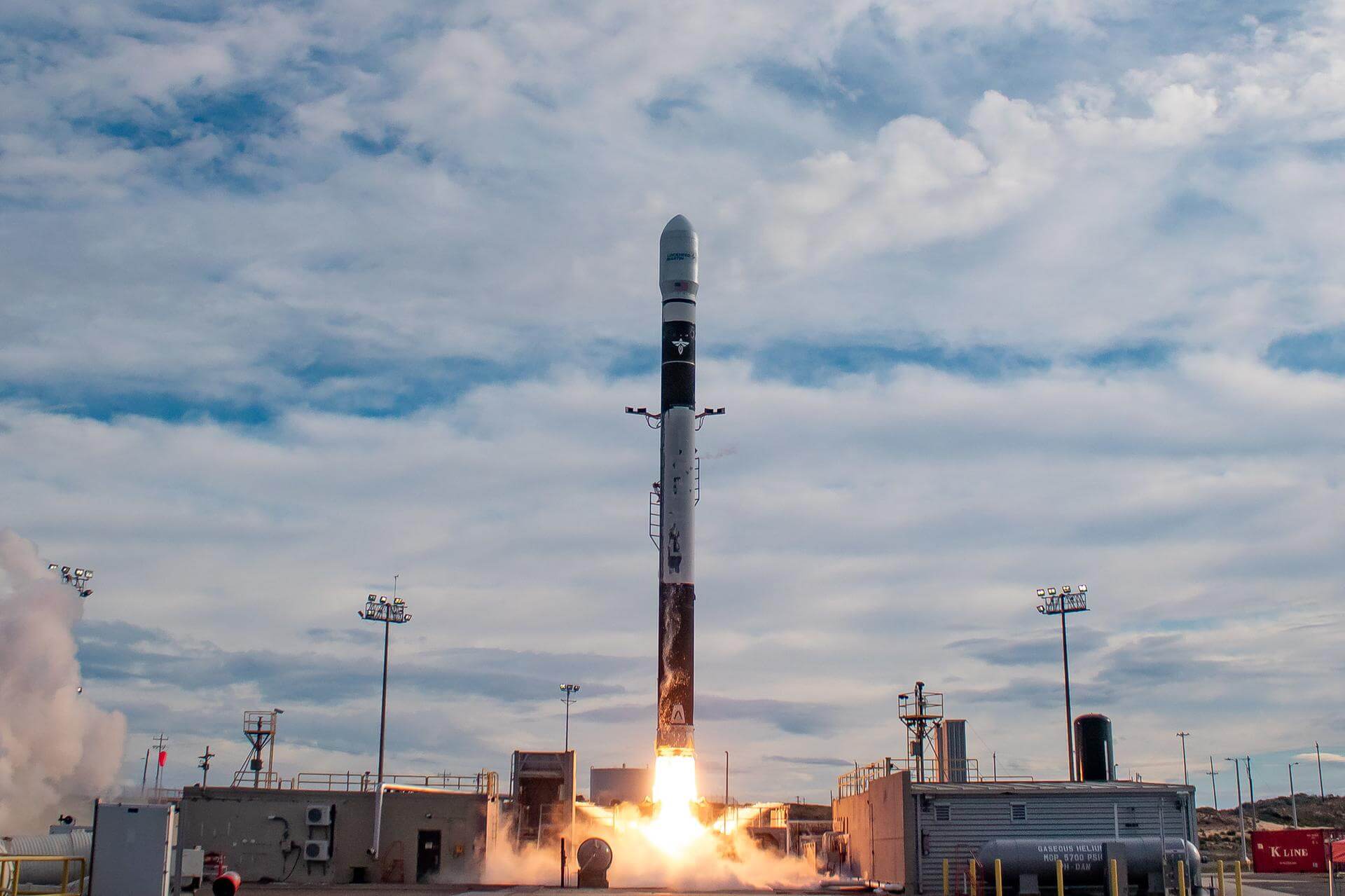
First of at least four missions carrying 6 satellites for Open Cosmos' secure LEO broadband constellation, designed to provide independent and resilient connectivity infrastructure for Europe and the world using high-priority Ka-band spectrum filings by the Principality of Liechtenstein.
Quarter 4
Second of at least four missions carrying 6 satellites for Open Cosmos' secure LEO broadband constellation, designed to provide independent and resilient connectivity infrastructure for Europe and the world using high-priority Ka-band spectrum filings by the Principality of Liechtenstein.
Year
QuickSounder is the first satellite mission of the Near Earth Orbit Network (NEON) program of the National Oceanic and Atmospheric Administration (NOAA), which aims to replace the current Joint Polar Satellite System (JPSS) series of polar orbit weather satellites. This pathfinder mission will demonstrate NOAA's ability to launch a small satellite within 3 years, flying a refurbished Advanced Technology Microwave Sounder (ATMS) instrument to polar orbit.
Year
First of up to 25 launches of Low Earth Orbit technology demonstration satellites to be built and operated by Lockheed Martin.
TacSat is an intelligence, surveillance and reconnaissance spacecraft with a mission to prove specialized sensing and communications capabilities on orbit. The satellite will participate in exercises that highlight cross-domain kill-web connectivity, enabling timely execution of tactical space missions.
TacSat will host a proven Lockheed Martin infrared sensor on board that brings previously developed technology to space for the first time. This sensor produces high quality imagery and it can interface with federated Battle Management Command & Control (BMC2) combat systems to provide joint forces with a comprehensive view of threats.
The satellite will also feature Lockheed Martin’s first 5G.MIL® payload on orbit. This provides cellular-like networking for military space assets, making satellite constellations more resilient. It also helps enable seamless connectivity with tools in the air, at sea and on land.
Launch operation will also again demonstrate responsive space pre-launch operation capabilities.