Space launches
Filters
Mission type: Communications | Dedicated Rideshare | Earth Science | Government/Top Secret | Human Exploration | Lunar Exploration | Navigation | Planetary Science | Resupply | Technology | Test Flight | Unknown
Vehicle: 🗙 Angara 1.2 | Ariane 62 | Ariane 64 | Ariane 64 Block 2 | Astra Rocket 4 | Atlas V N22 | Electron | Epsilon S | Falcon 9 Block 5 | Falcon Heavy | Firefly Alpha Block 2 | Gaganyaan Abort Test Booster | Gravity-2 | GSLV Mk. II | H3-22 | H3-24 | HANBIT-Nano | KSLV-2 Nuri | Launch Vehicle Mark-3 (GSLV Mk III) | Long March 12A | Long March 2F/G | Long March 8A | Pallas-1 | Soyuz 2.1a | Soyuz 2.1a Fregat-M | Soyuz 2.1b | Spectrum | Starship V3 | Themis Demonstrator | Vega-C | Vulcan VC4L | Vulcan VC6L
Orbit: Geostationary Orbit | Geostationary Transfer Orbit | Low Earth Orbit | Lunar Orbit | Mars Orbit | Medium Earth Orbit | Polar Orbit | Suborbital | Sun-Synchronous Orbit | Unknown
11:00 Minute
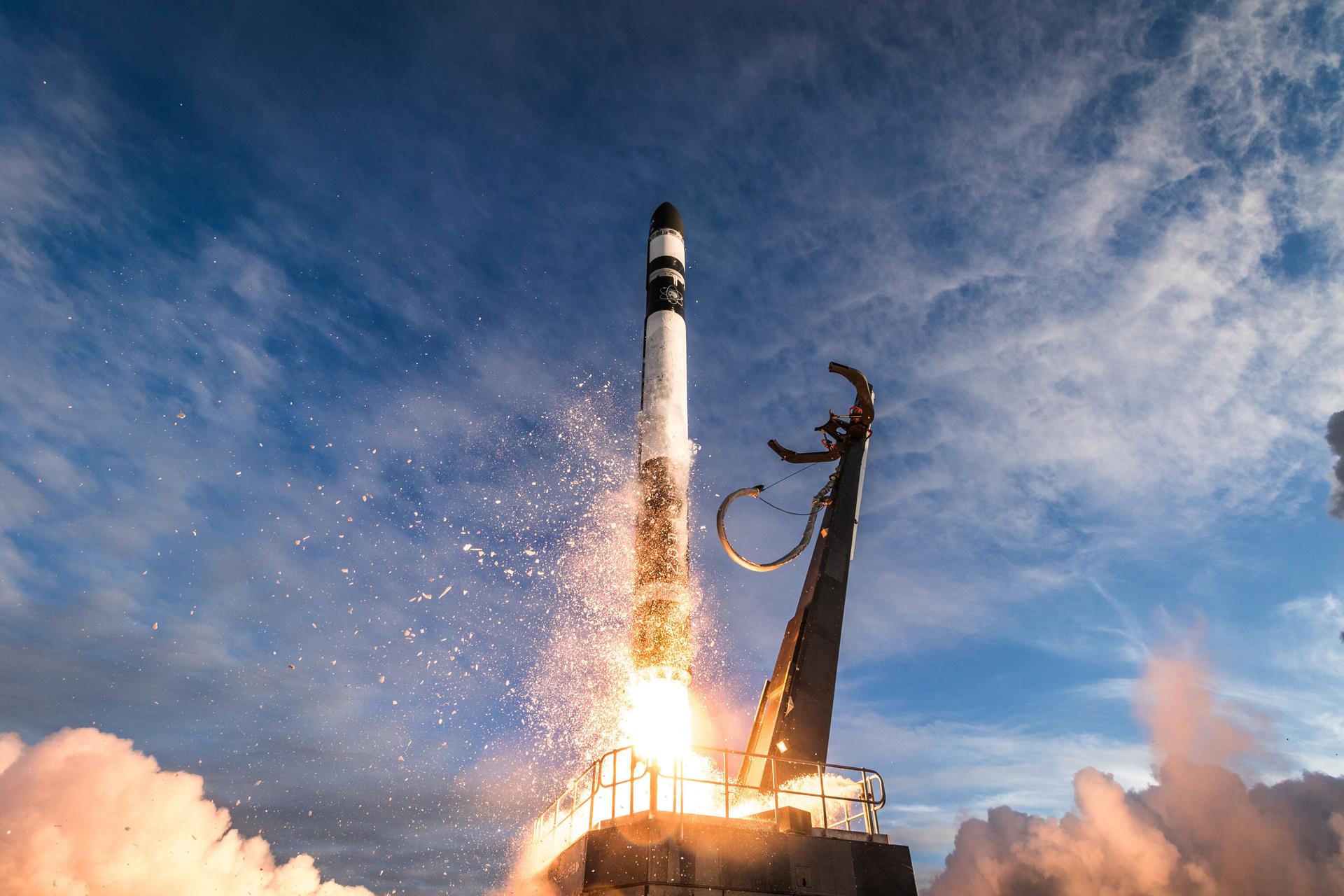
Synthetic aperture radar satellite for Japanese Earth imaging company Synspective.
Month
LOXSAT 1 is a demonstration satellite of a complete cryogenic oxygen fluid management system in orbit, developed by Eta Space and sponsored by NASA's Tipping Point program.
The system will be integrated on a Rocket Lab Photon-LEO satellite bus and collect critical cryogenic fluid management data in orbit for 9 months, demonstrating capabilities of in-space cryogenic storage and transferal. Eta Space plans to use technology developed for this mission to develop a truly commercial depot intended to serve multiple customers in the future.
Quarter 3
HawkEye 360 is a a space-based civil global intelligence satellite network using radio frequency (RF) technology to help monitor transportation across air, land and sea and assist with emergencies, and to provide civil SIGINT (Signal Intelligence) mission.
The constellation of small satellites (named Hawk ) will collect information on specific radio signals worldwide to provide high-precision radio frequency mapping and analytics from Low Earth orbit (LEO).
Quarter 3
BlackSky Gen-3 Earth-imaging satellites
Quarter 3
BlackSky Gen-3 Earth-imaging satellites
Month
Synthetic aperture radar satellite for Japanese Earth imaging company Synspective.
Month
Synthetic aperture radar satellite for Japanese Earth imaging company Synspective.
Year
BlackSky Gen-3 Earth-imaging satellites
Year
BlackSky Gen-3 Earth-imaging satellites
Year
BlackSky Gen-3 Earth-imaging satellites
Year
Synthetic aperture radar Earth observation satellite for Japanese Earth imaging company iQPS.
Year
Synthetic aperture radar Earth observation satellite for Japanese Earth imaging company iQPS.
Year
Synthetic aperture radar Earth observation satellite for Japanese Earth imaging company iQPS.